How to Do SEO – Optimizing Your Site for Google

SEO search engine optimization

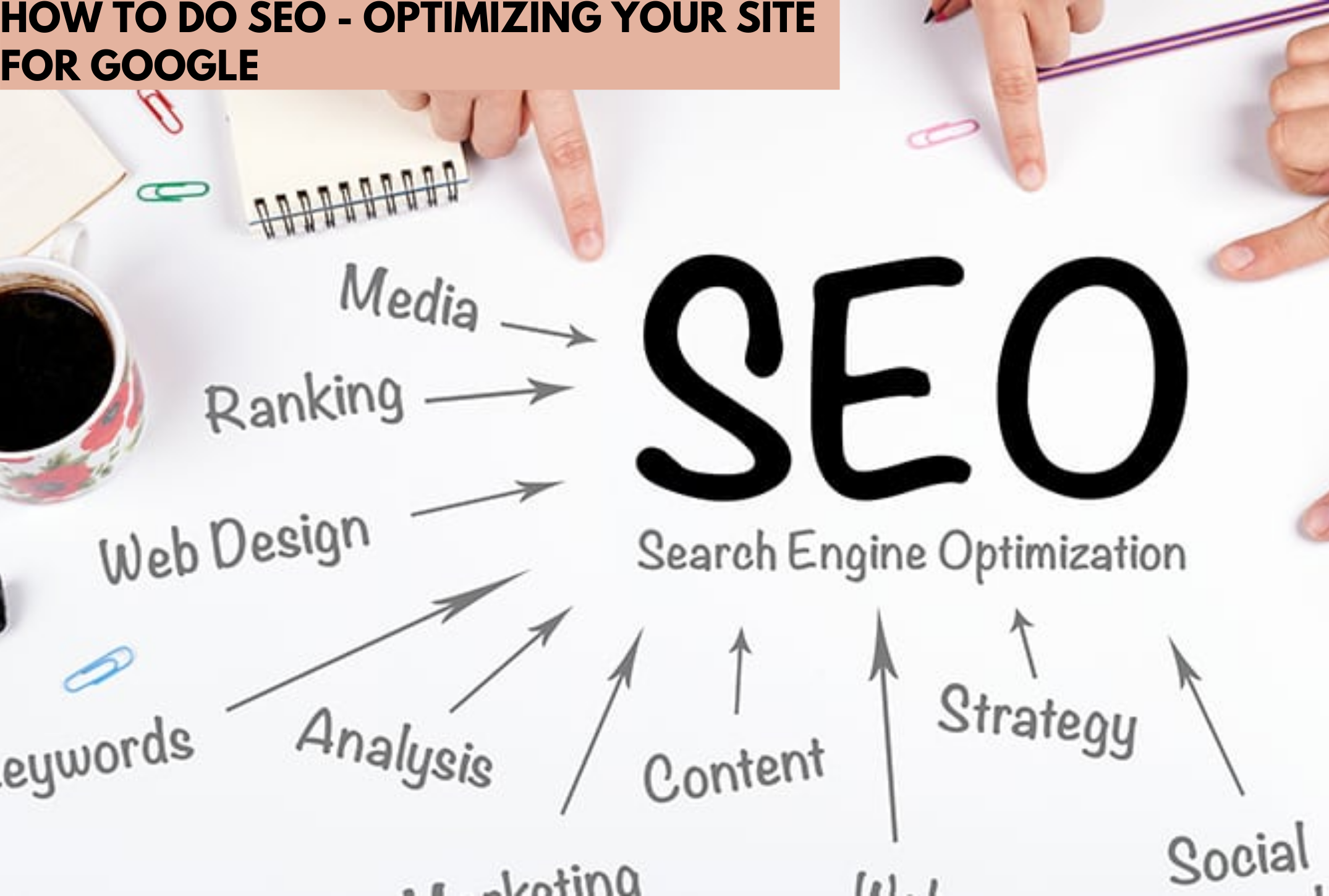
SEO lets start by understanding what is actually meant by Search engine optimization. Well it can be understood as the art or technique of optimization of a website to make it search engine friendly. My SEO experience well to be fair I use to have three websites and lots of free time so I tried every bit of techniques on them from on page optimization to link building. So what I will share here will be my own empiricism.

Search engines determine whatever to rank your site for a particular keyword is by the number of inbound links to your site .That is the number of others sites that linked to you and the quality of senders for that particular keyword.

Think for a moment. Why would someone make a link to your website? The only logical reason is because you have created something of value. This is the logic of Google, anyway.

Another way to think about a popular website and a poor performing website, some sites are like old cities in the middle of nowhere with a road in and one road out that is poor linking . Some sites are on the trade route with high-speed multi-lane running in and out that is perfect linking .What we want a lively exchange, not a single road.

Again it just not all about link building it is also about the quality of content and at the end of the day, the quality of your content is the only thing that will convince other Web sites to link to you.

SEO can be divided into two separate categories: on-page SEO and off-page SEO.

Here I will try to list down the techniques of on-page SEO, although the on-page SEO is only 25% of the score on the search engines and the ranking of your website, it is worth addressing it, as it can improve in very less time.

On-page SEO checklist

Page title

Your page title should include keywords that are less than 70 characters in length if you make the page title too long, it will dilute the importance of the words mentioned.

 Meta Description

The Meta description is not something that is visible on your website. Meta Description is a brief summary of the website, which is usually included in the top of the source code of the pages on a label, Meta description is not used by the search engines for SEO purposes. What the Meta description is used to provide the researcher a brief description of the page (150 characters) under each result. In fact, if a Meta description is not included in the source code, the search engine will show you some of the content of the page instead.

Titles h1, h2, h3..

The text of the titles is more likely to be read by the search engines as keywords of text in the rest of the page. For this reason, it is good to include keywords in your titles whenever possible. Labels h1 text give more weight to the keywords, tags h2 carry more weight than the label h3 .

Images

Do not use excessive images. More images mean that your page takes longer to load. This has a negative impact on the user experience as the optimization of search engines. The text associated with the images. Search engines do not read images, just read the text. The ALT text is an HTML attribute that can be added to the image so that the search engines replace the image with associated text.

Domain Information

The search engines also favor sites that are registered for a period of time longer. Since domain registrations indicate a commitment to the site and what they say the site is less likely to be considered spam. Extend your website registration for 10 or more you will definitely see better result for your site.

URL structure

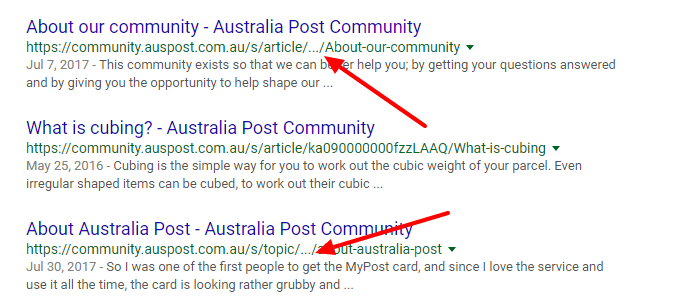
Avoid nesting pages with URLs .  Nested pages receive less SEO credit .

Include keywords in the URL.

Create static URLs, not dynamic. This means that the URL of one of your pages must be the same.

How to rank higher in Search Engine Optimization in 2019

7 SEO Trends That Will Matter Most in 2021

With the onward development of search engine algorithms, website owners everywhere will need to make changes in how they conduct their SEO. Today, with advanced technologies like artificial intelligence and machine learning at their disposal, search engines can better understand the intentions of a user and provide results which accurately meet their needs. In addition, the changes in how we use the internet, mobile searches, for example, are also affecting the way we optimise our sites. With these developments in mind, here we’ll look at how this will impact SEO in 2019.

Changing content to match algorithm updates

Google Algorithm Updates & Changes - Absolute Digital

RankBrain is Google’s machine learning, AI-based algorithm. Although it has been around since 2015, its use of machine learning means that it is continually discovering how to produce better results. One of its key abilities is to ‘understand’ the content of a website. Rather than rely purely on things like keywords to discover whether a site was relevant to a search query, it is able to consider the entire content to give it a more in-depth understanding of the subject matter being discussed.

It does this by analysing the pages for subject-related terms and other content that help it identify the topic and purpose more precisely than ever before. For example, it can understand whether someone is searching for a web hosting product, information about web hosting or a technical web hosting knowledge base and can differentiate between these different types of content to ensure the right pages show up in the user’s result.

What does this mean for SEO? It means that rather than focus simply on putting keywords in the right places, you’ll also need to ensure your content includes information which contains all the other related terms that the algorithm will look for.

Optimizing for ‘Mobile First Indexing’

How to optimize your eCommerce store for the mobile-first index

Since the numbers of mobile searches overtook desktop searches, Google has moved its focus even further towards mobile devices. Last year, it introduced Mobile First Indexing, essentially using the mobile rather than the desktop version of your site as the one it uses to rank pages in results.

As a consequence, the focus of your SEO should now be on your mobile site. While the content may be the same on both, things to consider will include navigation, ease of use and, very importantly, loading times.

The latter will mean more webmasters using caching, CDNs, minification and image optimisation to speed up their sites, as well as a shift away from shared hosting to the much faster VPS. It will also see an increase in the number of sites using accelerated mobile pages (AMPs).

Structuring content for the way search results are displayed 

Anatomy of a Google search listing

As you may have noticed, when you type a question into Google, it is now able to produce an answer directly in the search results in the form of a knowledge graph. The knowledge graph is a detailed excerpt from a web page that is presented in a box right at the top of the search results.

Another change that Google has introduced is putting a list of related questions underneath the knowledge graph before showing the list of other ranking websites. Clicking on each of these questions produces a featured extract from other websites that answer those questions.

The rest of the top results also have features snippets which, in some way, give an answer to the question too. To get these most prized ranking positions, it means reconsidering how you present the information on your websites – such as in the form of questions and answers, lists and structured tables.

Providing search engines with structured data

The Beginner's Guide to Structured Data for SEO - Moz

Search engine have been calling for increased use of structured data markup for quite a few years and this year will see an increase in websites doing just that. The reason is simple, the more structured data you add to your HTML, the better a search engine can understand the content and structure of your site. Doing this enables the search engine to see your page’s relevance to a search query far easier and thus helps you rank for the right queries.

The other benefit of markup is that it can be used to highlight content that appears in the actual search results and which can help increase clickthrough rates – such as user ratings and meta descriptions.

Adapting to new search behaviours

COVID-19: Effect on Human Behavior | Accenture

As smartphone keyboards are an effort to use accurately and typing queries on smart speakers like Amazon Echo is impossible, more and more people are using voice search. Indeed, our fondness for it on these devices has increased the numbers of people using voice on PCs with Google Assistant and Cortana.

These types of searches have a consequence for SEO as we use different forms of language. When we speak, we use natural language, e.g., ‘find me a builder in Leeds,’ whereas with a keyboard, we’d just type ‘builder Leeds’.

This has obvious implications for websites that have heavily focused on keywords in the past. Natural speech is more likely to use longtail keywords and content which features them is likely to rank better in voice search results.

Conclusion

SEO is a dynamic process that constantly requires website owners to react to developments in search engine algorithms and to changes in the way people search the internet. Hopefully, the trends we have discussed here will help you make the right changes to your SEO strategy in the coming year, improving your rankings and increasing your organic traffic.

error: Content is protected !!