Why Is Personalisation So Important in Online Business?

The 3 Big Problems with Personalization in Online Sales and Marketing

Personalisation is not the latest trend in online business. In fact, it has been around for a while. It is, however, becoming the norm, with more and more companies adopting personalisation as a strategy. Those who haven’t yet begun to use personalisation not only fail to reap its benefits; they risk losing customers and sales to their competitors. Here’s why you should consider personalisation for your business.

Why personalisation is important

The Benefits of Personalisation as Shown by Seven Statistics

Today we are bombarded by marketing messages. We find them on websites, social media, emails, television, radio, on the sides of vehicles, on street hoardings and tons of other places. There are so many fighting for our attention that, despite the millions that are spent on them, the majority go ignored. Personalisation has been proven to make customers take more notice and take more action, vastly increasing the effectiveness of marketing campaigns.

To give some substance to that claim, a recent article from SmarterHQ showed that over 90% of consumers would be more likely to buy from a company that provides them with relevant offers and recommendations. What’s more, they also discovered that, in 2019, more than 70% of customers only engaged with marketing messages that met their individual interests.

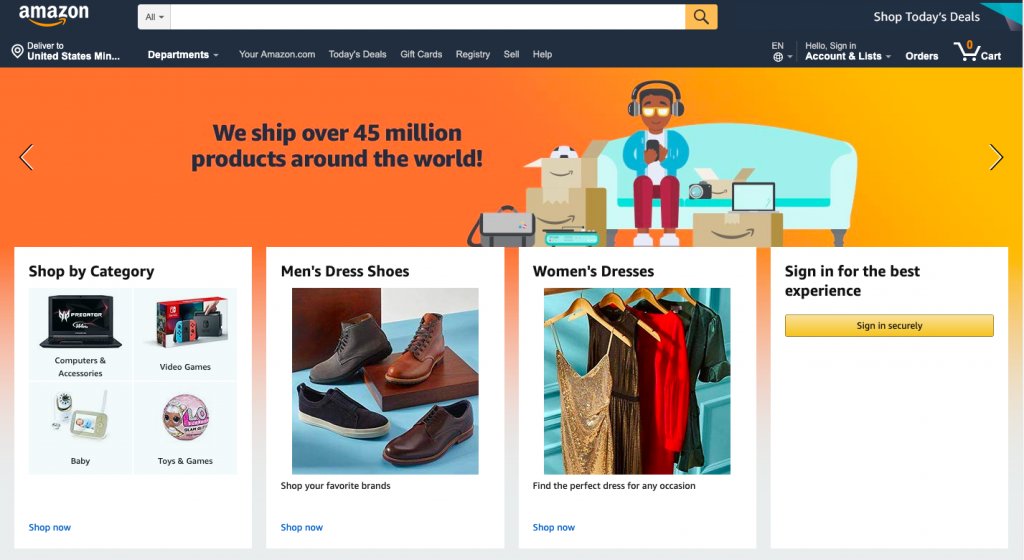
Since companies like eBay and Amazon started introducing personalisation, consumer expectations have increased. Indeed, if a website doesn’t offer relevant suggestions, almost half of its visitors will head to Amazon before making a decision. Overall, 70% of consumers feel marketing is too impersonal and 36% want even more personalisation than at present. Importantly, where personalisation makes buying less expensive or easier, 90% of consumers are willing to share their data to obtain those benefits – and it is that data which makes personalisation achievable.

The value of data

From data to value

Websites are able to obtain vast quantities of valuable data from their visitors. This gives marketing departments the ability to know when people shop, what and who they shop for, how much they spend and even why and how they shop. This, however, is just the tip of the data iceberg. Today, businesses go way beyond tracking website behaviour and create end to end journey maps that collect the data on every single interaction an individual has with the organisation, including customer service interactions, emails and responses, product ratings and reviews, social media interactions and so forth. This helps the company to know their customers better than ever before and thus provide them with a far better customer experience.

The insights gained from analysing such data can help a company procure the products their customers want and market them in the most effective, personalised ways. It can even help them send out marketing communications via the customers’ preferred channel and do so at the time that will have the greatest chance of a call to action being followed. And, of course, when the consumer arrives at the website, they’ll be greeted personally and find all the products they are most likely to be interested in and be given offers which are both relevant and appealing.

How to add personalisation capabilities to your website
Website Personalization: Your 6-Step Guide To Mastery

The growing demand for personalisation means there are an increasing number of plugins, tools and third-party services you can use to help implement it. The key tool is a Customer Relationship Management application that will enable you to do the essential collecting, tracking and analysis of your customer data as well as providing you with the ability to personalise recommendations on the site and send personalised marketing communications. Chatbots are another popular AI tool that act as personal shopping assistants to recommend products based on customer data.

Personalisation tools vary considerably in price. The WordPress Repository has several highly rated plugins with free and premium versions. More advanced tools dealing with bigger quantities of data can cost hundreds of pounds per month. A third-party provider will cost even more but will take the burden of managing the system off your hands and remove the need for in-house technical expertise.

Don’t forget your hosting

4 Things to Avoid When Transferring Your Website to a New Web Hosting Company - DEZZAIN.COM

Do remember that if you choose to offer personalisation, you will need the capacity to store all the data you are collecting and the processing power to run the apps that will analyse it. This means you may have to consider a more powerful hosting solution for your website, such as VPS, dedicated server or cloud.

At the same time, collecting large quantities of personal data means you will be obliged to ensure its safety and so you may need to enhance the security features that you use to protect your website and online storage.

Conclusion

Personalisation is becoming a necessity for competitive businesses, especially in the eCommerce sector. Offering personalised interactions improves the customer experience and makes marketing strategies far more effective. To do this, however, you need the right tools to collect and analyse the data and to generate the personalised content. You also need the hosting capabilities to deliver personalisation and maintain data security.

7 Exceptionally Effective Online Business Management Tools

11 Powerful Cloud Management Tools | Network Computing

Though there is a lot of work involved in creating and managing an online business, there are plenty of useful tools around to help you do things quicker, smarter and more easily. Today, there are applications and services, many of them free to use, which can help you do everything from building professional standard websites and eCommerce stores, to ensuring you’re well prepared for the worst kind of emergencies. Here, we’ll look at seven of the most useful.

1. WordPress

WordPress: what is it, how can you use it, and the main secrets

WordPress is the perfect tool for creating fully functioning, professional websites. This completely free CMS platform has been used to create 35% of the world’s websites and has been developed over many years to make it easy for anyone with basic computer skills to use.

What’s more, with thousands of free themes and tens of thousands of free plugins, WordPress users can create websites that are uniquely designed and which have unparalleled functionality compared to other website creation software. With it, you can build any kind of website and have it perform any kind of function. The sheer scope of its plugins gives any website enormous potential.

If that’s not enough, its massive popularity means that beginners have a vast range of online support to help them with any issues, with many websites and web hosts offering specialist support in all areas of its use.

2. WooCommerce

WooCommerce - Wikipedia

If your main purpose is to sell products or services online, then you will need to create an eCommerce store. The ultimate tools for doing this is WooCommerce, which is actually a WordPress plugin rather than a standalone program. Essentially, once you have created your WordPress website, all you need to do is install and activate the free WooCommerce plugin and your site is transformed into an eCommerce store. All you have to do then is set up the store and add the products (physical or digital) or services (including bookings and reservations) that you want to offer.

WooCommerce is a user-friendly plugin that helps you manage sales, inventory, payment and delivery. It is so popular; it is one of the few WordPress plugins to have its own set of plugins. These provide additional functionality to enhance the customer experience and to make it easier for you to manage your store.

3. PersonalSign

Download and Install PersonalSign Certificate :: Download and Install PersonalSign Certificate :: GlobalSign Support

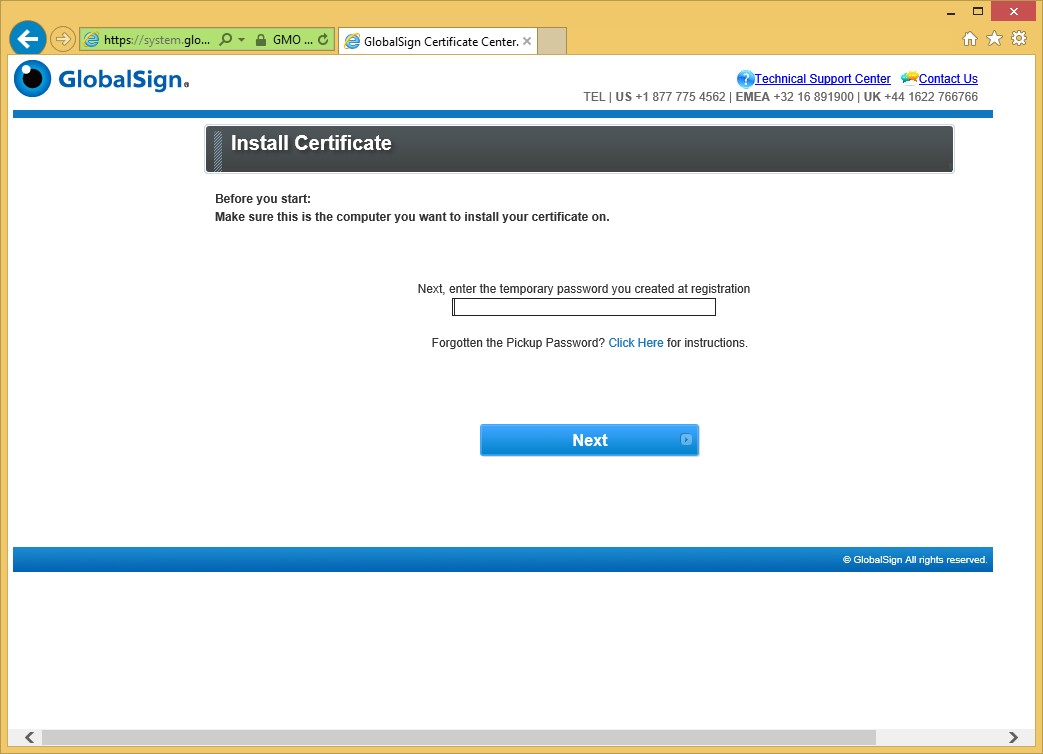
Many people fall victim to online scams like phishing because they are unable to tell the difference between a genuine email and one which scammers have tried to make look authentic. PersonalSign is an email signing certificate that puts a stop to this by letting recipients of your emails quickly verify that it is trustworthy. Additionally, the contents of your email and any attachments you send are encrypted, preventing them being stolen or tampered with during transit or at rest.

PersonalSign isn’t just of benefit to your customers, either. Many businesses fall victim to phishing because employees receive fake emails purporting to come from executives in their own company – often asking for money to be transferred to the scammers’ account or asking for sensitive data. Email signing certificates put an end to this, too.

4. cPanel hosting

cPanel Hosting | Host With cPanel & Experience the Full Control

When setting up your online business, one of the first decisions you will need to take is on the type of hosting package tools you wish to use. While there are many different types of hosting to choose from (e.g. shared, VPS, dedicated server or cloud) one of the things you will need to consider is the type of control panel which your hosting will come with.

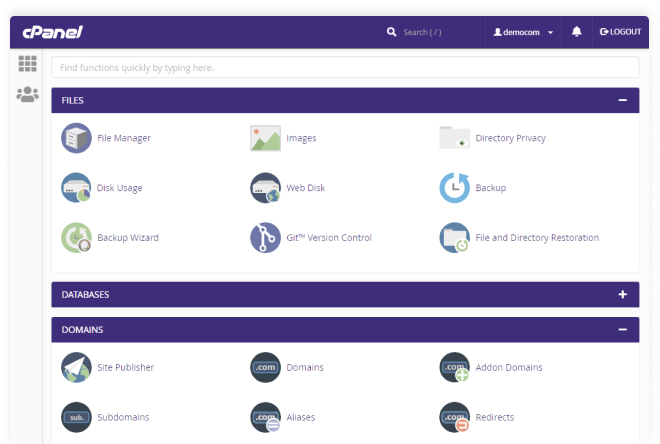
The control panel is the interface you will use to manage your hosting and your websites. The most common form of hosting uses Linux-based servers and the most popular control panel for Linux is cPanel. cPanel web hosting tools makes it easy to manage your web hosting and email; its user-friendly interface offers simple file management, 1-click application installs and a comprehensive suite of useful tools that enable you to carry out a wide range of management activities. Setting up new domains, automating updates, adding new email addresses, etc., is a breeze with cPanel.

5. Google Analytics

GA4] Search box in Google Analytics 4 properties - Analytics Help

Data has become the backbone of today’s decision-making processes and this is equally true of running a website. Google Analytics (GA) is a free tool, provided by Google, that gives you in-depth data on visitors to your website. Going way beyond telling you how many visitors your website gets, when they visit and where from; GA can be used to track where visitors have found you, which pages they visit, how long they spend on each page and what pages they exit from.

Perhaps most importantly, you can use GA to improve your marketing. You can set up goals to track visitor progress through your sales funnel, including analysing how effectively your ads and other online marketing techniques generate conversions.

What’s more, GA is incredibly easy to set up and integrate with your website. WordPress users can do the integration simply by using a plugin.

6. Yoast SEO

SEO for everyone • Yoast

The success of your online venture depends upon the number of visitors you get to your website. Unless you want to rely heavily on paid advertisements, the main way to get visitors is through ranking well in search engine results. Search engine optimisation, however, is a complicated and ongoing process covering everything from site speed and mobile-friendliness to website structure, keyword placement and domain authority.

When it comes to on-site SEO, there is no better tool than the free Yoast SEO plugin for WordPress. This plugin automatically looks after much of the optimisation you will need to do while providing wizard-like guidance to ensure any content you are creating meets the most up-to-date SEO requirements.

7. Automated remote backups

Why You Need Automated Website Backup - HostPapa Blog

The final tool you should consider is automated remote backups. A necessity rather than an option, a remote backup is the only fall back you will have if you lose your website data. Should your site be hacked, your server fail, your data be corrupted or even if you accidentally press the delete button, there’s the potential that you could lose the entire content of your website and the website files themselves. Failure to restore your website swiftly can have catastrophic consequences and even put you out of business completely. A remote backup can help you get your site back online quickly.

An automated backup service does more than just back up. It enables you to take backups as frequently as your business needs, it saves the files remotely from your own server, provides enough space for multiple backups and even checks that the backups are not themselves corrupted. You can also encrypt your backups to ensure that you comply with data protection regulations.

Conclusion

There are a huge number of tools you can use to create and manage your websites and it can be challenging to search through them all looking for the best ones. The tools and services we have shown here are those which we think provide great value and are exceptionally useful.

COVID-19’s Impact on Online Business

New COVID-19 Resources Available - International Society of Nephrology

The radical transformation in how people across the world are living during the Coronavirus pandemic is having a significant impact on internet businesses. While some are seeing sales plummet, others are struggling to cope with growing demand. In this post, we’ll look at how the online marketplace is changing in the current circumstances.

1. Growing demand for streaming services

Best Streaming Services 2021: The Full List Available

Millions of people are turning to movies and box-set series to keep them entertained while they are cooped up indoors. As a result, streaming services are seeing growth not just in the amount of time people are watching but in the numbers of new customers flocking to use their services. In Europe, Netflix has had to reduce its picture quality by 25% to ensure bandwidth capacity.

Increased demand means that in North America, Netflix is now forecast to more than double expected growth in new subscriptions, from 1.6% to 3.8% over the year – and that’s in a region where it is already well established. Internationally, growth is expected to rise by over 30%.

It’s not just Netflix that is benefitting. So too are other streaming services, like Amazon Prime Video, Hulu and Now TV. Recently launched services like Disney and the BBC-ITV venture, Britbox, which may have struggled to compete, might find opportunities that wouldn’t have arisen in normal circumstances.

2. Online gaming taking off

No Dice, All Bets Are Off | Outlook India Magazine

Although a narrower market, younger people forced to stay at home are driving up demand for gaming. This isn’t just increasing subscriptions for online gaming services but also helping retailers of downloadable PC games. PC gaming platform, Steam, for example, has seen its highest number of users in 16 years with traffic spikes of over 20 million at times.

3. Big impact on PPC ad spending

9 PPC Mistakes That Impact Success

The travel industry has been one of the most affected sectors by the virus and this has resulted in a slump in advertising from travel-related businesses, with some market experts suggesting it could lead to 15 – 20% reduction in travel advertising revenue for Google and Facebook. This figure is likely to be compounded by all the other businesses that rely on tourism also cutting their ad spend.

It is not just travel-related businesses who are reducing advertising. With many companies forced to close due to the effects of social distancing, they too will be cutting back or suspending advertising altogether. In 2018, McDonalds spent over a billion dollars in advertising just in the US. It has now closed all its UK stores and is shutting thousands of others globally as the pandemic spreads. It obviously won’t be damaging its cashflow by spending huge amounts on ads over this period. With industries such as entertainment, high street retail, restaurants, etc., also affected, Google and Facebook could see ad revenue fall by up to 45% over the next few quarters.

However, it is not all bad news. With fewer advertisers competing for ads, the cost per click in many sectors is likely to reduce, meaning those companies that can still derive value from advertising will see their budgets go further. In addition, consumers are clicking on more ads associated with employment, education, hobbies, leisure, arts and entertainment.

4. Holiday bookings won’t dry up

COVID travel: Where to book your trip once pandemic deals dry up

While travel is out of the question for most people at the moment, more than half of those who take frequent holidays are likely to book trips further into the future. Business travellers are even more likely to make long term bookings. While this is not the immediate relief those in the travel industry and all the depended industries need, the taking of deposits can help with current cashflow problems. Most of these bookings will take place over the internet.

As the pandemic begins to recede, it is predicted that most holidaymakers will, initially, seek domestic holidays where there is likely to be less disruption impact by failing tour operators and airlines and where the impact of the virus is more certain than abroad.

5. Global increase in online shopping

Online shopping is catching on among women in India

As fewer people go out, their shopping habits are moving online. Even retailers seeing a boom in sales, like supermarkets, are having more customers using their delivery service simply to avoid the risk of going to the store.

This rise is happening globally. An Ipso-Mori study found that 18% of UK consumers were shopping more online. In countries which have been more badly affected, the numbers of people increasing their internet shopping is even more substantial: 31% in Italy and 51% in China. However, the biggest increases are in countries like India 55% and Vietnam 57%. This rise has meant some companies are struggling to cope with demand. Amazon, for example, is so busy it is recruiting 100,000 additional staff, raising wages and making its employees work overtime to meet demand.

One area of particular growth is in the use of grocery apps, which are seeing unprecedented numbers of downloads in the US. Instacart downloads during March are already more than triple that of February while Walmart’s app has seen a 160% rise.

Conclusion

Coronavirus is having a significant impact on consumer behaviour and this is affecting internet businesses in different ways. For many, there are challenging times ahead as consumers drop plans to travel and stop online bookings for local businesses. However, there has been a sharp increase in online shopping with some retailers having to expand their workforces to cope.

error: Content is protected !!