Google Local SERPS might be affecting your Business

Google SERP: Meaning, Features, Examples & Preview Tool

Google has changed the way it promotes local businesses in its search results and for many companies, this can have a serious effect on their ability to attract new customers. Here, we’ll look at what these changes are and how they are having an impact.

How things are changing

The World of Sales and How Things are Changing

Until recently, anyone undertaking a Google search for a type of business in their local area would have been provided with a list of ten nearby businesses. Clicking on the links in these results would take the searcher to the business’ website where they could discover the information they required. Those companies that appeared in these lists would have been the recipients of higher rankings, increased traffic, and the consequent conversions.

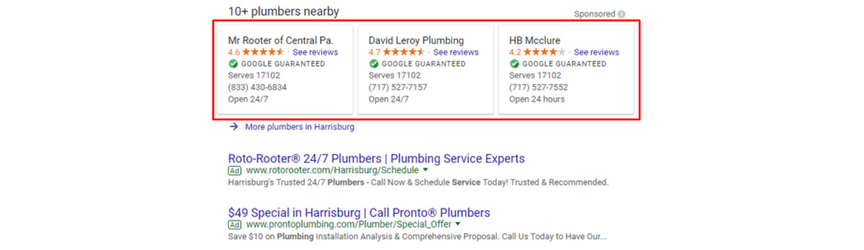
Recently, however, this list has been reduced, first to seven and now to just three – making it harder for many local businesses to be featured. While this decision might be some way down to making the results more mobile-friendly, there are other changes, beyond this, which show Google to have moved its stance on how it promotes local businesses. Here are three of the main ones.

1. Keeping users on the Google website

Website Tracking: Why and How Do Websites Track You? | Blog | CookiePro

One of the key changes we are seeing is that Google is trying to keep its searchers on its own website rather than sending them to that of the local business. There has been a significant increase in the number of search results, especially on mobile devices, that do not require the user to go beyond the information provided by Google’s interface. With mobile visibility being key to local businesses, as customers search on smartphones while out and about in local areas, this is a cause for concern.

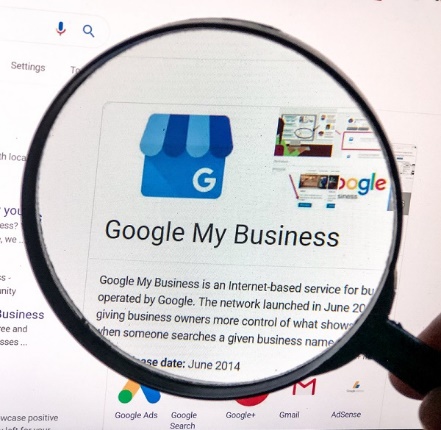
Indeed, even when a search is done for a specific company, the display of the company’s Knowledge Panel means customers can access a wide range of information without the need to click through to the website. For instance, they can find out the basic company details, see images, take a virtual tour, read reviews, make a reservation, phone up, ask questions, see the opening hours and when the place is busy. And as all of this can be done on the Google results page, it means fewer searchers will head to your website. This doesn’t necessarily mean, however, that you will get fewer customers as the information provided by Google might be enough to win them over.

2. Ads appearing in the local search results
Google Local Search Ads: Everything You Need to Know

While it is worrying that the number of businesses being displayed has fallen from ten to three, a further issue is that other businesses are allowed to appear alongside them because they have paid for the listing. In a recent survey of over 10,000 local search results, a third of them also contained ads.

Indeed, with its Local Service Ads scheme, some now consider that Google’s stance is to develop itself as a local lead generation provider.

3. Ads appearing alongside your Knowledge Panel
Google's Knowledge Panel What is it and how to get one?

Another disturbing factor is that when a Google user searches for your specific company, the internet giant now intrudes this space with the paid for content of others. For example, you may see ads above and below it followed by an ‘Other Users Searched For’ list of businesses beneath that.

What do these changes tell us?

Science Says That Travel Changes You - Tell Us Something We Don't Know | Remote Year

Overall, the focus of Google’s local search results has changed. Today, instead of simply providing users with links to local business websites, it’s more concerned with providing information about these businesses which keeps the searcher on Google itself. Indeed, with millions of Google Local Guides contributing to its knowledge about local businesses by answering questions and giving reviews, it can sometimes provide more relevant information that searchers are actually looking for than the company website can. If, for example, a customer wants to know if a business has free parking and Google doesn’t know, it will ask the next Local Guide who visits in order to ensure it can provide the answer in future.

This begs the question of why Google wants to keep users on its own website and the answer to this looks fairly clear –  because it helps it generate more revenue through advertising and in turn, helps its advertisers grow their businesses.

Conclusion

While you may think that this change in focus by Google means that local business websites have become irrelevant, the truth is exactly the opposite. There is a powerful link between the organic performance of your website and your ability to appear in the featured local rankings. So, while there is little you can do about the changes Google is making to keep people on its own site and placing paid ads in local search results, the best way to appear in the three featured local spots is to have the best website that you can. If you are looking for hosting for your local business website, check out our homepage to see our wide range of hosting solutions.

The “YOU MUST KNOW” of IT Companies

The “YOU MUST KNOW” of IT Companies

IT outsourcing is notoriously known for false promises, sub-standard quality of software and an inability to deliver products that can actually be used.

We discovered that more than half of our clients have burnt their fingers with such IT companies before choosing Anteelo and finally getting software delivered in the way it should have always been.

This post is based on true stories and is a compilation of the most common and shocking stories and experiences we have heard from our clients over the past few years.

1. False promises by sales teams

Sales Mistakes: 10 Mistakes Every Sales Rep Needs to Avoid!

Often, the first meeting with any IT company will be with people from their sales team, who are usually non-technical and may not understand your business problem, vision, and product at all. However, they have been trained and groomed to say the right set of words which sound convincing and make you decide in their favor.

In such meetings, the sales team also tends to commit and agree to many terms which are then rarely delivered in practice. Most of the times, the complexity and understanding of what is being committed to being completely missing.

2. Deep organizational hierarchies

Flat vs. Deep Website Hierarchies

Most companies will never get you in touch with the set of developers and designers who are going to ultimately work on your project. That communication is often forced to go through product managers, project managers, team leads and various such roles where everyone adds their own subjective interpretation leading to a lot of important decisions just getting lost in translation.

The reason for this obfuscation is that most companies would hire very junior or young developers with incompetent design and software development skills and provide them with zero training. Often they are learning on the job as they are building your product, which means that the code quality being delivered is poor and the product is riddled with a large number of bugs and issues, often leading to an unsatisfactory and unusable project.

Another common scam is further outsourcing your work to another company without your permission. That means that the quality of work goes down even further since the communication gap widens. Also, it can be assumed that in most cases, the second company will be even cheaper and that will reflect in their hiring and quality standards as well.

3. Not sharing source code with clients

How to Avoid Getting Scammed as a New Freelancer | Elegant Themes Blog

Since most clients of IT companies are non-technical, IT companies would often take advantage of the fact that the client’s entire source code is under their control. The unsuspecting client is also unaware of the importance of this ownership until things turn sour in the relationship. Source code transfer often becomes the hostage before the scores are settled.

4. Charging exorbitant hosting fees

SiteGround Review: A WordPress Developer's Honest Review

Taking advantage of the nontech awareness of their clients, many IT companies would charge a hefty monthly fee in the name of server hosting, etc. even if the same can be done at a much cheaper cost. Most clients will simply give-in because they will not understand the correct facts and have no option left but to believe what they chose IT company is suggesting.

5. Fake claims about skills and clientele

Recent Email Scam Awareness | Stigan Media Inc.

Websites of most IT companies claim to have great competencies, skills and clients listed. While most of them may be true, but most people get fooled into believing that the company has built the whole product for the clients they have listed.

As a client, always ask for the details of what the company did for that client. Did they work on their whole product or a part of it? What exactly was their role and how long was their engagement? Demand for answers to be explained to you in a simple non-technical way.

6. Delivering software as per spec, but not as per common sense

Software 101: A Complete Guide to Different Types of Software

Most companies will ask their clients to create a product spec or requirements document to define exactly what they are trying to build. And the IT company will share a time and cost estimate accordingly. But no company will bother to improve the spec or explain the shortcomings in the document to the client. Often there would be features in the spec which may not be that important to the client but would take significant development time. Nobody in the team (sales or development) would take the initiative of asking the client whether such features are important or can be skipped.

Eventually, a combination of a vague product spec and a team of incompetent developers means that the product will never be completed. Most companies will just get into a never-ending cycle of bug fixing where one bug fix leads to another and months go by and nothing is ever ready to ship.

Even in the rare case that the product is actually completed, it may tally to the spec document on a point by point level, but the overall product will be unstable and practically unusable.

7. Delivering software which will crash as soon as actual workloads start

Software Developer Job Description: Salary, Skills, & More

Lack of proper testing across a variety of devices and platforms leads to issues which can be hard to detect until it’s too late. Often the developers and sales teams will be smart enough to show you a product demo in a very limited and controlled environment but the moment the product will go live, everything will begin to fall apart. Your users will complain of your app crashing on their phones or not working as expected.

Such issues are even more devastating since by then you would have already announced your product to your connections and damage control would be nearly impossible.

It’s important to evaluate your IT company on multiple factors, not just the final price. Making a good choice could lead to an association that could last for years and helps you with your product and startup vision for a long time. A bad choice could mean that your startup ambition could fail even before it lifts off from the ground.


error: Content is protected !!