Mobile Apps Backend Development for Busy People: Guide

Awesome Facts that will make you be a Back End Developer

With the advent and popularization of mobile apps, the focus has now started shifting on not just developing an amazing app but also on understanding the underlying factors that differentiate amazing apps from a common one. Every detail of an application that provides an effortless experience is incomplete without the mention of its efficient mobile app backend architecture. In that context, read this article as a guide to what makes Backend development so important, what are the software stacks that make its backend architecture for mobile app, and the tools that help develop a strong backend process.For those who are here just for the tools, we will come to the tools part, but only after a few scrolls.

Let’s start with what Backend server for mobile apps mean and how it is different from Frontend development?

Frontend VS Backend Development

If you ask a developer how frontend and backend development is different, the reply that you will get is that frontend uses codes to make an app look pretty and the backend writes codes to make it work.

But there are a number of underlying things that both the app development processes are based on –

Basically, applications that are installed from the Play Store or App Store on your smartphone are frontend applications. Be it Instagram, Facebook, or Calculator each application on your smartphone is a frontend mobile application. How? Frontend applications permit you to connect directly through buttons, text fields, flips, and so on. Since they work on mobile phones), they are mobile applications, too.

A Front-end developer is accountable for translating app’s designs to a code which is required to display it properly on the browser. The job grew more meticulous with the introduction of responsive web design. The person not only needs to ensure that the look is supporting all the current browsers’ and mobile platforms, but should also note how the design is looking in other computer resolutions and browser widths.

While you have known about the frontend developer, now let’s know what the backend developers does –

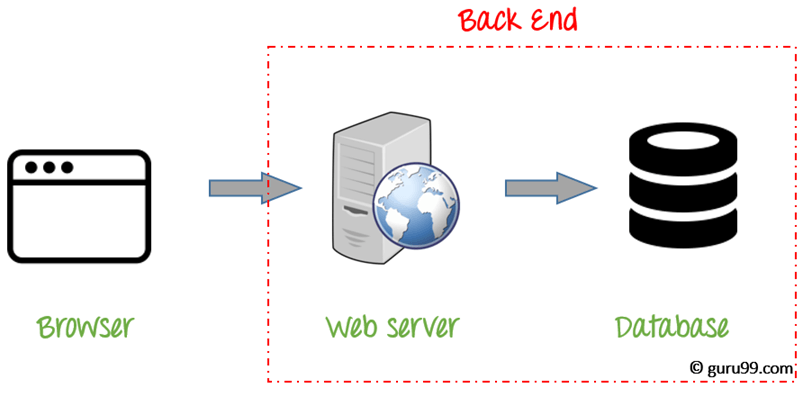
In a layman’s language you can assume the backend as an extra application for your mobile application i.e. the backend section works differently. It is a piece of software that runs on machines called servers. Backend development for mobile applications empowers the main working of the application. It incorporates things like servers, databases, middleware, and so on.

A back-end developer is accountable for the mobile app server connecting the content one sees on the site to the CMS and develop the logic needed to make everything work as supposed to. On the design front, they are responsible for converting the designs and the front-end development process in the CMS setup, giving the clients an intuitive method to handle their app content. If they make the mobile app backend architecture very simple, chances are that the clients will not have control. And if they make it complex, the possibility that clients’ get lost in the design becomes high.

Here is a visual to show the difference between a Frontend and Backend Developer.

Front End Development, Back End Development, and Full Stack Developers


Now that you know the difference in Frontend and Backend development, let us understand about backend development of mobile app functions:

Mobile Application Functions That Are Provided With Backend Development
What is Backend Developer? Skills Need for Web Development

There are many things you need to ensure prior to incorporating a mobile backend for app development. The most basic function to utilize while creating mobile applications are:

Cloud server – Today everybody can afford having cloud servers that come with various sizes and are stored in a protected location. The most popular cloud servers are Google App Engine and Amazon AWS, they are ordinarily utilized by large organizations and are reliable.

Custom server – You can generally make your own server for your mobile application, or you can also ask a software development company like Anteelo about SaaS. It can have its IP address and store explicit data. In such a manner you will consistently have full control over a custom server but will require additional time on monitoring.

MBaaS – Mobile Backend as a Service (MBaaS). If you prefer not to write your own backend servers or put resources into a cloud-based server, that is your option. These days there are numerous independent MBaaS providers that offer incredible functionality and an analytics framework to monitor your applications.

After knowing about mobile app backend development functions, let us now move on to how backend architecture and mobile app server actually work.

Architecture and Server- Working

Gear up, we are now going to delve into the technicalities of custom backend development and prepare you for your next backend developer job and to have a discussion with your development team before you start working on that next big app project of yours.

In layman terms, backend development is preparing your mobile application to work as it was intended to. Now to make it possible, there are some concepts which form the server or Backend’s side ‘Software Stack’.

Before I get into that, I will take another minute of yours to tell you that the look of the backend varies from application to application. The points of differentiation can be counted down to use of data warehouse, cloud based servers, containerization, BaaS providers or usage of APIs to replace complex processing.

With that out in the open, let me take you back to the mechanics of the Backend.

Breaking Down Backend’s Software Stack

Instead of taking you down the rabbit hole, let me simplify and break the backend’s technology stack in its four components – database, server, software, and operating system.

Here are the details on the components –

Servers

USA Based Dedicated Servers | USA Dedicated Servers Hosting | US Dedicated Hosting - Temok

Whether your backend is in the cloud or on-site, a backend server for mobile app is the life vein of the network. These provide resources (shared) that the networks need to operate and work as a mobile app hosting platform as well. These shared resources might include – encryption and security, file storage, email, database, and web services.

Now, these servers use virtualization to get the provision to house various apps. Another term used in relation to servers is Containerization, which is the way server provision the operating system out to contain compartmentalized applications.

Database
Choosing the Right Database for Your Applications | PingCAP

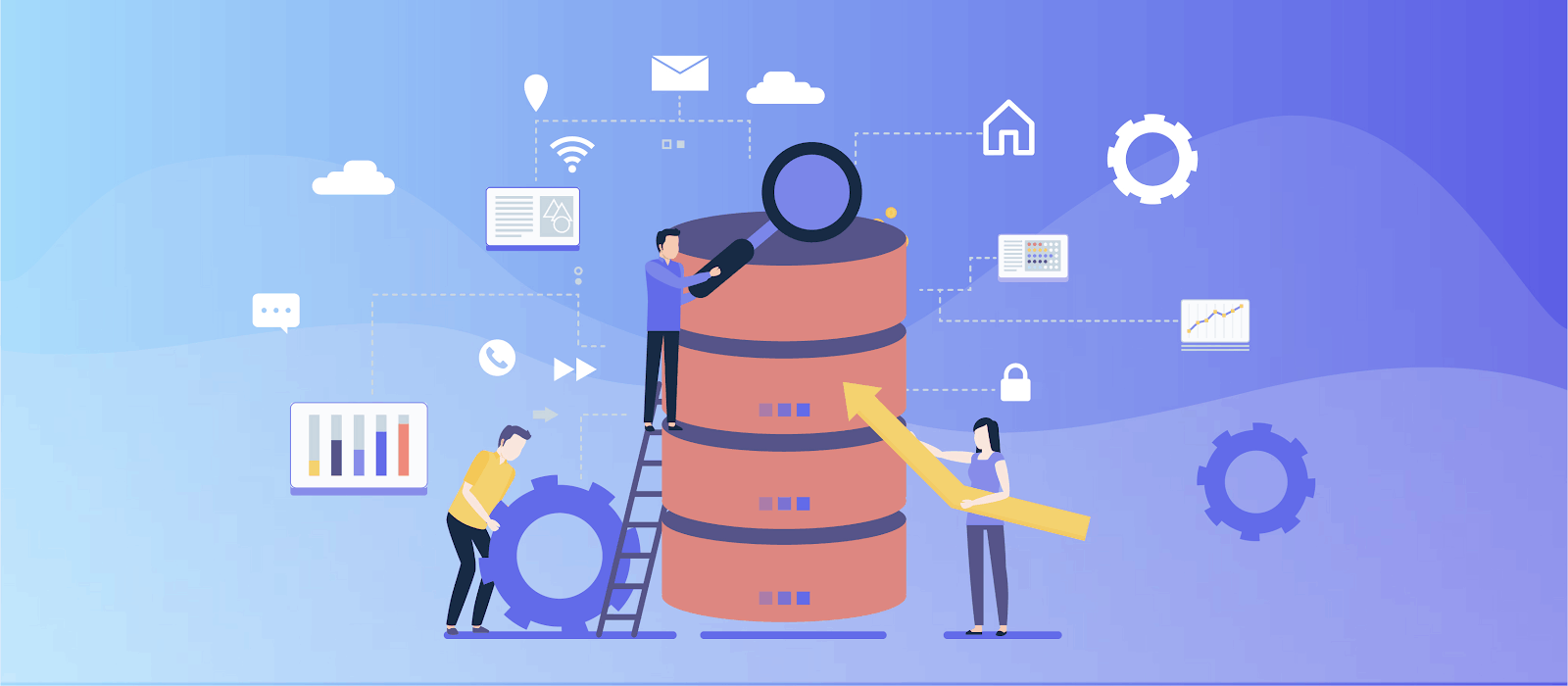
Database is what makes an application or website dynamic. Any time a user makes a request from the app, the database is supposed to accept the query, fetch the data, and give it to the app user.

Along with getting the information to a user, database is also responsible to accept new and edit the old data, as and when the user wishes.

Middleware

List of Companies Using webMethods, Market Share and Customers List

Middleware is a software that works on the server which connects an application’s frontend to its backend. It enables connectivity between the client and server. It can be organized in various layers – both business and presentation layers.

It lets the on premise apps and cloud apps interact and offer services such as error handling, and data integration. An efficient middleware can enhance business process management, user engagement, authentication, content, content management, etc.

To start with, these three are the main components that lay the basis of Backend Development.

Now for those still with us, let me now tell you of the best mobile app backend technology, the reason in calling them the best is because they have been used on a mass scale for a number of varying projects of all sizes.

Here goes the list (After the scrolls)

1. Web server tools

  • NGINX

NGINX | High Performance Load Balancer, Web Server, & Reverse Proxy

We use this open source software to do web serving, caching, reverse proxying, media streaming, and load balancing, among other things. It also functions as the proxy server to email (POP3, IMAP, and SMTP) and as a load balancer and reverse proxy for TCP, UDP, and HTTP servers.

  • Apache

Another open source software, Apache is used by over 50.1% of the world’s apps. The mobile app hosting platform has proven its reliability in the web server industry.

2. Databases tool

  • MySQL

MySQL | Most Popular Open Source Relational Database | AWS

The relational database, MySQL is an open source platform which is easy to setup, scales fast, and is free. Because of reasons like these, we have placed our trust in MySQL for all the database requirements.

  • MongoDB

Thousands of MongoDB databases compromised and held to ransom – Naked Security

The tool saves all the data in binary JSON format that makes it easier to pass the data between server and client. The tool is also a free open source NoSQL database system.

3. Git clients

  • SourceTree

Sourcetree | Free Git GUI for Mac and Windows

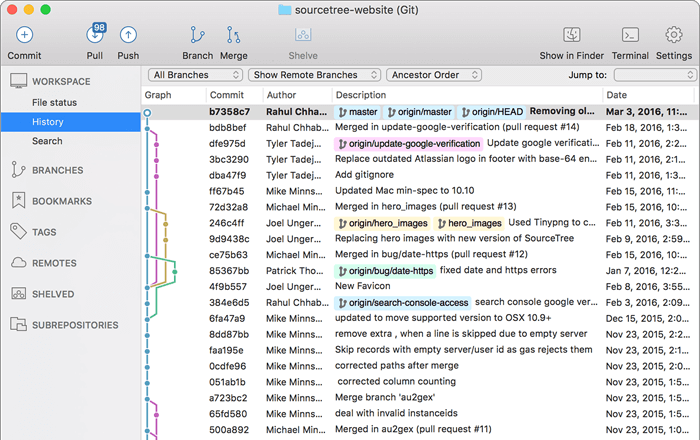
The tool simplifies how the developers interact with the Mercurial and Git repositories. It makes managing repositories more intuitive, giving people time to focus on coding.

  • GitHub client

GitHub Desktop | Simple collaboration from your desktop

The tool is used to write cross platform desktop apps that uses HTML, CSS, and JavaScript. It gives the developers a unified cross platform experience which is 100% open source.

4. Microservice platform tools

  • Kubernetes

Kubernetes Components | Kubernetes

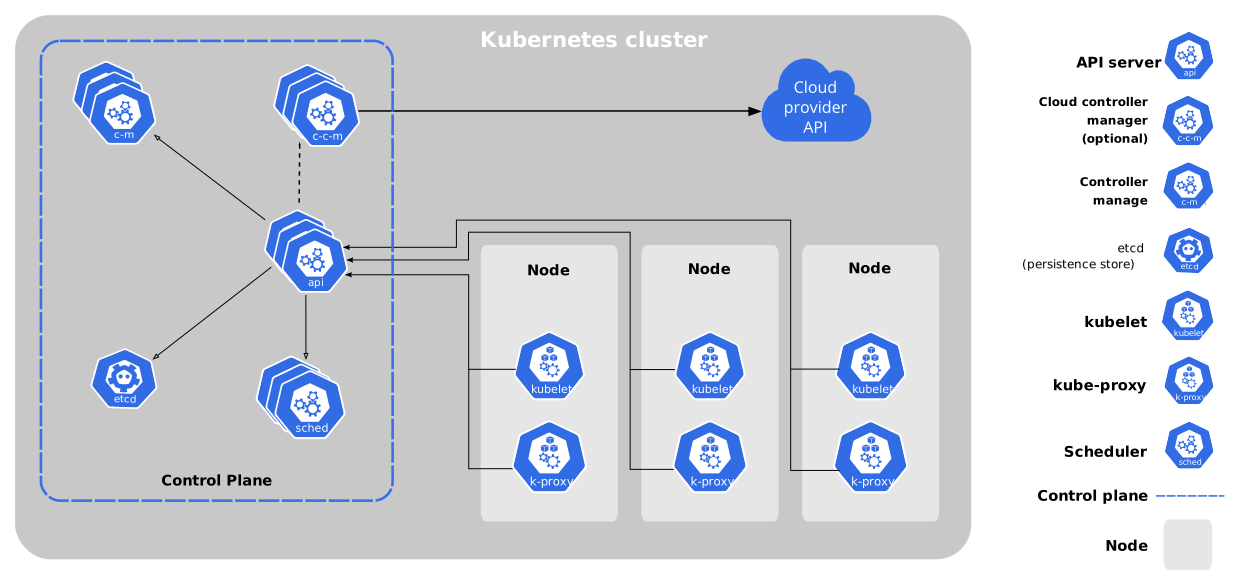
The open source platform used for container cluster management aims at providing a space for scaling, automating deployment, and for operation of application containers across the cluster of different hosts.

  • Docker

Docker Tips & Tricks. Docker is great. Docker is awesome. I… | by Francesco Burato | NCR Edinburgh | Medium

Docker puts microservices in the picture by offering developers easy to use and fast packaging, deployment mechanism, and distribution to build compartmentalized apps. It also provides an ecosystem of tools like registry service, native clustering, and cloud service.

5. Local development environment

  • WampServer

File:WampServer-logo.png - Wikimedia Commons

The open source development environment tool allows mobile app development companies to make web applications using PHP, Apache, and the MySQL database. It comes in a package with SQLite and PhpMyAdmin to help in managing databases.

  • XAMPP

How to install XAMPP on Windows? - DEV Community

The open source web server solution stack comes with Apache distribution which consists of PHP, Perl, and MariaDB integrated together in one downloadable file. The XAMPP package has been designed in such a way that is extremely easy to setup and use.

6. Collaboration service tools

  • Slack

Slack Review: The Pioneer of Team Collaboration Software - UC Today

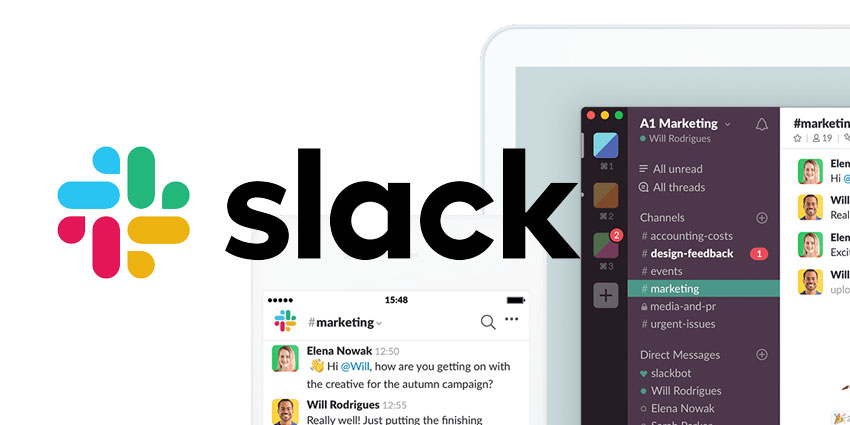
The famous cloud based collaboration and messaging app has been revolutionizing the enterprise communication since some time now. Popular because of its fun interface and rapidly expanding community of users, Slack continues to make developers’ lives pleasant and productive.

  • Jira

Jira | Issue & Project Tracking Software | Atlassian

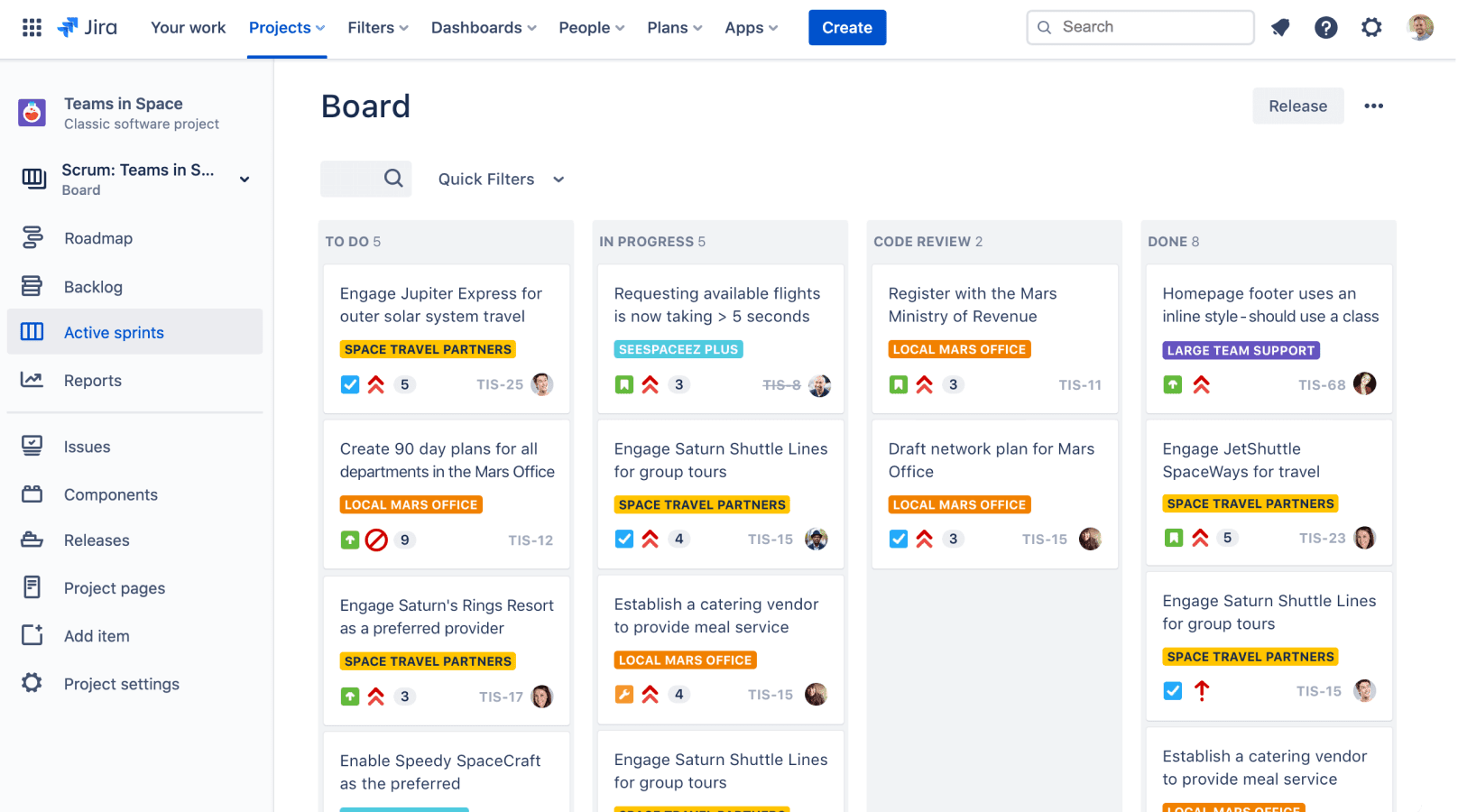
The web based project management tool uses Scrum and Kanban to manage projects. The tool was made famous by Toyota back in the 1980s for supply chain management.

7. App performance test tool

  • Apache JMeter

Apache JMeter - Apache JMeter™

The tool can be loaded in the server to check the app performance and its speed under different conditions. Earlier, it was only used to test web apps but it is now even used for testing the app performances.

  • AppLoader

Apploader Pricing, Features, Reviews & Alternatives | GetApp

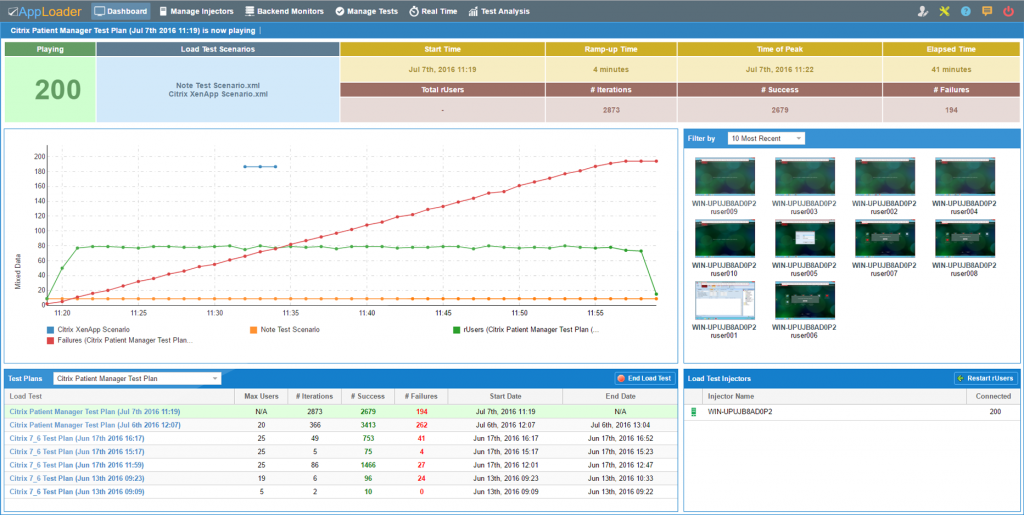
Another tool that we swear by is used to test the application by creating the exact same user experience from all the access points. The tool lets you test the complete business flow without having to add plugin or the need to write code.

Advantages of Backend Development

Role of the backend in app development service provides lots of advantages of stages of app development that you will get from MBaaS, which are as follows.

  1. Quick Development Speed
  2. Cost Efficient
  3. Focus on core business
  4. Better output in less time
  5. Reduced time to market
  6. An expanded app feature set
  7. Outsourcing of cloud infrastructure
  8. Continuous delivery and integration
  9. Performance and Security
  10. Privacy requirements like GDPR

A Quick Summary

We started with how Frontend is different from Backend and continued to the backend app development process. Next, we saw the components that lay the basis of Backend development and finally moved on the tools that makes it all possible.

Now, bringing an end to the guide, let’s touch base on APIs – the backend technology stack without which it is impossible to do Backend development.

APIs – The crucial part of Backend Programming

It is impossible to talk about Backend development, without a mention of APIs. It is through API that it connects applications, software, database, and services seamlessly. API has an indispensable role in the building of server side software architectures, allowing the software to interact and for the data to be transferred.

With this, we bring the guide to an end. Hope it imparted value to you. For any query you can contact us as we serve across the globe with our mobile application development company in USA, Europe, and Asia to help our customers and clients achieve their goals.
Mobile Apps UI Design Trends for 2018-Top 15

App designs, themes, templates and downloadable graphic elements on Dribbble

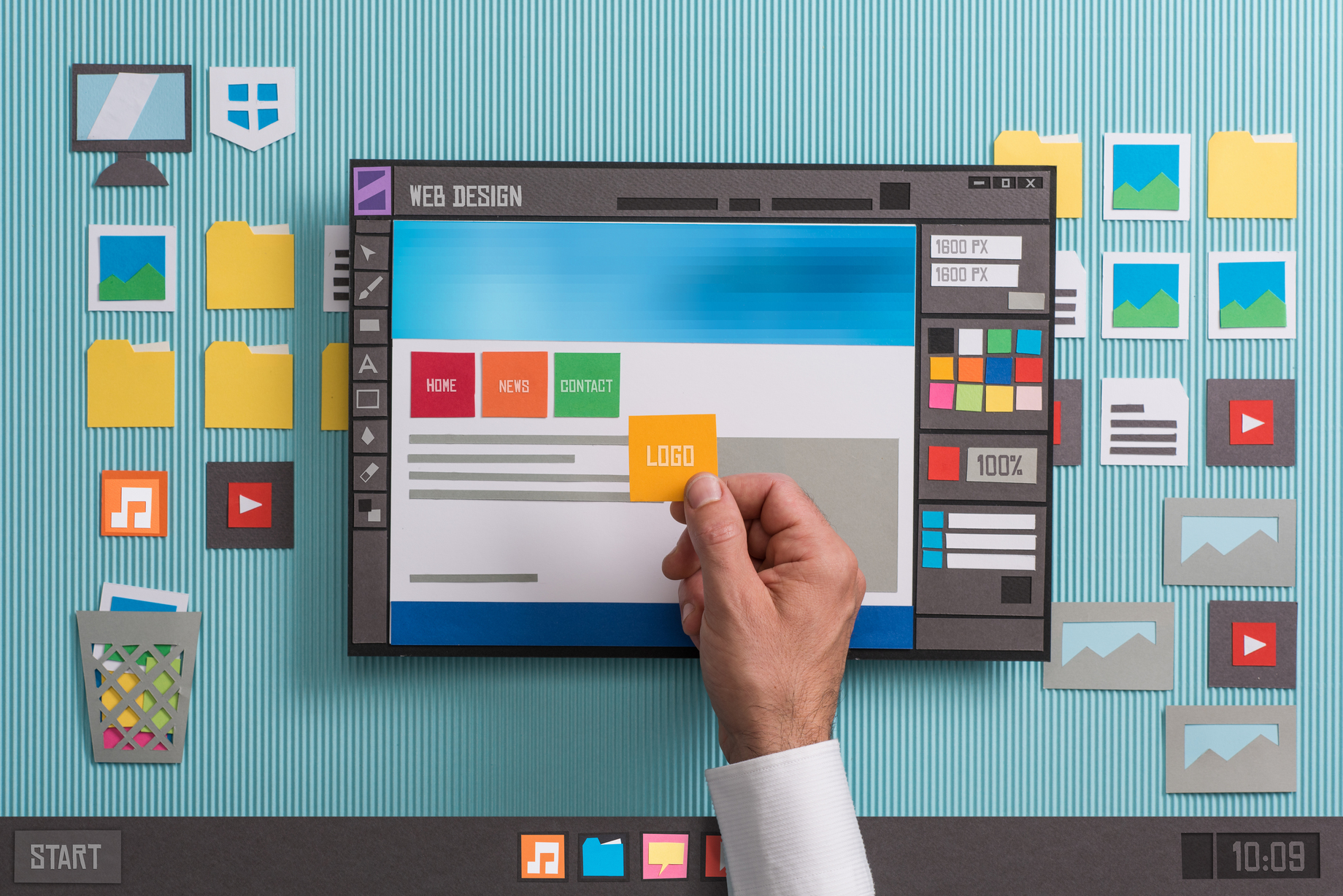
Mobile Apps Designs continue to change with the changing demand of the industry’s million users. In the race of catching and keeping the attention of the crowd of impatient users, the UI design market keeps coming with new ideas and keeps revolutionizing the old ways to make the experience innovative and value offering.

2017 bid adieu to a number of UI elements that were making the product design old and boring – hamburger menu, content with less to no images, safe colors. While 2018 will be all about on the face, no nonsense designs.

There has been a new found demand for mobile app design agencies that can understand and help keep the brands in trend, when it comes to offering uniquely innovative experience to the users.

There are a number of UI elements that have together made a list of Mobile App Design Trends 2018.

Let’s get on them to keep you on trend this year.

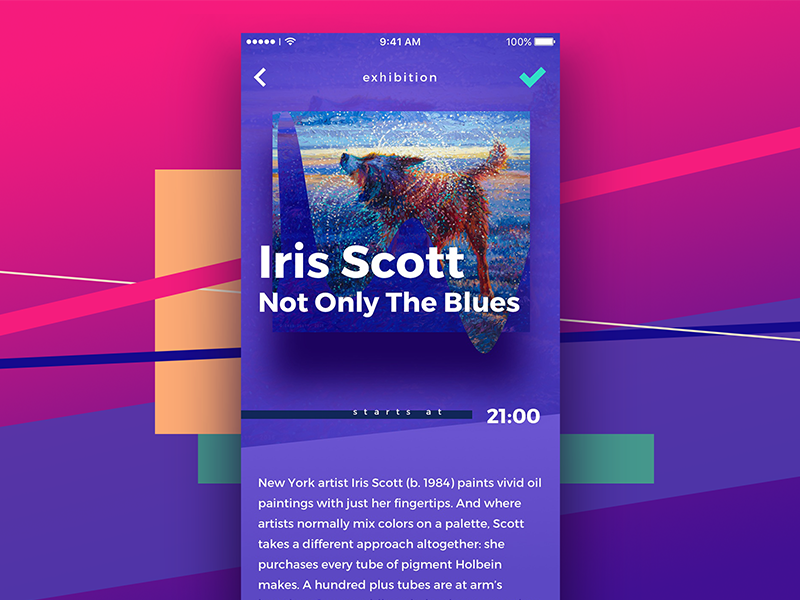
1.Vibrant Colors

Bright Colors in UI Design: Benefits and Drawbacks | by tubik | UX Planet

In 2016, UI designers reinvented flat designs in mobile apps and shifted their focus to offering greater personalization with their design elements.

Instagram was one of the first apps to modify their logo, move on from the flat, dull-muted tones to multi-colors. The trend was then trailed by a range of famous companies. Moving in the same direction, 2018 is going to be the time of vibrant colors, shooting up warmth, energy, and subtleties to your home screen.

It’s time for designers to be valiant and try out newer colors, but select and apply them wisely. Make sure the colors allow you to create unique, powerful, and eye-friendly experience.

2.Borderless Display

Future of UX Design: Trends That Really Deserve Your Attention

When Apple declared the launch of iPhone X with a borderless display, the major buzz was made around the effect of the design on UI design. They introduced the trend of transforming the usage of strict flat design ideas in mobile apps, boosting fluent storytelling. While it was still a lot restricted in 2017, Borderless Display specific designs have found themselves in the list of UI Design Trends of 2018. We will soon start seeing designs that cover the whole mobile from edge to edge.

3.Videos

50 Awesome Music & Video Player UI Designs – Bashooka

2017 witnessed a rise in the fame of video content format. Hubspot stated that 78% of people watch online videos per week, and over 55% see online videos every single day.

In the context of the mobile apps, designers will be adapting the video formats in their apps in 2018.

The human attention period has reduced from 12 to eight seconds. Video-based UI is a result of this change in span.

2018 will see more of video-based content and more platforms coming up with live video options to convey information and feelings.

4.Cards

Card UI design: fundamentals and examples - Justinmind

It was in 2015 that mobile devices overtook PCs as most used tools for surfing the web and doing the regular online activities. To cover the gap between desktop and mobile app usage, there had to be an element that would work well on both.

One of them is cards.

Although not an innovative addition in Mobile App UI Trends 2018, they play a crucial role in curating an effective UI design. Having all – video, photo, text, and link to a specific subject, cards are one of the most brilliant ways to display and organize large amounts of content on screen. Above all, they are aesthetic, easy to digestible, and properly-optimized for clicks and taps. This is why they have found themselves as the prime UI design mode on Pinterest, Netflix, and Newsfeed.

5. Sounds

PureMind | Sounds | Interactive design, App design, Sound

The newest element in 2018 UI Design Trends is sound layers. This trend are with respect to the sounds which users listen when they open a website, send comments, select emojis, etc. The sound element of UI design adds features like enjoyment and pleasure in user experience. 2018 has come with an expansion to this trend and is set to take user experience to new levels.

6.Big Typography

Big Typography designs, themes, templates and downloadable graphic elements on Dribbble

Typography is another feature for the UI designers to experiment when designing uber personalized app designs. When added with images, colors, video, animations, and innovative layouts, the element brings about exceptional user experience.

Solely because of the reason, Typography has become crucial piece of UI design world in 2018, helping designers transform from the traditional font styles to a more experimental, creative space. What you should expect this year, is fancy and bold fonts in place of done till death system fonts, which have been applied since forever.

7.Overlapping

Pattern 10: Create Overlapping & Collaged Elements - UI & Visual Design Patterns - Proximity School of Design

Overlapping of graphics, fonts, and colors not only makes UI design distinctive and eye-catching, but also add a false sense of white space. Creating an illusion of open space in the crowded real estate of a device, is the number one reason why designers are adding overlapping feature in their mobile apps.

Furthermore, in most cases, the overlapping of the same elements, combined with shadows, makes the mobile app interface designs impressive and fantasy like. All these reasons combined, make overlapping an important part of Mobile Application User Interface Design Trends 2018.

8.Gradients

Gradient designs, themes, templates and downloadable graphic elements on Dribbble

In 2018, one can expect to see bright vivid colors and much greater use of the gradients.

In the last some years, we have been seeing a rise in the number of app designers who are adopting color gradients in design when designing buttons, logos, and backgrounds.

The reason behind this adoption is when you chose a specific color, you can show a hierarchy while drawing a picture and combining it with different graphics and color gradients.

This sense of hierarchy will continue to make Gradients famous in 2018 as they did in 2017.

9.Opacity

30 Clearly Cool Transparent UI Designs – Bashooka

Same components tend to have diverse effects once you adjust or play around with their transparency level. When designing mobile app interfaces, adding opacity in components can be an excellent design work. Furthermore, the opacity settings for various graphics or colors can also help create colorful glass like texture to the app elements.

Overall, irrespective of how you add opacity to your UI design in mobile apps, they will see a concrete rise in demand in 2018.

10.Animation

5 phenomenal examples of motion design in UI | Inside Design Blog

Introducing motion design or animations in fonts, icons, buttons, and photos always have an optimistic impact on app users giving them more enjoyable experiences. The trend will continue in 2018.

11.Responsive Logos

Joe Harrison - Design & Interaction

The idea of modifying logos to fit in with the n number of devices, has been a very recent doing of the app design world. Brands have now started refreshing the logos in simplified, modern versions since last some years and making them responsive is the only logical next phase when it comes to meeting the today’s demands.

12.Real Life Photography

40 Best Photography Web UI Design Examples 2019 – Bashooka

It’s very energizing to see authentic, real-life images return to the mainstream again.

The demand for real photos rose greatly in 2017 and is set to grow massively in 2018, with brands seeking to bond with users, and designers looking to get rid of tawdry stock photos.

13.Highly-Detailed Vintage

Pin on APP UI

Vintage is nothing new, but its usage will grow stronger in 2018. Although it contradicts the mainstream need for minimalism, finely crafted images are timeless. This year, brands will be looking to attain top-shelf expression that shouts sophistication and distinction.

While not everyone’s cup of tea, food and beverage domain—specifically those involved with organic food and wine—will be leveraging the style in 2018.

14.Voice Enabled

How to Design Voice User Interface? (VUI Design Guide)

Voice-activated elements of apps helps simplify users’ operations. In 2017, apps with voice dependent services finally found their fair share of demand from the industry. The popularity of voice-activated mobile apps will only grow in 2018.Other than the voice-activated elements, fingerprint-activated ones will also play a very crucial part in defining mobile app interface designs for 2018.

15.Emoticons

Popup design - Daily Ui 16 by Ashley Saleem-West on Dribbble

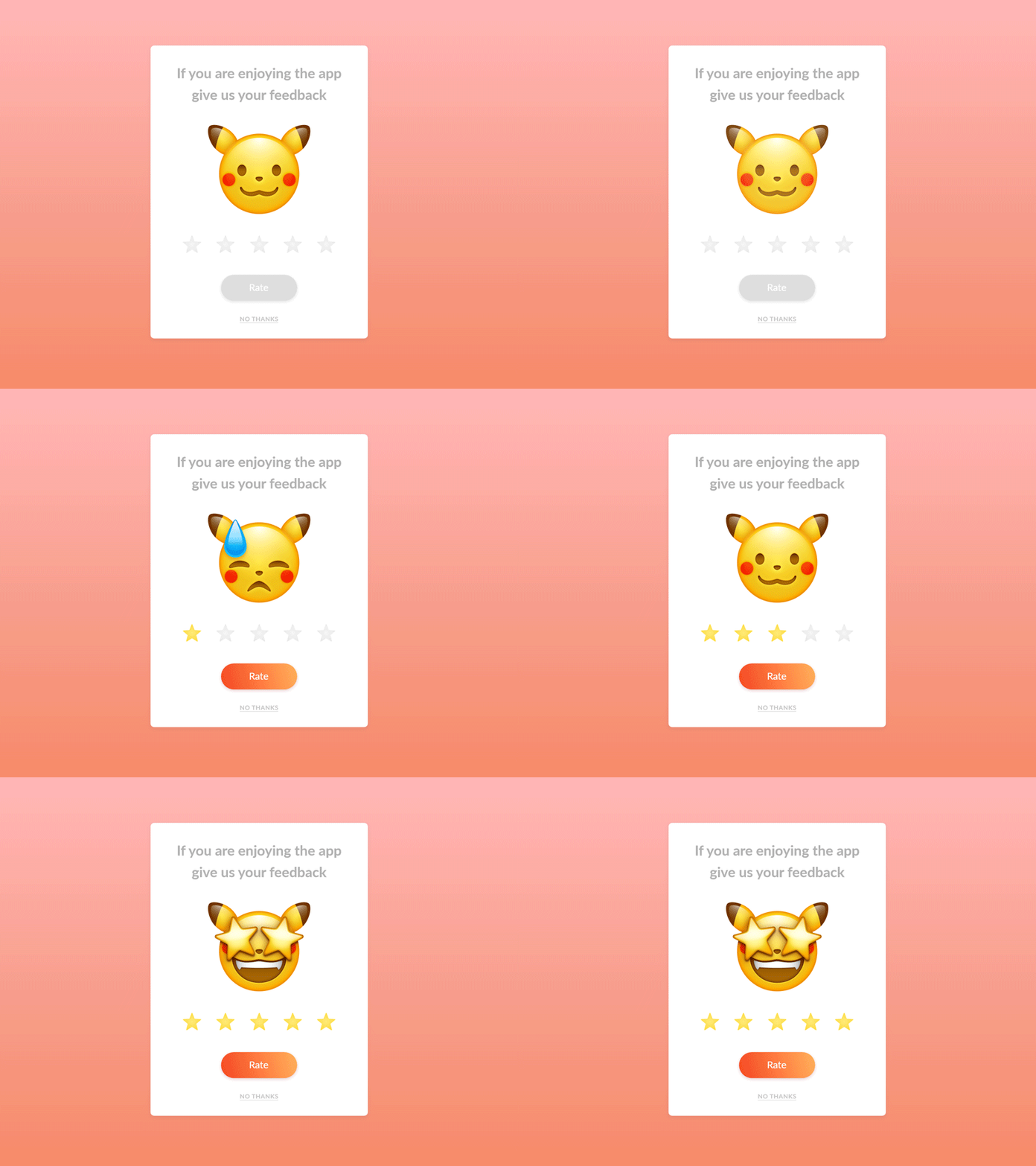
In 2018 we can expect to see emotional intelligence getting integrated in mobile experience to a much greater level. It is no more about animated effects that are shown when users complete any specific action. EI has now become a mainstream way to make users experience delightful and engaging.

In the year of mobile apps, we will see more emoticons in the list. They will see an integration with Face recognition elements that will be used for providing an array of reactions. One such technology that have been doing this perfectly is Animoji — the animated emoji that responds to iPhone X camera’s facial expressions.

Predictions for 2018: Surefire Mobile App

6 Surefire Digital Marketing Trends of 2021 | Trank Technologies

For a sector that has been on a roller coaster ride of innovation and growth ever since the launch of both Android and iOS platforms, 2017 was its year of activity. Last year came with a lot of new technologies and trends that were designed to make the app industry user friendly and innovative. If 2017 was about introductions, 2018 is about application and growth.

As the industry steps into 2018, there are a number of stats and facts that have followed it from 2017, which has set a platform that is open for exploration and innovativeness. With the foundation set on most of the new technology entrants, there is a lot to look forward to this year when the industry will reach maturity level.

Let us look at the 2018 Mobile App Predictions, as set by the Top Mobile App Development Trends of 2017 –

1. Gross Consumer Spending in App Store will cross $110 Billion mark in 2018

Google Play narrows consumer spending gap versus iOS App Store in Q1 2018

With mobile apps extending their reach to a greater number of industries, app monetization is on a rise. It is expected that the global consumer spending will cross $110 Billion, after growing at a rate of 30% every year. The trend is a hint towards how app economy has now reached its maturity level, where it is offering real value for which users are ready to pay.

2. Phablet will dominate the device category list on which mobile apps will be used

You don't know what a "smartphone" really is, and the Surface Duo proves it

Just like 2016, Phablets won the most active device race again in 2017, with 55% users opting for the device for working on their mobile applications. Seeing the increase from 41% in 2016, it is safe to assume that the device type will also rule 2018.

Second to the device type that is a blend of tablets and medium configuration phones, standing at 35% middle level phones were the ones most used.

3. Mobile Journey: What Apps Users will Move Towards and From Where

Irrespective of what Operating System the users were functioning in, almost half (46%) of the sessions started with Communication apps as soon as the device was unlocked. Next, the users moved to launch web browsers, which counts for 16% of the session time. Utility apps like App Stores, Contacts, Gallery etc. stands at the third operation of a session, with 10% of the total session time.

While these are the three categories users will continue to move around when their device is unlocked, Entertainment apps like YouTube, SnapChat, and Netflix will also find itself in the journey at 5.5%, but not at the start point. Along with the entertainment apps, gaming apps will also find itself amounting to 3.7% of the total device session time.

4. Independent Publishers will get Greater Discovery Opportunity

In June 2017, both Google and Apple announced changes to Play Store and iOS Store aimed at better showcase of editorial content and app curation. This has made both Play Store and Apple Store powerful platforms for the less famous apps launched by independent publishers.

This will give the lesser known apps an opportunity to be visible and come at the same level as that of their renowned app counterparts.

5. Demand for Video Streaming Apps will Continue to Rise

Streaming Now Accounts For 25% Of U.S. TV Usage 08/13/2020

2017 was an extraordinary year for Video Streaming apps. The app category has been single-handedly responsible for 85% and 70% increase in annual spending in iOS and Google Play respectively. Our expectation is that in 2018, the number of streaming apps on users’ devices will rise from just one.

The biggest names of the video streaming industry – Netflix, Snap, and Disney, etc. have announced their plans to continue investing in the category. This trend guarantees that the category will continue to witness steady growth in both engagement and revenue, with more players coming in to take a piece of the profitable sector.

6. Instant Apps will Continue to Give App Stores Quality Check

By giving users the freedom to first try and then install the apps that they actually use, Google will be adding the “Try Now” option to more apps than the current limited list. Clicking on it, users will get a preview of the app with very basic features, without the need to install the app on their devices.

Introduced in 2017, Instant Apps were limited to just seven to eight apps in the store, but in 2018, it will be available to greater number of apps – a move that will bring an inordinate focus on quality.

With this move, Google has taken the ball out from app publishers’ court and has put it in users’ court.

For an app to have a chance at getting installed in user’s device, it will have to give an outstanding first point experience in the Preview Mode itself. This has already started bringing in a greater demand for android app development companies that could help app getting installed right after being ‘Tried’.

7. The Session Rate per App will Continue to be Low

Mobile Web App Development Best Practices: A Tutorial | Toptal

As compared to 2016, the app session growth activity declined in 2017 to just 6% which was 11% in 2016. Even with the declining session rate, users now spending more than 5 hours on their smartphones, daily. But with a changed behavior.

As users are now spending more than five hours on their devices daily, they are dividing their time between new and old app experiences, instead of devoting to any specific app type. This movement has brought in a volatility in the session rate in a number of app categories –

Mobile App Usage Statistics 2021 for Growth & Success

Shopping category saw a rise by 54% as the consumers shifted their spending in mobile shopping apps. The adaptation of mPayment also played a major role behind the number. Media, music, and entertainment sat at 43% annual growth. While these categories rose to the occasion, Lifestyle and Gaming were the two categories that saw the least takers in 2017.

In another report by Vertoanalytics, it showed that the overall time spent has reduced in the social and news category, while it has risen for the travel and sports category. The trend hints toward the shift in content preference from once social centric to now sport and travel focused.

8. PWAs Will Lower App Bounce Rates and Give Faster Page Load Time

Why Performance and PWAs should be on your Roadmap — XWP

While being in the industry for quite some time, the adaptation of PWAs has been quite slow. The reason behind which can be attributed to lack of knowledge in the industry. But 2017 saw a number of brands investing in Progressive Web Apps, with all of them returning with similar experiences that showed – faster page load time, greater conversion rate, lower bounce rate, and higher page session time.

With brands getting acknowledged with the vast benefits that PWAs has to offer, 2018 will see not just a greater acceptance of the technology but will also witness a shift from Native Apps to PWAs.

9. Blockchain will Place Itself in a Range of App Types

Blockchain: Success Lies in Identifying the Right Use Cases

One of the most talked about technologies of our time, Blockchain, will find itself getting applied in a number of apps across a range of industries. From Real Estate to Healthcare and Payment, the technology will penetrate itself across a number of industries in 2018.

While the number of blockchain apps made live on the App Stores in 2017 were so few that they could be finger counted, the number will see a rise in 2018 with more brands exploring the security and ease benefits that the technology has laid its foundation on.

ASP.NET vs PHP: Make a choice for Your App Needs?

PHP VS ASP.NET: CRB TECH

Both PHP and ASP.NET has broad bases. They are used by huge number of developers and this makes it difficult for the new developers to choose either one of them. In one hand, PHP is a general scripting language on which developers rely to a great extent and on the other hand, ASP.NET has a brand like Microsoft attached to its name.

ASP.NET vs PHP is an argument that doesn’t seem to have an end any time soon. Since both are quite popular languages in the programming world. You must have seen a ton of articles on differences between ASP.NET and PHP by now but in reality most of those articles are biased.

However, in this article we will talk about both the programming languages, breakdown the terms in for better understanding and discuss which is better ASP.NET or PHP.

PHP

PHP is a recursive acronym for Hypertext Preprocessor. It is an open source programming language that is used for web development and can be embedded into HTML. The best thing about PHP framework is that it is great for beginners since it allows simple and easy coding techniques. On the other hand PHP is great for professional programmers as well because of all the advanced features it offers. PHP framework is said to be adopted by many businesses in the near future and you can look at the upcoming best php frameworks here.

Pros and Cons of PHP framework

The Pros and Cons of Virtual Events - The Moery Company

Pros:

One of the biggest advantage that PHP has is the rapid development. The market demands faster app development process and PHP gives the benefit to any mobile app development company that does multiple productions in one day. The framework is not only fast but ensures the security of the application. But the PHP developers have to make sure to use the framework as it is meant to be used to ensure application’s security. PHP is easier to maintain and has a huge community of developers that provides help whenever needed.

Cons:

PHP is prefered by developers for all the advantages it provides but they can’t ignore the disadvantages that comes with it. Slower execution, lack of ability to solve specific problems and time taking to master are some of the cons of this framework.

ASP.NET

7 Best Courses to learn ASP .NET Core and MVC in depth | by javinpaul | Javarevisited | Medium

ASP.NET is an open-source server side web development tool developed by Microsoft. The framework provides web development tools to produce dynamic web pages, web applications and web solutions. ASP.NET frameworks are written in .NET language and support Visual Basic.NET, JavaScript.NET and languages like Python and Perl. The framework also compatible with the previous version ASP.NET MVC.

Pros and Cons of ASP.NET frameworks

Pros and Cons of Neuromarketing. Every Friday in our office we have a… | by Dmitry Gaiduk | Medium

Pros

The pros of using ASP.NET include the flexibility to add and remove features as and when needed, the ease of setting up,  an open-source and cross-platform framework and compatibility with  other .NET frameworks. Microsoft has claimed it to be a highly popular framework soon just like Ruby and Node.js.

Cons

However, ASP.NET does have a few cons that may make its popularity a slow process. The framework does have problems when it comes to ease of making changes, documentation gaps, lack of supporting tools and lack of basic features since its too raw. These issues can be solved by ASP.NET developers, of course, by using external tools and methods.

ASP.NET vs PHP: The comparison

There is no doubt that both ASP.NET and PHP frameworks are great frameworks to work with but one may have few advantages more than the other. For professional developers this debate has already been settled based on their experience with each of the frameworks. But any budding developer might want to take a look at this comparison to decide which platform to start with.

Both PHP and ASP.NET provide multiple advantages and at the same time has some disadvantages. To decide which one is better than the other, we shall compare each of these two carefully. In this section we will discuss ASP.NET vs PHP: Which is better?

Performance

Java 9 Performance Improvements — Getting Started With Java Spring - DZone Performance

When it comes to the performance of a framework there is a misconception that the language of the framework determines its performance. However, this is not completely true. The performance of any framework depends on the way the coding was done.

The performance of ASP.NET is comparatively better than that of PHP. This statement may not be believed by PHP developers for the fact that many great websites have been built using PHP.

While that may be true but it does not dismiss the fact that ASP.NET allows parallel programming which lets chunks of code to run all at the same time whereas PHP does not support threading at all.

Market Share

Should You Use Market Share as a Metric?

The biggest difference between ASP.NET and PHP is the usage and market share. The chart below clearly shows that PHP has more usage popularity than ASP.NET. The websites built with PHP has been ranked among the Top 10k sites, Top 100k sites and Top 1M sites. Whereas ASP.NET hasn’t been awarded any titles that can beat PHP’s.

Security

Security Policy

Another huge difference between ASP.NET and PHP is the security options they both provide. Both the platforms provide security features to the developers however ASP.NET has built-in security features such as SQL injection. In other words, ASP.NET automatically does the work for you whereas PHP only provides you with the tools.

So to settle which is better ASP.NET or PHP security-wise, ASP.NET would be the right choice. The PHP developers are provided with the tool and if they wish they can structure their apps securely. Sadly, many PHP developers don’t care about it and that results in vulnerable apps.

Websites

Since it has been said earlier in the article that websites that used PHP has been ranked top as compared to ASP.NET built websites here are two lists to compare ASP.NET vs PHP websites:

Websites built using PHP

  • Facebook
  • Wikipedia
  • WordPress.com
  • Flickr
  • Yahoo!
  • iStockPhoto
  • Tumblr
  • Mailchimp

Websites built using ASP.NET

  • StackOverflow
  • Microsoft
  • GoDaddy
  • DELL
  • Visual Studio
  • Wild Tangent
  • Diply.com
  • TacoBell.com

Among these, some websites are extremely popular in both the lists but the majority of famous websites are PHP developed.

Cost-wise which is better, ASP.NET or PHP?

Operational Cost Cutting By Being on Swiggy | Indifi

In this area, PHP is a clear winner for the reason that PHP is an open source development framework whereas ASP.NET charges some fee for hosting. The fee charged by Microsoft owned ASP.NET is not high but when compared to PHP’s free usage, it can make developers skeptical towards ASP.NET.

The cost does not however stop ASP.NET developers from building websites using the framework. Another great way is to outsource the ASP.NET mobile app development services.

Community Support: ASP.NET vs PHP

Correct Community Support. Tips and suggestions

It’s a given that PHP has a larger community than ASP.NET because it’s free. But that is not the only thing to say about a good community. ASP.NET community consists of highly dedicated developers who are supportive of their community even though the numbers is not as high as PHP. Of course the PHP community regularly comes up with the solutions to the challenges faced during PHP web apps development process.

However, advantage of ASP.NET over PHP is that the ASP.NET developers have a community that is rather dedicated towards programming that having a large support.

Advantages of ASP.NET over PHP

How to create a new project in ASP.net - Truebodh Technologies

All the comparisons in the previous section point towards choosing PHP over ASP.NET. But this may seem unfair to those who are looking for reasons to choose ASP.NET over PHP. So what is the use of ASP.NET?

  • ASP.NET provides the freedom to choose from multiple languages such as C#, Visual Basic.NET, C++, etc.
  • The SQL security feature that ASP.NET provides is automatically applied to the applications and has unlimited data storage.
  • With ASP.NET you get multiple .NET libraries which is not the case in PHP development.
  • ASP.NET allows threading of codes which allows multiple codes to run at the same time.
  • ASP.NET developers are paid much better than any PHP developer because of there are less ASP.NET developers in the market.

As this debate of ASP.NET vs PHP comes to an end its time to decide which one is better than the other. Both the development frameworks are exceptionally great in the work they do and developers freely choose between them as per the need of the development process.

In many cases PHP has proved to be a stronger framework but has also had some weaknesses that can affect the development process to a great extent. We have also seen a completely separate section for the advantages in ASP.NET development which consisted of strong points of benefits for the developers.

PHP has a huge community and is a free framework to work with. On the other hand ASP.NET is likely to have more scope in the future since it has a huge company name Microsoft behind it.

But if you still can’t decide between the two, contact our team at Anteelo and we will help you out. We engage in both ASP.NET web app development and PHP mobile app development services which will help us give you the best solution for your problems. Take a look at our mobile app development guide for more information.

MVP App Guide- Mobile App Development for Startups

Mobile App Development - Step by step guide for 2021 and beyond

Mobile applications are, undoubtedly, the buzz in the entire business world. Today, every business is getting on mobile. But, is it wise to develop a mobile application? Is it a profitable deal, especially when you are a startup struggling to establish itself in the market? The answer to this question is quite difficult to say. You can’t deny the importance of having your own mobile app, as well as can not invest an exorbitant amount of money in a single idea itself. And this situation becomes more complicated when there is a risk of app failure even after pouring all your money and efforts into mobile app development. Remember, there are endless mobile applications in the market- you can’t expect the users to get entice with your app idea & choose it over others. Then what to do? The simplest way to tackle this situation, as per our experts, is to go for MVP – a concept that is bringing down the cost of mobile app development to a great extent.

MVP (Minimal Viable Product) App

What Is a Minimum Viable Product in Mobile App Development? | Dogtown Media

An MVP (Minimal Viable Product) is the product (or we can say app) with the least, vital features that target a particular problem using the minimum resources. It enables the start-ups to engage the first users, understand the audience’s needs, and make their application better using the feedbacks gained.

In other words, it is the smallest, quickest yet functional version of your app idea that can be taken into consideration to understand the viability of your app idea.

Talk about Uber, Airbnb, or Foursquare- almost every top-grossing app that is ruling the market today has undergone this phase. In fact, we recommend all of our clients to have a thought on developing an MVP, particularly in case of a complex app idea. Wondering, why? Check out the following points.

Benefits of MVP for Startups

MVP application is the ultimate investment for start-ups, due to the following reasons:

1.Testing the Main Idea at the Earliest

Top 25+ API Testing Tools | Nordic APIs |

There’s no denying the fact that we all find our ideas good enough to set the market on fire. But, are they really so? Will the users really find them fantastic? The best way to analyze this is to launch an MVP app in the market. Develop an application with just the sufficient features that define your main purpose and launch it in the market. If it offers impressive outcomes, take it to the next step. In the flip side, gather user feedbacks, do market research, and improve your applications so as to launch it in the future. This way, an MVP application can help you to understand the market validity of your idea and can save a lot of money on developing a ‘less-effective’ app.

2.Reaching Investors

11 Foolproof Ways to Attract Investors

It is always better to visit investors with a functional model than a diagrammatical representation or an idea in your head. When you present an MVP to the investor with your future plan, the investor can more likely link to your idea and get interested in it. He need not visualize the main idea- he can see the demand for your app in the market, and hence, can easily agree to your request and contribute to further app development process.

3.Making an Impact on the Market

Coronavirus Impact: Making Sense Of The Global Market Crash

When talking about mobile application development, you hit the market at once. You have to make extra efforts to immediately attract users. However, in the case of MVP, you can keep on attracting a group of people throughout. With the introduction of every new feature, you can attract more users, as well as entice the existing users. This way, you continue to make an impact on the market.

4.Minimum Development Cost

We all know that the more features & functionalities you include in your app, the more you have to pay for it. If you build a complete mobile application, it might cost you enough to make a hole in your pocket. But, here in MVP, you can test your idea in less than half of the mobile app development cost. Moreover, you need not make a one-time investment; you can invest in different sessions related to the integration of different features into the app.

5.Prevents Losing Interest

It usually happens that the development process takes so much time that you completely feel detached to the idea. In such a scenario, an MVP app is a great investment. It gets developed in lesser time, reaches the market, and keeps you interested in updating it with what the users want.

6.Saves Efforts Time

18 ways LearnUpon saves you time - e-Learning Feeds

MVP development not just saves the cost, but also the effort and time. It allows you to determine if your efforts are getting a required response or not. Wherever you find that the efforts are not bringing fruitful results, you can put it on end. This way, it allows the startups to use their potential in the right way!

Wrapping Up!

MVP, as you might have learnt by now, is a crucial element to consider for both startups and established brands. It can help you develop a mobile app successfully. But in case, you are looking forward for understanding various other elements that should be considered for launching an app successfully, have a look at this mobile app development guide.

Better using AIRO in security operations-For Analysts

Artificial Intelligence (AI) and Security: A Match Made in the SOC

The traditional security operations model is rapidly succumbing to the challenges and dynamics inherent in today’s cybersecurity market. Over the last few years, organizations have deployed a myriad of security technologies to combat specific threats, and as a result have inherited a collection of point product solutions with very little interoperability. This has made it difficult for operation teams to leverage these technologies as a common fabric for threat identification, correlation, detection and remediation activities.

This has also increased the amount of time it takes to detect and remediate a security breach. On average, it takes organizations nearly 6 months to detect a breach and another 2 months to remediate it. While organizations continue to operate in a reactive mode to security threats, the goal is to move to a model that is much more proactive and predictive in nature.

Compromising this goal is the lack of skilled security expertise needed to perform identification, detection and remediation activities. The talent shortage is most pronounced for Level 1 analysts in the security operations center (SOC), the “first responders” that must sift through volumes of data and determine which alerts require immediate action.

Types of Cyber Attacks: A Closer Look at Common Threats - Security Boulevard

Attackers are using sophisticated approaches to exploit vulnerabilities, and the volume and velocity of known and unknown attacks continue to rise. Organizations still demand “eyes on glass” to detect and respond to security threats, but the volume of attacks originating from multiple threat vectors, and the skills challenge they face has created a scale issue where level 1 SOC analysts are overwhelmed with the amount of data that must be analyzed. In some cases, SOC analysts are dealing with petabytes of data. In addition to the scale problem, the incoming data lacks context, which makes the task of prioritizing suspicious behavior for further investigation another challenge for SOC analysts.

The Business Benefits of AIRO

Working at Airo Security | Glassdoor

To effectively address these challenges, organizations must adopt a new approach for SOC operations that addresses the need to handle the volume of data and alerts more effectively. A move toward an intelligent SOC that utilizes AI, Automation, Incident Response and Orchestration (AIRO) to increase productivity and efficiency of SOC analysts and accelerate the time to detect and contain a security breach is directionally where the market is headed. AIRO consists of the following components:

  • Analytics: Driving contextual insight into threat dynamics
  • Intelligence: Collecting and indexing sources of information
  • Response: Initiating the proper response based on the nature of the security threat
  • Orchestration: Coordinating multiple toolsets to mitigate a threat and harden the network

Using AIRO tools, organizations can better leverage existing investments in security technologies by utilizing APIs to interconnect various platforms and correlate data from firewalls, IDS sensors, endpoint devices, and external threat intelligence feeds. AIRO tools complement an existing security information and event management (SIEM) tool by acting as middleware to integrate with existing  tools and provide greater visibility into indicators of compromise. This becomes increasingly important as corporate data moves from endpoint devices to on-premise infrastructure and multi-cloud environments.

AIRO tools ingest alerts from the SIEM and automate the responses to repetitive alerts, freeing up security analysts for the more challenging alerts that require human intervention. The tool should also provide valuable contextual information — such as asset information and threat enrichment data —  to effectively improve the security analyst’s decision-making ability by prioritizing threats that represent the most risk to the organization.

In today’s complex environment AIRO tools can make security analysts’ work more efficient, less burdensome and more accurate by leveraging automation, analytics and orchestration. By ensuring proper integration and interoperability with existing security technologies and centralizing visibility on a security platform, security operations teams can gain greater insight and move from a reactive security posture to a more predictive and preventative approach.

Remote workforces kept productive by IT support automation

Are remote workers more productive? A data-backed answer

Enterprise clients have looked to automate IT support for several years. With millions of employees across the globe now working from home, support needs have increased dramatically, with many unprepared enterprises suffering from long service desk wait times and unhappy employees.

Many companies may have already been on a gradual pace to exploit digital solutions and enhance service desk operations, but automating IT support is now a greater priority. Companies can’t afford downtime or the lost productivity caused by inefficient support systems, especially when remote workers need more support now than ever before.

Digital technologies offer companies innovative and cost-effective ways to manage increased support loads in the immediate term, and free up valuable time and resources over the long-term. The latter benefit is critical, as enterprises increasingly look to their support systems to resolve more sophisticated and complex issues. Instead of derailing them, new automated support systems can empower workers by freeing them up to focus more on high-value work.

Startup Deploying AI Chatbots With “Conversational Memory” for More Natural Exchanges

Businesses can start their journey toward digital support by using chatbots to manage common support tasks such as resetting passwords, answering ‘how to’ questions, and processing new laptop requests. Once basic support functions are under digital management, companies can then transition to layering in technologies like machine learning, artificial intelligence and analytics among others.

An IT support automation ecosystem built on these capabilities can enable even greater positive outcomes – like intelligently (and invisibly) discovering and resolving issues before they have an opportunity to disrupt employees. In one recent example, Anteelo deployed digital support agents to help manage a spike of questions coming in from remote workers. The digital agents seamlessly handled a 20% spike in volume, eliminated wait times, and drove positive employee experiences.

Innovative IT support

IT support automation helps companies become more proactive in serving their employees better with more innovative support experiences. Here are three examples:

Remote access

Windows 10: Manage Remote Access (2016)

In a remote workforce, employees will undoubtedly face issues with new tools they need to use or with connections to the corporate network. An automated system that notifies employees via email or text about detected problems and personalized instructions on how to fix them is a new way to care for the remote worker. If an employee still has trouble, an on-demand virtual chat or voice assistant can easily walk them through the fix or, better yet, execute it for them.

Proactive response

NSA's Reactive Security Measures Too Late to Stop Snowden | Threatpost

The ability to proactively monitor and resolve the employee’s endpoint — to ensure security compliance, set up effective collaboration, and maintain high-performance levels for key applications and networking – has emerged as a significant driver of success when managing the remote workplace.

 For example, with more reliance on the home internet as the path into private work networks, there’s a greater opportunity for bad actors to attack. A proactive support system can continuously monitor for threat events and automatically ensure all employee endpoints are security compliant.

Leveraging proactive analytics capabilities, IT support can set up monitoring parameters to match their enterprise needs, identify when events are triggered, and take action to resolve. This digital support system could then execute automated fixes or send friendly messages to the employee with instructions on how to fix an issue. These things can go a long way toward eliminating support disruptions and leave the employee with a sense of being cared for – the best kind of support.

More value beyond IT

How To Drive Your Team To Value Beyond The Ordinary

Companies are also having employees leverage automated assistance outside of IT support functions. These capabilities could be leveraged in HR, for example, to help employees correctly and promptly fill out time sheets or remind them to select a beneficiary for corporate benefits after a major life event like getting married or having a baby.

Remote support can also help organizations automate business tasks. This could include checking on sales performance, getting recent market research reports sent to any device or booking meetings through a voice-controlled device at home.

More engaged employees

Blog: 3 tips to make your employees feel more engaged — People Matters

With the power to provide amazing experiences, automated IT support can drive new levels of employee productivity and engagement, which are outcomes any enterprise should embrace.

Matter of mobility to the clinician: Connected healthcare

4 Ways Mobility Is Set to Revolutionize Healthcare by 2022 | HealthTech Magazine

Technology experts will often talk about the benefits of mobility in healthcare, but to understand why mobility matters and how it might improve both workflow and clinical benefits for patients, it’s vital to get a user’s perspective.

As a clinician, my view of mobility is influenced by my own experiences in different medical settings. Clinicians — by which I mean doctors, nurses and other allied health professionals — work across multiple hospital wards, often across several hospitals or medical facilities, with multiple parties involved in the care of the patient. For example, a cardiologist might review a patient in the hospital’s outpatient department, in the emergency department or in the cardiology ward. As a result, the cardiologist may need access to medical records across various locations, which potentially could be sourced from multiple systems of record.

The key is being able to access those records in real-time and on the go. If clinicians are required to interrupt a patient evaluation to access information from a file or computer, valuable time can be lost, affecting the care of the patient. If clinicians can access the right information at the right time and in the right place — at the patient’s bedside, on the go, or in various locations — they are better equipped to make informed and accurate clinical decisions, enabling them to spend more time with the patient and ultimately improving patient care.

Taking a holistic approach to patient care - PMLiVE

Furthermore, clinicians don’t work in isolation. Mobile access to clinical data and the ability to share information with other health professionals — for example accessing blood results from pathology or rehabilitation progress notes from a physiotherapist — give everyone involved in the patient’s care the right information as and when needed. These also ensure that clinicians make good use of their time. For example, if a doctor can see that the patient is scheduled for an X-ray at 11:45 a.m., he or she knows a midday appointment is not feasible.

Taking a holistic approach to Healthcare

Why Hasn't A More Holistic Approach to Patient Care Become The Norm?

We also need to realize that healthcare doesn’t happen in isolation from the rest of our lives. Most people now access information through their mobile devices. It makes sense, therefore, that clinicians would want to access clinical data in the same way.

And patients are also more connected in every way. They expect to be included in decisions driving their own healthcare. They want to understand their diagnosis and what it means. If the clinician can access the patient’s data on a mobile device, it’s much easier to have an informative bedside discussion with the patient. For example, the clinician can pull up the patient’s X-ray or blood test results on a mobile device and show the patient areas of concern or trends in the results.

The clinician might want to go further and share information about a procedure — for example, videos of a procedure or hyperlinks to information that might be helpful to the patient. Or the clinician and patient can watch the video together on the mobile device, giving the patient an opportunity to ask questions and be properly informed.

A truly mobile, integrated solution will also be able to aggregate information from multiple sources — the patient’s medical record, pharmacy record, nurses’ notes — and have it all in one place.

What is Holistic Medicine? - Dr. Lakshmi Menezes

In an age where data security, patient privacy, and accountability are under the microscope, mobility gives healthcare systems the ability to track information. The system will show that a certain clinician has seen the results. It’s possible to also require that clinician acknowledge receipt of the information as he or she receives it.

There’s no doubt that challenges exist — technical, logistical, user-specific, and more — but the benefits are worth the pursuit of a solution. Healthcare organizations have the information required to ensure quality patient care, increase patient satisfaction and reduce the rate of mortality and morbidity. But, they want to be able to get that information about their patients in real-time and on the go. Ultimately, clinicians want mobility. After all, it’s how most people — clinicians included — interact with the world in their daily lives. Why should healthcare be any different?

Learning complexities: Best practices of work in the future

Teacher job description | Totaljobs

Today’s high performing organizations know that the world of learning has undergone tremendous change, and they need to put employees at the center. Employees require a lifetime of continuous learning to keep pace with change.
An innovative approach to learning can help tackle the workforce skills gap, retain talent, increase performance and improve productivity.

Organizations need to create a learning culture and environment that welcomes knowledge seeking and employee self-improvement. The next generation of learning technology expands access, personalizes experiences, offers actionable insight and helps track how learning affects business outcomes.

Learning leaders must work together and share the same vision to successfully engage and prepare their employees for the future of work. Here are five best practices we view as critical for successfully overcoming the challenges and complexity within learning today:

  • Take advantage of new learning platforms. Standardizing on a single LMS is not the only option to address learning complexity. Having multiple systems is fine, even preferable, provided they can be accessed through a single platform. What’s important is to implement a multi-platform, agile methodology where the learner’s experience is the focus.

The Shift to Digital: 10 Benefits

  • Meet learners where they are at. Employees do not have as much time as they would like for formal learning, informal “in-the-flow” work learning is necessary for training and development.

My "Meeting Learners Where They Are" Moment

  • Embrace evolving workforce demographics. To address learning diversity, investing in next-generation learning technology and fresh approaches includes mobile learning tools and personalize learning paths needed to improve performance and retain talent.

10 Diversity & Inclusion Statistics That Will Change How You Do Business

  • Up-skill for the future of work. Closing the skills gap requires prioritizing learning development programs that empower employees to seek new skills that meet evolving business needs.

Upskill and Reskill: Why Skill Development is Key to Future Success

  • Ensure employees remain relevant in the digital workplace. Employees need to build comprehensive skill sets that are applicable to a variety of roles that will eventually be in high demand with the adoption of automation, robotics, and artificial intelligence.

Why a digital workplace is important for digital transformation | Process Excellence Network

In today’s changing world of work, employees need access to anytime, anywhere learning that’s relevant and meaningful to their development. An active learning community encourages employees to become insight experts and share actionable knowledge that enhances organizational intelligence.

It is time to pursue an innovative approach to learning and to take full advantage of next generation learning technology that prepares employees for change, aligns with business goals and connects a global workforce to deliver performance that accelerates growth.

What is IoT? The internet of things explained

What is the IoT? Everything you need to know about the Internet of Things right now | ZDNet

Suppose you are going for a meeting to a nearby town. While traveling, a message popped on your device screen informing that the volume of petrol is going low. You were confused about what’s happening, when another message sharing the details of a nearby petrol station popped up on your smartphone device.  Wondering how is that possible? Well, it’s nothing but a real-life example of IoT.

Confused about what is Internet of Things (IoT)? How does it work?

Let’s talk about it in detail in this article – starting with some exciting statistics.

  •  Statistics Proving the Uprising Market for Internet of Things (IoT)
  •  A Brief Introduction of Internet of Things (IoT)
  •  Working of IoT Technology
  •  4 Major Components of IoT Ecosystem
  •  Ways IoT is reshaping Business world

Statistics Proving the Uprising Market for Internet of Things (IoT)

What is IoT? The internet of things explained

  1. By 2019, the global IoT market will generate a revenue of $1.7T.
  2. By 2022, 100% of the population is predicted to have LPWAN coverage.
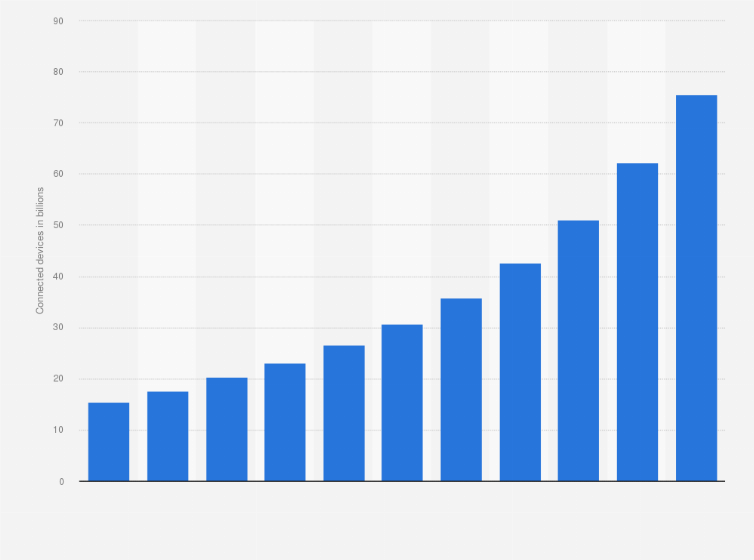
  3. By 2025, there will be more than 75.4B Internet of Things devices worldwide.
  4. In 2018, there were around 7B IoT devices. However, more than 10B devices are expected to join Internet of Things ecosystem.
  5. As of 2018, nearly half of all IoT (Internet of Things) devices were connected to WPAN (Wireless Personal Area Networks), including Zigbee, Bluetooth, and Z-wave.
  6. 54% of Enterprises invested in IoT app development because of its cost saving factor.

Now as we have taken a glimpse of IoT Trends 2020, let’s begin right from the basics.

A Brief Introduction of What is Internet of Things

IoT, also referred to as the Internet of Everything (IoE), is an ecosystem of interrelated computer devices, digital machines and objects that has the ability to transfer data to each other in real-time, with minimum human intervention.

These devices include coffee makers, washing machines, music system, TVs, wearables and other electronic devices that can communicate with each other using what is called Machine-to-Machine (M2M) communication.

While this is all about what is IoT technology, let’s turn towards its working mechanism.

Working of IoT Technology

When talking about how does IoT work, the process begins with devices that have built-in sensors. These devices are connected to IoT platforms which stores data from all the connected devices. The important data is then used to perform tasks that fulfil the needs of people.

When we say the data is stored in the IoT platforms, it doesn’t mean that all the data is useful. Devices carefully select only particular data that is relevant to execute an action. These pieces of information can detect patterns, recommendations and problems before they occur.

In this way, IoT application works with smart systems that automate tasks to address specific needs.

However, if you still have any doubts regarding how does it work, check out this video:-

With this attended to, let’s dive deeper into IoT market and see what are the prime components of Internet of Things technology.

4 Major Components of IoT Ecosystem

1. Sensors/ Devices

What is IoT? The internet of things explained

The foremost component to consider in Internet of Things technology is sensor/devices. A sensor picks up all the minute details from an environment. The environment can have many complexities. What makes IoT security so great is these sensors that pick up even the most sensitive changes. These sensors are built in the devices which collects all the data to be used later. For instance, our phone is a device with built-in sensors like GPS, camera, etc.

2. Connectivity

Converging cloud and connectivity

Once the data is collected it is transferred to the cloud infrastructure (also known as IoT platforms). But to transfer the data, the devices will need a medium. That’s when connections like Bluetooth, Wi-Fi, WAN, cellular networks, etc come into play. These mediums are all different and must be chosen wisely for best results.

The effectiveness IoT security highly depends on the speed and availability of these mediums.

3. Data Processing

What is IoT? The internet of things explained

After reaching the cloud infrastructure the data has to be analysed so that the right action can be taken. This process is however considered one of the most crucial obstacles in front of IoT app development. The analysis can be as simple as checking the temperature of the AC or a complex one such as a situation where an intruder comes in and the device has to identify it through cameras. The IoT application is made such that it can process all the data at a fast rate to take immediate actions.

4. User Interface

Mobile App Design Fundamentals: User Experience vs. User Interface | by Clearbridge Mobile | Medium

The last step is when the user is notified about the action with the help of a notification or an alert sound sent to the IoT mobile apps. This way the user will know that his command has been run through the systems.

However, this isn’t as easy as it seems. It all depends on what is IoT platform and how the technology has been developed. It becomes crucial for Internet of Things (IoT) app development companies to develop a system that can also be manually adjusted. In a situation where the temperature of the fridge is not cold enough to freeze ice cubes, users should be able to do that manually without the system backfiring.

Now as you have gained an insight of what this technology is, let’s take a look at what are the uses of Internet of Things in the present world – besides backing the concept of Smart Homes and cars.

What IoT Means to the Business World

1. Healthcare

Support Operation Goodwill & Cheer and Feed Framingham's Frontline Workers This Holiday Season - Framingham SOURCE

IoT in Healthcare has opened new doors of opportunity for medical specialists and patients. The technology enables doctors to get a real-time access to patient medical data, store them on cloud, and share with others. It also cut down the waiting time, helps to check for the availability of hardware and equipment, and simplifies the process to identify chronic diseases and take the right actions to mitigate the risk.

2. Education

What is IoT? The internet of things explained

Internet of Things technology is also revolutionizing the education sector. It is connecting people worldwide to ease the process of sharing knowledge, reduce the barrier in gaining access to any data, introduce security in education system, and more – a glimpse of which you can take from the video shared below:-

3. Retail

The 5 Biggest Retail Trends In 2021

Another domain that is enjoying a myriad of opportunities and facilities after getting an understanding of what is Internet of Things and how to incorporate it in their processes is Retail.

The industry, with the help of what we call as Internet of Things applications, is finding it easier to deliver personalized experience to their user base, automate checkout processes, perform maintenance effortlessly, and more.

4. Sharing Economy

Collaborative economy and its impact on social inclusion | IED

The combination of IoT and Blockchain, i.e, (Blockchain of Things) is reshaping the Sharing economy. The dual technologies are helping to build an online marketplace where data from all the companies and stores can be stored and shared securely and effectively using the concept of Smart Contracts. And eventually, used by others with the motive to cut down the efforts required from the user end.

5. Real Estate

IoT is Reshaping the Real Estate Market, What It Holds in Upcoming Years

IoT technology is also reshaping the real estate economy by speeding up decision making process, offering more energy-efficient options, making space smart, and more.

6. Travel

View from the Top | Travel Memories

Here, IoT is empowering travel agencies to deliver real-time information, automate most of the processes, and send electronic key cards on guests’ smartphone. And in this way, adding convenience, ease and security to their experience.

So, as we have covered so far in this article upon what is Internet of Things, the technology has a wider scope in almost every business vertical. But, if you still have any doubt or wish to design an IoT-based solution for your business, connect our IoT mobility experts today.

error: Content is protected !!