Mobile Apps That Tech Investors Will Fund in 2020

Sensitive Data and Mobile Apps: Practices that Potentially Exploit User Data

Knowing what investors are looking for in mobile apps is a game of utter unsurity.

The investment/funding rounds most often than not come in waves.

2017 was the year of Blockchain. Investors were swooping in to grab a piece of the decentralized pie.

2018 was all about mobile app startup funding of ubernized business models. Businesses like eScooters and P2P travel accommodation booking  came on the forefront during this time.

2019, surprisingly was all about Fintech. Investors from all across the world and different interest groups were funding projects making Fintech sector reach the developing and underdeveloped nations. They also showed a special interest in projects that would combine the domain with disruptive technologies like Blockchain and AI, etc. This, in turn, helped set up the grounds for app investment trends 2020.

At Anteelo, we are known to help our clients get funding on their project idea and finished applications. It’s an event that results from our knowledge of the steps of how to get an investment for an app and knowing what types of apps investors invest in.

We have shared the first part of the knowledge in this article –  steps to raise money for your mobile app startup. In there, we had touched base upon a number of things: How much mobile apps fund do you actually need, the types of investors for mobile app startup, Things investors look for in an app, and how to get investors for your app. In our another article on the ‘Alternate Funding Models’ we have also looked into the different models that businesses can look into if the traditional routes don’t work.

In this article, we will get you acquainted with what mobile apps investors will be looking for in 2020.

*Disclaimer: This article has been the result of our observations. The ultimate probability of businesses getting funding for app startup will depend on what individual investors are looking for and how well businesses are able to promote their value offering.

App Types Investors Will be Focusing on in 2020

A. On-Demand or Educational Cannabis Apps

Uber for Weed Delivery App Development | On-Demand Cannabis Delivery App

Cannabis is getting legalized across the world like wildfire. Entrepreneurs are looking ahead to different tips to make their cannabis business successful. And with this, the inclusion of technology in the sector for making it worldwide. A massive tech driven demand for the industry is coming in from the mobile domain. In fact, the cannabis sector has become a prominent part of the on demand app investment trends 2020.

Businesses, from all across the globe, are finding ways to make cannabis accessible to users from their smartphones, whether it’s through cannabis delivery applications or apps educating people of how and to what extent should they use cannabis.

Zak Garcia, the chief marketing officer at CBD Capital Group says “with hemp-derived CBD products legal in all 50 states, the market is growing at 132%”. According to the Brightfield Group report as well, the total cannabis market is projected to reach $22 billion by 2022.

B. Real Estate Apps Blended with AR/VR or Blockchain

How AR & VR Mobile App Development is Affecting Real Estate in 2021

With the interest rates across the globe being on a historic low, it is very difficult for mobile app investors to not like real estate sector.

Being an industry that affects the majority and is ripe for technological advancements, real estate is poised to get a lot of investor attention in the coming time. The attention defining the real estate app investment trends 2020 will majorly be seen around products that make real estate accessible to the world and bring transparency in the domain.

This in turn, translates into how important it is for entrepreneurs who already have a solution to get in touch with their real estate mobile app development company and get their mobile apps features updated, maybe even get it incorporated with new technologies like Blockchain. In fact, if you do end up taking the decentralization route, you’ll be able to avail the benefits of blockchain app investment trends 2020 as well.

C. Innovative Fintech Solutions Merged with AI 

Which Indian Startups Making The Best Use Of AI In Fintech Solutions?

Louise Samet, Partner at Blossom Capital, Stockholm, Sweden says, “I’m excited about the global opportunity in B2B fintech. For quite a while now, there’s been a lot of focus on consumer fintech products, while there’s still a huge opportunity in B2B payments, banking and insurance. Companies like Pleo and Tink are growing extremely fast and others are following.”

Like Real estate, Fintech is another mobile app market that holds the potential to disrupt the masses. An application that uses a combination of different technologies like Blockchain’s decentralization and Artificial Intelligence with the domain, is poised to be an instant hit with the mobile apps investor in 2020.

The app investment trends 2020 will not just see a greater rise in P2P payment app development but also ones that help millennials more financially sound and secure, such as stock market apps like Robinhood app or AI-powered budgeting app like Cleo.

D. ERP Solutions Backed by Big Data

How beneficial is the integration Of Big Data And ERP For Manufacturing

Investors have a special place for infrastructure solutions that help startups and enterprises grow. An example of this can be seen in Slack, Intercom, or Skype for businesses. This year as well, they will be focusing on products that help businesses deliver better solutions or simply better streamline their processes.

In this vein, we can see investments happening in business automation systems helping brands across industries – Finance, Manufacturing, Healthcare, etc.

Sarah Smith, the Investing Partner at Bain Capital Ventures, says “I believe the way leaders, managers, teams, and all employees interact and work is changing quite rapidly, but it is not yet clear if one super-app will stitch together everything a remote team needs or if we’ll deploy even more apps than before. More importantly, I’m keen to find tools that create the trust, empathy and companionship that inherently comes with in-person interactions which are mostly lost in a fully remote working world.”

E. mHealth Apps Incorporated with Machine Learning or Blockchain 
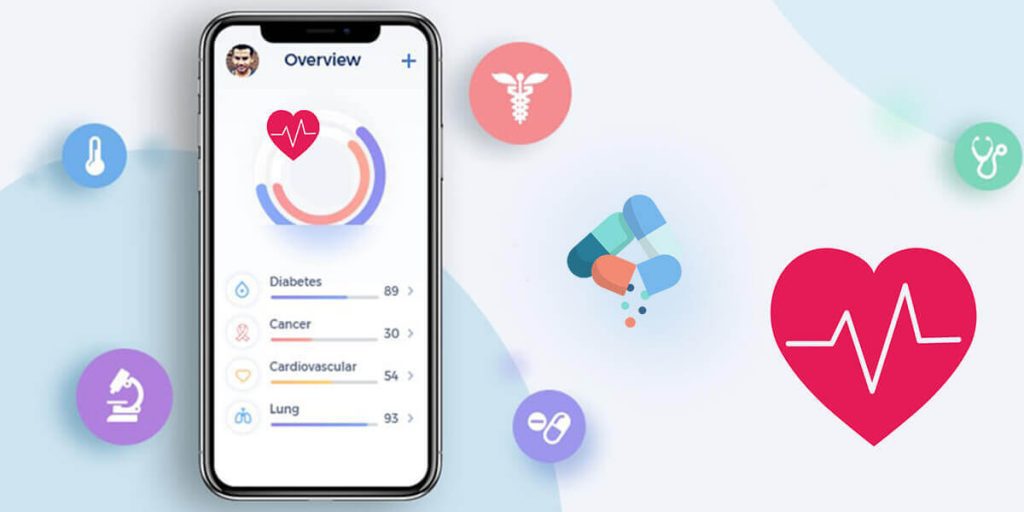
How mHealth Apps Are Changing the Face of the Healthcare Industry | Socialnomics

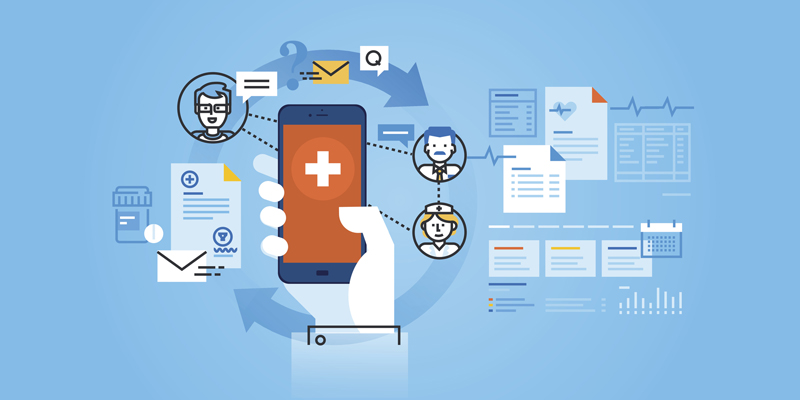
The fact that the healthcare domain is still mainly practiced with humans, even after going through the stages of healthcare evolution, being the sole innovation agents, offers a massive opportunity for incorporation of custom healthcare software development driven by technologies. The combination of Artificial Intelligence in Healthcare and Healthcare and Blockchain hold the potential to evolve the entire health and care ecosystem.

The health app investment trends 2020 are bound to see investors inclining towards app solutions that makes healthcare cost efficient and real time accessible to the masses. On this front, they will also be showing interest in insurance applications which would help people in need in real time through the scope of micro lending.

Geographical Markets That Will Statistically Get Investors’ Attention

ESG Investing: Practices, Progress and Challenges

The global mobile app investment landscape will be fundamentally altered by the impact of changing trade regimen and digital disruption. In order to remain competitive in the market, businesses will have to work in close alliance with policy makers to adapt and then respond to the changing economic globalization.

One such shift can be seen in the United Kingdom because of the Brexit. The country is seeing its top position getting challenged by several other countries and projects to Germany.

The app investments trends 2020 can be seen betting on the growth potential of India, with the country’s economy coming on track to overtake China as the most populous country by 2027, according to the United Nations.

Also, Vietnam, which is one of Asia’s fastest-growing economies, is becoming a profitable haven for U.S. multinationals looking to safeguard themselves in the US-China tariff issues.

“There’s huge growth potential in Asia,” says Rich Sega, the global chief investment strategist at asset manager Conning. “The geopolitical stress in Hong Kong has opened up opportunities for other areas in the region for Vietnam, Thailand and Singapore.”

Ultimately, investors will be looking for mobile apps solutions that make technology mainstream, taking it to domains and nations which have been operating sans them. Moreover, they will be expanding their focus from leading nations like Australia and the USA to emerging markets, which show a potential of immense economic growth.

Now that you have got a starting point for 2020, it is time to take the journey and come in the conscious mind of investors looking for investing in an app startup.

AI in Web Development: Python’s the best

May it be an MNC or a new startup, Python has a lot of benefits to offer everybody. It is the most renowned and efficient high-level programming language which has got largely famous in the past few years. It’s growing fame has enabled it to come out of the web development sphere and dive into some of the most popular and multifaceted processes like Artificial Intelligence, Data Science, Machine Learning, etc.

With its steady rise in fame, the demand for Artificial Intelligence is at a boom as it has become an integral part of various industries like Health Care, Education, Banking, Food & Beverage Industry, E-commerce, Agriculture, Marketing, Automation, etc.

Python Is Best Fit For Artificial Intelligence in Web Development

There is no denying the fact that python plays a very significant part in the sky-rocketing of AI in the market. There are numerous reasons to opt Python for Artificial Intelligence in Web Development a few of which are listed below.

1. Simple and Consistent

CONSISTENT Text, Written On Black Simple Circle Rubber Vintage.. Stock Photo, Picture And Royalty Free Image. Image 90321332.

Python is well-known for its brief and easily readable code and is totally unparalleled when it comes to the ease of use, especially for budding developers. While Artificial Intelligence is based on complex algorithms and vivid workflows, Python allows developers to create dependable systems. Due to this simplicity provided by Python, the developers get to focus primarily on solving AI problems rather than wasting their time on tech-nuance of the programming languages.

Also, Python is the first choice of many developers as it is very easy to learn. The code written in Python is easily comprehensible by humans, which makes working with it very swift. Python is also more intuitive than other programming languages and is very beneficial when multiple programmers collaborate on the same code. The simplicity of the Python syntax allows quick development along with very prompt testing (without having a need for implementation). Python uses approximately a fifth if the code that might be needed to do the same task in any other language based on OOPS.  The ease of code and the simplicity involved in it makes easier for a developer to work on it thereby also reducing the time to complete a job.

2. An extensive selection of libraries and frameworks.

Framework7 - Full Featured Framework For Building iOS, Android & Desktop Apps

A major facet that makes Python a leading choice for Artificial Intelligence in Web Development is the richness of its libraries and frameworks that makes coding easier and saves a lot of effort and time. Python has numerous libraries specifically built for Artificial Intelligence like NumPy, Pytorch, TensorFlow, Theano, Keras, Scikit-learn, Pandas and the list is endless.  Therefore, whenever you have to run an algorithm, all you need to do is to install and load one of these libraries (as per your requirement) with a single command and your work is done in a snap. These solutions help you to develop your product faster and better. With these libraries and frameworks, you need not start from scratch every time and can just use one of these and implement the required features.

TensorFlow, Scikit-learn, Keras Machine Learning
SciPy Advanced Computing
NumPy Data Analysis & Scientific Computing
Pandas Data Analysis
Seaborn Data visualization
PyTorch Natural Language Processing
Theano Evaluating Mathematical Expressions

3. Platform Independence


The Platform Independence of Python is one of the major reasons for it being on the high tide. Platform Independence implies that a python program can be made or executed on any framework or platform and afterward can without much of a stretch be utilized on the other. Python is compatible with many major platforms like Windows, Linux, macOS, etc. It can very well be utilized to make independent applications on a vast majority of the platforms, which implies that these applications or software can be effectively appropriated and utilized on different frameworks without having a requirement for a Python translator. There exist libraries like PyInstaller to help developers prepare their codes to run on various platforms. Yet again, this makes the process convenient and simple by saving time, money and effort required to run and test a single program on multiple platforms.

4. Abundance of Support

According to a survey conducted by StackOverflow in 2018, Python was one of the top 10 most popular languages. Also, according to ecomnist.com, Python is Googled more than any other programming language.

This ultimately means that with such a large community of Python Enthusiasts all over the world, there is great community support so you are likely to find answers to all your problems over the internet. It boasts a large number of active users who are more than happy to help the ones learning or stuck in the development life cycle.

5. Flexibility

Being a dynamically typed language gives python a great advantage of being immensely flexible. That being said, there are no rigid rules as to how a feature must be built. It also offers flexibility to choose between the OOPS approach or the scripting approach making it suitable for every purpose altogether. Also, it the most appropriate choice for combining various data structures and also supports as a great background language. It also offers immense flexibility when it comes to solving problems, which is a huge add-on for both beginners as well as professionals.

6. Minimal Coding Requirement

There are numerous calculations associated with AI (Artificial Intelligence). The simplicity of testing offered by Python makes it one of the most straightforward programming language among contenders. Python can execute a similar rationale with just 20% of the code in contrast to the other programming languages which are based on OOPS.

7. Popularity

Due to its ease of use and vast versatility, Python has emerged as the most preferred programming language among developers. The ease of learning and the developer-friendliness of the language has attracted developers to opt for it for their projects. Undoubtedly, Artificial Intelligence-based projects do require veteran developers, but the simplicity of python eases the process of learning it for new developers.

8. Superior Visualization

Python gives an assortment of libraries and a couple of them are exceptionally amazing choices for visualization. For the Al engineers, it is imperative to emphasize that in the Al, ML, and deep learning it is crucial to have the option to present to the information in an intelligible configuration that can be easily read by humans. Libraries like Matplotlib lets the data scientists assemble histograms, graphs, and plots for better information perception, representation, and viable demonstration. Besides, the different APIs disentangle the visualization procedure and this makes it simpler to make clear reports.

9. Compatibility

Python web development gives the designer the adaptability to offer an API from the current programming language, which, in reality, is amazingly adaptable for new Python developers. With just a few nominal changes in the source codes, you can make your assignment or application work in various OSs. This spares developers a great deal of time to test distinctive working frameworks and move source codes. Along these lines, in the event that you need your AI task to be the best, you should the best web app development company that has experience with AI-based undertakings with Python.

Summary

Artificial Intelligence is emerging as the need of the hour and has been showing a thoughtful effect on the society we live in. Developers are opting for Python as their language of choice for the numerous benefits that it provides particularly for Artificial Intelligence and Machine Learning.  Python’s specific libraries for AI increases developers’ efficiency and cuts short in the time required for the development. The simplicity of Python promotes fast testing as well as execution thereby making the language accessible for beginners as well as non-programmers. With all this being stated, there is definitely no reason left as to why one might not consider Python as the best fit for Artificial Intelligence in Web Development.

Design Systems- What and Why Do We Need It?

What is a Design System and Why You Need One?

Have you been struggling lately with your design-development workflow? Are you experiencing the handoff problem resulting in poor product decisions? Looking for ways to significantly improve it? Well, you need a Design Systems. It will help you work better, faster and improve your team collaboration. But what really is a Design System?

Well, a Design System is a fairly new idea in the digital transformation landscape. But one that has stirred up a lot of emotions and interest lately.

Known by many names such as Atomic Design Methodology, Component Design, and Design Language, the idea behind a design system is creating a series of design components that can be reused by you and your team.

Airbnb and Uber have fundamentally changed how digital products are designed by implementing their own unique design systems. By using a series of repeatable components and a set of standards that facilitate the use of these components, these companies were able to drastically change the pace of innovation and production within their teams.

What are Design Systems? 

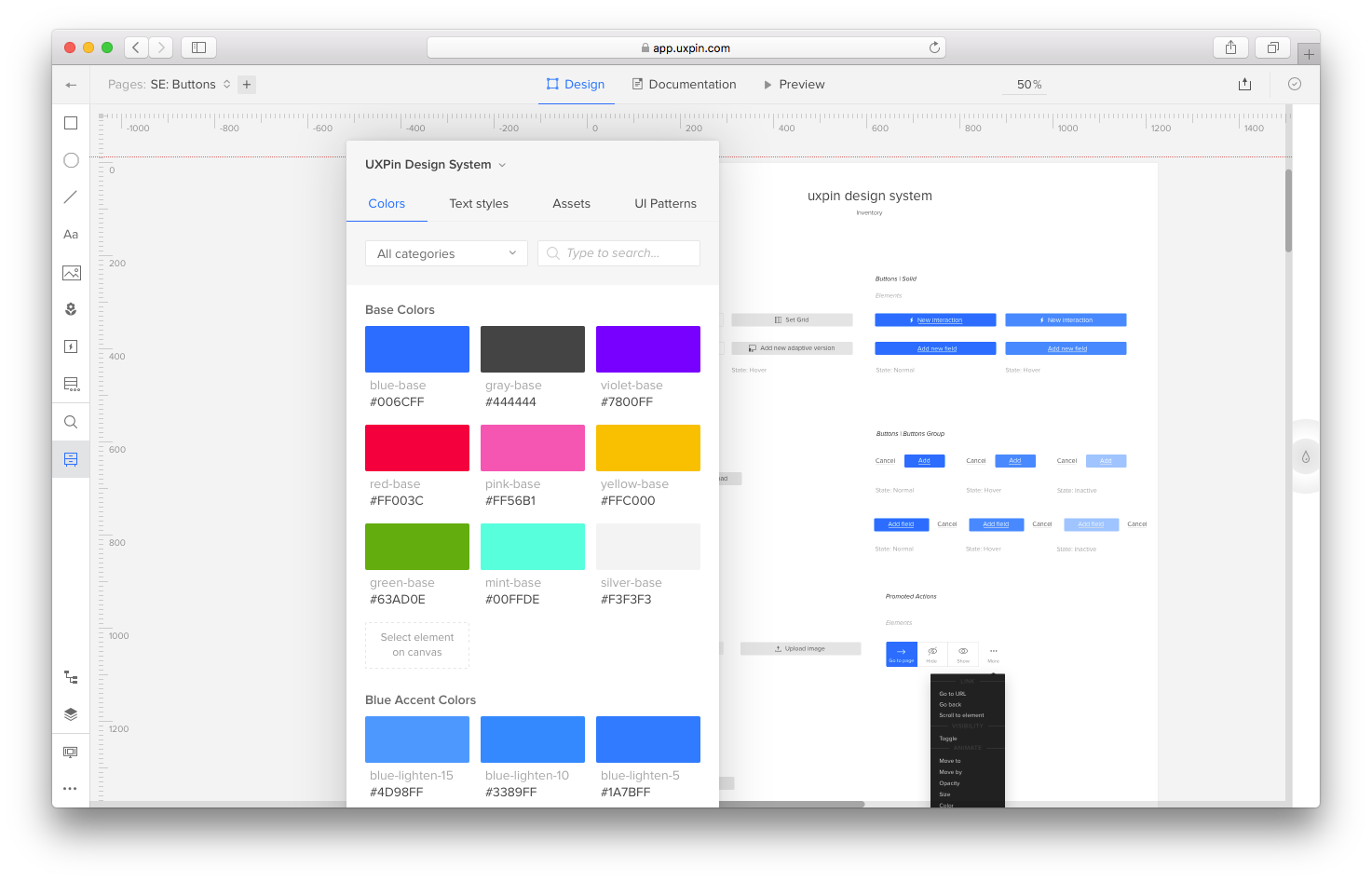
7 Tools for Building Your Design System in 2021 | by Jonathan Saring | Bits and Pieces

When too many people work on the same project and face the same challenges in a design team, each person finding a unique way to solve the problem can result in an incoherent experience for the user when they use the product. The fundamentals of a Design Systems is to manage design at scale.

The definition of a Design System is a series of elements that can be combined and reused on a product by the whole team. It includes colors, designs, components and character styles. These series of components can be reused in different combinations.

Product Design has always been about consistency and predictability. With a unified Design System, you can build products better, faster and it results in a cohesive experience for the user.

A Design System helps companies render exceptional UX and strengthen their brand.

The Handoff Problem:

Previously, Designers and Developers faced a lot of problems. Due to iterations, requirement changes and siloed nature of design and development, handoff posed a lot of challenges. More often than not, it resulted in developers being blocked by designers and poor product decisions.

By focusing on commonly used components, there has been greater collaboration between designers and developers and previously siloed teams are now working off the same mental model. Seeing already existing design system components eliminates a great deal of duplicated effort.

The component-based design model is a great step. It has significantly reduced the need for handoff.

Design System is a consistent approach to product development, one that encompasses guidelines, principles, philosophies, and code. A design system is a perfect tool for scaling the design practice, eliminating the need for hand-off and facilitating greater collaboration.

Difference Between a Design System, Pattern Library and Style Guide 

STYLE GUIDE, PATTERN LIBRARY AND DESIGN SYSTEM IN UI DESIGN | by Nmadim | Medium

Design Systems are a comprehensive guide on how to design a product. It is not just the classification of components but a whole process. It is a collection of rules, principles and best practices. The main element of a Design System is a library of UI components.

More often than not, a Design System is interchangeably used with a Style Guide or a Component Library. However, these are sub-components of a Design System.

A Design System is far more complex than simple style guides. It includes everything from colors to documentation. What a Design System really does is, it defines a common visual language for the product teams.

It speeds up the design process. A System Design bridges the gap between the teams involved in building a final product with consistent graphics standards, making it super easy to create websites from components. It is like a rulebook for the design and development teams and can be broken down into:

Design System – The entire set of design standards along with principles, patterns, and components on how to achieve them.

Pattern Library- A sub-component of Design System, a pattern library is a repository of reusable components and user interface design elements. Essentially, a  pattern library is a collection of design elements that surface multiple times on a site.

Style Guide-  Another sub-component of the Design System, a Style Guide emphasizes the visual presentation and determines how products should look. It includes colours, fonts, brand attributes and logos.

Why should you use a Design System?

There are many benefits of this System. It helps the entire company deliver better and more consistent design solutions efficiently. A Design System eases out the process of designing delightful experiences for end-users.

1.  Facilitates Consistency-

Why Insisting on Consistency Is Important for Every Business | by Dana Covit | Lingo Blog

Building a System begins with classifying all the visual components within a product. This helps in highlighting the biggest inconsistencies within the product and helps the team decide the product’s relevant and most commonly used elements and components. Consistency in Design is the most crucial Design Principle.

2.  Better communication-

The Dos and Don'ts of Effective Communication – Viva Books

For the team involved in product development, Design Systems are often referred to as the single source of truth. It helps the team to plan, develop and maintain product quality.

Single source of truth (SSOT) is a concept that organizations apply as part of their information architecture to ensure that everyone uses the same data when making business decisions.

Since it is a single source of truth, this implies it also includes the vocabulary that may be used in the project. Gone are the days when a developer referred to a button as the red colored one. This leads to better discussions between the developers and designers and allows them to talk in the same naming convention.

3.  Clarity to Developers-

What Are Top Skills You Expect From A Mobile Developer Today? DevOps, Cross-Platform, And Test? - SysBunny

With a design system in place, developers have a clear vision of how to build the required components while maintaining the unified styles.

4.  Iterate Faster- 

Can you go too fast? — D/UX

By implementing a Design System, teams can iterate a lot faster. You can release new designs with lesser resources in small chunks and with shorter feedback loops. It helps you stay organized and up to date with all the design changes your team makes.

5.  Leveraging Each Other’s work

How To Leverage Other People's Hard Work To Grow Your Business | Complete Controller

Since Design Systems can be shared across multiple teams, efficiencies can be extended across teams and products. It has become easy to leverage other people’s work, use each other’s innovation without reinventing the wheel.

Operating at scale and improving efficiency and consistency are the main advantages of using and maintaining a Design System. Since you are reusing components in a Design System, the time and effort spent on building one really pays off in the long run. Your design and development team can just tweak the existing products, enhance the experience or focus on building other products.

Examples of Design System 

The Minimum Viable Design System. Over the past couple of weeks I had the… | by Marcin Treder | Medium

With a staggering rise in the number of devices, environments, and browsers, there is an ever-increasing need to develop thoughtful interface design systems.

Design Systems are an industry standard. Not only do they provide the best team collaboration and keep your project organized, it also provides design guidance which is especially important in larger design teams. In recent years, leading tech firms have shared their design concepts and conventions, and here’s a list of the best design systems:

1.  Material Design

Material Design System is widely known for its simplicity of navigation. It is a design language developed by Google in 2014 to create consistency across all Android design and devices and is widely adopted by Android and Web App developers.

2.  Atlassian

Atlassian Design System is quite exhaustive and is widely used to create straightforward and beautiful experiences.

3.  Polaris

Polaris from Shopify is widely popular for simplifying the designer-developer workflow.

4.  Carbon

Carbon Design System is IBM’s open-source design system for products and experiences, with the IBM design language as its foundation.

5.  Human Interface Guidelines

Human Interface Guidelines is a Design System prepared by Apple for all their platforms which provides in-depth UI resources and practical information.

6.  Grommet

Created by Hewlett- Packard, Grommet is a design system that can help you embrace atomic design methods and build a library that meets your needs.

7.  Mailchimp

Mailchimp’s design system is all about bold and creative designs with a focus to provide a consistent structure to the design language.

8.  Digital Telepathy

Digital Telepathy is a Digital Design agency. Over the years they have refined a results-driven design methodology to iteratively improve the experience of customers.

9.  Sushi

Since the initial design system was not scalable, Zomato recently came up with a new design system called Sushi. It provides a new and enhanced experience to its users with the Zomato app.

How can Design System benefit designers? 

Now that you know what is a design system in UX and UX review, and the many benefits of having one, a design system benefits designers and simplifies the tasks for them. As a leading mobile app design company, we noticed that for Designers it has become easy to break down the UI into small parts rather than consider the whole webpage as one entity. You can think of a particular page as a set of components and quickly find and use the right component, pattern or style option( color, icons, fonts, etc.) from the Design System.

Conclusion

Instead of re-thinking the foundation of each new experience for your products, a Design System keeps designers, developers, product managers as well as multiple stakeholders aligned with the design vision of the company and allows the team to easily focus on pixel-perfect development.

Zero-Knowledge Proof & its Role in the Blockchain World

What are Zero Knowledge Proofs?. Zero-Knowledge Proofs (ZKPs) allow data… | by Shaan Ray | Towards Data Science

Over the past few years, we have become accustomed to the way large banks and other firms access and employ our personal information to deliver us an enhanced experience. We have over time given them a ‘green signal’ to the mechanisms that use our sensitive details to help us sustain in a certain way. But then entered the Blockchain technology and it totally changed everything.

The Blockchain technology brought various characteristics like transparency, immutability, decentralization, and distributed ledger into existence. It enabled users to act anonymously and perform transactions with high-end security.

[Before we look further, we strongly recommend taking the time to understand the basics of Blockchain.]

Blockchain, in simple terms, gave users control to their privacy and future back.

But, has Blockchain really succeeded in doing so?

In one word, the answer is NO.

Many blockchain networks use public databases. So, anyone having an internet connection can view the list of the network’s transaction history. They can see all the details associated with the transaction and your wallet details, but the name of the user will still be unknown to them. Instead, they will come across as a public key – the unique code representing the user on the blockchain network.

This way, the public key created via the cryptography technique safeguard your privacy to some extent. But, it is still possible for one to expose you via other techniques.

This put your anonymous cover blown; debunking the myth of Blockchain’s anonymity and privacy, and make you realize that –

The user’s sensitive information stored on a Blockchain network is only confidential, not anonymous.

Likewise, there are various blockchain networks governed by consensus algorithms to deliver high-end privacy and stability, but decentralization is considered as a second priority in such cases. In many such cases, the two parties do not trust each other. [To read about these consensus models in detail, check out this blockchain consensus algorithm guide.]

This, as a whole, gives a clear indication that Blockchain is not that anonymous and decentralized as many of its enthusiasts believe it to be. And even gives birth to various questions, such as –

Do Blockchain networks really need to be anonymous? How can Blockchain offer more anonymity and better privacy protection to their users?

In the present Blockchain networks, the transactions are recorded in the public ledger and are transparent in nature. Because of this, various reputed brands and markets like Wall Street are hesitating to adopt this technology as the confidentiality of client and transaction is a must for them. This, as a whole, is questioning if at all Blockchain web 3.0 will be able to impact businesses.

Coming to the second question, there are various concepts and methods like Coin mixing, Ringct, and Coin Join that are making transactions anonymous in Blockchain, but the one that is highly appreciated is Zero-Knowledge Proof.

The one will cover in detail in this article.

So, let’s begin with a simple definition of zero-knowledge proof.

What is Zero Knowledge Proof?

Introduction to Zero Knowledge Proof: The protocol of next generation Blockchain | by Ashish | Medium

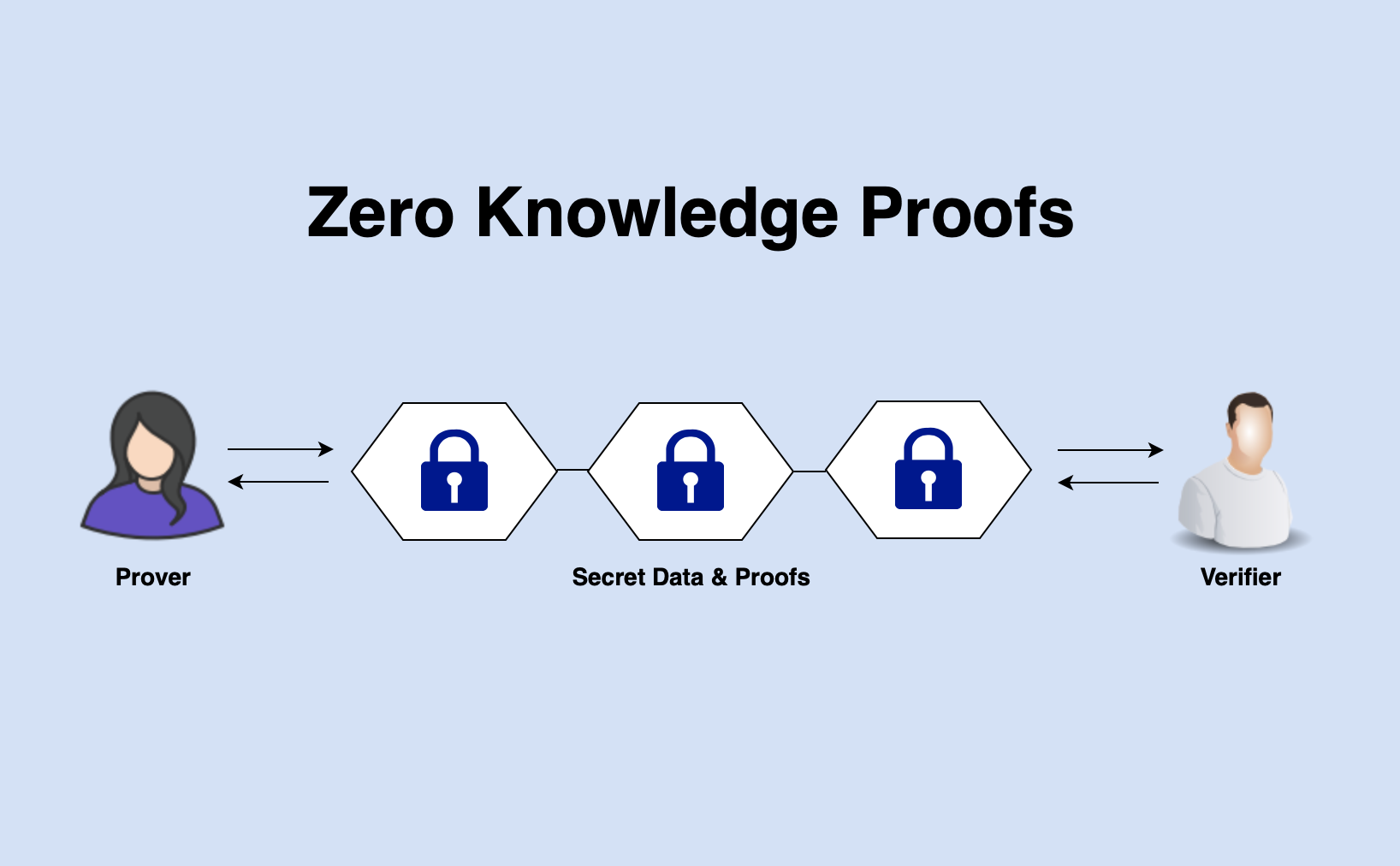
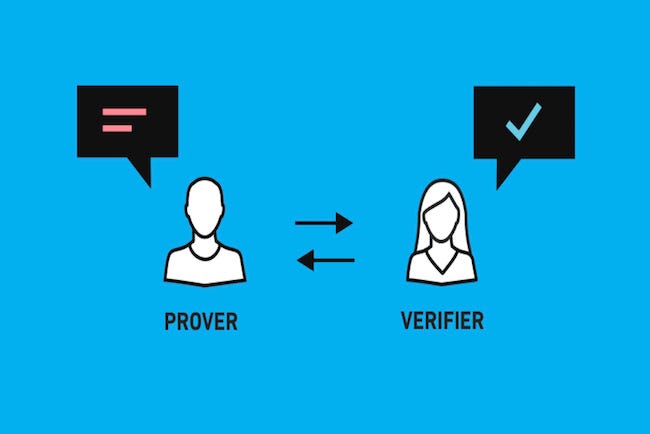
Zero-knowledge Proof is an encryption scheme proposed by MIT researchers Silvio Micali, Shafi Goldwasser, and Charles Rackoff in the 1980s. In this method, one party (Prover) can prove that a specific statement is true to the other party (Verifier) without disclosing any additional information.

With definition being cleared, let’s take an example to understand how zero knowledge proof works.

Example: Kids and Candy Bars

Suppose, two children – Bob and Alice, have received some candy bars from a party. Bob wants to know if Alice has got the same number of candy bars or not. But, at the same time, none of them is ready to reveal the exact number.

So, what they do is that Bob brings four lockable boxes in a room, assuming that the number of candy bars received will be 10, 20, 30, and 40. He labels each box with a value corresponding to the number of candy bars.

Then, Bob keeps the key to the box that defines the number of candy bars he received in his pocket (let’s say he got 30 candy bars) and throws away the keys of all other boxes. And he leaves the room.

Now, Alice enters the room with 4 small pieces of paper and writes ‘+’ on one of them while ‘-’ on every other. Here, ‘+’ denotes the number of candy bars she got, while ‘-’ represents every other value.

She slips the paper piece with ‘+’ sign in one box (let’s say in the one representing 20 candy bars) and ‘-’ in the rest of the boxes. And she leaves.

Now, Bob enters the room again and opens the box whose key is in his pocket. Then, he checks if the box has a piece of paper with ‘+’ sign or ‘-’ sign. If it’s a ‘+’ sign, he realizes that Alice has an equal number of candy bars. While, in the other case, she doesn’t.

As we know that Alice has 20 candy bars and Bob has 30 candy bars, it is clear that Bob will find a ‘-’ sign in the lockable box whose key he has. This will make him clear that they both do not have the same number of candy bars.

At the same moment, Alice will re-enter the room and find a ‘-’ sign in Bob’s hand and she will also come to know that they have a different number of candy bars.

Note: By this method, Bob will learn that they do not have an equal number of candy bars. But, he will still have no clue if Alice has more or less candy bars than him, and vice versa.

Thus, the zero-knowledge proof maintains the privacy of users’ sensitive information, while making a transaction (in this case, the transaction is finding if they have the same number of candy bars or not).

Although this example would have helped you in understanding what exactly is Zero Knowledge Proofs (ZKPs), let’s refresh the concept with an image-

Now, as the concept of zero-knowledge proofs (ZKPs) is explained, it is the best time to look into what makes everyone prefer it over other available options.

Benefits of Zero Knowledge Proofs (ZKPs)

97,491 Employee Benefits Illustrations & Clip Art

  1. Simple – One of the prime advantages of zero-knowledge proof is that it does not involve any complex encryption method.
  2. Secure – It does not require anyone to reveal any sort of information.

While these are the pros of Zero-knowledge proof, the concept has some disadvantages as well. A few of which are:-

  1. Lengthy – In the zero-knowledge method, there around 2k computations, with each requiring a certain amount of time to process. This is the foremost con of going with zero-knowledge proof.
  2. Imperfect – The messages delivered to verifier/prover might be destroyed or modified.
  3. Limited – The zero-knowledge protocol demands the secret to be a numerical value. In other cases, a translation is required.

With this covered, let’s dig deeper into the technicalities before we evaluate when and how Zero-knowledge protocols can be introduced into the Blockchain ecosystem.

Starting with what are the core characteristics of a zero-knowledge proof.

Properties of Zero-Knowledge Proofs

Zero Knowledge Protocols without magic

1. Completeness

If the statement is true and both users follow the rules religiously, then the verifier would be convinced without any external help.

2. Soundness

If the statement is false, the verifier won’t be convinced in any scenario (even if the prover says that the statement is true for some small probability).

3. Zero-Knowledge

In both cases, verifier won’t be able to know any information beyond that the statement is true or false.

While the principles of Zero Knowledge Proof are covered, let’s talk about the different types of ZKPs a business enthusiast can invest in.

Types of Zero Knowledge Proofs

1. Interactive Zero-Knowledge Proof

Are you a robot? Prove it.. Captchas are a form-validation… | by Vangelis Trikoupis | DataDrivenInvestor

In an interactive zero-knowledge proof, a prover performs a series of actions under the mechanism of mathematical probability to convince the verifier of a particular fact.

2. Non-Interactive Zero-Knowledge Proof (NIZKP)

The Zero Knowledge Proof Explained – Tokens24

As depicted from the name, Non-interactive zero-knowledge proof does not require an interactive process. Meaning, the prover can generate all the challenges at once and the verifier(s) can later respond. This restricts the possibility of collusion. However, it requires additional machines and software to find out the sequence of experiments.

Note: It is possible to make a transition from non-interactive to interactive ZKP.

Where to Implement Zero-Knowledge Proof in Blockchain System?

1. Messaging

Cybersecurity 101: How to choose and use an encrypted messaging app | TechCrunch

In messaging, end-to-end encryption is imperative so that no one can read your private message besides the one you are communicating with. To ensure security, messaging platforms ask users to verify their identity to the server and vice-versa.

But, with the advent of ZKP, they will be able to build end-to-end trust in the messaging world without leaking any extra information. This is one of the prime applications of zero-knowledge proof in the blockchain world.

2. Authentication

Authentication vs Authorization: What's the Difference? | LoginRadius

Zero-knowledge proof can also facilitate transmitting sensitive information like authentication information with better security. It can build a secure channel for the users to employ their information without revealing it. And this way, avoid data leakage in the worst scenarios.

3. Storage Protection

Why Cloud Storage Protection Is a Top Opportunity for MSPs

Another possible use case of zero-knowledge proofs (ZKPs) is in the field of storage utility.

Zero-knowledge proof comes with a protocol that not only safeguards the storage unit, but also the information within it. Needless to say, the access channels are also protected to give a seamless and secure experience.

4. Sending Private Blockchain Transactions

Send/ Receive Bitcoin and Crypto: How to Transfer | Gemini

When talking about sending private blockchain transactions, it is utterly important to keep it out of the reach of the third parties. Now, while the traditional methods are somewhat protective, they have some loopholes.

This is yet another area where ZKP comes into play. The concept, when integrated wisely, helps in making it nearly impossible to hack or intercept the private blockchain transactions.

5. Complex Documentation

Since zero-knowledge proof has the potential to encrypt data in chunks, it enables one to control certain blocks to provide access to a particular user, while restricting access for others. This way, the concept protects the complex documentation from those not authorized to see them.

6. File System Control

Another place where you can see an effective zero-knowledge proof implementation is the file system.

The concept adds different layers of security to the files, users, and even logins that makes it quite difficult for one to hack or manipulate the stored data.

7. Security for Sensitive Information

Securing Your Sensitive Information in Salesforce: Data Protection and Security for Cloud | Imprivata

Last but not least, Zero-knowledge proof also refines the way blockchain technology is revamping transactions.

ZKP adds a high-end security level to every block containing sensitive banking information like your credit card details and history, such that banks need to manipulate only required blocks when a user requests for information. Other blocks remain untouched and thus, protected.

So, these were some of the use cases of zero-knowledge proof in the blockchain environment. To make your brand presence in the market by building one of these, hire a blockchain app development company.

And in case you are confused about its real-world implementation, check for the following existing projects operating with the convergence of two.

Real-Life Examples of Convergence of Zero Knowledge Proofs and Blockchain

1. ZCash

Zcash - Wikipedia

ZCash is an open-source and permissionless blockchain platform that offers the functionality to keep transactions ‘transparent’ and ‘shielded’ as per the requirement.

In the former case, the transactions are governed by a t-addr, just like bitcoin transactions. While in the latter case, a zero-knowledge proof called zk-SNARKs is used and the transactions are controlled by a z-addr.

2. ING

The ING Group

ING is a Netherlands based bank that has introduced its own zero-knowledge blockchain. However, they have modified their zero-knowledge system to make it a zero-knowledge knowledge range proof to lower down the need for computational power.

This way, they have prepared their zero-knowledge system to elevate the impact of blockchain in fintech.

3. ZCoin

What is Zcoin? 2019 Beginner's Guide on XZC Cryptocurrency

The company uses Zerocoin protocol, which is based on zero-knowledge proof, to enhance security and anonymity in the transaction process. However, what makes it distinct from other projects working on this concept is that it offers scalability too.

Though various international actors have started showing an interest in implementing the concept of zero-knowledge proof into the blockchain, the adoption pace is too slow. And the prime reason behind is the following set of challenges associated with the addition of ZKP into the blockchain environment.

Challenges You Might Face While Integrating ZKP into Your Blockchain Project

1. Absence of Standards

Since blockchain technology itself is at its early adoption stage, there are no standards, system and homogeneous languages that enables app developers and business prospects to interact with the concept of ZKP and harness its potential in an efficient way.

2. Scalability

Another challenge that restricts the adoption of zero-knowledge proof in the blockchain environment is scalability, provided such algorithms require high computing capacity to operate on a high level.

Wrapping Up

Now that the concept of Zero Knowledge Proof and its scope in the Blockchain domain (along with real-life examples) is clear to you, we expect to find you investing in the broader application of the concept while stepping into the decentralized world. But, in case you still have any queries, connect with our Blockchain consultants.

Cross-Functional Teams Building Better Digital Product

How to Lead Effective Cross-Functional Teams

Did you ever feel like your organization is working in silos? Designers want to deliver meaningful experiences, the Marketing team is keen on entering a new vertical while sales are focussed on bringing in more and more leads, but all of this happens in isolation. Even though the roles of each of these departments are varying in nature, their priorities and end goals must be clear and consistent. Otherwise, it’s a sheer wastage of the business’s resources spent across different directions. Cross-functional teams foster cohesion within the company, reduce wastage of valuable resources and enable you to maximize your efforts in order to accomplish goals faster.

More often than not, the underlying reason why companies struggle with building better digital products is how they prioritize milestones and the linear approach, where work is passed from one team to another without fully channeling the skill and expertise of each discipline.

Building a digital product requires a team effort. Each discipline has a role to play and sometimes, these roles are overlapping. A great idea can come from any person and any team. Organizations looking to grow with agility and speed need to build cross-functional teams and bring them to the center stage. When the skill of each discipline is valued, their perspective is heard and every discipline is represented at the table, it results in quality solutions.

So, What is a Cross-functional Team, anyway?

5 Proven Strategies towards Improving Cross-Team Collaboration

A Cross-functional team brings people together from different functional expertise. By mutually exploring the prospects of a project and through shared expertise the team accomplishes a common goal.

There are so many crucial roles in digital product design and development– Designers, Product Managers, Business Analysts, Engineers, Quality Analysts, Marketing Specialists, and the list goes on.

The approach behind a cross-functional team is to gather a good mix of people from various disciplines to work on a project together. It is about brainstorming ideas, uncovering different and unique perspectives, and channeling an umbrella of expertise towards achieving one common goal – how to build a unique digital solution.

The idea behind cross-functional teams stems from agile methodology. Every discipline deserves a seat at the table regardless that their department’s primary phase is underway.

What’s the need for a Cross-functional Team?

5 Ways to Break Down Organizational Silos

When teams collaborate together in every phase and stage of creating a digital product, the result is impactful. In a cross-functional team, each person understands the role of other team members and views the product not only from the perspective of his/ her field but as an entire product and as a team effort.

Having a Cross-functional team is extremely crucial because every person brings so much value to the table. When a diverse set of people come together, a problem is approached in all possible ways and we are able to uncover unique perspectives.

For instance, when an Engineer has a seat at the table right when the project kicks off, identifying the best technology to build a product becomes easy. While others in the team may not be technically adept, an Engineer brings a different level of technical understanding to the front, especially when they have worked with cutting-edge technologies in the past.

As a full-cycle app development company, we believe in agile development with cross-functional teams. By building cross-functional teams, we were not only able to reduce the cycle time in new product development, but our teams also demonstrated flexibility in adapting to changing market needs and were able to develop innovative solutions at a faster pace.

While the number of Designers involved in a project will be more in the Design phase and the number of Engineers will rapidly increase in the Development phase, having representatives from each discipline throughout the app development process regardless of the phase adds a lot of value to the product.

The approach behind a cross-functional team resonates quite well with the practices of DevOps.

DevOps can be seen as a cultural perspective on how teams should be engaged in working the right way.

In today’s fast-paced world, with more advanced projects coming up, the need to move faster and be agile is ever-growing. DevOps addresses this concern – it makes development, operations, and other groups within an organization come together, collaborate closely on shared goals, and deliver software faster and more reliably.

Just like DevOps emphasizes close collaboration between software development and operations, having a cross-functional team for the entire product-development process improves collaboration across disciplines like  Strategy, Design, Development, Testing and results in quality outcomes.

Benefits of Cross-functional Teams in Digital Product Development

The advantages of a cross-functional team in digital product development are manifold.

When all disciplines collaborate closely and everyone is invested in maximizing their contributions towards the project, it results in the best product possible.

1.  Knowledge Sharing

Advanced Mobility: Supporting Knowledge Sharing | The Upside Learning Blog

The key idea behind accomplishing goals through interdisciplinary work is the exceptional variety of talent figuring out how to create something that is meaningful and brings value to end-users.

Confronting new perspectives, learning from others, and looking at things holistically impact the quality of solution and results in a robust product.

2.  Alignment on Goals

Strategic Alignment Of Virtual Team Goals

In a cross-functional team, people look beyond their roles and responsibilities and are focused on accomplishing the common goal. There is total alignment on set milestones and people collaborate together to achieve them in the best way possible.

3.  Less Handovers 

Handover in projects – some pitfalls and good practices - IPMA International Project Management Association

When you collaborate across disciplines and everyone is present throughout the product development lifecycle, it minimizes handovers and speeds up the processes.

4.  Teamwork

How to have effective teamwork: Lessons from the Beatles | RingCentral

Working together facilitates teamwork. It brings people closer and improves communication. It is easy to talk through the issues and brainstorm great ideas. Collaborating closely builds respect and trust in teammates.

5.  Identifying  issues 

How to Identify the Real Problem - Nano Tools for Leaders

When a project is handled by a cross-functional team, everyone is up to date with the project’s progress. When people work at the same time and don’t focus solely on their disciplines, it is easy to identify bugs and flag issues that may trouble the user.

6.  Iteration

As mentioned above, cross-functional teams are up to date with all the issues within a project, which implies, making changes to the design or the code becomes easy. Testing and iteration can be done at the same time and it saves a lot of time, effort, and money.

7.  Positive customer experience 

Importance of positive customer experience for your business

While there are many different roles in an organization, each of these functions exists to serve the customer. By encouraging effective communication across teams, it becomes easy to provide a meaningful tailored customer experience.

8.  Increased Innovation 

Ten Types of Innovation: Strings You Can Pull | Cre8tive Capital

When a group of people from different functional expertise comes together to solve a common problem, it is relatively easy to generate creative and overall solutions.

Companies that use cross-functional teams include marketing perceptions, sales conversations, product usage data, and other relevant sources of information into keen consideration when making product decisions which result in smarter decision making. The power of cross-functional teams is to drive better decision-making through business-wide learning.

Challenges faced by Cross-functional Teams 

Effective cross-functional team collaboration is the key to tackle an organization’s biggest problems. However, there are certain problems with cross-functional teams and sometimes they can be difficult to manage.

  • Conflicting Goals

How to resolve project sponsors' conflicting goals - TechRepublic

Each discipline comes with a set of roles and responsibilities. Oftentimes, when functional experts from different teams come together, they tend to give less priority to the project and are more focused on their own goals.

In such cases, it is essential for leaders to identify strategic goals to make sure there is clarity of purpose and the whole team is alined, on the goals of the team or the company.

  • Too much or too little Communication

Too Much and Too Small Communication: Remarks and Tips

With a cross-functional team, it is crucial to decide the right measure of communication. Too many unnecessary meetings lead to loss of time and can harm productivity while little communication regarding the project status and dulication can negatively impact a project.

  • Choosing Ideas

How to pick a winner in life and venture cap? - The San Diego Union-Tribune

In a cross-functional team, you may give up on good ideas when others don’t like them.

While sometimes, it becomes easy to let go of complicated ideas and work more efficiently. This is where Discovery Workshop and operating in an agile manner comes into the picture. Scrum Methodology helps cross-functional teams encounter the biggest challenges and achieve great outcomes.

  • Leadership

Ask These 2 Simple Questions to Grow as a Leader | Inc.com

In a self-organizing team with no clear leader, there is a possibility that the team may get lost and feel there is no clarity of purpose. It is essential to have a leader that can provide sufficient oversight so that small problems do not snowball into a bigger crisis and the team is able to collaborate efficiently.

Conclusion 

Cross-functional teams often struggle because the organization lacks a structured approach. Teams are affected by insufficient oversight, conflicting goals, lack of accountability, and the organization’s failure to measure the impact of cross-functional collaboration.

Corporate structures are reorganizing themselves into cross-functional teams since the advantages are many. It may take time to adopt the cross-functional team approach to building products but it has nearly three times the success rates and is worth the rewards.

Making WFH Effective

Last year, around this time, we were contemplating how to shift our office to remote work. It’s going to be a year soon and it’s unbelievable how comfortable we are now with this new setup. I remember some of my colleagues worrying about the new rules of remote working. They had never worked from home before, even for a day. They believed that with family around, home is a place of distractions. Most of them worried about how they would participate in distraction-free meetings, concentrate on their work, and be productive.

A few days back, I asked how are you dealing with the ‘new normal’. And I was surprised to hear that they have started liking this new way. They even expressed a little hesitation in coming back to the workplace.

I totally get it. As Robin Sharma says-

“All change is hard at first, messy in the middle, and so gorgeous at the end.”

Last year, the work-from-home culture was barbaric for everyone. And now that all of us have adjusted to the humdrum of the WFH routine, going to the office seems like a hard task.

I wouldn’t be surprised if, in the coming days, office spaces become obsolete. Buffer and AngelList even released a State of Remote Work report where they shared insights on how the workplace of the future would look like.

Now that we know what the future of work looks like, shouldn’t we prepare ourselves for this new change? Absolutely. So in this blog, I’ll share what individuals and leaders can do to make WFH more effective and productive-

What can individuals do?

8 ways to build a future-proof organization | McKinsey & Company

In the remote setup, one of the most important things is setting up a work desk for yourself. You don’t need an elaborate arrangement to make way for that. Just a table and a comfortable chair in a corner where you can work without any disturbance.

This and a robust internet connection. Now that remote work is going to stay, investing in this setup should be your first priority.

Next on your priority list should be– create a routine. 

Why, you ask? Because the only thing we miss about the office is a routine. A routine of commuting to work, reaching our desk, participating in team rituals, working on individual tasks, taking breaks when we need them, and then wrapping up the day to come back home to family.

In the remote world, building a routine will help you wade through endless distractions (from home or mindless internet browsing) and the guilt of under-achieving your planned tasks. So create a To-Do list and plan your day in advance. Dress up as you would do for work and have a start and end time, just as before.

The next thing that you can do is make meetings interesting. Now that you can’t see your team in person, switch on video calls to maintain that human connection. In my team, we have this unsaid convention to be on video everytime we call each other. And we always start our team meetings with casual chit chat, asking questions about how everyone is doing. Even if we have nothing new to share, we just keep it casual for a few minutes before jumping on the agenda of the meeting.

Ask yourself– what did you do in the office that made it easy for you to go there everyday? When you have your answers, recreate the same atmosphere for yourself at home.

What can leaders do?

Exercising Thought Leadership in B2B Marketing - ExoB2B

Get things in order: The remote work culture puts additional responsibility on the leaders. Now, you have to figure out the what, how and where of everything– what will be the new way of doing things? How will the communication happen? Where will the team collaborate? How to arrange for access to client networks on personal laptops? What would happen if someone’s laptop breaks down? How would your IT-support team interact with those facing software issues?

It would have been much better if we all had got the time to prepare for these infrastructure changes. But, as they say, problems don’t matter, solutions do. So, as a leader, your first responsibility is to get things in place for the remote setup.
Check on the mental health of your team members: The next thing that leaders have to make sure is that people are focused, committed, and happy in their work. Remote work can be harsh for people who live alone or who only have workplace colleagues as friends to keep them company. Help them wade through this time by guiding them on how they can take care of themselves. All they need is a caring and empathetic leader who understands their point of view.

Don’t let productivity take a dip: The biggest advantage of remote work is the time you cut down on commuting. With more time on hand, there is no reason for productivity to take a dip unless there are some serious issues. Of course, there will be some changes in the work-schedule. Afterall, your home is a makeshift workplace. But that shouldn’t affect productivity for the long-term.

So, constantly keep a check on the quality of deliverables and raise flags whenever anomalies appear. When you see someone doing extraordinary work, or someone slacking off, share your feedback immediately.

In case you have to do some intense conversations– be it work-related or behavioral– come prepared with incidents to back up your observations. Ask them what they need from you in order to succeed. There is a chance that your team members wouldn’t feel comfortable speaking up on video call. In that case, give them the freedom to share their feelings through email or voice call.

Communicate transparently: Share everything with the team even before they begin to realize something is amiss. It’s natural for your team members to feel intrigued about what’s going on in the organization– when would the office open up? How long will they be working remotely? When the office opens up would they all be required to join or can they continue to work remotely if they wish? How is the sales and hiring pipeline shaping up? Has pandemic affected revenue streams? If yes, how bad is it?

All of these questions and many more are bound to crop up in their mind. As their leader, you need to answer to everything so that they feel connected to the organization.

At times, all of this can be a little overwhelming for the leaders, especially the new ones. In that case, just hold on to your values and lend an empathetic ear to your team members. Give them the benefit of doubt. It’s a challenging time for everyone. The best you can do right now is trust them (not blindly) and ask them to trust you.

There is a lot that we can do as individuals, leaders and organizations to better deal with this pandemic. But if you want to continue with remote work even after the pandemic is over (is it ever going to be over, I wonder?), this is not the time to do everything in one go. It’s the time to take things slow, experiment and see how we can expand our capabilities.

Opening gates to remote work gives opportunities to organizations to tap into the global talent pool. And if that’s what organizations are looking for, this is the right time to invest in creating practices and guidelines for the team members and set them up for success.

Colors in Health

Do you know why doctors wear a green/blue surgical scrub while operating? Have you ever wondered why walls are muted in color at adult patient rooms and brightly colored at children recovery rooms? The reason is colors influence human behavior. They affect our mood and emotions. They can even alter our perceptions or modify our actions.

For instance, blue and green are cool and calming colors. They bring a sense of tranquility and put patients at ease while they are on the operation table. Similarly, white is a color associated with warmth and peace. Colors like white, beige, have a calming effect on patients under intensive care. Likewise, blue, green, yellow and pink are suited for pediatric units where children are recovering.

The choice of colors make an impact in physical spaces as well as digital products.

Colors evoke different emotions in people according to their age, environment and condition. Therefore, it’s important to consider color theory while designing healthcare products.

So, let’s see how we can use the right colors to heal and comfort our end users.

Prescription delivery apps

Anteelo design. Healthcare

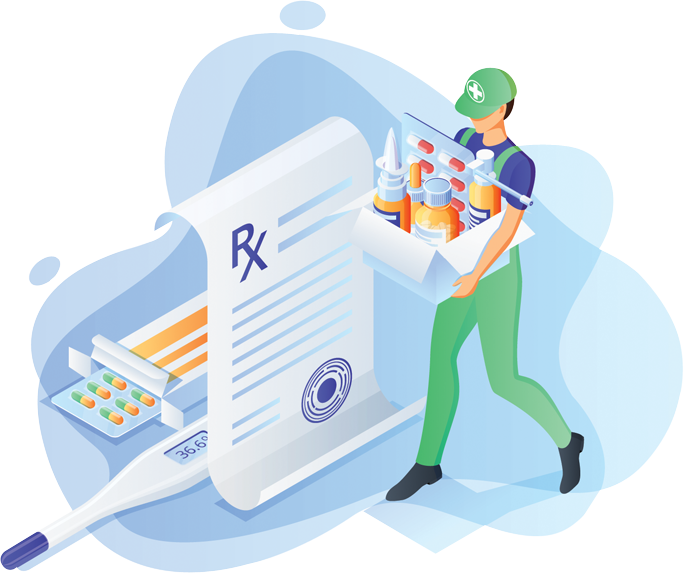
Amazon has changed the entire delivery gamut. Most people have a mindset of “why should I go out if I can order it from my mobile phone”. The basic feature of prescription delivery apps is to ensure easy access to medications on need-basis. Users may also need to consult with the staff remotely, or ask for a refill of their prescription.

For such kinds of apps, green and blue are the best choice of colors. They are refreshing, not too harsh on the senses and encourage concentration. These colors also work well for the pharmacists who are processing a lot of prescriptions by the hour. So, these colors help them concentrate on small details and deliver the right medication to intended recipients.


Informational and health communities apps

How mHealth Trends Are Improving Healthcare | Dogtown Media


Mobile apps that share informative healthcare articles have just one aim- to make people more aware of diseases, medications, treatment methodology, and so on. They want to make users in charge of their own health by disseminating information on their portal.

In such applications, we need to give users a control over what content they want to consume. We also have to ensure that the app functions well for all age groups. Including too many colors might hinder readability for elderly users whose vision declines with age.

The primary color of such apps should be white, followed by blue and yellow. White is a color that denotes cleanliness, freshness, and simplicity. You can use shades of blue and yellow to convey depth and power. Yellow is associated with positivity and warmth. These colors add liveliness and encourage people to keep reading.


Patient-engagement apps

How mHealth Technology Supports Patient Engagement Strategies

Patient engagement apps work at various levels- they connect patients with doctors, through online consultation. They remind patients when it’s time to take medications. They encourage patients to exercise regularly. They keep a track of insurance renewal, and so on.

These apps also store sensitive information and personal health data. Therefore, the app colors must invoke a feeling of security as well as encouragement. These patient engagement apps aim to make users accountable for their own health. Therefore, colors that are soft and neutral must be used.

Orange is a color that signifies health, happiness, and encouragement. Green is the color of nature and it denotes freshness, and progress. One can even use shades of pink as they represent kindness and affection. Darker shades of pink or orange can be used in designing medication reminders and pills tracker.


Personal wellness apps

12 Motivating Wellness Apps To Digitise Your Wellbeing

A major shift has happened in the way we manage our health. With apps that can monitor sleep, calories, heartbeats, and even steps, personal wellness apps have an increasing consumer demand.

Personal wellness apps help in motivating people to track their vitals, self-monitor critical signs of illness, and stay fit. Therefore the colors in these apps should give a playful, cheerful and cool vibe. Shades of purple, blue, and pink are the right colors for these kinds of wellness apps.

Purple denotes ambition and devotion which fits well with the mindset to track and improve health. Blue and pink add the coolness and kindness quotient. Pink exudes the message of playfulness as well as tenderness.


Remote consultation and monitoring apps

How remote-patient monitoring will change healthcare | by Robert L. Longyear III | The Startup | Medium

Remote consultation and health monitoring apps help in keeping the patient connected with their doctors. They are especially useful for the elderly or disabled who can’t visit the doctor’s clinic regularly.

In such apps, one important thing to consider is the choice of colors for all age groups. Color perception changes with age and demographics. What works for middle-aged people wouldn’t necessarily work with elderly. So, during the user research phase, identify your user persona and decide who your target audience is. People in their 30’s or 40’s might prefer bright and vibrant colors that are playful and cheery. On the other hand, older people are likely to enjoy softer, soothing colors like beiges and whites.


EHR apps

Role of mHealth Apps in Healthcare Evolution from 1.0 to 3.0

Patients are more informed now than ever. Technology has changed the way healthcare data is accessed and inferred. The end users want to analyze their personal health data and take control of their health. They also want to keep their privacy intact.

This means that the color palette of the application should give a confident, trustworthy and cool vibe. So use neutral colors and a lot of white space so that the users can access important information in a hassle-free way. You can also use warm tones to show graphical information.

In conclusion, I would just say start by reading about the psychology of colors. Understand the color wheel. Deep dive into various factors that affect people’s perception. All this will help you in deciding the best color combinations for your app. Colors that are well thought out after doing research on the demographics of the app, are timeless. They always attract new users and keep them engaged, no matter which trend appears or disappears.

User Research Methods via Phases of Product Development

User research is one of the best ways to know what users want and how they interact with your product. It’s performed in order to improve the product as per the feedback gathered at different stages of product development. One of the mistakes that designers and PMs make is that they assume user research needs to be done only in the beginning. However, if you want to build a product that conforms to the needs of the user, research must be a continuous process. At the onset of the product development, user research is required to validate the idea. But when a product is out in the market, user research is needed to understand if users are liking it or not. It’s important to understand users’ needs and their pain points. It’s important to know how they interact and use your products/services, and what kind of challenges they experience while using them.

For this reason, different user research methods are used at different stages of product development. In this blog, I’ll talk about the research methods in detail. But first, let’s see the various stages of product development-

Discovery stage (from an idea to an MVP)

POC vs Prototype vs MVP: Which Strategy to Prefer?

Discovery stage starts with an idea. You have a picture in mind about what you want, and the problems you want to solve. But you need to validate your hypothesis.

You need to collect and analyze information about your end users, and their problem areas. You need to get an in-depth understanding of their goals, and challenges that might arise in implementation.

User research in this phase is required to validate those product ideas/hypotheses. When user research is done right, it helps in gathering valuable feedback on the ideas and saves precious time from building unwanted features.

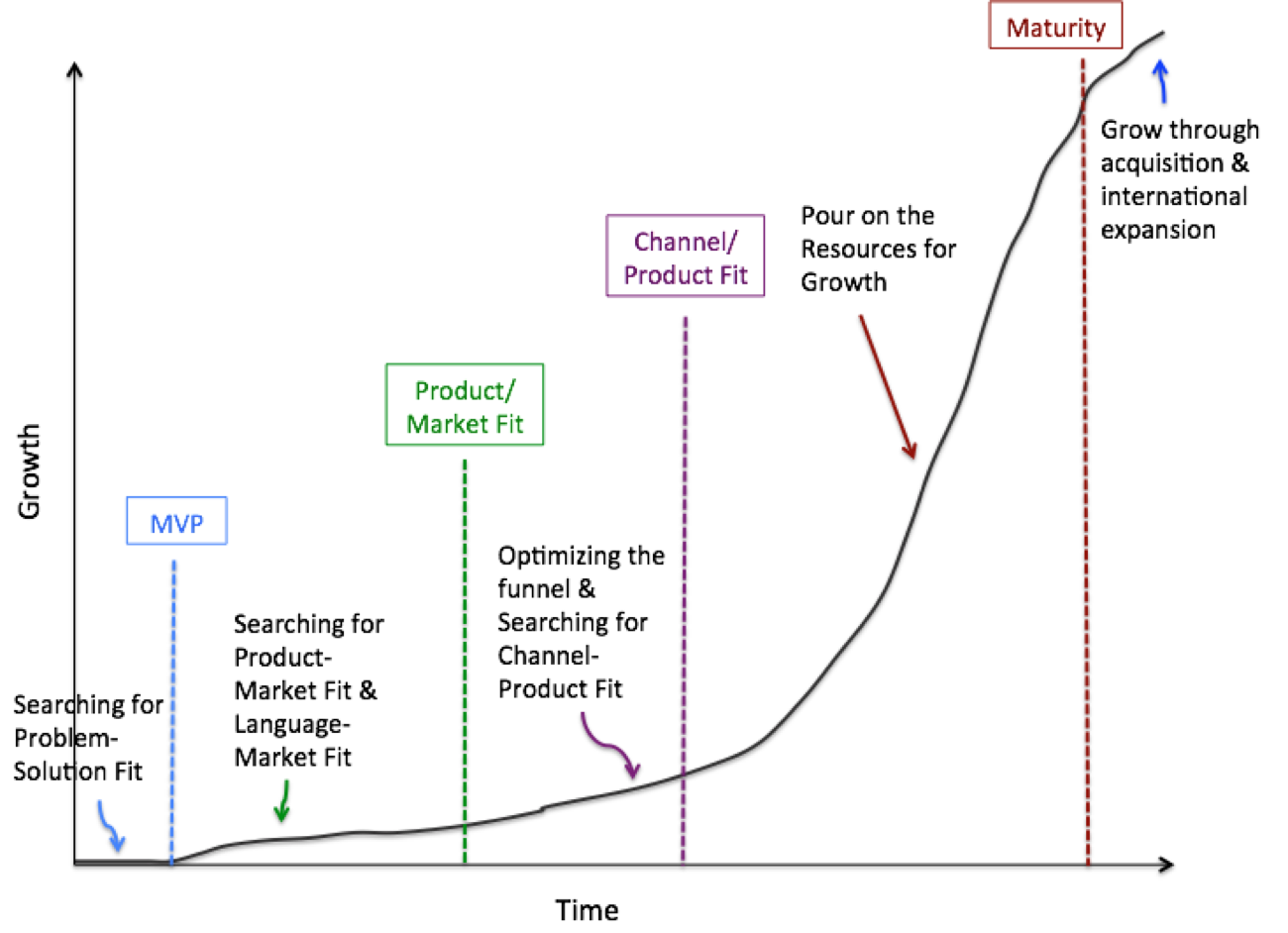
Growth and maturity stage (from MVP to a full-fledged product)  

5 Phases of the Startup Lifecycle: Morgan Brown on What it Takes to Grow a Startup | by Lauren Bass | Tradecraft | Medium

The growth/maturity stage of the product is when the MVP is already launched in the market and people have already started using the product. The product/service has got enough traction and is on the verge of getting popular.

At this stage, user research is required to understand how users are interacting with the product– are they satisfied with the product, what more would they like to be included, how would they rate the product, where do they feel stuck while using the product, etc.

Good user research helps in iterating over the existing product to build new features, improve existing ones or remove unpopular features. It also helps in getting feedback on the existing features on the product.

Implementing user research in the discovery stage, one can visualize the real pain points of users and build a product that solves users’ problems.

In post-launch user research, one can see how users use a product and what are the gaps that prevent them from accomplishing their goals.

There are different user research methods for each stage. So, first, let’s see the whole spectrum of methods that are available.

A landscape of user research methods

User Research Methods: Gain Unfiltered Insights | Table XI

Nielsen Norman Group has conceptualized a variety of user research methods. I’ll be talking about the most common ones used by Product Managers/Design Leaders.

If you want to understand user’s attitude or what users say, then most common methods are-

Surveys :- They consist of a series of questions which give you quantitative information from a large sample set.  It can be used for both validating a hypothesis or gathering feedback from users. Therefore, surveys can be used in both discovery and post launch stages.

User interviews:- They are one-on-one discussions with users to gather qualitative information. Interviews are usually conducted in a small sample set.

They can be used in various ways – exploration to discover the pain points of the users, discovering new ideas for products/features, to test a hypothesis or to know the likes or dislikes of a user.

User interviews can also be used in both discovery and post launch stages.

Contextual inquiries:- In these sessions, users are observed as they perform tasks in their natural environment. This is a method to gather first hand information from the users. In other methods, you only listen as the user tells how he/she performs a certain task. In this, you can observe the user doing these tasks.

This method can also be used in both discovery and post launch stages.

In the discovery phase, one can observe the end users of the product in their environment while they work. This could give insights on what is repetitive in nature and how technology can remove those brainless iterations.

In the post launch stage, we can observe the end user using the MVP and observe where users get stuck or what are the blockers for them. Is there something which is manual and can be easily automated to make users’ life easy?

User feedback:- In user feedback, users give their opinion on the product. This is typically gathered through a link, feedback form, recommend button, etc. One example of gathering user feedback is through Net Promoter Score (NPS) which is a form of user feedback used to know whether a user would want to recommend the product to others.

This is done in the post launch stage of the product in order to improve the existing features.

All of the above methods help build empathy with the users and understand their attitude, likes/dislikes towards product usage.

If you want to understand what people do or how people use your product (also called as usability of the product), then most common research methods are-

A/B Testing :- It’s a quantitative method that allows you to compare two versions of a product and figure out which one works better. It’s used in making incremental changes in a product. There are tools available that allow you to run 2 versions of the same thing. 50% of the users will see one version and another 50% will see another version. Therefore, with A/B testing you could experiment with headlines, button texts or two layouts of the same page.

A/B testing can be used only in the post launch stage of the product.

Eye tracking/Heat maps:- Heat maps allow you to evaluate which sections of the website or app users engage with the most. There are many tools available that allow you to track how users engage with a hyperlink, button, or in what pattern they read the content. This kind of study is very critical to understand what users really care about and what attracts their attention.

It can also be used for the post launch stage of the product.

A case study

Don't Waste More Time Writing Bad Case Studies. Use These Tips Instead. | TechnologyAdvice

To help you understand how research methods vary in different product development stages, let’s take an example of a hypothetical product.

We want to build a virtual mental-health helpline that would help people seek support for disorders like anxiety, depression, etc. This helpline is especially targeted for those who are bearing the brunt of the pandemic and are unable to go out and seek clinical help. Let’s call our hypothetical product –  “Lumos Solem”. (Lumos Solem is the incantation of a Harry Potter spell that produces a blinding flash of sunlight)

In the discovery stage

As a product owner/manager, we would first need answers to some basic questions to validate the idea.

  • Would users be comfortable in using SMS/video to share their problems?
  • How comfortable would the users be in a virtual setup?
  • Who would be my target audience? What age, demographics?
  • What are the most common mental health problems that the helpline would address?
  • Should we get experts on onboard? Who would talk to the people seeking help?
  • Would people get a choice on who they want to talk to? Or will there be an automatic redirection to the first available person?

At this stage the user research methods that one can use to get answers to above questions can be–

  1. Surveys
  2. Interviews

For conducting the survey–

  1. Define the objective of the survey
    • In our case, it could be “To understand the user behaviour towards a virtual mental health platform”
  2. Identify the target audience and the sample size you need
    • In our case, an example of the target audience could be the most vulnerable  age group – 30- 80 age group and living in metro cities. Sample size can be a mix of middle aged and senior citizens.
  3. Frame the questions in an open and non-leading manner to gather the maximum insights without bias. Questions for Lumos Solem could be –
    • What does mental and emotional health mean to you in your everyday dialogue?
    • Do you feel the urge to talk to someone and just blurt things out to lighten your head? If yes, then what kind of communication could help you in expressing your thoughts?
    • What kind of answers do you seek in your daily routine which affects your mental or emotional wellbeing?Make the answers as multi-choice so that analysis is easier.

After that carry out the survey using any available tool like Google Forms and analyze the data to derive insights. This will help validate the hypothesis we assumed.

For interviews, follow the same steps as above. The only difference here would be to make a rough script, inform the participants the purpose of the discussion.

In growth and maturity stage

Let’s suppose Lumos Solem is in the market and we’ve started getting our innovators & early adopters on the platform.

Now it’s the time to build/remove features and collect analytical data using usability tests. In the post-MVP stage you can ask questions like-

  1. Analytics shows that users are dropping at the onboarding. Why?
  2. Those users who get past user-onboarding, drop off at the payment link. What can we do to retain them?

Product Life Cycles | Boundless Marketing

The user research methods that one can use to get answers to above questions can be–

Feedback form:- Feedback form after every virtual session can help you collect useful information about the quality of interaction. It can be for both mental-health experts as well as the users. This will give users a chance to share what they like or dislike about the service. You are also likely to discover blind spots like technical glitches hampering the quality of conversations, etc.

A/B testing:- If consultation with health experts is paid, you can experiment with the wording of the payment link. The idea is to make users trust in the process. If users are dropping off at the payment link, then you can A/B test the features of Pay now/Pay Later and see if they stay when given an option to pay later.

Heatmaps:- Heatmaps can be used to see what common problems people look for in FAQs. The area where heatmap is densely colored will indicate that users are most interested in reading about a particular topic. This data will help you refine your features so that users can find it easier to accomplish their tasks.

User interviews:- Conducting 1:1 user interviews with experts and users can also help in understanding the problems they are facing in a virtual helpline. At times, people hesitate in sharing their opinion in written format but are more vocal about sharing it in person. In such cases, user interviews come handy.


To conclude,  each user research method has its advantages and disadvantages. The choice of the method will be based on the nature of the product, stage of the product, the users and the answers you’re looking for.

There is a difference between what users say/think and what users do. If you want to know what users say then surveys, interviews and contextual inquiries are suitable to get the information. But if you want to know what users actually do then methods like A/B testing and heat maps are helpful.

I hope I was able to pass on some clarity of which methods to use during a particular product development stage.

How Do I Get My App Into The Google Play Store?

Google Play Store Gets New Interface: Did You Notice the Subtle Changes to Google Play UI?

No one can doubt the popularity and dominance of the Google Play Store in the domain of mobile applications and software.

The domain gets all the more solidified by the Play Store statistics that there are approximately 2.8 million apps on Play Store and that almost 3739 apps get released on it daily.

Numbers like these solidify how Play Store is an excellent option to upload your application on.

Now, if you are wondering “How to submit an app to Google Play Store” then end your quest here. We have covered end-to-end all about the process to upload an app to Google Play Store.

To put it out there, there are certain things that need to be done before the actual process of app submission begins. This is what we are going to attend to before answering the question of “How to get an app on the play store”, we will look at the pre-steps to publishing an application.

Without any further ado, let’s dive in.

Prerequisite of Submitting App To Play Store

Since this is your first time submitting your application to a gigantic platform, there are certain prerequisites that you must take care of in order to successfully upload an app to Google Play Store. So, without any further ado, let’s get started.

1. Test Your Application

Unit Tests & Data Coverage for Machine Learning Models - Data Analytics

It is needless to mention how crucial testing your application is. No matter how many incredible features you have packed into your app, if it does not perform upto the expectations of the user, it will be ditched like a hot potato. In which case, it is imperative for you to painstakingly test your app as many times as possible and be 100 percent certain that it is going to perform remarkably, before you look ahead to upload apps on Play store.

You can always use emulators for this purpose, however, using an  Android-powered device will make the testing process more effective. It will give the experience of using your app on a real device, as would users, and enable you to analyze any bugs or discrepancies.

2. Concise App Size

The App Design Process: A Guide to Designing Mobile Apps

In terms of applications, the size of the app matters a lot. Users do not feel inclined to download an app that takes too much space in their device storage. Moreover, Google only permits the app size to up to 50MB.

Although, if your app exceeds this limit, then you can use Android APK’s Expansion file, to successfully upload the app to Play Store. This will break your app into parts and each can be up to 2GB, giving an additional 4GB space to your app. This added data is saved in Google Cloud and is retrieved whenever the app is installed.

3. Get App Licensed

Web Development Mobile App Development Mobile Phone Web Design, PNG, 658x636px, Web Development, Advertising, Android, Application

Though this is an optional choice, it wouldn’t hurt you to get your app licensed before you upload your app to Google Play Store. Licensing your application will prove most beneficial for you if it is paid in nature. By adding the End User License Agreement, you will gain full control over your application which may help in the future, should any discrepancies arise.

  • Create your APK file with Bundle ID and Version Number
  • You need to prepare an APK file in which you can assign a version number to your application which will help you in the future when you need to upload a new update for your app. This number is mentioned in the code and would increase as the updates for the application are introduced.
  • Bundle ID, also called App ID, is used to make an application unique, making it a crucial part of the prerequisites for submitting your application. This is applicable for all the applications for Android 5.0 and above.

4. Sign App With Security Certificate 

Android Security: Certificate Transparency | by Matthew Dolan | Medium

Here, you need to create a private key using Release Keystore. This is a security certificate signed as an APK which you will need every time you publish an app to the Play Store. This is also known as JSK file including credentials such as Keystore password.

5. Prepare App Store Listing

How to publish your app on Google Play and the App Store? | GoodBarber

App listing is a powerful element that helps your application in gaining downloads. Not every one devotes their time on app listing but if you do this before android app submission, you will definitely see some mind-blowing results.

In the app listing, you provide some information to users about what type of application it is and what are its features. One of the best practices of app listing is using high-quality screenshots. Play Store requirements allow developers to use a maximum of 8 images and a minimum of 2.

Here are the best practices and what you should include in your app listing-

    • Title
    • Short Description
    • Full Description
    • Screenshots of your app (JPEG or 24-bit PNG)(Min-320px,Max-3840px)
    • Hi-resolution icon (512 x 512)((with alpha) 32-bit PNG)
    • Feature Graphic (1024 w x 500 h)(JPG or 24-bit PNG (no alpha))
    • Type of application
    • Category of your app
    • Rating of the content
    • Email of Developer or Company
    • Url for Privacy Policy

6. Go Through Guidelines

Crew App — LH CREATIVE

When it comes to App Store vs Play Store guidelines, it is safe to say that Google’s guidelines are more flexible, which works in favor of developers.

However, you have to be careful when you add an app to the Play Store and you would have to make sure you follow all the guidelines given by Google, lest your app will be kicked out of the platform. Now, this is something you would want to avoid at all costs, right?

Step-by-Step Process to Upload App To Google Play Store

Now that the obvious is out of the way, let’s move on to the steps regarding how to upload an app on Play Store. Make sure you follow each in the exact chronological order to avoid any mistakes in the process.

1. Google Play Developer Console

Google Play Console | Google Play Console

In order to upload a mobile app to Google Play Store, a developer dashboard is imperative. Developer console is kind of a backend controlling center, from where developers submit an app to Play Store. There is a one-time fee of $25 by which a developer can open an account, loaded with functions and control features. After paying this one-time fee, you can upload apps to Google Play Store for free.

You need to fill out all the credentials asked while creating the account, such as your name, country and more. Once you submit your account it will take upto 48 hours to get approved.

2. Link Developer Account with Google Wallet Merchant Account

Create a Google Merchant account – AppMachine Help Center

If the app getting uploaded to Play Store supports in-app purchases, then you will need a merchant account. To create one you can sign in to your Google Console account and click on ‘Reports’ followed by ‘Financial Reports’ option. After this, you may select ‘Set up a merchant account now’ option and simply fill out your details.

The merchant account will automatically get linked to your Google Console account and will allow you to manage and examine app sales.

3. Create Application

How To Submit An App To The Google Play Store | Clearbridge Mobile

This is yet another step towards how to publish an app to the play store.

Once you are logged into your developer or publisher account, here are a few steps you need to take:

  • In the menu, go to the ‘All applications’ tab
  • You will see an option ‘Create Application’ – select it
  • From the drop-down menu, choose the application’s default language
  • Enter your application’s title (it can be changed later)
  • Now, click on “Create”

4. App Store Listing

Store Listing Panel

It is at this point, your preparations will come handy.

In this step around how to upload an app to the play store, you are required to fill out all the information and details you have already prepared with caution before. The table below shows what information you need to fill in the app listing-

Make sure to use appropriate keywords in your app description to increase the chances of your app showing up in searches. Along with this, make sure to use all the data we have talked about in the prerequisite section for app listing.

5. Upload App Bundles or APK To Google Play

How to publish Android appBundle to Google Play Store | by Andres Sandoval | Medium

Now, you are required to use the files such as App bundle or APK and signed app release and upload them into your application. This is how you do it: Navigate to the ‘Release Management’ and then ‘App Release’ tab in the menu. After this, you will be asked to choose any one type of release from four options- internal test, close test, production release, and an open test.

Once, you have made a decision regarding which type of release you want, you may select ‘Create Release’.

At this point, you will be redirected to the New release to the production page. Here, you are again required to make another decision- to opt for Google Play app signing on the app or not. If you choose the latter, then simply click on the ‘OPT-OUT’ option.

Now, select ‘Browse files’ and then look into how to upload apk to google play store while naming and describing your release through on-screen instructions. You can also click on ‘Review’ to confirm the information. When everything is taken care of, press ‘Save’.

6. Time For Content Rating

How We Rate and Review | Common Sense Media

The next step regarding how to publish apps on the Play Store is to rate your app. This is crucial for it is listed as ‘Unrated’, it might get removed altogether from the store, so it is imperative to rate the application.

For Content Rating, you must again navigate to the menu on the left side of the screen and then select the same. By clicking on ‘Continue’ you can move forward and then type your email address in the respective field and then ‘Confirm’ it.

Now, you may fill the questionnaire for your app rating. Follow this by selecting the ‘Save Questionnaire’ and then choose the ‘Calculate Rating’ option to see your app rating on the Play Store. The last thing to finalize your app’s content rating is to click on ‘Apply’.

7. Fix App Pricing and Distribution

Complete Guide: How to submit app to App Store and Google Play

Now, you have to be clear about what countries your app is going to be available in. The point to note here is that Google doesn’t support publishing an app for all regions. The app will be published in selected countries instead of world-wide.

Moreover, assigning a price to your app is crucial. If you want your app to be free, make sure that this decision is permanent, as Google does not allow you to convert free apps into paid ones. Although, the price of the app can be altered.

To do all this, go to the Pricing and Distribution tab in the menu, and then make a choice whether your app is going to be Free or Paid. You may now select the countries you want your app to be released. Additionally, if your application is suited for children under the age of 13, you may select the option of ‘Yes’ for Primary Child-Detected. If otherwise is the case, simply select ‘No’. Similarly, select the options for allowing ads into your application.

8. Finally, Publish the Application

How To Upload An App To Google Play Store?

Once you are confirmed about everything being correct, take the last step of this guide on how to upload an app on Play Store, i.e, add the application to the platform. You need to go back to the ‘App Releases’ tab and then select ‘Manage Production’ followed by ‘Edit Release’. After this, click on ‘Review’ and then choose ‘Start rollout to production’ option. To bring this process to an end select the ‘Confirm’ option and Voila! You have successfully uploaded the app to the Google Play Store for free.

All there is left to do now is to just wait for your application to get approved. It generally took about two hours for your application to get reviewed. But with Google Play’s updated privacy policy, it will now take hours and even days for the same, encouraging mobile app development companies to create even more flawless applications that get selected instantly. So, hold your excitement in the place and just wait.

How To Get Your App Featured On Play Store?

How to get your app featured on the Google Play Store - Business of Apps

Your job to make sure the app gains popularity and thousands of downloads doesn’t end here. After successful execution of the steps regarding how to upload an app to Google Play Store, it is now time to get it featured on Play Store.

There are certain practices such as user interaction and visual design services, working on the latest technologies, localization, etc. that helps your app to get featured. Getting featured on Google Play can benefit your app to an extent that it increases the attention of users on your app by multi-folds.

What To Do After Play Store App Submission?

With the question of “How to publish an app on Play Store” answered, you might think “What is there to do next?”. Well, we have got you covered with this as well. Here are some practices you can do to ensure your application enjoys global exposure.

1. Promote App On Social Media

How to Promote an App on Social Media? | Promote Android App

Social Media is a great medium to skyrocket the popularity of your application. The fact that 42% of the world’s population uses social media is enough to justify the statement. There are some platforms such as Facebook, Instagram, Linkedin, Pinterest, and a lot more that are constantly in use. So, promoting your app on these platforms promises more traffic and eventually more downloads.

2. Initiate Press-Release

PRESS RELEASE! — Foundation to Fight H-ABC

Press-release is another way through which you can promote your brand. With this, your brand will come into limelight and many publications will cover your app release which will eventually allow your app to reach a wider user base and develop an authentic connection.

A press release that covers the words, attributes and insights of the mobile app developers and application itself has proved to be an incredible app marketing strategy. It is a great example to show users that what they expect is good.

3. Focus On App Maintenance And Update

Mobile App Maintenance and Support Plans Sydney | DigiGround

You cannot just publish your application of the app store and let it be. You need to efficiently maintain your application and introduce frequent updates, attending to the issues and bugs faced by users. Maintaining something is a constant task rather than a one-time thing. So, make sure you keep your app updated with the latest tech-stack and fix whatever needs fixing.

4. Practice ASO

ASO: App Store Optimization ? SEO Guide for Google Play & App Store

App Store Optimization is a celebrated practice among all the top Android app development companies. Famously known as ASO, it primarily focuses on the activities which target aspects that can generate more attention and visibility of your application of the app store. These practices are focused on increasing the conversion rate of impressions into downloads on the application.

Become An Immaculate Designer

But, if you’re a designer who is a fan of the term ‘hot fixes’ and you roll your eyes at the mention of ‘iterations’, this blog is for you!

I know it’s frustrating when people just don’t get the art in your design. I know the tantrums, the bouts of criticism that clients throw at you all because the submit button was red, not green.

Bloody quibbler!

But you know what, forget it.

*sigh*

Don’t ever lose the feeling that you were put on this earth by the God of Design themselves. Users and designers don’t understand what it takes to build masterpieces.

So, let’s shine some light inside the mind of a despicable designer and try to look at life from their perspective-

Screw the users and their problems

You should start practicing the mantra — a good designer always designs things for themselves. Period.

Users Moosers.

It shouldn’t even come into the picture. You should automatically assume the personas, it’s no big deal. You spent years studying this in school.

Just pretend that you understood their problems. Resist frequent changes.

What people don’t understand is that you have already put your blood and sweat into the project. They will always ask for more. Because perfection is a state of mind. It will always be relative. They will try to throw into the vicious circle of ‘Design. Take Feedback. Repeat’.

Fall back. And charge with arrogance.

Repeat it after me- User knows nothing. They just don’t get it. They never will.

Copy your favorite designer’s work. Blindly.

Whether you are a pro or a beginner, someone will be always better than you. The world is full of them. I never understood this, what’s the big deal about copying work? Find your godfather designer and copy his/her ideas. It’s the right way to learn. How do you think great designers are made? They follow their idols.

If you are a newbie designer, you need to have an industry perspective. And for that, you need a person who has already been in the industry for long. So stalk his/her portfolio and binge copy his/her designs.

You need to do renovation before you start doing innovation, right?

Haters gonna hate!

Alignment is just a passing fad

Always remember- Design means decoration. What looks good, sells well. A good designer always draws what catches his attention. Alignment brings monotony into designs and the job of a good designer is to always bring in contrast.

So, throw elements randomly on the page. It would help the users spend quantity time (don’t worry about quality) on your pages thus making your application a success.

Consistency is the hobgoblin of little minds

As a designer, you should only believe in one kind of consistency — being Consistently Inconsistent. That would always keep the users on their toes. If the Call to Action button has been rendered green on one screen, make it red on the other. Give users a chance to learn new things on every screen. The more variety they encounter, the more they would swear by the freshness of your design ideas.

Keep your emotions at bay

Design fanatics will try to make you think about users. What do users want? Why they want what they want? Do you know things like user’s journey, user’s persona, user’s birthday, user’s pet’s name?

Go to hell, you want to yell! I know!

If you start thinking about all this, when will you design? Half of the time, even users don’t know what they want. They are fickle-minded. You are the one with expertise and experience. You went to college, studied sixteen hours every day, submitted research papers. Not them!

error: Content is protected !!