Employee Attraction towards Cyber Attacks

With the rapid development in technology and ever-increasing internet users, cyber security plays a critical role in every industry. Securing the IT infrastructure in an enterprise helps in maintaining smooth workflow and consistent business operations.

In recent times, cyber crimes have become extremely sophisticated and threat actors have come up with new ways to obtain access to an organization’s systems and sensitive information. All throughout 2020, everyone was battling to overcome the onslaught of challenges brought by the pandemic.


However, cyber criminals saw an opportunity and wholeheartedly exploited the panic and chaos caused by the pandemic to fill their own pockets. And these criminals took no time to launch back to back cyber attacks during the pandemic.

Which of Your Employees Are Most Likely to Expose Your Company to a Cyberattack?


These threat actors left no stone unturned to target the vulnerable companies that weren’t prepared to support a remote workforce securely. As a number of well-established companies became victims to various cyber attacks, 2020 witnessed several security incidents making the headlines.


Since companies are not willing to compromise with the health of their employees, remote working is expected to continue in 2021 and beyond. But the question is, how do companies survive the fight against cyber crime and secure their employees while overcoming the challenges posed by COVID-19?


Cyber Risks and Lack of Security Awareness Among Employees

Often organizations focus on upgrading the hardware and technologies to stay protected against cyber threats. In doing so, organizations spend millions of dollars on the latest security patches and upgrades. But just like our computers, humans store, process, and transfer information too.


Yet, if you compare the amount of time and money an organization spends on securing its computers and other electronic devices to the resources it focuses on securing its employees, you’ll see how huge the difference is!


Organizations typically invest a lot in installing antivirus and spyware software as well as upgrading the operating systems, applications, and browsers. Additionally, every company has help desks, support teams, and security technical teams to maintain all this software and hardware. But how much does an organization spend on securing employees? Very less.


Cyber security has become a massive issue in both private and government institutions. Looking into the core of the issue, it is not really about the technology or the systems. Technology and systems have become increasingly secure over the years.


Employees are the actual issue. Even though it is unintentional, most cyber attacks are caused by human error, whether it is a careless click on an unsolicited link or an innocent downloading of a corrupted file.


How to Fix these Cyber Security Loopholes? 

hacker attack every 39 seconds-min - Cybint

It may sound controversial, but the security teams are the last line of defense within an organization. Even though these teams face many cyber security challenges, it is the employees who form the first line of defense.


According to a report by IBM Security, human error is the main cause of 24% of all data breaches.


Therefore, it is imperative for every organization to train the employees to be aware of the prevalent cyber threats. This does not mean that organizations should implement such heavy security measures that will just create chaos and difficulties for the employees.


Rather, every organization should come up with a solution that makes the day jobs as easy as possible for the employees while making their IT infrastructure as secure as possible.


Here are some effective measures you can take to secure your organization:


  • Discover:  Start looking from a risk management perspective. Find out if there are any flaws in the organization’s cyber security framework. Conduct services like VAPT to discover and identify the loopholes within your organization’s network and IT infrastructure.


  • Practice healthy cyber hygiene: Implement basic cyber security protocols. Enforce a strong password policy, enabling multi-factor authentication for verification, using secure Wi-Fi, encrypting sensitive data, and regularly updating the systems with the latest security patches.


  • Lookout for malicious links: Think carefully before clicking on a link or downloading an attachment from an unknown source. An email can sometimes be from a threat actor impersonating a trusted individual. To protect yourself against malicious actors impersonating your email domain, set up tools like KDMARC and defend your domain against forgery.
  • Set up a firewall: As the name suggests, a firewall is a wall between the computer and the internet. It acts as the gatekeeper for all incoming and outgoing network traffic. Setting up a firewall protects the internal networks of your business against cyber threats.
  • Update on the latest risks: Keep up with the latest cyber hacks and threats news. It helps your organization stay up-to-date with the latest cyber security-related news. It also provides you with the cyber security preventive measures that your organization can adopt to avoid becoming a victim.
  • Train Employees: Educate employees to recognize social engineering attacks such as phishing, vishing, smishing, etc. To be more aware of the cyber threats evolving around the world and how to react when needs arise.


The Ultimate Solution to Make Employees Cyber Secure
Lack of Cyber Skills Holding Back the Growth of Small Businesses

There are several steps an organization can take to protect itself against cyber threats. However, it all comes down to how strong is your organization’s first line of defense – the employees. It has become essential for organizations to provide cyber security awareness training to their employees.


You can opt to educate your employees with tools that offers the most effective security awareness training materials. The tool generates awareness amongst employees about the common cyber threats wreaking havoc around the world.

 

“Cyber Security Awareness” – A priority among employees

12 Ways To Create An Unmissable Cyber Security Awareness Campaign

Cyber security awareness is an essential part of something that can be considered equivalent to the vault that has all your valuables in it. It is extremely vulnerable and requires attention. Since the last decade, cyber-criminals have shifted their focus from individuals to employees within organizations. These attacks have cost billions of dollars in thousands of reported cases. Some of the most infamous cases include:

Target

Arrows in the target clipart. Free download transparent .PNG | Creazilla

In 2013, Target became the victim of a third-party credit card data breach in which the vendor extracted the credentials outside of an appropriate use-case. The attackers leveraged the weakness present in the payment system of Target to access customer base and then install the malware. The attackers stole the personal information of customers including customer name, payment card details, credit card verification code etc.

RSA

AES and RSA Encryption Explained

In 2011, two groups of hackers launched a phishing attack on the employees of RS the security arm of EMC. These two groups had the support of the foreign government. This phishing attack compromised the SecureID authentication and extracted more than 40 million employee records.

These cases set a clear example of how mere negligence can destroy an entire organization.

What do reports say about such cases?

As per the report released by Kaspersky Lab, negligence of employees is

the cause of almost half of all the cyber-attacks and two-thirds of the data

Free Reports Cliparts, Download Free Reports Cliparts png images, Free ClipArts on Clipart Library breaches. 24% of the employees within the organization are not aware of the security policy that their own organization have. In the same research, 44% of the companies admitted that employees do not follow IT security policies properly. During the year 2017, 35% of organizations focused on staff training and it was the second most adopted approach to facilitate cyber security awareness.
  • An online marketing firm, Reboot, in 67% of the cyber attacks, attackers have more often targeted lower-level employees.
  • Cyber security ventures have predicted that by the year 2021, the cyber cost will cost $6 trillion globally. 42% of the large organizations and companies have accepted that they have been the victim of phishing attacks.
  • According to Symantec’s 2018 Internet Security Threat Report, 88% of all the attacks use emails with malicious attachments that have been downloaded by employees that resulted in a breach of server, device or network.
  • Watchdog says 72% of data breach attacks occur through email in organizations that have less than 100 employees.

How can organizations create cyber security awareness among employees?

Cybersecurity Awareness Training: Threats and Best Practices | Secureworks

  • These statistics are not just numbers but, have a very concerning relevance. This clearly justifies the age-old idiom of humans being the weakest link in the information security chain.
  • Organizations should focus on cyber security awareness among employees in order to prevent them against cyber-attacks.
  • Restricting access to confidential data and information can lessen the probability of the success of cyber-attack due to employee negligence.
  • Implement policies related to cyber security within the organization. It will be an add-on to the cyber security of the organization’s infrastructure.

However, one of the most effective strategies for increasing cyber security awareness is training employees. Cyber security awareness ensures that employees are ready to face cyber-attacks in real life.

A jump in Impersonation attacks

Cybersecurity Training: Solutions & Services | NECThe word ‘impersonation’ refers to the act of pretending to be another person for a purpose or fraud. Impersonation attacks are a form of cyber-attacks where attackers send emails that attempt to impersonate an individual or company for gaining access to sensitive and confidential information. One of the popular forms of impersonation attacks is CEO frauds or business email compromise (BECs).

Till this date, a 70% rise was observed in the number of impersonation attacks.

Graph showing increase in proton conductivity with increasing pore... | Download Scientific Diagram

Globally, BEC attacks caused $12.5 billion of financial loss within the period of one year resulting in businesses losing valuable data, customers as well as money in the process.

Within a period of past 12 monthsit has been revealed that 94% of organizations have experienced phishing attacks with 45% of the organizations witnessing a visible increase in spear-phishing attacks with malicious URLs.

4 Phishing Attack Trends of 2019 - ID Agent

Over one-third of the organizations saw an increase in the number of attackers trying to gain access to sensitive and confidential information including theft of sensitive intellectual property or login credentials via email-based spoofing.

Impersonation attacks are a form of social engineering attacks where attackers use manipulation to access information. Attackers are required to do background research on the intended victim. A successful impersonation attack occurs in three steps. It includes:

  1. Targeting the victim

Why Don't We Just Ban Targeted Advertising? | WIRED

The most important step in deploying a successful impersonation attack is doing background research on the probable victim. In this era of technology, finding someone’s personal information is not a very difficult task. Social networking platforms such as Facebook, Instagram, Twitter etc. are some of the mediums that can provide victim’s personal information.

  1. Trust building

10 steps to building trust that lasts - Nan S. Russell - Municipal World

Once the attacker gets his hands on the required information, the next step is to build a relationship of trust with the victim. The attacker will impersonate someone who knows the victim.

  1. Deploying the attack

The best new anime of the 2010s decade - Polygon

Once the attacker builds up a relation of trust with the victim. Attacks are deployed by majorly using three tactics. This includes:

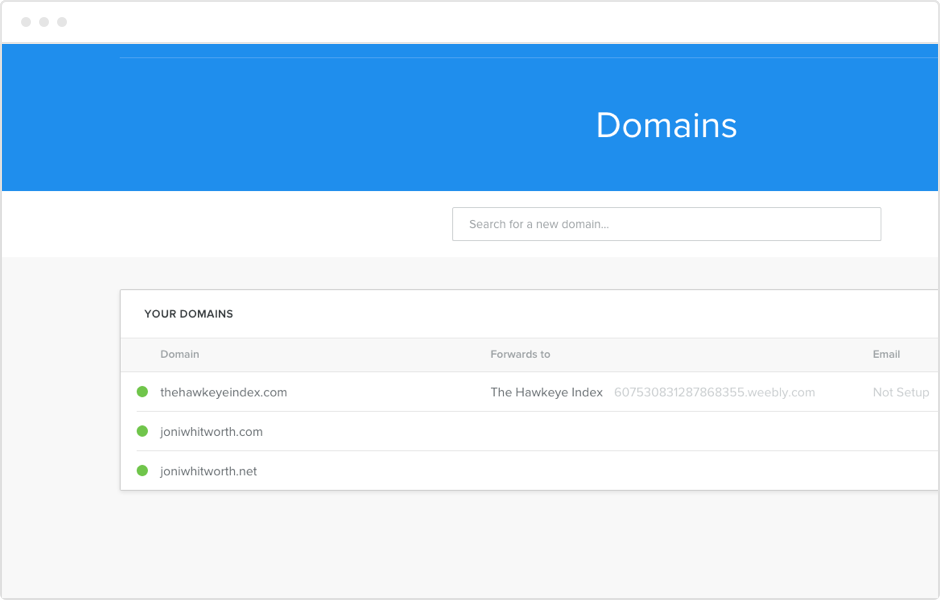
By Registering a look alike Email Domain

Free Domain Hosting with Weebly - Find Domain Names Today

The attacker can register an email domain that is similar to the actual email domain and create a new email ID using a name that is similar to the name of the person who is being impersonated.

Manipulating the Display Name

C++ Program For Store Employee Information And Display Using Structure

Majority of the mobile email clients only display the name of the sender, thus, making it very easy for the attacker to edit the display name and manipulate the victim. However, in desktop email clients, both the display name and email id of the receiver are shown and thus, this attack methodology is not very successful.

Using a Free Email Account

The 11 Best Free Email Accounts and Service Providers of 2021

Attackers send messages through free email account such as Gmail, Yahoo etc. The sender indicates that the victim has been locked out of their official account and need immediate help for getting the task done.

What can be done to avoid such impersonation attacks?

Providing cyber security awareness and training to employees

Security Training – WIDE ANGLE RISK MANAGEMENT IN NAIROBI KENYA

Organizations should take initiatives for providing proactive cyber security awareness training to the employees. Cyber security awareness and training tools.

Building cyber resilience strategy

Building cyber resilience: An imperative for surviving threats today and in the future - Smarter Business Review

It is important to build a cyber resilience strategy that can help in enhancing the cyber security of the organization including email domain security, web security, network security, endpoint security as well as data backup and recovery.

Business Contingency Plan

How to Create a Business Contingency Plan | Full Scale

Each business must formulate a business contingency plan in case your organization suffers from an unexpected event or situation. The purpose of a business contingency plan is to establish a strategic framework and response in order to recover from a cyber incident.

With the increasing sophistication in the attack methodologies, it has become vital for organizations to adopt security measures against cyber-attacks.

Massive Cyber Attacks of 2020

The year 2020 has become remarkable in many ways, especially when it comes to the surge in cyber attacks. The Covid-19 pandemic has given an unprecedented opportunity to cyber attackers to hack and break down the organizations’ IT infrastructure. The work-from-home working module adopted by such organizations has been attributed to the rise of cyber attacks.

The security gap between the home and office network has played a key role to make way for the data breaches in 2020. This issue has resulted in the theft of confidential information, leading to the loss of millions of dollars for breached organizations.


Today, cyber attackers have come up with more innovative ideas to set a new trend in phishing, cryptojacking, ransomware attack, IoT attack, etc. According to a security research firm, 81 global firms from 81 countries reported data breaches in the first half of 2020 alone.


In fact, 80% of firms have seen an increase in cyber attacks this year. Coronavirus is alone blamed for a 238% rise in cyber attacks on banks. Phishing attacks have seen a dramatic increase of 600% since the end of February.


Whereas due to pandemic, ransomware attacks rose 148% in March and the average ransomware payment rose by 33% to $111,605 as compared to Q4 2019. (Source: Fintech News)

What is a cyber attack? Recent examples show disturbing trends | CSO Online


The Top 5 Cyber Attacks of 2020

We discussed how cyber attacks have dramatically increased today. Let us walk you through the five major cyber attacks that have happened in 2020 till now. These staggering cyber attacks have crippled some famous organizations across the world.


Software AG Ransomware Attack

German tech firm Software AG hit with $23mn ransomware attack | Greater  Kashmir

The second-largest software vendor in Germany and the seventh-largest in Europe, Software AG has been reportedly hit by a ransomware attack in October 2020. ZDNet reported that the German tech firm has been attacked by the Clop ransomware and the cyber-criminal gang has demanded more than $20 million ransom.

The report also says that the company has still not recovered from the attack completely. The company disclosed that the ransomware attack disrupted a part of its internal network. But services to its customers, including cloud-based services, remained unaffected. The company also tried to negotiate with the attackers but it all went in vain.

As per the statement released by Software AG, the company is in the process of restoring its system and database for resuming orderly operation.


Sopra Steria Ransomware Attack

Sopra Steria hit by new version of Ryuk ransomware

French IT service giant Sopra Steria was attacked by ransomware on the evening of 20th October, as confirmed by the company. Its fintech business, Sopra Banking Software, identified the virus which is a new version of the Ryuk ransomware and previously unknown to cyber security providers.


Sopra Steria claimed that it was able to confine the attack to a limited part of its IT framework, even though it caught the attack after a few days. However, following an in-depth investigation, the company did not identify any leaked data or damage caused to its customers.


Ryuk is one of the most inventive ransomware which has already targeted organizations like EWA, a US defense contractor, and Prosegur, a Spanish logistics firm.


Telegram Hijack

Telegram Hacked? Here is how to know and how to get it back

In September 2020, hackers gained access to Telegram messenger and email data of some big names in the cryptocurrency business. Hackers used Signaling System 7 (SS7), which is used for connecting mobile networks across the world, to hack the data.


According to cyber security experts, the hackers were most probably after two-factor authentication (2FA) login codes. They spoofed the short message service center (SMSC) of mobile network operators to send a request on location updates to at least 20 targeted high-profile victims.


This attack is believed to have occurred to obtain cryptocurrency. This type of cyber attack is well known in the cryptocurrency community but the users are generally aware of such requests.


Therefore, there are better authentication methods than just SMS or call-based 2FA in the cryptocurrency community. Cyber security experts think telecom standards must move away from using protocols like SS7, which cannot resolve modern issues.


Seyfarth Shaw Malware Attack

Legal Firm Seyfarth Shaw Suffered Ransomware Attack

The chicago-based leading global legal firm, Seyfarth Shaw LLP became a victim of an “aggressive malware” attack. This attack was later confirmed by the firm as a ransomware attack. The cyber attack reportedly took place on October 10, 2020, and downed the firm’s email system completely, as per a statement published by the company.


The firm claimed in its statement that there was no evidence of client data or firm data unauthorized access or removal. However, many of its systems were found encrypted, following which the firm shut down all of those as a precautionary measure.


The global legal firm notified law enforcement and the FBI has already started an investigation. Apart from this, no further information was revealed on how the attack occurred and what family of ransomware hit the firm.


Carnival Corporation Data Breach: 

Carnival Corporation Confirms Cyber Attack and Ransomware on Costa and AIDA  IT Systems | Crew Center

The world’s largest cruise line operator, Carnival Corporation reported a data breach due to a ransomware attack that took place in the month of August 2020. Hackers stole confidential information from customers, employees, and crew members at the time of the attack.


On August 15, 2020, the company detected a ransomware attack that breached and encrypted one of its brand’s IT infrastructure. Following the attack, the cruise line operator notified law enforcement and hired legal counsel and cyber security experts and launched an investigation.


Though the company claimed that no misuse of exposed personal data has come to light, the type of ransomware and how the attack happened have remained unrevealed.


How to Secure Your Organization Against Cyber Attacks?

The global transition to the work-from-home culture has made a way for cyber-criminals to execute incredibly advanced cyber attacks. Moreover, ransomware, phishing, DDoS, malware, etc., are amongst the most prominent forms of cyber attacks that we have experienced this year, till now.


Here are some of the “must follow” measures to secure your organization against emerging cyber attacks:


  1. Conduct VAPT periodically to check for exploitable security vulnerabilities in the IT infrastructure of your organization.
  2. Back up all the sensitive or confidential data and store it separately from time to time.
  3. Keep all the systems, software, and applications up to date with the latest security patches. 
  4. Restrict employees from sharing passwords at work openly and encourage them to use unique and strong passwords.
  5. Block email spoofing, spam, and BEC attack by securing your email domain with email authentication protocols like DMARC, SPF and DKIM.
  6. Run a cyber attack simulation campaign to assess the level of cyber awareness among employees. Then train them accordingly with the best-in-class security awareness training tool
  7. Make sure to implement the practice of using multi-factor authentication to maintain security and privacy.
  8. Restrict IT admin and access rights to limited employees. Ensure that they are adequately trained on the safe usage and encrypted storage of sensitive data.

Next Big Threat? – Polymorphic Attacks

During the first half of 2020, cybersecurity analysts and security experts have discovered that most of the phishing attacks conducted through the use of spoofed login pages. Polymorphic phishing attacks are on the rise in recent times as hackers are coming up with new ways to create spoofed login pages that are almost unidentifiable. This is one of the most frequently used methods implemented by cybercriminals for stealing the credentials of employees and users.Researchers have disclosed that more than 50,000 spoofed login pages replicating 200 popular international brands have been circulating since 2019.

This sudden increase in the number of polymorphic phishing attacks is because spoofed login pages are extremely difficult to identify but are comparatively easier to generate by hackers. Automated phishing kits that are illegally sold over the dark web, are deployed by cybercriminals to instigate these malicious phishing campaigns and to trick employees on a wider scale. This is why phishing awareness and training has become absolutely imperative in organizations in the 21st Century. As a CISO or CIO of your company, taking adequate precautions to prevent polymorphic phishing attacks is the need of the hour.

All you need to know about Polymorphism 

In a polymorphic phishing attack, attackers usually make minor alterations in the sender ID of a valid source or spoof an email address. They use social engineering attack techniques to make sure that the spoofed email ID replicates the authentic ID. The hackers then send these malicious emails to the employees in reputed organizations. More often than not, the email lands into the inbox of employees due to the lack of proper email authentication protocol in the company.

This malicious email comes with a link or attachment that redirects the employee to a spoofed login page. The login page asks for the employees’ corporate credentials and passwords. Ill-informed and unaware employees can easily fall for such polymorphic phishing attacks and give up their company login credentials on the spoofed page.

This information is used by hackers to extract valuable data of the company, gain access to company assets and financial information, find out personal details of employees working in the company, and conduct other fraudulent activities.

42% of all phishing attempts in 2020 were as a result of Polymorphism, as per a global survey conducted by security researchers.

According to security officials around the world, while these login pages are fraudulent in nature, they look extremely similar to original webpages. This is why cyber attackers use Polymorphism techniques to phish employees via spoofed login pages and succeed at it.

A cybercriminal can make minuscule changes in the email address so as to replicate a popular brand as closely as possible to skip detection. Since the changes made are very minor, such emails easily evade email security checkers, and email security tools may fail to detect them.

The most probable reasons for the increase in the number of spoofed login pages may be due to the following two reasons:

  • CISOs, CIOs, and SOC analysts of the reputed brand whose landing page has been spoofed seek ways for taking the fake pages down. This makes the hackers create more new pages so that it can continue to spoof employees.
  • Certain brands or companies may be an easy target for cybercriminals due to the lack of a well-rounded workplace security policy in their organization. This is the reason why attackers get away with polymorphic phishing attacks.

How to Detect Spoofed Login Pages?

While it may be difficult to detect spoofed login pages and prevent being phished, there are certain ways by which one can attempt to understand whether a login page is from an authentic source or not. Before being redirected to a login page it is always advisable to check whether the email is from a valid IP address as well.

This can be done by paying attention to the domain name and subdomains, as attackers might make minor changes in the same to trick employees. It also advisable to check whether the email has a relevant subject, is grammatically correct, and doesn’t provide lucrative offers or instigate a sense of urgency. After making sure of these pointers and clicking on the URL in the attachment when the login page opens up, employees must make sure:

  • While hovering over the URL it is redirecting them to the desired page
  • The login page is well-designed and all the hyperlinks on the page are fully functional and redirect them to the desired pages
  • The URL of the webpage is secured over HTTPS
  • The page doesn’t ask them to disclose their corporate credentials or bank account details and password since such information should never be submitted on external platforms

Polymorphic Phishing Attack Prevention and Solution

As a CISO in your company, implementing a robust cybersecurity policy in your organization is imperative. To achieve this, security analysts may take help from the IT department and implement security solutions and tools in their respective organizations. A phishing attack awareness and training program can help employees to gain better insights on social engineering attack vectors. Proper awareness among employees can reduce the chances of polymorphic phishing attacks.

cyber attack awareness and training program starts working by simulating sophisticated impersonations of real-life cyber attacks on a company’s employees. A number of simulations are perpetrated to increase security awareness.

After this, the training procedure is initiated, by imparting knowledge on the various types of attack vectors. This is done through awareness content giving detailed insight on them, visual presentations on attack identification, as well as video lectures and advisories on the same. Regular cumulative assessments are then taken to ensure improvements and initiate a better response against attacks.

Detailed analysis of simulation reports is provided to track results and monitor progress made via assessments and knowledge imparting sessions taken by employees.

In order to prevent employees from falling prey to phishing attacks, it is imperative for CISO and security officials to implement AI-driven cybersecurity solutions. By upgrading your workplace cybersecurity policy and implementing leading-edge cybersecurity solutions in your company, it is possible to ensure protection against polymorphic phishing attacks.

The Next Big Cybersecurity Wave? – IoT in India

The Current Impact of IoT in India

How IoT Can Fast Track the 'Make in India' Initiative

The introduction of IoT in India has brought the next level industrial revolution in the country. Besides in the new “Digital India” program launched by Prime Minister Narendra Modi, IoT plays a prominent part in the contribution. With a vision to create $15 billion of the IoT industry by 2020, the government has drafted a strategic roadmap to bring India on the global IoT map.

But before we discuss the impact of IoT in India, it is important to understand what this term exactly means. More often we get to hear new jargon like AI(Artificial Intelligence)ML (Machine Learning)Big DataCloud computingBlockchain,etc. with the evolution of technology. Similar to these technical buzzwords is the term IoT also known as Internet of Things.

Internet of Things or IoT is basically the extension of internet connectivity into physical devices and day to day objects. In vague terms, IoT empowers “smart” devices for sending and receiving information. The IoT devices are mainly smart watches, smart health wear gadgets, smart home appliances, voice assistant devices, etc. These IoT devices are embedded with electronics, internet connectivity, and other kinds of hardware. The devices communicate and interact through the internet and are easily remotely monitored or controlled.

Getting back to the subject, as per ET CIO, “the IoT market in India will make at least $15 billion by 2020”. It accounts for nearly 5% of the total global market. Also, the usage of IoT devices in India has shown a significant increase from approximately 200 million units in 2016 to 2.7 billion units by this year.

The IoT devices generate data that fuels innovation not only in solutions that are targeted at end-users but also in manufacturing processes and creating new business models. Whereas, according to the NASSCOM report, IoT adoption in India is expected to keep the country in lead. In fact, the IoT industry is already imminent to rejig the Indian manufacturing industrial landscape.

What are the IoT Trends in India for the Year 2020?

IoT in India - The Next Big Wave | NASSCOM

With the potential to enhance the connectivity of everything everywhere, the Internet of Things (IoT) has brought a massive change in the manner of doing things. Currently, India has a landscape of 120 IoT firms! These firms hold required technical skills, driving the IoT revolution and making India one of the key countries poised to implement large scale IoT projects.

Ever since the technology of IoT in India has been introduced, the nation has already started working on the latest upcoming trends. Here are the top IoT trends in India for the year 2020:

  • Smart Factories

The journey to create the fourth industrial revolution also known as Industry 4.0 is the project for developing smart factories that are agile and autonomous in nature. These digitally-enabled smart factories will be optimizing resources for manufacturing to provide high-quality output.

  • Smart Homes, Smarter Grids

The IoT adoption in India is massively going to be effective in the utility management processes for electricity, water, gas, and sewerage. Further, the trend of smart homes with smart grids will improve the applicability of infrastructure and will help in the efficient management of resources.

  • Data-Driven Healthcare Sector

One of the best IoT trends in India for 2020 is bringing advancement in the healthcare sector. With the help of the latest IoT trends, the service providers and hospitals in India can easily get access to real-time data. This would further help in mitigating the risk of diseases and in remotely monitoring patients.

  • Artificial Intelligence (AI) with IoT

This trend will continue to grow higher in 2020 and the nation will witness a lot of positive development in this platform. The AI techniques will be used in analyzing the huge bulk of information collected through IoT devices. The amalgamation of AI, Big Data and IoT will surely pave a way of the next generation experience for end-users.

Apart from these top four IoT trends in India for 2020, the Indian industries are also experiencing growth of segments like connected building and homes, smart lifestyles, etc. which are quite recent concepts.

IoT Technology in India – Data Security Council of India (DSCI) Blog

Will IoT Adoption in India Lead to the Growth of Cyber Risks Too?


No matter how far the evolution of technology takes place, a hacker’s mindset will always remain the same. The loop of attempting cyber attack goes on with identifying weaknesses in the network or a system, exploiting vulnerabilities and repeat! Whereas now, since the advanced connected devices are being introduced, a new addition to the cyber attack surface has further expanded.

These IoT technology-based smart devices like home security sensors, wireless applications, smart grids, etc., offer more options to access points than ever before. These sensors and smart devices present great opportunities for hackers to find vulnerability or loopholes.

Although the developing landscape of IoT has made it easier and faster to carry out day to day activities, it is important to make sure that no cyber risk is prevailing in the back door. And when we talk about cyber risks associated with the IoT, security and privacy could be considered as one of the most critical issues.

With the emergence of 5G technology, the IoT devices will become more empowered to collect, store and share data across other platforms. Due to lack of right security and privacy measures, the generated data can be left open for identity theft or misuse of personal information. Also, insufficient security risk assessment tools and irregular IoT security testing of devices is another major challenge to deal with.

As for organizations that have adopted the latest IoT trends, it is essential for them to identify and understand the vulnerabilities existing in the connected devices and systems. These vulnerabilities may turn into severe cyber threat postures for the entire IT infra of the organization if not patched from time to time.

The year 2020 is undoubtedly going to have leaps in innovation along with unpredictable data breaches and cyber attacks. As our responsibility towards cybersecurity it is important to ensure that our devices are hard to access and do not fall victim to cyber threat actors. For this, organizations must implement security awareness training for their employees and help them in navigating IoT operations in order to secure the network and data of the company.

Implementation of IoT devices can be all fun and games unless you realize how vulnerable the latest technology can leave the cybersecurity of your organization. Remember, prevention is better than cure, do not wait for a devastating cyber attack to take place. Now is the right time to step up for proper cybersecurity measures and make IoT work fruitful for you with the right IoT security testing.


Reducing risk in digital transformation of Organizations

How to reduce risk in your digital transformation projects

Digital transformation and enterprise risk management can be thought of as parallel highways. That’s because any transformation effort will introduce new risks and change to the organization’s overall security posture. As organizations continue their digital transformations, the transformation of security and risk management must be an integral part of that journey. Organizations must integrate security and risk management into DevOps and Continuous Delivery (CD) processes. The ultimate goal is to have resilient systems that can not only withstand cyber attacks, but also carry out mission-critical business operations after an attack succeeds.

Taking the analogy further, imagine that each of these highways has three lanes: one for people, another for process, and a third for technology.

People in an organization form its culture. For digital transformation to succeed, many organizations will need to transform the culture around risk. That might include inculcating respect for personal information, and organizations consciously building digital services with privacy in mind. The workforce needs to be adept in using digital tools such as cloud, APIs, big data and machine learning to automate and orchestrate the management of a digital security threat response.

Process relates to how an organization overhauls its business processes to be agile and yet secure at the same time. This might involve moving from ITIL behaviour to DevOps or other proactive operational approaches. Prevention is important, but the ability to respond to manage digital threats is much more relevant, as this proactive behavior coincides with DevOps principles.

Technology can present new risks, but can also help address risk. Many top technology companies, for example, are using technologies to automate processes in a way that’s secure. Some common best practices include building loosely-coupled components wherever possible on a stateless/shared-nothing architecture, using machine learning to spot anomalies quickly, and using APIs pervasively to orchestrate the security management of digital entities in a scalable manner.

Three paths — people, process and technology — are changing how enterprises reduce risk.

From a CIO’s perspective, each new digital entity and interaction adds risk: Who is this user? Is this device authorized? What levels of access should be allowed? Which data is being accessed?

Leading organizations will securely identify these users, devices and other entities — including software functions and internet of things (IoT) endpoints — and they’ll do so end-to-end in an environment where services are widely distributed.

Cyber reference architecture: An Enterprise Security Backbone

Will Artificial Intelligence Replace Architects? | Design Ideas for the Built World

At the heart of digital transformation is data. The importance of protecting this critical business asset is bringing cyber security into sharp focus in the boardroom as well as the data center.

In the past, an enterprise’s cyber security team focused on IT security risks and threats, with little reference to business risks, objectives and strategy. The team would deploy controls within a defined corporate network boundary, driving a very technology-focused approach to cyber security. The team generally spoke its own language of cyber security terms and acronyms, little understood by the business.

Digital transformation, however, means that cybersecurity can no longer be handled as an after-the-fact bolt-on, separate from the rest of the business. Organizations must consider security as part of their strategic approach, viewing cybersecurity and resilience as business enablers that help enterprises safely embrace the benefits of digital transformation.

Even the World Economic Forum recognizes the importance of high-level responsibility for the strategic governance of cyber risk and cyber resilience. In a report for boards of directors, “Advancing Cyber Resilience: Principles and Tools for Boards,”[i] the forum concluded that “cyber strategy must be determined at the oversight board level.”

Aligning cyber security strategy with business objectives — and obtaining board-level sponsorship — is key to attaining and maintaining a strong security posture.

Most organizations are struggling to reduce the growing gap between their security posture and the threat landscape, with its ever-increasing cyber attack sophistication — and at the same time, they are trying to stay on top of changing security-related regulatory and legislative obligations that differ across geographies.

Spending more money isn’t necessarily the answer. Security budgets are increasing, but the security posture gap is getting wider.

Designing A Cybersecurity Solution: Security Reference Architectures | United States Cybersecurity Magazine

Here are some reasons why:

  • Lack of integration, with little or no understanding of the cyber security risk posture throughout the business, makes it difficult to reduce business risk.
  • Lack of prioritization means security investments are often allocated to implement the latest security trend or technology, without first addressing security foundations.
  • Bottom-up technical siloes cause a lack of alignment between the security solutions deployed and business objectives.
  • Lack of optimization results in overlap of security controls and failure to take advantage of virtualization or new functionality in existing security tools.
  • Reinventing the wheel increases time, cost, and risk.

Closing the gap requires upper management to set a clear cybersecurity strategy and requires the cybersecurity team to focus on managing cyber risk appropriately and proportionate to the business’s goals and risk appetite.

If they want to be truly cyber resilient, enterprises must also be prepared for the worst to happen. It’s no longer a question of whether they may be breached, but when, and what the likely consequences are. The legislative and regulatory implications of data breaches continue to increase, and the reputational damage they can cause to a business can be extremely damaging. A Juniper Research report estimates the cost of cybercrime to businesses will total $8 trillion by 2022.

A key strategy for addressing these challenges is the adoption of a cyber reference architecture (CRA), which is a framework of strategies, tactics, and capabilities that provides a common language, a consistent approach, and a long-term vision to help organizations align security strategies with the business and accelerate their digital transformation.

A Guide to Cyber Security Certifications - University of North Dakota Online

The CRA helps organizations to develop business-aligned security strategies and accelerate their digital transformation, including:

  • Understanding which objectives matter most to the business
  • Defining security requirements to achieve those objectives
  • Mapping out the best approach for deploying targeted security capabilities to support the plan

This approach helps organizations in all industries move from a reactive mode to higher levels of cyber maturity. Organizations are become better equipped to visualize their future state and develop a roadmap of short- and long-term timeline for getting there.

As a result, organizations can develop a resilient and agile security architecture that supports a risk-based approach to business strategy. This crucial planning helps organizations:

  • Define how to protect what matters and enable digital business initiatives
  • Optimize security budget and operational cost
  • Avoid financial loss by managing existing and emerging risks
  • Ensure compliance with laws and regulations

Security organizations are constantly faced with decisions about upgrading tools and adding services to improve processes. Before the work begins, it’s imperative to understand all risks and the state of the organization’s security posture with a strong cyber reference architecture.

Why Organizations should conduct cybersecurity assessments

Information Security Audit and Self – Assessment Frameworks for operators of essential services and digital service providers — ENISA

The past year was filled with news about cybersecurity, including phishing scams, ransomware, and new attack methods. And this year, security experts again predict even bigger attacks and smarter hacks that will be met with heavy fines slapped on regulated organizations for not preventing or minimizing a breach on their watch.

Adhering to compliance standards and finding gaps in data security is a multi-faceted process that requires a holistic approach, expertise, and vigilance. If your organization hasn’t done a self-assessment of your cybersecurity and compliance processes, or done so recently, now is the time.

Research shows that more than 56 percent of organizations reported moderate or severe impact of security challenges on their cloud computing use. Even more, reported compliance and regulation challenges. For organizations that must meet regulatory standards—like HIPAA, PCI, SOC, ITAR, FIPS or CJIS—the disruption and consequences in the event of a breach can cost more than they are worth in fines, a tarnished reputation and remediation efforts.

After working with hundreds of organizations on their compliance and data security processes, I’d like to share five key benefits of a cybersecurity self-assessment.

A cybersecurity self-assessment can help your organization:

1. Measure security risks objectively across teams and roles

Risk and Performance Management. Risk measurement quickly raises… | by Ryan McGeehan | Medium

Even the most brilliant and passionate IT teams, partners and vendors can sometimes become myopic or defensive about their technology infrastructure and practices. And because most organizations have a variety of clouds, platforms and IT infrastructure, security exposures may not be discovered without an assessment, or worse, a traumatic event.  A self-assessment tool can offer an objective lens from which to have critical conversations across teams and roles.

2. Flag risks and exposures

74,273 Red Flag Warning Illustrations & Clip Art

From intrusion detection software to cybersecurity insurance, cybersecurity is a multi-faceted and ever-changing effort. Cybersecurity experts are in high demand, and many organizations face exposures for which they aren’t equipped to assess or internally manage. A self-assessment can be the starting point of identifying new and old areas of risk and can help you ask the right questions regarding protecting your organization.

3. Document and track security efforts

PDF & Document Security: How to Protect and Track PDFs and Documents Securely (2021)

In the world of cybersecurity, there are no guarantees that “digital trauma” won’t strike. That’s not the reality of today’s world. However, multiple layers of security processes can isolate issues in their tracks and prevent worst-case scenarios. In addition, a well-prepared organization should be able to quickly respond to multiple severity levels of security situations. Assessing your risk is the first step in developing cybersecurity and compliance efforts, documenting and training your organization around a security plan, as well as tracking progress toward remediation efforts.

4. Quickly adapt to regulatory changes

Digitally adapting to regulatory change - Risk.net

Regulations change, technology platforms evolve and teams adopt new devices, subscriptions and solutions. Your organization’s IT environment must continuously evolve to keep up with the reality of everyday business. What was a best practice a year ago may not be so today. Routine security risk assessments can help your organization stay proactive. And with the right cloud tools and controls, your organization can quickly adapt to changes in the marketplace.

5. Empower your users

Exposing a Phishing Email Attack – 5 Tips to Empower Your Users

Multiple experts cite the number one threat to cybersecurity is your colleague down the hall. The people in your organization have the most opportunity to expose your data, second to vendors with access to your systems. From proper management of user access and authentication to education around recognizing phishing emails, your users can make or break your security. Organization-wide education and preparedness are key to preventing, as well as responding, to a security event.

Growing threat of E-Skimming Attacks

WooCommerce Sites Targeted by E-Skimming Attacks | CyberScout

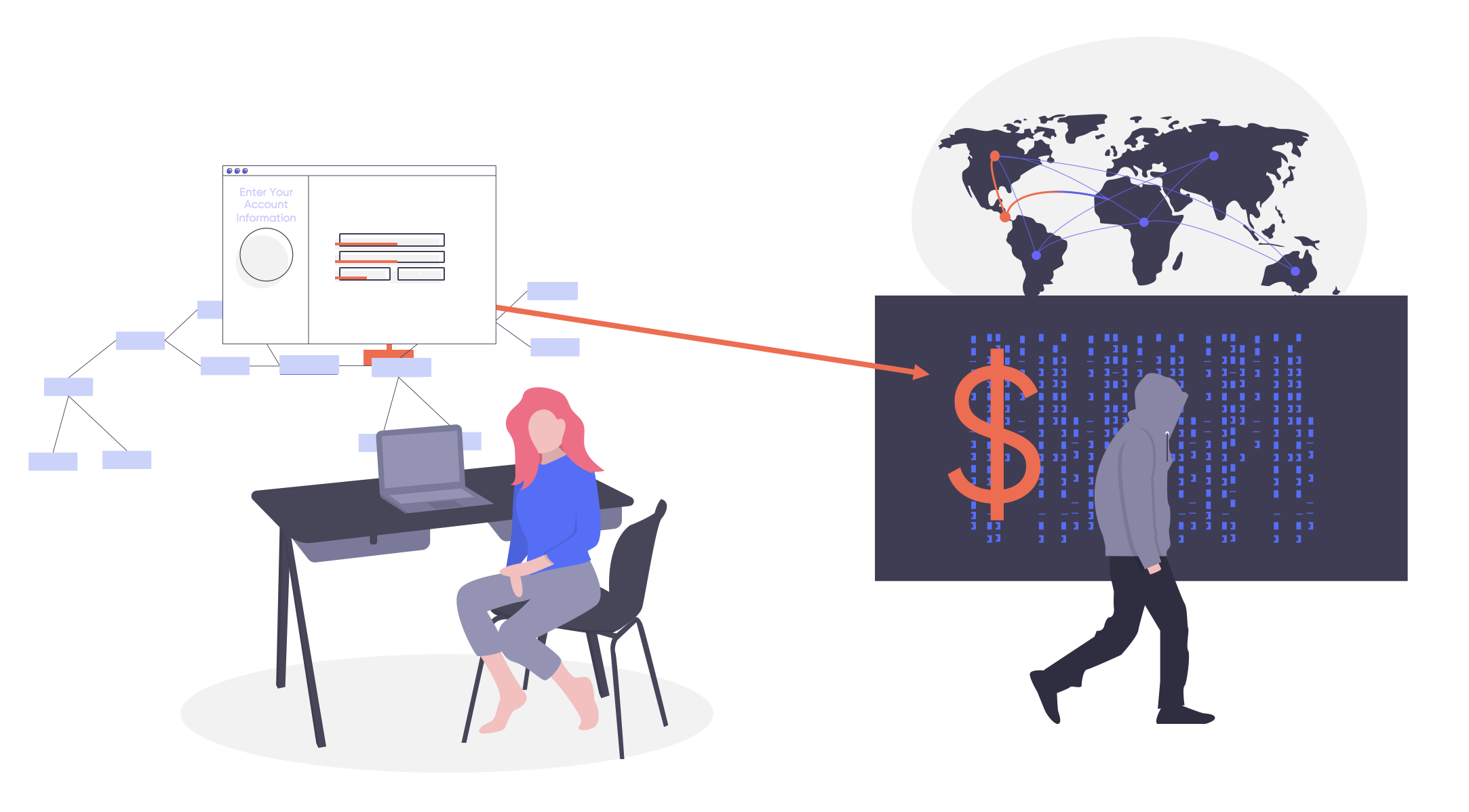
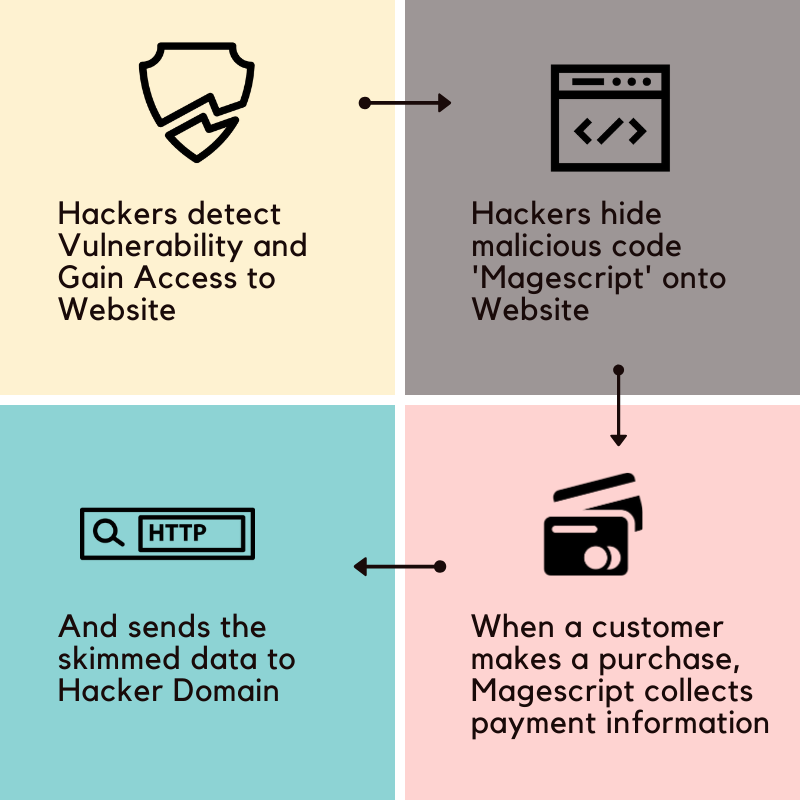
E-skimming has been an online shopping threat for a long time, keeping pace with the growth of e-commerce overall. The current global crisis presents another big opportunity for hackers to launch these strikes as people increasingly shop online. The nefarious cybercrime targets online payment systems to collect or “skim” the payment details of customers’ payment cards at the checkout.

What You Need to Know About E-Skimming | Inc.com

Unlike more traditional cyber attacks, where an entire customer database may be targeted in a single hit-and-run attack, skimming attacks continually intercept customer payment details at the point of purchase, making them harder to detect and often invisible to both customers and retailers.

Several criminal groups have become very adept at this kind of attack over the years, the most prevalent and successful of which is known as Magecart. Magecart is an umbrella term for a set of sophisticated criminal groups using similar malware and techniques — all with the goal of stealing credit card information from online retailers.

The Magecart groups are known to have been active since 2016 and have been behind some of the largest payment system attacks in recent years, including British Airways (2018), Newegg electronics (2018), the Atlanta Hawks Shop fan merchandise store (2019), Forbes magazine subscriptions (2019), as well as ticket-reselling websites for the 2020 Olympic Games and the Union of European Football Associations (UEFA) Euro 2020 soccer tournament (2020). Such attacks earned Magecart a position on Wired magazine’s “Most Dangerous People on the Internet” list in 2018.

How it works

New Cybercrime called E-Skimming is Targeting Businesses with Online shopping Websites | by Haniah Shafi | Medium

In most skimming attacks the threat actor introduces some additional code to a retailer’s e-commerce application. Recent attacks by the Magecart group have achieved this through the compromise of a trusted external third party whose code is legitimately included in the application, such as an external code repository, a chatbot or an advertising vendor.

So far, researchers have identified more than 40 different code-injection exploits, sometimes as small as 20 characters, which can be difficult to detect unless the application code is examined line-by-line for changes.

Attackers have also incorporated the use of valid SSL certificates tied to the domains that deliver malicious code, making traffic appear legitimate and preventing customers from receiving mixed content warnings when the website attempts to mix trusted, encrypted website content with malicious content that is served unencrypted.

A recent report has also described Magecart attacks where misconfigured access controls on Amazon S3 buckets allowed the attackers to tack their skimmer code onto existing JavaScript application code files.

Defending against card skimming

Defend against credit card fraud - Articles | Consumers Credit Union

The best proactive cyber defense an organization can implement to defend against card-skimming attacks all focus on hardening the e-commerce application stack and limiting what code is allowed to run.

  • Use a free online scanning resource to help spot suspicious connections being opened by scripts injected into the application. Browser developer tools can also be used to analyze contents and spot suspicious connections made during a customer session.
  • Use the Amazon “Block Public Access” option on any S3 buckets in use by the organization to prevent unauthorized changes to application files.
  • Define a Content Security Policy (CSP) that defines a list of locations that resources can be loaded from on your site. This should be applied to all sensitive pages, such as payment pages, login pages and other areas where users may enter sensitive information.
  • Verify any external scripts, such as those from advertising partners, using Subresource Integrity (SRI). This will ensure that any scripts included from external sources are hashed and checked against a known good value to ensure that they are the files that you expect to be loaded and if not, they are blocked from loading by the browser.
  • Make sure that all assets on sensitive pages use SRI. Using the “require-sri-for” directive in the CSP to enforce SRI on all scripts and style tags will prevent assets being included on these pages that do not have SRI enabled.

The activity seen from Magecart and similar adversaries demonstrates that these are a persistent and resilient threat. The lucrative nature of card-skimming attacks ensures that attacks will continue to evolve in both stealth and capability in response to security precautions. However, for many of the attacks we have seen from these groups to date, had the measures described above been implemented, they would have gone a long way toward preventing some very embarrassing and expensive breaches.

error: Content is protected !!