All about Operationalized Analytics

Operationalizing Analytics

Organizations with a high “Analytics IQ” have strategy, culture and continuous-improvement processes that help them identify and develop new digital business models. Powering these capabilities is the organization’s move from ad hoc to operationalized analytics.

Seamless data flow

Operationalized analytics is the interoperation of multiple disciplines to support the seamless flow of data, from initial analytic discovery to embedding predictive and prescriptive analytics into organizational operations, applications and machines. The impact of the embedded analytics is then measured, monitored and further analyzed to circle back to new analytics discoveries in a continuous improvement loop, much like a fully matured industrial process.

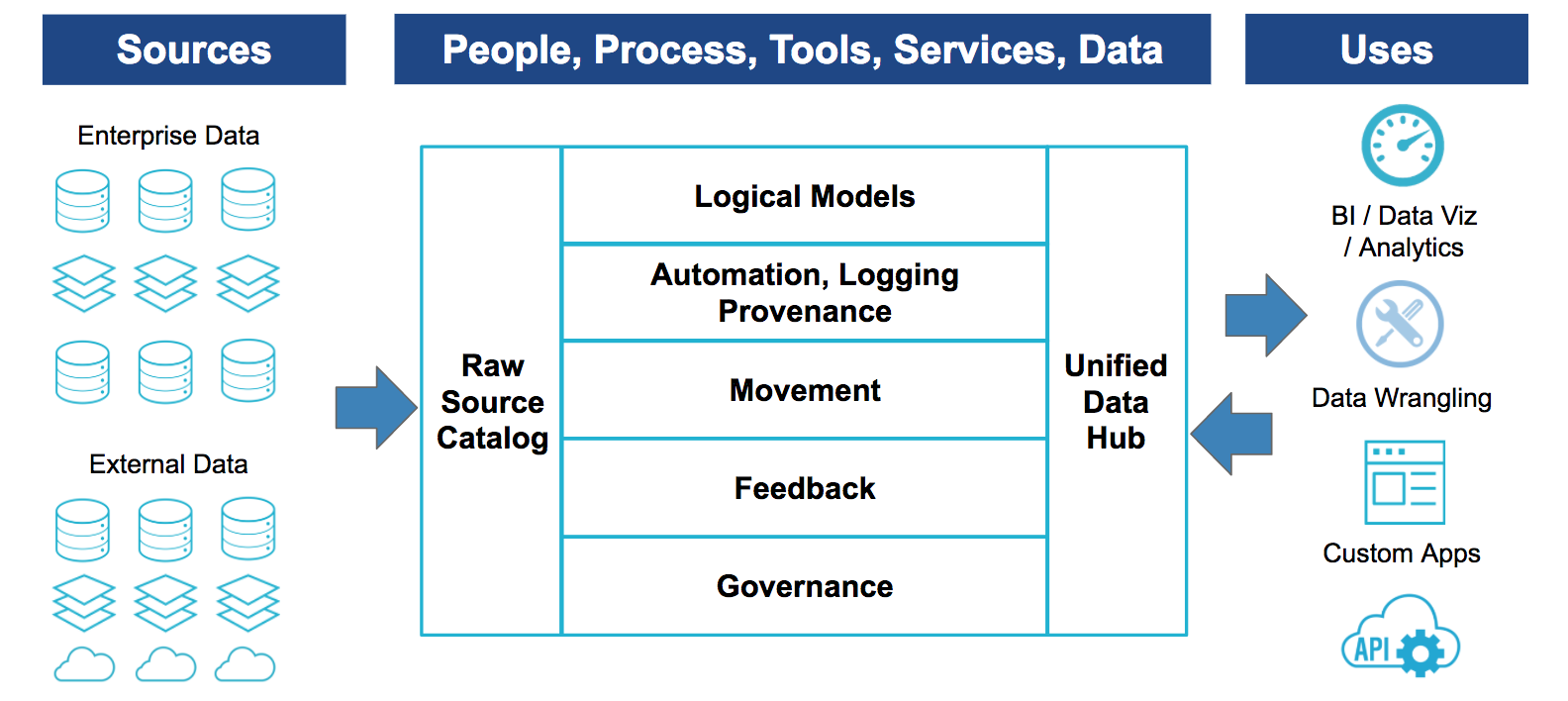
An example of operationalized analytics is the industrialized AI utility depicted below. It enables automatic access and collection of data, ingesting and cleaning of the data, agile experimentation through automated execution of algorithms, and generation of insights.

DataOps


Operationalized analytics builds on hybrid data management (HDM), an HDM reference architecture (HDM-RA), and an industrialized analytics and AI platform to enable organizations to implement industrial-strength analytics as a foundation of their digital transformation.

Operationalized analytics encompasses the following:

  • Data discovery includes the data discovery environment, methods, technologies and processes to support rapid self-service data sharing, analytics experimentation, model building, and generation of information insights.
  • Analytics production and management focuses on the processes required to support rigorous treatment and ongoing management of analytics models and analytics intellectual property as competitive assets.
  • Decision management provides a clear understanding of, and access to, the information needed to augment decision making at the right time, in the right place and in the right format.
  • Application integration incorporates analytics models into enterprise applications, including customer relationship management (CRM), enterprise resource planning (ERP), marketing automation, financial systems and more.
  • Information delivery of relevant and timely analytics information to the right users, at the right time and in the right format is enabled by self-service analytics and data preparation. This improves the ease and speed with which organizations can visualize and uncover insights for better decision making.
  • Analytics governance is the set of multidisciplinary structures, policies, procedures, processes and controls for managing information and analytics models at an enterprise level to support an organization’s regulatory, legal, risk, environmental and operational requirements.
  • Analytics culture is key, as crossing the chasm from ad hoc analytics projects to analytics models integrated into front-line operations requires a cultural shift. Merely having a strong team of data scientists and a great technology platform will not make an impact unless the overall organization also understands the benefits of analytics and embraces the change management required to implement analytically driven decisions.
  • DataOps is an emerging practice that brings together specialists in data science, data engineering software development, and operations to align development of data-intensive applications with business objectives and to shorten development cycles. DataOps is a new people, process and tools paradigm that promotes repeatability, productivity, agility and self-service while achieving continuous analytics model and solutions deployments. DataOps further raises Analytics IQ by enabling faster delivery of analytics solutions with predictable business outcomes

AI Applications in Documents

Ce que les fondateurs de l'IA pensent des emplois humains pendant et après la pandémie | Forbes France

We are drowning in information, but starved for knowledge

This is a famous quote by John Naisbitt which shows the key difference between information and knowledge. Advancement in data engineering techniques and cloud computing have made it easy to generate data from multiple sources but making sense of this data and getting insights is still a huge challenge. The data volumes have now increased exponentially and along with the traditional structured data, data can now reside in different formats like unstructured social media text, log files, audio/video files, streaming sensor data etc.

Applying manual methods to process this diverse data is not only time consuming and expensive but is also prone to errors. Hence the need of the hour is to use Artificial Intelligence (AI) based automated solutions that can deliver reliable insights and also give a competitive advantage to customers. Here are few examples of how customers across industries can benefit from AI driven solutions.

Microsoft Azure based AI solution

Build and operate machine learning solutions with Azure Machine Learning - Learn | Microsoft Docs

In 2017, more than 34,000 documents related to John F Kennedy’s assassination were released. The data volume was huge, and data existed in different formats like reference documents, scanned PDF files, hand written notes and images. It would take researchers months to read through this information and hence manually reviewing this data was not the most optimal solution. Microsoft Azure team applied AI based Cognitive Search solution to extract data from these diverse sources and gained insights. Technical architecture for this use case was built using Azure Cognitive Services components like Computer Vision, Face Detection, OCR, Handwriting Recognition, Search and core Azure components like Blob Storage, Azure ML, Azure Functions and Cosmos Database. This solution also annotated text using custom CIA Cryptonyms.

Hospitals usually deal with a lot of patient data which could reside in electronic medical records (EMR), handwritten prescriptions, diagnostic reports and scanned images. AI based Azure Cognitive Search could be an ideal solution to efficiently manage patient’s medical records and create personalized treatment plan. Many downstream use cases like Digital Consultations, Virtual Nurses and Precision Medication can be built once the patient data is optimally stored.

Google Cloud Platform (GCP) based AI solution

Google Cloud Platform (GCP) for Machine Learning & AI | by crossML engineering | crossml | Medium

GCP introduced Document Understanding AI (beta) in Cloud Next 19. This is a serverless platform that can automate document processing workflows by processing data stored in different formats and building relationships between them. This solution uses GCP’s vision API, AutoML, machine learning based classification, OCR to process image data and custom knowledge graph to store and visualize the results. Customers can easily integrate this solution with downstream applications like chatbot, voice assistants and traditional BI to better understand their data.

Customers who deal with Contract Management data like Mortgages are usually faced with a lot of manual tasks to ensure that the contracts are complete and accurate. This could mean processing contracts in different formats/languages, reviewing the supporting documents, ensuring that the details are accurate and complies with regulatory standards across documents. By using Document Understanding AI and integrating it with a well-designed RPA framework, customers will be able to efficiently process Mortgage applications, Contracts, Invoices/Receipts, Claims, Underwriting and Credit Reports.

Use cases from other industries

5 use cases of Hyperautomation across industries in 2021 | Vuram

Document Management AI solution can also be applied to diverse use cases from other industries like processing claims related to damages to shipped products by e-commerce companies, handling know your customer (KYC) process in the banking industry, invoice data processing by Finance teams, fraud detection during document processing etc.

As more and more companies embrace the digitization wave, they will be faced with different variations of data/document management challenges. Based on the current trend, number of use cases are only going to increase and an AI driven solution is probably the most efficient way to solve this problem as it can reduce manual work, save cost and deliver reliable insights. This will ensure that companies can spend more time on building their business and less time on manually processing documents and data preparation.

AI Carrying an Impact On Your Business, Across Domains-How?

Where is AI used today? - Brought to you by ITChronicles

Artificial Intelligence can Revolutionize Your Business. The AI impact on business can help you streamline your processes across all domains in a way that every outcome is real-time and efficient.

While the world is filled with instances of how Artificial Intelligence can transform even the most traditional of the areas like Education or Real Estate, the general impression that has gotten created is that AI is for the industries and businesses that work in multi-million revenue cycle and a team size of hundreds of employees divided into the fifties of the team.

But, what we aim to achieve here today is that AI is not just a rich man’s dream of expansion, it is something that businesses of all sizes can employ in their process and make themselves more efficient and over time add them into the league of the leaders – a reason why you should start your search for AI development companies.

In this article, we will look at what AI’ impact on business is, how AI can fit into every single domain of your business and make it better.

Let’s begin and help you understand what makes AI the need of the hour for making businesses become efficient and intelligent by looking into the role of AI in business domains.

But before we look into how AI helps businesses, let us look into a holistic level view of the benefits of artificial intelligence in business.

What Is Leading To The Growing Impact Of AI On Business?

How the Future of AI Will Impact Business - Salesforce Blog

  • Customer and market insights – Whether it’s coming from your system matrix, social media, or web matrix, there is no limitation of the data about your customer and market. The data act as raw materials needed to make AI systems efficient, which in turn helps make crucial decisions about your business and product marketing.
  • Process automation – Automation of tasks that takes up crucial manpower resources is one of the biggest AI benefits in business. Across industries, businesses have been using automation capabilities to not just lower the workload on their employees but also prevent the chances of data entry issues.
  • Better customer experience – The role of AI in business goes beyond automation and process efficiency. Technology plays a huge contributory role in bettering the customer experience. Some of the benefits of AI in business in the customer experience front can be seen in:
  • Personalization
  • Streamlining of the purchase process
  • Fraud detection
  • Effective self-service
  • Real-time text, visual, and voice engagement

Now that we have looked into the many ways how AI can benefit businesses and why should businesses hire AI developers on an asap mode, the next part is to dive into the answer of how AI is changing businesses across domains. We will be looking into the use of AI in business across HR, Finance, Operations, and Marketing processes.

Impact of Artificial Intelligence on Human Resources and Recruitment

Talent Acquisition

Do you understand the concept of talent acquisition?

The artificial intelligence impact on business most visible in the field of talent acquisition as compared to any other field. Artificial Intelligence is being used in a number of areas falling in the Talent Acquisition superset like – sourcing the candidates, screening their resumes, employing chatbots to engage with the candidates, and then using face recognition AI-powered software to recognize the emotion that the candidate is showing.

Employee Engagement

State of Employee Engagement in 2019: 4 Key Points

With the advent of NLP, chatbot technology, and sentiment analysis, it is now a lot easier for companies to analyze and get real-time feedback from their employees in terms of taking the right action. All the while answering how can AI be adopted in business.

Talking of employee engagement, one of the biggest concerns that employees tend to show on this front is in terms of them meeting their reporting managers once a year to discuss how the work is going and discuss their performance. A solution to this concern is given by Peakon, an AI-based software that enables all employees to reach their fullest potential.

HR Management

What is HR Management Software?

There are a number of AI products in the market today to help HRs in the management of administrative tasks. Personnel teams around the globe are now using Chatbots to answer employee queries and using Big Data to develop employee schedules, which in turn are helping businesses with prediction and meeting of demand via fair and effective staff rotas.

Career Management

Career Management: Meaning, Process and Objectives | Marketing91

When talking of the usage of AI for learning and development, there are a number of applications that come up – career pathing, personalized training recommendation, coaching delivered by the chatbots, and manager development led by real-time feedback from the team.

An example of AI for bettering learning and development can be seen through Gweek. The platform helps improve the presentation and communication skills of the users. There is another site called Sidekick that enables confidential coaching for the employees through the medium of messaging platforms.

Performance Management

10 Step Checklist for Choosing Performance Management System in 2019

Because the AI-driven assessments happen instantaneously, in real-time (with algorithms monitoring the quotas, targets, and how they are varying on a day to day basis for every employee), it becomes a lot easier to note all the good and the poor performances instances, ultimately helping in the correct measure of performance and giving an answer to how will AI benefit business internally.

The real-time access and monitoring also help in flagging the shortcomings on a per-day basis, enabling businesses to take action before a problem worsens.

Impact of AI on Marketing and Sales

Research and Development 

How to get the most out of your R&D budget | plasticstoday.com

Artificial Intelligence comes loaded with the ability to develop a deep understanding of a range of different industries and customer bases. By gathering and analyzing the humungous amount of data that floats about a business and market helps businesses research issues and build solutions that weren’t thought of before.

In addition to automating tasks, AI can open avenues for new discoveries, methods of product improvement, and finding ways to accomplish a task better.

Customer Support

The Importance of 24×7 Customer Service for Your Business

The most common answer to how is artificial intelligence used in a business environment lies in Chatbots. Deep Learning powered AI-powered Chatbots allows businesses to access the layers of data from the neural networks such as customer data and information, which have been built up over time.

When filled with real-time access to the preferences that customers come with and their purchase history, gives chatbots an edge over the human counterpart.

Content Creation

What is Content Creation? 3 Steps to Creating Web Content

There is a chatbot for every content marketer who is bored of developing the monthly content across spreadsheets. There is a software, Wordsmith, which is known to transform a series of structured data in the written doc, with great success.

While at present the use case of AI in content creation is limited to articles having a rigorous format, there are a few agencies that have used platforms like Wordsmith for the development of content for fantasy football drafts.

Heightened User Experience

James Kirkup | Web design, Design reference, Ux design

The answer to why is artificial intelligence good for business lies in this one statement – Your customers and consumers are a lot more demanding than they were ever before. They need a huge amount of products, information, and services – all at a real-time and lightning speed mode – all in one place. And when using AI, you offer all the services in one place in an instantaneous mode, which ultimately helps in elevating your users’ experiences.

Another thing that AI makes possible is Personalization. By incorporating artificial intelligence in mobile app development, businesses get a chance to study the customers’ preferences. AI technology makes it possible for marketers is to send personalized content in time and space that suits the customers. And there is nothing more user experience elevating in the world of marketing than personalization.

Emotion Recognition

Introduction to Emotion Recognition 2021 | RecFaces

The capability to identify human emotions is known to be the biggest challenge for an AI – a question that is solved by the answer of how is AI helping businesses. When an AI-powered Chatbot when backed by the NLP facility can gauge when someone is getting frustrated and can adjust its offering and tone automatically – by either giving them a discount or forwarding the call to a human consultant.

Sales Forecasting

How to Build a Sales Forecast Model

Prediction is a forte of Artificial Intelligence. By analyzing the past sales performance and trends, it can help predict what would the sales figure be this time around or what deals would work and which won’t. Ultimately, an inclusion of predictive AI in app development made around the sales domain will help the sales professionals plan their tactics between upselling and downwelling based on qualified data coming in from their past trends.

Optimization of Lead Generation

Optimizing Your WordPress Site for Lead Generation - WPExplorer

Rather than someone from your sales team going through the potential clients’ on Google, or social media, you can incorporate Artificial Intelligence to review them for you.

In addition to reviewing the prospects, you can use AI for two more crucial sales tasks: A. To identify the right job title and brands to target and B. To analyze sentiments made on competitor’s sentiments made on email or social media. It means that AI-powered intelligent mobile apps can help identify the unhappy set of clients while giving you insights into whether the client is unhappy with the service they are getting from the competitor or are seeking something new from the market.

When you get a database of prospects who are unhappy with the service they are being offered by someone else, the probability of your closing the deal by offering them what they need, increases by manifold.

Impact of Artificial Intelligence on Finance

Accounts Payable

How SMEs Can Optimize their Accounts Payable to Drive Down Back-Office Costs - FEI

There are a number of AI-based invoice management system that makes invoice processing a lot more streamlined because of the digital workflows which are implemented. To achieve this, the machine learning algorithms are designed in a way to learn accounting codes that are appropriate for invoice creation and management.

Supplier Onboarding

Digitalization of Vendor Onboarding and Compliance | IQX Business Solutions

Through the combined power of Artificial Intelligence and Machine Learning, AI development companies can help businesses shortlist suppliers on the basis of their tax information and credit scores and set them in systems without any human intervention.

Procurement

Procurement Process | Manage your Procurement Process Flow | Cflow

The purchase and procurement process of organizations is generally filled with a lot of paperwork and make use of different files and systems which more often than not are not compatible with each other. By taking the help of the combination of APIs and AI to integrate and process the unstructured data through AI powered mobile apps, the procurement process will become a lot more paperless and would call for less human intervention.

Audits

Microsoft software audits spark the fear

The digitalization of the audit process helps in increasing security by allowing a digital trail of when the file was accessed and by whom.

Using Artificial Intelligence, auditors will get real-time access to the digital files, thus removing the need to search the file cabinet for documentation – something which not just lowers the time gap in getting access to the information but also makes the whole process a lot more efficient. To make your audit process intelligent, you should get in touch with an AI app development company that specializes in the whole powered Audit processes.

Expense Management

Expense Software Functionalities | What to look for in a Software

Review and approval of expenses in a way that it is ensured that they are compliant with the organization’s policies is a time-consuming task for any accounting team. While though AI, people can employ machines to read the receipts, audit the expense, and then alert the finance team in case there’s any discrepancy.

Impact of AI in Operations Management

Log Analysis

Log Analysis Best Practices and Tools | Loggly

Analysis of log is the biggest use case of AI-powered Operations. Every layer of the stack – operating system, server, hardware, and applications – leaves traces of data stream which can be gathered, stored, processed, and then analyzed by the Machine Learning algorithms. The data then is used for performing root cause analysis of events.

By incorporating the power of AI in Log Analysis systems, businesses can find lacks in the system even before a failure happens, marking a use case of AI benefits for business.

Capacity Planning

What is Capacity Planning & Why it is Important in 2021? (Updated)

IT Architects spend a lot of time planning the resource needs of the applications. It can be very challenging for them to define server complications for the development of a multi-tier, complex application. Every physical layer of application should be matched with CPU cores, the amount of storage capacity, ROM, and the network bandwidth.

Artificial Intelligence comes in handy here by helping architects define the right specification of the hardware or for selecting the right instance type in the public cloud. These algorithms tend to study the present deployment and performances for recommending an optimal configuration for every workload.

Infrastructure Scaling

Auto Scaling can be configured to be reactive and proactive. Under the reactive mode, the monitoring infrastructure will be able to track the key metrics like memory usage and CPU utilization for initiating scale-out operations. And when load returns to normalcy, the scale-in operation takes place bringing the infrastructure back to its original form.

In the proactive mode, admins schedule scale-out the operation before an event.

One of the AI benefits for business lies in the fact that through Artificial Intelligence, IT administrators can configure the predictive scaling which learns from previous usage pattern and load conditions. This way, the system becomes intelligent to decide when it should scale with no mentioned rules. This new mechanism complements capacity planning through adjustment of runtime infrastructure needs.

Cost Management

SteadWay - Cost Management Services

Assessment of infrastructure cost plays an important role in the IT architecture. And when you work with a public cloud mechanism, the forecast and cost analysis becomes a lot more difficult and cloud providers tend to charge for a number of components like – VMs usage, storage capacity, external and internal bandwidth, API calls made through apps, and IOPS.

Through the analysis of workload and the usage patterns, Artificial Intelligence can estimate the cost of infrastructure by offering cost breakup around a number of applications, components, subscription amounts, and departments – something which would help the operation unit in securing the IT budgets accurately.

Performance Tuning

Optimize Website With Sitecore Performance Tuning | Altudo

Once the application gets deployed in the production, a good amount of time is then spent in tuning the performance, specifically in the case of the database engines which deal with a good amount of transactions as they experience the most reduction in performance over time.

By analyzing logs and time utilized in attending to tasks like processing of a query or responding to request, Artificial Intelligence algorithms developed by a sound AI software development company can offer an exact fix to the issues. It comes very handy in augmenting log management through taking respective action in place of escalating issues to the operations team, which have a direct impact on the cost of support and on running the enterprise IT help desks.

Building Maintenance

The last point in our list of the benefits of AI in business operations is the help it offers with building maintenance. The technology can help facilities managers better the energy use while keeping their occupants’ comfort into consideration.

One example of this can be seen in the building automation services that an AI development company offers. In this, AI is merged with IoT to help manage the buildings’ equipment, light, cooling/heating system, etc. in addition to using computer vision for monitoring the building.

So here were the four domains which are considered to be the pillars of any business. The domains that the AI development services providers believe can have a massive impact on and can make more efficient. If you too wish to reap the benefits of AI by making your processes efficient, streamlined, and high revenue-generating, contact our team of AI Developers today.

The Supply Chain AI Hype and the Importance of a Digitized Supply Chain Control Tower

The View From Digital Supply Chain Control Towers

The hype around Artificial Intelligence is far from fizzling out anytime soon. Digitalization and big data have completely penetrated the supply chain industry and are ubiquitous in nature. This article discusses one of the more interesting trends in the current supply chain analytics space – The Control Tower.

The concept of Air Control Towers and the Evolution of Digital Control Towers in Supply Chain

Engineering an Air Traffic Control Tower - Arup

One may wonder if supply chain control towers have any correlation with air traffic controllers? To be honest, yes, there is!

An air traffic control tower (ATC), is a service provided by on-ground staff (controllers), who direct aircraft on the ground and through controlled airspace; they can provide advisory services to aircraft in non-controlled airspace. The primary purpose of ATC worldwide is to prevent collisions, organize and expedite the flow of air traffic, and provide information and other support for pilots (wiki). In short, the tower helps Improve flow, reduce emergency like situations through tactical interventions and provide inputs for right decision making. In fact, the ATC’s can now be enabled for an ‘auto-pilot’ mode wherein complex decisions are taken without human interventions. Only in cases where there is an absence of reliable data to make a trade-off, is where the humans intervene.

The digital control towers aim at keeping a bird’s eye view on the events occurring within the supply chain ecosystem (controlled and uncontrolled space), with the modus operandi being very similar to a generic air traffic controller. With the help of this consolidated view generated by the digital control towers in supply chain one can gain powerful insights about the current happenings within the organization. These insights help in improving flow across the organization, reducing urgencies and providing insights and tactical support to supply chain managers to make effective decisions. In fact, in the longer run, very similar to the ATC’s of today, the Supply chain control towers should have the capability to make complex decisions when there is adequate reliable data.

Significance of Digital Control Towers in Supply Chain

Why Enterprises Are Using a Digital Supply Chain Control Tower for Optimized Orchestration - Turvo

Corporations today want to leverage the useful applications of the supply chain control tower. Organizations have copious amounts of data across their supply chain and related functions. Over the past few years, they have managed to build business intelligence and analytics solutions to drive decision-making but at a node level. Extracting valuable insights using the right sets of data, lying across various nodes in an organization while also utilizing market intelligence, to deliver real-time visibility and provide meaningful insights that can drive decisions that are optimal cross organization, is the need of the hour. E.g., with the expected slow-down in sales on specific SKUs, a client may wonder if their manufacturing plant need to continue producing to plan OR does it make sense to course correct and lose capacity?

While an ATC is designed to minimize errors by incorporating huge factors of safety and commonly understood rules of engagement between various players (airlines, pilots, other ATCs), supply chain digital control towers have the luxury to experiment under statistical variability. E.g., Try different stock norms and check the impact on service levels, see whether a reduced Order-to-delivery promise induces better productivity and hence improved customer service levels and so on. This ability of a supply chain to experiment, try and fail or succeed quickly, at nominal cost can help build a virtuous loop of innovation with in a supply chain and drive a cultural change.


Most organization today recognize the impact a control tower can have on their organization. For a global organization, it is probably one of those platforms that will steer the supply chains of the future. Many organizations have tried implementing a control tower, but there have been very few examples of success. More often than not, organization fall short of implementing a “gold-standard” control tower capable of – real time visibility, predictive alerting, identifying bottle-necks to supply chains and providing insights that can drive decision; instead they end up implementing a large set of dashboards, that showcase different KPIs important to the various nodes in a supply chain.

This possibly is because of challenges that are faced when implementing an initiative as large as a control tower.

How does a Digital Supply Chain Tower work?

The SCCT should help an organization in making 3 key decisions – a) Ensure smooth flow-paths across the supply chain, b) Identify or predict bottlenecks / constraints to flow, and c) Derive efficiency/utilization improvement opportunities in the current network.

Hence, some of the key functionalities that are required would be:

  • End to end data connectivity: Ability to go beyond creating reports and tools that are not unidimensional but are able to work with data from different nodes in a supply chain is important.

End-to-end data, analytics key to application performance | Network World

  • Visibility: SCCT should provide visibility of key supply chain KPIs (simple and complex KPIs). They should showcase the right metrics, while also be able to project the impact of a decision on the metric real-time.

5 Steps to Achieving E2E Visibility – Redwood Logistics : Redwood Logistics

  • Analytics: Supply chain control towers are equipped with and boast of analytical tools and applications. With the help of these tools, supply chain managers can easily run what-ifs, and take calculated decisions. They can, easily harness the power of predictive analysis to detect ‘tripping points’, identify triggering alerts, as well as conduct root cause analysis of the data to arrive at solutions and address challenges.

6 Essential Google Analytics Dashboards for Content Marketing - eCity Interactive

  • Execution: The real benefit of the SCCT lies in the way the control tower communicates with the executive and the operational teams across the supply chain and allied functions. Hence this an important aspect of SCCT adoption within an organization

Project Execution Planning (PEP) for Qualification | NCBioNetwork.org

Key Challenges to Implementing a Supply Chain Control Tower

The supply chain control tower, unlike a typical analytics project, entails involvement from multiple functions and geographies across the supply chain (like the involvement of multiple VPs/SVPs in large enterprises).

Implementing SCCT would mean working with a team having – a) Different priorities, b) Very different data maturity and data quality, and c) Different products and software (some archaic and some new-age).

Some of the key challenges that appear during the construction and execution of SCCTs include –

  • When the SCCT implementation is picked up as a priority exercise by a single function within a supply chain without getting the other key function buy-in early into the transformation, there is a high chance the implementation will hit multiple road blocks.
  • Many a times, people tend to implement the most complex piece OR the piece of SCCT that seems most interesting. This may lead to no tangible results for an extended period, thus leading to lack of enthusiasm from fringe teams.
  • Data maturity: Different functions may have different levels of data maturity (availability, quality etc.). Inability to assess and map this aspect will tend to escalate timelines and cost.
  • Sometimes the implementing partner makes the mistake of selling the SCCT, not as a strategic tool that can transform business functions but rather as another software that will improve business efficiencies. This will lead to wasted effort that implementation will get driven in completely wrong direction.
  • There are number of proven analytics tools and products that exist with the client. Integrating these existing tools/products in the SCCT roadmap, may cause issues during implementation but will help adoption.

A typical issue of not successfully overcoming these challenges is that companies go down the path of SCCT implementation (visibility, predictive analytics, decision tools etc.) but end up implementing an end-to-end KPI dashboard. Though the dashboard may still bring in benefits, it causes disillusionment amongst the client project team in terms of SCCT capabilities.

Some of the ways to mitigate these challenges and move towards a successful implementation include –

  • Treat SCCT implementation as a strategic initiative and not as an IT implementation. Hence, it is critical to have someone high in the business team (CSO level) bless the initiative.
  • When prioritizing sprints, give equal weights to simple but quick wins – this motivates the client’s project team.
  • Always assess the current tools and products in client environment, i.e., prioritize integration over innovation.
  • Continuous engagement with all functions (even if there is nothing happening in a specific function) is important and should be made into a practice.
error: Content is protected !!