Benefits of Cloud Infrastructure Security

How is Cloud Infrastructure Security Important for an Organization?

Embracing new technologies lead to qualitative growth but simultaneously holds high chances of quantitative data breaches. While adopting cloud technology, it is important to see the security of cloud infrastructure as one of the crucial responsibilities. There are various organizations out there that are still unsure of the security of their data present in the cloud environment.

Importance of Cloud Computing for Large Scale IoT Solutions

In 2019, Collection #1, a massive data breach held responsible for compromising data set of over 770 million unique email addresses and 21 million unique passwords. The collection of data files was stored on a cloud storage service and MEGA. Similarly, information of over 108 million bets’ records was leaked by an online casino group. The leaked data included details of customers’ personal information along with deposits and withdrawals. 

Following in the same year, a famous food delivery service providing firm was breached, compromising the data of 4.9 million users which included consumers as well as delivery employees. According to SC Media, 2019 has been the year of the highest number of data breaches and this amount of growth rate has never been witnessed before. 

These infamous data breaches are proof that storage service providers like Cloud requires consistent security management. When we talk about the security of cloud infrastructure, many enterprises wrongly assume that their data is well guarded and is far away from the radar of cyber criminals. The truth is, these cyber criminals are experts at scraping up the exposed vulnerable data by using unethical ways to look for unsecured databases.

For starters, the term cloud computing infrastructure security refers to the entire infrastructure of cloud computing which involves a wide set of policies, applications, technologies. It also includes controls that are used to protect virtualized IP, services, applications and data.
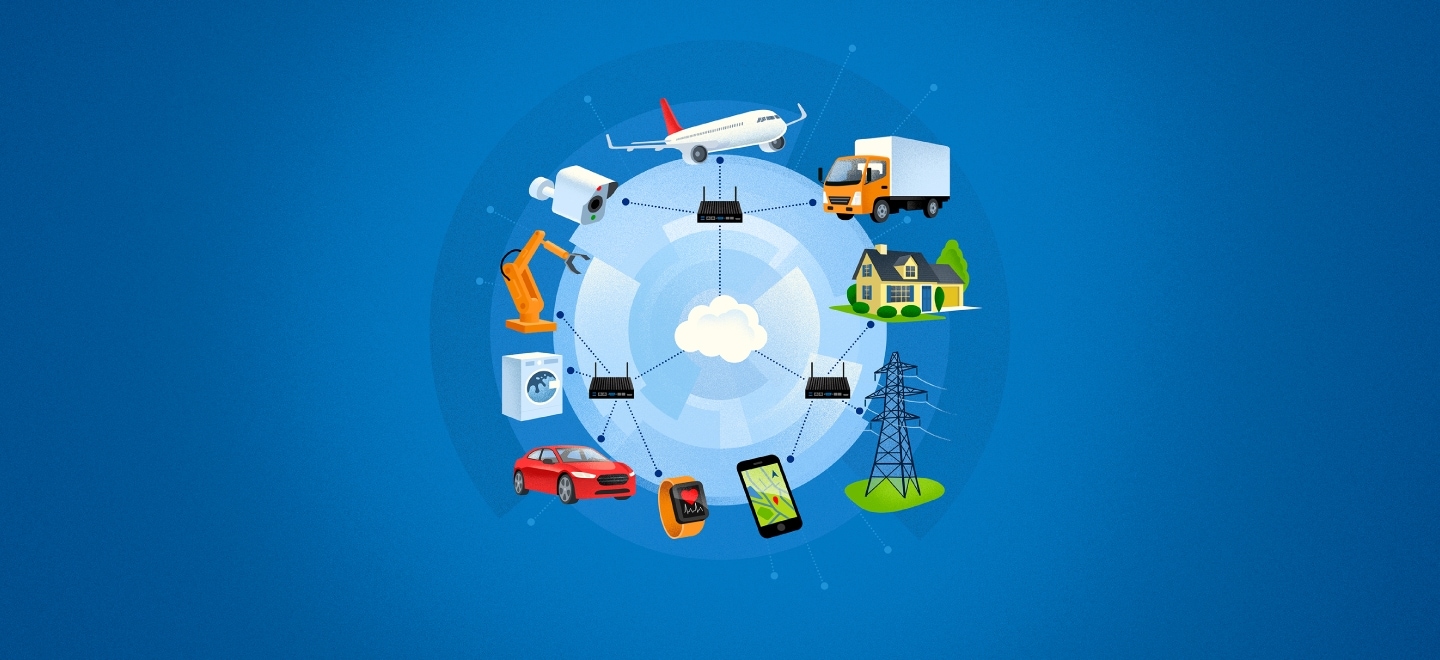
Scaling enterprise IoT solutions using edge computing and the cloud | Deloitte Insights

With companies migrating their large amount of data and infrastructure to the cloud, the importance of cloud infrastructure security becomes paramount. Cloud security offers multiple levels of control to provide continuity and protection in a network infrastructure. It is a highly essential element in creating a resilient environment that works for companies all over the world.

Enjoy the benefits of infrastructure security in the cloud by partnering with leading technology-based private cloud computing security service providers in order to keep the security of the company smooth running.

Here are the five major benefits of cloud infrastructure security solutions:

  • Data Security

9 Data Security Best Practices For 2021

Nowadays, cloud computing servers are becoming gullible to data breaches. Cloud infrastructure security solutions help in ensuring that data like sensitive information and transaction is protected. This also helps in preventing the third party from tampering with the data being transmitted.

  • DDoS Protection 

DDoS Detection & Mitigation: Thunder TPS | A10 Networks

Distributed denial of service aka DDoS attacks are infamously rising and are deployed to flood the computer system with requests. As a result, the website slows down to load to a level where it starts crashing when the number of requests exceeds the limit of handling. To reduce the attempts of DDoS attacks, cloud computing security provides solutions that focus on the measures to stop bulk traffic that targets the company’s cloud servers.

  • Constant Support 

Teamwork puzzle clipart free clipart images 2 - Clipartix

When it comes to the best practices of cloud infrastructure security solutions, it offers consistent support and high availability to support the company’s assets. Users get to enjoy the benefit of 27/7 live monitoring all year-round. This live monitoring and constant support offer to secure data effortlessly.

  • Threat Detection

Threat Detection and Response: How to Stay Ahead of Advanced Threats.

Infrastructure security in the cloud offers advanced threat detection strategies such as endpoint scanning techniques for threats at the device level. The endpoint scanning enhances the security of devices that are accessing your network.

  • Supervision of Compliance

Compliance Supervision - FinTech Legal Center

In order to protect data, the entire infrastructure requires to be working under complaint regulations. Complaint secured cloud computing infrastructure helps in maintaining and managing the safety features of the cloud storage.

The above-mentioned points are clear enough to state how beneficial and vital is cloud infrastructure security for an organization. There are very many high-profile cases that have been witnessed in past years relating to data breaches.

To overcome the loopholes present in the infrastructure security in the cloud, it is extremely important to keep the security of cloud storage services as a high priority. Engage with the top-class cloud computing security tools to get better results and have the data secured.

The 5 ways cloud computing will change in 2020

What is Cloud Security? Cloud Computing Security Defined | Forcepoint

Cloud computing is set to continue its remarkable development this year with technologies like 5G, Kubernetes, AI and machine learning increasing the scope and scale of the operational uses it can be put to. In this post, we’ll look at these technologies and see how they will change the face of cloud computing and how businesses use it.

1. IoT boosted by 5G

How 5G is becoming an Important Technology Ingredient for IoT

The long wait for 5G is finally over and, with its introduction, we’re set to see it play a critical role in the connectivity of IoT devices, extending that connectivity way beyond the limitations of wi-fi and enabling the development of edge computing.

The exponential growth in the number of IoT devices is coupled with an equally gargantuan collection of data. As the value of that data for delivering rich insights prevents enterprises from deleting it, companies are left to find a way to store and process it all. They need massive data storage capacity and vast compute capabilities. At the same time, some of the new technologies being developed for IoT use, self-driving vehicles being a prime example, require network latency to be almost eradicated.

5G can help with all these issues. It can connect devices where wi-fi and cabled connections are not available and at exceptional speed, it enables storage and compute services to be installed at the edge of 5G networks, shrinking latency to less than a millisecond while reducing the type and volume of data being stored in datacentres.

2. More stringent security standards for public cloud

An open, secure cloud with security standards you value - OVHcloud

Security is a critical concern for all enterprises and one new area to consider is the issue around 5G as it becomes part of the cloud network. The UK’s decision to use Huawei technology for its 5G network has already become a political hot potato. This, together with other concerns, is likely to lead to more stringent security standards, particularly over endpoint security, for cloud providers.

It is expected that tighter regulations will be introduced for the architecture of hybrid clouds requiring full data separation between on-site and public cloud environments. Brexit will also play a part, as the UK goes its own way in implementing standards regarding data protection.

3. More users adopting hybrid cloud

Multi-Cloud, Hybrid Cloud, and Cloud Spend - Statistics on Cloud Computing - ParkMyCloud

While many companies have considered hybrid cloud computing , its technological challenges have led to most of them adopting a purely public cloud model. And while there are workloads which are better suited to a hybrid solution, the lack of flexibility to deploy both on-site and cloud infrastructures is a hurdle which many enterprises are not equipped to overcome.

In 2020 and beyond, we’ll start to see new tools that can overcome these management and migration challenges. These tools will split migration into two separate processes where companies can first become familiar with their new programming and management models on-site before finally moving their infrastructure to the cloud. This is particularly helpful for those organisations that want to move to the cloud but don’t want to abandon the investments they have made in their datacentres and hardware.

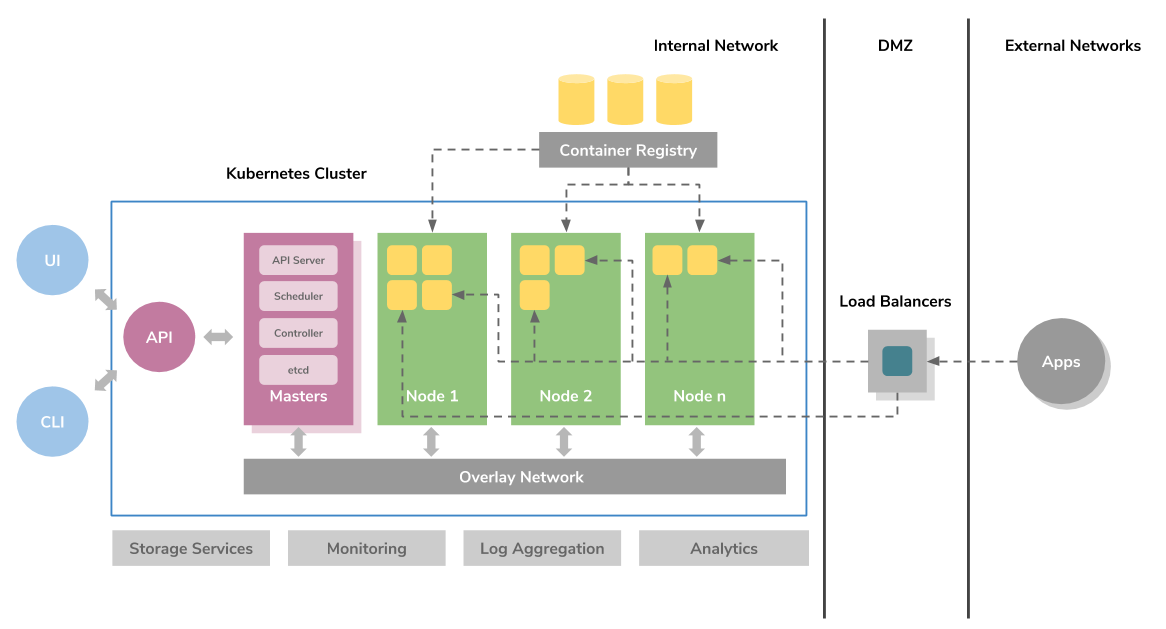
4. Kubernetes to become the standard container

A Beginner's Guide to Kubernetes. Kubernetes has now become the de facto… | by Imesh Gunaratne | ContainerMind | Medium

Containers have become widely used by companies that need to run multi-cloud workloads. By providing a platform-agnostic solution for the packaging and management of applications, they have simplified the process of cloud adoption and migration.

Of all the container solutions available, Kubernetes has become the most widely adopted. The primary reason for this is that, aside from housing an application, it also specifies the app’s required infrastructure, including load balancing, networking and scaling. What’s more, the standardised way in which it does this means those specifications can be more easily transferred across providers. When it comes to deploying infrastructure for container-based workloads, Kubernetes is today’s go-to solution. Additionally, its popularity means there are also a growing number of tools being developed to support its use.

5. AI and machine learning used in networking

Cisco: How AI and machine learning are going to change your network | InsiderPro

AI and machine learning are now being deployed to carry out a wide range of operations and this means companies are reorganising their IT services to enable them to make deployment easier. One area where AI is beginning to bring developments is in networking, helping with such things as reducing energy consumption and in automating maintenance tasks. Expect to see even more examples of its uses coming into the spotlight in the next few years.

Conclusion

It is an exciting time for the cloud with technologies like 5G, containers, AI and machine learning enabling its users to undertake more operations and enhance their capabilities. However, with expanding uses comes an even greater need for security and higher standards in how data is used. Hopefully, the information given here will have shown you what developments are in store and how your company can benefit from them.

error: Content is protected !!