
Matter of mobility to the clinician: Connected healthcare

4 Ways Mobility Is Set to Revolutionize Healthcare by 2022 | HealthTech Magazine

Technology experts will often talk about the benefits of mobility in healthcare, but to understand why mobility matters and how it might improve both workflow and clinical benefits for patients, it’s vital to get a user’s perspective.

As a clinician, my view of mobility is influenced by my own experiences in different medical settings. Clinicians — by which I mean doctors, nurses and other allied health professionals — work across multiple hospital wards, often across several hospitals or medical facilities, with multiple parties involved in the care of the patient. For example, a cardiologist might review a patient in the hospital’s outpatient department, in the emergency department or in the cardiology ward. As a result, the cardiologist may need access to medical records across various locations, which potentially could be sourced from multiple systems of record.

The key is being able to access those records in real-time and on the go. If clinicians are required to interrupt a patient evaluation to access information from a file or computer, valuable time can be lost, affecting the care of the patient. If clinicians can access the right information at the right time and in the right place — at the patient’s bedside, on the go, or in various locations — they are better equipped to make informed and accurate clinical decisions, enabling them to spend more time with the patient and ultimately improving patient care.

Taking a holistic approach to patient care - PMLiVE

Furthermore, clinicians don’t work in isolation. Mobile access to clinical data and the ability to share information with other health professionals — for example accessing blood results from pathology or rehabilitation progress notes from a physiotherapist — give everyone involved in the patient’s care the right information as and when needed. These also ensure that clinicians make good use of their time. For example, if a doctor can see that the patient is scheduled for an X-ray at 11:45 a.m., he or she knows a midday appointment is not feasible.

Taking a holistic approach to Healthcare

Why Hasn't A More Holistic Approach to Patient Care Become The Norm?

We also need to realize that healthcare doesn’t happen in isolation from the rest of our lives. Most people now access information through their mobile devices. It makes sense, therefore, that clinicians would want to access clinical data in the same way.

And patients are also more connected in every way. They expect to be included in decisions driving their own healthcare. They want to understand their diagnosis and what it means. If the clinician can access the patient’s data on a mobile device, it’s much easier to have an informative bedside discussion with the patient. For example, the clinician can pull up the patient’s X-ray or blood test results on a mobile device and show the patient areas of concern or trends in the results.

The clinician might want to go further and share information about a procedure — for example, videos of a procedure or hyperlinks to information that might be helpful to the patient. Or the clinician and patient can watch the video together on the mobile device, giving the patient an opportunity to ask questions and be properly informed.

A truly mobile, integrated solution will also be able to aggregate information from multiple sources — the patient’s medical record, pharmacy record, nurses’ notes — and have it all in one place.

What is Holistic Medicine? - Dr. Lakshmi Menezes

In an age where data security, patient privacy, and accountability are under the microscope, mobility gives healthcare systems the ability to track information. The system will show that a certain clinician has seen the results. It’s possible to also require that clinician acknowledge receipt of the information as he or she receives it.

There’s no doubt that challenges exist — technical, logistical, user-specific, and more — but the benefits are worth the pursuit of a solution. Healthcare organizations have the information required to ensure quality patient care, increase patient satisfaction and reduce the rate of mortality and morbidity. But, they want to be able to get that information about their patients in real-time and on the go. Ultimately, clinicians want mobility. After all, it’s how most people — clinicians included — interact with the world in their daily lives. Why should healthcare be any different?


Learning complexities: Best practices of work in the future

Teacher job description | Totaljobs

Today’s high performing organizations know that the world of learning has undergone tremendous change, and they need to put employees at the center. Employees require a lifetime of continuous learning to keep pace with change.
An innovative approach to learning can help tackle the workforce skills gap, retain talent, increase performance and improve productivity.

Organizations need to create a learning culture and environment that welcomes knowledge seeking and employee self-improvement. The next generation of learning technology expands access, personalizes experiences, offers actionable insight and helps track how learning affects business outcomes.

Learning leaders must work together and share the same vision to successfully engage and prepare their employees for the future of work. Here are five best practices we view as critical for successfully overcoming the challenges and complexity within learning today:

  • Take advantage of new learning platforms. Standardizing on a single LMS is not the only option to address learning complexity. Having multiple systems is fine, even preferable, provided they can be accessed through a single platform. What’s important is to implement a multi-platform, agile methodology where the learner’s experience is the focus.

The Shift to Digital: 10 Benefits

  • Meet learners where they are at. Employees do not have as much time as they would like for formal learning, informal “in-the-flow” work learning is necessary for training and development.

My "Meeting Learners Where They Are" Moment

  • Embrace evolving workforce demographics. To address learning diversity, investing in next-generation learning technology and fresh approaches includes mobile learning tools and personalize learning paths needed to improve performance and retain talent.

10 Diversity & Inclusion Statistics That Will Change How You Do Business

  • Up-skill for the future of work. Closing the skills gap requires prioritizing learning development programs that empower employees to seek new skills that meet evolving business needs.

Upskill and Reskill: Why Skill Development is Key to Future Success

  • Ensure employees remain relevant in the digital workplace. Employees need to build comprehensive skill sets that are applicable to a variety of roles that will eventually be in high demand with the adoption of automation, robotics, and artificial intelligence.

Why a digital workplace is important for digital transformation | Process Excellence Network

In today’s changing world of work, employees need access to anytime, anywhere learning that’s relevant and meaningful to their development. An active learning community encourages employees to become insight experts and share actionable knowledge that enhances organizational intelligence.

It is time to pursue an innovative approach to learning and to take full advantage of next generation learning technology that prepares employees for change, aligns with business goals and connects a global workforce to deliver performance that accelerates growth.

Dimensions of change in the digital workplace

Top four essential tools your digital workplace needs | Decode - A publication by Zoho Creator

Upgrade workplace technology: check. Modernize infrastructure: check. Adjust to new workforce: check. Overcome resistance to new ways of working: check. Adjusting to digital transformation’s impact on the workplace and workers is, well, a lot of work. A lot of change. And it’s essential to understand that workplace transformation will only deliver expected business benefits when organizations develop effective ways to cope with change along many dimensions. These include:

Workforce Transformation 2020: 12 Steps to Mastery | HR Technologist

Workforce. For the last few years, we have focused on the generational shift taking place as millennials become the bulk of the workforce. However, there is a second shift that will impact how we operate. Organizations are adopting more gig workers for specific tasks or projects, which puts pressure on IT to streamline gig workers’ experience and optimize processes to maximize gig workers’ productivity. Capitalizing on automation, intelligence, and integration to optimize business flows and processes will become fundamental to IT operations.

Do Humans Still Have a Place in Human Resource Management?

Human resources. This blended workforce, and the recognition that organizations are already adopting a task or gig-like approach internally, impacts the way we run our Human Resources processes. The line manager might continue as a custodian, but the management chain becomes flatter, tied to activities and projects. The old reporting model breaks by having so many stakeholders and managers. We need to automate and collate information for the relevant project and stakeholder, distill it succinctly, and publish it to those who are invested, as well as archive it as input to the performance review process.

Workflow Project Management Stock Illustrations – 5,998 Workflow Project Management Stock Illustrations, Vectors & Clipart - Dreamstime

Project management. That information will enable project managers and stakeholders to better manage the individual and the team, optimizing for performance and cost. As they see near-real-time information about productivity and performance (on their specific project), they can flex, coach, and change the team as needed. It is a much more hands-on world, although some of the tasks can be automated. Project resource managers can learn from just-in-time manufacturing techniques, bringing in the right folks at the time they are needed.

Step 1: Identify relevant information in sources – Becky Menendez

Relevant information. In this environment, relevant information — not more information — is the key. Luckily, the platforms citizen developers are experimenting with also provide some of the components needed. They can capture tasks done, documents touched and discussions held, giving us a raw feed of activity. Post-process this information, in the context of each stakeholder, can be used to produce concise, relevant reports grounded in system data, not flawed memories.

How to Help Your Team Find Their Higher Purpose

Embrace employee-driven innovation. Organizations must become better at matching the pace of change, using techniques like employee-driven innovation to quickly identify new workplace trends and opportunities. Formalizing informal support networks can help manage change more effectively and capture the benefits of disruption. And when companies understand how productivity and morale are boosted by ongoing workplace investments, the cost of change is less daunting and easier to justify.

Creating Connection and Collaboration Through Movement — Shifting Patterns Consulting

Connection and collaboration. Companies must continue to develop policies that give workers flexibility in the devices they chose to use. How people connect and collaborate is changing as well; companies will need to foster collaboration on, and set policies for, social media in the enterprise.

Automation In Application Support & Maintenance | Hexaware

Automation. Software agents, bots and intelligent machines will make tasks easier. Companies will need to consider how these new devices and applications can learn and apply user preferences, and how they can use real-time information in context to automate more tasks and decisions.

Enterprises can truly change the way employees work by providing a flexible, expansive workplace with the right technologies and policies. Those who come to grips with the new definition of the workplace and its enabling technologies will be the digital leaders of tomorrow.

Optimizing Agile delivery when the development team isn’t co-located

7 Concrete Ways to Improve Collaboration in Remote or Distributed Scrum Teams | by Paddy Corry | Serious Scrum | Medium

Co-locating Agile development teams with the customer or business unit is optimal for collaboration and customer intimacy. However, co-location is not always feasible. Development team members could be from multiple geographic locations, the customer could also be spread across multiple locations, and economic considerations might direct some of the development to regions with lower costs.

This requires an effective Distributed Agile/Remote Agile Delivery model.  Here are the four key considerations that need to be taken into account for a Distributed Agile Delivery model to ensure successful delivery:

Examples of Culture

1. Culture. If the teams are spread across multiple countries, cultural differences are bound to arise due to diverse work practices, values, processes, styles of leadership, decision-making, and problem-solving approaches. Not being able to work side-by-side can lead to misunderstandings from unrecognized cultural differences.

To mitigate, it is essential to build trust and establish relationships between the teams early on. Initiation events, where teams meet and work together, and establish common standards and consistent practices, present a great opportunity to establish trust and foster team building. Sending “Ambassadors” from each site to the others on a periodic basis is also an effective way to bridge the cultural gap.

Virtual Team Communication: Key Risks & Best Practices

2. Common hours and communications. Cultural and language differences make effective communications hard. Even with web- and video-conferencing, it is challenging to overcome the lack of visual cues and face-to-face interactions. This is further compounded by insufficient time zone overlap.

Teams need to work out an approach to shift some work hours to improve their time zone overlap.  Often teams agree on “core hours” during which members at all locations will be simultaneously available. Reliable communication tools, desktop sharing, phone, instant messaging, and virtual rooms can then play a big role in establishing strong communications. Agile coaches and Scrum masters need to step up as effective coordinators. Bi-directional travel by key customer stakeholders and vendor leaders also helps.

Why Your Company Needs More Collaboration

3. Collaboration. Distance makes collaboration and frequent communication challenging. Context of discussions is sometimes lost as well.  Using a “Proxy Product Owner” at each site can help bridge any gaps in business and domain knowledge. Building a work culture around compulsively using Enterprise Agile Planning Tools (EAPT) and collaboration tools facilitates collaboration among remote teams. The Ambassador program mentioned earlier — rotating some or all of the team between locations — and bringing the teams together on a periodic basis helps.

What is vRealize Automation? | Infrastructure Automation | VMware

4. Consistent Infrastructure and Configuration Management. Challenges with Distributed Agile multiply if you do not have standard shared infrastructure and continuous integration. You need to leverage virtualization and provide identical environments for teams at all sites. Other strategies include using a single configuration management system for all teams, deploying DevOps (at least Continuous Integration and Continuous Testing), and insisting on frequent builds.

Ensuring that these four areas are addressed at project onset sets the collaborative tone for your distributed agile delivery. Having a collaborative team mindset from kick-off through delivery is crucial to project success.

Techniques and Tactics concerning Hybrid IT

Cloud computing gains traction in UAE | Technology – Gulf News

As companies embrace hybrid IT, they must address both technology and the human side of change. There are several key actions to take:

  • Staff and train differently: As applications move from traditional platforms to the cloud, current IT staff needs to be trained and re-skilled. Companies should recruit developers adept in Agile methodologies. Siloes should be broken down, and the workforce should become more integrated, multifunctional, flexible and agile.

Training Your Staff to Use ITSM Tools: 5 Tips to Success - ITSM.tools

  • Overhaul change management: The existing governance processes, gates and approval procedures designed for traditional legacy IT environments are no longer appropriate in a cloud environment. Companies need to revamp their change management systems to allow changes to happen quickly and, using automated workflows, to reduce manual intervention.

Insurance firm banks on change management in digital overhaul | CIO

  • Integrate cloud operations: As organizations move workloads to the cloud, the IT operations function should adapt to manage both on-premises and cloud-based applications. This new model, called CloudOps, can provide continuous integrated operations in a multi-cloud environment to enable rapid response to events, incidents and requests. Adding DevOps to the mix then utilizes automation, integration and organizational change to enable more frequent enhancements that result in higher quality software.

Cloud Integration Services | HyperBeans

  • Automate support: To the extent possible, automate IT support functions. For example, the traditional trouble ticket system can be manually intensive and inefficient. Automation can improve service and free up IT personnel for higher-level activities. Longer term, companies will be able to deploy machine learning and AI to take log data from cloud-based systems and automatically take actions to resolve and even prevent incidents.

Automated Support Tasks: 7 Things to Let Bots Handle Right Now | Boomtown

  • Manage “shadow IT”: Business units are often acquiring the cloud services they need because IT moves too slowly. At some point, those services must be integrated back into the traditional IT environment for operational and security reasons through a services governance model that encompasses hybrid IT elements.

4 ways to shine a light on shadow IT -- GCN

In addition, it’s important for CIOs to have a handle on what the enterprise is spending on IT services. The only way to accomplish this is to adopt hybrid IT and demonstrate to business units that IT can support the pace and scale that the business requires.

Most popular questions companies have regarding AI and ML

The Rise of Digital Experience Platforms - DOINGSOON

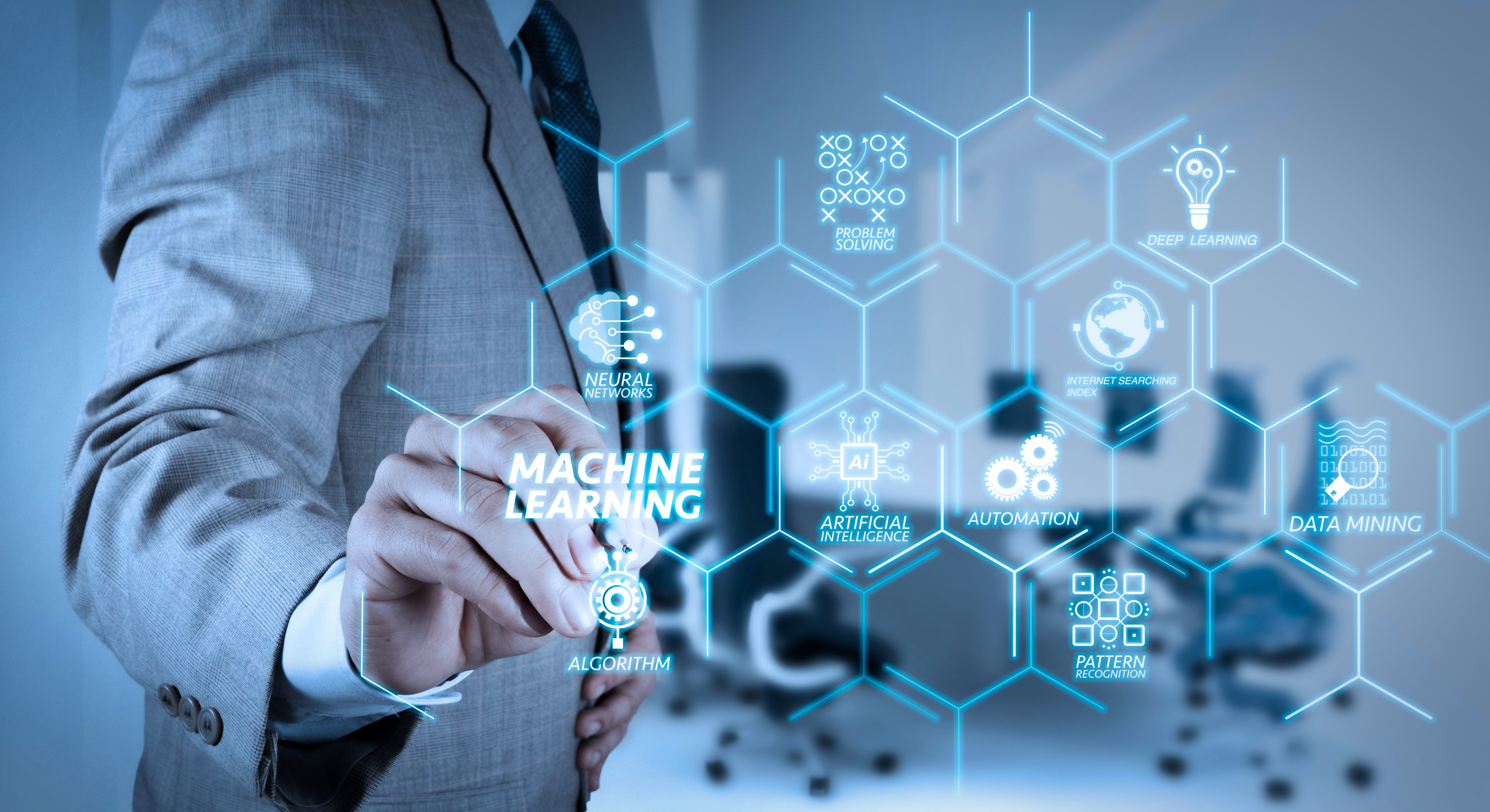
Artificial Intelligence (AI) and Machine Learning (ML) are rapidly evolving to help companies with both digital transformation and innovation. There has been a lot of hype and discussion about these topics, and, in a very short time, we have moved the conversation from “AI is cool” to “AI can drive specific business outcomes.”

Experience has allowed companies to clarify the economics of AI and reduce time to value. In addition, the technology has continually improved, with advancements including:

  • extracting unstructured data for improved insights and processes
  • moving from simple chatbots to more sophisticated conversational assistants that are smart, use more natural language interaction (text and/or voice), and enable the initiation of transactions
  • integrating operational and knowledge management systems

As our clients start to understand more about AI/ML, there are 2 key questions typically asked:

Question 1: “How do AI and Machine Learning differ from traditional programmed systems?”

What is Machine Learning | Definition, Tools, how it Works & Uses

There are three different capabilities that AI/ML typically extends and enhances into existing applications. One aspect is understanding – enabling systems to understand language, other unstructured data, including pictures, just like humans do.  A second aspect is reasoning – enabling systems to grasp underlying concepts, form hypotheses, and infer and extract ideas, similar to humans. The third aspect is focused on learning – improving over time and avoiding repeated mistakes.  These capabilities, often referred to as U-R-L (understand, reason, learn), are easily integrated into existing applications as consumable APIs, can reduce time to value.

Question 2: “Where is the value from Artificial Intelligence/Machine Learning?”

6 Steps to Create Value from Machine Learning for Your Business | by Vishal Morde | Towards Data Science

As we look across client environments, most clients are very comfortable with structured data that is within their firewall – things like transaction systems, customer records, and even predictive models. Many analysts estimate that 80% of data created today is unstructured, which requires clients to expand their current perspectives in 2 dimensions:

  1. Structured to unstructured, such as documents, transcripts, social media, weather, images, IoT and sensor data, and news
  2. Within the firewall to outside the firewall, including public data, licensed private data, and new types/sources being created every day

From a value perspective, the enticing aspect of AI and machine learning is connecting these structured and unstructured data types within and outside these walls. This enables richer, more, and unexpected insights, new business processes, and improved workflows at dramatically reduced cost levels.

As AI and machine learning mature, three use cases patterns have emerged around customer care, human capital management and the rethinking/reimagining of processes thanks to insights gained from unstructured data and natural language capabilities.

We’ll expand on these use cases and how we are applying AI/ML for our clients in our next blog post.

Techniques of making Cloud Application Migrations simpler

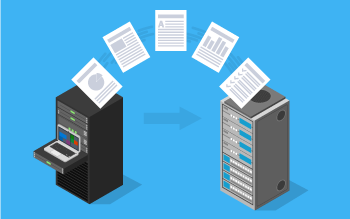
4 Steps to Successful Specialization in Your Financial Services Business - Financial Advisor Coaching by Susan DanzigMany system integrators and cloud hosting providers claim to have their own unique process for cloud migrations. The reality is everyone’s migration process is just about the same, but that doesn’t mean they’re all created equal. What really matters is in the details of how the work gets done. Application transformation and migration requires skilled people, an understanding of your business and applications, deep experience in performing migrations, automated processes and specialized tools. Each of these capabilities can directly impact costs, timelines and ultimately the success of the migrations. Here are four ways to help ensure a fast and uneventful move:
1: Create a solid readiness roadmap.

Building a Roadmap to Cloud: 5 Steps You Need to Follow | Stefanini

The cloud readiness stage is often referred to as the business case and/or involve a total cost of ownership assessment, rapid discovery, advisory services, and more. However, most of these approaches fall short of the up-front analysis really needed to decide which applications to move, refactor or replace. When you embark on a migration to cloud, job one is to ensure you are ready to go. Diving right into a migration without a roadmap is typically a recipe for failure. If you don’t know what the business case is to migrate, then stop right there. You should come out of the readiness phase with a high-level plan and an initial set of migration sprints and a detailed roadmap on how to address the subsequent sprints.

2: Design a detailed migration plan.

7 Steps to Include in your Data Migration Plan | Secure Cloud Backup Software | Nordic Backup

This phase, also referred to as deep discovery, will help keep migration activities on schedule. All too often, lack of proper analysis and design leads to surprises in the migration phase that can have a domino effect across multiple applications. This phase should include a detailed analysis of the scope of applications and workloads to be migrated, sprint by sprint. This agile process shortens migration time and ensures faster time to value in the cloud. All unknowns are uncovered, and changes are incorporated in the roadmap to ensure anticipated business objectives will be achieved. 

3: Set a strict cadence — and stick to it.

How to Create an Outreach Cadence in 6 Easy Steps - Odro

Often, most of the planning effort focuses on getting past that first migration sprint. This phase requires a great deal of planning and preparation across multiple stakeholders to keep the project on time and within budget. Scheduling all of the resources and tracking the tasks that lead up to D-day is no simple job. These activities must follow a standard cadence of planning steps to ensure effective and efficient migrations.

4: Automate as much of the migration as possible.

IT Automation vs Orchestration: What's The Difference? – BMC Software | Blogs

The way your organization performs the migration can also impact the project. In most cases, tools that automate the application transformation process, as well as the migration to cloud, can mean a huge savings in time and money. Unfortunately, there’s no off-the-shelf automation tool to ensure success. The migration phase requires people experienced in a range of tools and how to orchestrate the work.

One could argue that a fifth way to ease migration headaches is optimizing applications during the process. However, there are different schools of thought on whether to optimize applications and workloads before, during or after migration. I can’t say there is a definitive right or wrong answer, but most organizations prefer to optimize after migration. This allows for continuous tuning and optimization of the application moving forward.

It is important to note that steps in the migration process are not one-and-done activities. The best migration and transformation services are iterative and continuous.

You can’t determine readiness only once. The readiness plan needs to be reviewed on an ongoing basis. Don’t analyze and design migrations just once. Do it sprint by sprint, and plan each migration activity. Make sure you continuously collect and refresh data, refine and prioritize the backlog, and look for key lessons learned to ensure continuous improvement through the lifecycle of entire migration. Experience and planning can go a long way toward easing your next application migration.

5 Stages to a Successful Cloud-based SaaS Application Migration

This is Why SaaS is Getting Popular with Businesses

digital transformation can deliver improved flexibility, faster speed-to-market and reduced costs, but only if you go about things in the right way. One path to a successful digital transformation is to move traditional applications to cloud-based software-as-a-service (SaaS) applications, a migration that requires a data-driven approach and using technology in strategic, new ways.

Traditionally, most business application migrations start with business process reengineering, whiteboard sessions, offsite process walk-throughs, process mapping and so on. All these are fine, but to achieve success, you need to take a fresh, data-driven approach that focuses on fact-based views of current processes and lays out non-biased options.

A data-driven approach that uses advanced technologies, such as machine learning and predictive intelligence, can provide opportunities to reduce costs, improve quality and boost innovation. These five steps can help you successfully migrate legacy applications to a cloud-based SaaS environment:

Business Analytics: Forecasting with Seasonal Baseline Smoothing

1. Establish a digital baseline. Before implementing SaaS, you should deploy data-discovery tools to identify the current state of business processes and build a digital blueprint of all baseline activities. Tools such as HadoopSpark and Google TensorFlow can be used to construct machine-generated process maps, automated metrics calculations, and intelligent “hot spot” analysis. This will show what process area need to be fixed and where the fixes should be applied.

How To Simplify Network Management For Your Business | ANEXIO

2. Simplify and standardize. Once the digital baseline is in place, the next step is to simplify and standardize. This can be done analyzing each process area that has been customized and comparing them with modern best practices, while leveraging modern technologies including cloud, mobile, analytics, social, Internet of Things, and big data. This helps you visualize future state processes, identify process-improvement opportunities, and mitigate risks with the right organizational change management approaches and training strategies.

The Best Deployment Automation Tools Currently Available

3. Deploy diverse migration tools. The path to SaaS migration relies on process discovery, rapid deployments and automation. Enterprises should deploy a wide array of migration and testing tools to perform extracts, upload setups and master data. Once deployed, you should engage in end-to-end automated functional testing of applications and other critical tasks.

Archive Migration

4. Closely monitor the migration. Be prepared to generate detailed reports and dashboards that allow you to review configuration uploads to ensure they are all loaded, verifying that they are correct and supported. Testing is also key – you should establish a test repository with assets such as scenario descriptions, test scripts and user-configurable workbooks, and provision testing-as-a-service (TaaS) to reduce testing time and costs.

Automate & Optimize the Workforce: How Mobile Apps are Solving the Challenge?

5. Automate and optimize. After your migration is complete, your focus should turn to automation and optimization. For example, you can use data from pre- and post-migration to identify candidates for automation to make sure your digital workforce (bots) is executing each automation step as planned. Also, your organization can drive continuous innovation and improvement via lean methods to optimize workflows and team performance.

Successfully migrating to cloud-based SaaS applications involves changing your business, your processes and even your people across the enterprise. A data-driven approach is effective only when technology, people, and talent – business and IT, along with leadership – are integrated with the right balance to execute cohesively with a clearly defined end goal in mind.

Designing systems for machines rather than people: Latest Tech Trend.

A brief history of robotics and AI

For businesses to be agile and respond quickly to changing market conditions, they need to provide business users with real-time and near-time operational data. That means harnessing data from devices and tackling the latency challenge. In 2020, we will see more organisations shift their design thinking from services and systems for people to services and systems for machines. The move to machine-to-machine (M2M) systems also means processing is moving to the network edge, where the data is.

Action at the edge

Education Clipart Quality Education - Edge Mathematics By -r.k.jha - Free Transparent PNG Clipart Images Download

Organisations are experimenting with extending data clusters to the edge to reduce latency, gain operational efficiencies and improve products and services. Fast food company Chick-fil-A is running Kubernetes on 6,000 kitchen devices in all 2,000 of its restaurants. This is part of the chain’s internet of things (IoT) strategy to collect and analyze more data to improve throughput, operational efficiency and, most of all, customer service.

The move to M2M dovetails with the notion of catering to local markets using local data. This will foster new design architectures that take into account privacy, security and regulatory concerns regarding the “frame of reference” of data — i.e., the notion of localised data being more valuable than global data in terms of its usability and mining. When organisations consider modernizing their IT operations and changing the way microservices are deployed — especially large multinationals with a wide global reach — it becomes critical for them to consider the advantages of targeting a geography locally, and realizing that there are new tools and ways of doing this.

Another facet driving the change in design thinking is the need to make maximum use of computing resources. Whereas the decision frequency of a person ranges between 1-15 hertz, which means that people can decipher information and make a decision in about ½-1 second, today’s microprocessors can operate at gigahertz and process information in nanoseconds. If these processors are not operating as fast as they can, they are just space eaters. Organisations want to keep their processors as busy as possible, which means designing for billions of decisions or operations per second. Otherwise, they may end up paying for unused capacity.

Signs of M2M

M2M technology: business value explained - Itransition

Two examples of M2M architecture are SAP Leonardo and KubeEdge. Through SAP Leonardo intelligent technologies and capabilities, SAP is integrating its ERP applications with IoT platforms, combining traditional IT services with M2M capabilities. Importantly, SAP can address broader markets than niche IoT platforms.

KubeEdge, built on Kubernetes, is an open source platform for building edge computing solutions that extend to the cloud. The platform supports network, application deployment and metadata synchronization between the cloud and edge. It extends the Kubernetes ecosystem from cloud to edge and provides benefits such as lower latency, low resource consumption and applications at the edge that can run in offline mode.

The road ahead

Are you ready for the road ahead? - Life after COVID-19 - LM HR Consulting

We are starting to observe a shift in IT design from IT for humans to IT for machines. These design patterns deliver richer experiences because they enable substantially more processing in the same experience time. Design shifts will lead to changes in batch processing and stream processing architectures, which are constantly being updated and reimagined with better M2M capabilities. Data and analytics will continue moving to the edge where the machines are, to analyze the massive influx of IoT data and provide maximum throughput with minimum latency. Rapid deployments of these transformational architectures may not be immediate, but over time these new architectures will be a forcing function for IT modernization.

Teams, not individuals, are the greatest achievers in Technology.

How to implement as DevOps culture | CIO

Developing high-performing teams will be the focus of many enterprises in 2020. Companies will confront the fallacy that pace is what unlocks the company’s full potential and recognize that how the company organizes its people and information flow is what determines performance.

Organizing for a dynamic and complex environment requires a much different structure than the traditional command-and-control pyramid. Talent acquisition and development strategies must be built on a team-of-teams approach consisting of multidimensional individuals, rather than traditional siloed teams consisting of single subject matter experts. Put differently, the focus shifts from developing so-called 10x individuals to developing 20x teams.

Lessons from the battlefield

Vector Hand Drawn Leadership Concept Sketch. Stock Vector - Illustration of champion, abstract: 113869486

The transformation of the battlefield and the U.S. military’s adaptation offers an excellent case study, specifically the experience in Ramadi, Iraq. The unpredictability and dynamic conditions of the battlefield are similar to the current business environment: combating insurgents who utilize asymmetrical tactics and are well equipped with the latest technology, while having to maintain and grow the customer base (citizenry).

The “clear, hold and build” strategy that worked in Ramadi revealed that capabilities such as raids had been elevated to the level of strategy. Modern business has done something similar by elevating the increase in pace, agile and DevOps capabilities to strategy. However, merely holding meetings more frequently and in a different manner falls short of desired results. What companies need, as the military learned, is more flexible joint power from multidimensional teams that provide multiple options in the face of volatility, rather than the limited options of a traditional pyramid of teams.

As retired U.S. Army General Stanley McChrystal explains in Team of Teams, the military in Iraq needed to be not only efficient but also adaptable. It became a priority to focus on reconfiguring to be able to deal with volatility quickly. Simply deploying more resources and putting more people to work, to become more efficient in the current operating model, was not enough. As McChrystal points out, the traditional pyramid constrains team productivity due to choke points, ineffective communication channels, stifled creativity and inadequate response time.

So the military created linkages between teams, put people from different service branches and agencies on the same team, and shared information widely so everyone understood the larger mission and could make decisions accordingly. McChrystal understood that “technology had changed in such a way that management had become a limfac [limiting factor].”

The same is true in today’s business environment, where an explosion of technological progress — improved capabilities to track, measure and predict via big data and advanced analytics; moonshot projects; and unconventional business models — has created a more interdependent, fast-paced and complex business environment. In this environment, companies need interconnected multidimensional teams that can adapt and scale.

The new teams

Microsoft added all these new features to Teams in February and March - MSPoweruser

The new interconnected teams have diverse skills that capitalize on the team’s collective intelligence and increase a team’s productivity. The shared sense of purpose and mentoring that occurs within the team not only strengthens the relationships and performance but also mitigates knowledge gaps between senior and junior employees.

Populate these teams with double-deep personnel and now you have the ability to scale across the company, purposefully cross training your people to fill gaps. This creates a natural talent pipeline. Rotating people through different teams means employees advance through project-based promotions and team assignments rather than the traditional subjective requirements.

In order to be effective and maximize the potential of these multifaceted teams, they need to be empowered to make decisions. This does not mean they operate totally on their own, but they “have implicit trust that their senior leaders will back their decisions,” as Navy SEALs Jocko Willink and Leif Babin point out in Extreme Ownership. With proper decentralized command, teams that are closest to the situation can execute in a manner that supports the overarching goal without having to ask for permission.

In 2020 leaders will determine how to, in the words of McChrystal, “scale the fluidity of teams across entire organizations” amidst the chaos of ongoing business transformation. Ultimately, building better teams will build better individuals and enterprises. The ability to develop and lead a network of high-performing teams will be key to business success in the post-digital age.

error: Content is protected !!