Agile Scrum Methodology in Mobile App Development-Guide

Make your project move forward with Agile method. - Bocasay

Agile scrum methodology is one of the most commonly used practices in project management in today’s time. The benefits that the method comes with such as increased business value, faster go to market, greater transparency among the team, and better quality management is enough to push a number of businesses across a range of industries to follow the Agile development Scrum approach in their everyday work process.

If your business, seeing the benefits that the methodology has to offer, is also planning to take the agile scrum development route, this article is for you.

But before getting further into the topic, you should first understand what is agile methodology?

Interestingly, there is a slight difference between agile vs scrum if we speak of them individually. Strictly speaking, Agile is a development methodology based on incremental and iterative approach. Whereas, Scrum is just an implementation or a type of agile methodology. Here, incremental builds are passed to the clients bi-weekly.

Meaning, an agile methodology for application development starts by outlining the users and documenting a statement on a scope of problems, opportunities, and values to be addressed. This vision is then caught by the product owner who works with different teams to provide quality end results.

Now that we are clear on the basic difference between agile vs scrum, there is something else that you need to consider before adopting distributed agile development methodology. Let us first touch bases on what Agile Methodology Scrum actually stands for and how it single-handedly brings the model miles ahead in the Agile vs Waterfall debate.

What is Agile Scrum Method in context of Mobile App Development?
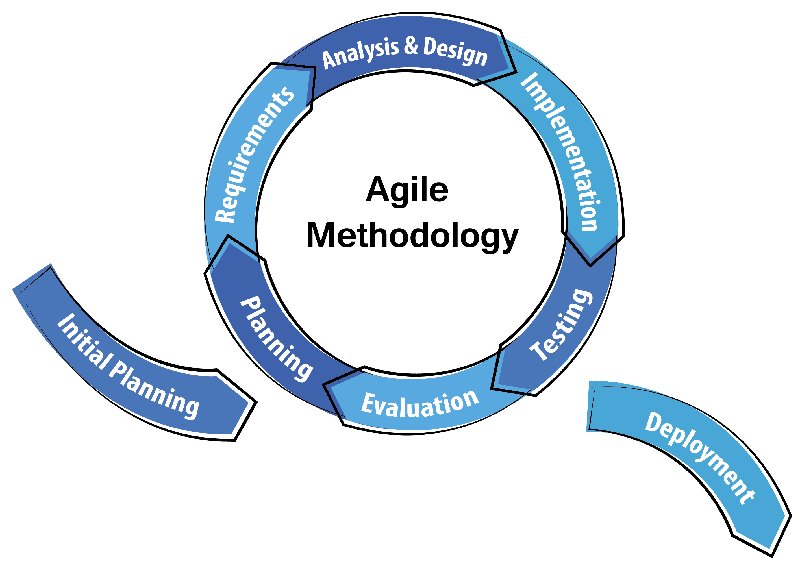
Agile Methodology for Efficient Mobile App Development

Holistically, the role of Agile in mobile apps is well-renowned and Scrum is the most commonly used sub domain of the agile methodology, which has quickly expanded to handling big and complicated projects that might have otherwise taken a lot of time to finish.

When it comes to the role of using agile project management on mobile application development then one needs to take into account that the mobile application developers make an app for a device with a small screen, less memory and less processing speed. Thus, the use of agile and scrum methodology includes programming, development and project management with breakdown of the software development life cycle into smaller modules.

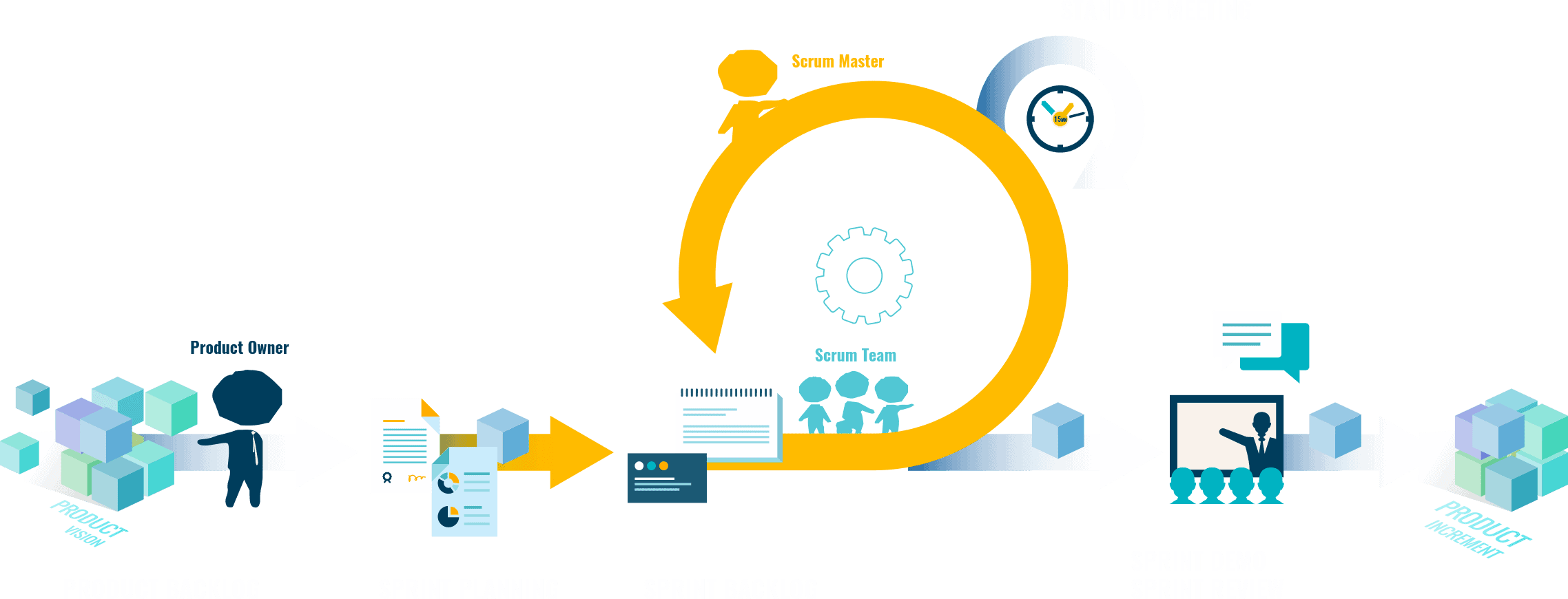
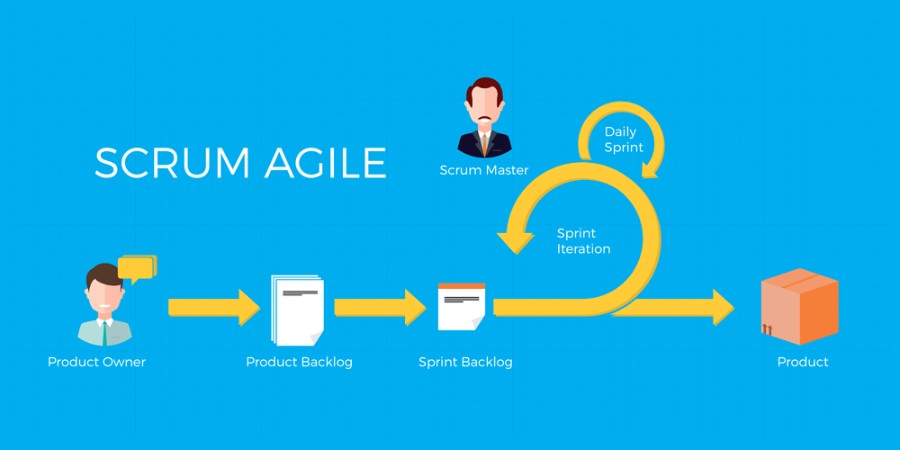
Used mostly by mobile application development services companies or agile software development company, the scrum team breaks down their allotted work aka product backlogs in actions, which they could cover within the two-week cycles, also known as – “sprints.” By completing every sprint, the team is expected to produce a working mobile app, which they continue to work upon and improve.

Every sprint comes with a timeline that extends from 2 months to maximum 4 months. And each of them have these following components to make the agile mobile app development process more efficient –

1. Scrum Roles
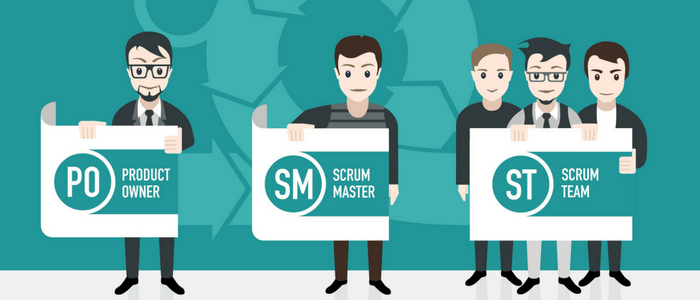
What are the important Agile Scrum Roles And Responsibilities?

How effectively you run an Agile Distributed team is dependent a lot on how well you distribute the roles?

Product Owner – The person is responsible for overlooking what the team is working on and is also responsible for ensuring that the backlog is up to date. The communication of the end customer and team members are also looked at by them.

Scrum Master – He is the one who is assigned to ensure that the agile scrum is followed rightly by the team. They are also responsible for overlooking how the team is performing and resolving any issue that is coming up.

Scrum team – They are the ones who are actually doing the tasks. They own the development and testing part of the whole project and for this purpose the team is said to be self-organized, cross functional, and agile.

2. Product Backlog
Scrum Product Backlog and Agile Product Backlog Prioritization

Handled by the product owner, product backlog is a list of tasks that the team needs to perform. The modifications and priorities are set as and when needed. The backlog contains various documents which are continuously updated and used when required.

The idea is to have a list of backlogs ready before the sprint starts.

3. Agile Sprint Backlog and Planning

How to Develop a Scrum Product Backlog | Lucidchart Blog

In this scrum project management methodology step, the mobile app development team decides on the backlogs they will be targeting in the current sprint. Sprint backlog is the list of things the team plans on achieving in the delivery. Usually, sprint backlogs are divided into workable actions and once the team agrees upon the backlog items, the sprint begins.

4. Daily Scrum Meeting
Scrum Daily Meeting - Quickscrum

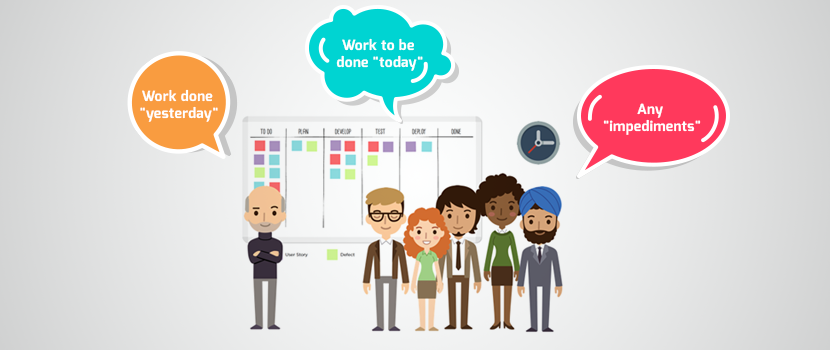
Once the above steps of agile application development are done and the team starts working on the product backlogs, a practice called daily scrum is initiated. A stand up daily meeting is held every day for 15 minutes. In the daily scrum everyone in the team tells about the last day’s work and the day’s plan. The daily scrum lets everyone in the team know of the whole project’s progress.

5. Agile Sprint Review

After every agile sprint, the team demonstrates what was developed to the stakeholders and look into the steps where they got stuck and which went well. The findings of one sprint becomes the action statement of the next.

6. Increment

The end result of a scrum is called Increment. The aim of everyone involved in a scrum is to deliver an increment that is complete on its own.It should adhere to all the quality standards set by the product owner and team.

7. Learn. Repeat. Improve.

Learn. Practice. Repeat. — Choose To Thinq

This entire cycle is repeated in the next sprint.

Sprint Planning chooses the next set of items in the Product Backlog and the sprint cycle starts again. As the team executes the Sprint, the Agile Product Owner simultaneously ensures that the items which are on top of the product backlog are executed first in the next Sprint.

The short, iterative cycle offers the team a lot of opportunities for learning and improving.

How Does Agile Scrum Methodology Makes Mobile App Development Efficient?

Unlike usual desktop applications for PC that may work for a couple of years without any redesign, upgrade, etc., mobile apps ought to be significantly more flexible and adaptable for users. Users’ requests may change rather regularly, thus app owners should update the app each time when it requires new changes. Furthermore, the best approach to make a top notch mobile application without extra revisions is to opt for an agile development company.

1. Improves the Mobile App Quality

How to improve the Quality of a Mobile App

Since testing and QA is integrated at every sprint throughout the agile scrum process, the app is checked at all stages, ensuring that it is developed according to the set quality standard, thus sealing its future in terms of high performance and acceptance.

2. Greater Client Satisfaction

6 reasons why customer satisfaction is important

Since Agile Method is based on involving the clients at every point, they have a clear access to the app progress, as they are given an app demo with every set of newly added features after every sprint.

3. Greater Transparency

Call for greater transparency in the financial statements of Greek MPs!

Since the practice of agile methodology is based on involving everyone who is a part of the mobile app development process plus the client, everyone knows the exact work that is to be done and its status.

4. Faster Return on Investment

Five Steps to a Quick Return on Your IT Process Automation Project Investment

One of the perks that come associated with Agile software development is Faster development and ROI. With the help of Agile, app development companies are able to start the development process much faster, and are able to take up multiple areas of the process at the same time. Add this with the ease of testing the app function by function on the go, and you will get an expedited app development timeline.

5. Rapid Changes

With the use of agile project management with scrum for mobile app development, it is handy to make changes in apps due to the presence of sprints. The best part is that there is no negative impact on the development as the scrum agile development methodology avoids the problem of revision, time and cost.

Now that you know what agile scrum development process stands for and what are the advantages of Scrum, let us now move on to the factors that you need to consider before you adopt it in your mobile app development branch.

Factors that You Should Consider Before Implementing Agile Scrum in Your Mobile App Development Process

1. Do you have a person in your team who can fill in the role of a scrum master?

6 Must Have Skills to Become a Notable Scrum Master | Nutcache

This is one of the crucial components of agile scrum development. Before you even move on with the Agile scrum methodology, you will have to appoint a scrum master who would be overlooking all the development processes and the challenges that the team faces. The scrum master will be responsible for gathering requirements from the end users. He will also be responsible for holding the scrum meetings and managing the backlogs.

The role of a scrum master is a very crucial one when it comes to development using the Agile methodology. He would be single handedly responsible for the easy completion of the project.

2. Is your team’s role and responsibilities clear?

The success of your mobile app development process based on agile scrum development methodology depends entirely on how clear your team is with the roles they have to play and how willing they are to handle their part independently. If the individual team members are not comfortable with their roles, the project will face a number of execution challenges and you will never be able to take the full advantage of the agile scrum methodology.

3. Will the Agile Scrum Method actually work for your industry?

One of the rules of the agile scrum that we adhere to before even we start working on an agile approach is gauge if it’s necessary at all. Even though Agile Scrum framework is used by a number of industries globally, it is not fit for all the industry types.

The development method works best for small size teams who handle scrum project management with unknown solutions, varying deliverables, and constant interaction with the end users or clients, which makes it ideal for projects that deal in marketing, software development, supply chain silos, or strategic planning.

Processes like accounting, sales, and even the purchasing domain, which deals with established processes or static deliverables won’t really benefit from it. But companies like Software Development, IT, Operations, Marketing, etc., do practice agile and the rate at which they are adapting is increasing at a fast pace.

In the end, if you understand the benefits that agile scrum development methodology will bring with it and you are prepared to change your work process around it, go ahead with it. But ensure that you have got your stakeholders and team on board with the idea.

What are the Agile Scrum process best practices?
What is Agile SCRUM and why we use it | TMS

1. Always create product backlog and vision together

So what is a product backlog? Well, it is a list of items needed to be added to product development. Now, it is advised to make the product backlog and product vision together because this way, developers and stakeholders both are in the loop and aware of everything.

2. Employ burndown charts for sprints

In order to track the progress of sprints, the experts at Anteelo suggest that you should use burnout charts. They graphically show the amount of work that has been done. What is more, these charts also help in identifying certain risks related to undelivered work.

3. Establish communication guidelines

If there is one thing that can greatly affect the workflow, it is uninterrupted communication. If not tackled, it becomes one of the greatest challenges of scaling agile practices. There is one thing that can be done – develop a communication strategy based on the guidelines for the teams. This is something that can prove to be very useful for remote teams in making their process transparent.

4. Practice stand-ups

A project/product development process speeds up once every member of the team is on the same page and knows the progress of work. These stand-up meetings are also known as ‘daily scrum’ held at the starting of the working day and last for no more than 15 minutes.

Frequently Asked Questions

1. Why use agile scrum methodology?

Agile Scrum methodology is beneficial in the app development process if done right and religiously. It helps in improving mobile app quality, increases client satisfaction, gives immediate ROI, promotes transparency, and so much more.

2. Who Uses Agile Scrum Methodology?

Almost all the companies irrespective of the industry domain take benefits of agile scrum methodology in order to make the management and process more transparent and smooth.

3. What is Scrum methodology in relation to Agile Project Management?

Scrum is a part of the agile project management methodology which includes a team managed by a Scrum Master. The main job of a Scrum Master is to clear away all obstacles to the team completing work.

Here, the work is done in short cycles known as sprints, and a meeting is arranged including the whole team on a daily basis daily to discuss current tasks and roadblocks that need clearing.


COVID-19’s Impact on Online Business

New COVID-19 Resources Available - International Society of Nephrology

The radical transformation in how people across the world are living during the Coronavirus pandemic is having a significant impact on internet businesses. While some are seeing sales plummet, others are struggling to cope with growing demand. In this post, we’ll look at how the online marketplace is changing in the current circumstances.

1. Growing demand for streaming services

Best Streaming Services 2021: The Full List Available

Millions of people are turning to movies and box-set series to keep them entertained while they are cooped up indoors. As a result, streaming services are seeing growth not just in the amount of time people are watching but in the numbers of new customers flocking to use their services. In Europe, Netflix has had to reduce its picture quality by 25% to ensure bandwidth capacity.

Increased demand means that in North America, Netflix is now forecast to more than double expected growth in new subscriptions, from 1.6% to 3.8% over the year – and that’s in a region where it is already well established. Internationally, growth is expected to rise by over 30%.

It’s not just Netflix that is benefitting. So too are other streaming services, like Amazon Prime Video, Hulu and Now TV. Recently launched services like Disney and the BBC-ITV venture, Britbox, which may have struggled to compete, might find opportunities that wouldn’t have arisen in normal circumstances.

2. Online gaming taking off

No Dice, All Bets Are Off | Outlook India Magazine

Although a narrower market, younger people forced to stay at home are driving up demand for gaming. This isn’t just increasing subscriptions for online gaming services but also helping retailers of downloadable PC games. PC gaming platform, Steam, for example, has seen its highest number of users in 16 years with traffic spikes of over 20 million at times.

3. Big impact on PPC ad spending

9 PPC Mistakes That Impact Success

The travel industry has been one of the most affected sectors by the virus and this has resulted in a slump in advertising from travel-related businesses, with some market experts suggesting it could lead to 15 – 20% reduction in travel advertising revenue for Google and Facebook. This figure is likely to be compounded by all the other businesses that rely on tourism also cutting their ad spend.

It is not just travel-related businesses who are reducing advertising. With many companies forced to close due to the effects of social distancing, they too will be cutting back or suspending advertising altogether. In 2018, McDonalds spent over a billion dollars in advertising just in the US. It has now closed all its UK stores and is shutting thousands of others globally as the pandemic spreads. It obviously won’t be damaging its cashflow by spending huge amounts on ads over this period. With industries such as entertainment, high street retail, restaurants, etc., also affected, Google and Facebook could see ad revenue fall by up to 45% over the next few quarters.

However, it is not all bad news. With fewer advertisers competing for ads, the cost per click in many sectors is likely to reduce, meaning those companies that can still derive value from advertising will see their budgets go further. In addition, consumers are clicking on more ads associated with employment, education, hobbies, leisure, arts and entertainment.

4. Holiday bookings won’t dry up

COVID travel: Where to book your trip once pandemic deals dry up

While travel is out of the question for most people at the moment, more than half of those who take frequent holidays are likely to book trips further into the future. Business travellers are even more likely to make long term bookings. While this is not the immediate relief those in the travel industry and all the depended industries need, the taking of deposits can help with current cashflow problems. Most of these bookings will take place over the internet.

As the pandemic begins to recede, it is predicted that most holidaymakers will, initially, seek domestic holidays where there is likely to be less disruption impact by failing tour operators and airlines and where the impact of the virus is more certain than abroad.

5. Global increase in online shopping

Online shopping is catching on among women in India

As fewer people go out, their shopping habits are moving online. Even retailers seeing a boom in sales, like supermarkets, are having more customers using their delivery service simply to avoid the risk of going to the store.

This rise is happening globally. An Ipso-Mori study found that 18% of UK consumers were shopping more online. In countries which have been more badly affected, the numbers of people increasing their internet shopping is even more substantial: 31% in Italy and 51% in China. However, the biggest increases are in countries like India 55% and Vietnam 57%. This rise has meant some companies are struggling to cope with demand. Amazon, for example, is so busy it is recruiting 100,000 additional staff, raising wages and making its employees work overtime to meet demand.

One area of particular growth is in the use of grocery apps, which are seeing unprecedented numbers of downloads in the US. Instacart downloads during March are already more than triple that of February while Walmart’s app has seen a 160% rise.

Conclusion

Coronavirus is having a significant impact on consumer behaviour and this is affecting internet businesses in different ways. For many, there are challenging times ahead as consumers drop plans to travel and stop online bookings for local businesses. However, there has been a sharp increase in online shopping with some retailers having to expand their workforces to cope.

Expectations vs Reality of Enterprise Application Development

The 7 Stages of Enterprise Application Software Development

Every time there is a mention of new technology, the first impression that is made on the non-technical population is that it is identically Magic. Enterprise applications are the same. People expect them to glide over in functions and perform flawlessly – like magic. But do they tend to this expectation as well as they can?

In the next 7 minutes, we will find out the answer to this question. But before we move over the deets of our magical expectations from enterprise apps and the reality of their working, we need to dig into the answers to What are Enterprise Apps and what is Enterprise App development?

What Are Enterprise Apps?

Enterprise Apps: The Present and Future of Business Technology - Bizness Apps

As per the definition from Techopedia, An enterprise application or EA is a specially designed (and large) software system platform that operates in a corporate environment like a local, state, or federal government body, a medium to large business, Schooling systems, or districts, non-profit groups, etc.

Though there is no defined set of properties that Enterprise apps or software should have, there are some characteristics that are found common across different enterprise applications, such as:

  • Central management
  • Scalability
  • Robustness
  • Business-orientation
  • Critical for the vision and mission of the enterprise
  • The built-in ability or communicate over interfaces of other enterprise software.

These characteristics are what make an Enterprise app better than normal applications. And As it can be made out that Enterprise app Development is becoming More evolved in order to become more collaborative and Agile.

Also, it has been made possible due to the prompt adoption of cloud-based technologies. IT sector around the globe is working in a collaborative way to build mobile applications with, both, internal business teams and external agencies that a company depends upon. With the availability of services and solutions through online mode, enterprise software development services in California or anywhere else focus on an approach to business transformation that puts people first.

And when we say “Enterprise App Development”, we are enclosing all the unique requirements there are in order to build an Enterprise app, such as:

  • Having multiple users with identical requirements that have to use the same app
  • A need for the said application to deliver value consistently and at scale.
  • Mammoth reserves of data to manage and integrate (sometimes at multiple levels).
  • Following all the above-mentioned conditions along with industry-specific guidelines and strict regulations, for instance, the Financial sector or healthcare.
  • Catering to Forever evolving and changing roles and responsibilities.

For all of these reasons combined, there is always a gap being created between what the customers expect and what is being delivered to them. And thus, Enterprise app development is a gargantuan task and people often fail to either understand the customer needs or to deliver them well. For a better understanding, let us take a trip of the user expectations from Enterprise apps.

How Enterprise App development should work?

An Enterprise App Development task is almost always taken upon by a well-managed enterprise mobile App Development company. And a team is designated for this purpose, wherein, everyone in the team has specific tasks to attend to. And thus, depending upon the role assigned to different people, they end up having a different vision about what the Enterprise mobile app development process should look like.

This is where the first loophole is created when the vision of the team is not aligned. Nevertheless, whether your role in the team is of a developer, tester, or deployer, there are some key values where we can linearly define our visions. So, in the end, we all want the process of Mobile Enterprise app development to be:

User-Focused:

5 User-Focused Reasons UX is Important for Your Ecommerce Site - Trackmind

This goes without saying that  Enterprise App Development must be User-Centric. Every user expects the mobile apps (Enterprise Applications, here) to provide them with a high, consumer-grade user experience. And besides, the primary intention of all mobile app developers and designers to build applications that actually get used by as many people as possible and thus help both, their external and internal clients. Only then will they be able to meet their ultimate goals.

Highly secure:

See what makes our portals highly secure! - C1 India

Before the commencement of the Enterprise App development process, the primary question from the client’s side will be raised about the safety and security of the app or in other words, the security of their own data fed into the app. In the present world, the media reports are filled with the news of security breaches, even in the highest level of company software. In such scenarios, it is crucial for enterprise app developers to pay attention to safeguarding the valuable user data that is stored in the app.

Integration and connection:

Communication connection integration interaction it network icon - Business Process 1

The unique thing about Enterprises is that they use a number of software and applications that can be built independently as the need arises. But, it is one of the main requirements of enterprise app development that every new software or application must be able to seamlessly connect with all the existing data sources. This ensures better user experience and eliminates the extra work for software integrations.

Speed:

Netflix's speed test tool is now on iOS and Android - The Verge

With the release plan of 5G technology in the world, it is only obvious that today, digital technology users give utmost priority to the high speed of networks and applications. Gone are the days when people were patient enough to watch their web pages load in the dial-up internet service. And besides, with the ever-rising backlog of data, the developers are more concerned with working on critical projects, rather than writing and rewriting front-end and back-end codes. After all, the business leaders require the updated technologies to be delivered to them as quickly as their business plans need change.

These four characteristics make up the foundation of an ideal enterprise app development process. But as we all can guess, the reality may not always align with our expectations of the ideal scenario. So, let us take a look at how the Enterprise app development actually works.

How Enterprise App development actually works?

There might be a few myths around Enterprise app development that are circling around the world, In all reality, there’s a diametrical difference between the ideal and the real scenario of Enterprise app development. Let us take a look at what the actual process goes like:

Project-Focused:

A project-focused approach to operations will help managers deliver the best results – European CEO

Even though all the developers and other people involved in Enterprise application development projects are well aware of the need that every app should be made keeping the end-user requirements in mind, too often, the teams working upon mobile app development for Enterprises with all the other enterprise mobility solutions, the reality-check says otherwise. In actuality, the apps are siloed and the enterprise ends up on multiple disengaged and stand-alone databases stored in different digital systems which are either impossible to integrate or are an extra burden for the enterprise’s IT team.

Slow:

5 Reasons Why Your WordPress Website Is Too Damn Slow

Yes, even in today’s forever-rushing, technologically advanced world, custom enterprise application development is a tough task. Hence the project of enterprise app development ends up taking longer than contracted. Somehow, there are never enough man-hours available for timely delivery.

But of course, the blame can not be put on the app development team alone. Enterprise app development is a big task and there are significant challenges attached to it.

Key challenges in Enterprise application development:

Data Encryption:

Data Encryption Methods to Secure Your Cloud - Agile IT

One of the biggest challenges faced in enterprise application development is the proper and secure encryption of sensitive data stored on smartphones. And as mLearning is getting more and more popular at workplaces, the concept of BYOD (Bring your own device) is making it more difficult for app developers to keep the data encrypted. Nevertheless, encryption and secure containment of data are crucial for enterprise app development because they can save the data from leakage in case of device theft.

Access to data:

Using Active Directory for Data Access Governance | Itergy

Mobile applications for enterprises have a number of challenges that are faced by developers at different degrees. One of the most crucial and common problems is offline access to data. This has become one of the biggest challenges that are faced by mobile app development companies, especially in big enterprises that see a need for urgent access to data even when there is no connection to any online portal.

Device Fragmentation – BYOD

What is BYOD Bring Your Own Device? | How BYOD Helps to Enterprise?

BYOD is sure the talk of the town but it has shown an equal amount of challenge to the developers. With the rise in “bring your own device” policies across multiple enterprises, mobile app developers are facing the challenge of accommodating a plethora of mobile devices in their enterprise applications. Previously, developers had to focus on only a few kinds of operating systems and mobile devices which is not the case with BYOD. This scenario has given rise to the challenge of device fragmentation because of the adoption of “one size fits all” technique for the development of Enterprise mobility solutions.

There are numerous ways to increase the chances of your enterprise app failure, But the good thing is that every challenge has a solution. It might not be the best solution but it can substantially decrease the problem that was being faced initially so as to make matters simpler. For instance, we, at Anteelo, ensure that these issues don’t show up in your enterprise app dev.

Overcoming the Challenges in Enterprise App development

Design trends in mobile applications anticipated in 2020

  • There is a major requirement of a strong defense system in place for all the digital devices that comprises data encryption, firewalls for individual applications, and at the host and network levels.
  • Since the data stored in an enterprise mobile app is highly crucial to the enterprise. Therefore, the use of competent security software in place to make the data security is required. Along with other data, the privacy of sensitive user data and information is to be protected.
  • Web applications and mobile applications which are cloud-based are highly prone to cyber-attacks. Therefore, in order to safeguard the data of this software, the security software must be competent and updated which the latest security patches.
  • Application vulnerability tests must be held on a periodic basis.
  • The environment that includes multiple systems must ensure careful designing keeping in mind the diversity of devices.
  • To avoid the problem of device fragmentation, developers must recognize the most common digital system or device in order to make the enterprise mobile app compatible with a maximum of devices.
  • A smart link can be established between applications that are using a similar set of data in order to achieve optimization.

Of course, there is a gap being created in the enterprise app development process. The reality of the scenario is much different from the one we expect in reality. However, every loophole can be fixed with careful operations and systems in place. Hence, it is safe to say that even though there is a gap in the app development process, there is enough room for improvement as well.

We, at Anteelo, as an Enterprise mobile app development company are working towards a standardized procedure to minimise all the possible gap in these processes. But, the roadmap to being a successful app startup company consists of more than just following the SOP.

And we all are aware that the enterprise software development services in California and around the world have created some very intricate and reliable mobile applications for big enterprises which can only be cited as a development in the course if nothing else.

Get Your SaaS Business on Mobile App: A Guide

SaaS-implified. “Software is eating the world, in all… | by Pratyush Choudhury | Medium

There are a number of benefits that come entailed with the integration of SaaS mobile app development within an enterprise solution, benefits ranging from low cost, easy maintenance, zero space invasion, and the freedom from worrying about system upgrades, amongst others.

While these are the customer/enterprise side benefits, for the SaaS vendors, the benefits are equally attractive – Easy expansion to the foreign market, Service delivery automation, and zero chances of piracy, among a number of others.

All these reasons along with a lot many others have created a huge demand for the SaaS offerings for easing the processes of millions of SMBs around the world.

The demand that comes with a huge revenue generation capability, has grown manifold with the advent of mobile apps.

In this article, we will be giving you insights on how you can start a mobile SaaS business and be an amazing value offerer.

But before we do, it’s time to get back to the basics –

What is SaaS?

SaaS Advantages and Disadvantages - Cloud Solutions

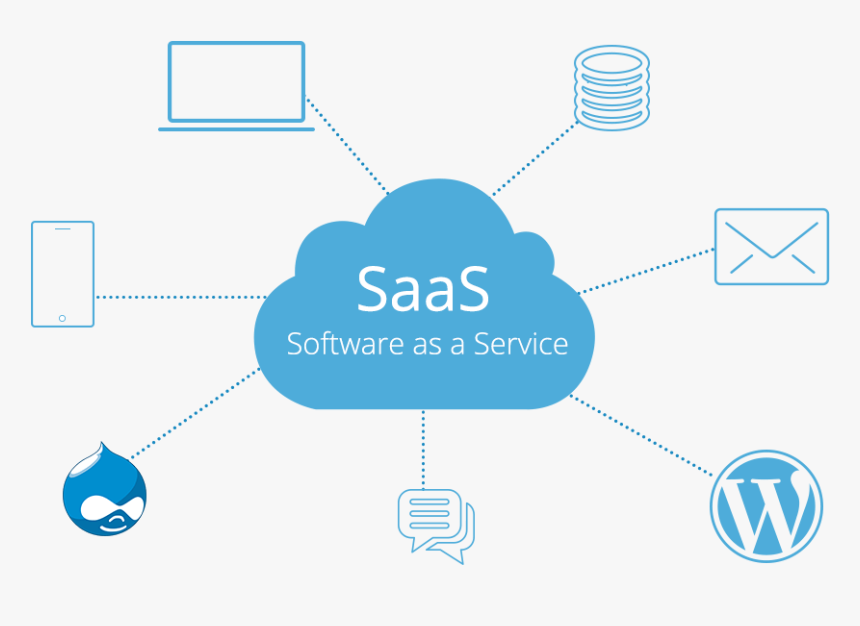
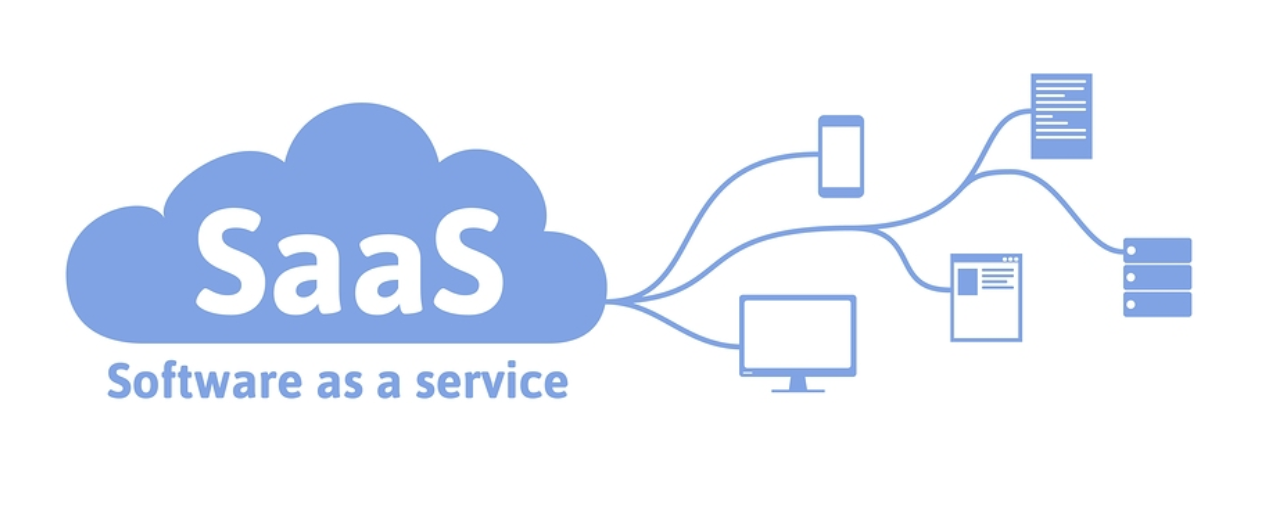
Commonly referred to as on-demand software, SaaS can be defined as the software distribution model where a service provider hosts the software for their customers and make it available to them through the internet.

Because of the ease of access that SaaS offers, it has become a popular delivery model for a number of different business applications along with being incorporated in the delivery strategy of the enterprise software vendors – a popularity that has increased the offerings market share to a great extent.

There are a number of different SaaS application ideas which are being offered as part of business applications, such as – sending and receiving email, team collaboration, billing/payroll processing, customer relationship management (CRM), sales management, financial management, human resources management, enterprise resourcing planning (ERP), database management, document management, and content management.

Here are some of the most common uses of SaaS among the many SMBs around the globe –

The use cases of SaaS that we just saw are now slowly making a transition on mobile.

Mobile SaaS applications are what is soon replacing the traditional SaaS model. Businesses – both that are already an established name in the industry and those that are planning to enter the flourishing market, alike are investing heavily in the development or expansion of their SaaS offering on mobile.

This article is for both – Entrepreneurs who are just starting with Mobile SaaS and Businesses who are planning to expand their SaaS offering on mobile.

But before we move on to the guide, let us first look at the Mobile SaaS applications market – the growth tangent it is on and the reason behind that.

The Rise of Mobile SaaS Applications

There are a number of SaaS businesses that are moving on mobile with the hope of increasing their active users and user engagement count along with the benefit of making their business a common name in the corporate world.

Here are some statistics that prove how big the market for Mobile SaaS companies already is and going to be in a few years time:

Benefits of extending SaaS to Mobile Apps | 9SPL

Mobile SaaS is taking over a number of brands belonging to the small and medium enterprise level, across industries. Factors like increased user base and easier deployment have been driving the businesses who are in the SaaS domain or are willing to enter the space, expand their business plan to mobile apps.

Let us, deep dive, into the benefits that investing in SaaS application development services provides to businesses, instead of looking at it from a superficial level.

Reasons Why Your SaaS Business Need a Mobile App

There are a number of reasons why you should invest in a sound SaaS application development company, here are a few of them –

1.To Make it Accessible

10 Ways to Make Your Website Accessible - DreamHost

Greater accessibility lies at the core of the mobile app concept. The moment you expand your business website to mobile in form of an app which does not function as an extension of your website but as its complementary addition, you open your business’s avenues to a greater audience who are practically against the idea of switching on their laptop to work the moment they get home.

By presenting your SaaS offering on the mediums that the world is comfortable being available on, you help businesses who then partner with you to be available at all times.

2. To Increase the Active User Count

How Many People Use Social Media in 2021? (65+ Statistics)

When you look at the percent of users who are active on your software in typical office hours versus those who are active beyond the fixed office hours, you will see a declining value. Now whether you are a new entrant or a SaaS brand that has been in the market for a long time, a dwindling active user count is never good.

But when you bring your software on mobile, you give the thousands of businesses and their million employees an option to be available on a 24*7 mode – the need of every present-day business – on a device that stays active every waking hour of their day.

3. To Save on the Business Boosting Costs

30 Simple Ways to Increase Your Profits | Inc.com

It is no surprise that mobile apps reduce the cost of marketing, advertising, and keeping a staff just to keep users updated with the service. When you move your business to mobile, you are able to send out notifications and messages in a more real-time as opposed to being active on a website or desktop application, where multiple actions are happening at any given time, making the notification and message ignorance rate high. But the same when sent on mobile increases the engagement rate to a much greater rate. The heightened probability of user engagement that apps get you increases the probability of becoming more profitable.

4.To Have a Competitor Advantage

There are a number of SaaS agencies that have still not expanded to mobile, so the mobile landscape is still very open for the SaaS brands in terms of competition and it is presenting itself as a golden opportunity for businesses that are just starting their Software as a Service business. By becoming available to the users on the device they are most active on, before the other brands, your SaaS business development graph would automatically gain a high user base and an automatic competitor advantage.

Now that it has been established that your SaaS business needs a mobile app, let us now look at the platform you should focus on. If you have an idea of the mobile app ecosystem, you would know that there are three types of app choices that SaaS mobile app developers give you, which your businesses can choose from – Native, Hybrid, and Web.

Native vs Hybrid vs Web: Which Mobile App Should Mobile SaaS Companies choose

Native App Vs Web App Vs Hybrid App

While there is no one answer of whether to choose Native, Hybrid, or Web for your mobile app expansion, as they all come with their share of pros and cons, there are factors that can help you decide which option to go for.

Before we get into them, it is apt to look at what differentiates the three mobile app types.

Native Apps: Native applications is deemed to be the best of the lot. The app type is known for its superior quality and better performance, along with giving businesses a direct link to the users’ devices. The idea of Native App is that the mobile application should be downloadable through the Play Store and App Store and give a direct access to the users’ device functionalities like Camera, Microphone, Contact etc.

Hybrid Apps: A mix of both Native and Web app, Hybrid apps appear as Native app but are actually web app that consists of Native UI elements which allow them to interact with the device’s functionalities, something that is missing in the case of Web applications.

Web Apps: It is a mobile application that users can access through the web when they go online. Since it is not a standalone application, it is not available on the stores to download and becomes dependent on the internet connection to function.

With the high-level meaning of all the three mobile app types now attended to, let us look into the factors that differentiate them.

Now that you have seen the contextual difference between the three types of mobile apps, it is time to look into which app type would be best suited for your SaaS mobile app. The answer lies in the functionality you are offering through your mobile app.

If the functionality calls for an online, real-time update with a lot less reliability on the device’s functionalities, go with Web or Hybrid apps. And if the app gives a focus on the superior experience or includes media sharing, go with Native app type.

Now that we have looked into the app type that would be best suited for Mobile SaaS companies, it is time to help you get an answer to a factor that would contribute to the future of your SaaS business – The Pricing Strategy.

What Pricing Strategy Should You Fix For Your Mobile SaaS App

Pricing is a very tricky nut to crack when you are starting your SaaS business. You don’t want to keep it very low to appear as a low-functionality, easy to be slid application and the same time you don’t want to keep it very high so that it becomes out of reach of the thousands of SMBs around the world.

Like the app type choice, there is no fixed answer to this, but what helps is knowing the different pricing strategies that you do have.

Let us look at some of the Mobile SaaS Pricing Strategies that are being followed by most of the SaaS brands.

A.Per User Pricing

How Much Does CRM Software Cost?

One of the most SaaS pricing models, Per User Pricing is where you ask businesses to pay according to the number of users.

B.Per Storage Pricing

The definitive guide to cloud storage pricing

Offered by brands like Google and Dropbox, you pay a certain amount for utilizing X amount of storage and the moment space is utilized, you ask businesses to pay to use more space.

C. Feature-Based Pricing

SaaS Usage-based Pricing Model Overview | GetCheddar

In this case, you charge businesses on the basis of features that you are offering and they require. Here you set an advanced level of every feature and ask businesses to pay more depending on their growing requirement.

D. Freemium

Amazon.com: Flat 23% off at checkout||JioSaavn E-Gift Card - 1 Year subscription: Gift Cards

Under this mobile SaaS pricing model, you offer the best features of your software to the businesses for free and then ask them to upgrade if they wish to avail the add-on services.

So here was your list of pricing strategy that you can find the majority of your Mobile SaaS apps following and now it depends entirely on your business model that which pricing strategy you think would best align with.

Now that we have looked at the things or factors that should be considered when building a mobile SaaS app, it is time to look into the factors that should be avoided at all costs. Because ultimately, the number of desktop SaaS users are a lot more than mobile users. And the reason behind this difference is the mistakes that SaaS businesses make when going mobile.

Here’s what those mistakes are:

Mistakes To Avoid When Starting a Mobile SaaS Business

While it is understandable that the complex functions a user can achieve through desktop or laptop are difficult to achieve through a mobile screen, it is nevertheless important to understand the actions your SaaS users would perform outside the office and ensure that your mobile SaaS is prepared for them.

When you make a Mobile SaaS with this aim, your app automatically comes one step closer to becoming a hit. Here are the mistakes that you should avoid in order to ensure that your business is offering the best solution to mobile users.

1. Thinking Responsive Websites are Enough for going “Mobile”

Responsive web design: key tips and approaches

There are many SaaS-based companies who believe that offering responsive websites to the users solve the purpose of going Mobile and is enough to support the demand of the on the go businesses. But is it enough? No. When you develop a mobile app, you give users a mobile-centric experience that has been designed around their device and operating system. It offers them accessibility and speed that is impossible to be achieved through responsive websites.

2. Making a Mobile SaaS app just for the sake of it

As an app developer, what do I need to do to be a GDPR compliant? - Quora

There are a number of businesses who have a strong desktop user base and taking their mobile counterpart not so seriously, they don’t invest in the proper development of the mobile SaaS app. What they fail to understand that with a failed, unplanned mobile app they are putting their desktop SaaS product image at risk as well. The need of the hour for SaaS businesses starting with or expanding in the mobile ecosystem is to not deliver a low performing, buggy app but getting it developed from experience SaaS application development company, that understands the difference between the web and mobile experience and have a clear understanding of which events should a mobile app attend and which should be restricted to the desktop version.

3. Personalize the Experience According to Mobility based Use Case

Talent Mobility Software | Talent Experience Platform | PeopleFluent

There are a number of functions that a user can perform on a desktop SaaS but the mobility needs would be very restricted and ones requiring a quick in and out time. So you will have to identify the tasks first and then plan a mobile app around it instead of putting all the desktop features inside the limited space mobile app. With this, we have looked at the factors to be considered when starting a mobile SaaS business and the ones that should be avoided. Next, we will look at the challenges that you will have to overcome in order to become a valuable Mobile SaaS business entity of the industry.

Challenges Associated with Mobile SaaS

There are a number of challenges related to Mobile SaaS integration that are keeping businesses away from exploring them to the core. While some are at a more organizational level like making the employees use a mobile app in addition to the core desktop version, there are some at the functional level as well.

1. Data Related

RMS Data Related Challenges – Tower Operations | | Infozech

SaaS Integration, whether on desktop or mobile has to deal with a great amount of data coming in from millions of users. In a scenario like this, it is important that you have proper data control, management, and security infrastructure in place. While developing a SaaS Mobile app we ensure that the ecosystem we are using and the cloud integration we are applying is hackproof. We also maintain a strong backup in case the data is taking time to be fetched so that there is zero time lag for hackers to enter the system.

2. Testing Related

Google Is Testing GMB Posts 'Related to Your Search' - BrightLocal

One of the biggest challenge associated with Mobile SaaS apps is testing the apps. Here are some of the testing specific challenges that you may encounter –

  • Quick validation round for constant updates
  • Inability to authenticate the interface specific component in the backend
  • Difficulty in verifying security because of multiple data format
  • Mobile app not following any standards
  • Complexities at time of data transfer confirmation between a business and SaaS mobile app

Here’s how we solve these challenges at Anteelo

  • We use automation tools for testing our SaaS application to avoid the issues associated with constant updates.
  • We segregate problem areas by categorizing them according to severity.
  • We apply hack-proof encryption algos for unbreakable security.
  • We develop standardized test cases and then validate them on basis of priority.
  • We thoroughly check the transfer of the data between the network, companies, and SaaS apps.

With this, we have now come to a point in the article where you are contextually prepared to start your SaaS business on mobile. The last thing that is left for you to know is the SaaS app development cost.

How Much Would It Cost You To Develop a SaaS System

If you break down the Mobile SaaS applications cost, you will get Five elements:

  1. Coding and Development
  2. Integration of Other Systems in the App
  3. Building Tests
  4. Alpha and Beta Testing
  5. Marketing and Release

Noting the work that would go into the development of your SaaS system, the cost that you should be ready to pay would be somewhere in the range of $50k to $250k.

With this, you have read it all – The Mobile SaaS Market, the Benefit of taking the Mobile route, the Factors to consider and avoid, and the Cost of Mobile SaaS development. The only step left for you to take now is to get in touch with our mobile app development team and start your Mobile SaaS journey and make yours a SaaS based mobile app example.

How is NDA a Crucial Part of Mobile App Development Process

NDA: How to Use an NDA for App Development Outsourcing?

Suppose you have a brilliant idea, one that you think would revolutionize the whole mobile app industry. Now, of course, you will get a sense of urgency when it comes to protecting the idea from getting copied, right? Well, you are not alone. Almost all the entrepreneurs who enter the mobile app industry with a revolutionary idea do so only after they have ensured that their idea will not be copied or stolen or modified by those with whom they share it. This need to ensure that the idea is protected is what calls in the need of bringing a Non-Disclosure Agreement for mobile app into the picture. But believe it or not, NDA for mobile app development is one of the most controversial topics in the mobile app industry. While on one side there are entrepreneurs who believe that they have a revolutionary idea that needs to be protected, on the other, there are agencies which, having seen it all, have come to an understanding that no idea is actually a one-of-a-kind idea, and so the presence of NDA only restricts them.

In this article, we will be looking into the whole NDA protection for mobile app conundrum in much detail, by giving you an answer to how to protect your app idea.

But, let us start with the basics first.

What is NDA for Mobile App Development

Non Disclosure Agreement Document With Signature And Stamp Stock Vector - Illustration of access, information: 156786939

Non Disclosure Agreement or NDA for app development is a contractual agreement that states both the parties involved – Client and the Mobile App Development Agency will work to safeguard the confidentiality of the app idea and no matter what the situation is, they will not disclose the idea to any third party.

Now that we are done with the NDA for Mobile App Development definition, the next thing to look at is why do businesses even ask the mobile app development agencies for an NDA?

Is it because they want to be doubly sure that their idea is protected till indefinite time or is it because there are trust issues in the picture.

Let’s find out.

Why do Businesses Ask Mobile App Development Agencies for NDA

Even in the present day time when there is rarely an idea that has never been heard before, we get client queries almost on a daily basis asking for an NDA before they get on the introductory call. The reason behind this emphasis on NDA for app development can be many but the ones that we have analyzed over the development of more than 700+ apps are –

Follow up on a Tradition

Free Signing Contract Cliparts, Download Free Signing Contract Cliparts png images, Free ClipArts on Clipart Library

In the service industry, it has become the norm to ask for the signing of NDA before any mobile app idea is shared and the trend has gotten so instilled in the whole industry that it has become a part of every mobile application development process guide.

And now, without even taking a moment back to analyze if it is even required, the mobile app industry has made NDA a quotient of an agency’s transparent work culture. But the fact that there is nothing specifically wrong in giving the promise of safeguarding the app idea is something that has led to us carrying forward the tradition.

The Distrust on Mushrooming App Development Agencies

The present-day truth of the mobile app development industry is that there are a number of mobile app development agencies in the market, all competing to close the biggest and most innovative deals coming their way.

In an ode to winning the race, small-level mobile app development agencies tend to suggest the idea, which should have been protected, to clients in order to appear well sound – something which gets protected when the idea is safeguarded with an NDA.

Now that we have seen the reason why businesses insist on the signing of NDA for app idea protection, let us now delve into the contents of the NDA to see exactly what is there in the document which would give businesses or entrepreneurs the guarantee that their idea is protected.

Clauses Included in a Mobile App Development Centric NDA

1.NDA Timeframe

There should be a clause highlighting the timeline of safeguarding the idea. Generally, the NDA is signed for the time that ranges from the day when the idea is shared to when the mobile app development work starts.

2.Information that has to be Protected

What is information security? Definition, principles, and jobs | CSO Online

In this section, the information or data which has to safeguarded by the agency is mentioned in black and white.

3.Duty and Obligation of Parties to NDA

Business people discussing a contract - Free Stock Photos | Life of Pix

This section will talk about the obligations and duties that the parties will have to cover to ensure that the app idea is safeguarded. This is the place where the actionable elements of how to protect your app idea are mentioned. It can have elements like the mode of communication that will be followed by the agency, the tools that they are supposed to use for development, etc.

4.Consequences of NDA Breach

All you need to know about non-disclosure agreements - iPleaders

The after-effects of NDA breach of app idea protection are clearly specified in the agreement. Usually, the consequences are in the sense of monetary terms but at times the grieving party can seek an injunction as well, thus holding the right to make a legal case if the agreement is breached.

5.Return of the Information

This clause makes it necessary for the agency to return or destroy the information or data that they have gathered from the client once the introductory call does not turn into a closed deal.

Type of NDA in App Development

NDA for Software Development: Free Templates & Tips on How to Sign It

There are three types of NDA that are usually signed between the entrepreneurs and their mobile app development agencies –

Unilateral NDA:

It involves two parties – one disclosing the information and one receiving it. It restricts the receiving party from disclosing information to anyone else.

Bilateral NDA:

Both the involved parties sign the NDA declaring that they both won’t reveal the information to the world.

Multilateral NDA:

The agreement involves three or more parties where all the involved parties are abided by law to not reveal the content of the information shared with them.

Now that we have seen the basics of the NDA concept, it is time to hit upon the questions that the mobile app industry faces with almost every deal – Should NDA be signed or should it be passed?

Without releasing the dragon of debate, let us simplify it by giving you the situations where NDA makes the most sense and where they don’t.

When Should You Insist on the Mobile App Development Agency to Sign an NDA

A. When you have a Proprietary Information

If you or your organization represent some concrete proprietary data which may be eligible for patent or copyright, it becomes mandatory for you to get an NDA signed.

B. When the contractor or freelancer is not against the idea

If the agency or freelancer you are getting associated with is not against the idea of signing an NDA, go ahead and sign it, but ensure that the agreement terms are too restrictive for either one of you.

C. If the project has to remain a secret

If there is a situation where the whole project has to remain hidden from the public eye, insist on getting an NDA signed. Doing this will prevent the agency from placing your project in its portfolio.

D. There is a need to maintain short-term secrecy

There might be instances that you would need your idea to be protected for short-term or a fixed period of time, in cases like these, it is best to get an NDA signed so that the information remains protected till the short-term passes.

When Should You Not Ask the Mobile App Development Agency to Sign an NDA

A. When all you have is an idea

I have an idea, now what? How to make your website/app idea a reality

It is not uncommon for businesses to believe that their idea is something that will create a dent in the industry. But the truth remains, that rarely happens. So, until you have practical, statistical reasons to believe that the idea is indeed pioneering, don’t insist on an NDA.

B. When the Project is Short Termed

3 short strategies for long-term projects

Having an NDA signed makes sense when you are working on a long-term project or on some revolutionary feature, but if your project is short-term and something that the world has already seen, choose to stay away from NDA signing.

C. When your dream agency is against the idea

What is Your Dream? | SUCCESS

As entrepreneurs who are willing to get their idea transformed into a business, it is not uncommon for them to get fixated on one agency who they feel would do it best justice. If you too have an agency of this sort insight and they are not willing to sign an NDA, take a few steps back and analyze if it’s really that important in the first place.

D. The information that you are trying to protect is public information

How to access information from a public body | ICO

Let us explain this through an example. Suppose your next big idea is a take on the Uber app. Now, the industry has already seen a lot of those, so much so that it has become public information or an idea that the masses have already seen. In a situation like this, it is best to stay away from the formality called NDA.

After all said and done, the one innocent question remains. Let us attend it now.

How long does a Mobile App Development Centric NDA last

Don't Sign a Non-Disclosure Agreement Just to Buy Software – Roompact

There is no direct answer to it, it varies from one client requirement to another. Usually, the NDA lasts until the project and some months after that. Also, every once in a while there are instances where the clients insist on signing an NDA for an indefinite period of time, but it is not recommended on the grounds of plain unjustification.

So, ideally, you should add the NDA tenure to just a few months after the app is developed or till the day of it getting published in the stores.

With this, you now know everything about NDA – What it is – clauses and types, why do entrepreneurs like you generally emphasize on having it signed, and the situations where they make the most sense and situations where they don’t, the time has now to keep our promise and give you the Sample NDA for Mobile App development that we use here Anteelo factory.

Our team has prepared an NDA template for app development that you are free to use, you can download it here.

To make the whole decision of to-do or not-to-do a lot easier for you, our team of business development executives has also created an FAQ that answers some of the most common questions associated with the Non-Disclosure Agreement.

Guide on Using Predictive Analytics for Mobile Apps

How to Use Mobile Analytics to Increase Your App Downloads

Imagine yourself as Stephen Strange a.k.a as Doctor Strange for a minute. Suppose it to be your alternate ego, different from your primary Mobile App entrepreneur personality. Imagine being given the power to know what is going to happen even before it does. The power to know the bad things – when your users would abandon the app, what would drive them to leave your mobile app for some other app and the power to know the opportunity that is waiting to be explored – which device and operating system version will they visit your app from and even how many times in a day would they visit your app. Sounds like a modern-day mobile app business-centric scene from Marvel Franchise, doesn’t it? But what if we tell you that you have the ability to estimate what is going to happen next in your app and how your users will react, all before it does? Believe it or not, estimating your app users’ moves before they make them is possible. Imagine what this knowledge would get you – Lower Churn Rate, Skyrocketing User Engagement, and a Revenue Scale flying off the roof. The superpower that will get you all these and so many other benefits – the one we are going to looking into in much detail today – is Predictive Analytics.

Being one of the four most insight offering Analytics forms – Descriptive Analytics, Diagnostic Analytics, Predictive Analytics, and Prescriptive Analysis – Predictive Analytics is one that gets you the information on how users are going to act within the app.

The ultimate aim of incorporating Predictive Analytics in a mobile app is simple: Know what is going to happen and prevent/boost the action.

Let us look at what Predictive Analytics is before we move on to the mobile app development stages in which it can be incorporated, the benefits it would bring \+-


hs,ingto the mobile app-centered businesses, and some use cases on how the analytics can be added to different industries.

Predictive Analytics Definition

What is Predictive Analytics? How does it work? Examples & Benefits

The Predictive Analytics Definition goes somewhere like this – The Analytics form tells what is going to happen. The estimation form analyzes data and statistics to create a pattern which then helps in doing the guesswork on what is going to happen next.

With predictive analytics definition now attended to, it is now time to look at the impact of the insightful analytics technique in the two phases of Mobile App Journey – Mobile App Development and Post Mobile App Launch.

Starting with mobile app development first.

How Does Predictive Analytics Expedite Mobile Application Development

12 Mobile App Development Trends to Look For in 2021

Mobile app developers generate a huge amount of data specific to mobile app testing and quality check, running of a build, and a number of other daily tasks; these data mainly dictates short and long-term project success. Mainly, mobile app developers who have integrated Predictive Analytics in their development process gather data and then create a predictive analytics framework to find out patterns that are hidden in the many unstructured and structured data sets.

The end result: The mobile app developers get an algorithm using which they can forecast problems that the development cycle might face.

While this is the high level explanation of how Predictive Analytics in Mobile App Development Process works, let us now give you a practical insight by showing how we use Predictive Analytics in our mobile app development cycle to make the whole process a lot faster and quality ensured.

How Anteelo Uses Predictive Analytics For Mobile App Development

1. Predictive Planning

5 Project-Planning Tips to Help You Meet Your Goals

Mobile app developers and project managers very often underestimate the time, resources, and money it would require to deliver code. They might run into same delivery issues time after time, especially when they work on similar projects.

We use predictive analytics to identify the repetitive mistakes that result in buggy codes. We also factor the number of code lines delivered by the developers and time that it took them to write them earlier. It gives us the information to predict whether or not we would be able to meet the scheduled delivery date.

2. Predictive Analytics DevOps

Has the Time Come for IT Predictive Analytics? - DevOps.com

The merger of mobile app development and operations – DevOps is known to expedite the mobile app delivery time. When the production environment data flows back to the developers, predictive analytics can help identify which coding approach is causing bad user experience in the market.

We analyze the data specific to the usage and failure pattern of the mobile app to then predict which features or user movement are going to make the app crash, then we fix the issue in future releases.

3. Predictive Testing

Instead of testing every combination of the user actions and interfaces with other systems, we use predictive analytics to find the path that users commonly take and identify the stage where the app is crashing. We also, at times, use algorithms to measure commonalities between all user execution flow and identify and focus on overlap which indicates common execution paths.

Now that we have looked at how Predictive Analytics in Mobile App Development works, it is time to look at the benefits that the analytic framework has to offer to the mobile app centered businesses and entrepreneurs.

How to Use Predictive Analytics for Bettering Your Mobile App Experience

There are a number of ways businesses can leverage predictive analytics for bettering the overall experience their mobile app leaves.

From giving them better insights on the research front, in terms of which geographical region should they promote their app more in to identifying the devices they should get the apps designed according to,  there are a number of ways Predictive Analytics come in handy for the future centered mobile app businesses.

1. For Greater User Retention

The Mobile Marketer's Guide to Mastering User Retention | CleverTap

Predictive Analytics helps in bettering the user retention number to a huge extent. By giving the app admin a clear statistical based picture of the problem areas of the mobile app, giving them the time to get it corrected before it becomes a persistent issue making app users abandon the app.

By giving the businesses an exact picture of how users are interacting with their app and the ways they wish to interact with the app, Predictive Analytics help entrepreneurs correct issues and amplify the features that are attracting the users.

2. For Personalized Marketing

Personalized Marketing: 5 Simple Rules for Better Mobile Marketing Personalization | CleverTap

Personalized Marketing is the biggest sign of how companies use analytics to lure customers to use their app.

Ever wonder how Spotify gives you recommended song playlist or how Amazon shows you Customer who bought this also bought list? It is all a result of predictive analytics. By implementing it in your mobile app, you will be able to give your users a more personalized listing and messages, thus making the whole experience a lot more customized for the end users.

3. For Identifying which Screen’s Content Need to be Changed

Predictive Analytics help identify which element of the app is turning down the users or which screen are they using before leaving the app, this information helps mobile app entrepreneurs immensely as they get face to face with the problem area. And now, instead of changing the whole application, they are only concentrated on improving a particular segment/ section.

4. For Identifying the Time to Make Device Switch

When employed right, Predictive Analytics in mobile apps gives entrepreneurs insight into which device and in fact which operating system their users are getting active on to use the app. This information is a goldmine for the tech team as they can then get the app designed according to the specificity of that specific application.

5. For Making Their Notification Game Better

Predictive Analytics helps businesses identify which notification message is causing what reaction and if there is a difference between varying time and content. This information helps marketers plan their notification push in a way that it gets a maximum positive outcome.

By categorizing the mobile app users in segments like those who are interacting most with the app, those who are most likely to abandon the app, and those who have simply made your mobile app the case of install and forget, Predictive Analytics help mobile app marketers with a platform where they know how to segregate their push notifications and between what people.

With this, we have now looked at the contributing role that Predictive Analytics plays in the mobile app development industry, both from the end of the mobile app development agency and the mobile app centered business, it is now time to look at some use cases with respect to how you can add the analytics form in your mobile app, across industries.

Predictive Analytics Use Cases in the Real World

While there are a number of Predictive Analytics examples around us, let us look at those areas that are more prone to give instant high returns when incorporated with Predictive Analytics.

1. Predictive Analytics in Healthcare

3 Trends That Will Influence Healthcare as Staff Return to Work | HealthTech Magazine

The reason this is one of the prominent Healthcare Trends in 2019 in beyond is that it has expanded itself from its once prominent role of being a personalized healthcare enabler.

Earlier used only to help send a personalized recommendation to the patients in terms of health and care considerations that they would have to make, it is now being incorporated in the healthcare industry for three crucial requirements – For risk estimation, Geo-mapping, and for planning out the what-if scenarios in terms of both surgery and patient inflow in the hospital.

The prospect that Predictive Analytics in Healthcare comes with is one that promises mass transformation of a complete industry.

2. Predictive Analytics in eCommerce

How Ecommerce Stores Can Care About Customers During the Pandemic

When we talk about Predictive Analytics examples, it is important to have a discussion without the mention of the eCommerce industry. The analytics not just help users by giving them listings related to ‘Customers who bought this also bought’ but also in showing them ads of offers that have arrived on the products that they were looking to buy earlier or have in their shopping cart.

The benefit of keeping the users hooked to the website by giving them offers and discounts on the products that they actually wish to purchase and at the same time helping them decide what to buy next are the two factors that have drawn eCommerce giants like Amazon, eBay etc. integrate Predictive Analytics in their website and mobile apps.

3. Predictive Analytics in On-demand

The rise of on-demand mobile apps - Fullestop Blogs

In the on-demand economy specific to transport and commutation, predictive analytics come in very handy in terms of estimating the areas that are going to ask for maximum fleet demand, the price that users are most likely to pay for a tip, the stage at which they are cancelling the ride, etc.

Apart from this, it also helps in estimating the accident scenario in terms of drivers who are most likely to rash drives, the geographical area that is most prone to accident, etc.

The on-demand fleet economy has a lot to take advantage of from the predictive analytics algorithms. The industry-wide realization has led to brands like Uber and Didi Chuxing apply Predictive Analytics and Machine Learning in the business model.

4. Predictive Analytics in Enterprises

Reasons why most enterprises haven't embraced the cloud

The what would happen next information that Predictive Analytics offers to the company’s business team comes in as a golden opportunity for enterprises who are struggling in their CRM domain and also in the HR area.

Predictive Analytics can give insight into the stage at which a customer is most likely to take their business elsewhere and the performance-based analysis of employees, giving the HRs an insight into whether or not the employee should be kept associated.

By researching on the skills that are most demanded by the industry, predictive analytics and enterprise mobility can together up the employees’ skills to a huge extent.

Now that we have seen all – Impact of Predictive Analytics in Mobile App economy (an impact that both mobile app development company and the mobile app businesses face) along with the real world use cases, it is now time to bring the guide to an end by giving you an insight into the Predictive Analytics tools that offer the most calculated inferences.

Predictive Analytics Tools

While a quick search on the internet will get you a great list of predictive analytics tools, here are the ones that we rely on to help our partnered entrepreneurs get a better hang on where their app business is headed –

Ionic1-flurry-analytics - Ionic MarketplaceLocalytics to MySQL in minutes | AloomaAmplitude SDK Reviews, Pricing, Alternatives | DiscoverSdkUrban Airship Push Notifications | The Couchbase Blogsap logo transparent - sap leonardo logo PNG image with transparent background | TOPpng

This brings to an official end to our 10 Minutes guide to Predictive Analytics in Mobile Apps. If you need more information on how to integrate predictive analytics into your mobile app and reap the benefits of low churn rate and minimize the app abandonment instances, get in touch with our team of Predictive Analysis Experts, today!

How to Evaluate a Web Hosting Provider’s Reliability

Reliability in Qualitative Research – HotCubator | Learn| Grow| Catalyse

As any builder will tell you, if you build a house on poor foundations, it will fall. The same principle applies when building a website: here, however, the foundations are not reinforced concrete but the services of your hosting provider. A website its reliant on its hosting for its ongoing performance and success. Here, we’ll look at the criteria you need to look at when measuring the reliability of a web hosting provider.

1. The services you need

How to Start an Agency After Successfully Freelancing

Hosting comes in a variety of forms and websites have their own specific needs. Finding the right host means matching these together. For example, if you run a WordPress website, you may want dedicated WordPress hosting which is designed specifically for optimising the performance and security of WordPress sites.

Look for a provider that offers all forms of hosting: shared, VPS, dedicated servers and cloud and which provides different solutions and packages for each form. You may need Linux or Windows hosting, business or reseller hosting, a choice between cPanel or Plesk control panels, the ability to choose the hardware spec of your dedicated server, want managed services or a bespoke enterprise-level cloud solution. A reliable host will be able to provide the solution which is tailored to your needs.

2. Availability

Security system 'availability' jargon buster

Availability, in web hosting parlance, refers to the amount of time that your website or application stays online. Also known as ‘uptime’, it is of critical importance because a website or app that goes offline loses you money and damages your reputation for reliability.

There are several reasons a website can go offline and not all of these are caused by poor web hosting. However, issues with hardware failure or overcrowded shared servers are within the remit of a web host and if these lead to constant lack of availability, your online venture can suffer as a consequence.

When it comes to availability, look for a web host that guarantees 99.9% uptime (the remaining 0.1% may be needed to update the operating system and patch vulnerabilities). At the same time, you can increase hardware reliability by opting for SSD storage, which uses solid-state rather than mechanical disk drives and is thus less prone to failure.

3. Technical support

What's A Career In Technical Support And Help Desk Like?

While all web hosts will have a customer service department, what is more vital is finding a host that provides 24/7 technical support. There are many issues you can have with running a website and having 24/7 technical support in place means that, regardless of the time of day, an expert will be available to help sort the problem straight away.

Having a support team there for you in a time of need is one of the main reliability measures you should look for. For convenience, look for a support team that can be contacted by live chat, phone or ticket.

4. Money-back guarantee

A Question of Money-back Guarantees and Marketing Your Online Products

People don’t always make the right choice with their hosting, nor are they always satisfied with the hosting services or support they receive. What makes this a bitter pill to swallow is that, should they change their mind, they find themselves out of pocket.

A reliable host is one which puts its customers first and which is so confident in the quality of its service that it offers a money-back guarantee. Here at Anteelo, for example, if you change your mind, you can claim a full refund on all hosting services (except dedicated servers and licensed add-ons) within the first 30 days. Additionally, our Anytime Money Back policy allows you to claim a refund for any unused portion of your contract even after the initial 30 days have passed.

5. Security

What Is IT Security? - Information Technology Security - Cisco

Cyberattacks have become a major threat to website owners with hacking, ransomware, malware, data theft and DDoS attacks leading to the demise of many businesses. One increasingly important measure of a web host’s reliability is how well they protect their customers from cybercrime.

Hosts should have security experts in place and provide them with the latest tools to do their job effectively. These should include the latest firewalls, intrusion detection and prevention tools and anti-spam email filters. They should also provide security services such as remote, encrypted backups, SSL certificates and email signing certificates.

6. Scalability    

4 Tips for Building a More Scalable Business

Your hosting needs may change over time. If your website grows and gets lots more traffic, the hosting package you currently use might not offer sufficient storage, bandwidth, RAM and CPU resources to cope with your needs.

A measure of reliability is how quick and easy a host makes it to scale up to a bigger package or even to a different form of hosting solution (e.g. VPS, dedicated server or cloud). If this involves migrating to a different server, they’ll also help you with the process of migration so that the move is as seamless and undisruptive as possible. At the same time, scaling back to a smaller solution should be just as easy.

7. Price

NDIS prices – the good, the bad and the ugly - Every Australian Counts

Every business will consider price when it looks to acquire the services of a web host. However, it is important to compare like with like rather than going for the cheapest deal. While affordability is important, so too is price stability and cost transparency.

A reliable host is one which makes its pricing completely clear and where there are no hidden extras. Additionally, although prices do change from time to time, a good host will try to keep increases to a minimum and implement them as infrequently as possible.

8. What others think

What the others think of you reflects what they are, not who you are

While web hosts can provide details about their products and services on their website, a true measure of their reliability is what their customers say about them. Online reviews and star ratings are highly valuable resources for owners looking for the best hosting solutions as you get the customer’s judgement on the quality of their services.

Conclusion

With a reliable web host supporting your online venture, you have the right solution for your budget and hosting needs, the flexibility to grow, the security and uptime guarantees to keep you online, the support in place to take care of issues and the backing of other customers to help you make the right decision. And if you’re still not happy, you can rest assured that you’ll get your money back.

8 Facts About CTR That Will Make You Reconsider Your SEO

Click-Through Rate (CTR)

Visitors are the lifeblood of a website. Its why site owners spend a fortune on PPC ads and invest heavily in social media campaigns. The holy grail for websites, however, is organic traffic, that which comes free from search engines. Getting that organic traffic depends on two key things: first, ranking high enough to be seen and, secondly, getting the user to click through to your site. To highlight the importance of ranking and clickthrough rates, here are eight eye-opening facts you might want to consider.

1. Top spot gets over 30% of clicks

Top Google Result Gets 36.4% of Clicks [Study] - Search Engine Watch

When it comes to Google, the world’s most popular search engine, the site which ranks number one in the results gets, on average, a whopping 31.7 percent of all the clickthroughs. That means, if there are 1,000 daily searches for that term, that website will get 317 visitors. Things aren’t too bad for places two and three, either, with the top three results, between them, getting a combined average of 75 percent of all the clickthroughs.

The bad news for all the other sites is that once the lions’ share has been taken away, they are left with only 25 percent of clickthroughs between them – and the share diminishes the further down the results they go.

2. Disparity of clicks on first page

CTR

While getting on the first page might seem like an achievement, the number 10 position is far less lucrative in terms of clickthroughs than the page hitting the top spot. Indeed, it will only receive 10 percent of the traffic that the number one site gets. In this case, 1,000 daily searches will only bring in 31 visitors: a trawl that may need backing up with PPC advertising.

3. Rising one place brings big benefits – most of the time

An All-In-One Guide To Boost Employee Job Satisfaction

The higher your page ranks in search engine results, the more visitors you’ll get. On average, each step up will increase clickthroughs by around a third, however, this isn’t evenly distributed. While jumping from 6th to 5th will boost your CTR by 53 percent, going from 9th to 8th will only bring you a 5 percent increase.

The duff position on Google’s top page is number 9. Moving from 10th to 9th position will actually see your clickthroughs drop by almost 4 percent.

4. A question is the answer to higher rankings

CTR

With searchers often asking questions in their queries, websites that provide the answer are always going to perform better in search results. In addition, pages that include the question in their title get a bigger slice of the visitors – on average, 14 percent more than those which don’t have the question. This may influence how you decide to title your pages.

5. Middling title lengths do better

Hefty history of Cold War middling - Winnipeg Free Press

Google doesn’t stipulate a maximum number of characters in webpage titles and what gets displayed is dependent on the device on which it is viewed. In general, most SEO websites tell you to keep it to a maximum of 60 characters if you want the bulk of your titles displayed in full. The result is that many website owners try to fill up the 60 characters by adding keywords if they have additional room.

Research shows, however, that short to medium length titles perform best for clickthroughs, with those between 15 and 40 characters getting almost 9 percent more visitors than those with longer or shorter titles. It may be worth re-examining your titles and making the overly long ones a little more succinct.

6. URL keywords boost traffic  

CTR

With all the important information in the title and the snippet, it’s likely that the user will only cast a glancing eye over the URL. That said, URLs that contain keywords included in the search query perform 45 percent better than those which don’t when it comes to clickthroughs rates (CTR). This is probably because having a keyword in the URL helps the page rank better.

7. Title wording affects clicks

10 keywords to get more clicks on your titles

The language you use in your titles can have an impact on your CTR. If you want to improve clickthroughs, try adding emotive language. Those with both positive and negative feelings gained a 7 percent increase in traffic. However, those that seek to draw users’ attention through the use of power terms (e.g. 8 Ways to Instantly improve SEO or Amazing new website tool) achieved 14 percent fewer clickthroughs.

8. Meta descriptions give click boost

How to Write High-Converting Meta Descriptions to Boost Rankings

The two advantages of writing a meta description are that search engines use the keywords you place within it to help determine if your page should rank and that, if it does rank, the snippet often displays the information from the meta description.

Careful writing of the meta description so that it appeals to your readers and includes keywords can help it rank better and lead to a 5.8 percent improvement in CTR.

Conclusion

The more organic traffic your website receives from search engines, the less reliant you will need to be on expensive PPC advertising. While ranking highly is important for page visibility, increasing your traffic is entirely dependent on getting users to click on your links. Hopefully, the facts mentioned here will help you improve your CTR.

7 Ways to Make Your Linux VPS More Secure

13 Steps To Increase CentOS Linux VPS Security - OperaVPS

Offering superb performance, greater storage and increased reliability for a minimal increase in costs, Linux VPS has quickly become the go-to hosting solution for those upgrading from shared hosting. Just like with any other hosting solution, it’s vital that you keep your VPS secure. In this post, we’ll provide some important tips on how to do that.

1. Set up and configure a firewall

Firewall configuration with system-config-firewall - TechRepublic

Firewalls are essential to keep your VPS secure. They protect you against cyberattacks by blocking malicious network traffic and prevent malware from accessing your server via the internet. To work effectively, they need to be correctly configured.

Anteelo firewalls provide robust security, offering custom firewall rules and application defence, together with protection against DDoS, intrusion and malware.

2. Disable root logins

How to Disable SSH Root Login in Linux

Hackers love default usernames which is why brute force attacks always begin by trying the username ‘admin’. With a Linux VPS, there’s also the default username ‘root’ which hackers are familiar with. Disabling logins that use the username ‘root’ prevents it from being targeted by a brute force attack. To do this, first create a new admin-level user with a different username and then disable the ‘root’ login.

3. Keep your OS software updated

How to keep your business software up-to-date | Tech Donut

While vulnerabilities in operating systems are usually found and patched very quickly, not everyone updates to the latest version swiftly and this leaves their VPS at risk of attack. Cybercriminals use sophisticated bots to seek out those vulnerable servers so they can be targeted.

Unless your applications require you to run a legacy OS, it is essential that you update your OS as soon as an update or patch is released as this will remove any vulnerability. If you are a customer of Anteelo, our managed service means we’ll take care of this on your behalf. We’ll also update your control panel and the virtualisation software that the VPS runs on, too.

4. Take control of your software

6 Steps To Take Control of Your Software Quality | by Emre Dundar | Devops Türkiye☁️ ? ? ☸️ | Medium

Just as with your operating system, hackers will seek out vulnerabilities in all the software you use. One of the ways to minimise risk is to delete any unnecessary applications that came bundled with your server and only install apps and add-ons that you actually need.

For the software that you do need, setting up automatic updates from within your control panel will ensure that, should a security patch be released by the developer, your server will have the latest, secure version as soon as it is available.

5. Use strong passwords

How to Create Stronger Passwords - businessnewsdaily.com

Brute force hackers now use AI-enabled software that accesses databases of stolen usernames and passwords to help them find the right login credentials. A weak username/password combination can be cracked in seconds. Forcing users to choose strong passwords is the easiest way to prevent these advanced techniques from being successful. Even better, implement two-factor authentication.

It is also worth remembering that this type of hacking will need multiple login attempts before it is successful. A further layer of protection can be achieved by using the ‘faillog’ command to limit the number of attempts a user makes before they are locked out. Hacking software will make continuous and very quick attempts to log in, so setting a limit will prevent this from happening.

6. Partition your server

How to automate Table Partitioning in SQL Server

Security can be enhanced by partitioning your server’s SSD. This will enable you to separate the operating system from applications, files and other data. Essentially, this means that if one of your partitions is compromised, the damage that is done is limited. It also means any restoration needed can be carried out quicker.

7. Back up your VPS regularly

How to Backup VPS [5 Tips to Make it Simple] | Liquid Web

Aside from data theft, the other major issue caused by a cyberattack is not the attack itself but how long it keeps your business offline. With your applications down, you will be unable to carry out the operations that your business relies on, such as your website, email, manufacturing or other critical IT processes.

The key to swift recovery is having an up-to-date backup in place which can quickly restore all your affected applications, files and data. Without a backup, some data could be irretrievably lost and restoration of services could take too long for your business to survive.

At Anteelo, we provide a backup solution that stores your data remotely, encrypts it for security and checks it for integrity so you know that it works. What’s more, you can schedule backups to occur automatically so that you always have an up-to-date copy of your files or even your entire server.

Conclusion

A VPS provides exceptional hosting for growing businesses, but like all hosting solutions needs to be protected from the growing number of cyberattacks. The seven tips discussed here should help you make your VPS far more secure. Of course, with the right web host, much of the security will be taken care of on your behalf and you’ll have 24/7 technical support to provide expert assistance if the worst happens.

Go-programming language – beginner tutorial

Go (programming language) - Wikipedia

Whenever we talk about the top programming languages to consider in the development ecosystem, the first few names that strike are Java, Python, C++, Swift, SQL, and JavaScript.

However, the world of programming languages is not confined to these languages only.

There are various other programming languages that are slowly and gradually rising up in the list of top programming languages. One such language that is emerging to be the new love of developers is Go programming language.

Wondering what is Go? And what makes developers fall for this programming language? Let’s uncover in this article.

What is Go Programming Language?

Let's Go! with the Go Programming Language - Avenga

Also called Golang, Go is an open-source, statically typed,  and compiled programming language designed by Rob Pike, Robert Griesemer, and Ken Thompson. The language, that appeared in the market in 2009, was designed with an intention to enhance programming productivity in the era of networked machines, multicore, and huge codebases. Something for which the Google team picked the best characteristics of the popular languages, like:

  • Static typing and runtime efficiency of C++.
  • Usability and Readability of Python and JavaScript.
  • Object Oriented Programming (OOPs) concept ofSmalltalk.
  • Concurrency element of Newsqueak.

The language has just entered into its version 1.13.1. But, has gained a huge momentum in the market – bringing it several steps ahead in Go vs Rust discussion and similar comparisons. It has entered into the list of Top 10 Programming language by IEEE Spectrum and become the fourth most active languages on GitHub.

Not only this, it has become the third-most highly paid language as per Stack Overflow developer survey 2019 with an average annual salary of $109,483. And the best part is, it is predicted to grow ahead effectively because of the key characteristics it comes up with.

Top Characteristics of Google’s Go

1. Open-Source

Google Assistant Go 2.9.1.367582902.armeabi-v7a.release for Android - Download

The foremost characteristic of Golang programming language is that it is open-source. That means, anyone can download and experiment with the code to bring better codes into picture and fix related bugs.

2. Static Typing

Python best practices: Static typing in Python with mypy | Sunscrapers

Go is a statically typed programming language and works with a mechanism that makes it possible to compile code accurately while taking care of type conversions and compatibility level. This gives developers freedom from challenges associated with dynamically typed languages.

3. Concurrency Support

2.3 Concurrency

One of the prime characteristics of go programming language is its concurrency support.

Golang, unlike other programming languages, offers easier and trackable concurrency options. This makes it easier for app developers to complete requests at a faster pace, free up allocated resources and network earlier, and much more.

4. Powerful Standard Library and Tool Set

This programming language also comes loaded with a robust standard library. This libraries offer ample components that gives developers an escape from turning towards third party packages anymore.

Also, it offers a wider range of tools that makes development process efficient. This includes:

  • Gofmt: It automatically formats your Go code, which eventually brings a major impact on readability.
  • Gorun: This tool is used to add a ‘bang line’ in the source code to run it, or run a similar sode code file explicitly. It is often used by Go developers when experimenting with codes written in Python.
  • Goget: The Goget tool downloads libraries from GitHub and save it to your GoPath so that you can easily import the libraries in your app project.
  • Godoc: The tool parses Go source code, including comments and creates a documentation in HTML or plain text format. The documentation made is tightly coupled with codes it documents and can be easily navigated with one click.

5. Testing Capabilities

Go language also offers an opportunity to write unit tests along with writing the app codes. Besides, it avails support to understand code coverage, benchmark tests, and write example codes to create your own code documentation.

6. Garbage Collection

7 Things You Thought You Knew About Garbage Collection - and Are Totally Wrong

The programming language also offers exceptional power of garbage collection. Meaning, developers need not worry about freeing up pointers or the situation associated with dangling pointer.

Because of these characteristics, the language has gained attention of various popular brands.

This, in turn, has made several startups and established brands consider this language for their app needs. But, in case you are someone who wish not to analyze the market scope and use cases on your own, it is better to get familiar with the pros and cons of Go programming language.

So, let’s begin with looking into the advantages of preferring Golang for your development needs.

Advantages of Golang Programming Language

1. Ease of Use

Ease of Use is Critical for Project Management Tool Adoption - Eclipse PPM

One of the biggest benefits of Golang language is that its syntax is similar to that of C and C++. There are not many complex functions to learn and implement. Besides, the documentation is simple and can be used quickly.

A ripple effect of which is that the number of developers taking an interest in working with Go language for building native and cross-platform applications are increasing.

2. Cross-Platform Development Opportunities

Cross-Platform App Frameworks in 2021

Another advantage of going with this language is that multiple types of applications can be developed in Go. This includes software and mobility solutions for Windows, Unix, Linux, BSD versions, and mobile platforms.

3. Faster Compilation and Execution

go build vs go run - Rakesh Mothukuri

In Golang development environment, there is no Virtual Machine. The code is directly compiled to machine code, which makes the compilation process faster and more effective.

Besides, the compiler produces only one executable file after compilation. This file does not suffer from any kind of dependency and can be uploaded and run anywhere. This makes the code execution process faster.

4. Scalable

Another feature that makes Golang outshine other programming languages is that it is highly scalable in nature. It enables top android mobile app developers to handle multiple tasks at the same time, especially channels and goroutines.

5. Time Saving

Time saving techniques for the test day - CetKing

With features like automatic declaration of variables, latency free garbage collection, and faster compile time, it saves consideration development time; giving developers enough time to be productive.

With this covered, let’s turn towards the drawbacks of going with Golang.

Disadvantages of Go Programming Language

1. Still Developing

How to Create a Mobile App - BuildFire

Though the popularity graph of Go programming language is growing and it holds a promising future in the market, it is still in its nascent stage. This is making it tough for the language to beat the competition with popular names like Java.

2. Too Simple

Keep It Simple, But Not Too Simple - The Modern Observer Group

Programming languages like Swift and Haskell are difficult to learn. But, at the same time, they offer a myriad of opportunities to perform abstractions and other complex processes. Something that is not possible in the case of Golang because of its ultra-simple design.

So, the most primary characteristic turns out to be one of the major disadvantages of golang language.

3. Absence of GUI Library

Why C++ is not used for GUI? - Quora

Another con of go programming language is that it does not offer native support for GUI libraries. This implies app development companies have to connect a library to their application manually, rather than using native solutions like that in the case of Java or Python.

4. No Specific Niche

Designed by Google with the motive to deliver endless support and solutions, the language has characteristics that goes well with all. However, the language has still not found a single niche to conquer.

While it is facing competition from JavaScript in frontend development world, it is lagging behind Python in the world of data visualization and analysis. Because of this, many developers are still hesitating from investing in this language for a particular purpose.

5. Poor Error Handling

Creating Error Messages | Best practice in UX Design | by Vivek Kumar | UX Collective

In the case of Go language, a function is required to return error if any error is expected. Developers have to write a huge number of ‘if’ blocks to perform error handling process efficiently and effectively. Something that is one of the golang coding challenges when they have lost track to the error that can further result in missing out of some imperative error handling logic.

6. Lack of Frameworks

Business Transformation Transformation Icon, HD Png Download - 601x600 PNG - DLF.PT

Last but not least, Go lags behind programming languages like Python, PHP and Ruby on Rails in terms of number of frameworks to go with.

Now as you know the pros and cons of Go programming language, it is likely that you might have made your mind of whether to embrace it in your app tech stack or not. But, in case you are still confused, feel free to contact our app developers.

error: Content is protected !!