How Google’s New Ranking Factors Will Affect Your Website Page Experience

6 Tips to Improve Your PPC Landing Page Experience (& Quality Score)

Changes in the way consumers behave mean customer experience (CX) is now the major battleground over which businesses compete. While this will affect your company directly, in the sense that you’ll need to improve CX to stay competitive, from May 2021, you’ll also need to improve the CX of your website to rank well with Google. Under pressure to improve their own CX, Google has now decided to add ‘page experience’ as one of its ranking criteria. Here, we’ll look at what this will mean for your website and individual web pages.

1. Largest Contentful Paint

What Is Largest Contentful Paint? | Page Experience SEO

How will Google measure loading times going forward? One of the main ways will be the ‘Largest Contentful Paint’ metric. Basically, rather than looking at the loading time of a whole page, it will look specifically at the loading time of the largest element of that page, usually the largest block of text or image. With Google expecting these to load in less than 2.5 seconds, it means you will need to optimise images and break large sections of text into smaller chunks.

2. First Input Delay
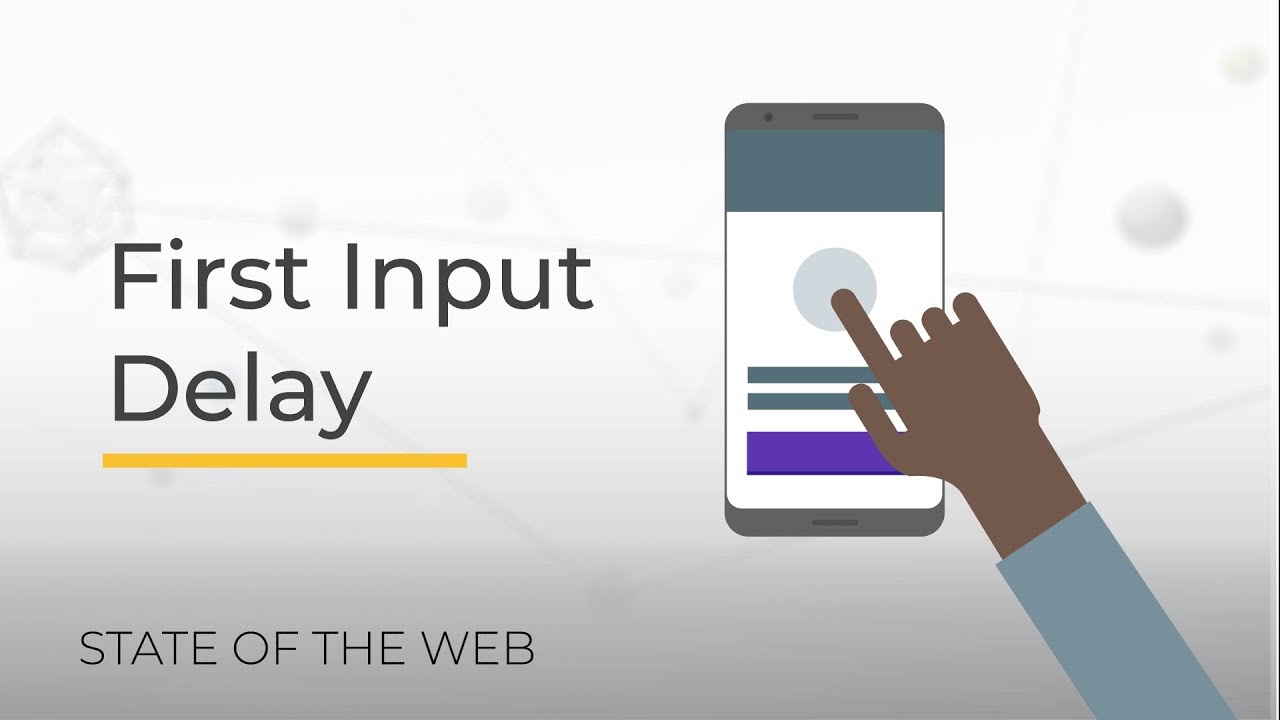
Experimenting with First Input Delay in the Chrome UX Report | Web

While Largest Contentful Paint looks at loading times, First Input Delay focuses on response times, in other words, the time it takes your website to respond to any user interaction, such as carrying out a search, clicking a link or inputting information. The response time is a measure of how long it takes the user’s browser to start processing your website’s response to those interactions. With Google expecting this to be less than 100 milliseconds, not only is the speed of your hosting important, so too is the location of your server. To overcome latency, having servers located nearer the user will speed things up. For customers further away, websites might need to make increasing use of content delivery networks (CDNs).

3. Cumulative Layout Shift

Optimize Cumulative Layout Shift

As websites load the elements of a page in stages, it can cause the layout to shift slightly. A common problem is when a user sees a menu, goes to click on it and by the time they have done so, the menu has been pushed down by an advert or privacy banner and they click on this by accident.

Cumulative Layout Shift is a metric that measures the visual stability of a page, looking at how it changes layout during loading and how this impacts the experience of a user. In future, website owners will need to minimise this as much as possible, especially in the ‘above the fold’ layout.

4. The mobile experience

The Importance of Mobile Experience | Resource Techniques

The mobile experience is the area where Google has to put most of its effort. Today, we carry out the majority of our internet searches and spend most of our online time on smartphones. The key difference between desktop and mobile for Google is that with a desktop, we predominantly use Google to find things; on mobiles, much more time is spent on apps. Google needs to claw back some of its lost ground by making its mobile search just as smooth and seamless as using an app.

While Google has got things working effectively at its end, the Achille’s heel in its mobile customer experience is the websites it displays in its search results. What’s the point of having the world’s most advanced search engine if half of the websites that users visit don’t work well on mobile devices? The solution is simple, it will stop ranking websites that are not mobile-friendly, at least on searches carried out on mobile devices – which is most of them!

The solution is a mobile-first website design. Instead of creating a website for computers and then using a responsive theme to convert it for mobile devices, work the other way around. Create the site specifically for mobiles first (the biggest audience). This will improve the way a site looks and responds on mobile devices and prevent common issues that can occur with responsive themes such as text being too small and links or buttons being so close together that users frequently tap the wrong one.

Loading speed also has to be improved on mobiles. While laptops generally connect only to broadband, smartphones are taken everywhere, often where connections, both network and wi-fi, vary in strength and stability. Regardless of connection strength, a good website should still load quickly.

5. SSL, safe browsing and intrusive interstitials

Navigating Google's new page experience algorithm | Cobiro

Other key ranking factors to be aware of are the installation of SSL certificates to provide secure HTTPS connections and encrypt the sending and receiving of payment data; ensuring your website is free from malware and links to malicious websites; and the removal of ‘intrusive interstitials’, the jargon term for popups and other intrusions that affect the users’ browsing experience.

Conclusion

From May 2021, Largest Contentful Paint, First Input Delay and Cumulative Layout Shift will become ‘core web vitals’ in Google’s algorithm. At the same time, there will be increased importance on mobile-friendliness and security and far less tolerance of intrusive features, like popups.

In 2020, keep an eye on these five social media trends.

15 Social Media Trends to Follow in 2019

No communication channel is quite as fluid as social media. It is always evolving, continually influenced by its billions of users, and still learning the errors of its ways. It does, however, present businesses with the potential to reach out and engage with vast audiences. To take full advantage, it is always important to keep a close eye on the trends and developments that reshape the social media landscape. With this in mind, this post will look at the main trends predicted for 2020.

1. Video becomes users’ first choice format

The Ultimate Guide to Video Marketing

If you are not already posting videos on your social media accounts, now might be the time to reconsider. Video is by far the most popular form of social media content and its highly engaging format makes it ideal for reaching out to large numbers of users. It is also on a rising trend that businesses shouldn’t ignore.

Indeed, video has become so popular that YouTube now ranks second amongst the search engines, only outperformed by its owner, Google. Add this to the fact that, by next year, the format will account for three quarters of all mobile traffic and it’s obvious just how crucial it is for brands which use social media to start making their own – even if it is only short, in-house productions filmed and edited on a smartphone.

2. The rise of video-sharing platforms

10 Best Video Hosting Solutions to Consider in 2021 (Free vs Paid)

It’s not just video as a format that’s trending, but also video-sharing apps. While YouTube has been the dominant video-sharing platform for many years and looks likely to remain there, other video apps and networks are becoming increasingly popular and offer plenty of rewards for companies which find value in using them.

Instagram, which started out primarily as a photo-sharing app has now become increasingly video orientated, even ranking videos higher than other forms of content. This shift in emphasis has led to a huge rise in the platform’s popularity. According to influencermarketinghub.com, it is now the 2nd biggest global social media channel and has over a billion monthly active users.

There is also a growing number of highly popular niche video channels that offer marketing potential. TikTok, for example, is an app used for creating and sharing short videos, with three quarters of a billion monthly active users, most of them millennials and younger. Vimeo is another very popular video network with a similar demographic.

3. A more caring social media

How Social Media Is Taking Away from Your Friendships

Social media can have its downsides and these come in the form of internet addiction, trolling and online bullying. The mental health issues and even suicides that result has led to increasing concern about the subject. In response, many users are spending less time on social networks; some, including a few well known public figures, have even abandoned it completely.

In 2020, any brand that posts on social media needs to be more accountable for its impact. Some companies are already making significant changes, posting less frequently and with content that is less likely to spark unhealthy disagreements between commenters. Instead of encouraging audiences to do more things online, they are, instead, trying to get them to participate more in real life – as was done by ITV’s Get Britain Talking campaign.

4. Liking is likely to go

How to Make Someone Stop Liking You: 13 Steps (with Pictures)

The liking of posts is another area that has come under scrutiny for its impact on mental health. This is because when posts stop being liked, it can lead to low self-esteem and all the problems that go with it.

In order to tackle this issue, Instagram is testing the removal of its liking features and its owner, Facebook is trialling the removal too. If likes disappear, they can no longer be used as a ranking criterion, and other forms of social engagement will take precedence, such as how many commenters and comments a post gets and how many times it gets shared. In 2020, the trend will be to produce more sharable and comment-worthy content (another reason to use video) and to find ways to encourage users to comment and share – something YouTube vloggers have been doing explicitly for years.

5. Social media for customer service

The Ultimate Guide to Social Media Customer Service

Chatbots have been a common feature of business websites for a few years now but in 2020, we’ll see their increasing use on social media. These clever AI programs are designed to engage automatically when messages are received, giving users the confidence that your company is dealing immediately with their query.

Using machine learning, they respond to the keywords within questions to give the most appropriate responses and, as a result, help companies communicate with more customers, more efficiently, than they can with a human-only team. Next year, as chatbots are set to become the primary solution for customer service communication, expect to see even more companies using social media as the place to carry this out.

Conclusion

2020 promises to be a busy and exciting year in social media. We will see more video content, with businesses seeking out the growing number of niche video sharing networks. Demands for a more responsible internet will change how companies interact with their audiences, while the need for comments and sharing will push them to find better ways to engage. Finally, expect to see more brands using social media as the place to carry out customer service, relying heavily on chatbots to undertake many of the interactions.

8 Strategies to Boost Your Instagram Sales

9 Types of Instagram posts Proven to Increase Sales

When Facebook bought Instagram in 2012, it sent a clear signal that this was a platform with real potential. Since then, Instagram has gone from strength to strength and its increasing usage has made it a place where businesses can have a real marketing impact. In this post, we’ll look at the platform and show you eight tips to help boost your Instagram sales.

A growing platform

Instagram has grown massively in recent years, expanding its monthly user base to over one billion. That’s three times as many users as Twitter. This has made it a very appealing place for businesses to advertise their products and to run social media campaigns. Indeed, half of all businesses now use Instagram as a marketing tool and in 2017, they spent almost £2 billion on advertising. With this amount of investment, it is obvious that these businesses are seeing great returns.

Advantages of Instagram for online retailers

Instagram is a media that focuses on high-quality images and video, making it ideal for posting highly visual and creative product photographs and marketing that can link directly to your online store. In this sense, Instagram becomes an extension of that store – people stumble upon a product they like and can click through to buy it. Nothing could be easier.

And with such a large and growing audience, it can massively expand your company’s reach, enhancing user engagement while helping to improve your brand’s positioning. Add to this the option to link Instagram and Facebook accounts, so that posts which appear on Instagram also appear on Facebook, and the potential for spreading the word is even higher.

Tips on boosting Instagram sales

  1. Set up an Instagram business profile

Why you Need an Instagram for Business Account (and How to Do It Right Now!)

Instagram now lets you set up a business profile, so you won’t need to rely on using a personal account to do your marketing. One great feature of the pro-style, business profile is that you can import all your Facebook contacts. It also gives you analytics data to help you see how well your posts are doing.

  1. Take advantage of the selling tools

Solution Selling: The Comprehensive Guide | Pipedrive

There are many tools now available that help you to sell products on Instagram. Essentially, these use a variety of techniques to let users click on your photo and go buy what they see. These clickable shopfront tools include ‘available to buy’ icons, item prices or ‘shop now’ buttons. All a user has to do is click on an icon or button and they are taken directly to the store or to your Instagram bio URL.

  1. Post photos that attract attention

25 Social Media Posts That Are Sure to Grab Attention/Get the Likes

With millions of photographs added every day on a platform that aims to promote great photography, you need to post images which stand out. The better the visual experience you provide for users, the more your brand will get noticed. Experiment with different techniques of taking photographs and use filters and editing tools to create an identifiable brand style of your own.

  1. Promote your website in your pictures

9 Ways to Advertise Your Website for Free

A creative way to get people to visit your website is to show your URL in the photos you post. Some do this with added text or through watermarking, however, there are more ingenious ways to do this – have someone wear it on a t-shirt or have it graffitied on a wall in the background, for example. Subtlety like this is intriguing and will develop curiosity without users feeling over-marketed to.

  1. Make the most of your captions

300 Instagram Caption Ideas (2021)—Great Captions for Instagram

Aside from the image, you can also add a textual caption to your photo. With up to 2,200 characters available, including the use of emojis, captions are a valuable opportunity to develop your brand’s identity, engage your audience and slip in those important calls to action. You can also add numerous hashtags, too, helping your post turn up in relevant searches.

  1. Use hashtags wisely

Twitter for Lead Generation: 19 Clever Ways to Explode Your List

Just as on Twitter, hashtags are widely used on Instagram, enabling people to search for them. For this reason, all your marketing images need to have relevant keyword-style hashtags added to their captions. Doing this helps your products get seen by a wider audience and ensures that searchers have a better chance of finding them.

  1. Attract Instagram influencers

Best Ways To Attract Instagram Influencers - PopTribe

Influencers are a big deal on social media. If they like or share your marketing material, it can have a massive and instant effect on your sales. This is why many of the famous vloggers and bloggers now have lucrative sponsorship deals with major brands. However, if you can grab their attention they may like your products without you having to pay them huge sums of money. To do this, mention them in your captions and give some positive responses to the things they post in order to try to establish a relationship. While getting a positive response back is never guaranteed (these people have millions of followers) the potential results can be worth the work.

  1. Use Instagram ads

How brands are using Instagram ads | Econsultancy

Finally, you should consider paying for advertising on Instagram in the same way you would on Facebook. Instagram ads are more direct than a social media campaign and can have a quicker impact, helping businesses get established on the platform sooner.

One reason for advertising on Instagram is that, statistically, its users are sixty times more likely to engage with your ad than users on Facebook, leading to a much higher ROI.

Conclusion

As you can see, Instagram is a highly useful platform on which to market your products. Is it ideal for every business? No, you’ll need to research whether your target audience is part of the Instagram diaspora. If they are, however, following the tips given above should help you boost your online sales.

error: Content is protected !!