
Is your Digital life at risk? Let’s know more about it!

Is Your Company At A Risk Of Losing Data? Top 4 Security Risks Every SME Owner Should Know - My Siccura - Private and Secure Digital Life

Are you using social media platforms on daily basis then you must be aware of its dark side impacts on your social life? Let’s talk and rethink about your personal safety before using these interactive internet based applications. As people use it to connect with far-flung friends and family members to send speedy messages to colleagues and can broadcast major and minor actions in your lives. This is also a basic platform for many businesses to collaborate or share information for instance; individuals can discuss an assignment with co-workers by means of a various social media messaging session. With advancement employers and schools are more and more using social media to reach out to possible employees and students as well.

According to the Bureau of Justice Statistics, more than 16 million US residents became victims of identity theft in 2012 alone. Keeping your passwords, financial, and other personal information safe and protected from outside intruders has long been a priority of businesses, but it’s increasingly critical for consumers and individuals to pay attention to data protection advice and use various top-notch practices to keep your personal information secure and protected. There is loads of information out on the internet there for consumers, families, and persons on protecting their bank credentials, sufficiently protecting desktop and laptop from hackers, malware, and other threats, and most excellent practices for using the Internet safely for personal safety. Protecting your individual information via various cybersecurity training programs can help lessen your menace of individuality theft.

Various conducts to secure your data:
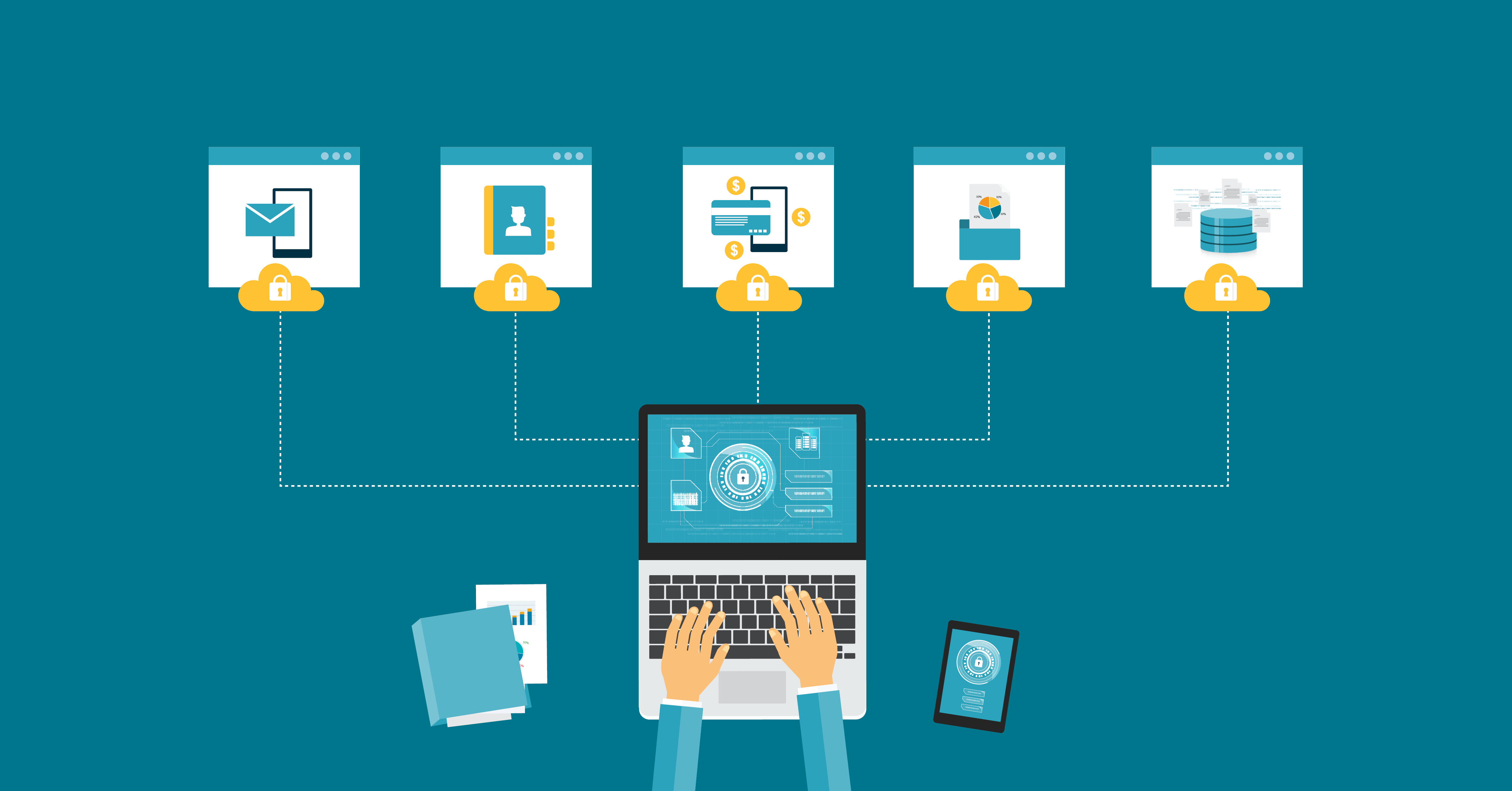
5 easy ways to secure privacy of your data - The Economic Times

  • Maintain proper security on your PC, Mobiles and other electronic devices to secure your social life.
  • Systematically store and arrange your personal information securely
  • Ask questions before deciding to share your individual information

Practices for personal safety and Keeping Your Devices Secure
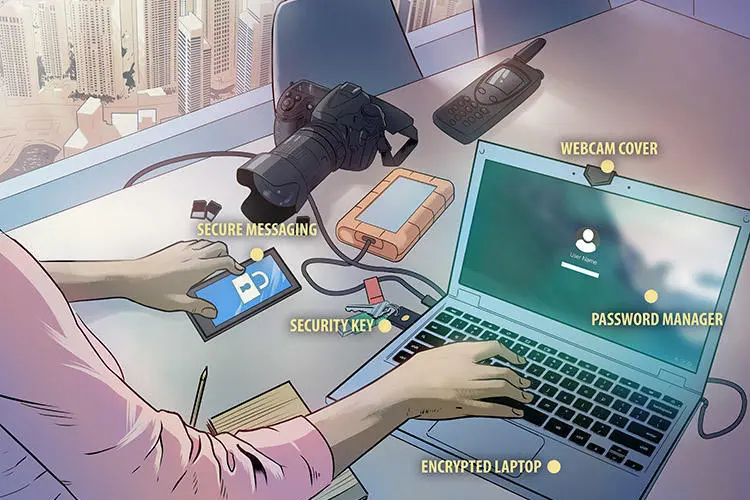
Digital Safety Kit - Committee to Protect Journalists

  • Install good quality anti-virus software, anti-spyware software, and a firewall.
  • Don’t open files which are not known to you or download programs sent by outsiders.
  • Before sending personal information over your laptop on a public wireless check if your information will be protected.
  • Keep financial information on your laptop only if necessary.
  • Don’t use an automatic login feature on your bank accounts and emails that save your username and password.
  • Delete mail that contains identifying information or account numbers or invalid transaction.

There is so much information that may make you get confused, principally if you’re not a tech-savvy. In order to mend these issues, you can adopt various straightforward best practices and tips for protecting your devices from threats or simply consult us via contact@anteelo.com and get various security tips to secure your social platforms.

Why Banks Need Cyber Security?

Cybersecurity -- a leading indicator of business success | ISEMAG

Do you know the frequency of sophisticated attacks on the banking sector is increasing day by day? If so, then the need to develop a comprehensive cyber security program is vital. The banking sector has always been susceptible to banking related and financial frauds. Subject to the technological advancements, the banking systems are now connected to the internet and have migrated from the physical centers to computer systems and to other platforms like mobile phones.

Although this, like every other technological change, is a development that is aimed to make life easier for the masses, it (like every other technology) comes with disadvantages.

Lack of Cyber Security in the Banking Sector

5 mobile banking security tips to protect customers' data

The biggest disadvantage that the banking sector has been facing subject to being digitized is being vulnerable to cyber attacks. Since the banking platforms are available online, any flaw in their application risks the chance of getting exploited by anonymous attackers throughout the world.

That is, digitization of the financial services industry has opened the gates of anonymous incursions and hence, to myriad information security threats. In order to prevent fake transactions, the banking platforms have taken several security measures like incorporating advanced analytics; but not being in compliance with the set mandatory safety norms hinder the successful implementation of the same (that is, although the measures have been enforced, they fail to provide complete protection).

The last quarter of 2016 witnessed the largest data breach in the history of India’s banking system when about 3.2 million debit cards, belonging to some of the major banks, got hacked using a malware (virus) infection.

Another incident of banks being targeted by the cyber attack was reported at the beginning of 2017 when three Indian banks belonging to the Public sector got infiltrated in order to create fraudulent trade documents. The SWIFT (Society for Worldwide Interbank Financial Telecommunication) systems associated with these banks were discovered to be compromised with the purpose of creating fake documents.

This was not the first time that the SWIFT systems got breached. The Bangladesh Bank Heist that took place in February 2016 occurred because of compromised SWIFT systems as well, and so did a number of other attacks.

Consistently increasing and more streamlined attacks like these (the ones mentioned above) make the banking sector one of the most targeted domains and since it is one of the most crucial ones (dealing with the finances of a country), it is imperative that banks opt for cybersecurity (both at basic and advanced levels).


Cybersecurity for Remote Work: 10 Ways to Boost It

Cybersecurity Solutions That Boost Remote Work Security

Many companies use cloud-based platforms that enable their employees to work remotely, whether from home or out in the field. While this brings benefits to both the company and its employees, it does create challenges which need to be addressed for the company’s systems and data to remain secure. Here, we’ll look at the best practices to ensure cybersecurity for your remote employees.

1. Vet your employees

4 ways to find the right employees for your startup | The Burn-In

If you are going to keep your data and systems secure, you need to know that the people who have access to it are trustworthy. Vetting employees can highlight anyone with a background that makes you think twice about giving them access. This doesn’t merely relate to someone’s criminal history; it also means looking at employees who have a record of flouting the company’s IT policy.

2. Train your employees

Why It's Crucial To Train Your Employees - The Yellow Spot

All employees can pose a security risk if they do not understand how to keep your system and data safe. While most companies undertake cybersecurity training for their staff, there are differences between using an in-house system which is not connected to the internet and a remote system which is. If you have recently begun to implement remote work, you will need to update your training to cover the new procedures and best practices that your employees need to follow.

3. Store remote user data securely

10 Secure File Sharing Options, Tips and Solutions | Varonis

If a hacker gets hold of information about your employees, such as their usernames, passwords and privileges, it makes it very easy for them to undertake even wider and more damaging hacks. For this reason, the data you keep on these employees should be stored very securely.

4. Provide your own devices

BYOD – Bring Your Own Device | Class Teaching

While many companies operate a Bring Your Own Device (BYOD) policy, this gives you far less control over security. As the device your staff access your system with is also for personal use, you are unable to manage how that device is used or even who it is used by. If your employee lends their laptop to their child who unwittingly clicks on a malicious link, your data may be put at immediate risk.

Although it is more expensive, providing your own devices means you can set up firewalls and security settings in-house, install antivirus and internet security, and ensure that the employees are obliged to follow security protocols when using the devices.

5. Know where devices are

Find All Devices Connected to Your Home Network the Easy Way

One of the biggest issues with remote work is that lots of devices get lost. Even the UK government lost over 2000 devices in the year up to June 2019, nearly 800 of which belonged to the Ministry of Defence. For this reason, devices must be fitted with a location finder, be securely locked and, where possible, be set up for remote deletion.

6. Secure internet connections

What Is Network Security? - Cisco

Where your employee connects to the internet can also be an issue. Public wi-fi hotspots, for example, can be easy to hack into and this makes it possible for data transmitted across them to be stolen. Although you may insist employees do not connect from an insecure connection, you can further increase security by preventing company data being accessible when the device is not logged into a secure network.

7. Encrypt data and emails

Data Encryption: Why You Should Protect Your Business | Aureon

Encryption prevents data from being stolen when it’s in transit or at rest, so even if a hacker gets to the data, they will not be able to access it. Using VPNs, SSL and TLS are important ways to protect your data, as are Personal Signing Certificates that encrypt emails and their attachments.

8. Two-factor and multi-factor authentication

What is Multi-Factor Authentication (MFA) – RSA

No matter how unique and strong username and passwords are, on their own, they are not robust enough to guarantee that whoever is logging in to your system is who they say they are. Adding further levels of security, such as a passcode sent to a user’s mobile phone or a biometric fingerprint scan, offer a far greater degree of authentication that can prevent hackers from getting access.

9. Control access privileges

What Is Network Access Control? Solutions and Explanations

Limiting what employees can access on your system also limits what a cybercriminal can access if they hack into an employee’s account. By setting privileges so that employees only have access to the information they need to carry out their remote work, you minimise the risk of data being stolen or the system being taken down.

10. Use a secure cloud provider

7 Cloud Security Best Practices to Keep Your Cloud Environment Secure

Your cloud provider can provide significant help in keeping your system and data safe. At Anteelo, our team can develop and implement a security policy that meets both your internal and regulatory requirements. We use next-gen FortiGate firewalls with built-in intrusion prevention systems and in-flow virus protection, while also offering extensive VPN features, server and network monitoring, personal signing and SSL certificates, application firewall configuration, DDoS protection, email security, industry-leading remote, encrypted backups and more.

Conclusion  

Remote work provides companies with opportunities to save money, improve collaboration, offer flexible working conditions and cope with crises like Coronavirus. However, it is critical that systems and data remain secure. Hopefully, the ten points raised here will show you ways that such security can be put in place.

In 2019, new cyber security threats are predicted to emerge.

11 Emerging Cybersecurity Trends in 2021 - Panda Security

Cyber security remains a major issue for all organisations and 2019 will continue to prove challenging. Expect to see more large-scale data breaches, new forms of malware and the continuing plague of ransomware attacks. In addition, we need to prepare for threats to Internet of Things devices and attacks on infrastructure, such as banking and payment systems and public transport. Perhaps more worrying than these are the unknown, emerging threats that are on the horizon. Here we’ll look at four you should be wary of.

AI versus AI attacks

Artificial Intelligence vs. Machine Learning in Cybersecurity | Varonis

Artificial intelligence is being increasingly used by all manner of businesses and in a wide range of ways. Crucially, it is a key tool for cyber security firms which use AI models to find better ways to defend our systems.

Unfortunately, AI is also available to cybercriminals who now use it to counteract the work done by security companies. This is carried out using a generative adversarial network (GAN) which creates a situation where two neural networks compete against each other to discover the AI algorithms each is using. If the cybercriminals discover the algorithms being used by cyber security companies, it gives them a much better understanding of how to evade being detected.

Indeed, these increasingly sophisticated hackers can use AI and machine learning to infiltrate the data sets used by security companies, for example, injecting malicious code and modifying labels, so that threats can be re-identified as safe.

Fake media exploitation

Information Overload Helps Fake News Spread, and Social Media Knows It - Scientific American

Most people are now aware of the problem of phishing emails where criminals send fake messages to employees in the hope of conning them into giving away important data, access details or, in some cases, getting them to transfer money to the criminals’ accounts.

While many of us have learnt to spot the tell-tale signs of most fake emails, advances in artificial intelligence have now produced an entirely new and potentially much more difficult to spot threat – fake video and audio messages. Simply by analysing online images, video and voice recordings, AI-enhanced software is now able to create highly realistic video and audio that can fool even the most cautious of viewers. In the video below, you’ll see how this is done.

As you can see from the video, even the creator of this technology has concerns about how it can be used for malign reasons. Cybercriminals with access to it can deliberately spread misinformation that can have a devastating impact, for example, making statements purporting to be from a leading CEO that affects stock market volatility. Criminals can also use the technology to send fake video and audio messages to employees and customers that con them far more easily than a phishing email.

For now, this technology is difficult to use and expensive to own. However, it won’t take long before it’s available for use on the average laptop or even as a phone app. Luckily, as the video shows, there are efforts in place to develop technology that can detect these fake videos. For the time being, it is important to remain vigilant.

A quantum leap in encryption cracking

Quantum Leap: This tech will boost communication security | Hyderabad News - Times of India

Understanding the bizarre world of quantum physics is a challenge even for the most gifted of scientists. However, we are now at a stage where quantum computers are being developed that have the processing power far beyond that which we have ever been able to produce before.

With such potent technology, experts believe that cybercriminals with access to quantum computers would be able to crack the encryption we currently use to protect data. While it is possible to create even more secure encryption to combat this in the future, the problem lies with technology that is already in use. Products like TVs, vehicles and phones, together with many IoT devices, which are going to be around for quite a few years and which have today’s levels of encryption built in, may become far easier to hack in the future.

Smart contract hacks

Smart contract hacks cost millions — this company wants to fix it

Blockchain technology is increasingly used in business because it offers both transparency and the security brought by encryption. One way in which it is used is for smart contracts, where apps housed on blockchain automate processes when the right conditions are met, for example, carrying out financial transactions or delivering intellectual property.

While blockchain has a potentially very useful role to play, this relatively new technology still has issues. One of the concerns is that the inbuilt transparency of blockchain makes it difficult to keep smart contract data private. This vulnerability has already been exploited by cybercriminals who have used it to get their hands on large amounts of cryptocurrencies.

Conclusion

As you can see, in 2019, the new cyber security threats are far more sophisticated than ever before, using technologies such as artificial intelligence, machine learning and quantum computers to launch their attacks. They are also finding new things to attack, such as the media, blockchain and even other AI models. With this in mind, 2019 is certainly a year to keep security threats as a priority in your organisation.

5 Data Security Tips for Working From outside Office

Data Privacy vs. Data Security [definitions and comparisons] – Data Privacy Manager

One of the biggest advantages of the internet is that it has enabled business users to work away from the office. With technology such as laptops and smartphones, we can work from home and when commuting and take our data with us when we go to meet clients. While this brings a range of benefits, it also creates an increased responsibility to keep that data secure. In this post, we’ll give you some tips on how to achieve that.

1. Backup regularly

How to select a data backup system - TechRepublic

Imagine that one of your employees develops a lucrative project for a client and is travelling to meet them. Imagine, too, that the only copy of the project is stored on the employee’s laptop. There are numerous weaknesses in this scenario. The laptop can break, it can get stolen or it can become one of the many that get mislaid by travellers every day. 12,000 laptops a week are left abandoned just at US airports.

The possible consequences of this are that the months of work put into the project are wasted and the lucrative contract is lost.

By backing up your data regularly, however, this problem can be completely eradicated. If the laptop is lost, you’ll still have another copy of the data to use. While backing up can be done simply by saving data to a USB drive, the best option is to use a cloud backup service. You can’t lose cloud storage like you do a pen drive and you’ll be able to access the data from any machine with an internet connection.

2. Turn unused devices off

The Fact on Whether Turning Off The Main Power of Unused Appliances Would Save Electricity - Goody Feed

Another data security loophole is that people don’t always realise that a laptop with the lid shut is still vulnerable to attack. Closing the lid simply initiates a low-power sleep mode designed to bring the machine back to life quicker than rebooting. While the hard disk powers down, the laptop’s memory continues to be active and can be accessed and copied using an external USB port. What’s perhaps worse, is that for encrypted laptops, the vulnerable memory can contain the encryption keys giving hackers access even to encrypted data.

The solution is simple, when devices are not in use, they should be shut down, not put into sleep mode.

3. Use encryption

What Is Encryption? Explanation and Types - Cisco

Encryption turns your data into an unintelligible string of characters that even the boffins at GCHQ couldn’t unscramble without an encryption key. It means that even if your raw data was hacked or stolen, no-one would be able to make sense of it.

As a safety precaution, all devices used out of the office should be protected with encryption software. Such apps can keep personal files, contacts, notes, wallets and multimedia files secure, as well as backing up your passwords, recording unauthorised login attempts and sending notifications of attempted hacks.

At the same time, those companies which store their data in the cloud should make sure that this too is encrypted, so that if a user gains access to the machine, there is another layer of protection to prevent them getting hold of the data stored online.

4. Network protection

Exploring Network Security (+8 Ways to Protect Your Network)

Another potential vulnerability is someone getting access to data via an attack on the network. Devices are particularly vulnerable when they connect to mobile hotspots with weak data security and it is here, in places like transport stations and public areas that hackers may make attempts to steal your data.

One of the first steps you should take is to ensure employee’s devices have a properly configured firewall that will block suspicious connection requests. As a company, you should ensure the firewall configuration is put in place by your own IT team, whether this is on a company device or on a personal device that an employee uses for work.

Another data security feature is the use of Virtual Private Networks (VPNs) which will protect the users’ devices when they connect to any network away from the business premises. Though the connection is not as fast, the data will be automatically encrypted, preventing it being compromised by those seeking out victims on public networks.

5. Use cloud storage

How to Use Cloud Storage for Memory

Using cloud storage can really help boost the data security. For a start, as data is held centrally on the server, there is no need to have a separate copy of it stored on the laptop or other device. This way, if the device is lost or stolen, there is no data to steal. As data stored in the cloud can be encrypted, even if someone has access to the laptop, they will not be able to access the data without the encryption key, for which further authentication should be needed. The other benefit, of course, is that keeping data stored centrally means that should one person update a file, everyone else will have access to the latest version. When separate versions are stored across many different devices, it can be difficult to know which is the most up to date.

Conclusion

While the internet has given us better ways to work and communicate and freed us from the confines of the office, it does create risks that we need to manage effectively. Data stored on devices can be stolen by hackers accessing the hardware or from intrusion over a network. Hopefully, the tips provided here will help prevent this happening and keep your company’s devices and data secure.

Three strategies for cybersecurity teams to develop a rapid-response culture

Clipart - Rapid Response | Clipart Panda - Free Clipart Images

The phrase “need for speed” might sound like a catchy one-liner from a Hollywood blockbuster. However, when it comes to information security, they are words to live by. Consider this vital fact: Malware permeates organizations with lightning speed and frequently causes millions of dollars of damage in a relatively short period of time. Because of this, cybersecurity teams should be able to respond speedily when threats happen. Growing your team from an average state into one with a rapid response mindset requires a few key elements:First, there has to be modular structure. What this means is that teams need a set response format to work with. This structure should evolve, adding processes or additional needed components, as a team’s obligations in cybersecurity change.  As Bob Carver, CISSP, CISM, MS, says in a 2017 article, Cybersecurity: The Need for SPEED: “You don’t want to be one of those organizations that gets notified of a compromise by law enforcement before your security teams are aware of the situation.”

What is Modular CSS?

The second element to maintaining a rapid response culture is situational awareness. Is the cybersecurity team “in-the-know” regarding where to find their tools? What type of response to take, who to contact, when to act, and most importantly, how to execute their response — are all questions that should be answered before operating in a production environment.

5 ways to improve your situational awareness | Rapid

Third, encourage drills to promote team agility. Even with cutting-edge skill sets and available resources, response time can still falter if both components are not used frequently. By “going through the motions” of regularly responding to simulated threats, a team can build the physical and mental bite that lessens the chance for mistakes during the execution of an actual incident response. Cybersecurity stakeholders will discover that this practice in fact leaves information ingrained deeper within a team’s psyche, both at the individual and collaborative level.

For Valtech COO, business transformation means agility and access to data

Accelerated response in cybersecurity is a learned practice. However, when a culture is developed, rapid response becomes natural and can increasingly match the hostile landscape created by malicious actors.

Secrets of state of the Art Cyber Defence

The Cyber Security Platform Shift – More Secure, Less Complex | Symantec Blogs

Every year, organisations lose billions of pounds to cybercrime – and it’s a persistent and worsening problem. Out of this has arisen a highly sophisticated cyber-defence industry that is continually searching for more effective ways to prevent hackers from accessing systems and the data they store. Here, we’ll look at some of the newest defences on the horizon.

Moving target security

3 reasons why moving target defense must be a priority -- GCN

Israeli company, Morphisec, has developed a new form of cyber defence which it describes as ‘moving target security’. Essentially, this method of security scrambles the names, references and locations of files in the server’s memory, as well as the application itself, in order to make it increasingly difficult for malware to infect a system.

As an extra layer of defence, each time the computer is booted, the file names, locations and references are re-scrambled, ensuring that the system never has the same configuration as before. This type of technology is used by a number of leading organizations to protect their systems, most notably, the London Stock Exchange.

Air gapping

How Air-Gap Backup and Tape-Based Technology Protect Against Cybercrime | TechChannel

Air gapping is the technique of isolating a system from both local networks and from the internet so that the only way it could get hacked is from someone getting physical access to the server itself. This is perhaps one of the most robust solutions for storing exceptionally sensitive data which needs to be kept ultra-secure or for protecting highly critical systems, such as those used for military defence or running nuclear generators.Â

Even here, however, there are potential security issues, as air gapped servers can be ‘pre-hacked’ prior to installation when they are being manufactured. In 2018, Bloomberg reported that Chinese special agents had compromised servers manufactured by a US hardware company by incorporating ‘spy chips’ into components that were sourced from China. In this way, the malware came pre-installed and kicked into operation once the servers were first booted. According to Bloomberg, the servers in question were sold to and used by leading US technology firms and by government agencies.

Co-operative cybersecurity

MSCBA Fighting Against Hackers For Cybersecurity Of Cooperative Banks

Another new cyber defence solution is known as co-operative cyber-security. This is when multiple organisations work together to store each other’s data in a so-called data-sharing alliance. This means that in order for a hacker to steal sensitive data from any of the participants, all of the systems would need to be hacked. Without being able to do this, hackers would not be able to get their hands on any complete files.

The technique employed to make this form of security work is called crypto-splitting. Here, each piece of data is encoded into thousands of numbers which are then randomly dispersed and saved on the computers of the participating organisations.

Given such levels of encryption and the fact that none of the organisations know what data they are holding, it makes it incredibly challenging for a hacker to access and make sense of any data they might obtain. Statistically, if the chances of successfully hacking a single system was a mere one per cent, the chances of doing this to just four systems would be 0.000001 per cent – and even then, they would need to find a way to unencrypt what they found.

Next-gen firewalls

What is a Next Generation Firewall? Learn about the differences between NGFW and traditional firewalls | Digital Guardian

Firewalls are nothing new, however, a new breed of next-gen firewalls now exist that take server protection to the next level.  The industry leader is Fortinet, whose FortiGate next-generation firewall protects websites and web apps from virus, ransomware and malware infections while preventing intrusion from hackers and blocking distributed denial of service (DDoS) attacks.

Offering high-performance threat protection, a next-gen firewall is designed to keep mission-critical applications secure. The FortiGate, for example, continuously updates its threat intelligence to provide robust protection from both known and unknown attacks.

Conclusion

While it is possible, according to some, to create an unhackable computer, the process of doing so would make it more or less useless in a network environment. If you need to use a network, there will always be a risk involved. This is why security companies across the globe are continually looking at new and more sophisticated ways to solve the issue of cyber-attacks. With cybercriminals now using tools like artificial intelligence and employing tactics such as hiding malicious code in encrypted files, the challenge to stay secure is even harder. Hopefully, from reading this post, you’ll see some of the latest defence techniques which are now available. If you are looking for highly secure hosting that comes with FortiGate next-gen firewall security, take a look at our dedicated server and cloud hosting solutions.

Why Cyber Security in Banking is Important?

man with key and laptop with digital bank 687720 Vector Art at Vecteezy

Since the last decade, cyber attackers have especially affected businesses that depend on computerized technology for conducting their daily business. Cyber crime is a significant threat to all businesses regardless of their sizes. Therefore, it is important to invest in cyber security in banking for protecting your business and data against malicious cyber criminals and hackers. It is important to build cyber resilience.

Cyber security in banking is of great importance. Since 2010, Indian banks have rapidly adopted newer technologies and digital channels while keeping up with the underlying objective of increasing revenues and footprints.  83% of CISOs agree on the increase in cyber attacks on banks since 2018.

Why is Cyber Security in Banking Important?

Since 2019, several banking institutions have been targeted by cyber attackers. Some of them include:

OTP Bank Data Leak

OTP Bank injects EUR 50 mln into Romanian subsidiary | Romania Insider

Database that was dated back to 2013 consisting of the personal data of approximately 800,000 clients including names, addresses, phone numbers, approved credit limit, work notes on client’s contract was made publicly available with. The database allegedly belonged to OTP Bank. According to the bank, there was no evidence on information leakage recorded in our bank, and the origin of this database remained unknown to the bank.

HCF Bank Data Leak

What Is Path Traversal Attack And How To Prevent It?

A database consisting of the data of the HCF bank customers was available on the internet with the personal information of the bank’s 24,400 customers. The database included customers’ names, phone numbers, passport details, addresses as well as the credit limit.

Alfa Bank Data Leak

Alfa-Bank - Overview, Competitors, and Employees | Apollo.io

Two databases belonging to Alfa Bank were found lying on the internet. The first database was dated back to 2014-15 and held the personal data of more than 55,000 customers. The database included customers’ names, their contact information, addresses as well as their place of work. It was speculated that these databases might have leaked during 2014 when the IT staff of the bank was going through mass layoffs.

Banks must be on their guard more than any other business since they are the custodian of money, which is the most valuable resource in the present times. In the case of a successfully deployed cyber attack, the results will be the most devastating. Since the foundation of banking lies in trust and credibility with the customers, it is very important to ensure cyber security in the banking sector.

The following are a few reasons why cyber security in banking is important and why should it matter to you.

  • The wave of digitalization: These days, the government is emphasizing ongoing digital. This means an increase in the population that is using digital money such as plastic cards and is going cashless. Therefore, it becomes important to employ precautionary measures that ensure cyber security for protecting your data and privacy.
  • Data breach leads to a breach of trust: Data breaches make it difficult for the customers to trust financial institutions. For banks, it is a serious problem since a weak cyber security system can lead to data breaches.
  • Financial Loss: When a bank suffers from a cyber attack, not only the bank but also, its customers suffer from financial loss. Recovering from this loss can be time-consuming. It will involve canceling cards, checking statements as well as confirming other minute details.
  • Your data is no longer yours: cyber security is extremely important when the attackers Once the attackers get a hold on your private data; it can be misused in any manner. Your data is sensitive and could reveal a lot of information about what might be leveraged by attackers.

How to Enhance Cyber Security in the Banking Sector?

GDPR will Help Enhance Cyber Security - IEEE Innovation at Work

  • Bank regulators should be allowed to examine third-party vendors that many credit unions are using these days for technology services.
  • Data breaches and cyber security incidents require a rapid response to mitigating the impact. Employ proactive measures to evade such cyber threats.
  • With security attack simulator and awareness tools, bank employees can learn about various forms of cyber attacks. This is ensured with the help of the tools four-step cycle. This includes simulated attack, knowledge imparting, an assessment which is followed by another simulated attack.

SQL injection attack: Your website might be undergoing one right away!

How to Prevent SQL Injection Attacks? | Indusface Blog

Injection, this word not only terrifies children but also, is a cause of immense worry for those who have suffered from ‘injection’ attacks. Last week, 90% of the deployed cyber-attacks were injection attacks. In an injection attack, attacker injects a malware or malicious code in a query or program. This allows the attacker to execute commands remotely that can read or manipulate a database. It can also enable the attacker to modify data that is lying on the website.

There are different forms of Injection attacks including XPath Injection, Blind XPath Injection, SSI Injection, OS Commanding, LDAP Injection, Format String Attack, Buffer Overflow, SQL Injection, Blind SQL Injection etc.

One of the most commonly deployed injection attacks is SQL injection. Considered as one of the top ten vulnerabilities, this injection attack is a code injection technique that targets data-driven applications by inserting malicious SQL statements into the entry field for execution. It was discovered in 1998 that is still being deployed by the attackers. SQL injection exploit security vulnerabilities in software of applications. This allows the attacker to manipulate, tamper, disclose or destroy data, changing the balances or voiding transactions etc.

What is an SQL injection attack?

Introduction to SQL Injections. SQL injection is an attack technique… | by Charithra Kariyawasam | Medium

SQL injection attack is deployed through parts of SQL statements in the web entry field for letting the website pass a freshly formed rogue SQL command to the database. It is an attack vector for websites that can be used to attack any type of SQL database.

Why are SQL injection attacks successful?

Protecting Against SQL Injection

The reason behind the success of SQL injection attacks is the weak codes. These vulnerabilities can be easily exploited by attackers for the execution of database queries thus, allowing attackers to access sensitive and confidential information, modify database entries and injecting malicious codes resulting in the compromise of the entire data. SQL injection attack can easily encrypt sensitive data. This attack can allow attackers to read information like username, passwords, card credentials. It can also allow attackers to delete the entire database.

What are the different types of SQL attacks?

SQL Injection Payload List. PayloadBox | by Ismail Tasdelen | Medium

SQL injection attacks can be categorized into four types. These are:

Blind based: In this form of SQL injection attack, attackers are not required to see any error message for running the attack. Even if the database error messages are disabled, attacker can still route the blind SQL injection attack. It can be further categorized into Boolean-based blind SQL injection attack and Time-based blind SQL injection attack.

Error based: This SQL injection attack is based on the error messages that are thrown by the database server for gathering information about the building of the database. Attackers can calculate an entire database.

Union based: In Union based SQL injection technique, attackers leverage the UNION SQL operator for combining the results of more than two SELECT statements. This attack helps in determining the structure of the main query with the help of blind SQL injection attack.

String based: This type of SQL injection attack takes place when the website is susceptible to SQL injection but does not show any consequences that would have otherwise shown after performing SQLi query.

How to prevent SQL injection attacks?

SQL Injection Prevention - A Practical Approach - Yeah Hub

Sanitization and Validation: Sanitization refers to ensure that no dangerous characters are passed to an SQL query in data. Validation confirms that the data is submitted in the form in which it is expected to be.

Updating and patching vulnerabilities: It is important apply patches and updates as soon as possible in order to prevent attackers from exploiting the vulnerabilities.

Encryption is important: Hashing or encryption of passwords as well as other crucial information including connection string is important for maintaining the confidentiality of your data.

Penetration testing: Cyber security companies like Anteelo provide managed services like web application penetration testing help in preventing SQL injection attacks with input validation testing.

SQL injection has been prevailing in the world of cyber-crime since two decades and is still strongly impacting industries. It is therefore, very important to examine each vulnerability and work in the direction to patch it.

What’s New in the NIST Cybersecurity Framework 1.1

NIST releases Cybersecurity Framework 1.1 - Help Net Security

It’s been a long time coming. The U.S. Commerce Department’s National Institute of Standards and Technology (NIST) recently released version 1.1 of the Framework for Improving Critical Infrastructure Cybersecurity, or affectionatey called the Cybersecurity Framework.The initial framework was created to help organizations that operate critical infrastructure better secure their digital assets. These industries include energy, banking, communications and the defense industrial base. However, organizations outside of the critical infrastructure industries have turned to the Cybersecurity Framework for guidance when it comes to securing their systems and data.

Version 1.1, the first update since February 2014, includes updates to authentication and identity, self-assessing cybersecurity risk, managing cybersecurity within the supply chain, and vulnerability disclosure.


MQTT and the NIST Cybersecurity Framework Version 1.0

The changes, according to NIST, are based on feedback collected through public calls for comments, questions received by team members, and workshops held in 2016 and 2017. Two drafts of Version 1.1 were circulated for public comment to help NIST  comprehensively address all of these inputs.

“The release of the Cybersecurity Framework Version 1.1 is a significant advance that truly reflects the success of the public-private model for addressing cybersecurity challenges,” said Walter G. Copan, Under Secretary of Commerce for Standards and Technology and NIST Director. “From the very beginning, the Cybersecurity Framework has been a collaborative effort involving stakeholders from government, industry and academia. The impact of their work is evident in the widespread adoption of the framework by organizations across the United States, as well as internationally.”

Matt Barrett, program manager for the Cybersecurity Framework, said “this update refines, clarifies and enhances Version 1.0. It is still flexible to meet an individual organization’s business or mission needs, and applies to a wide range of technology environments, such as information technology, industrial control systems and the Internet of Things.”

The framework update process is now published on the Cybersecurity Framework website. Later this year NIST plans to release an updated companion document, the Roadmap for Improving Critical Infrastructure Cybersecurity, which will describe key areas of development, alignment and collaboration.

“Engagement and collaboration will continue to be essential to the framework’s success,” said Barrett. “The Cybersecurity Framework will need to evolve as threats, technologies and industries evolve. With this update, we’ve demonstrated that we have a good process in place for bringing stakeholders together to ensure the framework remains a great tool for managing cybersecurity risk.”

Cybersecurity is critical for national and economic security,” said Secretary of Commerce Wilbur Ross. “The voluntary NIST Cybersecurity Framework should be every company’s first line of defense. Adopting version 1.1 is a must do for all CEO’s.”

error: Content is protected !!