The Digitalization of Trains

digitalization of Trains

Rail systems are finally making the digital transformation everybody’s been talking about for several years.

In the United Kingdom, for example, the Thameslink now runs 24 trains an hour – an increase of 50 percent in its capacity compared to years past. Making this possible took a lot of work on the back-end. Rail carriers consolidated their control centers and built modern, computerized facilities that leverage data analytics to develop intelligence about on-time performance, delays, and overall ridership per time-of-day and season.

Rail carriers are also deploying digital enterprise asset management (EAM) systems to reduce maintenance time and improve overall productivity. These systems precisely target what needs repairs and provide an immediate and accurate status of rail stock and parts to maintenance crews. Digital EAM technology can also monitor an inventory of trains in rail yards more efficiently, ensuring more predictive maintenance as opposed to simply repairing trains when they break down.

Rail companies have also invested in sleek electric trains that run faster, with fewer carbon emissions, and are easier for drivers to manage. Regenerative braking technology, which captures the energy expended by trains as they slow down and reuses it, not only delivers a smoother ride – through fewer stops and starts – but improves energy efficiencies and further reduces pollution.

Mobile ticketing and more

What are some fascinating benefits of using mobile ticketing for your events? - Quora

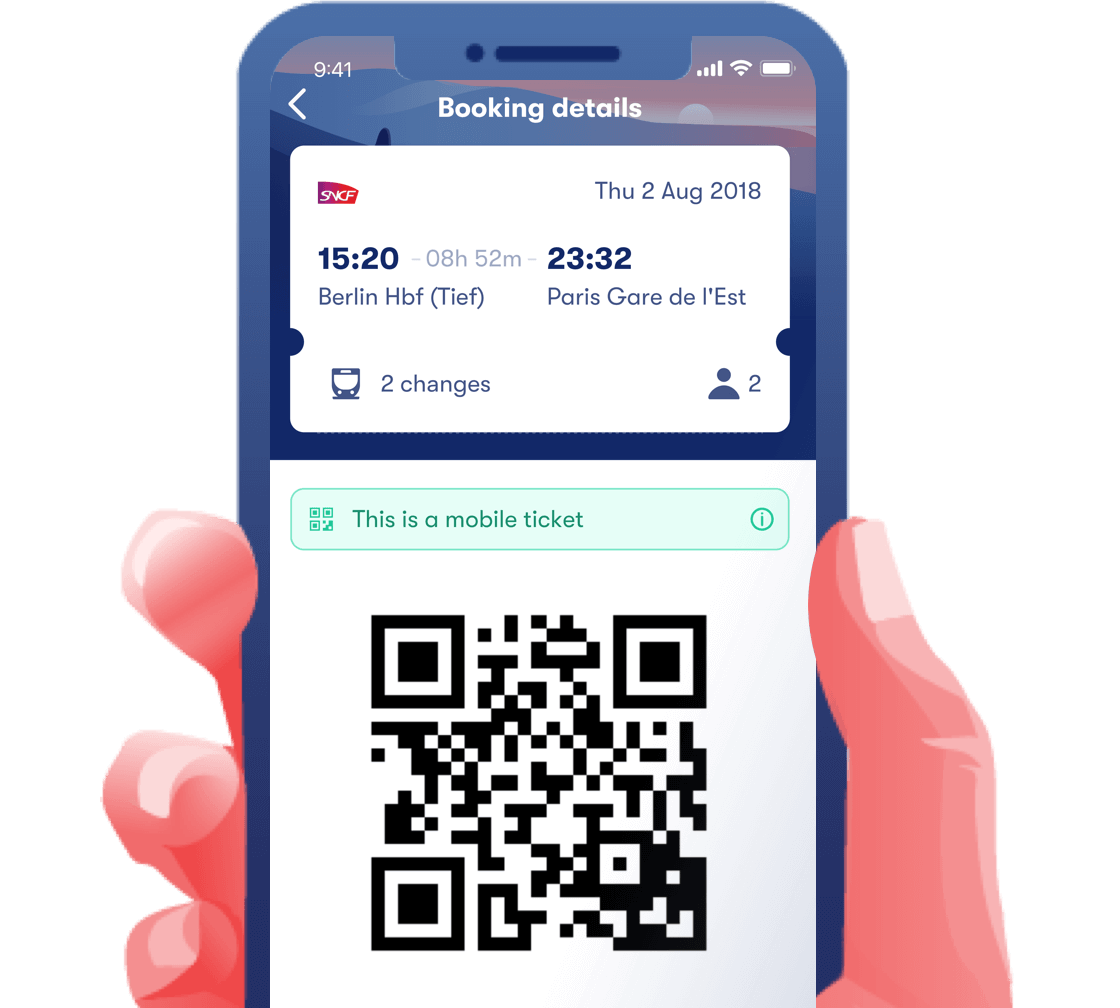
Digital technologies also offer major benefits to passengers, such as mobile ticketing, the ability to leverage Alexa and other digital assistants for train schedules and weather forecasts, and automatic refunds when trains are late or offline.

The results have been impressive. The UK’s Office of Rail and Road reports that rail passenger journeys in Great Britain in 2018-19 reached a record high of 1.759 billion. They increased by 3 percent compared to the previous year, driven by a 3.9 percent increase in the London and South East sector. Total passenger revenue growth also hit 10.3 billion pounds, its highest revenue since 2014-2015. Of course, increased ridership can be attributed to a number of factors, including evolving consumer attitudes toward rail’s eco-friendly advantages or time and cost savings compared to car travel, but it’s clear that digital is making traveling by train easy, cost-effective and gentle on the environment.

Need for cybersecurity

Cyber Security for rail system

The shift to digital from paper-based systems requires that rail carriers take a much more focused look at their cybersecurity postures. They have to put in place security awareness programs for the rank-and-file staff and also communicate with passengers on ways to protect their digital identities as they purchase train tickets online and depend on their mobile phones to manage their busy travel schedules.

On the IT staff side, rail carriers need to put solid patch management programs in place so the back-end software runs securely and threat actors have fewer opportunities to inject malware. Most security experts will say that with a solid patch management program and basic security awareness around email phishing, organizations can prevent the vast majority of cyberattacks.

Full speed ahead

Rail system

While rail carriers have not moved as quickly into digital as airlines and rideshare companies such as Uber and Lyft, they have made some great progress.

As we head into the 2020s there’s really no turning back. Change comes slowly, but with investments the industry has made in back-end technology and analytics, mobile apps and faster electric trains, we’re about to turn the corner into the digital future.

Ways by which Digital Technologies might enhance the Rail Passenger Experience.

Case study - Digital Train Station Passenger Information

Rail systems have taken a back seat to airlines when it comes to focusing on customers, but that’s changing. In the United Kingdom, for instance, Network Rail has had great success in becoming more responsive to passengers. Its Putting passengers first program decentralized services and functions, creating five regions, each with its own managing director responsible for delivering train performance across 14 routes. Digital technologies are an important part of the program. For example, Network Rail sends consistent and reliable train information directly to passengers via mobile messaging. In addition, Network Rail is now leveraging advanced analytics to enable staff to track and deploy rail assets as needed. It also uses analytics to keep trains running on time by supporting solutions that resolve adverse weather or environmental factors like leaves on the line.

Rail organizations are seeking to improve many other points of the passenger journey through innovative solutions. Delivering these digital technologies, of course, assumes that the rail system has invested in upgraded Wi-Fi and has plans to support the emerging 5G standard as wireless carriers roll it out.

Here are six ways digital technologies are improving the ride experience for passengers in the UK and around the world:

What is Ticketing System? | Best 10 IT Ticketing Software 2021

1. More efficient ticketing. Digital technologies let rail customers identify the best time of day – such as off-peak times – for the most economical fare, and make their selection online or via mobile apps. While this may not necessarily help passengers who purchase a monthly pass, it can be helpful for workers who only need to report to the office two or three times a week, for parents traveling with small children or for a caregiver transporting an aging parent to a doctor’s appointment. Students on a tight budget also appreciate having access to information that can help them plan their travel time more efficiently and economically.

MOBILE REFUND Plus by Unipatro Co., Ltd.

2. Convenient refund service. Most commuter rail passengers tap in or out with a smartcard or smartphone. After they tap in and take their trip to work in the morning, the system can notify them via text or email during the day that there is a network disruption and that their return trip home will be delayed by 30 minutes. If it’s going to be a longer delay, the system can send passengers suggestions for alternate routes and give them a percentage-based credit to their account. If a passenger was planning a longer trip for a vacation, the system can credit the traveler with a full refund in the event the train was delayed or cancelled.

Menu of Cafe Di Milano, Dwarka, New Delhi - magicpin

3. Synchronized coffee and food services. The airlines have tied in services where travelers can order food or coffee to be ready for pickup when they arrive at destinations or make connections to another flight. These same types of services are becoming available to commuters. In England, for example, rail passengers can now have their coffee waiting for them when they arrive at the train station in London each morning. Or they may opt to preorder a quick snack at the station for their trip home at night.  These types of personalized convenient services are becoming very popular as people go about their busy daily activities.

Oracle Digital Assistant Version 18.4.3 Introduces Skill Chatbot Capability | The Oracle Mobile Platform Blog

4. Digital assistants. Given the number of people who use Alexa, Google Assistant and smartphones with digital assistants, rail companies can now leverage those tools to reach customers. Commuters can query Alexa in the morning to find out if their train is on time, or get a quick weather report to know if they should take an umbrella. If they need to deviate from their normal pattern and go to a different location, they can query Alexa on the best prices and times for a round trip on that day.

Mobile tickets with Omio | Omio

5. Mobile tickets. This may be the year that mobile ticketing becomes more mainstream around the world. For the past several years, commuters in the Boston area have been able to use their smartphones to purchase and show their tickets digitally. Another mobile ticketing project is now well under way in Japan, and this year there are plans in the UK to make it possible for rail commuters to use their ITSO (Integrated Transport Smartcard Organization) passes on mobile devices.

5 Top Technology Trends in Transportation and Logistics Industry - Odtap

6. Improved logistics and crowd control. Vastly improved communications make it possible to inform passengers if and when a train changes tracks. It can be inconvenient and annoying to wait for a train at one track and learn at the last minute – if at all – that the track has changed. This is particularly true for passengers who need special assistance, such as mothers with young children and strollers, or people in wheelchairs or on crutches. Instead of depending on older, often hard-to-hear PA systems, passengers can receive texts that inform them of the track change as soon as it’s known, giving them enough time to react and make their way to the new track.

Going digital improves the passenger experience, and it also makes the staff more efficient. As we head into the third decade of the 21st century, there’s no turning back. Rail systems need to go digital to stay viable to a generation of riders who simply expect these services and communications.

Liberation of Seaport from the Harbor

seaport

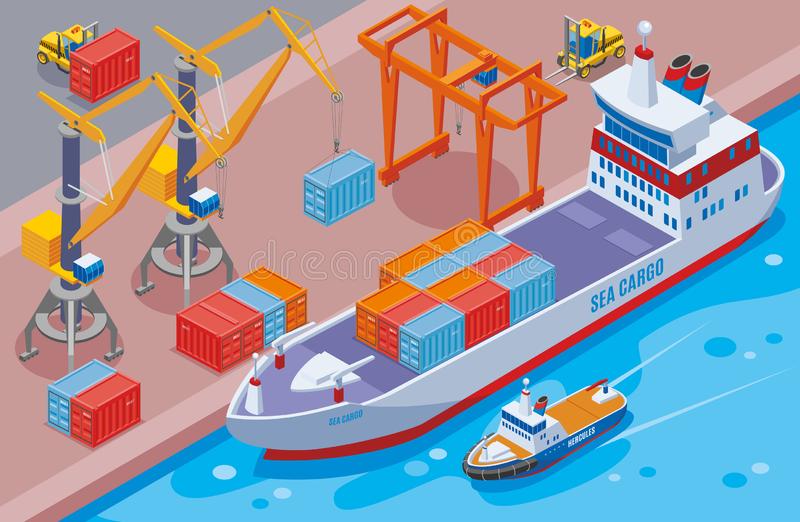
Seaborne trade, one of civilization’s oldest customs, has grown steadily over the last decade as global trade has flourished. The digital transformation of retail and wholesale business has revolutionized international commerce. But behind the point, click and order façade, logistics companies and transportation authorities are scrambling to manage demand for both speed and volume. At the same time national and international regulators are requiring seaports to mitigate the impact of congestion, pollution and other environmental effects created by crowded ports.

U.S. West Coast Seaports Issue Joint Warning on Tariff Impacts

Seaports have become a focal point for improvement. While countries can build new roads to move more trucks or add tracks to carry more trains, seaports are different. Limited by geography and bounded by urban development, seaports in many countries are straining to manage the flow of goods. Ships are not only arriving more often, but they’re also bigger. Super max cargo ships can overwhelm port facilities by delivering tens of thousands of containers at once. Moving containers out by truck, one or two at a time is slow, adds to urban congestion and has an adverse environmental impact. Thousands of containers end up spending days, weeks or even months waiting to be picked up for transport inland. Compounding the issue is the need to perform customs inspections and clearance at the seaport.

To overcome these challenges, governments, shippers and port authorities are beginning to shift their perspective on seaports. Commerce has changed and so the port must change along with it. It’s time to liberate the port community from the harbor that established it, by redefining the essence of what a “port” is and does.

Government officials demand that all inbound and outbound ships are authorized at the seaport and that all paperwork and inspections are completed before cargo is removed from the seaport. This can result in waterside storage that leads to a backlog. If administrative tasks — reviewing paperwork, inspecting cargo, collecting taxes or duties – could be done inland, the “commercial port” could be freed from the harbor, provided that cargoes would remain intact and containers undisturbed and secure.

Digital transformation and the dry port

Port of Rotterdam teams with IBM Internet of Things to digitize operations | Port of Rotterdam

Developing inland ports, also known as dry ports or freight villages, addresses some of the logistical issues and creates new opportunities. Inland ports can be built in areas unconstrained by geographic features that limit size or access. Shifting container storage to inland ports reduces the burden on geographically limited seaports, thereby increasing the volume of containers the port can handle. Inland ports also offer more efficient access for intermodal transport systems. And the reduction of overland traffic in and out of seaports substantially reduces environmental impact and creates new urban renewal and development opportunities.

Digital Transformation: When Risk and Opportunity Collide - The One Brief

The digital transformation of the commercial port is the catalyst to using the inland port innovation to liberate the port community from the harbor.  The process of digitally transforming the seaport into a digital port happens in four steps. The first step is achieved by developing a controlled customs corridor: a secure, digitally monitored and managed route that ensures everything unloaded from a ship arrives in the same state at the inland port. The same applies to shipments consolidated at the inland port bound for ships leaving the seaport. This development would eliminate the need for seaports to store containers, freeing up critical space to expand port operations while reducing urban congestion.

The second step is to deploy a cloud-based intermodal appointment system that is intelligently aware of the status of cargo, the roads and rails, as well as both planned and unplanned events that might disrupt transportation. Providing truck, rail and maritime carriers with more precise information about cargo arrival and departure times would result in a major improvement to time-definite delivery. In addition, a system for managing pick-up appointments will greatly increase the efficiency of cargo movement between inland and sea ports. Lastly, drivers and trucks can be cleared ahead of time and parking spaces preassigned, reducing the paperwork to be completed and speeding the movement of trucks through the ports.

The third step is to virtualize and manage the dry port and seaport as one entity — The Commercial Port. Transportation hubs like airports operate as an ecosystem with multiple independent entities working as one. Similarly, seaports and inland ports need to operate as a single entity supported by an intermodal appointment system and controlled customs corridor, to ensure that both locations know exactly where cargo is located and coordinate its movement into and out of the ports.

Container xChange: Suez Canal Closure Increases the Pressure on Europe's Ports - Global Trade Magazine

The fourth and last step is to automate and facilitate the ability of rail companies to efficiently shunt cargo between the seaport and inland port with minimal human interaction. For all the flexibility trucks offer in the movement of freight, the volume of cargo moving in and out of seaports calls for a solution that can handle a larger capacity with greater efficiency and lower environmental impact. The implementation of a smart rail cargo management system between the seaport and inland port reduces the negative aspects of truck traffic on the seaport, while applying the flexibility of trucks on the inland side. This makes best use of loading and unloading labor, as well as reduces the footprint of the port. The digital transformation of the commercial port returns the harbor to the city so it can be reclaimed for tourism, recreation and environmental stewardship.

The ancient Phoenicians and Greeks, builders of the first international seaport system, would surely be awed by today’s technologies and the scale of port operations. But the idea of increasing operational efficiencies of the port ecosystem through innovation and cooperation is something they would readily grasp. After all, good business is good business — in any age.

Digital Twin Technology: The secret to Airport innovation

Free Airport High Resolution Clip Art | All Free Picture | Clip art, Free pictures, Daily art

Airports face a number of challenges — aging infrastructure, fluctuating demand, sophisticated security needs and, now, an unexpected global health crisis — and legacy technologies are incapable of addressing them. In other words, we cannot expect to build tomorrow’s airport using yesterday’s solutions. We need radical innovation and that calls for new technologies. Digital twin fits the bill.

A digital twin is a 3D representation of the physical world. It enables developers to visualize products and spaces and to run simulations to show how they behave in differing conditions. Here are the five main areas where a digital twin can benefit airports:

1. Ideation

Ideas for international airlines during and beyond the crisis | NEURONprocessing

Airports are continuously seeking ideas on how to transform from physical infrastructure into real, living ecosystems.  That means improving the passenger journey, and one way to do that involves creating 3D virtual experiences to simulate new concepts and validate their benefits; if they prove promising, the 3D virtual experiences can be used to demonstrate value to the airport stakeholders that are responsible for securing capital funding. Building stakeholder confidence early on ensures that investments will be used wisely and can radically shorten decision cycles from years to weeks.

2. Design and Engineering

Airports, Designed for Everyone but the Passenger - The New York Times

A digital twin provides a collaborative environment to unite all supplier deliverables around a unique 3D mockup to converge much faster on a final design.  The subcontractor’s design conditions and physical dimensions can then be verified and validated. The conformance of the final 3D design to initial requirements and FAA regulations can be readily shown. Tenants will benefit from a more controlled process and can achieve on-plan, on-cost and on-time delivery.

3. Construction

Airport construction market Europe,Europe Airport Construction investment, Europe Airport construction regulations-Ken Research

By leveraging a digital twin, project delivery teams can simulate how construction or renovations might impact airport operations. The overall operational impact of taking major infrastructure – such as a terminal – out of service, can be simulated. Once evaluated, an effective and proactive operational plan can then be put in place to minimize disruption.

4. Sales and Marketing

Airport Marketing Services Provider in New York USA

Digital twin also opens up many opportunities for innovative marketing. For instance, new and engaging AR and VR applications (perhaps virtual shopping experiences) could be developed to entertain travelers and drive retail revenue. And digital twin could enable marketers to test new and innovative marketing concepts in a virtual environment before committing to them. Moreover, employing digital twin can reduce the need for real photo shoots and costly film sets usually involved in marketing campaigns.

5. Operations

Airport Operations: What Are the Common Roles In This Field?

When it comes to airport operations, there are two primary roles for digital twin technology:

Maintenance: Digital twin provides a platform to monitor and analyze sensor information to predict asset failure. Further, it provides a diagnostic tool by simulating what went wrong. All this information is captured and communicated in 3D to the field via a work order to accelerate investigation and reduce maintenance costs.

Passenger Flow: 3D simulation provides a better understanding of daily operations. It gives a holistic view on how planning interacts with airport activities such as construction, renovation or other events which may cause irregular operations. Mitigation scenarios can be simulated to address the impacts and shorten recovery times. This reduces costs and, turn-around times and, most importantly, helps to eliminate congested passenger flows. For this to work effectively, it is imperative that the virtual model provides a reasonable and trustworthy representation of a real-life scenario.

The airport of tomorrow

The Airport of Tomorrow – The New Normal | Hexaware

Digital twin is being used in other industries – to support the development of autonomous driving technology, for example – and delivering value and return. Airports that similarly embrace digital twin have much to gain – improving their ability to innovate for the future by encapsulating an airport’s overall environment and life cycle in a virtual environment. In an industry faced with unprecedented challenges, digital twin technology – a highly visual way of modeling, thinking and doing business – will help transform and deliver the airport of tomorrow.

5G and IoT: The 2 New Technologies with a Plethora of Applications.

A common thread: how 5G mobility will be the uniting force behind the IoT - Information Age

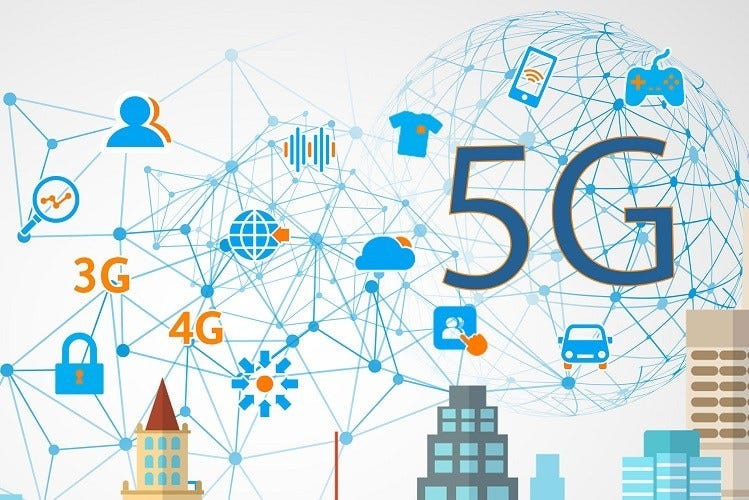
The 5G IoT reaches new dimensions in all aspects where 5G connects more IoT devices at higher speeds and makes things slow things non-existent.

Dive deep into your imagination and seek a world where smart homes can unlock doors just by scanning your face, automatically adjust lighting and temperature, a world where chronic diseases are managed 24-7 and where accidents are a thing of the past. You can imagine that the fifth generation of wireless technology promises more than just a fast network.

It will not only help you redefine the network but also establish a new global wireless standard for speed. A 5G network builds a bridge to the future. This technology is not just a new generation of wireless technology, it is a 5G foundation to release the full potential of IoT thus revolutionizing technological growth. We are well aware about IoT and its working.

IoT is described as an ecosystem of interrelated computer devices, digital machines, and objects that have the ability to communicate and transfer data to each other in real-time, with minimum human intervention.

Major components of IoT include – devices, connectivity, data processing and user interface. Since IoT is already in the blooming stage, with the help of 5G (fifth generation), it has the potential to reach a whole new level. 5G and IoT technology together have a wide spectrum that increases the overall bandwidth and allows a massive amount of IoT devices to connect.

5G & IoT: from hype to reality. A next-gen network to get REALLY… | by James Charles Ash | DataSeries | Medium

IoT and 5G have given rise to the mobile ecosystem by introducing a powerful combination of extraordinary speed, expanded bandwidth, low latency, and increased power efficiency that will be connecting billions of networks in the coming five years and is changing our world. Let’s look into some numbers to show you what 5G enabled IoT is capable of.

  • Ericsson’s latest Mobility Report says that the number of 5G smartphone subscriptions worldwide will rise to 600 million by the end of this year, almost tripling from the 2020 total. By 2022, 5G subscriptions will cross the one-billion mark.
  • Internet of Things (IoT) will connect more than 50 billion devices by 2030.
  • 5G will be 10 times faster than current LTE networks. This increase in speed will allow IoT devices to communicate and share data faster than ever.
  • In 2030, the forecasted total number of 5G internet of things (IoT) units sold, business to business, is 44.8 million. Of these, almost half are expected to come from industry 4.0 applications, also known as smart factories. The second largest share of forecasted sales in 5G IoT units, is use cases in smart cities, with 8.4 million units.
  • Connected cars is projected to become the largest segment of the global 5G Internet of Things (IoT) endpoint market, with an installed base market share of 39 percent by 2023, the equivalent to 19 million endpoints. The overall 5G IoT endpoint installed base is forecast to grow from 3.5 million in 2020 to around 49 million in 2023 worldwide.
  • Due to the increase in 5G users, the industry anticipated to benefit the most economically is information and communications with an estimated $251 billion contribution to the U.S. GDP between 2021 and 2025. Real estate and business services industries are expected to contribute $190 billion and $187 billion, respectively, in the next five years.

Now that we are aware about what IoT in 5G technologies can pull off. Let us look into the advantages IoT and 5G bring to the table in detail.

What Are The Advantages Of 5G And IoT Tech?

1. Greater speed in transmissions

How Fast Will 5G Really Be?

Speed in transmissions can reach 15 to 20 Gbps. With the help of the new found speed we can access data, files, programs etc on remote applications. By intensifying the usage of the cloud and making all devices (mobile phones, computers, etc.) depend less on the internal memory of the device, it won’t be necessary to install numerous processors on a device because computing can be done on the Cloud.

2.  Increased number of devices connected

7 Actionable Tips to Secure Your Smart Home and IoT Devices | IEEE Computer Society

5G impact on IoT is clearly the increased number of devices that can be connected to the network. All connected devices are able to communicate with each other in real-time and exchange information.

You can imagine that when we talk about a smart home, hundreds of devices will be connected. If you think of an industrial plant, we are talking about thousands of connected devices. Such a great number of connected devices will allow concepts like building a smart city possible. 

3.  Lower latency

Optimizing web servers for high throughput and low latency - Dropbox

In simple words, latency is the time that passes between the order given to your smart device till the action occurs. Thanks to 5G this time will be ten times less than what it was in 4G.

For example: Due to lower latency the use of sensors can be increased in industrial plants. Be it control of machinery, control over logistics or remote transport all is now possible. Thanks to lower latency, which has led healthcare professionals to intervene in surgical operations from remote areas with the help of precision instrumentation that can be managed remotely.

4.  Network slicing

Network Slicing - Deliver Differentiated 5G Services with vSSF

5G implements virtual networks and creates subnets such that the network connection is adjusted as per the specific requirements. By creating subnetworks, some specific characteristics are given to a part of the network. The programmable network will prioritize connections, in case of emergencies by allocating different latencies in the connection.

You are now familiar with the advancements and advantages that applications of IoT in 5G can offer. So, let’s discuss how this wave of new technology is coming up with an endless number of use cases.

5G IoT Technology Use Cases

1. Smart traffic mobility

How Does It Work - Smart Traffic Lights

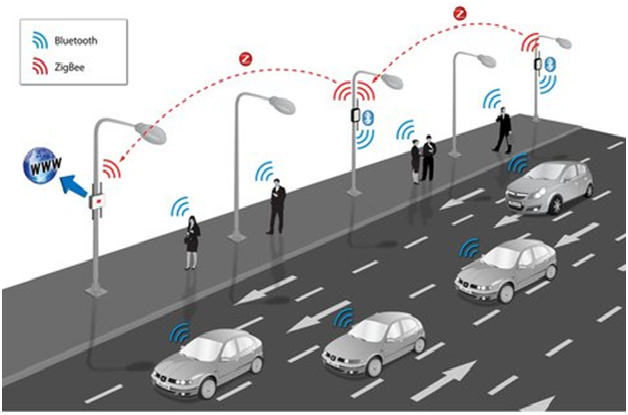
A world where accidents are minimal, would be a great world to live in. 5G IoT applications can enable the sharing of real-time information about traffic and road conditions among cars and other road users. Such smart mobility and driver assistance services require 5G communication devices in vehicles, with pedestrians, etc and roadside sensors infrastructure.

By collecting and analysing real-time traffic data from the roadside infrastructure and the vehicles on the road, such Intelligent Transportation Systems would be able to timely warn drivers about hazardous road conditions, traffic blocks and safety  compromising situations. As a result road safety and traffic efficiency will increase.

2.  Smart grid automation

Distribution Automation and Smart Grid Analysis | GE Energy Consulting

Demand for electricity is increasing as we speak. Virtual power plants and smart grids are the technological solutions for the same. 5G allows us to inculcate real-time management and automate the smart electricity grid. The maintenance can be optimized once we start detecting faults and providing solutions rapidly.

5G is being largely adopted because of the increased deployment rate and lower cost in comparison to wired alternatives. As a result, utility operators are progressively updating their grids with new sensors, control systems and integrating renewable energy resources. 

3.  Video surveillance

State of the Market: Video Surveillance | 2020-02-03 | SDM Magazine

Another 5G based IoT application that is assumed to thrive is video surveillance. Due to the recent turn of events around the globe, the government is ready to invest in public surveillance and security systems. As of now, video surveillance systems rely on wired connectivity, but the adoption of wireless networks can result in fast set-ups and lower costs, boosting connectivity and performance as compared to the wired ones.

5G and IoT security solutions allow us to prevent the loss of critical assets.

  • According to marketsandmarkets, 5G IoT video surveillance cameras is expected to grow from USD 2.6 billion in 2021 to USD 40.2 billion by 2026, at a CAGR of 73.0% during the forecast period.
  • With the help of 5G we can securely and consistently monitor facility conditions from any location
  • Quick action can be taken on important security alerts that are notified on mobile devices

4.  Smart city

Why IoT Technology is Critical to the Elusive Smart City - My TechDecisions

The European Commission defines a smart city as “a place where traditional networks and services are made more efficient with the use of digital and telecommunication technologies for the benefit of its inhabitants and business”.

Smart cities use the5G and IoT devices to collect real-time data to understand demand patterns and respond with faster and lower-cost solutions. You can also call it a digital city whose ecosystem is designed to run by connecting several dedicated networks of mobile devices, sensors, connected cars, home appliances, communication gateways and data centers.

We already know that more than 50 billion devices will be connected to IoT by 2030. 5G is expected to unlock the potential of IoT and be a driving force for the smart city by addressing and overcoming all connectivity issues.

Final Say

Each year technology is innovating itself with new discoveries and ideas. IoT – the concept which did not even exist a decade ago has today not just gotten mainstream but has also marked a presence, across industries, across the globe.  Looking at the above emerging technology of 5G and IoT and it’s numerous use cases now is the time to dive deep into mobile IoT app solutions and contact an IoT application development company.

For that you need to find a trustworthy and reliable IoT app development company in USA or other countries where you belong to partner with. A company that would help you expand your decentralized journey. Here comes Anteelo to help you out by providing top-notch solutions for your business needs. For any queries you can contact us through the link provided.

Leverage Digital Transformation Opportunities Post-COVID-19

Digital Transformation

As the Covid-19 pandemic hit the world, it completely changed our perspective about digital technology in business and its implementation. It has encouraged digital adoption and transformation all over the world! But the question remains, are we utilising it’s full potential?

Digital business transformation post Covid-19 is at the center of today’s economic development debate due to its widely increased usage. As per a survey done by Statista on how will the Covid-19 pandemic affect the overall economic situation of the digital economy, the opinions were mixed. Let’s see how business transformation in digital economy is assumed to shape up according to the survey:

  • 33 percent of surveyed international digital decision makers believed that the digital economy will benefit after the pandemic
  • 25 percent believe that number of business players will be reduced while the major corporations will emerge stronger than even once the pandemic is over
  • 24 percent think that the digital economy will have to endure a long-term revenue loss like the overall economy
  • 16% of the people who were a part of the survey believe that no predictions or forecast is possible at the moment

Is Covid-19 Really Accelerating Digital Transformation?

Digital Transformation: When Risk and Opportunity Collide - The One Brief

Yes, we have seen a drastic shift of consumers towards online channels, companies are coming up with digital business transformation strategies to stay in the game. Let’s look at some stats to get a clear picture, shall we?

The pandemic has accelerated digitalization in business. Many companies have accelerated the process of digitization of their supply-chain, customer interactions, and internal operations by three to four years. Not only this, companies have also accelerated in adding digitally enabled and efficient products in their portfolios by seven years!

How Digital Transformation Benefits Your Business?

What are the Benefits of Digital Transformation? | DMI

  • Increased efficiency: DX will help streamline operations and automate the manual processes. As a result, you will get better speed and enhanced focus on revenue-generating techniques and activities.
  • Reduced cost and enhanced productivity: Optimising business technology and operations around digital technology means cost-per-transaction savings and increased sales. Also, since employees are already working remotely, their focus is on leveraging collaboration technology and tools to maximize workforce productivity and maintain the company culture.
  • Increased profits: Companies that undergo DX improve their profitability. Let’s talk about the results reported by the SAP Center for Business Insights and Oxford Economics:
  • Improved agility: Due to software development, businesses can increase their agility with DX to improve speed-to-market and adopt Continuous Improvement (CI) strategies. This allows for faster innovation and adaptation while providing a pathway to a much improved version of what was.
  • Enhanced customer experience: Customers have gotten used to having endless choices, low prices, and fast delivery. DX manages to keep the consumers happier than ever.

Accenture reports that customer experience has emerged as the key driver of sustainable business growth. They found that even a slight rise in the customer experience count can bring millions of dollars growth annually.

6 Ways Businesses Can Make The Most Of Digital Transformation Market Opportunities

Let me walk you through the key elements of digital transformation for your business model. So, without further ado, let’s begin!

1.  Omnichannel commerce

Omnichannel commerce from a customer's perspective - Unic

Centralising customer experience is one of the most important strategies to ensure that we are engaging the customers and at the same time making it easy for them to find the answers that they are looking for. Due to the unfortunate turn of events in 2020 all the physical business locations are shut down and as a result consumers have no option but to go online for their basic needs.

For example: we can choose groceries online, pay online, track our order, receive items on our doorstep in a contactless form and leave feedback all on one convenient app. It is important for the businesses to blend the physical and digital aspect smoothly and create an integrated channel.

2.  AI and machine learning

Difference between Artificial intelligence and Machine learning - Javatpoint

Last year an IT Ops and Security company Splunk announced its “Data to Everything” campaign, and I couldn’t agree more! Data is obviously everything but data without the technology to analyze it becomes obsolete. AI and machine learning are exactly the key elements we need right now. All data to be captured, analyzed, managed, enhanced and visualized in rapid succession.

3.  Operational agility

Operational Agility. lAssociation Ventures Innovation Model… | by Barry J Barresi OD PhD | Association Ventures Playbook

Digitization of processes lowers the amount of resource and time needed for maintaining operations and innovations. Companies are enabling workers with digital tools and platforms for improving collaboration on the go, while using digitization tools for streamlining their operations through data capture and analysis automation.

4.  Embracing automation

Media ERP: Embracing Automation Across the Content Supply Chain – The Official Prime Focus Technologies Blog

Did you know 84% of the consumers preferred interacting with computer automated systems. Especially in times like these, such DX in business can go a long way! Computer based systems increase the customer digital experience. In case, you have not used automation as a part of your business transformation strategy then I suggest you start now!

It will help you save time since automated responses engage and provide services faster than human advisors or customer care services. It will also increase efficiency, because the time spent by team members on basic processes like follow-up emails and ticket prioritization will be automated.

5.  Cloud strategy

14 things you need to create a cloud strategy today — Thinkwise

The organisations who are still pondering over the idea of migrating onto the Cloud needs to accelerate the action in this area post the Covid crisis. The logical starting point could be setting up a site on the cloud that should be regularly tested as part of the routine drills.

6.  Information security

What Is Information Security (InfoSec)? - Cisco

Last but not the least key element of DX is securing the data of your organisation and customer. Such sensitive information should be tackled with utmost security. In recent times, a surge in security breaches has increased mainly due to substantial increase in usage by working remotely.

Recently, security concerns were highlighted in Zoom, where their executives acknowledged that the online communication platform was not designed for a sudden surge in the app usage. So, your focus should be on making the ‘Information Security’ an integral part of the overall design of your organisation. An equal emphasis should be given to securing the IT assets – Servers, Desktops, Smartphones, etc by integrating the best-in-class security tools.

In order to leverage DX post pandemic, I strongly suggest to adhere to the key elements mentioned above.

Help Your Business Adapt To The New Normal

By 2023, 53% of all investments in information and communication technology will be in digital transformation. That represents increased spending by more than 50% from 2019 levels. Well, in my opinion DX is the need of the hour during this crisis, even post Covid-19, the business world will be completely digitally transformed. Confused? You can always go to digital strategy consulting firms.

What can’t be cured must be endured! Business transformation has crossed the stage of being a trend, it is now a necessity that cannot be ignored.  It has now become a mode to win a competitive edge. I hope that I have helped you view gain perspective as to why DX is essential for your business. In case you want more guidance, reach out to our digital transformation strategy consulting team.

How to Do SEO – Optimizing Your Site for Google

SEO search engine optimization

SEO lets start by understanding what is actually meant by Search engine optimization. Well it can be understood as the art or technique of optimization of a website to make it search engine friendly. My SEO experience well to be fair I use to have three websites and lots of free time so I tried every bit of techniques on them from on page optimization to link building. So what I will share here will be my own empiricism.

Search engines determine whatever to rank your site for a particular keyword is by the number of inbound links to your site .That is the number of others sites that linked to you and the quality of senders for that particular keyword.

Think for a moment. Why would someone make a link to your website? The only logical reason is because you have created something of value. This is the logic of Google, anyway.

Another way to think about a popular website and a poor performing website, some sites are like old cities in the middle of nowhere with a road in and one road out that is poor linking . Some sites are on the trade route with high-speed multi-lane running in and out that is perfect linking .What we want a lively exchange, not a single road.

Again it just not all about link building it is also about the quality of content and at the end of the day, the quality of your content is the only thing that will convince other Web sites to link to you.

SEO can be divided into two separate categories: on-page SEO and off-page SEO.

Here I will try to list down the techniques of on-page SEO, although the on-page SEO is only 25% of the score on the search engines and the ranking of your website, it is worth addressing it, as it can improve in very less time.

On-page SEO checklist

Page title

Your page title should include keywords that are less than 70 characters in length if you make the page title too long, it will dilute the importance of the words mentioned.

 Meta Description

The Meta description is not something that is visible on your website. Meta Description is a brief summary of the website, which is usually included in the top of the source code of the pages on a label, Meta description is not used by the search engines for SEO purposes. What the Meta description is used to provide the researcher a brief description of the page (150 characters) under each result. In fact, if a Meta description is not included in the source code, the search engine will show you some of the content of the page instead.

Titles h1, h2, h3..

The text of the titles is more likely to be read by the search engines as keywords of text in the rest of the page. For this reason, it is good to include keywords in your titles whenever possible. Labels h1 text give more weight to the keywords, tags h2 carry more weight than the label h3 .

Images

Do not use excessive images. More images mean that your page takes longer to load. This has a negative impact on the user experience as the optimization of search engines. The text associated with the images. Search engines do not read images, just read the text. The ALT text is an HTML attribute that can be added to the image so that the search engines replace the image with associated text.

Domain Information

The search engines also favor sites that are registered for a period of time longer. Since domain registrations indicate a commitment to the site and what they say the site is less likely to be considered spam. Extend your website registration for 10 or more you will definitely see better result for your site.

URL structure

Avoid nesting pages with URLs .  Nested pages receive less SEO credit .

Include keywords in the URL.

Create static URLs, not dynamic. This means that the URL of one of your pages must be the same.

The Primacy of Illustration in the Digital Era

Illustration in Digital ERA

Design is a roadmap or a strategic approach for someone to achieve a unique expectation – Wiki

I agree Design is strategic, purposeful and always aims to solve problems. A good Design creates a strong impact on users. Brilliant work catches your attention, keeps you engaged and stays in your memory.  Just think of something that has caught your attention and forced you to read; do you recall some comic strips, cartoons, animation, sketches, illustrations in trolls?

Yes, the power of Visual Story Telling always has an edge and plays a crucial role in unfolding a story. There are many forms used like pictures, videos, animations, sketches. And that’s when a visual story telling medium comes to picture. Of course there are photographs that can convey your message. But are they versatile like Illustrations?

Users connect with illustrated narratives faster and more easily. So, who is your favourite super hero? From print the trend has gone viral and now digital platform is witnessing all forms of it some static and others in motion. Designers now are creating websites that use full-screen illustrations to custom made icons to personify brands, identities and provide that USP.  Even highly technical and data driven websites can be made extremely lively and interactive yet commune the brand message as strongly as ever before and custom illustrations is the most fun and engaging way to do so.

Productivity Stock Photos and Images - 123RF

The major misconception most people have is using illustrations as synonymous to beautification or to support but in reality it is Design in itself; a tool that can magically combine beautification and clean concepts.

France and Alternative Structures: Putting the Pieces Together - Not Just For Lawyers

It is no surprise that it’s taking over the web and mobile applications. Mood, style and theme of the websites can be set and unlike photographs, they can mesh reality and imagination and present you with an extra-ordinary design.  With illustrations you become the king of your own wonderland with powers to create anything and everything to best convey your message, be it a dog floating in the space, a talking owl or a superman delivery boy; absolutely anything that hits your imagination. Little creativity, color and compelling illustrations are sure to change a website’s identity.

36 35 Epic Batman And Superman Memes That Will Have You Laughing Like Crazy ideas | batman and superman, superman, batman

Illustrations have lot of technicalities attached to it also. While the illustration may have depths of complexity, the overall message should be simple. Like any other design, even illustrations undergo layers and layers of stages, from the rough sketches to vector outlines, to colors to depth and composition.

Icons | Web design icon, Creative web design, Web design

Color is a powerful tool in illustration because it can change mood – the mood of the user. Imagine a website has power to improve our state of mind and thereby it strengthens our relationship with a brand. And, if the colors are taken from the brand’s logo, the illustrations becomes a part of the brand’s identity.  And, introducing more complimentary colors or gradients will add to its vibrancy. Texture brings more depth to the illustration, a simple halftone texture or a grainy grunge texture creates a nice effect to the flat illustration.

The software that powers scientific illustration

Today we spot illustrations mostly on a banner of the website or around the section that seeks to explain the usage of product/ services. The trend in mobile mainly focuses on splash and on-boarding screens. People also use lot of subtle animations to enliven the whole website/ applications. The animations are usually done using animated GIFs. A customized icon with svg animation is now a trend in UI interaction. The delicate use of animation in illustration just gives the site that extra dash of awesomeness for that memorable experience.  There are different Illustration and icon styles used in websites and mobile applications, more leaned towards flat design. Few common styles include line drawings, filled color, hand drawn, low poly, Geometric, isometric and 3D.

Misconceptions regarding the Agile Process

Common Misconceptions About Agile Software Development

I’m an absolute fanatic about delivering products via an Agile Process. That wasn’t always the case. I wasn’t a believer earlier but I’m now. We primarily follow Scrum in our organization and can totally vouch for the value it provides. It not only provides astounding ROI but also allows to succeed or fail faster. It specifically works great for product companies building beta or version 1.0 of their product. It allows everyone to be nimble and be focused on constantly improving the product based on user feedback.

I could go on highlighting the benefits of it but we have found certain myths/misunderstanding regarding following the process. Here are the top few that we have seen recurring-

1. Retrospectives are the panacea for fixing the problems.

Well, it’s only partly true. Prognosis of issues or talking about them candidly wouldn’t solve them. The team has to be diligent to iron out all the issues collaboratively. It needs relentless focus and drive to mitigate the risks or clear out the impediments once they have been brought to the forefront. Sometimes inadvertently the team ends up making similar mistakes. The most common problems that I hear in the retrospectives are about – not enough discussion regarding User Stories, not estimating the work properly, not writing enough test cases, not enough time to do code reviews or refactoring. And, then only to fall in the same trap again.

2. 100% Code Coverage predicts bug free software.

Mostly true. At the same time, we have seen that some issues creep in because of environment configuration, external dependencies, browser issues and integration with other components. Having good unit test cases does solve most of the heartaches and gives you the confidence to re-factor but the product still needs to be functionally tested to make sure it solves the user problem.

3. It increases productivity i.e. It takes less time to build software.

Not true rather it takes more time to build software the agile way. It is a process that recommends building products in Sprints thus the team releases individual features faster. The product takes somewhat longer as one has to bake in unit testing, code reviews, pair programming, having the right build process in it. Please don’t misconstrue this as I wouldn’t develop any other way but doing all of this takes time. In the end, one does get a mature product but at the cost of incremental time.

4. Unproductive teams do stand ups for more than 15-20 minutes.

Not true. At all. I’m not saying that one should have hours of meeting but there are times when one needs to explain the context of their impediment. Does going over the time limit to explain the context and get help a big deal? It isn’t. I would rather that the the entire scrum team(BTW, we only work in small teams. We end up having small scrum teams if the size of the team grows) knows the context of the given problem so that they can help.

Blockchain for KYC – A Solution to Eradicating Inefficiencies

The importance of KYC technology for financial institutions amidst COVID-19 | by Horizon Fintex | Medium

KYC processes are the backbones of a financial institution’s anti-money laundering efforts. Find out how businesses are revolutionising the long, tiresome process.

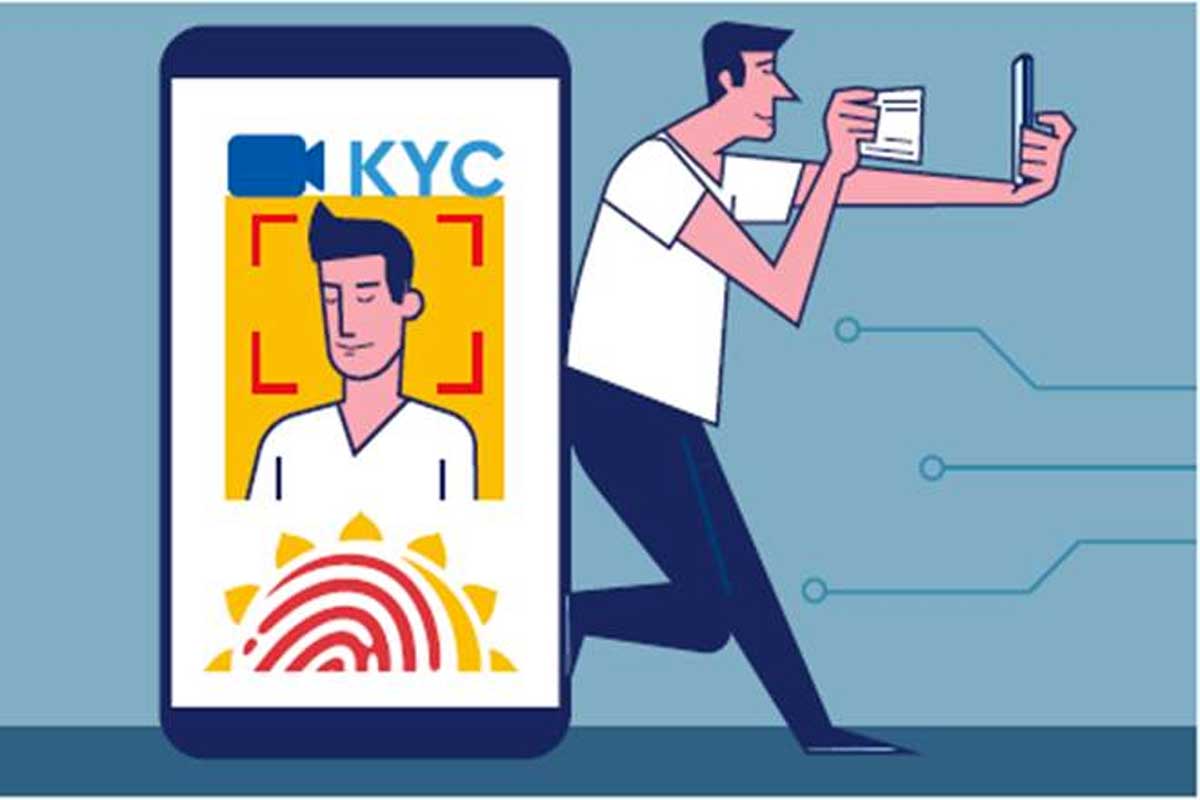
Know Your Customer or KYC processes are the backbones of a financial institution’s anti-money laundering efforts. According to current estimates, the amount of KYC spending rose to up to $1.2 Billion in 2020 on a global level.

With a whopping amount as this being spent on making KYC processes better, it is easy to assume that the process would be unhackable and issues-free. But inspite of the importance of the process, KYC continues to operate inefficiently. Clenched by labor-intensive and time-consuming tasks, the high scope of effort duplication, and the risk of error, it is estimated that 80% of KYC efforts go on gathering information and processing while only 20% of efforts are assessing and monitoring focused.

While the current KYC process is failing to serve its purpose on the financial institution front, the tiresome, long, and repetitive process is creating an annoying experience for customers.

A hopeful respite to the situation comes from the fact that several financial institutions and service providers are trying to solve the issues by the way of incorporating new-gen technologies like cognitive technologies and AI.

In this article, we are going to delve into a technology that we believe carries the key to eliminating efficiencies and duplication in KYC processes – Blockchain.

In order to truly understand the changes that Blockchain can bring to the counterproductive KYC process, it is important to understand the problem areas of the present system. The problems will help us understand how blockchain technology for KYC is becoming a necessity.

The Lags in Centralized KYC Systems 

Centralized KYC System: Yet a dream in India! -

Every bank or financial service provider comes with its individual set of specifications with no standardization. This often results in users performing the KYC process with every bank and provider they use. Moreover, a tight siloed system like this limits FIs from tracking consumers’ expenses on other platforms – leading to every institution having their specific set of incomplete data.

This centralization of data in silos combines to cause an inefficient KYC process. One that creates issues like:

  1. Misidentification of fraudulent data
  2. The inability of tracking customers
  3. Customers entering fake data
  4. Delayed processing time

The result of these challenges is spending numbers that we mentioned earlier and a constant rise in money laundering instances.

As a way of changing the situation, the KYC process is gradually being shifted to Blockchain. Let’s deep dive into the process of using Blockchain for KYC verification and the benefits that the movement offers to the fintech sector.

The Blockchain KYC Process 

The process of using Blockchain for KYC happens through multiple stages in a Distributed Ledger Technology.

Let us give you a high-level understanding of the steps of how can Blockchain help KYC.

Step 1: The user builds a profile on the KYC DLT system

Blockchain: The Solution to Inefficient KYC Process

Financial Institution (FI) deploys a Blockchain-based KYC platform which the user completes as a one-time setup using their identity documents. Once uploaded, the data become accessible to the FI1 for verification purpose.

There are multiple options when it comes to storing the users’ data:

  • A centralized, encrypted server
  • On F1s private server
  • DLT platform.

Step 2: User performs transactions with FI1

How to select Performance Metrics for Classification Models | by Ruchi Toshniwal | Analytics Vidhya | Medium

When the user performs a transaction with FI1, they give them the right to access the users’ profile. The FI1 then verifies the KYC data and saves a copy of the data on their server. Next, they upload a ‘Hash function’ on the DLT platform.

Finally, FI1 transfers KYC digital copies to the user’s profile embedded with a Hash Function which matches the Hash Function uploaded on the DLT platform.

Now, if the KYC data is altered, the Hash Function of the KYC data won’t match the one posted on the DLT platform alerting the other financial institutions on the blockchain of such change.

Step 3: User performs a transaction with FI2

When FI2 asks the user to perform KYC, the user grants access to their user profile to FI2. FI1 then reviews the KYC data (and its Hash Function) with the Hash function uploaded by FI1. If the two matches, FI2 would know that the KYC is the same as the one received by FI1.

In case the Hash Functions don’t match, FI2 would have to manually validate KYC documents.

But what happens when the user obtains a new passport or driver’s license and their original document in DLT user profile changes?

In such cases, financial institutes leverage smart contracts for automatically updating their systems when the user provides new documents. Here too, the user submits the new document to F1 who then broadcasts the change across the blockchain (through the new Hash Function) which then becomes accessible to other FI participants.

The benefit of a Blockchain solution for KYC can be seen in:

  • Data Quality: all data alterations are tracked and monitored in real-time
  • Lowered turnaround time: through KYC Blockchain software solutions, FIs get direct access to the data which saves data gathering & processing time
  • Reduced manual labor: KYC on Blockchain eliminates paperwork from the process.

The benefits of KYC Blockchain implementation cannot be limited to these points. There are a number of sector benefits that the process of KYC using Blockchain offers.

Benefits of Blockchain in KYC/AML Process

The use cases of the decentralized technology in KYC technology is not just a Blockchain in Fintech offering. There are a number of sectors that are partnering with a Blockchain development company to explore the application.

Distributed data collection

Data Collection: An Intricate Process ~ Technical Writing

The introduction of blockchain in KYC brings data on a decentralized network which can be accessed by parties after permission has been given to them. Moreover, the system offers efficient data security since the data can only be accessed after permission has been given by the users, thus eliminating instances of unauthorized access.

Better operational efficiency

Operational Efficiency | Integrify Workflow Automation

The abilities like an unhackable digital process and sharing user information on a permissioned network can massively lower the effort and time needed in the early stages of KYC. This, in turn, expedites the customer onboarding time and lowers the regulatory and compliance expenses.

Validation of information accuracy

The importance of data validation - deltadna.com

KYC Blockchain systems enable transparency and immutability that, in turn, allows financial institutions to validate the trustworthiness of data present in the DLT platform. The decentralized KYC process acts as a streamlined way for gaining secure and swift access to up-to-date user data. This lowers the labor-intensive efforts that an institution puts behind gathering information.

Real-time updated user data

Real-Time Big Data Analytics: A Comprehensive Guide

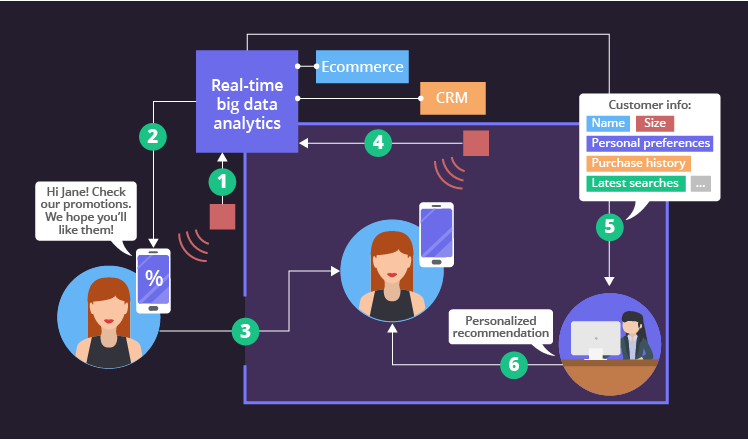
Every time a KYC transaction is performed at a financial institution, the information is shared within a distributed ledger. This Blockchain technology KYC systems enable other participating institutions to access real-time updated information with a guarantee that every time there’s a new addition in the documents or there are any modifications, they’ll be notified.

Is Blockchain Development Solutions the Answer to KYC Issues?

Know Your Customer (KYC) (Know Your Customer) | Authenteq

Gathering information and processing it takes up a great amount of cost, time, and effort in the KYC process leaving very few resources available for monitoring and assessing user behavior for anomalies. By offering speedy access to up-to-date data, blockchain KYC solutions can lower the time needed for the laborious tasks, which, in turn, can be employed to find solutions to more complex KYC challenges.

However, blockchain cannot solve all the issues faced by KYC. After the data is acquired, financial institutions still have to validate the information. For this, AI and cognitive processing-like technologies have to be employed for greater efficiencies.

In its present state, blockchain when used in combination with other technologies can showcase high potential to help institutions lower the cost and time linked with the KYC process.

If you want to explore this side of Blockchain development services or are seeking to validate your decentralized KYC-based idea, get in touch with us – one of the leading blockchain development companies in USA.

error: Content is protected !!