How to Do SEO – Optimizing Your Site for Google

SEO search engine optimization

SEO lets start by understanding what is actually meant by Search engine optimization. Well it can be understood as the art or technique of optimization of a website to make it search engine friendly. My SEO experience well to be fair I use to have three websites and lots of free time so I tried every bit of techniques on them from on page optimization to link building. So what I will share here will be my own empiricism.

Search engines determine whatever to rank your site for a particular keyword is by the number of inbound links to your site .That is the number of others sites that linked to you and the quality of senders for that particular keyword.

Think for a moment. Why would someone make a link to your website? The only logical reason is because you have created something of value. This is the logic of Google, anyway.

Another way to think about a popular website and a poor performing website, some sites are like old cities in the middle of nowhere with a road in and one road out that is poor linking . Some sites are on the trade route with high-speed multi-lane running in and out that is perfect linking .What we want a lively exchange, not a single road.

Again it just not all about link building it is also about the quality of content and at the end of the day, the quality of your content is the only thing that will convince other Web sites to link to you.

SEO can be divided into two separate categories: on-page SEO and off-page SEO.

Here I will try to list down the techniques of on-page SEO, although the on-page SEO is only 25% of the score on the search engines and the ranking of your website, it is worth addressing it, as it can improve in very less time.

On-page SEO checklist

Page title

Your page title should include keywords that are less than 70 characters in length if you make the page title too long, it will dilute the importance of the words mentioned.

 Meta Description

The Meta description is not something that is visible on your website. Meta Description is a brief summary of the website, which is usually included in the top of the source code of the pages on a label, Meta description is not used by the search engines for SEO purposes. What the Meta description is used to provide the researcher a brief description of the page (150 characters) under each result. In fact, if a Meta description is not included in the source code, the search engine will show you some of the content of the page instead.

Titles h1, h2, h3..

The text of the titles is more likely to be read by the search engines as keywords of text in the rest of the page. For this reason, it is good to include keywords in your titles whenever possible. Labels h1 text give more weight to the keywords, tags h2 carry more weight than the label h3 .

Images

Do not use excessive images. More images mean that your page takes longer to load. This has a negative impact on the user experience as the optimization of search engines. The text associated with the images. Search engines do not read images, just read the text. The ALT text is an HTML attribute that can be added to the image so that the search engines replace the image with associated text.

Domain Information

The search engines also favor sites that are registered for a period of time longer. Since domain registrations indicate a commitment to the site and what they say the site is less likely to be considered spam. Extend your website registration for 10 or more you will definitely see better result for your site.

URL structure

Avoid nesting pages with URLs .  Nested pages receive less SEO credit .

Include keywords in the URL.

Create static URLs, not dynamic. This means that the URL of one of your pages must be the same.

The Primacy of Illustration in the Digital Era

Illustration in Digital ERA

Design is a roadmap or a strategic approach for someone to achieve a unique expectation – Wiki

I agree Design is strategic, purposeful and always aims to solve problems. A good Design creates a strong impact on users. Brilliant work catches your attention, keeps you engaged and stays in your memory.  Just think of something that has caught your attention and forced you to read; do you recall some comic strips, cartoons, animation, sketches, illustrations in trolls?

Yes, the power of Visual Story Telling always has an edge and plays a crucial role in unfolding a story. There are many forms used like pictures, videos, animations, sketches. And that’s when a visual story telling medium comes to picture. Of course there are photographs that can convey your message. But are they versatile like Illustrations?

Users connect with illustrated narratives faster and more easily. So, who is your favourite super hero? From print the trend has gone viral and now digital platform is witnessing all forms of it some static and others in motion. Designers now are creating websites that use full-screen illustrations to custom made icons to personify brands, identities and provide that USP.  Even highly technical and data driven websites can be made extremely lively and interactive yet commune the brand message as strongly as ever before and custom illustrations is the most fun and engaging way to do so.

Productivity Stock Photos and Images - 123RF

The major misconception most people have is using illustrations as synonymous to beautification or to support but in reality it is Design in itself; a tool that can magically combine beautification and clean concepts.

France and Alternative Structures: Putting the Pieces Together - Not Just For Lawyers

It is no surprise that it’s taking over the web and mobile applications. Mood, style and theme of the websites can be set and unlike photographs, they can mesh reality and imagination and present you with an extra-ordinary design.  With illustrations you become the king of your own wonderland with powers to create anything and everything to best convey your message, be it a dog floating in the space, a talking owl or a superman delivery boy; absolutely anything that hits your imagination. Little creativity, color and compelling illustrations are sure to change a website’s identity.

36 35 Epic Batman And Superman Memes That Will Have You Laughing Like Crazy ideas | batman and superman, superman, batman

Illustrations have lot of technicalities attached to it also. While the illustration may have depths of complexity, the overall message should be simple. Like any other design, even illustrations undergo layers and layers of stages, from the rough sketches to vector outlines, to colors to depth and composition.

Icons | Web design icon, Creative web design, Web design

Color is a powerful tool in illustration because it can change mood – the mood of the user. Imagine a website has power to improve our state of mind and thereby it strengthens our relationship with a brand. And, if the colors are taken from the brand’s logo, the illustrations becomes a part of the brand’s identity.  And, introducing more complimentary colors or gradients will add to its vibrancy. Texture brings more depth to the illustration, a simple halftone texture or a grainy grunge texture creates a nice effect to the flat illustration.

The software that powers scientific illustration

Today we spot illustrations mostly on a banner of the website or around the section that seeks to explain the usage of product/ services. The trend in mobile mainly focuses on splash and on-boarding screens. People also use lot of subtle animations to enliven the whole website/ applications. The animations are usually done using animated GIFs. A customized icon with svg animation is now a trend in UI interaction. The delicate use of animation in illustration just gives the site that extra dash of awesomeness for that memorable experience.  There are different Illustration and icon styles used in websites and mobile applications, more leaned towards flat design. Few common styles include line drawings, filled color, hand drawn, low poly, Geometric, isometric and 3D.

Misconceptions regarding the Agile Process

Common Misconceptions About Agile Software Development

I’m an absolute fanatic about delivering products via an Agile Process. That wasn’t always the case. I wasn’t a believer earlier but I’m now. We primarily follow Scrum in our organization and can totally vouch for the value it provides. It not only provides astounding ROI but also allows to succeed or fail faster. It specifically works great for product companies building beta or version 1.0 of their product. It allows everyone to be nimble and be focused on constantly improving the product based on user feedback.

I could go on highlighting the benefits of it but we have found certain myths/misunderstanding regarding following the process. Here are the top few that we have seen recurring-

1. Retrospectives are the panacea for fixing the problems.

Well, it’s only partly true. Prognosis of issues or talking about them candidly wouldn’t solve them. The team has to be diligent to iron out all the issues collaboratively. It needs relentless focus and drive to mitigate the risks or clear out the impediments once they have been brought to the forefront. Sometimes inadvertently the team ends up making similar mistakes. The most common problems that I hear in the retrospectives are about – not enough discussion regarding User Stories, not estimating the work properly, not writing enough test cases, not enough time to do code reviews or refactoring. And, then only to fall in the same trap again.

2. 100% Code Coverage predicts bug free software.

Mostly true. At the same time, we have seen that some issues creep in because of environment configuration, external dependencies, browser issues and integration with other components. Having good unit test cases does solve most of the heartaches and gives you the confidence to re-factor but the product still needs to be functionally tested to make sure it solves the user problem.

3. It increases productivity i.e. It takes less time to build software.

Not true rather it takes more time to build software the agile way. It is a process that recommends building products in Sprints thus the team releases individual features faster. The product takes somewhat longer as one has to bake in unit testing, code reviews, pair programming, having the right build process in it. Please don’t misconstrue this as I wouldn’t develop any other way but doing all of this takes time. In the end, one does get a mature product but at the cost of incremental time.

4. Unproductive teams do stand ups for more than 15-20 minutes.

Not true. At all. I’m not saying that one should have hours of meeting but there are times when one needs to explain the context of their impediment. Does going over the time limit to explain the context and get help a big deal? It isn’t. I would rather that the the entire scrum team(BTW, we only work in small teams. We end up having small scrum teams if the size of the team grows) knows the context of the given problem so that they can help.

Blockchain for KYC – A Solution to Eradicating Inefficiencies

The importance of KYC technology for financial institutions amidst COVID-19 | by Horizon Fintex | Medium

KYC processes are the backbones of a financial institution’s anti-money laundering efforts. Find out how businesses are revolutionising the long, tiresome process.

Know Your Customer or KYC processes are the backbones of a financial institution’s anti-money laundering efforts. According to current estimates, the amount of KYC spending rose to up to $1.2 Billion in 2020 on a global level.

With a whopping amount as this being spent on making KYC processes better, it is easy to assume that the process would be unhackable and issues-free. But inspite of the importance of the process, KYC continues to operate inefficiently. Clenched by labor-intensive and time-consuming tasks, the high scope of effort duplication, and the risk of error, it is estimated that 80% of KYC efforts go on gathering information and processing while only 20% of efforts are assessing and monitoring focused.

While the current KYC process is failing to serve its purpose on the financial institution front, the tiresome, long, and repetitive process is creating an annoying experience for customers.

A hopeful respite to the situation comes from the fact that several financial institutions and service providers are trying to solve the issues by the way of incorporating new-gen technologies like cognitive technologies and AI.

In this article, we are going to delve into a technology that we believe carries the key to eliminating efficiencies and duplication in KYC processes – Blockchain.

In order to truly understand the changes that Blockchain can bring to the counterproductive KYC process, it is important to understand the problem areas of the present system. The problems will help us understand how blockchain technology for KYC is becoming a necessity.

The Lags in Centralized KYC Systems 

Centralized KYC System: Yet a dream in India! -

Every bank or financial service provider comes with its individual set of specifications with no standardization. This often results in users performing the KYC process with every bank and provider they use. Moreover, a tight siloed system like this limits FIs from tracking consumers’ expenses on other platforms – leading to every institution having their specific set of incomplete data.

This centralization of data in silos combines to cause an inefficient KYC process. One that creates issues like:

  1. Misidentification of fraudulent data
  2. The inability of tracking customers
  3. Customers entering fake data
  4. Delayed processing time

The result of these challenges is spending numbers that we mentioned earlier and a constant rise in money laundering instances.

As a way of changing the situation, the KYC process is gradually being shifted to Blockchain. Let’s deep dive into the process of using Blockchain for KYC verification and the benefits that the movement offers to the fintech sector.

The Blockchain KYC Process 

The process of using Blockchain for KYC happens through multiple stages in a Distributed Ledger Technology.

Let us give you a high-level understanding of the steps of how can Blockchain help KYC.

Step 1: The user builds a profile on the KYC DLT system

Blockchain: The Solution to Inefficient KYC Process

Financial Institution (FI) deploys a Blockchain-based KYC platform which the user completes as a one-time setup using their identity documents. Once uploaded, the data become accessible to the FI1 for verification purpose.

There are multiple options when it comes to storing the users’ data:

  • A centralized, encrypted server
  • On F1s private server
  • DLT platform.

Step 2: User performs transactions with FI1

How to select Performance Metrics for Classification Models | by Ruchi Toshniwal | Analytics Vidhya | Medium

When the user performs a transaction with FI1, they give them the right to access the users’ profile. The FI1 then verifies the KYC data and saves a copy of the data on their server. Next, they upload a ‘Hash function’ on the DLT platform.

Finally, FI1 transfers KYC digital copies to the user’s profile embedded with a Hash Function which matches the Hash Function uploaded on the DLT platform.

Now, if the KYC data is altered, the Hash Function of the KYC data won’t match the one posted on the DLT platform alerting the other financial institutions on the blockchain of such change.

Step 3: User performs a transaction with FI2

When FI2 asks the user to perform KYC, the user grants access to their user profile to FI2. FI1 then reviews the KYC data (and its Hash Function) with the Hash function uploaded by FI1. If the two matches, FI2 would know that the KYC is the same as the one received by FI1.

In case the Hash Functions don’t match, FI2 would have to manually validate KYC documents.

But what happens when the user obtains a new passport or driver’s license and their original document in DLT user profile changes?

In such cases, financial institutes leverage smart contracts for automatically updating their systems when the user provides new documents. Here too, the user submits the new document to F1 who then broadcasts the change across the blockchain (through the new Hash Function) which then becomes accessible to other FI participants.

The benefit of a Blockchain solution for KYC can be seen in:

  • Data Quality: all data alterations are tracked and monitored in real-time
  • Lowered turnaround time: through KYC Blockchain software solutions, FIs get direct access to the data which saves data gathering & processing time
  • Reduced manual labor: KYC on Blockchain eliminates paperwork from the process.

The benefits of KYC Blockchain implementation cannot be limited to these points. There are a number of sector benefits that the process of KYC using Blockchain offers.

Benefits of Blockchain in KYC/AML Process

The use cases of the decentralized technology in KYC technology is not just a Blockchain in Fintech offering. There are a number of sectors that are partnering with a Blockchain development company to explore the application.

Distributed data collection

Data Collection: An Intricate Process ~ Technical Writing

The introduction of blockchain in KYC brings data on a decentralized network which can be accessed by parties after permission has been given to them. Moreover, the system offers efficient data security since the data can only be accessed after permission has been given by the users, thus eliminating instances of unauthorized access.

Better operational efficiency

Operational Efficiency | Integrify Workflow Automation

The abilities like an unhackable digital process and sharing user information on a permissioned network can massively lower the effort and time needed in the early stages of KYC. This, in turn, expedites the customer onboarding time and lowers the regulatory and compliance expenses.

Validation of information accuracy

The importance of data validation - deltadna.com

KYC Blockchain systems enable transparency and immutability that, in turn, allows financial institutions to validate the trustworthiness of data present in the DLT platform. The decentralized KYC process acts as a streamlined way for gaining secure and swift access to up-to-date user data. This lowers the labor-intensive efforts that an institution puts behind gathering information.

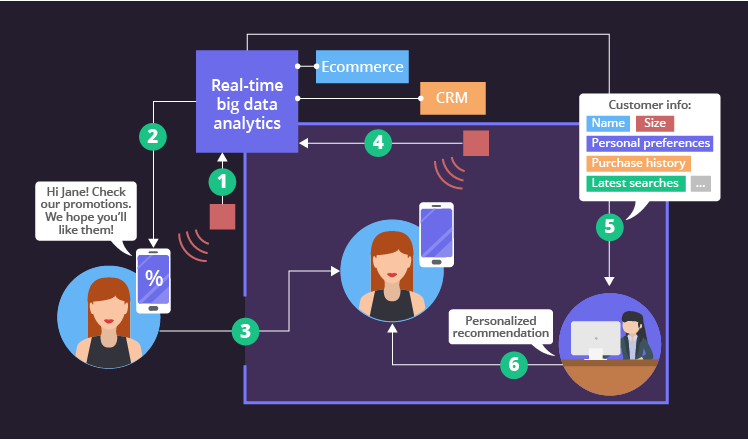
Real-time updated user data

Real-Time Big Data Analytics: A Comprehensive Guide

Every time a KYC transaction is performed at a financial institution, the information is shared within a distributed ledger. This Blockchain technology KYC systems enable other participating institutions to access real-time updated information with a guarantee that every time there’s a new addition in the documents or there are any modifications, they’ll be notified.

Is Blockchain Development Solutions the Answer to KYC Issues?

Know Your Customer (KYC) (Know Your Customer) | Authenteq

Gathering information and processing it takes up a great amount of cost, time, and effort in the KYC process leaving very few resources available for monitoring and assessing user behavior for anomalies. By offering speedy access to up-to-date data, blockchain KYC solutions can lower the time needed for the laborious tasks, which, in turn, can be employed to find solutions to more complex KYC challenges.

However, blockchain cannot solve all the issues faced by KYC. After the data is acquired, financial institutions still have to validate the information. For this, AI and cognitive processing-like technologies have to be employed for greater efficiencies.

In its present state, blockchain when used in combination with other technologies can showcase high potential to help institutions lower the cost and time linked with the KYC process.

If you want to explore this side of Blockchain development services or are seeking to validate your decentralized KYC-based idea, get in touch with us – one of the leading blockchain development companies in USA.


Secrets to becoming a Successful Entrepreneur

7 Ways to Become a Successful Entrepreneur

Unicorns don’t exist.Ironically, technology giants which are successful in Silicon Valley are perpetually termed as Unicorns.

Fascinating fact is the similarity in the charisma shared by both of them. Just as this ‘magical’ creature is everyone’s favorite, people love these companies, their services and swear by the ‘style’ of the man behind its success.

So what makes these Entrepreneurs successful and ever so magnetic?

The truth may hurt you for a while but the harsh reality says that there is no empirical formula to make a successful entrepreneur. Why, you ask? It’s because-

  • Your persona defines you.
  • The positivity that you bring in the atmosphere defines you.
  • Your habits define you.

You are a successful entrepreneur not when your company is the biggest cash cow turning over billions every year but it’s when your employees look at you and say “Wow, I want to be like him/her.”

Every successful entrepreneur was a common man before he saw a need and fulfilled that gap in order to create a better world.

Most entrepreneurs are able to sell their idea and make money. But good entrepreneurs do more than just making money. They bring about a difference to the lives of their customers, society and employees.

Not strictly official but if you wish to be a successful entrepreneur then here are some of the common characteristics or ‘secrets’ of all famous entrepreneurs:

1. Their mantra- Customer satisfaction holds the key

For successful entrepreneurs, success is not when their stocks ride really high on the Sensex. It’s when they receive appreciation from their customers, they feel accomplished. They see money as a byproduct of customer happiness. Every feedback is crucial for customer satisfaction, so as a habit they listen to their customer’s grievances and work upon them diligently.

2. They believe in ‘People first’ culture.

All successful entrepreneurs give the credit of their success to their ‘people’. They religiously believe and follow that without a happy employee they cannot build a sustainable empire. A people-first culture gives power to every single employee (no matter how low in the hierarchy) to share his/her thoughts and views. Not only they are encouraged to generate new ideas but their voices and opinions are also valued.

They value their employee’s feedback which enhances the horizon of thoughts and brings a diversified pool of talent into the pyramid.

3. They shift gears whenever necessary

Ideas fail. So do companies.

But no successful entrepreneur ever gave up after the first bitter failure. They were persistent in their efforts. ‘If not this, then that’. They were open to new changes.

And this does not mean that they were like a rolling tumbleweed whimsical to the flow of the wind. Rather, they were open to changes and accepted that their ideas need improvements. Even if it meant changing from plan A to plan B, they did it gracefully.

4. They are not afraid of challenges or failures

For a successful entrepreneur who took a stride against the winds, every opportunity is a challenge. The thrill to do better than the best never ceases to exist. They believe that success will not come to them decorated on a silver platter. So they wake up and pop a ‘positivity’ pill every morning. No failure ever deterred them to give up on their dreams.

Optimism runs in their blood.

5. They know what they want to achieve and how to achieve it

Setting a goal without an action plan is like jumping out of the plane without a parachute. So they plan. And plan rigorously. The entrepreneurs do not see problems, they seek solutions. They cluster their ideas and prioritize them. And not only they prioritize it, they work with strict deadlines. They know the art of multitasking and they juggle between urgent and important work.

6. They stay fit and follow healthy habits

A balanced diet with daily physical exercise followed by a good night sleep is something every successful businessman never misses. They start their day early and might not return to bed early but they make sure they get enough sleep to keep them hale and healthy.

Staying fit not only ensures ‘peace of mind’ but also serves as a breeding ground for innovative thoughts and solutions.

7. They have strong networking insights

Successful entrepreneurs know that they need right people, sound advice and mutually fruitful relationships to grow. Be it an investor, a prospective customer or hiring an employee.

They spend time in networking with resourceful community- for personal growth or to market their organization. They do not see them as just-connections  but as a knowledge bank- for talent, timely advice and great ideas.

Saying ‘No thanks’ to Microsoft Dynamics Support? Beware!

Microsoft Dynamics Support

After you’ve spent big dollars on a major ERP or CRM implementation with Microsoft Dynamics, springing for a post-implementation support contract seems like a lot to ask. But when you consider even just a few of the common issues that arise during a system’s lifecycle, it becomes obvious why DIY support is more expensive and riskier than contracting with a service partner. So, before you say, “No thanks, we’ve got it covered,” here are some things you should think about.

How do I…?

You’re going to have questions. Without a support agreement, who has the answers? Unless you have in-house functional and technical expertise, your best available resource will be online forums and sites like Dynamics 365 Community or the personal blogs of Dynamics MVP experts. You can find useful info here, but there are significant trade-offs. Don’t expect immediate replies to your questions or step-by-step guidance to resolve your “How do I…?” questions. No one on a forum is going to have the understanding of your business or the customizations you’ve made to give you a comprehensive answer. And just remember, free advice is often worth what you pay for it.

Updates

 Updates are critical to maintain system performance and security. Who’s going to manage those? Probably no one. It’s easy to overlook updates because they’re always there and you’ll get to them eventually. Except few people actually do, until they encounter a roadblock—like that new feature you need. To get that, you’ll need to catch up with a half dozen system updates and an upgrade or two. What should have been an easy, regular monthly process turns into a fire drill. You’ll need to find a developer who can apply the updates and resolve the issues those updates create, like the need to fix or restore customized features. The further you get behind on updates, the harder it is to bring your system up to date because there usually isn’t a direct path from the current version to multiple versions ahead. Lacking a resource to manage updates is what turns routine maintenance into a major source of business disruption and expense.

New needs

As your business needs change, so will your system needs. What will you pay for those new features? Who will create new reports and what will that cost? In all cases, the answer is “A lot.” Spot quotes, also known as statements of work (SOWs), for one-time services seem like a good deal, but over the course of months and years, what you spend for one-time fixes and changes can easily exceed the cost of a support agreement. Spot quotes take longer to spin up. By asking for one-time SOW services, there is a lead time to process the contract, staff the project, and begin work with people who don’t understand your business and aren’t familiar with your customized implementation. By having a support agreement already in place, you reduce your lead time to begin executing on your needs. And you’ll be working with someone who understands the unique needs of your business and your system.

Microsoft Dynamics Support

Big bugs

Eventually you’ll encounter an advanced issue or a bug that needs to be resolved. What’s your escalation path? Your resolution options are limited without a support agreement. Microsoft partners, however, have support agreements directly with Microsoft. When your contracted support team is unable to resolve a problem, they have direct access to the most authoritative sources.

The choice between a service agreement to support your new system or going without is often driven by the costs that are most apparent at the time. Because many needs remain unexpected and issues unforeseen, the decision to do it yourself seems like a natural choice. Over time, however, those hidden costs, unexpected issues and unmet needs begin to add up. And it soon becomes clear that avoiding the expense for support may have been the most expensive decision of all.

Self-Sovereign Identification raises the value of Data shared in an Ecosystem

Self-Sovereign Identity: A Distant Dream or an Immediate Possibility?
As organizations focus on data-driven business models to remain competitive, they will increasingly seek to collaborate with partners and exchange data. Data shared in an ecosystem is more valuable than data locked in a silo because it leads to new innovations and customer experiences. This trend is playing out in many industries including transportation, logistics, energy, manufacturing, healthcare, telecommunications and financial services. The effort of maintaining countless data repositories has made data acquisition very expensive, causing a drag on the overall competitiveness of an industry, not to mention the additional burden of adherence to the General Data Protection Regulation and personally identifiable information standards with respect to handling personal data. In the case of autonomous cars, for example, there is so much data to be had — and so much needed — that pooling it makes sense to get a sufficient amount for R&D in as timely and cost-effective a manner as possible. This moves the entire industry forward. Through a combination of internet of things, artificial intelligence, and distributed ledger technology (DLT) we will see auto manufacturers, fleet operators, OEMs and end users willing to share and exchange data as digitized assets through data marketplaces, enabling the players to benefit from new offerings based on the transparency and monetization of shared data.

Shifting from cars to mobility services

Shared Mobility–Changing the Landscape of Automotive Industry - FutureBridge

In the automotive industry, the market is shifting from selling cars to providing mobility services. A DLT-based system, combined with self-sovereign identity, makes it straightforward to build a mobility ecosystem where it’d be easy to enable new ways to engage with customers and partners, leveraging trusted and safe data exchange. For example, make it simple for customers to get the best deal on car financing (no need to re-enter their personal details to get approval at each dealership). Make customer interactions seamless by having customer history (i.e., loyalty data) immediately available with the customer’s explicit consent, without the need to store this data at each dealership or at a car manufacturer.

A trusted and verifiable data-enabled mobility ecosystem helps companies offer new services, such as car-sharing or car-exchanging that can involve dealers, for example, as drop-off and pick-up locations. This includes making the process of verifying auto insurance and driver qualifications seamless.

If I’m on vacation and don’t need my car, I can share it, or if I drive a compact car and need an SUV for a few days, I can connect with the ecosystem and benefit from this shared economy. In addition, the revenue I collect from the shared vehicle could be applied to a down payment on a new car.

Dealers benefit too. They can offer inspecting and cleaning services for the shared cars, and they get potential new customers at their location. Car makers benefit because they can grow their brand’s value and get insights into car usage.

Controlling identity, unblocking consent

Приложения для подключенных автомобилей: что с безопасностью? | Блог Касперского

Empowering an individual or an asset to control one’s own identity is a precursor to companies’ reaping the benefits of pooled data. Through self-sovereign identity, an individual will be able to consent, authenticate or verify themselves without having to present their documents. Users can access third-party-owned products and services while keeping their anonymity.

Many organizations and consortiums are contributing towards the establishment of open source decentralized identity to achieve interoperability among all participants, set protocols, and develop technologies and code in areas including decentralized identifiers (DID) and verification, storage and compute, authentication, claims and verifiable credentials. The focus of these efforts has been to decouple the trust between the identity provider and the relying party to create a more flexible and dynamic trust model such that the ecosystem benefits from increased market competition and customer choice.

In 2020, we expect to witness deployment of self-sovereign identity to unblock consent, which will help organizations leverage inaccessible data sets without breaching privacy regulations. This will facilitate decentralized data marketplaces that provide a level playing field for all market players by enabling any of them to monetize data. It allows for improved and customized offerings, thus setting higher standards and increasing the overall value of the ecosystem.

VMware’s Tanzu: Can Assist in charting a clear route to Modernised Apps.

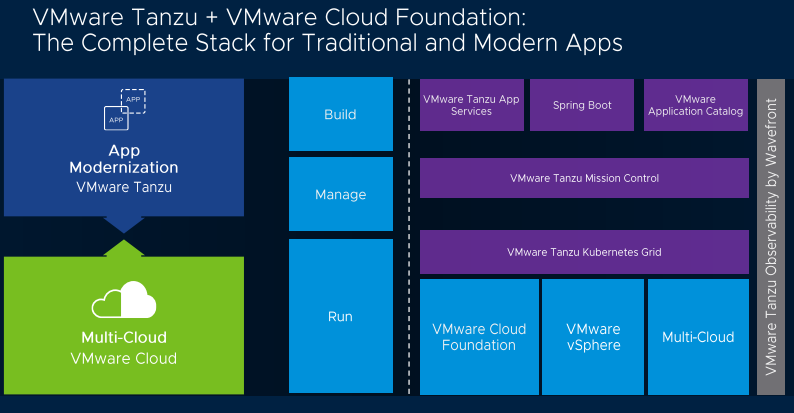
VMware Tanzu

For most enterprises, the digital journey feels like a rough cab ride through New York City at the height of construction season. In rush hour. The route from legacy estate to modern platform is filled with detours, road closures, emergency braking and many other surprises. And, everyone in the cab has a different opinion about how to get there.

But getting there is critical. Every company recognizes that they need to transform their applications and operating models to respond to market changes and keep pace with emerging disruptors. A modern IT estate helps organizations transform business-critical systems and practices to support next generation operational models which are the lifeblood for new business models.  This forces entities to streamline and re-imagine processes to increase business agility and achieve heightened levels of customer and market insights.

That’s why we think the VMware’s release of Tanzu and solutions for delivering and managing cloud applications is an important step forward in the evolution of modern cloud platforms. Tanzu is a collection of products and services that will help companies break down silos between business units that have been perpetuated (and reinforced) by legacy IT.

VMware Tanzu

For example, companies spend a lot of time, energy and money managing traditional applications on legacy systems in their own way and with their own teams, resources and development methods. Meanwhile, the same organization manages modern applications on cloud in a different way, with a different staff, resources and methods. Tanzu enables companies to manage traditional workloads never designed for the cloud along with modern applications in the same way, viewing them in a single pane of glass.

Tanzu introduces traditional applications to a modern platform and also connects those applications with modern methods and tooling, preparing the way for future modernization efforts. It makes it easier for IT and development to create integrated, cross-functional teams that are organized around products and customers. And it helps organizations and teams evolve from individual approaches, capabilities and technologies to successful combinations that are applied to specific customer journeys in progressive engagements (tied directly to business outcomes) to achieve compounding business impact. This makes Tanzu much more than just another management console. It makes it a platform for transformation.

Many of our clients have ongoing IT and application modernization projects that will benefit from the Tanzu suite. We look forward to using Tanzu with our customers not only for application transformation, but also as a platform for teaching organizations how to operate in modern ways.

Modern platforms are the basis for creating modern applications, and they’re also the foundation for thinking and operating in new, disruptive ways. Tanzu will help companies finally bridge the divide between legacy solutions and modern applications to drive value, improve customer experiences, while radically reducing costs and driving efficiencies.

Hey! Have a look to the all new Online DevOps Dojo

DevOps


DevOps dojos have been wildly popular as on-site workshops that support an organization’s DevOps transformation. But even before COVID-19 and social distancing, in-person sessions had their limits. They could only reach a certain number of employees and customers. To bridge the gap, Anteelo has created Online DevOps Dojo — an open source, immersive learning experience for the DevOps community.

We designed the online dojo as an extension, not a replacement, for on-site DevOps dojos, but now that social distancing is the “new normal,” the timing for an online dojo is even more relevant.

Our primary goal, however, is not to offer training, but to contribute a set of DevOps learning experiences so the DevOps community can assemble and create more content in support of DevOps adoption and talent reskilling. We are eager to build a community around the Online DevOps Dojo — a community of module maintainers, translators, story tellers and even creators of new learning modules.

An immersive story

We designed the Online DevOps Dojo around a story, because there’s nothing better than a good story to get people immersed in something. The Online DevOps Dojo learning modules tell the story of a fictitious company, “Pet Clinic,” and its employees as they go through their DevOps journey. Throughout the modules, you learn about the characters, interact with them, and understand how each one plays a role in the DevOps transformation of Pet Clinic.

Online DevOps Dojo

The modules, a mix of cultural and technical topics, illustrate important DevOps patterns — how to lead change, version control, continuous integration and “shift left” security — as described in various blog posts, white papers and great books such as “Accelerate” by Nicole Forsgren, Jez Humble and Gene Kim.

The modules provide an interactive experience in which you can follow the step-by-step instructions as well as go off script to explore and learn more, without fear of breaking anything.

Participants can use the Online DevOps Dojo to:

  • Prepare for a face-to-face DevOps dojo, typically a 1- to 2-week event (that can also be held virtually), by learning techniques in advance
  • Create a complete curriculum with hands-on labs
  • Provide a way to get knowledge when you most need it, all within your browser
  • Share what “good looks like” when answering a question around any DevOps pattern
  • Leverage the story and characters, and even extend the story to create more learning experiences (not necessarily DevOps-related)

We have released the Online DevOps Dojo modules under the Mozilla Public License 2.0 so they are available to benefit the entire DevOps community.

DevOps Icon Set W Dev Ops Web Header Banner Royalty Free Cliparts, Vectors, And Stock Illustration. Image 129846534.

What’s next? Experiment and contribute

As you “shelter in place,” we encourage you to spend some of your time trying out the learning modules. We sincerely hope you’ll enjoy them and that they will help support your DevOps adoption. Depending on the reception of the initial launch, we also plan to release new modules.

Let’s support DevOps adoption! Start browsing the code of the Online DevOps Dojo, review the guidelines for contribution and ask a question by opening an issue in the GitHub repository.

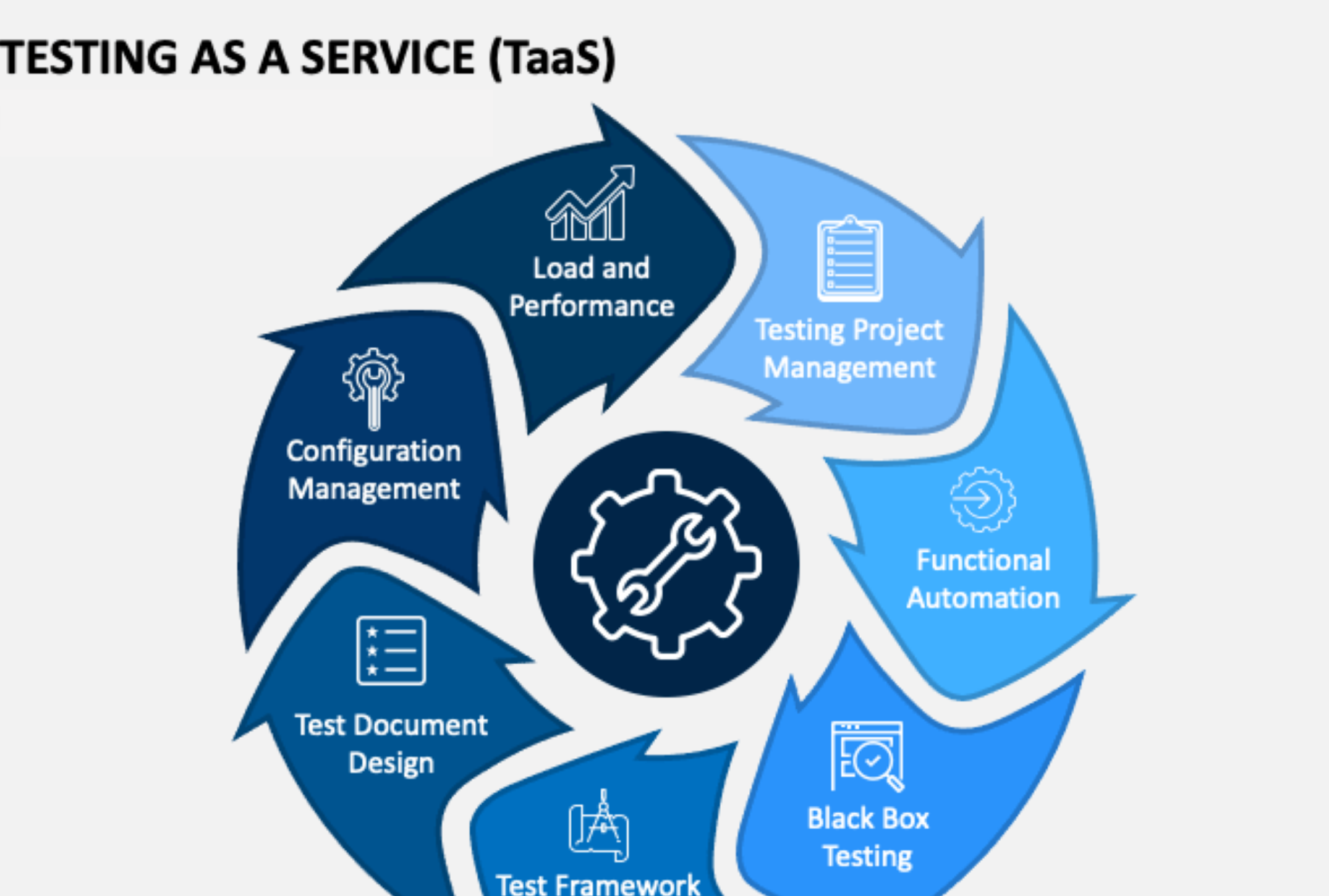
A new way to test apps? – Testing as a Service (TaaS)

Testing as a Service(TAAS) -

There’s a better way to test the software applications powering your latest business services. It’s called Testing as a Service. TaaS helps to improve the quality of your applications in a way that’s faster, more scalable, simpler and cheaper than traditional testing approaches.

The need for a better, faster and more cost-effective way of testing applications is clear. Applications play an increasingly important role in the products and services that businesses deliver in today’s digital economy. However, ensuring that applications are offered effectively, securely and cost-effectively at speed remains a challenge.

Traditional testing models are neither predictable nor cost-effective. Because they often fail to leverage best-in-class processes and tools their quality may be lower than required. What’s more, the cost of traditional testing is based on the number of testing professionals involved, their skill sets and the engagement’s duration. So extra costs can easily accrue for certain skills, equipment, even desk space. Estimating your total cost can be tricky.

A more efficient way

TaaS is far more efficient than traditional testing models, too. Service providers offer an output-based delivery approach with an efficient and flexible consumption-based procurement model.

With TaaS, customers procure testing services from a catalog of standardized deliverables that they can use to assess the functionality, technical quality, performance and even security level of their applications. The deliverables are determined based on the testing outputs needed at different stages of the software development lifecycle. That might be the creation of a test strategy, plan or automated test script or the execution of an automated test.

To make that easy, TaaS supports both modern Agile and DevOps approaches as well as more traditional lifecycles such as Waterfall.

What really differentiates TaaS from traditional testing models is that customers gain tremendous flexibility. They can adjust the type and quantity of deliverables they receive, as well as when they receive them. Customers can quickly and easily tailor their testing to meet their changing project needs, and to scale testing services up or down based on their evolving business demand, avoiding unnecessary costs.

This kind of flexibility is especially important for Agile projects. There, the development teams may prioritize and re-prioritize from sprint to sprint, based on what will deliver the most value to the business.

Testing as a Service (TaaS)

More scaling, less cost

TaaS is highly scalable. If your testing volumes are lower than expected, the service can be scaled down. Conversely, if demand increases and testing needs to be scaled up, more testers can be quickly rolled in to create the necessary deliverables.

Also, since TaaS is based on output, the service provider is responsible for managing the staffing and availability of tools. This lets the customer focus on higher-value items. Because the service provider manages the day-to-day activities and resources of the testing team, adjusting capacities as needed to meet demand, there’s less complexity and hassle for customers. Costs are less, too, since the customer pays only for what they consume. Because consumption prices are fixed, estimating total costs is easy and accurate.

While TaaS tests are conducted via a public or private cloud, TaaS is not a cloud-only service. It can be used with both your cloud and on-premises systems. Test management software, if required, can also be included as part of the service. The license cost is included in the service, so you won’t have to invest in long-term licenses. That said, if you’ve already made those investments, TaaS can be easily configured to use your existing test-management products.

TaaS is also a lot more than Software as a Service. SaaS includes only the tools. But with TaaS, you also get test cases, test automation, execution and sophisticated tools.

Adopt TaaS and your benefits can include:

  • Testing services with higher quality, faster speed and lower costs
  • Greater flexibility and scalability to adjust testing to meet your evolving business needs
  • Increased testing coverage and efficiency
  • Freedom from up-front investments and maintenance fees

Here’s a real-world example of attaining lower costs: One of our customers wanted to merge the back-end systems of several companies it had recently acquired. This was to be a multi-year project that would include systems for manufacturing, packaging and shipping. The first phase needed to cover more than 300 requirements and 600 test-case executions. The company would also need to test more than 45 third-party application interfaces. With TaaS and our help, the company successfully completed this project phase at a cost of nearly 40 percent lower than originally forecast.

error: Content is protected !!