Driving Digital Transformation through AI

 Digital Transformation

Rapid innovation and productivity breakthroughs require an accelerated digital transformation strategy that melds people, business processes, advanced analytics, and new human/machine interaction technologies.

Today, it is the supervised machine learning segment of AI that is generating the most economic value. But as digital transformation accelerates, the abundance of data that AI can consume will drive the speed of AI adoption even faster, including its unsupervised learning segment.

Ask Alexa to summarize the meeting minutes

We need only look at how quickly conversational AI (CAI) has become part of our everyday lives as we query Alexa, Siri or Cortana. But in the enterprise the interactions can be extremely complex, such as “Hey <CAI>, summarize the minutes and action items from the recording of the last board meeting.” We are limited by only our imagination and — significantly — access to high-quality, well-organized data.

The accelerated AI adoption will in turn drive better understanding of how to customize AI for the relevant business context and drive digital transformation to new levels. It will provide instant measures of business performance down to the smallest task, leading to more predictable business outcomes, as well as enhance productivity and 24×7 business operations through automation of business processes and algorithmic work.

Digital Transformation

Manage advanced analytics as assets

As AI permeates every facet of the organization, organizations will need industrialized AI with strong governance and data quality. They will need to manage analytics models as assets to avoid algorithmic bias, retrain analytics models in a timely manner and ensure that data privacy and regulatory policies are properly implemented.

As we become better at blending advanced analytics technologies with how we think and work, there will be massive implications for how we run our companies and live our lives. It will be up to all of us to make sure that advanced analytics are used for ethical purposes.

Organizations should define their long-term AI objectives, clearly understand where and how new business value will be created, and design their digital journey maps. Once a business outcome and measurable business value is identified, organizations should proceed with developing analytics and AI/Machine Learning models and implement them in business operations.

Digital Trends Underpinning Media & Entertainment in 2020-21

Top 4 Digital Transformation Trends In Media And Entertainment For 2020

The media and entertainment industry is often the most proactive in enhancing itself for the digital shifts of tomorrow and 2020 is no different. In fact, what was thought of the marketplace prior to the COVID-19 outbreak, has only been proven right and rather catalyzed by people staying at home and turning to the streaming services for entertainment.

One of the most glaring digital media and entertainment trends is that an increasing number of players are retracting from video content aggregators in order to stream their content direct-to-the consumer.

The move signals an attempt to maximize the cost of operations by canceling out cable and satellite royalties. This and a whole lot more makes up for the digital innovation trends, poised to reverberate through the fabric of this sector. Knowing what these trends are can give you a leg up in the crowded entertainment sector.

Trends on the Demand Side of the M&E 

The demand side are the users, you and us, who create the demand for a product. While postulating upcoming industrial changes it’s better to draw the line between trends that are being forced onto M&E studios by the consumer, and vice versa. In this section, we’ll mention the most palpable consumer-end i.e. the demand-side trends fruiting in the M&E industry.

These trends are attributable to the audience side of the picture as without their behavioural patterns, whether online or offline, we may not have had much development in this direction. The latter sections will touch base with the role of technology in the entertainment and media industries.

D2C Video Streaming

Disney Doubles Down on D2C Streaming Video Success with Strategic Reorganization - Subscription Insider

Video streaming got its dose of steroids with the initial faces of lockdowns imposed through varying geographies of the world. With the expected use of internet services ticking up, so did the demand for diverse, meaningful, and quality video content. There was such a force behind this push that Pay-TV subscription, for US customers, took a backseat. The diversity of choices and cross-platform compatibility offered by players such as Netflix and Amazon Prime threatens the limited bounds of TV-channels that demand users be on their couch.

But at the same time, these very rivaling clans are giving each other a run for their money in the streaming wars – – strengthening the foothold of apps redefining the entertainment sector. In the Digital media industry, Disney was the first to retract its content from Netflix and offer it in a D2C channel through its pet project Disney+. The move defined the now reformulated entertainment industry standards that have seen the largest media houses following suit in receding content and hitting third party applications right where it hurts the most.

It pays to ask the question, how forthcoming are the viewers in subscribing to digital media entertainment and paying for so many streaming apps? One survey revealed that the average user subscribed to 3 video streaming apps with this limit staying constant for the last 2 years. It can be surmised that overtime the economy of such an experience will be questioned by all.

One way to buck this trend would be to reorganize the content and offer multiple formats such as music, movies, TV shows, etc., aggregated on a single platform. The prime example (pun intended) of this trajectory is none other than Amazon Prime and Roku. In addition to video, these vendors can create customized, pay-as-you-go packages for availing the music and games libraries.

Ad-Driven Viewing Experience 

How AR & Other AI-Driven Innovations Will Revolutionize OOH Ads | by Richard Yao | IPG Media Lab | Medium

One of the reasons mobile streaming caught on to people is that it cut down on ads. The volume of consumable content increased and made retaining users easier. But with the top studios of the global media industry turning to video streaming, ad-supported content is expected to seep in soon. This is partly due to the pitfall of keeping subscription fees competitive, which in and of themselves, won’t suffice for expanding the content offering to games and music.

Ad-supported videos are already a thing in Asian locations such as India and China. But for them to assume a profitable outlook for media entertainment in the US, platform owners must curate enough user data for targeted advertising. Else such a promotional expenditure would appear unjustified and disoriented. Chiming in tune with the adage of our century, data is the new oil, platform owners will look to get their act together with structured data to deliver suitable (not annoying) ad interruptions in between video streaming. Youtube already does that to a good measure, the result of which is:

Data Privacy and Security 

Data Privacy vs. Data Security [definitions and comparisons] – Data Privacy Manager

A study conducted by Futurum Research in partnership with SAS Software revealed that the media industry was one of the most distrusted by customers when it came to guarding user data. The same report concluded that as much as 61% of the participants felt they had zero to no control over how their data was used by the vendor.

Media houses are expected to toe the line for transparent data collection applications with which to assure the customer of data security. For instance, the European Union’s GDPR reforms allow customers the right to be forgotten after they have discontinued a particular business, having submitted personal information initially. Much of this will play out in the near future as well, if only with added refinement but let’s not forget had there been no demonstrable outrage over data misuse, the media organizations wouldn’t care to rise from their slumber.

Content Personalization 

Personalize B2B content to improve conversions

There are deeper levels to customer relationship management than sending emoji-fied emails every now and then. Millennials and Gen-Z want, and would happily pay for services that are personalized to their tastes. This includes content recommendations the kind that will gel well with their unique preferences.

This paves way for even more sophisticated Artificial Intelligence and Machine Learning algorithms to do what they do best, predict user behavior. It is primordial for both the content creators and content hosts to know the demographics of the audience they excite and attract. Therefore, don’t be surprised when you see a media software development company dive deep into AI and sharpen the edges around streaming service applications. We are in the age where everything has to be smart and content is no different thanks to the hard-to-capture, unique choices of the users.

Trends on the Supply-Side of the M&E 

The trends mentioned above have been directly derived from user behavior i.e. if the users hadn’t reacted to digital media apps the way they did, we probably wouldn’t be seeing much commotion in that zone. Having said so, the link between media showmen and consumers could not be possible without technology. And whereas some technological advances are urged by the users there are others that percolate their way down to the masses no matter what. In this section, we’ll look at the emerging technologies that are most affecting the manner in which media enterprises go about their business.

Augmented & Virtual Reality

The Important Difference Between Virtual Reality, Augmented Reality and Mixed Reality

The global media and entertainment industry will be a driver of emerging technologies the frontier of which will be led by Augmented and Virtual Reality. The past few years have seen much hype but less adoption of AR/VR. But that was a consequence of the price-barrier of standalone AR/VR devices, which is also beginning to get pocket-friendly.

Smartphones have crossed the inflection point in AR adoption with the majority of models supporting AR content. The media entertainment industry will make use of these technologies in the following ways:

  • Act as a substitute for high-priced joysticks and keyboards at the same time delivering a quality experience to gamers.
  • Be the de-facto technological genre for media app development especially in the field of digital education.
  • Help in enterprise-level media software development for learning management solutions.
  • Possibly make way into theatres and cinemas to reinforce the power of digital effects through immersion.
  • Create wearables for visitors headed to museums, art galleries etc., and represent artifacts with added features/info.

eSports Broadcasting

The challenges of esports broadcasting

The Trends in broadcasting industry point towards the hot spring areas of the sector that are gaining mainstream traction among audiences. The first and foremost of this is the one touted to be the future of sports – eSports segment.

The entertainment app development sphere is galvanizing its priorities towards this segment as the worldwide eSports revenues are expected to hit $1 billion in 2020. The lion’s share of this money, although, will be from sponsorships ($614.9 million) and media rights ($176.2 million). Nevertheless, gaming events will be the center of attention for displaying the latest in AR/VR.

And lest we forget, there is Legalized Sports Betting that will also profiteer off the incoming 5G technology. Betting is one arena that swirls the mind in unpredictable ways, forcing users to place bets over telecommunication networks. Come to think of it, 5G is a technology that is born to manage high volume communications. This is one of the reasons the US has 5G towers popping up at sports stadiums and related venues that’ll be a hotbed for placing bets. Entertainment software development can be easily turned in this direction to foster app creation the kind legalized sports betting would need.

Artificial Intelligence 

Artificial Intelligence (AI) - Overview, Types, Machine Learning

There is not a single sub-set of M&E that has not been impacted by AI. Its predictive powers are influencing television, animation, VFX, Out-of-Home advertising (OOH), radio, and much more. A case in point is the following applications of AI in enhancing customer experience.

  • M&E companies hold a huge repository of user data at their data centers. In many cases, the data is largely unstructured i.e. like a mound of haystack waiting to be made sense out of. AI has added a cognitive, human-like dimension to mining and saturating this unstructured data.
  • Engineers are using AI, ML, and Natural Language Processing to apply relational parameters to the big data. The technology helps in categorizing the data as per mutual characteristics and further consolidates a company’s predictive capacity to forecast user engagement with the content. This Targeted efficiency leads to better monetization opportunities.
  • AI is being applied readily to video content to speedily calculate and absorb emotional changes at the user side. The summary of such studies is then used for highly customized content recommendations. The same principle is at play in music streaming apps, that know precisely which songs to pitch you that eventually make it to your favorite’s list.
  • The Cost of content creation will be vastly reduced following the advent of AI that can automate editorials consequently mitigating human intervention.

Blockchain 

The Impact of the Blockchain on Cybersecurity

The distributed ledger technology with its chief qualities of immutability and transparency are breaking technological stereotypes in the M&E

. People have been spectators to an exchange of charges between artists relating to content plagiarism and piracy time and again. Blockchain Technology can and will settle such debates once and for all.

  • Intellectual Property rights can be safeguarded with Blockchains nullifying the scope of disputes around ownership management. With immutable record management, ownership rights can be traced to the original producer of the content. Likewise, the system architecture of blockchains, in its current iteration, is powerful enough to track transactions for royalty payments across multi-layered platforms.
  • There are solutions in the market that offer a springboard for budding artists to curate funding directly from their fanbases. Such a step would allow the fans to own a share of the record, the rights of which, otherwise, ebb naturally into the hands of the producing labels. Transactional history along with public ownership will be recorded on the blockchain. Living examples of such trends are being shaped by companies like Vezt, Sony, and BMG.
  • Another issue faced by media stakeholders is revenue distribution. The industry being this giant labyrinth of middlemen that it is, intermediating parties charge their share of the profits for managing the revenue cycle for a film/commercial, etc. But Blockchain is a proven disruptor of this very model. With an online ledger, transactional streams can be optimized without spending a fortune on intermediary channels. FilmChain, an Ethereum based Blockchain, is a prime example of this upcoming trend.
  • There is a huge black market for ticketing sales that needs serious quenching. While managing a megaevent such as a concert or a music festival, artists are left to bite the dust as the intervening middlemen play the sleight of hand in ticket distribution. Blockchain-powered ledgers can remediate the situation by ensuring the profits generated follow an equitable distribution amongst all participants of the value chain. YelloHeart is a company trying to achieve exactly this.

Enterprise Resource Planning 

The end of enterprise resource planning

  • We are in the age of automation and optimization, with the streaming apps being a transformational by-product of the digital revolution. Building AI-powered smart apps for better user management is not a standalone procedure but an interconnected block in a chain of events that would deem workflow optimization necessary. Consequently, an entertainment app development company will not have its service level agreements limited to just fine tuning the application itself but also the overall enterprise software for maximization.
  • Enterprise Resource Planning would ensure that cost overheads are mitigated immediately. Investment in the right tools and technologies will not stop with 2020 and shall continue beyond to stay in the good books of investors.

Final Thoughts 

Whether it is Augmented Reality, Virtual Reality, or Enterprise Resource Planning, Anteelo has the track record to back our claims of expedited, professional project delivery. Having collaborated with some of the world’s biggest brands such as IKEA, and Domino’s (to name a couple) we know the scale of demands of big businesses and are ever-ready to go the distance.

Our ties with the media industry go a long way. We developed mobile apps such as Gully Beat, with the latter garnering critical acclaim along with 25 million+ downloads on the Play Store. Long story cut short, when it comes to delivering at the international stage, brands turn to Anteelo as their technological arm. But talk is cheap. Take a minute and connect with us and we’ll showcase how you can slingshot your idea to glory.

Initial Public Offering (IPO) Process Guide For Tech Entrepreneur

Ipo Initial Public Offering Concept With People Letters And Icons Flat Vector Illustration Isolated On White Background Stock Illustration - Download Image Now - iStock

Raising Money - Raising Funds - IPO - Free Stock Photo by Jack Moreh on Stockvault.net

The best time to start a tech startup was when the dot com era was becoming mainstream. The second best time is now. But the best time to go public is evergreen. In this article, we are going to look into the IPO process – one that is designed to effectively give a chance to businesses and individuals to invest in startups that you created.  When it comes to raising funds for startups, the one preferred direction that the tech companies are moving towards is Global Initial Public Offering. With venture capitalists and crypto enthusiasts fanning the flames, a new form of raising funds for startups has now gotten mainstream for tech companies across the globe.

In fact so much so that it is soon becoming the ultimate objective of brands, especially since Uber, Pinterest, Slack, and other innovative tech companies acting as the torchbearer.

Let us get down to the basics and some present time statistics first before getting down to the process of raising an IPO.

Table of Content

  1. What is an IPO – the preferred way to raise funds for a startup?
  2. What are the benefits of an IPO
  3. The Ongoing Trend of Tech Companies Going Public
  4. Signs That You Are Prepared to Go Public Through IPO
  5. How to get IPO ready – The roadmap to navigating the process

What is an IPO – the preferred way to raise funds for a startup?

Startup Funding Stages: Seed to IPO Explained for Beginners

An Initial Public Offering or IPO as it is generally called is a process of offering the shares of a private corporation to the public through the issuance of new stock. Ever since Apple and Google went on to become public with their stocks being traded as a ticker symbol in the market, raising an IPO has become something of an endgame for emerging tech companies.

The median deal size of IPOs continue to raise year on year is only a plus side of why companies are sold on the idea of going public now more than ever.

It has become more than a process of raising capital for startups – it is now a way to prove the worthiness of a company.

What are the benefits of an IPO

Tech startups generally tend to look up to IPOs as the long term way of raising money for startup that they have created seeking one or all of the following benefits:

  • Increase in the long-term capital
  • A greater cash access and bettered liquidity
  • An opportunity for the initial founders or the investor groups to take the cash out
  • Monetization and rewards to the employees through shares
  • Augment the company’s visibility and stature in the industry

The ongoing trend of tech companies going public 

Fundraising for business startups in the technology sector is not unheard of. While generally limited to Series A to E funding and taking unconventional routes to raise money for business startup and even being a torchbearer of making ICOs a better proposition than VCs, they too have started sharing the great american dream to go public.

Initiated by Apple and Google and strengthened by Lyft, Pinterest, Fiverr, Slack, Zoom and the likes a number of tech companies are already or are getting prepared for startup fund raising through Initial Public Offering.

Here’s a visual representation of them –

But just because these tech companies felt they were ready to go public, does it mean the startup funding process is the ideal next step for your tech company as well? After all, with the world unable to give an exact answer on when is the right time to choose IPO as a startup fund raise method, how do you decide when to have an IPO?

Signs that you are prepared to go public through IPO

1.  You can forecast financial growth

Financial Forecasting Guide - Learn to Forecast Revenues, Expenses

Accurate financial projections is key to efficient business strategy playing a massive role in a company’s growth, especially as a public company. Creating an accurate estimate of budget and forecast as your company operates privately is a key step in establishing the consistency and accuracy of financial reporting for gaining credibility with the investors.

2.  You have the best executive team

This is the Best Way to Manage Your Team - Lolly Daskal | Leadership

You have a team that has experience of being a part of a public company, who understand the nitty-gritty of running a private turned public company. In addition to a strong current team, you have also estimated the need of expanding your finance, accounting staff in addition to people handling external communications – to aid the process of going public.

In addition to your best-in-class executive team, you also have partnered with the most skilled software developers for startups that know how to digitalize and prepare a private tech company for going public.

3.  Your company is always audit-ready

Compliance Audits: What You Need to Know to Avoid a Penalty

Before going public, you would want to get in a position where you constantly close  quarterly financial statements in time. Even the companies that are backed by venture capital and private equity find it challenging to offer regular reports to their sponsors and board. By going through the exercise months in advance, businesses are able to get ready for the public reporting, stress-free.

4.  You have a strategic roadmap

How to create a roadmap that everyone can follow

A strategic roadmap is a blueprint of a company’s investment growth chart. It provides an operating strategy for growing business for providing investment returns which the prospective shareholders want from a public company.

5.  You have a strong business case for raising an IPO

Mabpharm seeks to raise capital through Hong Kong IPO

One of the most obvious reasons for getting an IPO is to gain access to the capital market and raise additional capital – the end goal of a startup investment process. An IPO is a major company evolution milestone and a symbol of your company being able to satisfy the necessary government standards and compliances.

6.  You have developed a network with investors

11 Foolproof Ways to Attract Investors

Something that makes the process of raising IPO easier and actually enjoyable, is knowing some of the key people in the investment firms. Although you must have already done your homework, let us expedite the networking process by giving you insights into which investors have been backing the tech IPO journey of companies –

How to get IPO ready – The roadmap to navigating the process

1.  Hire the best team

Use These Steps to Hire the Best Team Every Time

Selecting the best team of professionals to handle your IPO process is important for the success of your business. Here are some of the entities that should be a part of your team, in addition to the obvious inclusion of lawyers –

  • Tech Service Providers – The success of an IPO depends entirely on the software you are selling which are a result of the well-strategized software development services for startups. After all, all the tech giants who have taken the route of IPO ensured that their digital offerings were useful and best in class. Ensuring this is the work of a startup software development company. So, we would recommend choosing the best software development agency for your digital transformation needs.
  • Investment Banks – The banks act as a mediator between the companies looking to issue an IPO and the investors – while acting as an underwriter. The banks are involved in a number of processes like document preparation, issuance, marketing, filing, documentation, etc.

2.  Perform due diligence

How to perform a due diligence - Step by step guide - iPleaders

The underwriters, lawyers, and banks work together to conduct an in-depth audit of the company. Their review includes legal, tax, financial, customer verification, and market research. The intent is to create complete transparency in the company’s operations and presume risks.

3.  Build IPO prospectus

Mindspace Business Parks REIT inches closer to IPO, revises draft prospectus - The Economic Times

The IPO lawyers and company use the due diligence information for drafting the principal offering files which include IPO prospectus that should be filed as a part of IPO registration.

The IPO prospectus highlights the company’s strategy, strengths, market share, financials, investments, and products. It should also mention the risks that are involved for the investors.

IPO prospectus is subjected to expansive disclosure needs meaning it is important that the parties collaborate for ensuring the prospectus is accurate.

4.  File IPO registration statement

SEC.gov | What is a registration statement?

The IPO lawyers file IPO prospectus and the complete registration statement with SEC. This 30 days review process is subjected to reviewing and commenting by SEC. After this process, companies then complete the initial listing application round with exchange. The underwriters then file compensation information for IPO with FINRA.

5.  Pre-IPO

Although it may not be difficult for funded tech companies as they have already gone through the stage of marketing when they were raising money for their startup. They only have to do it at a much wider scale now with investment banks’ help. What you did Before IPO, investment banks popularize it to the private investors for maximizing company’s position in the market. The investors are usually hedge funds or private equity firms willing to buy shares in the company.

6.  IPO “Roadshow”

Before several weeks of the IPO, bankers and management team hold a “roadshow” – a series of presentations in which they market the IPO to prospective investors. It is usually when they first announce the offered price range and size of the shares. The intent is to gather interest from the investors for driving up the initial sales price.

7.  Initiate Trading

How to avoid common mistakes when trading in options - MyVenturePad.com

After the roadshow, bankers set up a price determining the initial share value. A few days after that, the IPO closes and stakeholders have to release their shares. After the shares have been released, investors who purchased the shares get allocation and the public trading officially begins.

Here’s how AI is transforming business processes

Business process are transformed through AI

The rise of artificial intelligence (AI) to drive business value has been truly incredible in recent years. Enterprises that recognize the power of AI and know how to effectively apply it to their business can reap significant rewards in a quickly evolving and hyper-competitive marketplace.

Just a few years ago, analytics was all about gaining insights from data to help make better business decisions. More recently, enterprises have been seeing massive benefits from adding AI to the analytics mix that is designed to transform and strategically influence business processes. The effective application of AI within business process transformation can produce many benefits including more efficient operations, faster delivery and reduced costs.

But how is AI actually helping companies transform business processes?

There are two primary ways AI is doing this today.  Some enterprises are actively implementing AI programs company-wide as part of their core functionality. And there are other companies that are building AI into their business in a sequential, controlled way via managed proof-of-concepts (POCs) to address particular aspects of their operations.

Artificial Intelligence Is Transforming Business

AI is specifically used as a tool to speed up the corporate buying process. It does this in two ways: by making recommendations of suitable suppliers who should be invited to a tendering process and by quickly sifting through dozens of supplier submissions and creating a ranking system to identify the best supplier agencies for bespoke projects. This type of accelerated procurement can shave weeks off the selection process and additionally save up to 20% on project budgets.

On the other side of the spectrum is a large UK retail chain with thousands of stores across the country. This company is implementing AI in a controlled way through their corporate transformation department and rolling it out to each store. The retailer is conducting live trials of the system and can conduct A/B testing for different approaches for 10% or 20% of their stores from the get-go, which did not happen before.

This retailer is seeing success by implementing AI to assist with critical business functions such as setting prices and managing stock. AI is taking on the work previously performed by humans, including analyzing pertinent purchasing data to set prices intended to keep products flying off the shelves and boost profit margins.

From the two cases above, we’ve seen that currently the best performance in AI applications is achieved when AI is combined with humans; where AI does the core number crunching and recommendations and humans oversee the process. This helps humans concentrate on fine-tuning and making improvements on those initial recommendations.

Time and budget savings are achieved during the corporate buying process due to the presence of AI. And for the retailer, cost savings are clearly achieved as AI does the routine processing work that was previously performed manually by humans.

These uses of AI yield fewer mistakes and demonstrate how AI can support efforts to optimize spend, ultimately impacting the bottom line. For both companies, AI is the go-to solution for solving business problems.

Humans will always have a place in transforming business processes, that goes without saying. But AI is quickly becoming an invaluable automation tool to drive efficiencies and reduce costs.

Still No viable method of transporting data from autonomous cars tests

Driverless Cars

Behind the scenes at locations around the world the auto makers are running tests on autonomous cars for literally thousands of hours. The industry has poured more than $80 billion into R&D on autonomous cars over the last four years, so they are serious about making this happen.

Those of us working on these tests have one overwhelming challenge: how to manage all the data that gets generated during the tests. One eight-hour shift can create more than 100 terabytes of data. In a week of testing multiple cars, we’re talking about petabytes of data. And often — at rural testing centers, for example — Internet bandwidth speeds are simply insufficient to ensure that the data reaches our data centers in North America, Europe and Asia at the end of the test day.

Autonomous car

Right now, we have two main ways to transport data back to a data center. They are both cumbersome, but have different plusses and minuses. Until advances in technology make these challenges easier to manage, here’s what we do today:

  • Connect the car to the data center. Test cars generate about 28 terabytes of data in an hour and it takes 30 to 60 minutes to offload that data by sending it to the data center over a fiber optic connection. While this is a time-consuming option, it remains viable in cases where the data gets processed in somewhat smaller increments.
  • Take/ship the media to a special station. In many situations the data loads are too large and the fiber connections unavailable (e.g., at geographically remote test locations such as deserts, ice lakes and rural areas) to upload data directly from the car to the data center. In these cases we remove a plug-in-disk from the car and take it or ship it to a “Smart Ingest Station” where the data is uploaded to a central data lake. Because it only takes a couple of minutes to swap out the disks, the car stays available for testing. The downside of this option is we need to have several sets of disks, so compared to Option 1 we are buying time by spending money.

In three to five years we may get to the point where both options are outmoded by advances in technology that make it possible for the computers in the car to run analysis and select the needed data. If the test car could isolate the test-car video on, for example, right-hand turns at a stop light, the need to send terabytes of data back to the main data center would be alleviated and the testers could send these smaller data sets over the Internet.

Of course, we’re several years away from having such a capability. In the past year, IBM and Sony have been working on a 330 terabyte tape drive that promises faster and more resilient data storage in a form factor that can fit in the palm of your hand. Once such products are commercialized, it should make our lives a bit easier.

Ultimately, we’d like the ability to move our various equipment easily in and out of hotel rooms and carry it on plane trips in our pockets or briefcases. Today, the equipment is often clunky and hard to move around. While technology can help, we have to be realistic and understand the data challenges surrounding autonomous cars are likely to increase exponentially.  The challenges may grow, but at least sometime soon the gear we use won’t be so cumbersome that our muscles ache at the end of the day.

Five essential pillars of AI-enabled business

Artificial Intelligence (AI) in business

Successful AI implementations rarely hinge on the unique innovation of a specific algorithm or data science technique. Those are important factors, but even more foundational to successful AI enablement are the core data operations and enabling platforms. These act as the fuel and chassis of the AI machine that a business must build and evolve for continued competitive advantage.

Here are the five foundational elements to be addressed to enable a successful transformation to an AI-empowered business:

1. Define an integration strategy for embedding AI and analytic insights into business operations

Successful digital transformations focus on evolving and optimizing business operations through the better use of data assets combined with modern technologies such as machine learning, AI, and robotics. These paradigm shifts result in the creation of new operating patterns rather than simply more efficient legacy operations.  In this way, digital transformation represents the enterprise operations in the way the business wants to be run, rather than the way it has been running due to technical and operational limitations and barriers constraining it.

To go beyond siloed or single-use insights and fully benefit from AI and analytics, it must first be decided how the business desires/needs to function in the future.  Determining your business transformation priorities then evaluating the advanced technology and data science options for addressing them is a key step towards maturing and evolving to a data-driven enterprise. This understanding will identify the type of AI and analytics that will be the most beneficial for your business and the technology required to accomplish it.  Additional thoughts on overall data strategy can be found in the white paper “Defining a data strategy: An essential component of your digital transformation journey.”

AI in business

2. Establish a holistic data and analytics platform

Selecting and configuring an integrated set of technologies to support data management and applied analytics is a complex challenge. Fortunately, solutions to such technical integration have matured in recent years into pre-built core platform components and best practices that can be accelerated and augmented further through value-added third party software and partner services.

Cloud-based modular platform environments bring together technical flexibility and financial elasticity with an ever-maturing technical set of capabilities, including interoperability across hybrid environments that include legacy on-premises deployments and geographical federation. In addition to open source components, such platforms include the option to integrate select native modules and commercial technology components for broader flexibility and a customizable architecture that can be deployed as prebuilt services for simpler adoption and integration.

The tools to support and enable AI integration into business operations are beginning to leverage the same capabilities they enable. For example, data pipeline tools are beginning to use machine learning (ML), metadata tools are using AI and ML to identify content and auto-generate the metadata on the fly, and user interfaces are embedding chatbot and digital assistant AI technology to guide end-users through the complexities of data science for accelerated insights.  By adopting toolsets and platforms that have embedded AI and analytics in their core, the use and integration of AI into business operations will be more natural and accelerated across the enterprise community.

3. Know your data

Fully understanding the data your enterprise has access to may seem like a fundamental need when supporting operational reporting and analytics within the enterprise. Many organizations, however, stop with simple source systems listings and maybe some high-level business definitions and schemas.

Truly knowing your data includes a lineage-based view of where the data comes from and what business process it represents, what operations are performed on it prior to your access, what transformations are performed thereafter, the associated level of quality and, of course, the core “Vs” of big data; volume, velocity, variety, veracity and value.

Building an easily searchable, enterprise-wide data catalog of information is one of the first steps towards empowering the enterprise with data. Exposing the catalog to a crowdsourced editing model ensures richer content and wider adoption of such information across the enterprise.

4. Control and govern your data

Understanding the types of controls and governance your data needs is a natural extension of knowing your data.  By reviewing the types of data and their business content with associated metadata, enterprises can align and define proper governance and compliance policies related to internal policies and to external standards such as HIPAA for healthcare, PCI DSS for secure payments, and PII and GDPR for data privacy.

It is also important that source data retains its original state integrity without over processing or over-filtering it. Aligning to the data pipeline workflow principles of “ingest, refine, consume” allows the same data to be leveraged efficiently for different uses with different policies and operational needs while ensuring security.  Such controls can also be extended to support and define quality standards required for using the available data and to trigger any necessary control processes to correct or adjust for deviations in such standards.

You can safeguard proper policy compliance, improve ease of use and increase trust and adoption by the end user community by ensuring that governance controls are built into your data management operations from the start.

5. Simplify access to your data

To further expand the adoption of AI and analytics, it is important to simplify and automate data workflows and the use of analytical tools. Reducing manual process overhead can significantly improve time to market and quality of results. Providing clear and flexible governance allows enterprises to control such access without it becoming a barrier for use.

Self-service leads to rapid user community adoption and better integration of data and insights into business operations. By reducing the dependency on IT resources for complex data integration and preparation tools, average business users can interact with the data through simple common interfaces and receive results in simple and easily consumable formats.


Once these foundational elements are in place, organizations can take full advantage of the unique value proposition offered by advanced analytics and AI. And they can do so with the confidence that the resulting solutions are enterprise-grade in their scalability, security, quality and usability. It is this kind of confidence that leads to business user adoption and, in turn, successful digital transformation.

Digital Technologies: Transforming pharma’s customer value chain

Biggest influencers in digital pharma in Q4: The top individuals to follow

Pharmaceutical companies struggle with a complex and, often, poorly managed partner, customer and distribution network. It’s not surprising, given the makeup of most large pharma companies. Large, often disconnected product portfolios are built through discovery — both internally and externally with academia and biotech partners — and global clinical trials, using a network of clinical research organizations, investigators, other experts and patients. Suppliers, distributors and often contract manufacturers are all integral to making and supplying products. And at the customer level, companies work with healthcare practitioners, pharmacists, payers and patients.

This web of partners and customers is growing in complexity — both logistically and from a compliance point of view. Yet this way of doing business remains the same. Communication and requests are conducted via email and through call centers without a connected and intelligent way of routing work and queries. Service level agreements are often poorly developed, and governance processes are often inconsistent across the distribution and customer ecosystem.

While different parts of the pharmaceutical business are deploying digital technologies, an opportunity exists to transform the customer and partner value chain with progressive digital tools and platforms. Customer service and support centers are now implementing artificial intelligence (AI) by analyzing both structured and unstructured data and also leveraging natural language processing (NLP) for omnichannel engagement models with the customers. But how is this actually achieved?

A single source of truth

Synchronizing systems around the customer for a customer-centric approach begins with bringing together data from disparate sources and creating a single view of the truth through a common data model. In this way, companies have a big-picture view of every customer service request, including the distribution chain.

Once the data is in place, the next step to improving customer engagement and ensuring regulatory compliance is to embed the common platform with digital tools and technologies. Combining NLP with AI, machine learning and workflow automation enables increased customer engagement with sound governance and improved compliance.

Digital solutions for the pharmaceutical industry

How do these digital technologies improve engagement and compliance?

Customer service support and the operations space have evolved over the years from a manual, labor-intensive and software-centered business model to a more dynamic multichannel customer engagement business model. This new model facilitates omnichannel engagement with the customer using multiple devices. AI- and machine learning-powered chatbots are being leveraged for quick response management, and digital capabilities are tightly integrated with intelligent workflow management tools.

For example, today a customer can raise a service request through an email, phone call or a text message, or even talk to a live chat agent. Digitally enabled customer service engagement centers can now seamlessly bring in the request from different channels into one homogenous customer engagement platform for action. From there, the request is processed using digital tools to identify the intent of the case or request — who it is aimed at, what the objective is – and to create groups in which to classify the case based on importance. This is achieved by using NLP to create an entity score, match this score with a subgroup and route it to the right place to ensure proper follow-up.

The customer may then choose to follow up with a phone call or through a chatbot or online feedback form. This is where an AI capability (or the more traditional customer service agent) should be able to view all of the various communication forms and frame the response accordingly.

To achieve this, AI and ML tools learn from previous interactions, continuously improving on the quality of responses. The AI learning also needs to extend to compliance, adherence to SLA guidelines, as well as any regulatory restrictions on what can and cannot be shared. For example, if a customer asks for the available stock of a particular drug, the pharma company is not allowed to address that question according to U.S. government regulations. So, the response needs to be framed appropriately. The rules will be different in each country, so the AI/ML-enabled automated response app should be able to learn and adapt accordingly.

Preconfigured responses based on the type of the request are then configured using data science and AI/ML techniques. AI and ML capabilities also help to determine the urgency or sensitivity of a case, and how best to ensure that compliance requirements are met within the timelines and SLA metrics.

In addition, analytics will play a key role in verifying, validating and improving customer service. Predictive models can be used to strengthen the human response team by understanding peak cycles, such as a new drug launch, natural disaster areas and so on.

By taking a progressive digital approach to managing the communication network with partners and customers, companies can mitigate many problems while improving customer engagement. This is enabled by having a single view of the customer, using robust data analytics capabilities thanks to AI and ML — to predict risk and compliance needs, and ensuring that the company is always ready for regulatory inspections and has the necessary information at hand. With the emergence of AI and ML techniques, it has become easier to achieve customer engagement needs with more enriched analytics and insights, thus allowing enterprises to not only automate customer engagements but also excel in customer experience.

Ways to better data processing in Self-Driving Cars

autonomous vehicle development

Autonomous cars promise to change the face of transportation, offering many more mobility options for individual motorists and companies alike. In moving forward with this new technology, our automotive clients have a very important challenge to overcome: processing the petabytes of data that gets collected during the development and testing of autonomous driving systems.

KPIs have always been important to car makers. They are necessary to attain road approvals and to track key competitive differentiators. With autonomous cars, however, car makers are accumulating – and must find ways to process and manage – 10, 20, sometimes 30 times the data as before.

As a result, they need much more efficient data analysis tools that can help them analyze the data for the specific autonomous car KPIs they are looking for. To make this happen, they need to take the following four steps:

  1. Make sure the car’s sensors are working. There are typically eight to 12 sensor systems in an autonomous vehicle test car. It’s important to look at the data at the very beginning of the workflow by checking the KPIs to ensure that the system works properly. Some of the KPIs car testers evaluate include the following: vehicle operations, safety, environmental impact and in-car network efficiency.
  2. Scale the workflow to process the data. Traditional architectures of automotive frameworks are not suited for the large-scale data processing workloads required for testing the algorithms used in autonomous car tests. In using traditional data storage methods, vehicle test data gets stored in NAS-based storage and gets then transferred to workstations, where engineers test algorithms under development. This process has two downsides:
    • Large amounts of data must be moved, requiring considerable time and network bandwidth.
    • Individual workstations do not offer the massive computing power required to return test results fast enough.

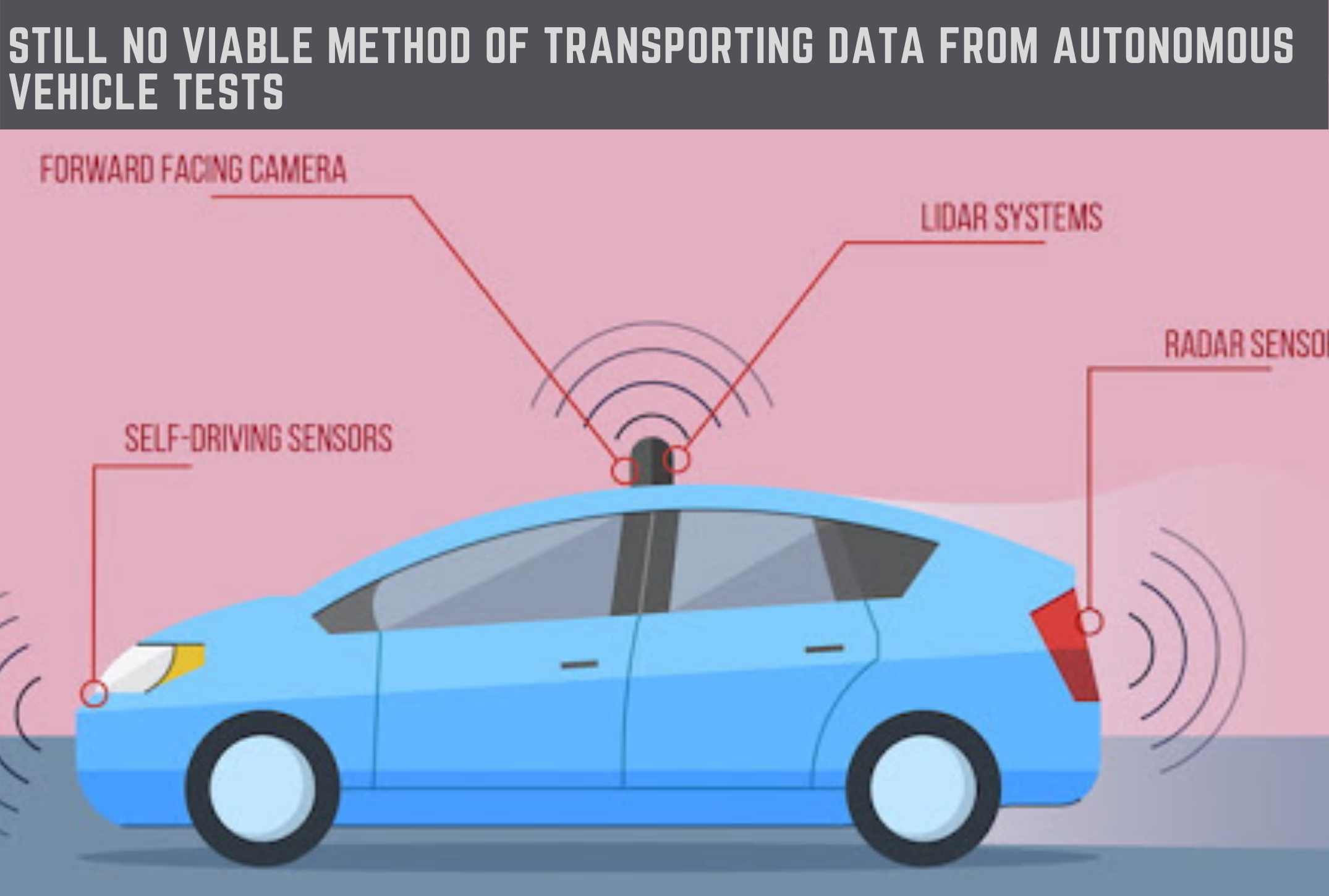
    Today, testers are extracting each frame of video data with its associated Radar, Lidar and sensor data by using open source Hadoop. The major benefit of Hadoop is that it scales processing and storage to hundreds of petabytes. This makes it a perfect environment for testing autonomous driving systems.

  3. Make the most of data analytics. In processing petabytes of automotive data, we have to look at how we present the data to higher level services. New data analysis tools can read different automotive formats to give us proper levels of access to the metadata and data. For example, say we have 700 video recordings, we now have tools that can pinpoint footage from the front-right camera alone to show how the car performed making right-hand turns. We can also use the footage to determine the accuracy of a model depicting the autonomous car’s perception of its ambient physical surroundings .
  4. Run the data analysis. In the end, we want to use data analysis tools to give R&D engineers a complete view of how the car has performed in the field. We want to generate information on how the systems will react under normal driving conditions.

Overcoming these data analysis challenges is critical. Manufacturers can’t obtain permits for releasing their cars until they can show that the cars performed up to certain standards in road tests. And when autonomous cars do start to hit the roadways in the next few years, auto manufacturers might need the KPIs they generated in testing. A few accidents are inevitable and, when questions arise, car makers can use KPIs to show the authorities, insurance companies and the general public how the cars were tested and that proper due diligence was performed.

Right now, there’s some distrust among the driving public of autonomous cars. It will take a massive public relations effort to convince consumers that autonomous cars are safer than traditional manually-driven cars. But proving that case all starts with the ability to process the data more efficiently

Autonomous cars promise to change the face of transportation, offering many more mobility options for individual motorists and companies alike. In moving forward with this new technology, our automotive clients have a very important challenge to overcome: processing the petabytes of data that gets collected during the development and testing of autonomous driving systems.

KPIs have always been important to car makers. They are necessary to attain road approvals and to track key competitive differentiators. With autonomous cars, however, car makers are accumulating – and must find ways to process and manage – 10, 20, sometimes 30 times the data as before.

self-driving vehicle technology

As a result, they need much more efficient data analysis tools that can help them analyze the data for the specific autonomous car KPIs they are looking for. To make this happen, they need to take the following four steps:

  1. Make sure the car’s sensors are working. There are typically eight to 12 sensor systems in an autonomous vehicle test car. It’s important to look at the data at the very beginning of the workflow by checking the KPIs to ensure that the system works properly. Some of the KPIs car testers evaluate include the following: vehicle operations, safety, environmental impact and in-car network efficiency.
  2. Scale the workflow to process the data. Traditional architectures of automotive frameworks are not suited for the large-scale data processing workloads required for testing the algorithms used in autonomous car tests. In using traditional data storage methods, vehicle test data gets stored in NAS-based storage and gets then transferred to workstations, where engineers test algorithms under development. This process has two downsides:
    • Large amounts of data must be moved, requiring considerable time and network bandwidth.
    • Individual workstations do not offer the massive computing power required to return test results fast enough.

    Today, testers are extracting each frame of video data with its associated Radar, Lidar and sensor data by using open source Hadoop. The major benefit of Hadoop is that it scales processing and storage to hundreds of petabytes. This makes it a perfect environment for testing autonomous driving systems.

  3. Make the most of data analytics. In processing petabytes of automotive data, we have to look at how we present the data to higher level services. New data analysis tools can read different automotive formats to give us proper levels of access to the metadata and data. For example, say we have 700 video recordings, we now have tools that can pinpoint footage from the front-right camera alone to show how the car performed making right-hand turns. We can also use the footage to determine the accuracy of a model depicting the autonomous car’s perception of its ambient physical surroundings .
  4. Run the data analysis. In the end, we want to use data analysis tools to give R&D engineers a complete view of how the car has performed in the field. We want to generate information on how the systems will react under normal driving conditions.

Overcoming these data analysis challenges is critical. Manufacturers can’t obtain permits for releasing their cars until they can show that the cars performed up to certain standards in road tests. And when autonomous cars do start to hit the roadways in the next few years, auto manufacturers might need the KPIs they generated in testing. A few accidents are inevitable and, when questions arise, car makers can use KPIs to show the authorities, insurance companies and the general public how the cars were tested and that proper due diligence was performed.

Right now, there’s some distrust among the driving public of autonomous cars. It will take a massive public relations effort to convince consumers that autonomous cars are safer than traditional manually-driven cars. But proving that case all starts with the ability to process the data more efficiently

Significance of “design for operations” approach for service-based IT

Service based IT companies

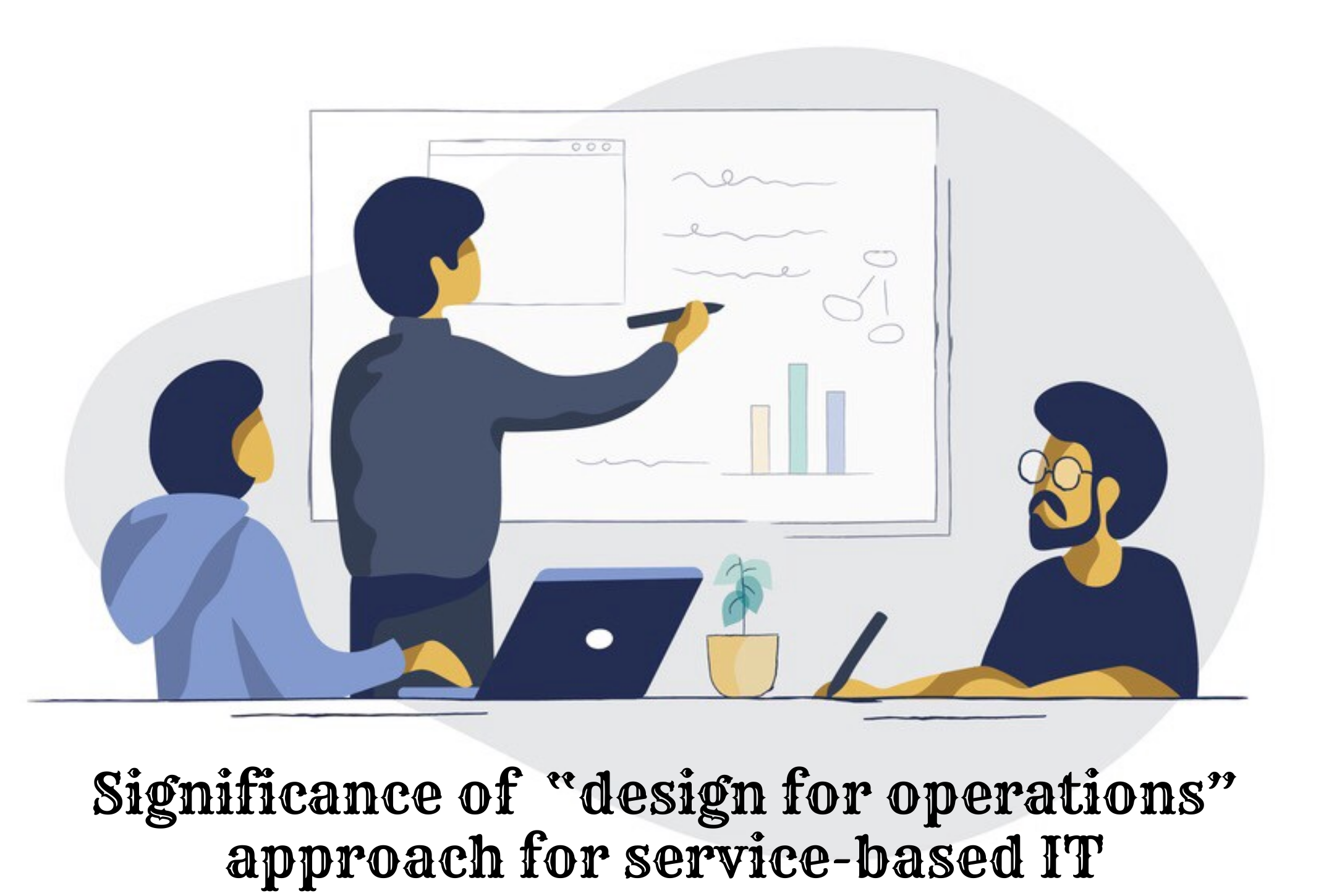
To deliver on digital transformation and improve business performance, enterprises are adopting a “design for operations” approach to software development and delivery. By “design for operations” we mean that software is designed to run continuously, with frequent incremental updates that can be made at scale. The approach takes into consideration the end-to-end costs of delivering and servicing the software, not just the initial development costs. It is based on applying intelligent automation at scale and connecting ever-changing customer needs to automated IT infrastructure. DevOps is the set of practices that do this, enabled by software pipelines that support Continuous Delivery.

 Design Operations

The challenge: Design for operations

Products and services pass through various stages of design evolution:

  • design for purpose (the product performs a specific function)
  • design for manufacture (the product can be mass produced)
  • design for operations (the product encompasses ongoing use and the full product life cycle)

Automobiles are a good example: from Daimler’s horseless carriage, to Ford’s Model T and finally to Toyota’s Prius (or anything else that’s sold with a service plan). Including the service plan means the auto maker incurs the costs of servicing the car after it’s purchased, so the auto maker is now responsible for the end-to-end life cycle of the car. Information technology is no different — from early code-breaking computers like Colossus, to packaged software such as Oracle, and then to software-based services like Netflix.

The key point is that software-based services companies like Netflix have figured out that they own the end-to-end cost of delivering their software, and have optimized accordingly, using practices we now call DevOps.

There are efficiencies that can be achieved only with software designed for operations. This means that companies running bespoke software (designed for purpose) and packaged software (designed for manufacture) have a maturity gap, where the liability is greater than the value. If that gap can be closed, delivery can be better, faster and cheaper (no need to pick just two).

It’s essential to close that gap, because if competitors can deliver better, faster and cheaper, that puts them at an advantage. This even includes the public sector, since government departments, agencies and local authorities are all under pressure to deliver higher quality services to citizens with lower impact on taxation.

The reason we “shift left”

A typical outcome of the design-for-purpose approach is that functional requirements (what the software should do) are pursued over nonfunctional requirements (security, compliance, usability, maintainability). As a result, things like security get bolted on later. In many cases, this lack of functionality starts to accrue as technical debt — that is, decisions that may seem expedient in the short term become costly in the longer term.

The concept of “shifting left” is about ensuring that all requirements are included in the design process from the beginning. Think of a project timeline and “shifting left” the items in the timeline, such as security and testing, so they happen sooner. In practice, that doesn’t have to mean lots of extra development work, as careful choices of platforms and frameworks can ensure that aspects such as security are baked in from the beginning.

A good example of contemporary development practices that support this is manifested when we ask, “How do we know that this application is performing to expectations in the production environment?” This moves way past “Does it work?” and starts asking “How might it not work, and how will we know?”

Enterprises need to adopt a “design for operations” model that includes a comprehensive approach to intelligent automation that combines analytics, lean techniques and automation capabilities. This approach produces greater insights, speed and efficiency and enables service-based solutions that are operational on Day 1.

All about Operationalized Analytics

Operationalizing Analytics

Organizations with a high “Analytics IQ” have strategy, culture and continuous-improvement processes that help them identify and develop new digital business models. Powering these capabilities is the organization’s move from ad hoc to operationalized analytics.

Seamless data flow

Operationalized analytics is the interoperation of multiple disciplines to support the seamless flow of data, from initial analytic discovery to embedding predictive and prescriptive analytics into organizational operations, applications and machines. The impact of the embedded analytics is then measured, monitored and further analyzed to circle back to new analytics discoveries in a continuous improvement loop, much like a fully matured industrial process.

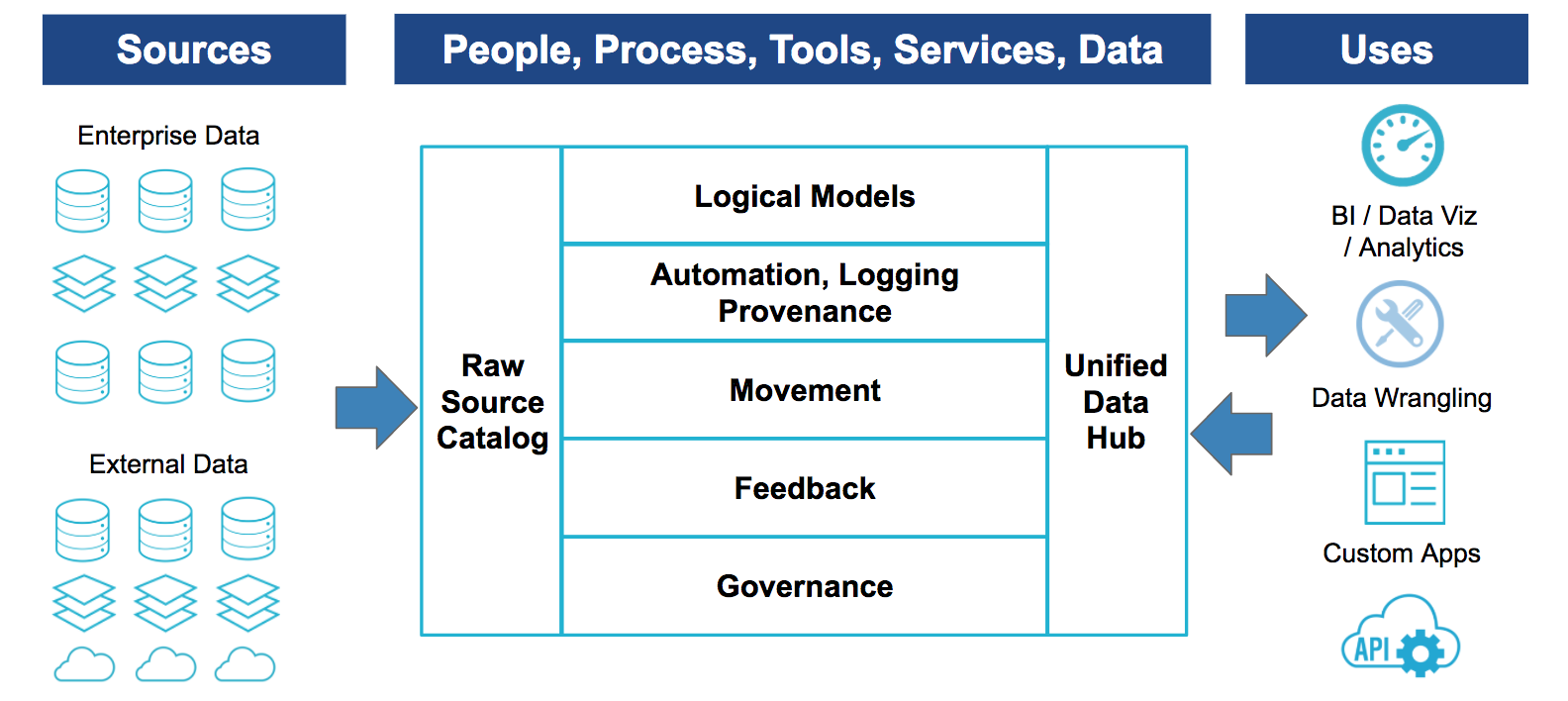
An example of operationalized analytics is the industrialized AI utility depicted below. It enables automatic access and collection of data, ingesting and cleaning of the data, agile experimentation through automated execution of algorithms, and generation of insights.

DataOps


Operationalized analytics builds on hybrid data management (HDM), an HDM reference architecture (HDM-RA), and an industrialized analytics and AI platform to enable organizations to implement industrial-strength analytics as a foundation of their digital transformation.

Operationalized analytics encompasses the following:

  • Data discovery includes the data discovery environment, methods, technologies and processes to support rapid self-service data sharing, analytics experimentation, model building, and generation of information insights.
  • Analytics production and management focuses on the processes required to support rigorous treatment and ongoing management of analytics models and analytics intellectual property as competitive assets.
  • Decision management provides a clear understanding of, and access to, the information needed to augment decision making at the right time, in the right place and in the right format.
  • Application integration incorporates analytics models into enterprise applications, including customer relationship management (CRM), enterprise resource planning (ERP), marketing automation, financial systems and more.
  • Information delivery of relevant and timely analytics information to the right users, at the right time and in the right format is enabled by self-service analytics and data preparation. This improves the ease and speed with which organizations can visualize and uncover insights for better decision making.
  • Analytics governance is the set of multidisciplinary structures, policies, procedures, processes and controls for managing information and analytics models at an enterprise level to support an organization’s regulatory, legal, risk, environmental and operational requirements.
  • Analytics culture is key, as crossing the chasm from ad hoc analytics projects to analytics models integrated into front-line operations requires a cultural shift. Merely having a strong team of data scientists and a great technology platform will not make an impact unless the overall organization also understands the benefits of analytics and embraces the change management required to implement analytically driven decisions.
  • DataOps is an emerging practice that brings together specialists in data science, data engineering software development, and operations to align development of data-intensive applications with business objectives and to shorten development cycles. DataOps is a new people, process and tools paradigm that promotes repeatability, productivity, agility and self-service while achieving continuous analytics model and solutions deployments. DataOps further raises Analytics IQ by enabling faster delivery of analytics solutions with predictable business outcomes
error: Content is protected !!