Top IoT Trends that Every Entrepreneur Must Watch Out in 2021

Top 35 IoT Terms You Need to Know

IoT – the concept which started taking leap decades ago has today not just gotten mainstream but has also marked a presence, across industries and the globe.

With its market size poised to be 1.6 trillion by the time we reach 2025, entrepreneurs and businesses from all corners are finding opportunities to enter the segment.

In this article, we are going to look into the IoT trends and its advantages, which would act as a torchbearer for businesses looking for an area to expand into.

And since we are well past the stage where we address what is IoT and how IoT works, and what are the advantages of IoT, let us jump straight to IoT app development trends in the world.

But before that, here’s a quick synopsis of the IoT market to set the tone of the article.

18 Striking IoT Trends 2021 and Beyond

1. Rise in number & types of IoT devices 
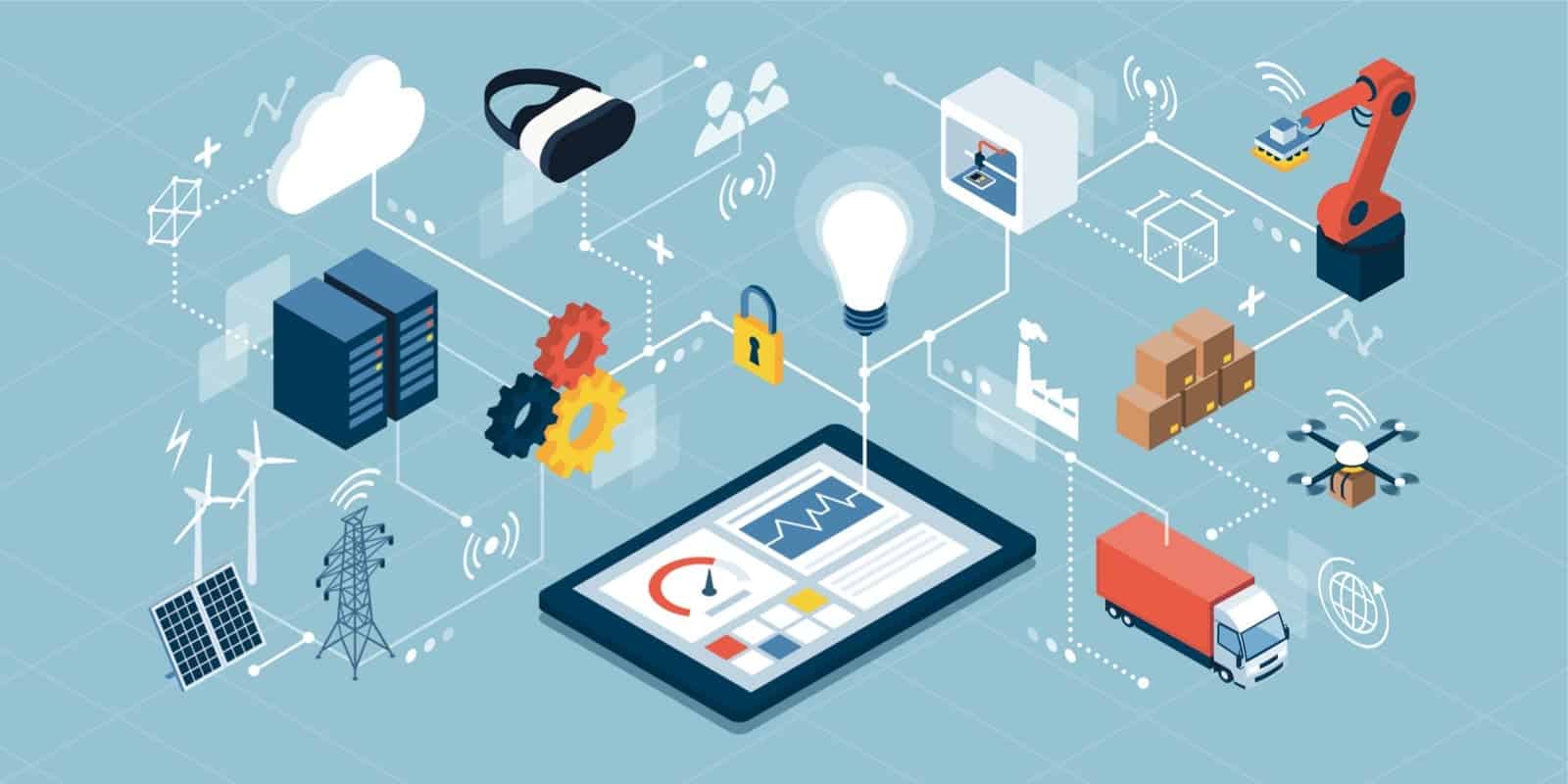
The Negative Impact of Manufacturing Technology in Business

2017 ended with 8.4 billion IoT connected devices, 2018 saw the number increase to 9.2 billion. The 2021 number is all set to be 20.8 billion by the time the year ends.

It is not just the number of connected devices which is on a rise but also the types. Here are the different IoT device types that are expected to go mainstream this year:

  • Voice Assistants
  • GPS Trackers
  • Smart Bands or Fitness Bands.
  • Smart Locks
  • Smart Smoke Alarms
  • Amazon Dash button
  • Smoke Detectors
  • Child Monitor
  • Doorbell Cameras
  • Home mesh Wifi Systems
  • Fitness Devices
  • Wearables
  • IoT based Security Systems
  • Security Cameras

2. Consumer IoT (CIoT) and Industrial IoT (IIoT)
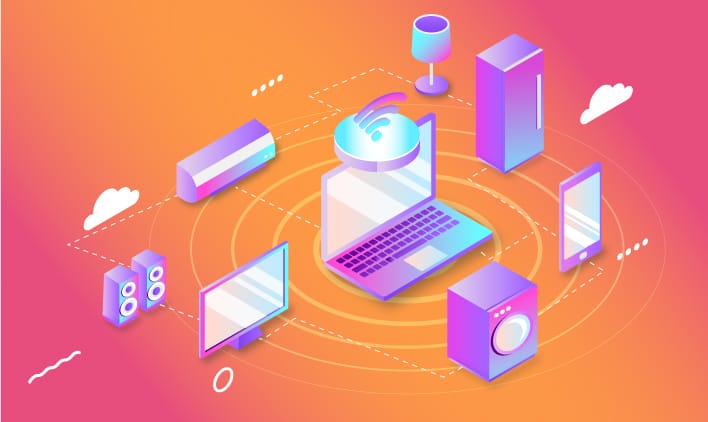
IoT Trends For 2020

CIoT is an IoT ecosystem that assists organizations with improving user experience by utilizing “insight” on users’ Internet-connected gadgets.

The customer IoT market is active for the last five years and is giving indications of slowing down. The Industrial Internet of Things on the other hand will start getting more attention as more and more companies start building modern industrial systems that want the adoption of IoT. Utilizing industrial IoT can decrease the probability of unexpected episodes in data transmission, information processing, or centralized administration.

3. Smart homes will become a norm

Smart Homes Will Soon Be The Norm, Not The Exception - Inman

Even people who discarded smart homes as devices for pretentious youngsters are now finding it difficult to ignore the capabilities the technology comes with. While it started with a steady growth, the demand for connected home devices will see a sharp rise in the years to come.

This demand, in turn, will increase the need for the manufacturing of connected electronic devices.

4. Cloud & edge computing 
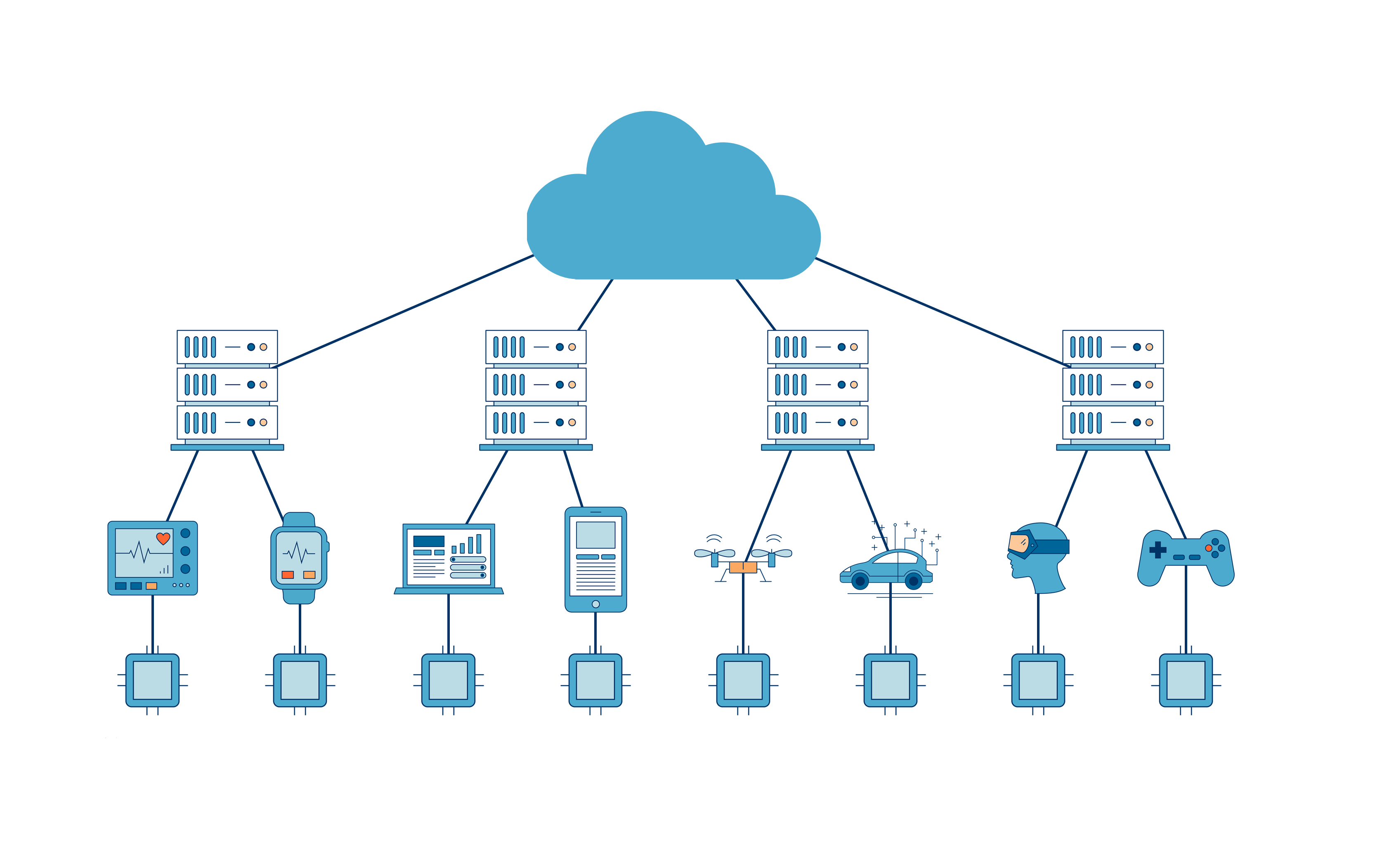
The Edge Computing Ecosystem: From Sensors to the Centralized Cloud - CB Insights Research

For a long time, the IoT devices have been relying on the cloud for storing their data. But the IoT application development industry has now started wondering about the implications of utilizing storing, calculation, and analyzing data to limit.

They are demanding that instead of sending the data from IoT devices to cloud, the data should first be transferred to local devices which are closer to the edge of the network. This local storage helps in sorting, filtering, and calculating the data and sending a part or the whole data to the cloud, thus reducing the traffic to network.

Edge computing offers a series of benefits to an IoT application development company and developers, which makes it one of the key emerging trends in IoT technology –

  • Better management of large amount of data which every device sends
  • Lowered dependency on cloud helping apps perform faster with reduced latency
  • IoT based mobile apps consumes less bandwidth.

5. A greater focus on IoT security 

10 Biggest security challenges for IoT

With the adoption being on a rise, more and more devices are getting connected to the Internet of Things. And as the network is expanding, the volume of data is also expanding and there is more information which is at risk.  In fact, the security vulnerability has also become a prominent answer of what are the challenges in IoT domain.

This greater use of IoT tools and technologies must be accompanied with a greater boost to IoT security awareness and training. The year to come will see machine to machine authentication overlapping, biometric logins becoming a norm, and technology combinations like IoT and big data, machine learning, and artificial intelligence being used to eliminate data infractions.

6. Greater personalization

Tips for Greater Personalization | Simantel

There would hardly be any industry left which has incorporated IoT in its offerings and is not taking advantage of personalization. With the help of beacon and sensors, the retail domain will be able to deliver next-level service offerings, through the use of IoT technology. Likewise, sectors like Healthcare and Edutech will also be able to deliver customized value offerings to their end customers.

This time can also be seen as a golden period for marketers looking to make a unique impact on their customers.

7. Incorporation of artificial intelligence, big data, and machine learning 

future-medical-technology-controlled-by-ai-robot-using-machine-learning-artificial-intelligence - The Arab Hospital Magazine

There was once a time when the goal of IoT was to collect data coming in from multiple sources. But today, the intent has become to not just collect data but also extract useful information from it.

Incorporation of next gen technologies like Big Data, Artificial Intelligence, and Machine Learning will define the trends and implications of IoT in the coming time.

Using the data analytics tools in the connected devices, businesses will be able to decisions around both predictive and preventive measures. And soon it will become a part of the latest IoT trends, both of the present time and the future.

8. Blockchain for IoT security and BaaS will become mainstream

IoT and Blockchain: Challenges and Risks

Although an extension on the security section, the integration of IoT and Blockchain deserves special attention of Blockchain development companies.

There are some pestering issues that IoT faces which have been adversely affecting the overall IoT growth trends and its mass adoption – Scalability, High Cost, Security, etc. being a few of them. A majority of these issues can be traced back to the centralized network.

Being centralized, there is minimal to zero guarantee in terms of security, especially since the data is held by a specific party.

Blockchain, being decentralized eliminates the issues of lack of security and control being with one party. The plethora of benefits that the combination of IoT and Blockchain offers makes it one of the important trend in IoT technology.

9. Smart cities will start flourishing

Five Technologies that any Smart City Needs to Cater - BW Smart Cities

What has been lying in the background for some years now, Smart Cities will become a thing of reality in the time to come. 2021 and the years to come will see the inception of several internet of things applications, which would be directed at improving environmental, social, and financial elements of urban living. The tech spending directed towards smart cities and the efforts to build IoT architecture, which is anticipated to reach $80 billion by 2050 will become a prime ingredient in the goal to improve the quality of living and sustainability.

10. SaaS will emerge as a norm
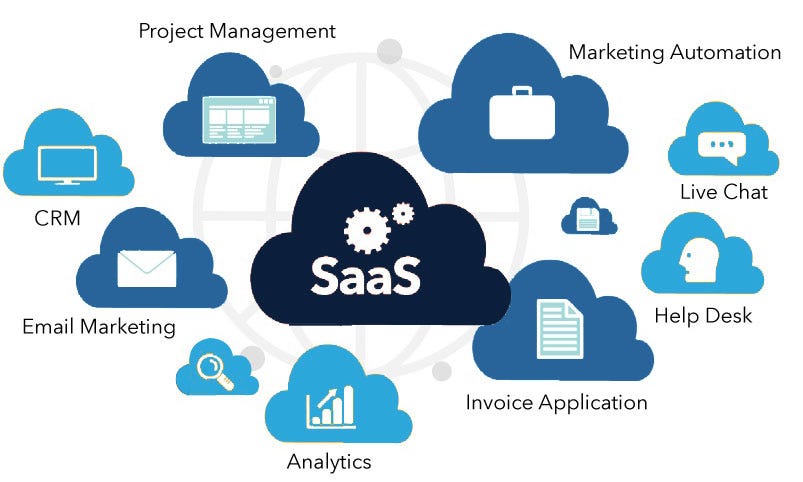
Saas, Paas, & Iaas- Decoding the 3 Cloud Computing Service Models | by Cuelogic Technologies | Cuelogic Technologies | Medium

It is impossible to talk about the technology without mentioning the benefits of cloud computing in IoT. By making data accessible in real-time, SaaS will find itself getting explored by a number of businesses as part of IoT trends 2021.

The time to come will see more cloud vendors coming in the picture for becoming an active part of the dependency that mass IoT adoption will bring alongside.

11. Unified IoT framework 
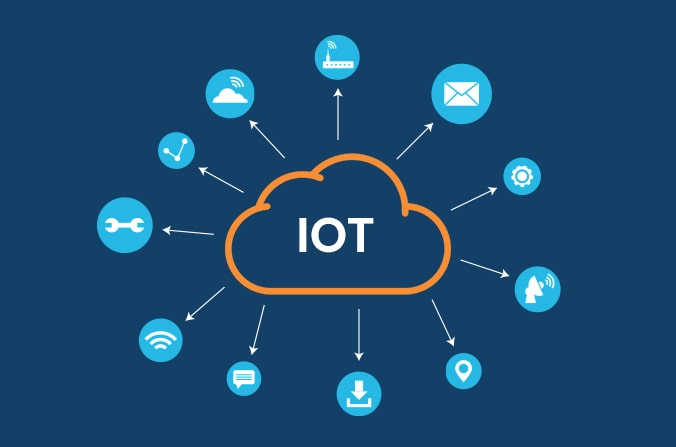
IoT Platform - For All Your Virtual Security Solution Needs!

The absence of a unified IoT framework is something that has been a major challenge for the IoT industry for a long time. The fact that not many companies work around a shared central platform, affects the adoption process to a huge extent.

Solving the issue through Blockchain will be one of the major IoT trends 2021. Blockchain driven ecosystem will bring all the data in one place with a decentralized operation model where the information will not be in control of any one entity.

12. Increased consumer adoption

What is Product Adoption? 4 Examples to Increase Adoption

One of the prime IoT market trends and the time to come will see IoT being used for not just personal or consumer based use but also industrial use. A validation of this can be seen in the numbers that the IoT connecting devices were set to grow to over 3.7 billion by 2019 and to over 50 billion by the time next year ends.

While the consumer based adoption of IoT is well talked about, we will look into the industrial internet of things in much detail in the next section.

As of now, the future of IoT lies in worldwide adoption.

13. Location tracking and wireless sensing will become a lot more relevant 

One of the major IoT Mobile App Development Trends will be seen in efficient tracking of location and wireless sensing.

With 5G prepared to come on the forefront, apps will get new capabilities on these fronts. According to Gartner, wireless sensing will be used for the creation of drone and virtual assistants, in addition to being helpful in object recognition, and medical diagnostics.

14. Greater efficiency and personalization in customer service 

The Importance of Personalization in Customer Service | by Kritagya Pandey | Becoming Human: Artificial Intelligence Magazine

There are several use cases of how is IoT shaping up the future of better customer service. Operative majorly at the back of IoT and Big Data convergence, customer experience is poised to become a lot more personalized in the coming time. The combination of both is what would help in achieving true omni-channel customer experience, which is a need of every modern day business, irrespective of what industry they belong to.

15. Voice will become the new mode of communication
16 Types of Modes of Communication with Examples - Leverage Edu

Voice search, while already extremely hyped in the market, will see new demand flourishing this year. This time, it will be around IoT devices – for summoning them, connecting them with other devices.

This operation has majorly been done by algorithms, but from this year, you will see the operation becoming voice centric.  

16. Predictive maintenance will witness a rise

Using predictive analytics in health care | Deloitte Insights

The next-gen manufacturing tools will make use of built-in sensors and advanced programming for performing predictive analytics and forecasting the potential issues much before they actually happen.

This will not just lower the downtime but the data based predictive analytics will also eliminate guessing games from the preventative maintenance strategies. It will enable engineers to schedule and then initiate maintenance when the machines are dormant.

17. Automotive revolutionizing interaction between cars and people

SMART CAR – Revolutionizing the future of car technology

The employment of IoT in the automotive sector has brought in a vast development in the field of fleet management, connected cars, maintenance systems, and in-vehicle infotainment and telematics.

An idea of auto cars is basically based on the establishment of the IoT, autonomous vehicles are about connectivity. This implies that the vehicle is remotely controlled by IoT and automated vehicles are a forthcoming entity.

IoT car support system assists an individual to take essential steps to prevent the parts of the vehicle/car from abrupt breakdown. Like dashboard indicators of a vehicle, this framework alarms the driver about the possible breakdowns. In any case, the alarms are sent to the driver’s phone, before the issue even happens. This assists the driver with making cost effective and efficient strides to evade component failure while driving.

18. Better workforce management
Why You Need Better Workforce Management for a Productivity Boost

The use of headlights in recording the hours is expected to turn into an ordinary practice. Headlights are normally used to send messages to customers through smart phones. Decreasing the expense will expand the use of beacons in dealing with the work force. Beacons can be utilized to monitor personal and schedule tasks. All the information from these frameworks can promptly be used to populate the solutions of performance management.

Beacons can be generally used to screen the safety of the employee. This applies to circumstances where fitting safety equipment should be utilized. The health sector can utilize signals to screen the activities of doctors, medical professionals and nurses. This incorporates admittance to medical records and the use of medical equipment. IoT is quite possibly the most important subversive methods on the market.

These 18 IoT technology trends for 2021 that you just read are only the tip of the iceberg. The adoption of the technology would go above and beyond when it comes to changing the lives of millions, through connection.

On the note of changing lives, let us look at all the prospective industries IoT would touch in the coming year and how they would become new trends in IoT.

Industries That Will Get Affected by IoT in 2021

Although there are a plethora of industries which will witness IoT redefining their processes, there are a few which will play on in a front foot mode when the emerging trends in IoT are being defined.

A. Consumer electronics 

Supply chain pain points: Consumer electronics

The functionality of the IoT ecosystem depends entirely on the devices it interacts with. While there are already a number of IoT driven consumer devices operative in the market, there will be more to come in the coming time.

Here are some of the device types that will go mainstream in the coming time –

  • Next-gen locks to secure vehicles, home, and other personal belongings
  • Smart appliances which regulate power consumption
  • AI driven thermostats that adjust room temperature according to the weather outside.

B. Healthcare

Support Operation Goodwill & Cheer and Feed Framingham's Frontline Workers This Holiday Season - Framingham SOURCE

The IoT trends in healthcare will touch every single aspect of the sector. IoT implementation in healthcare will affect not just the software but also the hardware systems of the industry.

Several new personal healthcare devices like wearables will enter the market, enabling consumers to monitor their own health. Another Internet of Things trends in the healthcare sector will be seen in several hardware coming into existence allowing medical officials to track staff and patients, while monitoring the medical equipment.

C. Manufacturing 

Manufacturing - Overview, History, Economic Impact

The industry is one of the major sectors to become a part of industrial IoT trends 2021. Manufacturers from across the globe have already started investing in embedded devices for monitoring assets and equipment.

Commonly called smart manufacturing, Use of IoT in manufacturing improved the productivity and efficiency of operations.

D. Automotive

Automotive Suppliers | Siemens Digital Industries Software

Majority of the IoT next six year’s growth will be seen coming from the automotive and industrial sectors, according to an IDC report. The two domains alone would highlight a yearly growth rate of 60% in the IoT sector, solely at the back of the growing number of complexities of sensors which capture data from machines, automobiles, and other industry based assets.

E. Financial service

9 Effective Financial Services Marketing Techniques | DAP

With users opening up to the idea of conducting their financial services on different devices, the IoT trends in the financial domain will become too prevalent to ignore by financial software development companies.

The time to come will see introduction to smart cash points having connected vending machines that would allow consumers to take loan, accept deposits, transfer money, and undertake a plethora of other financial transactions straight from a device.

Apart from new financial models, the IoT trends in insurance industry will come in the forefront with the industry expanding their offerings to accommodate the risks and needs of connected devices and ecosystem.

F. Retail

How Smart Devices and IoT Are Reshaping the Retail Industry

The IoT trends in retail will see the industry seeing physical and eCommerce getting combined. Instead of visiting the stores, consumers will soon be able to try on outfits at home through the power of Virtual Reality. The grocery industry will also witness an overhaul with IoT changing food consumption, farming, and the overall supply chain.

The time to come will witness an Omni-Channel retail, powered by IoT app trends.

G. Energy 

Energy Security | OSCE

The incorporation of IoT in the energy sector will lead to the industry becoming a lot more efficient and streamlined in terms of energy management. The impact of IoT in the energy sector will majorly be seen in the following areas through the mode of smart cities and smart homes –

  • Cost Saving
  • Better energy consumption and management
  • New data source offering transparency in the system.

H. Education and training 

Education and Training | NYS Joint Commission on Public Ethics

The last but very impactful trends in IoT applications will be seen in the training and education domain. In the time to come, IoT will become a very important skill that a modern-day engineer or marketer should understand. Noting the heightened rise, we are going to see more courses lineup aiming at IoT specific studies.

We will also see businesses invest in boot-camp courses within offices to give their employees an exposure of the technology in action.

Challenges Of IoT

An Introduction to the Internet of Things

At present, there are four fundamental drivers of the IoT market: the ever-growing Internet connectivity, smartphone devices, and sensor devices with lower costs, great investments are filling the IoT. Also, there are four challenges for the growth of the IoT market: worries about cybersecurity, privacy, application process issues. Innovation is yet scattering.

The Internet Of Things is facing problems in many areas such as IT, Healthcare, Data Analytics and so on. Let’s discuss some of the challenges.

Scalability

Billions of internet-enables devices get associated in an enormous network where large volumes of information need to be processed. The system that stores, examines the information from IoT gadgets should be scalable. In the present period of IoT evolution everyday objects are associated with one another through the Internet. The raw information acquired from these gadgets need enormous information investigation and cloud storage for understanding helpful information.

Interoperability

Technological principles in many regions are still divided. These technologies should be joined to help us in building up a typical structure and the standard for the IoT gadgets. As the standardization cycle is still lacking interoperability of IoT. This absence of interoperability is preventing us to move towards the vision of associated everyday interoperable smart items.

Connectivity issues

In its present form, the IoT uses a centralized, server-client model to give availability to the different servers, workstations and systems. This is very productive, since the IoT is yet in its earliest stages, however what happens when billions of devices are all using the network simultaneously.

According to updated reports from Gartner, more than 20 billion individual units will connect to the IoT by 2021. It’s just a matter of time before users start to experience significant bottlenecks in IoT connectivity, efficiency and overall performance.

Conclusion

While these above mentioned emerging IoT technologies trends will be a good starting point, you will still need someone to help you with getting started with a full-fledged business in the IoT sector. And so, the next thing to follow after being accustomed with what is the future of IoT is getting in touch with an IoT app development company who would hand hold you towards future and next-gen offering.

You can also opt for companies in your area like IoT app development company USA, if you live in the US or any other area where you reside. But you have to be careful while choosing a company or developer to get quality results. Check the expertise and knowledge of the blockchain development company before finalizing any prospect.


Cloud Computing for Beginners: A Complete Guide

Introduction to Cloud Computing

Core Infrastructure with Cloud Computing | by Sanjam Singh | Devops  Türkiye☁️ ? ? ☸️ | Medium

Before cloud computing came into the picture, many companies used traditional servers to carry out operations, processes and data storage. Eventually, it became challenging and costly to completely rely on other companies later, for computing, data processing and storage. But thanks to the big giants today, for creating advanced cloud computing services for making computing and storage more convenient and manageable.


Cloud computing is a leading edge technology that stands for the delivery of high-demand computing services including applications, storage, and power processing, entirely over the internet. It means that instead of using external computer hardware and software, cloud computing offers the entire computing and data storage and processing service over the internet only.


In simpler terms, cloud computing is the practice of using a network of remote servers that are hosted on the internet. The purpose is to store, manage and process data effortlessly rather than relying on a local server or personal computer system.


For decades computer industries used to work by storing data and running programs from the hard drive. But ever since businesses have adopted the cloud computing service, with the help of online connection, it has become flexible to manage resources anytime and anywhere.


Cloud computing gives users easy access to use online services that are available through any device with an internet connection. Users don’t require to be in a certain location to utilize this service as ‘The Cloud’ is almost everywhere these days. In fact, here are some examples of companies that provide their services online through cloud services:

Understanding How Cloud Computing Works

What is Cloud Computing? | How Does Cloud Computing Work?

Here is a layman’s guide to how to understand cloud computing works. Basically, cloud has two main sections: the front-end and the back-end. These sections are connected to each other through the internet network. The front-end is the user or client-side of the computer whereas the back-end includes ‘The Cloud’ section of the computer system.


The front-end that consists of the client’s computer enables the user to access data stored in the cloud with the help of the internet browser or with a cloud software. Although, all cloud computing systems do not necessarily have to use the same user interface.


On the other hand, the back-end of the cloud technology system is responsible for storing data and information securely. It includes servers, computers, data storage systems, and central servers. The central server uses a certain set of rules called protocols to facilitate operations. To ensure seamless connectivity between computers or devices that are linked through cloud , it uses middle-ware software.

Apart from these two main section components, the cloud computing services fall under three broad models:

  • Infrastructure as a Service(IaaS):

In this most basic service model of cloud computing, where the user can rent network connectivity, IT infrastructure resources like data center, servers, storage networking hardware and cloud computing security compliance from a cloud service provider. The enterprise can use the IaaS and customize it accordingly so as to build a cost-effective software offering.

  • Platform as a Service(PaaS)

This cloud computing service offers an on-demand environment to develop, test, deliver and manage software applications. The PaaS is designed for developers to make it easier for them to promptly develop websites or mobile applications without having to worry about the setup or management of underlying infrastructure resources.


  • Software as a Service (SaaS)SaaS is the largest model in the cloud market that is growing rapidly today. This model uses the web browser to deliver applications to clients that are managed by the third party vendor. Whereas, its interface is accessed to the client side. Most of the SaaS applications do not require to be downloaded as these directly run from the web browser but some plugins are required to be installed.

The Virtualization in Cloud Computing

Just like its name, cloud computing is very vast as it holds various processes, operations, and management. Similarly, it involves a process of cloud computing virtualization. The cloud computing virtualization allows a user to utilize the same server to run multiple applications and operating systems, thus providing an efficient utilization of resources as well as reducing costs.


There are four main cloud computing virtualization types:


  • Application Virtualization:

The application virtualization helps users to have remote access to the application from a server. The server stores the personal information and other application characteristics but still holds the potential to run on a local workstation with the internet connection.


  • Network Virtualization:

It is the ability to run multiple virtual networks that individually have a separate control and data plan. Network virtualization provides the facility to create and provision virtual networks such as logical switches, routers, firewalls, VPN, and workload security, either within days or even within weeks.


  • Desktop Virtualization:

This desktop virtualization enables users to emulate a workstation load in place of a server. It allows users to access their desktop remotely regardless of any location by a different machine. It offers the benefit of user portability, mobility, effortless management of software like installation, updates, and patches.


  • Server Virtualization:

This is more of a technique to mask server resources. Server virtualization stimulates physical servers by altering their identities, numbers, processors and their operating systems.  This spares users from the burden of continuously managing complex server resources.

How does Cloud Computing Benefit an Organization?

Cloud computing is just not about trendy applications that people use for storing photos and videos online. It plays a major part in the business model nowadays and has taken the world by storm!  With the help of cloud servives, businesses are not only getting the benefit of storing and accessing data but also the benefit of operating businesses innovatively.

Following are the advantages that cloud computing benefits organizations with today:

Advantages of Cloud Computing - FITA

  • Cost Saving

It has been really expensive to run, manage, and deploy local systems for a long time and not to forget how much capital it has cost. With cloud computing, a user doesn’t require going through monthly expenditure of maintenance as everything is handled by the service provider itself.


  • Flexibility

Managing resources becomes quite easier with cloud computing as one has to simply pay for the resources that are being used each month. It offers the ease of process and operation as the Cloud storage providers offer flexible packages in which one can add or reduce the amount of storage that one pays to use.


  • Data Recovery

Cyberattacks can destroy a huge amount of data if everything is stored in physical servers and hard drives. As a result, it will not only lead to data loss but also to customer trust in the organization. With cloud computing, these issues are less likely to happen and even if it happens, there are massive storage locations where the data will always be safely present as a copy at another location.


  • Increased Security

With cloud hosting, your organization is always protected against hacking and internal data thefts. It offers a robust firewall technology that offers features like intrusion prevention systems and in streaming virus protection.

PHP vs Python: Features & Comparison in 2021

Python vs PHP in 2021 - Comparison, Features & Applications

Has it ever happened to you that you try to achieve something but the end result was totally unanticipated?

Sometimes good things are an accident – Electricity, Discovery of America, Gravity, and PHP.

Wait, what?

Actually, PHP was never intentionally designed. Rasmus Lerdorf, a Danish software engineer attempted to design an easy common gateway interface by using the C language that would help him track views on his CV. Little did he know what he had created for such a menial task is going to change the face of web applications.

As for Python, the language has its own fan following spread worldwide.

What is there to see is how these two fare when put under juxtaposition. Yes! We are talking about the popular battle of PHP vs Python.

So, why don’t we begin the first round by discussing what they are, individually?

What is Python?

PHP vs Python: Features & Comparison in 2021

Well, of course, it’s not a snake (pun intended).

For real, Python is one of the few best web programming languages for web development that is winning the hearts of many around the world. It is a non-complex object-oriented, high-level, interpreted language, possessing amazing built-in data structures connected with dynamic typing and binding. It is features such as these that make developers choose this language for efficient and effective app development.

What is more, it is a scripting language that is proficient in binding and combining numerous components together. To add another jewel to its crown, it favors cross-platform development, making it ideal for web and mobile app development.

In fact, Python had recently won second place as the most popular language on Github, beating Java to dust and is one of the most loved languages.

Features of Python programming language

Fast in nature

PHP vs Python: Features & Comparison in 2021

There is no compiling in Python, for the programs are added to the interpreter which runs them directly. This is something that happens for the rest of the programming languages. It is very easy and quick to get access to the feedback on your Python code like recognizing errors, etc. Due to reasons like this, Python has the ability to execute and finish the programs speedily in comparison to other languages.

Supports test-driven development

PHP vs Python: Features & Comparison in 2021

With Python app development, coding and testing go hand-in-hand, something that is a tried and tested way to the efficacious development process. Developers are able to develop prototypes of the applications as Python allows them to refactor the code.

Amazing standard library

PHP vs Python: Features & Comparison in 2021

Another probable feature of Python programming language that enabled it to beat Java on Github, is its collection of impeccable libraries. Python’s robust standard library supports the programmers in choosing modules as per the requirements demand. Here every module allows developers to add other multiple functionalities even when the process is about to complete and that too without any additional coding.

Support for Big Data

Support for Highly Scalable Big Data Systems

If you have been looking forward to working on the Big Data technology but aren’t sure what should be in your tool set, then trust me, Python will be all you need to start with. This programming language is being used extensively in Big Data development; simply because it is faster and has a lot of libraries in store, that are in harmony with Big Data.

Highly compatible

A Brief History of Python

Python is the first choice of developers who want to do away with the recompilation process. It is because along with supporting numerous OS like iOS, Android, Windows, etc., it allows developers to use Python interpreters to run the same code on all platforms and even modify it without performing recompilation. And on top of it, it allows programmers to check the code almost instantly when the changes are made.

Advantages of Python 

  • Object-oriented and cross-platform programming language
  • Portable in nature due to WORA functionality
  • Highly readable, making it easy for beginners
  • It is open-source, a feature which makes it easily accessible
  • It is a constantly evolving language

Disadvantages of Python 

  • Slightly in-effective in mobile computing and browsers
  • Design restrictions: Duck-typing may cause run-time errors
  • Delayed testing of web applications
  • A little too simple for certain tasks

What is PHP?

PHP - Wikipedia

Speaking of the name itself, it has a little kick to it. The acronym does not fully describes its full form which is Hypertext Preprocessor. It is also an open-source scripting language (means a script-based program) that is server-side in nature facilitating development for every web app development company.

Additionally, it is possible to embed PHP in HTML to create dynamic web pages for web applications, database apps, and E-Commerce apps. In fact, developers consider it to be a pretty friendly language as it can connect with databases like Oracle, MySQL, etc.

Features of PHP

Highly flexible and scalable

AFS Retail Execution - a flexible and scalable solution to help you win at the shelf - AFS

To be successful, a language should be flexible and scalable enough to give a wiggle room to programmers to have fun, something which PHP clearly offers. It can be easily integrated with other programming languages, namely, Java and others. The components built with this language are reusable.

There are many extensions available to enable different functionalities, that help in defining many kinds of project requirements.

Fast loading speed

X-men - Quicksilver HD wallpaper download

Speed plays a crucial role in making any programming language a favorite of developers. PHP is considered to be a high-speed rendering language as it easily establishes a connection with the database to fetch the requested data in less time as compared to many languages out there in the market.

Supports Cross-platform development

Best 10 Cross-Platform App Frameworks to Consider in 2020

PHP is no way behind Python in catering multiple platforms, i.e, it is also a cross-platform language that helps developers in creating web applications for operating systems such as UNIX, LINUX, Windows, and more. What is more, it also supports Apache and MySQL database.

Loosely typed language

PHP is denoted as a loosely typed language as it supports variable usage without even declaring its data type. It will be taken at the time of the execution based on the kind of data it has on its value.

Error Reporting

40 Best PHP Libraries For Web Applications in 2020

One of the amazing features of PHP is that it has a function that generates a warning notice when something is wrong, allowing the developers to address the issues in real-time.

Advantages of PHP

  • Has an enormous ecosystem
  • Object-oriented and open-source language with an active community
  • Interoperability- has numerous pluggable frameworks
  • Supports first-class debugging

Disadvantages of PHP

  • Threaded and slower execution
  • No Internet of Things community support
  • Limited visibility and control
  • Externally dependent

PHP vs Python: Battle begins

Now, let’s see how Python Compares to PHP and vice versa.

1. Performance and speed

How to test your Internet speed, and which package is right for you – Stephouse Networks

Speed is often synonymous with great performance in web applications. And in the case of PHP vs Python performance for web applications, it is no different.  It is crucial for web apps to perform error-free while processing millions of requests at a time. PHP is considered to be much more effective at speed. Though PHP 5.x was fast, PHP 7.x broke its own records, leaving average Python programs to dust. It completes the tasks almost 3 times faster.

2. Syntax and code readability

Python vs Java: Who Is Winning the Battle of Codes? | by R Sharma | codeburst

Syntax plays a prominent part as a point of difference between PHP and Python. To be brief, the syntax of PHP kind of resembles that of the C language. The programmers have to be careful and need to use curly brackets, operators, and additional characters. What is more, developers can also ignore the white spaces while the compilation is on-going, bringing the additional usability that will assist in structuring the code into logical components.

As of Python, the syntax is made on the separation of codes with spaces and tabs, expediting the process of coding to a great extent. Moreover, Python’s syntax is readable which makes it easy for beginners to learn it effectively.

3. Price

It is a good thing that both languages are open-source which means nothing but that they are free to use. In fact, developers have advocated that these even though free in nature, maybe better than some of the paid frameworks.

4. Library Support

What gives Python an edge in the battle of PHP vs Python 2020 is that it has exceptionally extensive and well-developed library support for all types of applications developed using Python. Some of the most preferred libraries that developers use in Machine learning development along with others are TensorFlow, Theano, Scikit, etc.

Though PHP is lagging behind, it also has packages repository “Packagist” that is pretty popular among the developers.

5. Web frameworks

Web application framework: What it is, how it works, and why you need it

Both PHP and Python have loads of responsive and incredible web frameworks to start with. For Python-based web frameworks, some that stand out the most are Django, Bottle, CherryPy, Pyramid, and more.

As for PHP-based web frameworks, we have Laravel, Codeigniter, Zend, Symphony, and so on. As both Python and PHP programming languages provide a pretty good variety of choices to the developers, beginners are still a little bit more inclined towards Python’s Django framework because it is mighty fast.

6. Debugging

To give you the verdict on this point of comparison of PHP and Python before even diving deep into it, we have to say that it is a draw.

You ask why? Well, if Python has “Python Debugger” (PDB), a well-documented and facile debugger, then PHP has its “XDebug” package; both offering the most basic debug features – stacks, path mapping, breakpoints, and more.

7. Front-end feasibility

Web programmers also look forward to developing the layout or the front-end of their websites and portals using numerous effective tools along with languages like Bootstrap, CS, Angular, etc. Python here provides numerous opportunities for the developers to adopt the same techniques and later combine it with Python code by employing frameworks.

This way, designers can easily design websites, whereas the backend developers find it easy to use via a much subtle and understandable language like Python. So, definitely, Python here wins over the PHP.

8. Usability

Small Business Website Usability

It is prominent to consider the architecture of the languages before we conjecture anything in favor of either language.

The fact that both Python and PHP are object-oriented translate into that they compress code modules containing some functions and data in objects. So, any developer who is even a little bit familiar with object-oriented programming can use either of the languages.

9. Maturity

Website Usability Testing: How To Get Started Today | Hotjar Blog

On the grounds of maturity, Python is inevitably the winner since it was first introduced in 1989 by Guido van Rossum and released in 1991. Its latest update 3.8.0 was released recently on 14 October 2019. It is the most mature and secure among the technologies which make the fundamental building blocks of the intricate mosaic that is the IT industry.

As for PHP, it was created in 1994 by Rasmus Lerdorf. Though not as mature as Python, it still has created a still in the market with its features. The very first manifestation of PHP was a simplistic set of Common Gateway Interface (CGI) binaries that were written in the C language. The latest version of PHP is 7.2.7.

10. Package Management

Speaking of Python, its package managers are effective in organizing the code and keeping the backups along with the version numbers. It helps the developers track their progress while helping businesses perform regular updates on the activities.

As of PHP, though is package management, however, it doesn’t match up to the PIP, a tool to manage and install Python packages. It allows developers to install, upgrade, and even uninstall while using a wide range of sources for external as well as internal libraries.

11. Market Popularity

Market share importance for businesses

If you want to judge or compare two things, market popularity tops the list of points of comparison, because it indicates why developers and programmers love something.

Looking at this graph above we can surmise that Python is the most searched on the web in the US as compared to PHP.

It has been observed that 7,212,664 websites have been developed using PHP, and as for Python, the number amounts to be 146,702. What is more, PHP is leading in countries like the US, Japan, Germany, and other 150+ countries. In a survey by w3techs.com, as you can see in the graph, it is evident that as of May 29, 2019, PHP was the most popular language based on traffic.

12. Versatility

Python in comparison to PHP is evidently versatile in nature as it is an ideal choice for developing websites integrated with Machine Learning and AI. It comes with an abundance of libraries that support these technologies and facilitate their integration into the web apps.

13. Well-thought-out design

24 of the Best Mobile App Design Tools | BuildFire

While comparing PHP vs Python for backend, we found that Python, as compared to PHP, is fairly easy to grasp. Python has a well-thought-out-design (refers to the method used to insert code) than PHP. This means that developers find it easy to program for backend with Python than they do with PHP. It is simply because Python is a flexible yet robust programming language, something that PHP lacks.

14. Documentation

Importance of Project Documentation in Project Management [Updated]

Well, it is a draw. Both languages have an abundance of documentation spread across the internet. Any beginner can easily find resources and documents related to any aspect of these languages and can get answers to even the most complicated queries- All thanks to their communities.

15. Environment Management

Speaking of environment managers, Python is extremely lucky in this regard. There are some terrific breed applications to manage the environment. One such example is Virtualenv – a system that is used to install and use numerous versions of Python simultaneously and switch them as often as needed with ease.

Though PHP also has an analog for Virtualenv known as VirtPHP.  However, it is advised to use containers.

16. Learning Curve

Starting with PHP, being a straightforward language, it has a fairly low learning curve. It is ideal to learn PHP for short-term projects, but if you want to learn something that gives long-term benefits then Python is your match.

Though on its own PHP is easy to learn, however in comparison to Python, PHP has a steep learning curve for Python is the most readable and easily comprehensible language. It is because the language uses a much simpler syntax.

17. Community Support

Community Support – The SpiritTech

Both languages enjoy the support of active communities. It is a crucial aspect for a beginner to consider before committing oneself to a particular language, simply because the learning process is full of doubts and queries and having strong support resolves half the issues.

However, we have to admit that community support of PHP is outstanding, given how actively they have been deprecating the language’s outdated aspects.

18. Salary and Job opportunities

Salaries | Indeed.com

While considering the payscale of both languages, we found that Python developers, on average, make somewhere around $120,024 every year in the United States. Whereas, PHP developers make an average of $86,017 per year.

In fact, you can see in the image above that Python developers, globally make nearly $63k, whereas PHP did not even make it to the list accumulated by Stack Flow.

Final Thoughts

To end this discussion, we would state the most obvious – both languages are differently capable in all aspects. One may surpass the other in one aspect and may lose in others. They both have their own set of features and functions to perform.

They are a paradox in themselves; there are many similarities between PHP and Python,  and at the same time are dissimilar as well in many aspects.

Nevertheless, Python has emerged to be the winner in most of the comparison points such as documentation, job opportunities, salary, etc. So, it is up to an individual which one they choose based on their requirements.

Mobile App Promotion Strategies for Startups

Mobile App Promotion Strategies | CleverTap

The mobile app ecosystem is a challenging environment. Year after year thousands of apps enter the app sector and compete for the pivoted top 10 listing.

One of the biggest fundamental mistakes an entrepreneur preparing for the top spot can make is not paying attention to the mobile app promotion stages. Or treating the process less than the number of effort required for the design and development process.

The question in the present mobile app state is not What is mobile app marketing, why is it necessary or how it works? But, what are the right app engagement methods.

It is a given that no matter how well crafted your application is, it will not get its spot under the sun until it is marketed right and there is a buzz around it much before it hits the stores and users’ devices.

Achieving the promotion utopia is not easy. But let us help you get there.

Here is an app marketing guide to help you market your mobile app.

But before you get to the stage of mobile application marketing, there is some homework which is required to be done to answer how to market an app successfully.

Prerequisites for Mobile App Promotion

Identification of app objectives and target audience 

Exploring your Target Audiences for Mobile App: How to Go About it

Much before you get to the stage of finalizing the right app marketing strategy and determine associated budget, you should flesh out who your target audience is. You need to explore and learn what are their pain points, what are the existing solutions available in the market, where are they lagging, and how your application can overcome them. In other words, you need to invest your efforts into product discovery, creating user personas, and much more.

Whilst this is the first step towards developing a mobility solution, it won’t hurt to revisit the findings when you are nearing the stage of mobile app marketing.

Do the keyword research

How to Do Keyword Research for Your Business Blog - Raka

Identifying the right set of keywords is a very important part of the app promotion process. One that you’ll find in every app marketing guide. Your application will stand a much better chance if you know what language your users will use to reach your mobile app through natural searches.

Since this is just the homework stage, you need not pay heed to the positioning portion of the keyword as of now.

The strategies for mobile app promotion are primarily made of two stages – Pre-Launch and Post-Launch marketing. Now, unlike the design and development part of the process, where the efforts reduce once the app is deployed, the efforts needed both before and after the app launch stages, in case of app marketing, are the same.

Let us look into the pre and post launch mobile app marketing tips.

Pre-Launch App Marketing Strategy

This is the stage which would enable you to create awareness about your application in the market. Here are the things that will have to be covered in the pre-launch app marketing stage.

Finalize a release date 

Android 12: Release date, betas, features, and news | ZDNet

A good starting point would be to finalize the release date of the application. Having a time frame in mind would help devise better mobile app promotion strategies. When deciding on the launch date, consider all holidays and events happening around the date, this will help ensure that the app is not getting overshadowed.

Build A Great App Landing Page

15 beautifully designed responsive mobile app landing pages | Webflow Blog

Mobile app landing pages have become some sort of a must-have for businesses looking to generate eyeballs right once the development phase starts nearing its end. The benefits of creating a promotion landing page can be manifold. First, you can use all the information collected on the page for conversion purposes. Next, you can use the content on the page for SEO purposes – improving the app’s ranking on the search engines.

Outreach initiatives 

Outreach Initiatives and Event Planning Committee | Student Government Association | Wright State University

One of the app marketing tips that works best in favour of promoting an application is the outreach initiatives that a business takes. While it would be a lot more beneficial for a startup to start rolling out Press Releases (PRs) and Articles from the stage where the app’s beta version is out, it’d be beneficial to start creating a list of prospects to reach out, in advance.

You should have a ready list of PR professionals, bloggers, and social media influencers before you start with steps to promote an app. It’d also help your mobile app marketing strategy to keep a few pitch ready with you beforehand to then send to the agencies.

Open social media profiles 

8 tips for expanding your social network - .:: PALLETIZED COWORKING - WAREHOUSING - FULFILLMENT ::.

While assumed to start once there is a link to download the app, ideally, the stage where you create social media profiles should occur 1-2 months prior. This will help you with avoiding mistakes while promoting your app on social media channels and leverage higher benefits.

Now, when talking about the same, you should start with identifying who your target audience is and which platform they frequently visit. On the basis of that information, open social media profiles and start posting content on them to keep the users’ interest in place.

Besides these pointers, there are a few things that you will have to cover from the development front as well. Let us look into them. 

Make the app easily shareable

Create Easy Shareable Stores with RealTimes App — All for the Boys

On the development front, it should be made easy for users to share your application to their friends and family. For this, you will have to ask your partnered mobile app development company to add native elements, which would make it possible to share the app through Message, WhatsApp, or other social media platforms.

Implement app analytics 

The Ultimate Guide To Mobile App Analytics | Instabug Blog

When talking about app success, it is not always about higher app downloads. Various other mobile app KPIs must be taken into account.

In relation to the same, there should be an app analytics section inside the application which would make it possible for you to keep track of how the app is performing when the time comes. Adding analytics at a later stage will be a lot more difficult compared to adding it at the development stage.

Enable push notification

Enabling desktop push notifications – Insightly Help Center

The prominence of the role that push notifications play in reaping higher benefits of marketing an app is undeniable. It can be your go-to tool for ensuring the app is always on the top of users’ minds. But in order for it to perform what you expect of it, you will first have to incorporate it in your application:

  • Register with the push notification service of the operating system;
  • The OS service offers an API that enables the app to interact with the service;
  • Add SDK to the app.

Post-Launch App Marketing Plan

The efforts that you put in the name of pre-launch app marketing is only half of what you will have to do for post-launch marketing. Now, when we talk about post-launch app promotion techniques, we basically talk about two primary approaches: Organic and Paid.

The idea here is to get as many downloads on your application as possible. For, the ranking of your app on the store will ultimately depend on the number of downloads it has received. But a thing to note here is that there is no list of the best ways to promote an app. It will all ultimately depend on your app type, what you are looking to achieve, and the budget you have set for the mobile app development process.

Paid Promotion Activities

How To Promote Your Business: 20 Proven Strategies - BuildFire

App-install campaigns 

The app-install ads when driven with the right app marketing strategy and in the right place and time tend to draw massive benefit for the application on the download count front. What is difficult in this method is determining reasons behind higher app uninstallation rate and take preventive measures for the same. But the returns that can be expected from this approach are massive.

Pay per click  

Pay per click tends to have a massive impact on mobile app promotion, if and when done on the right platform. While one approach would be to promote the app on search engine, what we recommend is promoting the application on other applications – this has shown to offer greater benefits to businesses.

Email campaigns 

Depending on the demographics of your target audience, eMails can be a great start for establishing your marketing strategy for app launch. By sending the details and values of your app to people who either subscribed to your landing page earlier or through cold emails can be a great way to get attention on your application.

Organic Promotion Activities 

App Store Optimization

App Store Optimization - Tips to optimize your app store listing | GoodBarber

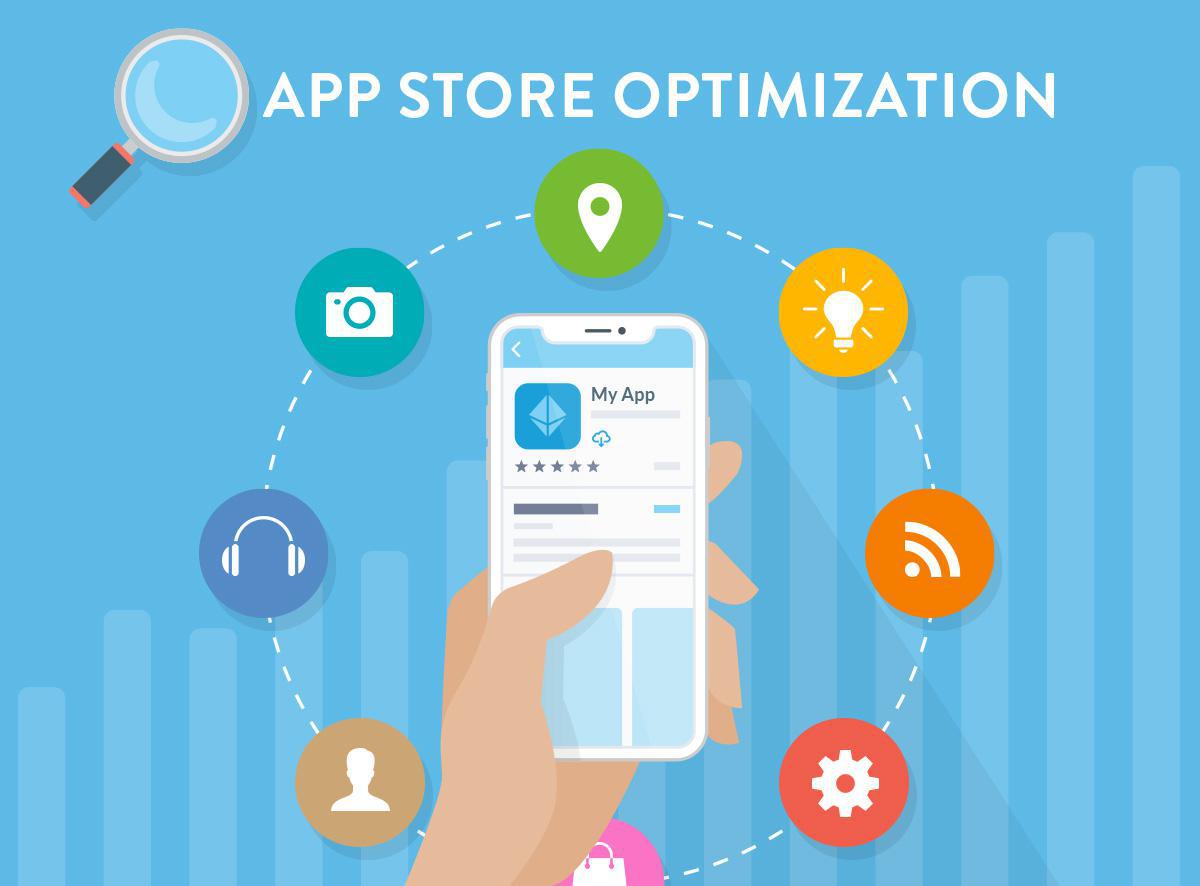
When we talk about organic Android/iPhone app marketing, the foremost strategy that strikes the mind is ASO or App Store Optimization. The idea of ASO is to work on the app’s store page in a way that it is fit to appear in the search list and enticing enough to be downloaded by the users in one go. The end goal of ASO, however, should be to ensure that the application gets featured on the Play Store.

Apply for awards 

Awards are a sign that the product is quality focused and is bound to add great value to the app user acquisition marketing strategy for apps. In many ways, they also play a role in getting greater downloads.

Here are some of the websites that accept awards application on the basis of its design, features, and other criterias:

Here are some of the websites that accept awards application on the basis of its design, features, and other criterias:

  • Appy Awards;
  • Best App Ever Awards;
  • Apple Design Awards;
  • Appsters Awards;
  • The Webby Awards;
  • Best Mobile App Awards.

Gain visibility 

Promotion Strategy: How To Promote Your Business [2021]

There are a number of app marketing ideas you can turn to for gaining visibility on your application. Here are a few of them –

  • Submit the application on promotion websites like Rate My Startup or Launching Next. these will help you in gaining reviews from entrepreneurs and other users.
  • Publish the app on alternative app stores like Amazon etc. (Note that this can only be a part of your Android app marketing strategy)
  • Conduct contests and giveaways to push the interest that you app is getting.
  • Keep in touch with the press to continue keeping your brand in the news.

Localize your mobile app

Though English is mostly the language that an app is drawn around, do not restrict the language as the only language. Many people in the world, even in the USA itself, do not use English as their native language – an event that affects the mobile app usage charts.

It is important to localize your mobile app according to the relevant regions – ones where your users belong. But when doing it, do not rely on auto-translation. There are a number of app localization agencies like  ICanLocalize, Babble-on, Tethras, Localeyes, etc, which can help bring the app to a global market.

The pre-launch app marketing strategy and post-launch app marketing plans you read above work amazingly well for getting million downloads on your app. But the hard work and effort doesn’t end there. You will still have to work around ensuring that people who install your app don’t abandon it.

While it would help to know the reasons why people uninstall apps, what we recommend is investing your time in mobile app reputation. There are three primary ways to attain it: Setting up listening tools, setting a team to reply to users in real-time, and bring troubleshooting tips on app and the landing page. But before these three, you will have to guarantee an optimized app performance.

Secure Code Review – A Prerequisite!

What is a Secure Code Review?

Secure Code Review is the process to check the code in the development phase so that there are no vulnerabilities left in the code. It involves manual and automatic testing of the code, which helps to review the loophole in the code that can later affect the organization. It is a process to identify and patch coding errors in the development phase before they turn into a high-level security risk. Reviewing security codes helps an organization to minimize the overall maintenance and development cost by enhancing the effectiveness of the code lines and eliminating any kind of early-stage risks.

Secure Code Review | SAFEDENY LLC

Major Focus Pointers for Code Review

Injection:

The injection is a flaw that allows the application to accept the inputs to enter shell commands, enter the database, or operating system, which makes the application vulnerable for injection attacks.

Memory Flaws:

The flaws like Meltdown and Spectre are caused due to inconsistent and vulnerable code, which ends up compromising the information and data present in the primary memory.

Sensitive Data Exposure:

When due to the vulnerability in the program code, an attacker can gain sensitive information like the credit card details, private data, passwords, etc is known as the sensitive data exposure.

Cross-Site Scripting:

The cross-site scripting is similar to the injection attacks. In this, the malicious scripts are embedded in such a way that the user’s PC trusts the malicious site by using the cookies as a legit site. This involves the browser side scripting and compromising the user.

Principle of Secure Code Review

Secure Code Review Service in Modipuram,, Meerut | ID: 19903245312

The principle of secure code review or the peer code review is that after this process, there should be no short-comings, security loose ends, code structure loopholes, and inconsistency in the code. It is done for the quality assurance of the code and thus, the code is read and rewritten mitigating all the possible vulnerabilities.

Purpose of Secure Code Review

Secure Code Review is an important step during the development process these days. It allows the code to be free from any kind of risk. It is important for the application to have consistency. It should be free from any security vulnerabilities and data discrepancies. The code should have a proper structure and ways to manage the data.

How is the Code Reviewed?

Secure Code Review - know the different types – Conviso AppSec

There are 6 steps to secure code review: – 

Reconnaissance:

The reconnaissance is the process where we see the code and try to figure out the basic threats and risks in it.

Scope Assessment:

Threats and risks are categories and scope is decided for the same. This scope helps us to follow a path in the next processes. This is known as the scope assessment.

Automation:

Based on the scope the code is checked using various tools. These tools automate the process following the checklist. Thus, this makes the process automated.

Manual Review:

After using the tools in the automation step. The code is manually checked to find out the issues if any. The left vulnerabilities are removed manually.

Confirmation and POC:

After the code is reviewed by an automated and manual process, it is sent further for the confirmation and proof of concept (POC). Thus, this step checks that the code is good to go and can be sent for compilation.

Reporting:

Once all the processes are done and are confirmed, the report is made for all the steps taken. This report contains the vulnerabilities that were there in the code and suggestions to mitigate them. This final report covers all the information on the secure code review process.

Attacks Summary Due to Lack of Secure Code Review in 2019-2020

  • 68% of a data breach of web applications
  • 27% of personal data of the US stolen from websites
  • 31% of credential data stolen from companies
  • 82% of vulnerabilities were in application code
  • 54% of cross-site scripting attacks were done because of loopholes in application codes
  • 29% of injection attacks took place due to no secure code review

Go vs Rust: Which One To Choose in 2021 ?

Rust vs Go — Bitfield Consulting

If you had to make a list of top programming languages that appeared in the industry in the past decade, the two names that would emerge would be Go and Rust.

And, if you had to sit down and think of the programming languages which were best aligned with the motive to develop secure, microservice favoring frameworks and apps, you would again find yourself staring at the two languages.

Even after being similar in some prominent ways like maturity, being open source, and being designed for microservice oriented, modern, parallel computing environments, there is a lot of confusion around Go vs Rust and which of the two languages are good for the developer community to enter into.

The intent of this article today is to look into the difference between Go and Rust in much detail. The differences that go beyond Rust use cases and Golang use cases.

Let us answer Which is better: Rust or Go?

But before that, let us refresh the basics of both the programming languages.

Rust Programming Language

PhD Thesis: Understanding and Evolving the Rust Programming Language – Full-Stack Feed

Rust language came into existence back in 2010. Deemed as one of the ML languages’ extensions, the aim that the language was expected to fulfill was better security, performance, improved parallelism, and greater modularity.

The feature set that Rust comes with has brought it to a stage where there are very few developers who haven’t heard of it or as showing an unwillingness to work in it.

Advantage of Rust language:

  • Amazing run speed
  • Enables fine grain features such as rich patterns, syntax extensions, and novel embeddings.
  • Interoperable with C, and FFI, amongst others.
  • Zero-cost abstraction
  • Predictable runtime behaviour
  • Saves crashing, debugging time.

Disadvantage of Rust language:

  • Learning Rust is steeper than Go
  • Between Go vs Rust, it is slow to compile
  • It is slower than the C and C++ language in the analogous conditions.

Go Programming Language

Go Programming Language: An Introduction

Go coding language was introduced back in 2007 by Google. It was looked at as a language that had emerged to solve the issues that organizations face when developing software infrastructure. The Go language specification was devised to introduce garbage collection, dependency management, built-in concurrency, robustness across multiple boundaries between the components, etc.

The result of the well thought of features of Go has gotten it a market position which is enough to bring it several points ahead in the Go vs Rust debate.

Advantage of Go Language:

  • The best feature of Go language is the incredible speed at which it compiles to machine code.
  • The simplicity of code
  • Concise, pragmatic, and efficient
  • Flexible and highly concurrency favoring
  • Strong interoperability with C language.

Disadvantage of Go Language:

  • Keeps simplicity over performance
  • Lacks the generics to an extent
  • Not enough immutability
  • Not a system language.

Now that we have looked into the basics of both the languages, let us get on to the part where we look into how they stack up against each other.

Rust vs Go: Performance 

Blog: Performance management simply isn't simple — People Matters

The one factor that weighs up Rust in the Rust vs Go debate is performance. The programs have been designed to run at similar or near similar speed of C++ and C.

Go, on the other hand, trade runtime speed for convenience, by making tasks automatic. But in terms of Rust vs Go Performance comparison, development speed of Go falls several steps behind the high performance that Rust offers.

Go vs Rust: Memory Management 

CLI memory management

Rust make use of compile time ownership strategy for memory management through zero cost abstractions. If a Rust program is not memory safe, it won’t be able to cross the compilation stage.

Like Rust, Go is also memory safe. But in the case of Go, it is handled automatically during the runtime. Meaning, developers won’t have to think of releasing or allocating memory when writing code.

Go vs Rust: Development Speed

5 Ways to Speed Up Your Software Development Process - WhiteSource

At times, the development speed becomes more important than the program speed. A working example of this can be seen in the case of Python, which is not one of the fastest languages to run but fastest to write a software in.

Go comes with the same appeal. The simplicity and directness that it offers makes it faster than a number of languages in the market.

Rust, on the other hand, comes with more language features and thus takes longer to master. Its compile speed is also longer than Go’s. So, if the intent is of faster full cycle app development services, you would be better off with Go than Rust.

Rust vs Go: Concurrency

Modern day apps are distributed and networked. The languages that haven’t planned for these realities are far off behind the curve. The developers have to be able to run the tasks independently and share state between the tasks minus the risk of data corruption.

Now while concurrency was built into Golang’s syntax from beginning, Rust recently gained the native syntax in the form of async/.await. But even though the concurrency of Rust lacks the developer experience that went behind Go, it makes up for it through Rust’s memory safety.

Conclusion

We could keep digging into both the languages, dissecting both sides of Go vs Rust comparison, but the ultimate answer to the Rust and Go comparison would be the fact that it depends. There are instances where Rust is better than Go and vice versa.

Ultimately, this is what we recommend as an app development company, who works on both –

Choose Rust when:

What is the Rust programming language? - AkuaroWorld

  1. If performance is a necessity
  2. If you want it to interoperate with C language.
  3. When your developers need control on every detail of how the threads behave with the rest of the system, how the errors must be handled, it would be better to look into Rust use cases.

Choose Go when:

The Benefits of Using the Go Programming Language (AKA Golang)

  1. If readability is a must have requirement
  2. If you wish to write codes faster
  3. If the focus is on uniformity and simplicity.

As Clients’ Extended Distributed Team, Here’s How We Run Agile Projects!

A recent report by Computereconomics found that in the 2018/19 period, the application development process has emerged as the one witnessing maximum outsourcing opportunity – with 56% of the organizations around the world outsourcing their development requirements.
How We Work As Our Clients' Extended Distributed Team

The reason behind this heightened demand for outsourcing the mobile app development needs has been the same as always – Lower cost than what would have to be shelled out if employing own country developers, allowing greater focus on the main business, and better service quality.

However, even with outsourcing taking a central place in the application development industry, we have found that there are some common concerns that the clients show when they plan to outsource their software development project outside their geographical nation.

In this article, we will look into how Appinventiv works with offshore clients using the distributed agile development cycle allowing a more connected working process with aligned risk and remuneration model across all.

But before we get on to the part where we tell how we operate as the distributed team of our clients and work so seamlessly that we become their extended in-house tech team, it is important to know what Distributed Agile Team even means.

How To Manage Distributed Teams With Agile Project Management

What Do We Mean by Distributed Agile Team 

A distributed team is a concept used to explain the event where two or more team function across multiple geographical locations instead of one office space or even two office spaces in one city. The distributed agile team relies on digital technologies to interact seamlessly and work together toward the same goal – Timely project delivery.

Why do Businesses Invest in a Mobile App Development Distributed Team?

There are a number of reasons that drive businesses to invest in distributed teams, reasons ranging from:

  1.  The scarcity of skilled developers in their nation
  2.  The need to test the market before an investment is made towards team buildup
  3.  To avail the benefit of the flexible team which can be increased at the time of scaling the app and dissolved when the need ends.

With the definition and the need now attended to, let us now look at how Appinventiv team works as a distributed team of our clients. But before we jump there, let us quickly look at what our typical distributed agile team structure looks like –

Appinventiv Approach to Distributed Agile Development 

Many a time we get a project where the requirement entails us to work in close connection with the clients’ FTEs. In such instances, it becomes very important that we don’t let the distance in thousand miles come between work and that we are able to make changes and take action on developmental process in real time.

How we ensure timely delivery without zero scopes of communication lag and misunderstanding is a question whose answer lies in Distributed Agile Methodology.

Fit with both small-scale and large-scale businesses, following distributed agile best practices comes in very handy when we have to work alongside a team that is sitting in some other geographical location with an absolutely different time zone.

Let us look at the Distributed Agile Development Method we apply in our mobile app development process.

Reasons Why We Trust Agile For Our App Development Process

After we have introduced all the team members with each other and have collaborated the project management software, the actual work starts.

We formulate the process of daily agile scrum methodology. While in its traditional sense, Scrum requires face to face standup meeting of 15 mins where every participant shares the status of their tasks and informs the team of the tasks they will be taking up next, it is nearly impossible to follow the same process when half of the team is sitting in some other geographical nation in some other time zone.

What we do to keep the essence of face to face interaction alive in the scrum, is we hold a video call on one decided time, which is suited for everyone in the team working on the project. With the help of screen sharing our Agile Scrum Master runs through virtual sprint backlog with the help of tools like Trello or Jira, enabling every team member to give an update on where the project is headed.

What we have experienced is that it is very important to give all the team members an access to a task tracking platform that is easily accessible and updatable. We also emphasize using a communication platform like Skype or Slack for everyone to share updates or ask their doubts between the two scrum time periods.

Another approach that we follow for daily agile and scrum process is that for every different scrum, we appoint one scrum master. So, every individual teamwork as a separate scrum team with a scrum master and product owner – A process which is also known as Scrum of Scrums.

In this, all the scrum representatives provide an answer to the following questions in the scrum –

  • The work that team has completed since last Scrum of Scrums
  • The work team is planning to do before the next Scrum of Scrums meeting
  • The present blocker that the team is facing
  • The blocker that can lead to another Scrum team.

The method enables all the main individuals working on the project to interact with each other directly, something that always results in dedication from the initiation stage to launch period. This ensures an open, clear, and transparent communication between all the teams, where everyone is given a voice. The process apart from scrum of scrums is the same as what we follow under the typical Agile methodology. But the mere fact that the distance between our team and our clients’ team is miles apart and yet we have to work as seamlessly as possible, has brought a series of learnings that we have driven by the adoption of Distributed Agile. Let us look at what those learnings are –

The Learnings That we Drew by Working on Distributed Agile Development Process

1. Creation of Distributed team is about Building a Culture and Not a Process

What defines the success of a project working under the agile for distributed teams approach is not dependent on how well skilled the team members are, but on how well they are able to work together, the sense of ownership with which they work, and ultimately how closely aligned they are with the goal of the project – something that comes with culture and not a process formation.

2.Only SMART Projects Succeed

When a project has to be completed by a team that is not even in the same country let alone office, it is very important that the goals that you have set for the project follow the SMART – Specific, Measurable, Achievable, Realistic, and Time-framed, concept to the t.

3. There is no Alternate to Online Collaboration Tools

No matter how much it costs you, you will have to rely on online collaboration tools that are real-time and have minimal to zero lags. In terms of finalizing the online project management and communication platforms, you can not in anyway cut slack. You will have to ensure that they are technically capable of handling your requirements.

Now that we have seen the learnings that we have drawn from our extensive working experience as a distributed team, it is time to look at some of the challenges that we came across during the process and how we solved them to become a trusted Distributed Agile App Development Company.

Challenges with Distributed Agile Development Approach and How we Solve Them

1. Difference in Culture

Usually distributed agile software development approach ask for working with teams coming from different cultural backgrounds. This difference causes friction because of different values and figure of speech. Our Solution: We work very closely with the client’s team in the initial few days so that we get accustomed to their between the lines and contexts.

2. A Difference in Time Zones

The crux of distributed agile methodology is teams working out of different geographical nations. In a situation like this, the occurrence of a communication gap emerging because of the time difference is very common. Our Solution: We follow the concept of agile for a distributed team to its core. We fix a time when the teams from all the nations are present and active. To achieve full focus and attention, we ask our teammates to change their office timing on the scrum day, so that they are well slept and attentive.

3. Lack of a Common Idea of ‘Big Picture’

Because of a difference in geographical location, working structure, and policies, there can be a discrepancy in the idea of the Big Picture – the end aim of the mobile app. This difference might cause a lack of interest from some team members and a heightened interest from others. Our Solution: A visioning meeting at the start of the project initiation and a  reminder in every scrum, so that everyone is working towards the same goal.

4. An absence of Code Ownership

The absence of collective code ownership means that no one person owns the code, it is owned by the whole team and so when something goes wrong, the blame game starts. Our Solution: We apply a version control system to check who is working on a code and when and the effect of it. This way, there is complete transparency and honesty in the picture.

What Does It Take To Create A Billion-Dollar Application?

App Builder | The Best App Maker for High End Mobile Apps

The world of smartphones is pretty exciting with constant changes in their landscape. With the arrival of a new device every week, the scope of these life-changing devices seems to be never-ending. Along with the evolving changes in smartphones, we’re also bombarded with several applications. Whether you want to book a taxi or purchase a rug, there’s a mobile application available for every purpose.

If you’re a budding entrepreneur with an innovative and developing app idea and are looking to make billions, you’ve surely found a sweet spot. Let’s take a look at the detailed guide to build a billion-dollar application.

How to Build a Billion Dollar App?

1. Building a team and raising funds

Why You Need To Build Your Team Before Raising Money - Brett J. Fox

If you have a revolutionary idea to build next million dollar app that you believe will be loved by millions of people, the first thing you should do is test your great idea for an app by stating it on a paper and getting feedback from the public. Figure out a problem, a solution, and translate it into an application.

Whether you use paper or photoshop, make sure your billion dollar business idea can be easily communicated and explained to others. Once you’ve made a great design, make a prototype out of it. As soon as your app gets into users’ hands, you can start getting feedback.

To start building a team, all you need to do is find people who share the same vision as you and have the required skills to make your dream achievable. Recruitment will be a game-changing task, and you must do everything to get skilled and enjoyable people on board.

Ask your friends, family, and even your enemies to download and use your app – and provide brutally honest feedback. Analyze your targeted audience and brainstorm different routes to reach them and use your application.

2. Capturing the product market

How to Conduct a Market Analysis for Your Business in 4 Steps

As of now, you should have a prototype ready and used by people. If you have a simple business model such as gaming, you may consider releasing the first version of your app startup idea on the app stores. Otherwise, for a complicated model, you need investment for further development.

At this point, the only thing you should care about is achieving a solid product-market fit and making sure people love your app up to an extent where they’re willing to pay for it. Keep developing a reliable user acquisition strategy.

You also need to determine the cost of acquiring a user and how you can make it profitable. The billion dollar app idea that started as a basic model will evolve quickly now, and you need to keep validating it by testing, measuring, and analyzing with users.

Although it may be hard to make an app that people love and pay for, you must keep patience and perseverance. Once you’ve gone through this stage of hardship, the valuation of your app should be on an average near $10 million.

3. Generating revenue streams

Revenue Streams | Business Model Canvas

Now when you’ve achieved product-market fit and have an app ready that users love, your aim should be to keep growing and achieving traction by improving all the aspects of your app and figuring out how to monetize it and generate revenue.

If you have a gaming, eCommerce, or marketplace business model, you’ve already convinced users to pay for your app. All you need to do now is improve the lifetime value of your app by holding and retaining users along with keen increments in your margins.

In addition to providing a satisfying user experience, you also need to work your way to optimize the price points and lower the cost of customer acquisition. Keep adding new features and revenue streams to your app without compromising on usability.

By this time, you should also land your first investor, and finally join the big bulls. This also means you should have at least a million dollars or more in your bank account, depending on your negotiation skills and traction.

4. Scaling like crazy

How one e-commerce giant uses microservices and open source to scale like crazy - TechRepublic

After signing your first investor, you continue gaining great reviews about your app and have a clear process to address user feedback. Your team also continues to grow at an enormous rate, and you may even hit a hundred people or even more.

Moreover, your user base should also be growing steadily and the user-retention strategy should be in place. As you reach this stage, you’ll notice that user acquisition has become predictable and systematic, along with the drowning cost of acquiring new users.

Your company is also becoming increasingly profitable and revenues are growing at an exponential rate. This calls for the need to constantly look for product innovations and introduce more revenue streams in your business.

Talking about the valuation of your app, everything seems to be different and you’ll no longer be treated as a startup. You’re now an established company with a very complex valuation based on your financial performance and uniqueness.

5. The big billions

What Is a Vision Statement and Why Is it Important? | BoardEffect

While you keep making constant progressions in the app and follow the momentum, you also need to have a clearly defined vision for your product with practical and systematic steps to realize it. The core mantra is to keep your users happy and satisfied with your app.

The business model at this point also requires to be tuned constantly, and even small fractional improvements can yield big profits. The valuations will still be complex and you must keep a keen eye on your profits, growth, and products.

How Much Does It Cost To Build An App?

Prior to leaping directly into the cost, first of all else, you need to choose the niche of the application and its features. The prerequisite of the overall population or the demand of the user ought to be profoundly understood, and a thorough thought should be given to respond to various inquiries.

Features and functionality

Features vs. Benefits: Here's the Difference & Why It Matters

Knowing the cost of development is an ideal opportunity to find what features impact the intricacy of the entire application. Execution of certain features can be a lengthy process, while others are moderately short and simple. Based upon the complexity of solutions, mobile app developers need to utilize third-party API or code from the scratch. Less complex solutions, thus, require standard instruments and connect with native features.

Product design

Product Design | Product Design Service | Spark Innovations

Making a special UI design is a complicated process that produces extra cost to your task. The less expensive variation suggests utilizing OS-provided things and building screens of standard components. The quantity of screen is likewise a deciding variable. Thus, cost strategies and models need to be decided before implementing any decision.

Number of platforms

Have You Done These 5 App Store Optimizations?

It is obvious that you need to make a decision on which platform to begin from. Making a decision for the platform is the most significant and difference making character for creating mobile applications.  These platforms take over various programming languages, have diverse SDKs and use distinctive development tools. Thus, the cost varies differently if one has to develop on iOS or Android.

Backend infrastructure

Premium Vector | Back end development concept.

When it comes to mobile app development, backend is normally an OS that provides developers with APIs to have a data trade between an application and a database. To follow user activity and access the performance of your consumer application, it is outfitted with examination. Depending on the quantity of parameters you will track and how detailed and specific the tracking will be, expenses vary.

App administration

Morpholio's Latest Trace App Update Streamlines Construction Administration Design Changes | ArchDaily

The organization board is unquestionably an extremely helpful tool for dealing with application content, customers, and statistics. There are alternatives to adopt existing admin panel formats for your necessities, yet tracking down a good one is an issue. So it makes sense to create a satisfactory board to meet your business prerequisites.

Location and structure of team

How To Create A Small Business Organizational Chart With Examples

The location of your application development team is a crucial factor affecting the product’s last cost. The expense of making an application in the US will contrast from the expense of mobile app development services in Europe or other different areas. If you want, you can opt for companies in your area like mobile app development company in USA if you live in the US or any other area where you reside. But you have to be careful while choosing a company or developer to get quality results.

Summing Up 

Today, billions of people across the world are using smartphones and their applications daily. Moreover, in a few years, the figures will simply multiply themselves, and that’s because technology has never been so accessible and powerful before. People are making the most to develop a billion dollar app and get the best idea to satisfy customers.

Impact of Android 11 Features on your Mobile Application

Turning it up to Android 11

Android 10 was a big shift for Google in the Operating System environment. We did not just finally get to work around the long-awaited Dark mode and saw several important changes happening on the app permission front, we also saw the end of an era.

With Android 10, Google brought its tradition to name operating systems behind desserts to a halt.

Android 10 was a testament to the growth and maturity graph that Google has taken. The same principles are being carried over by Android 11 developer preview now. While we are some months away from playing around the final build, the recent developer preview is a sufficient peek into where Google wants to take the operating system.

With every new update, it is not just the Android app developers who get excited. The stakeholders on the other side of the coin – the app owners – also sit on the edge of their seats everytime around the mid of May when a new version is announced at the Google I/O events.

Before we look into the ways Android 11 changes the app domain for the entrepreneurs who own Android apps, let us look into the new android features that have been introduced with the Android 11 highlights.

Android 11 Features Set

1.  Multiple Improvements for Messaging 

How to Combine All of Your Messaging Apps in One Place - Blog - Shift

Going by the Android latest version features, a lot is being done to improve the users’ messaging experience on Android. Here are the upgrades that have been introduced:

  • Chat bubbles – Android 11 chat bubbles hide all the ongoing conversations in little bubbles on the side of the screen. You can move the bubbles around and tap them to reveal the specific conversations.
  • To make the process of getting messages real-time, Android 11 has introduced a dedicated conversation section in the notification shade, offering instant access to all the ongoing conversations you are having.
  • With the Android 11 concept it will now be possible to send images when replying to a message from notifications.

2.  One-Time Permission

Android 11 features we love: One-time permissions | Android Central

If you look back at Android 10, one of the ebay things about it was how app permissions was handled. Android 10 gave the users a lot more control over the apps and what they could access. Android 11 keeps the train rolling.

Now, when the app asks for permission to use intricate features, the users can grant access on a one-time basis. The application will use the permission during the time you use the application. And the moment you quit the app, the permission will be revoked.

3.  Built-in Screen Recorder

How to use Android 11's built-in screen recorder - gHacks Tech News

Since the past few releases, the Android users have been desperately waiting for Google to incorporate a built-in screen recorder.  Although the chances anyone would need it on an everyday basis is very slim but the function is pretty basic, so the wait for it to get integrated was annoying.

Android 11 update will change this. Developer Preview 2 showed a screen recorder which was accompanied by an extremely polished UI and toggle for recording the audio and showing the touches in the recording.

4.  Adaptation on Different Screen Types 

Adaptive vs responsive design: which is better? | Webflow Blog

If there is one space where we can say that true advancements have happened in the Android ecosystem, it is in terms of foldable devices. 2020 is going to witness a lot of new additions in the foldable smartphone market – all running at different screen sizes and resolutions.

The OS 11 has been developed to run on the foldable devices effortlessly. Thus marketing the time to start working on foldable smartphones app development.

5.  Preparations for 5G

R&D projects support 5G network preparations | Daily Sabah

5G started making news by the second half of the last year and what has gone off in 2020, with coronavirus pandemic affecting a number of industries and technologies, the need for 5G adoption has only grown in the world.

To help the smooth processing, Android 11 has added a very important “Dynamic Meterdness API”. One that would allow smartphones to take the complete advantage set that 5G brings.

Once the API detects that you are connected to unlimited 5G, you will be able to access the highest possible graphics and videos quality and other intricacies that come adorned with the 5G technology.

Now that we have looked into the Android new features & API, let us shift the focus on how these additions would bring a change in the functionality of your existing app.

What Would Migrating Apps to Android 11 Mean for Your Android App?

If you look at the Android 11 developer preview documentation, you will find that it is divided into three categories: Behaviour Changes, Privacy Features, and New Features & APIs. Under all the categories, there are pointers which carry an impact on the application’s performance.

While majorly your partnered android app development company will look into those changes, let us look into the things that you should be on top of.

1.  The users can restrict when permission dialog appears

Exploring Android Q: Location Permissions | by Joe Birch | Google Developers Experts | Medium

Android 11 will discourage repeated requests for a single permission. If your users click on ‘Deny’ twice for a specific permission, it would imply ‘Don’t ask Again’. What this translates to is that you will have to clearly convey and convince the reason behind asking for permission in your marketing methods or through your MVP features.

2.   App usage stats will be kept private 

Mobile App Usage Growing as Users Spend 3 Hours Per Day in Apps

For better protecting the users data, Android 11 will store all the users’ app usage statistics in the credential encrypted storage. Thus, neither the app or any system can access the data unless certain coding work is done. Which, in turn, is dependent on two conditions:

  • Users unlock their devices the first time after system startup
  • Users switch to their account on the device.

So, until your developer knows the workaround, you will face issues in viewing the app usage statistics.

3.   Lowered data redundancy 

What is Data Redundancy? | Alooma

In situations that involve media playback or machine learning, the application might want to use the same large dataset on another application. In the earlier versions of Android, your and another app had to download a separate copy of the dataset, each.

To lower the data redundancy on disk and the network, Android 11 allows the large datasets to get cached on devices using shared data blobs.

4.  Greater clarity on app process exit reasons 

When Entry Multiples Don't Matter - Andreessen Horowitz

Android 11 has introduced a new feature under which reports carrying the reasons for recent process terminations will be generated. The app owners will not be able to gather data around crash diagnostics in detail – whether a process has been terminated because of memory issues, ANRs or other reasons. It is one of the main advantage of new features introduced by Android 11.

5.   Expediting incremental APK installation 

How Will Android 11 Impact Mobile Apps | Appinventiv

Installing the large APKs on devices tend to take a long time, even if you made a small change. Seeing how app updates matter, Google has introduced Incremental APK installation in Android 11. It accelerates the process by installing enough of the APK needed to launch the app while streaming the rest of the data in background.

6.  Greater support for neural network applications

Introducing Deep Learning and Neural Networks — Deep Learning for Rookies (1) | by Nahua Kang | Towards Data Science

If your application is based on Machine Learning and Neural Networks, Android 11 will only make it more beneficial. With its new Neural Networks API 1.3, Android is taking efforts to make your Machine Learning apps run smoothly on devices. It is time to bring your AI project management process in line and develop new use cases around the disruptive technology.

7.  An infrastructure to benefit from 5G 

Benefits of 5G network in telecommunications infrastructure management

There are many benefits that 5G brings to mobile apps. With Android 11 now extending full support to the technology, businesses can now benefit from a greater streaming speed, fast file transfer, zero latency – overall, heightened user experience.

The Countdown for Android 11 is on. Don’t Get Left Behind. Let us Help You. 

Android 11: You can install Google's new OS on these phones today. Here's how - CNET

The time between a new OS launch and the time when companies start preparing their application for the version is wide. And generally, the companies that end up taking a lot of time to get their app ready for the next update tend to suffer from the consequences of cut-throat competition.

Our Android developers have already started perusing the Android 11 developer preview document and experimenting around it on our test applications. This means, we will be ready to bring your application on Android 11 in time of its launch.

Get in touch with our team of Android experts to get your plans of migrating your app on Android 11 moving and take benefit of the first mover advantage. But before you do, get an estimate of your android app development cost.

OWASP Mobile Top 10 Security Risks-Real-world Cases

OWASP Mobile Top 10 Security Risks-Real-world Cases

Carrying an industry record of developing 100% hack proof applications come with a responsibility and a baseline guarantee that none of the digital solutions developed under our name would face security breach. As a way to achieve that, Anteelo’s Quality Assurance team are familiar with all the possible security risks which an app can face. Knowing the risks makes it easy to ignore pitfalls and write secure apps. Helping us be on top of the game when it comes to assuring security is having complete knowledge of OWASP secure coding practices (Open Web Application Security Project). It is an online community of security specialists who have developed free documentation, learning materials, and tools for building secure mobile and web applications.

Along with other things, they have also compiled a list of OWASP Mobile Top 10 security threats in mobile applications.

While the OWASP security practices document is fairly clear, it can sometimes be difficult for businesses to connect it from real-world cases.

In this article, we will give you a basic overview of Top 10 mobile security risks and give examples of the real world disclosed vulnerabilities for each of them. It will give you an insight into what we prepare for at Anteelo when we work on your application. 

Before looking into the risks, let us look into statistics.

NowSecure looked into the apps on Google Play store and App store identified that over 85% of apps violate one of the risks.

Of these applications, 50% have had insecure data storage and somewhere the same number of apps were working with insecure communication risk. Here’s a graph showcasing the percentage of occurence of the OWASP Mobile Top 10 risks

List of 10 Most Common Threats to Mobile Applications and the Best Practices to Avoid Them

M1: Improper Platform Usage 

OWASP Mobile Top 10 Security Risks-Real-world Cases

The category of OWASP security testing consists of the misuse of a device functionality or the instance of failure when using platform’s security controls. It can include platform permissions, Android intents, misuse of the TouchID, Keychain, etc.

Real-World Case:

Three iOS apps: “Fitness Balance app”, “Heart Rate Monitor”, and “Calories Tracker app” came into light for bypassing Apple’s Touch ID. They were asking users to use their fingerprint to get fitness information, while they were using it to charge money from the App Store.

Best Practice to Avoid: 

  • The developer must not allow Keychain encryptions through server route and keep the keys in one device only, so that it’s impossible to get exploited on other servers or devices.
  • The developer must secure the app through Keychain to store the app’s secret that has a dedicated access control list.
  • The developer must take permission to limit which apps are allowed to communicate with their application.
  • The developer must control the first of OWASP Mobile Top 10 list by defining the explicit intents and thus blocking all other components to access information present in the intent.

M2: Insecure Data Storage 

OWASP Mobile Top 10 Security Risks-Real-world Cases

OWASP consider it a threat when someone gets access to a lost/stolen mobile device or when malware or another repackaged app starts acting on the adversary’s behalf and executes action on mobile device.

An insecure data storage vulnerability usually lead to these risks:

  • Fraud
  • Identity Theft
  • Material Loss.
  • Reputation Damage
  • External Policy Violation (PCI)

Real-World Case:

Dating apps like Tinder, OKCupid, and Bumble have time and again been scrutinized for their insecure data storage practices. The security lapses present on these apps vary according to feasibility and severity and feasibility, can expose users’ name, login details, message history, and even location, in addition to other personal account activity.

Best Practices to Avoid: 

  • For iOS, OWASP security practices recommends using purposely made vulnerable apps like iGoat to threat model their development framework and apps. This will help the ios app developers understand how APIs deal with the app processes and information assets.
  • The Android app developers can use the Android Debug Bridge shell for checking the file permissions of targeted app and DBMS to check database encryption. They should also use Memory Analysis Tool and Android Device Monitor to ensure device memory doesn’t have unintended data.

M3: Insecure Communication 

OWASP Mobile Top 10 Security Risks-Real-world Cases

When devising a mobile app, data is exchanged in client-server model. So, when the data is transmitted, it should first traverse the device’s carrier network and the internet. The threat agents could exploit vulnerabilities and intercept sensitive data while traveling across wire. Here are the different threat agents who exist:

  • Adversary who shares your local network – a compromised Wi-Fi
  • Network or Carrier devices – cell towers, proxy, routers, etc.
  • Malware on the mobile device.

The interception of sensitive data via communication channel would end up in a privacy violation, which can lead to:

  • Identity theft
  • Fraud
  • Reputational Damage.

Real-World Case:

Rapid7 security company disclosed several vulnerabilities attached with kids’ smartwatches. Those watches were marketed as ones used by parents for tracking their children and sending them messages or making calls on their smartwatch.

The watches were supposed to be contacted by approved contact numbers through the mode of a whitelist, but the company found that the filters were not even working. The watches even accepted configuration commands via text messages. It meant that a hacker could change the watch settings and put children at risk.

“You can identify where the phone or the child is, you can gain access to audio, or make phone calls to children,” said Deral Heiland, the IoT research lead at Rapid7.

Best Practices to Avoid:

  • Developers should not only look for leakages over traffic communicated between app and server but also device that holds the app and other device or local network.
  • Applying TLS/SSL for transporting channels is also one of the mobile app security best practices to consider when it comes to transmitting sensitive information and other sensitive data.
  • Use certificates given by trusted SSL chain verifications.
  • Do not send sensitive data over alternate channels like MMS, SMS, or push notifications.
  • Apply separate encryption layer to sensitive data before giving to the SSL channel.

M4: Insecure Authentication

OWASP Mobile Top 10 Security Risks-Real-world Cases

The threat agents who exploit authentication vulnerabilities do so via automated attacks which makes use of custom-built or available tools.

The business impact of M4 can be:

  • Information Theft
  • Reputational Damage
  • Unauthorized Access to Data.

Real-World Case:

In 2019, a US bank was hacked by a cyber attacker who took advantage of the bank’s website flaw and circumvented the two-factor authentication that was implemented for protecting accounts.

The attacker logged into the system through stolen victim credentials and upon reaching the page where PIN or security answer had to be entered, the attacker used a manipulated string in the Web URL, which had set the computer as a recognized one. This enabled him to cross the stage and initiate the wire transfers.

Best Practices to Avoid:

  • The app security team must study the app authentication and test it through binary attacks in offline mode for determining if it can be exploited.
  • The OWASP web application testing security protocols must match those of mobile apps.
  • Use online authentication methods as much as possible, just like that in case of web browser.
  • Do not enable app data loading until the server has authenticated the user sessions.
  • The places where local data us eventual, ensure that it is encrypted through encrypted key derived from users login credentials.
  • The persistent authentication request must also be stored on the server.
  • The security team should be careful with device-centric authorization tokens in the app, since if the device gets stolen, the app can get vulnerable.
  • Since the unauthorized physical access of devices is common, the security team must enforce regular user credential authentication from server end.

M5: Insufficient Cryptography Risks

OWASP Mobile Top 10 Security Risks-Real-world Cases

The threat agents in this case are the ones who have the physical access of data which was encrypted wrongly. Or where a malware is acting on the behalf of adversary.

Broken cryptography generally result in these cases:

  • Information Theft
  • Intellectual Property Theft
  • Code Theft
  • Privacy Violations
  • Reputational Damage.

Real-World Case:

Sometimes ago an alert from DHS Industrial Control Systems’ Cyber Emergency Response Team and the Philips advisory warned users of a possible vulnerability in the Philips HealthSuite Health Android app.

The issue which was tracked back to inadequate encryption strength, opened the app to hackers who could get access to users’ heart rate activity, blood pressure, sleep state, weight and body composition analysis, etc.

Best Practices to Avoid:

  • To solve this one of the most commonly occuring OWASP Top 10 Mobile risks, developers must choose modern encryption algorithms for encrypting their apps. The choice of algorithm takes care of the vulnerability to a great extent.
  • If the developer is not a security expert, they must refrain from creating own encryption codes.

M6: Insecure Authorization Risks

Hacking Viper (Clifford) SmartStart and Pandora smart alarms | Kaspersky official blog

In this case, the threat agents are able to access someone else’s application typically via automated attacks which use custom-built or available tools.

It can lead to following issues:

  • Information Theft
  • Reputational Damage
  • Fraud

Real-World Case:

The Information security specialists at Pen Test Partners hacked Pandora, a smart car alarm system. In theory, the application is used to track a car, cut off the engine if stolen and lock it until police arrive.

On the other side of the coin, a hacker can hijack the account and get access to all the data and the smart alarm functionalities. Additionally, they could:

  • Track vehicle movements
  • Enable and disable alarm system
  • Lock and unlock car doors
  • Cut the engine
  • In the case of Pandora, hackers got access to everything that was talked about inside the car through the anti theft system’s microphone.

Best Practices to Avoid:

  • The QA team must regularly test the user privileges by running low privilege session tokens for the sensitive commands.
  • The developer must note that the user authorization schemes go wrong in the offline mode.
  • The best way to prevent this risk is to run authorization checks for permissions and roles of an authenticated user at server, instead of the mobile device.

M7: Poor Code Quality Risks

WhatsApp: Five new features you should try out now

In these cases, untrusted inputs are passed by entities to method calls made in the mobile code. An effect of this can be technical issues which can lead to degradation of performance, heavy memory usage, and poor working front-end architecture.

Real-World Case:

WhatsApp last year patched a vulnerability that hackers were taking advantage of for installing surveillance malware called Pegasus Spyware on smartphones. All they had to do was place a WhatsApp audio call on the targeted phone numbers.

Within a simple few steps, hackers were able to get in the users’ devices and access it remotely.

Best Practices to Avoid:

  • According to the OWASP secure coding practices, the code should be rewritten in the mobile device instead of fixing them at the server side. The developers must note that bad coding at the server side is very different than poor coding at client level. Meaning, both weak server side controls and client side controls should be given separate attention.
  • The developer must use third party tools for static analysis to identify buffer overflows and memory leaks.
  • The team must create a third-party libraries list and check it for newer versions periodically.
  • Developers should see all the client input as untrusted and validate them irrespective of whether they come from users or the app.

M8: Code Tampering Risks

Usually, in this case, an attacker exploits code modification via malicious forms of the apps hosted in the third-party app stores. They might also trick users into installing an application through phishing attacks.

Best Practices to Avoid:

  • The developers must make sure that the app is able to detect code changes at runtime.
  • The build.prop file must be checked for the presence of unofficial ROM in Android and to find out if the device is rooted.
  • The developer must use checksums and evaluate the digital signatures to see if file tampering has taken place.
  • The coder can make sure that the app keys, code, and data are removed once tampering is found.

M9: Reverse Engineering Risk 

Reverse engineering attacks: 6 tools your team needs to know | TechBeacon

An attacker typically downloads the targeted app from the app store and analyzes it inside their local environment with a suite of different tools. Following which, they are able to change the code and make the app function different.

Real-World Case:

Pokemon Go recently faced the security breach glances when it was found that users had reverse engineered the app to know the vicinity of the Pokemons and catch them in minutes.

Best Practices to Avoid:

  • The best way to safeguard an app against the risk, according to OWASP mobile security, is to use the same tools as the hackers would use for reverse engineering.
  • The developer must also obfuscate the source code so that it gets difficult to read and then reverse engineer.

M10: Extraneous Functionality Risk

Understanding OWASP Mobile Top 10 Risks with Real-world Cases

Usually, a hacker looks at the extraneous functionality inside a mobile app in order for discovering the hidden functionalities in the backend systems. The attacker would exploit extraneous functionality from their own systems without any end-users involvement.

Real-World Case: The idea of Wifi File Transfer app was to open port on Android and allow connections from the computer. The problem? An absence of authentication such as passwords, meaning, anyone could connect to a device and get its full access.

error: Content is protected !!