Here’s how to Build a P2P Payment App

A complete guide on how to build a peer-to-peer payment appMobile apps and digital transformation have brought a major disruption in our everyday lives. They have made various activities simpler, faster, and secure – including making payment.

Today, there are endless Peer-to-Peer (P2P) payment applications in the marketplace that enable users to transfer money to others via credit/debit card or other contactless ways. These applications, not just aid in preventing visiting ATMs and banks, but are also emerging as the perfect companion in the field of splitting rents, sharing dinner bills, and splitting vacation bills.

A result of which is that the global P2P transactions are expected to hit USD 369.8 Bn by the end of this year, while the number of users is anticipated to be around 8 Mn by the next year. In fact, the global P2P payment market is said to be worth USD 3217.34 Mn by 2024.

This sudden rise in the usage of P2P apps over traditional ways and the revealing statistics have encouraged finance business leaders and mobile app developers to look forward to investing in Venmo-like P2P payment app development. A detailed study of which we will be doing in this article.

But firstly, let’s quickly refresh our basics.

What is Peer to Peer payment?

Why You Should Act Now to Prevent Peer-to-Peer Payments Network Fraud

Peer to Peer Payments or P2P Payments is an electronic transfer made by one individual to another with the help of a mechanism that is called P2P Payment Application. Through these applications, every individual account gets linked to the other user’s digital wallet. As soon as the transaction occurs, the account balance in the application records it and pulls money directly from one user’s bank account or app wallet and sends it to others.

When talking about it in detail, every P2P payment app falls among one of the three prime categories, with each having its own benefits and set of market leaders.

Types of Applications to Look at Before Investing in Peer to Peer App Development

1. Standalone Services (PayPal and Venmo)

How to Transfer Money From Venmo to PayPal With a Bank Account

These types of online mobile payments apps do not rely on banks. They have their own mechanism of storing and dealing with money, without any link to any financial institution. They all have the Wallet feature which makes it possible for users to store money before offloading in some bank account or sending it over to their peers.

PayPal’s user base, since its inception, has grown to more than 202 countries where around 286 Mn users make 36.9 transactions per year, on average via 100 different currencies. Something that is enough to direct entrepreneurs and developers towards PayPal or Venmo like P2P payment app development.

2. Bank Centric (Dwolla, Zelle, and Popmoney)

Modern Payments Platform | Payment API | Dwolla

Another app category to consider for taking advantage of P2P payment application development is Bank centric apps.
Smaller FIs fail to meet customer demand for Zelle | Bank Automation News

These mobile apps involve banks as one of the parties when doing transactions. While most of the banking institutions have their own apps, there are peer-to-peer payment apps that facilitate the fund transfer through its partner bank and credit unions. ClearXchange, which owns Zelle is developed by the top US banking institutions like BB&T, Chase, U.S. Bank, Wells Fargo, and Bank of America, making it one of the safest platforms, matching the safety standards of that of a banking establishment. These apps draw from and deposit directly into bank accounts instead of a stored currency account.

First New York Federal Credit Union - Online & Mobile Banking - Popmoney & Account to Account Transfer

3. Social Media Centric (Facebook Messenger, SnapCash, Google Pay)

Snap is shutting down Snapcash, its payment service, on August 30th - The Verge

Social media centric apps are yet another type to consider when planning to develop mobile payment apps.
Google Pay to serve targeted ads to users based on spends - Exchange4media

These types of mobile applications, launched by social media giants, enable users to transfer money using their credit/debit cards without exiting the platform. A few types are SnapCash, Softcard, and Google Pay.

Now while this has given you a clear understanding of what exactly a P2P mobile app is and what are the different types of mobile peer-to-peer payment apps, let’s move to the next step, i.e, the features to see when it comes to develop mobile payment apps.

Common Underlying Features in every successful P2P Payment Apps 

There are some features that we, as a leading financial app development company, incorporate in the P2P payment app development process, every single time. These are the ones that you should have in the apps that you are all set to offer to the flourishing Fintech world.

Unique ID/ OTP
Lock Aadhaar card: Now you can lock your Aadhaar number. Here's how to do it

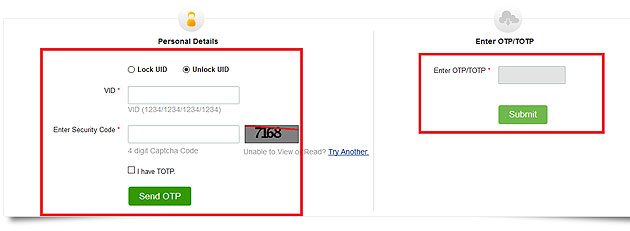
Every Fintech app has an OTP or unique id that is sent to and verified by the sender before the money is deducted from his/her account or wallet. To make apps even more secure, some P2P Payment Service Providers even ask for the OTP every time one opens the app.

Technical Frameworks used – Third party SDKs like: Twilio, Firebase, Nexmo, Digimiles

Notification

Update 2: Now Working] Don't install Android 11 Beta if you use Google Pay

This peer to peer payment app feature allows people to inform when the payment has been initiated and when it has been received. Using this, users are notified of any of their account or wallet activity. For apps that have extended their services from just peer to peer transactions to individual transactions like bill payment, ticket booking, etc. this can be used to notify the users of the upcoming bill due dates.

Technical Frameworks used – Rest APIs, Chrome notifications, Amazon SNS, Firebase cloud messaging, and APNS.

Send Bill, Invoice
Money transferred through Paytm UPI but the receiver did not get it? No need to worry | by Paytm | Paytm Blog

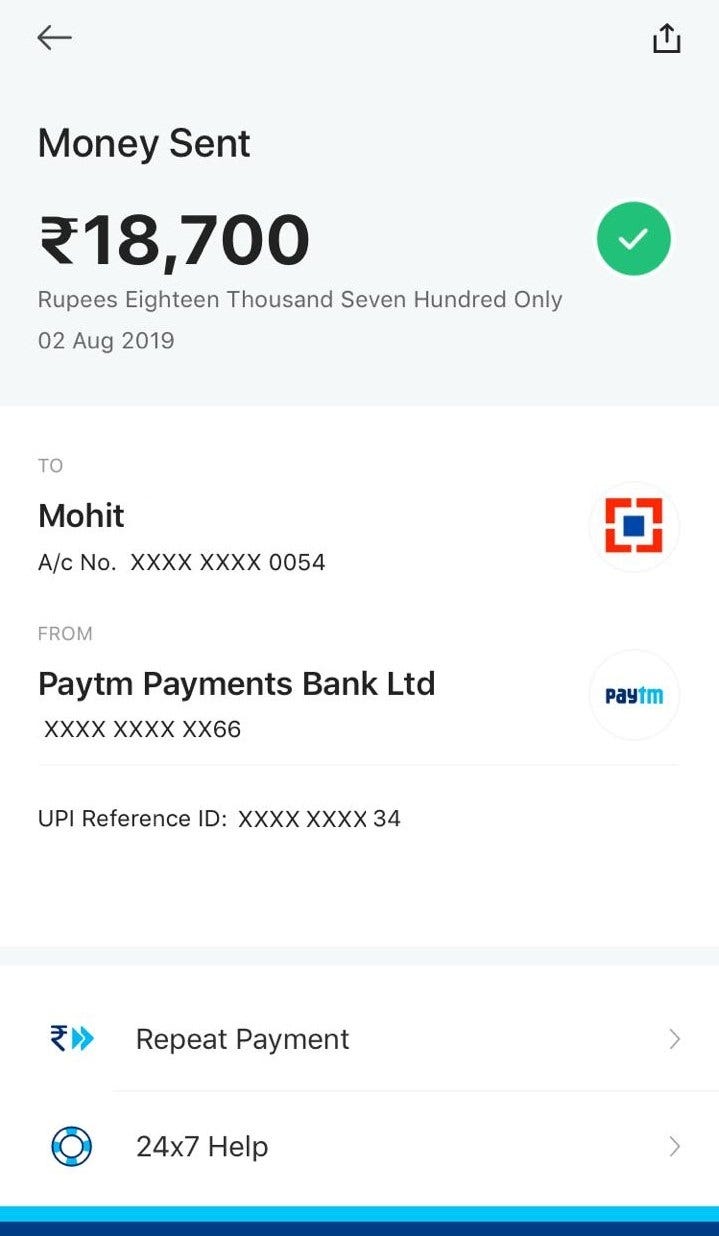
There should be a feature to scan and send the bill to the person who needs to make the payment. Along with that, both the parties: Sender and Receiver should be able to receive a generated invoice of the transaction, which should be saved in the app itself.

Technical Frameworks used – Rest APIs, Bamboo invoice

Transaction History

How to Delete PayPal History by Deleting Your PayPal Account

Transaction history is again one of the important features to consider when looking into how to build a P2P payment app. This feature would give the users the summary of all their past money transactions made through the app.

Technical Frameworks used – Rest APIs

Chatbot
The 8 best chatbot builders

To build a payment wallet app like Venmo, considering chatbot as a prime feature is also a profitable decision.

This feature helps in dealing at various points of disputes that can come up when transacting funds through an app, from a lost internet connection in the middle of the transaction to the wrong deduction of amount from the wallet or account.

Technical Frameworks used – Third Party party SDKs – Zendesk, Microsoft Bot Framework, LUIS, Wit.ai, Api.ai, Chatfuel, Facebook Messenger Chatbot, and Amazon Lex

Transfer Amount to Bank

How to Transfer Money from Paytm Wallet to Bank Account

Generally, users look for a way to transfer the amount that they receive through the apps to their bank accounts. While every app has its own set of business model, this is one of the most preferred features of the P2P Payment applications.

Technical Frameworks used – ACH, Dwolla

This is about the features that should be added in the apps. But along with the must haves, there are scenarios that should be avoided as well. While most of them are not in your hands, there are some technical issues associated with peer to peer app development that you can easily overcome by being cautious.

So, let’s move to the next step related to how to design a P2P payment system like Venmo.

Different Challenges in Developing P2P Payment App

Even though the world is now moving towards the digital money era, there are some challenges that the industry that persists and should be overcome for a P2P Payment App to survive in the mobile payments market. Let us look at both technical and non-technical challenges that are still staring at the P2P Payment industry –

Starting with Non – Technical first

Regional Limitations

The major players of the P2P industry are restricted in their geographical limitations. It is still not common for a P2P payment app development services provider to enable fund transfer between two nations. As the Fintech industry continues getting overcrowded, it is very important for a brand to expand their geographical reach in order to come out as an industry leader.

Lack of Open Loop Solutions

Presently, when making payments through P2P Apps, both the parties – one making the payment the other receiving it, should be on the same platform. While it is easier when we are transferring funds between people we know, there are times when we take or conduct one time payments with people we don’t know. The open loop platform enables the users to conveniently accept and transfer funds from/to anyone – eliminating the need for the involved parties to be connected through one platform or give-and-take personal information.

The cases of dispute

There are a number of disputes’ points that are associated with P2P Payment Apps. Suppose you initiate payment to someone and instead of going to him/her it goes to someone else or what would you do when an amount is debited from your wallet or account but the person it was supposed to reach, hasn’t received it. Like these, there are a number of things that can go wrong within the minutes of money leaving your wallet and reaching somebody else’s account. It is important that you keep a note of these issues before getting involved into the process to create a custom P2P payment app.

Slow changing Mindset

While people are adapting the methods of online payment and the increasing number of P2P apps, the industry is still growing at a slightly slow speed. People are still more comfortable in using cash and cards instead of mobile apps and the reason behind this is not the UI or accidental lagging, the reason is being unsure of the safety measures these apps follow to save confidential information.

While these were the non-technical issues hovering around the industry, let us now look at the technical challenges that can hinder P2P payment app user journey –

Now, the Technical ones

Security

One of the biggest technologies-related challenges that P2P app development companies face is security. Going by the track record, hackers have been able to get into some of the most secured institutions and platforms like NIC Asia Bank and PayPal. The high level of vulnerability has made Security one of the biggest challenges in the Mobile P2P Payment industry. With the huge number of confidential data being stored in one place, it is imperative for the P2P Payment service providers to create a secured data record management system.

Comply with PCI DSS

It is imperative for every brand dealing with confidential banking information to follow the PCI DSS Compliances. To be eligible for the certificate, the P2P Payment service providers should meet these criteria –

  • Develop and Maintain secure system and network
  • Have a vulnerability management system in place
  • Create strong access control standards
  • Safeguard confidential information
  • Continuously test and monitor networks
  • Maintain and update all information security policy

Currency Conversion

Currency Conversion in Numerical Reasoning Tests - Practice4Me

Another challenge that the P2P Payment Service providers face is calculating and converting currencies in real-time. With 180 currencies across the world, it can get difficult for the service providers to create a mechanism that keeps everything on track.

Along with this, the money conversion and fund transfer need to be done in the shortest time possible: an event that is easier when banking institutions are involved, but a little complex when it comes to a digitized market.

What’s the next level?

There are continuous symptoms of growth for blockchain and cryptocurrency use inside the mobile payments industry. The working behind bitcoin has even become one of the most talked-about topics in the current times. Companies like Movile have already realized the scope of using bitcoin within in-game micro-purchases. Bitcoin has even become an alternate mobile payment coinage in some developing economies such as Brazil.

Let us look at what Blockchain and Cryptocurrency is all about –

Blockchain technology

30 Top Blockchain Applications to Know for 2021 | Built In

The Blockchain is an unsigned online ledger, which makes use of data structure to ease our transaction processes. It allows its users to edit the ledger securely without involving a third party.

While the bank’s ledger is linked with a centralized network, Blockchain is completely anonymous thus protecting its users’ identities. This anonymity makes the technology a secure way to do transactions. Blockchain is always implemented on distributed networks. The algorithm that it uses lowers the dependency on people to authenticate the transactions, giving Blockchain the potential to unsettle the prevalent financial systems.

The electronic record of transactions is incessantly maintained and then verified in the ‘blocks’ of records. Finally, the meddle-proof ledger is then shared between the parties on their computer servers by taking the help of cryptography.

Blockchain is expected to lower down the inefficiencies and costs involved in dealing with the financial sector.

Cryptocurrency

What is Cryptocurrency and its relevance in Today's Day and Age

Cryptocurrency is a digital currency that exists and operates in digital peer-to-peer networks. It is not a string of data like your regular MP3 and Video files that can be copied. Cryptocurrency is actually an entry on a global ledger known as Blockchain.

How does it work?

When you are sending someone cryptocurrencies, you are not sending them a series of files. Instead, you are writing down the exchange in the ledger, a.k.a. Blockchain. Now even though Blockchain is a decentralized record, there’s no group of people who update the ledger, like what happens in banks. The mechanism is completely decentralized.

There are people who volunteer to keep the track of transactions and continuously maintain them in ‘Blocks’. So now when you want to transact currency, you will have to announce it to the table so that people who are maintaining the ledgers can update them.

Fintech along with its continuous advancements is all set to make Peer to Peer Payment much stronger and easier to adopt, giving a push to companies to get involved in the P2P payment app development process.

Here are the Ways to choose the Best Mobile App Developer

Hire Mobile App Developers for Android and iOS – FasTrax Infotech

If you are looking forward to having a scalable mobile app for your business, hiring an app developer, who is perfect for your business, is important. There is an exponential demand for mobile app developers. So, if you have a list of developers (meaning you are the lucky one), the next most important step is to shortlist the best developers for your project. However, to find the best one, there is a need to consider some important things. Anteelo,  a renowned company, pays a lot of attention to those factors that help you in making the best choices.

Some Fruitful Ways for Finding the Best Mobile App Developer

1. Checking the Portfolio

Stress-Test Your Portfolio With This Checklist | Investing 101 | US News

Checking the profile of the shortlisted mobile app developers is the most important thing. This is because it will help you in knowing past projects and case studies. In simple words, you get to see a clear picture of the capabilities of app developers. If the portfolio section doesn’t meet your requirements, then move on to the next one on the list.

At Anteelo, you get the access to company’s Portfolio right on our website.

2. Usage of Technologies by Developers

10 uses of technology that made it a part of everyday work - Education Today News

Nowadays, several apps are using AI-based chatbots, the retail sector is embracing AR, VR, and beacons to deliver immersive user experience. In addition, these technologies streamline business operations and offer several other benefits. Hence, your chosen developers should have experience in using at least one of these latest technologies.

For clients thinking about working with Anteelo, here are the mobile & web app development technologies we work around.

3. Niche Specializations

Key Skills of Successful Mobile App Developers | Appinventiv

There is no denying that industries like logistics and healthcare demand an effective approach for mobile app development. This means there is a need to consider the experience that the mobile app developer has in your industry. In other words, the developer should know all those rules and regulations that determine the functionality of a mobile app.

4. Passion for your Project

Start Your Passion Project Right Now by Taking 5 Small Steps

This criterion plays a vital role in defining the success of your app. To hire a mobile app developer, you should be certain that he/she is passionate about developing a mobile app for your business. This is because such developers will be able to develop the best app that suits the requirements of your business.

5. Consider the Whole Package.

Developing a mobile app is not just about coding. In fact, it is also about creating a functional design and giving a great user experience. This means that while looking for an app developer, you should see whether he/she is able to perform several functions such as usability, design, and testing. ‘

We, at Anteelo, work very hard to provide clients with the experience they deserve.

6. Developers’ Capabilities

By developers, for developers: The IBM Blockchain Platform Starter Plan - Blockchain Pulse: IBM Blockchain Blog

Without truly innovative and useful features, it is difficult for your app to grab the attention of users. Before hiring a mobile app developer, you should ask about the special features he/she can provide. In other words, you should find out the capabilities of the developer before finalizing him for your project.

Anteelo’s team of mobile app developers are skilled to offer a range of different mobile app design and development services.

In addition to the above-mentioned points, you should not forget to focus on all the important aspects of your business. This will help you in having a better shot at hiring the right app developer for mobile app development services.

There is no exaggeration in saying that the realization of your vision is often in the hands of your developer.

So, choose carefully and have an app that lets your customers buy your products or simply have a look at your services. Having prior knowledge about how to find the best developer or how much does it cost to hire an app developer can considerably shorten the total lead time of your project.

Ways to Earn Money from your Application?

How Much Money Can You Earn With an App? | MLSDevThe mobile application development services industry comes along with a huge potential to earn millions of dollars. However, not every app earns an equal share of Android and iOS market revenue. In spite of following the same mobile application development process to make money with an app, not every developer is enjoying the fortune of getting billions of dollars being transferred to their accounts. This is making startups and developers who are yet to enter the mobile industry, encounter questions like, “ Do apps make money?”, “How to make money from mobile apps successfully?” – Questions we will tackle in this article.

But before we dig out answers to these questions, let me share one thing – There are over 4.83 million apps to download on both Apple App Store and Google Play Store, and many more are expected to enter the domain. Meaning, there’s a tough competition in the marketplace for earning from apps.

In such a scenario, one thing that can prevent your app idea sink like Titanic is focusing on the right considerations before building an application.

So, let’s uncover what things you must consider before making any effort into money earning apps development.

Things to Consider 

1. App purpose

7 Questions You Need Answered Before You Create an App - BlueTreeApps

Prior to choosing any of the monetization models, you need to understand the type of your application. What and how your application tackles any issue?

When focusing on how apps make money, the app purpose plays a pivotal role. A detailed understanding of what problem you are targeting, what software development services your app will offer, what could be the probable impact on the market, and how the app will be useful in serving the customers and their needs.

When you have a reasonable thought regarding the purpose, you will actually want to choose the correct monetization strategy for your application on the app store. For instance, subscription models for service and content applications.

2. Target audience

How to Build a Target Audience Profile (In 4 Steps) | Easy Affiliate

Another factor that helps in determining how apps make money is the target audience. If you are making a mobile application for the business people, it is important to go with a monetization strategy that does not waste their time. Likewise, when it comes to building an app for kids, it is good to offer application development services for free.

To effectively earn an online income through application monetization strategies, you need to examine your target audience prior to starting any plan. Who are the audience? What do they require? The amount they will pay? To put it plainly, users should know the genuine worth to make purchases.

3. Competitor analysis

What is Competitive Analysis? (And How to Do it in 7 Steps)

Performing Competitive analysis also contributes to making the decision related to money making apps development. The insights aid in getting a hint about what strategies do similar applications prefer and what all profits they have earned. This eventually helps with decision making.

The cutthroat competition in the market and the competitor analysis isn’t only for highlights, functionalities, and design of an application. With a proper study and knowledge regarding the competitors, you can without much of a problem discover the monetization business plan for your application. All you need to do is ask yourself certain questions like how competitors are earning? How solid are their models? Is there any loophole that can turn into an opportunity for you?

4. Technologies 

The Top 15 Retail Technologies to Watch in 2021 - ContactPigeon | Blog

The set of technologies you introduce in your applications not solely enhances the user experience and makes it stand out from the competition, but also adds to the earning from mobile apps.

Example: A traditional business mobile app monetization platform model provides developers with only 70% of the amount paid for a mobile application. Whereas, a blockchain-based application model delivers 85% of the total app profit share.

With this covered, let’s jump directly to finding different models to look into how to earn from apps.

6 Mobile App Monetization Models to Consider

The pricing app strategy you choose for your application also makes a difference to the earning from mobile apps. So, it is must to be familiar with all the types of mobile app monetization strategies they can go with. Some of which are –

1. In-app advertising

Top In-App Advertising Companies (2020) - Business of Apps

While the application is free to download and use, app publishers earn money based on the interactions on the advertisements displayed within the application. This app revenue model is highly considered and found to be profitable. The in-app advertising has several formats such as Interstitial ads, Banner ads, Video ads, Native ads, Text ads, Native ads, and so on.

2. In App purchases and freemium model

Deal: Zomato Gold available today with complimentary food and drinks - Live from a Lounge

The foremost monetization strategy that one considers when looking into how apps make money without ads is Freemium.
Here, the application is free to use. But, the users would have to pay some amount of money to buy a wide variety of virtual elements from the mobile application. This includes extra lives, blocking ads, premium app content, game currency, and more.

Example: Clash of Clans earned nearly USD 1M per day on purchases.

3. Subscription (Software-as-a-Service) model

Subscribe to Amazon Prime Video for $8.99 Per Month | PCMag

Another strategy that comes forward as the answer to how to monetize apps is the Subscription model.

Here, users are asked for a weekly, monthly, or annual fee in return of a particular service provided by the mobile app development company. This type of business and monetization model is often recommended in the case of cloud-based services, audio and video content providers such as Spotify, Google Music, and Netflix.

Note: Only 5% of the successful app developers are using subscriptions to get income from an app.

4. Sponsorship

How To Get Corporate Sponsorship: Your Guide To Seducing Sponsors

Sponsorship is yet another method of making an earning from a mobile app. This model is usually incorporated with those applications that already have regular users, and is suitable when connecting with brands from the same market niche.

When discussing in detail around how apps make money via this monetization strategy, there are two deals to go with –

  • Equally divide revenue from the mobile app
  • Set a monthly sponsorship fee.

Example: Weather Channel app relies on this business and monetization model to prevail in the market.

5. Crowdfunding

Crowdfunding Platforms - Top 11 Online Platform for Startups in 2021

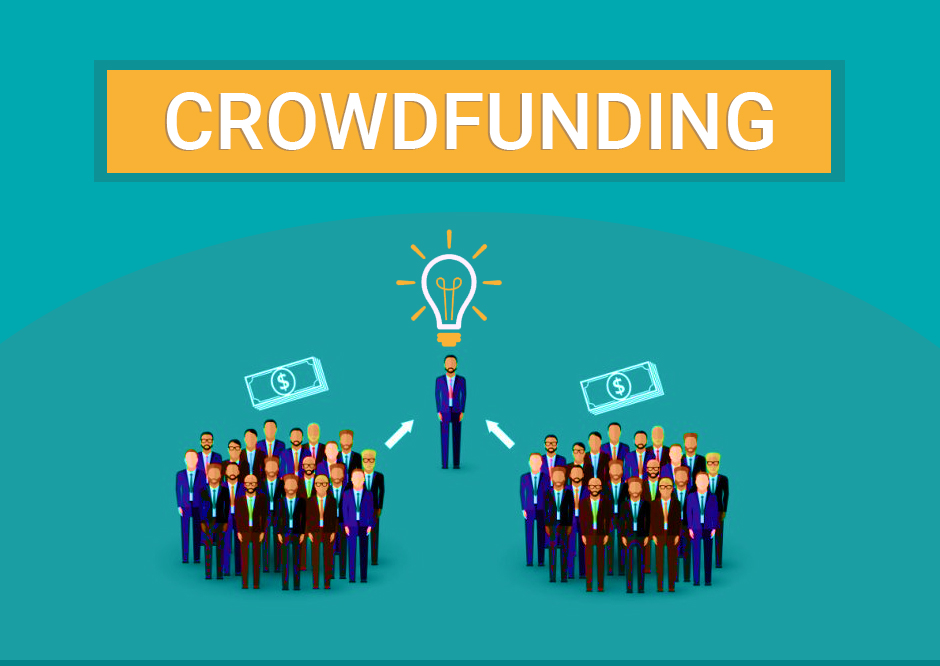
Crowdfunding, an alternate funding model to consider this year, is also one of the profitable ways to monetize apps for free.

Here, you exchange your app idea or publish an MVP version on platforms like KickStarter, CrowdFunder, Indiegogo, and Fundable to raise funds and do the needful in the field of marketing.

Example: In 2017, the Hello Earth game with a famous cat character earned USD 148k via such app monetization strategies.

6. Affiliate links

15 best Android apps of all time (Updated May 2021)

This is another variation of sponsorship, however in place of granting advertising rights solely to one organization, you negotiate with a few interested parties and place their reference links in your application. This is a decent method to increase your income if you lack a wealthy player on the market who is ready to cover your costs.

Now as you are familiar with ways money making apps earn money and what all factors to consider while looking into how much an app earns, let’s wrap up this article getting insights of the future trends in the mobile app market.

What’s Next in the Mobile App Development World?

Mobile App Development Frameworks in 2019 | by DashMagazine | codeburst

As you know how apps make money, you should also be aware of how the future for mobile app development looks like. Over the years mobile apps have seen good money and this will for sure continue in the coming years as well. The gaming apps are making millions every year but the simple apps are still on their way to earning millions. Augmented Reality, Artificial Intelligence, and Virtual Reality are the technology trends that are set to enter the mobile app development industry and change the whole market.

In conclusion, there are endless possibilities related to how much an app earns when you submit it to stores. You only have to rummage through your options and make the best out of them.

With our global platform of mobile app development companies in the USA, Asia, and other countries, we assist our customers and clients to leverage the latest technology to the utmost and provide better ROI for your business. For more information, contact us at Anteelo.

Frequently Asked Questions about Earning from Apps

1. Do free apps make money?

Ans: When talking about how free apps make money, there are three basic ways, namely in-app advertisements, sponsorship, and referral marketing.

2. What are the most profitable apps?

Ans: If we had to list down three app categories that tend to make the most money for their parent business, it would be – Music app, Gaming app, and video streaming app. All three of these app categories are such that the engagement level is very high.

3. How much does the app store pay per download?

Ans: Apple takes 30% of the revenue made on the Apple app store and gives the rest – 70% to the developers.

4. How much does Google pay per download of an Android app?

Ans: Google takes 30% of the revenue made on the Android app and gives the rest – 70% to the developers.

5. Do apps make a lot of money?

Ans: It depends. But on a very generic note, until you have an established brand name supporting you or you have a strong community of influencers backing you, you will have to wait for some time before the breakeven would end.

The other thing that you can do is make multiple apps and publish them in stores to expand your earning ability.

6. How much revenue do apps make?

Ans: The value of mobile app revenue models depends entirely on the core functionality of your app, the platform considered, the expectations of the targeted audience, the app monetization models are chosen, and more.

7. Can you make money from an app?

Ans: Yes, anyone can make money from an app.

8. How much do mobile app developers make?

Ans: When talking about earning from apps, the value completely depends on factors such as platform, features, user expectations, monetization model, and more.

9. Which Platforms Make the Most Money For App Developers?

Ans: While the value varies, it has been found that over 25% of iOS mobile app developers earn over $5,000 for their apps when compared to 16% of Android mobility experts. So, iOS is the platform that often makes more money.

Here are 10 Tips to Hire Android App Developer {2020 Edition}

How Much Does It Cost To Hire an Android App Developer In India?

Due to recent technological advancements and innovation, mobile apps have become need for every business. And, Android is one of the emerging platforms that every business need for its promotion and branding. Android’s popularity has made the businesses reach customers easily, but at the same time, the fragmentation that the platform comes with has made Android app development one of the most challenging task for developer. And, for developing a market-centric Android app, we need to hire the top android app development company with proficient developers. So, let’s take a look at the tips for finding the right team of Android app developers for your business:

#1. Look For Proficient Team of Android App Developers

What Makes a Great Mobile App Development Team

When you are looking to hire a team made of experts in the Android developer profile, the important thing to consider is their experience. Developing a market-centric and business-centric app is really a tricky task, which needs to be done proficiently and that requires experience developers.

#2. Don’t Make Cost A Primary Focus

WHAT DOES IT COST TO START & OPERATE A PRIVATE LIMITED COMPANY IN INDIA? - Startups Solicitors LLP Law Firm-Best Law Firm Jaipur, Delhi, Mumbai, Gurgaon, Dehradun India

Many businesses in a race to hire a cost-effective android app development company, end up with a poor quality app, which in turn, is of no use for their business. So, instead of taking risks with such low budget developers, one should always hire a team of Android app developers that hold the potential to develop a feature-packed and quality-rich app at cost-effective prices.

#3. Check The Past Projects Of Developers

10 Projects That Every Developer Should Lay Their Hands-On - GeeksforGeeks

By going through the past projects of Android developers, you can understand their approach and quality of their delivery. The answer to ‘How to hire Android app development company’ lies in their past working portfolio. You should always go through the developer’s app’s functionality, designing capabilities, and the time taken to complete the project. It helps you to understand, whether the Android app developer fits the app’s requirements or not. Even we can also look for the app’s reviews, ratings and feedback for the developer’s app.

#4. Sound knowledge Of Open Source Platforms

Open Source Software: The Complete Wired Guide | WIRED

Android being an open source platform, gives the flexibility to developers to design an application that suits user’s needs, thus making it a necessity for the developers to have a sound knowledge about these open source platforms. So, one should look for Android app development companies that are familiar with the emerging open source libraries.

#5. Connect With The Previous Clients

5 ways to connect with past clients and grow your referral business.

Before hiring an Android app development company, you need to consider many aspects. And, one of them is connecting with previous clients. By connecting the previous clients, we should know how the developer has treated with its previous clients. And, how they work after getting the project, how responsive they are, how often do they communicate, how they solve the challenges, etc.

You can get the past client information from company’s Clutch or Extract profile

#6. Do They Have An Innovative Approach?

this really is an innovative approach, but I'm afraid we can't consider it. It's never been done before" by A. Bacall

You should see – What’s the approach of the Android developer or the Android app development company that you are looking to hire? – For hiring an adept Android development service provider, you should check if the developer understands the business needs, e capability to improvise the design and is capable of providing best-in-class user experience along with the innovative ideas.

#7. Go For A Reputed And Certified Company

Although, hiring a freelance Android developer can be low-budget, but it’s a risky way to get an android app developed. Choosing freelancers may result in a negative outcome. By wisely choosing a reputed and certified Android app development company, you can go for the safest and most cost-effective way to develop an app.

Also, when you invest in an Android app development company, the speed of app development process is also much faster since they work as a team of designers, testers, and coders.

#8. NDA And Privacy Agreements Are Mandatory

Non Disclosure Agreement (NDA) - Contents and Key Terms, Template

Always start working with an Android app development company or freelancer, once you sign an NDA or privacy agreements. By signing such a bond with the Android developers, you can ensure the safety of confidential business information. Additionally, we should also take care of the property rights of the Android app to avoid future discrepancies.

#9. Inquire About The Team Of Developers

Microsoft Teams Together Mode: Your Questions Answered

Look for the team of an Android developer, who claims to provide services for the android app development. For many times, it’s been observed that many companies and brands hire freelancers for the app development process without having any prior information to the client. To meet this challenge, while hiring app developers, one should connect with the development team members and inquire about their team.

#10. Discuss The Post Development Tasks And Supports

The Learning and Development Manager: Everything You Need to Know

Before hiring an Android app development company, we should discuss the post-development tasks including app submission, app testing, bug fixing, support & maintenance etc. before handing the project to the app development team. By selecting an adept Android developer, you can get a perfect app.

PHP Frameworks 2019-2020:Top 10 (Guide & Prediction)

What Is PHP? How Is PHP Used in WordPress?

In the next 9 minutes you will be reading about the PHP Scripting Language, the Backend Development Trends, Why does Businesses like ours trust PHP, and the Best PHP frameworks that we believe would rule the Backend App Development industry in 2019-2020.

Ready for the ride?

Let’s begin.

A few days back we wrote a similar article on our choice of Frontend Development language – JavaScript and we got a series of emails from mobile app industry enthusiasts requesting us to do a similar article on our favorite Backend Development tool as well.

For those who wish to glance through our JavaScript Guide, head on to – JavaScript Framework Guide & Top 15 JS Frameworks of 2019 {Prediction}

While in there we talked about Frontend development to a great extent, this one is all about the Backend.

Irrespective of how innovative or impeccably designed an app’s Frontend is, for it to work as it is supposed to, the Backend Development process needs to be securely developed in a way that it is maintainable and supports scalability to a great extent.

Now, talking of Backend Development, there are a number of scripting languages that a company can choose from for their process.

PHP, although one of the most used scripting language among businesses for the Backend development of their Web Apps, it is not the only option that they have when it comes to the task.

There are a number of other languages that are constantly evolving to take the share of the PHP attention. While they will take time to surpass the adoption rate of PHP, they are not lacking that behind.

A Look At 5 of the Most Popular Programming Languages of 2019 – Stackify

The fact that the market for supporting the development of Backend is expanding to a great extent, is a sign that the process is going to evolve, very soon.

On the note of evolving, here are the Backend Development trends that will soon be seen getting adopted by businesses for better scalability in 2019 and 2020.

Backend Development Trends 2019-2020

1. AMP

Accelerated Mobile Pages - Wikipedia

The present and the time to come belongs to speed. No matter how impeccable your mobile app is, the speed with which it loads should be within seconds (even microseconds) as well. The importance of having a fast load and result screening speed is so much so that it becomes one of the prime reasons for user abandonment rate.

This is where AMP comes in. AMP is a service used to accelerate the web page loading speed on mobile.

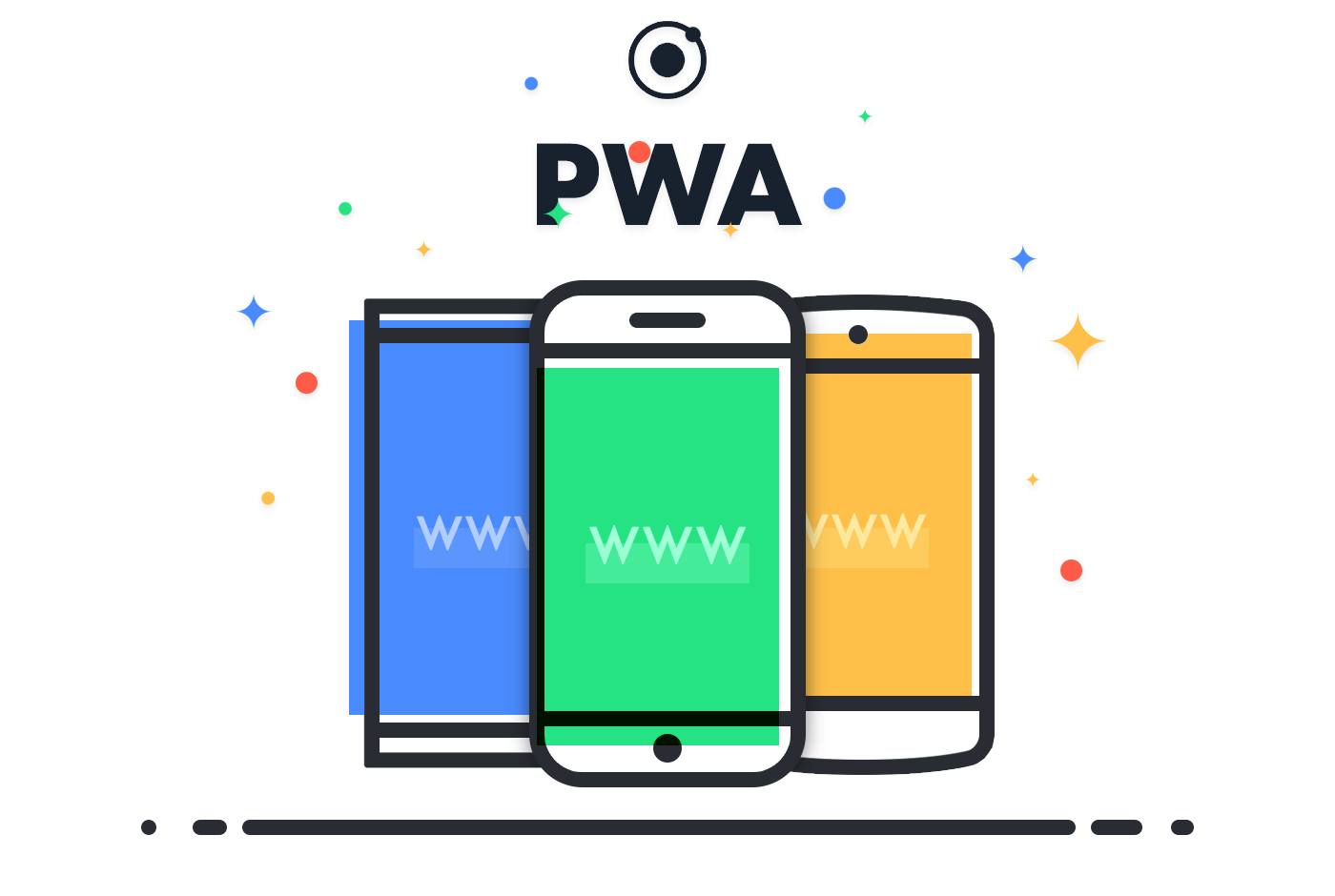
2. PWA

File:PWA logo.svg - Wikipedia

PWA continues to be a trend for not just frontend development but also Mobile App Backend Development. The new form of web app, while very new in the industry has a lot of features to offer to the mobile app development companies.

Having a solid Backend developed for meeting the exact need of Progressive Web App (a mobile app type which is even winning the PWA vs Native App discussion) Development is what 2019-2020 are going to be about.

3. RAIL

Using the RAIL Model to Measure Your Site's Performance

An acronym for Response, Animation, Idle, Load – is the new definition of the success of the Backend Development of your mobile app. A definition which will become a must-have feature in all the Backend Development processes in 2019-2020.

Response – Should be under 50ms

Animation – Should Produce a Frame in under 10 ms

Idle – Maximized to load the page again in under 50 ms

Load – Become Interactive in under 5 seconds

Now that we have seen the trends that are going to rule the backend development processes, let us now talk about what we called you in for – About the best PHP Frameworks for App Development.

There are a number of reasons that make PHP as our first choice of the backend development process that we follow here at Anteelo. Here are a few of them –

  • Database Flexibility

The most convenient part of PHP frameworks are that they can be connected to a number of different databases. While their connection with MySQL is most commonly adopted, they are not restricted to it.

  • Fast Load Time

PHP codes, unlike ASP, run in its own memory space, which increases the web page loading speed to a great extent – a features that is perfectly aligned with the 2019-2020 backend development trend of AMP.

  • Greater Platform Diversity

PHP is the one language that is not restricted to website development only. It has also expanded in the mobile domain. Also, the language is used to develop a range of different apps across categories.

  • Supports CMS, Heavily

Content Management System is the common factor among all the successful web and mobile apps across the globe. While there was a time when HTML used to be the ideal language for CMS development, the baton has now been handed over to PHP.

The fact that PHP is powered to support a number of different features across different platforms, our industry has been witnessing a number of frameworks been launched under the PHP umbrella to make the backend development journey a lot easier.

With more or less 100s of different PHP frameworks to choose from, it can get very difficult for businesses looking to design their tech stack.

Let us now give you an insight into the frameworks that we use for Backend development and the ones that will be adopted to a much greater extent in the world of PHP Framework 2019-2020.

There are a number of factors that leads us to choose these five as the top Best PHP frameworks used for our backend development process –

  • Flexibility
  • Cost Effectiveness
  • Ease of Development
  • Help with faster speed to market

Without further ado, let us look into each of them in detail –

4. Laravel

20 Useful Laravel Packages Available on CodeCanyon (And 5 Free)

The highly expressive framework offers the benefit of web application that aids the development of maintainable codes. Laravel is fit for the development of highly robust web apps. The PHP Framework Laravel comes packed with features that help customize even the complex apps according to the users’ prerequisites.

However good it sounds, the framework does not come sans pros and cons, let us look into some of them –

Laravel Advantages

  • Easy availability of documentation
  • Speedy execution of Web Applications
  • In sync with the modern day expectations from a web apps – Speed, security etc.

Laravel Shortcomings

  • New framework, doesn’t come bug free
  • Raises Database query which impacts performance

5. Sympfony

The basics of Symfony

Launched in 2005, Symfony has worked long to establish itself as one of the most reliable, mature PHP frameworks. Over time the framework has established itself as extensive PHP MVC framework for development of robust web applications – the one that abides by the PHP best practices to the tee.

Being an old PHP framework, Symfony also doesn’t come free of pros and cons. Here are some of them –

Symfony Advantages

  • Developers get the option of selecting own DRM
  • The components can be integrated to bigger projects such as Drupal
  • There is higher flexibility when it comes to setting projects.

Symfony Shortcomings

  • Documentation lacks references
  • Security mechanism is quite hard to use

6. CodeIgniter

CodeIgniter – Redirects Have Stopped Working In Production! – DPS Computing

It is an open-source PHP framework, which is known for its small footprint, is used for developing rapid web frameworks, which ultimately helps in the development of the dynamic websites in PHP.

Like all the other frameworks in the backend development industry, CodeIgniter also doesn’t come free of pros and cons. Here are some of them –

CodeIgniter Pros

  • Comes with simple set up options, which are ideal for the beginners to learn
  • The documentation is highly illustrated
  • There are minimal to zero lags

CodeIgniter Cons

  • Can be difficult to modify codes
  • There is a lack of default modular code separation.

7. Yii

Learn YII Tutorial - javatpoint

Although. Like the PHP Framework Laravel, Yii is also a new backend development framework in the industry, the framework doesn’t disappoint developers looking to create a support for the development of complex web apps.

Even though the framework has been well accepted by a number of mobile app builders across the industry, there are some things that the world loved about the framework and some that they are not that big a fan of. Let us look into them –

Yii Advantages

  • Lightweight Codes
  • Low Learnability Scale
  • Greate Security Features

Yii Shortcomings

  • Presently, lacks the support for creating complex apps
  • Lack of availability of Yii development experts

8. Zend

GitHub - zendframework/zendframework: Official Zend Framework repository

It is a complete object oriented framework which makes use of a number of object-oriented features such as interfaces and inheritances, which makes the framework extendable at one point or the other.

Since the framework is highly customizable, it abides by PHP best practices and enables developers to add in functionalities that are specific to their projects.

Here are some of the pros and cons of the Zend framework –

Zend Pros

  • Extremely well documented
  • Large community base
  • Use at will structure which enables mobile app builders to pick and choose the components they need instead of the complete package library
  • Has PHP MVC Framework components that comes with the power of modularity

Zend Cons

  • The framework comes with a steep learning curve, which makes it less attractive for the mobile app builders.

Now that you have seen the 5 Best PHP frameworks that we swear upon, let us now look into the other 5 Frameworks that will make/continue to make a mark in the world of PHP Framework 2019-2020.

The Five Best PHP Frameworks That will Continue to make an Impact Backend Development in 2019-2020

1. CakePHP

CakePHP - Build fast, grow solid | PHP Framework | Home

CakePHP framework makes the process of web app development simple, fast, and less code requiring. The modern PHP7 framework offers access to a flexible database layer and one powerful scaffolding system, which makes it easy to offer PHP best practices and build both – small and complex apps.

Other than being flexible and convenient, there are a number of other factors that comes together to make CakePHP one of the most widely accepted Backend development framework, like – Easy Extension, PHP MVC Framework architecture, and compatibility with a number of different PHP versions, amongst others.

2. Aura

Aura for PHP

Aura is the UI PHP framework, which is used for the development of dynamic web apps that run on both – desktop and mobile devices, while offering a scalable long-circle lifecycle for supporting the development of apps that are designed for growth.

Aura framework supports the partitioned multi-tier component development process, which helps bridge the server with the client.

3. Phalcon

Phalcon Tutorial - javatpoint

Unlike the majority of the PHP frameworks, Phalcon is integrated as the web server extension that is written in C and Zephir, with the aim to expedite the execution speed.

The framework also lowers the resource usage, and help handle a greater number of HTTP requests per second when compared with the other frameworks that are written specifically in the PHP language.

4. Slim

The framework that recently released the 3.10.0 version, is a PHP micro framework, which helps with quick development of simple and yet robust APIs web applications. The framework comes with a number of notable features such as – Concentric Middleware, Dependency Injection, HTTP Router, and PSR – 7 HTTP message implementation.

5. Fat-Free

The PHP Micro-Framework is designed to help develop robust and dynamic web applications. The framework is developed with the prime goal of supporting user experience and usability. It adorns features such as a cache engine, URL router, and a support for the development of multilingual applications.

So here were the Ten PHP Frameworks that we believe will continue to be counted as the go to tools for Backend Development. Now the decision of which one of the go with, would have become a lost easier by now, by the exact choice would depend on first your requirement and second the documentation and community support the framework comes attached with.

Three different sides of White Label App Development

Pitch Pine Media - #1 White Label App Development Company

Since you are here, this means that you have already entered the mobile app development world. First off, Welcome. Secondly, you now have two options – Either Develop an App from the Scratch, aka Custom App Development or Use a Readymade Platform aka White Label Apps Development.

The idea of a ready to use and deploy framework, while sounds enticing and easy on pocket, it doesn’t come sans issues. And more often than not, the issues that come attached with White Label Solutions are too big to ignore.

In this article, we will be looking into the concept of What Label Apps and validate how they are not as business friendly as they seem.

Here we go –

What is a White Label App?

White label | Hoydemark

White Label App, in its most general sense is an app that is developed by Company A and then sold to Company B, C, and D to add on their branding elements and use.

The idea of white label app development is to have a product that can be used as it is by multiple companies with minimal level of customization flexibility.

White label software development is an element of fashion among the Startups, who are looking for a shortcut to enter the mobile domain at a minimum cost of investment.

White Label App Examples

As you know what white label apps are. Thus, before reading the examples, you should be aware that the manufacturer, or developer of the app organizes the sales process without any marketing costs and vendors or merchandisers come up with their own product brands or services without a need to produce them. A genuine model is the Great Value staple goods in Walmart stores that are made by third-party organizations only for this corporate chain stores.

In the realm of programming, developing products, and so on implies high intricacy, high dangers, and high expenditures, combined with exceptionally hazy outcomes. That is the reason the white label model looks great in different circumstances here. For instance, a product advancement organization has built up a niche analytical system. A research white label app development agency, working inside that specialty, may win from buying the framework, branding it and offering its customers helpful reports, made in the framework.

LevelUp

LevelUp - Review 2018 - PCMag India

LevelUp started as a versatile mobile payment/loyalty program mobile application. From the start the application was intended for individuals to use as a type of payment at small quick serve cafés, however it has now moved into the website and application improvement space. LevelUp has designed the mobile application and online payment gateway for cafés and restaurants like sweetgreen, Pret A Manger, and Zaxby’s. The majority of these restaurants don’t have the ability to construct and create their own website or mobile application, so utilizing a white-label item is a great choice.

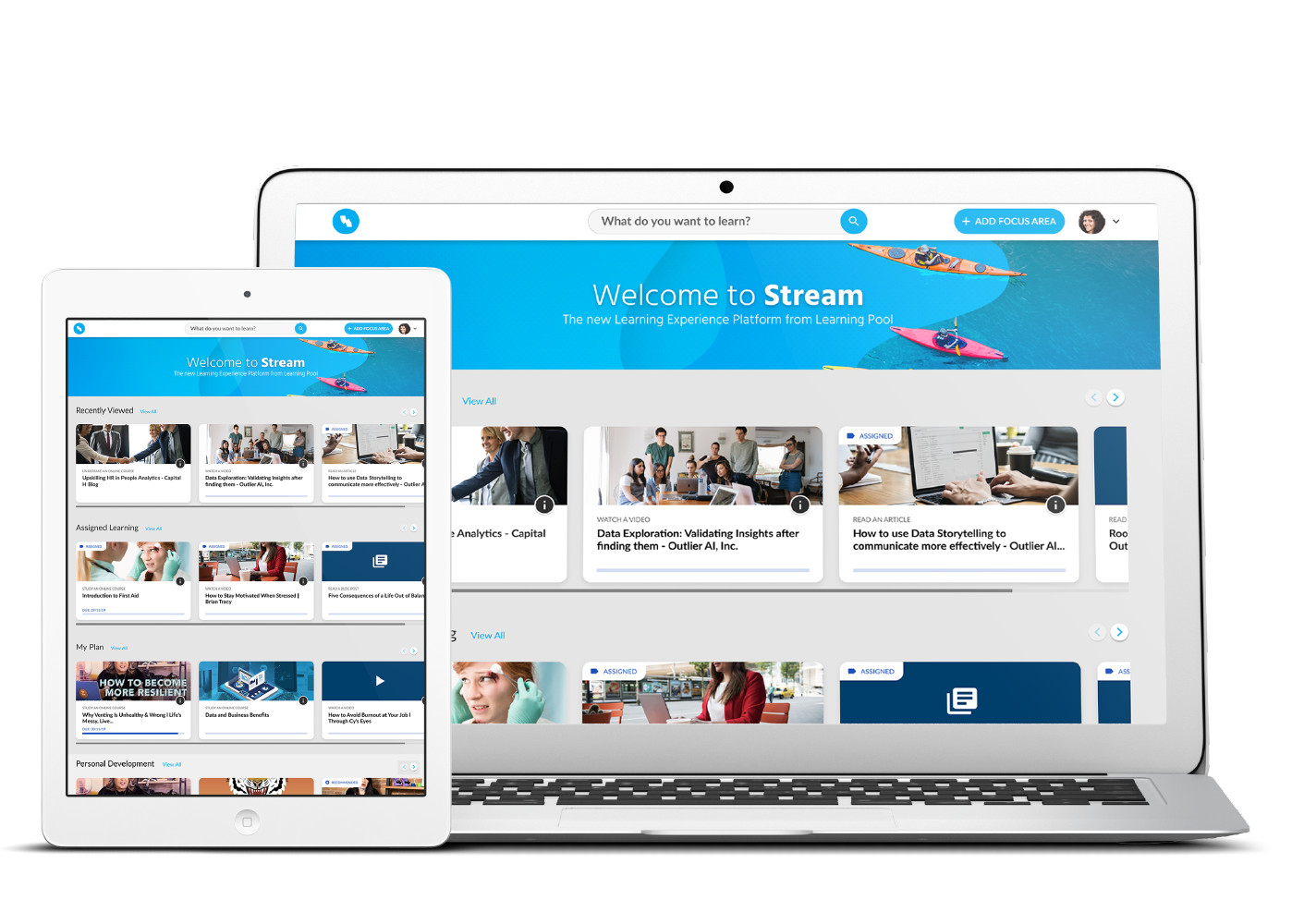
Stream LXP

Stream LXP Pricing, Features, Reviews & Alternatives | GetApp

Stream LXP, earlier known as Curatr LXP, is a completely customizable eLearning SaaS platform. Created by the group at HT2 Labs, a Learning Pool organization, Stream LXP is a social learning program that permits license holders to mark the platform with their novel look and feel, just as transfer organization explicit learning content. It can likewise be authorized and afterward exchanged to an outsider. In this way, not exclusively can the whole stage be upgraded to accommodate your image’s look and feel, the genuine substance that is utilized in the stage, can be curated from your own assets.

How are White Label Mobile Apps Developed

There are two ways for white label app development. The white label web applications can be developed where:

1.   The white label mobile app builders reuse the backend code but alter the frontend code to make it look different.

2.   The second is, where an app is developed with a fixed set of features and sold to A, B, and C companies with the freedom to add or edit features. This is mostly used by companies which have a Software-as-a-Service model.

How Different are White Label Solutions from Custom Apps?

Let’s have a look on White Label App Development vs. Custom App Development. There are a number of different factors that draw the demarcation line between a custom app and white label mobile app platform.

Here are the pointers of white label mobile apps vs custom app development, explained in detail –

1. Level of Customization

When you, as a business, invest in a white label services and solutions app, you enter into it knowing that it was not specifically designed and developed for you. It was developed in accordance with features of a mobile app that is in the operating in the app stores.

Since you are buying a readymade solution, the chances of you adding in elements that are a reflection of your brand is very minimal, unless you look into the best optimal mobile app development checklist, possible pitfalls and challenges to deal with, and other such factors as we covered in our mobile app development guide.

On the other hand, when you invest in Custom App, the chances of getting an app that is developed exactly as per your requirement are much higher. Because you are getting an app developed from scratch when you are investing in a custom app development, you get an app that has the set of features that you wanted represented as you wanted.

2. Design Uniqueness

Design a minimal and modern logo uniqueness is the key by Dp__design | Fiverr

The number one reason behind Apple rejecting White Label solution was that the apps coming in from one vendor looked the same. There was hardly any difference in terms of design and flow, except that of 20% brand elements.

Absence of the freedom of having own design is the number one element that White Label Solution lacks in, which is also the major cause of store rejections.

With White Label, you always have to compromise with the design that the vendor has set for you, with less to no sign of your individual idea.

3. Cost & Resource Factor

Resource Planning Techniques, Cost Control and Cost Management Techniques | Budgeting, Estimation

Since you are buying a ready-made solution, the one that is not made specifically for you, the cost of White Label mobile app is much less than Custom App development.

Also, since the development efforts are also on a per suite of project basis instead of per project, you even get to save some cost on the resources front.

4. Scalability

When you invest in a White label app services, you invest in an app that has been made for a specific platform or device. When you decide to take the app further to another device or some other OS version, you will either have to wait for the vendor to make it scalable or you will have to get in touch with some mobile app development company to develop an app similar to the white label app for your preferred list of devices or operating system versions.

5. Maintenance and Sustainability

Since White mark applications are designed reusing the current application code, there are less danger of bugs and mistakes in the codes. Additionally, the code is already tried and tested in the application business, which again gives a sign that the application development code is sustainable.

However, when investigating Custom mobile application improvement, there is a higher risk of bugs and defects in the application code. The employed Custom mobile app development service suppliers have to test each component of your application at whenever point another element is added/or a current one is modified to record the results and hence, guarantee better results.

6. Security

Security Policy

In the case of White label business apps, you modify a ready-made mobile app. Because of this, there is less scope of identifying bugs and errors, and modifying your app code accordingly.

On account of White label application development, you alter a ready-made mobile application. Thus, due to this, there is less scope of distinguishing bugs and mistakes, and altering your application code likewise.

But this isn’t the case on Custom application development. Here, you build up a mobile application without any preparation, from scratch and hence have full power over what code to write, how to test and change it, and so forth. Or then again better say, you have better opportunities to improve the performance and security of your application, which acts as a motivation behind why one should go for a custom mobile application development.

What Service Do We Offer at Anteelo?

At Anteelo, we focus our Mobile App Development Services suite on Custom App Development.

We believe in developing apps from scratch. Straight from ideation to deployment, everything is done by us after understanding the exact business requirement that varies from project to project.

We understand that there are some legitimate white label app development benefits such as – Low white label app development cost, shorter time to market, and less maintenance efforts. But we place app quality and brand voice on a greater pedestal, which makes us choose Custom App Development as our suite of service.

There are a number of reasons that make us Custom Mobile App Development Evangelists –

1. Intact Brand Image

How to Keep Your Branding, Voice, and Style Intact No Matter Where You're Selling - Sellbrite

Even when your app belongs to the same category as that of hundreds of the other similar apps in the stores, what makes yours different from the rest is the fact that your app is a reflection of your idea. Something that reflects even when you offer the same set of features as the other apps in the domain.

When you invest in a white label service and solution, you lose out the chance to have an app that is an extension of your brand.

2. Real Time Update

The Important of Real-time Features in Mobile App

When the control of the app development process is in your hand from the scratch, you don’t have to rely on a vendor to make changes in the app design and framework.

With custom app development, we give our clients the freedom to extend their app to other platforms or add and remove certain features according to what they think would best represent their idea.

3. The Power to Decide your Tech Stack

My Data Science Tech Stack 2020 - DEV Community

In the end, the biggest and most crucial advantage that you can get out of Custom App Development is that you get to decide the tech stack your mobile app would be based on. Knowing what tech stack to use is the recipe to a mobile app that is stable and scalable.

In white label development, you don’t really have the freedom to make the choice of the mobile app technologies that would best suit your business agenda.

Now that you have seen both sides, go with white label app solution only when there is a massive cost crunch otherwise, choose Custom App Development for long term stability.

What’s The Plan?

Both White label and custom solution have their advantages and disadvantages. Thus, it is vital to choose your development partner wisely as the quality of the code will depend on the reputation of that company. The importance of white label app development comes with choosing a good strategy to make things work and consider the best choice before the hammer goes down.

Are you prepared for this change? If you think you are ready to imbibe the changes in your app or ideas then you can refer to Anteelo, a trustworthy and reliable company dealing with app development company USA.

Native vs Progressive Web Apps (PWAs): Which is better?

Progressive Web Apps vs Native Apps - Who Wins?

Year after year, the number of mobile users has been growing significantly. Infact, according to Statista, by 2020 the number of smartphone users worldwide will reach 2.87 billion. These days, people spend more time browsing the internet on their mobile phones. Users consume 2x the amount of content on their smartphones when compared to desktop. Website owners should be excited about this prospect as the potential to reach mobile users now is ever increasing. There are a few ways in which you can build a mobile presence and enable your users to access your content on their mobile devices. Of course, there is responsive web design, which enables users to interact via a website. Then comes native apps, which users can download from an app store or Google Play Store.

In recent years, interest for a new form of app – Progressive Web Apps (PWA) has been growing manifolds. It blends the features of a native app with the accessibility of a website.

Many eCommerce websites are not designed for mobile, so consumers are less likely to download a native app just to make a purchase. eCommerce companies need a digital store which is like the best of both worlds.

And that’s exactly where progressive web applications come into the picture. It is almost like taking a midway approach between mobile websites and mobile applications.

Since mobile apps have been the standard choice for at least  about a decade, the looming question remains that Is PWA the future. In this article, we’ll cover all possible insights on progressive web apps vs native apps.

What Are PWAs

What are Progressive Web Apps? - Ionic Blog

A progressive web app is a website that functions much like a native app.  The key difference between progressive web apps and native apps is that a Progressive Web app runs in a browser, so there’s no need to download it from an app store.

PWAs can store data in the cache on a user’s device, thanks to service workers. This allows users to always stay up-to-date, regardless of the internet connectivity. Twitter, for instance, provides a progressive web application but they also have native mobile applications for iOS and Android.

PWAs are meant to remove a variety of problems ranging from weak networks to data restriction or total lack of connectivity. Google describes PWA’s as web experiences that are:

Reliable:

Immediately loads and never shows that a website is down, even under uncertain network terms.

Fast:

Quickly responds to user interactions with no janky scrolling and silky smooth animations.

Engaging:

Feels like a normal app, with an intuitive user experience.

PWA is an ultra-optimised mobile website that users can access from their browser – Chrome, Firefox, Safari or any other, and update their content as and when they browse.

PWAs have been receiving their fair share of interest from businesses ever since they were launched, and a lot more since brands like Twitter, NASA, Lyft, Medium, Flipkart, and Starbucks are associated with the platform. The features that PWAs come loaded with have made it ideal for businesses that are looking to attain mass visibility at a very low cost and developmental effort.

Ever since many businesses extended their App Portfolio, from what was earlier restricted to Native mobile apps to now PWAs, each of them witnessed a remarkable change in their revenue numbers:

Validating the various advantages that businesses have to gain by extending to PWAs, ReactJS has documented the support of Progressive Web App Development using its framework. A technology stack that is popularized as React PWA alongside React, it comes with the opportunity to add next level features to the mobile application.

React PWA is the new service that React has expanded into. The famous cross-platform framework has launched its new platform called Create React App that creates your project as a Progressive Web App by default.

The fact that React is now backing PWA is a sign of how strong the PWA ecosystem is going to be in the coming time – something that indicates that it might be the future of mobile apps.

What are Native mobile apps 

Why to Opt for Native Mobile App Development | Mobile App Development Blog | Pyramidion Solutions

A native app is a software application built in a specific programming language for a specific device platform, either iOS or Android.

Native iOS apps are written in Swift or Objective-C and native Android apps are written in Java.

They are specifically designed for one platform and can take full advantage of all device features, such as camera, GPS, accelerometer, compass, contact list, and so on.

Let’s discuss in detail the advantages of both progressive web app vs native app. In case you were wondering, it can also help you decide whether or not you should migrate your website to Progressive web app or invest in developing one.

With comprehensive insights we will help you put the debate of progressive web apps vs native to rest.

Benefits of PWA

1. Accessibility

Web Accessibility and Its importance? | by Neha Jain | Medium

When you compare native apps vs web apps, PWAs’ great advantage is their independence from app stores. Since 25% of smartphone users uninstall applications due to lack of storage space, this independence can be a major advantage. Customers don’t need to download PWAs and use space. All it requires is a web browser.

2. Global Compatibility

PWAs work on the capabilities of HTML5, which is what users need to access the web on modern browsers.

Imagine this, there are over 3.7 Billion users who access the Internet through their mobile device. Now even if half of them open your Progressive Web apps, your business will be in much higher profit than what you will reach when you restrict yourself to the 700 Million Android and iOS users.

3. Autonomous Features

A PWA can work in an offline mode, giving users access to the online store and keeping them up to date.

4. SEO optimization

Single Page Websites: Are They Good or Bad for SEO? | SEJ

The advantages of PWA over native apps is that PWAs have URLs that are indexed by Google, which implies customers can easily find a web app using a search engine. .

5. Low Development Cost

Low-Cost or Free Professional Development | EDUCAUSE

One of the biggest reasons why PWA is considered as the best option to drive businesses for SMEs  is that since PWAs are based on the web, they don’t have to meet the standards set by Android and Apple Play Store and the development cost is much lower than their Native counterparts.

Also, because they are aimed at providing a very quick in and out option, technicality wise too, it is much more cost effective to create a Progressive web app using top development frameworks.

The cost of Progressive Web App Development is somewhere around $3,000 to $9,000 while Native App Development starts with $25,000.

6. Zero Interference from App Stores

How Proton is fighting app store abuse

PWAs are launched through a URL link and web browser, it doesn’t need to be uploaded on either Play Store or App Store, which saves the cost and time to market to a huge extent.

This lack of interference from the App Stores allows businesses to save a lot in terms of app development and launch.

7. Better Engagement

How to Get Better Engagement on Your Blog Posts | by Amanda Clark | Strategic Content Marketing | Medium

There is no doubt that PWAs contribute to increased customer engagement. PWAs caching and offline feature ensures that users can browse eCommerce stores anytime and won’t abandon the web app due to long loading times.

Features like push notifications and location tracking allows marketers to provide relevant content to mobile users anywhere. Such aspects make PWAs perfect for delivering enhanced user experiences.

Benefits of Native Apps

1. Faster

Making Your Code Faster by Taming Branches

Both loading speed and performance of a Native app is much higher than Progressive Web Apps. And because of a fast loading speed, they don’t consume much battery life as opposed to PWAs.

2. Safer

Safety Internet Day - Safer Internet Day Logo Clipart (#3483143) - PinClipart

Since they have to go through the various standards set by Apple Store and Play Store, users feel more confident while using Native Apps compared to when they use a PWA, using nothing but a url.

3. Greater interconnectivity with in-built Device features

Features like Camera, GPS, Wi-Fi makes the user experience more connected, convenient, and purposeful. And this connectivity with the device core features is only possible with Native apps and not with PWAs.

Now, although by the looks of it, PWA seems like a much better option as compared to Native, but there are still two areas which are keeping businesses from moving to Progressive Web Apps 100%  – Fast Load Speed and Higher Performance.

The other reasons that are keeping Businesses from adapting PWAs 100%, include:

  • The load and run time is lower than Native. Also, PWAs consume a lot more battery than their Native counterpart.
  • Device features such as Bluetooth, NFC, and Proximity Sensor cannot be accessed by the PWAs apps.

There are two very different schools of thoughts when it comes to choosing one between Progressive web apps vs native apps, and much of it depends on the choice of application type. But, there are in fact different use cases which point towards the fact that there is no versus, instead, there are sets of individual cases where PWAs will be more beneficial for a business and another set where Native mobile apps would be more profitable.

This takes us to our next and final point of discussion –

When to use a PWA and When to Use a Native App

Progressive Web Apps VS True Native Apps | App Foundation

1. When you need easy distribution

When you need your app to reach more people in a shorter time period, PWAs are ideal, as they can be shared and run by nothing but a URL link, removing Native’s extra steps like finding your app from among  hundreds of similar ones and then having users press two extra buttons for sharing it with friends.

2. When App Development Budget is a Constraint

When you do not have enough funds to invest in the whole suite of mobile app development process starting from ideation to coding to deployment and maintenance, it is ideal to go with PWAs. Progressive app development comes with a much lower price tag because of the low development hours and technical requirements.

3. When App Performance is more Important than App Development Cost

If you have money to invest for app development and what you want in return is high performance and faster load time, you should go with Native Apps. Since native apps are built and optimized for a specific platform, they offer a high level of performance.  Since data is already stored on a device, the app loads several times faster.

4. When you are Unsure of Whether at All You Should go Mobile

When you are only going mobile because your competitors are, or when you are unsure, if at all your audience would like to interact over mobile and you don’t want to make any major investment in a phase of uncertainty, stick to PWAs.

5. When What you Seek is Credibility

When you are looking to create an image of credibility and that of a brand that can be trusted, go with Native Apps. As the app store reviews and ratings come in very handy in creating the image of being a trustworthy brand.

6. When your App Doesn’t Work in Isolation

If you are looking to offer a quick in and out option to your users without having to interact much with the device’s inbuilt features, go with PWAs. But if you are looking to give your users a service that would require them to interact with a Camera to upload a photo or GPS to find direction from Point A to Point B, then Native should be your choice.

In the End – What is the Verdict?  Is PWA Better than Native? Should Businesses follow the example of Twitter, Medium, Starbucks and tens of others and expand their App Portfolio to Progressive Web Apps?

There can be two scenarios –

  • When you already have a Native App

In case you already have a native app that is available to download from the App Store or the Google Play Store, but you are looking to extend your user base at minimal development effort, extend to PWA.

  • When you are developing an app from scratch

When you are launching a new app and are unsure of the market and how users would react to it, instead of creating a full-fledged Native app, go with PWA to test the waters.

Ultimately, when it comes to getting on mobile, you now have a series of platforms to base your app on – from React Native and Flutter to Core Android, iOS and PWAs. The direction that you should take should ultimately depend on your business needs and budget.

Frequently Asked Questions about PWA vs Native App

Q. Why are progressive Web apps better than native?

PWAs are better than native apps because:-

  1. They offer global compatibility.
  2. They are easy to launch.
  3. They demand lower development cost.
  4. They are Seo-optimised.
  5. They lead to better user experiences, better engagement and can increase conversions.

Q. Will Progressive Web Apps replace native apps?

Yes, it will in the coming future.  And the reason behind it is the benefits it comes loaded with such as easier installation, better performance, no updating issue, seamless offline operatibility, and lower development cost.

Q. How much does a progressive web app cost?

Generally, the cost of Progressive Web App Development lies between $3,000 and $9,000. But, the actual mobile app development cost depends heavily on the features and technologies involved, size and location of the team hired, the complexity of the concept and other such factors, so it is always better to consult with an expert to know the Progressive web app development cost.

Q. Why native apps are better than PWA? 

Although PWA uses secure URLs in https, native applications remain a safer and more reliable way to access information. Native application works better than Progressive Web App as user access and navigation is easier, smoother and more enjoyable.

Q. Do progressive web apps work offline 

Yes progressive web apps work offline. Once you download a PWA, you can consume content within the app without an Internet connection.

Q. Is react native a progressive web app

No react native is not a progressive web app . React Native is a JavaScript framework for writing real, natively rendering mobile applications but you can build a PWA using react native.

Learn Android Development: 10 amazing apps

How to learn Android app development | Internshala blog

Becoming a Developer is easy. Staying a developer, on the other hand, is an altogether different ball game. The industry that is on an ever-growing spiral, keeps offering something new every second to not just keep tabs on, but also learn an advanced level. Apart from memorizing and haunting every article and discussion on StackOverflow, there seems to be no other way to get an understanding of the exact development process. Or is there? Is there a magic formula, which we can also call shortcut to learn the functioning of some of the most intriguing Android apps? That too right under our noses?

Yes. There is. One of the least used secret weapon to understand how Android apps work.

Let’s find out what it is.

The secret weapon that is a treasure of information that you need to improve your Android development learning skills is – Open Source Android Apps.

And with this article, the treasure is now yours. We have created a list of open source apps, divided among popular categories that sees maximum users attention, for you to peruse through and apply to become a top-rated android app developer.

How To Use This List of Open-Source Android Apps To Get the Development Skills that Would Make You Better Android Developers.

I have divided the list of some of the most used open source Android apps in categories below along with the links to their Play Store Page and their GitHub.

First look at the apps in the Play Store/ F-Droid or the APK and get an idea of its look and feel, flow and then visit their GitHub Page for the code. Now, use the code to either develop a similar app or just to gain insight on how the transition happens within the app, code wise.

Let’s Begin.

A. Education

Education is one of the most viewed categories of Play Store and the one that has been catching the attention of Android Developers for quite some time now. While, there are a number of ways you can transform the industry with your app in the near future, here are two Education Apps that will help you start.

1) HW-Manager

HW-Manager for Android - APK Download

Available on Play store, HW-Manager focuses on managing homework. Every task that the students add in the app have title, due date, subject, and an additional information section to put in notes. While all the common subjects are already fed in the app, the students have the option to add the subject name manually in the app setting.

While there are a number of note making apps already present in the Android App Store, this HW-Manager is the one open source app that can teach you how to implement reminders and notifications in the app.

2) Slide

GitHub - trikita/slide: Minimal presentation tool for Android, perfect for using Takahashi method

Another most used open source android app in the Education domain is Slide. The app allows students to create minimalistic design slides for presentation. The app makes a presentation with just plain text.

The app, which is available on the Android store, allows you to export the slides into PDF to make it easy to access by devices can read PDFs.

Using this app, you can learn how to export parts of an app to other platforms. Also, it will give you an idea of the transformation of how the words appear.

B. Time and Calendar

While already present in the smartphone devices in default mode, Android users continue to install them to track a whole range of different things such as events, birthdays, meetings, health checkup, etc.

Same is the case with Time based apps, there are a number of apps that help keep track of the time users spent in meditating, running, and even sleeping.

If you are looking to develop your next Android app in this category, here are two open source Android apps to help you out.

1) Simple Calendar

Screenshot Image

The app works exactly like its name suggests. It is a no-nonsense calendar app, which has been developed on Android’s official programming language, Kotlin.

While this app is not for learning the in-depth technicalities, but if you wish to brush up your Kotlin knowledge, Simple Calendar app is ideal for the purpose.

2) Standup Timer

Standup Timer | John P Wood

The Android App has become a part of a number of meetings in the current time. The open source app is used as a stopwatch to inform when the time is up, while giving all the participants an equal opportunity to make their point.

Using the app, you can learn how to blend a simple functionality with other features.

C. File Manager

With smartphones now becoming a sea of data and information, every user is on a constant lookout for a File Manager app that can manage their data in separate files, wherever needed.

Here are the two apps to help you join the club of hundreds of brands offering file management services to Android users.

1) AnExplorer

anexplorer · GitHub Topics · GitHub

The open source app works around management of data and files on Android Users’ smartphones and tablets.

You can learn a lot like loaders, custom views, file handling, and root management etc by studying source code of AnExplorer app.

2) Amaze File Manager

Amaze File Manager - Apps on Google Play

With a simple, easy on the eyes UI, Amaze File Manager is also one of the most used open source Android Apps presently in the store.

Using the app source code, you can get yourself an idea of how to implement features like root browsing and samba support.

D. Device Monitoring

With the number of apps now finding their place in the Android devices now growing, the need for apps that would keep a check on issues like device speed, battery usage, leaving heavy caches are continuously increasing.

If you too would like to develop an app that would help your users monitor the state of their devices, here are two apps that can help you out.

1) AnotherMonitor

GitHub - AntonioRedondo/AnotherMonitor: Monitors and records the CPU and memory usage of Android devices

The open source app helps its users in tracking the state of their devices in terms of usage. If you want to learn about how monitoring of Android processes happens, how to track memory and CPU usage and other things related to tracking and monitoring, then AnotherMonitor is the perfect Android app to begin with.

2) Call Meter 3G

Call Meter 3G for Android - APK Download

The Android App is used by hundreds for monitoring their calls, texts, and data usage.

Using this, you can learn how to implement safety features in the app, while learning to track your users’ devices correctly and in real time.

E. Social

One of the most popular categories of Android Play Store, Social has the biggest scope of experimentation and innovativeness. Bringing with itself, a series of difficulties as well.

The fact that users would like to share their stories and moments with the world in real time makes it important to have the back of features that would help with just that.

To get around the functioning of the deemed difficult app category, here are two open source apps to get you on board.

1) Signal

Screenshot Image

The app allows users to have encrypted conversations within the platform. It gives the users the freedom to use encryption in both instant messaging and voice calls that happen over the app.

Signal is your app if you need to learn how to enable the end-to-end encryption feature in an application.

2) ElloShare

package icon

Still new in the Android Market, ElloShare is a photo sharing app, which integrates with the users’ phone gallery that makes it easy to upload images straight from your phone into the Ello app.

If you are looking to learn about the functioning of image upload and sharing on a platform over the internet, in real time, this open source app can be your guide.

So here was the list of the open source apps that can teach you how to develop Android apps that rank on top of the Play Store, in no time.

Let us know how your life changes at the back of this article.

Native App Development is a Better Solution- Why

Hybrid App vs Web App vs Native App Development: How To Choose? - Clockwise Software

Since the advent of web apps, native apps have faced a lot of flak for being costly, sluggish, and platform-dependent. But the superior user experience, enhanced security, and amazing native capabilities of these apps can beat the lights out of any web app in the market. Backed by the goodwill of App Stores, native app development makes for an excellent investment.

This blog explains succinctly the advantages of native app development over web app development. Later, it elaborates how developers can create a wonderful concoction of native and web apps through React Native-based hybrid apps.

Let us Start with the Benefits of Investing in Native App Development

1. Native apps run faster

8 ways to make you run faster

Native apps are stored on the device so their processing speed is not dependent on internet connectivity or bandwidth. Moreover, these apps utilize a device’s native programming language and APIs to operate. So they run extra efficiently. In contrast, web apps are actually a bunch of web pages tied together with browser technologies. They just give the look and feel of apps but are HTML-powered user interfaces. For any action to be performed in a web app, calls are made to remote web pages. The speed at which processing occurs is dependent on internet connectivity in the vicinity.

2. They have the App Store advantage.

7 Convincing Reasons Why Should You Should Choose Native

App stores only feature native mobile apps. And app stores are undeniable one of the most important marketing channels for any app. When a person is in need of a new app, the App store will probably be the first play they’ll look for it. If your app is listed there, its chances of being discovered are greater. There are ways your app can be made more prominent in App Stores. Since native apps are backed by App Stores, they are perceived as the hallmark of quality by most users.

Another big thumbs up for native apps is that their monetization (commission, revenue, etc.) are taken care of by the App Stores from where they are downloaded. For web apps, payment systems have to be integrated within the app.

3. More secure apps

The Best Android Apps for Protecting Privacy and Keeping Information Secure

Native apps can leverage the in-built security features of a device’s operating system. Plus, performance enhancement updates of the OS are also available for native apps. The mobile device management feature allows users to take remote control of their app and protect its data from encroachment or compromise.

Web apps, on the other hand, are more prone to security threats since they work on non-standard programming codes made using HTML, CSS and JavaScript.

4. Scalability and enhancement are non-issues

MAVIC 2 PRO GIMBAL ISSUES ARE A NON ISSUE - YouTube

New features can be added to native apps easily and rapidly. The unlimited APIs available for native apps can render your app scalable and better. If need be, new APIs can be created for crafting features that aren’t provided by existing APIs. Conversely, web apps can work only within the limits of the web browser facilitating them. So they aren’t as flexible as native apps.

5. Good integration with mobile hardware

Hardware Integration - mojikllc

Mobile devices have super features such as camera, GPS, touch screens, integrated calling and microphone. Native apps can utilize these features with ease. Leveraging these capabilities within a web browser can be challenging and cumbersome.

6. Delights users with anticipated UI and UX

UX strategy: business management and UX design - Justinmind

Native apps delight users with the kind of UI and UX they have come to expect from their handheld devices. Web apps give the look of inherent apps but not their feel. They cannot function as seamlessly as native apps. Web apps also give a monotonous user interface across all devices that rarely matches the spectacular user experience provided by native apps.

7. These apps run offline too

7 Best Offline Messaging Apps for Android and iPhone [2020] | Beebom

One of the biggest advantage of native apps is that, unlike web apps, they don’t need internet to run. Since they are stored within a device, native apps can be worked on the move, in a desert, forest or anywhere else. Web apps are hosted on web browsers that can be accessed only when online. So, if using web apps, you will be hindered by wavering internet speed, connectivity issues and hefty internet usage charges.

React Native Application Development- Best of Native and Web Apps

Top 10 Benefits of Choosing React Native for Developing Your Mobile Applications

Native apps are secure, efficient and delightful. This is what makes native apps the preferred choice of most quality developers and vendors. This certainly doesn’t mean that the affordability and rapidity of web application development can be dismissed lightly. Most people find themselves at a veritable crossroad where they are compelled to compromise and settle for cheaper, quick-to-market web apps at the cost of native apps that offer better user experience.

But Facebook’s React Native has changed the rules of the game. React Native apps combine the performance factor of Native Apps with the ease of development of Web Apps. This JavaScript library helps build amazing user interfaces that render flawlessly on all devices and platforms consistently.

Benefits of React Native App Development

1. Reusable components

React Native has components corresponding to iOS and Android and these components can be used time and again to give native look and feel to your app, regardless of the device on which it resides. The speed and functionality of React Native apps is no less than of Native apps. Additionally, these apps can be built in agile frameworks that are speedy and efficient.

2. Reusability of app’s existing code

If you don’t wish to overhaul an app; instead you want to utilize its existing code- React Native Applications are the answer to your prayers. Your Cordova or Ionic code can be reused as a plugin in the React app. So, no coding!

3. Ease of adoption

Ease of Use is Critical for Project Management Tool Adoption - Eclipse PPM

React Native is easy to pick up for JavaScript programmers. It does away with the need for learning Swift or Java for Android. Essentially, front-end programmers can turn developers and coders by using React Native application development.

4. Platform independent

Android VS Apple VS Windows Phone - Photos | Facebook

Whether your device is Android or iOS-based, React Native apps run equally well on both platforms. Initially, React Native apps could be built only for iOS devices. But owing to the popularity and mass appeal of Android devices, React Native’s scope was expanded.

Facebook has made React Native open-source, meaning there is a distinct possibility of compatibility with Windows and TvOS operating systems, in the near future. If that happens, React Native will have all bases covered and beat rival framework undisputedly.

5. Efficiency personified

Native apps are slower to develop and deploy than web apps. But React Native apps bring agility and speed into the system. ReactJS’s simple programming strategies and better performance enhance the efficiency of these apps.

6. Plugin compatibility

Better Plugin Compatibility Control – WordPress plugin | WordPress.org

You don’t need a Web View for loading third-party plugins. They can be incorporated within a React app and they load fast and ensure a smooth ride, even for devices with older versions of operating systems.

So, as we have covered in this blog, Native mobile apps score over web apps in a multitude of ways. And with React Native-based hybrid apps, things are looking even brighter. But, if you want a detailed information about these technologies before choosing one, consider our mobile app development guide today.

Full Stack Application Developers-Top myths

10 things a Full Stack Developer should know | by Taniya Saini | JavaScript in Plain English

A full stack developer is a rare breed and good full stack developers are invaluable. They are the single most important entity that can seal the fate of your application. But when picking the right cstack developer for your dream project, it’s best to be realistic and reasonable in your expectations. The task list and skill set for full stack developers is non-exhaustive and demanding. It’s advisable to prioritize skills and look for a person who meets your top demands. It’s better to be specific about your requirements and weigh candidates based on relevant experience and exposure.

All said and done, getting a competent full stack developer is a dream come true. It beats the hassle and expense of hiring different professionals for different tasks and then making them work together efficiently. But many hirers get disillusioned by the vast repository of app developers in the market. Each developer tries to sell himself as a full stack developer to land a lucrative project. But selecting a genuine full stack developer is a tough task that requires foresight and clarity. Select a person who can balance your business needs with market trends. Full stack development requires a  rich background of front end, back end, server management, user research, project management and other soft skills.

Since there exist many misconceptions about the roles and responsibilities of full stack app developers, we thought it best to use this blog to dispel some wrong notions. Here is a list of myths associated with full stack development and developers:

The developer is a master of all trades

Rather, a full stack developer is a jack of all trades. The skill set of a full-stack developer is never ending. He should be having a solid understanding of every layer of the stack (see image below). This enables developers to understand how different components of applications interact with each other. He can then explain interdependencies to the stakeholders in simple, understandable terms.

What is full-stack development and how to hire a full stack developer?

In plain words, a full-stack development demands a good grip over front end and back end systems in an application. He will be great at integrating the two and converting a visual design into an MVP. This doesn’t mean that he will understand ALL scripting languages or is skilled in using ALL database administration tools. But he will certainly have a holistic skill set that include front end development, back end development, project management and systems integration.

A full stack developer should be an expert coder

Who Is a Full Stack Developer?

Ideally, a full stack developer shouldn’t be coding at all. He should be like a systems architect who is able to communicate technical visions to upper and middle management. Information engineer is also an apt description for full stack developers. This is because their role covers identifying issues and discrepancies in integration before they actually occur.

So, anyone who thinks that a full stack developer will be an expert coder, is mistaken. No doubt, full stack developers have in-depth knowledge of coding but they might not be involved in coding applications at the grass root level.

All full stack developers are the same

What is Full Stack Developer? Simple Easy Guide To Become The One | Opencodez

When looking for a full stack developer, you need to define the term “stack”. Do you mean the web stack, or the mobile stack or native applications? Even then, you will need to realize that full stack development is not a single skill; rather it means a suite of skills.

Every year one or more new layers are added to the stack. To get a single person who is adept at all the layers is not only unreasonable but almost impossible. The most you can hope to get is a person who understand the architectural layers that go into building an application and is aware of how a change in one layer will impact other layers and the final product. This is one of the reasons why full stack developer has been called a mythical creature that exists only in perfect dreams.

The developer only needs technical knowledge

Library of tiny clip art free download developer png files ▻▻▻ Clipart Art 2019

In fact, a full stack developer needs to have superior soft skills and management capabilities. He has to manage teams of creative intellectuals often motivated by divergent objectives. He has to be fluent communicator who is able to facilitate smooth conversation between the technical team, management and clients. He also should understand app market and current trends well. Only then, will he be able to manufacture relevant use cases and craft innovative workable solutions.

A full stack developer is a must for all projects

Who is a Full Stack Developer, and Advantages of Becoming one

While a full stack developer will be a welcome addition to any app development team, it’s not absolutely essential to hire a full stack developer if your project needs can be fulfilled by hiring specialists. Needless to say, hiring separate specialists for front end, back end, data base management and project management will be a costly affair. But if the project complexity and size demands it, never hesitate to explore other options.

FSDs are an asset for any team. They are a single point of contact for all issues from the ideation to the app launch phase. They are well-versed in all layers of project management. They also serve as a go-between the client and the technical team. With so many roles to juggle, FSDs deserve the hefty remuneration they command.

error: Content is protected !!