AI and ML Advancement leading to new Application Emergement

Artificial Intelligence - Part 2 - Deep Learning Vs. Machine Learning: Understanding the Difference | Lanner

With most innovative technologies, at some point in the solution evolution there’s a tipping point from “this is cool” to “there are real business outcomes to gain.” We are now seeing that shift with artificial intelligence (AI) and machine learning (ML), especially in three major use case patterns:

1. Customer care

Why customer care is of (utmost) importance to e-commerce - Blog PrestaShop

When it comes to customer care, many companies face a similar set of challenges:  Customer service representatives (CSRs) typically need to view multiple windows on multiple screens to find answers to a caller’s questions. This results in calls taking a long time to handle, frustrated customers, lower CSR productivity and overall poor customer satisfaction.

AI and ML can help change these outcomes. One insurance customer implemented AI and ML to transform its contact center, which responds to approximately 5 million voice calls per year. It also introduced an intelligent voice agent to respond directly to 50-70% of all customer inquiries.  The power of AI and ML extended and enhanced the customer experience and the productivity of CSRs, who are now able to deliver more accurate and consistent answers, at lower cost and greater speed.   As a result, we have also seen reduced attrition, as the CSRs are happier in their roles and require less training time to become self-sufficient. Overall, by using AI and ML, the contact center is able to provide a high level of customer service, enhanced customer satisfaction and more efficient engagement.

In another example, a customer service center handling 60M service requests per year is implementing AI “smart chat” to transform customer service, drive better quality, improve consistency and lower costs.

The transformation of an operation as complex as a customer call center is a multi-step journey:

  • Organizing and visualizing the data required to support typical workflows is a critical early step and can include authenticating/validating the caller, providing easy access to the data from different back end systems, initiating transactions and closing out the call.
  • A second step adds natural language processing (NLP) to allow the CSR to ask more complex questions. NLP uses a trained ML model to determine the most likely answers from a collection of large, unstructured documents.
  • A third step includes self-service for external callers, using voice and natural language to respond directly to client inquiries without requiring interaction with a CSR.

While the steps themselves remain the same, the sequencing may vary to align to the specific outcomes the organization desires.

2. Human capital management

Human Capital Management Technology May Be 'Demo Candy' - InformationWeek

By applying cognitive capabilities to human resources, companies are able to transform their human capital management (HCM) processes.

One valuable use case improves the employee experience by leveraging intelligent natural language conversation services to integrate data in operational HR data systems, such as Workday, and in knowledge management systems that explain policies, procedures and guidelines.  Benefits include improved employee engagement, higher productivity and lower costs.

Other potential HCM use cases that are ripe for AI and ML include recruiting, selection and on-boarding of candidates.  AI and ML models are already being used to help analyze and match job descriptions and candidate resumes, and to recommend potential jobs for existing employees.

3. Process rethinking/reimagination

Forced digital transformation: Rethink, reimagine, redefine, IT News, ET CIO

There are also multiple examples of leveraging AI and ML for rethinking and reimagining processes.

In one example, an insurance company reduced claim settlement time and costs by incorporating AI and ML to improve First Notice of Loss (FNOL) initiation and data collection, as well as claim classification/assignment processes.

Companies can improve the speed and accuracy of FNOL by enabling claimant self-service using natural language voice/chat to initiate a claim. They can integrate external data sources such as weather and employ a fraud scoring model to facilitate claim classification and corresponding assignment to the correct processing alternative.  Processing alternatives can include:

  • Straight-through processing without human involvement
  • Sending appropriate claims to the legal department for potential early intervention to reduce lawsuits
  • Rejecting claims because the deductible is higher than the claim
  • Assigning claims to a human analyst/adjustor

Predictive modeling to triage injured worker claims has been developed and applied to help determine “return to work” outcomes, along with typical treatment plans for various types of injuries (NOT replacing doctors) and estimated treatment costs.  This technique optimizes case manager resource assignment and helps injured workers get back to work, improving service quality and lowering costs.

Applying an ML model to extract information from unstructured documents and forms helps to provide insights from previously unanalyzed sources.  This capability works by accelerating processing of information buried in those large unstructured documents and drives new insights, lowers costs and improves processing efficiency.

In a fourth example, Anteelo is automating the underwriting process for home inspection to lower costs and improve scalability and overall quality.  This use case applies visual recognition to highlight details in home inspection photos and use those details to consult the underwriting guidelines and then augment the underwriting decision.

As you can see from these use cases, the ability to improve the customer experience and gain operational efficiencies through AI and ML are real and very achievable. What other use cases can you think of for your industry?  I’d love to hear your thoughts!

How learning aids in the development of an agile workforce

How to Build an Agile Workforce in a Digital World | DMI

While forward-thinking companies are rapidly investing in their technology resources, they’re doing the same for their human resources.

That’s because these organizations know that the workforce of the future isn’t made up solely of robots. Instead, the workforce of the future is an “augmented” one, where humans and AI work together to drive greater efficiency, innovation, and business success.

Humans and AI? Better together

How L&D Connects Humans And AI - eLearning Industry

As AI capabilities take over repetitive, more routine functions, human workers will be needed more than ever to not only manage and supervise technology but engage in higher cognitive functions, such as creativity, innovation, persuasion, and decision making.

Mercer describes this new, blended workforce as one that is “human-led and technology-enabled.” This idea of augmentation means that humans still matter in the workforce, despite fears to the contrary. While experts predict that 52% of existing human tasks will be performed by robots by 2025, technology will create 133 million new jobs by 2022.

According to Mark Sears, founder and CEO of CloudFactory, as quoted in Robotics Business Review, “People will always play important roles in the workplace of the future. Even in highly automated environments, people must continue to develop, train, and iterate machine learning models to facilitate robotic automation. The feedback provided by the humans in the loop—even in highly automated environments—is critical to the success of automation.”

Building an effective augmented workforce starts with learning

The Ultimate Augmented Worker Guide: How Technology Can Power Your Workforce | Tulip

A high-functioning augmented workforce depends on effectively managing its two core elements: technology and people. But while the AI piece of augmentation depends on choosing the right technology, managing the human element isn’t as straightforward. The skills shortage means that organizations can’t simply hire their way to an agile, upskilled workforce. Instead, organizations must begin focusing on creating the workforce they need by engaging and retaining existing employees.

A successful augmented workforce requires highly trained, agile, continuously upskilled employees—employees who are both eager to learn and simultaneously given the opportunity to learn by their employers. HR has long known that learning is key to both employee engagement and retention.

In the age of digital transformation, learning has an additional, equally significant benefit: organizations that provide ongoing learning are anticipated to outperform those who don’t. Putting learning at the center of the organization enables the creation of a workforce that is always ready to work with and adapt to changing technology and the market, thus making the organization far more flexible and agile in an era of constant disruption.

The six keys to getting started

Building an augmented workforce begins with building a learning organization, one that enables employees to learn continuously, quickly upskill as needed, and drive their own careers paths.

For organizations accustomed to providing an employee stipend for a college course or offering one-day workshops, this new approach– learning at the center of the organization rather than at its periphery—can seem overwhelming. But while becoming a learning organization is crucial to remaining successful amid constant change, the transformation doesn’t have to happen overnight.

Organizations can begin with six manageable steps, efforts that help prioritize development and nurture learning for the long term:

1. Establish a learning culture. Start Thinking of learning as something that happens every day, within every job, for every employee, from hire to retire. Enable employees to try new skills and fail. In the workplace of the future, failure is an opportunity to move forward.

Create a Learning Culture | Scaled Agile2. Nurture curiosity by offering learning opportunities to everyone. Research shows that every generation (not just Millennials) wants to learn. Offer learning opportunities to those in entry-level and leadership roles–and every role in between.

Achieve Better Learning: Utilize Curiosity to Stimulate Brain Function

3. Enable learners to drive their own learning. Let employees follow their curiosity. Offer a wide range of accessible, ongoing, and free opportunities.

What is Active Learning? And Why it Matters | ViewSonic Library

4. Develop learning agility. Learning agility isn’t an innate skill. To drive efficient upskilling, vanguard organizations are teaching employees how to learn effectively.

Learning agility: What is it and how do you nurture it?

5. Create career paths that are not so much traditional as transformational. See beyond traditional hierarchies and realize that the careers of the future will be very different than those of today. By offering a wide variety of developmental experiences, organizations can inspire employees to define their own career paths (and simultaneously encourage them to stay).

The changing nature of careers in the 21st century | Deloitte Insights

6. Offer empowerment, not entanglement. Offering employees ongoing learning doesn’t guarantee they’ll stay. However, by offering learning portability, organizations create an environment of trust and employee empowerment. And as more organizations do the same, employees will be free to find the right work “home” and thus be more productive and engaged.

Could Quantum Entanglement Explain Telepathic Communication? | Gaia

The convergence of learning and work in the digital era.

Who wins in the digital era? Organizations that use both people and technology resources efficiently—the augmented workforce. While the use of AI for routine tasks is on the rise, the abilities unique to human beings—the cognitive, the creative, the empathetic—are still crucial to an organization’s long-term success. How then can organizations help the human workforce make this shift, from manual tasks to cognitive and creative roles? By making ongoing learning central to work and placing development opportunities at the core of every role. Practically, this means creating an employee-centric learning environment, such as a multi-platform, agile methodology where the learner’s experience is the focus.

The New Customer Satisfaction Era

Using technology to measure and improve customer satisfaction

Let us start with an oft repeated question,” What do you know about your customer’s preferences”?

The answer could be any of the standard responses which talk about their tastes in your merchandise based on past transactional records. It could be also one of the slightly more personalised answers which talk about the customer’s likes and dislikes basis whatever they have filled in their surveys and feedback forms. Does this tell you all you need to know about your customers? Does this help you make the customer experience of that customer something which he/she will remember? Something that gets ingrained into the sub-conscious decision-making component of their minds. That is the holy grail which most CX organisations are after.

Where does data come into the picture?

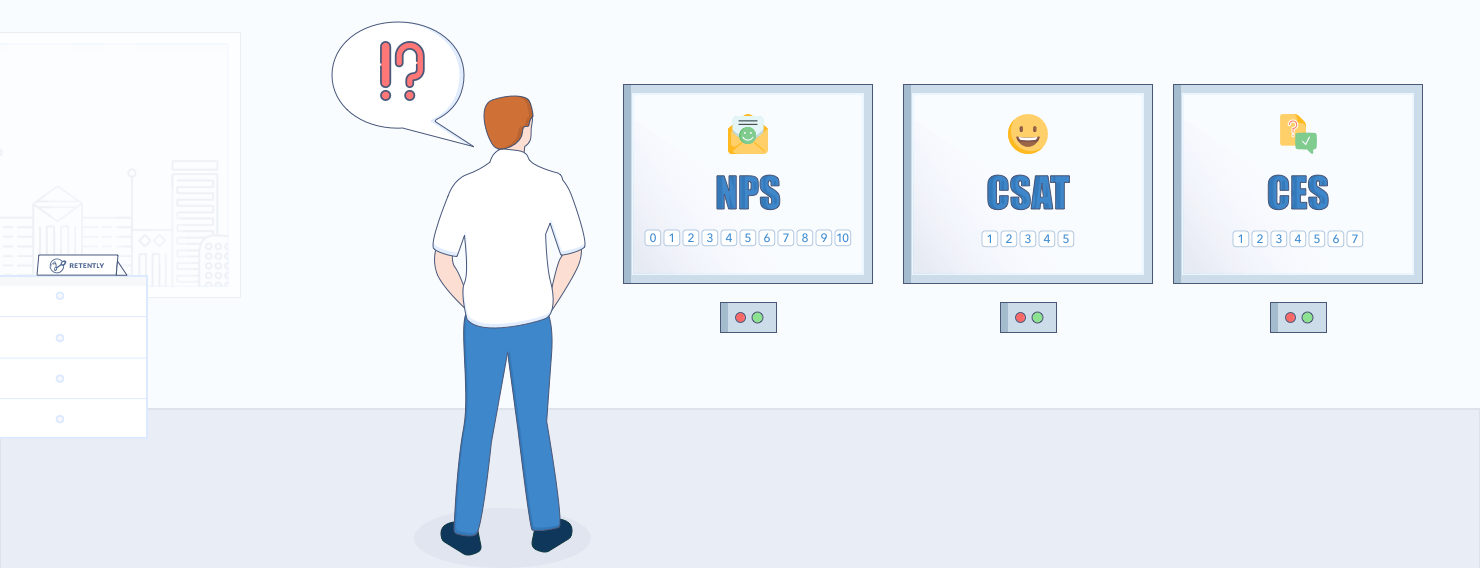
NPS, CSAT and CES - Customer Satisfaction Metrics to Track in 2021

With 91 properties around the world, in a wide variety of locations, the Ritz-Carlton has a particularly strong need to ensure their best practices are spread companywide. If, for example, an employee from their Stockholm hotel comes up with a more effective way to manage front desk staffing for busiest check-in times, it only makes sense to consider that approach when the same challenge comes up at a hotel in Tokyo. This is where the hotel group’s innovation database comes in. The Ritz-Carlton’s employees must use this system to share tried and tested ideas that improve customer experience. Properties can submit ideas and implement suggestions from other locations facing similar challenges. The database currently includes over 1,000 innovative practices, each of them tested on a property before contributing to the system. Ritz-Carlton is widely considered to be a global leader in CX practises and companies like Apple have designed their CX philosophy after studying how Ritz Carlton operate.

What does this tell you- Use your Data wisely!

The next question that may pop up is, “but there is so much data. It is like noise”. This is where programmatic approaches to analysing data pop up. Analytics and data sciences firms across the globe have refined the art of deriving insights out of seemingly unconnected data to a nicety. What you can get out of this is in addition to analysing customer footprint in your business place, you get to analyse the customer footprint across various other channels and social media platforms.

Data Science vs. Data Analytics vs. Machine Learning

This aims to profile the customers who are most susceptible to local deals/rewards/coupons basis their buying patterns.

How is this done? The answer is rather simple. Customer segmentation algorithms (both supervised and unsupervised) enable you to piece together random pieces of information about the customer and analyse the effect they have on a target event. You will be surprised at the insights that get thrown out of this exercise. Obviously caution needs to be exercised to ensure that the marketeer doesn’t get carried away by random events which are purely driven by chance.

Okay- so I have made some sense out of my data. But this is a rather cumbersome process which does not make any difference to the way I deal with my customer on a day-to-day basis.

“How do I get this information on a real-time basis so that I can actually make some decisions to improve my customer’s experience as and when it is applicable?”

This takes into the newest and most relevant trend into making data sciences a mainstream part of decision making. How do we integrate this insight deriving platform into the client’s CRM system so that the client can make efficient decisions on a real time basis?

Reinventing your Relationship with Technology - PGi Blog

In Anteelo, for one of our leading technology clients, we have built an AI-based orchestration platform which derives the actionable insights from past customer data and integrates this into the customer’s CRM system so this becomes readily available to all marketeers as and when they attempt to send out a communication to their customers.

What does this entail? This entails using the right technology stack to build a system which can delver insights from the data science modules at scale. I prefer calling it out as a synergy of both data sciences and software development. Every decision that a marketeer is trying to make must be processed through a system which will invoke the DS algorithms in-built on a real time through the relevant cloud computing platforms. Insights will be delivered immediately, and suitable recommendations will also be made on a real-time basis.

Tips For Making Truly Personalised Photo Albums | Professional Printing Services | nPhoto Lab

This is the final step in ensuring that personalised recommendations being made to every customer are truly personalised. We in Anteelo call it “The Last Mile adoption”. This development is still in its nascent phase. However, companies would be wise to integrate this methodology as a part of their data science integrated decision making since it is very unlikely that they will hit the holy grail of customer satisfaction without delivering real-time personalised recommendations.

Things to consider while defining Machine Learning and Artificial Intelligence use case

Difference between Artificial intelligence and Machine learning - Javatpoint

While many companies are interested in applying artificial intelligence (AI) and machine learning (ML) to help their businesses transform and innovate, few have an appetite for a lengthy project or a large initial investment.  But when companies can see meaningful value in six to eight weeks, they are more likely to expand their usage of Artificial Intelligence(AI) and machine learning (ML) into new initiatives.

To demonstrate the value proposition for Artificial Intelligence(AI) and Machine Learning (ML), we recommend concentrating on unlocking insights from vast amounts of unstructured data to help augment human intelligence, create process efficiencies and lower operational costs. We have also found that the best results tend to come from a business-led/IT supported model.

The 4 critical questions to ask remote employees - Know Your Team | Blog

Four key questions are central to scoping out an initial minimal viable product (MVP) for a valid use case.

  1. Which persona are you trying to assist – external or internal?  The answer is not a value judgement, but rather a focus that impacts some of the design considerations and decisions. As an example, in a contact center, the focus for the customer service rep is productivity – quickly giving the rep as much information as possible. This usually means fewer prompts, fewer stops, one- or two-word questions, and fewer and more dense answers.  Contrast that with the external customer, where we tend to focus on a warm and engaging experience that incrementally guides the customer to the answers they need. This typically means more prompts, more questions, a wider variety of natural language to ask the questions, and more and shorter (more digestible) answers.
  2. How are you are trying to help that persona?  This aspect typically helps us hone in on part of an initial business process to understand how we are going transform — whether by adding more data for consideration, augmenting analysis, and/or automating the execution of steps.
  3. Where does the data come from to support this initiative?  This is often the most challenging aspect for several reasons: There may be more questions than current answers, the current answers may be inconsistent or conflicting, or the current answers exist, but may not easily understood or comprehensible. All of these situations tend to require focus on curating, modifying, and/or creating content in order to get the right answers.
  4. What is the value?  Value can be determined most successfully when we can be as specific as possible. Very often, benefits can be described in terms of metrics.  From a best practice perspective, having specific metrics-based objectives makes it clearer for business and IT to determine the value. Examples include: a) higher customer satisfaction, measured by Net Promotor Scores or revenue increases, b) lower costs, shown by reduced handling times or increased processing volumes with the same staff and c) better employee engagement, indicated by reduced attrition and training time.

Four Key Questions About Data Analytics | PM360

To further the dialogue as you consider progressing towards transforming your business by leveraging artificial intelligence, here are some additional questions to guide your thinking:

  • Are you focused on transformation and innovation?
  • For what initiatives are you considering AI/ML support?
  • What business outcomes are you driving?
  • What is your current level of experience with AI and ML?
  • Have you identified any use cases or do you need some assistance in defining them?

The key to evolving your approach from MVPs to multiple initiatives developed and deployed in production at scale, is to effectively balance faster time-to-value and major transformation outcomes. This balance demonstrates business results in smaller time increments and sets the foundation for flexible and continuous transformation and innovation.

The Insider’s Guide to Repairing Your App’s Bad Reputation

How To Manage Negative Reviews Of Your Mobile App

In a time when the internet is filled with bits of advice telling entrepreneurs to opt for a mobile-first approach, can you really afford the source of your future business empire to have a bad reputation online?

The challenges that a mobile app startup face is already a lot to ignore and left unseen. And when you add the issue of bad app reputation in the mix, the whole app journey becomes a lot more haywire, instantly.

Answering how to protect your brand’s reputation in the dog eat dog world can be an act lot easier said than done. In a time when there is a constant race to win and then rule the already crowded space, it can get really difficult for you to maintain that nothing bad is said about your offering. Especially when a lot rides on it – Uninstall Rates, Abandonment, Decline in Downloads, etc. (Talking about downloads, know how to get million downloads on your app)

Every single day past the day when you launch your application act as a landmine. While you can be overly careful to never step on them, chances are that when you do, it would take a lot to recover from the damage.

In this article, we are going to give you the secrets of how you can manage your brand’s reputation, both on the app and in terms of your empire online.

Refraining from spilling out the secrets from any single POV, we are going to look at three different stages – Prevention. Manage. Secure – of mobile app reputation management.

Without further delay, let us get to it, straight-away.

Set up Listening Tools

5 Tools to Track Your Online Reputation

Much before you even approach the submit app button, you should set up the subscriptions for app monitoring tools – the first step to How to Monitor Your App’s Reputation.

The idea of these software is that they fetch everything that is being mentioned about your application online and at the same time, they update you of new reviews on the Play Store or App Store.

There are a number of application reputation management platforms you can opt for in the quest to be one step ahead of combating negative reviews about your brand – Rankur, Brandeye, Social Mention, amongst others.

Set a Team to Reply in Real-Time

How High-Quality Data Drives Better Customer Service Experiences | by Kristin Floridia | Better than sure.

Before your app hits the market, you need a team in place who would be responsible for answering all the app reviews in real time in the play store and app store. For one of the biggest way of how apps influence brand reputation is by not replying to the users.

Doing this will ensure that no bad mention goes unaddressed. Because an unaddressed review is in many ways equal to being a catalyst to a tarnished reputation.

Bring Troubleshooting Tips to Website

Web Application Performance: 7 Common Problems and How to Solve Them – Stackify

One of the root causes of genuine bad reviews and mentions of any brand is users not getting a solution to their problem. So, when you give them a platform full of troubleshooting solutions that they can apply and get a redressal, the chances of them passing a bad review will automatically be nullified.

So, we recommend is that you hire online experienced online mobile app reputation manager and brainstorm all the different scenarios that the users can face which can frustrate them and then work on troubleshooting guide to solve it for them in one place.

Being prepared for the somewhat inevitable time of negative feedback and mentions can be one of the most sound decisions that you can take in the app journey.

And now that we have looked at the precautionary tales, let us now get into the ways you can combat bad reviews on your app in real-time – whether they are in the stores or on the social media. Here are the tips for app reputation management when you are in the second stage.

Reply in Real Time

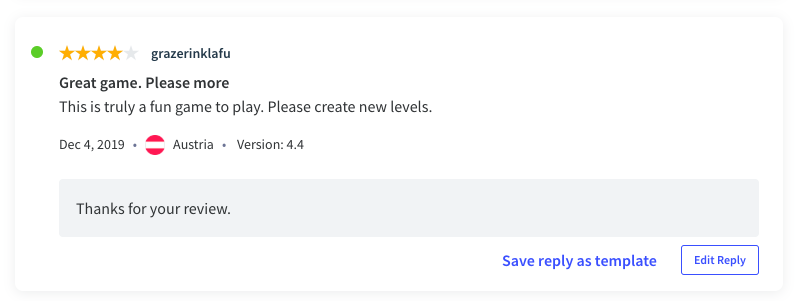
How to Reply to Google Play Reviews

This pointer here, to reply in real time, has to be the mantra of your mobile app reputation management. You will have to ensure that a team is always ready to reply on the negative feedback with a solution or an apologetic message.

No matter what technicality the problem’s solution calls for, your mobile reputation management strategy should ensure that the first level of message always goes through in real-time. None of your users should ever feel abandoned, for it would only leave room for more frustration and thus the bad word of mouth marketing.

Do Not Be Defensive

7 examples of the best way to respond to a positive review | ReputationDefender

A very important thing to understand when tackling bad reviews is that the users who are making them are frustrated. Now, no matter how small you believe the problem is and how invalid the users’ responses are to it, make sure your reply is always on a defensive note. No matter what word the users make use of, your reply always have to be on the softer side.

Keep the Reply Very Short

How to get busy people to reply to your emails

The number one formula in every guide to increase the prestige of mobile apps is to never use the comment section of the stores or any social media platforms as your way to reply paragraph-sized solutions or justifications to the complaining user.

Try to keep your comment very short and precise, for example, you can take 3 lines as your standard response size.

Take the Commentator on a Private Channel

How to Be a Good Gaming Commentator on YouTube (with Pictures)

Refrain from justifying or clarifying the miscommunication on a social platform which is open for everyone to see. After all, if you pass a negative message online as a brand, the user out of ego will only take it forward and beyond, in place of understanding the situation.

So, simply mention your email id in the comment and ask the users to contact there – thus taking them away from the platform where there is space for the good reviews to grow.

Reply When the Issue is Resolved

How To Resolve IT Issues When Time And Resources are Limited | Techno FAQ

Make it a mandatory process to reply to your customers when the issue is resolved in a timely manner. Even if it takes a week on end, make sure you come back to the comment and drop in a line saying that the issue is resolved now and that you are sorry that it caused inconvenience in the first place and that you value the association that they have with your brand.

Now that we have looked at the ways to combat and get your negative reputation in control while it is happening, it is now time for the last segment – Repair Damage. The part we look at mobile app reputation management solutions for after the plans are retouched and users are now content.

Experience Before Ratings

Understanding Online Doctor Reviews and Ratings | Beaumont Health

One of the most annoying things which only aggravates the frustration of a bad experience offering mobile app is when the app asks for reviews at every possible occasion.

While it is important to ask for reviews, it can backfire when you have not timed it right. So, let the users arrive at a particular app stage before you pop up the message to leave a rating.

Also, instead of directing them straight to the store, first give them the option to share what they are feeling in the app – this way you will be able to create a gap between negative feedbacks and the stores.

Influencer Marketing

AnyTag | Influencer Marketing Platform

If there is anything that marketing has taught us, it is the fact that when you attach a reliable face to a product, the trust sentiment automatically flows between the face and the product.

Following the same formula, it would help if you introduce an influencer into your mobile app promotion strategy.

After all is said and done, the one compressed secret to managing and reimaging your app’s image in the market and to achieve the fruits of your online app reputation management labor is to be present at all times in a non-defensive mode.

Are you facing a time of bad app reputation? Let us help you get to the root of it.

Enterprise Mobility Solutions: Why to Invest in Them

Benefits of Software and Mobile solution for CPGs - Ivy MobilityGone are those days when employees were supposed to check the notice boards or contact management for every query. Today, they can connect with the management and get the right information/product in real-time regardless of if they are in the office or at home. And this has been made possible by Enterprise mobility solutions.

Enterprise mobile apps are transforming the working environment of the company. They, unlike business apps, are targeting the employees of the company and providing them with a surplus of options, making it necessary for the organizations to look into Enterprise mobile application development.

But before we jump into the benefits the mobile apps avail to the Enterprises – the one that differentiate enterprise apps from consumer-end solutions, let’s have a look at this data giving a hint of the Enterprise app market:-

  • Enterprise mobile market is expected to hit a revenue of $430 billion by the year 2021.
  • 4.67% of companies acknowledged that Enterprise mobility solutions are becoming the need of the hour.
  • 65% of companies are using 2-5 enterprises apps, while 27% are relying upon 6 or more applications for catering to the needs of the employees.
  • 5.66% of companies decided to develop Enterprise apps in the coming 3 years.
  • 47% of agencies observed an improvement in internal communication, resulting in better relationships and lower disputes under the roof.
  • 59% of workers in America worked beyond their 9-to-5 shift because of Enterprise mobile apps.
  • Around 250 hours have been saved per year using Enterprise app, which is nearly equal to 6 additional working days.
  • 77% of employers shared that the market for Enterprise apps has grown in the past two years.
  • 39% of employees admit that they are using Enterprise mobility solutions due to efficiency potential they have.
  • 19.23% of increase has been experienced in terms of customer satisfaction.

With these interesting fact known to you, let’s check the reasons to build Enterprise apps:-

1. Effective Communication

What Is Effective Communication During a Divorce? - mycollaborativeteam.com

Various companies still rely upon emails and other desk-based means of communications. While these methods sound effective, they act as a barrier in communication when the employees are not at their desk or are into field work, resulting in isolation and disputes.

Enterprise business solutions, in this scenario, reside on their phones and provide them with a chat feature which is faster, easier and more effective than an email. An example of this is IBM launching its video streaming application enhancing workplace communication. It enables them to enjoy communication on the go and the best part, share the information with multiple people in group conversations without undergoing the risk of forgetting to click on the ‘Reply All’ button.

2. Real-time Data Sharing

Real-time Data Sharing - SOSY A/S

Unlike the traditional methods that demand staff members to prepare offline records and hunt for getting every single information, the Enterprise apps rely upon the cloud technology and offer quick and comfortable sharing of files and information anytime and anywhere. This encourages organizations to look forward to investing in Enterprise app development.

3. Higher Productivity

Excellence in Financial Management: Three Frameworks for Higher Productivity

One of the benefits of Enterprise app software is that it comes with various handy tools that help them work efficiently. For example, the calendar aids the employees to monitor their work schedule, while the push notification feature provides them with information about the upcoming meeting, project deadlines, and more.

4. Better Employee Involvement

State of Employee Engagement in 2019: 4 Key Points

An Enterprise application also helps the management to bring all the workforce on the same platform. It gives the employees an opportunity to freely give their feedback, share relevant information, make an announcement, and much more effortlessly – rather than waiting for their turn or visiting the management personally.

These apps also help organizations to realize the importance of education app in Enterprises and thus, provide the facility to their workforce.

This, as a whole, improves the relations and build effective work culture and productivity, prompting the organization to look ahead towards how to build Enterprise apps.

5. Seamless Record Maintenance

Equipment Maintenance Record Keeping: How To Optimize It?

Another reason behind rising Enterprise demand for custom app development is that it gives management an escape from the manual record management process. These apps enable employers to keep an online record of all their employees and retrieve the data easily and anytime based on different factors, such as age, department, contact number, etc. And, in this way, prevent them from going through the hassle of checking each record to find the right employee.

Let me explain this with an example. Suppose, you have a French client and are finding language as a barrier in communication. You need someone to have fluency in the French language immediately.

Now, if you talk about the traditional method, you were supposed to ask every individual to find the right person. Whereas, in the case of Enterprise mobility solutions, you can easily filter the data and contact the candidate with the required skills.

6. Robust Security

Robust & Secure, deep-level security secures school networks

One of the prime reasons to invest in Enterprise app development is that it adds security to the process. These apps, by integrating technologies like AI and Blockchain, enable the companies to ensure that their data is safely and securely stored on the cloud.

7. Improved ROI

6 Quick Tips to Maximize ROI from Your HRAs - Medicom Health

By providing all these features, the Enterprise mobile apps enable the employees to work seamlessly, effectively and safely, which eventually boosts the ROI.

Now as you know the reasons why invest in Enterprise mobile apps, it’s evident that you must be looking forward to hiring an enterprise mobile application development company in New York and get an app ready.

Taking the same thought forward, let’s see what it takes to hire an enterprise mobile application development company in New York, Florida, Texas, Middle-East and European countries for your enterprise app needs.

1. Experience

Sell an Experience, NOT a Product or a Service | by Kory Farooquie | nextgenninja | Medium

The foremost factor to consider to develop Enterprise apps is the experience of the app development company. If the company is highly experienced, it will be well-versed with the challenges and trends of the mobile industry as well as that of yours, implying they will provide you with the best solution as per the market needs.

Whereas, on the flip side, a newbie company might fail to deliver the application at the right time or may serve you with a low-quality product.

2. Platform

Android vs iOS, Which One Do You Actually Need? | Cashify Blog

The decision of investing in Enterprise Android app development or Enterprise iOS application development or both also depends on the fact that the platform chosen makes a huge difference in the development area, timeline, cost, and the corresponding outcomes. This is because every team has its own level of expertise at tech stack associated with developing an application for Android, iOS or both the platforms individually or using Cross-platform app development approach.

3. Design

Design - Mediastrasse

Many companies focus completely on the coding part, leaving no time for the design element. An outcome of which is that they fail to gain the attention of the target audience and thus, enjoy higher outcomes from Enterprise business solutions.

So, it is necessary to learn more about the designing skills of the company you are planning to hire before getting into a deal.

4. Portfolio

A portfolio, like a window, can help you to get a comprehensive look into their skills and visualize the type of application you will be served with. So, do not skip this step.

5. Communication

Though often overlooked, the level of communication also makes a difference in the choice. This is because if a mobile app does not connect you throughout the process, you would find it hard to know what and how they are developing your application, what challenges they are facing and how they are mitigating them, and ultimately fail to understand the impact on your application. In the worst scenario, you get delivered an app solution that is entirely different from the idea you shared, implying you need to ask them to invest additional effort and time in return of funds to get the same facilities available. Thus it is safe to opt for the enterprise mobile application development company in New York or other areas around the globe to get a  top-notch application.

6. Security

What Is IT Security? - Information Technology Security - Cisco

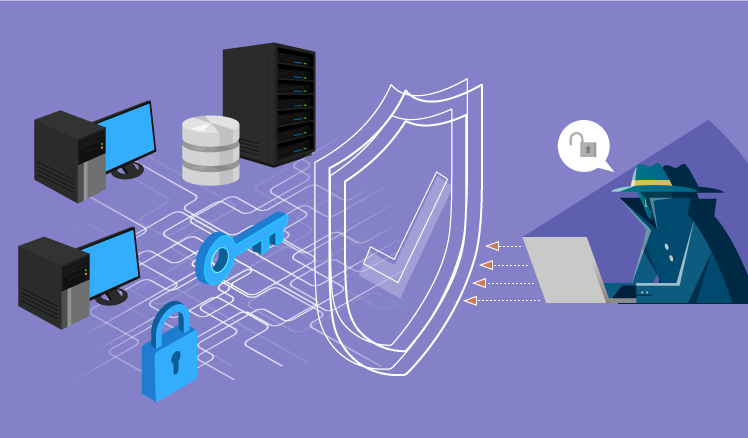
Considering the level of sensitive data stored/shared/exchanged on the platform and the growing interest of hackers into the mobile data, it is again important to consider an app development team that looks into the mobile app security best practices and strive to deliver a secure experience.

7. App Cost

Estimated app development budget bifurcated to popular app types

Last but not least, check how the cost to develop an application is defined at their end – do they provide all the services in a single package or has added a price tag to each service individually. Depending on the answer to this question, check for the company that can deliver the right set of services within your budget.

As covered in this article, Enterprise mobility solutions are becoming an indispensable part of the organization. They are encouraging the enterprises to serve their employees with the right insights and resources, and thus empower them to add more profits to their business.

So, in case you are also an Enterprise, look forward to investing in the process of how to hire the right mobile app development company and introduce Enterprise mobility solutions to your traditional process.

A Glimpse of the burgeoning On-Demand Home Services App Market

Extensive Guide to Startup On-demand Home Services Business

Imagine a scenario. You woke up, had your breakfast and left for the office with a messy room and stinky dishes behind. But, when you come back in the evening, you find everything in the perfect order – dishes cleaned and organized in the shelves, carpets vacuumed and the floor shining like a star. What would be your first reaction?

If I would have asked this question a few years back, the answer would have definitely been elation and curiosity of whether there’s any genie (spirit) who is cleaning everything up. But, in the present time, all these incidents are common to experience – thanks to On demand home services apps.

Eager to know more about these mobile apps and the future scope?  For the next 8 minutes, we will be on a journey to the on demand home services app market– looking into the reasons why the industry is gaining momentum, who are the top players, the future predictions, and more.

On Demand Home Services Apps – Why are They So Popular?

An on demand home service app, as you can sense from the scenario shared at the beginning of this article, aid people in managing their busy lives. These on demand service apps enable people to hire someone to manage their household chores and boring tasks including cleaning, plumbing, painting, and moving and storage. On the other side, it also provides a source of high and constant revenue to on demand app development companies.

The home services segment of the On-demand economy is reshaping the world around us by acting a solution of the three challenges of the industry:-

1. Availability of Service Providers

8 Ways to Find a Handyman, Plumber & Other Service Providers Near You | Moving.com

While some areas have plenty of service providers to take the help of, others have countable numbers of options. In such scenarios, an on demand service app development company acts as a medium providing the users with multiple options both locally and those ready to visit their areas for delivering services.

2. Reliability of Service Providers

Urban Company - Get Expert Professional Services at Home in Delhi NCR

In the traditional market, it is quite tough to rely upon any service providers when not performing the task in front of you. But, when it comes to on demand household services app market size and on demand home services applications, then these platforms empower you to connect only with authorized service providers and pick the right one- based on the feedback from existing customers and other factors. This encourages the users to rely upon the service providers and feel free to leave their place with the provider while performing other tasks.

3. Quality of Work

5 Major Factors Affecting The Quality Of Work Life

The reviews and ratings for the on demand app for home services, when created by the reputed on demand app developers help to get an idea of the quality of work the service providers offer and thus, go with the online on demand app development company that matches your needs and expectations.

While these were some of the challenges that On-demand apps for home services have catered, there are a myriad of advantages it offers, including:-

Significant Convenience

Life Made Easy With UrbanClap | June Wants It All

A majority of the On-demand home services applications provides all the home-related service options at the same platform. This makes it convenient for someone to look into different services without jumping from one platform to another.

Considerable Flexibility

While the customers get an opportunity to enjoy multiple services at the same platform, the service providers obtain the freedom to choose their own working hours and conditions. This way, the On-demand home services platform designed by the best software development company is adding flexibility to the marketplace.

Simplified Appointment Scheduling

Another reason why companies are investing in on demand services app development is that these applications offer the users and service providers the opportunity to check their calendar and fix an appointment for the job accordingly. This way, they can manage that the task is fulfilled on the day of their availability or the day with better optimal solutions.

Ease of Payment

Seven Trends of Next-Gen Payments

The On-demand platforms that connect users with service providers often manage billing and payment transactions. This gives the service providers an escape from the stress of the payment and avails their best efforts into their responsibilities while making it easier for the customers to pay in different forms, apart from cash.

Higher Lead Generation

Last but not least, lead generation is also one of the reasons why businesses are embracing the concept of on demand mobile app development.

While the traditional methods might be still applicable, the On-demand mobile apps provide the service providers a platform to connect with a greater audience and transform their service offerings into a wholesome business.

With all these benefits, the online and instant home service market has become popular in the marketplace – making both users and service providers turn towards the On-demand economy. A few statistics proving this statement are:-

On Demand Home Services Industry Market Statistics (And Future Predictions)

On Demand Home Services Market

  1. The global on demand home services market size is anticipated to reach USD 1,574.86 Bn during 2020-2024. That indicates that more and more startups and established service providers will plan to enter the arena.
  2. The landscaping segment generates annual revenue of about $600 Bn market in the United States only. This is also one of the online on demand home services market statistics to focus upon.
  3. The moving and storage market has around 8,000 companies involved who produces around $12 billion of collective revenues.
  4. The online home services app market, as previously covered in our article about On-demand mobile app economy statistics, will gain higher popularity this year. It will experience more requests from people for services like home cleaning, tutor service, carpenter, water heater repair, painter, etc. in addition to the demand for delivery of food, cab, and fuel.
  5. The Global commercial dry cleaning and washing sector will become 3.4% more in demand between 2017 and 2023. Whereas, the Flooring segment will observe a 5% rise in their market value and Plumbing market will grow by 12%.
  6. However, it is also predicted that the major slice of the market share will remain confined to the Top market players, implying it would be necessary for the new startups to take a deep thought of how to succeed your On-demand business in a crowded app market.

Now as you are familiar with what is the current scenario of the On-demand home services industry and what will be the future of the sphere, it’s the right time to look forward to uncovering everything related to on demand home services app development.

So, without ado, here are a few things you must consider when partnering with an On demand app development company to design your own home services application –

1. Understand User Persona

Since customers are the prime element of every business, it is necessary for the service providing companies to gather in-depth knowledge about their customers – their needs, expectations, age, region, and more to get a clarity of your goal and the target audience. It is also important because not all the people from all the areas across the globe are relishing the advantages of On-demand home services economy equally .

So, be open to performing extensive market research, gathering enough customer feedback and ensuring that you minimize the pains of the customers.

2. Analyze the Top Players

Though the demand for on demand household services app market size is increasing, the larger market profits are still going with the top players. In a scenario like this, if you perform competitive analysis for their mobile app idea, you can easily figure out what makes the customers magnetized to the services of these top players. This information can enable you to integrate those elements into your mobile app and thus, increase the chances of app success.

India's First Unicorpse?

3. User Experience

UrbanClap by Danishali on Dribbble

Considering the importance of UX mobile app success, the next thing to pay attention to the type of onboarding and UX experience you are introducing in your application. This implies, adding the elements that keep the app users hooked to your platform and convince them that it is adding some value to their lives.

4. Push Notifications and Other Engagement Options

Top 6 Push Notification Services for Developers in 2021 | Courier

Focusing on the right use of Push notifications and other such engagement options is yet another thing to consider when making a ‘Home services On-Demand’ application. The push notifications, acting as a reminder to the users, will encourage them to tap on your app icon more often and perform some activity. This will improve your app engagement as well as ranking in the competitive world. Besides introducing push notifications, getting familiar with how to localize your app to increase its conversion rate by 200% is also a profitable method. So, look forward to exploring its potential in your niche market also.

5. Tech Stack and Development Cost

Technology Stack for a Project: A Guide for Non-Tech Business Owners

Last but not least, having a sound knowledge of what tech stack to integrate into your On-demand app development process and how much does home services app development cost is also helpful.

While these were some of the factors that must be considered while making an On-demand home services app, there can be various other constraints and challenges associated with the development process depending on the type of services and business model you pick. So, to get a complete idea of what things to watch out for turning your On-demand app vision into a mobile app, you should consult with an On-demand app development experts.

Flutter Ideal For Cross-Platform App Development

Flutter - Beautiful native apps in record time

For mobile app development- iOS and Android are the two main platforms. Each of these platforms need different types of coding for application development. This separate coding has become a problem to various mobile app development companies; which has resulted in the use of cross platform development. Gone are the days when developers had to sweat double in order to create an app for app development platforms. Now, creating an app with one-time coding is possible, thanks to cross platform app development frameworks. The best cross platform app development includes creation of mobile applications in a way that they can be run on various platforms. In this type of development, programming is done only once in a manner that the app is supported by Android, iOS or Windows. Cross platform development has become popular because of its features and tools which are loved by developers. Some popular cross platform development tools are Xamarin by Microsoft, React Native by Facebook, and PhoneGap from Adobe. Each of these development tools have different features along with pros and cons. Developers are always looking for something new and improved to make app development a time saving and efficient process. This constant improvement in technology gave birth to Flutter.

What is Flutter?

How to change package name in flutter?

Flutter is a software development kit and an astounding cross-platform app development tool, introduced by Google.  It uses Dart language for programming. Flutter was launched in 2018 with the features that were missing in the previous cross-platform development tools.

Apps built with Flutter can be run on Android, iOS and Google Fuchsia which is another app development platform developed by Google. However, a debate of Flutter vs React Native is always going on among developers since the time it launched.

Flutter is being used by developers for its proficiency and efficaciousness. The developers at Google had been working rigorously on this before general use. Here are the things they worked on:

  • Ability to support more Firebase APIs
  • Has its own tools
  • Bug fixes
  • Improved documentation
  • Support windows development
  • Enhanced engine performance
  • Tools for Android Studio and Visual Studio Code
  • Support different languages i.e internationalizing
  • Accessibility for all types of developers
  • Additional features like inline videos, charts and ads

What is Flutter Good for?

GitHub - flutter/flutter: Flutter makes it easy and fast to build beautiful apps for mobile and beyond.

Ever since Flutter has become famous, this question has been making rounds. Before deciding to build a Flutter mobile application, people want to know which type of development it supports and does not support. Flutter is not the choice for you if you are developing:

  • Instant or Progressive Web Apps – These type of apps need to be small and apps built with Flutter, on the other hand, are larger than native apps.
  • Apps that need uncommon native libraries – Flutter is new and it does not have all the native libraries in its repository so if any uncommon native library is demanded by an app, it can complicate the process. In that case, developers will have to add custom-made platform channels which is definitely going to take time.
  • Applications communicating to hardware via bluetooth – This feature can be built separately for both Android and iOS and then added to the Flutter app. However, this might be time-consuming.

Developing an app with Flutter

Google Developers Blog: Flutter: a Portable UI Framework for Mobile, Web, Embedded, and Desktop

We did reveal the real Google strategy behind Flutter in our previous blog. Moreover, Flutter has been around long enough to provide the impeccable user experience. The exponential popularity of flutter for cross platform encouraged developers to build apps with this framework.  Now, there is a sea of flutter cross platform apps out there, served with proficient flutter app development services.

Some IoT banking use cases of flutter include apps developed by Google- Adwords app which tracks the advertising reach and buys Alibaba app by Alibaba Group, a Chinese e-commerce company. Another examples are Watermaniac, Hookle, Coach Yourself, Reflectly, and many more.

From an app owner’s view, developing an app with Flutter is fast and less costly. There are other advantages of using Flutter for app development which are discussed below:

Pros

The Pros and Cons of Using Website Builders

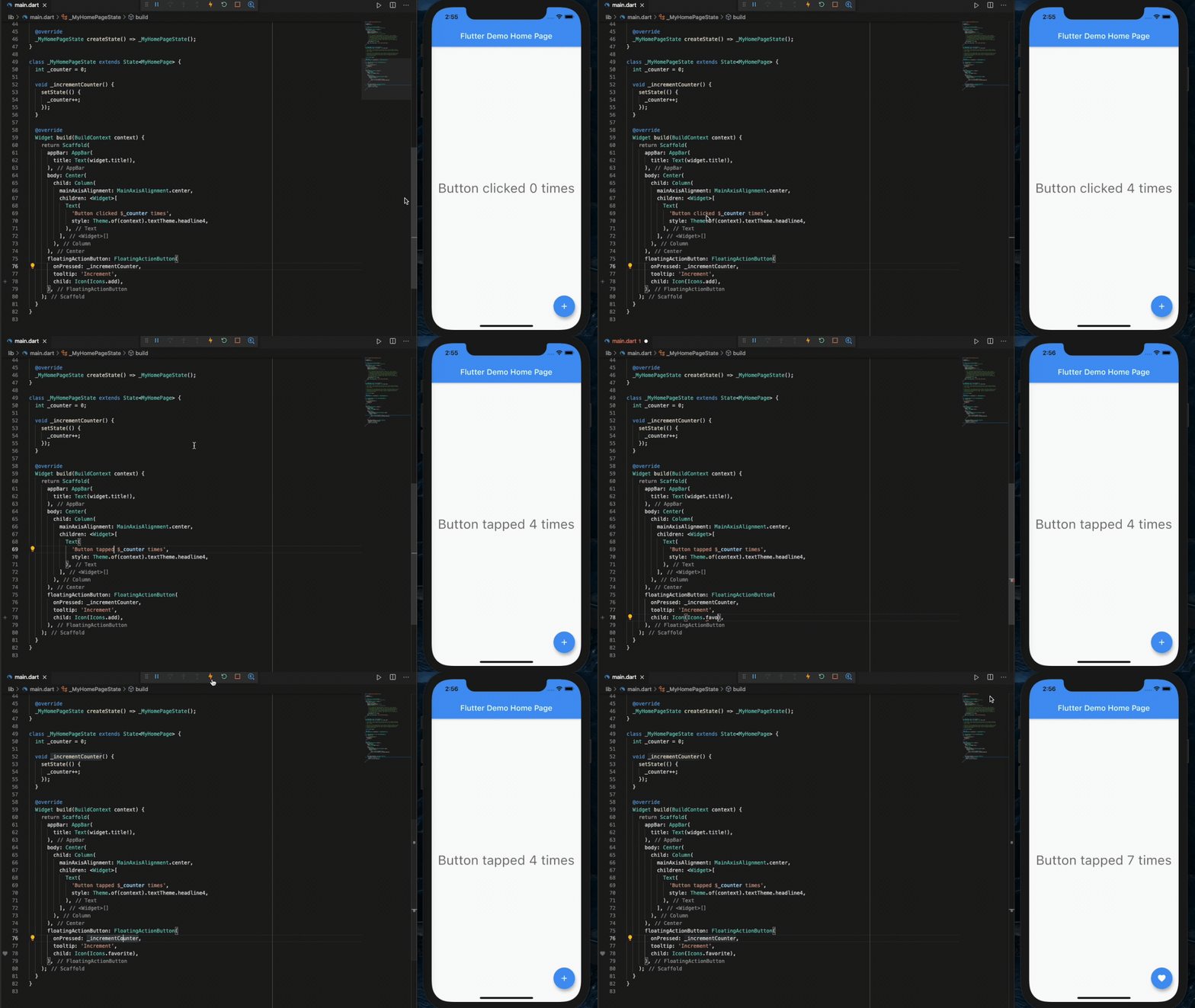
  • Hot reload – Whatever changes are made on the application is immediately visible to the developers and that makes the process easy and less time-consuming. Hot reload allows developers to quickly change anything that doesn’t look or fit perfectly in the app. This also allows developers and designers to collaborate better. However, the changes may take several minutes to reload.
  • Perfect for MVP – Flutter is the best option if you are looking to build quickly to show it to your prospective investors. It takes less time and built native looking application for both iOS and Android. This will let your investors see what your MVP looks like and you will not waste time developing apps for two different platforms.
  • Less coding – Flutter uses Dart programming language which is an object-oriented programming language. It does not need to code an entirely new programme if any changes are made because it allows hot reload. Flutter is slightly similar to react native so it is reactive and declarative.
  • Cross-platform development – Flutter is a cross-platform development tool. In this, coding is done only once and then the same code can be used in another platform as well. Also, Flutter is the only access to development in Google’s Fuchsia platform. With Fuchsia developer portal now live, developers are trying their hands on it. Looking at its reception so far, it is said to replace Android in the future, which is precisely the strategy of Google behind Flutter.
  • Widgets –  One of the importance of flutter for app development is having many widgets that are natural looking, fast and customization. Widgets are necessary for an app because that’s what makes the apps interesting. Flutter has a wide range of amazing widgets that perform well and can be customized as per the need. The widgets are unified for all platforms and layouts.
  • Different themes – Most of the time, the themes of the same app are different for iOS and Android. The difference is not in the theme color and design but more than that. Flutter allows to put in different themes while coding for both the platforms. Take a look at the image below and see how the theme data is set for target platform iOS.

Cons

Loonie Making You Looney? Pros And Cons Of A Weak Canadian Dollar ... - ClipArt Best - ClipArt Best

  • Limited to mobile only – To build an app with Flutter means to build an app only for mobile. Flutter is still not available for web browsers. This can majorly impact your decision on the development platform. If you are looking for maximum flexibility then maybe Flutter is not the right choice.
  • Few libraries – Flutter does have libraries but not a wide range of it. The most common ones that Google decided to include are available but many useful libraries are still unavailable. If a developer wants to use any of the unavailable libraries, he will have to build it on his own which is a time taking process.
  • No TV support – Even though Flutter development is supported in both iOS and Android mobiles yet it is not available for Apple TV or Android TV.
  • No CI support yet – Other platforms sure do allow continuous integration support like Jenkins and Travis to the iOS and Android apps but Flutter does not. There are other ready-made solutions instead of these CI platforms but to use that developers will have to set up toolkits.

Smooth Development Cycle and Rapid Results

There are numerous features in Flutter that simplifies the development process for engineers, upon relying on the experience of Flutter-based tasks, some of the important features are provided below:

Business logic components (BLoC)

bloc - Visual Studio Marketplace

Flutter’s principles depend on the reactive programming that guesses streams. This architecture pattern is called BLoC (Business Logic Components). This architecture permits separation of the application’s UI from the business logic by utilizing streams.

The fundamental value of BLoC design is its reactivity, and freedom of UI from data. In comparison to other architectural patterns, where UI might be stacked with delays, the BLoC design prevents delays in the application’s performance by using organized, async techniques, and streams. It implies that animations and screen scrolls will work easily, while data is stacked from the server.

We have been utilizing BLoC pattern architecture for years now. It is the best fit for applications with complex architecture and a lot of information. In a case where the app’s architecture is simple, additionally the Provider design is utilized that simplifies resource allocation and increases scalability for classes.

Code architecture

The measure of settled objects in Flutter code doesn’t impact the last presentation and responsiveness. This is because there are no recursive calls when preparing the layout.

For example: if there are a lot of gadgets accumulated in the native app – it probably influences the application’s performance. In any case, with Flutter, it is feasible to carry out UI/UX plans of any complexity, stylization, and onboard plenty of widgets.

Flutter supports multithreading, where threads are known as Isolates. When beginning to code in Dart, only a single essential Isolate is referred to as the UI Thread. It is the correct answer for long-running undertakings that ought to be processed alongside the smooth running of the entire application.

DartPub

Since Flutter uses Dart programming language, mobile developers generally utilize the DartPub as a package supervisor since it contains numerous reusable packages and libraries. While picking any plugin module, one can see both its popularity and the code’s health and maintenance. It is significant when creating custom highlights – it’s not as imperative to pick modules by the notoriety rate as to see that the code is in effect constantly refreshed and checked. The actual module may not be that well known, however in the event that you have some novel programming highlights, it is feasible to pick it relying upon the code’s wellbeing.

Why Choose Flutter?

Support and Community

Correct Community Support. Tips and suggestions

The Flutter 1.17 release has lots of improvements and it has resolved an unprecedented number of issues since its last release. This enormous number of enhancements is the consequence of coordinated effort with Nevercode, an incredible nonstop mix and constant development tool that helps any Flutter application developer to effectively discover and resolve issues.

With each year, a number of issues are resolved than opened, and this permits the Flutter group to end up with less issues left. The greater part of the issues have been settled with the assistance of 3,164 pull requests from 231 contributors.

Core elements

Core Elements | LinkedIn

Flutter utilizes widgets as its core element just like other progressive languages. Widgets permit developers to perceive how they’re doing with their code very quickly and save heaps of time on creating fundamental UI elements for each screen and resolution.

This is the thing that makes Flutter advantageous for developers, wherein they simply need to develop a UI element once and it will automatically adjust for any screen. This likewise saves time for QA professionals, as they don’t have to test the Flutter mobile app design on all devices with various screen sizes.

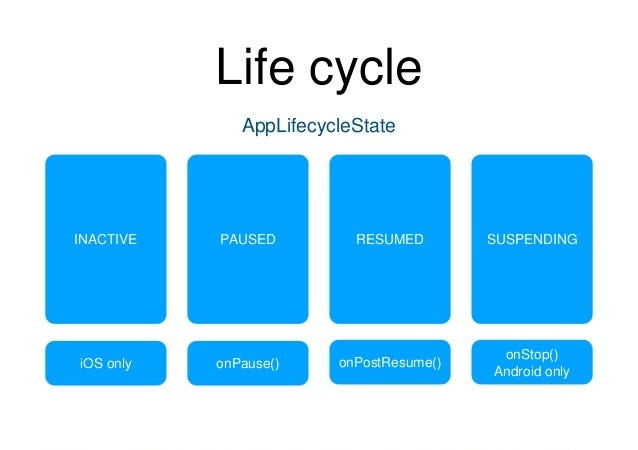
Lifecycle management

Flutter App Lifecycle. Mobile Apps Development A-Z Guide. | by Vladimir Babenko | Pharos Production | Medium

An application’s lifecycle is normally managed by the operating framework. This implies changing the condition of an application. Flutter used to be not that awesome at lifecycle management, as it didn’t have any tools that would permit developers to follow each phase of their application’s lifecycle.

Presently, developers can see their app’s lifecycle in Stateful widgets. They can likewise utilize extra widgets like OrientationBuilder, which tracks changes in screen direction and so on.

How Much Does it Cost to Build a Flutter Mobile Application?

It takes 50% less time to build an app with Flutter as compared to building apps separately for Android and iOS. According to the mobile app development guide on how much does an app development cost that we wrote recently, the cost of an app depends on the hours it takes to build it. To build an app with Flutter that works both on iOS and Android, it takes about 250 hours. On the other hand, it takes 400 hours to build the same app for iOS and 250 hours for Android.

To determine the flutter mobile app development cost, just multiply the hours taken to build the app with the hourly charge of an app developer. A Flutter app development company, however, has its own price range for its flutter application development services. It usually ranges between $15,000 to $40,000.

It is seen that the hours taken for Flutter app development is low hence it will save money. So if you want to save money and built an app in less time then Flutter is a great choice.

What is the Future of Flutter?

Cross-platform mobile app development using Flutter

Often a compromise is made between quality and productivity while developing separate apps for iOS and Android. But Google decided to remove this issue and introduced Flutter as a cross-platform development tool.

Flutter has just entered the app development industry and has already seen a lot of fame. The future seems to be bright for Flutter. Google also launched Flutter 1.7 with added new features and functions such as Rangeslider, 64-bit support, typography features, game controller support and so on. There is no denying that it is certainly more powerful than the previous Flutter 1.5 and 1.6 versions. Flutter has a lot of potential in the industry and if it is able to bridge the gap between quality and productivity then it sure is going to take over the app development world.

Flutter app development platform is still in the development phase which can be a risk but it shouldn’t take Google long to launch a stable version of the framework. Flutter has an official website where you can find all about Flutter.

This was our take, as a Flutter app development company in USA and other countries, on the newly launched Flutter for cross platform development. If you wish to know about our development process for android and iOS cross platform development within this framework or want to gain insight into our flutter cross platform app development services, get in touch with us today.

Frequently Asked Questions (FAQs)

1. How do you make a flutter app?

The very first step in the process of making a flutter app for your business model is to hire the best flutter app development company, which has the experience in this field and is trustworthy. Moreover, you need to make sure to calculate flutter Mobile app development cost before taking any solid decision.

2. How do you make cross-platform apps?

With the growing technology, many cross-platform mobile app development tools have also emerged to facilitate the whole development process. Software and mobile application development kit, such as Flutter, is the most effective way to develop a remarkable mobile app.

3. What programming language does flutter use?

Flutter uses the Dart programming language to create rudimentary codes and essentially the base for any cross-platform app.

4. Which framework can be used to develop cross-platform applications?

From the myriad of frameworks, the best ones to use for cross-platform development are Xamarin, React Native, and Phonegap.

Use Third-Party Note Apps with Google Assistant

Google Assistant Can Search Within Apps on Android

If you were wondering when will Google Assistant let you make notes using your favorite third-party app, the time has come. In the latest Google I/O, the company announced that the assistant will also support third-party apps along with the Google Assistant apps to take notes. The apps supported by Google Assistant are Bring!, AnyList, Google Keep, Any.do, Remember the milk, Picnic and many more.

Google had made another announcement earlier this year about the Google Assistant “continued conversation” feature and now it supports third-party apps to take notes. The Google community continuously showed a need to use their favorite apps with Google Assistant which is the reason why Google enabled this feature.

The motive behind this newly added feature is to make sure the lists are created simply through voice commands. In the earlier versions, users had to specify the apps to which the lists were added. But now commands like “Add milk to grocery list” and “Add Marvels to movie list” will not need any specific app.

Over the years Google has announced numerous Google Assistant features that are beating Siri’s features and this one is looking to be no different. Although Google doesn’t announce the exact date of launch of its new features, this particular one seems to be running in no time.

How to Check if  The Feature is Live?

Google's grand Assistant transformation is slowly taking shape | Computerworld

To see if the feature is active on your phone, open Google Assistant. Go to settings and there search for the ‘Services’ menu option. Once you open that, scroll and find ‘Notes and Lists’ which includes the names of all third-party apps that are supported with Google Assistant.

If it is active, you will be able to manage the lists with just your voice command. There is another added feature in this known as ‘None’ which lets you keep the lists and notes but does not sync with other services.

However, the behavior of this new Lists and Notes feature seems to be unclear. Things are still under progress and until the feature is full-fledged launched, it is not safe to guess anything.

What is Google Doing for Google Assistant Developers?

It is not just the Google users that are benefited by these new features but the Google developers are getting advantages too. With this new feature to use third-party note apps, any Google Assistant app development company is going to start developing apps to get listed.

In one of our blogs, we mentioned some of the best platforms for developers to build apps for the Assistant on Google Home for which we received great feedback. In the same blog, we talked about how Google is supporting Google developers by introducing new features and functionalities that make the development process easier and simpler.

In the past few years, we have seen Google take special actions on its Assistant which only shows that it is going to add more features that will help its users.

What Next for the Google Assistant?

Bringing you the next-generation Google Assistant

Google Assistant is already seeing so much success with its recently added features and is sure to be a blast in the future. It is said that Google Assistant is the future of AI but not much can be added just yet.

In one of its blogs, Google mentioned that they will use Google Assistant to get things done for users and that will save their time in return. Some new features that have been added to Google Assistant are:

  • New voices and the option to change them. There will be a total of six new voices among which one will be of John Legend, isn’t it amazing? Google is making sure that the voices are as clear and crisp as it can be to give the users a good experience.
  • Multiple actions. Google Assistant will be able to perform multiple actions and that too continuously. For instance, ‘Turn off the lights’, ‘Switch on the fan’, ‘Increase the temperature’, etc.
  • Pretty please. Now, this is an interesting feature. Google will launch soon a feature that encourages kids to speak politely in order to get the Assistant to execute a task. This will be one of the best features for parents.

Those were some amazing features that Google has added. If you have any app idea that you think can get listed in Google Assistant, contact our Mobile App Development Agency and we will help you develop it.

App development by Machine Disrupting Mobile app Industry

Is AI and Machine Learning impacting Enterprise Mobility? - OTS Solutions

When we talk about the present, we don’t realize that we are actually talking about yesterday’s future. And one such futuristic technologies to talk about is  Machine learning app development or use of AI in mobile app development services. Your next seven minutes will be spent on learning how Machine Learning technology is disrupting today’s mobile app development industry.

“Signature-based malware detection is dead. Machine learning based Artificial Intelligence is the most potent defence the next-gen adversary and the mutating hash.” ― James Scott, Senior Fellow, Institute for Critical Infrastructure Technology

The time of generic services and simpler technologies is long gone and today we’re living in a highly machine-driven world. Machines which are capable of learning our behaviors and making our daily lives easier than we ever imagined possible.

If we go deeper into this thought, we’ll realize, how sophisticated a technology has to be for learning on its own any behavioral patterns that we subconsciously follow. These are not simple machines, these are more than advanced.

Technological realm today is fast-paced enough to quickly switch between Brands and Apps and technologies if one happens to not fulfill their needs in the first five minutes of them using it. This is also a reflection upon the competition this fast pace has led to. Mobile app development companies simply cannot afford to be left behind in the race of forever evolving technologies.

Today, if we see, there is machine learning incorporated in almost every mobile application we decide to use. For instance, our food delivery app will show us the restaurants which deliver the kind of food we like to order, our on-demand taxi applications show us the real-time location of our rides, time management applications tell us what is the most suitable time for to complete a task and how to prioritize our work. The need of worrying over simple, even complicated things is ceasing to exist because our mobile applications and our smartphone devices are doing that for us.

Looking at the stats, they will show us that

  • AI and Machine Learning-driven apps is a leading category among funded startups
  • Number of businesses investing in ML is expected to double over the next three years
  • 40% of US companies use ML to improve sales and marketing
  • 76% of US companies have exceeded their sales targets because of ML
  • European banks have increased product sales by 10% and lower churn rates by 20% with ML

The idea behind any kind of business is to make profits and that can only be done when they gain new users and retain their old users. It might be a bizarre thought for mobile app developers but it is as true as it can be that Machine learning app development has the potential of turning your simple mobile apps into gold mines. Let us see how:

How Machine Learning Can Be Advantageous For Mobile App Development?

  • Personalisation: Any machine learning algorithm attached to your simpleton mobile application can analyze various sources of information from social media activities to credit ratings and provide recommendations to every user device. Machine learning web app, as well as mobile app development, can be used to learn.

Leveraging Data and Ecommerce Personalization Types | Acro Media

  1. Who are your customers?
  2. What do they like?
  3. What can they afford?
  4. What words they’re using to talk about different products?

Based on all of this information, you can classify your customer behaviors and use that classification for target marketing. To put simply, ML will allow you to provide your customers and potential customers with more relevant and enticing content and put up an impression that your mobile app technologies with AI are customized especially for them.

To look at a few examples of big brands using machine learning app development to their benefits,

  1. Taco Bell as a TacBot that takes orders, answers questions and recommends menu items based on your preferences.
  2. Uber uses ML to provide an estimated time of arrival and cost to its users.
  3. ImprompDo is a Time management app that employs ML to find a suitable time for you to complete your tasks and to prioritise your to-do list
  4. Migraine Buddy is a great healthcare app which adopts ML to forecast the possibility of a headache and recommends ways to prevent it.
  5. Optimise fitness is a sports app which incorporates an available sensor and genetic data to customise a highly individual workout program.
  • Advanced Search: Machine learning app ideas let you optimize search options in your mobile applications. ML makes the search results more intuitive and contextual for its users. ML algorithms learn from the different queries put by customers and prioritize the results based on those queries. In fact, not only search algorithms, modern mobile applications allow you to gather all the user data including search histories and typical actions. This data can be used along with the behavioural data and search requests to rank your products and services and show the best applicable outcomes.

Advanced Search - Interaction Design Pattern Library - Welie.com

Upgrades, such as voice search or gestural search can be incorporated for a better performing application.

  • Predicting User Behavior: The biggest advantage of machine learning app development for marketers is that they get an understanding of users’ preferences and behavior pattern by inspection of different kind of data concerning the age, gender, location, search histories, app usage frequency, etc. This data is the key to improving the effectiveness of your application and marketing efforts.

Predicting user behaviour. What is User Behaviour? | by Courage Egbude | UX Collective

Amazon’s suggestion mechanism and Netflix’s recommendation works on the same principle that ML aids in creating customized recommendations for each individual.

And not only Amazon and Netflix but mobile apps such as Youbox, JJ foodservice and Qloo entertainment adopt ML to predict the user preferences and build the user profile according to that.

  • More Relevant Ads: Many industry experts have exerted on this point that the only way to move forward in this never-ending consumer market can be achieved by personalizing every experience for every customer.

What are Relevant Ads & How to Create Better Ads for Campaigns (Examples)

“Most analog marketing hits the wrong people or the right people at the wrong time. Digital is more efficient and more impactful because it can hit only the right people, and only at the right time.” – Simon Silvester, Executive Vice President Head of Planning at Y&R EMEA

According to a report by The Relevancy Group, 38% of executives are already using machine learning for mobile apps as a part of their Data Management Platform (DMP) for advertising.

With the help of integrating machine learning in mobile apps, you can avoid debilitating your customers by approaching them with products and services that they have no interest in. Rather you can concentrate all your energy on generating ads that cater to each user’s unique fancies and whims.

Mobile app development companies today can easily consolidate data from ML that will in return save the time and money went into inappropriate advertising and improve the brand reputation of any company.

For instance, Coca-Cola is known for customizing its ads as per the demographic. It does so by having information about what situations prompt customers to talk about the brand and has, hence, defined the best way to serve advertisements.

  • Improved Security Level: Besides making a very effective marketing tool, machine learning for mobile apps can also streamline and secure app authentication. Features such as Image recognition or Audio recognition makes it possible for users to set up their biometric data as a security authentication step in their mobile devices. ML also aids you in establishing access rights for your customers as well.

Corporate network security levels

Apps such as ZoOm Login and BioID use machine learning for mobile apps to allow users to use their fingerprints and Face IDs to set up security locks to various websites and apps. In fact, BioID even offers a periocular eye recognition for partially visible faces.

ML even prevents malicious traffic and data from reaching your mobile device. Machine Learning application algorithms detect and ban suspicious activities.

How are developers using the Power of Artificial intelligence In Mobile Application development?

Man Vs. Machine: The 6 Greatest AI Challenges To Showcase The Power Of Artificial Intelligence

After learning that what is machine learning app, let us take a look at the advantages of AI-powered mobile apps which are never-ending for Users as well as for mobile app developers. One of the most sustainable uses for developers is that they can create hyper-realistic apps using Artificial Intelligence.

The best usages can be:

  • Machine learning can be incorporated as a part of Artificial Intelligence in mobile technology.
  • It can be used for predictive analysis which is basically the processing of large volumes of data for predictions of human behaviour.
  • Machine learning for mobile apps can also be used for assimilating security and filtering out harmful data.

Machine learning empowers an optical character recognition (OCR) application to identify and remember the characters which might have been skipped from the developer’s end.

The concept of machine learning also stands true for Natural Language Processing (NLP) apps. So besides reducing the development time and efforts, the combination of AI and Quality Assurance also reduces the update and testing time phases.

What Are The Challenges with Machine Learning and their solutions?

9 Real-World Problems that can be Solved by Machine Learning

Like any other technology, there is always a series of challenges attached to machine learning as well. The basic working principle behind machine learning is the availability of enough resource data as a training sample. And as a benchmark of learning, the size of training sample data should be large enough so as to ensure a fundamental perfection in machine learning algorithms.

In order to avoid the risks of misinterpretation of visual cues or any other digital information by the machine or mobile application, following are the various methods that can be used:

  • Hard Sample mining – When a subject consists of several objects similar to the main object, the machine is ought to confuse between those objects if the sample size provided for analysis as the example if not big enough. Differentiating between different objects with the help of multiple examples is how the machine learns to analyse which object is the central object.
  • Data Augmentation – When there is an image in question in which the machine or mobile application is required to identify a central image, there should be modifications made to the entire image keeping the subject unchanged, thereby enabling the app to register the main object in a variety of environments.
  • Data addition imitation – In this method, some of the data is nullified keeping only the information about the central object. This is done so that the machine memory only contains the data regarding the main subject image and not about the surrounding objects.

Which are the Best Platforms for the development of a mobile application with Machine Learning?

Azure deployment - Database downsizing to Cloud Object StorageBobs Blog : IBM's Watson: Observe, Interpret, Evaluate, and DecideBobs BlogGitHub - tensorflow/tensorflow: An Open Source Machine Learning Framework for EveryoneGoogle Snaps-up API.ai Startup To Boost Natural Language CapabilitiesGitHub - akshitbhalla/wit-ai-with-Hasura: wit.ai API integration with a custom Hasura service

  • Azure – Azure is a Microsoft cloud solution. Azure has a very large support community, and high-quality multilingual documents, and a high number of accessible tutorials. The programming languages of this platform are R and Python. Because of an advanced analytical mechanism, the developers can create mobile applications with accurate forecasting capabilities.
  • IBM Watson – The main characteristic of using IBM Watson, is that it allows the developers to process user requests comprehensively regardless of the format. Any kind of data. Including voice notes, images or printed formats is analyzed quickly with the help of multiple approaches. This search method is not provided by any other platform than IBM Watson. Other platforms involve complex logical chains of ANN for search properties. The multitasking in IBM Watson places an upper hand in the majority of the cases since it determines the factor of minimum risk.
  • Tensorflow – Google’s open-source library, Tensor, allows developers to create multiple solutions depending upon deep machine learning which is deemed necessary to solve nonlinear problems. Tensorflow applications work by using the communication experience with users in their environment and gradually finding correct answers as per the requests by users. Although, this open library is not the best choice for beginners.
  • Api.ai – It is a platform that is created by the Google development team which is known to use contextual dependencies. This platform can be very successfully used to create AI based virtual assistants for Android and iOS. The two fundamental concepts that Api.ai depends on are – Entities and Roles. Entities are are the central objects (discussed before) and Roles are accompanying objects that determine the central object’s activity. Furthermore, the creators of Api.ai have created a highly powerful database that strengthened their algorithms.
  • Wit.ai – Api.ai and Wit.ai have largely similar platforms. Another prominent characteristic of Wit.ai is that it converts speech files into printed texts. Wit.ai also enables a “history” features which can analyze context-sensitive data and therefore, can generate highly accurate answers to user requests and this is especially the case of chatbots for commercial websites. This is a good platform for the creation of Windows, iOS or Android mobile applications with machine learning.

Some of the most popular apps such as Netflix, Tinder, Snapchat, Google maps and Dango are using AI technology in mobile apps and machine learning business applications for giving their users a highly customised and personalised experience.

Machine learning to benefit mobile apps is the way to go today because it loads your mobile app with enough personalization options to make it more usable, efficient and effective. Having a great concept and UI is one pole of the magnet but incorporating machine learning is going a step forward to provide your users with the best experiences.

error: Content is protected !!