The Mantra to Mobile App Development Success

Mobile is now everywhere. In today’s reality, we can hardly imagine spending a day without our mobile left at home, so much that it turned into an addiction for many of us: feeling the „phantom vibration“ in our pocket or being anxious when the phone is not with us are just two of the obvious aspects reflecting our relationship to the mobile. From an object that we often forgot at home barely fifteen years ago, it turned into a pocket computer that has replaced many of the daily life objects (photo and video cameras, music player, recorder, calculator, agenda, and everything that a powerful, internet-enabled computer provides). From the moment it became „smart“ with the first iPhone release in 2007, everything has changed and more and more of our lives and daily actions are going through that object. Smartphones and tablets have completely changed the way we live, buy, research, communicate – mobile has basically put the digital world at our fingertips 24/7, wherever we are, freeing us from the desktop-sitting and immobile position. This has also drastically changed our approach to common tasks: we expect to perform them at our convenience, according to our needs: what Forrester calls „the mobile mind-shift“ : it replaced the computer as the first and main interaction for daily tasks. Such mind-shift forced every business to adapt their offers and service, as mobile becomes the front door of their organization. All this led to the development of „mobile-first“ design website in a first time, but more and more businesses decide to develop their own branded app. The mobile market is an incredible opportunity for businesses to interact with their customers and know them better thanks to the app analytics, provided they handle these analytics correctly. Let’s go over the key factors to consider when developing a successful mobile app, and how to manage your analytics with reporting tools.

APP ANALYTICS: A GOLD MINE

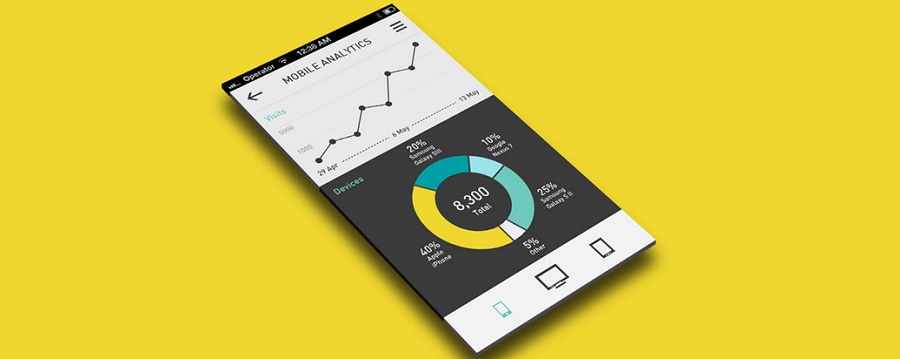
Mobile app analytics are multiple: they can be used for analyzing the app performance on various app stores, but also bring a lot of insights about the way the users are interacting with it.

Thanks to app analytics, you know how many people have downloaded your app, on which app store, and if they found it directly browsing the store or via another website or app as referrer. It gives you already basic information to shape and adapt your mobile strategy over time.

You also find usual marketing analytics you would use for your branded website or blog: – the number of impressions (how many times your app icon appeared in the store)
– how effective are your different in-store marketing campaigns
– how effective your app product page is, comparing the number of people reading it to the number of people downloading it
– the average visit time and screen views per visit, evaluating the average session duration and how many “app screens” a user read on your app.
– the app retention, measuring how many users come back to your app after their first visit.

Just like in Google Analytics, you can also learn about the demographics of your users:
– who they are
– their age
– their gender
– where they live
– which language they speak.

That will help you define more specifically your target audience and adjust your product and content to their interests and needs.

With mobile app analytics, you also learn a lot about the users’ behavior and habits within your application: these are referred to as in-app analytics. They gather data on:
– how often the users are opening your app,
– how long they engage with it
– on which device they are doing so (the type -mobile or tablet-, the manufacturer, the operating system)
– event tracking (which buttons or ads are clicked for instance)

If you decided to have a free version with specific in-app purchases, or premium version, you can also compare how many paying users to how many free users are using it. You can also learn on a user’s journey through your app: do they always go back to the homepage, or follow deep links and exit? In-app and user behavior are essential to analytics to optimize their experience and see what leads to conversions.

Mobile app analytics will tell you a great deal about the application itself and its performance:
– which pages lead to an app crash
– which device is more likely to make it run slow or crash
– the carrier latency
– the app uptime and downtime,
– the number of errors

A Compuware study showed that 79% of users will retry an app once or twice it fails the first time, a figure that drops to 16% if the app fails more than twice. Same study found out that a poor mobile app experience led to 48% of users less likely to use the app and 34% switching to the competitor’s app! All these figures show how important it is to analyze your performance app analytics in order to diagnose potential problems, troubleshoot what needs to be and identify root causes of issues.  This is key to improve the operational aspect of your app, which can frustrate users and drive them away.

Finally, you can look at rating and review analytics. Today, 88% of users look at reviews before engaging with any business – this is why you are app review are critical to the success of your business. Now, we also know that the overwhelming majority of users don’t leave reviews, and those who take the action to do it is usually to report a bad experience. It is thus important that you communicate your users how important it is to leave a feedback and that such feedback is taken into account to improve the app to their expectations.

You can find a great list of various app KPIs to track in order to perform the best analysis and enhance your application performance. Just like for any analytics, equipping yourself with a reliable business intelligence software will greatly help you in the management and data analysis of your metrics.


Outsourcing App Development? Here’s how!

 App Development

Maybe you have a great idea for a stand-alone app, or that you’ve decided your existing business could use one. Either way, there’s a big difference between having an idea and seeing it through, especially when it comes to mobile apps.

App development is not a simple process. A successful app must perform a useful function, boast appealing design features, and be easy for users to navigate. Understanding these goals is easy; achieving them is not.

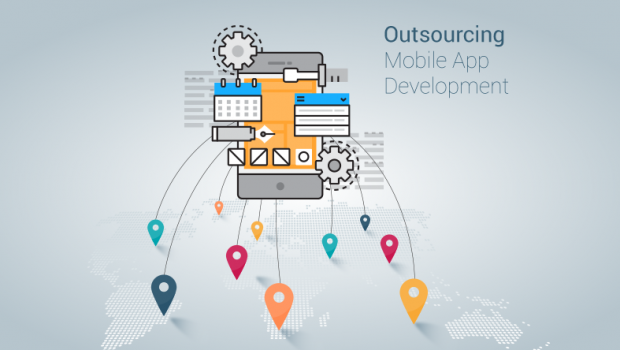
If you don’t have much experience in technical design, it’s often smart to outsource your app development project to a web design firm. While you could hire people on a full-time basis, this poses a significant risk: You can’t be completely certain that your app will excite users. If it fails, you’ll be stuck with a department that’s of little use to you, and will cost significant money.

Better to collaborate with professionals who have a track record of delivering quality products to their clients. However, in order to find the right web design firm for your needs–and to ensure that you meet your goals–it’s important to keep certain, key points in mind.

Prepare Thoroughly

When you’re enthusiastic about a new app idea, it’s easy to forget that not everyone will share your vision exactly how you imagine it. You may have detailed plans for how the finished product will look and what it will do, but if you don’t effectively communicate those details to the people actually involved in creating it, there’s a good chance that you’ll wind up with something that misses the mark.

Before meeting with a web design agency, prepare thoroughly. Determine exactly what your app will offer users. If it resembles other popular apps, elaborate on the similarities and how you plan on differentiating.

When you plan to outsource your app development needs, it’s essential that your goals are made clear to the developers. You should also decide whether or not you want the app to be available on iOS, Android, Windows, etc. early on in the process, so you’re not stuck with a team that can’t accommodate your plans.

With the app market as highly competitive as it  is currently, it is best to have your app function across multiple platforms. Try to source a development team that has expertise across more than just iOS, and have them show you how each platform will perform to meet your goals.

Establish Timelines & Communication Procedures

If you don’t know much about developing an app, you probably don’t know how long the process generally takes. Save yourself any confusion be establishing milestones and timelines with the team you hire for the job.

Agree upon communication procedures. Even though you won’t be actively working on the project, it’s still yours, and you should be kept in the loop. Know when and how you can reach out to the vendor for updates.

Using a collaborative, organization software can come in handy here or virtual communication methods (e.g. Skype). Whatever the method you choose, make sure it’s easy for you to communicate with each team member throughout the process, and be able to keep track of development goals.

Stay Involved

When you outsource your app development work to a web design firm, you’re most likely not going to participate on a day-to-day basis. That said, along with project milestone timelines, you should put in place timelines for reviewing and testing the product at various stages in its development. This is necessary to confirm that certain key features work properly before moving forward to the next stage in the process.

During these review sessions, you should be involved, especially as the developers get closer to finishing the work. Sometimes, a potentially groundbreaking app fails because issues or problems got overlooked due to lax review processes. You want the opportunity to address these types of issues early.

Be Understood

Just as  you may not know a lot about app development, it’s also likely that the team you hire doesn’t know a lot about your business. However, if they’re developing an app related to your brand, it’s important that they have a reasonable familiarity with it.

When considering which design agency to hire, pay attention to how clearly they seem to understand your industry. There are a number of ways to do this: You could seek out development teams that have created similar apps before. You can deliver a thorough presentation explaining the field in as much detail as possible. Or you could simply pay attention to the questions they ask when discussing your project; if they’re truly comfortable with your industry, they’ll often ask the types of questions people in that vertical would ask.


Review Previous Work    

When you hire a contractor to paint your house or remodel your kitchen, you look at examples of past work to determine if they’re right for the job. It’s the same with app development.

After you’ve decided upon a list of potential candidates for the project, find out what apps they’ve created in the past and spend some time using them. Ideally, you should find apps that are reasonable similar to the one you’re planning.

Many vendors can tell a good story about their experienced programmers and dedicated approach to customer satisfaction. The ones worth your attention can also supply you with proof that they’ve delivered quality results in the past.

A good place to start are the case studies listed on a developer’s website or profile. Delve into these to really gauge what they’re capable of, and how their past experience can apply to you.

This is an especially important point to remember if you have very little experience or familiarity with the process of developing an app. In order to confirm that your design team understands your thinking and knows how to execute on a concept, it’s useful to test out other apps they’ve developed. This will give you a better idea of how their products work when they’re actually completed.

Outsourcing app development to a software design firm is frequently a better choice than sourcing in-house. In order to get the best results, you need to take the time to properly vet the developers.

Once you have, you also need to remain involved to some degree. While they’ll handle the details, you’re still the one whose vision fueled the project in the first place. With a collaborative approach, you’ll boost your odds of success.


Where “WEB vs MOBILE WEB DIVISION” stands now?

The demarcations between app and Web are shifting. Notice we didn’t specify mobile Web: that’s another sign that the paradigm of screen and display types isn’t as clearly structured as it might have seemed, say, last year. What this means is that Web and mobile Web shouldn’t be such different animals. In fact, they shouldn’t be different at all anymore.

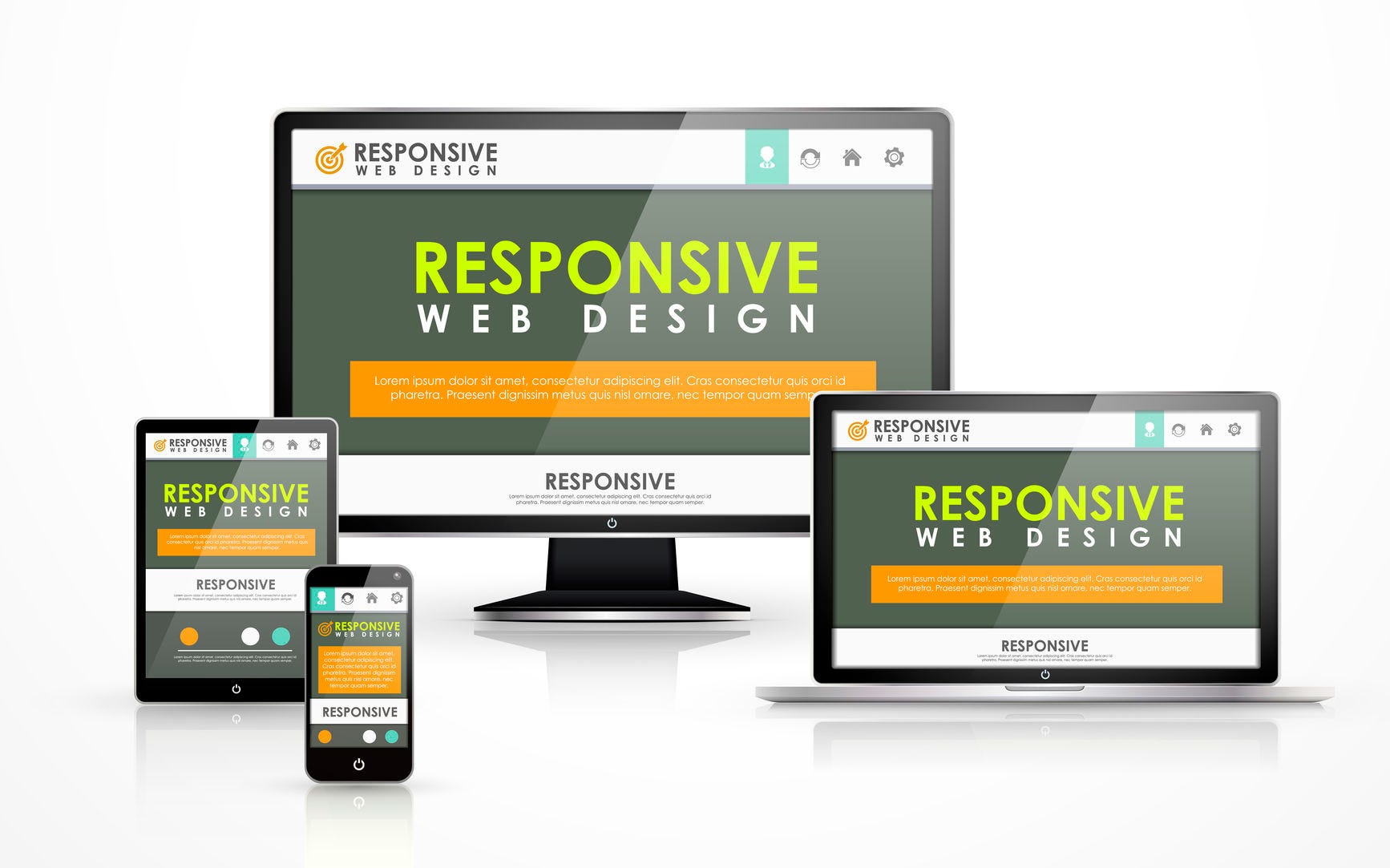
A well designed website should be responsive — i.e., it should be visible on, and optimized for, both desktop and mobile screens of all sizes and resolutions. (We practice what we preach here at Fueled: try looking at our site on your laptop and your iPhone or Android.) Responsive design is an especially effective way to deal with the ever-increasing number of devices coming onto the market; it would be unrealistic — impossible, really — to create a version of your site for every phone and browser that might access it.

In the back-end, this is done using HTML/CSS and media queries, which can determine the conditions of certain media features, like width or height. This solution to the Web vs. mobile issue has been around for years, but it’s now essentially a requirement. Take a look at the newest themes and templates available for, for example, WordPress (a platform even the not-quite-programming-literate can use!), and you’ll see that most list “responsive” as a primary feature.

There’s no longer a real divide, then, between “Web” and “mobile Web,” as Say Daily notes in their recent piece on the “golden moment” of digital media (that moment is now, by the way, if you didn’t guess). “There’s only one Web,” as they say, and we should take advantage of its increased availability and flexibility.

Some of those new capabilities that make responsive websites so powerful are breaking down further barriers — namely, those between mobile app and mobile Web. This is due in large part to the rise of HTML5, which can handle interactive, rich-media features. Now, mobile websites, too, can have the kind of interactivity that previously was only available within apps.

ReadWriteWeb proposes that this might be the “death” of the app, or at least the return of the browser: some mobile apps, especially media apps like magazines, are choosing to discontinue their apps and instead build a responsive, HTML5 website that can be viewed with equal design quality — and high interactivity — on all devices.

Of course, for the time being, Fueled certainly feels that apps will always offer benefits that websites can’t — but we’re enthusiastic about the potential of HTML5 and of fully responsive sites. What do you think? Do you prefer interactive features on the Web, or in native apps? Let us know in the comments.

Responsive Web Design : Let’s peek in

Tablet and smartphone use is growing rapidly. This means that there is a huge paradigm shift in web design, and for digital agencies focused on keeping up-to-date with web design and development practices, there is a need to adapt to the growth in mobile website traffic. Mobile websites need to look, and function, just as efficiently as desktop websites.

Prior to the birth of modern responsive web design techniques, designers needed to create several different versions of a website and code each specifically for different web browser sizes. For example, creating a separate file of code that applies to Nexus tablet browser sizes, a separate file of code that applies to iPhone browser sizes, a separate file of code that applies to iMac Desktop browser sizes, and so on.

Additionally, since there are several different browsers — Google Chrome, Safari, Internet Explorer, Mozilla Firefox, Opera, etc.– it is necessary to design according to the levels of code support each browser offers. This requires the designer to create several design prototypes, developers to code all of those different designs, and the client to pay that much more per version. With the number of devices and browsers that currently exist, you can see how time-consuming and costly this ended up being. This is where responsive web design comes into play.

RESPONDING TO YOUR VISUAL NEEDS

Responsive web design (RWD) allows designers and developers to carry out multiple design styles with just one set of code. When coding a website, a developer creates one set of code that applies across different window sizes and browsers. In order to create this type of coding scheme, the developer has to make sure, among other thing, that all images and media are flexible, the columns or tables are movable, and elements can be hidden. The developer is able to achieve this by using dynamic sizing, specific CSS styles, and media queries.

When viewing the website on your desktop or PC, you can make the browser window bigger and smaller to see how the content changes in size and layout depending on the dimensions of the window. Also, if you view either site on your smartphone or tablet, the content will display differently as well. For a better understanding of RWD in action, a great working example to refer to is The Next Web’s site.

On the desktop version of The Next Web’s site, as shown in the image above, the content is spread out based on the amount of space it has to use. The screen size for this is 1280 x 1024, which is the average screen size of a laptop.

When viewing the site on a tablet, which has an average screen dimension of 1024 x 768, the content shifts according to the amount of space it has. The content still looks great, is very user friendly, and the shifted design eliminates the margins of blank space that you could see on bigger screens.

Thanks to responsive web design, when viewing this site on mobile, which has an average screen dimension of 320 x 480, all of the content can still be displayed in an orderly fashion. While the content is mostly all the same, it’s optimized to look aesthetically pleasing, no matter what you’re using to view it.

As each day goes by, technology evolves to make our lives more efficient and easier. As web developers, designers, or even strategists, we need to make it a point to keep track of all of the major changes that are happening with technology, and adapt to them to provide the user with the best possible web experience.

Responsive web design is one of the latest, and most important, design changes that is buzzing through the developing world and making cross-platform browsing seamless and beautiful.

Delve into the world of Machine Learning (ML)

For years, many industries have explored ways to incorporate artificial intelligence (AI) into their services because it provides a competitive edge. Since it is an evolving technology, the exploration of AI has brought about sub-concepts. One of the more significant concepts of AI is machine learning (ML), coined by Arthur Samuel in 1959 as “the field of study that gives computers the ability to learn without being explicitly programmed.”

MACHINE LEARNING

So, let’s talk a little more about machine learning and what it is. Just as Samuel described, machine learning is a subset of AI where computer algorithms are used to automatically learn from data and information, without being explicitly programmed.

By learning from data and information, the system is able to change and improve its algorithms on its own. The learning algorithm enables the system to identify patterns in observed data and build predictive models based on the observations. Because ML is used in situations where perfection is not expected, the goal is not to achieve perfect predictions but to achieve predictions that are good enough to be useful.

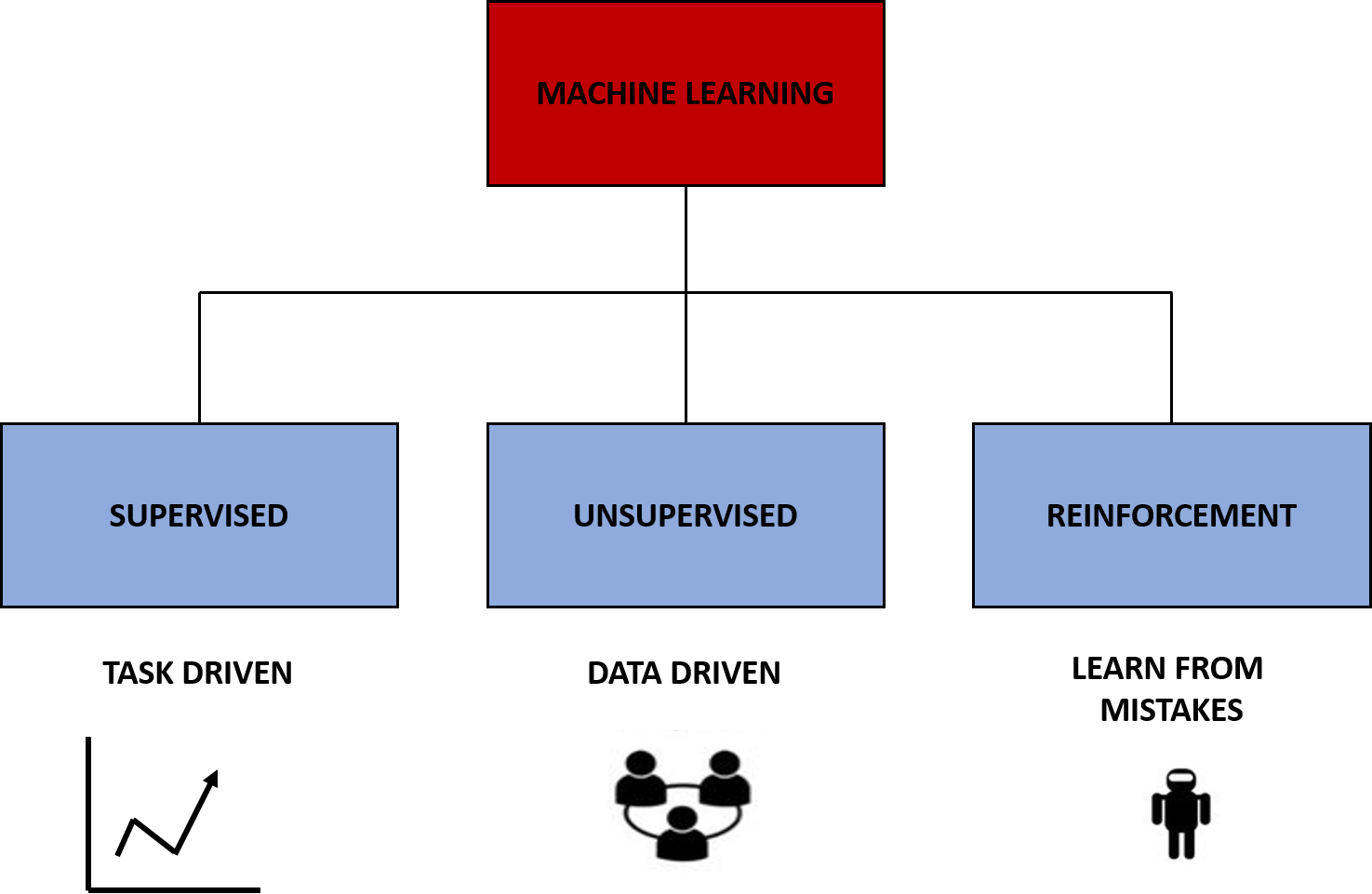
Just like the rest of the tech world, machine learning is not a simple concept. It’s important to note that the concept of ML is broken down into smaller subsets based on how much data the system is provided: supervised learning, unsupervised learning, and reinforcement learning. The type of learning is determined on if the information it’s fed is labeled or not.

PREDICTIVE ANALYSIS
The most popular application of ML is predictive analysis, which uses historical data to make predictions or recommendations for future events. You know how your phone starts to provide suggestions of words to use as you’re typing out a text? That’s predictive analysis at work. The system has recorded patterns of the words you actively use in order to provide suggestions for responses in the future.

Predictive analysis is used across a multitude of apps, like e-commerce, social media, finance, and even transportation. E-commerce apps use predictive analysis to provide consumers recommendations for other products to consider purchasing. The system detects patterns in items that are commonly purchased together and generates suggestions based on these patterns. Social media does the same, but instead of suggesting products, it recommends people to follow. As mentioned earlier, the system collects demographic data from users and (using unsupervised learning) creates patterns to make these suggestions to users.

There are tons of budgeting apps that will use your banking information (after giving permissions to link) to help you manage income and spending. The system analyzes your transaction history and detects patterns to offer appropriate suggestions for spending. That maps app you use to find the best route to get from work to home uses ML, too. The system records past traffic patterns associated with the time of day to provide recommendations for your commute. ML is in use all around you, and you may not have even realized it until now.

You’re probably asking yourself how the system undergoes training. The type of ML that you’re trying to use determines how much training the system has to undergo. The amount of training for the system is determined by how much data is initially provided to the system. Data is the center of ML, without it, the system wouldn’t know how to do its job. Before we dive into why and how we use the different types of ML, let’s talk about what they are first.

SUPERVISED LEARNING

Supervised learning is the process of ML when the system is initially provided data where the algorithm’s inputs (x) and their respective outputs (y) are correctly labeled. Because the input and output data are labeled accordingly, the system is trained to recognize patterns in the data with the algorithm. In future scenarios, this allows the system to receive inputs and produce correctly labeled outputs based on the pattern. Supervised learning is beneficial because it can be used to predict outcomes based on future input data without human interference, like when social media automatically recognizes someone’s face after you’ve tagged them in a picture. When you tag your Aunt Sally in a picture (y), social media stores the facial features of Aunt Sally (x). When you upload pictures of Aunt Sally in the future, social media recognizes her facial features (x) and automatically tags Aunt Sally (y).

UNSUPERVISED LEARNING

In unsupervised learning, data is fed to the system, but the outputs are not labeled accordingly like they are in supervised learning. Unsupervised learning allows the system to observe the data and determine patterns with the information it is given, rather than being trained to recognize the pattern. Once the system has stored the patterns it created, future inputs are assigned to a pattern (created by the system) to produce an output. Unsupervised learning is beneficial because it can show patterns in data that may have been overlooked when observed by humans. Unsupervised learning is used when social networks make recommendations of friends to follow; these recommendations are based on patterns created by demographic data individuals share online. If you went to University X and studied calculus, the algorithm is trained to recognize and recommend other individuals that went to University X and studied calculus as people you may know.

REINFORCEMENT LEARNING

Though it is a separate classification, reinforcement learning is a type of unsupervised learning. Similar to unsupervised learning, the data provided to the system is not labeled, so the system is left to create its own patterns. Where reinforcement differs from unsupervised is that when a correct output is produced, the system is told that this output is correct. This type of learning allows the system to learn from its environment and its experiences to explore a full range of possibilities. It is quite literally, learning through reinforcement. When Spotify makes a recommendation for a song (based on a pattern it noticed in your music selection) you are given the option to “thumbs up” or “thumbs down” the recommendation. When you indicate “thumbs up” or “thumbs down,” Spotify utilizes reinforcement learning because it’s learning your music taste based on what you tell their system.

MACHINE LEARNING APPLICATIONS

Why all the hype about machine learning? Well, because it is the next step in achieving artificial intelligence, and is a big step for app developers. ML gives apps the ability to improve and adjust based on user data, without developers influencing it to do so. This technology is saving time for developers (which saves you money) by enhancing the user experience with accuracy on what users want. While there is a multitude of uses for machine learning, two significant ones are image processing and predictive analysis.

IMAGE PROCESSING

Image processing is a very common application of ML, one that you probably see every day. It is used through supervised learning where an algorithm is used to detect various objects in a given image. Much like a child is taught that shapes with five sides are pentagons, the machine is taught to recognize objects in images. The machine is trained by providing a set of labeled images containing different objects; when given future inputs, the machine will identify objects within those inputs and label them. Apple’s Face ID feature is an example of image processing; when you set up Face ID, there is a series of steps you undergo to train the system (iPhone) to recognize your face. These steps include taking photos of your face from multiple angles so the system can analyze your face store this data. After being trained, the system recognizes your facial features as a means to unlock the phone.

PREDICTIVE ANALYSIS

The most popular application of ML is predictive analysis, which uses historical data to make predictions or recommendations for future events. You know how your phone starts to provide suggestions of words to use as you’re typing out a text? That’s predictive analysis at work. The system has recorded patterns of the words you actively use in order to provide suggestions for responses in the future.

Predictive analysis is used across a multitude of apps, like e-commerce, social media, finance, and even transportation. E-commerce apps use predictive analysis to provide consumers recommendations for other products to consider purchasing. The system detects patterns in items that are commonly purchased together and generates suggestions based on these patterns. Social media does the same, but instead of suggesting products, it recommends people to follow. As mentioned earlier, the system collects demographic data from users and (using unsupervised learning) creates patterns to make these suggestions to users.

There are tons of budgeting apps that will use your banking information (after giving permissions to link) to help you manage income and spending. The system analyzes your transaction history and detects patterns to offer appropriate suggestions for spending. That maps app you use to find the best route to get from work to home uses ML, too. The system records past traffic patterns associated with the time of day to provide recommendations for your commute. ML is in use all around you, and you may not have even realized it until now.

HBase vs Cassandra: A Comparative Look

HBase vs Cassandra | Top 9 Awesome Comparison You Need To Know

Selecting the best database management system is the key to ensure effective, streamlined app development process and a successful end outcome. However, choosing an ideal system for a project is not very easy for there are always a number of details to be considered at every turn. Especially when it impacts the performance of your project and the development process.

In this article, we will be taking an in-depth look into two such popular systems and look into how they stack up against each other: HBase vs Cassandra.

We will be exploring the essentials, architecture, performance, amongst other things.

  • What is HBase?
  • What is Apache Cassandra?
  • The Similarities Between HBase and Cassandra
  • HBase vs Cassandra: The Differentiating Factors
  • When to Use Which Database

Let us start with the overviews first.

What is HBase?

What is Apache HBase? | AWS

HBase is a distributed, scalable, column-based database with dynamic diagram for structured data. It enables efficient and reliable management of large data sets which are distributed among multiple servers.

HBase Architecture & Structure 

It is a one of a kind database which works on multiple physical servers simultaneously, which ensures a smooth operation even though the servers are not operating together. HBase data model uses two primary processes for ensuring ongoing operations:

A.  Region Server – It can support various regions. The region here stands for record array that corresponds to a specific range of consecutive RowKey. Every RowKey contains these elements –

  • Persistent Storage – It is a permanent storage data location in HBase. The files are used in the HDFS storage in HFile format. The RowKey sorts this data type and divides them in pairs, where each pair aligns with one HFile.
  • MemStore – It is a write buffer in which anything written to the HBase gets stored. When the MemStore reaches a specific size, the data gets written in a new HFile.
  • BlockCache – It is a read cache which enables you to save time on the data which is frequently read.
  • WAL – When the data is written into memstore, there is always a risk of losing it. WAL (Write Ahead Log) saves all the operations prior to its implementation. This way, the data can be recovered if something happens.

B.  Master Server – It is the primary server of Apahe HBase. It manages regions distribution across Region Server, monitors regions, manages running of the ongoing tasks and performs a series of other necessary tasks.

To coordinate the action between services, it uses Apache ZooKeeper – a service for configuration and service sync management.

What is Apache Cassandra?

Apache Cassandra - Wikipedia

Cassandra belongs to the NoSQL-system class and is designed for creating reliable, scalable repositories of data arrays which are represented as hash. It works with key space, which aligns with the concept of database scheme in relational model. There can also be multiple column families that relate to the concept of relational table.

Apache Cassandra Architecture 

The idea behind the Cassandra architecture is to have a P2P distributed system which is made of nodes cluster in which a node can accept the read or write requests. Every node in the cluster communicates the state information about itself and the other nodes through P2P gossip communication protocol. This together forms the basis of Cassandra data modeling and analysis.

At the center of the Apache Cassandra data model lies a Log Structured Merge storage engine. It comes with key elements like:

  • Memtable
  • Commit log
  • SSTables
  • Compaction

The overview of both HBase database management system and Cassandra must have given you an idea of how similar the features of HBase and cassandra can be.  

The Similarities Between HBase and Cassandra

1.  Database 

Database Management Software | Overview and Best Tools List in 2019

Both HBase and Cassandra are NoSQL open-source databases (like Aerospike database). Both of them can handle large data sets and non-relational data, which includes images, audio, videos, etc.

2.  Scalability 

Software scalability and how is it better in custom software

Both HBase and Cassandra have a high linear scalability feature. Under the feature, users who want to handle more data only need to increase the nodes number in cluster. This makes them both equally good choices for handling huge data.

3.  Replication 

Circle Logo clipart - Text, Font, Line, transparent clip art

In case of both HBase and Cassandra, there is a safeguard which prevents the loss of data even after it fails. This is done through the mode of replication. The data which is written on one node gets replicated on multiple nodes in a cluster. Because of this, if a node fails, a redundant node is always present for accessing data.

4.  Coding

Coding Vs Programming For Beginners: What Is The Difference?

Both the databases are column-oriented which implement similar write paths. Columns are mainly the center storage unit in a database. Users can add columns according to their requirements. Additionally, the right path starts with logging a write operation to log file. It is basically done for ensuring durability.

Now that we have looked into what makes them similar, let us shift our attention to the difference between HBase and Cassandra.

HBase vs Cassandra: The Differentiating Factors

1.  Data Models

6 tips for creating effective big data models - TechRepublic

While the terms of both the databases are more or less, there are some fundamental difference between HBase and Cassandra.

The column in Cassandra is like HBase’s cell. Its column family is also more like HBase table. On the other hand, HBase column qualifier is a lot like Cassandra’s super column.

One of the Cassandra key characteristics is that it only allows for a primary key to have multiple columns and HBase only comes with 1 column row keys and puts the responsibility of the row key design on the developers. Also, Cassandra’s primary key contains partition key and the clustering columns in which the partition key might contain different columns.

2.  Architecture

Architecture Clipart Architectural Design - Architect Clipart Png , Free Transparent Clipart - ClipartKey

HBase has a master-based architecture while Cassandra has a masterless one. It means that HBase comes with a single failure point, while Cassandra does not. The HBase client communicates directly with slave-server without contacting master, this gives a working time once the master is down.

Moreover, in the Cassandra and HBase comparison, the former supports both data storage and management, while in case of the latter, the architecture is only designed for data management while it relies on other systems/technologies for storage, server status management, and metadata.

3.  Performance – Read & Write Capability

Blog: Here's how you can predict the job performance of a potential hire — People Matters

When the comparison is drawn between Apache Cassandra performance and Apache HBase performance, it is done on the front of read and write capability.

Write: Both HBase and Cassandra’s on-server write paths are fairly alike. There are some differences though which makes Cassandra better, like the difference in names for the data structure and the fact that HBase does not write to log and then cache simultaneously.

Read: If you are looking for consistent and fast reads, you should go with HBase. Since it writes on only one server, there is never the need of comparison between the various nodes’ data versions.

Even though Cassandra can handle over 129,000 reads in one second, the reads are targeted and there are high probability of them being inconsistent.

4.  Security 

Security Services - Cisco

Both HBase and Cassandra offer not only database-wide access control but also granualty of a certain level. Cassandra allows row-level access while HBase goes a step ahead and offers cell-level access. Cassandra sets the users roles and their condition, while HBase comes with an inverse move in which the administrators assign visibility label to the data sets and then informs user groups which labels they can view.

5.  Infrastructure 

HBase makes use of the Hadoop infrastructure which consists of moving parts such as HBase master, Zookeeper, Name and Data nodes.

Cassandra comes with several different operations and infrastructure. It also uses different DBMS in addition to the infrastructure. A number of Cassandra apps also use Storm or Hadoop. Additionally, its infrastructure is based on a single node type structure.

6.  Support 

3 Characteristics of Amazing IT Support | IT Weapons | Toronto | ON

The support specific Cassandra and HBase comparison looks like this – HBase doesn’t support the ordered partitioning, while Cassandra does. Ordered partitioning leads to making the row size in Cassandra to 10s of megabytes.

7.  Nodes 

In the case of Cassandra, the users have to identify nodes as seed nodes. These serve as the points for inter-cluster communications. In the case of HBase there are several master nodes. They monitor and coordinate actions of region servers.

8.  Internode Communication 

Both HBase and Cassandra have internode communication. While Cassandra uses the Gossip Protocol, HBase uses Zookeeper Protocol where a single node acts as boss through with the other nodes gets the necessary data.

9.  Transactions 

When it comes to HBase vs Cassandra comparison in terms of transactions, Cassandra comes with the feature of lightweight transactions. The mechanisms used here are Row-Level Write Isolation and Compare and Set. While, on the other hand, HBase works with two different mechanisms known as Check and Put and Read Check Delete.

10.  Documentation 

Cassandra’s documentation is a lot better than HBase’s documentation. Because of this, working on and learning Cassandra also becomes easier.

11.  Query Language 

CQL | Delivering Powerful Commerce Solutions

Both HBase and Cassandra shell are based on the JRuby shell. Cassandra query language, is very specific. It is CQL (which is modeled in the line of SQL). Compared to HBase query language, the functions and features of CQL are far more rich.

The differences between HBase and Cassandra shows that there is no concrete answer to which database is better of the two. It all boils down to when to use which.

When to Use Which Database 

HBase vs Cassandra. On the surface, it may appear that… | by Skywell Software | DataDrivenInvestor

The Cassandra and HBase use cases can be differentiated on the grounds of application type they are used in and the outcome expectation that an app development company has.

Use HBase if you need consistency in the large scale reads and if you work with a lot of batch processing and MapReduce for it has a direct relation with the HDFS.

HBase’s use cases consist of online log analytics, write-heavy applications, and apps that need a large volume, such as Facebook posts, Tweets, etc. Additionally, there is a large set of use cases related to Cassandra Hadoop integration.

Use Cassandra if high availability of large scale reads are needed. Also, since it requires a very minimum setup with less administration overhead it is a lot easier to get the process started in. It also offers greater flexibility in CAP theorem tradeoffs.

Some examples of what is Cassandra used for can be seen in the development of messaging systems, e-commerce websites, and real-time sensor data.

In short, use HBase data model and implementations when you have to analyze for big data or have to perform aggregations. Use Cassandra if you have to emphasize on interactive data and real-time transaction processing.

Python-The Ultimate Choice For Startups, Why?

Best Books to Learn Python for Beginners and Experts in 2019 - GeeksforGeeks

Being in the market for over thirty years now, it is indubitable that Python has become the epitome of simplicity with effectiveness. The gradual increase in its popularity is something that raises the question of “why and how Python is becoming the most popular programming language?”.

Upon confronting any developer on this matter, one would come across responses such as –  “It is highly readable”, “Building applications with Python is very easy because of the understandable code”, “It makes complex processes easy”, and so on and on.

However, today we will discuss the validity, feasibility, and scope of Python app development from the business front, i.e., from the vantage point of startups and establish why Python is the top programming language for your startup.

What Does a Startup Need from a Language?

How Well Do You Know the Language of Startups? - WSJ

To effectively deduce why Python poses as an absolute option for startups to go with, we should first discuss what are the factors that are prominent for a startup business.

  • High scope of scalability and the ability to add new features
  • Faster development of Minimum Viable Product
  • Quick yet efficacious iterations
  • Integration with other technologies and software
  • Time and cost-monitored development process

Now, when that is out of the way, we can positively move on to discussing whether Python actually fulfills all these needs of a startup to emerge as an exemplary choice.

Features of Python

1. Smooth integration

6 Ways to Ensure Smooth Integration of Softwares In Business

Unlike many programming languages out there, Python is pretty mellow when it comes to integration. You can easily integrate with other languages such as C, C++, Java, and so on.

2. Support TDD

When I follow TDD

Python is very popular for its test-driven development. It is quite easy for developers to create prototypes with it, and they can later convert them into fully-functioning applications by simply refactoring the code and testing it instantly.

3. Wide range of standard libraries

Top 9 Python Libraries for Machine Learning in 2021 | upGrad blog

Though the list of why Python is quickly ascending the ladder of fame is tediously long, this is one of the primary reasons why. The easy availability of standard and robust libraries is what attracts developers and startups towards Python.

4. Ideal for ML and Big Data

How AI, ML, and Big Data Analytics Fit Into a Non-Tech Company | Cloud Services | D3V Technology Solutions

Machine Learning and Big Data are two of the emerging technologies that have acquired eyeballs of many establishments globally. They both come blessed with tons of locked potential, something we are tapping into slowly. Among other kinds of applications written in Python, you can also develop apps integrated with these technologies, including a wide range of AI technologies as well, as they have many robust libraries to support the development.

Reasons Making Python An Ideal Choice For Startups

Let’s have a look at the reasons for why to choose Python for business and startups.

1. Remarkable choice for MVP

What is Python Used For? Why Startups Take Advantage of Python?

Being a startup, time is of the essence for you. You need to unleash your app in the market, targeting a certain niche before anyone else does it. Moreover, as a startup, you need to convince your investors that your app idea is something that is going to be a huge hit, and for that, you need to show them a working prototype of your soon-to-be-developed Python mobile app, hence an MVP.

Now, one of the best uses of Python is MVP development because of its expeditious nature. Python encourages robust and rapid development by allowing the software developers for startups to do quick iterations after getting the feedback. It is the pre-built modules and packages of Python that render it the ability to expedite the product completion process.

In fact, it has been observed that Python in comparison to languages like Java can provide a fully functioning MVP in weeks as compared to months; it is time-efficient, something that every startup requires.

2. Scalable

Characteristics of a Scalable Business 2021

Scalability is one inevitable component that any startup cannot afford to overlook. As a business grows, its users grow too. Under such instances, it would become a priority for any business to have an application that has the scope of growth as well. This is what Python is good for. With the help of the Django framework, a series of wired-up and ready-to-go components, Python is able to provide highly scalable apps.

The components in the Django framework are decoupled, i.e., independent from each other so they can be replaced and unplugged as per the demands of the business. Moreover, with a wide range of libraries available for Python, it is a piece of cake to add new features to a product.

3. Versatile

An Insight into the Value-Based Leadership culture at Redwoods Advance. – Redwoods Advance

Versatility is another great reason that makes Python an ideal choice for startups. This means if you need a code that works phenomenally across all platforms such as Windows, macOS, or even Linux, then Python should be the language of your choice.

Additionally, if you need to integrate technologies like Machine Learning and Data Science, then you need nothing but Python as the programming language to help you achieve the app you envisioned but better.

4. User-friendly

8 Ways to Make your Website User-Friendly - Costello Creative Group: Creative Marketing & Graphic Design for Manufacturers

“Beautiful is better than ugly.

Explicit is better than implicit.

Simple is better than complex.

Complex is better than complicated.

Flat is better than nested.

Sparse is better than dense.

Readability counts.”

As you can see in the extract of Zen of Python philosophy, Python language works for of certain principles and guidelines that render it to be the most user-friendly language. This is one of the many reasons why developers love Python and have made it the second most popular language on Github beating even Java.

5. Community support

Ways to Support the Delaware Community During the COVID-19 Pandemic - DBT

Community support becomes prominent when the team of developers faces problems during the product development process. Hiccups are unavoidable, but what matters is how active and capable is the community to provide possible solutions to certain issues that Python may face. Thankfully, the Python community is among the best ones out there as it strives towards curing all the issues the language may possess and improve its features and functions from time to time.

6. No need for extra developers

Everything You Need to Know to Hire a Great Salesforce System Admin

It is always good news for the startup mobile app company whenever they can save a few bucks. In comparison to other languages, Python offers a concise and rather easy code to app developers for startups, thereby eliminating the need for big teams for the same task while delivering the product of impeccable quality. This also helps developers to provide software development services for startups without any hassle. Let’s look at the example of the code in Java and Python which cater to the same function and purpose –

7. Security

What Is IT Security? - Information Technology Security - Cisco

Speaking of security, Python is evidently more secure than some other prominent languages, like PHP. It is because of frameworks such as Django that come loaded with built-in security features protecting the application from many security threats lurking on the internet.

This framework is capable of hiding the site’s source code from direct viewing by dynamically producing web pages and employing templates sending data to web browsers.

8. Helps combat complexity

Managing complexity. Complexity is more desirable than… | by Matthäus Niedoba | UX Collective

As Python is very simple in nature and associates simplicity with effectiveness, it is a great medium to handle complexities. It is ideal for web solutions as it can overcome complexities related to the integration of different systems, among others. Qualities such as these are what together make Python ideal for a startup app development company as it is time-efficient, fast, and easy to work with.

9. Ubiquitous in nature

100 Ubiquitous Stock Vector Illustration and Royalty Free Ubiquitous Clipart

Do you know what makes sense? – Developing a solution that is based on ubiquitous technology. From Youtube to Dropbox to Reddit- all are avid users of Python language. It is something that is unprecedentedly proliferating as of now and will become a standard to which other languages will be assessed. So, if you want to develop an application that is going to perform just as remarkable as it would do in the present, then there is nothing better than Python for you.

Which Startups Use Python?

Look at the list of Python startups that opted for or are using Python as their choice and are now thriving in their particular niche. These use cases of Python are an ideal example of why Python is perfect for startups software development companies.

Ometria

Ometria - Crunchbase Company Profile & Funding

Ometria is one of the perfect examples of startups using Python. This startup gives marketers the ability to create personalized experiences throughout the customer journey. They offer services such as cross-channel marketing, AI-enabled customer intelligence, and others.

Weglot

Weglot (WordPress Multilingual Translation Plugin)

Weglot seamlessly integrates with your website, adapting to your technology, and delivering it in any language. It has solutions for e-commerce, marketing websites, and web agencies.

Paddle

It is a SaaS commerce platform for payment processing, billing, sales tax management, merchant of record. With Paddle, companies are finally able to transform their revenue delivery infrastructure into a strategic growth lever to respond faster and more precisely to every opportunity.

Stripe

Available Countries: Find Stripe in Your Country | Stripe

It is a well-known American technology company that offers a platform for startups and big companies to accept payments, send payouts, and manage their businesses online. They also help companies to beat fraud, send invoices and manage business spend.

Virail

Virail Company Profile: Valuation & Investors | PitchBook

It is an online platform that provides the fastest way to choose the cheapest ticket or hotel. They also help to search for all routes and choose the best one for you. The platform works with 200 transportation companies and offers you the best travel solutions across the world.

Final Thoughts

According to many startup app development companies in USA, it is no contest that Python may become the programming language of the future. Every quality, feature, and function that we have discussed above is a clear indication that Python is the best language for startups.

In fact, besides startups, many fully grown organizations such as NASA, IBM, to name a few, are bending towards mobile app development using Python to fulfill their needs. Moreover, because of its ubiquity, it gains a little more edge over the other languages.

Open-Source API Management Platforms for Your Tech Stack

API Management – Manage APIs | Microsoft Azure

Open source APIs have become omnipresent in the world of software and mobile app development.

Right from private solutions to public-facing services apps and partner integrations, it is present everywhere.

They are helping developers in creating apps that caters to diverse set of customer needs. They are transforming the architectural patterns with much sophisticated approach of mobile application development.

Because of this prominent presence, everyone is looking to tune to the best API development guides and use the insights to provide an ultra-advanced and seamless experience to their target audience.

But, is it that simple?

Well, if you thought creating an API is difficult, managing one is worse. What makes it easier though, is using open-source API management platforms.

Let us look into the list of top API management tools and platforms.

15 Open-Source API Management Platforms to Consider in 2020 (& Beyond)

1. Open source API Umbrella

Using API Analytics to Empower the Platform | Nordic APIs |

API Umbrella is one of the top open-source tools considered for managing APIs and microservices. It enables multiple organizations to operate under the same umbrella by empowering varying admin permissions for different domains.

The platform also provides facilities like Rate limiting, API keys, caching, real-time analytics, and availability of an admin web interface.

2. Gravitee.io

GitHub - gravitee-io/gravitee-gateway: Gravitee.io - API Management - OpenSource API Gateway

Gravitee.io is an open-source platform for managing APIs that is flexible and light-weight in nature. It avails out-of-the-box features such as Rate limiting, IP filtering, Cross-origin resource sharing, plug-and-play options, developer portal with OAuth2 and JSON web tokens policies, load balancing, and more.

However, the keynote feature of this API management tool is its ability to build fine-grained reports to comprehend the usage data of your APIs.

3. APIman.io

Review of Red Hat's Apiman Open Source API Management | Nordic APIs |

Introduced by Red Hat, APIman.io is one of the top API management platforms to consider while choosing the best technology stack for your app.

The platform, easily available in the GitHub repository, gives ample opportunities to developers in the backend development phase. This includes:-

  • Quick Runtimes,
  • Policy-based governance with a detachable policy engine,
  • Asynchronous capability,
  • Enhanced billing and analytics options,
  • Availability of a REST API for management,
  • Rate limiting, and much more.

4. WSO2 API Manager

Custom Throttling Policies with WSO2 API Manager | by Sumudu Sahan Weerasuriya | Medium

WSO2 API Manager is a full lifecycle API management platform that can run anywhere and anytime. It enables developers to enjoy the possibility of API distribution and deployment on both on-premise and private clouds.

Apart from this, it brings various other opportunities on board. A few of which are:-

  • Higher Customization,
  • Ease of governing policies,
  • Possibility of Designing and Prototyping for SOAP or RESTful APIs,
  • Better access control and monetization facilities, etc.

5. Kong Enterprise

Welcome Kong Inc. | Introducing Kong Enterprise Edition

Kong is a widely-adopted open-source microservice API tool that enables developers to manage everything quickly, easily, and securely. Its Enterprise Edition comes loaded with features and functionalities, such as:-

  • Availability of open-source plugins,
  • Ease of One-Click operations,
  • Common Language Infrastructure Capability,
  • Great Visualization for Monitoring,
  • Regular software Health Checks,
  • Introspection of OAuth2.0, and
  • Wider Community Support.

6. Tyk.io

Written in the Go programming language, Tyk.io is also a recognized open source API gateway to watch out for in 2020.

Tyk in 2021 - Reviews, Features, Pricing, Comparison - PAT RESEARCH: B2B Reviews, Buying Guides & Best Practices

It comes with a developer portal, detailed documentation, a dashboard for API analytics, rate-limiting for APIs, authentication, and various other such specifications that helps organizations focus on microservices environments and containerization.

However, its commercial-based services are available for paid versions only.

7. Fusio

Fusio Project, Awesome 3 in 1 Open Source API Management Platform - PHP Magazine Network

Fusio is another open source API management tool that lets developers create and maintain REST APIs from different data types. It comes with efficient lifecycle management features like backend dashboard for admin control, detailed documentation, JSON validation for incoming requests, and scope handling to meet user permissions.

What’s more, this APIM platform automatically generate OAI and RAML requirements and create a customized client SDK as per the defined schema.

8. Apigility

Apigility - Reviews, Pros & Cons | Companies using Apigility

Designed and maintained by Zend framework, Apigility is the next open-source framework to consider for API management.

The platform encourages established mobile app development companies to create and exhibit JSON representations for their codes. It also provides them with different versioning options, along with an ease of authentication with OAuth2 and documentation to embrace the API Blueprint.

9. SwaggerHub

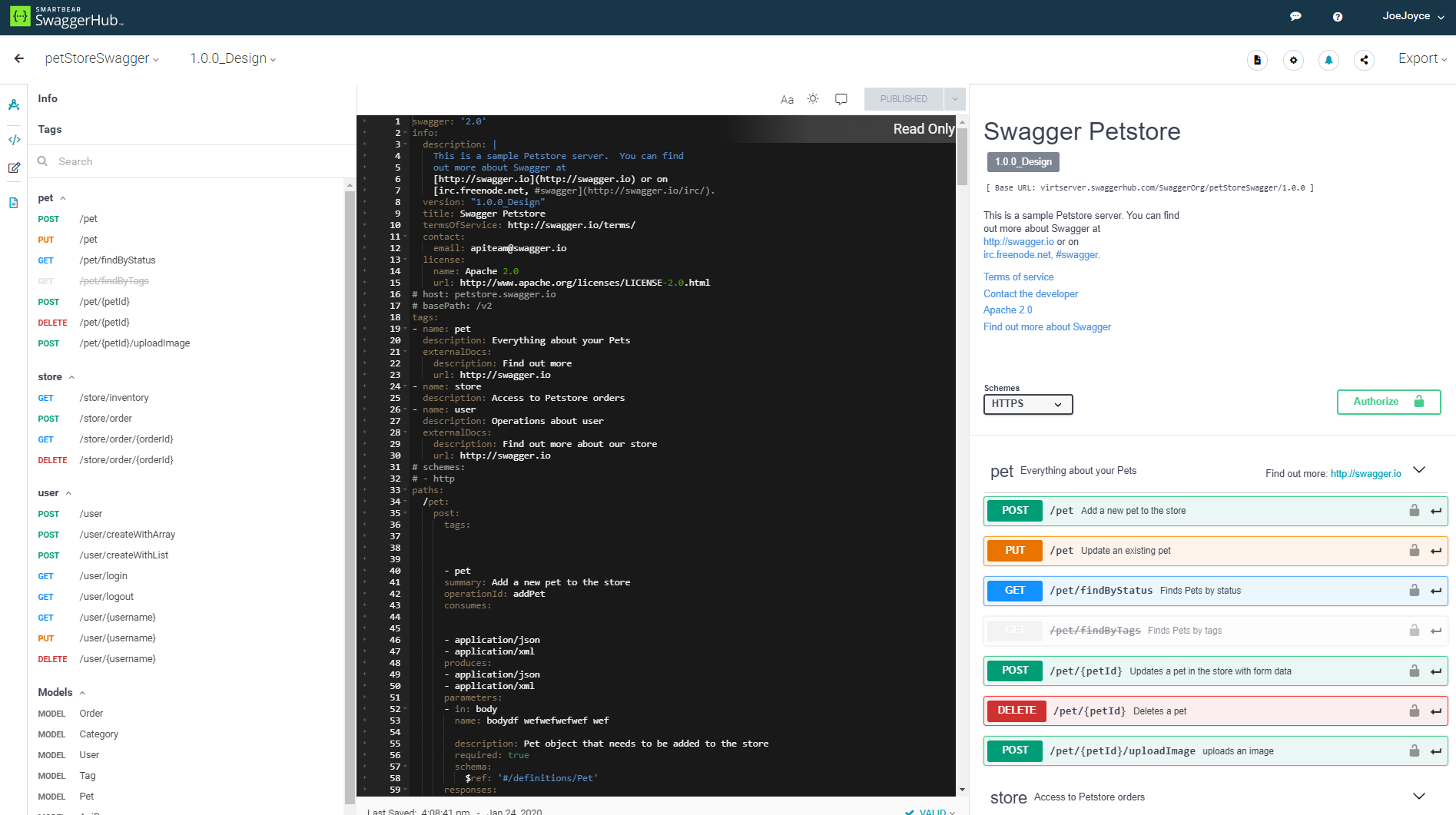
Considered by 40+ organizations for managing APIs, SwaggerHub is also one of the best open-source API management tools to rely on.

The platform renders a wide range of options to the designers and developers in the backend development domain. It provides them a robust and intuitive editor that delivers higher efficiency and speed while preserving design consistency.

SwaggerHub | API Design and Documentation with OpenAPI

Also, it avails the opportunity of smart error feedback, syntax autocompletion, and availability of multiple style validators.

10. API Axle

Top 15 Open-Source API Management Tools | Appinventiv

Backed by Exicon, API Axle is another open-source, simple and lightweight proxy that provides development agencies with ample benefits like:-

  • Real-time analytics
  • Robust Authentication,
  • Logging of API traffic for statistics and reporting,
  • Ease of creating and managing API keys, and
  • Support for REST API design and use of Go, PHP, and Node.js libraries.

11. IBM Bluemix API

IBM Bluemix Overview

This API management tool enables developers to use more than 200 software and middleware patterns to build portable and compatible apps for the hybrid cloud. It also offers various pre-built services and a robust mechanism for regulating API access, governing multiple API versions, maintaining rate limits, and keeping a track of performance metrics and analytics of every API involved.

12. Repose

Repose

Repose is yet open-source RESTful middleware platform that plays a pivotal role in the changing anatomy of API market. The platform provides organizations with various API processing facilities, including authentication, API validation, rate limiting, and HTTP Request logging.

This API management platform works with an aim to provide downstream services for trusting incoming requests when well-formed and validated. And, it is highly extensible and scalable in nature, which means developers can easily employ it as per the growing demands and requirements.

13. SnapLogic Enterprise Integration Cloud

Integration Cloud Service, Integration Requirements - SnapLogic

SnapLogic is an impressive Integration Platform as a Service (iPaaS) tool that helps organizations in acquiring, sustaining, and growing their customer base. The characteristics that make this possible are:-

  • It is fast, multi-point, and come with the option to flexibly address both batch-oriented and real-time app data integration needs.
  • It has a scalable architecture that operates like web servers, but also provide an option to embrace versatility.
  • It also comes with innovative data flow solutions that encourage organizations to add reputed SaaS applications like SugarCRM and Salesforce into their traditional processes.

14. DreamFactory

DreamFactory 4.4 Released - API Blog: Everything You Need to Know

DreamFactory API Management platform is also one of the best free and open-source tools to consider for your next project. And the set of reasons behind its popularity are:-

  • It gives developers an escape from hand-coding APIs for mobile app development. It enables them to integrate any SQL/NoSQL database, external HTTP/SOAP service, or file storage system into DreamFactory environment, and get a comprehensive, flexible, fully documented, and ready-to-use REST API automatically.
  • The platform also provides a detailed REST API for SQL databases, in addition to access to API parameters for pagination, complex filters, virtual foreign keys, related table joins, and more.
  • Another distinct feature of DreamFactory API Management platform is that it instantly converts the JSON request into SOAP, and vice versa.
  • Also, this platform avails highly secure experience in the form of ease of User Management, SSO Authentication, CORS, JSON Web Tokens, SAML integration, Role-Based Access Control on API endpoints, OAuth, and LDAP.

15. 3Scale

3scale

Last but not least, 3Scale is a notable addition to this list of API management tools.

Owned by Red Hat, the API management tool lets both small and large enterprises securely manage their APIs effortlessly with features, such as:-

  • It employs a distributed cloud layer that centralizes the API program’s control. That makes it easier to keep control of analytics, accessibility, developer workflows, monetization, etc.
  • Since it hosts on a distributed cloud-hosted layer, it is highly flexible and scalable to use.
  • The OpenShift Integration feature of 3Scale API enables you to run high-performance apps in an automated and contained manner.
  • This full lifecycle API management platform empowers developers to plan, design, apply, publish, manage, analyze, optimize, and retire your APIs anytime to deliver an exceptional experience.
  • It comes with the power to share your organization data, services, and content through the web or mobile applications easily.
  • Above all, the 3scale API management platform provides you an opportunity to instill a wide range of encryption, authentication, and authorization protocols into the development environment. This empowers backend software development services to deliver a highly-secure mobile app experience fit for their target user base.

All the API management tools shared above are open-sourced and are poised to be a beneficial addition to the tech stack. But, to ensure that you choose the best fit for your business app needs, we will be covering a few tips on selecting an API management tool next.

How to Pick the Right Open-Source API Management Platform?

Top 10 API management tools. In this article, we review the features… | by Young App Platform | Young App Platform | Medium

1. Features

When it comes to finding an answer to ‘how do you choose the best API management (APIM) solution’, the foremost factor to consider is the features of API management platforms.

Every open-source API management tool have their specific requirements and implementation limitations. So, performing an API management platform comparison in terms of your technical and non-technical requirements can be really helpful.

2. Deployment Complexity

When it comes to deployment, some gateways require a single node while others run on multiple types of nodes for setting up a database. Besides, some gateways operate with many databases, which can be a complicated thing to manage.

So, focusing upon the deployment complexity can also help you with finding the right API management tool.

3. On-Premise vs Cloud hosted

On-Premise tools, as depicted from the name, are located within the physical premises of a company. One can add more time to the deployment and maintenance process.

But, in the case of Cloud-hosted, the API management tools are located at a virtual location and its services are made available via Cloud computing. They can introduce more latency due to the extra hop and even lower down the availability of your service when the vendor goes down.

So, analyzing the pros and cons of both the options to determine which open-source API management tool to embrace can also a profitable idea.

4. Community Support

Last but not least, having an idea of the type of community support each open-source API management tool is having also helps in choosing the right one. The larger and active a community is, the higher are the chances of receiving updates and solutions to your queries; ultimately resulting in a better experience.

With this, we have gone through the list of 15 best Open-source API management platforms and the approach to find the best one. The next step is to actually put this information into practical solutions, aka, employ an open-source API management tool into your mobile project. Which in turn, means bringing the best backend developers on board.

Must Know Skills: Backend Developer

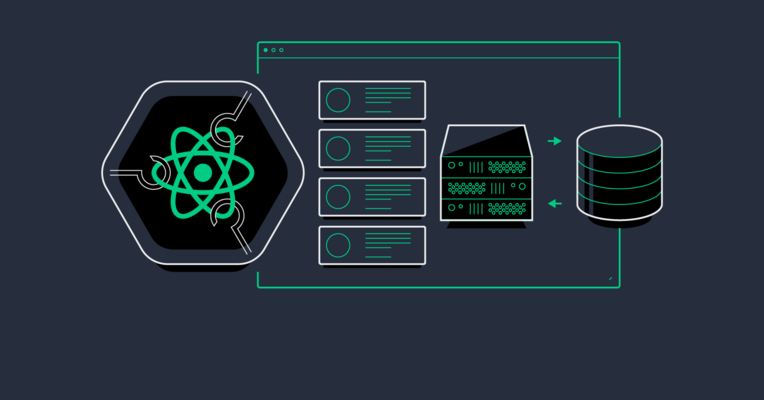
The backend is the part of a web application that is unrevealed to the user. Unlike front-end, back-end development operations are not very easy and usually turn out to be complicated and manifold; this part is in alignment with the server. Backend operations are a lot different that are controlled by different programming languages like C, C++, Perl, and Ruby. It is a broad field that’s further subcategorized into several levels.

A backend developer usually doesn’t work alone; backend developers usually work in teams of 2 or more people. A team of backend developers contains different specialists that are responsible for their specific discipline. Some are responsible for database management, some work with caching schemes and scripting while some focus on website architecture. Behind every successful website and application, the combined effort of the whole team plays its role. A backend developer’s code bridges the communication between database and browser.

To describe the working of a backend developer in a nutshell, we can say that such a developer mainly focuses on the following:

  • Web Development Languages
  • Database and Cache
  • Server
  • API (REST & SOAP)

The essential requirement for becoming a backend developer is to have a keen knowledge of at least one server-side programming language.

What is the role of a backend developer?

Front-End Web Developer Job Description Template | Toptal®

To understand the skills required to become a backend developer, one needs to analyze what are their responsibilities. Only then we can relate their skills to their roles and responsibilities. The key responsibilities of backend developers are:

  • They work with front-end developers and provide server-side algorithms of user-facing web application elements. Backend developers code in server-side language to create logic so that web applications function correctly.
  • Other than coding and creating functional web applications, backend developers also optimize them for increasing response time and efficiency.
  • They analyze the goals and requirements, handle bugs and errors, and come up with solutions.
  • They also interact with the database for storing data and ensure that every user has access to what they search.
  • They also manage APIs that are executed across the devices.
  • They are also involved in building the architecture of the system.

Backend Developer Skills

To have efficient backend developer skills, one needs to have complete command on the subject. A good developer is aware of every new trend and invention in his domain. He urges to learn and align with all advancements coming his way.

Technology progresses every day. Many innovations are being made, and adapting to modern techniques is imperative to sustaining the game. Luckily in the development domain, a new trend might be complicated in learning, but it is focused on reducing the coding effort. Every new language aims to have minimal syntax, and it is suitable for a developer to invest some time to learn it.

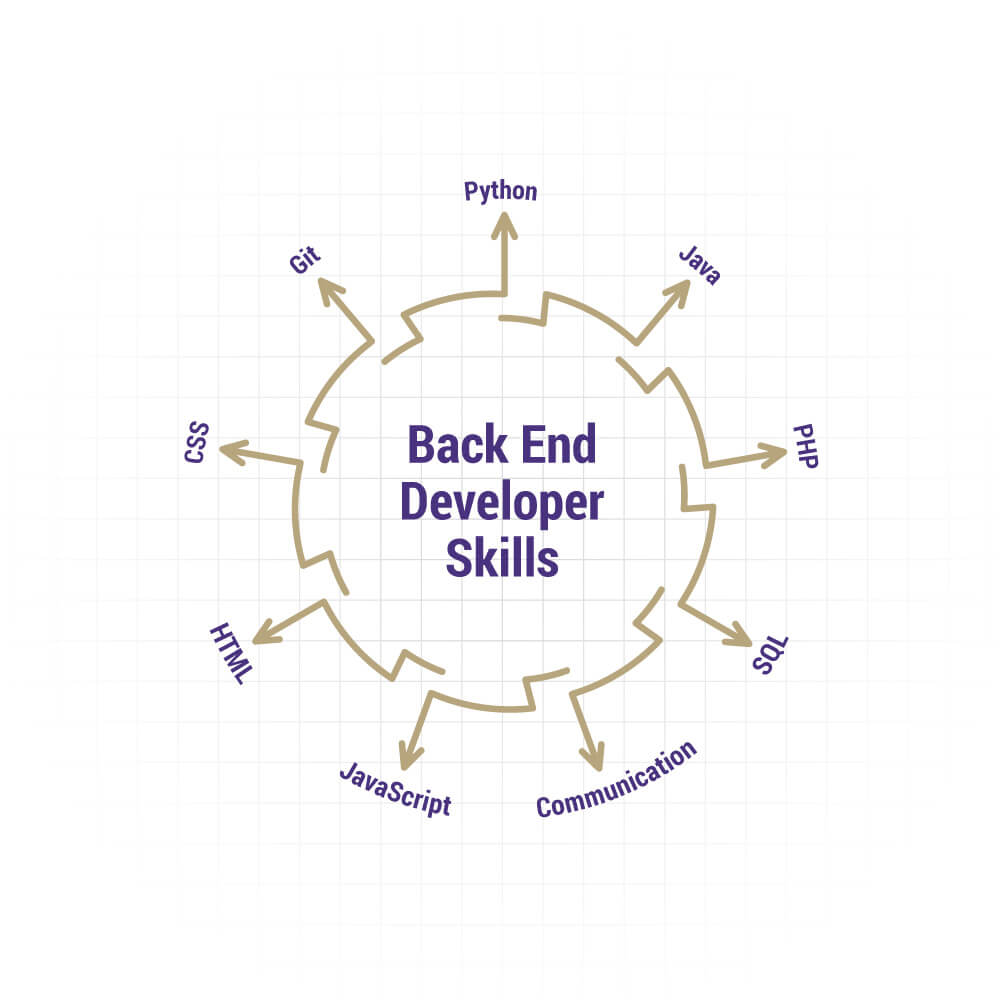
The necessary technical skills required to become a backend developer are:

  • In-depth knowledge of at least one backend programming language and framework.
  • Knowledge of front-end technologies, such as HTML, CSS, and JavaScript, so that he can communicate with the front-end team.
  • He should be capable of managing a hosting environment along with the database administration.
  • He should be capable of scaling applications to handle the load changes.
  • He should have enough knowledge of accessibility and security compliance.
  • It’s good for him to have an experience of version control, such as GIT.
  • A backend developer is not expected to have command on every programming language. That is not possible for a human to have expertise in each of them. But they are expected to be experts in their opted language.


More Backend Developer Skills to add on the resume

1. Web Development Languages: Back-end developers work simultaneously with front-end developers, setting server rationale to outside components of the web application. So as to execute this rationale, the backend engineer utilizes server-side scripting language. The best programming languages that you must know while talking about backend developer skills are:

  • Ruby: Ruby is a programming language that is utilized accompanied by Rails. Ruby is to Rails as PHP is to Zend, or as Python is to Django. The sheer class and finesse of the language are what attract the back-end developers towards this language and make it a must-have in your tech stack. It prioritizes conventions rather than configuration, which helps the back-end developers as they don’t have to waste their precious development time in configuring the files to start the development process.
  • Python: Curated by Guido van Rossum and rolled-out in 1991, Python is an interpreted, cutting-edge, general-purpose programming language. It reduces the need of coding to a very significant level and has high utility because of the presence of third-party modules. The ease of use and extensive libraries offer back-end developers more productivity as compared to other programming languages. Not just for building basic applications like desktop apps, Oss, Business Apps, and web frameworks, but Python is also the best fit for AI and ML-based web development.
  • PHP: PHP (Hypertext Preprocessor) is an open-source back-end scripting language used by developers to build web apps and sites. PHP also has a huge assortment of utilitarian modules and a couple of the modules accessible in PHP incorporate Graphics and PDF, among others. One of the greatest advantages of PHP is that it is very easy to learn and use because of its simple syntax. Anyone who is familiar with C language can easily grasp PHP without any difficulty.
  • Java: Java is an object-oriented, platform-independent, general-purpose programming language that is designed to have negligible implementation reliance. As a result of Java’s power, convenience, cross-stage capacities, and security highlights, it has become the most preferred language among developers.

2. Comprehensive Knowledge of Databases: Become familiar at stacking and recovering data from databases. Though front end developers can associate with databases and interface with them too, server-side development is right now the standard method to control advantaged and extraordinary access to that information, including storage and recovery. Start with great social style databases, and move towards chart databases as your knowledge permits.

3. Connecting to Application Programme Interface (API): Internet browsers aren’t the only entity to interact with web applications. Regularly, an organization will offer a mobile app for iOS or Android alongside its principal site. There are additionally program based applications that principally utilize JavaScript, not server-side rendered HTML (through structures like React, Vue, or Angular). To recover information for the display, these applications require an Application Programmer Interface, or API to associate with.

HTML might be helpful for designing substance in internet browsers, however, there are greatly improved configurations for information that will be utilized by different projects. The two most mainstream positions for API information are JSON, which represents JavaScript Object Notation, and XML, which represents eXtensible Markup Language.

4. Server Handling: Your site needs a database to deal with all the client and product data. A database stores site content in a structure that makes it simple to recover, arrange, alter, and store information. It runs on a remote PC called a server. There is a wide range of databases that are generally utilized, for example, MySQL, Oracle, Postgres SQL, and SQL Server. For server management you can choose any one of these and acquire an expertise on it: Docker, Kubernetes, Nginx, Node.js, New Relic etc.

5. Knowledge of Popular Frameworks: You must have knowledge of the frameworks identified with your preferred language. For example, on the off chance that you go with Java, you would be required to know Spring, Hibernate, and so on. These are well known Java-based frameworks. Additionally, on the off chance that you go for Python, you would be required to know Flask, Django or some other Python-based framework.

Estimated income of a Backend Developer


According to research, and taking the previous year’s figures into consideration, backend developer trends to earn up to $120,798 per year. This figure could vary based on expertise, experience, skills, and is also dependent on the company, country, and other factors. Also, it is worthwhile to note that there’s a vast difference between the pay-scales of backend developers and front-end developers. Front-end developers aren’t paid as much as backend developers. The reason is that front-end work is mostly done with the help of automated tools, while backend development requires much technical expertise.

What is the future of Backend Development?


As of the current market trends, there are no worthy alternatives to backend developers and backend development. So naturally, the future is very bright for such developers. In this digital age, every business is required to have an online presence, and for that, they require high-quality backend development for their websites. Although many clients are not aware of the difference between backend and front-end still, the market cannot survive without backend developers. Despite technology replacing everything with automation, backend developers have a safe future as they are required for the process of developing automated tools.

Summary

The role of backend developers is critical to web development. They are responsible for all the key roles and ensure the deployment of quality products. That is why more and more aspiring web developers are today opting for this career. Such people should have a passion for coding and possess all the required knowledge and skills to become an efficient developer. It is also necessary to have other additional skills, mentioned above, to make your mark in the market.

Mobile Apps That Tech Investors Will Fund in 2020

Sensitive Data and Mobile Apps: Practices that Potentially Exploit User Data

Knowing what investors are looking for in mobile apps is a game of utter unsurity.

The investment/funding rounds most often than not come in waves.

2017 was the year of Blockchain. Investors were swooping in to grab a piece of the decentralized pie.

2018 was all about mobile app startup funding of ubernized business models. Businesses like eScooters and P2P travel accommodation booking  came on the forefront during this time.

2019, surprisingly was all about Fintech. Investors from all across the world and different interest groups were funding projects making Fintech sector reach the developing and underdeveloped nations. They also showed a special interest in projects that would combine the domain with disruptive technologies like Blockchain and AI, etc. This, in turn, helped set up the grounds for app investment trends 2020.

At Anteelo, we are known to help our clients get funding on their project idea and finished applications. It’s an event that results from our knowledge of the steps of how to get an investment for an app and knowing what types of apps investors invest in.

We have shared the first part of the knowledge in this article –  steps to raise money for your mobile app startup. In there, we had touched base upon a number of things: How much mobile apps fund do you actually need, the types of investors for mobile app startup, Things investors look for in an app, and how to get investors for your app. In our another article on the ‘Alternate Funding Models’ we have also looked into the different models that businesses can look into if the traditional routes don’t work.

In this article, we will get you acquainted with what mobile apps investors will be looking for in 2020.

*Disclaimer: This article has been the result of our observations. The ultimate probability of businesses getting funding for app startup will depend on what individual investors are looking for and how well businesses are able to promote their value offering.

App Types Investors Will be Focusing on in 2020

A. On-Demand or Educational Cannabis Apps

Uber for Weed Delivery App Development | On-Demand Cannabis Delivery App

Cannabis is getting legalized across the world like wildfire. Entrepreneurs are looking ahead to different tips to make their cannabis business successful. And with this, the inclusion of technology in the sector for making it worldwide. A massive tech driven demand for the industry is coming in from the mobile domain. In fact, the cannabis sector has become a prominent part of the on demand app investment trends 2020.

Businesses, from all across the globe, are finding ways to make cannabis accessible to users from their smartphones, whether it’s through cannabis delivery applications or apps educating people of how and to what extent should they use cannabis.

Zak Garcia, the chief marketing officer at CBD Capital Group says “with hemp-derived CBD products legal in all 50 states, the market is growing at 132%”. According to the Brightfield Group report as well, the total cannabis market is projected to reach $22 billion by 2022.

B. Real Estate Apps Blended with AR/VR or Blockchain

How AR & VR Mobile App Development is Affecting Real Estate in 2021

With the interest rates across the globe being on a historic low, it is very difficult for mobile app investors to not like real estate sector.

Being an industry that affects the majority and is ripe for technological advancements, real estate is poised to get a lot of investor attention in the coming time. The attention defining the real estate app investment trends 2020 will majorly be seen around products that make real estate accessible to the world and bring transparency in the domain.

This in turn, translates into how important it is for entrepreneurs who already have a solution to get in touch with their real estate mobile app development company and get their mobile apps features updated, maybe even get it incorporated with new technologies like Blockchain. In fact, if you do end up taking the decentralization route, you’ll be able to avail the benefits of blockchain app investment trends 2020 as well.

C. Innovative Fintech Solutions Merged with AI 

Which Indian Startups Making The Best Use Of AI In Fintech Solutions?

Louise Samet, Partner at Blossom Capital, Stockholm, Sweden says, “I’m excited about the global opportunity in B2B fintech. For quite a while now, there’s been a lot of focus on consumer fintech products, while there’s still a huge opportunity in B2B payments, banking and insurance. Companies like Pleo and Tink are growing extremely fast and others are following.”

Like Real estate, Fintech is another mobile app market that holds the potential to disrupt the masses. An application that uses a combination of different technologies like Blockchain’s decentralization and Artificial Intelligence with the domain, is poised to be an instant hit with the mobile apps investor in 2020.

The app investment trends 2020 will not just see a greater rise in P2P payment app development but also ones that help millennials more financially sound and secure, such as stock market apps like Robinhood app or AI-powered budgeting app like Cleo.

D. ERP Solutions Backed by Big Data

How beneficial is the integration Of Big Data And ERP For Manufacturing

Investors have a special place for infrastructure solutions that help startups and enterprises grow. An example of this can be seen in Slack, Intercom, or Skype for businesses. This year as well, they will be focusing on products that help businesses deliver better solutions or simply better streamline their processes.

In this vein, we can see investments happening in business automation systems helping brands across industries – Finance, Manufacturing, Healthcare, etc.

Sarah Smith, the Investing Partner at Bain Capital Ventures, says “I believe the way leaders, managers, teams, and all employees interact and work is changing quite rapidly, but it is not yet clear if one super-app will stitch together everything a remote team needs or if we’ll deploy even more apps than before. More importantly, I’m keen to find tools that create the trust, empathy and companionship that inherently comes with in-person interactions which are mostly lost in a fully remote working world.”

E. mHealth Apps Incorporated with Machine Learning or Blockchain 

How mHealth Apps Are Changing the Face of the Healthcare Industry | Socialnomics

The fact that the healthcare domain is still mainly practiced with humans, even after going through the stages of healthcare evolution, being the sole innovation agents, offers a massive opportunity for incorporation of custom healthcare software development driven by technologies. The combination of Artificial Intelligence in Healthcare and Healthcare and Blockchain hold the potential to evolve the entire health and care ecosystem.

The health app investment trends 2020 are bound to see investors inclining towards app solutions that makes healthcare cost efficient and real time accessible to the masses. On this front, they will also be showing interest in insurance applications which would help people in need in real time through the scope of micro lending.

Geographical Markets That Will Statistically Get Investors’ Attention

ESG Investing: Practices, Progress and Challenges

The global mobile app investment landscape will be fundamentally altered by the impact of changing trade regimen and digital disruption. In order to remain competitive in the market, businesses will have to work in close alliance with policy makers to adapt and then respond to the changing economic globalization.

One such shift can be seen in the United Kingdom because of the Brexit. The country is seeing its top position getting challenged by several other countries and projects to Germany.

The app investments trends 2020 can be seen betting on the growth potential of India, with the country’s economy coming on track to overtake China as the most populous country by 2027, according to the United Nations.

Also, Vietnam, which is one of Asia’s fastest-growing economies, is becoming a profitable haven for U.S. multinationals looking to safeguard themselves in the US-China tariff issues.

“There’s huge growth potential in Asia,” says Rich Sega, the global chief investment strategist at asset manager Conning. “The geopolitical stress in Hong Kong has opened up opportunities for other areas in the region for Vietnam, Thailand and Singapore.”

Ultimately, investors will be looking for mobile apps solutions that make technology mainstream, taking it to domains and nations which have been operating sans them. Moreover, they will be expanding their focus from leading nations like Australia and the USA to emerging markets, which show a potential of immense economic growth.

Now that you have got a starting point for 2020, it is time to take the journey and come in the conscious mind of investors looking for investing in an app startup.

error: Content is protected !!