Three different sides of White Label App Development

Pitch Pine Media - #1 White Label App Development Company

Since you are here, this means that you have already entered the mobile app development world. First off, Welcome. Secondly, you now have two options – Either Develop an App from the Scratch, aka Custom App Development or Use a Readymade Platform aka White Label Apps Development.

The idea of a ready to use and deploy framework, while sounds enticing and easy on pocket, it doesn’t come sans issues. And more often than not, the issues that come attached with White Label Solutions are too big to ignore.

In this article, we will be looking into the concept of What Label Apps and validate how they are not as business friendly as they seem.

Here we go –

What is a White Label App?

White label | Hoydemark

White Label App, in its most general sense is an app that is developed by Company A and then sold to Company B, C, and D to add on their branding elements and use.

The idea of white label app development is to have a product that can be used as it is by multiple companies with minimal level of customization flexibility.

White label software development is an element of fashion among the Startups, who are looking for a shortcut to enter the mobile domain at a minimum cost of investment.

White Label App Examples

As you know what white label apps are. Thus, before reading the examples, you should be aware that the manufacturer, or developer of the app organizes the sales process without any marketing costs and vendors or merchandisers come up with their own product brands or services without a need to produce them. A genuine model is the Great Value staple goods in Walmart stores that are made by third-party organizations only for this corporate chain stores.

In the realm of programming, developing products, and so on implies high intricacy, high dangers, and high expenditures, combined with exceptionally hazy outcomes. That is the reason the white label model looks great in different circumstances here. For instance, a product advancement organization has built up a niche analytical system. A research white label app development agency, working inside that specialty, may win from buying the framework, branding it and offering its customers helpful reports, made in the framework.

LevelUp

LevelUp - Review 2018 - PCMag India

LevelUp started as a versatile mobile payment/loyalty program mobile application. From the start the application was intended for individuals to use as a type of payment at small quick serve cafés, however it has now moved into the website and application improvement space. LevelUp has designed the mobile application and online payment gateway for cafés and restaurants like sweetgreen, Pret A Manger, and Zaxby’s. The majority of these restaurants don’t have the ability to construct and create their own website or mobile application, so utilizing a white-label item is a great choice.

Stream LXP
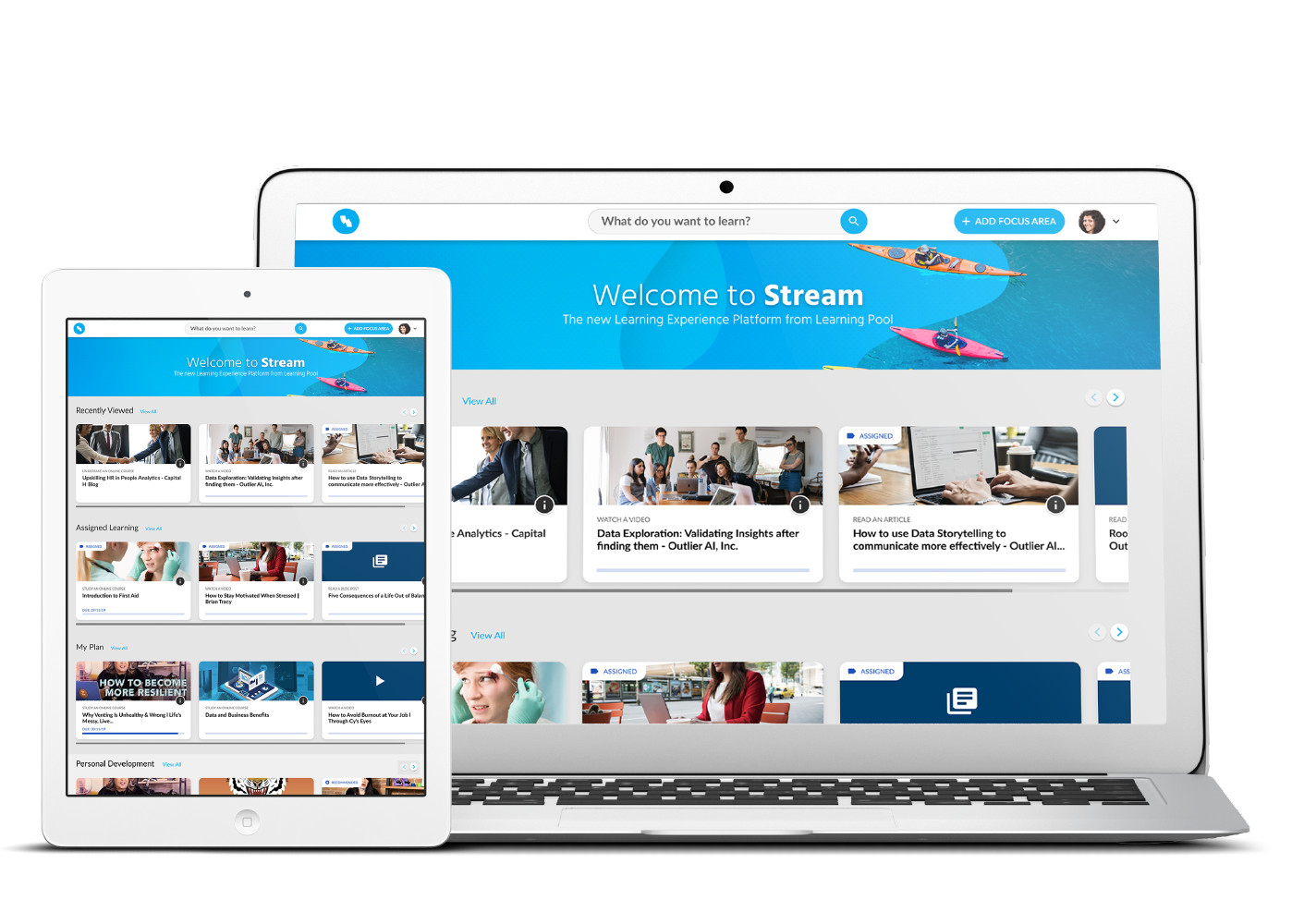
Stream LXP Pricing, Features, Reviews & Alternatives | GetApp

Stream LXP, earlier known as Curatr LXP, is a completely customizable eLearning SaaS platform. Created by the group at HT2 Labs, a Learning Pool organization, Stream LXP is a social learning program that permits license holders to mark the platform with their novel look and feel, just as transfer organization explicit learning content. It can likewise be authorized and afterward exchanged to an outsider. In this way, not exclusively can the whole stage be upgraded to accommodate your image’s look and feel, the genuine substance that is utilized in the stage, can be curated from your own assets.

How are White Label Mobile Apps Developed

There are two ways for white label app development. The white label web applications can be developed where:

1.   The white label mobile app builders reuse the backend code but alter the frontend code to make it look different.

2.   The second is, where an app is developed with a fixed set of features and sold to A, B, and C companies with the freedom to add or edit features. This is mostly used by companies which have a Software-as-a-Service model.

How Different are White Label Solutions from Custom Apps?

Let’s have a look on White Label App Development vs. Custom App Development. There are a number of different factors that draw the demarcation line between a custom app and white label mobile app platform.

Here are the pointers of white label mobile apps vs custom app development, explained in detail –

1. Level of Customization

When you, as a business, invest in a white label services and solutions app, you enter into it knowing that it was not specifically designed and developed for you. It was developed in accordance with features of a mobile app that is in the operating in the app stores.

Since you are buying a readymade solution, the chances of you adding in elements that are a reflection of your brand is very minimal, unless you look into the best optimal mobile app development checklist, possible pitfalls and challenges to deal with, and other such factors as we covered in our mobile app development guide.

On the other hand, when you invest in Custom App, the chances of getting an app that is developed exactly as per your requirement are much higher. Because you are getting an app developed from scratch when you are investing in a custom app development, you get an app that has the set of features that you wanted represented as you wanted.

2. Design Uniqueness

Design a minimal and modern logo uniqueness is the key by Dp__design | Fiverr

The number one reason behind Apple rejecting White Label solution was that the apps coming in from one vendor looked the same. There was hardly any difference in terms of design and flow, except that of 20% brand elements.

Absence of the freedom of having own design is the number one element that White Label Solution lacks in, which is also the major cause of store rejections.

With White Label, you always have to compromise with the design that the vendor has set for you, with less to no sign of your individual idea.

3. Cost & Resource Factor
Resource Planning Techniques, Cost Control and Cost Management Techniques | Budgeting, Estimation

Since you are buying a ready-made solution, the one that is not made specifically for you, the cost of White Label mobile app is much less than Custom App development.

Also, since the development efforts are also on a per suite of project basis instead of per project, you even get to save some cost on the resources front.

4. Scalability

When you invest in a White label app services, you invest in an app that has been made for a specific platform or device. When you decide to take the app further to another device or some other OS version, you will either have to wait for the vendor to make it scalable or you will have to get in touch with some mobile app development company to develop an app similar to the white label app for your preferred list of devices or operating system versions.

5. Maintenance and Sustainability

Since White mark applications are designed reusing the current application code, there are less danger of bugs and mistakes in the codes. Additionally, the code is already tried and tested in the application business, which again gives a sign that the application development code is sustainable.

However, when investigating Custom mobile application improvement, there is a higher risk of bugs and defects in the application code. The employed Custom mobile app development service suppliers have to test each component of your application at whenever point another element is added/or a current one is modified to record the results and hence, guarantee better results.

6. Security

Security Policy

In the case of White label business apps, you modify a ready-made mobile app. Because of this, there is less scope of identifying bugs and errors, and modifying your app code accordingly.

On account of White label application development, you alter a ready-made mobile application. Thus, due to this, there is less scope of distinguishing bugs and mistakes, and altering your application code likewise.

But this isn’t the case on Custom application development. Here, you build up a mobile application without any preparation, from scratch and hence have full power over what code to write, how to test and change it, and so forth. Or then again better say, you have better opportunities to improve the performance and security of your application, which acts as a motivation behind why one should go for a custom mobile application development.

What Service Do We Offer at Anteelo?

At Anteelo, we focus our Mobile App Development Services suite on Custom App Development.

We believe in developing apps from scratch. Straight from ideation to deployment, everything is done by us after understanding the exact business requirement that varies from project to project.

We understand that there are some legitimate white label app development benefits such as – Low white label app development cost, shorter time to market, and less maintenance efforts. But we place app quality and brand voice on a greater pedestal, which makes us choose Custom App Development as our suite of service.

There are a number of reasons that make us Custom Mobile App Development Evangelists –

1. Intact Brand Image

How to Keep Your Branding, Voice, and Style Intact No Matter Where You're Selling - Sellbrite

Even when your app belongs to the same category as that of hundreds of the other similar apps in the stores, what makes yours different from the rest is the fact that your app is a reflection of your idea. Something that reflects even when you offer the same set of features as the other apps in the domain.

When you invest in a white label service and solution, you lose out the chance to have an app that is an extension of your brand.

2. Real Time Update

The Important of Real-time Features in Mobile App

When the control of the app development process is in your hand from the scratch, you don’t have to rely on a vendor to make changes in the app design and framework.

With custom app development, we give our clients the freedom to extend their app to other platforms or add and remove certain features according to what they think would best represent their idea.

3. The Power to Decide your Tech Stack
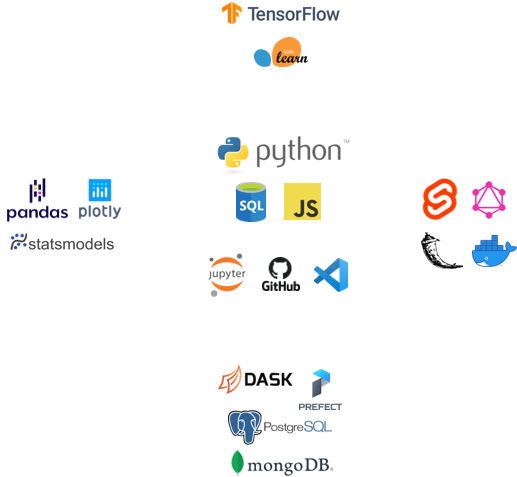
My Data Science Tech Stack 2020 - DEV Community

In the end, the biggest and most crucial advantage that you can get out of Custom App Development is that you get to decide the tech stack your mobile app would be based on. Knowing what tech stack to use is the recipe to a mobile app that is stable and scalable.

In white label development, you don’t really have the freedom to make the choice of the mobile app technologies that would best suit your business agenda.

Now that you have seen both sides, go with white label app solution only when there is a massive cost crunch otherwise, choose Custom App Development for long term stability.

What’s The Plan?

Both White label and custom solution have their advantages and disadvantages. Thus, it is vital to choose your development partner wisely as the quality of the code will depend on the reputation of that company. The importance of white label app development comes with choosing a good strategy to make things work and consider the best choice before the hammer goes down.

Are you prepared for this change? If you think you are ready to imbibe the changes in your app or ideas then you can refer to Anteelo, a trustworthy and reliable company dealing with app development company USA.
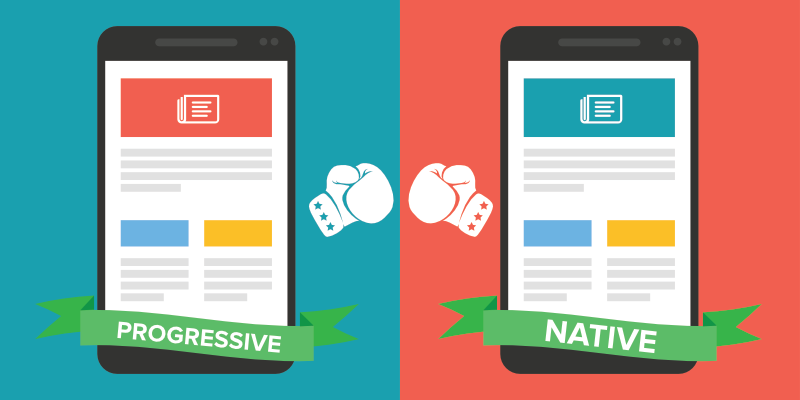
Native vs Progressive Web Apps (PWAs): Which is better?

Progressive Web Apps vs Native Apps - Who Wins?

Year after year, the number of mobile users has been growing significantly. Infact, according to Statista, by 2020 the number of smartphone users worldwide will reach 2.87 billion. These days, people spend more time browsing the internet on their mobile phones. Users consume 2x the amount of content on their smartphones when compared to desktop. Website owners should be excited about this prospect as the potential to reach mobile users now is ever increasing. There are a few ways in which you can build a mobile presence and enable your users to access your content on their mobile devices. Of course, there is responsive web design, which enables users to interact via a website. Then comes native apps, which users can download from an app store or Google Play Store.

In recent years, interest for a new form of app – Progressive Web Apps (PWA) has been growing manifolds. It blends the features of a native app with the accessibility of a website.

Many eCommerce websites are not designed for mobile, so consumers are less likely to download a native app just to make a purchase. eCommerce companies need a digital store which is like the best of both worlds.

And that’s exactly where progressive web applications come into the picture. It is almost like taking a midway approach between mobile websites and mobile applications.

Since mobile apps have been the standard choice for at least  about a decade, the looming question remains that Is PWA the future. In this article, we’ll cover all possible insights on progressive web apps vs native apps.

What Are PWAs

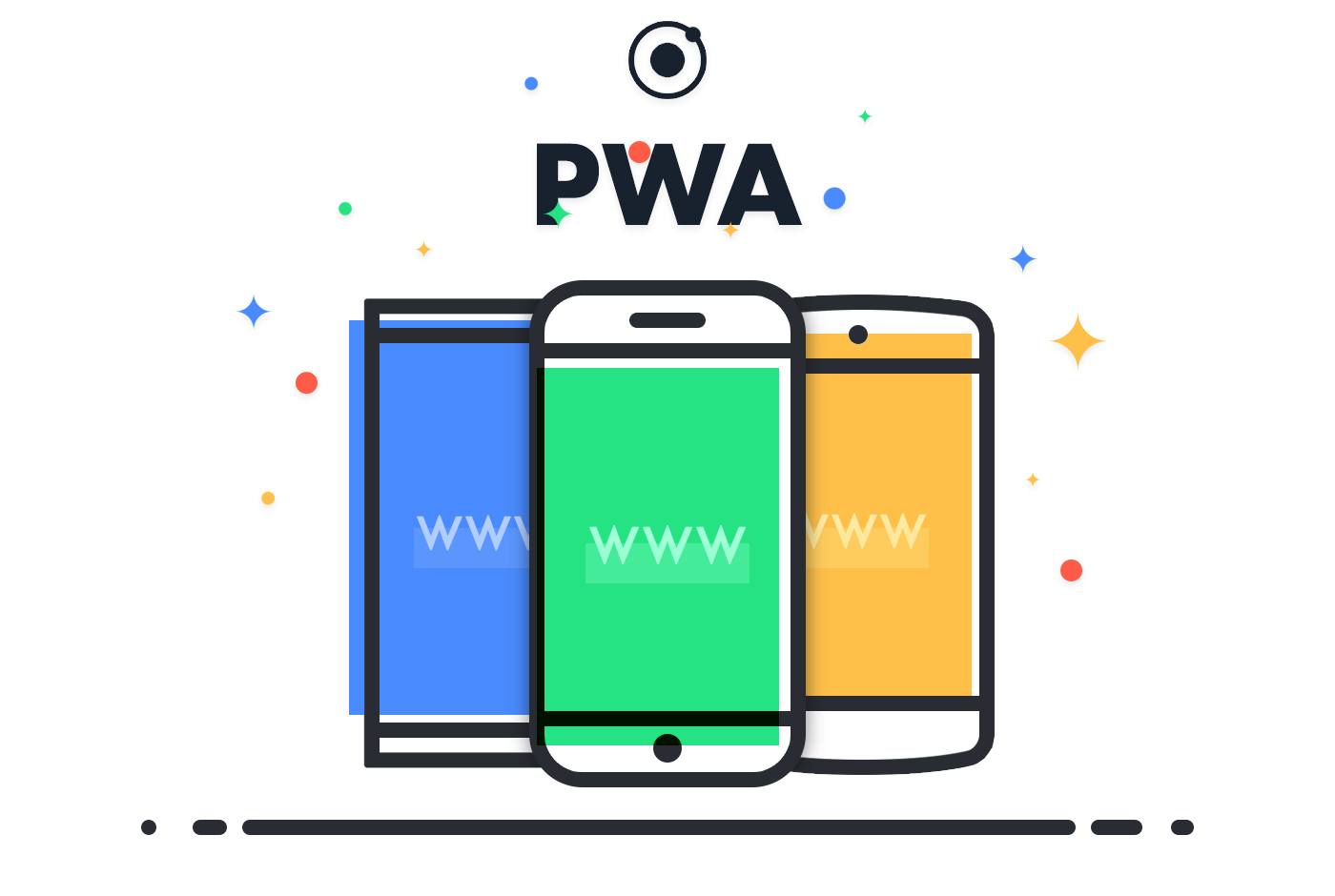
What are Progressive Web Apps? - Ionic Blog

A progressive web app is a website that functions much like a native app.  The key difference between progressive web apps and native apps is that a Progressive Web app runs in a browser, so there’s no need to download it from an app store.

PWAs can store data in the cache on a user’s device, thanks to service workers. This allows users to always stay up-to-date, regardless of the internet connectivity. Twitter, for instance, provides a progressive web application but they also have native mobile applications for iOS and Android.

PWAs are meant to remove a variety of problems ranging from weak networks to data restriction or total lack of connectivity. Google describes PWA’s as web experiences that are:

Reliable:

Immediately loads and never shows that a website is down, even under uncertain network terms.

Fast:

Quickly responds to user interactions with no janky scrolling and silky smooth animations.

Engaging:

Feels like a normal app, with an intuitive user experience.

PWA is an ultra-optimised mobile website that users can access from their browser – Chrome, Firefox, Safari or any other, and update their content as and when they browse.

PWAs have been receiving their fair share of interest from businesses ever since they were launched, and a lot more since brands like Twitter, NASA, Lyft, Medium, Flipkart, and Starbucks are associated with the platform. The features that PWAs come loaded with have made it ideal for businesses that are looking to attain mass visibility at a very low cost and developmental effort.

Ever since many businesses extended their App Portfolio, from what was earlier restricted to Native mobile apps to now PWAs, each of them witnessed a remarkable change in their revenue numbers:

Validating the various advantages that businesses have to gain by extending to PWAs, ReactJS has documented the support of Progressive Web App Development using its framework. A technology stack that is popularized as React PWA alongside React, it comes with the opportunity to add next level features to the mobile application.

React PWA is the new service that React has expanded into. The famous cross-platform framework has launched its new platform called Create React App that creates your project as a Progressive Web App by default.

The fact that React is now backing PWA is a sign of how strong the PWA ecosystem is going to be in the coming time – something that indicates that it might be the future of mobile apps.

What are Native mobile apps 

Why to Opt for Native Mobile App Development | Mobile App Development Blog | Pyramidion Solutions

A native app is a software application built in a specific programming language for a specific device platform, either iOS or Android.

Native iOS apps are written in Swift or Objective-C and native Android apps are written in Java.

They are specifically designed for one platform and can take full advantage of all device features, such as camera, GPS, accelerometer, compass, contact list, and so on.

Let’s discuss in detail the advantages of both progressive web app vs native app. In case you were wondering, it can also help you decide whether or not you should migrate your website to Progressive web app or invest in developing one.

With comprehensive insights we will help you put the debate of progressive web apps vs native to rest.

Benefits of PWA

1. Accessibility

Web Accessibility and Its importance? | by Neha Jain | Medium

When you compare native apps vs web apps, PWAs’ great advantage is their independence from app stores. Since 25% of smartphone users uninstall applications due to lack of storage space, this independence can be a major advantage. Customers don’t need to download PWAs and use space. All it requires is a web browser.

2. Global Compatibility

PWAs work on the capabilities of HTML5, which is what users need to access the web on modern browsers.

Imagine this, there are over 3.7 Billion users who access the Internet through their mobile device. Now even if half of them open your Progressive Web apps, your business will be in much higher profit than what you will reach when you restrict yourself to the 700 Million Android and iOS users.

3. Autonomous Features

A PWA can work in an offline mode, giving users access to the online store and keeping them up to date.

4. SEO optimization

Single Page Websites: Are They Good or Bad for SEO? | SEJ

The advantages of PWA over native apps is that PWAs have URLs that are indexed by Google, which implies customers can easily find a web app using a search engine. .

5. Low Development Cost

Low-Cost or Free Professional Development | EDUCAUSE

One of the biggest reasons why PWA is considered as the best option to drive businesses for SMEs  is that since PWAs are based on the web, they don’t have to meet the standards set by Android and Apple Play Store and the development cost is much lower than their Native counterparts.

Also, because they are aimed at providing a very quick in and out option, technicality wise too, it is much more cost effective to create a Progressive web app using top development frameworks.

The cost of Progressive Web App Development is somewhere around $3,000 to $9,000 while Native App Development starts with $25,000.

6. Zero Interference from App Stores

How Proton is fighting app store abuse

PWAs are launched through a URL link and web browser, it doesn’t need to be uploaded on either Play Store or App Store, which saves the cost and time to market to a huge extent.

This lack of interference from the App Stores allows businesses to save a lot in terms of app development and launch.

7. Better Engagement

How to Get Better Engagement on Your Blog Posts | by Amanda Clark | Strategic Content Marketing | Medium

There is no doubt that PWAs contribute to increased customer engagement. PWAs caching and offline feature ensures that users can browse eCommerce stores anytime and won’t abandon the web app due to long loading times.

Features like push notifications and location tracking allows marketers to provide relevant content to mobile users anywhere. Such aspects make PWAs perfect for delivering enhanced user experiences.

Benefits of Native Apps

1. Faster

Making Your Code Faster by Taming Branches

Both loading speed and performance of a Native app is much higher than Progressive Web Apps. And because of a fast loading speed, they don’t consume much battery life as opposed to PWAs.

2. Safer

Safety Internet Day - Safer Internet Day Logo Clipart (#3483143) - PinClipart

Since they have to go through the various standards set by Apple Store and Play Store, users feel more confident while using Native Apps compared to when they use a PWA, using nothing but a url.

3. Greater interconnectivity with in-built Device features

Features like Camera, GPS, Wi-Fi makes the user experience more connected, convenient, and purposeful. And this connectivity with the device core features is only possible with Native apps and not with PWAs.

Now, although by the looks of it, PWA seems like a much better option as compared to Native, but there are still two areas which are keeping businesses from moving to Progressive Web Apps 100%  – Fast Load Speed and Higher Performance.

The other reasons that are keeping Businesses from adapting PWAs 100%, include:

  • The load and run time is lower than Native. Also, PWAs consume a lot more battery than their Native counterpart.
  • Device features such as Bluetooth, NFC, and Proximity Sensor cannot be accessed by the PWAs apps.

There are two very different schools of thoughts when it comes to choosing one between Progressive web apps vs native apps, and much of it depends on the choice of application type. But, there are in fact different use cases which point towards the fact that there is no versus, instead, there are sets of individual cases where PWAs will be more beneficial for a business and another set where Native mobile apps would be more profitable.

This takes us to our next and final point of discussion –

When to use a PWA and When to Use a Native App

Progressive Web Apps VS True Native Apps | App Foundation

1. When you need easy distribution

When you need your app to reach more people in a shorter time period, PWAs are ideal, as they can be shared and run by nothing but a URL link, removing Native’s extra steps like finding your app from among  hundreds of similar ones and then having users press two extra buttons for sharing it with friends.

2. When App Development Budget is a Constraint

When you do not have enough funds to invest in the whole suite of mobile app development process starting from ideation to coding to deployment and maintenance, it is ideal to go with PWAs. Progressive app development comes with a much lower price tag because of the low development hours and technical requirements.

3. When App Performance is more Important than App Development Cost

If you have money to invest for app development and what you want in return is high performance and faster load time, you should go with Native Apps. Since native apps are built and optimized for a specific platform, they offer a high level of performance.  Since data is already stored on a device, the app loads several times faster.

4. When you are Unsure of Whether at All You Should go Mobile

When you are only going mobile because your competitors are, or when you are unsure, if at all your audience would like to interact over mobile and you don’t want to make any major investment in a phase of uncertainty, stick to PWAs.

5. When What you Seek is Credibility

When you are looking to create an image of credibility and that of a brand that can be trusted, go with Native Apps. As the app store reviews and ratings come in very handy in creating the image of being a trustworthy brand.

6. When your App Doesn’t Work in Isolation

If you are looking to offer a quick in and out option to your users without having to interact much with the device’s inbuilt features, go with PWAs. But if you are looking to give your users a service that would require them to interact with a Camera to upload a photo or GPS to find direction from Point A to Point B, then Native should be your choice.

In the End – What is the Verdict?  Is PWA Better than Native? Should Businesses follow the example of Twitter, Medium, Starbucks and tens of others and expand their App Portfolio to Progressive Web Apps?

There can be two scenarios –

  • When you already have a Native App

In case you already have a native app that is available to download from the App Store or the Google Play Store, but you are looking to extend your user base at minimal development effort, extend to PWA.

  • When you are developing an app from scratch

When you are launching a new app and are unsure of the market and how users would react to it, instead of creating a full-fledged Native app, go with PWA to test the waters.

Ultimately, when it comes to getting on mobile, you now have a series of platforms to base your app on – from React Native and Flutter to Core Android, iOS and PWAs. The direction that you should take should ultimately depend on your business needs and budget.

Frequently Asked Questions about PWA vs Native App

Q. Why are progressive Web apps better than native?

PWAs are better than native apps because:-

  1. They offer global compatibility.
  2. They are easy to launch.
  3. They demand lower development cost.
  4. They are Seo-optimised.
  5. They lead to better user experiences, better engagement and can increase conversions.

Q. Will Progressive Web Apps replace native apps?

Yes, it will in the coming future.  And the reason behind it is the benefits it comes loaded with such as easier installation, better performance, no updating issue, seamless offline operatibility, and lower development cost.

Q. How much does a progressive web app cost?

Generally, the cost of Progressive Web App Development lies between $3,000 and $9,000. But, the actual mobile app development cost depends heavily on the features and technologies involved, size and location of the team hired, the complexity of the concept and other such factors, so it is always better to consult with an expert to know the Progressive web app development cost.

Q. Why native apps are better than PWA? 

Although PWA uses secure URLs in https, native applications remain a safer and more reliable way to access information. Native application works better than Progressive Web App as user access and navigation is easier, smoother and more enjoyable.

Q. Do progressive web apps work offline 

Yes progressive web apps work offline. Once you download a PWA, you can consume content within the app without an Internet connection.

Q. Is react native a progressive web app

No react native is not a progressive web app . React Native is a JavaScript framework for writing real, natively rendering mobile applications but you can build a PWA using react native.

The Secret to App Stickiness: Embedded Analytics

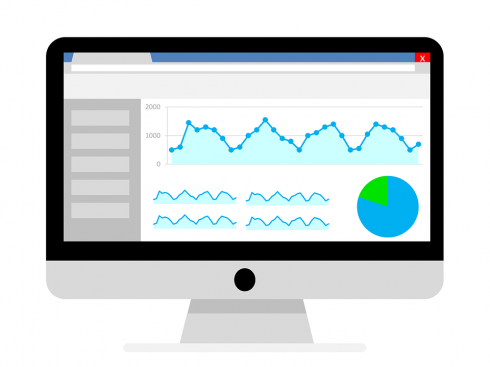
A guide to embedded analytics tools - SD Times

The sole difference between a successful app and the one that fails boils down to the amount of value that they offer to the users. Greater the value users derive from the app, greater is its stickiness. In the race of offering maximum value to the users, a number of brands have moved to integration of embedded analytics in their mobile application. A strategy that seems to be working for a number of businesses, across industries.

And the reason behind this success is the heavy inclusion and working around with data.

Data is the one element that is present and every user seeks in one way or the other, the second they connect their device or application to the internet. It is by giving users the power of data and analysis, brands are able to place themselves as high value offering businesses, those whose association would only benefit the users.

Let us look into this new wave of app stickiness called Embedded Analytics, in greater detail.

What is Embedded Analytics?

A Guide to Embedded Analytics: Use Cases and Benefits

It is the merger of analytic capabilities and content in enterprise process applications. Through embedded analytics, brands provide analytical tools and relevant information  that are designed for specific tasks at hand to help the users work smarter and with greater efficiency within the mobile applications they work around every day.

There are a number of benefits that come associated with the integration of Embedded Analytics, let us peruse them before moving to how they improve business strategy and drive revenue for your application.

Here are the benefits that Embedded Analytics offer to the world of both Enterprise apps and B2C apps:

Customer Benefits –

7 Amazing Advantages of giving good customer service

Embedding analytics in mobile application provides end users insights. Now-a-days, users want their apps to enable them to take better decisions and work smarter. When an app offers valuable analysis, users make them stickier, and a useful component of their everyday work life.

  • In B2B market: A task handling app help the end user analyze how they are spending their time in the office. With the help of embedded visualizations, the embedded analytics app offer understanding into how they can utilize their work time better. For example, through a simple chart inside the app, they can find out that they have been spending more than twice of their office time going through unproductive meetings.
  • In consumer market: A fitness app which inform someone of how many calories they have burned helps users plan their activities better. As the amount of collected data increases, the amount of app stickiness also increases. Users over time become less prone to switching to another fitness app as yours have information that is being collected for some time, an information that is useful for them.
  • In your business applications: The integrated dashboard which pulls in information from your CRM and ERP systems provides users with the information that they need to take quick decisions, without taking the efforts to indulge in multiple clicks. By providing teams with business intelligence analysis, you can help them informed, timely business decisions.

Business Benefits –

The Business Benefits of Complementary Partnerships - Salesforce Canada Blog

Today’s app businesses are continuously competing in a million similar category apps’ market. With this massive amount of availability, the end users end up having little to no patience for the apps that gives them zero value.

By giving the users real, lasting value through the embedded analytics, businesses are able to differentiate their app from rest of the many no value offering apps.

There are a number of ways Embedded Analytics Application help improve the business planning and operation workflow, when integrated right. Let us look at some of those ways –

Ways Embedded Analytics Improve Your Business Strategy

  • Secure environment, effective user experience – When we talk about analytics and data, a number of users have become habitual to relying on exclusive tools that are designed for concentrated business processes like the HR or CRM , or are dependent only on the applications, which just focus on analytics.

With the help of embedded analytics, the analysis and reporting functions happen in the known and trusted setup of primary business applications. Analytics, which can be seen as intimidating for the everyday users, when embedded in the ecosystem of an application help users understand them with greater ease, thus boosting their confidence in taking data driven decisions. Embedded analytics help create a seamless experience between the generation and the analysis of the crucial business data.

  • Greater Value of Invested time – It builds on the value that your current business application might be offering and brings a jump in the time that your users would be spending in your app.

Time Value of Money - How to Calculate the PV and FV of Money

Selecting the right application developers, who can seamlessly integrate embedded analytics in your app help promote a highly data-driven culture, while helping your team become more productive and efficient.

  • Makes BI omnipresent – For a number of organizations, BI is one platform or which is either managed by company’s IT department or is used by the management to plan and float business strategies. It is seen as that management-level function which seeps down through the company hierarchy a series of reports attached with actionable items.

Embedded analytics helps break down the walls to data, thus making BI omnipresent and getting the analysis and reporting parts of the business in the hand of everyone who uses that application. Instead of looking up to the IT team for a follow up on the view report request, users are able to get involved with the analysis process. Now that the analysis and data is accessible to everyone across the team, the decision making time reduces significantly.

  • Data-driven work culture – If there is one thing that organizations want, it is to make their employees capable of using data to then make critical decisions. Through embedded analytics, companies make data a crucial part of the processes and workflow teams are working around everyday.

How to Create a Data-Driven Culture: 5 Steps

Embedded analytics takes business intelligence to greater range of departments and business applications, while promoting commitment towards data and analysis, thus giving birth to a data-driven work culture.

  • Better Business Planning – It mixes analytics with business processes to power up users with informations that they need to handle the changing business environment. With your employees using the main business application boosted with analytics abilities, they will now react to opportunities and threats quicker while feeling confident in making informed business decisions.

How to Write the Perfect Business Plan: A Comprehensive Guide | Inc.com

Embedded analytics provides the ability to build reports and charts so that they can actively participate in business performance discussion, any time.

The various benefits that embedded analytics offer across businesses has led to an increase in its demand, to a huge extent.

[STATS ON NUMBER]

The rising demand for Embedded Analytics has prompted a number of mobile app development companies to build apps that bring the power of analytics into users’ hands. In a competitive scenario such as this, how do you ensure that your application’s analytics stand out, so much so that it earns revenue for you?

Here’s How –

How to drive revenue from your embedded analytics :

Here are the features that would make users spend money on your app’s embedded analytics:

Look into the complete user journey

Customer Journey Mapping - Strategy Tools From MindTools.com

The first step towards embedded analytics monetization starts with its seamless integration in the application. The integration should ensure that –

A. The reports and dashboards are a part of the app workflow and not in some separate tab and

B. They should follow the branding guidelines that the rest of the app is following.

Everything, straight from the color, icon, and the overlook and feel should be similar to what it is followed in the app.

Have Actionable Items in Your Applications Workflow

The Best 11 Workflow Apps to Improve Your Project Management | ClickUp Blog

The embedded analytics that you have in your app should allow users to take some actions, instead of simply the View option, as commonly seen in analytics apps. Majority of the apps work as a one-way street, they give out information to the users to view and analyze but they don’t give them the freedom to even share the analytics with their colleagues.

Sharing the analytics is not the only way to set your app apart, by giving your users the access to edit and update the analytics on the application you can help them take action without leaving the platform.

To set yourself apart, it is important that you include actionable items in the app workflow.

Reduce Multiple Security Points

Wordpress Security Services | WordPress Malware Removal Services

There are a number of embedded analytics applications that ask for a different login credential every time users wish to use the coveted analytics section.

In your app, aim for reducing the number of login points by allowing one-time sign-in and multi-tenancy features.

It will not just make it less cumbersome for the users, but the developers would also not have to integrate security level multiple times in the app.

Allow Customization of Analytics

Thrive in a Digital World with SAP S/4HANA Finance

Either one of these two situations happens when your users come to you for including a new dashboard according to some process they have recently started following in their team – Either the developers would have to change the core app functionality or they could refuse leaving a whole group of users dissatisfied.

By allowing users to customize the app as per their needs, the total number of total ad hoc analytics requests that your technology team receives reduces to a huge extent. The self-service analysis also gives you valuable insight about your customers, giving you an insight into the kind of reports and dashboard you should move next to fulfill the next set of customer needs.

Now that you have the understanding of how embedded analytics application benefits business processes and how you can drive it for generating revenue for your business, it is time to look into ways you can implement it in your application, for getting maximum output, with the help of one of the Top Android and iOS App Development Companies.

Tips for Successful Implementation of Embedded Analytics in Mobile App

1. Build in Phases

When you plan on integrating analytical capabilities in your mobile app, it is very easy to get carried away and miss out on the core problem and the set of users you visioned to help. But, before you even think about building solutions for a range of different teams, stop.

Start small. Begin working on the solution for one user, one problem, and one report. Collect feedback and then move forward to the next user, their problem, and the report to solve that problem.

Also, soon you will realize that as one problem get solved, users would require something else, so it’s best to follow Agile methodology for embedding analytics in the mobile application.

2. Involve both External and Internal Stakeholders

Keep external and internal stakeholders in your Agile loop. Keep taking continuous feedback from them as you develop the specific analytics features in your mobile application. Employ screen mockups since the very start of the process and keep reviewing them with your current customers to get validation for your process. Ask your stakeholders what they liked in the application, what they disliked how would they use it, and if they have any suggestions to improve the product.

Doing it will keep you focused on resolving real problems with the help of embedded analytics, and would make the users, app’s advocates as the solution becomes available for mass use.

3. Identify Gaps with Usability Study

As the users work around your embedded analytics solution, sit with them to learn how they are using the application and what issues they are facing, to identify the gaps. Look out for the issues that are bothering your users while they are inside the application and then let them find a solution, irrespective of how much time it would take, to know the route users would follow when they hit a wall within your app.

At every stage, ask questions that would get you maximum feedback. Push your users to rate the application’s features so that you have the priority workable item list ready with you.

So here was everything that you need to get started with embedded analytics integration in your mobile application. To understand the concept in greater detail, contact our team of experts.

Learn Android Development: 10 amazing apps

How to learn Android app development | Internshala blog

Becoming a Developer is easy. Staying a developer, on the other hand, is an altogether different ball game. The industry that is on an ever-growing spiral, keeps offering something new every second to not just keep tabs on, but also learn an advanced level. Apart from memorizing and haunting every article and discussion on StackOverflow, there seems to be no other way to get an understanding of the exact development process. Or is there? Is there a magic formula, which we can also call shortcut to learn the functioning of some of the most intriguing Android apps? That too right under our noses?

Yes. There is. One of the least used secret weapon to understand how Android apps work.

Let’s find out what it is.

The secret weapon that is a treasure of information that you need to improve your Android development learning skills is – Open Source Android Apps.

And with this article, the treasure is now yours. We have created a list of open source apps, divided among popular categories that sees maximum users attention, for you to peruse through and apply to become a top-rated android app developer.

How To Use This List of Open-Source Android Apps To Get the Development Skills that Would Make You Better Android Developers.

I have divided the list of some of the most used open source Android apps in categories below along with the links to their Play Store Page and their GitHub.

First look at the apps in the Play Store/ F-Droid or the APK and get an idea of its look and feel, flow and then visit their GitHub Page for the code. Now, use the code to either develop a similar app or just to gain insight on how the transition happens within the app, code wise.

Let’s Begin.

A. Education

Education is one of the most viewed categories of Play Store and the one that has been catching the attention of Android Developers for quite some time now. While, there are a number of ways you can transform the industry with your app in the near future, here are two Education Apps that will help you start.

1) HW-Manager

HW-Manager for Android - APK Download

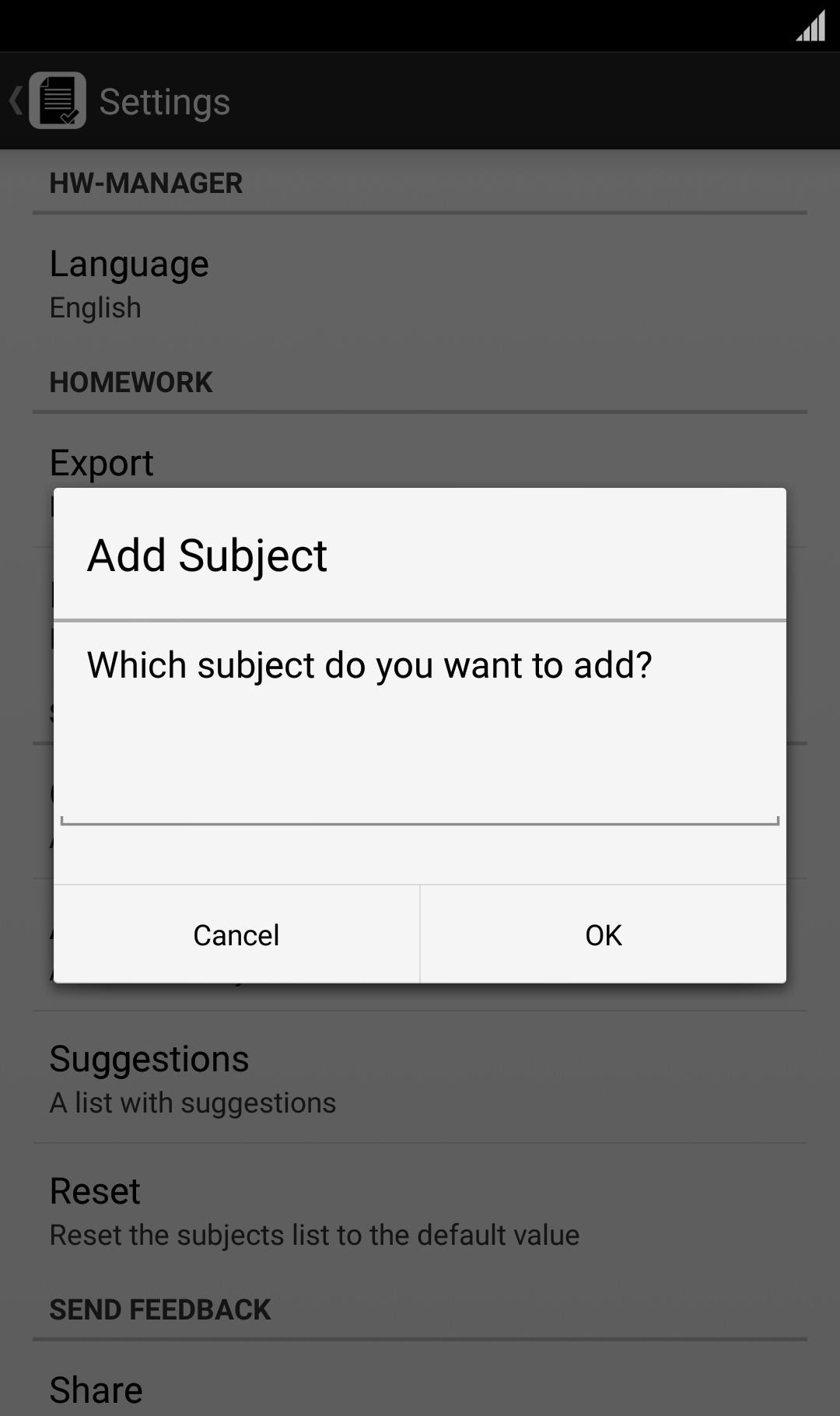
Available on Play store, HW-Manager focuses on managing homework. Every task that the students add in the app have title, due date, subject, and an additional information section to put in notes. While all the common subjects are already fed in the app, the students have the option to add the subject name manually in the app setting.

While there are a number of note making apps already present in the Android App Store, this HW-Manager is the one open source app that can teach you how to implement reminders and notifications in the app.

2) Slide

GitHub - trikita/slide: Minimal presentation tool for Android, perfect for using Takahashi method

Another most used open source android app in the Education domain is Slide. The app allows students to create minimalistic design slides for presentation. The app makes a presentation with just plain text.

The app, which is available on the Android store, allows you to export the slides into PDF to make it easy to access by devices can read PDFs.

Using this app, you can learn how to export parts of an app to other platforms. Also, it will give you an idea of the transformation of how the words appear.

B. Time and Calendar

While already present in the smartphone devices in default mode, Android users continue to install them to track a whole range of different things such as events, birthdays, meetings, health checkup, etc.

Same is the case with Time based apps, there are a number of apps that help keep track of the time users spent in meditating, running, and even sleeping.

If you are looking to develop your next Android app in this category, here are two open source Android apps to help you out.

1) Simple Calendar

Screenshot Image

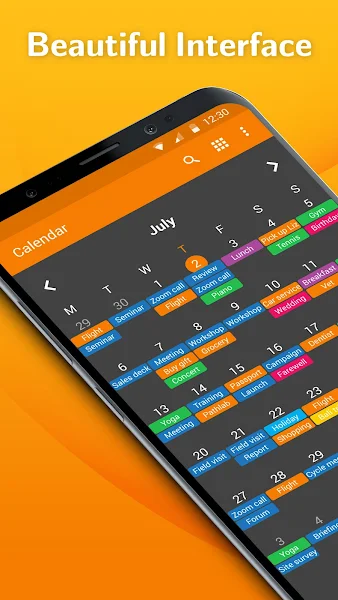
The app works exactly like its name suggests. It is a no-nonsense calendar app, which has been developed on Android’s official programming language, Kotlin.

While this app is not for learning the in-depth technicalities, but if you wish to brush up your Kotlin knowledge, Simple Calendar app is ideal for the purpose.

2) Standup Timer

Standup Timer | John P Wood

The Android App has become a part of a number of meetings in the current time. The open source app is used as a stopwatch to inform when the time is up, while giving all the participants an equal opportunity to make their point.

Using the app, you can learn how to blend a simple functionality with other features.

C. File Manager

With smartphones now becoming a sea of data and information, every user is on a constant lookout for a File Manager app that can manage their data in separate files, wherever needed.

Here are the two apps to help you join the club of hundreds of brands offering file management services to Android users.

1) AnExplorer

anexplorer · GitHub Topics · GitHub

The open source app works around management of data and files on Android Users’ smartphones and tablets.

You can learn a lot like loaders, custom views, file handling, and root management etc by studying source code of AnExplorer app.

2) Amaze File Manager

Amaze File Manager - Apps on Google Play

With a simple, easy on the eyes UI, Amaze File Manager is also one of the most used open source Android Apps presently in the store.

Using the app source code, you can get yourself an idea of how to implement features like root browsing and samba support.

D. Device Monitoring

With the number of apps now finding their place in the Android devices now growing, the need for apps that would keep a check on issues like device speed, battery usage, leaving heavy caches are continuously increasing.

If you too would like to develop an app that would help your users monitor the state of their devices, here are two apps that can help you out.

1) AnotherMonitor

GitHub - AntonioRedondo/AnotherMonitor: Monitors and records the CPU and memory usage of Android devices

The open source app helps its users in tracking the state of their devices in terms of usage. If you want to learn about how monitoring of Android processes happens, how to track memory and CPU usage and other things related to tracking and monitoring, then AnotherMonitor is the perfect Android app to begin with.

2) Call Meter 3G

Call Meter 3G for Android - APK Download

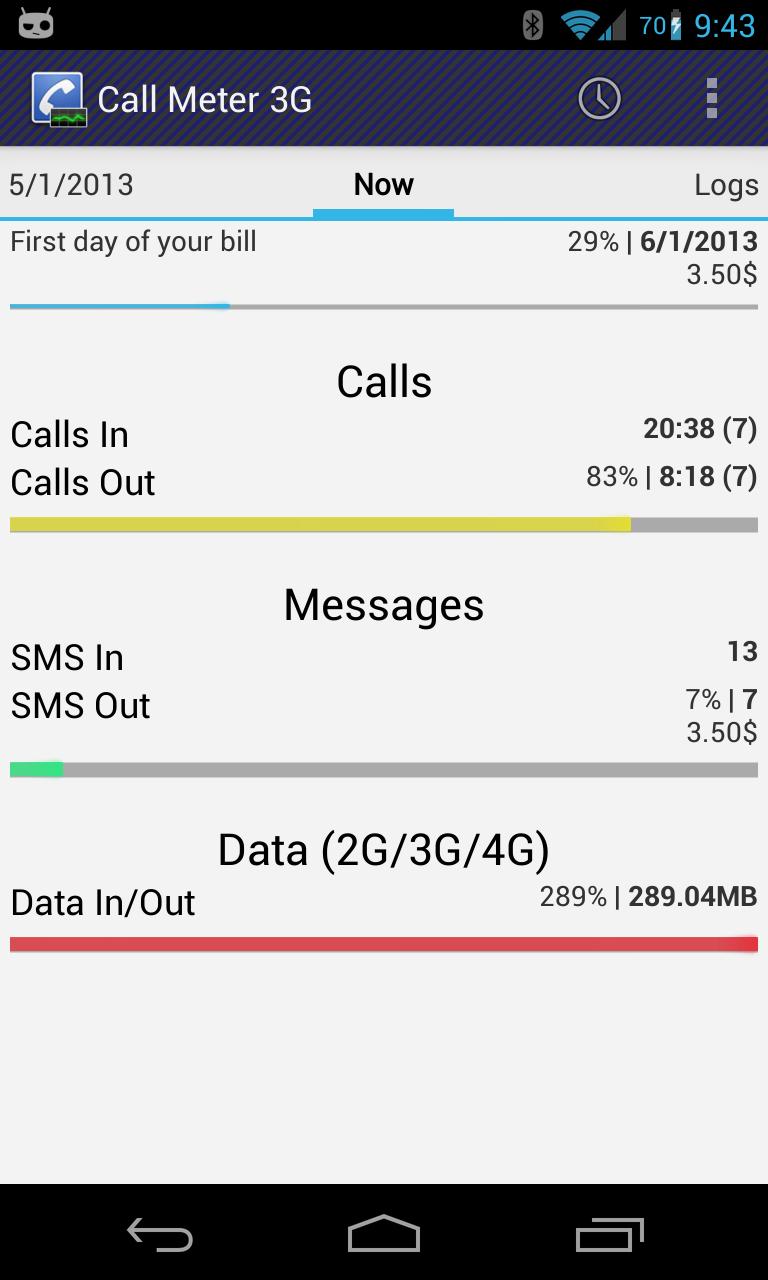
The Android App is used by hundreds for monitoring their calls, texts, and data usage.

Using this, you can learn how to implement safety features in the app, while learning to track your users’ devices correctly and in real time.

E. Social

One of the most popular categories of Android Play Store, Social has the biggest scope of experimentation and innovativeness. Bringing with itself, a series of difficulties as well.

The fact that users would like to share their stories and moments with the world in real time makes it important to have the back of features that would help with just that.

To get around the functioning of the deemed difficult app category, here are two open source apps to get you on board.

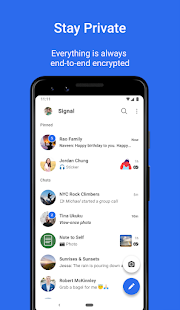
1) Signal

Screenshot Image

The app allows users to have encrypted conversations within the platform. It gives the users the freedom to use encryption in both instant messaging and voice calls that happen over the app.

Signal is your app if you need to learn how to enable the end-to-end encryption feature in an application.

2) ElloShare

package icon

Still new in the Android Market, ElloShare is a photo sharing app, which integrates with the users’ phone gallery that makes it easy to upload images straight from your phone into the Ello app.

If you are looking to learn about the functioning of image upload and sharing on a platform over the internet, in real time, this open source app can be your guide.

So here was the list of the open source apps that can teach you how to develop Android apps that rank on top of the Play Store, in no time.

Let us know how your life changes at the back of this article.

Native App Development is a Better Solution- Why

Hybrid App vs Web App vs Native App Development: How To Choose? - Clockwise Software

Since the advent of web apps, native apps have faced a lot of flak for being costly, sluggish, and platform-dependent. But the superior user experience, enhanced security, and amazing native capabilities of these apps can beat the lights out of any web app in the market. Backed by the goodwill of App Stores, native app development makes for an excellent investment.

This blog explains succinctly the advantages of native app development over web app development. Later, it elaborates how developers can create a wonderful concoction of native and web apps through React Native-based hybrid apps.

Let us Start with the Benefits of Investing in Native App Development

1. Native apps run faster

8 ways to make you run faster

Native apps are stored on the device so their processing speed is not dependent on internet connectivity or bandwidth. Moreover, these apps utilize a device’s native programming language and APIs to operate. So they run extra efficiently. In contrast, web apps are actually a bunch of web pages tied together with browser technologies. They just give the look and feel of apps but are HTML-powered user interfaces. For any action to be performed in a web app, calls are made to remote web pages. The speed at which processing occurs is dependent on internet connectivity in the vicinity.

2. They have the App Store advantage.

7 Convincing Reasons Why Should You Should Choose Native

App stores only feature native mobile apps. And app stores are undeniable one of the most important marketing channels for any app. When a person is in need of a new app, the App store will probably be the first play they’ll look for it. If your app is listed there, its chances of being discovered are greater. There are ways your app can be made more prominent in App Stores. Since native apps are backed by App Stores, they are perceived as the hallmark of quality by most users.

Another big thumbs up for native apps is that their monetization (commission, revenue, etc.) are taken care of by the App Stores from where they are downloaded. For web apps, payment systems have to be integrated within the app.

3. More secure apps

The Best Android Apps for Protecting Privacy and Keeping Information Secure

Native apps can leverage the in-built security features of a device’s operating system. Plus, performance enhancement updates of the OS are also available for native apps. The mobile device management feature allows users to take remote control of their app and protect its data from encroachment or compromise.

Web apps, on the other hand, are more prone to security threats since they work on non-standard programming codes made using HTML, CSS and JavaScript.

4. Scalability and enhancement are non-issues

MAVIC 2 PRO GIMBAL ISSUES ARE A NON ISSUE - YouTube

New features can be added to native apps easily and rapidly. The unlimited APIs available for native apps can render your app scalable and better. If need be, new APIs can be created for crafting features that aren’t provided by existing APIs. Conversely, web apps can work only within the limits of the web browser facilitating them. So they aren’t as flexible as native apps.

5. Good integration with mobile hardware

Hardware Integration - mojikllc

Mobile devices have super features such as camera, GPS, touch screens, integrated calling and microphone. Native apps can utilize these features with ease. Leveraging these capabilities within a web browser can be challenging and cumbersome.

6. Delights users with anticipated UI and UX

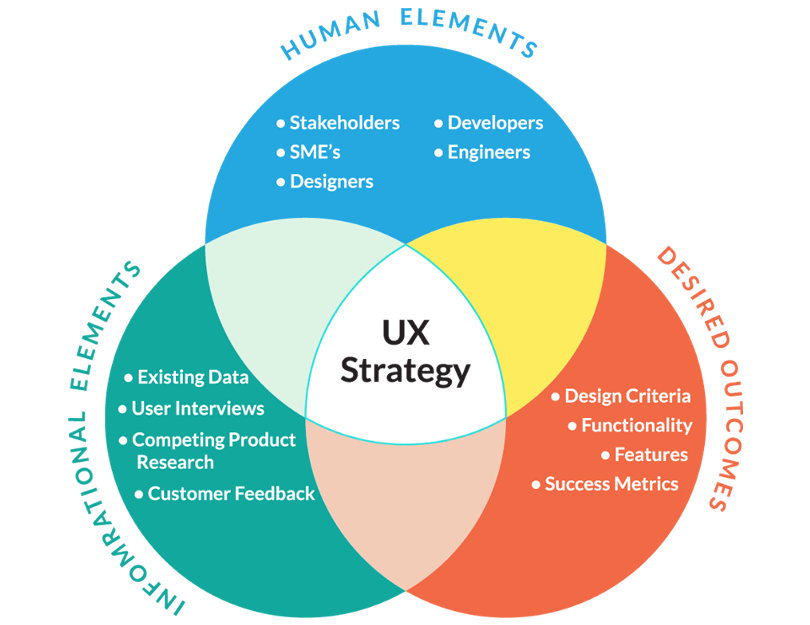
UX strategy: business management and UX design - Justinmind

Native apps delight users with the kind of UI and UX they have come to expect from their handheld devices. Web apps give the look of inherent apps but not their feel. They cannot function as seamlessly as native apps. Web apps also give a monotonous user interface across all devices that rarely matches the spectacular user experience provided by native apps.

7. These apps run offline too

7 Best Offline Messaging Apps for Android and iPhone [2020] | Beebom

One of the biggest advantage of native apps is that, unlike web apps, they don’t need internet to run. Since they are stored within a device, native apps can be worked on the move, in a desert, forest or anywhere else. Web apps are hosted on web browsers that can be accessed only when online. So, if using web apps, you will be hindered by wavering internet speed, connectivity issues and hefty internet usage charges.

React Native Application Development- Best of Native and Web Apps

Top 10 Benefits of Choosing React Native for Developing Your Mobile Applications

Native apps are secure, efficient and delightful. This is what makes native apps the preferred choice of most quality developers and vendors. This certainly doesn’t mean that the affordability and rapidity of web application development can be dismissed lightly. Most people find themselves at a veritable crossroad where they are compelled to compromise and settle for cheaper, quick-to-market web apps at the cost of native apps that offer better user experience.

But Facebook’s React Native has changed the rules of the game. React Native apps combine the performance factor of Native Apps with the ease of development of Web Apps. This JavaScript library helps build amazing user interfaces that render flawlessly on all devices and platforms consistently.

Benefits of React Native App Development

1. Reusable components

React Native has components corresponding to iOS and Android and these components can be used time and again to give native look and feel to your app, regardless of the device on which it resides. The speed and functionality of React Native apps is no less than of Native apps. Additionally, these apps can be built in agile frameworks that are speedy and efficient.

2. Reusability of app’s existing code

If you don’t wish to overhaul an app; instead you want to utilize its existing code- React Native Applications are the answer to your prayers. Your Cordova or Ionic code can be reused as a plugin in the React app. So, no coding!

3. Ease of adoption

Ease of Use is Critical for Project Management Tool Adoption - Eclipse PPM

React Native is easy to pick up for JavaScript programmers. It does away with the need for learning Swift or Java for Android. Essentially, front-end programmers can turn developers and coders by using React Native application development.

4. Platform independent

Android VS Apple VS Windows Phone - Photos | Facebook

Whether your device is Android or iOS-based, React Native apps run equally well on both platforms. Initially, React Native apps could be built only for iOS devices. But owing to the popularity and mass appeal of Android devices, React Native’s scope was expanded.

Facebook has made React Native open-source, meaning there is a distinct possibility of compatibility with Windows and TvOS operating systems, in the near future. If that happens, React Native will have all bases covered and beat rival framework undisputedly.

5. Efficiency personified

Native apps are slower to develop and deploy than web apps. But React Native apps bring agility and speed into the system. ReactJS’s simple programming strategies and better performance enhance the efficiency of these apps.

6. Plugin compatibility

Better Plugin Compatibility Control – WordPress plugin | WordPress.org

You don’t need a Web View for loading third-party plugins. They can be incorporated within a React app and they load fast and ensure a smooth ride, even for devices with older versions of operating systems.

So, as we have covered in this blog, Native mobile apps score over web apps in a multitude of ways. And with React Native-based hybrid apps, things are looking even brighter. But, if you want a detailed information about these technologies before choosing one, consider our mobile app development guide today.

Full Stack Application Developers-Top myths

10 things a Full Stack Developer should know | by Taniya Saini | JavaScript in Plain English

A full stack developer is a rare breed and good full stack developers are invaluable. They are the single most important entity that can seal the fate of your application. But when picking the right cstack developer for your dream project, it’s best to be realistic and reasonable in your expectations. The task list and skill set for full stack developers is non-exhaustive and demanding. It’s advisable to prioritize skills and look for a person who meets your top demands. It’s better to be specific about your requirements and weigh candidates based on relevant experience and exposure.

All said and done, getting a competent full stack developer is a dream come true. It beats the hassle and expense of hiring different professionals for different tasks and then making them work together efficiently. But many hirers get disillusioned by the vast repository of app developers in the market. Each developer tries to sell himself as a full stack developer to land a lucrative project. But selecting a genuine full stack developer is a tough task that requires foresight and clarity. Select a person who can balance your business needs with market trends. Full stack development requires a  rich background of front end, back end, server management, user research, project management and other soft skills.

Since there exist many misconceptions about the roles and responsibilities of full stack app developers, we thought it best to use this blog to dispel some wrong notions. Here is a list of myths associated with full stack development and developers:

The developer is a master of all trades

Rather, a full stack developer is a jack of all trades. The skill set of a full-stack developer is never ending. He should be having a solid understanding of every layer of the stack (see image below). This enables developers to understand how different components of applications interact with each other. He can then explain interdependencies to the stakeholders in simple, understandable terms.

What is full-stack development and how to hire a full stack developer?

In plain words, a full-stack development demands a good grip over front end and back end systems in an application. He will be great at integrating the two and converting a visual design into an MVP. This doesn’t mean that he will understand ALL scripting languages or is skilled in using ALL database administration tools. But he will certainly have a holistic skill set that include front end development, back end development, project management and systems integration.

A full stack developer should be an expert coder

Who Is a Full Stack Developer?

Ideally, a full stack developer shouldn’t be coding at all. He should be like a systems architect who is able to communicate technical visions to upper and middle management. Information engineer is also an apt description for full stack developers. This is because their role covers identifying issues and discrepancies in integration before they actually occur.

So, anyone who thinks that a full stack developer will be an expert coder, is mistaken. No doubt, full stack developers have in-depth knowledge of coding but they might not be involved in coding applications at the grass root level.

All full stack developers are the same

What is Full Stack Developer? Simple Easy Guide To Become The One | Opencodez

When looking for a full stack developer, you need to define the term “stack”. Do you mean the web stack, or the mobile stack or native applications? Even then, you will need to realize that full stack development is not a single skill; rather it means a suite of skills.

Every year one or more new layers are added to the stack. To get a single person who is adept at all the layers is not only unreasonable but almost impossible. The most you can hope to get is a person who understand the architectural layers that go into building an application and is aware of how a change in one layer will impact other layers and the final product. This is one of the reasons why full stack developer has been called a mythical creature that exists only in perfect dreams.

The developer only needs technical knowledge

Library of tiny clip art free download developer png files ▻▻▻ Clipart Art 2019

In fact, a full stack developer needs to have superior soft skills and management capabilities. He has to manage teams of creative intellectuals often motivated by divergent objectives. He has to be fluent communicator who is able to facilitate smooth conversation between the technical team, management and clients. He also should understand app market and current trends well. Only then, will he be able to manufacture relevant use cases and craft innovative workable solutions.

A full stack developer is a must for all projects

Who is a Full Stack Developer, and Advantages of Becoming one

While a full stack developer will be a welcome addition to any app development team, it’s not absolutely essential to hire a full stack developer if your project needs can be fulfilled by hiring specialists. Needless to say, hiring separate specialists for front end, back end, data base management and project management will be a costly affair. But if the project complexity and size demands it, never hesitate to explore other options.

FSDs are an asset for any team. They are a single point of contact for all issues from the ideation to the app launch phase. They are well-versed in all layers of project management. They also serve as a go-between the client and the technical team. With so many roles to juggle, FSDs deserve the hefty remuneration they command.

Custom App Development Our Client’s Profits Increase by 23%

Custom Mobile App Development Services | Custom App Design | BuildFire

Did you know there could be a downside of investing in an app that comes semi-readymade and takes less to no go to market time? There is. The App Development type under scrutiny here is White Label Solution Apps. Even after coming across with a number of sweet promises, life of the perks are as short lived as the next application update. The fact that is taking people away from them to Custom App Development.

Before we look into the benefits that brands get once they let go of their White Label Solution App and invest in Custom Android App Development or its iOS counterpart or even custom web app development, let us quickly run through the meaning of White Label Solution Apps or a.k.Recyclable Apps.

White Label Solution Apps or Recyclable Apps are the one that are given out to brands to use as their apps. Imagine this, you have a commutation app idea like Uber and you are given the Uber App, where all you have to do is fill in the details specific to your brand. You only need to change the brand name, maybe the background colour, and voila! You have your Uber like app ready.

White Label Solution Apps give you a readymade app that only needs to be filled with your brand details.

In our experience, we have seen that only within months of making the switch from White Label Solution App to Custom Mobile App, brands find a huge jump in their P&L statement. All due the evident benefits that Custom Mobile App Development comes with.

Here are some of the benefits of custom mobile app development process.

1. Benefits of Using Custom Mobile Application Development Services

Undoubtedly, White Label Mobile App Solutions come with offerings that get too difficult to ignore – Low Cost of Development and Faster Time to Market, at least when compared to the custom app development pricing. But, under all circumstances, the benefits end just there. And these are the places where the long term problems always start.

Let us look at these and some others in more detail, through the viewpoint of Custom Mobile Application Development

Greater Individuality

Individuality, Individualism, Collectivism and Collaboration | by Duarte Nuno Valadas Segurado | The “i” in Agile: The individual contribution to the whole | Medium

White Label Solutions come with an app design that you choose to then launch your app on. The catch is, you are not the only one using the design and layout. Your competitor, who is in a similar line of features, has also chosen the same design as you, to save his time and development time.

When opting to partner with the best custom app development company in the class, you automatically get the freedom to choose the design, UI, UX, flow, features, and much more. This keeps the individuality level intact in your app.

You Have the IP Rights

Intellectual Property Rights - GeeksforGeeks

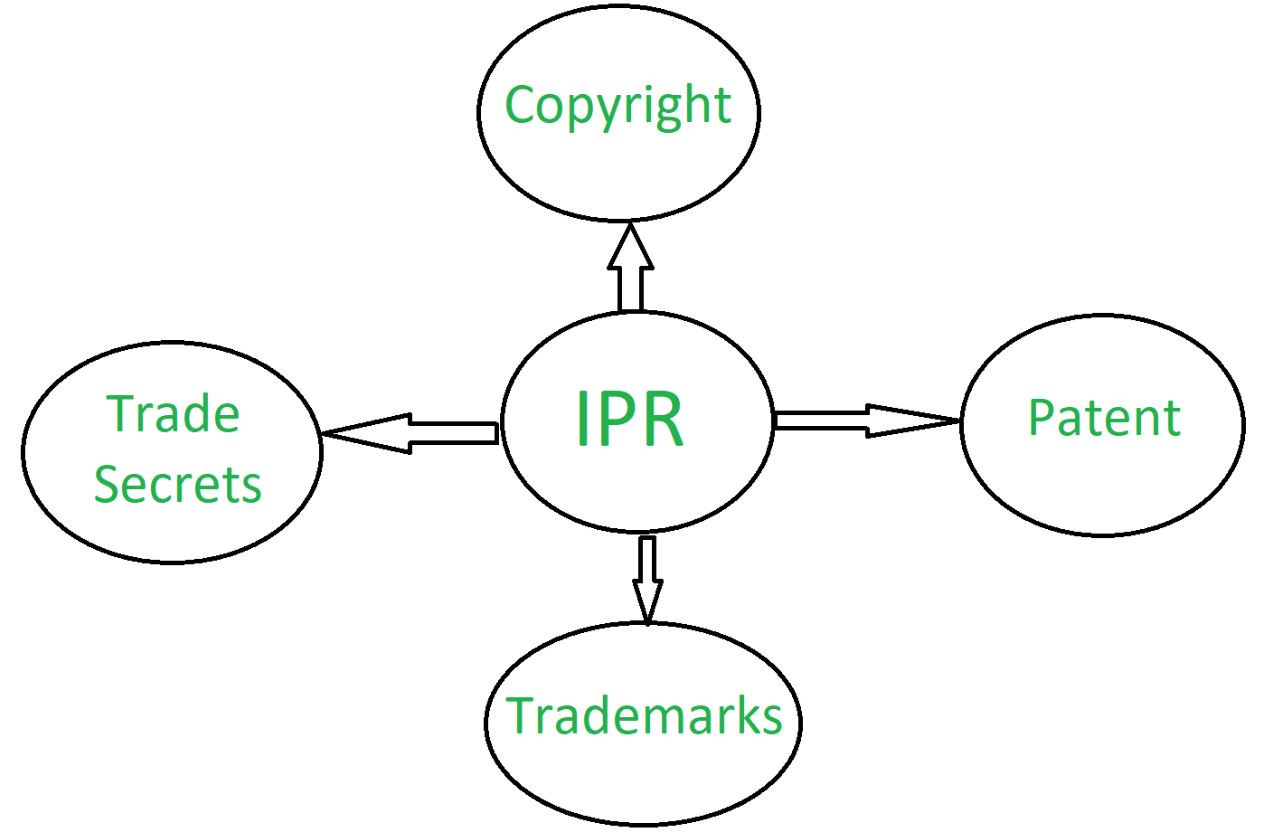
One of the scariest elements of White Label Solution Apps, as any mobile software development company would tell you, is the lack of IP rights. You have no right on anything that you have based your company’s brand image on. Everything from the code to the server belongs to the development platform from where you found the app.

In case of unexpected, unsafe future, it’s not just your brand image that is at stake, but also your users’ private data.

The fear of data security and a right on app’s intellectual property is safely mitigated when you invest in custom app development. As you are the sole owner of the app and its backend, once it’s developed.

Becomes Scalable

Scalability 101 - How to Run a Scalable Business

Custom Apps are hands down more Scalable. When you invest in a White Label Solution App, you invest in an app that comes as a whole, with no scope of expansion. Adding features or even moving them from Android to iOS or vice versa is not possible with the Recyclable Apps.

Scalability is the one feature that you can only enjoy when you are the parent of the app. Something that only the supremacy of custom app development can offer.

A Chance at Getting Updated

With white label solution, your app story ends as soon as the app is launched. With a solution that works in such isolated environment, it is nearly impossible to plan a constant update plan, without involving the White Label App developer and burning a hole in your pocket, one thread at a time.

With Custom App Development, you can easily update the app as and when you feel the need of offering something better to your customers. Unlike your white label counterparts, you can make arrangements with your Custom mobile Application Development Companies right from the stage when you decide to invest in them.

With custom, you can ensure the future of your app, the one that guarantees it will keep changing with the changing users demand

Lets you Enjoy the Perks of Automation

5 Positive Benefits of Automation in the Workplace | by Meet Sally | Medium

It is no secret how Automation makes the life of both users and developers easy. Whether it’s as simple as sending notifications or as complex as updating the attached cloud service as and when some change is made.

White Label doesn’t let you enjoy these perks as the chance of automating the app beyond what is already there is less to none.

Here were the reasons, why us and every custom app development company who works to become a brand’s partner (which only happens when you move on from just being a mobile app developer) stresses on investing in Custom Application Development.

While the internet is filled with a number of benefits, even more than the ones listed above, we have seen the approach work wonders for companies that get associated with us. Here is an example of a brand we partnered with for handling their Custom Application Development process and how they gained 23% hike in their profit margin after making the switch from White Label Solution App to our Custom App –

2. The Case of How our client Saw a 23% Increase in their Business Growth after Going Custom.

*For the sake of the NDA clause, we are going to call our Client, ABC.*

We had a client, ABC who had invested in a White Label Solution for one of their enterprise app, that they needed to streamline their business process and bring the offshore and in house team in sync, while being available to the clients in real time.

It took them some four to five months to realize that in order to become truly productive and to bring the whole team and the associated entities so in sync that it reflects in their Profit and Loss statement, they will have to let go of the app format which was already floating around in a number of companies as theirs.

It’s not just ABC that had made the move, when they contacted us through our App Consultancy page, we shared with them a number of case studies of other agencies that made the switch from White Label Solutions to Custom App Development.

Here are some of the ways Custom Application Development helped their case.

Reduction in Efficient Tasks

9 Ways To Make Team Work More Efficient • Asana

One of the biggest challenges they were facing with their recyclable app was that their team outgrew the set of features that they were given as part and parcel very soon.

After continuing with the same set of processes, even though the employees were now manually doing the tasks that should have been handled on the app, for about 3 months, ABC started seeing visible signs of low productivity.

Once we developed the app according to the exact needs (we added features to not just meet the present needs but the ones that they would come across in the time span of next 5 years), their quarterly performance report showed a reduction in inefficient tasks and a rise in ROI from their application – All in terms of productivity measures.

The Rise in Employee Collaboration

Everything You Need to Know About Employee Collaboration | elcom

The feature of giving real time data of software order received by the offshore sales team to the product team based in Bengaluru was missing in their app (it was a feature in the upgraded version of the white label app that they had selected. But they hadn’t opted in for it). The process that they followed was that the sales team use to be a collaborative report of orders and specifications and used to send it over by the end of the working day, everyday.

There was an evident miss of collaboration between the in house and offshore team. It took them 20 misinformed software configuration delivery complaints to realize that they needed a real time update solution.

After getting their Custom App developed, apart from the visible reduction in number of complaints related to late or incorrect software delivery, they even saw a rise in the collaboration among the team and an increase in customer satisfaction.

Rise in Customer Communication

Three Ways Effective Communication Improves Customer Satisfaction

The process that ABC was following was that they were sending out feedback forms after the completion of an order and if in case they got any negative feedback, they used to handle it over call. On more than 5 incidents, it happened that they failed to tell their customers that the issue has been resolved, even when they were.

Through our custom app, we gave them a platform where they made a rep active on even the off hours and then implemented an auto mode of sending feedback reports after every decided milestone. Both the steps brought in timely communication and redressals.

Greater Usage on Multiple Devices

Do Multiple Devices Affect Internet speed? | Asianet Broadband

The application that ABC had chosen was unresponsive to PCs. We know that enterprise apps cannot operate on just one device – Mobile. It needs to be workable on PCs, Tablets, and sometimes even Wearables.

And we brought the app on exactly all these devices that the team were using. For this, we first made a list of devices – OS, Versions, and Device Type that were operational in the team and then made a deployment plan accordingly.

Came Points Above Their Competitors

In the business mobile app development scenario, it is not uncommon to see an inclination towards white label solutions apps, as it is a common belief that the included features won’t have any drastic changes. This was the notion that made ABC invest in a white label solution, without thinking that every business operates differently and have different processes and tracking systems to follow.

After integrating the app with their exact business needs, ABC in their semi-annual report witnessed an increase from their competitor’s growth sheet. While there were other reasons behind this as well, they attributed it to the custom mobile app development services that they invested in, to a great extent.

The numbers that their reports showed were only an atom in front of the various quantifiable and unquantifiable benefits ABC drew when they chose to let go of their White Label Mobile App for a Custom made Solution.

So here, you have the proof that Custom iOS App Development and Custom Android Development supersedes White Label Solution Apps when you invest in a knowledgeable mobile software development company. Are you ready to make the one time investment in your future? Need more Clarifications? Contact Our Team of Mobile App Experts, today.

iOS vs Android: Know the More Secure Platform in 2021

Five good apps that work on both Android and iOS | ZDNet

While the Android vs iOS war is the one that continues to break the internet, the ultimate deal-breaking element for both the app users and the brands boils down to Mobile App Security.

How secure a mobile app is what determines its future in the present world where users are conscious of increasing data breach cases. But, is it something completely dependant on the quality assurance techniques that developers invest in?

Well, the answer is no.

Irrespective of how long it took to develop a mobile app or what methodology you followed in development, the ultimate result differs with various factors including, the operating system you choose.

Because of this, many developers are asking the question, “Android vs iOS: Who wins the title of higher security in 2021-22?”

When we talk about iOS vs Android security, the unprecedented winner has always been iOS, with its stringent security guidelines. But with Android Q, Google gave out an array of hope in 2021, that hinted towards it being on the verge of becoming a brand one can trust with their devices and personal information.

Will 2021-22 be the year when Google’s Android will emerge out as the secure one out of Android and iOS ecosystems?

Before we get into the Android vs iOS Security comparison 2021 lookout and let us first look at the prevalent security difference between iOS and Android.

Here are the comparative elements that cover both the Operating System Ecosystems, comprehensively.

The Security-inclined Points of Difference in Android and iOS

1. Boot up process

Start Up Your Project Concept With People Working On Rocket Launch Development Process Innovation Product Creative

Android platform, as any Android app development company would tell you offers Linux Kernel and Inter-Process Communication facility, security level. Coded with Application Sandbox, the platform gives a verified boot guarantee in which every stage cryptographically verifies the integrity of the next stage before their verification.

Android verifies the boots with the help of the dm-verity kernel feature that makes it impossible for the compromised device to boot.

While this was about Android, iOS offers the security level with Low-Level Bootloader(LLB), iOS kernel, and iBoot. LLB is primarily verified by Apple Root CS Public Key using the Boot ROM program to make sure that the iBoot Bootloader has been signed by Apple. Next, iBoot then verifies and executes the iOS kernel.

2. Security Software Update

6 Essential Software Upgrades When Buying & Selling Websites - Flippa

Android offers monthly updates in its Android Security Bulletin. Even though Android gives out updates once a month, they don’t force the users to update the devices. The option to ignore the update and operate the device, in the same way, gives an escape plan to the users thus opening the android app development services to a certain probability of security breach.

Apple rolls out several versions of security updates every once in a while in a month. Apple makes it a mandate for every user to download the most recent security upgrades. By giving out continuous notifications, the OS makes it difficult for its users to ignore the security upgradations. Something that brings everyone to the conclusion that the winner of Apple vs Android security efforts is the former one.

3. Touch Id

While Android has recently started partnering with manufacturers who are offering  the Fingerprint Scan option, the number is still very limited.

This is not the case with Apple. Apple has always been very particular when it comes to biometric verification on their devices. It is not just for Touch ID, Technologies like Iris Scan and Face ID have also been coined by Apple first. The OS giant, keep investing millions in security-focused technologies.

4. Hardware Integration

Hardware Integration - mojikllc

Unlike Apple, Android app security related to hardware depends entirely on the manufacturers. While some are good at keeping a handle on the fact that all the Android’s built-in features related to security work well on their device, others might give it a lesser priority. Generally, the devices which belong to the prime categories in terms of cost come with greater security backing than ones that are low price point products.

On the other hand, Apple has full control over its hardware security. This makes it undeniable to think that ios app development services will win the iOS vs Android security 2021-22 comparison.

5. Device Fragmentation

The greater the fragmentation, the greater the chances of introducing loopholes that are a comfortable space for heightened hacking and data breach incidents. By keeping both its device and operating system version on a lower side, Apple reduces this probability of an ios app development company facing hacks issue, by manifold.

But the case is not the same with Android. Both – number of device variants and OS versions are on a very high side in the platform, giving an open ecosystem to hacks and breaches to breed in.

6. App Stores Story

Apple undoubtedly has greater control over the apps that come for approval and their updates. The brand takes its right to vet, reject, and remove every app that doesn’t meet its criteria, very seriously, the fact that has brought in demand for such iPhone app development companies, which can develop apps that don’t get rejected.

Google, for a long time, overlooked the necessity of following stringent rules while approving an Android app. But, now it has taken major steps.

Besides encouraging developers to focus on security in Android app development, Google employed Machine learning to detect and remove malicious applications from the Play Store in 2017. And now, it has announced that the approval time on Play Store will be high so that every piece of the application could be tested thoroughly before making it live.

However, since Android is an open ecosystem, which emerges out as bliss both users and hackers, the impact of these actions on security breach incidents is high. After all, apps can be downloaded from stores other than the Play Store.

While this is the picture that has always remained, what does android vs ios 2021 look like for the two OSs on the security front?

Let’s find out.

Android vs. iOS: Which OS is Safer in 2021-22

In an article concentrated on iOS vs Android security comparison, it is essential to look at the matter with all specificity especially with the latest OS versions in focus. Let us first look into the new privacy features coming with iOS 14 and Android 11 before moving to the four key deciding factors.

iOS 14 Privacy Features 

iOS 14 Privacy Features: Approximate Location, Clipboard Access Warnings, Limited Photos Access and More - MacRumors

iOS 14 has come with a series of privacy update changes reinstating it as a security-first platform for the users and businesses as well. Here are some of those updates –

  1. Changes in IDFA – The iOS app developers will no longer have access to users’ data until they specify that they are permitting the applications to use their information for promotion and marketing purposes.
  2. Changes in location sharing – Users will now have the ability to opt-out of offering precise location sharing. This way the apps and marketers will only get an approximate location of the users.
  3. Privacy report – Apple will now send users a privacy report containing details of which apps are accessing their data and for how long.

Android 11 Privacy Features

Android 11 security and privacy changes you need to know - SlashGear

  1. Changes in permissions – The first time you open any new app you will be given three options in terms of permission – All the time, only when using the app, never.
  2. Permission revoke – Android will keep a track of the applications you haven’t used in some time and it will revoke the permissions you had given it. This way when you open the app after a break, you will have to give it permission again.

Now that we have looked into the new additions of Android vs iOS privacy in the new updates, the next step will be to measure them against the other common factors and come to a conclusion.

Let us compare both the OS on the basis of four important factors –

Marketplace Security

How Atlassian Is Putting Cloud Marketplace App Security First

The fact that the Play Store is so much wider than the App Store comes as both a blessing and an issue. While on the one hand, the wideness gives Android users a wide option to select from, it also gives the hackers a great opportunity to leave malware apps in the crowd of millions.

Apple, on the other hand, keeps a close look at the App Store. The level of inspection that every app needs to go through reduces the available option for the users, lowers the chances of malware attacks to minimal.

This comes up as a reason why the iOS vs Android, which is better war is always won by the former.

Platform’s Popularity

The Importance Of Social Media For Your Business - Digital Blog - Fifteen

Android, undoubtedly holds a massive share of the world smartphone market, a number that is practically impossible for Apple to ever cover.

Now greater the platform’s popularity, the greater is the number of users attached and thus greater are the chances of a security breach.

However, it is not sound to give Android app security lesser points just on the basis of its high popularity. Because of the growing number of users, the Android app developer community has started giving greater focus to introducing the best mobile app security practices and deliver a hack-proof app.

Device Manufacturers’ Count

If there is one reason why Android is 100% lying behind Apple in terms of ‘Android vs iOS security’ is the hacks caused because of high device manufacturer count.

Because different devices come with a different focus on Security protection features, it is impossible for Google with thousands of devices under its umbrella to lay out a common set of protocols for every single one of its partnered OEMs. A problem that Apple never has to face because of its concentrated control on the device manufactured.

Source Code Security

Source Code Review

Both the operating systems make use of very similar security features for keeping their users safe but while Apple keeps a close watch on the source code and has functionality like SSL Pinning in iOS, the open-source nature of Android makes it difficult for the OS to do so.

To solve this gap, Google has not just employed hackers to identify the source of attack but is also increasing its bounty that the brand is willing to pay for those who report new vulnerabilities, year on year.

While on the Apps front, hoping to get a clearer sense of security in Android, Google has introduced ‘Google Play Protect’ in the Play Store. This element that entered the market with the advent of Android O behaves like a virus scanner for the Android apps, ensuring that harmful content does not get downloaded on your device, a move that has come as a major relief for Top Android App Development Companies that have been crumbling under the growing malware attack prevention pressure.

Even though Google is getting online with its Play Store Security, the story of its device update is rather on the downside in the android security vs ios security debate.

The brand will continue to push out its Android Security patches month by month. But while Pixel and Nexus users might get the updates on the spot, other phone manufacturers might continue to delay or even skip the updates completely. With thousands of Android devices running years old software, they will continue to be vulnerable to major hacks such as Stagefright and Heartbleed.

2021-22 will see speedy updates taking a prime position, with the past year witnessing some of the major security breaches,(remember what happened with Uber Data Breach?) placing security breaches on the forefront. If you don’t have a stock device, Android is already behind in the updated world.

Apple, on the other hand, has been working on continuously taking security to the next level in 2021, especially with its Touch ID and the FaceID. The stringent oversight that the brand has on its apps added to their ability to send out updates to their devices quickly has given the brand a sure-shot edge over its competitor. The brand even  takes measures to encrypt all the data in the iMessage and Apple’s other apps.

While Android also encrypts some data, users’ privacy will continue to be protected to a very little extent. To make its marketing efforts better and to offer a superior AI experience, Google will continue to mine data for information in 2021.

In spite of the fact that Android will be introducing new features on its Security front in 2021, iOS will win the title of Android vs iOS app security comparison this year too.

However, at the crux of the Android vs iOS which platform is the most secure debate lies the fact that the security ultimately depends on the users. Here are some things that we ask all our clients to remind their end-users in the app –

  • Use native app stores
  • Don’t download an app without verifying safety
  • Update the OS versions as and when they come
  • Set up a remote wiping facility
  • Switch on multi factor authentication

Frequently Asked Questions about Android vs iOS Secure

Q. Which is better, iOS or android?

The answer to this question depends entirely on the factor you are focusing on. If you consider customization, Android is better than iOS. But, in the case of security, Android lags behind iOS despite putting the best effort into place.

Q. Is iPhone more secure than android?

Though both Apple and Google are coming up with the best privacy and security practices, Apple’s iOS is still leading the show. iOS has 20% less critical vulnerabilities than Android, according to mobile security statistics.

Q. Which is easier to hack: iPhone or android?

Since Android runs on the hardware designed by different manufacturers and is an open ecosystem, it is easily hackable when compared to iPhone.

Rapid Application Development in Business: Benefits


What Is Rapid Application Development (RAD)?

Not every brand has a six month to year time frame for getting their application launched in the market. It might happen that the app idea you have come up with, has the potential to attract a lot of competition from the industry.

So what do you do? Do you compromise on quality and deploy an app that is a peek into your concept? Or do you extend your time and increase the probability of coming face to face with greater competition?

None of it.

We get a lot of queries from brands looking for strategic mobile app consultancy for finding ways to deploy apps in the least possible time, without compromising on the app quality or paying hefty amounts. The solution that we offer them is, – Rapid Mobile Application Development Platform.

This article is dedicated to the concept where we will be looking into the various phases and characteristics of rapid application development using the RMAD model.

What is RMAD Model?

Rapid Application Development: Advantages and Disadvantages – NIX United

Rapid Mobile Application Development (RMAD) means using code free tools to expedite the process of creating mobile applications.

RMAD can be seen as the mobile version of RAD model, which is based on a concept that high quality products development can be expedited by using processes such as reuse of software components, early prototyping, and lesser formality in team communication.

Phases of RAD

What is RAD Model? Phases, Advantages and Disadvantages

  1.       Business Modelling
  2.       Data Modelling
  3.       Process Modelling
  4.       Application Generation
  5.       Testing and Turnover

1. Business Model

The main business plans are decided and their need of achievement is determined. The sort and flow of information are settled between various business models. The questions regarding what information will be required to choose the kind of data structures and how the communication gap bridges between various business administrations be set up is resolved during this process.

2. Data Modeling

The next stage includes review and analysis of information objects as compared to the business model. The credits of these data collections are characterized and their relevance to the business is plainly mapped out.

3. Process Modeling

The data sets and business models are adjusted to create a flow of information for different business models. The process for development and change, both are determined. In this stage, the process structure for adding, erasing, changing or retrieving a data set are set up at one place.

4. Application Generation

In this model, automated tools are utilized for the construction of the software, that is to convert the processed and data models into prototypes

5. Testing and Turnover

RAD is famous mostly because of its focus on the testing and turnover. Each prototype is tested by the user and every feedback is used to optimize the current structure and integrate changes as per the feedback.

For a brand that is looking for a smaller launch time and has a low feature mobile app, Rapid Application Development (RAD), with its USP of delivering quality apps in the least possible time, comes in very handy. There are a number of reasons that come attached with this that has brought in a demand for RMAD among the businesses.

Let us look at some of the pros and cons of rapid application or low code no code app development that is turning brands into the direction of the in-trend approach.

Benefits of Rapid Application Development

1. Quick Delivery

Can Losing Weight Make You Run Faster?

Under the Rapid Mobile Application Development Process, the whole project is segregated in modules, which are treated as an individual prototype. Each of these prototypes are tested instantly, before being winded together. This helps in faster delivery of an app which is tested to ensure lesser bugs.

The primary benefits of RAD is a faster development life cycle, and a better turnaround time of the software product. This is achieved by rapid prototyping, and by using automated tools like Computer Aided Software Engineering or CASE tools, that enable the developers to re-use previously generated codes, thus saving the time needed for manual coding. The CASE software tools are a major contributing factor in reducing the delivery time in the RAD methodology.

2. Fast Action on Market Analysis

A Comprehensive Guide to Market Research: 4 Proven Methods | Hotjar Blog

Since every module is treated as a separate prototype, brands can easily get it reviewed by the end users, without having to wait for the final product to be launched. Also, since changes are to be made on one module out of the supposed 5, the maximum portion of the app remains unchanged.

3. Reduced Waste Time

Real Life Examples of the 7 Wastes of Lean (Plus 1)

When developing mobile apps, it is found that the elements like wait times, task switching, handoffs, and defect solving contribute to extension of the app development cycle time.

The RAD process comes with rapid app development tools that help with visual development, on the spot testing and deployment. All these processes and supporting tools together bring substantial reduction in waste time.

4. Better Quality and Low Production Cost

7 WAYS TO REDUCE MANUFACTURING RELATED QUALITY COSTS

Even though the Rapid Application Development Process comes with compromises related to range of features in the app and its scalability, the overall quality of the app is better when compared to their counterparts.

Since they provide greater reduction in error by using prototyping and automation tools, there is a reduction in errors and bugs.

One of the advantages of RAD model involves the use of reusable software components, which ultimately leads to lowering the cost range that goes into the programming of the mobile app.

5. Aligned IT and Business Teams

Why Your Company Can't Afford To Ignore Team Alignment

IT professionals across the globe admit to spending half of their time on rework. The occurrence of rework happened because of the change in views between the IT and Business Team. Rapid Mobile Application Development eases the process by bringing both the IT and business together, in all the processes – Requirement Analysis, Development, QA, and Production (As shown on the right side of the image above). Since the method works on bringing development and validation to operate side by side, rework is immensely reduced and cost overrun is protected.

6. Faster Release of Product Versions

Rapid Mobile App Development makes use of a method known as timeboxing, which controls the features that are to be deployed in the present, and the next-level versions of software products.

The method helps with releasing product versions in the least possible time, by keeping the next version features added in the app development process.

7. The Innovation Pyramid

As of recently, businesses have observed the advantages of RAD just at the application level. However, RAD benefits are significantly more noteworthy at the enterprise level. To get that, you need to look at enterprise applications from the point of their rate of change, as clarified by Gartner in their Pace-Layered Application Strategy. Gartner has characterized three application categories, or “layers,” to recognize application types based on their rate of change. A close examination uncovers that these layers likewise indicate the extent of focus and financial plan traditionally accorded by undertakings.

Parting Words

So, here were the seven benefits that have brought Rapid Mobile Application Development in the business decision of brands looking to develop quality apps in the least possible time.

Want help with expediting your Mobile App Development Process? Contact our Team of Experts today, or Hire a well-known mobile app development company, who knows the ins and outs of the development process.

If you are looking to develop an app with an up to date and all the latest technologies of the current time, you should partner with known mobile app development services that are well-adapted with the changing market needs. You can also opt for remote companies like mobile application development company USA. But make sure you choose the best to get quality results.


Have you launched and deployed an app following the RMAD process? Let us know in the comment below.

Implement Multifactor Authentication in a Mobile App

Using Multi-factor Authentication (MFA) with Microsoft Authenticator | Mirazon

Multifactor Authentication is the need of every business that works around sensitive data and users’ personal information. The system adopts a layered approach for security, which makes it difficult for individuals to gain access to the data.

By providing an extra level of security besides the phone password, Multifactor Authentication System (MFA) has become the must-have feature of apps related to payments, enterprise apps related to viewing or retracting data from the cloud.

Let us take a deep dive into the concept of MFAs, highlighting the four ways you can implement Multifactor Authentication in your mobile app. We will also throw some light on the challenges, both technical and user-specific, that you should prepare to be encountered with.

But, before we go in further, let us look at what Multifactor Authentication System actually means.

What is Multifactor Authentication System (MFA)?

Deep-dive to Azure AD MFA: Creating a custom authenticator app

Multifactor authentication or MFA, as it is commonly called, works around providing an added layer of security that ensures that users are providing more than a single piece of evidence for their identification. It usually requires a blend of something which the user knows, like pins, passwords, something which the user has, like cards, phone, or something that they inherit like a Fingerprint scan or Retina scan.

Now, there are four ways through which you can implement MFAs in your Mobile Application. Let us look at each of them in terms of the process they take the users through.

Ways to Implement Multifactor Authentication in a Mobile App

1. Time-Based OTP

Time-based One-Time Password (TOTP) Makes Streams Secure | by Ant Media Server | Medium

OTP comprises the creation of a one-time password from a shared secret key and the present timestamp with the help of the exact type of cryptographic function. OTP involves the enrollment and login processes.

Here’s a detail on both the processes –

Enrollment Process:

  • Users log in to the app with their passwords and username
  • If the credentials are found valid, the next stage is to enable the two-factor authentication
  • The shared key is then requested, which can be either text-based or QR code
  • The key is stored by the app which implements OTP like Auth0 Guardian or Google Authenticator.
  • The two-factor authentication is then enabled.

Next comes the Login process:

  • User logs into the app
  • If their credentials are valid, they are directed to a form where they have to put in one-time code generated with Auth0 Guardian or Google Authenticator
  • The server then verifies that the code is valid and authenticates the user

2. SMS

Microsoft urges users to stop using call & SMS-based multi-factor authentication | ZDNet

The process of multifactor application through SMS also involves enrollment and the login stage.

Enrollment Process:

  • User logs in to an application with username and password.
  • They are asked to enter an active phone number
  • A distinctive one-time code is then generated on the app server and is sent to the user’s phone number.
  • They then enter the code in-app, thus enabling multifactor authentication

Login Process:

  • User logs in to the application with their user-id and password.
  • A distinctive one-time code is then generated on the app server and is sent to the user’s phone number.
  • The user enters the code in-app.
  • If found valid, the user gets authenticated and the session gets initiated.

3. E-Mail

Multi-Factor Authentication -

  • User logs in to an application with their user-id and password.
  • A distinctive one-time code is then generated on the app server and is sent to the user’s email id
  • They retrieve the code from their email and feeds it into their app.
  • If found valid, the user is then authenticated and the session gets initiated.

4. Push Notifications

OneLogin Protect: One Time Password (OTP) Generator App

  • User logs in to an application with their user-id and password.
  • Usually, the push notifications mechanism works with applications like Auth0 Guardian. Once the details are entered, a push notification is then sent by the Guardian app to your app.
  • The notification is a login request.
  • On the backend, this includes data like the OS, application name, and browser used while making the request, the precise location, and the date when the request is being made.
  • The user then asserts the request they have received through push notification and gets logged in.

Now that you know the ways you can implement MFAs in your mobile app, let us look into the challenges that come associated.

Challenges Associated with Multifactor Authentication System

It is very difficult to implement the system in your mobile app without the support of a Mobile App Development Company that specializes in providing extensive quality assurance in terms of mobile app security. While this is from the business front, every added security layer comes with more work for the users. It can lead to frustration when users are made to repeat multiple steps every time they have to do a task.

But the challenges that the system comes with are very minimal in front of the benefits that they have to offer when it comes to giving the users a safe transaction environment, amidst the soaring data breach incidents.

Want to take your Mobile App Security to the next level? Contact our Team of Mobility Experts, today.

error: Content is protected !!