Deep Linking in Mobile Apps in 2019-2020: A Complete Guide

A Brief History Of Deep Linking | TechCrunch

Not many people are familiar with the benefits of mobile app deep linking but the truth is there are benefits.

The technique not only provides better user engagement but also helps in tracking the most effective campaigns.

In this blog, we will talk all about deep linking in mobile apps and much more. Let us begin with a general idea about deep linking in mobile apps and then move on to further segments.

What is deep linking?

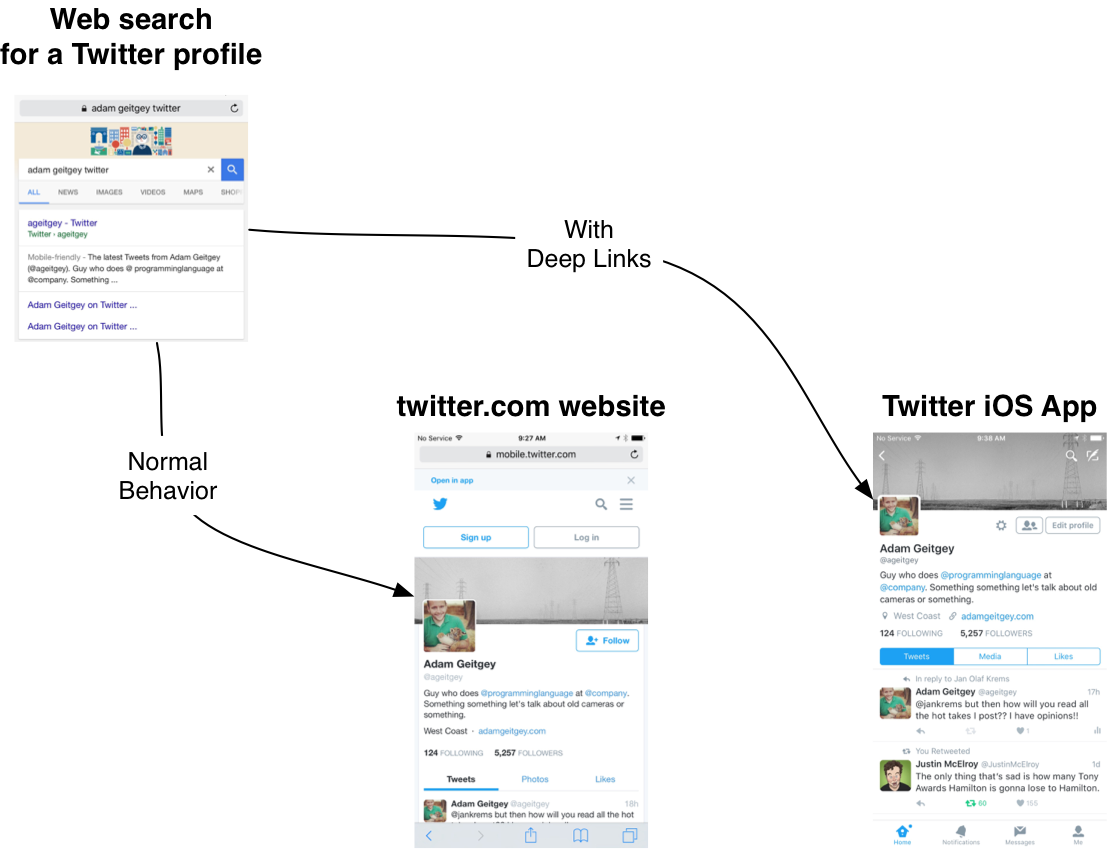
Technically, a deep link is any link that takes a user to any specific content. Deep links are used within mobile applications to locate specific content. Almost all the web links are deep links. Deep links will not only open your app but also will use the information in the link to perform a specific action.

For instance, if the link to your Facebook profile is fb://profile/, then the Facebook app will be launched and will open your profile. This is how deep linking functions. It does more than just launching an app when a link is clicked.

What are the different methods of deep linking in mobile apps?

Deep linking apps may have more than just one method. Deep links with apps provide a solution to the problem that has been bugging the users for a long time now. So basically, web links didn’t work with native apps and whenever the link to a certain product from an app was clicked, the web browser was launched. But when mobile deep linking is done then the link straight away launches the app on the specific page.

Here are some different ways mobile app deep linking is done:

1. Traditional deep linking

What is Mobile Deep Linking? How Deep Links Boost App Engagement | CleverTap

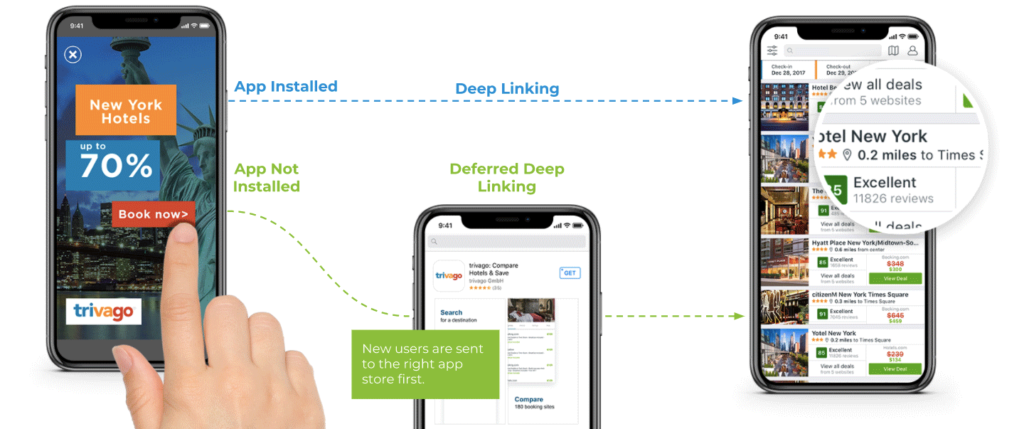
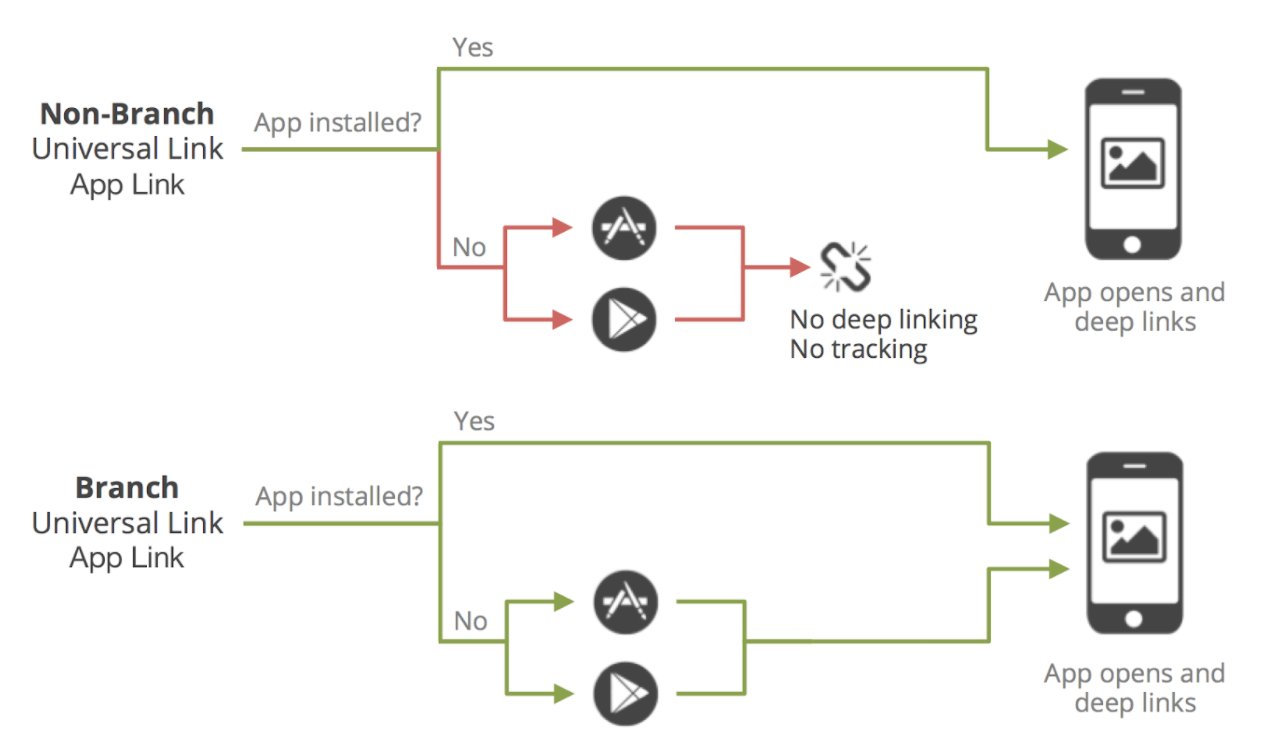
Traditional deep links work as long as the app is already installed when the link is clicked. When a user clicks on the link, the device will open the app and not the web browser. If a user does not have the app installed already then the result will either show error or an alternative page.

2. Deferred deep linking

Deferred Deep Linking: Why it's a Game Changer | AppsFlyer

As the word ‘deferred’ suggests, this method of mobile app deep linking directs the users even when the app is not installed. With deferred deep linking when users without the app, click on the link, they will be directed to the app in the Play Store or App Store. Once the app is installed then the user will be taken to the specific content immediately post the first launch.

3. Contextual deep linking

Contextual Deep Linking: An Early Advantage | The Branch Blog

Contextual deep links have all the functionality of deferred deep linking and more. In this method of deep linking app, information about the users’ desired actions is stored. Information like where the user wants to go next, who was the original sender of the link and many other custom information is stored.

This type of linking is great for both users and developers. The developers can build amazing content with personalized messages and the users get better user experience.

4. Custom deep links

Custom deep links or custom URI schemes were the original way of deep linking. These links act as a private internet for the app, giving users a better experience. The advantages of using URI schemes is that they are easy to set up and most of the apps already have it.

URI scheme deep linking is still used for deep linking Android but for iOS app deep linking is no more done with this method. Apple blocked this method in 2015 when it launched the Universal Links for deep linking iOS apps.

5. Apple iOS Universal links

Everything you need to know about implementing iOS and Android Mobile Deep Linking | by Adam Geitgey | Medium

The custom URI schemes had a lack of proper fallback functionality which is why Apple blocked in 2015. With iOS 9, Apple launched Universal Links that locate the content on a web page or in the app. What iOS does when a link is clicked is that it checks for any apps associated with the link. If yes, then it launches the app and if no, then the link is opened in Safari. In a study, it was found that Universal Links have increased the conversion to open by 40%.

6. Android links

Add deferred deep links to your android app by Spencerdepas | Fiverr

Google also created App Links to match the iOS Universal Links and has somewhat the same functionality. The link leads to both webpages and apps depending on the presence of an app in the device. But since Android still has URI schemes running quite well, developers aren’t adopting the App Links that much.

There are innumerable benefits of using deep linking for your app and by now you might have already figured out some of them. Even though the adoption of deep links was quite slow in the past because of its unknown benefits yet it was still being used. And today the benefits are said to be the reason why deep linking is even considered for mobile apps. Here, we will lay down some benefits of deep linking app.

Why use Deep Linking for your app?

1. Enhancing the user experience

How to blend User Experience with SEO to Get Better Website?

It wouldn’t be a surprise to know that deep linking plays a part in enhancing the overall user experience of an app. As much as the UI is important for an app, deep linking is an integral part of it. Users have the freedom to access content via deep links on the app or the web page.

2. User retention, usage, and engagement

8 Mobile App Retention Strategies For 2021 [With Examples]

What is a deep link to an app? Speaking non-technically, it is a way to bring in more engagement, ensuring high retention and high usage. As seen in the graph above, apps having deep links have more activation rate and more app visits. When compared to apps without any deep links, users are less active and the app has a low engagement rate.

3. User onboarding

User onboarding: 11 best practices and 15 examples - Justinmind

Deep links with apps help developers in personalizing the onboard experience. If we take the case of contextual deep links, a developer can easily create personalized application invitations or may as well include some incentives in the user onboarding flow.

4. Re-engaging users

Re-engaging Lapsed Users Via Rewards

It is very important for an app to have active users but sometimes there are inactive users. With deep linking, you can direct those inactive users to specific content or page on your app which will result in more active users. Sending deep links with push notifications is a great way to do that.

5. Marketing benefits

The Unexpected Benefit of People-based Marketing | MarTech Advisor | MarTech Advisor

Deep linking can help in increasing the sales and revenue of a company. The thing with deep links is that they can direct users to any page of content from the app and that is why this can be strategically used to generate more sales. An e-commerce app can use deep links to send notifications about the latest deals and offers and direct users to the offers section.

6. Effectiveness of campaigns

How to Measure Marketing Campaign Effectiveness | Salesfusion

As we saw earlier that contextual deep linking stores custom data about users and their behavior on the app. This information can be used to see which campaign and sources are most fruitful for driving audience or increasing engagement and sales.

When you shouldn’t go for deep linking apps?

A Comprehensive Guide to Deep Linking: Making It Work for Your Mobile App - GetSocial

Is deep link service for everybody to go with? Well, the benefits are compelling enough to go for it. But it does not mean you should always go where the benefits have an edge. Deep linking may not be the wisest choice for many app owners.

The reason why deep linking apps may not be the right choice for you depends on the app you have. If your native app has poor UI/UX or has a lot of glitches, you can spare your users the trouble of going through such an experience.

The only reason you should be using deep linking in your app is if the app experience is better than the web experience. If not, then it will not be the best decision.

Apps that are totally focused on the industry it is in and has the need to push notifications, filtering search results, etc. should have deep linking. It will be of great use if users find more comfort in shifting from a webpage to an app and that can only happen if the app is worth it.

So, how to use deep linking in mobile app?

Deep linking can be used in both iOS and Android apps. The condition for iOS apps is that deep links are supported in iOS 9.0 and above versions whereas all versions of Android support deep links.

Let us show you the different ways deep linking is done.

1. Mapping out URLs from the website for the app

Instagram Link in Bio: How to Use It to Drive Traffic | Sprout Social

The first step is to map out the URLs you will be using in your app. You have to make a match of which specific URLs of your website will represent what pages in your app. Also, keep in mind that not every link needs to be mapped.

For instance, if your website has a Blog section then you don’t need to direct users to app for reading a blog. Whereas, you can direct users to your app if they search for any products. It is very important to understand here that users should not be forced to visit the app.

One thing to keep in mind is that the users should only be directed to the app if you can show what they have been looking for. There is nothing worse than an annoyed user who may never return.

2. Universal Links for iOS

Apple Universal Links

By now you know that Apple uses Universal Links for deep linking iOS for version 9.0 and above. The Universal Links not only provide a better user experience but also has good compatibility with the iOS 9.0.

It is recommended that you don’t implement the support for iOS 8.0 and below since it’s not going to be worth the effort. This clearly means that deep linking won’t work for any user having iOS 8.0 or below. However, Apple reported that 83% of iOS users have upgraded their iOS to 12.0 so it shouldn’t be much of a loss. In fact, this number is growing rapidly in the US and Europe.

To implement the iOS Universal Links, follow the steps:

  1. Decide what links will launch the iOS app and represent what products on it. For this, you have to create a file on your website such as https://www.example.com/.well-known/apple-app-site-association. This basically informs Apple that the app is yours and therefore it should intercept all the links to products and pages.
  2. The second stage will be updating your iOS app so that it can respond to all the changes being made and can receive the links.

And voila! Your iOS deep linking into the app is done.

3. Android App Links

How to Redirect Links on Android to Open in the App You Really Wanted « Android :: Gadget Hacks

Android has been using the deferred deep linking Android for a long time. But they launched the App Links in Android Marshmallow 6.0. To implement the same in your follow these steps:

  1. To get your website verified by Android, update your AndroidManifest.xml file.
  2. Create a file on the website such as https://www.example.com/.well-known/assetlinks.json which will prove to Google that the app is yours.

And the deep linking for Android is done!

The last and most important step is to promote your app as much as you can. Users will be directed to your website if they don’t have the app therefore, promoting the app becomes the primary job once deep linking is done.

This is our take on deep linking mobile apps as an app development company. Contact our team of developers at Anteelo to know more.

What Happens When Blockchain and AI Collide?

Why Artificial Intelligence Needs to breath on Blockchain ? | by Salman Saleem | Medium

Blockchain technology is one of the driving forces in the world of innovation. It has revolutionized various industries, including Healthcare, Supply chain, Mobile app, Retail, Real Estate, and Finance by adding a layer of security and transparency into their processes. And on the way, it has become one of the most loved technologies by Entrepreneurs.

Artificial Intelligence has also made a similar impression on the business world. The technology, in the form of Chatbot, has revamped the traditional businesses and upgraded the customer experience. It has established itself as a core part of every business – be it finance, travel, retail, healthcare, real estate, or mobile apps.

Both Blockchain and AI have set the foundation of a new business era in one way or the other. But have you ever wondered what will happen when the two technologies will converge? Will their coexistence fit into the industry world? Will they improve the economy or make it worse?

Before we dig deeper into how the fusion of two technologies will appear and how it will change the face of businesses, let’s have a quick glance at what importance does Blockchain and AI holds in the present market.

AI and Blockchain – A Brief Introduction

Artificial Intelligence is the technology that makes machines smart enough to mimic human intelligence and perform tasks on their own. The technology, with its impressive features, has brought a paradigm shift in the business world – making everyone understand why investing in Artificial Intelligence is the need of the hour.

The technology is expected to continue making a major impact on the business market as shown by the following statistics:-

  1. The global market for Artificial Intelligence will be of worth $190 billion by 2025.
  2. By 2019, 40% of digital transformations will be done via AI.
  3. AI-enabled voice assistants will hit more than 4 billion devices across the globe by this year.
  4. Companies relying on AI data will take $1.2 trillion a year from non-insight driven firms by the year 2020.

Blockchain, in layman language, is a distributed ledger that stores all the transactions in nodes in a transparent and secure manner. The technology, with its exciting characteristics, has disrupted the business world in numerous ways and made everyone interested in going through this digestible guide to Blockchain app development.

Blockchain has also demonstrated a wider future scope as depicted from the statistics:-

  1. According to IDC, $11.7B will be spent on Blockchain by the year 2022, with a compounding annual growth of 73.2%.
  2. 69% of banks across the globe are experimenting, and around 90% of North American Banks and European banks are investing in Blockchain development solutions to make their processes seamless, secure and transparents.
  3. Banks and Finance firms are predicted to save around $8-12 B annually by embracing Blockchain powered decentralized finance solutions.

While we have covered the basics of AI and Blockchain, let us bring Big Data in the mix too, to gain a better understanding of the relationship of the two disruptive technologies.

So, here we go.

The Trifecta Factor: AI, Big Data and Blockchain

Bangalore Artificial Intelligence, Big Data, Blockchain, IoT (Bangalore, India) | Meetup

Big Data prepares the ground for the advancement of both AI and Blockchain. It empowers businesses and blockchain app developers to accumulate a heap of data into structured components.

This data is further employed by AI-powered machines and applications to understand the user behavior and deliver personalized customer experience. Whereas, Blockchain relies on Big Data to get the analyzed data that can be stored in its distributed ledger and made accessible to people, depending on if it is on a public or private network.

With this, we have taken a quick recap of the basics of the disruptive technologies, let’s jump directly to how they complement each other – beginning with impact of AI on Blockchain industry.

How AI Can Change Blockchain System?

Though Blockchain has proven to be the finest technology in the marketplace to invest in, it also has some limitations. The answer to how to combine AI and blockchain will lead Artificial Intelligence in the scenario to emerge out as the right solution to make Blockchain a perfect evolution in the following ways:-

1. Better data management

6 Tips for Making Better Data Management Decisions

Currently, Blockchain relies on hashing algorithms for data mining. These algorithms work with a ‘brute force’ approach where the algorithm strives to find every possible combination of characters until the one that goes with the verification process is found. This complicates the whole process and demands higher efforts.

This feature of artificial intelligence can give an escape from this approach by providing a more intelligent approach which makes the data management process seamless.

2. Improved energy consumption

energy conservation clipart - Clip Art Library

By improving the data mining system, Artificial Intelligence for Blockchain can help with streamlining the whole process. This will eventually help in cutting down the number of efforts and time invested in mining the data in the Blockchain sphere.

3. More scalability

4 Tips for Building a More Scalable Business

As the Blockchain scaling problem explained by Cointelegraph, the size of Blockchain is growing at a substantial pace of 1MB for every 10 minutes – with existing data being somewhere around 85vMB. But, there’s no effective method currently in practice to deal with data optimization and elimination processes.

Artificial Intelligence, in this scenario, can help by introducing an advanced decentralized learning system or a new data sharing technique that makes the system more efficient and open new ways for Entrepreneurs to look into Blockchain for startups and Enterprises.

4. Enhanced efficiency

7 Ways To Leverage Analytics For Enhanced Efficiency And Profitability - Talentedge

The speed and effectiveness of performing a P2P transaction in a Blockchain system costs around $600 million a year. And one of the reasons behind is that each node executes the same task on its own copy of data so as to be the first one to come up with a solution.

AI can improve this situation by providing an intelligent system that looks into which node is going to deliver the solution at the earliest and informing other nodes to shut down their efforts. This will eventually cut down the cost involved as well as upgrade the efficiency of the whole system.

5. Higher security

Higher security ranking for 4D web sites – 4D Blog

Though Blockchain is known for its unbeatable security characteristics, the applications designed using the technology are not so secure. This is another sphere where AI can prove to be a requisite addition.

Artificial Intelligence can integrate natural language processing, image recognition, and multi-dimensional real-time data transformation capabilities into Blockchain peer-to-peer linking. This avails data miners with an option to turn a large-scale system into several micro-economic environments and optimize data transactions in a secure and effective manner. Above all, it adds flexibility to the process with the help of Machine learning intelligence.

6. New data gates

In the coming years, all the data will be stored on a Blockchain and the organizations will tend to directly buy them from the data holders. In a scenario like this, AI will help with providing an intelligent method of tracking data usage, granting access, and other such tasks. They will act as data gates from where the whole Blockchain data flow will be maintained.

Now, while these are some of the ways Artificial Intelligence can improve the Blockchain system, let’s head towards how blockchain can change AI world.

How Blockchain can Transform the AI World?

The technology behind Bitcoins and other cryptocurrencies will also bring major changes into the Artificial Intelligence ecosystem in the following ways:-

1. Better transactions

Cashless economy: Better digital security will make India a world leader - The Financial Express

Blockchain, with the help of Smart contracts and Consensus models, ensure that all the app data, customer details and that of financial transactions are immutable, publicly accessible and recorded in real-time. This guarantees data authenticity and accuracy, and eradicate the need for involving intermediaries, which eventually results in faster, secure and fair transactions.

2. High-Quality data

How We Maintain Data Quality While Handling Large Scale Extraction - PromptCloud

By providing real-time patient data access, AI is transforming healthcare and various other business verticals. But, one challenge the AI-enabled apps and software are facing is that they have limited access to data. They often could not access data that is governed by some other entity. Besides, they find hard to look into data authentication. An outcome of which is low-quality data is considered many times to predict the results.

Blockchain, in this situation, provides a heap of data which is not owned by a single entity, is immutable and accessible to all. It also empowers the implementation of certain rules, data and analytics into compliance in a sequential and secure manner with the help of Smart contracts. This, as a whole, helps to gain high-quality data in real-time without compromising on data privacy and security compliances.

3. Decentralized intelligence

WTF is Decentralized Artificial Intelligence? | by Ben Stewart | The Startup | Medium

As we covered in the last point, the existing AI-powered business models faces various issues due to centralization of data. This makes it difficult for an AI system to render the most accurate decisions.

Blockchain, in this context, can enable frictionless access to information that is shared and authenticated by all the stakeholders involved in the network. Besides, the consensus algorithm can ensure that the data written in the blockchain are not limited to any particular scenario and do not lose their credibility. Once it is proved, the AI system can go for a comprehensive study of the data, its behavior, study pattern, and much more to unveil the information never noticed before. These insights can further be used by deep learning algorithms to derive factually accurate decisions and make better predictions for the end customers.

4. Lower market entry barriers

Overcome 9 of the most common market entry barriers with these strategies - Trade Ready

Apps and software designed using Artificial Intelligence suffer from various market barriers due to lack of authentication, involvement of intermediaries, risk of inaccuracy, monopoly ownership on data, etc. Convergence of AI with Blockchain technology can lower down the ownership of a single entity, eliminate intermediary, and assure that the data is secure, accurate and authenticated by the stakeholders involved. In this way, it paves a way to enter the market at the earliest and in a profitable manner.

5. Greater transparency

With Greater Powers, Greater Transparency? - The Cape Breton Spectator

Blockchain technology features will add transparency to the Artificial Intelligence system. It posts all the detailed involved in making a decision by AI machine on a blockchain, which is accessible in real-time. Whenever a decision goes wrong, the businesses can look into the blockchain to inspect what is the root cause of the failure or issues encountered and plan for a better strategy.

6. Improved artificial trust

How to Build Trust With A.I. | Inc.com

AI is bringing a major impact on businesses, but it is still facing major challenges in terms of trustability. Blockchain, in this scenario, will ensure that a publicly accessible yet immutable public registry is maintained that will contain your data and related models in the form of a cryptographic digital signature. Every user can access the information authenticated and verified by smart contracts and consensus models in real-time. This, altogether, will eliminate the need for introducing intermediaries and eventually, upgrade the trustability into the AI ecosystem.

With this, we have seen the impact of AI on Blockchain and vice-versa. So let’s look into the next main part of the article, i.e, what are the advantages of the convergence of the technologies.

Benefits of Co-evolution of the Two Technologies

Artificial Intelligence and Blockchain, when treated as a single entity, will resolve various challenges and come up with a myriad of new opportunities. Some of these possibilities are:-

1. Better decision making

Critical questions for better decision making | Training Journal

The co-evolution of AI and Blockchain technology will also improve the decision-making process. On one side, AI algorithms will help to detect the frauds and risks associated with any transaction or app, on the other side Blockchain will assist in improving the accuracy of the data used for fraud prediction by AI algorithms with its simple and secure data auditing process.

2. Secured personalized experiences

Personalized Customer Experience - Complete How to Guide! | CommBox

The AI and Blockchain convergence will also enhance the personalized experience delivered to the customers. While AI will continue to work with highly sensitive personal data, Blockchain will ensure that the data remains immutable and secure using the best cryptography encryption technique. This will prevent the circumstances when AI fails to serve customers with the right personalized experience due to data violation done by data intruders or others.

In other words, Blockchain will offer security with encryption, while AI will provide more privacy to the end users in terms of their experience on platforms like Netflix and Amazon using the Blockchain-secured data.

3. Higher trustability

What is a high trust culture and what are its benefits? | Workstars

Merging the two technologies will empower users to look into what and how their sensitive data is stored, managed, and employed without compromising on the privacy and security front. It will help them to audit every single step into the decision-making process, which will boost public trust.

4. Increased accessibility

Increased Accessibility Can Lead to Increased SEO | TechWell

Blockchain and AI together will cut down the hassle associated with payment methods. While Blockchain-based cryptocurrencies will put the currency barrier to end and foster international trading, AI will improve the operational efficiency of the process, ensure higher security, and reduce the cost associated.

5. New business models

Another benefit of dual technologies is the introduction of newer business models. The Blockchain will provide frictionless access to the information of the complete business ecosystem, with all the stakeholders contributing immutable data without worrying about the ownership of the network. This will provide an AI system with the opportunity to get deeper insights from the patterns, behaviors and other factors related to the working of a business. And thus, deliver with more factually accurate decisions, or better say, newer business models.

6. Improved smart contracts

Smart contracts still miles away from living up to their name | CIO

Smart contracts, as explained in our Smart Contract guide, are offering various perks like higher speed, minimum to zero disputes, improved data storage, etc. to the business world. But, their use is confined due to the sophistication of the program. AI, by integrating with Blockchain, will make it possible for smart contracts to encode and validate complex commercial relationships on a blockchain. Thus, improved smart contracts will come into existence. Besides, the self-executing contracts will provide different levels of quality based on the price changes managed by AI-based system.

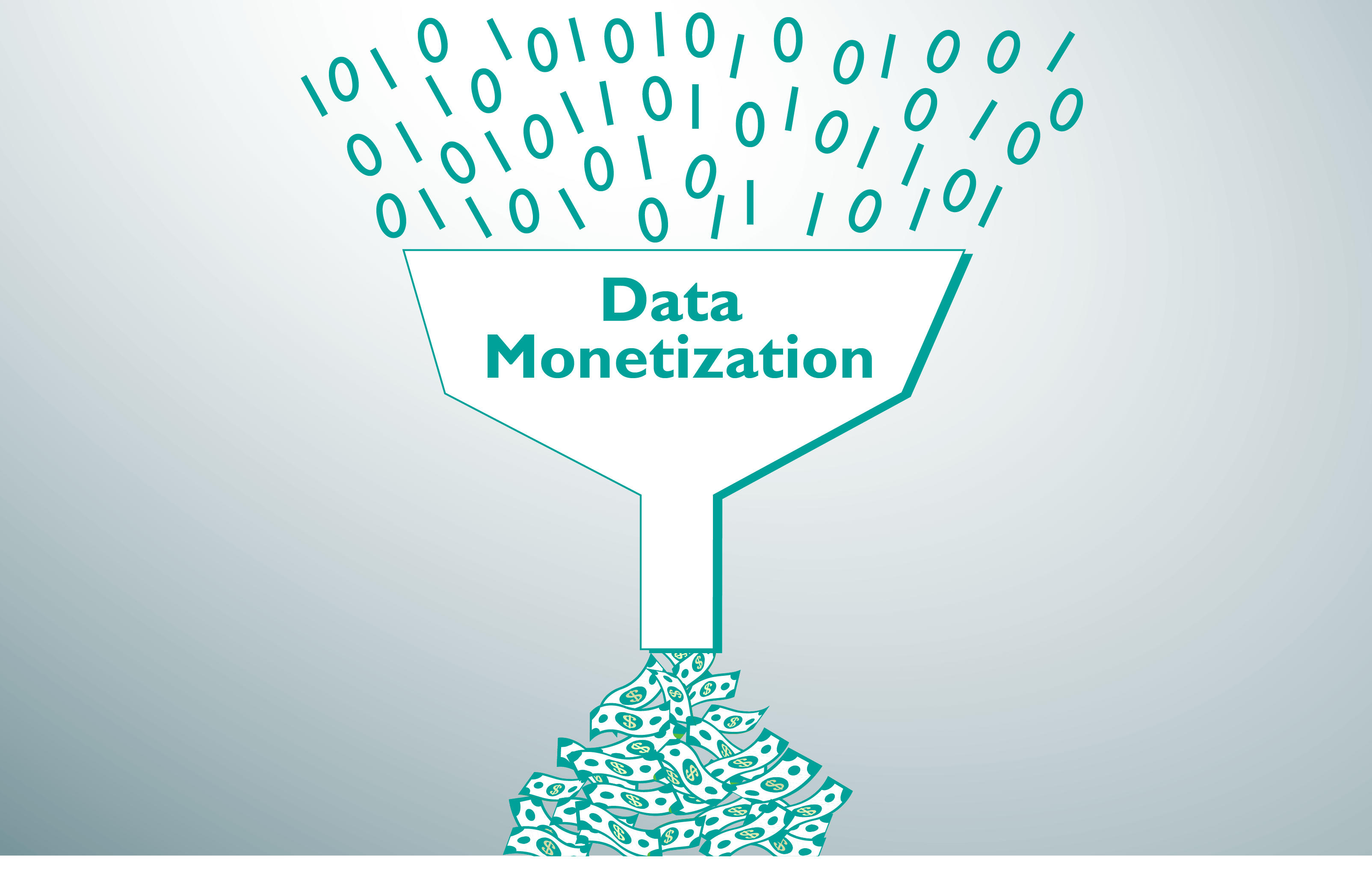
7. Data monetization

How you can make your organization ready for data monetization

Another advancement that may be feasible by joining the two technologies is the approval of information. Monetizing gathered information is a big revenue for big organizations, like Facebook and Google. Having others choose how information is sold to make profits for organizations, shows that information is being weaponized against us.

For AI algorithms to learn and develop, AI organizations will be needed to purchase information directly from its makers, through data centers. This will make the entire technique a way more honest strategy than it is in today’s time, without tech giants misusing its users. Such data centers will additionally open AI for more small corporations. Creating and feeding AI is unrealistically expensive for organizations that don’t generate their insight.

8. Smart computing power

Smart Elevators, Self-Driving Cars Require More Computing Power at Network's Edge - WSJ

If you somehow happened to work a blockchain, with all its encrypted information on a laptop, then you’d like a massive amount of process power. The hashing algorithms used to mine Bitcoin blocks, for instance, take a “brute force” approach – which consists of efficiently systematically identifying all potential candidates for the solution and checking whether every candidate fulfills the problem’s statement before confirming a dealing. Imagine an AI based algorithm, which could practically polish its abilities in real-time if it was provided with appropriate training data.

With this now attended to, it’s time to dive deeper into the concept and determine what will be the impact of technology on your business.

Impact of AI-Blockchain Convergence on Industries

The applications of Blockchain and AI combination are almost similar in all the businesses. But, to ease the process, let’s check the impact of AI-Blockchain collaboration on all the industries individually.

1. Healthcare

The 9 Biggest Technology Trends That Will Transform Medicine And Healthcare In 2020

Both Artificial Intelligence and Blockchain technology in Healthcare industry are offering new opportunities for both patients and healthcare service providers at their independent level. But when it comes to work altogether, the healthcare organizations and patients will experience the next level of services.

Intersection of blockchain and AI in Healthcare will offer the opportunity to safeguard the medical records against cyber attacks as well as access the data in a decentralized layer and give people ownership of their data, eliminate the monopolistics power of the top tech giants like Google and Apple, and empower patients to share their data with anyone on their own terms and receive personalized responses.

2. Retail

The 5 Biggest Retail Trends In 2021

Merging AI with blockchain technologies will double the impact of AI in Retail business. It will empower the retailers to save the insights of their customers in immutable blocks and record the whole process so as to determine what factors were involved, if their marketing plan fails. Besides, it will enhance the payment process and eradicate the risk of frauds.

3. Supply chain

Top 25 Supply Chains of 2020 | IndustryWeek

Benefits of combining blockchain and AI will result into an all new world. The technologies, as a single unit, will help to optimize supply chain in a far secure and effective manner as well as offer better insights into what should go in the first place. This, in turn, will enhance the experience of everyone involved and result in higher business profits.

4. Finance

The best finance news websites: A wealth of information! | SmartBrief

Integrating Blockchain with AI will also streamline the processes in Finance sector. While Blockchain will build trust into the industry in the form of Smart Contracts, AI will cut down the dependency on humans to understand human emotions and predicting the next step to be taken, which will eventually enhance the automation and performance level.

5. Government

The government is hyping digitalised services, but not addressing a history of e-government fails

Blockchain and AI merge paths together to revamp the definition of democracy. The technologies will transfer the control over data from big group of people to the whole public, while maintaining the security and quality of data.

Besides, the AI and Blockchain technologies will aid in tracing e-voting procedures and making them accessible to all the citizens in real-time.

6. Mobile applications

How to Find the Perfect Team for Mobile Application Development | | Atimi

Basically the combination of AI and blockchain can increase the efficiency and the reaction time. For example, there is a payment to be made. Thus, blockchain will make the payment channel smooth and transparent, consequently improving the speed. Simultaneously, AI will characterize which gateway should be utilized, and how the client intends to finish the payment. This way both the technologies will accelerate the payment page, hence expanding the checkout experience.

Use Cases of the AI-Blockchain Convergence

Some of the companies that have invested in the combination of blockchain and AI projects to enhance their existing processes are:-

1. Engima

Enigma - Company Culture, Jobs and Blockchain Careers

Enigma is serving with a data marketplace that empowers secure off-chain computation. This marketplace is designed with an aim to let companies share data that users can subscribe to and obtain via smart contracts.

2. Numerai

Numerai

Numerai supplies crowdsource machine learning issues to data scientists and empower them to record their results into an AI-meta model for a short/long period of time and bet on the effectiveness of their proposed output/model. Once the turn period is over, they can check whose result is nearly correct and share the earning based on the terms and conditions pre-decided.

3. SingularityNET

SingularityNET - Home

SingularityNET collaborates the use of AI in Blockchain to develop a decentralized open market for Artificial Intelligence where anyone can monetize AI. That implies anyone can buy and sell AI algorithms at a larger scale, and thus improve its capabilities. One of the popular use cases of SingularityNET is Sophia.

4. Computable labs

Computable () - All information about Computable ICO (Token Sale) - ICO Drops

Computable Labs is creating new Internet infrastructure for AI to get democratize access to data and algorithms and is striving to supply a Token Curated Registry (TCR) that act as a hub for buying/selling of data.

5. Ocean protocol

Art — Ocean Protocol

Another use case of AI-Blockchain coevolution is Ocean Protocol. It is an ecosystem for data sharing and monetization that offers a tokenized service layer with an aim to provide safe, transparent and secure access to data, especially to AI-enabled entities.

6. Synapse AI

Synapse.ai Kicks Off SYN Token TIER 2 Public Sale After Hitting $7M+ In Private Sales

Synapse is employing the AI Blockchain convergence to build a decentralized data and intelligence marketplace for trainers, researchers, processors, and contracts that can be approached in real-time programmatically.

As seen in the above Blockchain and AI use cases, the idea of integrating these technologies is attracting a vast number of entrepreneurs and venture capitalists. However, the process of combining the two technologies is not as easy as it seems. There are various challenges associated with the convergence of Artificial Intelligence and Blockchain, about which we will cover in the next section.

7. Hanson robotics

Sophia, the Humanoid Robot, and Dr. David Hanson, Robotics and AI Expert, Confirmed to Deliver ITW 2018 Keynote

World popular robot Sophia, created by Hanson Robotics, is taking machine intelligence to another level. Sophia has been wired to physically manage data and decide her reactions and responses accordingly. She utilizes various AI modules to take her activities keenly.

8. Namahe AI – supply chain

Namahe (NMH) ICO Rating, Reviews and Details | ICOholder

Aiming to acquire transparency and connect the different components of significant value chains, Namahe AI monitors the inventory and supply chain process in real time and reports glitches, delays and fakes in the framework and highlights such information so that professionals can review it. It leaves less scope for any misuse. Namahe AI will additionally send machine learning that will permit AI to predict future business and irregularities.

Challenges Associated with the Integration of Blockchain and AI

How Blockchain Trains AI

When talking about integrating Blockchain and AI technologies, various challenges come into play, such as:-

  1. Blockchain technology is decentralized and its nodes are heterogeneous in nature. Because of this, if Blockchain is public and open-sourced, it will be difficult for AI outputs to come at a single point.
  2. The two technologies are poles apart and the concept of combining the two is still new. Because of this, a huge amount of time and money is required for exploring AI and Blockchain and look into similar grounds.
  3. Another challenge related to Blockchain integration with AI is Security. Blockchain is a publicly distributed, decentralized and securely encrypted database that serves AI with unlimited and reliable information. The technology is based on cryptography algorithms which make stealing of data a daunting task. But, in order to make AI make changes into the secured data and drive better predictions, it is crucial to decrypt the files first, which results in data hacking.
  4. The ecosystem implementing the convergence of the two technologies demand a higher computing power. For example, a single search on Google search engine will take around a trillion times more time to ensure security and progressiveness. This makes it tough to maintain the speed into the process.

So, here were some of the challenges that prevent companies to leverage the benefits of blending AI and Blockchain together. While you can discuss them with our Blockchain consultants via this simple contact form, let’s head towards what are the future holds for the collaboration of the two technologies.

What Future Beholds?

If you consider Artificial Intelligence and Blockchain individually, both are proving to have a brighter future. On one side, the AI software market is expected to reach %59.8 billion by 2025, while on the other side, the global market for Blockchain is predicted to be worth $3 trillion by 2024.

But when talking about the convergence of Blockchain and AI, the concept of combining the technologies is still in its nascent phase. The collaboration of these technologies through AI development company and blockchain development companies has gained a fair share, but in the experimental phase only, which implies we still have to wait for a while to understand what opportunities the integration offers and how to embrace them.

With our global platform of AI development services in USA, Asia and other countries, we assist our customers and clients to leverage the latest technology to the utmost and provide better ROI for your business.

How Do We Assist Our Clients in Picking a Mobile App Name?

How To Choose A Business Name That's Right For You

There is a very famous saying in the marketing world that the first thing that subconsciously connects your brand to the customers is your business name.

And now with the world moving to mobile, the saying that once majorly revolved around brick and mortar business has moved to the mobile domain as well – making it completely unignorable for mobile app entrepreneurs to not pay attention to their Mobile App name.

Now the importance of giving a lot of time in deciding how to name an app was as true some two-three years back as it is today – something that made us curate an article around tips for naming your mobile application, two years back.

But with the changing time, there are a few things like example – Camel Case – that has come into prominence. Something that has made us relook at the whole mobile app naming process yet again.

Only this time, we are looking at it from a different and more personal level – How we help our partners know the steps to find an app name.

While on the journey of finding how to name an app, it does help to know what name type, word, and character count are working in the industry, let us nonetheless share the tips that we share and operate on when trying to finalize a mobile app name for our clients.

But before we move on to the tips that might help you name your mobile application better, let us first touch the basics with what all things you need to keep into consideration when starting with the brainstorming session of how to come up with the right name for your app.

A look back at the factors to be considered when answering how to name your app

A. Aim for Zero Confusion

Aiming for Zero

If you don’t want what happened in the Surf Excel row where a user accidentally tweeted a backlash on MS Excel’s Twitter thinking it’s Surf Excel, it would be better to stay away from keeping names that sound too similar to other apps or brand’s name. In fact, when you try to find the answer to how famous app names were created, there is a high probability that you will come across to the point that they didn’t copy. While both Play Store and App Store are pretty slow and ignorant when it comes to verifying the similarity in names, it is only right to not take a shortcut and take advantage of the name of famous brands by piling on to their brand image.

B. Create Familiarity

Dialects Create Familiarity and Softens Speech | Global Skills Project

In case yours is a case of an existing chain of business, with one business going mobile, it is recommended that you aim for creating a sense of familiarity. So, for you the ideas to choose the right name for the app should help you ensure that there is some familiarity in the name of your app and your parent company, simply to present your app as an extension of the brand. When we talk about familiarity, there is one other way to look at it – seeing that the app name is the best representation of the app’s aim. So, look into both the points when looking to create familiarity.

C. Understand the Stores’ Difference

Amazon App Store Vs. Google Play Store: What are the differences?

When finding the answer to How to Name an App, it helps to understand the difference between the required characters limit accepted by the App Store and Play Store. While both the stores come with a character limit of 50 characters, an optimal amount in case of App Store is 23 character while in case of Play Store is 30 characters. Knowing the scope of innovation you can work around helps in leveling your field of search for the right app name brainstorming ideas.

D. Global Appeal

Global Appeal | International

One of the most important things that brands generally ignore when deciding on the apps’ name is looking at it from a global perspective. Assuming that your business will not be restricted to any one geographical location, it helps to go with a name that when translates to another language is something that is culturally appropriate in the geographical location.

Well, here were the four most commonly ignored but must consider factors that you must, at all cost attend to, at the end of the day when you pick a name for an app. Now with that attended to, let us now look at how we go about naming the application for our clients’ apps.

How Do We answer How to Name an App?

A. Look at the Top Apps in the Category

Finding Apps on Google Play

We start by looking at the top apps in the category in which our clients’ app would function. The aim of this is to get the idea of what elements are the competitors choosing – is it emotions of the users they are after or are they ensuring that the app category name is mentioned somewhere when they choose an app name? Doing this gives us a head start in terms of what line we should also brainstorm in.

B. Easy to Pronounce

Are you able to pronounce all the words correctly

The second thing that we look after when deciding on how to name an app is if it is easy for the world to pronounce, especially for the user demographic who would be interacting with the application. What happens is that sometimes brands use a foreign word like suppose French or Japanese (commonly) to name their application.But, they forget a crucial thing that the internet is filled with questions asking how to pronounce French, Italian, or Japanese words – meaning, not a lot of people understand the right pronunciation. And, in the fear of being seen as a noob, they refrain from taking it altogether.

C. Talks About the Main App’s Feature

Bringing it all together with Google Pay

In line with the relevancy factor that we discussed above, we try to ensure that the app’s name is in line with the functionality that the application comes with – as much as possible when looking to answer the question of how to pick the perfect app name for you.After all, keeping the users confused as to what the application does, while seems like a titillating idea can backfire real quick, knowing that the patience of users who are given with n number of options is very low. So, like WhatsApp which has the word App in it or even Candy Crush, the name that tells that the users would have to crush candies, we try to include the features of our clients’ app in the name as well.

D. A Name that Users Search

How to Dominate Your Branded Search in Google | DigitalMarketer

Ever since we have gotten our hands on the statistics that more than half of the searches happen out of the Play and App Store, we have been taking advantage of the occurrence that people search for applications on the SERPs and then on the stores. One way we achieve that is through search engine traffic suggestions. Our team of SEO experts looks at the terms that people are using to search for the category your app is looking to master and then work it around in a way that it is present in the application’s name.

E. Match With a Domain Name

One thing that is easily missable by you as an entrepreneur is you not thinking beyond the naming your next app or startup. You might forget that mobile apps, most often than not, comes with the plan of expansion into a website as well. Now, imagine you have got a brilliant name that is just perfect and your prospective users are also in love with it but when you search it online, you find that it is already taken by a website online. Disappointing, isn’t it? Well, that is why we make sure that the name we are searching for the application is available in the website domain world as well.

F. Mix Words

16 Words People Often Mix Up That Can Make You Look Foolish | Inc.com

Mixing words and then showing them in camel case is not just something that WhatsApp loves but we do too. Along with being an extremely fun thing to do, mixing two words together to form single flow word that describes not just the essence of the app but also the creative side of the application – can come in very handy to show a brand image as well.

So here were the six approaches that we have followed in over 70+ applications that we have named for our clients across different industries.

But after everything said and done, the crux of the matter when it comes to the Tips on How to Choose a Successful Name for Your App lies in two things – A. The name should be culturally appropriate and easy to remember, pronounce and B. No matter how well you name your app or how much time you put behind it, it is equally important to make sure that the experience you give to the users the moment they enter the app is something that is very similar to the emotion that they felt when they read the name – pure bliss.

Both the things, while being equally challenging are also the things that we are prepared to help you with. So, get in touch with our team of mobile app developers and marketers today.

Funding a Mobile App Startup

5 Ways to consider to raise funds for your mobile app startup in 2020

There comes a time in the life of every individual with an entrepreneur-streak when they think of an app idea they truly believe in. But if you are anything like the majority of those dreamers, chances are you are sharing their state as well – lack of funds to convert the mobile app startup idea into a digital product.

A ray of hope, however, for every app entrepreneur with restricted funds is to get investors’ interest. An optimistic misconception among the would-be-entrepreneurs is that investors will automatically invest in a great app idea. If only getting app funding was that simple.

Or is it?

Let us walk you through the four most important things on how to raise money for mobile app startup.

How Much Funding Should I Raise?

How Do I Prepare My App to Become a Fund-Magnet?

How Do I Find Investors For My Mobile App?

What Are The Different Funding Options Available to Me?

FAQs on How to Find Funding For Your Mobile App Startup

How Much Funding Should I Raise?

Premium Vector | Flat design stock market analysis illustration

Before you start making a list of prospective investors or binge-watching Shark Tank, decide the funding you actually need for your app. A miscalculation can be a double-edged sword. If you get less funding, it’d bring you back to the square one position post-funding and if you get more funds than planned, it can still be your loss.

The more funds you raise, the more you give away your company at the initial stage of the business. This can hamper your owner’s share and rights once your app becomes a brand. A good starting point of accurate estimation can be to know the average mobile app development cost.

When planning to raise initial capital for your app, you should ask yourself three questions to determine the funds you’d require:

  1. How much money will I need to build my app?
  2. How much money will I need to get traction?
  3. How much will I need for post-launch services?

These questions will give you an estimate of how much effort you will have to put behind raising money for mobile app startup. Generally, the maximum amount goes into funding for mobile app development and the rest will go into the other two questions.

Even if you are partially funding your app from your savings or getting funded by family and friends, you should have an estimate of the fund needed. This will not only help you keep proper track of funds but also will help plan the app expansion.

Once you have estimated the funding you’d require, the next step is to get on the preparatory stage.

How Do I Prepare My App to Become a Fund-Magnet?

Solidify the app idea

Why Your Business Should Develop a Mobile App - StartUp Mindset

Why would even one of the many mobile app investors fund your app if the idea isn’t validated or have the backing of a community need? This is the most asked question when getting funding for an app. To answer this accurately, even a seemingly profitable idea should work on the following factors:

Finding a problem that the app solves

How to Identify The Problem You Are Solving With Your App? | by Ivana Veljović | Aurity.co

A majority of the apps in the market don’t solve a real problem. Although it works great for gaming or video creation apps, the chances of them getting overshadowed are massive. Unless and until your app is solving a problem that no one has even thought about, it’s going to be tough to sustain.

Build an MVP.

Minimum Viable Product "MVP": What is it and how does it help your strategy?

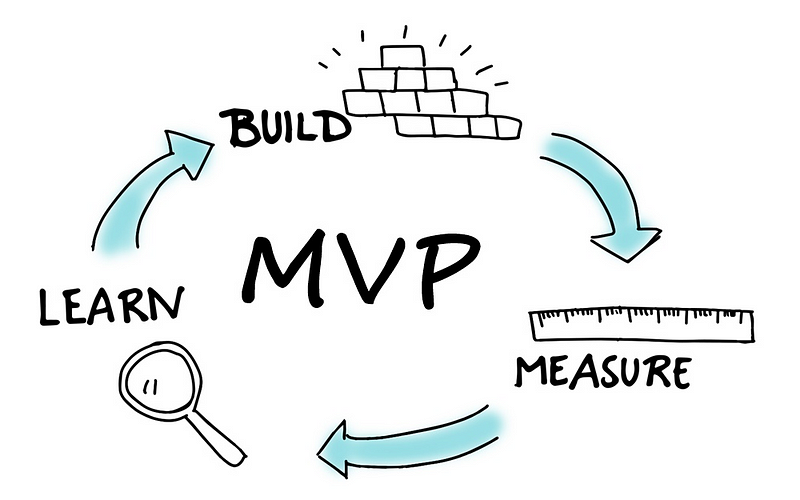
The next part of solidifying an app idea is to build an MVP. A Minimum Viable Product will ensure that your idea actually works and solves the real problem. It is an app version built with key features with an intent to help you raise money. The added benefit of the MVP is that it can gather you constructive feedback which can be used to make improvements in the final product.

Confirm your app’s value.

How to Check App Permissions on iOS, Android, Windows, and macOS | WIRED

The last stage of validating or solidifying your app idea is setting up a charge and checking whether people are willing to pay for it. The willingness count will help you understand whether or not your app’s monetary value.

Perfect your elevator pitch

How to perfect your elevator pitch

Knowing how to pitch an app idea can be of great help in your quest to get funding for an app. An elevator pitch is exactly how it sounds. It’s short, informative, and can get the attention of the app startup investors immediately. You should always dive into the pitching process with the assumption that the investors will only give you 30 seconds of their time for listening to the app idea.

Know the market

How to Conduct a Market Analysis for Your Business in 4 Steps

Knowing the target audience and the competition in the market will always be fruitful for you. It is very important to know the veins of the market your app will be functioning in. A market that is made up of not just your target audience but also your direct and indirect competitors, the supporting stakeholders, and even the government regulations.

How Do I Find Investors For My Mobile App?

Do You Know What's Happening In Your Market Online?

An important part of answering where to find app startup investors lies in understanding how the investment rounds are structured.

Now when we say structured, we mean the funding rounds move in a set order. Knowing which funding round you need to poach can help answer a number of questions – where to find investors specific to your stage, whom to seek out for funds down the line, is there and if there, then what is the funding timeline? etc.

  • Seed Round: It is the earliest money that goes into a company, app, or idea. The seed funding mostly comes from the insiders who provide the initial startup capital for establishing the business.
  • Angel Round: Angel round is similar to seed round, but is usually more formal. They are often outside investors who buy common stock in the company but with more formal terms than seed investors’.
  • Series A: This is basically the first stage or round of large-scale venture capital funding for an app business. The Series A rounds generally bring in $2 to $10 million and get entrepreneurs the necessary capital for the business to develop its product fully and grow.
  • Series B, C, D, etc.: These rounds are held on the basis of the capital requirement of the company.

Now that you have gotten insights into the first part of how to raise money for an app idea, getting a list of investors should be the next thing on your agenda. There are numerous investors to get funding for an app from but not everyone is the right fit. AngelList is a website that has more than 40,000 investors but you should pick only the top 40 or so to get your app funded. Other websites to find investors for app ideas are Funded.com, Angel Investment Network.

Get referrals

The Shy Computer Guy's Guide To Getting Referrals

There’s no harm in getting some benefit off of your network. Referrals are a great way to see investors so if you know someone who knows an investor, ask them to help you. Connecting with mediators who can refer you to some great app funding companies will be a smart move. A platform like LinkedIn is great for forming connections and asking for referrals. Once you get their attention, send in your pitch email with all the necessary details.

With this, we have seen the second part of ‘How to raise money for mobile app startup funding’, and now let’s move on to the third and final section.

After you have done your part to get mobile app development funding, it’s time to look into the different ways of raising money for startup.

What Are The Different Funding Options Available to Me?

Angel or Seed funding

5 of the Most Impressive Seed Funding Wins of the Past Five Years | Inc.com

Angel investors and venture capitalists are the first options that a startup app development company advises to their clients.

Angel investors do not generally ask for much business control in exchange for the money they give and that gives you more freedom. Venture capitalists, on the other hand, ask for more business control in exchange for funds. They however also provide mentorship. In the end, both Angel and Seed funding for app startups are a great way to secure funds.

Self-funding or Bootstrapping

Was Bootstrapping Our Startup a Good Decision? Find Out | Hubstaff Blog

How to raise funds for mobile apps yourself? You can become your own investor. Funding the business yourself in the initial stage will give you great benefits since you will have complete control over the business. And in cases where the apps become a success, you might not even need funding in the future. But you can always go to investment firms for loans in the later stages.

Bank loans

What will happen to your loan after banks link it to external benchmark?

You can always go to banks for personal or business loans. Although you might have to keep collateral, the process of getting funds would be the fastest compared to any other option on the list. These days, governments are also being supportive of the startups’ growth, meaning you can expect more funding-assistance reforms coming in your way.

Crowdfunding platforms

Crowdfunding Platforms - Top 11 Online Platform for Startups in 2021

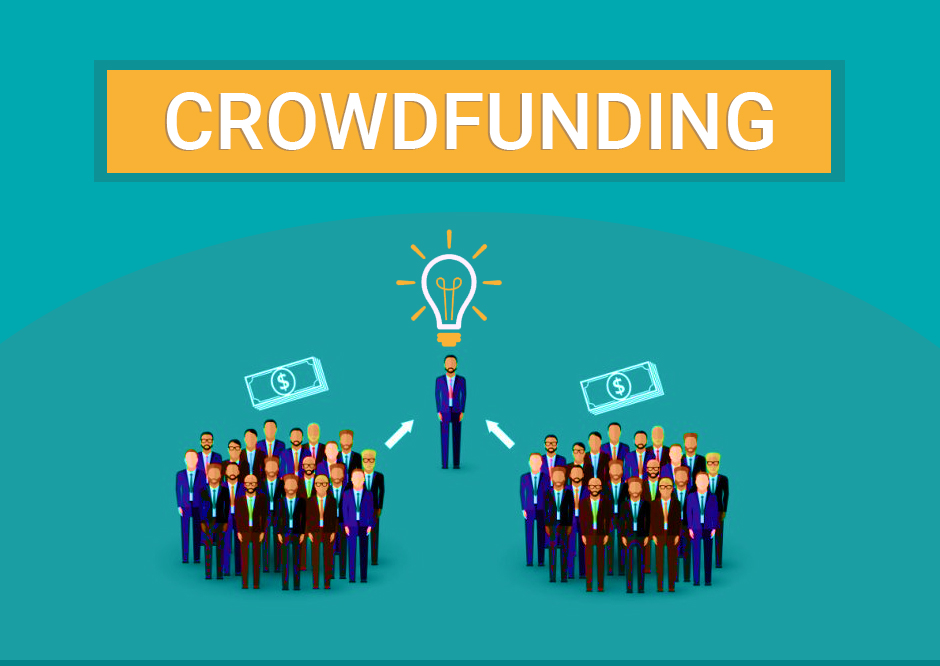
Crowdfunding for mobile apps means raising money from a pool of investors where each one is offering a small sum of money. This kind of funding is usually done on crowdfunding platforms that are present online or on social media. In exchange for the contribution, you can give a reward or share of the business.

ICO & IEO

Tokenization & Launching ICO/STO/IEO | Try Codnet - Fintech Development & Blockchain Marketing Agency

ICO and IEO funding is great for blockchain-based startups. The money is raised in the form of cryptocurrencies which makes it a little risky since such funds have an uncertain future. But this risk is hardly a concern for blockchain startups for being in the industry, they understand the pros and cons of cryptocurrencies.

This was our take on how to get app startup funding. Contact our team of startup app developers for further queries.

FAQs on How to Get Funding For Your Mobile App Startup

Q. How to raise funds for a startup?

The process of raising funds for a mobile startup is a multi-layered event. You will have to answer all these questions:

How much do I really need to fund my app?

How to get investors for an app?

What are the different ways to get funded?

On the basis of these answers, you will get several steps closer to getting funded on your mobile app idea.

Q. How to find investors for a mobile app?

There are many websites you can head out to for finding investors: AngelList, Funded.com, Angel Investment Network, etc. There are also several meetups that are held across the world for entrepreneurs and investors to meet and converse.

Q. When should I raise funds for my app idea?

According to our app developers for startups, the best stage when you should seek app funding is when you have crossed the app validation process and you have a basic understanding of what app features and technologies you have to focus on.

Strategies to Reduce Mobile App Development Cost for Startups

How to Reduce App Development Costs | Applikey

The competition in the app market is too high for you to compromise with the quality of your app. But with high quality comes high costs and when we say high costs, we mean it. This may be a reason why most people avoid app development altogether – which, in turn, does more harm than benefiting.

The world is going mobile rapidly so it becomes important to make your place in the same world. Businesses have doubled their revenues and sales with the help of their mobile app. So, when you see at the long term benefits, these initial investments seem quite worth it.

However, mobile app development cost can still be high for startups since the capital is limited and there is not much to offer. But that shouldn’t stop any startup from reaping the benefits of having an app. For the same, we figured out some great strategies to help you reduce app development cost.

We will discuss the mistakes you can avoid to reduce app development cost and some strategies to reduce app development costs.

Mistakes to avoid to reduce app development cost for startups

According to many researches, the cost of actual app development almost always exceeds the budget allocation for the project. There are some hidden costs in the entire app development process that needs to be identified and removed to reduce app development cost.

We tried to find some mistakes that can cause the cost of app development to rise. Let’s see if you are aware of any of them.

Mistake 1. Wrong UI/UX and QA Testing Cost estimates

Software Testing Tips: 101 Expert Tips, Tricks and Strategies for Better, Faster Testing and Leveraging Results for Success – Stackify

This would probably be the first mistake that you can make. The cost of UI/UX depends largely on how many devices, OS and features are involved in your app. It also involves the type of designing an app will have. Simple designs and features are less costly than complex designs and too many features.

Another place where the costs increase is the testing stage. For every device and every OS, independent testing is done. For this, it is advised that a conservative number of testing should be done before launching the app. Once the app is launched, the feedback can be used to decide whether further testing is required or not.

Mistake 2. Not Taking into account the cost of updates

Google engineer answers why manufacturers take so long to update

There is a common misconception that you only need to launch updates when something needs to be changed. In reality, the mobile app needs updates for improving the interface and fixes any bugs. There are also UI tests that need to be run so that the user experience is enhanced.

As per the AnyPresence survey conducted for enterprise apps, it was revealed that 80% of the apps were updated twice a year and some of them were updated twice a month. These apps show great performance and have a high rate of active users.

The mistake made here is that most app startups don’t consider the costs that incur post app launch. So planning for these big and small updates are some ways to reduce app development costs for enterprises.

Mistake 3. Not Being Able to Decide Between Native and Hybrid app development

7 Pros of Native App Development vs. Hybrid & Web Apps

As a startup, you may not be aware of the difference between a native app and a hybrid app. And when going for app development, knowing the difference between these two types of apps is important. Once you know the difference you will be able to decide which is better for you, hybrid vs native apps. Also, the cost of app development is different for both types of apps.

Well, a native app is built from scratch and is developed for a particular platform. This means that the cost of development will be charged twice, one for Android and one for iOS. But the native apps have high performance and provides the better user experience.

Whereas a hybrid app is built for multiple platforms and gives more of a web app feel. The quality of apps differ from native apps since its built for multi-device and developed at the same time. The one-time development method reduces app development cost for hybrid apps.

In this situation, you must be aware of what’s going on with your app. You should be aware of the type of app that you are getting and the costs involved in the development process.

Mistake 4. Ignoring The cost of Adding Latest Features

15 Surprisingly Lucrative Benefits of Event Sponsorship

Sometimes there may come a need to add some latest features to your mobile app and then you will be the inventor of the feature. You can resell it to many companies after licensing it and earn huge profits. But that may also be costing heavy. Of course, the benefits are going to be there but there again comes a factor of cost.

If you ask your developers to build something that hasn’t ever been built in the market before, you are putting yourself in a position of cost overrun possibility. Here comes another issue that the developers can cause. Most developers would not warn you if you are unknowingly adding cost to your app development project.

This is why working with a genuine app development company is important. There are many companies like Anteelo, that help in finding ways to reduce app development for enterprises. These are the companies any startup should be working with for their app development.

Mistake 5. Not Considering Implementation costs

How To Use Salesforce For Project Management | TechnologyAdvice

Even after identifying all other costs, you may forget the cost of implementing everything. For an app, there are different features that need to be added and this depends on the type of app it is. For instance, an e-commerce app will have features like payment gateway, the category of products, wishlist and a lot more. All of these features will have to be implemented, maintained and improved.

To ignore implementation costs will be a serious issue since it comes under the hidden costs of app development. To reduce app development cost, keep in mind that these factors also contribute to the overall cost of app development.

These were some serious mistakes to avoid to reduce app development cost for startups in 2019-2020. Now we move on to the strategies or tips to decrease mobile app development cost.

Strategies to reduce app development cost for startups

Almost all the startups planning to go mobile have been asking ‘How to reduce app development cost?’ Even though the cost of app development cannot be slashed 50% yet there are some ways we can reduce it enough to make it affordable.  Here we will see some incredible ways to reduce the app development cost.

MVP

What is Minimum Viable (Data) Product? - KDnuggets

Minimum Viable Product or MVP is built with fewer features and at low cost than the original product. You can get an MVP built and release it publicly. You can avoid wasting time and money on building the original app in the first attempt and use the MVP to raise money for your app. Once you do that you will gain profits and feedback to work with for the original product.

Readymade templates

23 of the Best Mobile App Templates of 2019 on Android & iOS (Updated)

How to reduce app development cost? Go for readymade templates. As good as building things from scratch is, it’s not very cost effective. There are many templates that are present online for use and would fit perfectly with any app. Using these readymade templates will reduce the time and cost of the app development process.

Regular troubleshooting

Even after the launch of the app, it will require constant improvements and fixes. Hiring an expert for that would a good idea since they can provide tips to decrease mobile app development costs throughout the process. Keep in mind that if you hire cheap freelance developers from far away places then you might have to spend a whole lot of money in redoing the app in case things go downhill.

Access Mobile-specific features

How to use Apple's new Screen Time and App Limits features in iOS 12 - The Verge

Every device has some built-in features such as the camera, GPS, call options, etc. Employing them into the app may seem a good idea but there are two issues to face. First, not every device has the same features which mean the app may not function for some users. Secondly, adding these features incurs a cost which can be simply avoided if there is no need for those features. For instance, a news app does not need to access the GPS so it can be skipped.

Regular communication flow

We cannot stress enough on the fact that regular and continuous flow of communication between you and the developers is essential. This regular communication will make things more clear for both you and the developers. It also helps in keeping a track record of how the process is going.

UI/UX Simplicity

UI Trends 2020: What's in Store? | Toptal

One of the strategies to reduce app development costs is to go for simple yet elegant designs. A simple UI design is very important especially for new users since adaptation becomes easy. Most apps and websites are opting for a minimalistic design which is extremely cheap to design. Complex designs and too many features will not only confuse the users but also will add unnecessary costs to the project.

Hire skilled testers

If you want to save cost and time then hiring an expert team of testers is the best investment. At Anteelo, we practice an agile testing process so that there are less cost and less time in the testing process. This is one area you should invest in properly since it will only enhance the over app experience for the users.

Don’t hurry the process

Most of the times developers hurry the client in order to finish the project early but that may not be the right way. Unless and until you are working with a team of experts, you cannot hurry the development process. The reason is that in case of any mistakes, there will be an extra cost incurred. It will be a wise choice to go slow and deal with each part of the development patiently.

Outsource app development

4 Convincing Reasons You Should Outsource App Development

One of the biggest reasons why businesses outsource is to lower the mobile app development cost. You see, when you get an app developed in eastern nations like the USA or Australia, the average hours of development is in the range of $100 – $120, while in the case of eastern nations it is $60 – $80 per hour. The difference is very massive.

So this was our take on how to reduce app development cost for startups. Want to get an app developed by us? Contact our team of developers.

How Much Time Does It Take for Development of a Mobile App?

How To Build A Mobile App In 10 Easy Steps - The Appineers

  1. All the different app development processes take their individual development time.
  2. Although research stages take up around 2 to 3 weeks of development time, when done right, they can not just save time on a later stage but also aid the smooth sailing of processes.
  3. Factors that slow down the mobile app development timeline are changes made mid-project inexperienced developers and  use of complex technologies
  4. RFPs, MVPs, and Cross-platform development tend to speed up the app development process.

There is no doubt about the fact that with 350 billion app downloads worldwide, businesses are looking to get the same attention. It’s very normal for a business to inquire about the app development process and the mobile app development cost.

Usually, businesses and clients are interested in knowing how long does it take to create an app, the cost of app development, and all the efforts involved. As soon as they learn the benefits of having a mobile application for their business, they wish to get on with it. Hence, the question how long does it take to develop an app.

{Also read our article on – How much Does it Cost to Develop an App Like Careem & Uber}

Now, usually, the average time to develop an app looks like the below image. But there is no definite time as it depend on person to person and company to company

But there is no definitive-ness. And thus this article.

In this blog, we will not only look at the mobile app development process, factors affecting the average time to build an app but also will determine how long it takes to mobile app development.

Key Stages of The Mobile App Development Process

The app development process has different stages and all of these stages require different time slots. From the planning process until the launch of the application, the entire process is interdependent on each other and requires proper attendance. It is quite obvious that apps with different sizes and different features have different app development time.

Each development stage is discussed below to answer the question ‘how much time does it take to build an app?’

This is one of the main documents that entrepreneurs and app developers often miss out on. Ideally, the better the brief the lesser time it would take to understand the software project and the requirements. In fact, this one step can have a HUGE impact on the time required to develop an app.

There are some things that you have to include in the brief which you are working with such as the company information. But to help give your app development agency a detailed understanding of the project and the mobile app development services they will have to deploy.

The outcome of this stage is usually: The Brief of an App Development Before we look into the different design and development related phases, let us first look into the time it takes to set the basis of all the design and development processes that follow.

Project

  1. Project goals and the success metrics
  2. RFP
  3. NDA
  4. The budget range
  5. Delivery date

Stage 1: Forming ideas and research

What is Research? - Purpose of Research

It’s easy to get great ideas but it’s not necessary that everyone will agree to it being great. The idea formation and research part very much affect how long it takes to build an app. This stage involves starting with an idea and then researching it for more improvements.

Even if the idea of the app seems right, a test must be run to keep things as real as possible. This can prove to be a very important step taken in the initial stage. Testing application ideas also ensure that when the app is launched in the market, the users are going to love it.

Another thing that this stage involves is targeting the right audience. It is in this initial stage that the right audience is targeted for the app. Defining the target audience not only helps in boosting the app after its launch but also in shaping the app in the right direction.

Different apps have different size and ages of the target audience. For instance, Facebook has all ages of people on its platform whereas Tinder has a younger target audience. Targeting has made these apps so successful therefore is suggested that proper targeting and research should be done.

Analyzing the competitiveness of the market and the app is also necessary. During the research about the app, one should also gather information about the competitors and potential threats. This will prepare the app owners for any difficulties after the app launch.

The entire research takes several weeks. By the end of the research, you should know all the strengths and weaknesses of the competitors, the app strategies and defined target audience.

By the end of this stage, you should get these outcomes:

  1. Minimum Viable Product
  2. User Stories
  3. App Prototypes

Stage 2: Planning it all out

All About the New Goal Action Plan Pages

The next stage is the planning stage. Once you know all about your market, its time to plan out the app development process. The planning stage involves decisions regarding the configuration of the app. These decisions include making a choice between iOS and Android, native or hybrid, cross-platform or not, web-based app or mobile app, etc.

Once these plans are made, its time to add on the features. Now the features of an app should be such that neither does it complicate the app nor slows it down. There are many basic features that an app should have such as search bar, social media sharing buttons, profile building, login option, etc. These features make a basic app much convenient for users.

As the app size increases, the features are more and more directed towards the type of app. For instance, any e-commerce app will have the ‘Add to cart’ feature. Similarly, social media apps have the option of media sharing and various other features for engagement on the app.

All these planning is quite complex and will require a month or so.

Stage 3: Design Sprints and Idea Validation 

Design Sprints - Validate New Product Ideas in 1 Week

Design sprints processes are being used for testing different aspects of an application. It takes around a week to complete the whole design sprint. The idea of the stage is to test different aspects of the idea and get them validated by a pool of prospective users.

Design Sprint helps businesses understand if users value a feature, how they use it, when they would be using it, how easy or difficult do they think it is to navigate the application, etc.

Stage 4: Development stage

In the development stage, there are three elements that need to be built: the UI, Front End and Back End. Once all the planning is done, the developers and designers will work their magic and start building the app. So how long does it take to build an app? Well, the development and designing stage takes about six weeks.

The UI of an app is taken care of by graphic designers. This gives the apps an appearance to enhance the user experience. UI is important for any app to flourish in the market because the users seem to like visually appealing apps more.

The Frontend and the Backend are also very important components of the app development process. The Front End is what users see and how they act in an app but nothing will make sense until the Back End is developed. The Backend connects the UI with the system and allows the proper functioning of the app. So, how to make a mobile app without either of these? Well, you cannot.

Let us deep dive a little to know what both the engineering processes consist of:

Front End Development, Back End Development, and Full Stack Developers

Backend Engineering

  1. Data storage
  2. Users management
  3. Server-side logic
  4. Data Integration
  5. Versioning

Frontend Engineering:

  1. Frontend logic
  2. Caching
  3. Synchronization
  4. Wireframing
  5. UI Design
  6. UI development

Stage 5: Developer and QA Team

Introducing QA to Agile team

Picking the best development team is never simple, even when you have the best team you are in constant search of more. To help you with the hunt, you can either look for them locally, which is quite difficult or outsource the task to either app development companies or to freelancers that will turn into a team under your influence.  Or if you want, you can opt for companies in your area like mobile app development company in USA if you live in the US or any other area where you reside.

Obviously, the most ideal alternative is to find a current development team with demonstrated experience in the industry and direct all the requirements to them. There are a few reasons behind that:

  • Having a team means that they know each other and are strong as a group.
  • As the developers know each other thus, their work timings and pace are similar minimizing any sort of delays.
  • Having a strong team with a project manager will help you to place all your requests to an individual (project lead/manager).

Another incredible benefit of selecting a ready to work development team is that, they will give you the end result and will handle all the application development stages themselves. In addition, proficient groups can provide you with a good understanding of the process of developing apps, guide on improving the work process, and assist you with picking a native or a hybrid app, based on your objectives.

Stage 6: Testing

Top 25+ API Testing Tools | Nordic APIs |

What does it take to run an app? To know whether the app is even going to run after the development is finished, we need to do test runs. We cannot deny the fact that the app will have some or the other bugs that need to be fixed before the final launch. These bugs can be identified with the help of tests.

There are many ways to test a mobile app’s performance and functioning. We, at Anteelo, have our own strategies for testing mobile apps. The quality assurance tests are run so that users don’t find any issues when they first use the app making the app more likable.

Alpha and Beta testing are done on the app to make the app error-free. After the testing, the app is launched. Post-launch whatever feedback is gathered from the users, the necessary changes are made.

Stage 7: Deployment on Stores

Retailer bridges the digital and physical gap with touch screen deployment in stores – with instant sales growth

The time that it takes to deploy the app can be divided in two sections: submission & review. When you submit an application, either on the Apple App Store or on the Google Play Store, there are some guidelines you will have to follow, such as:

  1. Screenshots
  2. App Descriptions
  3. Icons
  4. Video or Image demonstration
  5. App Store Optimization

The time stores take for deploying your applications.

When you compare the time it takes to launch apps on App Store compared to publishing them on Play Store, Apple follows a very detailed reviewing process – which increases the launch time to some extent. On the other hand, Google makes use of algorithms for pre-analyzing your apps, thus lowering the app launch time.

What Slows Down The App Development Process?

As seen in the section before, the app development process usually takes about 2-3 months. But there are some things that delay the overall process and the answer of how long it takes to create a mobile app.

Mid-project changes

Types of Project and Managing Changes to Control Project Quality

Developing apps is a continuous process where all the stages are connected to each other in some ways. If there are sudden changes in the plan in the middle then the process is bound to get slower. These mid-project changes can also affect the app’s performance since too many changes in an already built code base can do that to the app.

Unexperienced developers

How to effectively lead an inexperienced team of junior developers | Programming Pearls

What does it take to build an app that is successful? Great ideas, proper budget and a good developer, for sure. Often business especially start-ups make the mistake of hiring developers that aren’t up to the mark with the work. This results in slowing down the process as well as a poor app for the business. Our team of app developers is highly skilled with good experience at hand which has allowed us to launch high performing apps one after another. We also have helped our clients with their app ideas so that they get the best outcome for their business.

Complex technologies

Cyber Security | Complex Technologies

Technologies like machine learning, artificial intelligence, VR, AR, etc. cause the slow down of the mobile app development process. There’s no doubt that these technologies make the app a better experience but everything good comes at a price. And the price of using the latest technology is that they might slow down the app development process.

The reason why this happens is that the technologies are a bit complex and takes time to fit in the app.

Industry-wise difference

The industry for which the app is being built also plays an important role in the average app development time. The answer to the question of how long does it take to make a social media app is 1-2 month(s). Whereas on-demand apps take more time to be developed. Therefore, the industry is another factor that affects the time required to make an app.

How to Speed Up The Time of Application Development?

With the fast growth of mobile apps, one cannot afford to slow down in the development process. Businesses, be it startups or enterprises, are looking for mobile app developers who can develop apps faster without compromising the quality of the app.

There are no problems without solutions and the same goes with time required to develop an app. When it comes to startups, then gathering a massive crowd is a survival goal and for that mobile apps are the solution.

By now we know how to create an app and what does it take to make an app? We have also known what factors affect the time to make an app. It’s time to see how we can reduce the time of application development.

MVPs and prototyping

The Benefits of Prototyping - UX24/7

MVPs or prototypes are a great way to save time. They can be built easily and resemble the original idea of the application. Once the MVPs are out in public, the actual app can be built by adding features and making improvements.  Many businesses like Airbnb, MailChimp, etc. started as MVPs before the actual implementation.

Go for cross-platform

Go! Cross Platform for developing Mobile Application – iphone, Andriod Mobile Apps Developer & Programmer

Android vs iOS is the biggest debate of all times and sometimes people get so confused that they don’t know which to choose. The timeline and cost of app development of both the platforms individually are relatively high. But cross-platform app development is a solution for this. With tools like Xamarin and PhoneGap, great multi-platform apps can be built which take less time.

Hire a professional developer

7 Undeniable Reasons to Hire a Professional Front End Developer - iPraxa

A professional app developer for your app is the best you can do. Not only will the app have amazing UI/UX design but also will take less time to develop. In fact, the hours will only lower if you choose to outsource. Being one of the top reasons why you should outsource, when you choose a professional app development company off-shore, you’ll not just get a good experience but will basically make your work easier. Appinventiv is also a professional app development company that has developed several successful apps for clients.

Agile development

There are numerous app development organizations that follow agile development as it accelerates the development cycle. The main purpose behind agile app development is that the organizations can’t face the challenge of starting all over again. It has a flexible and adaptable programming structure that is ideal for open-ended communication between app owners and developers. To put it plainly, it speeds up the development process and guarantees that the application is developed on time.

White label solutions

White label solutions are products that were produced by one company and then is rebranded and made to look like other company’s. This will save a lot of time since there will be no need to build anything from scratch. However, this will not result in a good application especially not the one that generates huge traffic or sales.

Automated testing

Top Tools Needed for Automation in Testing: Automated Testing Execution, Data Generation, Test Management and More

Automated testing, although it sounds a quite obvious thing but this is ignored by many. This type of testing is one of the significant periods of development that reduces the mobile app development cycle. The best thing about automated testing is that it can run a whole set of tests all at once. This decreases the time spent on manual testing and helps in improving the security of the application. Automated testing involves several testing methods that are applied to save time. As the testing process becomes quicker, the development process also aces its speed. Executing more than one testing strategy can offer error free code.

This was our take on the mobile app development process timelines and some ways to reduce app development timeframe. Feel free to contact our app developers at Anteelo for any further queries on how to reduce yours.

Your Guide to Writing a Fantastic Mobile App RFP

How to write an effective mobile app RFP • Future Mind

Request For Proposal is a significant part of the starting of any mobile app development journey. The proposal written by businesses who wish to get an app built states all the important information, requirements and necessary details of the contract.Businesses write mobile app proposals when they are looking for long term, custom made solutions that will help them achieve their goals. Going through an RFP process means that the business is looking at the app development process for its long term benefits. Anteelo has seen many requests for proposal over the years and knows well how a perfect one is written. We respond to RFPs on a regular basis and also help our clients with the RFP process so that they are able to define their projects better.

To make the knowledge of drafting the best RFP a common language, it was only about time that we shared a template for everyone who wishes to start the process of their mobile app development journey on a sound note. And so, we have prepared an RFP template for entrepreneurs for you to pass your requirement to the app development agencies with utmost clarity.

But before we move on to the mobile app RFP 2019 best practices, let’s first go through some terminologies associated with the procedure.

What are RFP, RFQ, and RFI?

Procurement procedures and key differences

An RFP or request for proposal represents a company in front of its potential collaborators. Basically, RFP for mobile application development is a document that outlines all the necessary requirements for a specific project. This is a mobile app business plan doc that identifies the most qualified developer for the project.

There are certain terms that sound close to RFP and are often misunderstood. Terminologies like:

RFI – stands for Request for Information. RFI is used to gather information from various sources but there are no intentions of making any proposal. This is solely used to gather necessary information which may be used in the RFP process later on.

RFQ – stands for Request for Quote. This is used to get the pricing information, delivery and supply policies from the seller. Businesses send an RFQ to developers asking about the final pricing and other details of the deal.

These three are the terms that are often used during the proposal of a document for any project.

Now that we have attended to the Whats of RFP and what are the concept’s similar terminologies, it is only normal for one to wonder, why is the business plan for mobile app concept so important? The answer is in the next segment.

Before we move on to the mobile app RFP template, we need to see why is it so important to write a good RFP for your app development. For one, the proposal helps in conveying all the necessary requirements a business has. And two, finding the right app developer that meets those requirements and qualifies to carry out the project.

RFP process takes a lot of effort and time so only two reasons cannot be enough for its necessity. Following points will give you some more solid reasons why good RFP should be written for your mobile app.

Important requirements

Importance Of Requirement - DZone Agile

An RFP helps your business in stating the requirements in an organized and detailed manner. The RFP template should be designed such that it holds space for all the information to be noted down. When these documents reach the app developers, they know exactly what the business wants. A better approach is made by the developer and the business when both know what the exact project is about.

Comparison

What You Need To Know About Writing A Great Comparison Page

When an app development company responds to the RFP of any business then these responses can be used for comparison. The comparison then gives an idea of the right app developer. The pricing, skills, time of completion and other additional information are used for comparison. Choosing the right fit is important as mobile app development process is one that costs both money and time.

Return on Investments

From Return on Investment (ROI) to Return on Experience (ROX): Tips on Picking Your CX Strategy | CommBox

When comparing different responses, businesses are also able to analyze the return on investment from various app developers. It also helps in comparing the advantages that a business will be getting from different developers. It’s always better to have options so that the fittest one can be chosen.

These were some compelling reasons to write a solid RFP for your mobile app development. Let’s now move on to the most awaited segment that answers the question ‘How to write mobile app RFP?’.

How to Write Mobile App RFP?

Following is the sample of mobile app RFP template for writing a proper Request For Proposal:

1. Purpose and strategy of the project

How to Develop a Project Strategy for Organizational Success | Lucidchart Blog

This is the section filled by the issuers or the business. Each business has a different purpose and therefore the templates may differ. The business should state the necessary information related to the purpose of building the project here. It should also contain details that would convince why an app development company or a single developer should respond to the RFP. Often the purpose and app strategy are not known to businesses so it’s important to learn those. Following pointers must be included in this section of the RFP:

  • Business problems: The problems that the mobile app will be able to solve for the business should be mentioned here. The reason why this problem arose and what brought in the idea of having a digital solution should be explained.
  • Leading body: The next thing that should be mentioned is the leaders of the project. The developers must know who is involved and in what level in the project. The decision makers, stakeholders, funders and project leaders are mentioned here.
  • The scope of the project: The scope of the project answers whether the project is part of a larger project, does it mean a new line of business or an extension of an existing one, etc.
  • End users: The information regarding the end users of the app must be disclosed to the app developers. Information like Personas, journey maps, and user research and methodologies should be mentioned here.
  • Features of the app: The features are the most important part of an app. Businesses should mention what features they want in the app in the beginning as well as in the future updates.
  • Competition: The ones building your app should know who is a threat to your business. Both the weakness and strengths of the competitors should be mentioned here. A proper competitive overview will help developers understand the business and find solutions that give you an edge over the competitors.
  • App design: The issuers should provide references for app designing to app developers. The importance of UI/UX in app development is just too huge to ignore, therefore detailed description must be included in this section. The latest designs are most recommended in today’s market.
  • Platforms and OS: The platform of development and supporting OS should be decided in the initial stages. This is one of the most important decisions in the app development process. The decision between native vs mobile web apps, Android vs iOS apps, etc are some important ones.
  • Integration: The app’s architecture and integration is another thing that must be mentioned in the document. The questions of API development and architecture should be answered for the developers.
  • Prototypes: If the app has any prototypes that have been built earlier then it must be mentioned. The prototypes should also be provided to the developers.
  • Marketing the app: The developers must know what will be driving engagement for the app and how it will be used to market the app. The promotion, distribution, and marketing of the app depend on how the app will be built. Also, many businesses start the marketing of the app way before the app is developed.
  • Launch date: The completion of the project on time is very important. Developers need to know the estimated date of launch to see if they can deliver it on time or not. There should also be time for any improvements in the app so the completion of app and launch date should have some gap in between.
  • Goals and outcomes: What any business is expecting from the app developers must be known to them. The goals, outcomes, and expectations after the app are launched should be mentioned in this section. Goals and outcomes will be measured in certain ways and those should also be mentioned here.

2. App developers background and capabilities

How Long Does it Take to Develop an App - Clockwise Software

This section is designed by the business and has to be duly filled by the responding party. It consists of questions that analyze the capabilities of the agency. The main goal of the issuing business is to find out which companies match the requirements for app development. The questions are designed such that they help to issue businesses gather all information for comparison between different development agencies.

  • History: The background of the company and a short summary of the company will be mentioned here. This way the businesses will be more familiar with their work if chosen for the project.
  • Differentiators: The agency should mention some key points that differentiate them from other agencies. This should be answered very carefully as it may be one of the deciding factors for the project.
  • Portfolio: The summary of the top app projects and the problems faced during the project should be mentioned here. Also, mention the ways how the problem was dealt with.
  • Awards and Recognitions: Mention the awards and/or recognition that the agency has received or anything similar.
  • Designers: Details of the designing team members are mentioned here. The number of designers, their special skills and their mastered skills, types of designers (freelancers, full-time, overseas, etc.), the process of communication with the designers (direct or indirect, weekly or daily basis), a summary of how the team designs ADA compliant experiences, resume of the head of Designing team and resume of two more members of the team.
  • Developers: The agency should mention how many developers does the agency has, their skills and specialization, type of developers (freelancer, full-time, overseas), the way of communication with the developers and how often will the interaction take place, resume of the head of the development team and resume of two more members, the development process followed and measure taken to ensure proper development.
  • App Security Protocol: The security of the app is crucial, therefore, answer the security measures that will take place. Mention how will the app be protected from malicious codes, use open source libraries, security of third-party libraries and client materials.
  • Quality Assurance Process: Details about the QA team members and their qualification, type of QA members (freelance, full time), interference with QA team and communication facilities with them, resume of the head of QA team and two other members, a summary of the QA process they follow, etc. should be mentioned here.
  • Project Managers and Management Process: Information about the number of project managers, type of managers (full time or freelancing), any overseas work or in office team, etc. The agency must also answer the communication process with the project managers, capabilities of the PM team, resume of the head of PM team, a short resume of two PM members, communication with the two PM members and the automation strategies.
  • Reference Projects: The agency needs to provide at least three similar reference project for which interviews shall be conducted.

This was all about the practices to write RFP for mobile app development. Contact our app developers’ team at Anteelo for further details.

Exclusive Top 10 Programming Languages for 2020

Famous Programming Languages – Authors and History – MYCPLUS - C and C++ Programming Resources

As the web and mobile solutions are becoming an indispensable part of every business, the programming world is also growing at a faster rate than ever before.

While on one hand, various new programming languages and technologies are getting into the limelight for making the different app development processes more efficient. Whereas, on the other hand, many existing web and app development technologies are disappearing from the graph.

In a scenario like this, keeping yourself updated with what’s the most popular programming languages/s is necessary for both the developers and businesses to build profitable solutions.

Taking the same thought forward, here we have created a list of Top 10 Programming Languages for 2020. In this list, every new system-level programming language is included to keep you up-to-date with the emerging trends.

TABLE OF CONTENT

  1. Java
  2. C
  3. Python
  4. C++
  5. C#
  6. JavaScript
  7. PHP
  8. SQL
  9. Swift
  10. Go
  11. Top 6 Emerging Programming Languages to Look For in the Future
  12. How to Decide Which Programming Languages to Consider?

1. Java

Top 10 Java Debugging Tips – Stackify

When talking about the top programming languages to prefer in 2020, Java is on the first position.

The language was once the primary language for Android development. But with the advent of Kotlin, many apps have switched from Java to Kotlin for futuristic services. However, this has not made a major difference in its market popularity.

The language is still considered by leading enterprise mobile application development companies and introduced into the software development plan both as a backend and frontend programming languages due to its impressive features, like:-

  • Ease of use
  • Enhanced performance
  • Higher productivity
  • Improved polyglot programming, etc.

2. C

C (programming language) - Simple English Wikipedia, the free encyclopedia

C, also called the backbone of the software world, also lands into the list of all programming languages to focus upon this year.

The language became the winner of ‘ Programming Languages Hall of Fame 2019 ’ for giving deeper insights into how software actually functions on machines and thus, is used for building embedded systems and VR-based apps.

Besides, this language delivers high-end performance, reliability, and variety of context: making it the first choice of reputed brands including Oracle, Microsoft, Adobe, and Paypal.

3. Python

What is Python Coding? | Coding for Kids Ages 11+ | Juni Learning

Python, which received the recognition of ‘Programming Language Hall of Fame’ by TIOBE in 2018 is also one of the best languages to consider in 2020 and beyond.

The language is used for creating different kinds of applications including scalable web solutions due to its characteristics such as easy-to-use, easy-to-deploy, and expeditiousness which made it the right tech stack for YouTube, Survey Monkey, and Pinterest.

Besides, it is also considered a prime choice for the sophisticated deep learning and ML app development processes.

4. C++

Three Optimization Tips for C++ - Facebook Engineering

C++ is a general purpose, object-oriented and hybrid app development language to watch out for in the year 2020.

The language, often considered as a superset of C, is stable and comes loaded with ample ready-to-use libraries. But, what makes the language capable of enjoying wider community support and becoming a part of the technology stack of popular brands is its extensive library support and speed.

5. C#

C# Development Fundamentals Learning Path | Pluralsight

C# is yet another multi-platform programming language that is enjoying a huge momentum these days.

The language, being one of the technology stack of top brands like Microsoft Intel and Hewlett Packard,  is often considered by both app developers, software engineers, web developers, and automation test experts because of features like:-

  • Strong typing
  • String interpolation
  • Auto property initializers
  • Exception filters, etc.JavaScript

6. JavaScript

JavaScript & JavaScript with ASP.NET - Pragim Tech

JavaScript, which was holding the first position in the 10 most in-demand programming languages list last year, has experienced a decline in its ranking. But, it is still considered as one of the programming languages for both frontend and backend services in the mobile industry.

As per the Stack Overflow’s annual survey of 2019 , 67.8% of developers employ a highly efficient and flexible language like JavaScript to build interactive web pages, exhibit dynamic content and make the transition from web to mobile platform.

Besides, the language also provides developers with an exquisite collection of frameworks as shared in our JS framework guide which increases its popularity in the market and makes it the right fit for Linux, Mac OS X, SunOS, and Android.

7. PHP

PHP - Wikipedia

Despite the competition from different server-side environments like Node.js and Python, PHP remains the star of the sector. And the credit of this popularity goes to the frameworks that makes it a perfect fit for scalable and robust app development and the fact that 83% of websites on the Internet are based on this backend programming language.

8. SQL

The Best Way to Learn SQL - Learn to code in 30 Days

Though various database technologies exist in the IT industry, SQL (Standard Query Language) is still one of the top programming languages in demand.

It was founded by IBM Research center in 1974, is simple and reliable in nature and offers exclusive database management services to business developers.

9. Swift

Learn Swift Programming The Simple Way – LearnAppMaking

Swift has not only become the preferred language for iOS development, superseding Objective-C, but has also emerged as a trending programming language 2020 with a steep rise in its popularity as noted in the Google Trends graph below.

Introduced back in WWDC 2014, Swift programming language is faster, easy to learn, secure, and has various other features that make it a perfect language for developing apps for iPhones, iPads, and macOS. Due to such features, it is considered as a highly efficient and flexible language.

10. Go

Top 10 Online Courses to learn Golang/Go in 2021 — Best of Lot | by javinpaul | Javarevisited | Medium

Also known as “Golang”, Go programming language has also made its entrance into the list of 2020’s top programming languages.

The language, with its concise and easy-to-embrace syntax and faster compilation characteristics, has not just become the favorite of SoundCloud, Google, Netflix, and other such popular brands. But, it has also proven to be one of the best options to get higher salaries.

While these were the Top 10 Programming Languages for 2020, there are various other languages that are gaining huge momentum in the mobile industry and are supposed to join the league. A few of which we will be covering in the next section.

Top 6 emerging programming languages to look for in the future

1. MATLAB

MATLAB - MathWorks - MATLAB & Simulink

MATLAB, the proprietary language of MathWorks, has also landed into the coding languages list for 2020.

It delivers a myriad of options to developers, such as:-

  • ease to plot functions and data and implement algorithms,
  • ability to create high-end GUIs, data-focused and scientific research apps,
  • opportunity to work with codes written in C, C++, C#, Java, Python, and Fortran, etc.
  • Facility to enjoy higher coding efficiency and productivity, etc.

2. Kotlin

Getting started with Kotlin: Benefits, features and adoption - Avatao

From the day Kotlin was introduced as an official Android app development language, the programming language has enjoyed a skyrocketing rise in its popularity. It has not only registered itself as the first preference for building Android mobility solutions, but also got established as one of the most loved programming languages by mobile app developers, posing as a strong contender in the battle of Kotlin vs Java.

What’s more interesting is that kotlin language has extended itself beyond mobile, in the form of Kotlin Multiplatform and is giving a tough competition to Flutter in the cross-platform market. A detailed information about which is covered in our Kotlin vs Flutter comparison blog.

3. R

The Comprehensive R Archive Network

R is also one of the most commonly used mobile app languages to introduce into your app development process.

Developed in 1993 by Robert Gentleman and Ross Ihaka, this language is highly preferred for building healthcare, government and enterprise mobility solutions because of its built-in machine learning algorithms and data analytics functionalities.

4. Dart

Dart programming language | Dart

Dart, the language behind Google’s cross-platform development framework Flutter, is also showing a huge momentum in the market.

The general purpose language, since its inception in 2013, is providing ample benefits like clean and simple code syntax, higher productivity, support to JIT compilation and AOT compilation, ease of compilation to fast Native code, impeccable tooling support, and more. The language, just like Golang, has also fit into the category of programming languages with the ‘Scalable JavaScript’ tag.

5. Scala

Scala Programming Language Logo Vector - (.SVG + .PNG) - Logovtor.Com

Another language that might enter into this list of Top 10 programming languages of the future is Scala. The general multi-purpose language has reached to 25th position as recorded in TIOBE Index for February 2020 from 28th position noted in January 2019.

A reason behind which can be that it lets you enjoy the perfect blend of functional programming and object-oriented concepts and is giving a tough competition to Kotlin in the battle to become the next JVM language. A detailed information of which can be taken from our Kotlin vs Scala comparison blog .

6. Bosque

Microsoft Bosque Programming Language 2019 - Kalilinuxtutorials

Bosque, one of the emerging programming languages, is a creation of Microsoft. The language looks to enhance developers’ productivity, software quality and provide an array of new compilers and developer tooling experience.

Bosque is inspired by the types and syntax of TypeScript, along with the semantics of ML and one of the best OOP-based programming languages ― JavaScript.

Now that we’ve covered the latest programming languages used in the industry, it’s quite possible that you’re confused with which one to pick for your app project.

Let us help you pick the right programming language.

How to choose the right programming language in 2020?

The decision of which programming language is best in 2020 for your app project depends on three factors, namely:-

1. App purpose

7 Questions You Need Answered Before You Create an App - BlueTreeApps

The main reason why you want to develop an app is helpful in picking the right language.

For example, if you want to create your presence on the web, PHP is the right programming language to go with as it holds the title of being one among the best programming language for mobile apps 2019. If you need a programming language for database management, SQL is helpful.  But, if you want to add AI features to your app, Python programming language is a good option.

2. Language characteristics

Are you developing a native mobile app or investing in Cross-platform app development? Are you looking for an open-source or licensed option? What type of technologies and features are you planning to introduce to your app development process? What level of security do you want to add to your mobility solution? These questions will help you to understand the technical requirements of your business app solution and thus, select the best programming language for mobile app development.

For example, suppose you want to build an app based on the Machine Learning concept. If you are looking for a programming language with years of existence, Python is the right choice, for it is the among the most active top programming languages. But, if you are ready to go with a newcomer based on the options it avails, TypeScript is apt for you.

Likewise, if you are planning to make your presence only in the Apple market, Swift is the preferred language for iOS development. But, when it comes to making an app for both iPhone and Android, going with JavaScript is a profitable deal, as it is deemed as a swift and versatile programming language by Github.

3. Local ecosystem

Last but not least, the decision of which top programming to prefer also depends on the skill set of your inhouse or hired developers.

If you choose a programming language out of this programming language list that they have expertise in, you’ll experience a smooth app development experience. Your app project will face lower challenges and reach the market at the earliest.

But, on the flip side, the app development timeline might increase, hidden costs would more often be added to the overall app development cost and your app might fail to take the best advantages of the chosen language if they do not have a sound knowledge of the language you choose.

With the aforementioned factors and knowledge of the top 10 most popular programming languages for 2020, we hope that you will find it easier to make the right decision and build a successful approach to enter the mobile market. But, in case you encounter any challenge, feel free to consult with our tech experts.

From a Startup’s Perspective: Mobile Web vs. Mobile App

Mobile Web vs. Mobile App: Which Is Right for Your Business? | by Igor Izraylevych | Medium

Mobile apps have to be built from scratch whereas mobile web are an adaptation of the website version. There is no denying that both the ways of mobility is great but there are some extraordinary factors that differentiate one from another.

If we stop and look around we will notice that the world is turning into a giant mobile strategy stopping at nothing. Every business, every corporation and every institution has come to use mobile in some way or the other for its functioning.

Earlier, the debates used to be between offline and online media but now the case is different. These debates have turned into one online media vs the other online media. For mobiles, there are two strong terms: mobile apps and mobile web. This app vs website discussion has not settled yet and the question of ‘Is it better to use an app or the website?’ always looms.

Many say that it’s better to have a mobile web than a mobile app but then there are advantages of the mole app over a website that proves them wrong. And, the same can be said of mobile websites.

In the end, the most important factor that decides is it better to use an or the website is the purpose. The aim with which the development is done is how the decision should be made.

With statistics hinting at the fact that by 2019 mobile users will grow to 5.07 billion, both website and mobile app seem to be a great option as both are mobile-driven. In a case like that, the only thing that will help make the choice is an understanding of both the elements.

How Are Mobile Apps Different From Mobile Websites?

8 Differences between Mobile Apps and Mobile Websites - Bizness Apps

It is often misunderstood that the mobile website and mobile app is the same. Since both are used on one media, i.e. mobile or smartphone, it does not mean both are same. There are differences between a mobile web and a mobile app which helps in deciding which option would be better for any web and mobile app development company. Developers must know which option to choose for which project to achieve the desired result.

Coming back to the difference between a mobile website and mobile app, let us look at the following points.

  • A mobile website does not need any separate downloading from the app store. It is simply the mobile view of the website version which is accessible from any mobile device. Whereas mobile apps need to be downloaded from the app store and are developed by mobile app development companies.
  • Mobile app vs mobile website has another difference of user convenience. In a mobile website, the original website content is composed within the screen of the device whereas mobile apps are built to provide a far better version of the website.
  • The chances of regular visits are higher on mobile apps than on mobile websites. As mobile apps are stored in the smart devices it can be reopened and used whenever one wishes to. However, mobile websites are used to announce events or programmes to a larger audience.
  • Because of difference in websites vs app development process, the updating process becomes different on app vs website. Websites update automatically whereas app users have to download and install an update of the app. Sometimes users delay the update of the apps which is not possible on mobile websites.
  • The data storage location differs in a mobile app vs mobile website. All the data stored in the mobile app is stored on the mobile device itself. And in the case of websites, the data is stored on the website servers.
  • The app vs website security is another major concern for users as well as developers. It is seen that mobile apps are more secure than mobile websites and are protected by various security tools. Mobile app development vs web development involves a different approach to security which in the end affects the overall mobile security.

Pros and Cons of Mobile Apps vs Mobile Websites from a Startup Viewpoint

The app vs website debate has some valid points and each has its own pros and cons which we will discuss in this section. The benefits of a mobile website vs an app are enough to determine which must be chosen.

Mobile websites

Pros of Mobile Websites

  • Compatibility Mobile websites give more compatibility to users. The reason being mobile websites improve the user experience across multiple devices. Whereas mobile apps have to be built separately for different devices which affects the overall user experience.
  • Reach Websites have more reach than mobile apps because of its multi-device support feature. Reaching a large audience does not require much effort in case of mobile websites. When it comes to reaching the potential audience, mobile websites take the win.
  • Maintainance and support Mobile websites don’t need the regular download-install-update process which mobile apps follow. It is easy to implement the update without users having to download it separately. Once all the updates are active, it is visible on all devices.

Cons of Mobile Website

  • Convenience Mobile websites don’t match the convenience level of mobile apps. Mobile websites cannot use features that a smart device offers. Features such as camera, GPS, calling, etc. may not work with most of the mobile websites which add to the inefficiency to convenience.
  • User experience Fitting one giant website page within a small device screen seems to be impossible. And even if it is made possible, it will affect the UI of the website. Mobile apps provide a far better user experience by allowing personalization and interaction.
  • Offline accessibility Websites cannot be accessed offline and do need a network connection. This is not a problem until a user is unable to find the network and needs to access the website. Mobile apps have the option to be used offline without any problems.

Reasons To Go For Mobile App Development For Your Business

Pros of Mobile Apps

  • Convenience Mobile apps have been ruling the world for a decade now and focus on user experience. By providing fast loading time, high-end performance and ease of use, apps have become a part of human life. Apps are revolutionizing the entertainment world, the healthcare sector, the political sector, etc.
  • Personalization Personalization is one of the best advantages of a mobile app over the website. Mobile applications are built in such a manner that users can make changes in the way they want to use the app. Apps allow setting preferences, saving useful information and even sharing media on social networks. All these features enhance the overall user experience.
  • Offline and online Mobile apps can be used offline without any issues. Since the apps are not an adaptation but rather a completely new product developed by app developers, it can work offline. This means that mobile apps can be used in places where there are no networks and gives apps an upper hand in the app vs website security. AI technology is also being implemented in mobile apps for a better future. 

Cons of Mobile Apps

  • Maintenance and support Regular update and bug fixes are required in the mobile app or a mobile website. In the case of mobile apps, a new update has to be downloaded and installed which is the extra task for users. In mobile websites, updates are automatically implemented without requiring any action from users.
  • Compatibility As we know mobile apps are built from scratch which makes the whole mobile app development a huge process. But even after the efforts, some devices may not support the mobile app due to a different version or different platform.

Mobile App vs Website: Stats That Speak in Support of Both

Mobile App Vs Mobile Website: Who Wins The Race?

  • The mobile app vs mobile website statistics shows that the app industry may be worth $190 billion by the year 2020.
  • In the above pie chart, it is seen that maximum users like to use a mobile website or application at different times as per the need.
  • The USA mobile users spend most of their time on mobile apps than on mobile websites on a daily basis. This app vs website usage shows the preference for mobile apps among US citizens in the app vs website debate.
  • These stats show some famous social media networks that have become mobile-first. Ever since these turned into apps, the engagement has risen two times more than it used to be.
  • Another mobile app vs mobile website statistics shows that website’s reach a larger audience as compared to mobile apps. However, mobile apps have 2X more usage time than mobile websites.

When To Use Which: Mobile Apps Vs Mobile Websites

The battle of mobile app vs mobile website has another interesting aspect: when to use which? This question can have many answers based on what you are trying to achieve. For a startup, gaining customers is more important so a website will be the way to go. However, this cannot be said for a startup looking for more engagement.

Here are some pointers that will help you find the best choice based on your need.

Want To Reach More Users?

User Research: is more the merrier? | by Shrut Kirti, User Experience Researcher @Adobe | UX Collective

When it comes to reaching more users then websites are always the better choice. Analysing the Google search traffic data, around 21% of the total traffic comes from mobile devices whereas the rest comes from a desktop. It was also seen that iOS apps have more reach than Android apps in 21% of mobile users traffic. So, for reaching a larger audience whether you are a business or a startup, websites would be the right choice.

Have App Visits that are More than 5 times A Day?

If your app has the ability to get multiple user visits in a day then you should definitely go for a mobile app. To maintain regular visits, the app must be fast and high performing. If you want users to ditch the website then make sure the apps have more to give.

Need to Use Device Features?

Six additional features you can easily add to your smartphone - The Economic Times

Features like GPS, Camera or Calling cannot be used in a web app. A dedicated mobile app will give a totally different experience when it comes to using such features. However, you can access these features on a web app with the help of HTML5, NodeJS, Geolocation API, etc. But then again the question lies about the user experience. To be honest, both the options are good for using features like these if the user experience does not matter much.

Need Fast Operational Speed?

Mobile apps are no doubt faster than web apps because of local storage of data. Unlike web apps, mobile apps don’t need to transfer data to the server or download data from the server which makes the app a faster experience. So when speed is the concern, mobile apps are the favourite choice.

Want to Work in an Offline Mode?

How to Make Your App Available in Offline Mode

Sometimes network is not available in certain places and that’s when offline mode comes into the picture. The mobile app, hands down, wins in this argument. A mobile app can be built in such a way that it can be used offline or be able to download data for offline usage.

Can You Spend $10K+ on Your Project?

If the answer to this question is no then you might want to go for web apps. Mobile app development costs can range between $10K- $100K for Android and iOS which is a lot, especially for a startup. Also, the prices differ depending on the demography, type of app and other factors. It may cost you $10K for a simple app but a cheap app is not worth it. So, if you can’t spend a ton of money then a web app is your wisest choice.

Will You Update Your Offering Very Often?

If so, then go for web apps first and later you can go for a hybrid app. A hybrid app makes launching updates easier since the users will not have to go and update the app. Apps like Twitter, Instagram, Gmail, etc are all well performing hybrid apps. The benefits of going for hybrid apps are there is no waiting time, one platform needed to build more features and real-time updates.

For a Startup, Is it better to Use a Mobile App or Website?

Why Mobile App Needs Website and What It Should Be Like

When it comes to deciding one between mobile app vs website, there are some things to consider first.

Mobile web app vs mobile website has always been debatable especially for those who have wanted one developed for their business. We clearly saw the advantages of the mobile app over the website and found more pros than cons. So for a fair play, we can say that mobile apps are a better choice between the two.

If a startup wishes to reach a larger audience in a short time and less cost then mobile websites are the better choice. To gather a large audience and reach a wider population, websites are great.

However, if you want more engagement then mobile apps are the choice. As the stats for apps vs website usage show, mobile apps have increased the engagement among the users. If you are going for native app development then you get benefits like app security, better UI, high performing app, more engagement, etc.

The solution is not the choice between mobile app development vs web development. It is rather choosing the one that will be most effective for your business model. The right solution must be able to fulfill all the needs and execute the business strategies that have been pre-planned.

In addition to mobile apps and websites, businesses also have an option to go for PWA development. PWA stands for Progressive Web Apps which load just like web pages but have more features to offer. With PWAs, you can work offline, enable push notifications, and use any other feature that a mobile app offers. It is basically a web page that appears as a native application to the users. It is also claimed that PWAs are the future of the app development world.

If you wish to build a mobile app or a mobile website, contact us at Anteelo. We have a team of mobile app developers ready to turn your app ideas into reality.

The Impact of Google Material Design on Mobile App Design

Illustration about Phone, Typography design for print or print or use as poster, flyer or logo. Illustration of message,… | Typography, Typography design, Lettering

In the next eight minutes, you are going to read about how Material Design came into the inception to impact the mobile app design companies around the globe. You will read of the guiding principles that the Google Material Design standard is based upon, How different Material design is from Flat design. And lastly, how to incorporate Material Design into your mobile app. Let’s get on with the Design Journey called Material Design. UI and UX are the two mobile app elements that decide the present and future of not just the app but also of the mobile app design company that designed and developed it.

All the proven tips to enhance the mobile app UI gets concentrated on one element – Mobile App Design.

The way how your app is designed is what impacts the emotion of experience the users are facing when operating inside your Android app.

The demands of a modern day app user – apps that look the same way as their real-life elements feel – while seemingly easy to understand, can pose a challenge when converted into a design.

Now when it comes to the creation and inclusion of interactive design elements that give the feeling of the material world, Google with its Material Design, gave the Mobile app developers the much-needed aid.

The designing world that was earlier ruled by the minimalistic flatness was now replaced by the elements of minimalistic interactive materials with the introduction of Material Designs.

Before we delve in further into the Google Material Design UI and its tips and tricks, let us quickly look back at how it started.

A Lookback at the Google Material Design

Google Material Design: Everything You Need to Know | Design Shack

Google had the reputation of being broken when it came to understanding the importance of Design. And today it is impossible to think of a good design (even on iOS) that doesn’t come from Google.

So how did this transformation happen?

This transformation resulted from the efforts that Larry Page took when he took the office to make everything look good and connected.

A directive that led to the creation of a design standard that is now followed and loved by the world – Google Material Design.

Material Design (codename: Quantum Paper) was the biggest part of the Android L release announcement in Google I/O 2014.

The design standard that made an appearance 4 years back, now allowed mobile app designers to infuse their own colour palette in the app, offer screen transition, bring in new system widgets, and animation.

Google, which was earlier lying behind Apple when it came to designing intuitive and experimental Android apps, now came steps ahead with the Material Design launch.

Material Design showed how technicality and the laws of physics can be added into the designing elements to develop a mobile app UI that offers a resonating enjoyable user experience.

Material design is what Flat design could never get to be, which brings us to our next section – Material Design vs Flat Design.

Difference in Material and Flat Design

Flat Design vs Material Design: Which One to go for? - Creative Tim's Blog

The entire difference between Material Design and Flat Design lies in their core.

When we do a comparison between a flat design app vs material design app, the one striking difference that a user will find is the presence of shadows and multi-dimension in one and aesthetic flatness, lack of skeuomorphisms in another.

While both Android Material Design and Flat Designs are minimal, when it comes to implementing them in an Android app design, the decision between them both is usually taken on the basis of the need of the user.

While, Material design UI is preferred more for the development of complex, robust, and interactive mobile apps; Flat design UI is preferred by mobile app design companies for simplistic need and when there is a time crunch from the development side of the app.

Now that we have seen the difference between Google Material Design and Apple Flat Design, let us dig further into the Material Design.

Here are The Principles of Google Material Design

Material Design Apps are guided by the three principles shown in the image above. The principles that are sweared upon by all the leading Android App Design Company around the world.

Material is the Metaphor

is material design is metaphor?. A material metaphor is the unifying… | by Yogesh Jawliya | Medium

The imaginative principle is based upon the study of material and how they look different in the varied amount of light, how they look when piled up one above another.

The principle is backed by attributes like edges, shadows, dimensions, etc.

Bold, Intentional, Graphic

Making More with Material - Library - Google Design

Intentional white space in design, usage of bold and yet in-sync set of colours, and graphics that fit from screen to screen, while serving their direct purpose is what defines the second most pointer in the Google material design principles.

Motion Offers Meaning

Motion Graphics vs. Animation: What's the Difference?

Animation in Material Design is one that does not interfere with the other design elements, nor does it look forced. They emerge as the result of the user’s primary actions and follow their cues.

While these are the three main guiding principles of Material Design, there are other two principles as well which defines the globally accepted designing standard – Flexible Foundation and Cross Platform.

Flexible Foundation

PALIAY

Material Design comes with the advantage of the custom codebase that allows mobile app UI designers to add their branding elements into the design.

Cross-Platform

Andro#apple Windows Icon - Android Ios Windows Icon - Free Transparent PNG Download - PNGkey

Material Design help maintain a similar UI across the different platforms, which help use shared components across all – Android, Flutter, iOS, and Web.

So here were the 5 guiding principles of Material Design for Android Apps. To speed up your approach to understanding these principles, let’s look into what all Google Material Design apps are prevailing in the market.

Best Apps That Revamped their Design with Material Design Guidelines

1. Google Calendar

Google Tips: Getting Started with Google Calendar

Google Calendar is the foremost application that has received really impressive changes over the years with the implementation of Google Material Design guidelines. The application has ample useful touches such as graphics and maps that are introduced to the events automatically and a simple auto-suggest system that brings ease to add a new appointment.

2. Gmail

Gmail: Introduction to Gmail

Thanks to Material Design, emails in the Google Gmail are categorized in a card-style interface. Also, a completely new slide-out menu is added to the interface along with a floating button for creating a new message, reminder or perform any other action.

3. Lyft

Lyft - Wikipedia

Lyft is another app that employs the power of Material Design. The app showcase a bunch of controls and a map displaying the required information by following Google material design principles without making the UI annoying.

4. BuzzFeed

BuzzFeed Starts Selling Products Directly to Consumers - WSJ

Another mobile application that has made its mark among Google Material Design apps is BuzzFeed.

The application was earlier popular for its highly engaging entertaining content. But now, it is also known for setting a standard of how a Google material design web application should appear.

5. Google Maps

Google Maps is getting a ton of new features — here's what to expect and when

Last but not least, Google Maps is another application that is showing a major difference that embraces Material design. As per the recent news, Google Maps new design includes round and colored icons in the search section and a white background, which was earlier available in black and light grey color, respectively.

The application currently does not support dark mode, which brings an adverse impact on battery usage. But, it is expected that Google will add a dark mode in the app when it introduces dark mode feature in Android Q, the upcoming Android OS version.

And now, since you now know the different apps revamped (or revamping) using Google Material Design and the associated guidelines, it is time to look into how you can apply them in your mobile app UI design.

How to Master Google Material Design in Your Android App?

Assuming that you would have read the official material design resources released by Google as your Bible, let us get you started with applying those guidelines in your Mobile app.

Below are the tips that would help you build a Google Material Design mobile app and emerge as the designing star of your Mobile app design company.

1. Use Shadows to Show Hierarchy

Material Design Shadows for Inkscape (SVG) by ShiningWingPony on DeviantArt
Edges, surface, and realistic shadows count as the main tool of Material Design UI. Use shadows to show the hierarchy of the design elements to show which element comes on what.

2. Bold Colours

Bold colors and gradients | Graphic design trends, Graphic design branding, Graphic design

Intentional, Graphic, and Bold is the mantra of implementing Google new material design when it comes to mobile UI/UX development. Usage of bold colours make thing interactive and fun for the users, while making the app enjoyable to use.

3. Usage of Primary and Accent Colour

The color system - Material Design

Google Material docs ask mobile app designers to use three shades of the primary colour and one of the accent colour.

The primary set of colours would be used for fonts, boxes, and backgrounds etc, while the accent colour can be filled in to show the main element of your mobile app screen.

4. Extract Colours from the Images

Utilizing K-means to extract colours from your favourite images | R-bloggers

Google constantly encourages us mobile app designers to extract the colour from the images and use them as your colour palette when you are developing an image based design.

5. Incorporate Motion

Dress transformation gif animation | Animation, Animated gif, Gif

Google goes big on the use of motion in an app UI design. It makes us understand how things move in the app and how the users should interact with the app.

6. Make Everything Float

How to Make Your Google Page Float, Swim or Play Guitar

If there is one visible Material Design App USP, it is the floating design elements. Your app’s button or the CTA bar should appear as if they are floating on the screen and not lying there flat on the screen.

7. Choice of Icon

Tips on How to Pick the Right Icons for Your Website

Icons, when chosen rightly, enhances the usability and the design of the app. Now, Material Design gives you the choice of a number of icons falling into two main criterias – Product Icons and System Icons.

8. Make the App Typographically Right

Guide for designing better mobile apps typography | by Andrey Zhulidin | UX Collective

If you are just starting with the idea of developing a an Android Material Design App, what we recommend is that you should stick with Roboto and Noto typography styles.

9. Incorporate Responsiveness in your design

Responsive Design: Best Practices and Considerations | Toptal

One of the main guiding principle that Material thrives on is consistency. And the same should be visible in your mobile app design.

Every one of your design elements should work the same across all the devices the user interacts with.

While these 9 inclusions would help you with your current apps, the designing standards is all set to get redefined again with new Material Design Version being prepared inside the Google creative lab workshop.

Here’s what next in line for Material Design –

What Next for Android Material Design?

Material Components for Android 1.2.0 - Material Design

After changing the designing world standard with the Google Material design guidelines, Google has yet again brought in a change in its structure with Material Design 2.0.

The second generation of Material Design, which would be made live for the world in a few days, will bid adieu to the rectangular interface and move on with the rounded edges mobile user interface design.

With its new material design app guidelines, Google is planning on giving a facelift to all its crucial products such as Gmail, Google Search, Google Maps, etc.

The goal of Material Design 2.0 – The Material Design Successor – is to increase efficiency, readability, and eliminate clutter – thus providing the cleanest implementation of a UI, till date.

So here it was, the guide to Android Material Design for the not just the Android App Designers  but also for android app development company which has just stepped into the world of Android app designs.

Now whether you are a designer or a business looking to rule the million Android hearts, to prepare your app to join the list of the best Google material design apps, consult our team of Mobile UI/UX Designer, today.

error: Content is protected !!