Learn to deploy the game-changing Windows Virtual Desktop

What is VDI? | Virtual Desktop Infrastructure | VMware Glossary

The recent surge in ransomware and data breach incidents illustrates the vulnerability of IT workplace environments and the huge impact that these attacks can have on the entire organization. In response, companies are increasingly looking to desktop virtualization as a way to run the desktop OS in a remote data center where it can be better protected against such attacks. Historically, the implementation, operation, and management of a virtual desktop infrastructure (VDI) have been complex, and when done incorrectly, can create risk.  In a typical VDI deployment, a significant amount of infrastructure has to be managed and maintained, including the servers/virtual machines, load-balancers, networking systems, and endpoints. VDI is costly in terms of IT staff time, hardware, and software licensing. On top of that, companies need to make sure there are high-availability and disaster recovery systems in place so that end users are still able to work in case of a system outage. And unfortunately, in many cases, real-world deployments have failed to deliver the consistent performance that end-users require. But all that is about to change thanks to Microsoft’s announcement of Windows Virtual Desktop (WVD). This disruptive new service enables companies to run Windows-based VDI in the Microsoft Azure cloud, with multiple Windows 10 users active simultaneously on the same virtual machines, and with each user’s data isolated from every other user.

Why Windows Virtual Desktop is a game-changer

Windows Virtual Desktop provides significant benefits over on-premises and competing for cloud-based deployments:

1. Reduces cost: Compelling new licensing models reduce complexity and provide significant cost savings. For one thing, companies don’t need to maintain separate Windows Server licensing agreements. For another, WVD includes Windows 7 extended support — without requiring added end-of-life support payments — so companies dealing with legacy applications that only run on Windows 7 can still benefit from moving to cloud-based VDI as part of a broader digital transformation effort.

8 Things That Will Be LESS Expensive in 2018

2. Provides safe, secure access in a simplified environment: A free control plane – the software that orchestrates the creation and management of desktop and app session hosts — authenticates users and determines where to direct their desktop connections. This means companies no longer must set up separate virtual machines for functions like web access, diagnostics, application gateways and request brokers.

What Is SASE - Secure Access Service Edge? - Cisco

3. Drives efficiency with integrated Microsoft components: WVD, co-resident with Office 365 and your OneDrive data in Azure, drives fast response time and efficiencies. Microsoft will continue to optimize performance, as they own all the components.

Microsoft Windows' future is all about users

4. Facilitates workforce flexibility: From a business perspective, WVD opens up new employee use cases, securely and cost-effectively embracing the gig economy movement of using independent, short-term contractors, for example. With WVD, contractors can bring their own devices to the office and establish secure connections to the Azure cloud in order to access the applications and data they need to do their jobs.

Workplace Flexibility Can Impact How You Attract, Hire, And Retain Talent

How to optimize your WVD deployment

Windows Virtual Desktop (WVD) Deployment | Support Remote Workers

WVD is an important addition to an enterprise VDI ecosystem, a true game changer that can help companies cut the costs and complexity associated with desktop lifecycle management, as well as deliver rock-solid security.

However, enterprise VDI ecosystems frequently are complex because they contain some workloads that still need to stay on-prem for various security, privacy, regulatory, or availability reasons.  A modern desktop and application virtualization solution will need to manage all these delivery systems together as a whole.

Here are three ways to get the most out of your enterprise Windows Virtual Desktop deployment:

  1. Accelerate adoption: Start your deployment using your existing control plane to allow easy adoption and easy workload balancing with your current delivery infrastructure. While this approach comes at an additional cost, it facilitates rapid adoption.  For simple out-of-the-box WVD support, Citrix Virtual App and Desktop Services is ready for WVD from day 1.
  2. Track and manage the user experience: Add end-to-end user experience monitoring across all delivery systems — optimizing both the network and the endpoints which is particularly important when rich collaboration tools like Microsoft Teams is in use. And as these new delivery models are introduced, you can use these monitoring tools to compare and contrast cost alongside performance.
  3. Review your endpoint strategy: Use the change to revisit endpoint management and leverage new advancements in hardware and software thin-client systems. Harden endpoints to reduce the attack vector and simplify management at the device level through a next-generation edge device OS. Leverage management systems to gain an insightful, end-to-end view from endpoint systems.

In short, WVD is a major disruptor in the desktop virtualization space and an important component to consider including in your digital workplace transformation journey.

WVD offers a secure and cost-effective cloud-based digital workplace solution. However, given the complexity of deployment, you might also want to consider partnering with an experienced managed service provider that delivers an end-to-end solution with WVD and the relevant components – and makes sure WVD meets your specific business, IT and employee needs.

Is Blockchain the Key to High Efficiency for Startups?

Is Blockchain the Key to High Efficiency for Startups?

Blockchain – the concept/technology as powerful as the Internet itself has moved from the time when it was deemed to be overhyped to now when it has become an important part of a number of industries, banks, and government.

While the technology has made a prominent place in a number of processes on a very high-level and have found associations among a number of big brands like –

A general assumption has been formed that the disruptive technology is only practical for big names of the world and has, as a result, made itself very unapproachable for mass usage, unintentionally.

Our intent today is to remove the assumption and make Blockchain Startups a technology occurence that can be implemented on mass scales by businesses and industries of all size and across all categories. While, there have already been several use cases of Blockchain in Enterprise setup, it is the startups that need to reform with the power of Blockchain at the back of them.

Something we are going to attend to in this article.

This article is for you to get acquainted with the abilities of Blockchain for startups and how it can be used to not just make your business efficient but also mark it as a brand that is highly innovative. We will help you identify the ways Blockchain Startup can impact and make your processes a lot easier. And in case you wish to dive deep in the technology’s ABC, head on to our handbook on Entrepreneur’s Guide to Blockchain.

Now without further delay, let us get on to what can Blockchain do for YOU.

What can Blockchain do For Your Startups?

Can make you early adopters

How to Reach Early Adopters | BuySellAds Content Portal | For Advertisers

Just like the starting days of the Internet, the Blockchain world is underdeveloped to a huge extent. There are a number of critical elements that will have to be addressed before Blockchain becomes a mass phenomenon.

For startups that are willing to act as fast movers and follow the plant the flag strategy, there is a golden opportunity to conceive and grow a community before space becomes too overly crowded with Blockchain business applications.

By investing time and resources to develop a business model with Blockchain at the center of the processes or even a major part of the working mechanism, will automatically give startups an edge over others working in the same domain – something that all startups need in a time where there are thousands of businesses working in the same category, fighting for the same piece of market.

Can Replace Antiquated Processes With Digital Systems

Is Blockchain the Key to High Efficiency for Startups?

A number of startups operate on some or the other form of the legacy software or outdated infrastructure, which not just increases the cost of conducting business but also make them inefficient and inconsistent to a great extent. Plus, a great number of vital processes are manual in nature, meaning they are subject to the risk of human error to a massive extent.

With Blockchain for small businesses, startups will be able to solve a great amount of these issues. The technology is known to decentralize the pool of data segregated among a great number of different processes – something that solves the startups’ needs to rely on manual labor to collect and process data.

Can Secure Their Data

Is Blockchain the Key to High Efficiency for Startups?

Cybersecurity is a point of concern for companies of all sizes across industries. The global spending on cybersecurity based services and products like automation and IoT is estimated to increase by $1 Trillion by the coming five years.

Noting the incredible security proof that Blockchain systems come with, they are poised to soon become the de-facto mode of gathering and organizing the enterprise data – and a primary answer behind the question on why do companies use Blockchain.

All the data gathered in the ledger gets automatically encrypted with the newest and greatest of the cryptographic methods, the warehouses are only accessible through a key-value mechanism which validates and authorizes the identification before granting access.

Moreover, the decentralized mechanism of Blockchain for small business reduces the security risk to a great extent. As the distributed system cannot get manipulated by any single entity, it is impossible for hackers to change the data without notifying everyone in the network – something that protects against corruption and give the control back to the actual users.

Now that you have seen how Blockchain can make your startup more efficient, let us look at the ways you can employ the technology in your startup to make your business more efficient, transparent, and decentralized. The answer which is same as one to Why do Companies use Blockchain.

Ways Blockchain for Startups Business can be Employed for Better Processes

Here are some of the top-most applications for Blockchain in your business –

1. Payment and money transfer

Bank service, buy, donation, finance, money transfer, payment, salary icon - Download on Iconfinder

One of the most common applications of Blockchain in a startup is seen in use of technology in the payment and money transfer domain.

The present day story is that Blockchain is ready to transform transactions and startups are known to deal with a number of vendors across the world, for availing low-cost, high quality services. Blockchain with its cryptocurrency element comes in handy for making cross-border payments easier and a lot more cost effective than the traditional mode of payments, which are crippled by high transfer charges.

2. Contracts Creation and Abiding

Is Blockchain the Key to High Efficiency for Startups?

As you are just starting, there are a number of contracts that you will have to get binded into – with your interior designers, your food and beverage vendor, your offshore software development company and a number of other third-party stakeholders.

With so many contracts to be made and ensured to be followed, use of Blockchain in business can come in very handy, through the Smart Contract route. Since we have already talked about the concept in our Smart Contract guide before, we won’t get too much into the depth into the mechanism here, but what we can tell you with respect to Contracts and Blockchain is that it is impossible for any of the involved party to break the Smart Contract.

3. Distributed cloud storage

Is Blockchain the Key to High Efficiency for Startups?

A distributed cloud-storage comprises solutions around peer-to-peer decentralized cloud storage. By using the combination of cryptography and Blockchain to protect the files on both – transmission and in nodes – decentralized cloud storage makes your files unhackable and Blockchain a useful element of your startup.

In layman terms, distributed cloud storage system comes into existence when every element of the cloud storage, like processing, transport, and storage of data is put into the blockchain ecosystem. Once that happens, every data – how it moved, who accessed it, and how it was governed can be seen by everyone who has the access to the Blockchain. A system of this type help in offering full accountability, traceability, and transparency for cloud, and entities which are either using or managing the cloud.

4. Protection of Digital Identity

8 easy ways for anybody to protect their digital identity

Another crucial application of Blockchain in businesses is Identity Management.

Identity management is something that the world suffers from. No matter what business or team size you belong to, you are never truly safe from your identity being leaked on the internet and in worst case scenario, in the hands of the hackers.

In the case of startups, what happens is that they – in an ode to seek growth and efficient performance – sign up and subscribe to a number of websites that in some cases can be malicious.

Blockchain, in this case, can be used as a platform to protect identities from fraudulent activities. The technology can help businesses handle the problems of reconciliation and authentication faced by a number of industries. Moreover, it allows businesses the freedom to develop encrypted digital identities that replace usernames and pin codes with comprehensive security elements that are capable of saving the institutions and their customers’ valuable resources and time.

5. Supply Chain Management

Is Blockchain the Key to High Efficiency for Startups?

There are a number of different ways Blockchain can be used in business when it comes to the Supply Chain Management process, to make it more real-time, accessible, transparent, and efficient. Here are the different applications of Blockchain in SCM –

Provenance Tracking

In the blockchain-powered supply chain management process, provenance tracking and record keeping become very easy for the product information can be easily accessed through RFID tags and embedded sensors. Everything about the product, straight from origination to its present status can be tracked via Blockchain. Along with this, the provenance tracking can also be used for detection of frauds in any part of supply chain.

Cost Reduction

When Blockchain is used in supply chain for speeding up the administrative processes, the additional costs occurring in the system gets automatically reduced with the transactions’ security guaranteed. Secondly, elimination of intermediaries and middlemen in the supply chain lowers the chances of product duplicacy, frauds, while saving them a lot of money. The payments made can even be processed by the suppliers and customers in supply chain with cryptocurrencies rather than them relying on the EDI.

Establishing Trust

Having trust in complex supply chains with many participants is necessary for smooth operations. For example, when a manufacturer shares his products with suppliers, he/she should be able to depend on them for following factory safety standards. Also, when it comes to regulatory compliances such as custom enforcers, trust plays a vital role. The immutable nature of blockchain in the supply chain is well-designed to prevent tampering and establishing trust, marking trust as the primal application of Blockchain in business.

6. Quality Customer Support

What is quality customer service? - Quora

There are two ways through which Blockchain is used in Business for increasing the quality of customer support.

  1. Data Cleansing Whether it’s due to inept data import tools or human negligence, CRM users all over the world have to deal with inaccurate or duplicate data at some level.  With blockchain in place, a customer can have their very own personal block that presents companies with a unified and accurate picture of their personal information, past transactions, subscriptions, etc. Hence, blockchain helps these companies circumvent the issue of inaccurate, obsolete and duplicate data records altogether. This consequently yields better insights into customers and helps businesses engage them more effectively.
  2. Loyalty Programs Loyalty programs aim to drive profits by adding value to the customer experience. However, due to their variable mileage, volatile value and associated privacy concerns, they prove to be cumbersome for customers and yield a low ROI. However, in a manner very similar to cryptocurrencies, brands can make use of blockchain to reimagine and reinvigorate their loyalty programs. With blockchain, consumers would have a single decentralized wallet that is compatible with all brands. They would not be bound by the rules and limitations of individual brands and point redemption would be greatly simplified. The consumer will have far greater control over the whole experience and brands will complete for their wallet by offering them better deals.

7. Advertisement and Promotion

The need for promotion while necessary for businesses of all size is something that is unignorable for startups who are just starting up and are in need of awareness in the market. Even after being one of the most important elements of a business, advertisement industry is filled with a number of loopholes that makes it unnecessarily expensive and opaque for the startups.

When Blockchain is introduced to the mix, there are a number of things that get sorted and  streamlined on the promotion front.

Let us look at the benefits of using Blockchain in your business in terms of decentralized advertising.

  • Better Audience Targeting

How to Find and Target Your Social Media Audience (Free Template)

Earlier, as marketers, we used to rely on more than one sources to get information on users’ buying habits. But now with blockchain, advertisers will get the freedom of creating buyers’ demographics by getting the necessary information straight from the buyer themselves. The technology will gather all the information that the users wish to share their buying pattern and get them to the advertisers.

  • Reliable Ad Buys

5 Things You Must Do Before Jumping Into Paid Internet Advertising

The problem with online advertising is the lack of knowledge related to the fact that it is absolutely difficult to know whether the people who clicked on the ads were genuine buyers or paid clickers. However, since blockchain is transparent, advertisers can easily make out if the clicks that they are getting, even coming from the population they are targeting or not. This way, the ad buys would prove itself to be of value to money.

  • Ad Verification

How to Make Ad Verification More Transparent in 2019 | MarTech Advisor

Many times, it so happens that you see a banner advertisement on Facebook listing price of the product as N, but when you visit the site, the number is shown as X. The identification and rectification of issues such as these are the tasks done by the Ad verifiers, whom the networks pay heavily to. However, blockchain helps ensure that the actual information is exactly same as what shown in an advertisement. It reduces the heavy cost that is associated with the ad auditing process.

  • Management of Advertisement Inventory

Internet BillBoard | Ad inventory and campaign management for publishers and advertisers

Ad inventory, as we all know is the space that advertisers have for ad selling. It can be calculated on the monthly basis. The information that goes into the whole ad inventory management cycle – number of space, length of the advertisement, maintaining records of which day is assigned to which brand, the amount that has to be charged space placement wise etc. – are way too much to handle manually. By using smart contracts and blockchain, brands can not just manage the inventory better but also get payments from advertisers on time.

8. To Generate Funds

Arushi Jain Discusses Ways to generate Funds To Start a Business

One of the biggest sign of success for any startup and also the one which helps them grow to their maximum ability is the amount of investments that they receive. The moment your startup gets backed by investors, you don’t just become an establishment to look out for but also get sufficient funds to support your growth and expansion needs.

Now, when we talk about generating funds or raising investments, there are quite a few options available to the startups and entrepreneurs – Crowdfunding, Angel Investments, Venture Capitalist, Bank Loans, Small Business Administration Loans, etc. While out of all of these modes of generating funds, Venture Capitalist has established itself as the most preferred form of raising fund as entrepreneurs get not just funds but also the experience of VC investors, ICO (a Blockchain powered mode of raising fund) is soon replacing the VC model.

There are a number of reasons that have not just brought the demand for VC and ICO at an equal stage but have also increased the fund investment count for ICO fund model. But, the ones that make ICO ideal for you are:

  • Easier:

Compared to the VC fund model that asks for entrepreneurs to come prepared with validating market and financial response that proves how your startup or idea is a success, ICOs have a lot fewer benchmarks to follow, making it easier for entrepreneurs to raise funds through the ICO route.

  • Global:

While VC funding operates within a set geographical boundary, ICO can be raised from investors in the UAE while you are in Australia.

  • Speedy:

As opposed to the VC funding timeline to raise funds, ICO lasts for around 30 days, only. Making it a lot speedy for entrepreneurs to raise money.

So, here were the several benefits that come tagged with the integration of Blockchain in a startup. But, these benefits like all the genuine, validated benefits, don’t come without their set of challenges.

Specially when the technology is as disruptive and less explored as Blockchain, the instances of businesses facing a challenge in its implementation is very obvious.

Let us look at what challenges Startups face and the probable solutions there can be to overcome and adopt the technology in the business process.

Challenges Startups have to overcome

Complexity in Regulations

Insurers Wrestle with Integration, Complexity and Regulations (Part 2) - Accenture Insurance Blog

The biggest obstacle facing enterprise blockchain adoption is the lack of regulations safeguarding entrepreneurs if something goes wrong. While, there are a number of regulations coming up aimed at bettering the Blockchain adoption rate, the time when you will have a legal regulation in place is still far away.

Presence of Legacy Systems

What is a legacy system? | Freeport Metrics

Startups that wish to actually benefit from Blockchain will have to have a DLT based infrastructure, something that requires technical know-how and capital. The solution to this is investing in skilled Blockchain developers who know how to integrate the technology in the existing system and then integrate on a small scale rather than going all in.

High Hack Incidents

For something anointed to be highly secure, Blockchain doesn’t come sans hack and security breach instances. The internet is filled with Blockchain hack events causing people a loss of millions and millions of money, making safety the biggest factor keeping Blockchain receive full Enterprise adoption.

The solution to this challenge is employing Private or Permissioned Blockchain ecosystem instead of Permissionless or Open Blockchain. By making Blockchain permissioned, you add another security level to the mechanism, making it completely unhackable. Also, since the number of stakeholders, in this case, lowers, the throughput time increases by manifold, making it easier to handle multiple transactions at one time.

Now that we have seen how Blockchain can make Startups more efficient and the probable challenges along with the ways you can conquer them, it is time to look into the Blockchain platforms that you will have to work around to employ the technology in your startup.

Enterprise Blockchain System Platforms

Here are the platforms that we have been trusting for the development of enterprise grade Blockchain system for your Startups –

  • Hyperledger Fabric
  • Quorum
  • VechainThor
  • R3 Corda
  • Hedera Hashgraph

As you could see, the enterprise blockchain systems usually have a lot more throughput, lesser latency, and a lot less complex consensus protocols compared to the standard public blockchains such as Ethereum or Bitcoin.

With this, you not just know why to invest in Blockchain for bettering your startup efficiency and the various applications of Blockchain in your business but also how to establish yourself as an innovative company but also what platforms to use to make it possible. What is left now is to get in touch with our Blockchain app developers and get started with the bettering of your startup.

Ingredients for Creating Customer Engagement with Interactive Chatbots

Improve Your Customer Service with Chatbot Support

The chatbots have made strides since their inception almost a decade back. There are many of them who gives customer support on Slack and yet others aim at lonely people keeping company with their surprising wit.

The potential of these chat based bots is game changing and there are many experts who even predict that these will eventually dislodge the apps with their uniquity, usage depth and importance in our daily lives.

Almost all of the technology majors are putting all their investments behind AI, which is in turn is based on machine learning and Big Data, as they are continuously trying to reach what may be termed as nearest to human intelligence. The bots in the present times are for initiating dialogues and to spur conversations with the customers.

However, there are many instances when these bots go bad. Some of these may tell the same thing repeatedly and yet some others are unable to answer the simplest questions, as the designers mistakenly overlooked that the humans often ask questions which are unpredictable and silly.

A poorly designed chatbot user experience will quickly turn a customer engagement into a terrible user experience. The users generally have high expectations from these bots powered by Artificial Intelligence. It is these which are taking customer experience to the next great level. The UX experience rendered by these bots must be able to make the customer feel as if the chabot is speaking in its own human language.

The foundations on which these bots are based on are not only dependent on the programming skills but there are lots of dependencies on the chatbot UX design. The usability of the bots is determined by how much they are able to answer the queries asked by their users.

Here are some UX elements that builds successfully the most engaging and interactive chatbot:

1. Smart Chatbot

Smart Chatbot: The Most Effective Chatbot For Business

AI must have the ability to comprehend in-depth human behaviour. Not much cross questioning is required, but they must be able to answer all the queries from the humans. Your bots appear with a smarter personality  with fully incorporated AI and language interpretation in place.

2. Visual Representation

Chatbots: the Definitive Guide 2021

Humans prefer to think that the bots used by them are more like friends who are answering all their queries in the form of some useful information, rather than one human machine interface or for that matter a robot.

There are many users who quite annoyingly ask repeated silly questions to their bots, so that they must be designed in such a way, that the most polite and non-offensive answers are provided with.

3. Chatbots with Compact Replies

Introduction to Chatbots: How Do Chatbots Work [FAQ & Examples]

Short and simple answers are what attracts your  users. If the chatbot is unable to reply in lengthy sentences, then they must be programmed in such a way that the replies are made in short and compact sentences.

The conversation with these bots is made more engaging and interactive with videos and photos to explain something in further details.

4. Escalation System in Chatbots

Elements for Interactive Chatbots Building Customer Engagement

These bots also need some human supervision as it is not always possible to get all the answers based on them. There are some levels of interactions which require customer interactions to be carried out with the company executives.

The best of the UX for chatbots ensures that the bots are programmed in such a manner so that it understands when to escalate the query to a higher level supervisor. This will make it possible to resolve the customer issues, without causing any delays whatsoever.

The bots that are developed must ensure that the bots say the right things at the right time. You can involve a set of random people to test the bot, whether it has the right effect. This will be successfully bring out those areas which were overlooked earlier. Once the flaws are rectified, these chatbots can be successfully displayed to millions of users. The chatbots must not be the ones that performs some mundane activities, but must be designed as a specialized purpose-driven bots that engage your target audience.

Anteelo is one of the best custom chatbot development company, that have seen an outstanding pace of growth, in a matter of two years time. They have worked in many verticals like restaurant, health, learning, entertainment and many more. They believe in delivering user-centric apps for their customers, utilizing cutting edge technologies.

Snap’s Lens Studio App lets you make your own AR animations!

Snap releases Lens Studio, a tool for creating your own AR effects - The Verge

If you are a Snapchat user, you would agree that the Snapchat’s Lenses is the best thing about the app. You can add amazing AR filters and elements to your pictures and share with friends.

Till now, the Augmented Reality filters in the app were limited, but now the Snap has introduced an AR animation creation tool, called Lens Studio App, which will encourage people to create and share their own AR filters.

Do you know? Snapchat is the first company to introduce Augmented Reality lenses to the public.

Lens Studio App for AR Creation

Create Your own AR animations with Snap's Lens Studio App

Lens Studio desktop app is the simpler version of what Snap’s own team is using for creating AR filters. It is free to download for Mac or Windows, and easy to use.

In Lens Studio, one can design static or animated objects, 2D cutouts, floating picture frames, windows to the other world, 3D objects and much more. These filters and objects can be seen using the rear camera in Snapchat and react when you tap, look at or approach them. Isn’t it interesting?

Making AR has never been easier - Lens Studio by Snap Inc.

The Augmented Reality filters you create are firstly verified by Snapchat’s moderators to ensure that they are not related to weapons, stereotypes, violence, nudity, hashtags, hatred, violence or some illegal activity. Once verified, you get a Snapcode which you can share with the other users via social media, print materials, website, or other means.

The users can scan the code and use the Augmented Reality filter for next 24 hours. This time limitation to use a snapcode is expected to be discouraging for the overuse of a particular lens, limiting the burnout among the developer’s friends and viewers. However, it is an opportunity for the developers to update their code and provide a better user experience.

“This has been an amazing year for AR as a technology,” says Eitan Pilipski, who leads Snap’s camera platform team. “We are really excited to take this AR filters tool, and make it as simple as possible for anyone using Snapchat.”

Snap has partnered with seven AR development companies to build ‘world lenses’ for the rear-facing camera and ‘face senses’ for selfie camera, namely Media MonksAvatar LabsTriggerFishermen LabsNorth KingdomHaus, and VidMob. Besides this, the company has said that the regular users would be facilitated with the opportunity to develop AR face filters, though no definite timeline is mentioned.

Snap Simplifies Lens Studio with 'No-Code AR' Tools & New Templates, Invests $3.5 Million in AR Development « Next Reality

Snapchat is also looking forward to initiating various Lens Studio challenges, where they will offer rewards to AR app developers who create Lenses as per the proposed theme or use case. Right now, it is assumed that the recognition will be given on the new Lens Studio website. However, it can be expected to be switched to the Snap’s app to drive developer’s interest in the platform.

The release of AR animation creating tool is supposed to be not limited to hobbyist or developers. Rather, it is expected to be great medium for the companies to advertise their products/services. It’s also taken into an acknowledgement that the Snapchat has experienced a fall in its user engagement, and has introduced this feature to remain in the competition; there’s no proof that offering World lenses to everyone around will put Instagram on notice.

A Quick Overview of Chatbot Development : Benefits and Drawbacks

The Self-Feeding Chatbot. A short introduction to facebook's… | by Vikas Bhandary | Chatbots Life

According to ComScore’s 2017 US Mobile App Report, users spend 90% of their mobile app time in their top 5 apps. Surprised? Well, more alarming is that nearly 50% of their time is spent on a single app, leaving 18% lesser time for the second and other three apps. This means that until and unless your app is the first or second most used application, there’s no way to get valuable users’ attention. But, is it so easy to become the first choice of the users? With Google, Facebook and Apple leading the market in terms of user engagement, this seems to be nearly impossible. What to do then? How to rise above these tech giants? Well, the answer to these questions is Chatbot.

Chatbot- The New Face of App Market

“The tech industry continues to undergo critical changes. The Websites replaced the desktop Operating system, mobile apps trumped over the websites and now, the Chatbots are all set to surpass mobile applications.”

Chatbots are becoming a hype in the tech industry! Also called Bots and Messaging bots, Chatbots are considered among the best ways to reach the customers and keep them hooked. As per our experts, chatbots with the help of messaging applications are providing newer opportunities to brands for user attraction and engagement. It is offering a promising future to the businesses, and in fact, is supposed to surpass mobile apps by the year 2020. So, what’s your plan now? Ready to invest in the technology used by popular companies like Hyatt, Spring and HealthTap? To make it easier to decide, here we are sharing the merits and demerits of Chatbot Development.

Benefits of Chatbot Development

  • Reach a Wider Customer Base

Be part of bigger, better Global Network. Reach out to wider customer base with your own sub-domain at ZambiaSmart… | Fixed matches, Soccer predictions, Soccer tips

As the messaging applications are gaining huge momentum over social networks and other applications, a Chatbot built into a chat platform like Facebook Messenger can help you to reach a wider customer base across the globe.

  • Increased User engagement

8 Surefire Ways to Increase User Engagement in 2020

Chatbots are usually text-driven, with images and unified gadgets. It enables the users to get all the information under the same roof, without going through the whole content. In short, the bots screen out the content users which to know and deliver to them in no time. With the help of Artificial Intelligence, Natural Language Processing and Machine Learning, the chatbots learns from the user’s behavior, previous interactions and offer customized services/products. Also, it keeps the vital details like name, address, credit details, etc. into its storage which implies the user need not to provide these information again and again. Apart from these, the Chatbots keep consulting the users like humans about their previous experience, which helps the customers get emotionally linked to the bot.

“According to Gartner’s report, 85% of user communications will be managed without human involvement by 2020.”

  • Round the Clock’ Customer Service

10 of the Most Innovative Chatbots on the Web | WordStream

Another reason why businesses are looking ahead to shaping the future with bots is its potential for ‘round the clock’ customer service. This empowers the customers to communicate regarding any product/service even in the midnight and get a response immediately.

  • Faster & Customizable Facility

Little Known Ways to Create Your Own Graphics Using PowerPoint | The Rapid E-Learning Blog

The websites take a few seconds or minutes to load, while the mobile apps consume your storage space. However, the chatbots loads instantaneously and do not ask for separate phone’s memory storage. Thus, they win the race as users prefer mobility solutions with faster loading time and lesser memory consumption.

Besides this, the bot provides a wider array of services- ranging from diagnosing your health to buying a gift to booking a flight ticket at the same platform. This is one of the prime reasons users love bots over the mobile apps.

  • No More Stress of App Downloads

WhatsAppocalypse: Turkish app BiP 'refuge' for those seeking WhatsApp alternatives | Daily Sabah

One of the challenges faced by the companies is getting their app downloaded. According to a report, though the number of app downloads is going to exceed 197 billion by this year, the rate of app downloads in the developed countries like the USA is declining to zero. In such a scenario, a Chatbot can be the ultimate solution for you! A Chatbot is integrated within the messaging apps, and need not be downloaded for usage. That means, your targeted audience can take the perks of your chatbot without compromising with their phone’s storage.

  • Lower Development Cost

How to Reduce App Development Cost

With Chatbot development, you can be available on all the mobile platforms and devices; you no more need to rely on platform-centric development resources. You need not spend weeks and months on developing an app or wait for approval from the app store. Also, building a chatbot is much faster and cheaper. According to our developers, a top-class Facebook bot can be built at about half the cost of a mobile application. Isn’t that amazing?

Limitations

  • Immature

There’s no exaggeration to the fact that the Chatbot is the fastest flourishing technology in the field of app development. But still, it is not mature enough to give tough competition to humans and mobile applications. According to the top mobile app development companies, the bots gain knowledge by the interactions and might need a human assistant to handle the situation when something goes wrong.

The very best example of this is Microsoft’s chatbot Tay which turned from human-loving bot to a racist freak within 24 hours.

  • Can Replace Promotional, Retail & Content-focused mobile apps only

65 Simple Ways To Promote Your Mobile App

Although there are millions of applications on the App Store, about 75% of revenue is driven by games. Various mobile app development agencies have integrated the gamification into the bots to attract the younger audience, but there’s still tough competition in the market. The applications like Prisma, Pokemon Go and MSQRD are still ranking on the top, proving that mobile apps are still in business.

Conclusion

Now, as you are familiar with the advantages and disadvantages of Chatbot development, take the right decision for your business. For any further query or get a bot for your business, contact us!

Various fascinating facts regarding some Internet tools

Various fascinating facts regarding some Internet tools
INTRODUCTION

Can we imagine a day without Facebook or Google? Can any employee think of a day without Google-Drive or Dropbox?

It’s a technical world out there and we use all these tools to connect and know about everything under the sun. We use Facebook to  learn about our friends, Google is our gateway to the internet and Dropbox is used for sharing and uploading files.

But no one tries to know about Facebook or Skype or Google and how they originated. So here’s a few interesting facts about some regularly used online tools.

1. GOOGLE

Various fascinating facts regarding some Internet tools

Google began in January 1996 as a research project by Larry Page and Sergey Brin when they were both PhD students at Stanford University in Stanford, California.

It was originally nicknamed “BackRub”. Eventually, they changed the name to Google, originating from a misspelling of the word “googol”, the number one followed by one hundred zeros.

After the company’s IPO in 2004, founders Sergey Brin and Larry Page and CEO Eric Schmidt requested that their base salary be cut to $1. Before 2004, Schmidt made $250,000 per year, and Page and Brin each received an annual salary of $150,000.

One interesting little tidbit about Google is that all new employees are called “Nooglers,” and are given a propeller beanie cap to wear on their first Friday.

2. DROPBOX

Various fascinating facts regarding some Internet tools

Did you know that the founder of Dropbox, Drew Houston, conceived the idea after repeatedly forgetting his USB flash drive while he was a student at MIT.

He founded Dropbox, Inc. in June 2007 and was officially launched at 2008’s TechCrunch50, an annual technology conference.

Dropbox has been named as the world’s fifth most valuable web startup after Facebook, Twitter, Zynga, and Groupon.

But Dropbox’s fast growth hasn’t always been smooth. It burst into China, only to find itself blocked by the Chinese government.

 3. SKYPE

Skype Technologies - Wikipedia

Skype’s original proposed name was Sky Peer-to Peer. It was founded in 2003 by Janus Friis from Denmark and Niklenstrom from Sweden.

Skype comes bundled with a mind-boggling number of exotic and unlikely locales and languages. Here are just a few of them….Arabic, Bulgarian, Catalan,
Chinese (Traditional and simplified), Croatian, Czech, Danish, Dutch, Estonian, Finnish, French, German, Greek, Hebrew, Hungarian, Indonesian, Italian, Japanese, Korean, Latvian, Lithuanian, Nepali, Norwegian, Polish, Portuguese (Brazilian and European), Romanian, Russian, Serbian, Slovak, Slovenian, Spanish, Swedish, Thai, Turkish, Ukrainian and Vietnamese.

Did you know that a Skype user can have local numbers in any country, with calls to the number charged at the same rate as calls to fixed lines in the country. The countries on this growing list are referred to collectively as the Skype.

4. FACEBOOK

How To Delete Facebook Data Forever | Time

Facemash is the original name of Facebook. Did you know that at first it was used to rank girls of Harvard University and the ranking was done only by the Harvard students?
It was founded on February 4, 2004 by Mark Zuckerberg with his college roommates and fellow Harvard University students Eduardo Saverin, Andrew McCollum, Dustin Moskovitz and Chris Hughes.

Did you that Al Pacino’s face was on the original Facebook homepage.
The “Social Network ” Movie based on the Facebook has won Four Golden Globes.
The founder Mark Zuckerberg is red-green colorblind, which means blue is the colour he can see best. No prizes for guessing why his favourite colour is the dominant palette for the Facebook site.

Moreover it is reportedly impossible to block Mark Zuckerberg on Facebook.

 CONCLUSION

We are the children of a technological age and we have found streamlined ways of doing our everyday work by using hundreds of online tools. we use all these tools to connect. Today I have provided some tidbits of information about a few of them. So that when you use them next, you will be be better informed not just about the usage of the tool but also about the tool itself.

The Mobile App Industry’s Reaction to the Facebook Data Privacy Affair

Facebook Data Breach: How to Tell If Your Account Was Exposed | Fortune

Facebook Data Breach affected over 87 Million Users in March this year and the days that followed are affecting the millions of mobile app development companies globally.

This is the story of what happened and how it continues to affect the mobile app development industry even days after the fire has settled.

Backstory of What Went Down with Facebook and 87 Million Users in March 2018

Another huge data breach, another stony silence from Facebook | Carole Cadwalladr | The Guardian

In the weekend of 17th March 2018, the news and uproar arose against Facebook when the news came out that the social media giant had been wrongly sending out personal user data to Cambridge Analytica, the political consultancy that worked on Trump 2016 election campaign.  The case was not that of a hack, it was of not informing the users in black and white of what data is being shared to the third party apps that request access into not just users’ but also their friends’ Facebook profile.

The next few days were utilized by Facebook in large scale reputation management – accepting what happened heads on and making auditing of all third party apps, to see how they are using the user data, their action plan.

With the news of data breach having settled now, the restriction on mobile app developers who are accessing users’ Facebook profile remains.

The Direct Impact of Facebook Data Breach on Mobile App Development Companies, Globally

Following the day the data breach news broke out, Facebook has put all the third party apps that are associated with the social media platform under audit scrutiny. The brand is now going through all the apps analyzing what information they are taking and how they are using more minutely than before. This, in turn, resulted in Facebook banning over 200+ mobile apps.

Under its new data privacy statement, Facebook has put its foot down on the decision that it would be taking away the developer access from apps that are not being used by a user in over 3 months. Facebook also said that it is changing the login process in the next version as a system that would limit the access data to only the users’ name, profile picture, and email address. If the app needs any more access it will have to seek Facebook’s permission.

Also, Facebook has announced the new set of European Privacy controls, which highlights that users will now be asked to give permission if they wish to see an advertisement from the third party apps, giving the control of personalization to the end users.

Following this, doing targeting advertisement through Facebook has become a little difficult for the app developers. The app development companies that also handle the marketing efforts might have to start looking at other social media platform for app marketing opportunities.

What should be the next plan of action of the mobile app development companies

Incidents like these, like what happened when Uber got hacked or when PayPal was hacked, end up giving a direct negative blow to the app development industry, with Facebook incident, it’s no different.

The biggest impact that mobile apps that give login access through Facebook have faced is a decline in the login rate emerging because of the lost user trust into how their data will be used.

As mobile app development companies, it has become our responsibility to ensure that we have a framework in place where the exact detail of how the information is being used is specified to the users. We will have to make conscious efforts to only take in that information that the app actually need to function.

As for asking for viewing friends’ profile for marketing goes, apps should look at other ways to extend their user base at the back of one user. They should make use of another marketing medium like discounts on sharing the app or sharing the recent purchase on Facebook to take the word out.

Going a little in-depth in the technical side, here are the things that a mobile application will not be able to do with Facebook bringing major changes, rather restrictions in the access that its API is giving –

1. Related to Login

Manula software updates related to "login"

  • Users will no more be able to publish anything on Facebook through the business’s mobile application.
  • Apps asking for following information will have to go through a strict security check before the permission is given – Users’ Friends, events, likes, group, photo, post, video, and tagged places.
  • Apps will no more be able to get following information through users’ Facebook login – religion, politics, relationship, friend list, education, work, about me, and activity preferences like music, book, movie, etc.

2. Related to Facebook Events

13 Ways to Use Facebook Events for Your Brand | Sprout Social

  • Apps will no more get following information – attending, declined, comment, feed, interested, no reply, photos, posts, videos, and comments.
  • Companies can no longer post operation on maybe, interested, attending, or declined edges.

3. Related to Friends

This study will make you think about how many Facebook friends you have | From the Grapevine

  • Facebook has removed the following social contexts – Friends who like, Friends tagged at, music friends heard, videos friends watched.
  • Mutual Friends API is not available anymore
  • Apps’ right to invite friends will be returned with an empty data set.

4. Related to Tags

  • Apps will no longer be able to get access to photo, video, or post of the non-app users who have been tagged by the app users on Facebook.
  • Apps will no longer be able to view users’ tagged places
  • Apps will no longer get to see the detail of friends users tag on posts or photos/videos.

5. Related to User Information

privacy

  • Apps will no longer be able to get any user information related to – About, Education, Friend List, Interest, Political Inclination, Religion, Relationship, Website, and Work.

Now that you, as a business that is on mobile using the Facebook API, know what all restriction you will be facing following the Facebook new data privacy new guidelines, let us look at the solution that you have.

The only solution that you have left with amidst all the restriction and scrutiny is changing your business model.

You will have to find other ways to get users’ information beside relying on Facebook for it. Plus, your app layout should be clear enough for the time when Facebook scrutinizes it for the rightful intent behind collection of user information.

In short, if you want to continue using Facebook as a mode of getting user data you will have to be your intention known and even then, it is time to expand your advertisement mode and not rely on just platform.

How Artificial Intelligence is Transforming the Mobile Economy

How Artificial Intelligence is transforming the Mobile Economy

Artificial Intelligence is continuing to be a buzzword in the market. Everyone is discussing over virtual assistants, chatbots and self-driving cars, and are putting their ideas and thoughts around it. It has become one of the highest searched topics on the Internet, with the involvement of various reputed entities across the globe investing their time, efforts and money into the technology. According to the latest report, Alphabet put around $30 billion for unleashing AI technology, while Baidu has invested nearly $20 billion in the technology last year. Not just this, the China government is also focusing on AI development with the perspective of controlling the future cornerstone innovation. With all these things into consideration, it can be easily said that the business world is progressively turning towards Artificial Intelligence, and we will see various significant changes in the industrial world in 2018. While AI is bringing the next revolution in various business verticals, including healthcare, finance, education and travel, the most significant change is in the mobile economy. The technology is disrupting the mobile app industry, paving a new way to meet the users’ expectation and reap the benefits of app development.

Curious to know how will AI transform the mobile market?

Here are the 7 ways AI is Reforming the Mobile App Industry in Terms of User Engagement and Developer App Revenue

1. Better Conversational Experience

How Artificial Intelligence is transforming the Mobile Economy

Artificial Intelligence is filling the gap between the consumers and brands. The technology, in the form of Chatbots, is offering exceptional conversational experience to the customers. It is not only managing multiple clients at a time but is also proving to be the right solution for satisfying their needs with personalized products/services. According to a survey, 95% of smartphone users feel that customer service has been improved with the inception of chatbots. Another survey revealed that 15% of users have communicated with a bot in the past 12 months, while 35% of customers wish to see more companies investing in chatbot development. In addition to these, it has been expected that 80% of businesses will employ bots by 2020.

This clearly defines that AI/Chatbots are here to stay for a long, and disrupt the market in a positive way.

2. App Personalization

How Artificial Intelligence is transforming the Mobile Economy

By integrating AI into their mobile apps, developers and brands are able to facilitate personalized experience to their users.

Apps will trace the user’s location and provide location-based results automatically; the user need not enter the location every time. Secondly, the technology will let the brands gather in-detailed information about customers via different means, such as online traffic, mobile devices, PoS machines, etc. The collected data along with the recorded user behavior will be further used to provide personalized results. This will improve the user retention rates. Besides, the mobile applications will let the user enjoy exceptional services without making many efforts. For example, Starbucks AI-powered app, My Starbucks Barista allow customers to place an order by just speaking the product they want.

On a larger scale, AI will revamp the search algorithm, shifting focus to richer contextual and personalized app experience.

3. Seamless Search Experience

How Artificial Intelligence is transforming the Mobile Economy

AI is streamlining the user experience by empowering them to make their searches not only via text but also through images and voice. In fact, the technology is also enabling them to make searches in their natural language. This has taken the mobile app experience to the next level, by making it necessary for the app developers to integrate image recognition, voice recognition, and app localization features into their mobile apps.

4. Onboard Experience and Gamification

Gamification: Top 5 Key Principles | by Peter K | UX Planet

Nearly 25% of app users never return to the app after the first try. To minimize these numbers, app developers are turning towards AI. The technological effort understands human psychology and enables the UI/UX designers to design accordingly. It prevents users from memorizing all the details by securely storing with it, which indicates AI is enhancing the app usability. Besides, it let the users have access to various in-app gestures, which turns their app experience to be more enticing.

5. Improved App Security

Here's A Short Guide On Improving Your Mobile App Security in 2021

AI technology will cater the biggest concern of mobile app developers, i.e, security. With parallel technologies like Predictive Analysis and Machine learning, the technology will help in making predictions related to app security and vulnerability levels. The technology will keep an eye on the user behavior pattern and alert is anything suspicious is found. Not only this, the technology will also recommend or implement changes to improve the security of the app. It will also introduce new ways of logging into/out of the mobile application.

In addition to evaluating and implementing improvements in the security mechanism, the Artificial Intelligence technology will also let the app developers find potential security “holes” and “backdoors”, reducing the risk of intruder attack by employing these security leakage points.

6. Enhanced App Marketing

31 Powerful Mobile App Marketing Strategies to Implement

Not only the app development and engagement, the Artificial Intelligence will also refine the app marketing scenario. The AI-enabled machines and apps study the market trends and user behavioral pattern to provide real-time, detailed demographics. By this, these machines and apps not only cut down the efforts of marketers in gathering data but also reduces the chances of an error. By serving with real-time data, the technology enables the marketers to make marketing strategies with a futuristic approach. This improves the conversion rates and sales.

According to a Gartner Research, 30% of companies will employ AI for sales by 2020, which defines investing in AI to be the need of the hour.

7. AI and IoT

Artificial Intelligence (AI) in Internet of things (IoT) for a Better Future

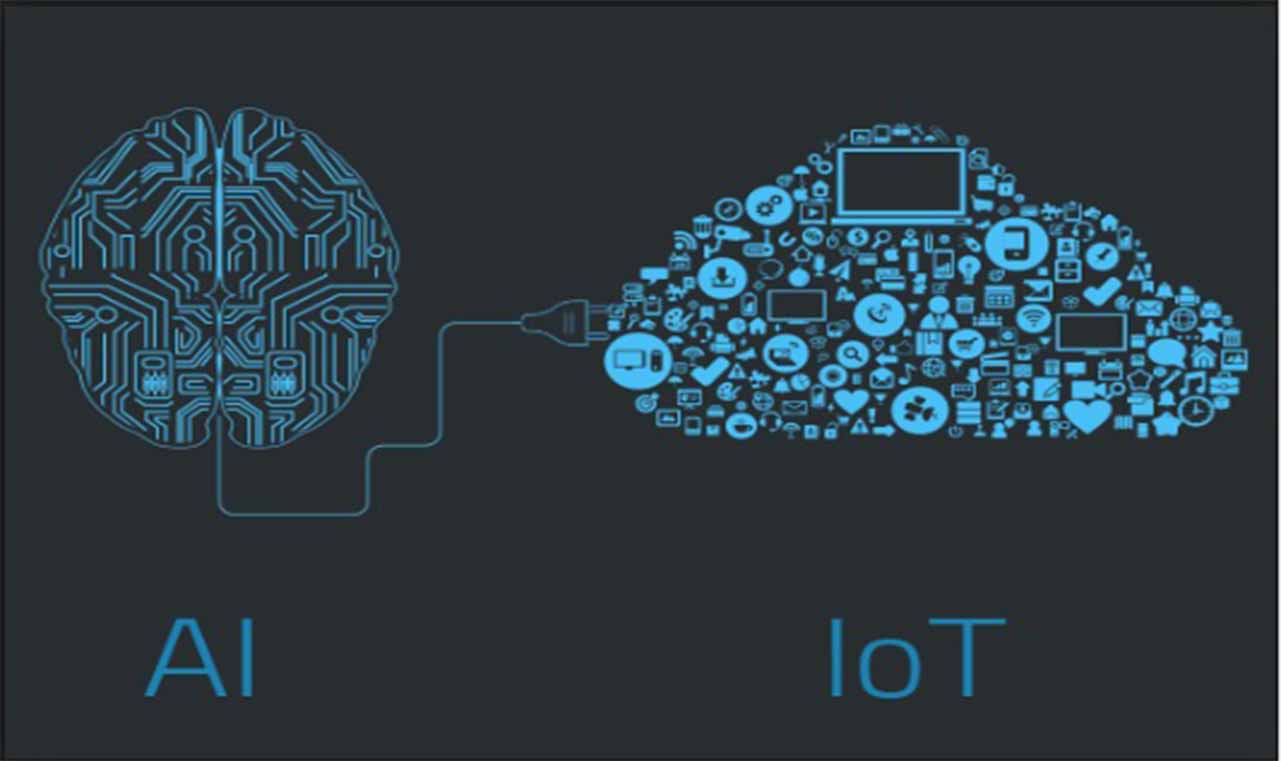
AI is also playing a pivotal role in the growth of IoT. The technology enables the connected devices to collect real-time data and take a decision on their own. In other words, AI-powered mobile apps empower connected devices to learn from the information exchange pattern and act accordingly.

According to statistics, there will be more than 50 billion connected devices by the year 2020, which means a higher demand for AI apps to control these devices.

Artificial Intelligence technology is slowly and gradually revamping the mobile economy with its potential to collect real-time data, understand human emotions and provide a personalized experience. And now, with the announcement of AI chips in the 5G smartphones, the future of the mobile economy is going to be more intelligent and interesting.

Elements That Are Making Your Food Technical: AI, AR, and VR

5 Technology Trends That Will Shape 2017 and Beyond — AI, AR/VR, Analytics, Cloud and Data Science | by Hari Gottipati | Medium

The Ways Artificial Intelligence and Augmented, Virtual Reality Are Impacting the Food and Beverage Industry are too many and too omnipresent to ignore. From inside the kitchen/ store to the food production chain, the three technologies have found their place right at the center of the industry.

While in one restaurant, diners are analysing their calorie count that has come attached with their order using Augmented Reality, on the other side Food brands are using AI based chatbots to send out messages to users according to their eating behaviour.

Although, it’ll be difficult to find case studies on the exact implication of the three disruptive technologies in the industry, but here are the use cases of Augmented Reality, Artificial Intelligence, and Virtual Reality that have started surfacing over time.

In this article, we will talk about how the industry is transforming with the advent of the technologies.

Let us first look at the implications of Augmented Reality and Virtual Reality in the modern F&B industry

IoT use cases for food and beverage industry | IoT in Retail Industry

1. Educate Diners of Nutritional Components

With the help of Augmented Reality, restaurants can give their diners a detailed information of the ingredients and their corresponding nutritional value, which is present in the dish that they have ordered.

Using Virtual Reality, restaurants can also create a virtual chef and introduce him to the diners as they look at how their food is prepared in action.

2. Adding Gamification Elements to the Waiting Time

The long waiting time once the food order has been placed, is one of the biggest turn off points for a diner. In fact, it is also the number one reason behind diners not coming to the restaurant twice. To solve the non returning customer issue, restaurants have started introducing the power of virtual reality in their everyday process.

As customers wait for their order, they can join the kitchen and become a sous chef, or they can take a deep dive in the oceans with seals and dolphins in the ocean themed restaurant, all through the advancement of virtual reality.

Also, while the customers wait, Augmented Reality game where they have to look for hidden spoons on the table or count the cherries in the dish can be introduced.

3. Making Chefs, Bartenders, and Waiters More Skilled

With the help of Virtual Reality, Food and Beverage industry would be able to elevate the learning process. The technology can be used to impart skills related to anything – making impressions on cappuccino, carrying four plates at a time to diner’s table, and the art of mixing showman’s skills into bartending.

Real life simulation of tasks using Virtual Reality would lower both learning time and on the job mistakes.

While Augmented Reality and Virtual Reality are more focussed on the experience part of the diners, Artificial Intelligence looks into the Food and Beverage system from the business or backend front.

Here are the ways Artificial Intelligence domain betters the Food industry –

AI in Food Manufacturing - FutureBridge

1. Slash Food and Drink Production Cost

An AI system, which closely monitors the level of dirt on cooking equipment to make sure that they are clean, holds the power to save over £100m in UK food industry.

The AI system, which is being built by the Derbyshire-based Martec of Whitwell uses optical fluorescence imaging and ultrasonic sensing to measure the exact dirt levels present in the equipment. The AI system is expected to save over 20 – 50% of the cleaning time and energy that the food industry puts behind this part of the production chain.

2. Assortment Management

By studying the buying behaviour of local purchasers, Artificial Intelligence will help in better management of Food Shelves in the supermarket. By giving the owners detailed information on which product is most in-demand, in what quantity, and in what season, the businesses would be able to concentrate on specific items, while cutting down on filling of shelf space with those that are not in demand.

3. Planned Menu

By analysing the diners’ order request is not just your restaurant but also in those that they otherwise frequent, Artificial Intelligence will help you plan your menu according to diners food preferences. It would also give you an idea of their taste preferences, whether they like their food spicy or have a sweet tooth.

When broken down to a more atomic level, AI would also get you insights on diners’ food preference when there is a football match on or when they are nearing end of month with their salary level now standing at single or early double digits.

4. Lesser Food Wastage

The current Food and Beverage Industry is marked by a series of strict rules and policies related to food quality that is expected to be maintained in restaurants and fast food chain. The rules around quality of tomatoes that can go as slice in burger might lead to a lot of wastage in case they don’t meet the criteria.

With Artificial Intelligence, the actual expectation bar would be raised. The technology would give information on exactly what the users expect and the room they can work around when it comes to tomato slices size and french fries length.

5. Development of new Food Items

By reading the users’ reviews on what taste they are developing, what combination they would like to be introduced, and what they need as a blend of their health and taste preference, the world will start looking into more and more food items getting developed at the back of AI insights.

IntelligentX is one such brand that has developed a series of premium beers according to the users’ feedback collected with the help of AI, and so long the brand is seeing a huge success.

While these are just some of the ways Augmented Reality, Virtual Reality, and Artificial Intelligence hold the power to alter and revolutionize the Food and Beverage industry, the time to come will look into more application of the technologies.

Technology Trends to Watch in 2021 and Beyond

Top 10 Technology Trends in 2019 | HP® Tech Takes

There are some technology trends that fizz out over time and then there are the latest technology trends that stay on the sidelines and then gain traction after it either gets major funding or an industry suddenly integrates it in their process.

There are many such technologies that have already made their prominent mark in the previous years and are only a few more advances away from becoming mainstream. These technologies are the ones that we have listed as the latest and upcoming and latest technologies that would be setting a global trend in the coming years.

Without further ado, here are the ten technology trends for the future years –

1. Artificial Intelligence

Technology Trends

Artificial Intelligence (AI) is constantly making its place in the list of top tech trends since quite some years. It has found a place in the future technology trends 2021 technology predictions as well.

AI is already known for its superiority in image and speech recognition, voice assistants, navigation apps, automation, and whatnot.

In the artificial intelligence trends 2021, we hope to see tremendous demand and rapid development of AI and modern industrial automation technology. As manufacturing and supply chains are getting back to full activity, labor shortage will turn into a serious issue. Automation with the assistance of AI, robotics and IoT will be a key solution to operate manufacturing.

Other than that AI development companies will be utilizing AI further to analyze interactions to decide basic underlying influences and insights to predict demand for services such as healthcare sector empowering specialists to make better choices about resource use, and to identify the changing ways of customer behavior by dissecting data in near real-time, driving incomes and improving customized experiences.

Its present-day tasks of enabling computers to read (studying messages and reports), see (through facial recognition), listen (by enabling Amazon Echo to answer your command), speak (Siri being able to give you an answer), and even record emotions (through affective computing), will help AI become a technology that no longer needs human intervention to aid its learning. The mass usage of AI in the world is leading to its adoption in a number of sectors: Customer Experience, DesigningHealthcare, Fintech.

2. Voice search

A Healthcare Marketer's Secret Weapon in the Voice Search Battle

The trending technologies in 2021 will remain incomplete without voice search technology. The time is long gone when the only relation between voice and technology was to talk using our mobile devices. The importance of voice search in today’s time cannot be ignored, as this emerging technology trends 2021 uses speech recognition to identify what a user is saying with high accuracy. As a reply, it delivers the message to the user through voice.

While Google Action SDK and Integration of Siri into apps have already acquainted us with the power of voice in conducting everyday tasks, the applications have still remained very limited. But the future that it has set for itself, has placed voice based applications in the list of top technologies in 2021.

The near future with a set of upcoming new tech trends will find itself conducting more operations with a voice command. In only a matter of time, every device that we have surrounded ourselves with will be able to function and perform actions with a command of our voice. Mixed with Natural Language Processing, AI, and Machine Learning with voice-based applications will find a greater place in users’ everyday activities.

3. Natural language processing

Technology Trends

In a year or two, Chatbots would have reached their market potential, with the majority of the businesses employing them to redefine their customer engagement policies. However, the new technology in software development would reach a whole different level through the integration of Natural Language Processing (NLP).

Presently NLP is broadly utilized in financial marketing. It shares a thorough insight into market sentiments, tender delays and closings, and obtains data from huge repositories.

The requirement for a semantic search is another top tech trend to affect NLP in 2021. This search would draw both NLP and NLU (Natural Language Understanding) requiring a granular perception of the central thoughts contained inside the text.

E-retailers would utilize NLP and Machine Learning methods to build customer engagement, analyze their browsing patterns and shopping trends.

A report by Business Insider predicts that the chatbot market which was worth $2.6 billion in 2019 will reach US$9.4 billion by 2024.

4. Blockchain

Will 2020 Be The Year Cryptocurrency And Blockchain Becomes Operational?

The rate at which Blockchain is growing has placed it at a pivotal point in the list of latest trends in technology. While prevalent with cryptocurrencies currently, the world will see its mass adoption in the coming years, and Blockchain technology trends will definitely stay here.

Cryptocurrencies, the important Blockchain element, will also find itself divided in a number of currencies and would be floated in the market just like fiat currencies. People who are currently unaware of what Blockchain and Cryptocurrencies are and where they can spend them, will start doing their everyday transactions with them. The future will see Blockchain development solution being explored beyond cryptocurrencies.

In 2021, the technology will scale with updates and better implementations of smart contracts. When it comes to securely exchanging data, the updates to Blockchain tech may mean that it can be used whenever and wherever there is a case of secure, immutable data exchange. For that people can opt for companies like blockchain development company in USA to avail the benefit of this technology.

According to reports by Markets and Markets, thglobal blockchain market size is expected to grow from USD 3.0 billion in 2020 to USD 39.7 billion by 2025, at an impressive CAGR of 67.3% during 2020–2025.

5. Internet of Things

Technology Trends

Internet of Things (IoT) has been finding itself in the list of latest app development trends 2021. Our homes that already have a series of smart products such as TVs, water heaters, microwaves, yoga mats, and the voice-enabled personal assistants like Amazon echo, etc., will find a series of new entries in only a matter of time.

The Internet of Things is the future, and has facilitated devices such as home appliances, cars and much more to be connected to and exchange data over the Internet. The IoT technology trend enables better security, efficient decision making for businesses as information is collected and analyzed through the internet. It is said to provide predictive maintenance, speed up medical care, improve customer service, and offer various benefits in the coming future.

According to Statista Forecasts, around 50 billion of IoT devices will be in use around the world, creating a massive web of interconnected devices spanning everything from smartphones to kitchen appliances.

6. Edge computing

Top 5 Edge Computing companies you should follow in 2020 | TechGig

One of the least talked about but one of the latest upcoming technologies will take the center stage the day IoT becomes a mainstream technology. While businesses are presently working comfortably in their Cloud setup, things are going to change pretty soon with edge computing.

Edge computing supports computation and data storage together on the collection device, inplace of depending on one major location that can be miles away.

It is a computing element where everything from – information processing, content collection, and delivery etc. are situated close to the source of information. Latency and connectivity challenges, bandwidth restrictions, and higher functionality are some of the benefits that get embedded at the edge of the source.

To be a part of the future technology trends enterprises should start using edge based design patterns in the infrastructure architectures, especially in those that come with notable IoT elements. For achieving this, the starting point can use edge-specific and co-location networking abilities.

Being a prominent part of a new technology, we with our IoT app development company are expected to witness increased attention being paid to edge computing for enabling intelligent networks, in which the connected devices will be performing the necessary analytics right at the location and would use the results for performing the specific actions. It will all happen within a few milliseconds, as compared to a few hundred milliseconds – the time it takes today with cloud computing. The promise that edge computing comes with, makes it an important addition in the top 10 new technology trends.

7. Predictive & personalized medicine

Free Vector | Doctors and personalized prescriptive analytics. big data healthcare, personalized medicine, big data patient care, predictive analytics concept. bright vibrant violet isolated illustration

Innovation is pushing the healthcare sector forward at a growing rate. The potential to get information about an individual’s lifestyle from a smartwatch (like Samsung, Apple Watch, Fitbit, etc.) is giving healthcare professionals the ability to forecast and even treat possible medical issues before a patient even has any symptoms.

When it comes to treating these patients, this technology trend will help doctors prescribe more personalized medicine, often referred to as predictive medicine. The info-driven understanding of how useful some treatments are on people will boost the healthcare market forward in 2021.

With regards to treating the patients, this technology trend will assist doctors in prescribing personalized medication, generally known predictive medicine. The data driven comprehension of how helpful treatments are on individuals will support the medical services market in the coming years.

Reports from Juniper Research reveal that wearables, including health trackers and remote patient monitoring devices, will be the must haves in delivering healthcare with the forecasted annual spend of $20 billion on these devices by 2023.

8. 5G

What is 5G | Everything You Need to Know About 5G | 5G FAQ | Qualcomm

The 2021 technology predictions show that the world in the coming years will be under the spell of fast internet connection and all the various perks that come attached with it.

5g will find its place in the market very soon, bringing with itself benefits such as high internet speed, lower latency, and higher capacities.

The benefits would make it possible for autonomous vehicles and wireless VR to work with minimal technical hesitancies. The benefit of 5G would be two-fold. Not only would it enrich the user experience by offering higher data rates when we talk by VR or AR, but it will also be much safer, which is where the latency point comes in.

But just how fast would 5G be? It is anticipated that when it takes 26 hours for a movie to download in a 3G network, in 5G the time would reduce to 3.6 seconds.

9. Facial recognition

Facial recognition utilized by protestors around the world to identify police | Biometric Update

Your face will become the ideal technology partner by 2020. What started with iPhone X with its face ID will be taken ahead by a number of industries who would now be using your face for a series of different applications.

From the present ability to unlock your phone just by looking at it, the latest technology in facial recognition will allow you to unlock your house and car, which would be connected with the internet. In the future it is said that an individual would be able to withdraw money from the ATM using nothing but your face.

10. Automation

Sales Automation Process – Everything You Need to Know in 2020

Automation has moved ahead from its involvement in the production lines. There are a number of ways automation will create its presence around us by becoming one the most awaited technologies.

From packaging juice boxes to delivering pizza in self-driving vehicles, automation is fast climbing the food chain from doing routine tasks to a lot more complex, decision-making tasks.

Mixed with Robotics, Machine Learning, and Artificial Intelligence, processes across multiple industries like Food and Beverage, Medical, and Customer Service will become further streamlined and automated by the time future hits our doors.

So here were the latest technology trends that will see the mass adoption in the future years. Are you ready for them?

The Three Technology Entrants That Will Additionally Redefine the World in the Upcoming Years

1. Big data

What is big data and why is it important? | by Raghav Sharma | Noteworthy - The Journal Blog

With the ever growing amount of interaction between machines and humans, the devices that we carry with us every waking hour have become a massive repository of data. Data that is waiting to be converted into meaningful information and insight for businesses to use for offering better service.

2. AR/VR

The world of AR/VR and what it holds for us in the future - Blog by Intern

If there is anything that Pokémon Go has taught us it is that users are very open to the idea of losing the sense of their reality for a good time in the virtual world. Taking the cue from the interest that Pokémon Go managed to create, a number of business models have come up in a number of different industries like Healthcare, Retail, and Education etc. focusing on giving the users a chance to introduce fiction in their daily life and find something of value at the back of the whole experience. That’s why AR VR app development company like us help the clients to achieve their technological goals.

3. Chatbots

The Ultimate Guide to Chatbots: What is a Chatbot? Why Are They Important? | RingCentral UK Blog

It has already been established that Chatbots are shaping the business growth story by making business available 24*7. The coming years will find the conversion magnet becoming more personal and intelligent with the power of machine learning and predictive analytics technologies.

Frequently Asked Questions

Q. Which technology is best in future?

Artificial Intelligence in the best technology for the future. The technology, with its potential to mimic human brain, has offered a myriad of opportunities/functionalities to different business verticals, such as Real Estate, Healthcare, Education, Travel, Finance, and more.

Q. What are future technology trends?

While there are various technologies that exist in the market and will continue to disrupt the market, here are a few that are newly entering the market and are poised to bring transformation:-

  1. 5G technology
  2. Edge Computing
  3. Prescriptive Analysis
error: Content is protected !!