TRENDS IN LOGO DESIGN

Logos are like puzzles, they don’t make much sense to the users when it comes to influence. They don’t contribute in persuading the users, however they play a crucial role in identifying a brand or a product. Depending on the brand’s familiarity, logos can provoke a lot of emotions, from nostalgia to relief, it could be anything. When companies try to introduce new logos, they often face backlash and complaints from the users, which shows they significance of logos.One thing that branding gurus say about classic brand logos is, “if it ain’t broke, don’t fix it”. However, at times it becomes a necessity to revamp the logos or even completely change it, if it is hurting the brand image. Keeping up with changing trends, styles, colour combinations, etc., requires a lot of effort and that might make the company look like it is behind the times. But, if a company revamps and changes the outdated logo, it gives an impression that the company keeps up with the times and is forward thinking.

Sophisticated logos containing multiple colours might look appealing in digital mode, but sometimes there comes a huge difficulty in scaling it up and down and placing it effectively. In such a situation, considering re-designing is a good option.

Change in a company’s portfolio, due to value, mergers, etc., can also prompt re-designing of logos. They are dedicated to choosing a new logo that best represents them. 

For instance, HeroHonda was a single company, but when they separated they obviously discarded the signature hero-honda logo and chose brand new logos for their respective companies.

Designs are extremely sensitive and prone to losing relevance at a higher pace. There goes a lot of cultural, psychological research behind designing a logo. It is essential to know what relates best to the brand/product.


Let’s take a look at the top logo design trends

BROKEN LETTERS

The broken letter logo caught the fire amidst designers not long ago. The reconstruction, deconstruction of alphabets in a geometric sense, slicing them aesthetically, this is all what broken letter logo is about. This represents a modern shift in design, wherein with a touch of creativity, logos are designed in a way that it is clear to the users as to what the brand stands for.

ANIMATED LOGOS

By far the hottest trends, logos designed with animation and special effects. As a modern world, where digitisation plays a crucial role, the brand that sells on the web is clearly on top. An animated or a moving gif logo surprises the users in a way they didn’t expect to be coming. How would you feel when you look at a logp thinking it to be still, rather you find it in an animated form? Now how does something like that not catch the users’ eyes?

GEOMETRICAL SHAPES

Clean lines and clear shapes are satisfying to the eyes right? It is like an oddly satisfying element in design. From squares to trapeziums, almost all the shapes are in trend and that too, for all kinds of design. We are inevitably drawn towards geometric shapes and our designer-mates like multi-use design shapes. It is like a simple yet effective element in design.

VIBRANT COLOURS; SINGLE SHADE

Adding pop of colours generously lead to the creation of quirky, eye-catching logos. Of Late, many brands have reinvented their image by adding vivid and vibrant singular colours to their logos. This addition of hues enables the brands to attract users’ attention and leave an impact.

GRADIENT

Remember those days when designers used to create 3D logos to catch those eyes? Sadly and happily, those days are long gone. Here we are with the concept of ombre, i.e., gradients. The subtle mixing of colours to create a beautiful effect, mostly starting with darker tones and ending with a lighter tone. It is very pleasing to the eyes and as a bonus, it also opens up a lot of creative possibilities.

SIMPLICITY IS THE BEST

If designed the right way, simple and crisp logos become impactful in a soothing way. “Less is more”, best suits such logos that have set newer benchmarks everytime in the industry. Art can be creative and can be sleek, simple at the same time. It is not an impossible task to achieve, all you need is balance. And the best part is, such logos work for all sorts of brands and businesses.

HAND-DRAWN

Personal touch always leaves a mark and hand drawn logos are the perfect example. It brings back an ocean of nostalgia and memories. Such kinds of logos bring about a variety of senses: humaneness, grounded feeling, playfulness, quirkiness and happiness. They aren’t restricted by letter or technology, they set your hands free. However, whilst designing such a logo, make sure that it makes sense, looks legit and does not get affected by the doctor-like handwriting.

Before designing a logo, make sure that you’ve researched well into the trends and highlights. But that is just to keep you up with the times, the design that you create should be entirely unique and should solely belong to you. It shouldn’t be like, “oh this looks like..” that’s a huge NO.

There are a lot of expectations from logos and so make sure to create a beautiful combination of the trends and your innovation. This will lead to the production of a modern-looking, timeless logo. 


WONDERS OF WORKING AT A DEDICATED DESIGN STUDIO

Working in the field of communications and PR, we have come across and have had the chance to look closely at how designers work. Designs have always had something about them which is extremely fascinating. Whilst observing various design departments, we found out why designers are the happiest and at their utmost satisfied state in a dedicated design studio.


INEVITABLE GROWTH-

Although the industry is still in its early stage, but, it is growing at a sheerly high pace. Professionally designed digital experiences are now considered the base layer for a business’ success and hence they are becoming even more crucial. The better part of it is that, designing is not limited to a specific field rather it is required by all kinds of domains that are entering and exploring the digital world. And in today’s world, there is no business without an online profile, so ultimately, every business needs the designing service. And so, UX/UI designer’s job is one of the highest requirements in demand now.

TRADITIONS OF A START-UP-

Majority of the design studios have just started out, in their early stages. And so they have cool new traditions. Generally they have small close-knit groups and they work crazy hours accompanied by frequent parties and celebrations. The bonus about working in the renowned design studios is that you get to work with different industries in the design department, therefore, you gain lots of experience.

E²: EXPOSURE AND EXPERIENCE-

Design studios make you learn and help you grow simultaneously and you indeed would do so as well, that’s a ‘for sure’. If you are working in an IT company or for a product, you would be adding value to one or two parts of the designing process. While on the other hand, if you work in a dedicated design studio, then you get to work in various projects from several industries. This way you’d keep on adding value to your profile, whilst learning and growing. What more to ask for than a priceless portfolio, that leaves companies with no choice but to work with you and get you on board.

SHAPING PERSONALITY-

Working in dedicated design studios requires for you to come face-to-face with clients. Where you converse with them, understand their needs and justify your design to them with a clear perspective. This does nothing but shape your personality and develop your communications. Having a great personality does leave an indistinctive mark on the client.

LEARN AS A TRAINEE TO WORK AS A BOSS-

As it is said, “with great power comes great responsibility”. It is really important for you to realise that when you choose to learn and work, you must also learn to work towards ownership. When you work on a project that is under your responsibility, you automatically learn to meet deadlines, expectations and to put up a great show. In all of this, you significantly learn discipline. Now because you are trying to produce substantial and efficient results, you will keep learning and updating your skills, because time doesn’t wait for anyone

ACKNOWLEDGMENT AND APPRECIATION-

Appreciation makes innovation easier. Designers get acknowledgement for their work, thus, leading them into creating new styles and setting new benchmarks. Being appreciated only fuels your brain to imagine and create. Now what more to ask for than a versatile pace in innovation. It’s definitely a plus, innit!

Before wrapping this up with the final thoughts, let’s answer one last question, that is likely to pop in your head while you read this piece. Money. To be fair, such studios do pay you really well. Although it does not pay an insanely high amount, like an IT company or a product would do. But the designing field needs passion and innovation the most and dedicated design studios present that with grace.

Now all you need to do is, reflect, think and decide.


Security Flaws in Web Application and its Mitigation

The inability to identify vulnerabilities in a web application can leave it unprotected against potential attackers, resulting in the most severe consequences. Web application vulnerabilities include a system weakness or flaw in a web-based application that leaves you susceptible to security attacks, risking the loss of valuable company or customer data.The inherent complexity of a web application’s source code increases the possibility of malicious code manipulation and unattended vulnerabilities. High-value rewards such as sensitive private data obtained by successful source code manipulation have made web applications a high-priority target for attackers. This makes it essential to thoroughly understand web security vulnerabilities and how to prevent them.

Types of Web Application Vulnerabilities

Common Web Application Vulnerabilities | EC-Council University Official Blog

Web application vulnerabilities are caused due to misconfigured web servers, application design flaws or not validating or sanitizing form inputs. They are prioritized based on their detectability, exploitability and impact on software. So, here is a list of some of the most critical web security risks according to the Open Web Application Security Project (OWASP):

  1. Injection: Injection flaws, including SQL, OS, LDAP and NoSQL injection, take place when a query or command with untrusted data is received by an interpreter. The hostile data by an attacker can trick the interpreter into accessing data without authorization or executing unintended commands. This can lead to the unauthorized viewing of lists, unauthorized administrative access and deletion of tables.


  1. Broken Authentication: This occurs when application functions related to session and authentication management are implemented incorrectly. It allows attackers to not only easily compromise passwords, session tokens or keys but also assume the identities of other users temporarily or permanently.


  1. Sensitive Data Exposure: Sensitive data can easily be compromised if special precautions are not taken when exchanged with the browser or some extra protection, like encryption at rest or in transit, is not implemented. Many web applications are unable to protect sensitive data properly, which allows attackers to steal or modify it, resulting in credit card fraud, identity theft and a number of other crimes.


  1. XML External Entities: Attackers can exploit poorly configured XML processors to access confidential data, inject additional data, create remote tunnels and execute applications. This vulnerability can also lead to Server Side Request Forgery (SSRF), denial of service attacks and remote code execution.

How to Execute an XML External Entity Injection (XXE) | Cobalt | Cobalt.io


  1. Broken Access Control: With access control, you can manage the sections of a website and application data accessible to different visitors. If these restrictions are not enforced properly, attackers can easily take advantage of these flaws to get access to unauthorized data or functionality. This can enable these attackers to access the accounts of other users, view sensitive files, change access rights and modify the data of other users.


  1. Security Misconfiguration: Counted amongst the most critical web application security vulnerabilities, it offers attackers an easy way into your website. Attackers can exploit unsecure default configurations, open cloud storage, incomplete or ad hoc configurations, verbose error messages with sensitive information and misconfigured HTTP headers. All operating systems, libraries, frameworks and applications can be susceptible to security misconfigurations.


  1. Cross-Site Scripting: This vulnerability occurs when untrusted data is included in a web page without validation. It injects malicious code into the web application and executes it on the client-side. It helps attackers execute scripts in a user’s browser to hijack user sessions, redirect the user to malicious sites or deface websites.


  1. Insecure Deserialization: Often resulting in remote code execution, deserialization flaws allow cybercriminals to perform a variety of attacks including injection attacks, privilege escalation attacks and replay attacks.


  1. Use of Components with Known Vulnerabilities: Various components such as frameworks and libraries run with the same privileges as the web application. Even if a single vulnerable component is attacked, it can cause server takeover and serious data loss. For this reason, a web application that uses components with known vulnerabilities can seriously compromise its defences, leaving it open to attack.


  1. Insufficient Monitoring and Logging: Insufficient logging and monitoring along with ineffective or missing integration of incident response can cause another major vulnerability. It can help attackers further attack systems, tamper, destroy or extract data and maintain persistence, pivot to more systems. According to security studies, it often takes more than 200 days to detect a breach. And it is usually detected by an external party instead of internal monitoring or processes.


How to Prevent Web Application Vulnerabilities?

How to prevent top 7 Web Application Vulnerabilities?

Organizations that do not properly secure their web applications are more susceptible to malicious attacks, resulting in information theft, revoked licenses, damaged client relationships and legal proceedings. There are several measures that you can take for securing your web applications:

  1. Web application firewalls (WAFs): WAFs are hardware and software solutions designed to examine and monitor incoming traffic for blocking any attack attempts. They offer the best way of compensating for any code sanitization deficiencies.


  1. Information gathering: Classify third-party hosted content and review the application manually to identify client-side codes and entry points.


  1. Authorization: Test your application thoroughly for path traversals, missing authorization, insecure, direct object references and horizontal and vertical access control issues.


  1. Cryptography: Secure all data transmissions, encrypt specific data, check for randomness errors and avoid using weak algorithms.


  1. Denial of service: Test for anti-automation, HTTP protocol DoS, account lockout and SQL wildcard DoS for improving your application’s resilience against denial of service threats. Use a combination of scalable resources and filtering solutions for protection against high-volume DDoS and DoS attacks.

Apart from the above measures, running a periodic Vulnerability Assessment and Penetration Testing is essential too. VAPT looks for possible and common vulnerabilities related to the platform, technology framework APIs, etc., and runs exploits on the web application to evaluate its security loopholes. It provides the organizations with reports on discovered vulnerabilities, the nature of the vulnerability, threat level, its impact and measures to eliminate it.


ECMAScript & its Features

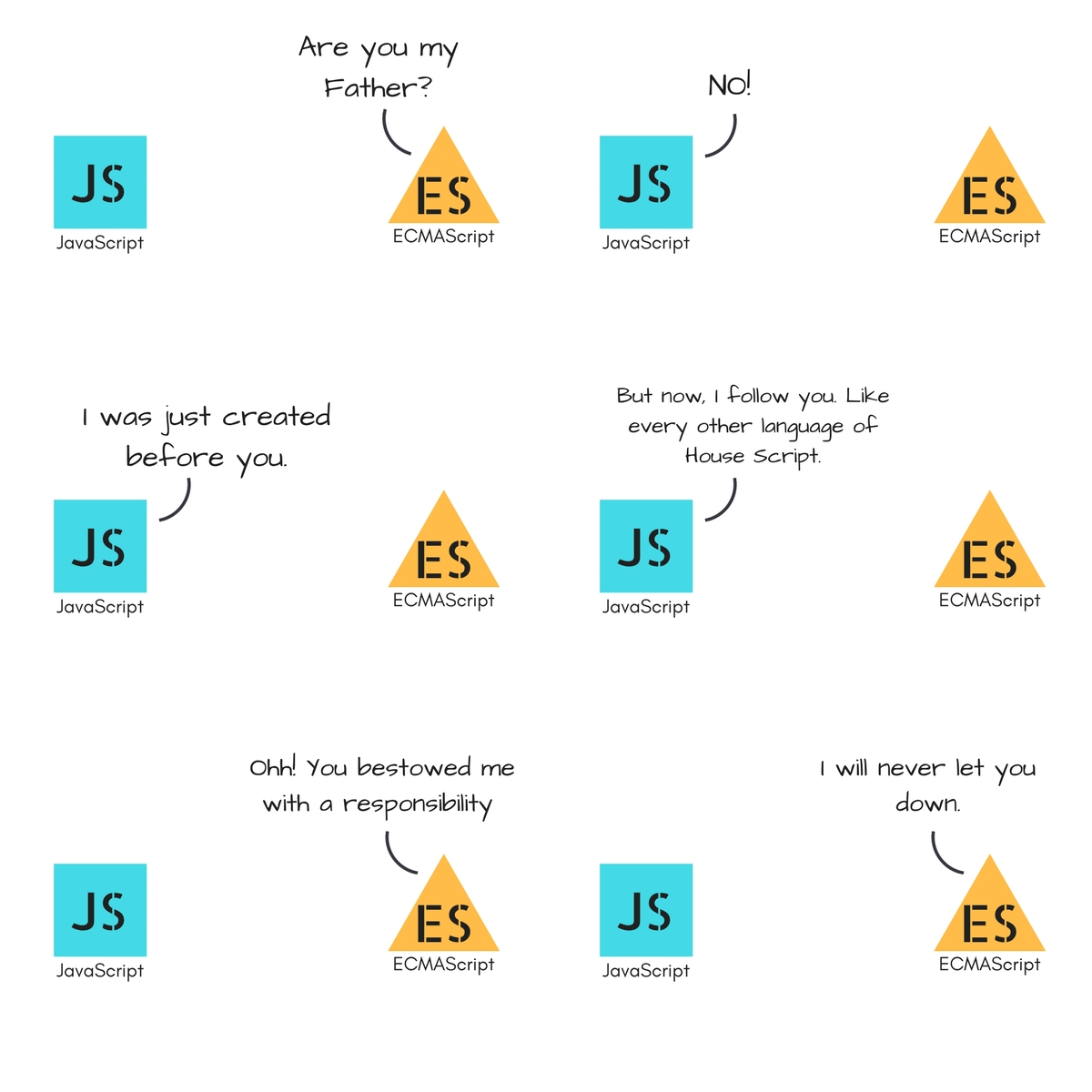
ECMAScript is a term commonly used by developers for coding standard but most of us don’t know how did it come into the picture and why do we need it?
New Features in ECMAScript 2021 (with code examples) - DEV Community

Imagine a world without a set of rules for coding. Everyone would be writing their own codes, will have their own set of rules and when a new person enters the world of software development, he/she will never know which set of rules they need to follow. The situation will become chaotic!!

The same incident happened with Javascript. When Javascript was first created by Netscape then there was a war going on between all the browser vendors in the market. Microsoft implemented its own version of javascript in Internet Explorer and Mozilla implemented its own. Similarly, other browser vendors implemented their own versions.

All this created a huge problem for the developers. One version ran fine on Netscape but was a total waste on Internet Explorer or Firefox.

To solve the cross-browser compatibility, Javascript was standardized by the ECMA international and that’s the reason it got the name ECMAScript. All browsers eventually implemented ECMAScript (though it took a lot of time).

How is Javascript related to ECMAScript

JavaScript is actually the term most of the developers use for ECMAScript. Although there are other implementations available for ECMAScript like – JScript (Microsoft) and ActionScript (Adobe), but JavaScript has proven to be the best-known implementation of ECMAScript since it was first published.

Jeff Atwood (founder of Stack Overflow) coined the term “Atwood’s Law,” which states:

“Any application that can be written in JavaScript, will eventually be written in JavaScript. “

It’s more than ten years now, and Atwood’s statement still lingers on. JavaScript is continuing to gain more and more adoption. The “next generation” of Javascript is something known as ES6 (The 6th edition, officially known as ECMAScript 2015).

JavaScript==ECMAScript?. I'd like to begin this article by… | by Shreya Prasad | Medium

6th Edition – ECMAScript 2015

The 6th edition, officially known as ECMAScript 2015 is different because it introduces new syntax. Infact, a lot of new syntaxes.

Browser support for ES6 is still incomplete. However, we can still use ES6 features by using a pre-processor like Babel to cross-compile our JavaScript back to ES5 compatible code for older browsers, so there’s no reason to put off learning about it.

This update added arrow functions, promises, let and const, classes and modules and a lot of new features, but defines them semantically in the same terms as ECMAScript 5 strict mode. The complete list of new features can be found on http://es6-features.org

Learn ECMAScript 6 - Deep Understanding - Swiftcoding.com

Some of the new features that are introduced in ES6 –

Default Parameters

We do not need to worry about parameters taking 0 or undefined value since we can define defaults in the parameters’ list now. This also saves the overhead of sending parameters to each function call when we wish to use the defaults.

Block-Scoped Let and Const

‘let’ is a new ’var’ which restricts the scope of the variable to a block instead of the whole function. With ‘const’, things are easier. It’s just an immutable entity, and at the same time block-scoped like let.

Template Literals

It determines the way to output or append variables in a string. Now we have a simple bash-like syntax that makes the code look prettier.

Multi-line Strings

When writing a multiple line string, ES6 save a lot of typing efforts by its new syntax that uses ‘backticks’.

Destructuring Assignment

It provides intuitive and flexible destructuring of Arrays and Objects into individual variables during assignment so we do not need to write extra code for the assignment task.

Arrow Functions

Arrows are shorthand for functions using the => syntax. They are syntactically similar to C#, Java 8 and CoffeeScript arrows. Arrows would make your ‘this’ behave properly, i.e., ‘this’ will have the same value as in the context of the parent function – it won’t mutate.

Promises

Promises provide the representation of a value that may be made asynchronously available in the future. We can also combine one or more promises into new promises without worrying about the order of the underlying asynchronous operations.

Classes

ES6 provides more intuitive, OOP-styled and boilerplate-free classes. These classes encourage the prototype-based object-oriented pattern which brings support for inheritance, constructors, static methods and more.

Modules

ES6 includes a built-in module system which provides support for exporting values from modules and importing values to modules within the javascript code and without polluting the global namespace.

Spread Operator
The spread operator is an interesting way to build new arrays based on the values of existing arrays. It can:
  • Copy an array
  • Concatenate arrays
  • Insert new items into arrays

7th Edition – ECMAScript 2016

The 7th edition, officially known as ECMAScript 2016, was finalized in June 2016. New features include the exponentiation operator (**) and Array.prototype.includes.

Array.prototype.includes

The includes() method determines whether an array includes a certain element or not, returning true or false as accordingly.

Exponentiation Operator

The exponentiation operator works same as exponentiation in mathematics, it returns the result of raising first operand to the power second operand. For example – 5^10 or 7^12

Conclusion

There are a number of really great language-centric reasons to start writing your code in ES6 and ES7 now, but there isn’t enough room in a single blog post to enumerate them or go into the nuances of how they will make your life better.

How to perform Usability testing?

Preparing a test plan

The first step is to create a test plan. It is a very important step to determine what we are testing, what we are going to give to our users. Before preparing a test plan we need to:

  • Define what areas to concentrate on
  • Determine potential usability issues
  • Write a test plan
  • Determine what tasks will be tested

Website Usability Testing: How To Get Started Today | Hotjar Blog

A Test plan should include
  1. Objective
  2. Test task (scenario)
  3. End state (answers)

Well-formed task scenarios make smoother tests. Here are some quick tips for you to ponder over-

  • You(motivation) X…
  • What is… which X… how can…
  • Use specifics to see if they get (e.g. is X available?)
  • According to X(our app) what…
  • End with a question

Sequence the task in the order of easy (orientation tasks), difficult and moderate so that users don’t get frustrated at the beginning of the test. This can happen in case they face any difficulty in understanding their role.

Interact with participants before test starts

  • Explain to your participants that the objective is to test the software and not the participants’ intelligence. This is important as the participants may feel that their ability is being tested.
  • Explain how the test material and record will be used
  • Encourage participants to think aloud while using the product
  • Prepare a pre-test questionnaire and a post-test questionnaire

Why Usability Testing is important for your Web or Mobile App? - Zignuts Technolab

Prepare a checklist for Usability Testing

  • Success rates
  • Time on task
  • Errors made in performing the task
  • Confusion(unexpected user actions)
  • System features used / not used
  • System bugs or failures

During the test

  • Record techniques and search patterns participants employ when attempting to work through a difficulty, for recording we can use software like ScreenFlow or silverback (mac only)
  • If participants are thinking aloud, record assumptions and inferences being made.
  • Do not interrupt participants unless absolutely necessary
  • If participants need help provide some responses:
    1. Provide encouragement or hint
    2. Give general hints before specific hints
    3. Record the number of hints given
  • Watch carefully for the signs of stress in participants:
    • Sitting for a long time doing nothing
    • Blaming themselves for the problems
    • Flipping through documentation without really reading them
  • Provide short breaks when needed
  • Maintain a positive attitude, no matter what happens
  • Use a monotone tonality with users i.e. never let users know that you are super excited or your body language indicate them that they are doing bad and things like that.
  • In case users ask questions to try to get your consent if they are doing it right never give them direct answers instead use words like “Okay, uh huh”. Instead, ask reverse questions like “Is it what you were looking for”
  • Let them struggle and don’t over moderate

After the test

  • Hold a final interview with the participants and tell them what has been learned in the test, and if you noticed any discomfort in users or they gave a signal of confusion through “think aloud” during the test ask them more about such things.
  • Provide a follow-up questionnaire that asks participants to evaluate the product or tasks performed. The post-test questionnaire is generally used to gauge what users think of their performance. We should also include the questions like “What is the one thing that you would change…?”.
  • If video recording is required then get a written permission and respect participant’s privacy
  • Do not generalize the opinion unless 5-8 users indicate the same problem

Analyzing the collected data

  • Video Data
    • In less formal studies, video can be very useful for informally showing managers or disbelieving system designers exactly what problems encounter.
    • In more formal studies two types of analysis can be performed: Task-based analysis and Performance-based analysis-
      Task-Based Analysis is used to determine how user tackled the task given where the major difficulties lie and what can be done
      Performance analysis is used to obtain clearly defined performance measure from the data collected (task timing, frequency of correct task completion, frequency of errors, productive vs. unproductive time)
  • Analyzing Questionnaire
    • The quantitative type of questionnaire is often used when statistical data is required to emphasize the results of the test.
    • These questionnaires have some form of rating scale associated with it.
    • There are a number of different rating scales-
      • Three-point scale i.e. “Do you know how to copy a text” YES, NO, DON’T KNOW
      • Six point scale i.e. “Rate on the following scale” 1 to 6 from “very useful” to “of no use
      • Likert scale i.e. “The help function in this system gives solutions to complex problems”, “Strongly Agree, Agree, Slightly Agree, Neutral, Slightly Disagree, Disagree, Strongly Disagree”
      • Semantic differential scale

Once the questionnaire has been given to the selected population, the responses obtained on different rating scales are converted into numerical values and statistical analysis is performed.
Usually, mean and standard deviation from the mean are the main statistics used in the analysis of most survey data.
The questionnaire has to be designed as easy as possible and keep it short. Try to aim for no more than 2 sides of the paper

Strategies for analyzing the test results

Deciding upon the strategy to adopt will depend on the circumstances of the usability testing, including the time available and main objectives of the testing.

Top-down Analysis

Top-down analysis begins with an overall assessment of the user interface from the questionnaire, summarizing the major strengths and weaknesses.
This overall assessment can be collected from the results of the set of general questions on system usability

General questions on the system

Please provide your views on the usability of the website by answering the questions below. There are no right or wrong answers.

  • What are the best aspects of the system for the users?
  • What are the worst aspects of the system for the users?
  • Are there any parts of the system that you found confusing and difficult to fully understand?
  • Were there any aspects of the system that you found particularly irritating although they did not cause major problems?
  • What were the most common mistakes you made during using the system?
  • What changes you would like to the system to make it better from a user’s point of view?
  • Is there anything else about the system that you would like to add?

The answers to the general questions may highlight particular aspects of the interface causing problems, and a more detailed investigation may then be carried out to examine other instances where those aspects have been highlighted within the questionnaire.

Bottom-up analysis

A bottom-up analysis is a more detailed analysis that investigates the responses to each question within the questionnaire. This type of analysis will enable a more comprehensive picture of the interface to be generated. It is likely to yield a highly detailed specification of aspects of the interface requiring improvement, amendment, addition etc. A detailed analysis of each of the criterion-based selection will enable a summary to be drawn from the interface in terms of each of the criteria.

What to Do When Your Startup Idea Is Years Ahead of Its Time?

Seven Ways to Think Unique Startup Ideas that Spark Interest

We netizens have truly embraced the digital revolution. It is established that this is the era of tech startups. The global technology landscape is progressing towards more and more disruption and on an unprecedented note. But the looming question is, how is it going to transform business operations and what’s the next move?

In this fast-paced world, being ahead of time comes as an added benefit. But what about when the same applies to your breakthrough idea?

Is it a good thing if your great entrepreneur ideas are a decade too early?

Well, yes it is.

We all come across bold startup business ideas. And sometimes they are way ahead of their time. I have one in mind. You must have envisioned one too.

Sometimes it is the unavailability of the right technology that could have transitioned your innovative startup ideas into a reality, sometimes it is the determination to execute it and other times it’s the lack of funds.

The right thing to do when you’re stuck in such a situation is to pivot your solution.

To run any successful Startup, the ideation and discovery phase are extremely crucial.

A decade earlier the landscape was entirely different and we have witnessed exponential advancement over the years.

So, take a leap of faith, dig deep and understand the pain points you are trying to solve.

Don’t just give up on an idea because it lacks the technology or is way ahead of its time. You should look for alternative and accessible ways to solve the problem and make the most out of your entrepreneur idea.

What to do with a startup idea?

Dukaan raises $6 million in seed funding co-led by Matrix Partners India, Lightspeed India - cnbctv18.com

Think about it

What really is Innovation?

Isn’t it a breakthrough idea, something that’s not been done before? Something new, challenging, and meaningful.

An Innovator envisions a future. That future may not be in touch with the underlying reality but you must be determined and passionate enough to bring that change.

Innovation depends on a lot of things. While some factors may be completely out of your control, there are still certain things that you can control and influence.

This brings us to

1. User Analysis 

It is important to know who your target audience is and what’s going on with them. Conducting an in-depth user analysis is important. The data that you generate from users and their invaluable insights can help you build a better product.

Whether it is creating personas to identify user characteristics and behaviour, or user journey mapping that examines how a user will interact with your product, detailed analysis helps in finding the right product-market fit.

It is only after finding your niche audience and a market fit, that you can scale your business by identifying new customers in the target market.

2. Outthink the Competition 

Studying the competitive landscape is as important. Identifying the competition and evaluating their strategies to determine strengths and weaknesses provides a strategic context and helps in figuring out new opportunities. When you understand the competitive landscape, outthinking the competition and characterizing your unique value proposition becomes all the easier.

Don’t spend too much time on a business plan 

Laying out a business plan is a long process- one that involves a lot of time, effort, visualizing and strategizing on how to run and scale a successful business.

The key is to have a vision in mind, be clear with your end goals, but do not spend too much time on a perfect business plan. Rather, just begin.

3. Build an MVP 

How do you make sure that your brilliant idea stands a chance in the market? Developing a full-fledged product that no one seems to care about is a waste of time, money and effort.

Validated learning is always the answer to build a successful product. Building a basic first product that focuses exclusively on ‘need to have’ features and leaves the ‘nice to have’ for later is an ideal practice.

A Minimum Viable Product is a smart approach to building products. Your emphasis should lay on offering maximum value in minimum functionality and garnering maximum validation in minimum efforts.

4. Validate with real users 

It is essential to have at least five customers at the very start. If your idea is brilliant and sparks user interest getting the first five customers will be a cakewalk. However, if you can’t seem to find five users that find your idea interesting, it’s time to reconsider the idea.

Validating with real users will help you determine whether you are on the right track. Listen to what your customers have to say, observe what they do and how they interact with your product.

Knowing what the user wants can help you build a robust and scalable product.

5. Pivot 

According to the Startup Genome Compass of San Francisco which studies more than 13,000 Internet start-ups, “founders who change products and markets between one and three times raise more money than those who don’t.

Sometimes what you think is a great idea won’t necessarily work. Many big brands and successful businesses started with a certain idea but transitioned into something wholly different once they found their niche.

So, if your idea doesn’t work, don’t stick to it for far too long.  Instead, explore and pivot your startup. A willingness to embrace change helps us in identifying opportunities where others see nothing but a wasteland. Recognize the potential to tweak certain parts of your business – pivot, test, and learn.

If you see the potential for wholly new concepts or ideas, try to make the most out of those opportunities.

There are many examples of companies that pivoted and witnessed massive success as a result

1. Twitter 

In the world of social media, the most talked-about pivot is the transformation of Odeo into Twitter. Odeo began as a network where people could browse and listen to podcasts. After iTunes began taking over the podcast market, the company decided to shift the direction. After two weeks of coming up with new ideas, they decide to make a drastic change. They ran with the idea of a status updating micro-blogging platform which today we know as Twitter.

2. Pinterest

The famous ‘pinning’ social network Pinterest pivoted from “Tote”, a platform where people could shop and browse from their favorite retailers and were notified when the items went on sale.

Tote was losing on the shopping front since mobile app payments weren’t as easy back then. The creators tapped on a new-found opportunity, they realized Tote users were primarily interested in building ‘collections’ of their favorite items and sharing them with their friends.

Pinterest today has more than 291 million monthly active users worldwide and this pivot has been a huge success. The Tote-to-Pinterest transformation has been described as an “iterative” one, a direct outgrowth of what’s learned from the first business, “an unmet need, and obviously a huge opportunity.”

3. Instagram 

Today Instagram is one of the most widely used Social media platforms. This image and video sharing app boasts 1 billion users. But Instagram began as Burbn, a check-in app that included photo posting options, some gaming elements and allowed users to earn points.

Burbn was too cluttered so the creators pivoted, stripped all functionalities, and focussed on just one- photo-sharing that allowed users to post, comment, and like.

Making Instagram a visual platform that is clean and simple made it stand out.

So, what’s the big idea? 

According to a report by KPMG on the Indian Startup Ecosystem released in the second month of 2019, the number of Startups in the country grew from 7000 in 2008 to 50,000 in 2018. As per the report, this seven-fold increase has motivated people to look for innovation, especially in sectors like IT, AI,  AR/VR, IoT, Food Tech, and Healthcare.

In the last decade, the Startup ecosystem witnessed massive growth and the digital landscape saw exponential advancement. New-age technologies like Blockchain, AI, AR/VR are not only disrupting the landscape, they are also changing how we interact and go about our everyday lives.

The big idea is to START, Stay lean, build agile. Pivot Early and Iterate often.

An idea that is 10 years too early can be a great thing. It gives you the chance to be a disruptor.

And when you start something and things don’t really work out, leveraging other aspects, some tweaking here and there, and some pivoting can take you a long way.

Evolving with BlockChain

BlockChain defines a specific type of Database. They are designed to write once and read-only database. Which means that they are designed to create only not to edit or delete. The approach ensures that the data inside is secure and can’t be stolen or changed because everyone is watching and keeping all records of what is happening within the system. These databases are simple, transparent and immutable.We can consider it as a growing journal that adds new pages time to time. Blockchain database design is effectively used to enable Bitcoin as a money ledger.BlockChain database is different from a Conventional database. They are not housed in a data structure like array and tables. Also, they do not have any CRUD operations. The approach behind these databases is to open up the whole database for the end user and the user takes the responsibility for that system including security.

What is BlockChain

DNS on Blockchain: the next evolution of domain names?

The Blockchain is a very strange thing — simultaneously the most overhyped, least understood and most disruptive technology of our time.

For example- You want to send a public message to your friend with text as “Love you”. In general, you would walk up to your friend and simply express your feelings but what if your friend is far away from you. Still you have some options like, you will write a letter, send an email, send WhatsApp or Facebook message or via a friend you’ll convey your message to your friend or maybe some other way but the fact is that in all those ways you have to rely on someone and put your trust in their hands.

There may be fact that something can go wrong in between. The mail company may lose the letter somewhere along the way, or email/WhatsApp/Facebook service might get hacked or crashed while sending your message or, your friend forgot to convey your message. The message is very common and you will not be worried if it gets hacked but what about if you want to send some confidential information to your friend that is of billion dollars.

Would you still be relaxed until your message reached your friend? The answer is NO. This time you will not send your message the way you usually send it without any tension. Here comes the very popular technology blockchain that doesn’t rely on the third person and that’s why it is secure.

Blockchain was introduced by Satoshi Nakamoto in 2009 and he explained the idea in his article that changes the way we store data forever. The idea ensures that this type of storage will provide the facility in which everyone can see what is inside and make sure that everything is real, nothing is fake. If something is on the network it can’t be changed even a single bit, it stays forever.

All data shared in blockchain is compressed in blocks and once any block is added into the chain after being approved, it can’t be altered. In case if you want to change/modify something, you have to add a new block on the top of the previous block and that will notify all other participants that you have added something. It is also possible that you can go a block back to see the information stored earlier.

Let’s consider the previous example- Imagine that you had a nasty conversation with your friend and don’t want to go further with her/him and want to send a message saying that “You are not what you were before and I hate you!” through blockchain. Once this letter is approved, the letter is compressed into a block and added to the chain and all participants will get a notification that your friend is not trustworthy.

But after some days, all things sort out between both of you and now you want to send a message saying that “I still Love You” so you have to write another letter for apology purpose and when this letter gets approved and added to the blockchain, everyone will seeth the relationship changes between both of you. All the users can now see both letters, the earlier one where your friend was not trustworthy and the new one where you again have the same bonding. So what this example mean here? A blockchain is a records holder, where all data is safe and saved forever. You can read and analyze any data.

Blockchain has no central storage. Each member inside blockchain has a copy of all data. You can keep all data on your side but it is not necessary. No one can change even a comma in your data because all other members have the original copy of the data and will simply exclude the one where you changed something if you are not the owner of that data. The rule of the blockchain is that only the owner of the data can make changes.

If you want to make transactions on the blockchain, you need a wallet. A wallet is required to store and exchange bitcoin. Blockchain member gets two keys: a private and a public one. One interesting thing is that how the system knows that it’s you who is making changes? Well, the answer is with the help of these keys and asymmetric cryptography.

If a message is encrypted using a particular public key, only the owner of the paired private key will be able to decrypt the message. When you want to send a message to your friend through a blockchain, you need to broadcast a message encrypted with the private key of your wallet, only you know the private key of your wallet which is required for unlocking the wallet. As a result, your message gets encrypted and generates a digital signature on it.

Each encrypted message needs to be approved by the other members or we can say by their systems before it becomes available for the receiver party. A digital signature is used by blockchain computers to double check the source and the authenticity of the requested transaction. The digital signature is a string of text that is the combination of the transaction request and private key, therefore it cannot be used for other transactions. If you make any change in the transaction request then the digital signature will change.

Your friend can easily access the message that you want to send him/her using the receiver’s key, which is, in turn, is generated somewhere along the lines of encrypting and signing your messages/transactions.

The total number of possible Bitcoin addresses is 2¹⁶⁰ or 1461501637330902918203684832716283019655932542976. This large number protects the network from possible attacks while allowing anyone to own a wallet. Also, an attacker has to compete against the whole network to break the blockchain system which is almost impossible.

For now, it is almost impossible to hack your private key because it is a very long and complicated as shown above. So saying blockchain is the new era of storing data in a secure way will not be a wrong statement.

Kick-starting Amazon SES

We have been using Amazon EC2 (Elastic Compute Cloud) as the deployment platform for a client. EC2 is part of the Amazon AWS cloud computing platform.We have problems sending bulk email notifications using Gmail for this particular application. Gmail has restrictions on bulk emailing, and as far as I know, Google does not support emails in bulk, as of now. Google prefers to use Google Groups for bulk emailing.

Anyway, since we were already on AWS and SES was made available this year, we decided to use it.

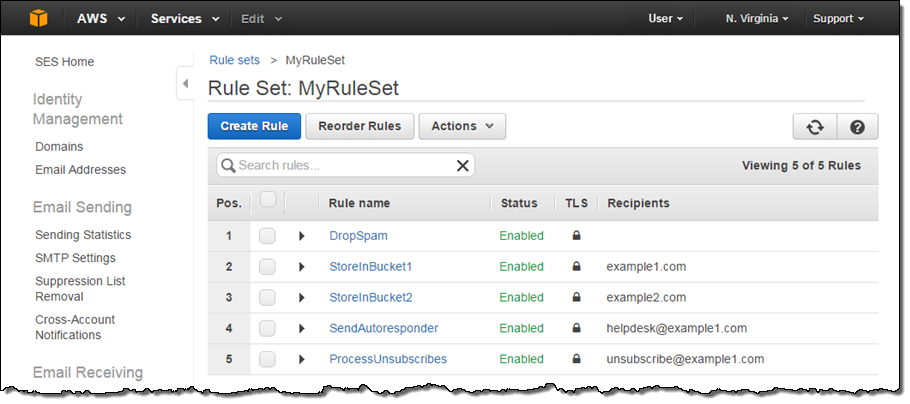
New – Receive and Process Incoming Email with Amazon SES | AWS News Blog

I’ve been reading through the ‘Getting Started’ and other Development Related Documents, available here .

The basichigh level with SES are:

Signing up for SES. An existing AWS subscriber already has SES enabled.
Registering the email ids from which we want to send emails. This is basically similar to an email verification process. I believe one can register / verify up to 100 email addresses.
Test sending emails. Amazon provides a set of Perl scripts for testing the API from the command line. And it provides SDKs for Java, .Net, Python, Ruby, etc.,.
Applying for production access. Before getting production access is a 2,000 emails per day limit during the testing phase.is
Pricing – It costs $ 0.10 per 1,000 emails, but the first 2,000 emails for an EC2 customer are free. Data or bandwidth cost is separate, which starts at $ 0.12 per 1 GB for the first 10 GBs, and then gradually decreases the GB of use. More details available here .

Sending Limits – 10,000 emails per day. I’m sending emails sent. There are not many bounces or complaints on the emails sent. More details here .

The sending limit can go up to 1,000,000 emails per day. In case of over 1000,000 emails per day, they can contact AWS support directly and present their case. AWS may increase the limits for dry customers.

Sending Rate – Starts at 1 email per second and goes up to 90 emails per second, again.

Usage Statistics – You can not buy statistics from the Amazon other than period. The statistics can be retrieved using the web-based SES dashboard.

AWS.Net SDK – We are using SES from a .Net based app, and integrating the SDK provided by Amazon was quite painless. Code samples are also available on the .a.netbased app, and integrating the SDK provided by Amazon was quite painless. Code samples are also available onthe .Net SDK website

An interesting undocumented feature of the AWS. Net. SDK is, for example, log4net. Log4net for logging on. And it can also be logged on with the new logger named ‘Amazon’. Although, some people have had a more pluggable logging, where one could have a plugged-in a different logging library.AWS.Net SDK is, for example, log4net for log in. Log4net for logging on. And it can also be logged on with the new logger named ‘Amazon’. Although, some people have had a more pluggable logging, where one could have a plugged-in a different logging library.

Trouble-shooting – Amazon SES has been around for the web. The AWS forums is also a good starting point. Most of the issues faced solved on the forums.

Email Authentication – Sender Policy Framework (SPF) and Sender Email authentication mechanisms can easily be used with SES. These mechanisms basically invoked the DNS TXT record which specifies ‘amazonses.com’ as a sending domain. Amazon recommends setting up these records as a minimum.

For those who need to implement DomainKeys Identified Mail (DKIM) authentication, it is not offered by the DKIM specification.

So, that was a brief introduction to Amazon SES. Hopefully, it will save some time for SES.

AWS has been transformed into the dotcom era, are now finally coming true.cloud based offerings, looks like the promises made on “Cloud computing” in the dotcom era, are now finally coming true.

MUST-LEARN THINGS IN DESIGN SCHOOL

Getting fresh out of grad school, with a degree in design, it’s almost natural to feel like you’ve finally conquered the design degree. You might think, now that you’ve mastered designing, you can go ahead to soon become a star designer, working with magnificent clients and world-famous brands. It’s good to dream but it’s wrong to assume it’d come this easy. All of this is far from the truth. Reality hits hard when you join a designing company and begin working. You will come to realize that before considering yourself a complete designer, you need to understand the fundamentals and know the crucialities of designing. However it may sound, portfolios won’t help in your successful career, merely your skill and knowledge will lead to your success.

The things you learn at your first job and even in your further jobs will always be as crucial as your educational degree. Designing alone won’t suffice, teamwork, communications, client-skills, social aptitude, professional relations, all of these things play a significant role in your dream of becoming a successful designer.

Here are a few things you’d wish to have learnt in design school!

SOFT SKILLS

If you’re an artist, then why are soft skills required? Well, being a designer, having knowledge about design only is not quite enough. In order to do designing, you will first have to think, observe and articulate your ideas. You will be required to have justifiable ideas and designs. If you won’t be able to answer and explain the why’s of your choices to your clients, then you’d have to say goodbye to client-satisfaction. If you don’t have answers, then you won’t be able persuade your clients, leading to the crashing of your plans and ideas. Furthermore, you have to manage your time, communicate with your seniors and interact with your teammates, maintaining a cordial relation with everyone. Hence, you need to make sure of acquiring soft skills before you jump onto your plans further. 

MANAGING CLIENTS

Managing multiple clients is not at all an easy job, it gets harder as you grow along the way. It’s not to scare you, rather, it’s here to prepare you. You must follow one rule of thumb- LISTEN. Remember, hearing and listening are two different things and to manage clients effectively, you need to listen. If you listen properly, only then you’d be able to clearly understand clients’ views, needs and feedback. This also enables you to understand whether your idea has been bought or whether it turned out like a slam-dunk, straight up dead. Being capable of responding positively to your clients and being welcoming of their feedback, helps you in managing the clients better and get your work done in an efficient way.

FUNCTIONALITY >  DESIGN LOOKS

Real world websites are for providing better results and not just for pleasing aesthetics. Designing pretty looks is not effective, if it’s not functional and dynamic. Hence, we aim at designing good-looking, yet functional websites that appeal to the target audience effectively. This helps you beat competition and let’s you stay on top. At the end of the day, we create and design websites to build a brand, take lead and drive audiences.

NEW IDEAS, ALWAYS WELCOMED

Designers are constantly required to come up with fresh ideas for brands and sometimes even are asked to bring multiple ideas to the plate, for the same project. It can be quite intense! And it’s a possibility that you might get designer’s block, so to break it you will have to sit down with your team members. Then you brainstorm various ideas, discuss and sift through those ideas. That’s how you quickly come up with fresh ideas and interesting design angles. It makes things a lot smoother.

THINK BIG, LOOK AT THE WHOLE PICTURE

Working a job requires completing tasks within tight deadlines, where you have to make close calls. It can be really consuming. The deadline pressure makes designers forget the essence of time and hence leaves designers caught in the web of little details and nuances. Therefore, it is important to be able to take a pause and have a good look at the whole picture, every design, detail and variation. To help create focus and effectiveness, ask yourself this- what is the purpose of my design? Where is the user and what do they require? How will my design provide sense to the user’s decisions? What are the technicalities?

Once you find the answers to these, you will be able to calmly get your work done.

OWN YOUR STYLE

Design school often asks you to design for a specific set of products and hence you end up with similar designs. Although, you learnt a lot but you weren’t challenged enough. You need to have that kind of challenge every now and then to jog your sense of style. You owe it yourself to find your own style and way of conducting your work. Your unique approach is what will get you up that success ladder, it will make you stand out in the crowd.

Here’s the path to your dreams, become that star designer! It might feel lousy at times, having to go through a long process, but trust me, it is worth every second. 


The Abysmal Developer

I’m not sure if there are any real metrics to judge the quality of software developers thus no one knows how good they really are. The thing that comes closest to rating a software developer is the feedback from their peers – what do they think about their programming abilities? Generally software organizations don’t invest in a 360 degree feedback thus most of us are always clueless about how good we really are. There is a lot of literature on how to become a better or great developer but there is hardly anything out there to identify a lousy developer. This is an attempt to share some of the top-notch qualities of a lousy developer. Well, think of it as an “Good Developer Anti-Pattern”.

Mistakes I've made as a junior developer — and how you can avoid them. | by Jack Finlay | We've moved to freeCodeCamp.org/news | Medium

Writes code that only machine can understand. The lousy developers take great pride in writing complex code. There would be no separation of concerns, everything would be one giant ball of spaghetti code, the methods would as long as the Great Wall of China, the variable names would be unintuitive as if an obfuscator had named them.

Never keeps the team informed about milestones. Who gives a shyte!? I ain’t telling nobody about the daily progress. Yes, you would hardly get to know what they are working on until you prod them. Asking status from them becomes such a chore that you shudder at the very thought of it.

Needs to be Micro Managed. They need constant baby sitting from their team mates or their manager about tasks they are working on. They just can’t work independently. Period. You give them their own space and you know things would never get done on time. They would constantly forget their tasks or would deliver code in a haste without giving too much thought to it. To them, bugs or unfinished tasks are the hallmark of a working developer. Yeah, right!

Not a Team Player. Their world is finite and they are at the center of their own little universe. They won’t acknowledge the skills of other team members and think they are the best thing after sliced bread.

Blame Game. Somehow it is never their fault when things go wrong. It’s like the word sorry is not in their vernacular. They always have something or someone to blame when things go wrong rather than admitting to the mistake.

Wastes too much time. Most of them are always busy doing other important things than programming like chatting with their friends, spending time on facebook etc. I just don’t get it. Why would anyone spend killing their office hours than being productive or learning new technologies/reading technical blogs.

The thing is that it only takes a mental switch to turn off these nasty habits and adopt more productive ones provided one is willing to make oneself better.

error: Content is protected !!