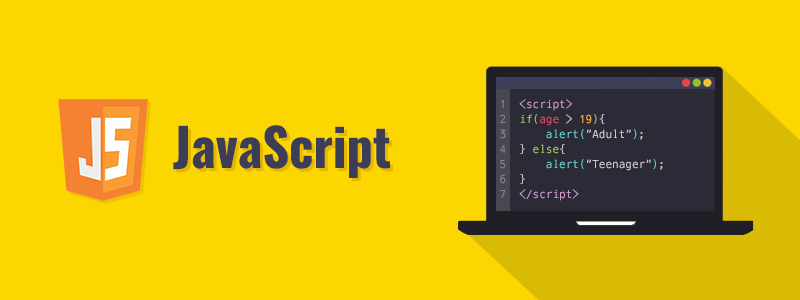
JavaScript Frameworks for Frontend Development-Guide

JavaScript Tutorial - An Ultimate Guide for Beginners

Backend and Frontend – The Two Foundational Components of Native Mobile Apps and Web Apps. While the former fuels the app, the latter defines how the app would act when in users’ territory aka on users’ devices.

While we have already covered the factors that power the Backend development of robust apps in article before, in this article we would be looking into the Frontend Development, especially JavaScript Frameworks, at great lengths.

There was a time when a website or a mobile app was made of simple static text site with little scope of interaction with other websites and apps. And the only scope of innovativeness came from minimal animation that hovered on the screen. That was the time of HTML and CSS.

But today, ever since the advent of JavaScript Frameworks, the scenario has changed. Today’s web apps play videos, interact with other apps, fill out forms, and do everything that makes it enough for users to remain invested without refreshing the page.

Seeing the advancements that the Top JavaScript frameworks have introduced the Frontend Development world with, a number of other languages/technologies have started flourishing.

The Options Businesses Have When it comes to Frontend Development of Web Based and Native Apps

When it comes to Frontend Development of Mobile Apps – Native, Web Apps, and the new App type that Google wants you to know about – Progressive Web Apps, there are a number of different technology options a business can choose from.

I know the article is to talk primarily on JavaScript Frameworks, but it is only fair to touch bases upon the other options that you have when it comes to Frontend Development of Web Apps.

Here are the Top JavaScript Framework Alternatives that are worth paying attention to –
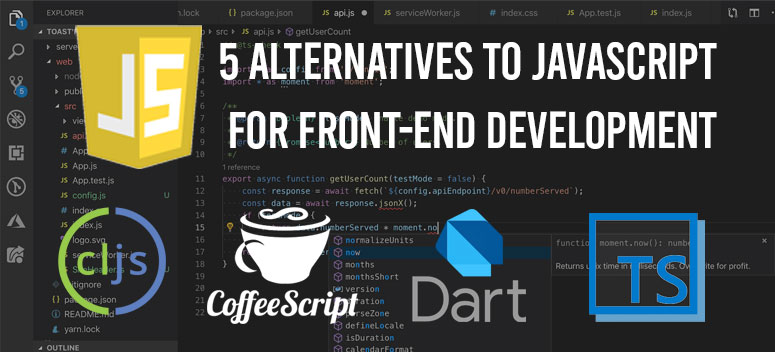
The Most Popular JavaScript Front End Development: How to Choose

JavaScript or no JavaScript, the Frontend Development Industry has a lot to look forward too.

Frontend Development Trends 2019

Advanced Chatbots

Most Advanced Chatbot Apps Powered By Artificial Intellect | by Dmytro Brovkin | Chatbots Life

The conversation based User Interface on Mobile and Websites is the number one trend of Frontend development of the present time. It is estimated that by 2020 85% of the customer interaction with a business will involve zero human involvement.

Motion UI

How Motion UI/UX Helps to Increase Attention Span of Users | by Ajay Kapoor | UX Planet

While material design would still reign superiority when we talk about interface design, the  incorporation of motion UI would breathe life into websites and mobile apps.

Prepared to catch user’s attention and to deliver information, the motion UI elements like  hovers, animations, modular scrolling, and page header transition can become the differentiating factor between a seamless and passable user experience.

Evolution of JavaScript
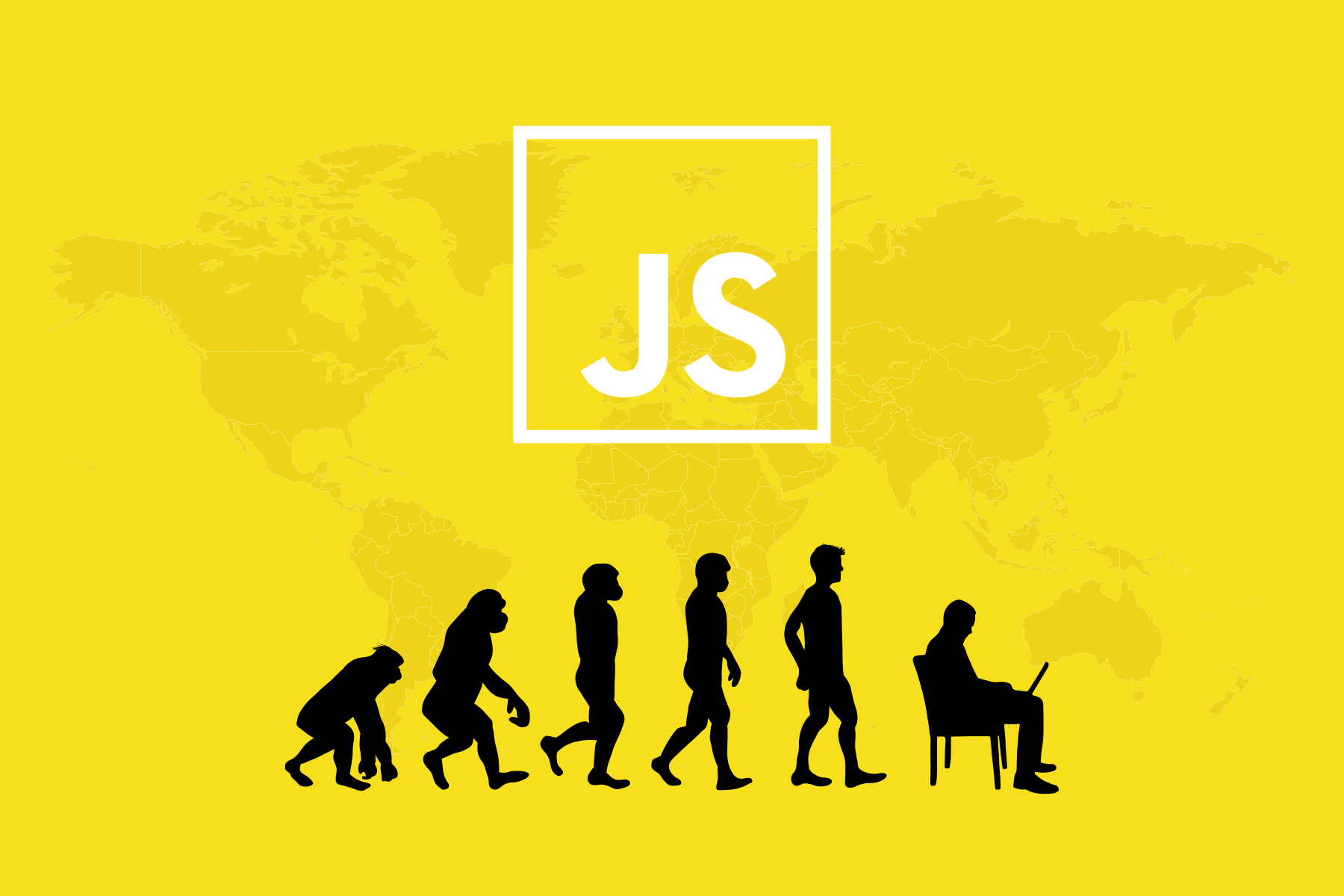
evolution-of-javascript - Surveying Group

Javascript is unquestionably the most famous languages used by the developers, which gives it a high position among the frontend developers, full stack developers, and the backend developers.

With the presence of scalable Javascript frameworks like Node.js and React.js, and the powerful package managers like NPM client and Yarn, Javascript Frameworks continue to be the primary technologies when we talk of frontend development in 2019.

Did you see how the ‘evolution of JavaScript’ has found its place in the list of Frontend Development trends?

Doesn’t it make you wonder…

Why JavaScript?

As we saw a few minutes back, there are in fact a number of alternatives that businesses have when it comes to technology to base their Frontend Development on. However, in spite of that, it is JavaScript that continues to witness mass adoption and there are valid reasons supporting the kind of growth that JavaScript Frameworks are getting. Let us look into a few of them

Why are Businesses, like us, Opting for JavaScript?

It is on Every Platform

Android vs iOS vs Windows – SK Info Techies

JavaScript Framework is present and used across a range of different platforms, in fact it is on every platform you can possibly imagine – Browser, Mobile, IoT, Desktop Apps, and a lot other.

Acts as the Best Foundational Language

Once you learn JavaScript, learning other languages becomes a piece of cake.

Can Handle Complexity
LinkedIn integration — amoCRM

The majority of world’s most popular websites like Paypal, Netflix, and LinkedIn, amongst others, work on one or other form of JavaScript Frameworks.

Faster Debugging = Faster Deployment
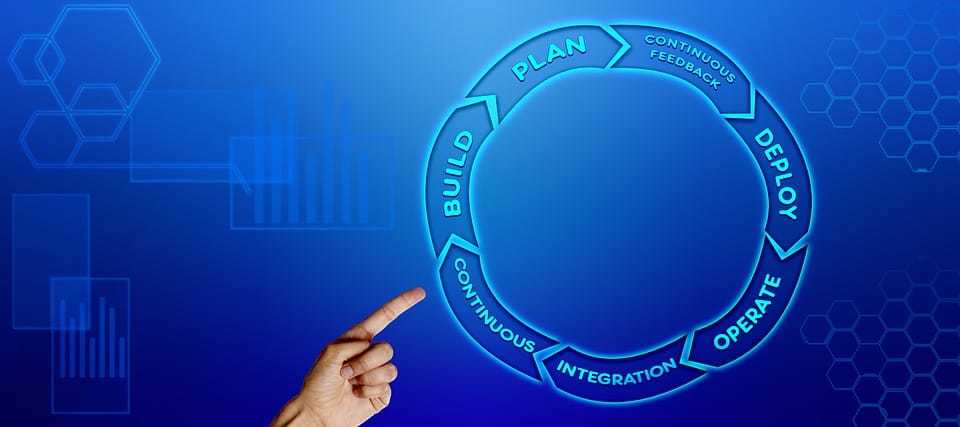
How To Deploy Faster With Fewer Errors Using DevOps Automation

Unlike other languages, JavaScript comes with the facility of feedback loop. Because it is built on browser, one can run the code and get instant results.

Reasons such as these and many others are enough for establishing JavaScript as a popular language – The one that is can be used in many different situations and many different platforms, with ease.

Because of the popularity and ease that comes tagged with JavaScript language, a number of frameworks have now found a place under the JavaScript umbrella with many other being developed to become a part of the family.

All in all, currently there are over 50 different JavaScript frameworks that can be used for the Frontend development of Mobile apps and when you add the web specific frameworks, the number grows by manifold.

With over 50s of JavaScript Frameworks used in the market, it is in fact difficult to come to a conclusion as to which Frontend Development frameworks would come out to be the best.

While different businesses would have different set of preferences when it comes to choosing a Frontend JavaScript Framework, at Anteelo, we focus our efforts on these Four – Angular framework. React. Vue. Node.

– The Fantastic Four –

Angular.js. React. Vue. Node
React vs. Angular vs. Vue: Which Should You Choose? - YouTube

Node.js - Wikipedia

The Reasons Why we Choose Angular.js, React, Node, and Vue for Frontend Development

Popularity – All the four JavaScript Frameworks are popular in the web and mobile app development industry and because of this popularity, they have the back of a strong developers’ community, which makes issue redressal a fast process.

Flexibility – Straight from Angular Framework and React Framework to Vue and Node, all these frameworks are used for the development of mid to high complexity level apps.

Ease of Adaptability by Developers – As compared to the other frameworks, these come with a comparatively lower learning curve, which makes the mobile app development process much faster.

Experience – We have developed over 100s of Mobile based apps using these top JavaScript Frameworks, giving us an in-depth idea of how they work.

Let’s take a look into them at much length –

Vue.js

Reverting Vue.js Form Changes - Client Resources, Inc.

If React Framework and Angular.js ever had a baby, it would look like Vue.js (not logo wise but features wise). The brainchild of ex Google employee Evan You, Vue.js has somehow managed to become the competitor of all three prime frameworks: Angular Framework, React.js Framework, and Ember Framework when it comes to Frontend Development – becoming the op JavaScript Framework in the process. Even without the support of any hot-shot tech name, the brand has been able to become really popular among the developer community.

Vue.js was conceived with the sole aim to make the interface development organized and simpler. And it does it so perfectly that it is now deemed ideal for the development of lightweight apps.

Acting as a legitimate child of React and Angular, the JavaScript framework shows features that are the best of both – While on one hand, it offers two-sided data binding facility of Angular Framework, on the other, it provides server-side rendering of React Framework.But then, like all things seemingly ideal, Vue.js also comes with its share of pros and cons.

Here they are

Pros –

  1. Rapid Adoption. In only a few years since its launch, a number of businesses have started making Vue a part of their tech stack.
  2. Low Learnability Scale. It is easier to get acquainted with the framework as compared to Angular JavaScript Framework.
  3. Rendering Support is Declarative
  4. Easier Integration with HTML Elements

Cons –

  1. Since it is a new project, there is still a lack of resources
  2. Relatively smaller community support, especially when compared with Angular.js and React Framework

Angular Framework

Angular (web framework) - Wikipedia

The one thing which all us developers agree with is that Angular JavaScript is the one framework that has the capability to powerful web applications Frontend Development.

Angular.js is a full featured JavaScript framework that comes with a series of business benefits such as quick production of code, convenient testing of app part, and the two-way data binding, which helps in reflecting the changes that happen in the backend immediately on the User Interface development.

Angular Framework keeps coming out with updates on a regular basis like Angular.js 6 comes with an improvement in the rendering engine for smaller and faster applications.

Even when hundreds of businesses are adopting Angular Framework, and it has set a dominating position in the Angular vs React.js framework comparison globally, there are some evidential pros and cons that come associated with this JavaScript Framework too –

Pros

  1. Material Design and PWA Support
  2. Stable long term support because of Google backing
  3. Two Way Data Binding
  4. Mobile focused approach to Web Development

Cons

  1. Apps developed in Angular Framework are notoriously famous for drawing device’s battery
  2. Needs more Optimization to tackle the present low performance issue
  3. Comes with high learnability scale

React Framework
We should know some core words of React.Js library. | by Mohammad Shaif | Medium

Backed by Facebook and Instagram, React Framework has become the most used/ top JavaScript Framework of the present time with over 1,000 contributions present on GitHub using it for Frontend development. Because of the use of a virtual DOM, the React framework provides a better performance boost to apps as compared to Angular.js.

Used by over 38% of the developers, worldwide, React.js. compared to other JavaScript Frameworks, has also grown to become the first choice of a number of prime businesses like Netflix, Paypal, Flipboard, and BBC, amongst various others.

Now, there are indeed a number of reasons that businesses like ours and WhatsApp swoon over React Framework usage in Frontend Development, but Flexibility is what tops them all. And the JavaScript framework stands true to the hype it has been able to create around its upper hand in developing Mobile Apps with advanced user interface.

Nonetheless, the framework, like the others, do not come sans advantages and disadvantages. Here are its pros and cons –

Pros

  1. Good set of Documentation and Online Resources
  2. Possibility of Server Side Rendering
  3. Easy Component Model
  4. Fast, Efficient, Flexible, and Small Sized

Cons

  1. It is essential to have Build Tools
  2. The chances of framework being incompatible with the other libraries and code that modifies DOM are very high
  3. The learning curve can be a little higher

Node.js

Node.js - Wikipedia

Node.js has over time become the top server side JavaScript Frameworks.

The idea behind Node.js is using event driven I/O to help remain efficient and lightweight at time of development of data intensive real time apps, which operate across a series of distributed devices.

The top server side javascript framework helps in building fast and scalable network applications, as it is capable of managing huge number of connections through high throughput – which ultimately brings out greater scalability.If you are looking for a fully featured JavaScript Framework environment with the presence of all the tools, Node.js would be your right option. In fact the popularity that Node.js is getting is making it one of the top JavaScript frameworks. Bringing it steps ahead in comparison to PHP and Golang.

I am sure by now you must have become acquainted with the drill. So, keeping up with the trend, here we go –

Pros

  1. The non-blocking IO ecosystem lets developers process multiple requests simultaneously
  2. Node.js developers community is extremely active, meaning access to ready solutions and codes in GitHub
  3. Made JavaScript full stack. Before Node.js, the platform was solely used for the development of client side.
  4. The one of the most popular server side JavaScript frameworks, Node is opposite of restriction. It lets you build every element of the app from the scratch.

Cons

  1. There have been instances of Node API instability
  2. It still does not support multi-threaded programming, which means it is not ideal when performing long running calculations, which ultimately leads to a decline in app performance.

So here were the four Frontend JavaScript Frameworks that we swear upon everytime a project comes along for Web App Development.

Other than these four, there are 11 Frontend JavaScript Framework that we can see competing for a place in the list to replace them. While they will take some years to come at a position where Angular.js and React js Framework and Node, Vue have placed themselves, they are 100% in preparation of coming neck to neck with the Fantastic Four in 2019.

In short, the next 11 JavaScript Frameworks have now become too big to ignore. And it is time that we give them their fair share of limelight, so here we go –

– The Sidekicks –

Ember.js
It's easy to build an app with Ember.JS - Open Source For You

Used in designing of a number of complex websites like Kickstarter, Heroku, and LinkedIn, Ember.js comes with the support of a huge online community, continuous rollout of updates and lastly, a wide appliance of the best practices of JavaScript.Ember.js is ideal for development of complex web apps, and the string-based templating system that it comes with contributes to a much faster boot time.

The Frontend JavaScript Framework is also concentrated on scalability, so that the developers can easily work on both – mobile and web apps.

Next.js

Next.js - Wikipedia

Next.js is not your common JavaScript framework. The framework was launched by React js team as a tool for the server-side rendering. Developers working with the mix of Next and React.js can help simplify the frontend development process.The popular server side javascript framework comes with a set of remarkable features like page-based client-side routing and automatic code splitting. Above all, Next.js comes with full CSS support, known as styled-jsx, to help make the styling of user interface development a lot easier.

Meteor.js
Advantages of Meteor JS For Web/Mobile Development

The full-stack client and server side JavaScript framework allows swift Frontend development of the end-to-end web and mobile applications in JavaScript. Because of its modular structure, the libraries and packages are used at pace. In context of performance, every one of the changes that happen in database are then instantly transmitted to UI. Currently, the framework is used for real time application development of companies like Mazda, Honeywell, and IKEA, amongst others.

Mithril.js
Getting started with mithril.js. First of all what is mithril.js… | by Odohi David | Spankie's Blog | Medium

Mithril.js has a series of similar features as React.js. Mithril offers you hierarchical MVC elements and various safe-by-default templates that come with intelligent DOM differences that goes into checking of high performance rendering. The JavaScript Framework also comes with two very impressive features for Frontend Development – URL Routing and Customizable Data Binding.

Polymer.js
Community - webcomponents.org

The lightweight framework is designed to enable you to take complete advantage of the Web Components. Polymer has the web components which are a part of HTML standards that promise longer existence as compared to ReactJS.Polymer.js works best when you need to combine your app with other frameworks & platforms and when you need to work with JavaScript standards.

Aurelia.js

The Durandal Inc. product, is being advertised as a next generation UI framework. It is deemed to be one of the developer friendly and advanced front end JavaScript framework of the present time.The JavaScript framework APIs are designed for consumption not from just today’s needs but also from future web programming languages. It supports ES2015, ES5, ES206 and Typescript as well, which gives developers high flexibility.Aurelia also comes with an extensible HTML compiler, which lets the developers create customized HTML elements and take take control of template generation with the support of dynamic loading, data binding, and batched rendering.

jQuery

Is jQuery for You?. What it is, who should use it, the pros… | by Rachel Lum | Medium

The popular android app development framework, although old, but is still holding a prevalent position, and the 300k downloads that it sees everyday is a sign of it.

Even though the frequency with which updates were rolled out have been lowered immensely, a new version, v4.0 is planned with a series of changes such as –

  • Rewrite of the speed framework
  • Rewrite using the next gen JavaScript
  • All new event module design

Backbone.js

Backbone.js

The framework is one of the most famous one among the JavaScript Framework developers’ community. And the reason behind the popularity that the framework has been able to gather for itself are pretty straight forward – The framework comes with usability modules that are very easy to understand  and have an extremely simple learning curve. Using Backbone, you can make single page apps with the help of the traditional web libraries. They are developed on the idea that the server side functionalities should always flow via APIs as it minimizes the number of codes that should be composed for achieving the complex functionalities of sophisticated web app frameworks.

Socket

The client and server side javascript framework has been getting in a lot of attention from the frontend development community, making it one of the most popular JavaScript frameworks. Socket allows you to take advantage of a real time communication among the server and client. It is divided in two parts – client library running from browser and the server library that is built on Node.js.

Socket allows you to implement real time binary streaming, interactive set of document collaboration, instant message platform, and the real time stats of project and apps.

Titanium

The framework allows mobile app developers to create native apps with the help of web technologies like JavaScript, HTML, and CSS. It is one of the best JavaScript Frameworks  today with their apps being on over 460,587,474 devices and with more than 91609 developers working on it.

Knockout

Knockout.js Example | Knockout.js Development

The last JavaScript framework that we believe will hold its position of being a popular choice of framework is Knockout.js. The framework helps developers build rich and responsive display and an editor UI with clean underlying data model. Apps that have section of UI which update dynamically can benefit greatly from Knockout framework. There are three features that come associated with Knockout, which contribute to framework’s popularity in the frontend development domain –

Dependency Tracking – The JavaScript framework updates the right sections of the UI as and when the data model changes.

Declarative Bindings – The feature lets you offer complex and dynamic User Interface Development with the help of arbitrarily placed binding contexts.

Trivially Extensible – It lets you use custom behaviours as part of new bindings for convenient reuse.

So here were the 4 JavaScript frameworks that we rely on and the other 11 JavaScript frameworks that will be making a prominent appearance in 2019 along with the Fantastic Four.

Now coming to which one of the most popular JavaScript frameworks you should go with, when taking a decision, compare the architecture, performance, documentation, learning curves, community support, and organization.
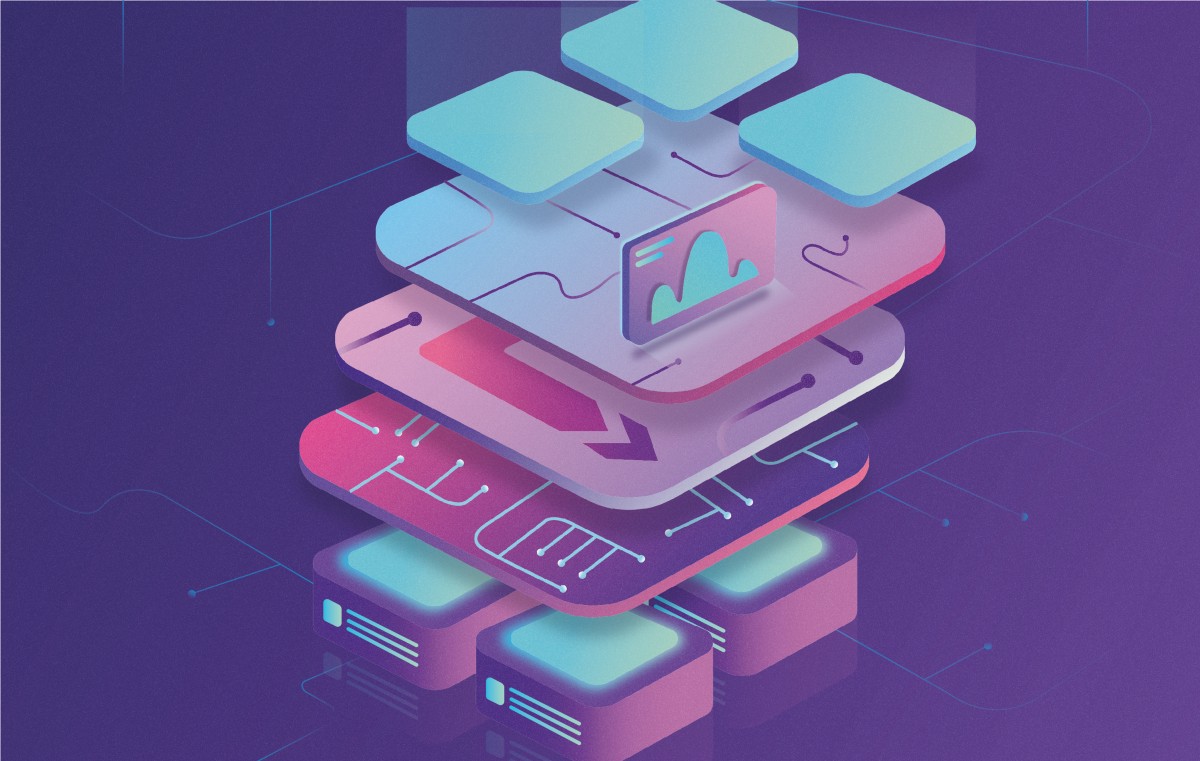
Choose Mobile App Technology Stack (Comprehensive Guide)

What is a Tech Stack? (+Tips on How to Choose One)

If you are even a month old in the world of mobile application development, the probability of you have not heard of the concept of Technology Stack is very minimal.

No matter what mobile app development process you are planning to follow, it would never turn fruitful until you get together a set of robust technology stack. Technology Stack is what decides the future of a software product.

Well, we will get to the exact definition of tech stack in a while. For now, here’s the snippet – The present and future of your mobile app depends on nothing but your mobile app technology stack.

Defining and choosing the technology stack for app development at an early stage helps entrepreneurs achieve their ultimate business objectives much more easily.

In this article, we will be looking into the concept of technology stack for mobile application in more detail, while throwing the light on the importance of knowing the technology stack that your mobile app would be based on. We will also talk about the tech stacks that power the apps on the basis of their type.

But first things first.

Let us quickly refresh our understanding of mobile app technology stack.

What is a Mobile Development Technology Stack?

Mobile App Development - Android App Development Service Service Provider from Thane

The complete technology stack for mobile application development can be divided into four areas. And these are also the areas that also constitute the anatomy of an application.

Here are the four components which together make one Technology Stack –

Frontend Development – The interface on which users interact with the mobile app

Backend Development – The part which takes the user input, processes it, and convert it into an output

Development Platform – The place where interfaces and libraries come into the picture to design and develop the mobile application.

Additional – The technology elements that affect app performance, security, and robustness.

Now that you know what mobile app technology stack stands for, let us now look into the reasons why it is important for businesses to sit with their partnered mobile app development company and look at the technology stack that would be put into their mobile apps.

Why is it Important to Find the Best Tech Stack for Mobile App?

There are a number of elements that are dependent on the selection of the right mobile app tech stack. The probability of whether your app is robust or will it be able to scale to different operating system versions, relies heavily on the technology combination that you choose for its development.

Any wrong or hasty, uncalculated decision with respect to the selection of nothing but the best technology stack for mobile application, will affect its current performance and future growth prospects negatively.

While these are the issues attached at a much deeper level, which you would face only when you are deep inside the mobile app development process, there are a number of first level issues attached with the wrong choice of the mobile app technology stack as well.

Since you now know what tech stack is and why it is important to know the technology stack, let us come to the section where we look into the technology stack that powers the development of powerful, scalable, and innovative mobile and web apps that comes out of the factories of any skilled app design company and their development domain.

Native App Technology Stack

Native apps are known for their robustness and performance. The quality standards that a business usually looks to achieve in their mobile journey are the ones that their investment in Native App Development perfectly solves.

Native Apps allow businesses to integrate the device’s in-built functionalities in their mobile app, without calling for an external third party API.

Now, when we talk about Native app, we usually talk in the context of Android and iOS App development. The two platforms come with different capabilities, which call for different technology stacks as well.

Let us look at the most commonly used mobile app technology stack that goes in the iOS app development and Android app development.

Android Tech Stack

Should I Start with Java or Kotlin as an Android Beginner? - Coding in Flow

Programming Languages: Kotlin and Java

Although Kotlin is the official programming language for Android app development, Java language is still used to a great extent by many android app development company. The popularity that Java sees makes it one of the best technology stack for mobile app development.

However, Kotlin is also not lying too behind in the popularity race. With time, Kotlin has become a lot more stable option for the developers to workaround in the Android studio. The fact that the language is clean, lightweight, and much less verbose is making it a solution to all the Java problems.

Toolkit: Android Developer Tools & Android Studio

Download Android Studio and SDK tools | Android Developers

Android Studio gives developers the feasibility of editing code, debugging, flexible build system, performance tooling, and an instant deploy system.

The platform enables you to focus entirely on building high quality and unique apps.

With help of the Android Developer Tools, you will be able to gain complete support for the whole Android app development process. Along with that, it allows developers to use multiple on-device debugging tools, emulators, graphical UI builder, and a completely scriptable test automation support.

Android SDK

Journey of building My First SDK! | by Anukool srivastav | Medium

In order to write programs with the latest features, the developers are made to download and then install each version SDK for a specific phone.

Using this Android tech stack, developers have been able to increase the app count to over millions and have made the Android app development industry the one that businesses opt for when they are looking to reach the masses.

iOS Tech Stack

Programming Languages: Swift and Objective-C

Swift - Apple Developer

The most preferred languages that find themselves being a part of the iOS mobile app development technologies are Swift and Objective-C.

Objective-C being the superset of C language provides a dynamic runtime environment and object-oriented capabilities.

Learn Objective-C - Best Objective-C Tutorials | Hackr.io

But we recommend Swift over Objective-C, simply because the language is a lot more functional and offers codes which are a lot less error-prone. It also consists of dynamic libraries which are uploaded directly to memory, cutting down the initial app size and increasing its performance.

Toolkit: Xcode and IntelliJ AppCode

AppCode: Smart Swift/Objective-C IDE for iOS & macOS Development

Toolkits are the full feature environment that allows one to create both mobile and desktop apps. The ones that are most commonly used by the iPad and iPhone app developers are IntelliJ AppCode and Apple Xcode.

iOS SDK

SDK Icon PNG Image | Apple ios, Icon, Ios

The iOS SDK consists of an API which acts as the link between platforms that they run on and the software application. The iPhone SDK offers tools used for Apple’s touchscreen interface and for the proprietary iOS operating system.

At the back of this technology stack, Apple app development industry has been able to brand itself as the market that businesses head out to generate revenues on their mobile apps.

While this was for Native apps, there is one app type which calls for a different set of full stack mobile development altogether. The apps we are talking about here are Hybrid Apps.

Although they are not used to a great extent anymore, there are still a small class of entrepreneurs who select them at the back of their low cost and time to market advantage.

Hybrid App Technology  Stack

▷ Cómo Cargar un Archivo JS Externo en HTML | Silver Sites

Hybrid apps are usually developed with the help of the standard web techniques like CSS, HTML5, and JavaScript. They usually consist of two sections – Backend and Native shell. These apps can run on all platforms and tend to provide access to API and acquire device storage and a camera etc.

The three frameworks that are most commonly used for the development of Hybrid apps include – Cordova, Sencha Touch 2, and Ionic.

Now that we have talked about both Native Apps and Hybrid Apps, it is time to move our focus on the Tech Stack for Cross-Platform App Development

Cross-Platform App Tech Stack

Cross-platform app development means using the same code to develop apps that would then run on multiple platforms – Android, iOS, and Web.

Businesses usually go with the cross-platform app development because of the simple fact that they are able to operate around a greater demographics. All the while taking advantage of the low development cost and faster go to market time.

The cross-platform application technology stack is usually made up of these major technologies’ combinations –

A. React Native & TypeScript or JavaScript

Why TypeScript with React? | Building SPAs

React Native is a JavaScript framework that is used for writing mobile apps which work like native apps. When you use React Native, the application logic gets written and runs on JavaScript or TypeScript.

B. Xamarin & C#

Xamarin - Wikipedia20 years anniversary of C# programming language. What the future holds. - Avenga

Xamarin allows development engineers to share 90% of codes across a series of major platforms. The tool uses C# as the main language.

Now that we have looked into the tech stack that powers the development of a variety of app types, ranging from Native apps to Cross Platforms and Hybrid Apps, it is time to look into something that matters to a mobile app development company more than knowing the tech stack: Knowing How to Choose the Best Technology Stack for Mobile Application.

How to Select the Best Tech Stack for Mobile App?

The ideal mobile application development technology stack that can power your product for success is an outcome of careful consideration and analysis of a number of factors. Here are the factors that tend to influence the mobile app technology stack choice for the development of a mobile app –

1. App Considerations

There are a number of factors that vary from one app to another –

  • The device on which the app would function
  • The network condition it would run in
  • The user experience you are aiming to achieve
  • The estimated go to market time
  • The platform would run, amongst others.

All these app elements clubbed together help decide the set of framework, library, languages, and the software that would be combined to develop the mobile

2. The Goal of Mobile App

Motivational mobile app | Goalmap

The choice of tech stack for mobile application development also depends heavily on the goal that your mobile app is going to achieve.

There would be a stark difference in the mobile app technology stack choice when you are looking to develop a high latency app vs a quick response, low latency mobile app.

A mobile app that is dependent on heavy load processing call for a much robust tech stack than the ones that operate around streamlined interactions.

3. Development Team Skill-Set

5 Options For Developing Your Team's Skills

There are a number of languages and frameworks that tend to give the same result but have some differentiating factors that separate one from the other. Now, when you are to decide between two similar-ish tech stack, the ideal thing to do is to rely on the developer’s skill-set.

If you introduce a tech stack that your team is not acquainted with, it will increase not just the development effort and time but also the cost of mobile app development. While on the other hand, introducing a mobile app technology stack that your team is comfortable with, will help expedite the process while saving the quality.

4. Technology’s Parent Company

The parent company of the technology stack that you are going with also makes a lot of difference in the choice.

There are some brands that offer a lot better documentation and community support than the others. Like, Google, Microsoft, and Adobe are known to offer a lot better community support and advanced development options than Facebook with React Native.

5. The Choice to Operate on Multiple Platforms

Which Phone is Best? Android vs Apple iOS vs Windows 8

The technology stack of an app that runs on one platform would be a lot different than of the one that runs on all – Android, iOS, and Web.

The level of scalability that you will have to introduce in your mobile app to make it portable on other platforms, e.g. in case of Hybrid App or Cross-Platform App Development, would call for a different toolset than one that would go into the development of a Native app.

6. Security Level of the Tech Stack

Every mobile app development technology comes prepared to combat the security-related vulnerabilities that an app can come across after it is launched it is market. The problem comes when you choose a technology stack which is not sufficiently documented or which requires writing long line of codes.

And then there comes the element of developers’ skills. No matter what technology stack you are including in your mobile app, hackers will find their way in, if the app is not developed in a secure manner. So along with the tech stack, your app developers team need to be skilled as well.

7. Compatibility with the Existing Technologies

Going with a mobile app tech stack that is in line with the technology that you are using in the project is very important. Especially if you are introducing a new tech stack after the mobile app development process has started.

Apart from checking the compatibility of the tech stack with the current project, you should also check how compatible would the tech stack be with the tools that you might be planning to add in the app at a later stage.

With this, you now know everything about technology stack that you need to get started with your first mobile app development project. Now no matter which technology you end up using, make sure that they work well with your present app structure and prepares your mobile app to be innovative and scalable.

FAQs About Mobile App Technology Stack

Q. What is meant by technology stack?

Technology stack is the collection of tools, languages, frameworks, and APIs, etc that come together to develop an entire software.

Q. What is app stack used for?

Mobile app technology stack is responsible for the success of the entire design, development, and maintenance process. A wrong decision on this front can lead to your app’s demise in the market much before its natural survival timeline.

Q. What technology is used to develop mobile apps?

The technologies used to develop an efficient mobile app are mainly divided into three subsets which are – Backend, Frontend, Development, and Additional.

Q. What is the best platform for mobile app development?

There can not be one answer to this question. The choice of the best platform depends on a number of different factors like the support of tech stack, design capabilities’ software, users’ demographics, etc.


Q. How to Choose the Best Technology Stack for Mobile App?

There are multiple factors that you will have to consider to establish which mobile app tech stack will best suit your need.

  • App Considerations
  • The goal of the mobile app
  • Skill-set of the team
  • Security considerations
  • Compatibility on multiple devices.

A Guide To Get Million Downloads On Your App

Get to 1+ Million Installs For Your App - BuildFire

With the immense amount of competition on both the Google Play Store and Apple Store (over two million and counting), convincing the users to install a new app is very challenging.

How many times have you heard people say that no matter how innovative your idea is, only those rule the stores and users’ devices that have already established themselves in the market?

Having developed a series of apps that have hit the million downloads mark, our team of app developers that it is nothing but hearsay. With the right blend of development and marketing, you can boost mobile app downloads and can help it reach the million mark too.

While you have the support of our app developers to help build a robust app, to bring you up to speed with the marketing front of getting million app downloads, we have curated a guide for your journey.

We have divided this guide into two parts – Pre and Post Launch of your Mobile Application, both of which together will help you get answer to ‘How to Get More App Downloads’.

Let us start with the pre launch part of mobile app promotion strategy first to to ensure that you are prepared to woo the Million of App Store users, even before it has found a place in their devices.

Pre-launch success preparation of your mobile app

Ideally, the efforts you are putting in this stage should start at least 2 months before the actual launch in the stores. Start with the pre launch stage as soon as your app enters the last testing stage.

How to ensure that You Get Maximum App Download From the Technical Front –

Ensure that Your App Doesn’t Crash

and your app has crashed! – Rapidsoft Technologies

Prepare your app in a way that it doesn’t crash even once after it is downloaded on users’ devices. You have to understand that the stores are full of extremely impatient users, who will abandon after even two repeated instances of crashes.

Presence of an Intuitive UI

Material Chat | Android app design, Android design, User interface design examples

Run through your App’s UI as many times as possible. Look into how easy it is for your audiences’ demographics to move inside the app, if the UX elements are in line with what they are used to work around. And, finally, it’s easy for them to move inside once they have done the app download deed.

Get Your App Tested Enough

Are Inadequate Mobile App Testing and QA Hindering Your Success? | Proto.io Blog

Test your app not just on different devices but also on different operating system versions and in under different network conditions. Don’t even think about rolling it out for downloads, before you have ensured that your app is tested and secured against every permutation and combination of users’ movement.

How to ensure that You Get Maximum App Download From the Marketing Front

Set Up Pre-Launch Ad Campaign

How To Build A Successful Pre-Launch Marketing Campaign

Start with creating anticipation about your app on your website, the social media channels, platform where your people of your app community visit and uses most often. Through all your mediums, prepare your audience for the time to come and how it would change their life.

Don’t show them anything other than your logo at this stage. Your time to showcase your app would come, but it’s not now.

Prepare to Rule the App Store Listings

How To Optimize Your Google Play Store App Listing Page - BuildFire

Your probability of getting maximum app downloads is directly proportional to your placement in your category list. The higher you are in the list, the greater are the chances of visibility and click through rates.

Draft an ASO and PSO strategy. Start getting videos and screenshots made to showcase your creation in the stores, have a set of keywords ready with you, draft content to post in the app description section.

Open your Doors for the Press

Just days, around two weeks before the actual launch of the app, send invites to the press and PR agencies to cover it and post its coming in their dailies. Infact, now would be time when you contact websites that curate lists like ‘App of the day’ and get your name on the lists.

With just two or three weeks to the launch, announce your coming to the Android and Apple Store to the world.

Invest in PPC

The Step-by-Step Pre-Launch Plan We Used To Prepare For Our Startup Launch | by Krish Ramineni | Fireflies.ai Blog

Just week before you become available to app downloads, invest in a PPC campaign. Run your ads on Google on every keyword and phrases that are related to your app category and similar to what your users are looking for.

This was it on the Pre Launch part of Taking Your App towards Million downloads. To sum up, you have to create anticipation, promote your application everywhere your audience is and while you are doing this, focus on how the development process is coming up.

Now that you know the pre launch part of ensuring the success of your mobile app before it is launched in the stores, let us look into the post launch parts of its success. This is exactly where all your efforts would pay off.

Post-launch success preparation of your mobile app

The cumulative effort that you had put up until this part both in development and marketing, boils down to this stage, when it’s time to reap the benefits. But your dream to achieve a million downloads still requires time and efforts to become real.

Post Launch efforts to reach million app downloads are in many ways much higher than your pre launch work as now it’s time to deliver the users what you had created anticipation for.

Here are the ways you can pave the last road to your million app download mark –

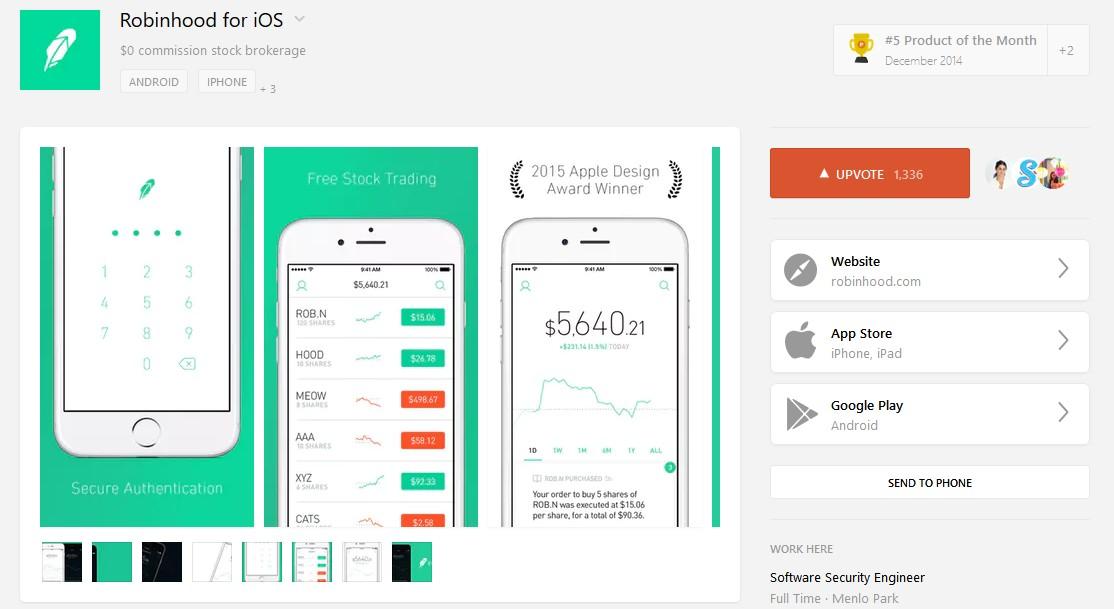
Submit Your App To Sites Like ProductHunt

How to Run a Successful Marketing Campaign on Product Hunt | CXL

There are a number of websites like ProductHunt that allows app developers to post their live app and get helpful feedback, visibility, and more often than not investors for their apps.

While investing in PR agencies and mobile-based news websites will help you sail through the initial growing awareness phase, there are not viable for the long run.

To keep getting downloads in the long run, you will have to make your application visible to people who would be genuinely interested in them.

In-App Advertisements

Top In-App Advertising Companies (2020) - Business of Apps

The next step in the process of ensuring that you have left no door unopened is by investing in in-app advertising models. Get in talks with popular apps that have space to insert your ad in theirs.

By placing your ad in the popular applications, you will be able to increase your visibility score to a great number.

Plan Referrals

How to Set Up a Referral Marketing Program For Any Industry (With Industry Examples)

One of the major reasons behind Uber’s success is their referral program. They make it beneficial for users to share it with their friends and family, in the form of discounted rides.

Depending on what your app is about, you can offer free lives, discount, free product, or even a gift voucher to the user and their family/ friend who uses their referral code.

Inauguration Discount

Free Vector | Modern pack of inauguration banners

If your app belongs to the paid category, you should offer yours for free in the first month or make the prime features available on an off or discount.

While planning on the features that you would be offering for free, make sure you go with the ones that will become coveted after they are not free or on discount anymore. If you make those features free which already comes with no price tag in the same category apps, the users will abandon yours.

Remain Visible

How to show (or hide) apps behind Siri - apps are visible while Siri is active - YouTube

It is very easy for the users, both prospects and the ones who have your app installed with them, to forget about your existence amidst the billions of other in the stores. So, keep reminding them of the value that only you can get them. Continue making appearance in the places they frequent.

These are the ways you can not just pave the road to a million downloads but also ensure the longevity of your mobile application in the overcrowded stores.

Having developed a number of million hits products with the help of our app developers, we understand that while a major portion of your app’s success depends on how far you are able to promote it in the world, it all boils down to your idea and its value offering ability.

If your application is able to offer some value to its users that they cannot get in the same form, ease or speed elsewhere, they will spread the news.

Another thing that matters in defining your app success is how much attention you are paying to your customers’ needs. How responsive you are to their issues and what is your correction time.

So, what really matters in the long run is how well your app is developed, the kind of value it is able to offer, and how responsive you are with your users’ needs.

How is NDA a Crucial Part of Mobile App Development Process

NDA: How to Use an NDA for App Development Outsourcing?

Suppose you have a brilliant idea, one that you think would revolutionize the whole mobile app industry. Now, of course, you will get a sense of urgency when it comes to protecting the idea from getting copied, right? Well, you are not alone. Almost all the entrepreneurs who enter the mobile app industry with a revolutionary idea do so only after they have ensured that their idea will not be copied or stolen or modified by those with whom they share it. This need to ensure that the idea is protected is what calls in the need of bringing a Non-Disclosure Agreement for mobile app into the picture. But believe it or not, NDA for mobile app development is one of the most controversial topics in the mobile app industry. While on one side there are entrepreneurs who believe that they have a revolutionary idea that needs to be protected, on the other, there are agencies which, having seen it all, have come to an understanding that no idea is actually a one-of-a-kind idea, and so the presence of NDA only restricts them.

In this article, we will be looking into the whole NDA protection for mobile app conundrum in much detail, by giving you an answer to how to protect your app idea.

But, let us start with the basics first.

What is NDA for Mobile App Development

Non Disclosure Agreement Document With Signature And Stamp Stock Vector - Illustration of access, information: 156786939

Non Disclosure Agreement or NDA for app development is a contractual agreement that states both the parties involved – Client and the Mobile App Development Agency will work to safeguard the confidentiality of the app idea and no matter what the situation is, they will not disclose the idea to any third party.

Now that we are done with the NDA for Mobile App Development definition, the next thing to look at is why do businesses even ask the mobile app development agencies for an NDA?

Is it because they want to be doubly sure that their idea is protected till indefinite time or is it because there are trust issues in the picture.

Let’s find out.

Why do Businesses Ask Mobile App Development Agencies for NDA

Even in the present day time when there is rarely an idea that has never been heard before, we get client queries almost on a daily basis asking for an NDA before they get on the introductory call. The reason behind this emphasis on NDA for app development can be many but the ones that we have analyzed over the development of more than 700+ apps are –

Follow up on a Tradition

Free Signing Contract Cliparts, Download Free Signing Contract Cliparts png images, Free ClipArts on Clipart Library

In the service industry, it has become the norm to ask for the signing of NDA before any mobile app idea is shared and the trend has gotten so instilled in the whole industry that it has become a part of every mobile application development process guide.

And now, without even taking a moment back to analyze if it is even required, the mobile app industry has made NDA a quotient of an agency’s transparent work culture. But the fact that there is nothing specifically wrong in giving the promise of safeguarding the app idea is something that has led to us carrying forward the tradition.

The Distrust on Mushrooming App Development Agencies

The present-day truth of the mobile app development industry is that there are a number of mobile app development agencies in the market, all competing to close the biggest and most innovative deals coming their way.

In an ode to winning the race, small-level mobile app development agencies tend to suggest the idea, which should have been protected, to clients in order to appear well sound – something which gets protected when the idea is safeguarded with an NDA.

Now that we have seen the reason why businesses insist on the signing of NDA for app idea protection, let us now delve into the contents of the NDA to see exactly what is there in the document which would give businesses or entrepreneurs the guarantee that their idea is protected.

Clauses Included in a Mobile App Development Centric NDA

1.NDA Timeframe

There should be a clause highlighting the timeline of safeguarding the idea. Generally, the NDA is signed for the time that ranges from the day when the idea is shared to when the mobile app development work starts.

2.Information that has to be Protected

What is information security? Definition, principles, and jobs | CSO Online

In this section, the information or data which has to safeguarded by the agency is mentioned in black and white.

3.Duty and Obligation of Parties to NDA

Business people discussing a contract - Free Stock Photos | Life of Pix

This section will talk about the obligations and duties that the parties will have to cover to ensure that the app idea is safeguarded. This is the place where the actionable elements of how to protect your app idea are mentioned. It can have elements like the mode of communication that will be followed by the agency, the tools that they are supposed to use for development, etc.

4.Consequences of NDA Breach

All you need to know about non-disclosure agreements - iPleaders

The after-effects of NDA breach of app idea protection are clearly specified in the agreement. Usually, the consequences are in the sense of monetary terms but at times the grieving party can seek an injunction as well, thus holding the right to make a legal case if the agreement is breached.

5.Return of the Information

This clause makes it necessary for the agency to return or destroy the information or data that they have gathered from the client once the introductory call does not turn into a closed deal.

Type of NDA in App Development

NDA for Software Development: Free Templates & Tips on How to Sign It

There are three types of NDA that are usually signed between the entrepreneurs and their mobile app development agencies –

Unilateral NDA:

It involves two parties – one disclosing the information and one receiving it. It restricts the receiving party from disclosing information to anyone else.

Bilateral NDA:

Both the involved parties sign the NDA declaring that they both won’t reveal the information to the world.

Multilateral NDA:

The agreement involves three or more parties where all the involved parties are abided by law to not reveal the content of the information shared with them.

Now that we have seen the basics of the NDA concept, it is time to hit upon the questions that the mobile app industry faces with almost every deal – Should NDA be signed or should it be passed?

Without releasing the dragon of debate, let us simplify it by giving you the situations where NDA makes the most sense and where they don’t.

When Should You Insist on the Mobile App Development Agency to Sign an NDA

A. When you have a Proprietary Information

If you or your organization represent some concrete proprietary data which may be eligible for patent or copyright, it becomes mandatory for you to get an NDA signed.

B. When the contractor or freelancer is not against the idea

If the agency or freelancer you are getting associated with is not against the idea of signing an NDA, go ahead and sign it, but ensure that the agreement terms are too restrictive for either one of you.

C. If the project has to remain a secret

If there is a situation where the whole project has to remain hidden from the public eye, insist on getting an NDA signed. Doing this will prevent the agency from placing your project in its portfolio.

D. There is a need to maintain short-term secrecy

There might be instances that you would need your idea to be protected for short-term or a fixed period of time, in cases like these, it is best to get an NDA signed so that the information remains protected till the short-term passes.

When Should You Not Ask the Mobile App Development Agency to Sign an NDA

A. When all you have is an idea

I have an idea, now what? How to make your website/app idea a reality

It is not uncommon for businesses to believe that their idea is something that will create a dent in the industry. But the truth remains, that rarely happens. So, until you have practical, statistical reasons to believe that the idea is indeed pioneering, don’t insist on an NDA.

B. When the Project is Short Termed

3 short strategies for long-term projects

Having an NDA signed makes sense when you are working on a long-term project or on some revolutionary feature, but if your project is short-term and something that the world has already seen, choose to stay away from NDA signing.

C. When your dream agency is against the idea

What is Your Dream? | SUCCESS

As entrepreneurs who are willing to get their idea transformed into a business, it is not uncommon for them to get fixated on one agency who they feel would do it best justice. If you too have an agency of this sort insight and they are not willing to sign an NDA, take a few steps back and analyze if it’s really that important in the first place.

D. The information that you are trying to protect is public information

How to access information from a public body | ICO

Let us explain this through an example. Suppose your next big idea is a take on the Uber app. Now, the industry has already seen a lot of those, so much so that it has become public information or an idea that the masses have already seen. In a situation like this, it is best to stay away from the formality called NDA.

After all said and done, the one innocent question remains. Let us attend it now.

How long does a Mobile App Development Centric NDA last

Don't Sign a Non-Disclosure Agreement Just to Buy Software – Roompact

There is no direct answer to it, it varies from one client requirement to another. Usually, the NDA lasts until the project and some months after that. Also, every once in a while there are instances where the clients insist on signing an NDA for an indefinite period of time, but it is not recommended on the grounds of plain unjustification.

So, ideally, you should add the NDA tenure to just a few months after the app is developed or till the day of it getting published in the stores.

With this, you now know everything about NDA – What it is – clauses and types, why do entrepreneurs like you generally emphasize on having it signed, and the situations where they make the most sense and situations where they don’t, the time has now to keep our promise and give you the Sample NDA for Mobile App development that we use here Anteelo factory.

Our team has prepared an NDA template for app development that you are free to use, you can download it here.

To make the whole decision of to-do or not-to-do a lot easier for you, our team of business development executives has also created an FAQ that answers some of the most common questions associated with the Non-Disclosure Agreement.

Key Skills You should know: Successful Mobile App Developers

How Much Does It Costs to Hire a Mobile App Developer? | BuildFire

We often marvel at the fact about the unbelievable progress our world has made in terms of technology. We are literally living with all the gadgets and apps that only existed in sci-fi movies like it’s no big deal. But the truth is, it has taken years to research and development to reach a point where advanced technology has become the normalcy of our lives. From Amazon’s Alexa to Google Assistant, AI software are doing our daily chores for us. In the end, all these software are mobile applications developed by a mobile application developer. This shows us that mobile app development has reached the peak of its evolution and that there are endless innovation opportunities in the mobile app development field. Also, it tells us that for the success of any mobile application, it requires the developer to be outstanding. This is because although there are over 5 million applications in the major app stores, less than 1% of them make it to the 1 million downloads mark. Whether as an app development agency you are looking for app developers or you are a mobile app developer, looking forward to making a breakthrough mobile application, either as a freelancer or in association with an enterprise, there are a few mobile application development skills that you need to learn in order to make your app revolutionary.

Let us take a look at what special skills you can gather to become a successful Android and/or iOS app developer.

Skills required for Mobile App Developers

  • Cross-Platform App Development – Learning to be the best Android or iOS developer is a long-forgotten agenda in the mobile app development industry. Today, every app developer knows better than choosing just one platform. The skill-set required for a mobile application developer consists of the knowledge of all the platforms available for app development. In fact, Google’s play store has, unarguably, a higher number of active users but the real app engagement comes from the App Store users. That is why it is understandable that being the master of only one of the platforms may not help you capture all of your audience. To be a successful app development company, you should know how to find mobile app developers that are best for your team. Therefore, you need to look for developers who are eminent in Cross-platform mobile app development skills. And as a developer, having knowledge of cross-platform app development opens up a larger market for you along with benefits like:– Less usage of resources in terms of time, efforts and money because the development of apps for different platforms separately is not required as Cross-platform app development allows the reuse of code across multiple platforms. The best mobile app developers are the ones who don’t settle for either Android or iOS but go for both. And Cross-platform development is the best way to do it because it gives the app uniformity across different platforms which results in higher user engagement.

Kotlin Multiplatform Project for Android and iOS: Getting Started | raywenderlich.com

  • UI/UX Skills – The ardent purpose of an experienced mobile application developer is to make a mobile application that will attract and engage as many users as possible. And user engagement is a skill that can be acquired by having knowledge about how to make an app likable for users. And that can only be done by learning UI/UX skillsets. Although, the mobile app development team in a company consists of UI/UX designers who are solely responsible for the designing part of the mobile application as a developer, having the basic knowledge of front-end design and development is important. And as a mobile app development company, you should be hiring developers with UI/UX design skills.

Ui Ux Skills - Lightroom Everywhere

  • Knowledge of popular programming languages (Preferably multiple) – As we all know that there are several programming languages in the in the app development world and each and every one of the languages has some unique characteristics which can be applied in specific situations. As an experienced mobile application developer, having the knowledge of multiple programming languages gives you an edge over the developer who is a specialist. Languages such as Java, Python, C#, Javascript, PHP for Android and Swift and Objective-C for iOS are some of the most widely used languages. It does not matter, which language you choose to go forward with, it is important to know at least two of the languages. And while some professions give you the liberty to learn things on your own based on experience. And the answer to how to become a mobile application developer is that it requires you to be updated with the prevalent trends in the app development industry.

Best Programming Languages to Learn in 2021

  • Experience in Agile Methodologies – Mobile app development is a highly organized sector to work in. For the ease of the processes, there is a planning methodology defines for developers that make things simple and more systematic to follow, which is Agile Methodology. Agile methodology is a set of different software development methods based on iterative processes and standalone routines that facilitate the overall development process. A successful mobile app developer should be well versed and experienced in mobile application development skills and methodologies such as XP (Extreme programming), Scrum, DSDM, etc.

The Agile Methodology and Its Benefits | WAM

  • Cybersecurity Guidelines – As a mobile app developer, you develop a specialty in app development, but still, every project is unique in itself. Apart from that, there are clients reaching out to you from different geographies, with diverse government and cyber security guidelines. Therefore, integrating app security in mobile app development is crucial. The growing news about malware attacks all around the world has peaked the need of cybersecurity professionals. And if you’re one the app developers who can make sure that along with being aesthetically and operationally outstanding, your app is also categorically safe from malware, you can be in great demand. Apps like FinTech or apps which need the banking information of users require plenty of safety precautions as it deals with the most sensitive user information. Therefore, there are many opportunities for developers who are experienced in data encryption and mobile app development skills and safety.

Creating and rolling out an effective cyber security strategy

Mobile app development is a highly dynamic profession that is constantly evolving and upgrading, thus it becomes indispensable for mobile app developers’ qualifications to be up-to-date in the latest practices and trends of the industry.

Apart from the above-stated skills, developers should also possess data processing skills. And As a part of a mobile app development company, you also need to have an aptitude for working in teams and delivering your best. Even being a client means that to hire a mobile app developer, you need to know which skill-set to look for.

error: Content is protected !!