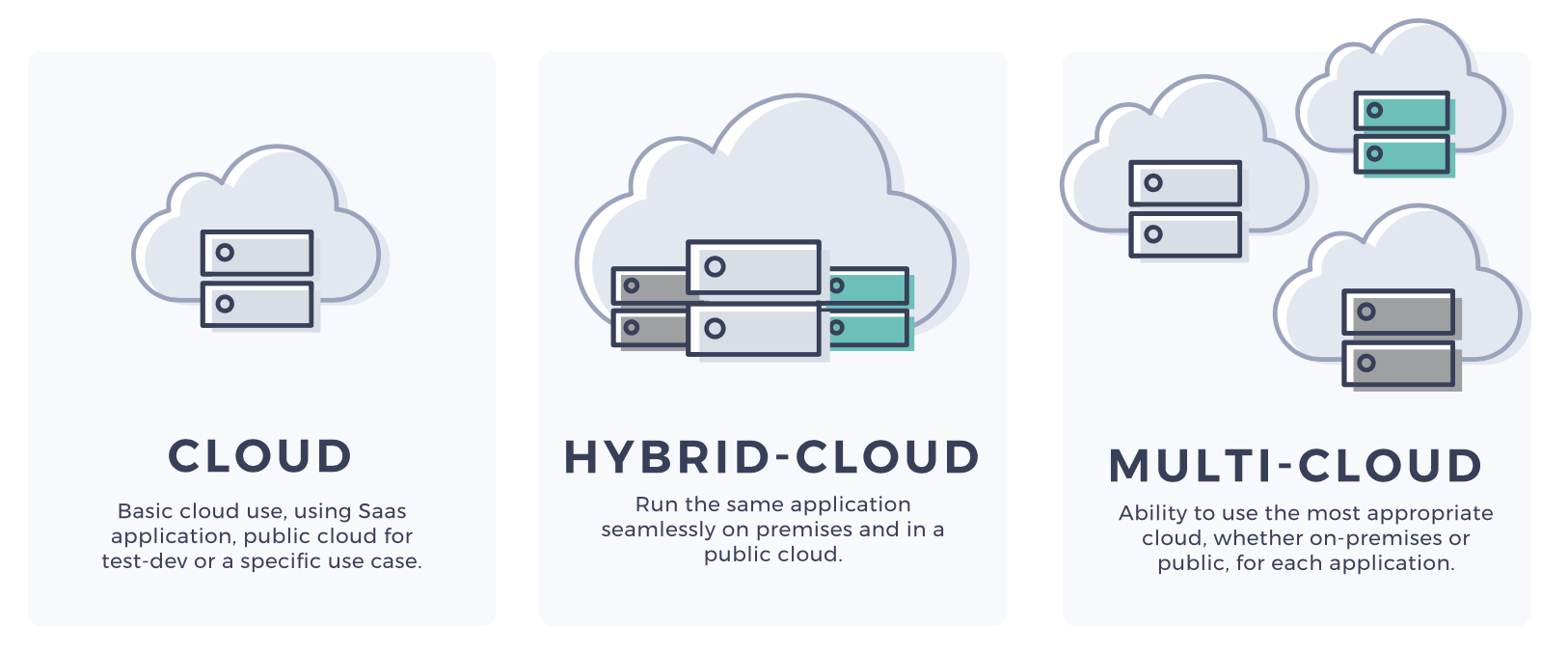
Cloud Computing : 6 Most Common Applications

Cloud computing: A brief history, where we are today and what's next

Cloud computing has become very popular for businesses. As of 2018, over three-quarters of enterprises were already using it and more are adopting it every day. If you haven’t considered it yet, that’s possibly because you’re not sure what you can use it for. To give you an idea, here we’ll show you the six main ways it is being put to good use.

1. Big Data analytics
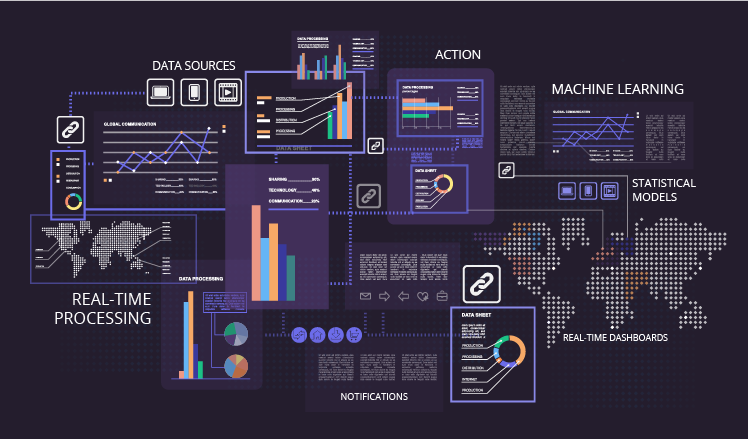
Real-Time Big Data Analytics: A Comprehensive Guide

Today’s businesses collect vast amounts of data on all manner of things: customers, operational processes, logistics, machinery health, product condition and much more. The value of that data comes from making sense of it, using it to come up with solutions to problems or discovering new opportunities. To do this, however, you’ll need to conduct Big Data analytics and this requires the use of substantial computing resources, often over short periods.

Those resources would be incredibly expensive if you had to purchase them and for much of the time would stand unused. Convincing the finance director this was the wisest use of the company’s money would be a difficult challenge. The advantage of cloud computing is that its pay-as-you-go pricing means you can access all those resources for the times you do need them but not pay for them when you don’t. This way you can carry out Big Data analytics whenever you need but do so affordably.

2. File storage

Cloud File Storage, Store Files & Documents Online - Zoho WorkDrive.

While it’s true that you can store your files in many places, what makes the cloud so appealing is that files can be accessed, edited and shared anywhere with an internet connection and this opens up a variety of opportunities for mobile working, collaboration and even improved security.

What’s more, the cloud provides high-speed, high-availability access as well as offering scalability to increase or decrease storage as demand requires – again paid for on a per-use basis.

3. Testing and development

Why Use Automation Testing Tools in Accelerated Development cycles

Developing a new application or platform in-house can be an expensive and long-winded process. It involves significant spending, time and staff involvement and requires the procurement, installation and configuration of hardware. This means it takes longer to complete a project and can put your company at a disadvantage with competitors.

Cloud computing can make testing and development quicker, less expensive and less complicated. This is because there are various pre-existing and perfectly suitable cloud environments already built and ready to use out of the box.

4. Disaster recovery

The Importance of Planning for Disaster Recovery | Caylent

Lots of companies use the cloud as the solution for their disaster recovery needs. Continuous backups of your servers in the cloud mean that you’ll no longer need to pay for a separate, redundant DR site of your own. Not only is recovery much cheaper, it’s also far quicker, ensuring your business is back online in no time at all.

5. Data backups
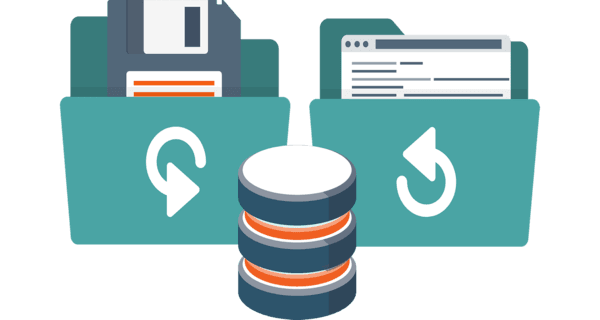
Data Backup and Recovery: 9 Benefits

Traditional methods of backing up data have tended to be complicated and time-consuming, often requiring portable drives or even tapes being shipped to remote sites for storage. This is also a technique that can back-fire if the drives are too small for the data or are discovered to be defective.

Cloud-based backup is far easier to carry out and more secure. You can schedule backups to meet your needs; store them remotely on virtual servers, knowing that if the physical hardware hits a problem the data is still available; they can be encrypted for increased security and checked to make sure the data is not corrupt. And as with all cloud storage, you can have as much space as you need without fear of running out.

6. The Internet of Things

An Introduction to the Internet of Things

The internet of Things is beginning to transform the way we live our lives and increasing numbers of enterprises are making use of it. An IoT system works by collecting data from large numbers of connected sensors and uses this to make intelligent decisions – often using artificial intelligence and machine learning.

To take advantage of the IoT, the cloud is needed to analyse that data and make insights from it. A smart traffic system, for example, can monitor traffic conditions across an entire area, discovering where issues arise and using AI to quickly reroute or slow down vehicles in order to prevent a hold up. This kind of intervention would be almost impossible to gather without the capabilities of cloud.

Cloud’s scalability is also important for IoT. As a company grows, so might the number of IoT devices it sends and receives information from. More devices mean it will need larger computing resources and this can be achieved quickly and easily in the cloud without the need for significant capital investment.

Conclusion

Cloud enables businesses to do many things that, without it, they would find more expensive, overly time-consuming or beyond their in-house IT capabilities. From basic solutions, like storing files and backing up data, to highly sophisticated processes, such as Big Data analytics and IoT data processing, the potential of the cloud is enormous. Indeed, what we have discussed here barely scratches the surface and there are even more developments yet to come.


Cloud Computing Advancing, According to New Statistics

What is cloud computing? Everything you need to know now | InfoWorld

The annual round-up of statistics about cloud computing has now been published by the major research companies and these have provided a wealth of valuable insights into how the cloud landscape is changing. In this post, we’ve chosen some of the more relevant statistics which highlight the areas where cloud computing is developing and where companies are spending their IT budgets. Hopefully, you’ll find these informative.

1. Vast majority of companies using cloud

One Simple Chart: most companies use multiple cloud providers - Gradient Flow

The latest statistics figures from the 451 Research Group show that 90% of companies are now using cloud computing for some of their services. Indeed, the number of workloads running on cloud-hosted servers rose from 48% in 2018 to 60% in 2019.  According to Cisco, this will rise to over 90% within the next two years.

2. UK is a major investor in the cloud

Growing number of UK businesses will be cloud-only soon | ITProPortal

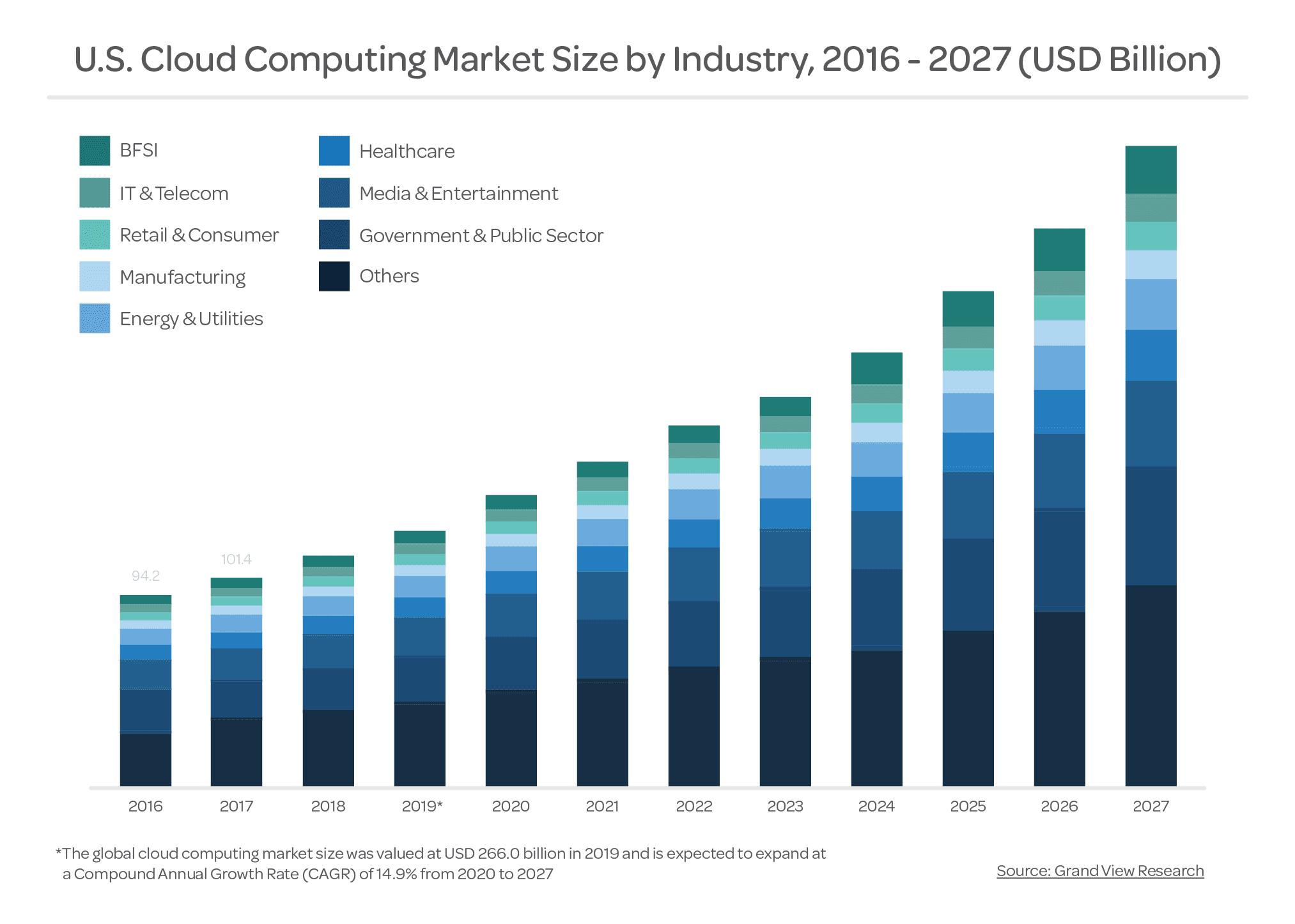
The UK is the world’s third-biggest investor in cloud computing, with companies spending £7.6 billion in 2019. This is just short of the £8 billion invested in China. Both countries, however, are well behind first placed US, which spent almost £100 billion on cloud computing last year.

3. Private vs public cloud

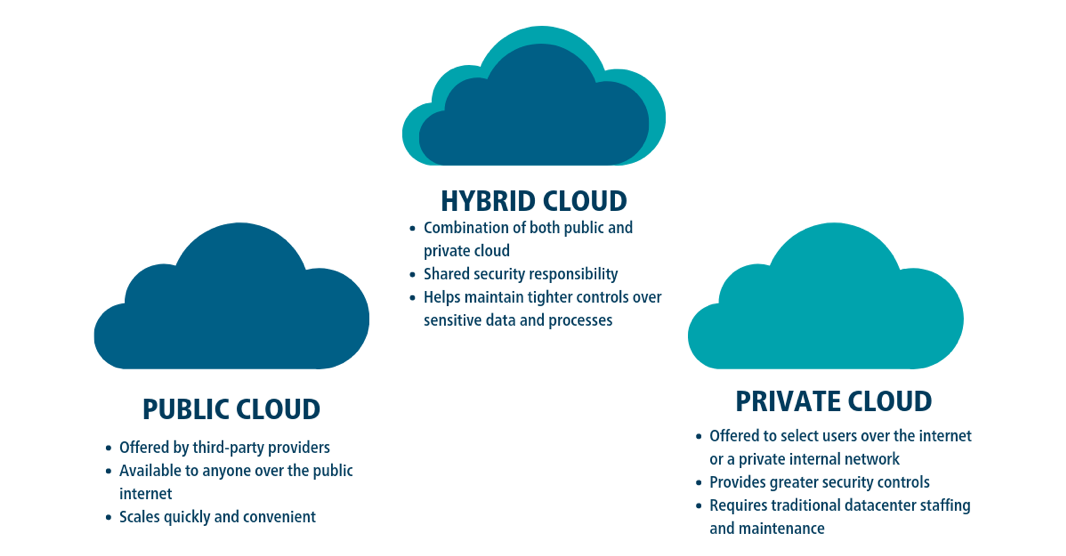
What is the difference between Public, Private and Hybrid Cloud? | by Karan Singh | Medium

Though more expensive, the average company runs more workloads, 41%, in the private cloud compared to 38% in the public cloud. There is, however, a disparity between how larger businesses and SMEs use these forms of computing. Bigger organisations carry out 46% of workloads in the private cloud and 33% in the public cloud whereas SMEs do almost the opposite: 43% in public cloud and 35% in private. The fact that the spending on public cloud is increasing three times faster than that of private cloud indicates that more small and mid-sized companies are migrating and opting for the public solution when they do.

4. Popular cloud services on the rise

Top Cloud Service Providers & Companies 2021 | Datamation

According to tech media giant, IDG, almost 90% of companies use Software as a Service (SaaS) which enables them to access and make use of software, such as Microsoft 365, over the internet. Cisco predicts that, by 2021, SaaS will handle three-quarters of all cloud workloads.

Infrastructure as a Service (IaaS) has also become very popular with over 80% of companies now using it to provide them with resources, such as servers, virtualisation, data storage and networking, that they need to run apps and carry out workloads.

5. Clear reasons for cloud migration

Two Clouds Data Icon - 6457 - Dryicons

The cloud’s ability to give access to data from anywhere with a connection is the driving force behind over 40% of cloud migrations. The opportunities it provides for collaboration, global networking, BYOD environments and flexible, work-from-home working conditions, together with all the benefits these bring, has made this the primary reason for cloud adoption.

Other major factors to have influenced companies’ decisions include using the cloud for disaster recovery and for reducing the burden on IT staff so that they can concentrate on more business-oriented tasks.

6. Cloud more secure than in-house data centres

Cloud computing em contabilidade: quais os cuidados? | Contabilidade, fiscal e de departamento pessoal - Blog da J.F Granja

According to Gartner, this year will see workloads carried out in public cloud, IaaS environments experience 60% fewer security events than in-house data centres. The main reason for this is that the expense and complexities of maintaining secure in-house systems is difficult for most businesses to achieve. Public cloud providers, on the other hand, have the resources and the income to develop first-class security that uses a multi-faceted approach. As this security comes as part of the cloud service, customers who opt for IaaS can often forgo the issues of developing their own, in-house solution.

While there are still risks when using the cloud, Garner believes that within 2 years over 95% of problems will be caused by customers. Problems resulting from employee errors will be much reduced due to the increasing use of automation.

7. Main uses of cloud  

Five Downsides of Desktop Cloud Computing - Desktop Defenders

Analysis of companies’ cloud spend gives a clear indication about how companies are using it. Currently, large businesses spend a quarter of their IT budgets on cloud services compared to a fifth for SMEs. The biggest spend goes on remote, online backups and disaster recovery solutions, which account for 15% of all cloud expenditure. Web and email hosting, together with online productivity, each account for around 10% of overall spend. 2019 saw companies that had already adopted cloud increase their spending by a quarter. Much of this was to help them better manage the increasing number of workloads they were migrating to the cloud.

Conclusion

As these statistics show, cloud computing is now an integral part of almost every company’s IT strategy. With IaaS helping to drive down IT costs and increase security, SaaS opening the doors to access-anywhere data and flexible working conditions and the ability of the cloud to help with disaster recovery, it is not surprising that 90% of businesses now use it. And these figures don’t even take into consideration the cloud’s ability to provide companies with artificial intelligence, machine learning, big data analysis and all the other powerful technologies available.

The 5 ways cloud computing will change in 2020

What is Cloud Security? Cloud Computing Security Defined | Forcepoint

Cloud computing is set to continue its remarkable development this year with technologies like 5G, Kubernetes, AI and machine learning increasing the scope and scale of the operational uses it can be put to. In this post, we’ll look at these technologies and see how they will change the face of cloud computing and how businesses use it.

1. IoT boosted by 5G

How 5G is becoming an Important Technology Ingredient for IoT

The long wait for 5G is finally over and, with its introduction, we’re set to see it play a critical role in the connectivity of IoT devices, extending that connectivity way beyond the limitations of wi-fi and enabling the development of edge computing.

The exponential growth in the number of IoT devices is coupled with an equally gargantuan collection of data. As the value of that data for delivering rich insights prevents enterprises from deleting it, companies are left to find a way to store and process it all. They need massive data storage capacity and vast compute capabilities. At the same time, some of the new technologies being developed for IoT use, self-driving vehicles being a prime example, require network latency to be almost eradicated.

5G can help with all these issues. It can connect devices where wi-fi and cabled connections are not available and at exceptional speed, it enables storage and compute services to be installed at the edge of 5G networks, shrinking latency to less than a millisecond while reducing the type and volume of data being stored in datacentres.

2. More stringent security standards for public cloud

An open, secure cloud with security standards you value - OVHcloud

Security is a critical concern for all enterprises and one new area to consider is the issue around 5G as it becomes part of the cloud network. The UK’s decision to use Huawei technology for its 5G network has already become a political hot potato. This, together with other concerns, is likely to lead to more stringent security standards, particularly over endpoint security, for cloud providers.

It is expected that tighter regulations will be introduced for the architecture of hybrid clouds requiring full data separation between on-site and public cloud environments. Brexit will also play a part, as the UK goes its own way in implementing standards regarding data protection.

3. More users adopting hybrid cloud

Multi-Cloud, Hybrid Cloud, and Cloud Spend - Statistics on Cloud Computing - ParkMyCloud

While many companies have considered hybrid cloud computing , its technological challenges have led to most of them adopting a purely public cloud model. And while there are workloads which are better suited to a hybrid solution, the lack of flexibility to deploy both on-site and cloud infrastructures is a hurdle which many enterprises are not equipped to overcome.

In 2020 and beyond, we’ll start to see new tools that can overcome these management and migration challenges. These tools will split migration into two separate processes where companies can first become familiar with their new programming and management models on-site before finally moving their infrastructure to the cloud. This is particularly helpful for those organisations that want to move to the cloud but don’t want to abandon the investments they have made in their datacentres and hardware.

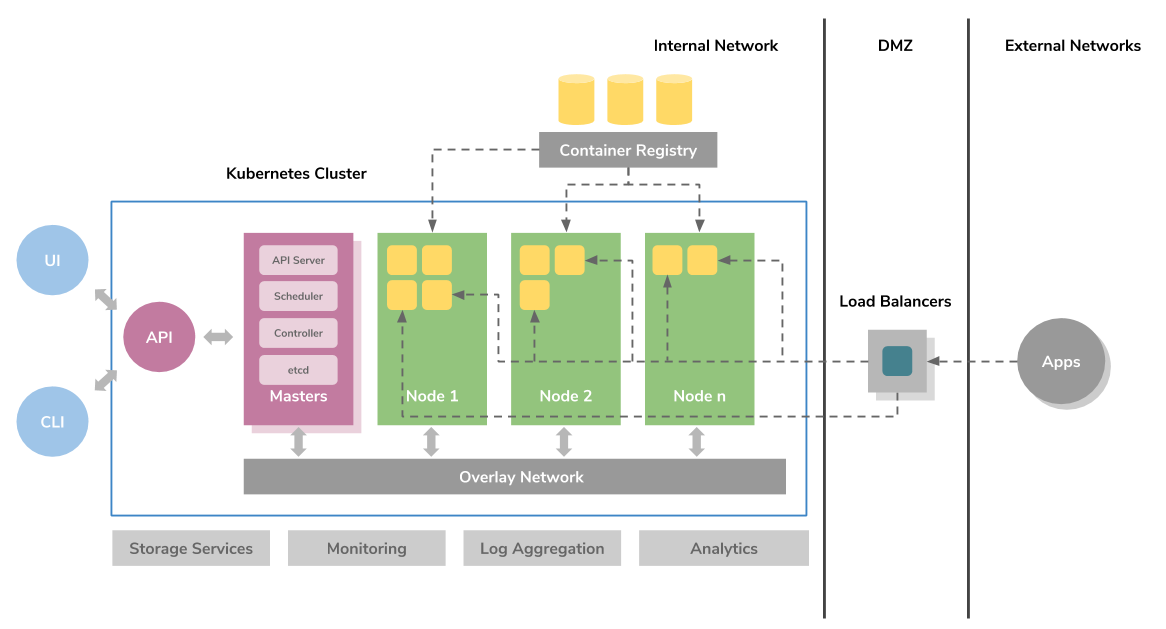
4. Kubernetes to become the standard container

A Beginner's Guide to Kubernetes. Kubernetes has now become the de facto… | by Imesh Gunaratne | ContainerMind | Medium

Containers have become widely used by companies that need to run multi-cloud workloads. By providing a platform-agnostic solution for the packaging and management of applications, they have simplified the process of cloud adoption and migration.

Of all the container solutions available, Kubernetes has become the most widely adopted. The primary reason for this is that, aside from housing an application, it also specifies the app’s required infrastructure, including load balancing, networking and scaling. What’s more, the standardised way in which it does this means those specifications can be more easily transferred across providers. When it comes to deploying infrastructure for container-based workloads, Kubernetes is today’s go-to solution. Additionally, its popularity means there are also a growing number of tools being developed to support its use.

5. AI and machine learning used in networking

Cisco: How AI and machine learning are going to change your network | InsiderPro

AI and machine learning are now being deployed to carry out a wide range of operations and this means companies are reorganising their IT services to enable them to make deployment easier. One area where AI is beginning to bring developments is in networking, helping with such things as reducing energy consumption and in automating maintenance tasks. Expect to see even more examples of its uses coming into the spotlight in the next few years.

Conclusion

It is an exciting time for the cloud with technologies like 5G, containers, AI and machine learning enabling its users to undertake more operations and enhance their capabilities. However, with expanding uses comes an even greater need for security and higher standards in how data is used. Hopefully, the information given here will have shown you what developments are in store and how your company can benefit from them.

Ways cloud hosting is similar to Santa

Best Christmas Deals Of 2017 - Cloud Hosting, Web Dev, Marketing Tools Discounts

You might think it Christmas crackers to believe a beardy, old sleigh driver donning a red hat, has anything remotely in common with an internet-based hosting solution – but you’d be wrong. Both of them, in their own unique ways, can bring us many benefits. So, as Christmas approaches and we begin to let our minds wander away from work and towards the festivities, here’s a more seasonal and humorous post for you to enjoy. Here are the reasons why cloud hosting is like Santa Claus.

When it comes to running critical operations, Santa relies on his sleigh just as much as businesses need their applications. Downtime for either can be disastrous. Sleigh failure can result in millions of unhappy children waking up to empty stockings – an unimaginable reputational disaster for the world’s most trusted brand. For others, the standstill caused by server failure not only damages reputations but can also result in significant losses.

Neither Santa nor businesses like downtime

Coronavirus pandemic pushes start of holiday shopping earlier than ever | Chattanooga Times Free Press

While Santa relies on magic reindeer dust to keep his sleigh in action, for businesses, the best option is to migrate to cloud hosting where the possibility of downtime due to server failure is non-existent. The virtual nature of a cloud environment means that it delivers consistent performance with guaranteed 100% uptime. This is because its hyper-converged design protects against everything from hard disk failure to an entire server failure, enabling critical apps to be always available.
Reindeer fast performance

A Beginner's Guide to Website Fast performance (Creative One Solutions)

Speed is essential for both Santa and modern businesses. For Santa, dropping off presents to the world’s 2 billion children in a single night means he has to work fast. It’s been scientifically calculated that he needs to travel at approximately 650 miles per second to get everything done in time and to achieve this, he needs more than your average reindeer. Indeed, the average reindeer can only manage 15mph and most of those would be flagging after half an hour of pulling all that weight.

What makes everything possible for Santa is that he uses the cloud. Rather than taking the sleigh over rugged terra firma, riding high in the cloud provides an almost friction less environment to travel and where gravity has less of an impact. This massively improves his speed.

That same cloud, or one very similar to it, can also help boost the speed of your data. Indeed, as data is weightless, it can travel even faster through the cloud than reindeer, almost at the speed of light. And with high-performance servers featuring powerful Intel Xeon CPUs and super-fast SSD drives you can perform critical tasks quicker than an elf can say ‘Merry Christmas’.

Santa has been so impressed with cloud technology, he’s now adopted load balancing to prevent his sleigh tipping over on tight corners. For cloud hosting users, load balancing maximises speed and capacity utilisation so that when servers are busy, the load is distributed. This ensures that no server suffers from performance problems and, with multiple data centres at their disposal, cloud providers can always ensure optimised performance.

Both Santa and cloud hosting save you money

Why small businesses should save for a rainy day

Whether you are buying presents for your children or cloud hosting for your business, it is important that what you buy offers you value for money. What’s great about the cloud is that you can save on the costs of running a data centre and the capital expenditure needed to pay for hardware. Everything you need is provided by the host. There will be no need to pay for premises, electricity, physical security, maintenance or insurance.

Similarly, with Santa, those who have well-behaved children can save on the cost of buying presents. Instead of spending a fortune on Amazon, simply get your ‘nice list’ kids to write a letter to Santa and put it in the nearest post box. Doing this automates the process of putting presents in stockings and under the tree on Christmas Eve. Although a small delivery fee of a mince pie and a shot of something warming is required, the savings are dramatic, especially when your child has an eye for expensive electronic gadgetry.

Unfortunately. If you have naughty kids, you’ll have to supply your own presents or make do with the small bag of coal that ‘bad list’ children get left.

Both come with expert little helpers

When you have significant workloads, it pays to have experts on hand to help you get things done. Santa, for example, has an army of elves who spend their days creating the presents, wrapping them up and loading them onto the sleigh. They’ll also manage the naughty and nice list and organise the presents in a way that enables delivery to be done with awe-inspiring efficiency.

If Santa has a technical problem, Mrs Clause offers 24/7 support, together with tea and biscuits, to help him find an effective solution. Last year, for example,Rudolph’s nose was a bit dim and Mrs Clause provided the right type of carrot to add to Rudolph’s food ‘til the luminous glow was restored.

Users of cloud hosting also benefit from expert little helpers. Working away behind the scenes is an army of engineers and technicians who ensure that your hosting is expertly managed. They’ll monitor and maintain the servers, update the software, scan for intruders and malware,and generally make sure your hosting is working as effectively as possible.

At the same time, should you have any issues, a good cloud host will provide their own 24/7technical support. While they may not know one end of a reindeer from the other, they will have expert skills in helping you with all your hosting needs and will be available by phone, live chat or ticket.

Wrapping up

So, as you can see, it is possible to compare Santa with cloud hosting. Comparing,however, doesn’t mean you have to choose between them. If you’re clever and have been good all year, you can have both. Now, that is good tidings.

On your journey to the cloud, choosing the proper implementation partner.

How to Choose the Right Partner for Your ERP Implementation?

When you are planning a move to the cloud, choosing the right partner is critical. Even though it can be difficult to know exactly what to look for, there are things you can do in your search for an implementation partner that can help you make informed decisions and mitigate risks along the way.

Learn to spot a re-badged reseller

Become A Reseller - Business Partner Icon Clipart (#1670043) - PinClipart

With the systemic shift to move IT infrastructure and applications to the cloud, there has been a dramatic increase in the demand for IT consulting services. This cloud economy has precipitated a situation where many vendors and resellers are re-inventing themselves as service providers rather than simply as technology sellers.

Organizations are setting themselves up as cloud service providers despite lacking the necessary qualifications to do so. These re-badged resellers will have a number of flaws including limited experience within the team, limited knowledge about specific industries and solutions and a lack of service-oriented culture. These flaws can put the companies that choose to work with these new services organizations at risk.

They have neither the knowledge nor the experience to deliver specialized, high-value services to customers. They may hire some experienced staff but, without a strong strategic direction set by management and reinforced by an entrenched services culture, they are unlikely to be able to deliver the business transformation organizations seek.

Meet with the people who are actually doing the work

5 scientifically proven ways to be happier at work - Happier

Organizations should beware of partners that introduce high-level consultants to the customer but get junior staff or offshore teams to execute the work. It is important to meet and speak with the team that is actually doing the work. The clarity and effectiveness of communications can suffer enormously when the team doing the work is not the same as the team speaking to the customer.

Come up with a list of demands

As an organization looking to move to the cloud – you may have a lot of questions and having a partner with the focus and experience deep enough to provide a high level of service is critical.

It is important to come up with a list of demands in your search for an implementation partner:

  • A mix of specific technology knowledge and business knowledge so the team can clearly understand the organization’s business imperatives and deliver cloud solutions accordingly
  • A strong physical presence and footprint in the industry with positive customer references, preferably from long-term customers in the same industry as your organization
  • A stable, well-qualified team with significant tenure at the organization, proving that the organization is a genuine player in the marketplace rather than a rebadged product reseller
  • Proven project control and governance methodologies that can be clearly explained
  • The ability to bring senior vendor representatives into any discussion to drive results

Ask questions

A Quick Guide To Asking Better Questions | by Marc Vollebregt | Medium

Organizations should ask the following questions to determine whether a potential partner is capable of delivering a successful cloud service:

  • What is your customer retention rate and how do you measure it?
  • Where will our data reside and what access controls are in place?
  • Is there a dedicated project manager for this implementation and what are his/her qualifications?
  • How will you ensure we have control of the system?
  • How will your team work with ours to ensure project success?

Once these questions are satisfactorily answered, the organization can move to the next stage of assessing whether the partner is suitable.

When it comes to defining a path to cloud, organizations should focus on providing increased business efficiencies, increasing user satisfaction and meeting business expectations, as well as addressing the risks identified. With the right partner in place, organizations can achieve enormous benefits and mitigate those risks.

Why Is The Cloud the Best Option for Customer Data Management?

Cloud services on the growth path in India- Business News

The more a company understands its customers, the better it will be able to build relationships, enhance the customer experience and deliver accurate, personalised marketing. Today, the tool of choice for providing these insights is a customer data platform (CDP). In this post, we’ll look at the benefits of using CDPs and why, to get the most value from them, they need to be deployed in the cloud.

What is a CDP?

Four Things to Look for in a Data Management Platform

A CDP is a database application that organises and unifies data into a consistent record that can be used by all the company’s systems. In doing so, it provides a comprehensive, all-touchpoint overview of customers, either as individuals or as members of various groups, which is invaluable for the analytics needed to inform decision making. The results offer companies credible, real-time data on their customer’s behaviour which can be used to help personalise marketing, improve customer experience and thus strengthen relationships.

Businesses collect data from a wide range of sources, these include IoT devices, website and mobile app behaviour tracking, purchase histories, emails, live chat interactions and information provided by the customer about their personal circumstances, such as age, gender, occupation, family, income and so forth. Often, much of this information is gathered and stored separately, with access to it limited to individual departments. When data is stored in these silos, no-one in the company has the full picture and this can have a negative impact on any decision making.

The benefit of a CDP is that it can take data from all these sources and unify them, giving all decision-makers the complete perspective they need to develop successful strategies. It allows them to pool personal information with behavioural, attitudinal and engagement data to understand the needs of the individual and discover patterns in customer groups. It can even help discover new groups that hadn’t previously been conceived.

The insights provided by analysing unified data enable the company to develop models that predict how customers’ attitudes and behaviours react to different stimuli, for example, how their shopping habits change at birthdays, how their investments may change if they have children, or how they respond during crises like coronavirus. Having this data enables companies to pre-empt changes in the market, helping them to best meet customers’ changing needs and do so faster than their competitors.

More than this, analysis also provides essential feedback on the decisions which have been made and the strategies which have been implemented, indicating where monies can be saved and where improvements can be made.

The importance of cloud

Understanding the Importance of Cloud Security — Innovative Penetration Testing Services - Lean Security

While using a CDP brings obvious benefits, there are challenges to deploying it effectively. With so much data being collected and analysed today, businesses need increasingly larger data storage and processing capacity. Providing this in-house can be expensive, with companies needing to purchase the necessary high-spec hardware and applications, employ IT staff to manage the system and pay for ongoing overheads like maintenance and power. As more data is collected, additional hardware will be required, all of which will need to be replaced when it becomes obsolete.

A cloud solution eradicates any requirement to purchase hardware and can lessen the cost of software licencing. All the infrastructure required is provided on a pay-as-you-go basis and is managed, maintained and updated by the vendor. This means that when additional resources are needed to undertake large scale analytics, you only pay for them when you use them, making it the most cost-efficient way to undertake the process.

A cloud solution also makes it easier for your IT team to focus on more business-oriented projects as the vendor will provide a managed service, as well as offering 24/7 expert, technical support to help your team deploy and run your system and applications.

Once your cloud-based CPD is deployed, it will then be available over the internet, meaning team members who need access to it can do so from anywhere they have an internet connection. This improves collaboration and allows teams to work remotely, anywhere in the world.

Another factor to consider is that, for many businesses, the internet is the source of most of their customer data, such as from websites, apps, emails, live chat and IoT devices. As most of these touchpoints are cloud-based, it makes sense that the data they gather remains in the cloud as it can be stored in the same data warehouse and thus be better managed and more swiftly processed.

Finally, but also of crucial importance, is that the cloud provides exceptional data security. Data can be backed up continuously, with backups being checked for integrity and being encrypted, ensuring the data is not only secure but can be restored almost instantly should there be a data loss. Access to data can be restricted using logical access while logins can be protected using single sign-on or multifactor authentication protocols. The vendor also provides a wide range of security measures, including firewalls, malware monitoring, intrusion prevention and so forth. All these measures can help ensure companies comply with data protection regulations like GDPR.

Conclusion

A customer data platform provides one of the most useful tools for companies undergoing digital transformation, enabling them to have previously unattainable insights into their customers and the marketplace. To make the best use of this, a company will need significant data storage and processing capacity. Cloud offers the most cost-effective way to provide the infrastructure needed, while also providing scalability, security and IT expertise. For more information about our cloud services, visit https://anteelo.com/.

Cloud Adoption : Major Challenges

How to transition to a cloud-based analytics environment

Since the start of the pandemic, digital transformation has accelerated as more businesses see the need to adopt advanced technologies and do so quickly. Providing ways to propel businesses forward, adapt to new ways of working and cut-costs, digital transformation has many benefits. Cloud adoption, while a necessary element of that transformation, is not without its challenges. Before migration takes place, companies need to know what the main challenges are. Here, we explain.

Security in the cloud

What is cloud security? | Kaspersky

Cloud services, in themselves, are exceptionally secure. All cloud providers have to comply with stringent regulations and this requires them to put robust security measures in place, including the use of strict protocols and advanced security tools. However, companies still have concerns about multi-tenancy and data location.

Multi-tenancy can be a compliance issue for some organisations which hold sensitive data. The problem can be overcome by storing the data in a single-tenancy private cloud where they have dedicated use of the underlying hardware.

Data location is an issue for organisations which store data protected by regulations such as GDPR. Using a cloud provider that migrates data or backups between countries, puts the data at risk of being kept in a nation that doesn’t comply with those regulations. For example, EU citizen data is protected by GDPR, however, if it is stored on servers in the US, the government there has legal access to it for national security purposes. If it is accessed, the organisation will be in breach of compliance. The easy solution here is to opt for a cloud provider which locates all its datacentres in a single country, as Anteelo does in the UK.

Cost management

What Does a Successful Cost Management Program Look Like? | Clarizen

One of the biggest advantages of the cloud is the ability to reduce capital expenditure on hardware and in-house datacentres. The other financial advantage is that cloud resources are chargeable on a pay per use basis, enabling companies to scale up and down quickly so that costs can be minimised.

The financial risks here depend on how well a company manages its use of the cloud. Poorly managed, it is easy for the use of these on-demand resources to spiral and this can be costly. Companies need to implement use policies, monitor cloud usage and carefully analyse where the money is being spent.

Lack of IT expertise

Is the hybrid cloud's biggest challenge a lack of expertise? | CIO

Migration to the cloud not only presents a new type of infrastructure to an organisation; it also puts a host of new technologies at their disposal. While the benefits of using these are the prime reason for cloud adoption, one of the challenges faced by most companies is developing the expertise to make use of them.

Organisations adopting the cloud need a clear understanding of what they want to use it for and make sure they have the necessary expertise to help them meet their objectives. This could require the training of current staff or the recruitment of new ones.

Thankfully, many providers offer managed services and 24/7 technical support. There is also a wide range of tools which automate many of the tasks which not so long ago required expert manual input.

Multi-clouds and hybrid clouds

Pros of a Multi-Cloud Strategy – Xorlogics

Over 80% of companies now use more than one cloud provider, some as many as five, to carry out different workloads. The reasons for this are numerous, but it boils down to choosing the most appropriate vendor for the specific workload being undertaken. At the same time, there is an increasing number of businesses developing hybrid-clouds, a mixture of public and private clouds together with dedicated servers.

While multi-cloud and hybrid cloud can be beneficial for financial, operational and compliance purposes, they add to the complexity of an organisation’s overall infrastructure. Here, there will be a greater need for governance, monitoring, expertise and security.

Migration

Step-by-Step Cloud Migration Checklist | by Manisha Mishra | DataDrivenInvestor

While the points above discuss the challenges of cloud adoption, the migration itself can also cause problems. A cloud environment can be markedly different from the one on which an application is hosted in-house. Issues with operating system compatibility and system configuration may mean an application might not work, or work as expected, in a cloud environment. Resolving these issues can have an impact on the speed of migration, project deadlines and budgets.

Thankfully, there are a wide and growing range of applications, many of them open-source, that have been developed for cloud environments, are quickly deployable and work straight out of the box.

The key to a smooth and speedy migration, however, is to find a vendor with the expertise and technical support to help you manage the migration process.

Conclusion

The pandemic has accelerated the pace of digital transformation across the globe with unprecedented numbers of companies migrating to and expanding workloads in the cloud. While for many organisations, this is a necessary part of the ‘new normal’, they should not underestimate the challenges that cloud adoption presents. The best way to prevent issues is to work closely with a cloud provider that will get to know your company and put tailored solutions in place for you.

Want to reap the full benefits of cloud computing? Reconsider your journey.

Rethink your cloud migration to get more benefits | Linktech Australia

There’s no denying that companies have realized many benefits from using public clouds – hyperscalability, faster deployment and, perhaps most importantly, flexible operating costs. Cloud has helped organizations gain access to modern applications and new technologies without many upfront costs, and it has transformed software development processes.

But when it comes to public cloud migration, many organizations are acting with greater discretion than it might at first appear. Enterprise IT spending on public cloud services is forecast to grow 18.4 percent in 2021 to total $304.9 billion, according to Gartner. This is an impressive number, but it’s just under 10 percent of the entire worldwide IT spending projected at $3.8 trillion over the same period. While cloud growth is striking, it pays to heed the context.

The data center still reigns

DATA CENTER Services - Bluebird Network

In 2021, spending on data center systems will become the second-largest area of growth in IT spending, just under enterprise software spending. And while much growth is attributed to hyperscalers, significant increase also comes from renewed enterprise data center expansion plans. Based on Anteelo Technology’s internal survey of its global enterprise customers, nearly all of them plan to operate in a hybrid cloud environment with nearly two-thirds of their technology footprint remaining on-premises over the next five years or longer. Uptime Institute’s 2020 Data Center Industry Survey also shows that a majority of workloads are operating in enterprise data centers.

Adopting cloud is a new way of life

How Cloud Computing Is Changing Management

Deciding what should move to the public cloud takes careful planning followed by solid engineering work. We are seeing that some enterprises, in rushing to the public cloud, don’t have an exit strategy for their current environments and data centers. We have all come across companies that started deploying multiple environments in the cloud but did not plan for changes in the way they develop, deploy and maintain applications and infrastructure. As a result, their on-premises costs stayed the same, while their monthly cloud bill kept rising.

Not everything should move to the public cloud. For example, many enterprises have been running key mission-critical business applications that require high transaction processing, high resiliency and high throughput without significant variation in demand due to seasonality. In these cases, protecting and supporting existing IT infrastructure investments and an on-premises data center or a mainframe modernization is more practical as moving such environments to the public cloud is complex and costly.

To achieve the full benefits, including cost benefits, let’s not forget the operational changes that using the public cloud requires — new testing paradigms, different development models, site reliability, security engineering and regulatory compliance — all of which require flexible teams and alternative ways of working and collaborating.

The key point: Enterprises are not moving everything to the public cloud because many critical applications are better suited for private data centers, while potentially availing themselves of private cloud capabilities.

How can Anteelo help?

6 ways cloud improves speed and performance - Work Life by Atlassian

With ample evidence that hybrid cloud is the best answer for large enterprise customers to successfully adopt a cloud strategy, employing Anteelo as your managed service provider, with our deep engineering, and infrastructure and application management experience, is a good bet. We hold a leading position in providing pure mainframe services globally and have the skills on hand to help customers with complex, enterprise-scale transformations.

Our purpose-built technology solutions, throughout the Enterprise Technology Stack, can reduce IT operating costs up to 30 percent. In running and maintaining mission-critical IT systems for our customers, we manage hundreds of data centers, hundreds of thousands of servers and have migrated nearly 200,000 workloads to the hybrid cloud, including businesses that use mainframe systems for their core, critical solutions. A hybrid cloud solution is the ideal, fit-for-purpose answer to meet many unique business demands.

The path to modernizing mission-critical applications - Cloud computing news

Customers want to migrate or modernize applications for many reasons. Croda International is a good example, with its phased approach for cloud migration. Whether moving to the public cloud, implementing a hybrid approach or enhancing non-cloud systems, Anteelo’s proven, integrated approach enables customers to achieve their goals in the quickest, most cost-effective way.

The lesson here: Be careful about drinking the public cloud-only Kool-Aid. With many cloud migrations falling short of their full, intended benefits, you need to assess the risks and rewards. More importantly, a qualified, experienced engineering team will not only help design the right plan, but will ensure that complications are quickly resolved — making for a smoother journey.

And most importantly, every enterprise should look at public cloud as part of its overall technology footprint, knowing that not everything is right for the cloud. Modernizing the technology in your environment should not be overlooked, since it may bring more timely results and better business outcomes, including improving your security posture.

Why Are These Big Name Brands Moving To The Cloud Technology?

Going to the Cloud: Stories from the Frontlines – Channel Futures

The economic turmoil caused by the pandemic has kickstarted the rapid adoption of cloud technology. Across the globe, companies in their housands are expanding the number of services they operate in the cloud in a bid to speed up digital transformation and put themselves in a better position to withstand the volatility of today’s marketplace. In this post, we’ll look at some major brands to discover why they have decided to migrate to the cloud over the last few months.

Coca-Cola

Coca-Cola - Wikipedia

Arguably the most recognisable brand in the world, Coca-Cola may have been making the same product for 128 years but its operations are strictly 21st century. Its manufacturing processes have long been massively automated and now, it has adopted a cloud-first policy with regard to IT.

As part of its digital transformation, the company has migrated to a hybrid cloud technology setup in a bid to reduce operational costs and increase IT resilience. This will enable it to deploy data analytics and artificial intelligence to provide it with insights that it can use to improve its services and operations.

Coca-Cola will use the migration to streamline its existing IT infrastructure and develop a company-wide platform for standardised business processes, technology and data. In order to integrate the public and private elements of its hybrid cloud, together with existing technology it plans to keep, it will deploy a single-dashboard, multi-cloud management system.

Finastra

Finastra - Wikipedia

UK-based fintech company, Finastra, is migrating to the cloud to accelerate not only its own digital transformation but those of its 8,000 global customers. The objective is to revolutionise the use of technology in the financial services sector by developing a platform that financial companies can use to speed up innovation and improve collaboration.

To achieve this, Finastra will migrate its entire customer base to the new cloud platform. From here, they will be able to create digital-first workplaces and provide their own clients with financial services and solutions, such as electronic notary services and electronic signatory, which are better suited to today’s digital world.

Major bank migrations: Deutsche Bank and HSBC

HSBC's reported job cuts signal that banks are struggling to find their postcrisis footing - MarketWatch

Two of the world’s major banks, Deutsche Bank and HSBC, have both announced plans for migrations over the last few weeks. A key element of its digital transformation, Deutsche Bank sees the cloud as being crucial for increasing revenue and minimising costs. It aims to make use of data science, artificial intelligence and machine learning to improve risk analysis and cash flow forecasting, as well as to develop digital communications that are easier for customers to interact with and which enhance the customer experience.

The German bank is also using the move to improve security, seeing it as a way to help it comply with data protection and privacy regulations and to ensure the integrity of customer data.

HSBC Holdings, the parent company of HSBC Bank, is adopting the cloud to benefit from its storage, compute, data analytics, AI, machine learning, database and container services, as well as for the cloud’s advanced security.

Its major goal is to provide more personalised and customer-centric banking services for its customers, for which it will develop customer-facing applications. It also intends to use the move to update its Global Wealth & Personal Banking division, develop new digital products and improve compliance.

Car manufacturer migrations: Daimler and Nissan

New Daimler boss could end Renault-Nissan partnership | Autocar

Two leading car manufacturers, Mercedes-Benz parent company, Daimler AG, and Nissan have also announced plans to adopt cloud technology. Daimler will migrate its after-sales portal to the public cloud to help it innovate and accelerate the development of new products and services for its global customer base, as well as to provide it with scalability. Like many other companies, it also sees cloud as being a secure platform and will use it to encrypt and store data to protect it from ransomware and hacking.

Nissan, meanwhile, is using the cloud primarily to help cut costs during the post-pandemic downturn. With poor sales throughout 2020, it views digital transformation as essential to remain agile and resilient.

The move will allow the car maker to store its vast quantities of data far less expensively than in-house and provide it with cost-effective, scalable processing resources. These it will use to undertake application-based, computational fluid dynamics and structural simulations which are needed to design its cars and test them for aerodynamics and structural issues. The cloud will also enable it to carry out performance and engineering simulations, helping it improve its vehicles’ fuel efficiency, reliability and safety.

UK public sector cloud initiative

IMImobile announces it has been included in the UK government G-Cloud initiative

The UK government has implemented a cloud-first policy in a bid to make the UK the world’s most digitally transformed nation. As part of the project, government departments, local authorities, the NHS, police and educational institutions will be encouraged to initiate cloud-based projects and take advantage of the speed, scalability and security of the public cloud.

To help bring this about, the government has established a digital marketplace on its website where public sector organisations can find approved service providers. Known as the G-Cloud (Government Cloud), these providers, which include eukhost, offer the advanced, secure and compliant cloud services, together with the technical expertise needed to make public sector digital transformation a reality.

Conclusion

As these use cases exemplify, cloud adoption and digital transformation are key to helping organisations cope with the impact of the current economic crisis and put them in a stronger position to innovate and prosper in the future. However, it is not just major brands that are making the move, businesses across the globe are moving quickly to take advantage of what cloud has to offer.

error: Content is protected !!