2021’s Top Email Security Practices

Best 5 Steps to Enhanced Email Security | Improve Email Security

Why is Email Security Important?

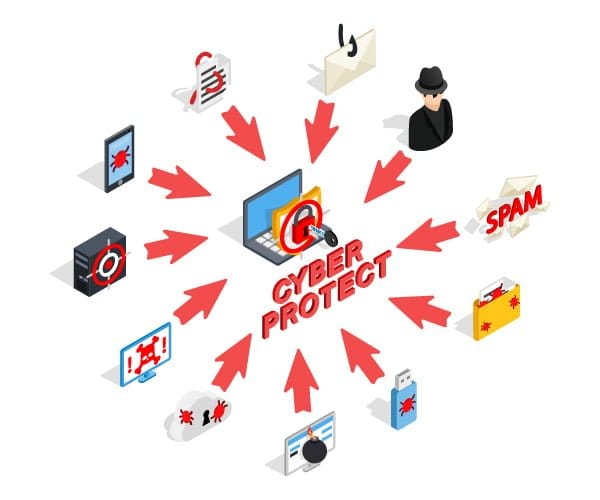
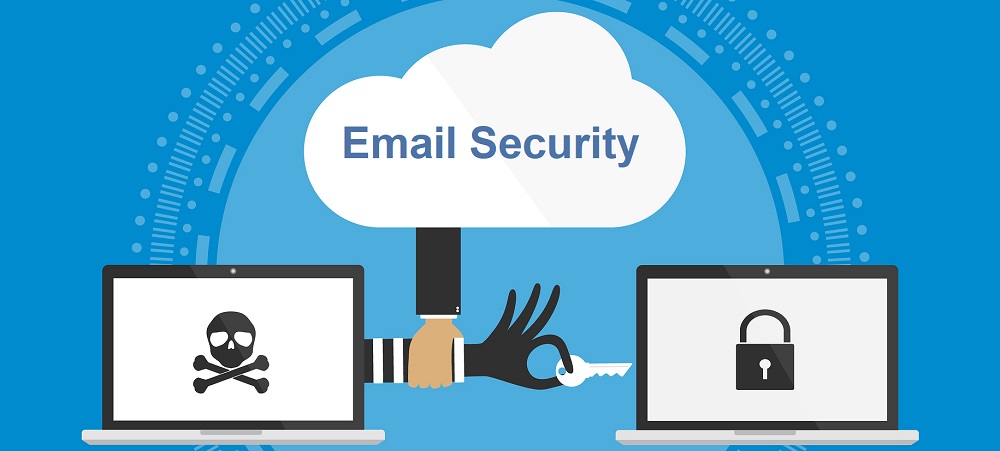
Whether exchanging emails across networks or dumping them in your spam folder, a huge amount of data is sent, received and stored. You may not realize but there are high chances that an unsecured email might have landed in your inbox which can act as a source of data exploitation. Now you wouldn’t want that, would you? That’s why email security is very essential for our daily routine in order to keep a check if any malicious email is accessing our inbox or not. The cybersecurity professionals working in every industry vertical must stay updated with the prevailing attacks possible through emails.

Europe's cybersecurity finest failing on email security basics - IT Security Guru

According to ComputerWeekly.com, 82% of organizations claimed to have faced email-based cybersecurity threats in 2018. Whereas, ransomware seems to be the biggest cyber threat in the coming year. The reason being, ransomware attacks that encrypt critical business files and demand for ransom in return are often sent to individuals working in organizations by emails only!

These eye-opening facts call for proper email protection solutions that are needed to be implemented in every organization as a defensive system against invading cyber threats. As far as cybersecurity is concerned, the best solution is using email security tools that incorporate a wide range of security techniques that email accounts and services have. Proceed further for the top 5 email security practices that can benefit your organization from email-based cyber risks.

The 4 Types of Email Security Practices 

  • Never click the “unsubscribe” link in spam emails:

5 things you should know about email unsubscribe links before you click – Naked Security

At times, certain emails manage to surpass the spam filter and land in your inbox. For instance, you come across one such certain email and on opening it, you discover that it looks like a phishing email. What would be your first instinct? In any normal situation, users tend to unsubscribe suspicious-looking emails but that is not actually safe!

Hackers are good manipulators and they use such links to fool people into clicking attachment which redirects the targeted users to a phishing site. Apart from that, these links also provide hackers with a back door for access into your system.

  • Avoid Public WiFi:

Public WiFi Risks and How to Avoid Them - Free WiFi Hotspot - Best Free WiFi Hotspot Creator to Share Network

Never access emails from a public WiFi because they are less secure and hackers choose public WiFi to steal information by passing through a weak network. Cybercriminals require nothing but a laptop and basic software to hack into public WiFi networks and monitor all the traffic. Accessing emails via unsecured public networks can lead to misuse of user’s credentials and a huge loss of sensitive data. This could also result in further intended targeted cyberattacks that are down the line.

  • Email Encryption:

How Do I Encrypt an Email & Send It Through Gmail or Outlook?

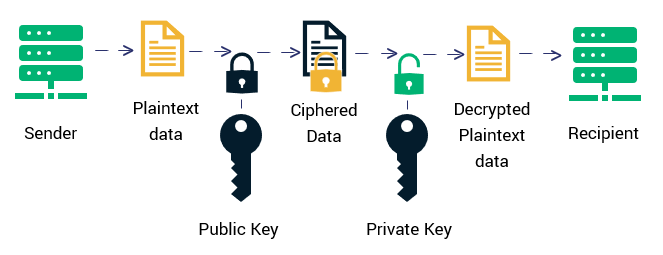
Disguising and encrypting email content potentially protects the sensitive data that is sent and received, from being read by anyone except the intended recipient. With email encryption, you can secure your emails over untrusted networks from eavesdroppers or any third person trying to invade in between the email exchange. This security strategy reduces the chance of disclosure of information as well as alter of message content.

  • Employee Education:

5 Things Every Full-Time Employee Should Consider About Education

Limit the chances of cyber risks in your organization by providing employees with cybersecurity awareness training tools. Along with the implementation of policies and email security tools to prevent cyber threat postures, it is essential to encourage employees to become proactive in combating attack vectors like ransomware, phishing emails, and cyber scams. Security awareness tools is an AI/ML-based security attack simulation tool that assesses the real-time threat posture of an organization. With the unlimited number of attack campaigns and automated training campaigns, this product builds cyber awareness among the employees in an organization and creates a resilient working environment.

safety clipart - Clip Art Library

Implementing and working on the above-mentioned email protection solutions will not only keep your data safe but will also be beneficial in the long term. In order to protect your business, it is important to make sure that all your employees are empowered to make email based decisions and are protected from data thefts.

Hackers are everywhere nowadays and they won’t stop holding back from discovering vulnerabilities and exploiting your data. Secure your organization now with a robust email security tool in order to reduce the chances of becoming a victim of the prevailing cyber threats.

Web Accessibility

Web Accessibility refers to websites, browsers, and web technologies that are designed and developed with a focus on inclusivity. The web was originally conceived for conventionally abled individuals, whereas Web Accessibility ensures that navigating and interacting with the web is not only viable for all, but comfortable for those who may be differently-abled.

As the World Health Organization (WHO) notes, however, “disabilities is an umbrella term, covering impairments, activity limitations, and participation restrictions, ” whereas the goal of web accessibility is primarily concerned with auditory and visual impairments.

While there are many ways to implement web accessibility solutions, the World Wide Web Consortium (W3C) is the global standards organization for today’s web.  W3C has published the Web Content Accessibility Guidelines (WCAG) that sets the industry standard, acting as a guide to modern web accessibility.

WHY IS WEB ACCESSIBILITY IMPORTANT? 

Bigger Addressable Market

The internet is the world’s primary source of information; it is of the utmost importance that everybody is able to access it. There are over 4.5 billion users on the web, while, according to WHO, about 15% of the world’s population live with some sort of disability. These numbers imply a plethora of users who may struggle with various aspects of internet use. Disabilities can be permanent (such as certain birth defects,) temporary (for example, a broken finger,) or situational (not hearing your phone ring in a crowded concert). Ignoring web accessibility could mean cutting access to many potential users and paying customers. If we pay attention to inclusive design and development for the web, we can bridge an important gap, making sure all potential users have access.

Legal Liability

Beyond being the right thing to do and increasing your addressable market, there’s a legal reason to have an accessible website. The Americans with Disabilities Act (ADA) was signed into law in 1990. While ADA did not specifically mention the internet, numerous legal interpretations and court rulings indicate at least some ADA requirements apply to the virtual world.

Title III of the ADA, for example, requires that public accommodation be provided to disabled persons in a manner that allows for the “full and equal enjoyment” of the privileges, goods, services, advantages and accommodations as those provided to able-bodied persons. Businesses are responsible for making sure those accommodations are made with “reasonable modification.” Any business not providing for that accommodation may committing a form of unlawful discrimination, as stated in 42 U.S.C. section 12182(b)(2)(A)(iii).

A recent example of a business being sued over an inaccessible website is Robles v. Domino’s Pizza, Inc.. The US 9th Circuit court reaffirmed a ruling that Domino’s could be held liable for violating the ADA by not having an accessible website.

THE CURB-CUT EFFECT

Accessibility-oriented enhancements frequently turn out to be useful for all users, whether or not the users are conventionally abled. The curb-cut effect describes this phenomenon. The phrase was popularized when designers noticed pedestrians using a sidewalk feature originally created for wheelchair bound pedestrians. In this instance, conventionally abled pedestrians opted to use sidewalk ramps (i.e. curb-cuts) when they had bikes, strollers, heavy grocery carts, or were otherwise encumbered.

In “The Best iOS Accessibility Features Everyone Should Use,” power-user Lifehacker blogs about multiple features Apple specifically developed in order to enhance iPhone usability for disabled individuals. Lifehacker shows how these features are helpful to all users, regardless of ability, outlining several digital examples of the curb-cut effect.

SEO Benefits

Improving your ranking in Google is yet another reason to focus on web accessibility. While Google’s ranking algorithm is often perceived as unknowable and complex, the primary factors that control search results are in fact simple: authority and relevance. Authority is mostly determined by how many popular, relevant sites link to the site in question. Relevance refers to queues Google uses to determine if site content would be meaningful as a search result for a given query. In judging relevance, Google needs to know what a site is about. While Google’s web crawlers can read a site’s text with relative accuracy, they can’t yet reliably understand the content of images. Accessibility features designed to help the visibly impaired are simultaneously very useful to Google’s crawlers, helping them better understand a page, which ensures the best possible ranking.

WHERE DO I BEGIN?

Web accessibility shouldn’t just be a priority for developers, but for designers, QA, backend engineers, and product managers as well. Since websites usually start with a wireframe design, it is most effective to lay the groundwork for an inclusive website at this initial design stage. This way, it is easier to catch early biases and immediately set up your website for inclusivity and success.

Microsoft offers a handy inclusiveness design portal with a variety of resources for those looking to expand their knowledge on accessible design.  This Cards for Humanity tool is a great way to start thinking about various types of limitations you might want your site to account for.

STEPS FOR DEVELOPERS

The Web Content Accessibility Guidelines, which set the industry standard for web accessibility, hold four main principles. These principles are referred to as POUR: Perceivable, Operable, Understandable, and Robust.

  • Perceivable: How users process information on a website
    • e.g. Can those who are visually impaired perceive the content of an image?
  • Operable: How users navigate the website and its functionality
    • e.g. Can a user who struggles with a mouse pause a video with their keyboard?
  • Understandable: How simple it is for a user to operate the website and intuit the flow
    • e.g. Will a form easily indicate if the user missed filling out a field?
  • Robust: Can the user experience the website through a variety of mediums, including assistive technologies, without having to compromise?
    • e.g. Can a user with a screen reading Chrome add-on access the same content a conventional visitor can?

Other guidelines to take into account as a developer include keyboard controls, color contrast, semantic HTML for correctly intentional element tags, and ARIA labels for describing an element with no text.

Final Thoughts

Since the web is integral for accessing information, as well as heavily relied on for connection and community, Web Accessibility should take priority with each iteration of web development. Accessibility should be constantly reworked and improved to provide access to everyone who needs it. We believe that accessibility will soon be considered a must-have for every minimum viable product (MVP,) rather than seen as an optional upgrade.

Creating an accessible web is the right thing to do, and improves the cyberspace experience for all users.

India’s 2020 Cybersecurity master plan

Top Cybersecurity Challenges 2021 - Solve Data Protection Issues

The Current Cybersecurity Challenges in India

Every year, the industry of cybersecurity in India faces new challenges and responsibilities to safeguard the growing online data and the digital economy. Did you know the digital economy currently comprises 14-15% of the total economy of India? While with more than 120 recognized ‘data centers’ and clouds in India, the digital economy is targeted to reach 20% by the year 2024!

Moreover, the incorporation of artificial intelligence (AI), machine learning (ML), Internet of Things (IoT), cloud computing and data analytics, has again become a huge challenge for the cyberspace as apart from becoming a more complex domain, it is giving rise to technical issues and the anticipated cyber risks.

Cybersecurity looks to the cloud to protect data at sea

However, with the development and introduction of advanced technologies in the market, India is yet to face and tackle new problems in the domain of cybersecurity. This disruptive innovation has brought India to crossroads with a complex network of modern enigmas and unprecedented harm.

Below mentioned are some of the major cybersecurity challenges that our nation is facing:

  1. Email-based and internet-facing applications still remain to be among the top threat vectors.

  2. With people depending more and more on the cloud infrastructure and solutions, human error continues to be the primary source of misconfigurations and vulnerabilities.

  3. In the research analysis of 50,000 emails, a significant increase in the conversation hijacking attacks by 400% between July and November 2019 was experienced. Therefore, this still continues to be a major cyber risk

  4. Growing online transactions seems to have generated considerable incentives for cybercriminals.

  5. Phishing and unethical cyber practices have grown a hundredfold in the past few years, making it easier for even non-technical perform hacking.

  6. Cloud, 5G and IoT devices have evolved as among the biggest cybersecurity threats of 2020.

The New Cybersecurity Approach for 2020

Back in late 2019, India was at the target of two cyberattacks in the same month. Moreover, the malware attacks at the Indian Space Research Organization (ISRO) and Kudankulam Nuclear Power Plant were believed to have happened due to phishing attempts on employees. After experiencing these devastating cyber risks, India is all set to fill the security gaps with the new Cybersecurity Strategy 2020!

With the vision of creating a “cyber-secure nation” for businesses as well as individuals, the Indian government is ready to release the cybersecurity strategy policy in January 2020 with an aim to achieve the target of $5 trillion economy.

Cybersecurity

Meanwhile, on the other hand, the IT Secretary Ajay Prakash Sawhney has stated that our country holds an estimated amount of USD 1.9 billion in cybersecurity service enterprises and USD 450 million of cybersecurity products from India. Along with the presence of multinational and Indian entities, engaging in R&D cybersecurity, all in total currently amounts to USD 5 billion worth cybersecurity ecosystem in India. (source: The Economics Time)

The cybersecurity companies in India have come up with innovative and leading technology-based products and services to reduce the prevailing cyber threat postures in organizations across the nation. As a contribution to creating a “cyber-secure nation”, these companies are effortlessly providing the best defensive tools and VAPT services for all the industry vectors.

Cybersecurity Advice: Focus on Threat Detection and Response – Parallel Technologies, Inc.

Our country is fully inclined towards the path of sustainable development but to achieve that, we have to combat various hurdles such as patching up of the existing vulnerabilities in the cyber world. And this can only happen with the proper formation of critical IT infrastructure and consistent partnership between the public and private sectors working as key aspects for a cybersecurity framework.

Your Single Source for Cybersecurity Resources | SoftwareONE

It is vital to be visionary and recognize the upcoming challenges from the future in order to be fully prepared and preventing our organizations from becoming another cyberattack’s victims. We don’t have to match the worldwide standards in security when we are capable enough of setting up the highest standards in the world!

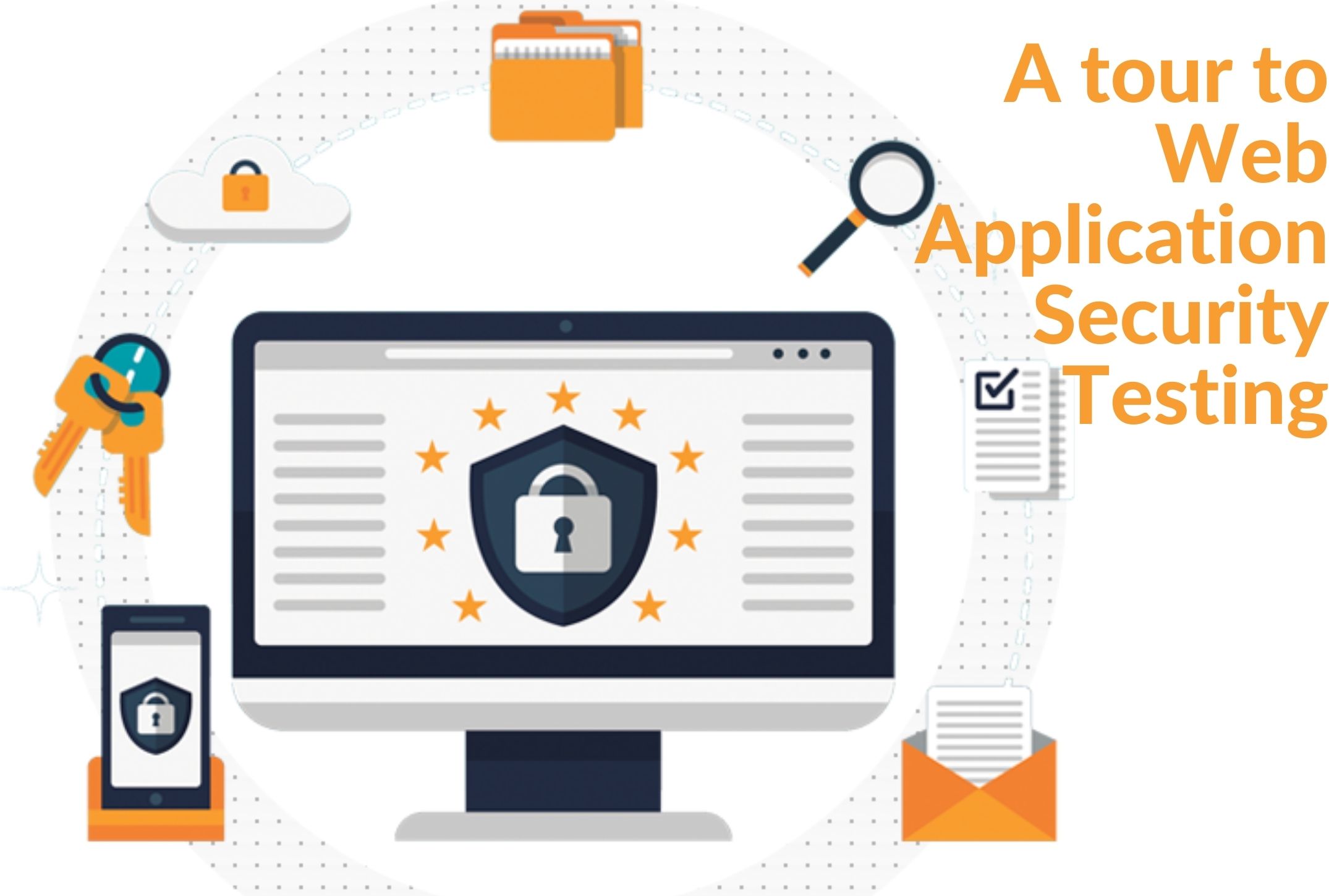
A tour to Web Application Security Testing

Different Ways In Which Web Application Development Is Changing

What is Web Application Security Testing?

Applications are the most favorable medium for cybercriminals who seek to steal data or breach user’s security defenses. Being available 24/7 to users, web applications hold high chances of becoming a target for hackers trying to seek access to the confidential back-end data. According to the cybersecurity research, there were more than 3,800 publicly disclosed data breaches, exposing 4.1 billion compromised records. A huge amount of data is stored in web applications. With the increasing number of transactions taking place on websites lately, the need for comprehensive web application security testing must be considered a mandatory step.

A 6-Step Guide to Web Application Testing [Agencies Approved]

But what actually the term ‘Web Application Security Testing’ means? Basically, it is the process of checking the security of confidential data from being exposed to unauthorized individuals or entities. The purpose of this security testing is to ensure that the functionality of the website is not being misused or altered by any user. Apart from that, it also ensures that no user holds the authority to deny the functionality of the website to other users.

In order to have the best web application security practices, it is important to have knowledge of the following main key terms:

  • Vulnerability 

A Guide to Vulnerability Assessment For Organization Security

A flaw, weakness or misconfiguration in a web-based application code that empowers attackers to gain a certain level of control of the website or possibly over the hosting server.

  • Website SpoofingSpoofed URL - Wikipedia

Act of creating a hoax website to mislead users or target audience of the authenticated website for fraudulent intent.

  • URL Manipulation

URL Manipulation Attacks - CCM

The act of altering or manipulating information in the URL to get access to the confidential information and this information is passed on through the query string.

  • SQL injection

Introduction to SQL Injections. SQL injection is an attack technique… | by Charithra Kariyawasam | Medium

A computer attack in which malicious code is inserted in a weakly-designed web application and is then passed on to the backend database. As a result, malicious data produces a confidential database query result.

  • XSS (Cross-Site-Scripting)

What is Cross-site Scripting (XSS) and how can you fix it? | Detectify Blog

A security breach where the malicious scripts are injected into the otherwise trusted websites. This attack occurs when a cyber-attacker uses a web application to send malicious code to different end-user in the form of a browser-side script.

Types of Web Application Security Testing

When it comes to web application security, there are more than one standard ways to perform:

1. Vulnerability Assessment

Vulnerability Assessment

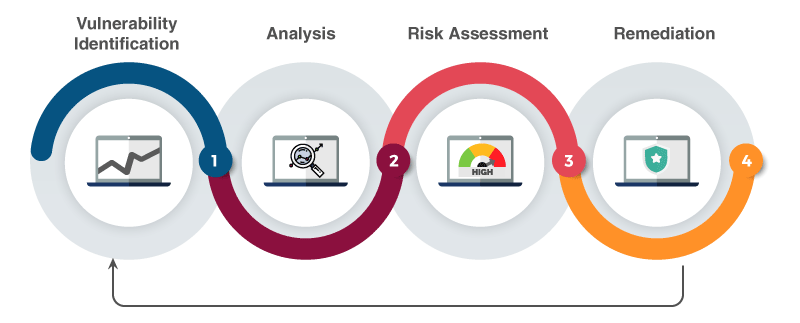
Done through automated software, this type of testing is performed to scan web applications against known vulnerability signatures. It is the process of identifying and prioritizing vulnerabilities in the web application whereas it provides the knowledge, awareness, and risk background check which is necessary to understand.

2. Dynamic Application Security Test 

Dynamic Application Security Testing: DAST Basics - WhiteSource

This automated application security test includes dynamic scanning of a live running web application for analyzing the common vulnerabilities which are susceptible to attack. This process of dynamic vulnerability scanning requires a proper set up of the OWASP ZAP testing standard.

3. Static Application Security Test 

Static Application Security Testing: SAST Basics - WhiteSource

SAST solutions analyze the web application from “inside out” in a static form. Under this security application approach, both manual and automated testing techniques are involved. It is helpful in identifying bugs without requiring to execute applications in a production environment. Also, Static Application Security Testing, developers can scan the source code to systematically identify and eliminate existing application security vulnerabilities.

4. Penetration Test 

What is Penetration Testing? Pen Testing Tools - XenonStack

Penetration testing or ethical hacking is the practice of testing web application security in order to identify the security vulnerabilities that can be easily exploited by attackers. It can be performed either automatically or manually. This security testing is best for critical web applications and especially for those that are undergoing major alterations.

5. Runtime Application Self Protection

Runtime Application Self-Protection (RASP) - The Complete Guide

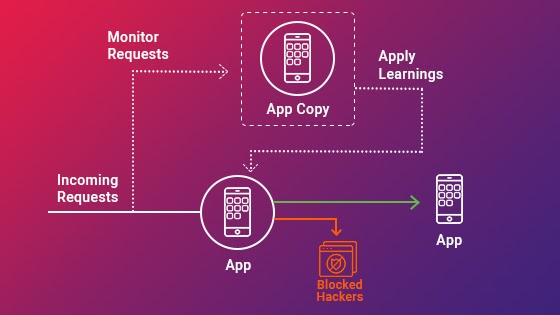
Under this approach, various techniques are applied to instrument a web application to detect and block attacks in real-time. When an application runs live, RASP ensures to protect it from malicious input or behavior by inspecting the app’s performance behavior.

Does Web App Security Testing Help in Reducing the Organization’s Risk?

Web Application Security Testing Software - PortSwigger

Every organization has got either one or multiple website applications, which eventually become the scope of potential data and security exploitation on an extremely broad level. Moreover, with developers working day and night on introducing the latest technology and frameworks with the code deployed, they often fail to think of security as a priority.

Any organization’s web application in today’s date can be easily affected by a wide array of security issues. Cyber attacks like SQL injection, Remote Command Execution, Path Traversal, and XSS can lead to harmful results like access to restricted content, installation of malicious code, compromised user accounts, loss of customer trust, damaged brand reputation and much more.

Beyond Data Science - Unit testing | by Mohammed Sunasra | Medium

Knowing that such attacks not only make web applications vulnerable but also lead to potential damage to the security, best web application security practices offer to preemptively address the security vulnerabilities and take action against them accordingly.

On the other hand, users now are becoming more aware of securing their data and therefore will trust secured web applications with their personal records and financial details, so it is up to the organization to provide them with robust security.

What Is Web Application Security? | Web Security | Cloudflare

Therefore, continuous security testing is highly crucial for regularly running web applications in order to mitigate potential vulnerabilities by fixing and improving security. As more secure the web application is, better will be the brand reputation of an organization.

Always remember that web application is 100% secure and it takes only one small vulnerability for a hacker to exploit everything that comes in its reach. With web application security testing tools, one can minimize cyber risks and can have the full trust of customers.


All you need to know about the risk of Cryptojacking

Cryptojacking has provided cybercriminals with a new means of filling their pockets at the expense of organizations around the world. And the worst part? Your company may already be a victim of cryptojacking and you might not even know it!


What is Cryptojacking?


Cryptojacking refers to the unauthorized use of someone’s computer for mining cryptocurrency. As cybercriminals keep coming up with new ways of attacking businesses, cryptojacking has become one of the most rapidly growing cyber attack vectors globally.


Instead of holding your company data for ransom or stealing it, threat actors can tap into your organization’s computing power for mining cryptocurrency. The theft of your organization’s computing power through cryptojacking can have tangible financial consequences.


It can lead to the potential degradation in service, loss of income and productivity, higher cloud usage or energy consumption, frequent replacement of hardware and system performance issues.


How does Cryptojacking Work?


Cryptojackers trick victims into clicking on a malicious link that loads cryptomining code on their computer. Alternatively, they can infect an online ad or website with JavaScript code that executes automatically once it is loaded in the victim’s browser.


However they do it, the cryptomining code works silently in the background while the unwary victims continue to use their computers normally. Hackers often use both these methods to maximize their return.


Unlike the other kinds of malware, cryptojacking does not damage the computers or their data. It steals CPU processing resources. Individual users may find slower computer performance just a little annoying, however, organizations with several cryptojacked computers can suffer severe financial losses.


How Prevalent has Cryptojacking been in 2020?


  • Varonis discovered the Monero cryptojacking malware while investigating a company that was secretly plagued by cryptojacking for over a year. This was one of the biggest recent cryptojacking attacks.
  • As per CSO Online, 90% of all remote code execution attacks are linked to cryptomining.
  • According to a report by Digital Shadows, cryptojacking kits are being sold for as little as $30 on the dark web.
  • According to a report by arXiv, cryptojacking is responsible for 4.32% of all Monero in circulation.
  • As per a report by ENISA, 2020 witnessed a 30% year-on-year increase in cryptojacking the month of March.

How to Detect Cryptojacking?

Cryptojacking is one of the stealthiest and most difficult-to-detect cyber attack vectors. It can not only have an adverse impact on your entire business operation but can also make it difficult for you to identify which of the systems have been compromised if any.

So, here are a few major things you should keep your eye out for:


Deteriorating System Performance

A decrease in the performance of your computing devices like laptops, desktops, tablets, and mobile devices is the first symptom of cryptojacking. Instruct your employees to immediately report any fluctuation in their system’s performance to IT.

Quick Overheating

Mining for cryptocurrencies is a resource-intensive process, which can cause your computing devices to rapidly overheat, resulting in system damage. A problem may be indicated if the fans of your systems are running longer than they normally do to cool down the system.

Increasing CPU Usage

Regularly monitor and analyse the CPU usage of your systems. If you spot an unreasonable increase, it may be a sign that cryptomining scripts are running on your system without your knowledge.

Undo Changes on Webpages

Cybercriminals are always on the lookout for websites where they can insert a cryptomining code. Frequently monitor your own websites to look for any changes to the webpages or the files on the web server.


How to Mitigate the Risk of Cryptojacking?


It is extremely difficult to detect if and when your computer systems have been compromised by cryptojacking. However, you can take some basic preventative measures to protect your systems and networking systems against this threat. Here are some effective tips to prevent cryptojacking:


  • Train Your Organization’s IT Team

Make sure your IT team is satisfactorily trained to detect and understand cryptojacking. It should be aware and vigilant enough to catch the earliest signs of an attack and should be ready to take immediate steps to get the situation under control.

  • Implement Anti-Cryptomining Extensions

Implement one of the many available browser extensions for blocking the cryptominers across the web.

  • Disable JavaScript

Disable JavaScript while browsing online to prevent the cryptojacking code from infecting your system.

  • Use Ad Blockers

Cryptomining scripts can be often found embedded in web ads. Use an ad blocker to detect and block any malicious cryptomining codes.

  • Educate Your Employees

The IT team is not solely responsible for securing the organization against cyber threats. Each of your employees should know what to look out for. Provide your employees with basic cybersecurity awareness training to make them understand the importance of following security protocols set by the IT team.

Instruct your employees to immediately notify IT if their systems are overheating or running slowly. They should also know about the risks involved with clicking on suspicious links or downloading files from untrustworthy sources.

Benefits of Cloud Infrastructure Security

How is Cloud Infrastructure Security Important for an Organization?

Embracing new technologies lead to qualitative growth but simultaneously holds high chances of quantitative data breaches. While adopting cloud technology, it is important to see the security of cloud infrastructure as one of the crucial responsibilities. There are various organizations out there that are still unsure of the security of their data present in the cloud environment.

Importance of Cloud Computing for Large Scale IoT Solutions

In 2019, Collection #1, a massive data breach held responsible for compromising data set of over 770 million unique email addresses and 21 million unique passwords. The collection of data files was stored on a cloud storage service and MEGA. Similarly, information of over 108 million bets’ records was leaked by an online casino group. The leaked data included details of customers’ personal information along with deposits and withdrawals. 

Following in the same year, a famous food delivery service providing firm was breached, compromising the data of 4.9 million users which included consumers as well as delivery employees. According to SC Media, 2019 has been the year of the highest number of data breaches and this amount of growth rate has never been witnessed before. 

These infamous data breaches are proof that storage service providers like Cloud requires consistent security management. When we talk about the security of cloud infrastructure, many enterprises wrongly assume that their data is well guarded and is far away from the radar of cyber criminals. The truth is, these cyber criminals are experts at scraping up the exposed vulnerable data by using unethical ways to look for unsecured databases.

For starters, the term cloud computing infrastructure security refers to the entire infrastructure of cloud computing which involves a wide set of policies, applications, technologies. It also includes controls that are used to protect virtualized IP, services, applications and data.

Scaling enterprise IoT solutions using edge computing and the cloud | Deloitte Insights

With companies migrating their large amount of data and infrastructure to the cloud, the importance of cloud infrastructure security becomes paramount. Cloud security offers multiple levels of control to provide continuity and protection in a network infrastructure. It is a highly essential element in creating a resilient environment that works for companies all over the world.

Enjoy the benefits of infrastructure security in the cloud by partnering with leading technology-based private cloud computing security service providers in order to keep the security of the company smooth running.

Here are the five major benefits of cloud infrastructure security solutions:

  • Data Security

9 Data Security Best Practices For 2021

Nowadays, cloud computing servers are becoming gullible to data breaches. Cloud infrastructure security solutions help in ensuring that data like sensitive information and transaction is protected. This also helps in preventing the third party from tampering with the data being transmitted.

  • DDoS Protection 

DDoS Detection & Mitigation: Thunder TPS | A10 Networks

Distributed denial of service aka DDoS attacks are infamously rising and are deployed to flood the computer system with requests. As a result, the website slows down to load to a level where it starts crashing when the number of requests exceeds the limit of handling. To reduce the attempts of DDoS attacks, cloud computing security provides solutions that focus on the measures to stop bulk traffic that targets the company’s cloud servers.

  • Constant Support 

Teamwork puzzle clipart free clipart images 2 - Clipartix

When it comes to the best practices of cloud infrastructure security solutions, it offers consistent support and high availability to support the company’s assets. Users get to enjoy the benefit of 27/7 live monitoring all year-round. This live monitoring and constant support offer to secure data effortlessly.

  • Threat Detection

Threat Detection and Response: How to Stay Ahead of Advanced Threats.

Infrastructure security in the cloud offers advanced threat detection strategies such as endpoint scanning techniques for threats at the device level. The endpoint scanning enhances the security of devices that are accessing your network.

  • Supervision of Compliance

Compliance Supervision - FinTech Legal Center

In order to protect data, the entire infrastructure requires to be working under complaint regulations. Complaint secured cloud computing infrastructure helps in maintaining and managing the safety features of the cloud storage.

The above-mentioned points are clear enough to state how beneficial and vital is cloud infrastructure security for an organization. There are very many high-profile cases that have been witnessed in past years relating to data breaches.

To overcome the loopholes present in the infrastructure security in the cloud, it is extremely important to keep the security of cloud storage services as a high priority. Engage with the top-class cloud computing security tools to get better results and have the data secured.

Astounding growth of Cybercrime in 2021

As organizations around the world continue to trudge through the disruption caused by the COVID-19 pandemic, cybercriminals keep coming up with even more menacing ways of dragging them down. According to research conducted by Cybersecurity Ventures, cybersecurity experts have predicted that cybercrimes will cost the global economy $6.1 trillion annually by 2021. With the pandemic serving as a catalyst, cybercrime is expected to soon become the world’s third-largest economy.While the ongoing pandemic has forced an unprecedented number of people to work from home and forgo the security of a well-developed IT infrastructure, cybercriminals have marked the unwary employees as the target of choice. Organizations were compelled to innovate and adapt so swiftly that the security didn’t get enough time to catch up, leaving businesses vulnerable to the cyber threats looming across the horizon.

India's first crime-criminal tracking network system launched: All you should know about it - Education Today News

Statistics on Current Cyber Threat Landscape

Owing to the COVID-19 pandemic and the sudden transformation to remote work culture, cybercrimes have risen like never before and are expected to rise even more as we move towards 2021. Following are some outrageous statistics showing just how severely these cyber attacks are affecting the global economy:


  • As per the research conducted by Cybersecurity Ventures, within months of the first lockdown due to the pandemic, more than 4,000 malicious COVID-related sites popped up across the internet.
  • According to Cybersecurity Ventures, a cyber attack incident will occur every 11 seconds in 2021. This is nearly twice the rate in 2019 (every 19 seconds), and four times what it was in 2016 (every 40 seconds).
  • As per Cybersecurity Ventures, Cybercrime is expected to cost the global economy $6 trillion annually by 2021, as compared to $3 trillion in 2015. This will soon make it the world’s third-largest economy, after the United States and China.
  • Cybersecurity Ventures predicted that ransomware damages will cost the world $20 billion by 2021which is 57 times more than what it was in 2015 ($325 million). This makes ransomware the most rapidly growing kind of cybercrime.
  • According to Cybersecurity Ventures, 91% of cyberattacks are launched through spear-phishing emails, which infect the organizations with ransomware.

What can Organizations do to Stay Secure?

As the rise in cybercrime is showing no signs of slowing down, it is essential for organizations to take the necessary precautions to avoid suffering any losses. The three most critical aspects of any organization include its people, processes and data. By focusing their resources on protecting these three elements, organizations can arm themselves against all kinds of prevalent and emerging cyber threats.

5 Ways to Protect Your Business Against Cybercrime - ITChronicles

Protecting People:

The best way of protecting your employees against cyber attacks is by educating them about the prevalent cybersecurity threats. Owing to cybersecurity unawareness, employees can unintentionally cause data breaches, leaving your company at risk. A report has revealed that implementing cybersecurity awareness training amongst employees significantly reduces human error, mitigating up to 90% of cyber risks.


With the dramatic increase in cyber risks due to the transformation to remote work culture, providing your employees with cybersecurity awareness training has become more important than ever. An organization cannot protect its finances, assets and reputation from cybercriminals without spreading awareness amongst its employees.


Protecting Processes:

It is essential for an organization’s IT department to continually monitor, review and update all organizational processes. Employees should be made aware of the consequences of installing applications or software in their systems without the knowledge or approval of the IT department.


Any known vulnerabilities should be constantly monitored by the organization. Companies can provide protected and locked systems to the employees working remotely. This can be an effective way of restricting them from installing any malicious software.


Protecting Data:

An organization must have a firm grasp on the data that it holds, processes and passes on. As per a recent study, companies share sensitive and confidential information with more than 500 third parties. The first and foremost step an organization should take is to conduct an inventory and ensure any information is shared strictly on a need-to-know basis.

Secondly, make sure to encrypt all sensitive data including employee information, all business data and customer information. This ensures that the data becomes useless in case it falls into wrong hands. Also, always create regular backups of all your data and store it securely outside your network.


As the rise in cybercrime is showing no signs of slowing down, individuals and organizations alike are equally at risk. Therefore, it has become extremely important to take the necessary precautions and keep essential cybersecurity tips in mind for defending yourselves and your organizations against these threats.

ECMAScript & its Features

ECMAScript is a term commonly used by developers for coding standard but most of us don’t know how did it come into the picture and why do we need it?
New Features in ECMAScript 2021 (with code examples) - DEV Community

Imagine a world without a set of rules for coding. Everyone would be writing their own codes, will have their own set of rules and when a new person enters the world of software development, he/she will never know which set of rules they need to follow. The situation will become chaotic!!

The same incident happened with Javascript. When Javascript was first created by Netscape then there was a war going on between all the browser vendors in the market. Microsoft implemented its own version of javascript in Internet Explorer and Mozilla implemented its own. Similarly, other browser vendors implemented their own versions.

All this created a huge problem for the developers. One version ran fine on Netscape but was a total waste on Internet Explorer or Firefox.

To solve the cross-browser compatibility, Javascript was standardized by the ECMA international and that’s the reason it got the name ECMAScript. All browsers eventually implemented ECMAScript (though it took a lot of time).

How is Javascript related to ECMAScript

JavaScript is actually the term most of the developers use for ECMAScript. Although there are other implementations available for ECMAScript like – JScript (Microsoft) and ActionScript (Adobe), but JavaScript has proven to be the best-known implementation of ECMAScript since it was first published.

Jeff Atwood (founder of Stack Overflow) coined the term “Atwood’s Law,” which states:

“Any application that can be written in JavaScript, will eventually be written in JavaScript. “

It’s more than ten years now, and Atwood’s statement still lingers on. JavaScript is continuing to gain more and more adoption. The “next generation” of Javascript is something known as ES6 (The 6th edition, officially known as ECMAScript 2015).

JavaScript==ECMAScript?. I'd like to begin this article by… | by Shreya Prasad | Medium

6th Edition – ECMAScript 2015

The 6th edition, officially known as ECMAScript 2015 is different because it introduces new syntax. Infact, a lot of new syntaxes.

Browser support for ES6 is still incomplete. However, we can still use ES6 features by using a pre-processor like Babel to cross-compile our JavaScript back to ES5 compatible code for older browsers, so there’s no reason to put off learning about it.

This update added arrow functions, promises, let and const, classes and modules and a lot of new features, but defines them semantically in the same terms as ECMAScript 5 strict mode. The complete list of new features can be found on http://es6-features.org

Learn ECMAScript 6 - Deep Understanding - Swiftcoding.com

Some of the new features that are introduced in ES6 –

Default Parameters

We do not need to worry about parameters taking 0 or undefined value since we can define defaults in the parameters’ list now. This also saves the overhead of sending parameters to each function call when we wish to use the defaults.

Block-Scoped Let and Const

‘let’ is a new ’var’ which restricts the scope of the variable to a block instead of the whole function. With ‘const’, things are easier. It’s just an immutable entity, and at the same time block-scoped like let.

Template Literals

It determines the way to output or append variables in a string. Now we have a simple bash-like syntax that makes the code look prettier.

Multi-line Strings

When writing a multiple line string, ES6 save a lot of typing efforts by its new syntax that uses ‘backticks’.

Destructuring Assignment

It provides intuitive and flexible destructuring of Arrays and Objects into individual variables during assignment so we do not need to write extra code for the assignment task.

Arrow Functions

Arrows are shorthand for functions using the => syntax. They are syntactically similar to C#, Java 8 and CoffeeScript arrows. Arrows would make your ‘this’ behave properly, i.e., ‘this’ will have the same value as in the context of the parent function – it won’t mutate.

Promises

Promises provide the representation of a value that may be made asynchronously available in the future. We can also combine one or more promises into new promises without worrying about the order of the underlying asynchronous operations.

Classes

ES6 provides more intuitive, OOP-styled and boilerplate-free classes. These classes encourage the prototype-based object-oriented pattern which brings support for inheritance, constructors, static methods and more.

Modules

ES6 includes a built-in module system which provides support for exporting values from modules and importing values to modules within the javascript code and without polluting the global namespace.

Spread Operator
The spread operator is an interesting way to build new arrays based on the values of existing arrays. It can:
  • Copy an array
  • Concatenate arrays
  • Insert new items into arrays

7th Edition – ECMAScript 2016

The 7th edition, officially known as ECMAScript 2016, was finalized in June 2016. New features include the exponentiation operator (**) and Array.prototype.includes.

Array.prototype.includes

The includes() method determines whether an array includes a certain element or not, returning true or false as accordingly.

Exponentiation Operator

The exponentiation operator works same as exponentiation in mathematics, it returns the result of raising first operand to the power second operand. For example – 5^10 or 7^12

Conclusion

There are a number of really great language-centric reasons to start writing your code in ES6 and ES7 now, but there isn’t enough room in a single blog post to enumerate them or go into the nuances of how they will make your life better.

Ransomware attacks: 40% surge in Q3 2020

This year cyber attacks have increased many folds as compared to previous years due to new security challenges caused by the Covid-19 pandemic. The third quarter of the year has seen a huge surge in ransomware attacks. Globally, a total of 199.7 million ransomware attacks have been reported in the third quarter of 2020. 

According to cyber security experts, ransomware attacks have increased 40% to 199.7 million cases globally in Q3 of this year. Below we have mentioned some staggering statistics which will give you an insight into the present situation:

  1. The US observed 145.2 million ransomware hits in Q3, which is a 139% year-over-year increase.
  2. The cyber security researchers have detected new ransomware, Ryuk, with 5,123 attacks in just Q3 2019.
  3. Ryuk ransomware attacks have increased to 67.3 million in Q3 2020, which is 33.7% of all ransomware attacks this year.
  4. Though ransomware attacks have gained pace this year, malware attacks have fallen significantly. Cyber security researchers have recorded 4.4 billion malware attacks in a year-over-year comparison through Q3 – a 39% drop worldwide.
  5. The experts have detected a 30% rise in IoT (Internet of Things) malware attacks with a total figure of 32.4 billion attacks globally.


The above data shows a considerable decrease in malware attacks but that does not imply the disappearance of malware attacks. Because, this is just a recurring downturn that can easily adjust itself in a short amount of time, as per a cyber security report.

SCYTHE Library: Don't Get Comfortable Yet - The Declining Fear of Ransomware

The Strategy Behind Ransomware Attacks


Ransomware is a form of malware that is installed into victims’ computers through malicious emails. It encrypts the victims’ data for which victims need the decryption key. The cyber attackers demand ransom, which can range from a few hundred dollars to thousands, payable in Bitcoin, for the decryption key.


There are a number of attack vectors through which ransomware can gain unauthorized access into victims’ databases. One of the most prominent ways used to access victims’ computers is phishing emails and email attachments. Cyber criminals make these emails look trustable and trick the users to open them. Once these emails are opened and attachments are downloaded, the attackers take over the victims’ computers.

Five Protective Actions Against Ransomware Attacks

Possible Best Buy Breach In [24]7.ai Hack | PYMNTS.com

By following essential preventive measures, you can easily keep the ransomware attacks at bay. All you need to do is to be careful about what you perform on your computer. Let’s walk through some “must follow” cybersecurity practices:

  1. Avoid clicking untrustable links: Never click on suspicious or untrustable links, attached in unsolicited emails.
  2. Build your data-backup: Create a separate data-backup in an external hard drive that is not connected to your computer, so that you don’t have to pay the ransom if a ransomware attack happens.
  3. Don’t disclose your personal information: Never disclose your personal information if you receive any call, text, or email which is asking for your personal details like banking information or any account information. Always verify the source of those contacts as cybercriminals steal personal data first to misuse it for malicious campaigns or financial frauds.
  4. Use content scanning and filtering software: It is advisable to use content scanning and filtering software on your mail server to prevent a ransomware attack. The software helps in reducing the likelihood of a malicious email reaching your inbox.
  5. Security awareness program for employees: As an organization, you would always want to secure your confidential data from all types of cyberattacks. Therefore, it is important to conduct a cyber security awareness program among employees that will disseminate detailed knowledge of attack vectors and how to reduce the chances of ransomware attacks.

Rising Web Application Attacks in India: A Concern

Web application attacks rise to account for almost half of all data breaches | The Daily Swig

Accelerating rate of cyber-attacks is no more an unfamiliar situation for us. Web application based cyber attacks are the most common. Akamai Technologies , a content delivery network, released a report in 2017 for quarter 3 which mentioned India at 7th position in the list of top 10 targeted nations for web application attack.

As per recent figures, i.e. for the data from 8th Nov 2018 to 15th Nov, 2018, India still continues to be among top 10 marked nations for web application based attacks.

Countries Attacks
Russia Federation 18,754,282
United States 15,512,265
Ukraine 5,176,643
Netherlands 3,606,021
India 2,724,440
Canada 2,101,396
Sweden 1,896,300
Germany 1,845,175
Bulgaria 1,538,136
United Kingdom 1,455,023

Source: Akamai Technologies State of the Internet Report

As per World Bank, the number of secured servers in India is 10,350 which, when put against 500 million internet users, is a clear indication of the need for better and secure infrastructure to be able to support the data surge.

The State of Web Application Vulnerabilities in 2017 | Imperva

Even at the earliest attempt, it will take a few years to remedy this problem. And still, it won’t guarantee an organizations’ safety. According to recent research, 75% of cyber attacks are web application based. Improper coding can stem serious concerns in web applications security. Such vulnerabilities allow attackers to gain direct access to servers to extract sensitive data from the database. In a framework where hackers have access to such sensitive data; with a bout of creativity and some human error, any web application can be susceptible to web attacks.

Preventing Web/Application Attack by Security Audit | Gsecurelabs

A web application can be secured by performing a vulnerability assessment and penetrating testing.  , Anteelo is an end-to-end cyber security firm provides a complete suite of manual and automated VAPT services.


error: Content is protected !!