How learning aids in the development of an agile workforce

How to Build an Agile Workforce in a Digital World | DMI

While forward-thinking companies are rapidly investing in their technology resources, they’re doing the same for their human resources.

That’s because these organizations know that the workforce of the future isn’t made up solely of robots. Instead, the workforce of the future is an “augmented” one, where humans and AI work together to drive greater efficiency, innovation, and business success.

Humans and AI? Better together

How L&D Connects Humans And AI - eLearning Industry

As AI capabilities take over repetitive, more routine functions, human workers will be needed more than ever to not only manage and supervise technology but engage in higher cognitive functions, such as creativity, innovation, persuasion, and decision making.

Mercer describes this new, blended workforce as one that is “human-led and technology-enabled.” This idea of augmentation means that humans still matter in the workforce, despite fears to the contrary. While experts predict that 52% of existing human tasks will be performed by robots by 2025, technology will create 133 million new jobs by 2022.

According to Mark Sears, founder and CEO of CloudFactory, as quoted in Robotics Business Review, “People will always play important roles in the workplace of the future. Even in highly automated environments, people must continue to develop, train, and iterate machine learning models to facilitate robotic automation. The feedback provided by the humans in the loop—even in highly automated environments—is critical to the success of automation.”

Building an effective augmented workforce starts with learning

The Ultimate Augmented Worker Guide: How Technology Can Power Your Workforce | Tulip

A high-functioning augmented workforce depends on effectively managing its two core elements: technology and people. But while the AI piece of augmentation depends on choosing the right technology, managing the human element isn’t as straightforward. The skills shortage means that organizations can’t simply hire their way to an agile, upskilled workforce. Instead, organizations must begin focusing on creating the workforce they need by engaging and retaining existing employees.

A successful augmented workforce requires highly trained, agile, continuously upskilled employees—employees who are both eager to learn and simultaneously given the opportunity to learn by their employers. HR has long known that learning is key to both employee engagement and retention.

In the age of digital transformation, learning has an additional, equally significant benefit: organizations that provide ongoing learning are anticipated to outperform those who don’t. Putting learning at the center of the organization enables the creation of a workforce that is always ready to work with and adapt to changing technology and the market, thus making the organization far more flexible and agile in an era of constant disruption.

The six keys to getting started

Building an augmented workforce begins with building a learning organization, one that enables employees to learn continuously, quickly upskill as needed, and drive their own careers paths.

For organizations accustomed to providing an employee stipend for a college course or offering one-day workshops, this new approach– learning at the center of the organization rather than at its periphery—can seem overwhelming. But while becoming a learning organization is crucial to remaining successful amid constant change, the transformation doesn’t have to happen overnight.

Organizations can begin with six manageable steps, efforts that help prioritize development and nurture learning for the long term:

1. Establish a learning culture. Start Thinking of learning as something that happens every day, within every job, for every employee, from hire to retire. Enable employees to try new skills and fail. In the workplace of the future, failure is an opportunity to move forward.

Create a Learning Culture | Scaled Agile2. Nurture curiosity by offering learning opportunities to everyone. Research shows that every generation (not just Millennials) wants to learn. Offer learning opportunities to those in entry-level and leadership roles–and every role in between.

Achieve Better Learning: Utilize Curiosity to Stimulate Brain Function

3. Enable learners to drive their own learning. Let employees follow their curiosity. Offer a wide range of accessible, ongoing, and free opportunities.

What is Active Learning? And Why it Matters | ViewSonic Library

4. Develop learning agility. Learning agility isn’t an innate skill. To drive efficient upskilling, vanguard organizations are teaching employees how to learn effectively.

Learning agility: What is it and how do you nurture it?

5. Create career paths that are not so much traditional as transformational. See beyond traditional hierarchies and realize that the careers of the future will be very different than those of today. By offering a wide variety of developmental experiences, organizations can inspire employees to define their own career paths (and simultaneously encourage them to stay).

The changing nature of careers in the 21st century | Deloitte Insights

6. Offer empowerment, not entanglement. Offering employees ongoing learning doesn’t guarantee they’ll stay. However, by offering learning portability, organizations create an environment of trust and employee empowerment. And as more organizations do the same, employees will be free to find the right work “home” and thus be more productive and engaged.

Could Quantum Entanglement Explain Telepathic Communication? | Gaia

The convergence of learning and work in the digital era.

Who wins in the digital era? Organizations that use both people and technology resources efficiently—the augmented workforce. While the use of AI for routine tasks is on the rise, the abilities unique to human beings—the cognitive, the creative, the empathetic—are still crucial to an organization’s long-term success. How then can organizations help the human workforce make this shift, from manual tasks to cognitive and creative roles? By making ongoing learning central to work and placing development opportunities at the core of every role. Practically, this means creating an employee-centric learning environment, such as a multi-platform, agile methodology where the learner’s experience is the focus.

Supervised Stack Ensemble: Speeding Customer Service

Almost half of UK businesses will not exist in current form by 2021 in the wake of digital disruption - Compare the Cloud

In the age of social media, companies are conscious about the reviews that are posted online. Any act of dissatisfaction can be meted out by way of tart sentiments on these platforms. And so enterprises strive hard to give 100% positive experience, by doing all that they can to address customer grievances and queries. But like they say, there are slips between the cup and the lip – not all grievances can be handled amicably.

Let’s take the specific case of call centers here. Their Service Level Agreement mentions terms like number of calls answered at a certain time of the day, percentage of calls answered within a specific waiting time, etc. Ensuring customer satisfaction and retention requires a far deeper, more holistic view of interaction between customer care representative (agent) and caller. There are other KPIs such as what causes a customer to be dissatisfied and number of escalations. But these seldom find a place in the SLA.

In this article, we will talk about identifying drivers of (dis)satisfaction and come up with ways to improve it. In the course, we will touch up on the solution design that can scale and institutionalize real-time decision making.

Introduction

We’ve all done it, dialing the call center for any issue encountered. We are surely an expressive bunch when it comes down to rattling our emotions and spitting out our dissatisfaction. And if that is not enough, we threaten to let our dissatisfaction be known to the rest of the world – through social media, not to mention #CustomerExperience.

While standard surveys exist to capture the sentiments of customers, the percentage of people filling these surveys is very low. This compounds the problem of effectively addressing customer needs.

Automating the task of predicting customer satisfaction requires a balanced mixture of text mining, audio mining, and machine learning. The resulting solution needs to:

  • Scale and be deployable
  • Identify the drivers of dissatisfaction
  • Generate actionable insights and generalize well to the population

Modeling Pipeline

Modeling and rendering pipeline typically found in a 3D documentation... | Download Scientific Diagram

Modeling pipeline includes all the components (data ingestors, model builder, model scorer) that are involved in model building and prediction. It is mandatory for the modeling pipeline to seamlessly integrate all the components for it to be scalable and deployable – production worthy. These components vary depending on the problem, available architecture, tools used, scale of the solution and turnaround time. The following pipeline was built in Google cloud to solve the problem of dissatisfaction in call centers.

Modeling (actual work – driver identification)

Modeling and Recognizing Driver Behavior Based on Driving Data: A Survey

In the above problem, the satisfaction survey showed good internal consistency. Calls, emails and chats had sufficient discriminatory power to model customer satisfaction. Exploration of the data showed that the patterns were non-linear. However, like other psychometric models, the satisfaction model was plagued by three major issues which threatened its external consistency: shortage of data, variance and instability. These problems were addressed in the following manner:

First, the issue of data shortage was solved using resampling (bootstrapping). Second, the challenge of model instability was resolved using k-fold cross validation for tuning hyperparameters of different models. This was followed by model averaging. Finally, the issue of model variance was solved using stack ensemble approach on bootstrap samples. Several classification algorithms were used to build the first layer of the stack. Logistic regression was used to predict the outcome by combining the results from the first layer. The accuracy thus obtained was superior to that of any individual model in the first layer of the stack.

Driver Analysis

Doing key-driver analysis in python | by Bryce Macher | Towards Data Science

Only two types of classification models are directly interpretable: logistic regression and decision tree. Interpretation of other Machine Learning techniques such as regularized regression and regression splines require knowledge of calculus, geometry and optimization. Machine Learning models such as support vector machine and neural networks are considered black box techniques because of the high dimensionality, which is difficult for the human brain to comprehend.

Standard measures of variable importance exist for commonly used black box techniques such as SVM and neural networks. Simple weighted average method is used to calculate the importance of variables in the stack ensemble, with the weights being determined by the logistic layer. However, it is important to note that the final importance is not a measure of linear dependence of satisfaction on the independent variables. The importance metrics need to be combined with business intuition and actionability to provide recommendations for improving customer satisfaction.

Consumption

12 Responsible consumption and production: Managing plastic and food waste for a sustainable future

A call center manager would like to track customer satisfaction level along with several KPIs that are critical to operation. Information related to utilization of customer care representatives is provided to the manager in real-time. Model prediction is run in semi-real-time to reduce the required computational power. The manager is provided with options to deep dive into historical data based on variables that are drivers of dissatisfaction. For example, calls can be redirected to customer care representatives by existing ERP systems based on their history and subject matter expertise. This reduces the number of escalations and enables near real-time actionability without significantly affecting other KPIs.

The problem of customer dissatisfaction in call centers can be solved using audio mining, text mining and machine learning. Intelligent systems greatly reduce the stress on customer care representatives by automating majority of the processes. These cloud-based systems can be seamlessly integrated with existing ERP systems to provide highly actionable insights about dissatisfaction without significantly affecting other critical KPIs that are related to call center operations.

Industry 4.0 / Digital Transformation

What are the Benefits of Digital Transformation? | DMI

Digital Transformation / Industry 4.0 is on everyone’s mind. Investors are happy to hear from organizations that they are embarking upon a complete Digital Transformation / industry 4.0 journey. Investors love it, leaders advocate for it, directors have to make it a reality, managers have to design for it, but few understand what all it means in the grand scheme.

Hopefully, we can simplify this world for you.

What is Digital Transformation? Let’s keep it simple.

7 Experts Offer Digital Transformation Advice in Times of Crisis | Tecknoworks

The simplest way to describe Digital Transformation is “Using Digital technology, innovation and intelligence to find better ways to do various things that organizations do today. It’s not about creating something new, but more about improving effectiveness and efficiency of existing processes for better business outcomes.”

Digital Transformation started as Industry 4.0 in some places. However, the idea remains the same. While Industry 4.0 started with the intention of transforming the manufacturing processes using Digital Technology, the principles of Digital Transformation now apply to all functions across the organization.

How does this theory apply in practice? Let’s study an example:

Step 1 – Current State

Current State, Future State, and Embracing Change

Map out the current process to uncover gaps that can be filled with better technology or intelligence.

Consider a global paper products manufacturing company. The manufacturing industry team is constantly trying to find opportunities to improve efficiency and productivity and reduce costs.

  1. Energy consumption is a big area of focus for the manufacturing team. Currently, manufacturing industry reports and energy dashboards are used to track the consumption of energy across a few important machine parts.
  2. Operators use these dashboards to identify sections of machines that are in green/red (good/bad) zones in terms of energy consumption and adjust the settings to optimize energy consumption.
  3. These dashboards only track a limited set of machine parts that influence energy consumption.

Step 2 – Future State

Working at Future State | Glassdoor

Outline what the future should look like, after Digital Transformation.

Energy consumption of machines at the mill (specific reference to Tissue Machines) can be reduced by finding the key driving factors of energy consumption, determining their optimal settings while factoring in for the production constraints in terms of time, quantity and quality.

The following challenges will have to be addressed to get to the future state

  1. There are a few hundred variables in a tissue machine that determine the energy consumption. These machine variables have to be studied comprehensively to identify the key influential factors for energy consumption. Relationships between these variables also need to be considered.
  2. A detailed and statistically robust mechanism is created to generate insights/correlations across all relevant machine variables, to take proactive steps to minimize energy consumption.
  3. Study the process characteristics that influence energy consumption and optimize them. E.g. machine speed, maintenance schedule, aging of parts.

Step 3 – Establish how technology, data and analytics can bridge this gap.

How Data Scientists Can Bridge The Gap Between Businesses And Technology - FourWeekMBA

The best way Digital Transformation approach for this example would be:

  1. Select a machine, in a market, which can be managed and monitored easily. Maturity in terms of capturing data, and the groundwork that has already been achieved for manufacturing systems and lean energy dashboards provides an immediate feasibility in terms of execution and adoption.
  2. Build a Driver Model to understand key influential variables and determine the energy consumption profile.
    1. Identify Key Variables –
      1. There are ~ 600 machine parts that drive the consumption of energy of a tissue machine. First, shortlist the top contenders and eliminate the non-influencer variables, using inputs from technical teams and plant operators.
      2. Identify primary drivers among the selected machine variables using variable reduction techniques of Machine Learning.
    2. Driver Model –
      1. Building multivariate regression models to understand the impact of top drivers of energy consumption using techniques like linear regression, RIDGE/LASSO regression, Elastic Nets.
    3. Optimize the engine to lower energy consumption.
      1. Optimize energy consumption by identifying the right combination of drivers under the given production constraints – time, quantity and quality.
      2. Create a mechanism to provide guidance during the actual production hours (In-line monitoring).
        1. Track energy consumption of the machine parts and their active energy consumption states. Identify deviation from the standards.
        2. In case of deviation, provide guidance to machine operators to bring the energy consumption to within defined limits.
    4. Adoption
      1. Real-time dashboards, refreshed weekly, provide charts on energy consumption, recommendations, and improvements achieved through proactive measures.
      2. Post-live support to operations teams to enable adoption.
    5. Scaling
      Determine phased roll-out to other machines using

      1. Strategic initiatives.
      2. Machines or mills which utilize higher amounts of energy to target higher ROI.
      3. Similarity in process and parts characteristics of tissue machines.
      4. Data availability and Quality.
      5. Readiness and groundwork for adoption by plant operators and energy management teams.

4 key stages in Digital Transformation

How should you, as a leader in an organization, look at Digital Transformation? Organizations should consider the 4 key stages of Digital Transformation, in order to create a sustainable impact on their organization. To make Digital Transformation a reality, all these steps cannot work independently. The philosophies of Design Thinking are embedded in the framework’s interconnected elements.

DEVELOPMENT PHASE:

Focus is on identifying the key areas and prioritizing the Digital Transformation efforts

Stage 1 – Discovery

School Discovery Clipart Collection Of Free Discovering - Discovery Clip Aart Png, Transparent Png - kindpng

Identify the key areas of opportunity or risk and related key stakeholders. Detail out the gaps in process, data, insights or technology, fixing which would help capture opportunities or mitigate risks.

Stage 2 – Design

Design Thinking for Innovation | Coursera

Rapid iterations on design and implementation of prototypes helps reach optimal solutions faster. Build out Proofs of Concepts (PoC) to establish the theoretical validity of the approach. Validate the practical validity of the approach through a Proof of Value (PoV).

IMPLEMENTATION PHASE:

Implementation needs to account for limitations arising from human behavior and scale of the operations.

Stage 3 – Adoption

Key elements of Microsoft Teams Adoption Strategy

Building solutions that keep the user at the center of the design, is key to adoption. This means that users must be included in the design and feedback early on. In addition, there should be support for users post design, in the form of FAQs, training videos, chatbots etc.

Stage 4 – Scalability

Software scalability and how is it better in custom software

If we can’t solve a problem at scale, then the solution does not solve organizational problems. The issues that we anticipate at scale, should be accounted into the design in the Development phase. This means considering the technology used, the infrastructure required, process automation possible / required and how to manage future developments.


Like Design Thinking would dictate, the Development phase of the Digital Transformation processes have to always consider the Implementation aspects.

Digital Transformation is no longer just optional.

Digital Transformation is no longer an option, it's a must in the Covid-19 era - CIOL

Every organization is transforming the way they do business. Numerous organizations like BASF, Mondelez, KLM airlines, Aptar group, PepsiCo etc. are already making massive strides in this area.

If you want to zip past your competition, or even stay competitive, it’s about time you started thinking about how to transform the way to do business. After all, there’s no growth in comfort.

Advantages of Developing an iPhone App for Your Company

Buy $25 Apple Gift Cards - Apple

Apple has a tradition; every January, they disclose statistics to prove how well the App Store and iOS apps performed that year. This year’s announcements are an indicator of the staggering popularity and penetration of iPhone apps. Take a look…

  • There are around 2.2M apps in App Store.
  • On average, around 2,540 apps are released on App Store every day.
  • The App Store revenue recorded in Q2 2019 is around $$25.5B, which is nearly 80 percent more than what Google Play Store earned.

These and the plethora of other App Store statistics gives the same message: Apple’s business is thriving and iPhone apps are a people’s favorite. Businesses looking to capture market share in apps would be making a lucrative deal by investing in iPhone application development for businesses.

Apple’s closest rival, Android, also has great numbers to show. But iPhone’s reach and penetration are unsurpassed. In fact, according to BGR, there is a user defection trend among Android users.

Nearly 18 percent of Android users have looked into the advantages of the iPhone and switched to the iOS platform. These advantages included the iPhone is one of the oldest smartphones. The way the iPhone managed to maintain its iron grip on users by offering consistent performance and innovation.

iPhone apps are known to be high quality and revenue-generating.  Both startups and established brands are investing in iPhone app development in Virginia to meet their business needs and make a quick return on their investment.

Let us look at some of the perks of investing in iOS app development services and how iPad app development can expand business growth.

Benefits of iOS App Development

1. Better App Revenue

How to Increase Your Mobile App Revenue With Auto Renewable Subscription in IOS - BuildFire

iPhone apps have a greater ROI than Android apps. A fact that adds on to the benefits of iOS App development, to a huge extent.

To get the best of the revenue generation opportunities from your iOS application development process, keeping an eye on the mistakes, tips and tricks, and other related information would be a big advantage. Refer to our mobile app development guide formulated from the experiences of our experts to get an idea of everything worth knowing

2. Security of Enterprise Data

Enterprise Data Security Guide: Big Data, Cloud & Relational

Intrusion into a business’s sensitive enterprise data lodged in apps is a big risk with Android apps.  on the other hand, when you compare the iPhone vs Android on the basis on security,  iPhone apps, protect firmware and software through stringent security measures such as :

  • Integrated data handling systems.
  • Measures to prevent duplication of data.
  • Measures against loss of security due to data encryption.

iPhone users are cushioned against hacking and malware and this again counts under the advantages of iPhone over Android.

3. High-Quality Standards

Bion Corporation | Manufacturer and Supplier of Dietary Supplement

iPhone app development for business stays incomplete until the apps are built to pass the high-quality standards of Apple’s Play Store before they are made available to the market. When a user downloads an iPhone app, he can be assured of flawless performance and amazing experience. This trust and goodwill on Apple’s legacy have managed to garner a large and loyal consumer base for iPhone apps.

Android app developers dig into the open-source libraries and follow a non-standardized development approach. This results in apps that offer good user experience on some devices and less-than-satisfactory experience on others. iPhone users are welcomed by the same scintillating UX across all devices.

Plus, since the development of Android apps is slower, cost of Android app development is much higher than that of iPhone development. Businesses are forced to outsource android projects to the lowest bidder who can deliver substandard products. This is the reason why Apple play store personally vets each and every app before publishing and releasing it to the market.

4. Apps for all business needs

7 Reasons Why Your Business Needs a Mobile App | AllBusiness.com

Brands of all scales and sizes have recognized the advantages of having mobile apps for business. Consumers expect mobility and responsiveness from any business they deal with – something that comes attached with the process of iPhone app development for business. Mobile applications are the perfect gateway to reach consumers on the go and remain connected with them every moment.

iPhone apps, custom-built or off-the-shelf, are available to suit all business needs. Despite the fact that the cost of iPhone app development is somewhat higher than other options available, iPhone apps are found to be more lucrative for businesses due to their assured market reach and better-paying clients.

5. Established Customer Base

Above Avalon: Apple's Billion Users

The established user base is the one Apple USP which is also one of the prime benefits of iOS application development. Apple is a pioneer in technology and applications. Although 75% app users are Android users, Apple has a well-established niche of clients that swear by Apple’s quality and performance. In fact, it is said that once a smartphone user experiences iOS, they will never be satisfied by any other OS. Android apps have to battle stiff competition as there are too many apps crowding this segment.

6. Exemplary User Experience

User Experience Principles Make Apps Awesome | CleverTap

iPhone apps delight users with an excellent user experience supported fully by the inherent capabilities of Apple’s iOS. Total cohesion between software and hardware amounts to the great performance of iPhone applications. To top it all, comprehensive customer support and maintenance results in improved satisfaction among users through an app’s lifecycle. Something that again adds to the advantages of preferring iOS app development.

7. Tech-Ready Audience

Sterlite Tech Launches 5G Ready Smarter Network Technology at IMC 2017

iPhone users are found to be tech-savvy and open-minded towards innovation. This presents businesses with numerous opportunities to craft challenging applications that can create disruption in markets. Businesses that opt for iPhone app development can become market leaders and stride ahead of competitors.

8. Low Fragmentation and Ease of Testing

Does the perfect testing tool exist ? - Appachhi - Performance Testing Blog

Apple typically develops just one updation on its existing OS every year. Also, the number of Apple devices are lesser than Android-based ones. Hence, Android apps have to be tested comprehensively to work well on all the versions of Android OS. iPhone apps just have to meet testing criteria of the prevalent iOS versions. This considerably reduces testing time and guarantees a quick time to market for iOS apps.

Android market is seriously fragmented. Only 10.4% of Android users are using the latest OS version and the majority of users are still using three-year-old versions. This presents a grave problem to businesses. They have to spend in developing apps that are suited to all popular versions of the Android OS. Obviously, all this translates to a higher cost of app development.

Apple’s market is a consolidated one. Nearly 89.8% iPhone users are using iOS 12, the latest version of OS. This is a good chunk of a user base and practically viable for any business to reach. Something that triggers them to turn towards a reputed iOS app development company.

Besides, Low fragmentation in iOS also results in more scalable apps. And the newly introduced features keep on upscaling existing apps.

9. High Market Penetration

Everything You Need To Know About Market Penetration | Paperflite

Apple has a huge presence in developed markets such as US and UK. For a business to spread its wings and penetrate these markets, iOS apps can be a winning proposition. Apple’s legacy and quality are well-established enough to guarantee good success for your iOS apps. Google’s legacy in app domain is zilch. Android apps have to struggle with millions of new apps released to the market. Even after investing heftly in top rated android app development companies, it’s highly uncertain if the app will make sufficient revenue to recover initial investment, let alone make any profit.

10. Less Development Time

Agile Development: Getting started in 6 steps

When it comes to how long does it take to build an app, iOS apps take nearly 28% less time than Android apps of the same specifications. This is because Android apps have to be tested across at least 20 devices with varying resolutions, screen sizes, and OS versions. Naturally,

Android app’s development cycle is longer and payment for development apps depend on the location like charge of android app development in Florida might differ from that of Texas, California, and so forth.

iPhone apps guarantee market visibility, profitability, and customer loyalty. This added to the low iPhone app development services time, low production costs and affordable maintenance, makes the mobile app development process very beneficial for the businesses. Businesses can piggyback on Apple’s legacy to secure a prominent place in the competitive app market. What more can you ask for!

Frequently Asked Questions

1. What is the advantage of iPhone over Android?

When it comes to mobile app development, there are various benefits of choosing iPhone over Android. This included higher app revenue, lower development time, more loyal customers, upgraded security, and more.

2. Is Android or iOS better?

iOS is a better option over Android in terms of developing an application because:-

  • It has better presence in developed countries, like the USA and UK.
  • Apps developed on iOS platform are of high-quality, have more innovative features and security than what is found in Android apps.
  • The platform offers better revenue when compared to Android.
  • It needs less time and cost to develop an iPhone app than what is associated with Android application.

AI Applications in Documents

Ce que les fondateurs de l'IA pensent des emplois humains pendant et après la pandémie | Forbes France

We are drowning in information, but starved for knowledge

This is a famous quote by John Naisbitt which shows the key difference between information and knowledge. Advancement in data engineering techniques and cloud computing have made it easy to generate data from multiple sources but making sense of this data and getting insights is still a huge challenge. The data volumes have now increased exponentially and along with the traditional structured data, data can now reside in different formats like unstructured social media text, log files, audio/video files, streaming sensor data etc.

Applying manual methods to process this diverse data is not only time consuming and expensive but is also prone to errors. Hence the need of the hour is to use Artificial Intelligence (AI) based automated solutions that can deliver reliable insights and also give a competitive advantage to customers. Here are few examples of how customers across industries can benefit from AI driven solutions.

Microsoft Azure based AI solution

Build and operate machine learning solutions with Azure Machine Learning - Learn | Microsoft Docs

In 2017, more than 34,000 documents related to John F Kennedy’s assassination were released. The data volume was huge, and data existed in different formats like reference documents, scanned PDF files, hand written notes and images. It would take researchers months to read through this information and hence manually reviewing this data was not the most optimal solution. Microsoft Azure team applied AI based Cognitive Search solution to extract data from these diverse sources and gained insights. Technical architecture for this use case was built using Azure Cognitive Services components like Computer Vision, Face Detection, OCR, Handwriting Recognition, Search and core Azure components like Blob Storage, Azure ML, Azure Functions and Cosmos Database. This solution also annotated text using custom CIA Cryptonyms.

Hospitals usually deal with a lot of patient data which could reside in electronic medical records (EMR), handwritten prescriptions, diagnostic reports and scanned images. AI based Azure Cognitive Search could be an ideal solution to efficiently manage patient’s medical records and create personalized treatment plan. Many downstream use cases like Digital Consultations, Virtual Nurses and Precision Medication can be built once the patient data is optimally stored.

Google Cloud Platform (GCP) based AI solution

Google Cloud Platform (GCP) for Machine Learning & AI | by crossML engineering | crossml | Medium

GCP introduced Document Understanding AI (beta) in Cloud Next 19. This is a serverless platform that can automate document processing workflows by processing data stored in different formats and building relationships between them. This solution uses GCP’s vision API, AutoML, machine learning based classification, OCR to process image data and custom knowledge graph to store and visualize the results. Customers can easily integrate this solution with downstream applications like chatbot, voice assistants and traditional BI to better understand their data.

Customers who deal with Contract Management data like Mortgages are usually faced with a lot of manual tasks to ensure that the contracts are complete and accurate. This could mean processing contracts in different formats/languages, reviewing the supporting documents, ensuring that the details are accurate and complies with regulatory standards across documents. By using Document Understanding AI and integrating it with a well-designed RPA framework, customers will be able to efficiently process Mortgage applications, Contracts, Invoices/Receipts, Claims, Underwriting and Credit Reports.

Use cases from other industries

5 use cases of Hyperautomation across industries in 2021 | Vuram

Document Management AI solution can also be applied to diverse use cases from other industries like processing claims related to damages to shipped products by e-commerce companies, handling know your customer (KYC) process in the banking industry, invoice data processing by Finance teams, fraud detection during document processing etc.

As more and more companies embrace the digitization wave, they will be faced with different variations of data/document management challenges. Based on the current trend, number of use cases are only going to increase and an AI driven solution is probably the most efficient way to solve this problem as it can reduce manual work, save cost and deliver reliable insights. This will ensure that companies can spend more time on building their business and less time on manually processing documents and data preparation.

The New Customer Satisfaction Era

Using technology to measure and improve customer satisfaction

Let us start with an oft repeated question,” What do you know about your customer’s preferences”?

The answer could be any of the standard responses which talk about their tastes in your merchandise based on past transactional records. It could be also one of the slightly more personalised answers which talk about the customer’s likes and dislikes basis whatever they have filled in their surveys and feedback forms. Does this tell you all you need to know about your customers? Does this help you make the customer experience of that customer something which he/she will remember? Something that gets ingrained into the sub-conscious decision-making component of their minds. That is the holy grail which most CX organisations are after.

Where does data come into the picture?

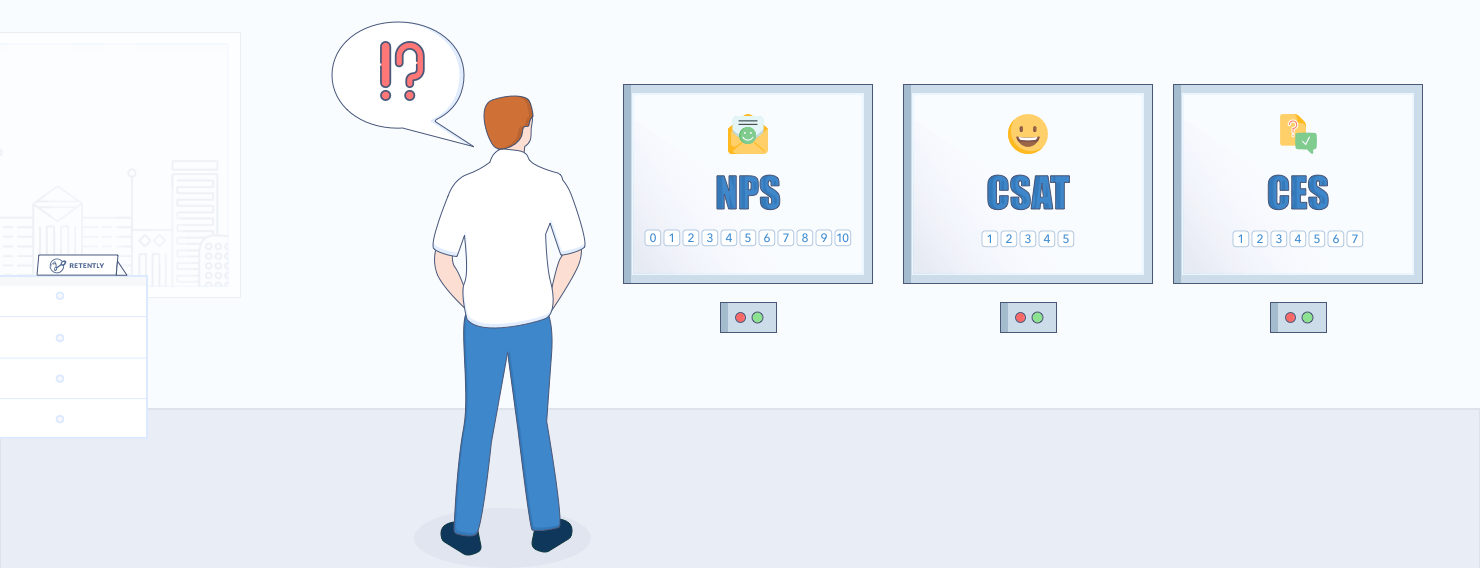
NPS, CSAT and CES - Customer Satisfaction Metrics to Track in 2021

With 91 properties around the world, in a wide variety of locations, the Ritz-Carlton has a particularly strong need to ensure their best practices are spread companywide. If, for example, an employee from their Stockholm hotel comes up with a more effective way to manage front desk staffing for busiest check-in times, it only makes sense to consider that approach when the same challenge comes up at a hotel in Tokyo. This is where the hotel group’s innovation database comes in. The Ritz-Carlton’s employees must use this system to share tried and tested ideas that improve customer experience. Properties can submit ideas and implement suggestions from other locations facing similar challenges. The database currently includes over 1,000 innovative practices, each of them tested on a property before contributing to the system. Ritz-Carlton is widely considered to be a global leader in CX practises and companies like Apple have designed their CX philosophy after studying how Ritz Carlton operate.

What does this tell you- Use your Data wisely!

The next question that may pop up is, “but there is so much data. It is like noise”. This is where programmatic approaches to analysing data pop up. Analytics and data sciences firms across the globe have refined the art of deriving insights out of seemingly unconnected data to a nicety. What you can get out of this is in addition to analysing customer footprint in your business place, you get to analyse the customer footprint across various other channels and social media platforms.

Data Science vs. Data Analytics vs. Machine Learning

This aims to profile the customers who are most susceptible to local deals/rewards/coupons basis their buying patterns.

How is this done? The answer is rather simple. Customer segmentation algorithms (both supervised and unsupervised) enable you to piece together random pieces of information about the customer and analyse the effect they have on a target event. You will be surprised at the insights that get thrown out of this exercise. Obviously caution needs to be exercised to ensure that the marketeer doesn’t get carried away by random events which are purely driven by chance.

Okay- so I have made some sense out of my data. But this is a rather cumbersome process which does not make any difference to the way I deal with my customer on a day-to-day basis.

“How do I get this information on a real-time basis so that I can actually make some decisions to improve my customer’s experience as and when it is applicable?”

This takes into the newest and most relevant trend into making data sciences a mainstream part of decision making. How do we integrate this insight deriving platform into the client’s CRM system so that the client can make efficient decisions on a real time basis?

Reinventing your Relationship with Technology - PGi Blog

In Anteelo, for one of our leading technology clients, we have built an AI-based orchestration platform which derives the actionable insights from past customer data and integrates this into the customer’s CRM system so this becomes readily available to all marketeers as and when they attempt to send out a communication to their customers.

What does this entail? This entails using the right technology stack to build a system which can delver insights from the data science modules at scale. I prefer calling it out as a synergy of both data sciences and software development. Every decision that a marketeer is trying to make must be processed through a system which will invoke the DS algorithms in-built on a real time through the relevant cloud computing platforms. Insights will be delivered immediately, and suitable recommendations will also be made on a real-time basis.

Tips For Making Truly Personalised Photo Albums | Professional Printing Services | nPhoto Lab

This is the final step in ensuring that personalised recommendations being made to every customer are truly personalised. We in Anteelo call it “The Last Mile adoption”. This development is still in its nascent phase. However, companies would be wise to integrate this methodology as a part of their data science integrated decision making since it is very unlikely that they will hit the holy grail of customer satisfaction without delivering real-time personalised recommendations.

What Does Product Management Look Like in Data Science?

Becoming A Data-Driven Product Manager | by Luciano Pesci | Towards Data Science

The topic related to ‘Product Management’ has received several laurels in recent years. Several rounds of discussions have happened to create an analogy out of client’s stand point. As I heard more of these conversations, there was an uncomfortable ambiguity stemming from disbelief – is this another fad or is there meaning to it? Well, the initial rumblings were from the cool kids in the bay. But, why did grounded Midwest and shoot-from-the-hip south latch on? Must be something deeper, right?!

Product management has been around forever in the software, e-commerce world. But, today, mainstream IT and AI teams in fortune 500 companies are thinking of a product paradigm shift. Leading consulting firms are also developing products or beefing up their technology as an eventuality.

But, the question that begs attention here is – why products? What happened to software as a service, platform as a service, ML as a service? Do we need another paradigm shift? Or as the saying goes – Old wine in a new bottle?

IT teams are today being led by progressive Chief Digital Officers, Chief Data officers. Conventionally, CIOs have been leveraging their value by app dev teams, BI teams, infrastructure teams et al. While this may have become a table stake, it has been around for a while already. The question is – ‘How to deliver incremental value to business?’

So, what has changed?

Demand:

How to Estimate Demand: How You Can Get Ahead of the Curve - Fulfillrite

IT is today called upon to be a true business partner. And, given the rate at which business is facing change, the time to deliver value is compressed.

Glocal innovation:

For a fortune 500 firm operating globally, innovation is striking at its core from multiple directions. While the USA is still the biggest revenue (EBITDA generation engine), problem and solution innovation is happening in other markets faster than the USA. For starters, they have less legacy to deal with. The local markets are facing competition from nimbler players. VC money is flowing into firms in China, Israel, Korea, India which are encountering newer problems in e-commerce, voice commerce sectors. Other traditional revenue generating markets, individually facing slower growth, find it difficult to make a business case to invest in solutions led by such innovations.

Problem repeatability:

The Problem of Repeatability | Lab Manager

This is going to sound rhetorical. But, I must state it because it is relevant. Business problems in today’s enterprise are constantly changing. Few of them get recreated, and hence are not available in large volumes. Few others are becoming common across markets and thus moving into a constant state of being a tightly defined problem that can be applied globally. Repeatable.

A good indicator to this is AWS recent product launches – out of the box image, text, voice, reinforcement learning, forecasting. Common problems which are finding repeatable solutions.

The AI candy shop:

Today, nobody wants to use process automation tools that are not embedded in intelligence. Passé, inefficient. Wallstreet, investors and boards are lapping up the buzzwords – cognitive, AI, embedded ML.

Cloud enabling global scalability:

Scalability in Cloud Computing - IronOrbit

Cloud platforms such as Azure, AWS have ensured that once you have these AI capabilities developed, they can be deployed globally. The global-local adaptation is a key design criterion in this context.

Glocal solution adaptation…er,… maybe Glocal problem adaptation:

Each market has its secret sauce in terms of the market structure, drivers and customer nuances. Thus, before adapting a solution from one market to the other, it is essential to adapt the problem as well. For example, it is an interesting pursuit to adapt the problem structure from the modern trade Australia market to half way across the world in Brazil.

And, then adapt the solution.

So, who’s game is it anyway?

Given the above guard rails, it is quite evident that the business case should be developed by a country specific P&L or ROI measure. It must be a global mandate. IT is one of the few functions which is ideally poised to ride this wave. That, they own the data systems is coincidental. Or, well.. was that the whole plan! Go, Trojan..

Finally, after rambling about half the things in the world – we come to the initial topic of this article. Products. Why?

A product has a life – it evolves constantly. The focus is on continually making the best product for its end user, ever possible. It has a roadmap. In a world of multiple users, it needs a strong owner who plans and decides well. It has a clear value proposition in each update/release. It can be developed in a sprint like manner. It can be defined with a bounded scope and sold internally in enterprises, with greater ease. And, be defined, abstracted, customized for a global roll out.

Looks like a duck, walks like a duck, sounds like a… must be a duck. Yes, I guess it does look like a product.

But, how do we help organize people and teams to get the products rolled out?

While the below roles are common to a product-oriented firm, the thought process is different from conventional IT projects. Sharing of resources across projects being the biggest drawback. The smartest of each of the below folks will perhaps still fail, without an organizing framework. The roles to work in a closely integrated manner, dedicated to making a single product management successful.

Product Designer:

The job of the 'Product Designer' and its importance in a startup | by Carlos Beneyto | UX Collective

The role of a product designer is someone who can completely immerse himself in the shoes of the end user, without worrying about the AI or Tech related issues that may occur sometimes. Just solve the end user’s real problem and keep tracking the end user’s behaviour as the product usage evolves. In product management, there is a contradictory school of thought which mandates that the designer must appreciate “how” a product works. This, however, might dilute the designer’s objective of empathizing with the end user.

Product owner:

Agile Development: What is a Product Owner? Roles and Responsibilities? | by Lazaro Ibanez | The Startup | Medium

A functional expert of impact analysis who can connect the dots and identify the nuances of each problem. A great problem solver, with functional expertise, has the knack to see through the commonalities, and the uncommon aspects too. Prioritization between the must-haves, nice-to-haves and must-not-haves is a key skill required in the role.

Product BAs

What companies should look for when picking an AI training solution - Tech Wire Asia

Products are quite massive in terms of their scope today. Primarily, each product usually is broken down into sub products which are owned by individual product Bas.

The AI solution developer(s)

Usually, it is very difficult to get a product owner who really gets AI solution development. By and large, individual intelligence is anyways overrated. It is important to have a dedicated AI solutioning team which can translate the problem into a modular AI solution.

The AI deployment team

It is not enough to develop a modular AI solution. To be able to deploy it in globally scalable platforms requires seasoned IT big data engineering & testing capabilities. The plumbing and wiring required to take the AI concept to enterprise last mile reality is no mean task. It is a specialized function. Truly speaking, they give the product its real-life form.

Scrum & Program Managers

Last but not the least, you need the scrum team and program managers. Everyone benefits from their discipline and order amidst the chaos.

Things to consider while defining Machine Learning and Artificial Intelligence use case

Difference between Artificial intelligence and Machine learning - Javatpoint

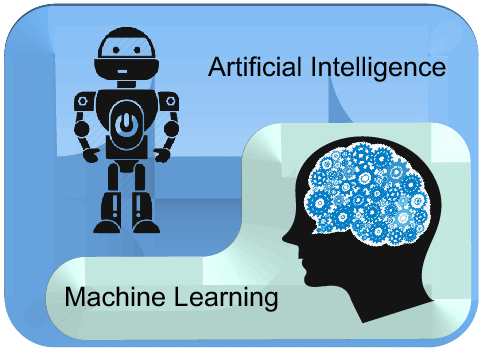
While many companies are interested in applying artificial intelligence (AI) and machine learning (ML) to help their businesses transform and innovate, few have an appetite for a lengthy project or a large initial investment.  But when companies can see meaningful value in six to eight weeks, they are more likely to expand their usage of Artificial Intelligence(AI) and machine learning (ML) into new initiatives.

To demonstrate the value proposition for Artificial Intelligence(AI) and Machine Learning (ML), we recommend concentrating on unlocking insights from vast amounts of unstructured data to help augment human intelligence, create process efficiencies and lower operational costs. We have also found that the best results tend to come from a business-led/IT supported model.

The 4 critical questions to ask remote employees - Know Your Team | Blog

Four key questions are central to scoping out an initial minimal viable product (MVP) for a valid use case.

  1. Which persona are you trying to assist – external or internal?  The answer is not a value judgement, but rather a focus that impacts some of the design considerations and decisions. As an example, in a contact center, the focus for the customer service rep is productivity – quickly giving the rep as much information as possible. This usually means fewer prompts, fewer stops, one- or two-word questions, and fewer and more dense answers.  Contrast that with the external customer, where we tend to focus on a warm and engaging experience that incrementally guides the customer to the answers they need. This typically means more prompts, more questions, a wider variety of natural language to ask the questions, and more and shorter (more digestible) answers.
  2. How are you are trying to help that persona?  This aspect typically helps us hone in on part of an initial business process to understand how we are going transform — whether by adding more data for consideration, augmenting analysis, and/or automating the execution of steps.
  3. Where does the data come from to support this initiative?  This is often the most challenging aspect for several reasons: There may be more questions than current answers, the current answers may be inconsistent or conflicting, or the current answers exist, but may not easily understood or comprehensible. All of these situations tend to require focus on curating, modifying, and/or creating content in order to get the right answers.
  4. What is the value?  Value can be determined most successfully when we can be as specific as possible. Very often, benefits can be described in terms of metrics.  From a best practice perspective, having specific metrics-based objectives makes it clearer for business and IT to determine the value. Examples include: a) higher customer satisfaction, measured by Net Promotor Scores or revenue increases, b) lower costs, shown by reduced handling times or increased processing volumes with the same staff and c) better employee engagement, indicated by reduced attrition and training time.

Four Key Questions About Data Analytics | PM360

To further the dialogue as you consider progressing towards transforming your business by leveraging artificial intelligence, here are some additional questions to guide your thinking:

  • Are you focused on transformation and innovation?
  • For what initiatives are you considering AI/ML support?
  • What business outcomes are you driving?
  • What is your current level of experience with AI and ML?
  • Have you identified any use cases or do you need some assistance in defining them?

The key to evolving your approach from MVPs to multiple initiatives developed and deployed in production at scale, is to effectively balance faster time-to-value and major transformation outcomes. This balance demonstrates business results in smaller time increments and sets the foundation for flexible and continuous transformation and innovation.

The growing popularity of low-code/no-code application development platforms

What is low-code and no-code? A guide to development platforms | ZDNet

“Software is eating the world.” That was the bold proclamation renowned innovator and venture capitalist Marc Andreessen expressed in an article he wrote for the Wall Street Journal. More and more businesses are being run by software, he argued, or are differentiating themselves and disrupting their competitors and industries using the same. Today, that article is regarded as one of the seminal works in shaping how people think about digital transformation—or using digital technologies to bring about great change in the way individuals and organizations think, operate, communicate or collaborate.

Often, at the heart of many digital transformation efforts is the desire to enable the organization to be more agile or responsive to change. This requires looking for ways to dramatically reduce the time needed to develop and deploy software, and simplify and optimize the processes around the maintenance of software so it can be deployed quickly and with greater efficiency.

Another key outcome that is part of many digital transformation efforts is enabling the organization to be more innovative — finding ways to transform how the organization operates and realize dramatic improvements in efficiency or effectiveness; or creating new value by either delivering new products and services or creating new business models.

For organizations using conventional approaches to developing software, this can be a tall order. Developing new applications can take too long or require very specialized and expensive skills that are in short supply or hard to retain. Maintaining existing programs can be daunting as well, as they struggle with increasing complexity and the weight of mounting technical debt.

Universities turning to low code to help bring back students amid COVID-19 - TechRepublic

Enter “low-code” or “no-code” application development platforms. This emerging category of software provides organizations with an easier to understand — often visual — declarative style of software deployment, augmented by a simpler maintenance and deployment model.

Essentially these tools allow developers, or even non-developers, to build applications quickly, easily, and rapidly on an on-going basis. Unlike Rapid Application Development (RAD) tools of the past, they are often offered-as-a-service and accessed via the cloud, with ready integrations to various data sources and other applications (often via RESTful APIs) available out of the box. They also come with integrated tools for application lifecycle management, such as versioning, testing, and deployment.

With these new platforms, organizations can realize three things:

1. Faster time to value

Five ways to achieve faster time to value with a SaaS implementation

The more intuitive nature of these platforms allows organizations to quickly get started and create functional prototypes without having to code from scratch. Pre-built and reusable templates of common application patterns are often provided, allowing developers to create new applications in hours or days, rather than weeks or months. When coupled with agile development approaches, these platforms allow developers to move though the process of ideating , prototyping, testing, releasing and refining more quickly than they would otherwise do with conventional application development approaches.

2. Greater efficiency at scale

10 Ways to Improve Team Efficiency And Productivity | HR Cloud

Low-code/no-code application development platforms allow developers to focus on building the unique or differentiating functionality of their applications and not worry about basic underlying services/functionality such as authentication, user management, data retrieval and manipulation, integration, reporting, device-specific optimization, and others.

These platforms also provide tools for developers to easily manage the user interface, data model, business rules and definitions, making on-going management easy and straightforward. So easy in fact that even less experienced developers can do it themselves, lessening the need for costly or hard-to-find expert developers. These tools also insulate the need for the developer and operations folks to keep updating the frameworks, infrastructure and other underlying technology behind the application, as the platform provider manages these themselves.

3. Innovative Thinking

3 Strategies For Developing Innovative Thinking

Software development is a highly creative and iterative process. Using low-code or no-code development platforms, in combination with user-centric approaches such as design thinking, organizations can rapidly bring an idea to pilot in order to get early user feedback or market validation without spending too much time and effort (so-called “Minimum Viable product” as coined by Eric Ries in his book “The Lean Startup”).

Not only that, because these platforms make it easy to get started, even non-professional developers or “citizen developers,” who more likely than not have a deeper or more intimate understanding of the business and end user or customer needs, can develop the MVP themselves. This allows the organization to translate ideas to action much faster and innovate on a wider scale.

While offering a lot of benefits, low-code/no-code application development platforms are certainly not a wholesale replacement to conventional application development methods (at least not yet). There are still situations where full control of the technology stack can benefit the organization—especially if it’s the anchor or foundation of the business, the source of differentiation, or source of competitive advantage. However, in most cases organizations will benefit from having these types of platforms as part of their toolbox, especially as they embark on any digital transformation journey.

Designing systems for machines rather than people: Latest Tech Trend.

A brief history of robotics and AI

For businesses to be agile and respond quickly to changing market conditions, they need to provide business users with real-time and near-time operational data. That means harnessing data from devices and tackling the latency challenge. In 2020, we will see more organisations shift their design thinking from services and systems for people to services and systems for machines. The move to machine-to-machine (M2M) systems also means processing is moving to the network edge, where the data is.

Action at the edge

Education Clipart Quality Education - Edge Mathematics By -r.k.jha - Free Transparent PNG Clipart Images Download

Organisations are experimenting with extending data clusters to the edge to reduce latency, gain operational efficiencies and improve products and services. Fast food company Chick-fil-A is running Kubernetes on 6,000 kitchen devices in all 2,000 of its restaurants. This is part of the chain’s internet of things (IoT) strategy to collect and analyze more data to improve throughput, operational efficiency and, most of all, customer service.

The move to M2M dovetails with the notion of catering to local markets using local data. This will foster new design architectures that take into account privacy, security and regulatory concerns regarding the “frame of reference” of data — i.e., the notion of localised data being more valuable than global data in terms of its usability and mining. When organisations consider modernizing their IT operations and changing the way microservices are deployed — especially large multinationals with a wide global reach — it becomes critical for them to consider the advantages of targeting a geography locally, and realizing that there are new tools and ways of doing this.

Another facet driving the change in design thinking is the need to make maximum use of computing resources. Whereas the decision frequency of a person ranges between 1-15 hertz, which means that people can decipher information and make a decision in about ½-1 second, today’s microprocessors can operate at gigahertz and process information in nanoseconds. If these processors are not operating as fast as they can, they are just space eaters. Organisations want to keep their processors as busy as possible, which means designing for billions of decisions or operations per second. Otherwise, they may end up paying for unused capacity.

Signs of M2M

M2M technology: business value explained - Itransition

Two examples of M2M architecture are SAP Leonardo and KubeEdge. Through SAP Leonardo intelligent technologies and capabilities, SAP is integrating its ERP applications with IoT platforms, combining traditional IT services with M2M capabilities. Importantly, SAP can address broader markets than niche IoT platforms.

KubeEdge, built on Kubernetes, is an open source platform for building edge computing solutions that extend to the cloud. The platform supports network, application deployment and metadata synchronization between the cloud and edge. It extends the Kubernetes ecosystem from cloud to edge and provides benefits such as lower latency, low resource consumption and applications at the edge that can run in offline mode.

The road ahead

Are you ready for the road ahead? - Life after COVID-19 - LM HR Consulting

We are starting to observe a shift in IT design from IT for humans to IT for machines. These design patterns deliver richer experiences because they enable substantially more processing in the same experience time. Design shifts will lead to changes in batch processing and stream processing architectures, which are constantly being updated and reimagined with better M2M capabilities. Data and analytics will continue moving to the edge where the machines are, to analyze the massive influx of IoT data and provide maximum throughput with minimum latency. Rapid deployments of these transformational architectures may not be immediate, but over time these new architectures will be a forcing function for IT modernization.

error: Content is protected !!