Cloud Computing in a Distributed Environment: The Future of Enterprise IT

Why new apps boost the need for new infrastructure - Ericsson

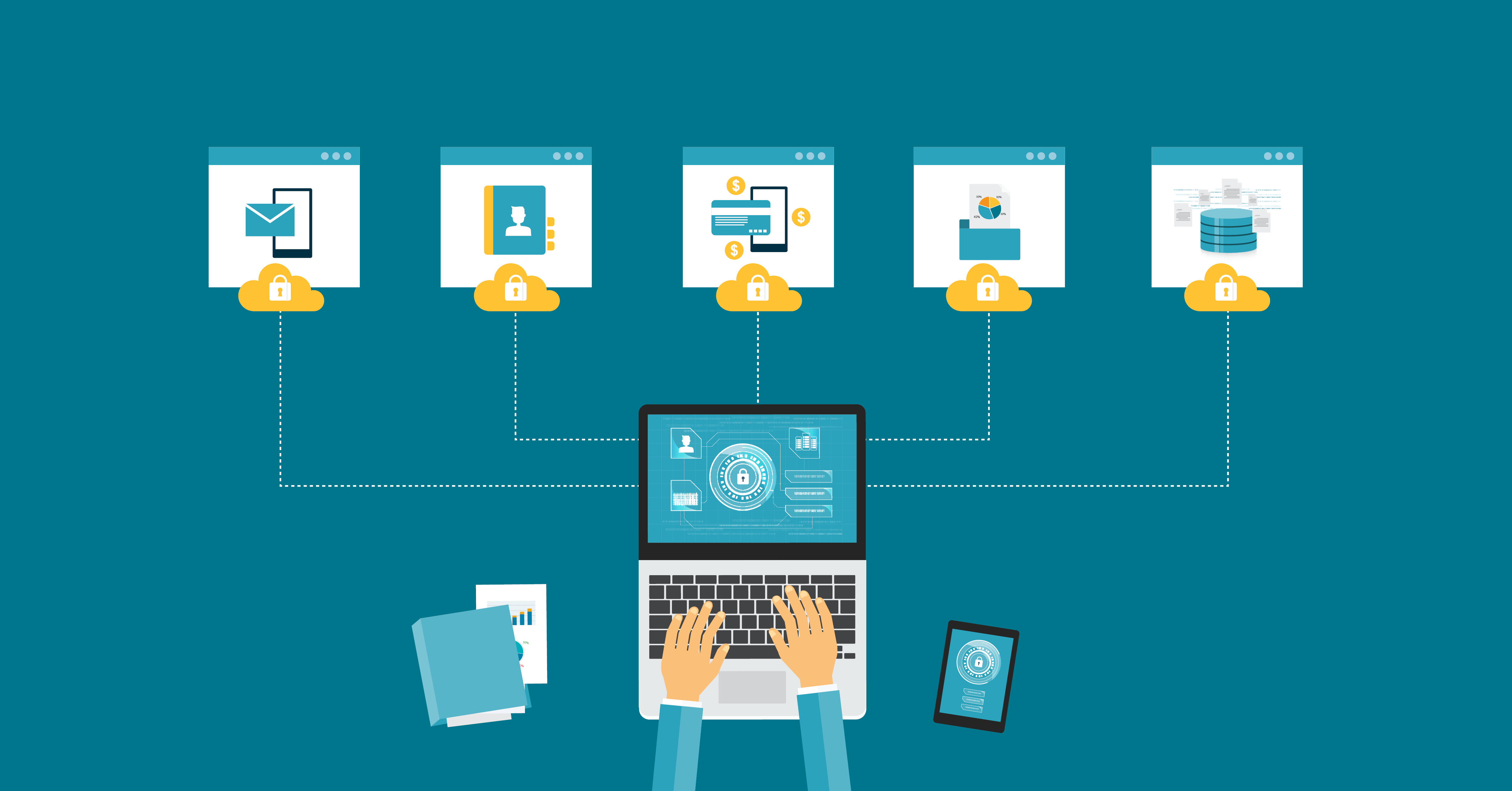
While enterprises, today, still heavily rely on datacentre and single cloud infrastructures, technological developments in artificial intelligence (AI) machine learning (ML) and the Internet of Things (IoT) are requiring applications and their data to be dispersed across multiple locations, including edge sites, multi-cloud and multi-datacentres. While this accounts for a small fraction of current usage, Gartner predicts that within five years, this will be the standard IT infrastructure for three-quarters of organisations.

The cloudification of edge computing

The Cloudification of Everything - cnbctv18.com

Edge computing is becoming increasingly important to enterprises that use IoT, ML and AI. Many of their technologies rely on the ability to process data locally so that real-time decision making can take place. The sheer volume of data these technologies use means sending everything to the cloud for processing would require unacceptable levels of latency.

That said, enterprises do want edge IT to operate in a similar fashion to the cloud. They want to be able to centrally manage operations rather than having local outposts undertake siloed management. For this, edge computing needs cloudification, the development of micro-clouds that enable organisations to deploy and connect an application and its infrastructure across a range of edge environments.

The cloudification of edge IT brings numerous benefits to enterprises. It brings edge sites global connectivity that is both secure and high-performance; it provides distributed edge sites with integrated storage, networking and compute resources; and it enables the business-wide management of distributed data and applications across its diverse infrastructure.

At the moment, edge cloudification is still in its infancy. However, new capabilities are constantly being developed and it is only a matter of time before cloud providers offer edge computing with a wide range of functionalities.

A different kind of multi-cloud

Cloud-native application deployment across hybrid multicloud infrastructure: 451 analyst interview

The way enterprises use different cloud services is about to change. At present, the term multi-cloud means that organisations have several cloud providers and, usually, each of these is used to run separate applications. It is a way of not keeping all your eggs in one basket and to defend against vendor lock-in.

In the future, this set-up will change to one which is significantly more modular and where different app components will be run in different cloud environments. This enables enterprises to carry out workloads where the unique qualities of each cloud environment and the expertise of the cloud provider are best matched to the needs of the task being run.

As a result, enterprises which adopt this methodology will be better placed to run and support more effective microservices. If today’s siloed approach is akin to a family buying all its food from a single supermarket and being limited to what was on the shelves there, the new way of approaching multi-cloud would let you buy your wines from a wine merchant, your meat from the farm shop and your pizzas from favourite Italian restaurant. If, for example, you ran an application that used both a database and machine learning, each of these two components could be run in the cloud environment that offered the best infrastructure and support.

At the same time, this multi-cloud approach also offers an added layer of availability protection. Should one of the cloud environments go offline, the application will still be available in the other so you can bring the affected component back online. For companies that need to keep the personal data of EU citizens stored on servers within the EU, this approach also helps with compliance, enabling data to be stored where it needs to be while other components can be run more effectively around the globe.

Distributed cloud and the future

The Future of Distributed Cloud – Telecoms.com

At present, the move towards edge cloudification and the changing use of multi-cloud environments are separate advancements. However, they are both indicators of a growing trend towards the development of a distributed cloud. This new way of working is becoming increasingly necessary as it will enable enterprises to manage not only a wide variety of discrete components, e.g. edge applications, legacy datacentre apps and apps spread over multiple cloud providers; but crucially, the infrastructure required to support them. In doing so, it will operate as a unified distributed cloud where organisations can manage and operate their entire IT services. Indeed, it will enable applications to be deployed with common policies and provide global visibility across all locations and infrastructures.

Conclusion

The distributed cloud, essentially, is an approach that lets enterprises use the best tool for each job. It enables real-time processing to happen at the edge where decision making needs to be made quickly and enables app components to be run in the cloud environment where the infrastructure and support best fit. Crucially, however, it takes all these disparate elements and enables them to be centrally managed. If you are looking for bespoke, managed IT solutions, take a look at our Enterprise Hosting page.

Cybersecurity for Remote Work: 10 Ways to Boost It

Cybersecurity Solutions That Boost Remote Work Security

Many companies use cloud-based platforms that enable their employees to work remotely, whether from home or out in the field. While this brings benefits to both the company and its employees, it does create challenges which need to be addressed for the company’s systems and data to remain secure. Here, we’ll look at the best practices to ensure cybersecurity for your remote employees.

1. Vet your employees

4 ways to find the right employees for your startup | The Burn-In

If you are going to keep your data and systems secure, you need to know that the people who have access to it are trustworthy. Vetting employees can highlight anyone with a background that makes you think twice about giving them access. This doesn’t merely relate to someone’s criminal history; it also means looking at employees who have a record of flouting the company’s IT policy.

2. Train your employees

Why It's Crucial To Train Your Employees - The Yellow Spot

All employees can pose a security risk if they do not understand how to keep your system and data safe. While most companies undertake cybersecurity training for their staff, there are differences between using an in-house system which is not connected to the internet and a remote system which is. If you have recently begun to implement remote work, you will need to update your training to cover the new procedures and best practices that your employees need to follow.

3. Store remote user data securely

10 Secure File Sharing Options, Tips and Solutions | Varonis

If a hacker gets hold of information about your employees, such as their usernames, passwords and privileges, it makes it very easy for them to undertake even wider and more damaging hacks. For this reason, the data you keep on these employees should be stored very securely.

4. Provide your own devices

BYOD – Bring Your Own Device | Class Teaching

While many companies operate a Bring Your Own Device (BYOD) policy, this gives you far less control over security. As the device your staff access your system with is also for personal use, you are unable to manage how that device is used or even who it is used by. If your employee lends their laptop to their child who unwittingly clicks on a malicious link, your data may be put at immediate risk.

Although it is more expensive, providing your own devices means you can set up firewalls and security settings in-house, install antivirus and internet security, and ensure that the employees are obliged to follow security protocols when using the devices.

5. Know where devices are

Find All Devices Connected to Your Home Network the Easy Way

One of the biggest issues with remote work is that lots of devices get lost. Even the UK government lost over 2000 devices in the year up to June 2019, nearly 800 of which belonged to the Ministry of Defence. For this reason, devices must be fitted with a location finder, be securely locked and, where possible, be set up for remote deletion.

6. Secure internet connections

What Is Network Security? - Cisco

Where your employee connects to the internet can also be an issue. Public wi-fi hotspots, for example, can be easy to hack into and this makes it possible for data transmitted across them to be stolen. Although you may insist employees do not connect from an insecure connection, you can further increase security by preventing company data being accessible when the device is not logged into a secure network.

7. Encrypt data and emails

Data Encryption: Why You Should Protect Your Business | Aureon

Encryption prevents data from being stolen when it’s in transit or at rest, so even if a hacker gets to the data, they will not be able to access it. Using VPNs, SSL and TLS are important ways to protect your data, as are Personal Signing Certificates that encrypt emails and their attachments.

8. Two-factor and multi-factor authentication

What is Multi-Factor Authentication (MFA) – RSA

No matter how unique and strong username and passwords are, on their own, they are not robust enough to guarantee that whoever is logging in to your system is who they say they are. Adding further levels of security, such as a passcode sent to a user’s mobile phone or a biometric fingerprint scan, offer a far greater degree of authentication that can prevent hackers from getting access.

9. Control access privileges

What Is Network Access Control? Solutions and Explanations

Limiting what employees can access on your system also limits what a cybercriminal can access if they hack into an employee’s account. By setting privileges so that employees only have access to the information they need to carry out their remote work, you minimise the risk of data being stolen or the system being taken down.

10. Use a secure cloud provider

7 Cloud Security Best Practices to Keep Your Cloud Environment Secure

Your cloud provider can provide significant help in keeping your system and data safe. At Anteelo, our team can develop and implement a security policy that meets both your internal and regulatory requirements. We use next-gen FortiGate firewalls with built-in intrusion prevention systems and in-flow virus protection, while also offering extensive VPN features, server and network monitoring, personal signing and SSL certificates, application firewall configuration, DDoS protection, email security, industry-leading remote, encrypted backups and more.

Conclusion  

Remote work provides companies with opportunities to save money, improve collaboration, offer flexible working conditions and cope with crises like Coronavirus. However, it is critical that systems and data remain secure. Hopefully, the ten points raised here will show you ways that such security can be put in place.

Best Practices for Mobile App Onboarding in 2020

Onboarding: User Retention in Mobile Apps | Scandiweb

You might remember the days before the brilliant concept of onboarding was introduced.

How puzzling it was to figure out an app on your own. As if it was a game of guessing about which option directs to where, what it does, how to do certain things, etc. – the list runs long.

In a hurry? Jump directly to –

Table of Content:

  • What is Mobile App Onboarding?
  • How many types of Onboarding are there?
  • Benefits of using App Onboarding
  • Mobile App Onboarding Best Practices Checklist [2020 Updated]
  • Live Examples of App Onboarding Done Right

However, the ordeal was over when mobile app onboarding started to gain momentum. It assisted users in navigating through the app with ease and explored its features and functions. Almost all the industry-giants are having a sip of this elixir of a concept and are obtaining remarkable conversion rates.

Wait, did we just lost you there?

No problem, let’s take it from the top, starting from what is on-boarding to what are the best onboarding practices for 2020.

What is Mobile App Onboarding?

Onboarding designs, themes, templates and downloadable graphic elements on Dribbble

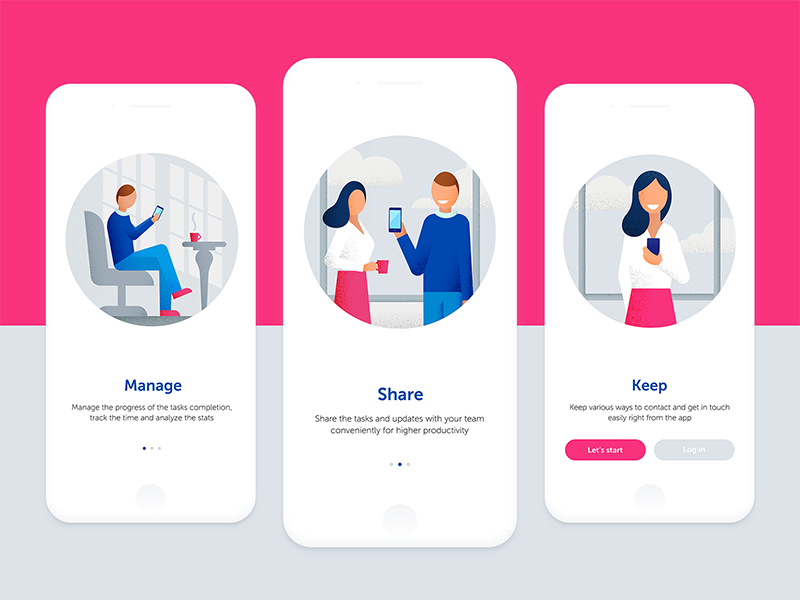
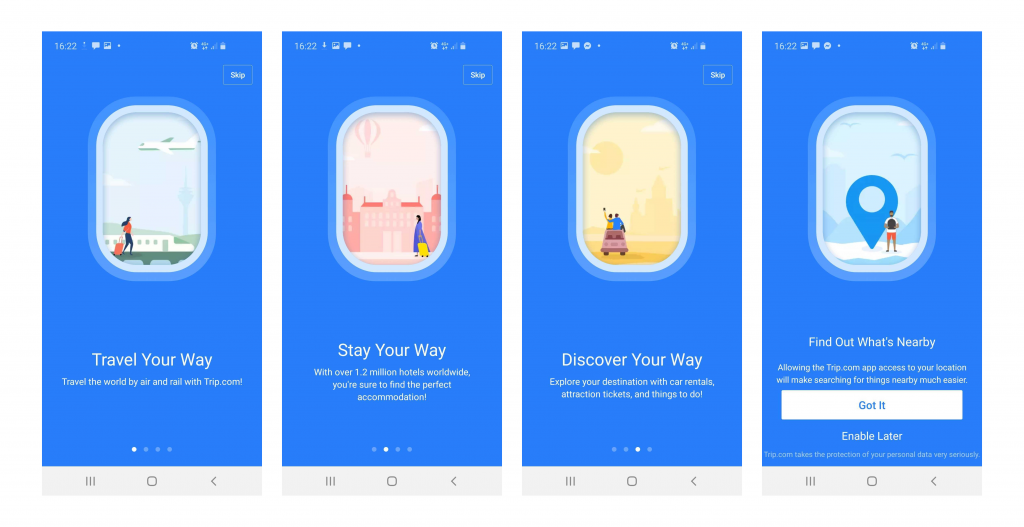
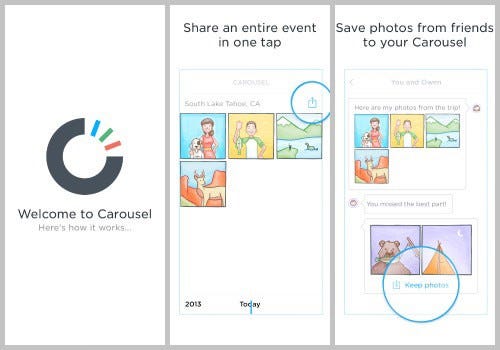
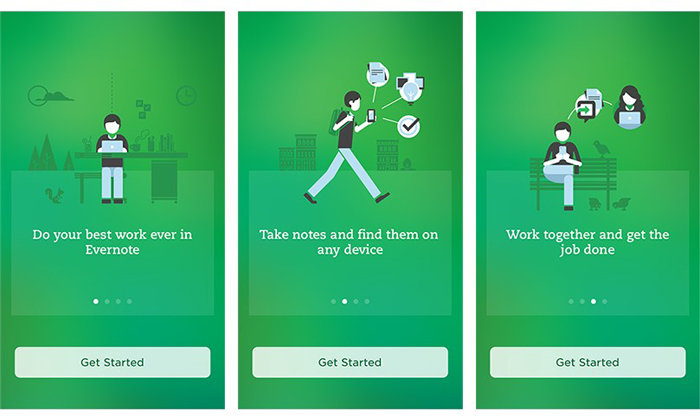
App Onboarding is an efficient method used by organizations to enable users to comprehend your app and its functions. It is a walkthrough process or a tutorial that is meant to help users interact with the app and easily figure out what that particular app does and what they can achieve by continuing to use it.

Essentially, it is a series of screens that guide users through the app’s interface. Now, the mobile app onboarding screens typically have three purposes for which they are being used rigorously:

  1. To enlighten the users about the utilitarian functions and benefits of the app.
  2. To enable the users to register on the app via a login option.
  3. It is aimed to gather useful profile data of the users, later used to offer personalized notifications and content.

How many types of Onboarding are there? 

There are essentially three types of best mobile app onboarding that help fulfill these distinct objectives.

1. Progressive

38 Progressive Onboarding ideas | onboarding, customer experience, progress

This is one of the app onboarding best practices that displays new information on the screen while users progressively navigate through the app. It is in a way a step by step process directing and encouraging the users to take actions. The information depicted is relevant to the specific page.

2. Function-oriented

ESSENTIAL ONBOARDING TACTICS — PART 3: FUNCTION-ORIENTED ONBOARDING | by Appsee | The User Onboarding Journal | Medium

It is a mobile application onboarding approach that is typically focused on app functionality and explaining users the ways to operate the app. The function-oriented approach ensures the demonstration of common and rudimentary actions performed in the app to the users.

3. Benefits-oriented

6 User Onboarding Flows for Mobile Apps | by The Manifest | Medium

As the name clearly states, this approach is employed to showcase the benefits of the app or the value the users are expected to gain by using the app. The basic aim of this approach is to increase conversions. It helps in describing what the app does without elaborating on how to use the app.

Now as you know the types of mobile applications onboarding prevailing in the market, let’s take a look at the benefits they offer before moving to the core part of the article. Aka, Mobile application onboarding best practices checklist.

Benefits of using App Onboarding

1. Positive User Experience

User Experience — Mindshare Advantage

You wouldn’t want your app to just lay there in the user’s phone not being used for months, or worse yet, being uninstalled. To ensure active users on your app, onboarding comes in handy. As the first user interaction plays a pivotal role in deciding whether the user will use your app again or not, you need to give them the best app onboarding experiences.

Guiding the users via onboarding on how to use the app and what features it possesses, will help them navigate with ease and they won’t feel lost. They get a fair idea of why they should use the app and most importantly how to use it efficiently.

Once you get this right, you will see how amazing the benefits of onboarding are.

2. Proper utilization of features

How Does Resource Utilization Help To Improve Business Performance?

It is a given that it takes some time for users to get used to your app and figure out their way around it. Sometimes, users are unable to make themselves familiar with certain features on their own, which is a great impediment in our view for your app to increase conversion. Practicing the best onboarding approaches resolves this issue before it has a chance to arise.

3. Increases App Retention

How to increase app retention: 10 strategies | Adjust

Onboarding is highly crucial for making your app an absolute favorite of the users. You ask how it does it? Well, when you provide users with insights into your app and direct them towards effectively using its features and functions, the users are inclined to stay with your app. Hence, it improves the app retention rate by multi-folds.

Mobile App Onboarding Best Practices Checklist [2020 Updated]

Here are the top app user mobile onboarding best practices that will point the scale in your direction.

1. Prioritize Value Proposition

Prioritization by Business value | ScrumDesk, Meaningfully Agile

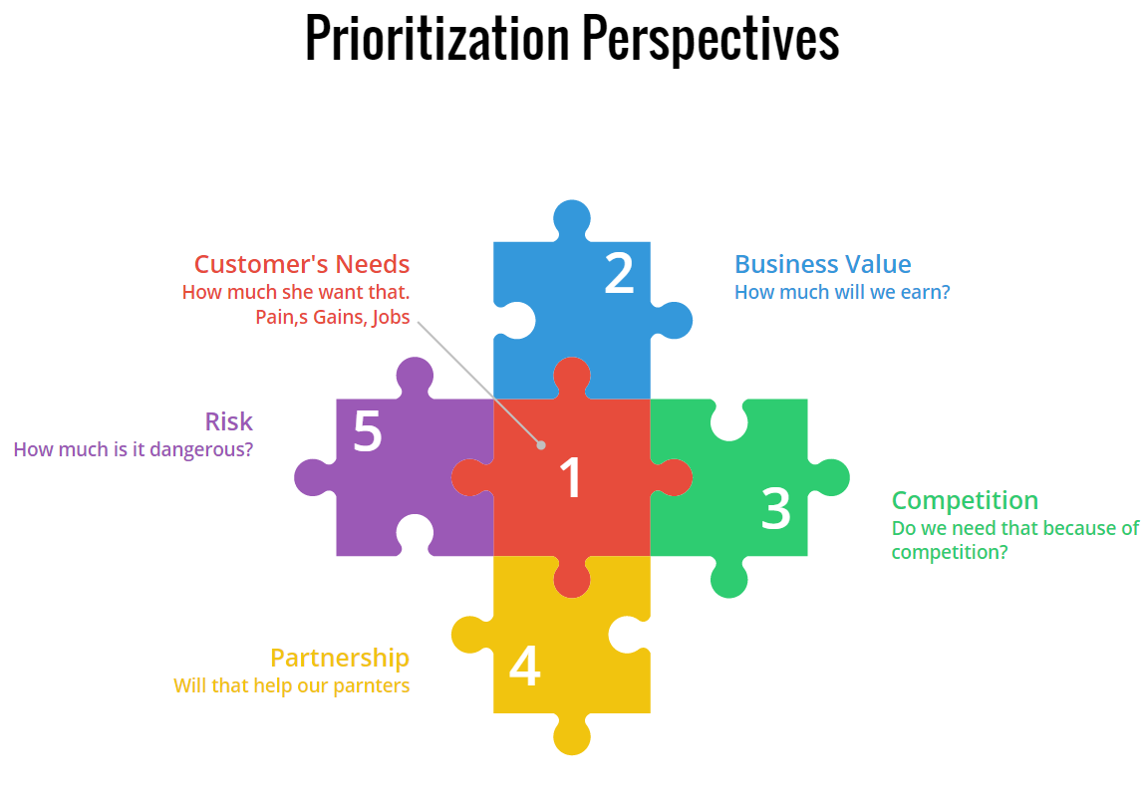
It is a belief that by displaying all the right cards to the users, you can convert them into active users. Meaning, by showing all the best features of your app you can entice users into using your app. However, it will be more effective if you first highlight the value proposition of your app.

Rather than flaunting your app’s features first, start with explaining what the user will gain by using your app. It will not only encourage them to use your app in the future but also will assure them that the app is useful and serves what it claims.

After this, you can go on with showing the prominent features and functionalities of your app that will assist in completing the tasks the users plan to accomplish.

2. Request Only Mandatory Information

request information - Clip Art Library

It wouldn’t make sense if your app is about, say learning languages, and you are asking questions about their favorite books, would it? In this case, you would need to ask for relevant and most crucial information. A report supports this statement as it shows almost 60% of the users do not install an app or uninstall it later once they feel the app is asking for too much personal information.

Also, make sure not to bombard them with excessive questions. In short, try to make your question’s list as concise and precise as possible. This is one of the most effective onboarding techniques to boost app user engagement.

3. Compact Onboarding Screens

10 Mobile App Onboarding Best Practices For Businesses In 2020

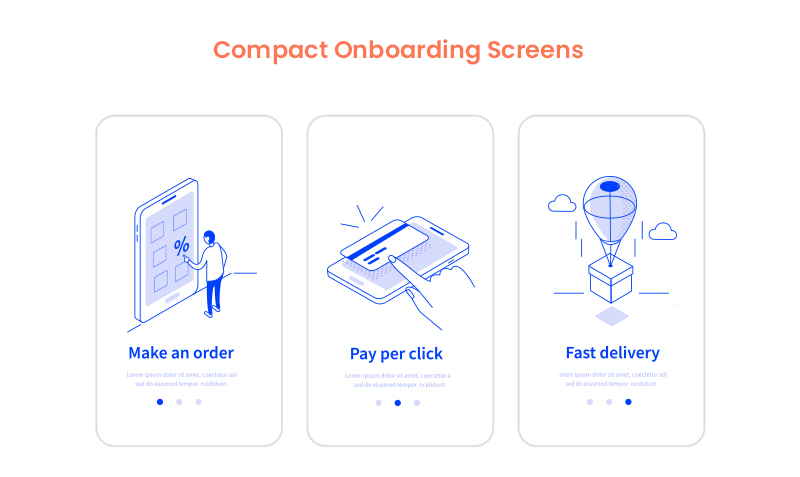
A tediously long and extensive user onboarding process may overwhelm the user to an extent that they might not use your app or end up finding a substitute. You neither should use text-heavy explanations nor add a foray of screens.

What you should do is to employ progressive onboarding approach and use app screenshots and illustrations to convey the message. Also, see the fact that you only introduce a single feature on each screen. In fact, you can use coach marks to help users understand how the app works and how to steer in it.

You can also make this approach more attractive by placing tutorials and gamifying the whole user experience.

4. Concise and Simple Sign-Up Process

How to Make Your Sign Up Process Sing in 8 Steps. | by Ben Luby | Medium

No one likes to spend excess time on the application onboarding process which is also mentioned in the report by The Manifest. So, the more concise your login process, the better.

Providing the options of logging in with other accounts such as Facebook or Google is a major time saver and a popular strategy among the users. It decreases a significant amount of friction in the user onboarding process introduced by the sign-up mandate.

5. Request for Permissions

How to Request Permissions in Android Application? - GeeksforGeeks

Asking for permission is an important part of business ethics, especially when it is about users’ personal data and information. Now, if you have an app that requires a camera or microphone facility, then instead of just taking things into your hand, it should be a mandate to first ask for the consent.

If the user trusts your app or wants to continue using its features, they will agree. Moreover, users are more likely to respond positively to permissions requests if they understand what they will gain by doing so.

6. Promote App Content Preview

What are the Best Ways to Promote an App? | The Branch Blog

Promoting app content preview is also one of the onboarding app best practices to consider in 2020 and beyond. This is because a sign up option can act as a barrier between your app and the user. And therefore, it is always better to give the users access to the features of your app before flatly asking them to sign up.

For instance, if you own an eCommerce app, then let the users go through the products offered on your website, and when they want to make a transaction, they can simply login then. Or, you can enable the login option after the users have discovered your app.

7. Make Use of Empty States

Empty States Design Best Practices | by Cadabra Studio | Medium

Empty states refer to the screens which show when users have not performed any activity or no content has been added yet. You can use these empty states to your advantage by making them encouraging. Instead of leaving a blank space, you can educate, guide, and promote users to take action.

For instance, Instagram displays “No posts yet” instead of just leaving it blank. This way it encourages users to initiate any action and use the app further.

8. Use Visual Hints for Guidance

Instead of hand-holding customers, while helping them explore the app you can employ progressive visual hints. All you have to do is strategically place the hints on the places where you predict users may get stuck while browsing the app. This way, you not only avoid tedious and monotonous instructions but save the time of users in reading them, which can rather be spent on using the app.

9. Preach Personalization

The Path to Personalization | O3 World

Why wait to show your personalization to customers in your app’s features, when you can give them a taste of it in the onboarding process only. Many popular apps personalize the content of their app based on individual preference in the starting.

Let’s take Spotify for instance. No wonder it is huge among the users as

it provides them with choices based on language, genre, artists, etc. to start personalizing the content referred to them since the start.

10. Take advantage of Success States

Remove "You Won Congratulations" Pop-ups (Virus Removal Guide)

Just like the Empty States, Success States prove to be a great leverage for engaging the user on your app. They create a positive impression of your app in the users’ minds. These states refer to the screens or popups that show appreciation after a task is performed.

For example, pop-ups including emoticons or animations congratulating the users once they achieve something in the app or complete an action for the first time.

11. Test before Final Implementation

8 Usability Testing Methods That Work (Types + Examples)

Anything is the sum of its whole. Your app will be considered remarkable when it is perfect overall. How different elements seem together once integrated is what makes an app great and appealing. In which case, it is crucial to test and measure the user onboarding flow for your mobile app on different screens and monitors to make sure the transition to each screen is seamless and smooth.

12. Include A Balanced Mix Of Multiple Channels

Using several channels to enhance the effectiveness of your onboarding procedure is an ideal way to encourage users to come back to your app, especially in the case of Retail apps. You can use channels like emails, push notifications, and in-app messages to remind the users of any incomplete action on the app like an unattended cart or simply send gentle reminders.

13. Monitor and Track (liquid state)

Keeping tabs on app usage and analytics is an incredible way to determine where users are facing problems in the onboarding flow and app.

Tracking these problems will provide you insights on where you need to improve in order to provide a smooth app onboarding experience. One should not ignore it as it is one of the prominent deciding factors whether your app is preferred by the users or not.

14. Provide CTA

Once your onboarding is about to complete, it is recommended to incorporate a CTA at the end. It provides a natural step for users to take the next step. A contextual and well-designed CTA would ensure the involvement of the users in the app.

15. Offer the choice to Skip

Skip, skip button, skip icon, skip symbol icon - Download on Iconfinder

Providing different and alternate choices is what users around the world appreciate the most. Some users might like to skip the whole app onboarding process for some reason, so giving them this choice will instantly improve your app’s reputation and they might continue to use it in the future.

Live Examples of App Onboarding Done Right

1. Slack

Mac | Downloads | Slack

Slack is an app designed specifically to facilitate communication between teams of small and large enterprises alike. It displays its features right when users open the app. Slack practices value-oriented onboarding which can be seen in the four walkthrough screens. It allows users to see how they can establish communication and share data among teams via the app.

2. Reddit

Reddit is experiencing another outage: Here's what we know - SlashGear

Reddit is one of the most famous QnA apps ever. Its onboarding process is exemplary –  the reason why the app is here in our list.

It provides the “Skip for now” option which allows users to skip the process of account creation and login, immediately allowing them to explore the app and have an amazing user experience.

Moreover, Reddit also performs another one of the onboarding process best practices, which is asking for permission for sending notifications.

3. Calm

Calm - Meditate, Sleep, Relax - Apps on Google Play

Calm is a popular meditation app helping users around the world with problems such as stress, irregular sleeping patterns, anxiety and more. The first onboarding screen in the app familiarizes users with its features and value-proposition such as sleep stories, breathing programs, guided meditation and so on.

Then it smoothly takes the user to another screen which allows them to set goals, for instance, choosing the top areas of improving, developing, building, learning, etc. It is after two screens that it asks users to signup via different platforms and asks for permission.

Higher conversion and retention rates of your app are certain once you hone these best app onboarding practices for 2020 and successfully implement them in your app. By imbibing incredible features along with the onboarding flow into the app, you double the chances of your app’s popularity.

The Digital Port: Transforming an ancient economic hub without disrupting workers’ lives

Port of the future: how technology is transforming shipping

Today’s ports are struggling to manage the massive volume of containers arriving on giant vessels.  Industry leaders are looking for new ideas to cope, but it’s hard to find answers that satisfy everyone.

The roots of the problem are multifold. Most obvious is the logjam that’s created when a modern ship laden with tens of thousands of containers arrives in port. Finding a spot to stack the large cargo is a problem. But the bigger issue is a matter of velocity. One-by-one, thousands of trucks enter and exit congested urban locations to drop off empty containers or pick up new loads. While freight rail is beginning to move an increased share of containers, the majority still arrive and leave the land-side of the port one or two at a time.

In an effort to reduce wait times and move containers faster, some container terminal operators are turning to waterfront robots to increase capacity and velocity while reducing cost. This type of automation has great potential, but we need to apply the same design thinking to the systems around the automation to realize the full potential of digital transformation.

A better way

So how do ports fully realize the goals of automation while optimizing the work environment and productivity of today’s port workers? First, we should consider all the parties involved:

  1. Truckers who assume the costs for delays in picking up loads and dropping off empty containers.
  2. Dock workers’ labor unions who want their members to participate in the benefits of automation and upskill the value of their members.
  3. Terminal managers who want to maintain a lean staff for profitability but also need to increase capacity and velocity of operations.
  4. Manufacturers and receivers who want lower demurrage and detention fees that result when there are delays in picking up freight and returning containers ready to ship.
  5. Consumers who want faster deliveries.

Fortunately, there is a way to satisfy all parties and it begins with a modern Port Community System (PCS). A PCS can digitally tie together the Coast Guard, maritime shipping agents, port authority, freight forwarders, Customs, dangerous goods clearance, port and terminal gates, and many of the other entities in the port community.

As each party electronically completes its part of operations—declarations, permits requests, inspections, goods authorizations and more—the PCS immediately moves   the filing, declaration, request, or approval to the queue of the next party, notifying them of updates specific to their work queue. Items they need to complete or adjust are noted, and wherever possible turned into drop-down lists.  Ideally the workers can be notified and fill out forms from any device —at their desk, on a tablet at the docks, or on their phone in the truck.

Greasing the skids

Greasing the Skids | He's Taken Leave

The terminals, which are separate business entities, are tied together in the PCS under the supervision of the port authority. Any insufficiencies in the permits, requests, or declarations are immediately identified, and the sender is automatically notified for quick updates and resubmission. Eliminating the communication hurdles — paper documents, point-to-point (rather than end-to-end) filings, loading and unloading orders – can save significant time and cost for all parties. Furthermore, a PCS provides time-definite delivery commitments to shippers and sellers while reducing ship and container time in port.

For exports, freight forwarders who consolidate loads into containers will know when empty containers will arrive, reducing the number they need to keep on hand. For imports, freight forwarders and consolidators will know when to expect the containers they need to break down and repack for shipping to final destination. Maritime agents can get their ships out of port faster as they will be able to communicate the location of containers ready and approved for loading to terminal operators. Once a PCS is implemented, other steps can be taken to increase the efficiency of trucks moving in and out of the port.

At Anteelo, we’ve given this a lot of thought as we increasingly focus on the ports business and our own PCS solution, Port Logistics Accelerator. We’ve come to recognize that connecting people and automating the processes those people use every day will have the largest impact on costs and hence, profitability.

Anteelo’s Intermodal Appointment System (IAS), when integrated with the PCS, can notify truckers when their loads are ready, setting a specific appointment for pick-up and delivery agreed to by their trucking company (or themselves, if freelance). Further, our Intelligent Truck Parking (ITP) system can interface with the IAS, monitoring parking lots and assigning parking spots and timeslots. These systems make pick-ups predictable, smoothing the flow of traffic around and inside the port and terminals. They also save time and fuel while reducing pollution and congestion.

Enabling operational flexibility

3 Ways Nuclear is More Flexible Than You Might Think | Department of Energy

A PCS can also help integrate the shunting operations required for full integration of freight rail into intermodal seaport logistics.  This gives port operators flexibility to use the best value transportation method for each shipment while maximizing the traffic flow into and out of seaports.

There’s no doubt that robots have their place and that, over time, ports will manage a greater share of shipments using automation. It’s also true, however, that digital solutions like port community, appointment, and intelligent parking systems can help everyone achieve the aims they seek.

In 2020, the Top 10 Cross-Platform App Frameworks to Consider

Everything You Need to Know about Cross-Platform App Frameworks in 2020
Cross-platform app development has its own merits which plays a major role in its current popularity. With the expansion of its reach, several cross-platforms app development tools and frameworks started to float in the market; slowly, and then all at once along with every other mobile app development company trying their hands at this interesting and one-of-a-kind technology.The result – We now have a sea of such tools and frameworks which you, as a developer, may find overwhelming. To help you out in your quest of finding the most ideal and exemplary cross-platform framework, here is a list of top 10 cross-platform app frameworks 2020 that are a sure thing.There are certain benchmarks that need to be cleared to declare something as “best” of that domain or category. In the same manner, while determining the best cross-platform frameworks, there were several prominent aspects that were considered, in order to truly see how every choice under inspection performed.However, before jumping on to the list, let’s get the basics out of the way.

What is a Cross-Platform Framework?

Considerations for Cross-Platform Mobile Development with Xamarin

To be concise, cross-platform is a type of software that has the ability to run on multiple computing platforms i.e., Android, iOS, Windows, Blackberry, etc. The apps built on this framework do not require separate coding for each platform, rather coding once will create the foundation for the app to run as efficiently on all platforms. It is one of the most popular methods in the app development domain today, which almost all the top mobile app development companies swear upon.

Note: To gather an in-depth view, read this guide on cross-platform app development.

1. Ionic

Cross-Platform Mobile App Development: Ionic Framework

Ionic is one of the most remarkable and popular cross-platform app frameworks, based on AngularJS. It allows developers to use a combination of many languages i.e., HTML5, JavaScript, and CSS and Cordova wrapper to access native platform controllers.

Ionic enables developers to create an impeccably creative user interface along with adding user-friendly features into the app. Apps developed with this framework are highly interactive and native-like, making Ionic a perfect candidate for PWA development as well.

Features

1. It is an open-source front-end framework meaning it allows alterations in the code structure, suitable to each developer and saves a lot of time. This gives hard competition to its contender Ionic, in the battle of Ionic vs React Native.

2. Ionic is based on a SAAS UI framework designed specifically for mobile operating systems. It provides numerous UI components for  developing robust applications.

3. Another one of its most-appreciated features is that it is based on AngularJS, making it easy to offer extensions to HTML’s syntax, core functionalities to imbibe useful yet attractive features and components into the app.

4. This framework uses Cordova plugins which allow access to devices’ in-built features including Camera, GPS, and Audio Recorder, posing as one of the major benefits of cross-platform tools.

5. The fact that Ionic gives a native-like feel to the apps is what makes it a favorite of developers. It helps develop cross-platform apps and allows them to perform perfectly on various platforms.

2. React Native

How to use WebViews and Deep Linking in React Native apps

When talking about cross platform app frameworks, it is hard not to include React Native. It is a framework built on JavaScript and is used to write real code and give the native-like feel to mobile applications that work both on Android and iOS. Due to its remarkable features, it is not only a preferred choice of developers but businesses also trust React Native as the right platform for their apps.

React Native integrates the benefits of JavaScript and React.JS along with providing the advantage to developers to write modules in Objective-C, Swift, or Java languages. Moreover, by using the native modules and libraries in the React Native cross-platform apps, developers can also perform heavy operations such as image editing, video processing or some other operations which are not part of the framework APIs.

Features

1. It is a good thing that React Native is an open-source cross-platform app framework, the same as Ionic. Because of this, it has a large community to support it and improve it by fixing bugs, improvising and introducing features.

2. One of the advantages of cross-platform development is that it requires one-time coding (WORA) for developing apps for platforms as diverse as Android and iOS. This solves one of the biggest challenges of  other frameworks – requiring developers to code separately twice for the same app on different platforms.

3. One-time coding instantly reduces the development time of the app along with keeping the React Native app development cost to its lowest.

4. Impressively, React Native is highly compatible with third-party plugins, such as Google Maps.

5. React Native focuses on UI to a great extent rendering a highly responsive interface. What it means is that the React Native environment eliminates the time taken in loading and delivers a smooth interface to the applications.

3. Flutter

Flutter - Beautiful native apps in record time

Google introduced an impressive cross-platform app framework named Flutter back in 2017. It is a software development kit designed to assist in the expeditious Android and iOS app development. It is also a fundamental and primary method for developing Google Fuschia apps.

Flutter offers apps that easily and effectively run on multiple platforms with uniformity and dynamicity.

Here are some of the remarkable features that make Flutter an ideal cross-platform framework among developers.

Features

1. Flutter promotes portable GPU, which renders UI power, allowing it to work on the latest interfaces.

2. Flutter does not require updating the UI contents manually, as it possesses a reactive framework. Flutter app Developers are only required to update the variables and the UI changes will be visible after that.

3. Flutter cross-platform app framework poses as a perfect choice for developing Minimum Viable Product (MVP) as it initiates an expeditious development process and is also cost-efficient.

4. Xamarin

Xamarin - Wikipedia

Xamarin cross-platform app development framework is significantly different from the frameworks we have discussed so far. It is a streamlined framework used for developing apps for Android, Windows, and iOS with the help of C# and .Net, instead of JS libraries and HTML. It allows the developers to use 90% of the code for building an app for three distinct platforms.

Xamarin delivers applications with aesthetics like a native app with the help of its amazing APIs, something which makes the decision making a lot harder between Xamarin vs React Native. Here are Xamarin’s features explaining why it is one of the best choices of cross-platform frameworks for Mobile Development.

Features

1. Apps developed on the Xamarin framework are built using C# – a modern language having leverage over Objective-C and Java.

2. The developers get native-level app functionality with Xamarin. It reduces hardware compatibility problems to a great extent with the help of plugins and specific APIs, that work with common devices functionality.It also promotes linking with native libraries, allowing customization and native-level functionality. The feature alone, makes it one of the top Android app development framework.

3. Xamarin supports a direct inclusion of Objective-C, Java and C++ libraries. This allows developers to reuse many third-party codebases encrypted in Java, Objective-C or C++, making it one of the considerably preferred cross-platform frameworks.

4. Xamarin reduces the time and cost of mobile app development for it supports the WORA ( Write Once, Run Anywhere) and has a humongous collection of class libraries.

5. Xamarin offers robust compile-time checking. Because of this facility, developers witness fewer run-time errors and get well-functioning apps.

6. Xamarin has an astounding native user interface and controls assisting and allowing developers in designing a native-like app.

5. NativeScript

Building with NativeScript | Hacker Noon

NativeScript passes as an amazing free cross-platform framework based on JavaScript. It wouldn’t be wrong to say that NativeScript is a preferable choice of developers looking for WORA functionality.

NativeScript also offers all native APIs, rendering an ability to the developers to reuse existing plugins straight from NPM into the projects.

Features

1. NativeScript renders beautiful, accessible, and platform-native UI, and that too without the WebViews. Developers are only required to define once and let the NativeScript adapt to run everywhere. They can even customize the UI to specific devices and screens.

2. As opposed to React Native, NativeScript provides developers with a complete web resource that comes loaded with plugins for all kinds of solutions. This inevitably eliminates the need for third-party solutions.

3. NativeScript gives the freedom to easily access native Android and iOS APIs, meaning developers don’t need any additional knowledge of native development languages.

4. It uses Angular and TypeScript for programming purposes.

6. Node.js

Node.js - Wikipedia

Node.js is an incredible framework for developing cross-platform apps. Essentially, Node.Js is a JavaScript runtime framework built on the Chrome V8 JavaScript engine. It is an open-source environment that supports the development of server-side and scalable networking apps. Node.js cross-platform apps are inherently highly efficient and responsive.

The framework is capable of handling several concurrent connections together. It also comes loaded with a rich library of numerous JavaScript modules that help in simplifying the development of web applications.

Features

1. All of the Node.js APIs are asynchronous, signifying that they are non-blocking in nature, meaning servers based on Node.JS do not essentially wait for data from APIs. It immediately moves on to another API after calling it. A notification mechanism for Node.js allows the server to get a response from the previous API call.

2. Node.js library is impressively speedy in its code execution process, for it is built on the Chrome’s V8 engine.

3. Node.js cross-platform apps do not buffer, instead, the applications output the data in chunks.

4. To deliver smooth and perfectly functioning applications, Node.js uses a single-threaded model with event looping functionality. This event mechanism enables the server to reply in a non-blocking way, making them scalable.

7. Appcelerator Titanium

Appcelerator's Titanium - an overview - mfg

Appcelerator is one of the many cross-platform app development tools designed to assist in smoother and easier mobile app development. It is a great way to create cross-platform apps with just a single code base. Its primary focus is on streamlining the app development process with the help of native components present in JavaScript code.

Features

1. Appcelerator offers various tools for rapid application development. This indicates that a prototype can be created with much less time and effort to evaluate user interaction with UI.

2. It has ArrowDB-  a schema-less data store that allows developers to deploy data models with no additional efforts for setup.

3. It enables the integration of existing continuous delivery systems such as SCM solutions and more.

4. Appcelerator possesses pre-built connectors available for MS Azure, MS SQL, Salesforce, Box- the list is tediously long.

8. PhoneGap

Adobe Launches Hosted PhoneGap Build Service For Creating Cross-Platform Mobile Apps | TechCrunch

Phone Gap (Cordova) is one of the impeccable cross-platform frameworks for mobile development that makes use of CSS, JavaScript, and HTML5. It also offers a cloud solution to developers providing them the choice to share the app in the development process for feedback from other developers.

It develops impressive apps by leveraging existing web technologies. Another great advantage of PhoneGap is that it entirely supports in-built device features such as GPS, Camera, Phonebook, Storage, and so on.

Features

1. PhoneGap is considered an impeccable cross-platform framework as it enables developers to create cross-platform apps using existing web technologies such as HTML 5, CSS3 and JavaScript.

2. Being a cross-platform framework, PhoneGap supports the use of a single code base to create apps for different platforms namely iOS, Android, Windows Phone, BlackBerry, etc.

3. It follows an architecture that is plugin-able in nature, meaning it is possible that the access to native device APIs can be extended in a modular way.

9. Sencha Touch

Antea Adopts Sencha EXT JS Framework | Antea

Introduced nearly a decade ago, Sencha Touch helps in developing web-based cross-platform apps and is typically used to create efficient applications that use the hardware acceleration techniques. By using Sencha Touch, developers are able to create well-tested, securely integrated UI components and libraries.

In fact, it is possible to develop large business apps and maintain them effectively and easily. Some of the remarkable features of it are:

Features

1. It is famous for providing built-in native-looking themes for all of the major platforms like Android, iOS, BlackBerry, Windows Phone, etc.

2. It comes with an effective agnostic backend data package for working with data sources.

3. One of the most celebrated features of Sencha Touch is that it supports Cordova integration for the native API access along with the packaging.

4. It offers code compatibility between new and old ones.

5. It comes loaded with customizable and 50+ built-in UI widgets. It also has a collection of rich UI like lists, carousels, forms, menus, and toolbars, etc., created specifically for mobile platforms.

10. Corona SDK

Why is Corona SDK is the best framework for cross-platform game development?

Corona SDK enables programmers to develop 2D mobile applications for all the major platforms, including Kindle and Windows.

It proffers to give 10X faster mobile and game app development. The framework le delivers remarkable results at the back of its backend framework’s reliability on Lua which is a lightweight and multi-paradigm programming language. The language focuses on the main elements of the development which are the speed, portability, extensibility, scalability, and last but not least, the ease of use.

What is more, it is a free-of-cost framework working both on Mac OS X and Windows while supporting real-time testing.

Features:

1. It has over 1000 APIs that give developers the ability to sprite animations, audio, and music, Box2D physics, object tweening, texture management, native elements, data- the list can go on for pages.

2. It responds to the code changes almost instantly while giving a real-time preview of the app’s performance as it would on a real device.

3. It supports almost 200 plugins including in-app advertising, analytics, media, and hardware features.

After considering all of the best options that a competent cross-platform app development company is looking for in this domain, there is nothing left but to wait and see how these frameworks compete with each other to stay in the competitive market, and how well they bode against the new frameworks entering the market as we speak.

Apple Arcade: A Way To Revolutionize The Mobile Gaming Industry

Apple unveils Apple Arcade subscription service for iOS, Mac, Apple TV games | Ars Technica

Apple finally released its most-awaited iOS 13 yesterday only.

From the myriad of features, it is loaded with, we couldn’t help but notice one of the significant contributions it made to the app world – Apple Arcade.

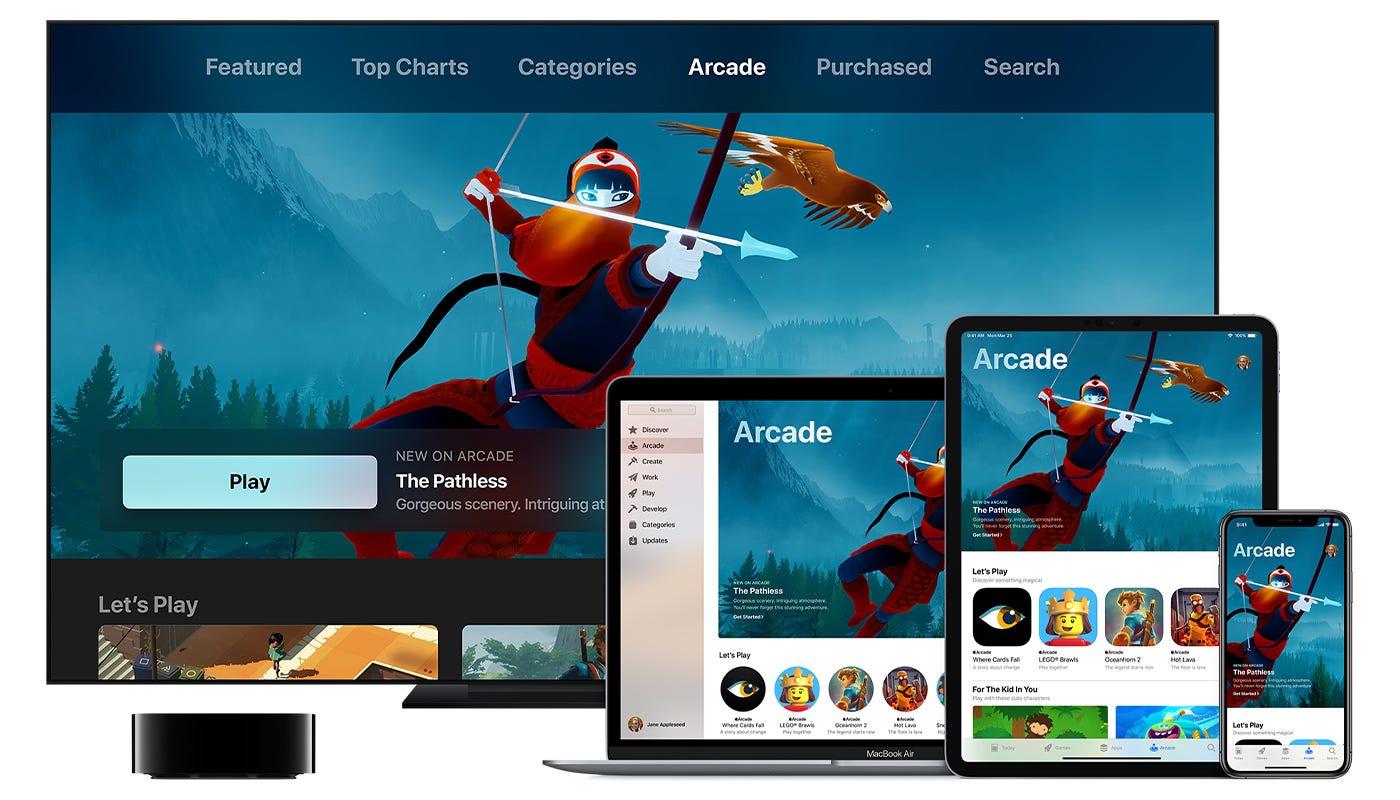
Apple Arcade is a full-fledged gaming hub that is entirely going to change the way how apps are developed and how users buy them. Based on a subscription-based business model, Apple Arcade is an avenue for indie game developers to create impeccable games worth discovering and playing.

The subscription priced at $5 per month will provide the users with access to 100+ new games which are no cast-offs, whereas more games might be available at the launch. The games offered in the subscription plan are high-quality fare from renowned and established studios like Annapurna Interactive and Ustwo Games of Monument Valley fame. The games belong to genres ranging from strategy and fantasy to absurdist golf.

The wild thing about Apple Arcade is that at such low priced subscription, you get facilities like playing unlimited games, syncing of your games between Apple devices like iPhone, iPad, and Apple TV, and download the games to play offline. In fact, the one subscription plan can be shared among five family members. If this isn’t the full value of your money, we don’t know what is.

Besides everything, the one that has made Apple Arcade revolutionary, without a doubt, is the elimination of elements like ads and in-app purchases – the very backbone and major contributors to the gaming app economy. Though the notion of one subscription to play all games may sound preposterous to other organizations, it can be seen as a positive nudge to direct the gaming industry towards something more salutary rather than just cash draws.

Pay once and Play Many Games

App Store responds to freemium haters, features 'Pay Once & Play' games with no in-app purchases - 9to5Mac

If you look at the top-performing apps in the App Store, you will find that 50 grossing games have in-app purchases: out of 50 most downloaded free games, forty-one have them.  In fact, among the games, you pay for upfront, the top 50 still try to accumulate more money as you play the games.

The in-app purchases are a major source of revenue for the app economy, and has been for decades. The free-to-downloads games also entice users to spend money on the app be it in the forms of Pokéballs in Pokémon Go or other digital widgets. This buying of rewards and digital widgets have come under scrutiny as critics have started to consider this trade as gambling.

Apple Arcade & The Mobile Gaming Revolution | by Fawzi Itani | The Pause Button | Medium

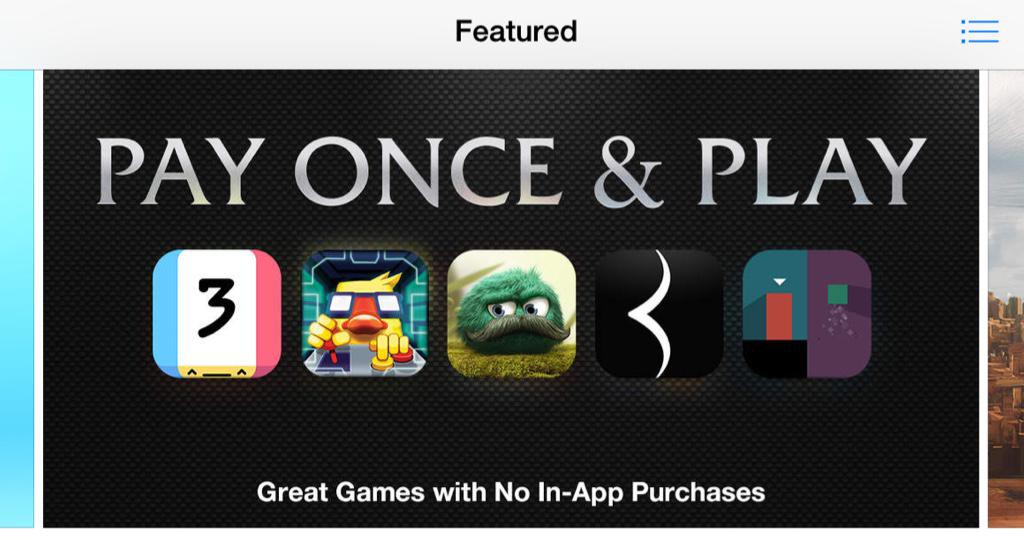
Apple had been a major part of all this as it has been taking 30% cut from all in-app purchases. However, Apple has also been active in promoting apps that do not offer in-app purchases. This is evident from the fact that in 2015, Apple dedicated a whole section of the App Store to the games that were “Pay Once and Play”. Apart from this one generous act, these games had to face a lot of competition as their freemium contenders seemed more promising to the users, though they later started to ask for in-app purchases.

Ryan Cash, the  founder of Snowman, the indie studio behind the popular Alto’s Adventure series said that “There was this wave of indie games in the last five to 10 years that had a bit of a surge, but it seemed like in the last two or three years that market was starting to fall apart a little bit,” and “It just became harder and harder for those indie developers to make money doing experimental things. There are many developers I heard say they’ll never make a mobile game again, or if I do it’s going to be free to play.”

This exodus is now low in numbers. As per SensorTower, in August 2014, 37% of the App Store games were paid. This amount dropped to 13% last month. The amount of paid games released on the App Store this August was as low as 5.5%. In fact, last month, the revenue generated by the paid apps was only 1.4% of the total App Store game revenue. This shift might be considered as a reaction to the changed Apple guidelines on in-app purchases.

However, the biggest publishers won’t give up on in-app purchases instantly.  Sensor Tower cofounder Alex Malafeev said- “Free-to-play will continue to be the dominant model by which the majority of mobile game revenue is generated,” and “It has proven to be the ideal method of monetizing the type of ‘drop-in, drop-out’ experiences the majority of casual players want from their mobile devices.”

Nevertheless, Apple Arcade will definitely help indie developers in developing original and ambitious games that will get the deserved recognition. Moreover, it rewards games that are originally developed keeping the iOS platform in focus, rather than knock-offs and extended versions of games originally created for other platforms, increasing the UX.

Arcade Fire

An Apple Arcade launch game named “Where Cards Fall”, had been in the making for a decade. Sam Rosenthal, the creator, first thought of it as a student project at the University of Southern California. He initially thought of the puzzle game as an iPad-only encounter, which can still be sensed even from the trailer.

What Apple Arcade means for mobile game developers | AppLovin

Rosenthal created Snowman almost four years ago, expanding his vision to the iPhone and Apple TV.

Cash remarked- “The last few years, we’ve been thinking about this dilemma where we want everyone to experience it, but it’s certainly not a free-to-play game. It would be absolutely destroyed with ads,” and “We knew it was going to be a premium game. And the problem there is that Where Cards Fall is the kind of game that would probably be $20. Or if we made the game 99 cents, for example, it cheapens the value of it, and we’re still not going to reach the kind of people you would reach with a free-to-play game.”

Apple Arcade for both Cash and Rosenthal is a boon, for they can now launch their game “ Where Cards Fall” on it, as it poses as a sustainable business model for the game. In fact, on Apple Arcade the game has a higher possibility of being found by a broader audience.

Cash further says “Apple Arcade may get them in with a golfing game or another action game or a racing game, and then stumble upon Where Cards Fall and try it, whereas they wouldn’t necessarily have spent that money upfront on their own,” and that “It’s a new way for people to discover gaming.”

How Apple Arcade changed mobile gaming in 2019 - CNET

Nonetheless, Apple Arcade comes with its own pitfalls. It is a curated experience which means that developers may feel left out. Because the subscription is so affordable, it makes users question the quality of games or at least stops them from spending any extra money in the app.

After considering everything, what can be surmised is this – Apple Arcade will encourage developers to create fun and more engaging games in their own right along with exploring structures that are different from the free-to-play category.

Well, there is no saying that every developer will do so, for they may be paid out in part based on the time spent on their games. This means that they will try to keep the users on their apps for as long as they can. This is the strategy that Apple follows in its News Subscription. The only difference is that the users will not have to pay any extra buck outside their subscription, no matter how long they play the games for.

Besides, not only indie but big hitters like Ubisoft, Konami, Square Enix have also contributed and played their part in the Apple Arcade launch lineup. As far as we can see, Apple Arcade is going to be a positive influence on the gaming industry and who knows, might inspire other major providers to follow its example.

How Does the Price of Cryptocurrency Change in the Market?

Cryptocurrency - Guide and Explanation - Corporate Finance Institute

If we had to make a list of some of the top volatile elements of the world, the one name that would top even Mercury is Cryptocurrencies.

Ever since their launch in 2009, cryptocurrencies have found themselves being counted as one of the most fluctuating and volatile topics of the world seeking to get to the bottom of what is cryptocurrency.

There is hardly any investment enthusiast who has not tried to crack the code of why cryptocurrencies fluctuate and how to take that understanding and convert it into insights that would make the investment successful.

While the industry has managed to make itself one that is extremely difficult to gauge in terms of cryptocurrency price movement, let us try to decipher how the price of cryptocurrency changes in the market by understanding how and why the cryptocurrencies move.

But let us first start by drawing parallels between Cryptocurrencies and Fiat Money.

Cryptocurrency vs Fiat Currency: How the Two Compare Against Each Other

Fiat vs. Crypto & Digital Currencies | Gemini

The biggest comparative factor that stands between the cryptocurrency vs fiat currency debate is their backing. The fiat currencies are backed by the central governments and its value are derived from the fact that central government states it has value and then the parties transacting in the value are putting their trust in them. In the case of fiat currency, central banks control the entire supply of money and thus inflation.

Cryptocurrencies, on the other side, was brought into existence to not let central government have the autonomy to regulate the funds of an individual. And because they have a fixed supply, the devaluation through inflation is next to nonexistent.

Apart from this, both cryptocurrency and fiat currency come with similar characteristics: they both can be used as the medium to exchange services and products and they can store value.

Why Does Cryptocurrency Prices Fluctuate So Much?

The difference between a cryptocurrency and fiat money — Bitpanda Academy

A single statement answer to the question of what drives cryptocurrency price movement would be – because it is still a nascent stage.

Being a market that is yet to find its set of logical use cases, cryptocurrencies are still at a very nascent stage. And the result of this newness is the high volatility in the industry, which is majorly driven by the heightened experiments that investors make to get a sense of how the prices fluctuate.

Factors That Affect The Changing Cryptocurrency Values

The factors affecting price of cryptocurrency could range from the scope of cryptocurrency application in the present day to the future uses of cryptocurrency coin and a series of other linked elements falling in the development of the cryptocurrency space. Here are some of those reasons that bring about a cryptocurrency price movement in the market

1. Utility of the Coins

Most Utility Coins May Have Limited Utility, But Their Place In Crypto History Is Secure

Any sound Blockchain development company would tell you that a cryptocurrency should have a strong use case in order to incentivize people to hold the coins.

Let us look at Ethereum as an example to explain it further. For executing the commands and developing applications on the Ethereum blockchain, one would need to have ETH to convert into gas and represent the ‘fuel’ of Ethereum.

Thus, the more the people who execute transactions and develop applications, the more would be the demand for ETH and greater would be the prices. In short, the bigger role of cryptocurrencies, the greater would be the cryptocurrency market cap.

2. Scarcity

The scarcity problem: Why cryptocurrencies are so divisive | by Aw Kai Shin | Coinmonks | Medium

Scarcity denotes the finite mechanism of cryptocurrencies.

In economics, a stable supply of any item increases its value in the long term for it is assumed that the demand would also increase. This, in turn, creates a scarcity for there are only a few coins in circulation. Some brands even use a burning mechanism, which means destroying a part of the coin supply. This in turn, increases the coin value for there is lesser coin supply.

3. Assumed Value

Assumed Stock Illustrations – 182 Assumed Stock Illustrations, Vectors & Clipart - Dreamstime

A cryptocurrency can only be as valuable as the market deem fit and the market values it on the basis of factors which are at the center of the project development. Here are some factors that determine the value of projects –

  • One that constantly achieve the milestones mentioned in its whitepaper
  • Partnership and collaboration with credible companies
  • Launch of MVP or beta version
  • The growth of the cryptocurrency market

4. Deflation of Fiat Currency

fiat money | History & Examples | Britannica

When the price of fiat currency declines, the price of cryptocurrency would automatically go up with respect to that currency. This happens because you would be able to get more currencies with your cryptocurrencies.

5. Mass Adoption

4 Challenges Bitcoin Must Overcome Before Mass Adoption Can Take Place | by Sylvain Saurel | The Startup | Medium

Driven by the sentiment that the more a product is demand, the greater would be its cost, the cryptocurrency price movement goes up with greater adoption that it sees in the market. This one formula has been the core reason behind the rise in prices of Bitcoin. So the more use cases a coin will see (like in case of Bitcoin) the greater would be its overall cost.

6. Whales

Cryptocurrency Investing Tips and Guide

As the term denotes, Whales are those Bitcoin wallets that have around $1 billion in them. They make it very difficult to put any price target on the cryptocurrency. Per Wimmer, the founder of Wimmer Financial LLP, explains: “The crypto market is dominated mainly by ten big whales or privates. They are massive in the market and take up a lot space and volume so if you take the top 10 or even 50 you will have a lot of the volume covered already. It is too easy to manipulate the market so far”.

One way these ‘whales’ fuel price manipulations is through the rinse and repeat trading technique. Under this approach, a whale carrying huge crypto holdings begins selling them at lower than the market rate, which in turn causes a panic situation where small-time traders start selling off their holdings. The whale, meanwhile, waits through the panic state till the cryptocurrency value reaches rock bottom. And just when the price is low, they swoop in and buy more cryptocurrencies.

Besides these factors, if there is one thing that is and would continue to affect the cryptocurrency price fluctuations greatly is the regulations’ set. Presently, the speed at which governments are passing out regulations are limited to a huge extent, thus keeping cryptocurrencies reaching their mass adoption potential. But the more regulations, the greater would be the adoption and thus the rise in cryptocurrency prices.

How much does it cost to create an app for event ticket booking?

Event Ticket Booking Mobile App Development Cost & Features

  • Revenue in the Event Tickets segment amounts to US$73,424m in 2019.
  • Revenue is expected to show an annual growth rate (CAGR 2019-2023) of 9.4%, resulting in a market volume of US$105,359m by 2023.
  • The market’s largest segment is Music Events with a market volume of US$34,410m in 2019.
  • In global comparison, most revenue is generated in the United States (US$30,579m in 2019).

These are the two factualities that the events planning and specifically event ticket booking market is based on.

People love going out and having fun. Not everyone can afford a weekend trip out of station.

The factualities that are single-handedly holding the uprising demand for online event ticket booking market on applications and websites.

Let’s talk about the industry in detail in this piece, specifically from the front of technicalities and the event management and ticket booking app development cost.

The statistics that we saw at the beginning of the article, powered by statista are only a peek into the high demand of the flourishing market.

In a way, the demand that the online event management applications are witnessing in the market are drawn by a few companies that have emerged as the leader of the domain.

These brands have not just helped maintain the constant demand that the sector is witnessing. They also have set a growth tangent that a number of entrepreneurs are willing to be a part of.

Now that we have peeked into the event industry on a digital capacity and the top players who have entered the space, the next thing to attend to is a lot more technical.

We are now going to look into the ground level of how ticket booking app development services work.

Starting with the must-have features list first.

The Must-Have Features of Event Management and Ticket Booking App

The feature set that entrepreneurs work around to develop event planning and ticket booking apps like Eventbrite or Ticketmaster while different on the most intricate level contains elements which are not common but also must-haves.

The starting point of all the features is that when you develop an event planning application, you don’t develop one but two versions of the application –

1. For the users

2. For the App Admin.

Let us look at both of them individually.

1. Filter

Behind the screens: How BookMyShow.com keeps it ticking - The Economic Times

The functionality surrounds giving the users’ filter events or movie according to their varied preferences like location, timing, ratings, etc.

2. Event Listing

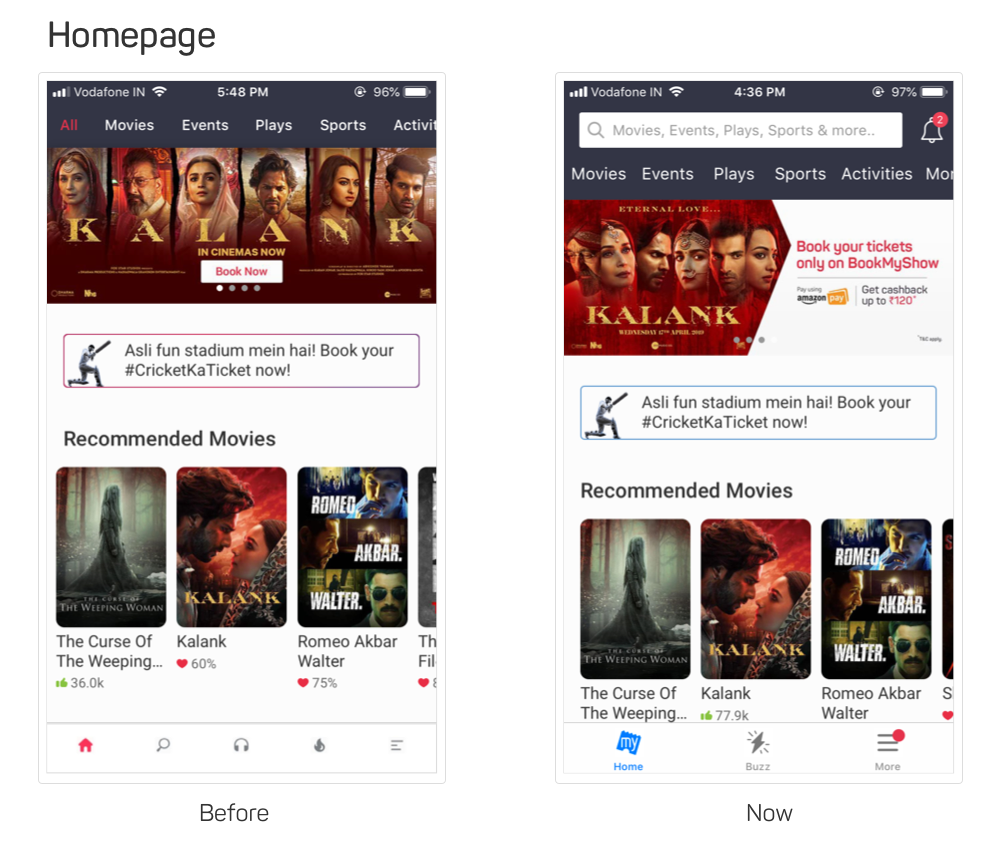
Design nuances of BookMyshow homepage and listing pages | by Kedar Nimkar | We Are BookMyShow

The screen would contain the list of all the events and movies happening or showing in a particular city or state.

3. Details of Event

Promote Your Events Online | How to List & Market Events - BookMyShow

For all the individual events there would be screens containing the details – the details of the event, the price of the ticket, terms and conditions, etc.

4. Rating

This is the section of the event page where users can give a rating to the event after having attended it. This is also where they can see what people are talking about the event.

5. eTicket and mTicket

What is an e-ticket, really?: AirTreks

Every event planning and ticket booking app gives users the functionality to enter their mobile number and email addresses where the ticket gets sent automatically after they have purchased it.

6. Download Ticket

In addition to the automatic generation of tickets in the face of SMS and emails, users are also given the ease to download the ticket for a much quicker find.

7. GPS

Using the feature users are easily able to locate the venue and also see the distance between their current location and the venue.

8. Booking History

Booking History « Event Organiser Docs

Using this feature user will be able to view the history of their bookings from inside their application.

9. Settings

The option that is mainly present in the menu option enables the users to view and modify their profile details, check the option of whether they want to be sent a notification or not and also select their preferred ticket type.

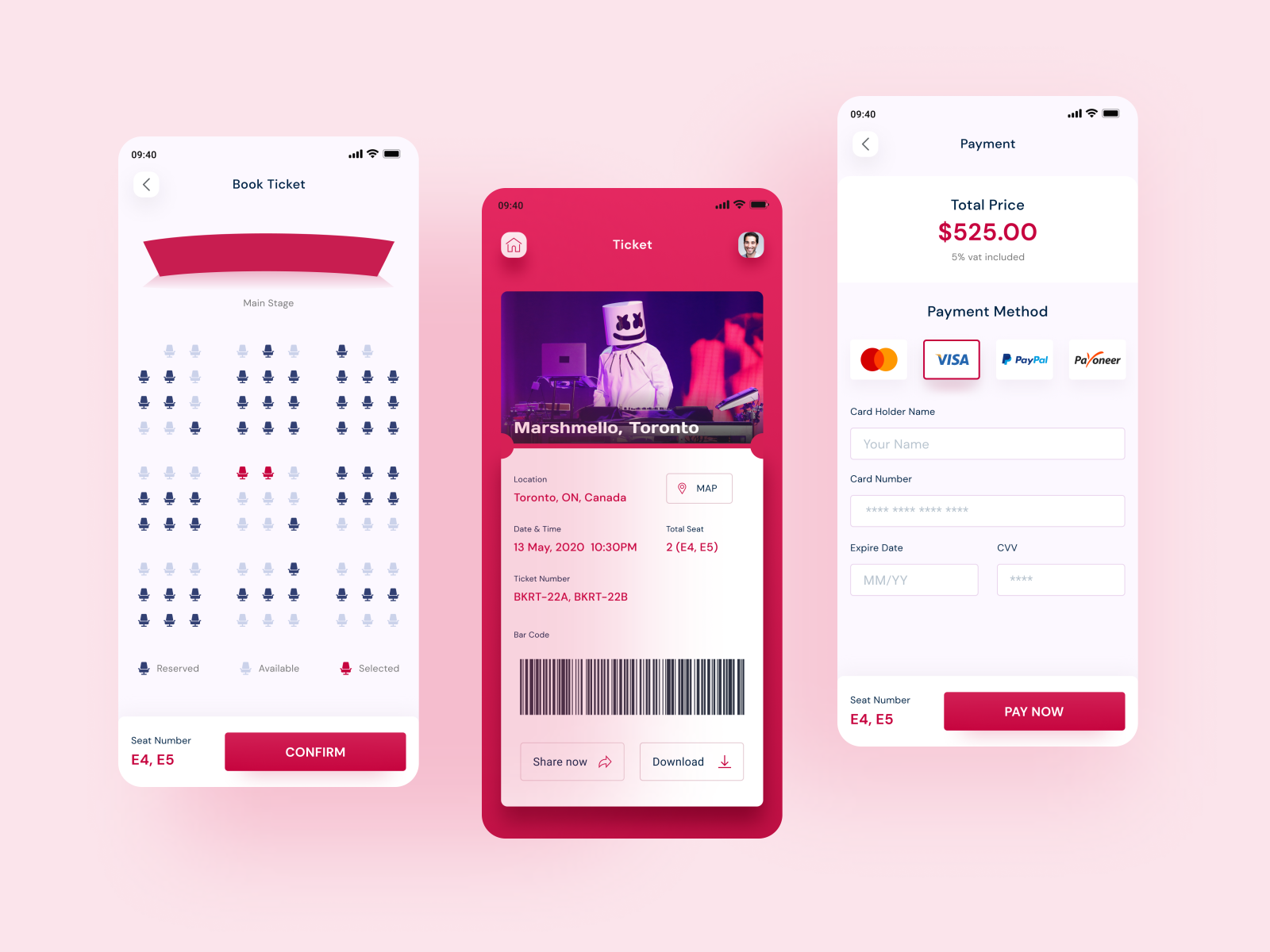
10. Booking Screen

BookMyShow Booking Confirmation Screen Re-design - singh.am

The ticket booking app solution should also factor in a booking screen that would help them select a seat of their choice.

1. Dashboard

The dashboard feature gives the admin the ease to get a comprehensive look of how the application is performing – the download rate, engagement count, events genre that are getting maximum hits, etc.

2. User Management

This part of the admin side of the app deals with managing the users base. It shows the business what issues users are sharing with the support team and the individual ways they are interacting with the application.

3. Shows Management

One of the most important elements that answer how much does it cost to build event management and ticket booking app is the management of shows. Through the feature, admins are able to add in events and modify their details.

4. Venue Management

The one thing your partnered mobile event app experts should specialize in creating a provision for the admins to keep the venue details updated in real-time.

5. Booking Manager

The next crucial part of ticket booking app development on the admin side is booking management. This is the feature that helps keep admin updated with the number of bookings happening on the application and the timing of them.

6. Content Management

This part of the admin app deals with the management of all the content that is live in the application – details of the event, ensuring terms and conditions are updated, etc.

7. Push Notification

This is the section wherein admins enter the notification content and schedule the timing of when it will go out.

Now that we have looked into the must-have feature set that goes into answering how much does it cost to build an event management and ticket booking app, it is time to look into the next functional element.

Toolset to Follow to Answer How to Build an Event App like Eventbrite or Similar Apps

8 Factors That Makes Eventbrite a Successful App

The tool set or tech stack that we follow to offer Eventbrite like app development services include a range of robust backend tools and intuitive frontend stack. In addition to those, we add APIs that are designed to offer your users a seamless experience throughout.

All of these tool sets that we use add up to answer how do you build an event planning app.

Well now that you have looked at all the must-have features and the ways to create an app for your events using the right tech stack, it is time to get down to what we majorly came here for. To answer how much does it cost to build event management and ticket booking app.

Well, let us get down to answering how much event app builders in USA and India charge for Eventbrite like app development services.

So here’s the section that answers development cost of apps like Eventbrite and similar event planning and ticket booking apps.

How Much Does it Cost to Build an Event Management and Ticket Booking App?

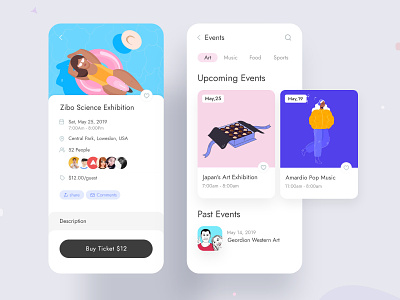
Event management mobile app by Kavi Aarun on Dribbble

The most honest answer to cost to make a mobile app like Eventbrite, which looks into both management and ticket booking is dependent on a number of factors. Just like your usual mobile app development cost estimate.

But with that said, if you are looking for an event management app that works around the exact list of features that we enlisted above, the cost range can be estimated.

Even if it’s an approximate level.

Now without beating around the bush, let’s give you a clear answer.

The event management and ticket booking app development cost range will fall somewhere in the range of USD 50K and USD 80K Considering you are creating the application in the lines of the technology and feature set that we shared.

This cost range is one that includes everything from design to development and maintenance of your mobile app.

Now that we have looked at the event planning software features and prices, it is time to delve into the ways you can earn back the invested amount.

How to Make Money On Your Event Ticket Booking App?

After spending a whopping range as the one we estimated above, it becomes a little obvious for entrepreneurs to look for ways to make the money back and then grow it.

But how do you go about it?

What are the different ways to make money off of your event booking application app?

Well, there are multiple methods that you can apply to earn back the invested money and that too at a much greater valuation. Methods that are followed by a number of event management industry’s entrepreneurs are following.

A. Commission on Ticket:

Free PNG Train Ticket Clip Art Download - PinClipart

You can add an additional commission charge on the price of the ticket that your users pay – an amount that the partnered event organizers or cinema halls’ managers would have to pay.

This is one of the most stable ways to make a profit on your event booking application for organizers and hall managers are always willing to invest in ways to fill in the seats.

B. Advertisement:

How to Write a Small Advertisement

You can introduce an advertising model inside the app which would allow you to earn money in return for showing videos or event ads to the customers. You can even introduce an additional mode of in-app advertising payment based on the clicks that the app gets.

C. Event Management Charges:

Match Experience at the PEPSI IPL VIP Box | Mission Sharing Knowledge

Although not very common but many businesses offer event management services to their partnered organizers in return of an amount. The idea behind this is that they will deploy their in-house team to manage the event for their partners. Also, they give the option to promote the event for their clients as well

D. Merchandise Distribution:

Amazon.com: Paladone Marvel Comics Playing Cards and Tin - Officially Licensed Disney Merchandise: Home & Kitchen

While this would require expansion on your front, but it can prove to be a great option when you have partnered with organizers who have established themselves immensely in the market.

The way it works is that the official merchandise is put in to be promoted and sold inside your application. The money that the businesses make is on the basis of the commission that they make on every sale.

So here were the four commonly used ways you can earn money at the back of all the efforts and money that your partnered event management app development company and you have put in.

And it doesn’t end here.

There are a number of other direct and indirect channels for you to make money off your application. Get in touch with our team of app builders for events & conferences to know what they are.

Well, with this you are now officially ready to enter the market of event booking software with the knowledge of how much does it cost to build an event app and the ways you can earn back the invested amount.

In 2019-2020, here are 10 ways to develop an Uber-like app.

App Like Uber- A Complete guide with Features and Cost Estimates

What separates Uber from the many other ride-sharing entities in the world is not the feature set.

Because the feature set that Uber entails is one that almost every other Uber clone app contains – Reason they are called Uber Clone.

No, what separates Uber from other similarly operative businesses is Experience.

An experience that the rider and driver share from the moment they take out their phone to book an Uber.

The result of this Uber app design trick that has come to be associated with the essence of how the brand operates is Brand Resonance. Something that you can experience today itself.

What you will have to do is get consciously active when it’s time to head home from work. That’s it.

See how people around you take their phone out to book a ride and no matter which platform they are on, the majority of them will say they are booking an Uber.

Isn’t this level of brand resonance something that every business aims for? Especially when they operate in a highly crowded mobile app domain?

What if I told you that the secret of how to redesign an app to get its brand resonance lies in the Uber app itself.

Well, it does.

And we will spend the next 8 Minutes in exploring exactly what Uber does in name of user experience that you too can follow to achieve every greatness that the ride-sharing mogul has. A complete disclaimer: Uber is not the only brand which gives serious design goals, Hulu app redesign also has been giving designing goals to businesses.

However, for the sake of this article, we will be concentrating on Uber app design principles.

The elements that we are going to delve into now are ones that can be integrated into your app, no matter what background your application belongs to.

Understanding the UX Principles That Work For Uber (and Can Work For Your Business too)

1. Focus on Localization

251,480 World Map Illustrations & Clip Art

One of the main answers of how to redesign an app like Uber’s lies in Localization.

The UX designer team at Uber gives a special focus to ensure that no matter what geographical background location their drivers come from, the experience that they get is all same.

This way, the whole onboarding becomes a breeze and the app learnability curve gets down to an absolute low.

By learning how to do app localization, you too will be able to offer a uniform experience to your users, no matter where they are located. An additional thing to understand here that there is a difference in localization and globalization.

The simple formula is that you should provide for localization if your business caters to multiple ethnicities in the same country and globalization if your business extends to multiple nations.

Here are some things you should take care of:

  • See that the app content can be changed to a different language
  • Give the users the ability to message in their regional language
  • Hire a team of customer support who are bi-lingual.

2. Shed the Belief that Customers are King

What is the meaning of the phrase 'Customer Is King, King Never Bargains'? - Quora

You will find millions of articles aimed at methods to drive mobile app engagement among your paying customers. All of them focusing on how important it is for businesses to keep their ultimate customers pleased.

But it is rare to find pieces on how to keep the other stakeholders – the service providers – happy.

Uber is one of those few companies that pay equal attention to the customers who make the final payment AND the drivers who give them a comfortable ride. Uber drivers, in general, are pretty happy with the way they are treated by the agency.

Everything from remuneration to leave policy is devised keeping drivers in mind.

For you to be a brand as appreciated as Uber it is important to give equal attention and benefits to all the stakeholders and not just the customers.

It is the only thing that would help you get a clear answer to how to increase mobile app engagement.

There are multiple ways to go about it

  • Give your service provider the freedom to reject the service
  • Make it easy for your backend stakeholders to connect with your team
  • Make a separate profile for them and show them the ratings that they have received

3. Give Attention to the Journey

Zoshua Colah - Making Uber Journeys Safer

If you spent any elongated time in the Uber app, you would know that there is a lot to explore even during the ride.

You can watch the driver’s story video or order something from Uber Eats which is rightly advertised inside the application.

With elements like these, Uber proves that it is not just the interaction points that are important but during part as well.

No matter what your app idea is, until and unless it is something that requires users to be inside the application the whole time like in case of Netflix App, you will have to find ways to improve your app’s user experience after ux review to build that connection.

Some ways to work on your app engagement with the help of your mobile app UX design company can be –

  • Add gamification in the application
  • Give your users media to interact with – music, videos, etc.

4. Loved Businesses Make Empowered Customers

10 Customer Service Phrases Based on Real Conversations (not Magic)

Gone is the time of Baby Boomers.

The present-day belongs to Millennials. And millennials don’t appreciate hand-holding.

Millennials want to feel empowered. And Uber understands this.

In fact, this understanding is what answers ‘How Uber Uses Psychological Tricks to engage more users’.

Uber gives multiple queries to the end users to choose from when they face an issue. And these queries do not involve them contacting the support till a much later time – something that holds the secret of how to make your app go viral.

You can follow the route by:

  • Having a detailed FAQ screen
  • Giving answers to all things that are in customers’ hands to solve
  • Placing your support email in a place that is easy to approach but not the first option

5. Promote Related Services Non-Intrusively

Intrusive Marketing vs Non-Intrusive Marketing - Know Online Advertising

How to design app like Uber? Be non-intrusive

Uber does an amazing job with showing dishes that you can offer through UberEats on the main screens of the application.

While you cannot order from UberEats from inside the ride-sharing application, it does a great job of sending you to the play store to install their other app.

The placement which they have set for their other service is so articulate that you will only click on it when you need to but its presence won’t bother you still.

Now, it is not necessary that you should also have another service to follow this Uber app design pattern. You can even follow this principle even when you follow the Advertisement based monetization model.

And also if you offer a subscription to the users to get access to other features of your application.

A few ways to achieve an Uber level of non-intrusiveness *pun intended* are:

  • Set an icon to show elements that are accessible through the premium account, without sending a pop-up to users mid-app interaction
  • Have a reward section inside your hamburger menu list and mention that the way to get the reward is through viewing videos
  • If yours is a gaming application, add the option of ‘view ads to’ or ‘install the app to’ feature after at least one successful round.

6. Uber UX design guidelines for on-demand apps: Treat Paying and Non-Paying Users Alike

UX design guidelines for on-demand apps

A bit in continuation with our Customer is not King point, is the factoring of how you should treat your free and paid customers alike. A key to how to redesign an app like Uber’s

While there is no concept of free customers in case of Uber, the ride-sharing mogul does not discriminate between riders booking a Sedan or those taking the Pool ride.

The only difference that is between the rides is in terms of car type and money. And that’s just about it.

It is a given that the premium customers would get extra features, it might be something as simple as no-ads while viewing videos or something major as unlimited content access.

But what is uncool is keeping a big difference in terms of feature set and giving your free/less-paying customers MVP like features.

In the end, the feeling of true accomplishment should be the same between both classes of your users.

Here are a few ways you can achieve this –

  • Make the premium set of features an upgrade of your present features and not a completely new set
  • Be honest about what users would get if they choose to go Premium and let them decide
  • Don’t ask them to join the premium class until they have used up all the free benefits

7. Constant Feedback – an Integral Part of the Uber UX Strategy

The importance of User Feedback. While booking a ride with Uber very… | by Vasudha Mamtani | UX Collective

The whole of the Uber driver app redesign was based on feedback.

The brand’s team of UX designers didn’t take a single step without getting a consensus of all the drivers in their community. An act that defines the meaning of community.

When you constantly ask for feedback and not for ratings, the attitude of your users change. Which then has a direct impact on your user retention rate.

Because, at the end of the day, users want to feel that they are a part of your business. A valued part.

Uber makes them feel this way by asking for constant feedback. You can make them feel this way by designing apps that drive user engagement and retention –

  • Asking your app’s improvement area on the email they have shared
  • Adding ‘Send Feedback’ option in the menu list
  • Give them the option to leave feedback when they rate your app low

8. Be Only a Few Clicks Away

Uber - User Experience Design Portfolio of Simon Pan

Being approachable is Uber’s forte.

The company has made it easy for the stakeholders to approach the customer care both on email and telephone.

Users only follow a few steps to reach out to the customer support team – it’s that easy.

As an app entrepreneur, you too should make it extremely easy for your users to get in touch with you.

All the customer touch points should be visibly present everywhere inside the application – inside the menu list, in the support section, in the settings page and so on. Basically, everywhere your customers might get stuck.

9. Impose Accountability on All Your Stakeholders

What makes Uber special is the fact that the brand breaks the social stigma.

There is a social stigma that drivers are seen as inferior beings and they should be treated as such. But Uber changes the mindset.

Uber enables the drivers to reject a ride if the user rating is low. Thus giving a reason for the riders to behave well with the drivers.

This level of accountability is what you should aim to introduce in your app. Give ways to your customers to connect with the service personnel with respect and integrity.

A few ways with which you can achieve this are –

  • By sharing stories about the service people – telling customers their aspirations
  • Prompting customers to tip them or say good things about them
  • By making it known in the Disclaimer section that the attitude your customers will keep will have an impact on their ratings.

10. Give Security its Fair Share of Focus

Uber - User Experience Design Portfolio of Simon Pan

Although it was a journey full of scandals for Uber to understand the importance of security, but the brand has come to know of its importance.

And it is not just in the backend. Security has found its place in a number of places inside the application. Uber even gives the option to the users to share their rides with people whom they know – thus seeping security deeper in their life.

A few ways you can give the same secure feeling to the users include –

  • A badge of security on the app home screen
  • Multiple authentication options

So here were the ten Uber UX design principles that you should copy in your app, today.

Need help from Product design and development company? Fill the form below and our team of UI/UX experts will get in touch with you.

The UX Deliverables Timeless List

A Complete List Of UX Deliverables | by Nick Babich | UX Planet

The efforts of the UI/UX team can be translated and measured into a whole list of UX deliverables. The deliverables which are then passed on to the stakeholders, both internal and external to get an idea of what the app’s users would experience.

Being the leading mobile app design agency that has helped brands like Dominos redesign their offering, we often get asked questions in the line of –

  • What are the deliverables that you provide at the end of the project?
  • Will the development team be able to convert the design in code and then a functioning app, with the help of the deliverable?

To address all these questions, we have prepared a brief description of the different UX deliverables to help you understand what to expect as an outcome when you partner with a mobile app design agency.

The end result of our UX Design process which is what is shown in the illustration below, are all the deliverables that we are going to read in the section that follows

An Entire List of UX Deliverables

The deliverables that present themselves as an outcome of the Mobile app UX effort is a family that can be divided into four subsets –

User Research

Market Research

Design-Centric

Testing Deliverables

User Research Deliverables

This part of the UX deliverables is concerned with looking into the users’ side of the story – who they are, what they prefer in an application, etc.

User Persona

User Persona Template and Examples | Xtensio

The first deliverable that app UX designers work towards is the creation of a user persona. It is about drawing out an image of your probable user – who are they, where do they live, what do they like, what irritates them, what is their pain point, how do you prefer solving it, etc.

The study gives designers and the business as a whole the idea of whom their software design process is intended for – above all, whom they are not developing the app for.

The next part of user research specific UX deliverable is knowing how the user would move inside the application, something that helps draw out a customer journey map.

It is a visual representation to show the actions that a user would take to reach the end goal in an app.

Being in a visual form, the deliverable makes it easy to identify the steps needed to redesign or improve the app, thus setting the ground for understanding what counts as the UX for perfect user flow.

Experience Map

When & How to Use an Experience Map in UX Design | Adobe XD Ideas

This deliverable here is basically a diagram that looks into the many steps that are taken by the users when they engage with the application. It enables the designers to frame users’ needs and motivation in every step of the journey and create a design solution which is appropriate for every step in the customer journey map.

Use Cases

It is the written description of how the software design process would be and how your users would perform tasks inside the application. It showcases the users’ point of view and how the app would behave when their request is responded. Every use case inside the app is shown as the sequence of easy steps, starting with users’ goal and finishing when their goal is achieved.

Storyboard

A Comprehensive Guide To Product Design — Smashing Magazine | Storyboard design, Ux design, Storyboard

Inspired from movie industry, this part of the list of UX deliverables deal with creating an outline of users’ action and the motive behind them. The idea behind this stage is to not just show what is the environment that makes users behave the way they do inside the application.

Market Research

This part of the UX deliverable deals with the market part of the elements that are known to help businesses get an idea of how their app market is moving.

Competitive UX Analysis

EMD Website Flowcharts by Eric Miller, via Behance | Flow chart, Web design, Flow chart template

Designers while researching for the app design will be able to analyze your competitors’ apps – helping you understand the industry standard and find out an opportunity for innovating in a specific segment.

The next part in the list of UX deliverables is specific to the core designing part of the application.

Design Centered UX Deliverable

Moodboards

Mood board, a wise tool — DAY 23. Mood board is an useful tool to be… | by Roberto Pesce | Product Coalition

It is that UX design method where a collection of references and images are found which evolve as the product’s visual guide. It allows the designers to showcase the proposed look for the app to the stakeholders before they put any time, efforts, and money behind it.

Sketches

One of the quickest ways to visualize an idea – Sketching is what is next in the list of design deliverable. Made using nothing but a pen and paper, it is used to validate the concept of products and the approach related to design taken by both users and the team members.

Wireframe

It is the UX design method cum visual guide which showcases the structure of the page along with its key elements and hierarchy. They have proven to be very useful when the designers have to discuss ideas with stakeholders and team members.

Prototype

UX design deliverables - Best practises of how to use different UX deliverables - Marvel Blog

This part of the UX design process is the simulated version of a semi-final app which is also used for testing purposes before the software is launched. The aim of the prototyping process and answer to What is the role of prototyping in user experience design? is to test the products before developers are involved to move on to the MVP stage.

When it comes to creating them, there are multiple prototyping tools that you can make use of to share a clickable version of your design with the stakeholders, all of which can turn out to be pretty useful when it comes to conducting an A/B test for UX designing.

Once all the market, user, and design related UX deliverables are worked upon, the time comes to look at the deliverables which would help test the design in the market.

Testing Deliverables

Quantitative Survey

The need to prepare questionnaires and surveys that help measure user satisfaction and collect app feedback is what comes under the KRA of app UX designers

Usability Report

These reports rightly summarize the findings related to usability in a descriptive and precise way helping teams identify issues and then work for its solution.

Analysis Report

There is a huge number of insights that analytics tools like Google Analytics fetch and show how users are interacting with the application.

Sitemap

Website Flowchart & Sitemap for Illustrator, OmniGraffle or Sketch – UX Kits

The last UX deliverable, which is also an important part of the UI design methodology that acts as the outcome of the designing efforts is Sitemap. It mainly shows the navigation and hierarchy structure of the application – which helps in giving out the information on how content will get organized in sections or screens.

Which UX Deliverable is For Which Audience?

The stakeholders of your design are not just your users but also your teammates and the company’s board and the clients. So assuming that all the UX deliverables you just read would be intended to explain the concept to any one stakeholder category would be a grave misassumption. Your chosen deliverable will have to vary from your audience to audience.

Let us look at all the different combinations that you should work around.

A. In-house management

When it comes to communicating with the managers or internal stakeholders, the UX deliverables which are mostly deemed ideal is the prototype model and the analytics report.

The prototypes give the stakeholders an experience which is a very close reflection of the final app and thus prove to be a solid tool for showcasing what the users would experience.

On the other hand, usability and analytics reports are also found to be very useful when sharing information with the management, for they present clear evidence of the UX recommendation made.

B. Clients and External Stakeholders

When you have to share the UX designs with the external stakeholders like your client, interactive prototypes and mockups are usually the most opted for deliverables.

The idea behind this is when you work with people who have limited knowledge of UX design and ux review, it is always better to give them deliverables that would place the entire focus on visual design. Doing this will help them see the app’s functionality, its information architecture, and the interaction design which is integrated inside the realistic mockups.

C. Engineers and Mobile App Developers

Outstanding Set of Software Engineers Vectors 180258 Vector Art at Vecteezy

When we talk about communication the UX idea with the developers, interactive prototypes are once again chosen as the right option. But there are other deliverables as well which come across as ideal – site map, style guide, and flowchart.

Because of their detailed focus on interaction specifics and structural details, these deliverables prove to be very useful when it comes to the actual implementation process.

With this, we have seen everything there is to know about not just the types of UX deliverables to expect as an outcome from the UX/UI designing agency but also which deliverable is best for which stakeholder.

Now that you have the necessary deliverable related information, it is time to get started with working on your own app’s deliverables.

error: Content is protected !!