How Analytics Can Assist Businesses in Ensuring Safety

The Ultimate List of Free Analytics Tools | Quantcast

the growing threat of cyberattacks, many are turning to analytics to help protect their systems and comply with regulations. Here, we’ll take a close look at what security analytics is and how it can benefit businesses.

Security analytics – an overview

How to improve security analytics and operations | CSO Online

Like all forms of data analytics, security analytics involves the collection and aggregation of a wide range of data from numerous sources. The purpose, however, is to analyse this data to discover vulnerabilities and threats to the security of a company’s systems and data. Data can be gathered from firewalls, routers, network traffic, antivirus software, OS event logs, businesses apps, cloud resources, ID verification and access management logs and endpoint data. It also uses employee and user behaviour data and third-party threat intelligence information. This is then analysed using specially developed security algorithms which seek out patterns and sequences that give insights into potential, emerging or existing threats.

Modern cybersecurity analytics tools also employ AI and machine learning, which enables them to learn from past experiences to continually improve their ongoing threat detection. So, as new threats evolve, they will be able to detect these too. Of crucial importance is that this is done in real-time so that threats can be dealt with proactively and stopped before an attack inflicts damage.

Ways in which security analytics can be used

Stay Ahead of the Security Analytics Market With These Best Practices

Security analytics can be used for a wide range of measures. It can detect links in network traffic activities which signify the emergence of a potential attack. It can discover attackers threatening to infiltrate a system’s endpoints, such as its laptops and mobile phones. It identifies vulnerable, compromised or prohibitively shared user accounts. It blocks unfamiliar communications channels, preventing data being copied, downloaded or transferred without authorisation. It can also safeguard against identity theft by stopping users from sending their details to other sites.

Security analytics can even be used to protect against internal threats; monitoring employee activity to identify intentional or negligent behaviours which put the system’s security at risk. It does this by employing algorithms that uncover suspicious actions which indicate threats or vulnerabilities.

Compliance is another area in which security analytics can play an important role. Here, it can help automate compliance requirements, such as the gathering of log data, the management of data networks and the monitoring of data actions, enabling the company to compile reports and detect users not working in compliance with internal IT policies. Where incidents occur, security analytics can also assist in any forensic investigation, unearthing the activities and sources of the related events.

The benefits of using security analytics

6 Benefits of Security Analytics for Security and Risk Professionals - Download Whitepaper (PDF) » OnlineWhitePapers.com

The chief benefit of using security analytics is that, aside from detecting threats and potential security breaches, it also alerts the company when these incidents are likely to happen and before they actually do. In this way, its insights enable the company to be proactive in its security.

With threats coming from a wide range of sources, such as hacking, malware, ransomware, phishing, internal sabotage and negligence, and with cybercriminals using far more sophisticated tools, some of which also make use of AI and machine learning, many businesses can see real value in security analytics.

Security in the cloud

What is cloud security? | Kaspersky

For businesses using cloud-based systems, it is possible that your vendor already provides a wide range of robust security measures to protect your systems from cybercrime. Here at eukhost, for example, our cloud servers are protected with enterprise-class security. We work in partnership with Fortinet to offer next-gen FortiGate firewalls which feature intrusion prevention and inflow virus protection systems that detect and isolate threats before they reach your server.

In addition, we provide extensive VPN features, DDoS protection, email security, SSL certificates, email signing certificates and more. For added peace of mind, we also provide the industry-leading Veeam backup solution, designed for cloud infrastructures. It features virtual machine backups, replication and encryption which keep your data secure in case of system failure, data corruption, bad updates, ransomware or human error.

When it comes to compliance, the security we provide helps companies meet regulations such as GDPR and PCI DSS. With regard to the latter, all our cloud servers are PCI compliance capable and we can provide the server environment required for this purpose.

Conclusion

As threats become increasingly more advanced, it is good to know that technologies to protect IT systems, such as security analytics, are being developed and deployed to combat them. The best place to host such big data analytics, of course, is in the cloud. It’s reassuring, therefore, that the cloud, itself, already comes with a range of robust security measures to protect you, whether you use security analytics or not.

How Google Home and Amazon Echo Will Affect the Content of Your Website

Amazon Echo vs. Google Home: Which Voice-Controlled Speaker Is Right for You?

The way we interact with the internet is changing. Many of us now use voice to search online and the answers we get are increasingly being spoken to us. This isn’t just happening on smart speakers, which are becoming commonplace, it is also being used on phones, computers and even on devices like smart TVs. If this is the future of how we use the internet, it is obviously going to affect the content that organisations place on their websites and in this post, we’ll look at what changes are likely to be needed.

Why you need to act now

It is estimated that by 2020 over half of all internet searches will be done by voice. This is due to a number of factors. First of all is the low price of smart speakers. You can pick up a basic Amazon Echo Dot or a Google Home for around £30; cheap enough to put several around the home so voice searches can be done anywhere without having to touch a keyboard.

Hand in hand with their low price are the consistent improvements in natural language processing. Computers can now understand what we say and speak back to us in intelligible ways and their ability to do so is getting better all the time. While, for the time being, what we can do with voice search is fairly limited, the scope of their abilities will no doubt expand to help us in ways we currently haven’t begun to fathom.

For website owners, this means that what you publish on your sites will increasingly be read out to the searcher rather than being presented to them visually and this will impact how that content is created in the first place.

Voice search results

Voice Search SEO Study: Results From 10k Voice Searches

One of the biggest differences between voice and keyboard searches will be in the way that search results are presented. As we all know, when we search using a keyboard and screen, we are shown a list of search results and click on the one that most appeals to us. This is why most websites strive to be on the first page of results.

With voice search, this isn’t always going to happen. Where there is a screen on which to view the results, for example when using Cortana, Siri, or Google Assistant on a computer or phone, the results may show up as we are used to. However, on smart speakers and other devices, reading out a long list of titles and snippets would not be user-friendly; instead, the google search engine will make the choice for us and read out what it considers to be the most appropriate answer.

Indeed, even screen-based search is moving in this direction. Type a question into Google , today, and before it presents a list of websites to look at, it will show you what it considers to be the best answer in the knowledge graph at the top of the page. This is a move which keeps the visitor on a Google page and reduces the chances of any other web page being visited.

What’s the solution for website owners? It means that for voice searches, it is even more crucial that the titles and metadata are focused on the search query and, in doing so, provide answers in themselves that can be read out. Websites that can feature in the knowledge graph are the ones which are most likely to be visited.

The rise of natural language generation

Deep Learning for NLP: An Overview of Recent Trends | by elvis | dair.ai | Medium

With the use of AI and machine learning, the information supplied by voice searches is going to get more sophisticated. At present, it uses natural language processing to understand your enquiry and then uses this to identify the most relevant content to speak back to you. In the future, it will go beyond this. With natural language generation and AI, the search engine will be able to gather the essential information from the internet, perhaps taking small elements from many different sites and will reformulate these into a single, cohesive and comprehensive answer. So, rather than speaking out verbatim what it finds, it will generate specific answers to specific questions. For example, if you ask what restaurants are the best in your local area, it might search all the various review sites, looking beyond star ratings, to consider the actual text individuals write in their reviews. In addition, it may also take into consideration the browsing and purchase history of the customer in order to offer what it considers the appropriate response. In this sense, search engines will morph into concierges offering personalised customer services.

Will there be an end to screen searches?

There will always be a need for screen searches. If consumers want to purchase something, they usually want to see it first. Indeed, it goes against freedom of choice not to give a customer options and if they removed these, google search engines will lose massive revenues from their advertisers. This is perhaps why so many smart speakers with screens are already being produced, in order to give us the best of voice and screen searching.

How will this affect content creation?

How will Artificial Intelligence affect content creation for digital marketers?

All these developments point to several changes that websites need to make to help them stay relevant in the age of the voice search.

Firstly, the content published on a webpage needs to be structured and written in a way that makes sense when read aloud. This means writing in a way which sounds natural and using vocabulary that communicates information clearly. Accurate punctuation, which is essential for ensuring meaning is communicated clearly, will become more vital than ever.

Another factor is in creating different content for different searchers. The use of subject orientated terminology might be suitable for some readers but not for others. A search engine could determine the level of understanding that a searcher has and look for search results that the user could understand when the website was read out to them. For some businesses, therefore, the solution would be in creating both a layperson’s and a subject specialist’s page.

Graphical data is one area, in particular, which needs to be looked at carefully when considering voice searches. Tables and lists work very well for visual searches and can save users lots of time when they look for information on your site. However, when read out, they don’t always make the best sense and it would be easier to understand if the information was put into sentences and paragraphs. The obvious answer to this is the development of a new type of responsive site – one which provides different versions depending on whether the results are shown or read. This, however, is a development for the future. For the time being, it may mean making both sets of information available.

SEO also has a part to play in helping websites do well in voice searches. Indeed, Google recommends that SEO focuses on making it simple for the search engines to understand what the content is about. This should be done through the use of titles, meta descriptions, headings and subheadings as well as using proper descriptions rather than just keywords in image alt-tags. Just remember that most of these things need to work for visual consumption at the same time.

Conclusion

With the advance of voice search technology and the popularity of smart speakers, we are moving into a new era of internet use where there is less need to be stuck to a screen to find the information we want or to carry out actions. For website owners, this will push you towards creating content that is suitable for both kinds of search and which makes sense when read aloud.

Corporate Learning Mobile Apps’ Role in Business(2019-20)

7 Top e-Learning Mobile Apps That Redefined Online Learning

2018 ended with the size of the corporate Learning mobile apps market at $165 Billion, a number that is anticipated to grow to $240 Billion by the time we hit 2023.

With the constant demand for transformation and innovativeness, a ripple demand has fallen on the need for constant learning that promises a skilled team that is updated with everything happening and entering the industry and is ready to make the most of it while making the whole business all the more efficient.

This demand has single-handedly increased the market size of the corporate mLearning solutions – something that would draw the corporate learning market to grow further in 2019-2020.

The graph here is a sign of how while mobile apps have already established a prominent part in the education industry revolving students, the trend is on a high even in the case of corporate learners.

Before we move on any further, it would help knowing what learners feel about digital learning in the corporate world.

*The insights into the corporate learners that we are about to share here will also allow you to devise your corporate learning and development mobile apps accordingly in 2019-2020, in a way that your learners get the maximum output.

Without further ado, let us get to what corporate learners have to say about mobile based corporate training solutions for businesses. This will give you an idea of the extent of the importance of mobile learning in businesses –

How is the Corporate World Responding to mLearning – The Learner Side of Corporate eLearning Market

A. Career progression is the Driving Force of mLearning Apps for Corporates

Why the $37.6 Billion Mobile Learning Industy Matters to Corporate Training

78% of employees feel that they are most likely to enroll in a course when they believe that it would have an impact on bettering their job or would help in reaching their future role. The other big motivator besides this in using the eLearning mobile apps that offer recognition is the attraction of getting recognized by a prestigious corporation or university.

B. They are Pro-AI but with Concerns

What is ethical AI? | IT PRO

While around 60% of learners said that they are more than willing to use AI for identifying skills and recommendations of courses that would help fill any gap in their present skill set, they were worried about how their manager would react. They were tensed about the fact that either their managers would feel that they are looking for a job change or might think that they are not capable of handling a task according to the selection of course.

C. Learners Wish to Have a Portable Record of Education Achievements

A New Pedagogy Is Emerging... and Online Learning Is a Key Contributing Factor | teachonline.ca

Around 73% of corporate learners said that they would prefer corporate learning apps more if it allows them to take the record of what they have learned and achieved in the course to the next job. In short, they would appreciate it if they had complete personal access to their records.

D. An Ease of Access is what the Learners Want

9 Benefits Of eLearning For Students - eLearning Industry

Around 78% of learners felt that they would appreciate it if all the learning was there in one place along with the presence of well-synced learning recommendations.

The convenience to access the course from all devices and on an offline mode along with quick load time are some of the things that the learners felt a necessity to define the importance of mobile learning in education.

E. The Mode of Learning Was Not Restricted to Reading

How to Making an attractive video lectures which students really watching

All the learners were divided into several media of inculcating corporate learning and development. Modes ranging from – Reading, Online Courses, Webcasts, Audio, and Video.

They believed that when given options to meet the different style of learning, varying learning goals, and the difference in circumstances, they witnessed an increase in engagement and value.

F. 25 – 40 Minutes of Session was Best for Effective Learning

25 Digital Facilitation Tools for Virtual Workshops & Events

Around 50% of the corporate learners said that around 25 – 40 minutes of a session in the mLearning app was the most efficient for them, followed by sessions ranging from 1 to 2 hours of learning and those lying in the 5 – 10 minutes duration range.

Now that we have looked at how the corporate learner world is reacting to the idea of Corporate eLearning solutions, it is time to look at the benefits that have helped shape the high growth and engaging online corporate training market.

But before we do that, it would be apt to look at how far the mobile learning apps for business have come in the corporate world. So, let’s take a quick detour and look into the journey the digital corporate eLearning platforms have taken.

See how the corporate mobile learning solutions continued to grow and are even more persistently prepared to expand in the many corporates around the world?

Weel. The place that these mobile learning apps for corporates are able to create for themselves is the doing of the impacts of the learning apps on corporate, something we are going to look into next.

The Benefits of Corporate eLearning Solutions for Your Business

1. A Competitive Advantage

Competitive Advantage: Definition, Examples and Global Impact - TheStreet

With the business world as our witness, if there is one thing that stands between an averagely performing company and a true industry disruptor, it is the time that the disruptors put in learning and adapting to new technologies.

In fact, brands like Uber, Bloom Energy, Amazon, and the likes directly link their speed of innovation and intensity of growth to constant training and learning.

In such a scenario, a Learning Management System Software that is designed to keep your employees updated with the technologies that are not just mainstream now but have the potential to be major holds the ability to put you points ahead of your competitor.

2. Easy Accessibility of Resources

Web Localization: Best Practices and Resources - Ulatus Translation Blog

Today’s businesses are coming out of the geographical boundaries shell, culture conventions, and time limitations. To work alongside them, learning apps would have to deliver training in a small time span. Depending on the job role and geographical location, it can be very difficult for businesses to deliver learning in a face-to-face mode. This is where the accessibility offered by mobile applications can come in handy.

An example of this can be seen in the ATLNext app developed by India’s leading construction organization, L&T. it enables its employees across the nation to learn anytime.

3. Bridging the Skills Gap

Article: Bridge the skills gap: Know and grow with your employees — People Matters

The present era belongs to transformation. The skills that you require now to succeed in the market are a hundred times more complex than what they used to be when the industry was in an infancy stage.

By incorporating well-devised mobile learning apps for corporations in your day-to-day work activities, you will be able to not just be updated with how the industry is moving but also know where you are lacking in the worldwide scale and take measures to fill the gap while there’s time.

4. Cost Reduction

Cost-reduction tactics for small businesses - Commercial Associates

Consider the cost of traditional training practices for a minute. Note the cost of accommodation, food, venue, per hour trainer cost, operational costs of materials like projectors, notepad, pen, etc. These costs can be brought down drastically if you employ a mobile app in the process. The cost of education application development will always be a one-time expense.

5. To Attract and Retain a New Age Workforce

As the well researched educational software development services would tell you, it is estimated that by the time we reach 2025, millennials would have made up 75% of the world’ workforce.

And this new age workforce is on a constant thrive to learning and growing to a newer self. Sophisticated learning programs developed in modes that entice them can be your only way to keep them hooked with your company for they will not just be interested in the money but in an expansive career path and the diverse experience that it offers.

6. To Unite the Global Workforce

Article: 50% of global workforce are excited or confident about the future: PwC Hopes & Fears 2021 — People Matters

One of the biggest challenges that every business which operates on a global platform faces is passing off learning in a unified manner across the whole wide business comprising multiple offices distributed across various countries.

For a business that is not confined to any one geographical location, it becomes of prime importance that all the millions of employees are brought on the same page and given the exact same training and LMS modules. Brands that make use of regional language courses specific to individual regions are able to achieve an across company growth with much ease.

With this, we have seen the benefits that come associated with every business learning app for Corporate there is but it is important to note here that all the information that you read above would be incomplete until you are able to design a learning solution that is prepared to offer all those benefits and be a part of the constantly growing mLearning industry. Until you design the mLearning app right, you will not be able to offer the right set of experience – something that your mobility partner who excels incorporate mLearning application development services should tell you.

On that note, let us now look at the features that are commonly present in every Corporate mLearning solution and mLearning apps for corporate employees before we head on to studying the trends that would define the digital corporate mLearning industry this year and beyond.

Popular mLearning trends of 2018

BYOD is the news

BYOD or Bring your own device is one of the major mobile Learning trends that turned up in 2018. It was projected in a report by Sailpoint that 2018 will see approximately 70% of working professionals will prefer working upon their own electronic devices (mobiles and PCs), at homes as well as at workplaces.

This is so because people today are used to working with the comfort of their own devices. Being habitual of the convenience of smartphones which allow us to access any knowledge resource anytime anywhere, BYOD becomes an obvious next step. And with the majority workforce being tech-savvy, BYOD is one of the most appropriate strategies to be adopted in any workplace.

The hiking popularity of Mobile Analytics

Mobile analytics is the way to deciphering learning patterns of different individuals at a workplace. And as more and more organisations are identifying themselves as L&D (Learning and development organisations), “the adoption of having personalized learning models developed for all the employees at a workplace” as an idea is catching fire.

In short, more organisations are addressing the importance of having personalized learning models.

Keeping it small to keep it effective

The average attention span of the present time’s learner is passably low. Therefore, in order to keep up with that, things need to be kept curious enough for people to respond to them. In fact, people tend to lose interest in anything that they know is a long winding course.

Thus, the best retention strategy for people is to keep the content portion small. It is better to keep the content focused on a single topic than to diverse out the things to learn in terms of topics.

In order to achieve the best results, this kind of micro-learning modules can be easily delivered through personal mobile devices of people and are highly effective.

Mobile phones for performance support

Now that we have already learned that corporate education mobile app development is directly related to enhanced performance, it is time that we learn how can mLearning help in providing performance support to our teammates.

In other words, the support that they need to perform their jobs perfectly anytime they need and anywhere they need it. For instance, personal sales meetings can be tricky while demonstrating a tech product, an app or a functional software. And, in many cases, the sales personnel on field end up requiring the support of the backend development team for a smooth presentation. And, mLearning tools can be of great help in such scenarios. Access to all the required information from the ease of a mobile device can work wonders for all the teammates in enhancing their overall performance at work.

With the rising number of mobile learning app development practices, it is safe to conclude that mLearning has become a dependable technology. In fact, The above-mentioned work trends have worked well with all kinds of business structures in this year and since technology is forever bettering itself, trend forecasts can be made for the coming year as well. Let us take a look at what 2019 and 2020 has in store for mLearning.

mLearning trends to be seen in 2019 to 2020

Mobile Coaching

The Toolbox Just Got Bigger: Considering Mobile Coaching Platforms

As cool as Mobile Coaching sounds, it is, in fact, a great source of having a subject matter expert right in your pocket. So for instance, before an important sales pitch or business meeting, your teammates can easily log in to the “mobile coaching” application and have a real expert prep them for the meeting in real-time. Mobile coaching, with the benefits that it offers, single handedly makes Mobile apps a growing trend in the Education industry.. And this is not just an online portal but it also works as an offline video directory for people to browse through the videos to watch anytime.

Having Education apps in enterprises opens the possibility of learning on the go, especially in case of critical meetings and deals.

Micro-assessments on mobiles

The 3 Biggest Mobile Learning Trends for 2019

Training and learning never end even when your teammates complete their courses. As an aid to knowledge retention, mobile micro-assessment tools will be a big high of 2019-2020. As for mobile micro assessments, the mobile apps for corporate training would enable trainers to create short questionnaires and have them scheduled to be sent at fixed intervals to the teammates after the completion of their training.

These assessments can even be taken via text messages or chat applications and services. In fact, It will not be wrong to say that training and learning, either in Workplaces or in learning institutes, Mobile learning technology will revolutionise Education as we know it.

Augmented Reality will become a part of the process

Usage of Augmented Reality in Education Process | ViMM

Development of m-learning tools is on an all-time high now and for the future. Mobile learning apps are now moving towards AR and VR. With AR performance support tools, all the teammates have to do is hold their smartphones up to anything they require information about and they can get real-time information about the object to guide them.

No matter how rigorous training is given to the employees, real knowledge retention takes place with hands-on-experience of the job. And there is no better way of embedding experience with learning except through augmented reality.

Today we have access to Some of the best mobile learning learning platforms, right through our app stores, like Coursera, Duolingo, Linkedin Learning and the list goes on.  mlearning and education app developers are seeing a high demand of such apps among the over 2 billion smartphone users of the world. If truth be told, Mobile app development companies around the world have dedicated teams for mLearning apps.

The time is not far away when mLearning will be seen as the only way of learning in many diverse scenarios of life. In fact, mobile learning apps for enterprises and other educational bodies are being adopted rapidly. Future of mobile learning is not a dream anymore, rather it is already a practical, practicable technology which is seeping very rapidly into our training courses. And with this ever-improving technology, the scope of m-learning app development is also taking a leap.

Now that we have seen it all – the corporate eLearning market, how far it has come, the benefits that it offers to the many corporate learners around the world, the must-have features, the trends which will soon go mainstream in the corporate mLearning market – the only thing now left to do is to get a corporate eLearning solution devised and enter an era where your business emerges as the industry disruptor.

Not sure how to achieve this? Let us help you. Contact our team of mLearning App Development experts, today!

Ways cloud hosting is similar to Santa

Best Christmas Deals Of 2017 - Cloud Hosting, Web Dev, Marketing Tools Discounts

You might think it Christmas crackers to believe a beardy, old sleigh driver donning a red hat, has anything remotely in common with an internet-based hosting solution – but you’d be wrong. Both of them, in their own unique ways, can bring us many benefits. So, as Christmas approaches and we begin to let our minds wander away from work and towards the festivities, here’s a more seasonal and humorous post for you to enjoy. Here are the reasons why cloud hosting is like Santa Claus.

When it comes to running critical operations, Santa relies on his sleigh just as much as businesses need their applications. Downtime for either can be disastrous. Sleigh failure can result in millions of unhappy children waking up to empty stockings – an unimaginable reputational disaster for the world’s most trusted brand. For others, the standstill caused by server failure not only damages reputations but can also result in significant losses.

Neither Santa nor businesses like downtime

Coronavirus pandemic pushes start of holiday shopping earlier than ever | Chattanooga Times Free Press

While Santa relies on magic reindeer dust to keep his sleigh in action, for businesses, the best option is to migrate to cloud hosting where the possibility of downtime due to server failure is non-existent. The virtual nature of a cloud environment means that it delivers consistent performance with guaranteed 100% uptime. This is because its hyper-converged design protects against everything from hard disk failure to an entire server failure, enabling critical apps to be always available.

Reindeer fast performance

A Beginner's Guide to Website Fast performance (Creative One Solutions)

Speed is essential for both Santa and modern businesses. For Santa, dropping off presents to the world’s 2 billion children in a single night means he has to work fast. It’s been scientifically calculated that he needs to travel at approximately 650 miles per second to get everything done in time and to achieve this, he needs more than your average reindeer. Indeed, the average reindeer can only manage 15mph and most of those would be flagging after half an hour of pulling all that weight.

What makes everything possible for Santa is that he uses the cloud. Rather than taking the sleigh over rugged terra firma, riding high in the cloud provides an almost friction less environment to travel and where gravity has less of an impact. This massively improves his speed.

That same cloud, or one very similar to it, can also help boost the speed of your data. Indeed, as data is weightless, it can travel even faster through the cloud than reindeer, almost at the speed of light. And with high-performance servers featuring powerful Intel Xeon CPUs and super-fast SSD drives you can perform critical tasks quicker than an elf can say ‘Merry Christmas’.

Santa has been so impressed with cloud technology, he’s now adopted load balancing to prevent his sleigh tipping over on tight corners. For cloud hosting users, load balancing maximises speed and capacity utilisation so that when servers are busy, the load is distributed. This ensures that no server suffers from performance problems and, with multiple data centres at their disposal, cloud providers can always ensure optimised performance.

Both Santa and cloud hosting save you money

Why small businesses should save for a rainy day

Whether you are buying presents for your children or cloud hosting for your business, it is important that what you buy offers you value for money. What’s great about the cloud is that you can save on the costs of running a data centre and the capital expenditure needed to pay for hardware. Everything you need is provided by the host. There will be no need to pay for premises, electricity, physical security, maintenance or insurance.

Similarly, with Santa, those who have well-behaved children can save on the cost of buying presents. Instead of spending a fortune on Amazon, simply get your ‘nice list’ kids to write a letter to Santa and put it in the nearest post box. Doing this automates the process of putting presents in stockings and under the tree on Christmas Eve. Although a small delivery fee of a mince pie and a shot of something warming is required, the savings are dramatic, especially when your child has an eye for expensive electronic gadgetry.

Unfortunately. If you have naughty kids, you’ll have to supply your own presents or make do with the small bag of coal that ‘bad list’ children get left.

Both come with expert little helpers

When you have significant workloads, it pays to have experts on hand to help you get things done. Santa, for example, has an army of elves who spend their days creating the presents, wrapping them up and loading them onto the sleigh. They’ll also manage the naughty and nice list and organise the presents in a way that enables delivery to be done with awe-inspiring efficiency.

If Santa has a technical problem, Mrs Clause offers 24/7 support, together with tea and biscuits, to help him find an effective solution. Last year, for example,Rudolph’s nose was a bit dim and Mrs Clause provided the right type of carrot to add to Rudolph’s food ‘til the luminous glow was restored.

Users of cloud hosting also benefit from expert little helpers. Working away behind the scenes is an army of engineers and technicians who ensure that your hosting is expertly managed. They’ll monitor and maintain the servers, update the software, scan for intruders and malware,and generally make sure your hosting is working as effectively as possible.

At the same time, should you have any issues, a good cloud host will provide their own 24/7technical support. While they may not know one end of a reindeer from the other, they will have expert skills in helping you with all your hosting needs and will be available by phone, live chat or ticket.

Wrapping up

So, as you can see, it is possible to compare Santa with cloud hosting. Comparing,however, doesn’t mean you have to choose between them. If you’re clever and have been good all year, you can have both. Now, that is good tidings.

5 Advantages of Using the Cloud with a Bring-Your-Own-Device (BYOD) Policy

Bring Your Own Device" Policies Need to Protect Both Employees and Businesses

If you have not come across BYOD before, it stands for Bring Your Own Device and is when businesses allow their employees to use their own laptops, tablets and smartphones for work, instead of supplying them themselves. When BYOD is used in conjunction with a cloud-based system, it brings many benefits. In this post, we’ll look at what these are.

Greater flexibility.

Greater Flexibility as the New Mantra for Higher Education | teachonline.ca

When businesses with cloud-based systems begin to offer BYOD, it enables employees to work away from the office whilst still being able to access the system over the internet. This means that where ever an employee is, they’ll still be able to access the data and files they need.

As a result, it offers companies a great deal of flexibility. For example, if there is no need for an employee to be physically in the office to carry out their work, they can work from home, using their own laptop. If this applies to enough staff, it is possible to use smaller office premises cutting the cost of business rents, rates, utility bills, maintenance and insurance.

It also enables companies to offer more flexible working conditions which are better suited to those who need to work around things like childcare. As a result, talented individuals who would have been put off by rigid 9-5 routines may be willing to work for you.

Keep employees happy and reduce training costs

Reduce The Cost Of Training Employees With These Simple Techniques - eLearning Industry

We all have our preferred devices for work; some like to use Windows computers, while others prefer to work with Apple Macs. When you supply your own devices, it is easier for a company to lease these in bulk and as a result, everyone gets the same thing.

It can, however, be difficult for those who have always used Windows to work with a Mac and vice versa. It can take them time to learn the new skills and even require training to take place. Until they are up to scratch, their productivity levels will be less than expected. Giving them the chance to use their own device removes these obstacles and leads to higher morale and improved job satisfaction.

App compatibility and employee collaboration

Is team collaboration app compatible in all platforms? - Quora

If you think that application compatibility may be an issue with BYOD, you’ll be relieved to know that many apps can be used across a range of different operating systems and devices. For example, Office 365, perhaps the most widely used business suite, works with Windows, Mac, iOS and Android, enabling your employees to work anywhere, any time with its email and other applications. In addition, with Team Sites, which is included with Office 365, employees can improve collaboration while in different locations, editing documents simultaneously and taking part in online conferences.

Cuts the cost of device leasing

22 Ways to Reduce Overhead Costs for Small Businesses

The obvious advantage of BYOD is that if employees are using their own devices to work, you don’t have to buy or lease them. Developments in computer technology mean that whether purchased or leased, hardware will become dated and even obsolete within a few years. As a result, there is the constant cost of replacing it. BYOD gets rid of this cost.

In addition, if your IT department provides maintenance for BYOD devices (it’s worth doing as your staff will still have IT issues which might affect their work) it’s unlikely this will need as much input as it would with hardware provided internally. Staff generally take care of their own devices better than they do company devices and they are more likely to understand how to sort out minor errors themselves.

BYOD is compatible with data security

What Is BYOD ? Challenges and Opportunities

With the introduction of GDPR, one concern about BYOD is whether its use could ensure that confidential information and customer data remained secure. The answer is yes, provided that it’s properly regulated and monitored and that only those employees who need to use the data are given access to it.

Key to ensuring data is secure is having sound password management, including making sure that employees are trained on password safety and that strong passwords are used when connecting to business systems.

At the same time, employees must agree to regularly back up their systems and update software to more secure versions when they are released. This will prevent any security holes in older versions being exploited by hackers. If using software such as Office 365, these apps will be updated automatically.

Conclusion

For companies that use cloud computing, the option to allow employees to bring their own devices offers a number of advantages. It increases their flexibility, it keeps employees happier, it enables them to continue to use the same apps, it saves money and, if implemented wisely, is compatible with GDPR and other regulations.

On-Demand App Development Guide: Startups to Rule

The Fundamentals of On-demand App Development - Algosoft apps technologies

The on-demand business sector has established itself to be a successful business model ever since it started mushrooming post-Uber launch. The concept with which Uber was launched – to give users the ease of booking a ride in real-time at a cost point that is lesser than the booking cost of traditional commutation models – took very little time to get adopted by other service industry sectors. While the on-demand economy was earlier restricted primarily to on-demand ride-hailing businesses, today it has become a part of a number of sectors: food delivery, at-home services, legal and healthcare consultation, amongst others. The result of this expansion is that the on-demand economy has today become a revenue and funding magnet. It is safe to say that the on-demand economy is reshaping the whole world around us.

While the expansion is good for the economy, it comes tagged with a prominent challenge for businesses – high competition.

This article cum mini-guide is for every entrepreneur who is brave enough to start their business in a crowded market. A guide on how to start an on-demand business.

Let us start by looking into the reasons that are driving entrepreneurs to enter the on-demand business domain.

Reasons Why On-Demand Service App Development Is Witnessing A High Demand

While the constant innovations made by the on-demand startups have played a pivotal role in the rise of on-demand industry demand, the inscribed advantages like accuracy, timely delivery, and cost advantages etc. have made them a prominent category in the overcrowded mobile app industry. Here is a bulleted view of the reasons that have brought a rise in on demand app for startups and subsequently in on demand app development company.

Convenience 

Convenience is key in the digital age - Raconteur

People are generally more inclined towards services that they can conveniently book and avail for real-time usage.

Nearby Service Availability 

Increase availability stock illustration. Illustration of serviceability - 31012635

Users find it attractive when the service they are seeking is being delivered on their doorstep or vicinity. This is the number one reason why on-demand remained the most profitable business model at the time of global COVID-19 lockdown.

Cost efficiency 

Cost Efficiency for Post COVID-19 Business Optimization

The services offered by the on-demand companies are more often than not a lot more cost-effective than traditional services.

Easy Payment 

Easy Payment Icon Stock Video Footage - 4K and HD Video Clips | Shutterstock

Another factor that attracts users towards on-demand services is the fact that they offer a very easy mode of payment happening mostly over the app screen within a few clicks.

Even though these four reasons are the main ones acting as the driving force of the on-demand economy’s demand, the one that has given the industry a major push is a changed consumer behavior that acts on ease and convenience.

These reasons altogether have created an economy that is flourishing to great heights at a very lightning speed. A statement that can be validated by the fact that even after the fifties of on-demand companies on mobile, the industry is seeing no stoppage in terms of new app launches.

On this note, let us look at the on-demand market before we move on to the factors that the on demand app builders swear on to help you succeed in the industry.

The State of On demand App Solutions Market

While there are a number of statistics that prove the on-demand economy is flourishing, let us nevertheless look at the sector in terms of the potential of growth it shows, even when the industry is already crowded by a number of players.

Disclaimer: *The insights mentioned here are the excerpts of the researched-backed writeup we did on the state of the on-demand market (linked above). 

Let us delve into the on-demand market from two fronts – A. On-demand Players and B. End Users.

The benefit that the on-demand market has to offer to the players who are active in the industry can be estimated on two fronts – A. In terms of Revenue and B. In terms of Investors’ Interest. 

In terms of Revenue:

What is a revenue team? (definition + video) | IMPACT

What was just an introductory trend has now become mainstream with increased revenue count. It is not just the domain that is witnessing great numbers in terms of revenue and profit, the growing revenue chart is making a regular appearance in the individual on-demand player’s Profit and Loss statement as well. This growth in revenue can be attributed to a number of factors like the ease that users get at the back of every on-demand app experience or the fact that the on-demand industry has emerged as the ideal work economy for millennials. This growing revenue number that has now become prevalent in the on-demand mobile app startup industry is only going to strengthen further – a statement that has been validated by PwC. According to a PwC report, the on-demand economy revenue which was $14 Billion in 2014 will reach $335 Billion by the time we reach 2025.

In terms of Investors’ Attention:

List of top, most active 30 angel investors in Delhi-NCR | The Indian Wire | IndiaMART

Business models of on-demand startups such as Uber, Airbnb, and Bird e-Scooters, which form the on-demand economy, are famous for the fundings that they receive from angel investors to get them the resources they need to grow further. The market that the on-demand industry has captured is the same which investors strive to take a share of. A match that has brought a rise in the funding to on-demand startups. There is a good percentage of investors who couldn’t be a part of the trend when the uber economy was getting incepted but are now prepared to book their share. The investment rounds focused on funding to on-demand startups that started in 2014 with $74 Billion and reached $10,293 Billion in the last quarter of 2017. And if you look into the details of the funding rounds in the on-demand economy statistics, you will find that the major portion of the funding has been coming in from the seed or angel investors.

While these two were the driving force behind the growing attention of business people towards on demand mobile app development, what cannot be ignored is the unwavering demand from end users. 

According to the data collected by the National Technology Readiness Survey in the U.S., it was estimated that the total spending on on-demand mobile app services would increase from $48 Billion in 2016 to $75.7 billion in 2017 – an increase amounting to 58%. The segments of the on-demand startup market, which have witnessed the maximum growth consist of – housing items –  from $5 billion in ‘16 to $10.6 billion in ‘17, transportation, which moved from $6.8 billion in ‘16 to $14.2 billion in ‘17, and lastly food delivery category, which shifted to $8.2 Billion in 2017 from $3.9 billion in 2016. Seeing this growing spending number, Rockbridge estimated that the number of on-demand mobile app startup consumers would reach 56 Million by the end of 2018 and 93 Million by the time we hit 2022.

From what you just read and what the industry is showing, it is clear that the on-demand industry is booming and has proved beneficial for everyone who is invested in the domain. It is now time for the sections where we take your intention to enter the booming on-demand industry and handhold you to become a success.

While we have talked about the whole mobile app development process in detail in our extensive mobile application development guide, the whole process for on-demand is a little different. The ideation stage is a lot more extensive in case of on demand business app development compared to other forms of app types.

Here are the different on demand app development services that are proven to provide success to entrepreneurs.

Which On-demand Service Should You Offer for Having a Better Shot at Success?

6 Reasons Why On-Demand Business is a successful Model for Startups

We have already touched bases on which on-demand models have proven to be the most profitable year after year in this article here – 10+ Industries Backing the Staggering Growth of On-demand Economy

Now, irrespective of which service you pick what helps in starting an on-demand business is identifying services that masses use on an everyday basis and then bring them to the on-demand space. Look at the pain points of the masses, points that are not easily addressed through the mode of the internet.

For example, you can look at the babysitting space where parents usually don’t trust people coming in through the advertisements or craigslist to take care of their child. You can think of a business model which provides babysitting services at the back of proper verification checks.

The idea of finding a service that needs to come on the on-demand market is not to brainstorm around ideas that are yet to make an appearance in the industry but instead look at the existing services that could use some instantaneousness.

Once you have settled on an idea and have the potential that it comes with, the next stage is to ensure that the zeal with which you ideated the on-demand app transmits to the end-users as well. And the one way to ensure that – one which is present in almost every on demand app development guide for startups – is knowing what pitfalls to avoid.

Talking of pitfalls, what would be better than knowing what didn’t work for other businesses in the on-demand space, so that you don’t repeat the same mistakes.

Let us look at some of the on-demand companies that failed and the reasons behind their failure so that you don’t follow the same ones, something that your partner who is offering startup business services should give you a heads-up of.

Why Do On Demand Mobile Applications For Startups Fail?

While there are a number of reasons why businesses fail at ruling the market, it is time we look into some real use cases of why some businesses which were on the top of their game in the on-demand space failed.

1. Homejoy – Could not Retain Users

What Really Killed Homejoy? It Couldn't Hold On To Its Customers

The problem Homejoy faced was that people only used the app until the time they were getting discounts and then they were abandoning the app to not return. What could have helped them is if they relied on other channels for customer acquisition as well, ones that were not restricted to giving freebies and offers but focused on creating a valuable image as well. 

2. Exec – Could not Keep up With the Demand

The idea behind Exec was that of an app that would offer service providers a number of different handy-works. So, while to start with, the cost of acquiring skilled employees for all the different services they offered was costly, it then became difficult for them to keep up with the demand that they were getting on weekends and holidays. They should have focused on a niche set of services before expanding into other segments. 

3. Dinnr – Giving Solution to a Problem that does not even Exist

The idea behind Dinnr was that people had to select a recipe on the app, following which the ingredients, in recipe specific quantities, and the instruction was delivered to them at home. Problem was that nobody needed this service, it was assumed that not knowing to cook but having a deep interest in the art, is a mass problem. Had they done proper research by getting in touch with an actual pool of end-users, they wouldn’t have faced this issue and ultimately shut down. 

4. 99Dresses – Co-Founders Backing Out

99dresses Wants To Give Women An Infinite Closet | TechCrunch

An app for trading, selling, and buying less worn clothes in return for fees corresponding to the value of the item was shut down after two out of three co-founders bailed out. It is very important for enthusiastic entrepreneurs to find like-minded people who are equally invested in the project and have a business model that the masses are actually interested in being a part of. 

While the reasons that you just read contributing to the failure of an on-demand business belonged to a number of different zones, there is one concurrent reason behind on-demand businesses shutting down – not thinking of the operation model.

What Are the Key Questions Which Should be Addressed Before On Demand Mobile App Development For Startup Business 

Knowing and selecting the right business model helps in finalizing not just the operational process that you need to follow in your day-to-day business but also carries a huge impact on your profit model and the quotient of on-demand business success.

Let us look at some of the most commonly asked questions of the on demand business models that you should ask from your partnered on demand software development company.

1. Instant Delivery vs Scheduled Delivery Model

6 Reasons Why On-Demand Business is a successful Model for Startups

One of the most crucial decisions that you will have to take in terms of offering a real-time product or service is deciding whether or not to offer it in an instantaneous model.

For example, you can offer ‘Book Cab for now’ or ‘Book Cab for Some other Date’ (The same option can apply irrespective of which kind of on-demand delivery app development service you have invested in).

No matter what you decide to start your on-demand business with, know that you always have the option to expand to the other. For example, if you have an instant on-demand business model you can always add a Schedule feature to it later.

2. Own Delivery Agents or Partners’ 

Amazon Delivery Driver & Delivery Service Partner (DSP) jobs. We're hiring!

The next business model is to make a decision in terms of whether you will be supporting the associated partners with a fleet or will you let them handle it themselves.

An example of this can be seen in the case of the food delivery market. There are two ways to form a food delivery business model – A. Have own riders do pick and drop off food orders from restaurant to end-user or B. Rely on restaurant’s delivery persons to do this.

3. Anonymity vs Choice

Anonymity- Good or Bad? | pavneetdeol13

Let us explain this business model with an example.

There is an app like UrbanClap which allows users to choose a service provider on the basis of ratings and reviews, and on the other hand, there is an app like Uber which while gives the end-users an option to choose a mode of transport and its class, doesn’t give them an option to choose the driver or the car model.

Hope the examples explained what differentiates both the business offering type. While there is no clear answer to which of these two would be better for your business, it is safe to say that it would depend on the service you are planning to offer.

Now that you know what are the different operational models and what separates them from each other, we would suggest you make a choice after aligning them with the feature set you are planning to offer in the market.

With this, you have now seen all – the scope of the market you are going to enter, the way you can choose a service offering, the reasons why on-demand companies fail, and the business model you can choose from to gain maximum benefit.

And now comes the most important part of it all, getting started. Get in touch with our team of on-demand experts to get started with the development process of your app idea.

When should you abandon your ‘lift and shift’ cloud migration strategy?

How Can Organizations Make Best Use of Lift and Shift Cloud Migration?

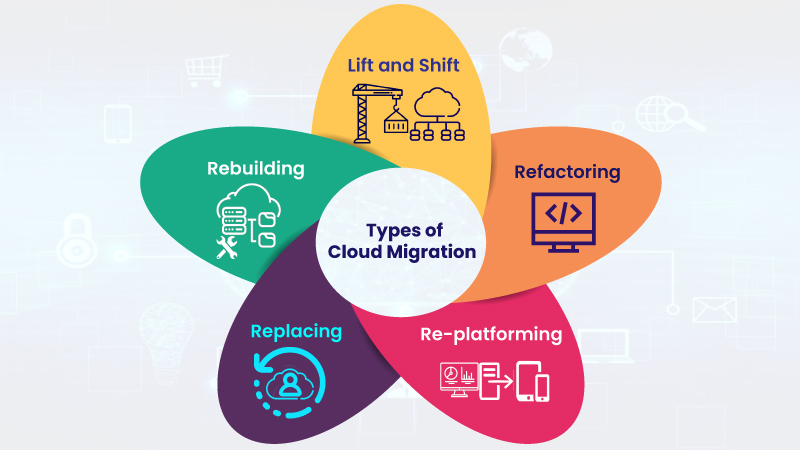
The easy approach to transitioning applications to the cloud is the simple “lift and shift” method, in which existing applications are simply migrated, as is, to a cloud-based infrastructure. And in some cases, this is a practical first step in a cloud journey. But in many cases, the smarter approach is to re-write and re-envision applications in order to take full advantage of the benefits of the cloud.

By rebuilding applications specifically for the cloud, companies can achieve dramatic results in terms of cost efficiency, improved performance and better availability. On top of that, re-envisioning applications enables companies to take advantage of the best technologies inherent in the cloud, like serverless architectures, and allows the company to tie application data into business intelligence systems powered by machine learning and AI.

Of course, not all applications can move to the cloud for a variety of regulatory, security and business process reasons. And not all applications that can be moved should be re-written because the process does require a cost and time commitment. The decision on which specific applications to re-platform and which to re-envision is a complex risk/benefit calculation that must be made on an application-by-application basis, but there are some general guidelines that companies should follow in their decision-making process.

What you need to consider

Lift and Shift Cloud Migration Strategy

Before making any moves, companies need to conduct a basic inventory of their application portfolio.  This includes identifying regulatory and compliance issues, as well as downstream dependencies to map out and understand how applications tie into each other in a business process or workflow. Another important task is to assess the application code and the platform the application runs on to determine how extensive a re-write is required, and the readiness and ability of the DevOps team to accomplish the task.

The next step is to prioritize applications by their importance to the business. In order to get the most bang for the buck, companies should focus on applications that have biggest business impact. For most companies, the priority has shifted from internal systems to customer-facing applications that might have special requirements, such as the ability to scale rapidly and accommodate seasonal demands, or the need to be ‘always available’. Many companies are finding their revenue generating applications were not built to handle these demands, so those should rise to the top of the list.

Re-platform vs. re-envision

Application Migration Strategies: Rehost vs Replatform vs Refactor

There are some scenarios where lift and shift makes sense:

  • Traditional data center. For many traditional, back-end data center applications, a simple lift and shift can produce distinct advantages in terms of cost savings and improved performance.
  • Newly minted SaaS solution. There are many customer bases that have newer SaaS offerings available to them, but perhaps the functionality or integrated solutions that are a core part of their operations are in the early stages of a development cycle. Moving the currently installed solution to the cloud via a lift and shift is an appropriate modernization step – and can easily be transitioned to the SaaS solution when the organization is ready.

However, there are two more scenarios where lift and shift strategies work against digital transformation progress.

Top 10 Must-Use Apps in Microsoft Teams | AvePoint Blog

  • Established SaaS solution. There is no justification, either in terms of cost or functionality, to remain on a legacy version of an application when there is a well-established SaaS solution.
  • Custom written and highly customized applications. This scenario calls for a total re-write to the cloud in order to take advantage of cloud-native capabilities.

By re-writing applications as cloud-native, companies can slash costs, embed security into those application, and integrate multiple applications. Meanwhile, Windows Server 2008 and SQL Server 2008 end of life is fast approaching. Companies still utilizing these legacy systems will need to move applications off expiring platforms, providing the perfect impetus for modernizing now. There might be some discomfort associated with going the re-platform route, but the benefits are certainly worth the effort.

How Can Migrating to the Cloud Help Customers?

Debunking the multi-cloud myths - Information Age

There are many benefits of migrating to the cloud: financial savings, increased agility, tighter security and uninterrupted service, just to name a few. But one often overlooked benefit is the improvements it brings to the customer experience and the positive effects this has on user trust and satisfaction, brand engagement and a company’s online reputation.

Improving the user experience is increasingly important for an enterprise’s success. According to Bloomfire, over 80% of businesses see the user experience as something which helps differentiate between competitors and, by the end of the decade, it is projected to overtake price and product choices as the main reason why consumers choose one brand over another.

Online, where consumers expect immediate, unlimited and uninterrupted access to information, products or services, businesses that still use non-cloud systems may miss out on the opportunities that the cloud has to offer. Migrating to the cloud provides the tools and services businesses need to participate in today’s competitive, on-demand marketplace, enabling them to enhance the customer experience and reap the rewards of doing so. Here are the ways migrating to the cloud can improve your customers’ experience.

Give customers 24/7 access to your products and services

Still Not Providing with 24/7 Customer Service? Here Are 9 Reasons Why You Should Start Right Away! | CommBox

The days where customers were prepared to wait for usual business hours to get in touch with a company are over. Today, they expect online operations to be available 24/7, whether that is to buy products, contact customer support or access online services. They also expect that these things can be done from anywhere, using any type of connected device.

By migrating to the cloud, it means that businesses have a much greater flexibility to put these things in place. For example, as employees can connect with work-based applications anywhere they have a connection, it means they can deal with customer service enquiries even when they are out of the office, helping expand operations and keeping costs to a minimum. Indeed, by using AI chat boxes, many of the inquiries a company has out of hours can be automated with only a minimal need for any human interaction.

This 24/7 availability can be provided for many services, such as product sales, ticket ordering, delivery tracking and much more.

Provide a one-stop shop

Qt 6.0 to provide one-stop-shop for software design and development

Ever had the experience of waiting for ages in a phone queue and then, when you finally get through, to be told you need to call a different number? There is nothing more frustrating for a customer than finding out they cannot access all a company’s services from a single point of entry, whether this is on the telephone or online.

Thankfully, the tools and systems available to companies which migrate to the cloud enable them to provide the integrated services that their customers demand, without them needing to leave the website.

The applications available in the cloud provide customers with easy to use interfaces from which they can manage all their services from a single place, whether on a website or smartphone app. Just think of all the things that online banking customers can now carry out on a bank’s website or apps. And if they have a problem, they can have access to support using the same interface no matter where they are, what time of day or what device they are using.

Offer personalised experiences

The Importance of Digital Personalization in B2B Marketing

Despite all the concerns around data privacy, most customers prefer it when companies provide them with personalised shopping experiences. It’s great for consumers seeing products and services that are tailored to their needs and desires and putting these things directly in front of customers certainly helps improve sales. It’s a win-win situation for both consumer and company and something we are seeing a lot more of when we visit websites.

The reason companies can provide personalised shopping experiences is because of the vast amount of data that is made available. Websites can track browsing and shopping history; they provide wish lists to see what people like; if customers don’t inform them directly, their algorithms can quickly ascertain a consumer’s age, gender, family background, geographic location and similar data; and all these things can be compared with the data of those in a similar demographic. The result is that users of these websites see an increasingly accurate guess at the things they are looking to buy and this increases their chance of buying them – especially when the company uses this data to incentivise a purchase through offers and discounts.

To provide personalised shopping experiences, however, all that data needs to be collected, processed and analysed. And there is a lot of data to collect. Cloud computing offers the best way to do this, providing unlimited storage and processing capacity, charged for on a pay as you use basis while allowing the use of widely available big data and AI applications to undertake the data crunching.

Improve the trustworthiness of your brand

6 Ways to Establish a Trustworthy Brand | ZoomInfo Blog

The cloud provides several ways to improve the reputation of your brand. With high availability cloud hosting, the bad press associated with application downtime can be a thing of the past; the security features available from service providers means that there is a reduced risk of IT systems becoming victims of cyber attacks, infections or ransomware; and the choice of cloud-based tools on offer provides a range of ways to ensure that customers’ needs are dealt with quickly. Together, these things ensure that customers see your online provision as something that is both reliable and trustworthy.

Conclusion

Migrating to the cloud can greatly improve the user experience, helping to attract new customers and retain existing ones. With many tools available, the cloud can help businesses give their customers the online experiences they demand, providing 24/7 access to integrated services and personalised shopping from a reliable and trustworthy business. With these in place, businesses will have a clear advantage over their competitors.

Get Your SaaS Business on Mobile App: A Guide

SaaS-implified. “Software is eating the world, in all… | by Pratyush Choudhury | Medium

There are a number of benefits that come entailed with the integration of SaaS mobile app development within an enterprise solution, benefits ranging from low cost, easy maintenance, zero space invasion, and the freedom from worrying about system upgrades, amongst others.

While these are the customer/enterprise side benefits, for the SaaS vendors, the benefits are equally attractive – Easy expansion to the foreign market, Service delivery automation, and zero chances of piracy, among a number of others.

All these reasons along with a lot many others have created a huge demand for the SaaS offerings for easing the processes of millions of SMBs around the world.

The demand that comes with a huge revenue generation capability, has grown manifold with the advent of mobile apps.

In this article, we will be giving you insights on how you can start a mobile SaaS business and be an amazing value offerer.

But before we do, it’s time to get back to the basics –

What is SaaS?

SaaS Advantages and Disadvantages - Cloud Solutions

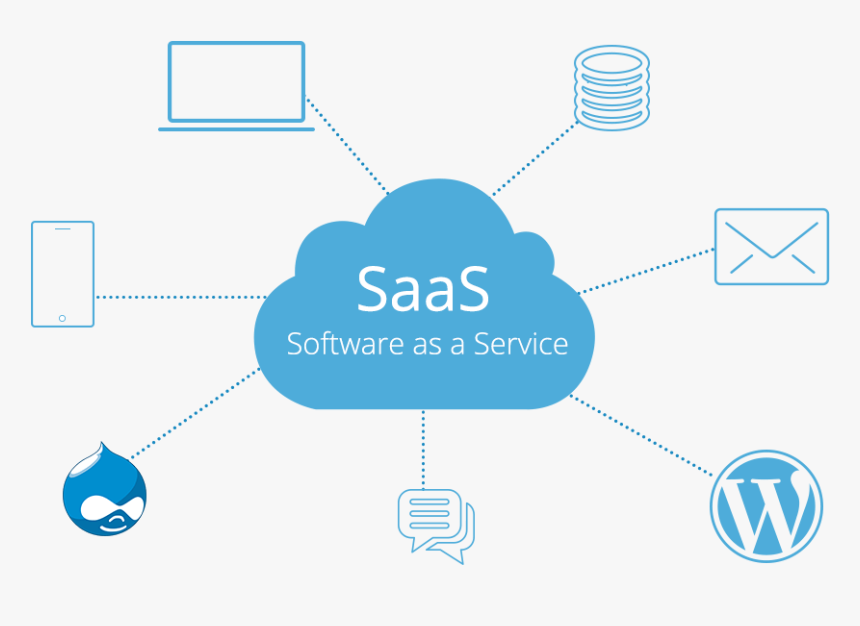
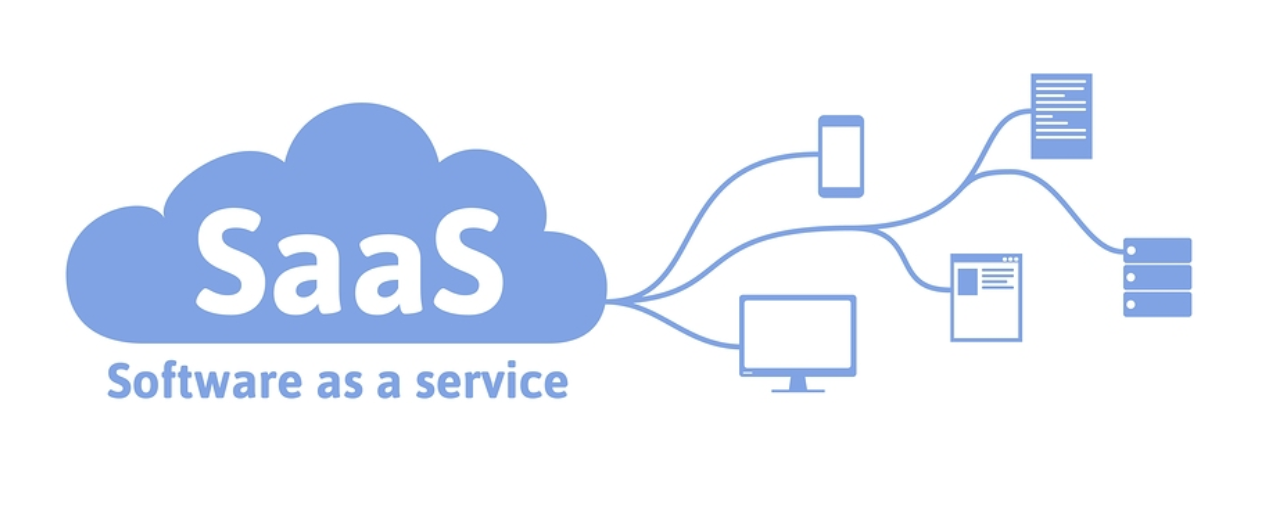
Commonly referred to as on-demand software, SaaS can be defined as the software distribution model where a service provider hosts the software for their customers and make it available to them through the internet.

Because of the ease of access that SaaS offers, it has become a popular delivery model for a number of different business applications along with being incorporated in the delivery strategy of the enterprise software vendors – a popularity that has increased the offerings market share to a great extent.

There are a number of different SaaS application ideas which are being offered as part of business applications, such as – sending and receiving email, team collaboration, billing/payroll processing, customer relationship management (CRM), sales management, financial management, human resources management, enterprise resourcing planning (ERP), database management, document management, and content management.

Here are some of the most common uses of SaaS among the many SMBs around the globe –

The use cases of SaaS that we just saw are now slowly making a transition on mobile.

Mobile SaaS applications are what is soon replacing the traditional SaaS model. Businesses – both that are already an established name in the industry and those that are planning to enter the flourishing market, alike are investing heavily in the development or expansion of their SaaS offering on mobile.

This article is for both – Entrepreneurs who are just starting with Mobile SaaS and Businesses who are planning to expand their SaaS offering on mobile.

But before we move on to the guide, let us first look at the Mobile SaaS applications market – the growth tangent it is on and the reason behind that.

The Rise of Mobile SaaS Applications

There are a number of SaaS businesses that are moving on mobile with the hope of increasing their active users and user engagement count along with the benefit of making their business a common name in the corporate world.

Here are some statistics that prove how big the market for Mobile SaaS companies already is and going to be in a few years time:

Benefits of extending SaaS to Mobile Apps | 9SPL

Mobile SaaS is taking over a number of brands belonging to the small and medium enterprise level, across industries. Factors like increased user base and easier deployment have been driving the businesses who are in the SaaS domain or are willing to enter the space, expand their business plan to mobile apps.

Let us, deep dive, into the benefits that investing in SaaS application development services provides to businesses, instead of looking at it from a superficial level.

Reasons Why Your SaaS Business Need a Mobile App

There are a number of reasons why you should invest in a sound SaaS application development company, here are a few of them –

1.To Make it Accessible

10 Ways to Make Your Website Accessible - DreamHost

Greater accessibility lies at the core of the mobile app concept. The moment you expand your business website to mobile in form of an app which does not function as an extension of your website but as its complementary addition, you open your business’s avenues to a greater audience who are practically against the idea of switching on their laptop to work the moment they get home.

By presenting your SaaS offering on the mediums that the world is comfortable being available on, you help businesses who then partner with you to be available at all times.

2. To Increase the Active User Count

How Many People Use Social Media in 2021? (65+ Statistics)

When you look at the percent of users who are active on your software in typical office hours versus those who are active beyond the fixed office hours, you will see a declining value. Now whether you are a new entrant or a SaaS brand that has been in the market for a long time, a dwindling active user count is never good.

But when you bring your software on mobile, you give the thousands of businesses and their million employees an option to be available on a 24*7 mode – the need of every present-day business – on a device that stays active every waking hour of their day.

3. To Save on the Business Boosting Costs

30 Simple Ways to Increase Your Profits | Inc.com

It is no surprise that mobile apps reduce the cost of marketing, advertising, and keeping a staff just to keep users updated with the service. When you move your business to mobile, you are able to send out notifications and messages in a more real-time as opposed to being active on a website or desktop application, where multiple actions are happening at any given time, making the notification and message ignorance rate high. But the same when sent on mobile increases the engagement rate to a much greater rate. The heightened probability of user engagement that apps get you increases the probability of becoming more profitable.

4.To Have a Competitor Advantage

There are a number of SaaS agencies that have still not expanded to mobile, so the mobile landscape is still very open for the SaaS brands in terms of competition and it is presenting itself as a golden opportunity for businesses that are just starting their Software as a Service business. By becoming available to the users on the device they are most active on, before the other brands, your SaaS business development graph would automatically gain a high user base and an automatic competitor advantage.

Now that it has been established that your SaaS business needs a mobile app, let us now look at the platform you should focus on. If you have an idea of the mobile app ecosystem, you would know that there are three types of app choices that SaaS mobile app developers give you, which your businesses can choose from – Native, Hybrid, and Web.

Native vs Hybrid vs Web: Which Mobile App Should Mobile SaaS Companies choose

Native App Vs Web App Vs Hybrid App

While there is no one answer of whether to choose Native, Hybrid, or Web for your mobile app expansion, as they all come with their share of pros and cons, there are factors that can help you decide which option to go for.

Before we get into them, it is apt to look at what differentiates the three mobile app types.

Native Apps: Native applications is deemed to be the best of the lot. The app type is known for its superior quality and better performance, along with giving businesses a direct link to the users’ devices. The idea of Native App is that the mobile application should be downloadable through the Play Store and App Store and give a direct access to the users’ device functionalities like Camera, Microphone, Contact etc.

Hybrid Apps: A mix of both Native and Web app, Hybrid apps appear as Native app but are actually web app that consists of Native UI elements which allow them to interact with the device’s functionalities, something that is missing in the case of Web applications.

Web Apps: It is a mobile application that users can access through the web when they go online. Since it is not a standalone application, it is not available on the stores to download and becomes dependent on the internet connection to function.

With the high-level meaning of all the three mobile app types now attended to, let us look into the factors that differentiate them.

Now that you have seen the contextual difference between the three types of mobile apps, it is time to look into which app type would be best suited for your SaaS mobile app. The answer lies in the functionality you are offering through your mobile app.

If the functionality calls for an online, real-time update with a lot less reliability on the device’s functionalities, go with Web or Hybrid apps. And if the app gives a focus on the superior experience or includes media sharing, go with Native app type.

Now that we have looked into the app type that would be best suited for Mobile SaaS companies, it is time to help you get an answer to a factor that would contribute to the future of your SaaS business – The Pricing Strategy.

What Pricing Strategy Should You Fix For Your Mobile SaaS App

Pricing is a very tricky nut to crack when you are starting your SaaS business. You don’t want to keep it very low to appear as a low-functionality, easy to be slid application and the same time you don’t want to keep it very high so that it becomes out of reach of the thousands of SMBs around the world.

Like the app type choice, there is no fixed answer to this, but what helps is knowing the different pricing strategies that you do have.

Let us look at some of the Mobile SaaS Pricing Strategies that are being followed by most of the SaaS brands.

A.Per User Pricing

How Much Does CRM Software Cost?

One of the most SaaS pricing models, Per User Pricing is where you ask businesses to pay according to the number of users.

B.Per Storage Pricing

The definitive guide to cloud storage pricing

Offered by brands like Google and Dropbox, you pay a certain amount for utilizing X amount of storage and the moment space is utilized, you ask businesses to pay to use more space.

C. Feature-Based Pricing

SaaS Usage-based Pricing Model Overview | GetCheddar

In this case, you charge businesses on the basis of features that you are offering and they require. Here you set an advanced level of every feature and ask businesses to pay more depending on their growing requirement.

D. Freemium

Amazon.com: Flat 23% off at checkout||JioSaavn E-Gift Card - 1 Year subscription: Gift Cards

Under this mobile SaaS pricing model, you offer the best features of your software to the businesses for free and then ask them to upgrade if they wish to avail the add-on services.

So here was your list of pricing strategy that you can find the majority of your Mobile SaaS apps following and now it depends entirely on your business model that which pricing strategy you think would best align with.

Now that we have looked at the things or factors that should be considered when building a mobile SaaS app, it is time to look into the factors that should be avoided at all costs. Because ultimately, the number of desktop SaaS users are a lot more than mobile users. And the reason behind this difference is the mistakes that SaaS businesses make when going mobile.

Here’s what those mistakes are:

Mistakes To Avoid When Starting a Mobile SaaS Business

While it is understandable that the complex functions a user can achieve through desktop or laptop are difficult to achieve through a mobile screen, it is nevertheless important to understand the actions your SaaS users would perform outside the office and ensure that your mobile SaaS is prepared for them.

When you make a Mobile SaaS with this aim, your app automatically comes one step closer to becoming a hit. Here are the mistakes that you should avoid in order to ensure that your business is offering the best solution to mobile users.

1. Thinking Responsive Websites are Enough for going “Mobile”

Responsive web design: key tips and approaches

There are many SaaS-based companies who believe that offering responsive websites to the users solve the purpose of going Mobile and is enough to support the demand of the on the go businesses. But is it enough? No. When you develop a mobile app, you give users a mobile-centric experience that has been designed around their device and operating system. It offers them accessibility and speed that is impossible to be achieved through responsive websites.

2. Making a Mobile SaaS app just for the sake of it

As an app developer, what do I need to do to be a GDPR compliant? - Quora

There are a number of businesses who have a strong desktop user base and taking their mobile counterpart not so seriously, they don’t invest in the proper development of the mobile SaaS app. What they fail to understand that with a failed, unplanned mobile app they are putting their desktop SaaS product image at risk as well. The need of the hour for SaaS businesses starting with or expanding in the mobile ecosystem is to not deliver a low performing, buggy app but getting it developed from experience SaaS application development company, that understands the difference between the web and mobile experience and have a clear understanding of which events should a mobile app attend and which should be restricted to the desktop version.

3. Personalize the Experience According to Mobility based Use Case

Talent Mobility Software | Talent Experience Platform | PeopleFluent

There are a number of functions that a user can perform on a desktop SaaS but the mobility needs would be very restricted and ones requiring a quick in and out time. So you will have to identify the tasks first and then plan a mobile app around it instead of putting all the desktop features inside the limited space mobile app. With this, we have looked at the factors to be considered when starting a mobile SaaS business and the ones that should be avoided. Next, we will look at the challenges that you will have to overcome in order to become a valuable Mobile SaaS business entity of the industry.

Challenges Associated with Mobile SaaS

There are a number of challenges related to Mobile SaaS integration that are keeping businesses away from exploring them to the core. While some are at a more organizational level like making the employees use a mobile app in addition to the core desktop version, there are some at the functional level as well.

1. Data Related

RMS Data Related Challenges – Tower Operations | | Infozech

SaaS Integration, whether on desktop or mobile has to deal with a great amount of data coming in from millions of users. In a scenario like this, it is important that you have proper data control, management, and security infrastructure in place. While developing a SaaS Mobile app we ensure that the ecosystem we are using and the cloud integration we are applying is hackproof. We also maintain a strong backup in case the data is taking time to be fetched so that there is zero time lag for hackers to enter the system.

2. Testing Related

Google Is Testing GMB Posts 'Related to Your Search' - BrightLocal

One of the biggest challenge associated with Mobile SaaS apps is testing the apps. Here are some of the testing specific challenges that you may encounter –

  • Quick validation round for constant updates
  • Inability to authenticate the interface specific component in the backend
  • Difficulty in verifying security because of multiple data format
  • Mobile app not following any standards
  • Complexities at time of data transfer confirmation between a business and SaaS mobile app

Here’s how we solve these challenges at Anteelo

  • We use automation tools for testing our SaaS application to avoid the issues associated with constant updates.
  • We segregate problem areas by categorizing them according to severity.
  • We apply hack-proof encryption algos for unbreakable security.
  • We develop standardized test cases and then validate them on basis of priority.
  • We thoroughly check the transfer of the data between the network, companies, and SaaS apps.

With this, we have now come to a point in the article where you are contextually prepared to start your SaaS business on mobile. The last thing that is left for you to know is the SaaS app development cost.

How Much Would It Cost You To Develop a SaaS System

If you break down the Mobile SaaS applications cost, you will get Five elements:

  1. Coding and Development
  2. Integration of Other Systems in the App
  3. Building Tests
  4. Alpha and Beta Testing
  5. Marketing and Release

Noting the work that would go into the development of your SaaS system, the cost that you should be ready to pay would be somewhere in the range of $50k to $250k.

With this, you have read it all – The Mobile SaaS Market, the Benefit of taking the Mobile route, the Factors to consider and avoid, and the Cost of Mobile SaaS development. The only step left for you to take now is to get in touch with our mobile app development team and start your Mobile SaaS journey and make yours a SaaS based mobile app example.

On your journey to the cloud, choosing the proper implementation partner.

How to Choose the Right Partner for Your ERP Implementation?

When you are planning a move to the cloud, choosing the right partner is critical. Even though it can be difficult to know exactly what to look for, there are things you can do in your search for an implementation partner that can help you make informed decisions and mitigate risks along the way.

Learn to spot a re-badged reseller

Become A Reseller - Business Partner Icon Clipart (#1670043) - PinClipart

With the systemic shift to move IT infrastructure and applications to the cloud, there has been a dramatic increase in the demand for IT consulting services. This cloud economy has precipitated a situation where many vendors and resellers are re-inventing themselves as service providers rather than simply as technology sellers.

Organizations are setting themselves up as cloud service providers despite lacking the necessary qualifications to do so. These re-badged resellers will have a number of flaws including limited experience within the team, limited knowledge about specific industries and solutions and a lack of service-oriented culture. These flaws can put the companies that choose to work with these new services organizations at risk.

They have neither the knowledge nor the experience to deliver specialized, high-value services to customers. They may hire some experienced staff but, without a strong strategic direction set by management and reinforced by an entrenched services culture, they are unlikely to be able to deliver the business transformation organizations seek.

Meet with the people who are actually doing the work

5 scientifically proven ways to be happier at work - Happier

Organizations should beware of partners that introduce high-level consultants to the customer but get junior staff or offshore teams to execute the work. It is important to meet and speak with the team that is actually doing the work. The clarity and effectiveness of communications can suffer enormously when the team doing the work is not the same as the team speaking to the customer.

Come up with a list of demands

As an organization looking to move to the cloud – you may have a lot of questions and having a partner with the focus and experience deep enough to provide a high level of service is critical.

It is important to come up with a list of demands in your search for an implementation partner:

  • A mix of specific technology knowledge and business knowledge so the team can clearly understand the organization’s business imperatives and deliver cloud solutions accordingly
  • A strong physical presence and footprint in the industry with positive customer references, preferably from long-term customers in the same industry as your organization
  • A stable, well-qualified team with significant tenure at the organization, proving that the organization is a genuine player in the marketplace rather than a rebadged product reseller
  • Proven project control and governance methodologies that can be clearly explained
  • The ability to bring senior vendor representatives into any discussion to drive results

Ask questions

A Quick Guide To Asking Better Questions | by Marc Vollebregt | Medium

Organizations should ask the following questions to determine whether a potential partner is capable of delivering a successful cloud service:

  • What is your customer retention rate and how do you measure it?
  • Where will our data reside and what access controls are in place?
  • Is there a dedicated project manager for this implementation and what are his/her qualifications?
  • How will you ensure we have control of the system?
  • How will your team work with ours to ensure project success?

Once these questions are satisfactorily answered, the organization can move to the next stage of assessing whether the partner is suitable.

When it comes to defining a path to cloud, organizations should focus on providing increased business efficiencies, increasing user satisfaction and meeting business expectations, as well as addressing the risks identified. With the right partner in place, organizations can achieve enormous benefits and mitigate those risks.

error: Content is protected !!