Steps to Improving Data Security

11 Smart Ways to Make Your Data More Secure | Mental Floss

As Clive Humby famously said, ‘Data is the new oil.’ It’s a commodity so valuable that cybercriminals go to great lengths to get their hands on it. And when they do, they use it for extortion and to sell to other criminals on the dark web. If that isn’t worrying enough, the means by which they try to acquire it can also cause havoc. They will infect entire systems with malware, take systems completely offline with ransomware and use sophisticated techniques to steal login credentials or brute force their way in. Today, it’s every firm’s business to keep their data secure. Here are some of the ways to strengthen yours.

The impact of a data breach 

Data breaches can put companies out of business. 60% of those that suffer a cyberattack go under within six months. For the rest, there are significant repercussions. According to IBM’s 2020 Cost of a Data Breach Report, incidents involving data security, such as malware, phishing and device theft, cost UK companies almost £3 billion to recover from. It’s a prolonged process, too. The average company took around nine months to discover and recover from an attack. On top of all this, of course, are lost income, reputational damage and the potential of large fines from the ICO.

1. Use tech and training to prevent phishing
What is phishing? Everything you need to know to protect yourself from scam emails and more | ZDNet

Phishing attacks, usually sent via email, are one of the main ways that cybercriminals will try to steal login credentials or infect a system with malware. Making sure that you have a robust spam filtering tool, such as SpamExperts or Mimecast, will help filter out the vast majority of phishing and malware containing emails.

Of those that manage to get through, statistics show that around a third are opened and clicked on by recipients. This is often because cybercriminals go to great lengths to make these emails look genuine. The key to reducing such incidents lies in training staff to spot the tell-tale signs of phishing emails: poor English, lack of addressee name, email address not matching up with the name of the sender, dodgy-looking logos, etc. Employees also need to know how to deal with these emails: not to open them or any attachments or click on any links, how to report them and safely delete them.

2. Two-factor authentication

Is two-factor authentication (2FA) as secure as it seems? - Malwarebytes Labs | Malwarebytes Labs

Two-factor authentication (2FA) adds another layer of security to the login process, usually asking employees to input a six or seven-digit security code sent to their phone. The advantage of implementing 2FA is that even if a cybercriminal gets hold of the username and password, they won’t have access to the additional code unless they also have the employee’s mobile phone. What’s more, as security codes are only valid for a few minutes, it doesn’t give criminals the time needed to crack them.

3. Virtual Private Networks
What Is a VPN? - Virtual Private Network - Cisco

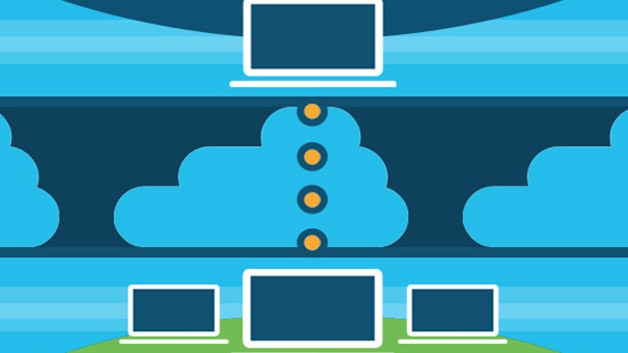
A virtual private network (VPN) provides employees with a secure environment in which to work. It does this by securing the connection to the network and encrypting data sent over it. It is particularly vital for those working over wi-fi networks, especially the significant number of employees now working remotely.

4. Automated software updates

Simplify software updates with automated patching - 5 IT automation examples that ops teams should implement today

Vulnerabilities in outdated applications are one of the biggest threats to data security and are actively targeted by cybercriminals. Updating applications as soon as a patch is released is essential to minimising the risk of a data breach. Unfortunately, too many businesses have paid the price of being slow to update their software.

There are several ways to automate updates. With a managed hosting solution, for example, your provider will automate the patching of your operating system, while you can use tools like Patchman to carry out patching on CMS websites like WordPress. Auto-updates can also be implemented using cPanel and Plesk and from within the admin panel of some website platforms.

Another way to keep applications up to date is to use Software-as-a-Service (SaaS) solutions, such as Microsoft 365, instead of having standalone software installed on the network. Here, the provider will update the software automatically for you whenever they release a new version.

5. Encryption

What is PGP Encryption and How Does It Work? | Varonis

If your data is encrypted, no-one can access it even if it is stolen. Encryption makes it useless to any cybercriminals and ensures that your important information and customer data isn’t used illegally. You can encrypt data in multiple situations. For example, your host can encrypt data stored on your servers, SSL certificates encrypt data transferred between your customers’ browsers and your website and email SSL certificates will encrypt your emails and attachments while verifying the authenticity of your email address to the recipient.

6. Remote backups

Remote Backup - Computer Systems Plus, Inc.

If in attempting to steal your data a cybercriminal deletes, corrupts or encrypts it with ransomware, the effects can be devastating. However, it’s not just cybercrime that can result in data loss, so too can hardware failure, human error and various other problems. The solution to not losing your data permanently and getting your systems back up and running quickly is to have an effective backup solution in place.

While there are many ways to do this, one of the most effective is to use the services of your hosting provider. At Anteelo, our backups can be scheduled and automated to take place at the frequencies you need, are stored remotely from your server, encrypted for security and integrity checked so you know they will be uncorrupted if you need to use them.

7. Secure hosting

Most Secure Web Hosting Services in 2020 - SecurityLab

A good web hosting provider will help keep your server and the data stored on it secure by using advanced security tools. At Anteelo, for example, we use powerful next-gen firewalls with intrusion detection and prevention tools to stop hackers and malware from getting access to your server.

Conclusion

Data is increasingly sought-after by cybercriminals and their modes of operation are getting more sophisticated. Companies need to put cybersecurity at the top of their priorities to prevent attacks that could potentially put them out of business. Hopefully, the measures mentioned here will help you increase the security of your firm’s data.
Better using AIRO in security operations-For Analysts

Artificial Intelligence (AI) and Security: A Match Made in the SOC

The traditional security operations model is rapidly succumbing to the challenges and dynamics inherent in today’s cybersecurity market. Over the last few years, organizations have deployed a myriad of security technologies to combat specific threats, and as a result have inherited a collection of point product solutions with very little interoperability. This has made it difficult for operation teams to leverage these technologies as a common fabric for threat identification, correlation, detection and remediation activities.

This has also increased the amount of time it takes to detect and remediate a security breach. On average, it takes organizations nearly 6 months to detect a breach and another 2 months to remediate it. While organizations continue to operate in a reactive mode to security threats, the goal is to move to a model that is much more proactive and predictive in nature.

Compromising this goal is the lack of skilled security expertise needed to perform identification, detection and remediation activities. The talent shortage is most pronounced for Level 1 analysts in the security operations center (SOC), the “first responders” that must sift through volumes of data and determine which alerts require immediate action.

Types of Cyber Attacks: A Closer Look at Common Threats - Security Boulevard

Attackers are using sophisticated approaches to exploit vulnerabilities, and the volume and velocity of known and unknown attacks continue to rise. Organizations still demand “eyes on glass” to detect and respond to security threats, but the volume of attacks originating from multiple threat vectors, and the skills challenge they face has created a scale issue where level 1 SOC analysts are overwhelmed with the amount of data that must be analyzed. In some cases, SOC analysts are dealing with petabytes of data. In addition to the scale problem, the incoming data lacks context, which makes the task of prioritizing suspicious behavior for further investigation another challenge for SOC analysts.

The Business Benefits of AIRO

Working at Airo Security | Glassdoor

To effectively address these challenges, organizations must adopt a new approach for SOC operations that addresses the need to handle the volume of data and alerts more effectively. A move toward an intelligent SOC that utilizes AI, Automation, Incident Response and Orchestration (AIRO) to increase productivity and efficiency of SOC analysts and accelerate the time to detect and contain a security breach is directionally where the market is headed. AIRO consists of the following components:

  • Analytics: Driving contextual insight into threat dynamics
  • Intelligence: Collecting and indexing sources of information
  • Response: Initiating the proper response based on the nature of the security threat
  • Orchestration: Coordinating multiple toolsets to mitigate a threat and harden the network

Using AIRO tools, organizations can better leverage existing investments in security technologies by utilizing APIs to interconnect various platforms and correlate data from firewalls, IDS sensors, endpoint devices, and external threat intelligence feeds. AIRO tools complement an existing security information and event management (SIEM) tool by acting as middleware to integrate with existing  tools and provide greater visibility into indicators of compromise. This becomes increasingly important as corporate data moves from endpoint devices to on-premise infrastructure and multi-cloud environments.

AIRO tools ingest alerts from the SIEM and automate the responses to repetitive alerts, freeing up security analysts for the more challenging alerts that require human intervention. The tool should also provide valuable contextual information — such as asset information and threat enrichment data —  to effectively improve the security analyst’s decision-making ability by prioritizing threats that represent the most risk to the organization.

In today’s complex environment AIRO tools can make security analysts’ work more efficient, less burdensome and more accurate by leveraging automation, analytics and orchestration. By ensuring proper integration and interoperability with existing security technologies and centralizing visibility on a security platform, security operations teams can gain greater insight and move from a reactive security posture to a more predictive and preventative approach.

Big Data and Cyber security: Together, Stronger

More sophisticated, streamlined and ambitious cyber attacks (with the capability of inflicting destruction to a large extent) have compelled the security experts to look for ways to up their game as well. The propagation of cloud computing which has affected the efficiency of the firewalls (set up for protecting the systems) a bit, has resulted in the security teams of various organizations in opting for strategies that would analyze the behavior of the user and the network.

Enters Big Data

Why the interest in Big Data?

Big data is nothing but extremely large data sets that comprise of structured data like SQL database stores, semi-structured data like the kind present in sensors as well as unstructured data like document files; data that can be mined for information. The approach is already being used in multiple projects throughout the world like during elections (particularly in Obama’s 2012 re-election campaign and Indian General Election 2014). Since the security experts indulged in ensuring cyber security are shifting their focus to the analysis part of the data, services like risk management and managing the actionable intelligence provided by Big Data can be utilized here.

According to CSO, the collaboration between cybersecurity and big data would be best put to use with highly trusted and accurate data along with some functionality to automatically respond to the threats present in the data (being analyzed). Using Big data for ensuring Cyber security will allow organizations to identify hackers attack vectors up to an advanced level and in discovering miscellaneous anomalies.


Smishing Attack: A Growing Cyber Threat

Smishing and vishing: How these cyber attacks work and how to prevent them | CSO Online

What is Smishing Attack?

If you believed that phishing could be the only possible threat to cyber-security, then you need to hit the rock bottom! Cyber-attacks are expanding like spider webs over the internet to create havoc in the security system of various sectors across the globe. Just as a phishing attack, a smishing attack is a type of cyber-attack which is infamously trending and carries advanced techniques to obtain victim’s data.

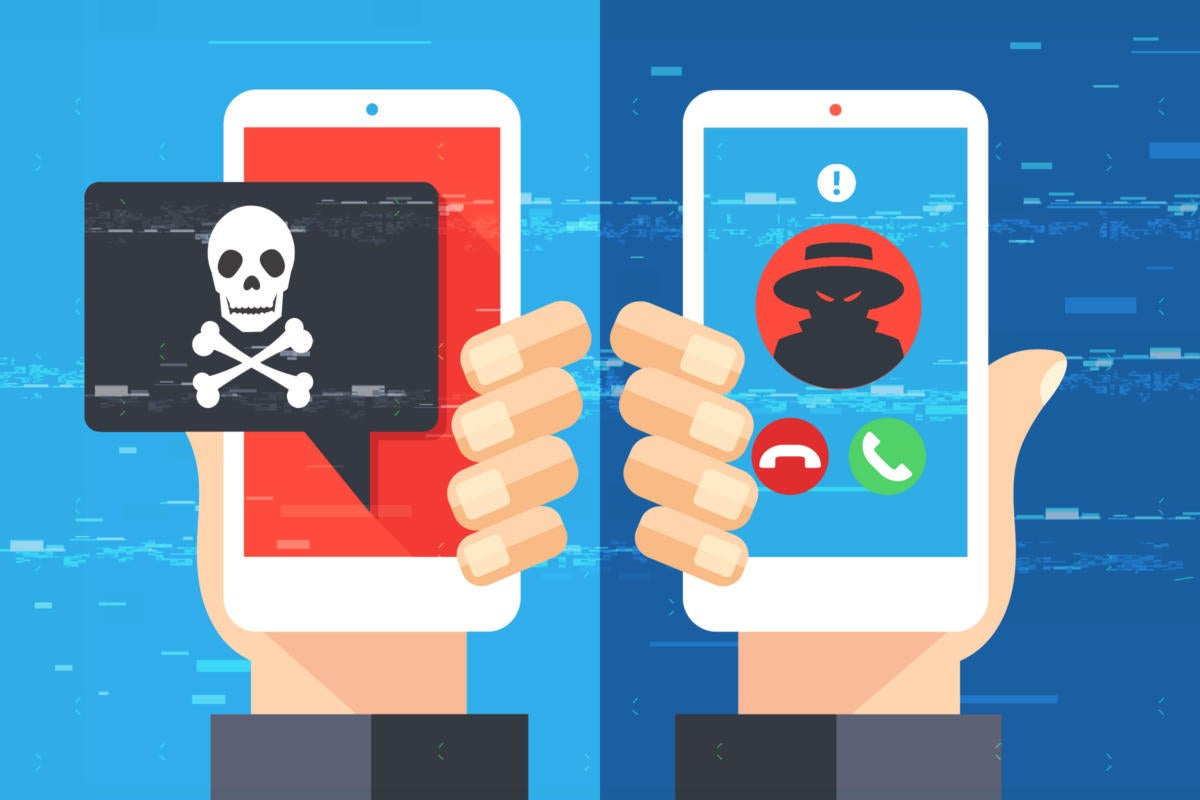
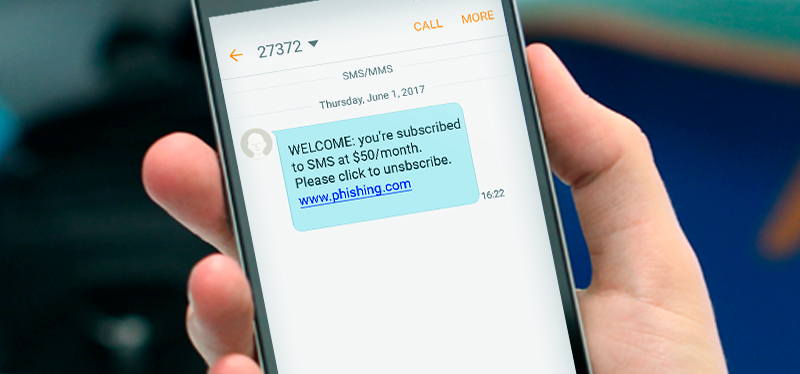
Smishing is a blended word, made with the combination of SMS and phishing. Just as cyber-criminals use emails to phish people into opening malware-laden attachments, smishing attacks are carried out using text messages.

What Is A Smishing Attack? (And How To Prevent It) | PurpleSec

SMS phishing or smishing is an unethical practice of sending fraudulent cellular texts to users to trick them into downloading the attached file or redirected link. These attached links take users to malware-laden websites on their mobile phones.

Smishing text messages contain absurd phone numbers or links to lure customers for immediate response. Smishing attack on your cellular device can be deployed in any form of attention-seeking text.

These nefarious text messages could claim to be your bank asking for your financial information. It could also ask in a tricky way for your ATM number or account details to get access to your bank balance.

Recent Smishing Attack Example: 

Just like phishing, smishing attack is deployed using cellular text messages with the motive to lure customers into giving away information. Smishing text messages often contain URLs or phone numbers.

The phone numbers usually have an automated voice system as a response. When it comes to SMS phishing, attackers use smart ways to trick victims into believing the text message they receive.

What is 'Smishing'?

For instance, if a smishing message comes from a number “5000” instead of any actual phone number, it means it is sent through email on the cell phone. This is done to indicate a legitimate message to trick people.

In an article by Cyware, a smishing campaign, “Lucky Draw Campaign” was targeted on Indian Nokia owners. In February 2019, Nokia owners received a text message claiming they have won a lucky draw.

The message was impersonated to have come from ‘Nokia.com online shopping Pvt Ltd.co’, claiming that the recipient has won Tata Safari or Rs.12, 60,000. However, it urged recipients to pay to 6,500 Indian rupees to claim their prize.

How to Prevent Smishing Attacks?

4 Clever Smishing Attacks to Watch for in 2021 | TechnologyAdvice

  • Never click on any links in text messages which come from unknown resources.
  • Restrain from responding to personal text messages that ask for your personal details.
  • If a text message looks like an alert or shows any urgency, verify the legitimacy of the source first before responding.
  • Look out for messages that are no sent via phone number. Scammers often mask their identity so that their location or identity could not be traced.
  • Messages that might be sent at odd hours or apart from business hours are usually smishing attacks.
  • Never give away your bank details or financial information easily to any text message asking for your credentials or verification.
  • Cyber Security researchers highly recommend organizations as well as individuals to use good security awareness tools as a preventive measure.

HTTPS is no longer secure: says FBI

FBI warns users to be wary of phishing sites abusing HTTPS – Naked Security

The investigation bureau FBI has issued an alert warning to internet users that “HTTPS” and a padlock icon in the address bar might not be enough to prove if a website is authentic or not. It has been observed that cyber-criminals are increasingly abusing the trust in TLS-secured websites for improving the success rate of phishing attacks.

“They [phishing attackers] are more frequently incorporating website certificates – third-party verification that a site is secure – when they send potential victims’ emails that imitate trustworthy companies or email contacts.”

In 2016, a report by the Ponemon institute revealed that nearly half of all the cyber-attacks used SSL encryption to evade detection within the period of last 12 months. Two-thirds of the organizations admitted that their organization was not prepared to detect malicious SSL traffic.

For many years, there has been a push toward adopting the HTTPS protocol on the web since it ensures a secured communication between the website and user’s browser.

Most of the browsers mark websites that use HTTPS with a padlock icon which indicates that the browser traffic is encrypted, and attackers cannot access the data in the transit. These websites also display warnings in case the user accesses a non-secured website.

Google Pushes Business Websites to Use HTTPS (SSL) - Prometheus PPC

With the advancement in the security measures, attackers have also started adopting HTTPS protocol to deploy sophisticated phishing attacks since the use of this secured protocol allows attackers to psychologically trick the victim into believing that the malicious emails or links that they received in their inboxes are coming from authentic sources.

They are designed with the motive to acquire sensitive login details or other information by redirecting victims to malicious websites that looks secure due to the padlock icon.  However, only connection to these websites is secure and the HTTPS protocol is unable to authenticate the content on the website.

What is the reason behind the increasing use of HTTPS?

Graph - Increasing Graph Clip Art - Png Download - Full Size Clipart (#931804) - PinClipart

To deploy a successful cyber-attack, cyber criminals leverage the latest technology. With the number of websites that use SSL encryption, cyber attackers have started encrypting the phishing websites, making it harder for IT administrators to identify the difference between bad and good traffic. Attackers are increasingly using SSL to encrypt the communication between the compromised endpoint and command-and-control systems to hide payloads, instructions as well as other information that is being sent.

As an increasing number of attacks are using HTTPS to avoid the scrutiny by the traditional methods of cyber security, organizations should take steps to ensure that they are protected against bad traffic.

What is the solution?

Where are the people with solutions? - Reputation Today

Lack of awareness among employees is one of the major reasons for the success of such attacks. In recent years, attackers have shifted their focus from individuals to employees. Statistically, 90% of the cyber-attacks are a result of employee negligence. During the year 2018, there has been a 76% increase in the number of phishing attacks. 54% of the companies had experienced cyber-attacks that compromised with their IT infrastructure and data. According to a survey conducted by McAfee on 19,000 people, 97% of the people were unable to identify such cyber attacks.

This is where the cyber security awareness and training tool comes in handy. The tool helps in creating awareness among employees to combat real-life cyber-attacks. With the power of reporting tool TAB, employees become capable to protect the entire organization against probable cyber-attacks.

Every day the number of reported cyber-crimes are increasing. It is, therefore, important for organizations to invest in cyber security awareness and training programs which should be continuous and must be followed with the regular assessment of the employees’ knowledge on cyber-attacks.

New victim in the town: Manipulated TeamViewer Attacks

TeamViewer: The Remote Desktop Software

Government agencies were in a state of shock when they realized that their systems have been compromised with the malicious TeamViewer software. The attacker who was responsible for this attack is a Russian speaking man. TeamViewer is one of the most popular tools for the remote access of desktop, desktop sharing, file transfer between systems, web conferencing etc. The motive behind the attack is probably financially driven. The software was manipulated by adding malicious TeamViewer DLL to the original software. This mala fide software can steal sensitive data and money from even government and financial networks.

A malicious email posing to be sent from the U.S. Department of State was delivered in the inbox of the government employees and had ‘Military Financing Program’ as its subject line. The email had a malicious XLSM attachment with embedded macro.

Employees were duped by the malicious email since the emails coming from the U.S. department of state are generally marked as top secret. Once the victim opened and enabled macro in the decoy document, two files were extracted from the hex encoded cells in the XLSM document. The first one was the genuine AutoHotkeyU32.exe program. The other one was the corrupted AutoHotkeyU32.ahk which is an AHK script used to communicate with C&C server and to download the additional script and execute it.


How did the attacker successfully deploy the attack?

Hollywood and Hacking: Into the 21st Century - Real life hackers, computer punks and Hugh Jackman dancing

There are three different kind of malicious AHK scripts including ‘hscreen.ahk’, ‘info.ahk’ and ‘htv.ahk’. These three scripts affect user’s system in different ways.

hscreen.ahk: This script takes the screenshot of the victim’s personal computer and upload it on the C&C server.

hinfo.ahk:  Victim’s username and computer information is sent to the C&C server.

htv.ahk: A malicious version of TeamViewer is downloaded, executed on victim’s system and login credentials are sent to the C&C server.

The attacker hid the genuine TeamViewer interface while the TeamViewer software with malicious ‘htv.ahk’ was being run. DLL in order to take over the control of the software. This allowed the attacker to replace the genuine TeamViewer with the manipulated version.

The attack targeted Public financial sector and government officials belonging to Kenya, Italy, Liberia, Bermuda, Guyana, Lebanon and Nepal.

Earlier in the month of January, a security researcher who goes by the name of FewAtoms found a URL containing a malicious self-extracting archive which is a spyware disguised as TeamViewer.

The researchers have found a link of an avatar connected to a Russian underground forum user known as EvaPiks.

What could have been done?

Famous Hackers and How They Got Caught | Alpine Security

  • Ensure that the AHK script is compiled with ahk2exe, which is the part of AHK distribution.
  • In order to prevent de-compilation, provide a good password.
  • Always check the extension of any attachments present within the email.
  • Organizations should implement a multi-layer defense and put mitigation protocols in place to detect intrusions and act against them.
  • Enhance settings for macro malware attached emails.
  • Ensuring the application of these methods so that the program runs normally. It will also ensure that attacker would have difficulties in modifying the program.
  • However, the most effective strategy is to empower employees against social engineering attacks and provide periodic knowledge imparting sessions.

Biggest cases of data breach in the first quarter 2019

Cybercrime cases rose between 2014 and 2017: Ravi Shankar Prasad | Business Standard News

2019 has been a good year; not for many; but definitely for cyber-criminals. While we might still be coping-up with the news of a data breach incident that would have occurred two days ago; we hear another case of an organization’s infrastructure being breached. Let’s hit the ground zero.

1. Google Chrome cast Hack

How to Fix the ERR_CONNECTION_REFUSED Error in Chrome (9 Tips)

It was almost a normal day of the winters of January, when thousands of people who had been using Google’s Chromecast streaming dongles, Google Home smart speakers as well smart TVs with built-in Chromecast technology; got their systems hacked. Hackers left a display pop-up to inform users that their systems are exposed to public internet. However, the odd thing about this hack was that attackers forced people to subscribe to the YouTube sensation ‘Pewdiepie’.

2. Germany’s Biggest Cyber attack

Twitter down, suffers worldwide outage - BNO News

Around the same time, Germany was hit by the biggest cyber-attack in its history. Hackers hacked into the twitter accounts of more than hundred German politicians and accessed their highly sensitive personal information including email addresses, phone numbers, private chats, photographs of victims’ ID, bills as well as the credit card information. Attackers leaked the data on a twitter account called ‘@_0rbit’. German federal police dived into an investigation and soon, a 20-year old local student was arrested.

3. Ethereum Classic lost $ 1.1 million to hackers

Ethereum Price Forecast: ETH prints bullish pattern, preparing for colossal upswing past $4,000

While German police was celebrating its victory, popular cryptocurrency exchange Coinbase Ethereum Classic, experienced one of the worst days in its history. People who were using its services were forced to pay twice the coins for any of its services. This resulted in the loss of around $ 1.1 million Ethereum Classic digital currency. This resulted in the immediate fall in the prices of the digital currency. Hours later, Ethereum Classic accepted that there were almost ‘51% successful attacks’ with multiple block reorganization. Attackers are still under the cover and Ethereum Classic is still investigating.

4. Australian Parliament Cyber-attack

10 Different Types of Cyber Attacks & How To Recognize Them | InfoSec Insights

In the beginning of February, Australian parliament faced one of the biggest cyber attacks with its server being hacked by what the Australian parliament referred to as ‘the work of a sophisticated state actor’.

5. Leaked Database of Chinese citizen found online

fyi... the linkedin password database is now on pastebin : sysadmin

In January 2019, cybersecurity experts discovered a huge unsecured database worth 854.8 GB; lying openly on the internet. The database  was stored on an instance of MongoDB and consisted records of approximately 202 million Chinese citizens who were apparently job candidates. Soon the database was taken off, however, MongoDB has displayed the list of dozen of IP addresses that have accessed this database.

6. Wiping out VFEmail.net 

VFEmail Review 2021 | How secure is VFEmail? - ProPrivacy.com

U.S. based email service ‘VFEmail.net’ informed its users that all their data as well as backup worth two decades of data was lost. It was discovered that the attacker’s IP address was 94[.]155[.]49[.]9 and the username was “aktv,”, apparently registered in Bulgaria.

7. Attackers were selling the information on dark web

Information products: how to create and sell info products online

In one of the shocking instances, it was revealed that attackers were selling information of approximately 747 million accounts on the dark web. These accounts were stolen from 24 very popular websites. Most of these websites had no idea that they were compromised with, however, a few have confirmed that they suffered from data breach.

8. Indane gas breach

India's state owned gas company Indane exposes millions of confidential Aadhaar numbers

LPG gas company, Indane, became the victim of yet another case of data breach, where Aadhar number of approximately 6.7 million customers were leaked.

9. Aadhar details leaked 

Aadhaar: 'Leak' in world's biggest database worries Indians - BBC News

MongoDB is once again the talk of the town. A database known as GNCTD worth 4.1 GB in size, has been found on MongoDB instance. The database consisted of approximately 458,388 individuals’ Aadhar and Voter ID numbers along with references as well as email addresses with “transerve.com” domain for users who were registered with “super admin” and “senior supervisor” designations.

10. 1 million ASUS systems affected by massive supply chain attack

WordPress Supply Chain Attacks: An Emerging Threat

Taiwan based world’s fifth largest PC maker, ASUS, revealed that approximately 1 million systems were affected by massive supply chain attack known as ShadowHammer.

11. Bithumb suffers the loss of $19 million

Top 5 Cryptocurrency Exchange Bithumb Suffers Major Data Breach | Digital Trends

On March 30th, the news of a humungous $19 million theft from the South Korean, Bithumb cryptocurrency exchange, fell into the ears of people. Hackers had compromised Bithumb’s hot EOS as well as XRP wallets and transferred approximately 3 million EOS (~ $13 million) and 20 million XRP (~ $6 million) to the newly-created accounts.

12. Georgia Institute of Technology suffers data breach

Georgia Institute of Technology: William Smith talks about his job as director of Georgia Tech's Office of Emergency Management and Communications – India Education | Latest Education News India | Global Educational

Georgia Institute of Technology was hit badly by cyber-criminals when a data breach led to the theft of the personal information of around 1.3 million current as well as formal faculty members, student as well as the applicants. According to the university, outside entities gained access to the web application of the university’s database.

What is the reason behind the success of these attacks?

The first quarter of the year has seen a number of data breaches that have targeted big organizations. Attackers are learning, adapting as well molding their modus operandi with the changing time. On the other hand, organization are still being old school.

Procrastination:

Procrastination Isn't a Time Management Problem, It's an Emotional Problem

2019 took a start with Google Chromecast devices being hacked. This happened because a group of attackers exploited a bug that was lying down for five years like a ticking time bomb. Evidently, Google was aware of this vulnerability but kept on ignoring the bug.

Being Ignorant to the details:

The pleasures of being ignorant

In most of the cases, organizations are unaware of the fact that they are undergoing a cyber-attack. ASUS is one such victim since the attack was ongoing during the second half of 2018 and the company had no clue.

Lack of proper cyber-security measures:

How the COVID-19 Pandemic is Impacting Cyber Security Worldwide - IEEE Innovation at Work

Many a times, the data travelling in the forms of packets is not well encrypted and thus data can be easily stolen away by attackers. Indane Gas was victimized because of a vulnerability that was present in its mobile application.

What should organizations do in order to safeguard themselves?

29,165 Safeguard Stock Vector Illustration and Royalty Free Safeguard Clipart

Organizations can employ preventive cyber-security measures in order to safeguard data security and ensure that the network as well as the infrastructure of the organization is free from vulnerabilities and loopholes. Cyber-security companies ensure the same with a number of managed security services such as vulnerability assessment and penetration testing, web application testing, network penetration testing, server security testing etc. Anteelo is one of the fastest growing cyber security start-ups in the country. With its team of expert pen testers, the company has provided managed services to a number of businesses to industries like Healthcare, banking, insurance etc. These services have enabled organizations to conduct businesses without worrying about various issues related to the cyber security of the organization.

Reasons Behind Successful Phishing Attacks

How to Protect Your Business from Phishing Attacks - Abacode

Phishing is one of the most infamous cyber attack vectors that is widely adopted by attackers for luring victims to reveal their sensitive and confidential information. Phishing attacks are generally carried out through the medium of emails.

Attackers forge fake emails with malicious links. Once the link is clicked and the victim submits its credential, the attacker gains unauthorized access by misusing those credentials. Hence, the victim gets phished.

History of the Emergence of Phishing Attacks

The history of phishing is quite old. It has been prevalent since the good old days of the 90s. America Online (AOL) was one of the top internet service providers during the mid-90s with millions of visitors every single day.

Attackers or ‘Phreaks’ (yes! That’s what attackers used to call themselves. Fancy, right?) started trading pirated software over AOL and formed a ‘warez’ community.

6 Form Error Message Mistakes Almost Everyone Makes

This community stole AOL users’ passwords, created random credit card numbers, and spammed users.

This process was automated with the help of windows software AOHell. Once discovered, AOHell was shut down by America Online.

There are many cases that have been reported and even more that have not been reported. On average, 1.2 million phishing attacks occur annually. According to security research, phishing attacks almost doubled to 482.5 million from 246.2 million in the year 2017. Statistics show that phishing accounts for 91% of all cyber attacks.

Why do Attackers Use Phishing Attacks?

Large User base

Topic 1: Online participation & digital literacies – New learning about education

One of the biggest reasons for the success of Phishing attacks is the widespread use of emails. At present, there are around 2.6 billion email users and this number is expected to cross 4.2 billion by the year 2022. Susceptibility rate of phishing attacks is quite high as attackers can easily find out email addresses, send phishing emails, and there, it’s done.

Humans are the weak link

Cybersecurity pros: Are humans really the weakest link? - TechRepublic

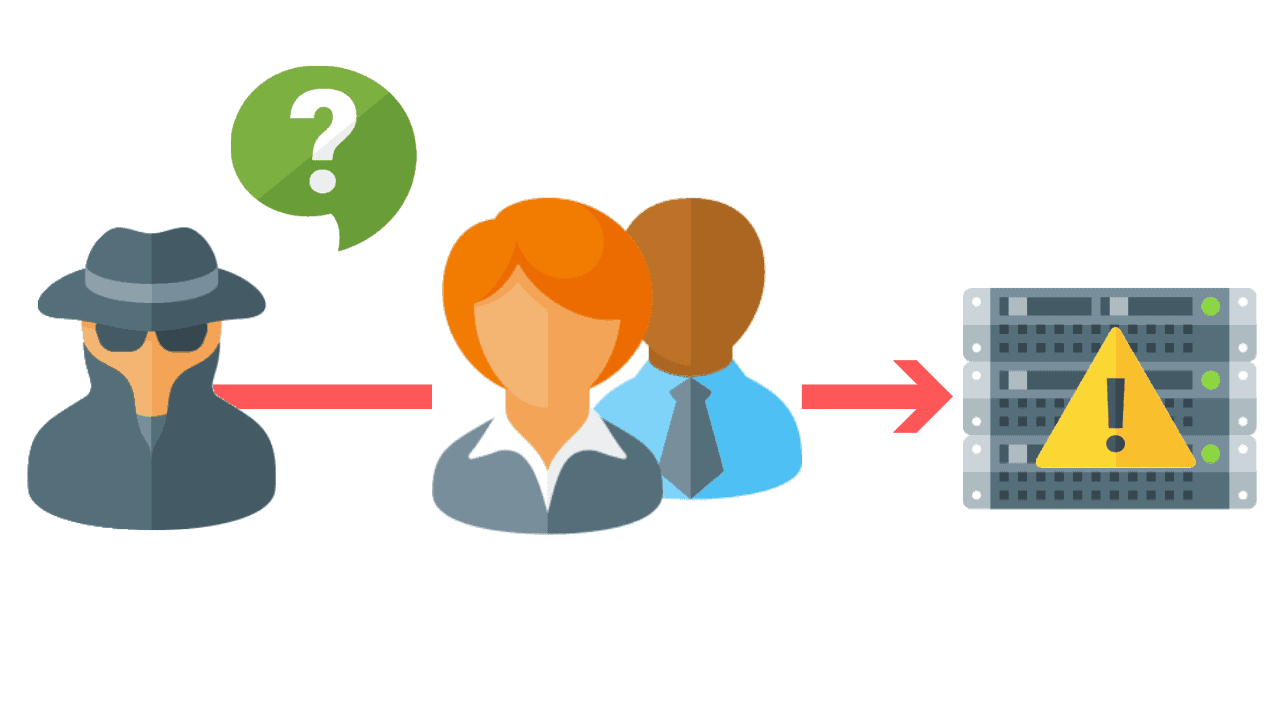
The other big contributor to the success of phishing attacks is the victim itself. These days, social media has become a huge part of people’s lives. People are putting out their entire lives online. Attackers can easily access the personal information of the victim through a social networking platform that helps in creating personalized phishing attacks (also known as Spear Phishing).

Lack of awareness 

Lack of awareness of Help to Buy ISA | Mortgage Introducer

Lack of security awareness among employees is also one of the major reasons for the success of phishing. Organizations should be aware of how the benefits of security awareness training can secure their employees from falling victim to phishing attacks.

In recent years, attackers have shifted their focus from individuals to employees within the organization. Statistically, 90% of the cyber attacks are the result of employee negligence. During the year 2018, a 76% increase in the number of phishing attacks was observed.

54% of the companies had experienced one or more attacks that compromised their IT infrastructure and data. According to the survey done on 19,000 people, approximately 97% of the people are unable to identify such attempts.

Leniency in the adaption of security measures

clip-art-waking-up-876950 | Clipart Panda - Free Clipart Images

The leniency in the adaptation of security measures is one of the biggest reasons for the success of phishing attacks. Studies have shown that organizations lag in spending money on the implementation of cybersecurity measures. During the year 2018, 51% of the organizations have made no change to the budget allocated to ensure cybersecurity.

These reasons play a huge role in the success of such attacks. Therefore, it is extremely important for organizations to implement cybersecurity practices and understand the benefits of following security measures properly. Cybersecurity companies like Anteelo , ensure that your network and infrastructure are secure from cyber attacks. Anteelo offers industry-leading cybersecurity solutions and tools such as cyber attack simulation and awareness tool, email authentication and anti-spoofing solution; anti-phishing, fraud monitoring & take-down solution; phishing incident response, VAPT and secure code review.


Impenetrable Security: Securing People, Process & Technology

What Is Internet Security? | Free Internet Security Suite For PC

Securing people, process & technology and having an Impenetrable security posture in an organization has been a major concern for businesses since years. Organizations have been investing massive amounts in next-gen security technologies such as antivirus, firewalls, full disk encryption and data loss prevention.  The investment in cybersecurity solutions has risen from $3.5 billion in 2004 to $75 billion in 2015, and forecasted to reach $170 billion by 2020! Though these solutions are considered as the epitome of security, they fail to secure one very important aspect of cybersecurity, which is the People. In the current era of technology, People, not technology, are becoming the key to securing organizations.


Why do we need to have an impenetrable security posture addressing the human element?

Cyber attackers are well aware that employees in an organization are considered to be the least resistant or in other words, the weakest link for any security breach. As a result, attackers are intruding technology using cyber-attacks like Phishing, Smishing, Ransomware attacks, removable media etc. The solution to mitigate it is quite simple, just as organizations are investing in creating a secure IT infrastructure, they’ll also need to start investing on a security-conscious workplace, also known as a human firewall, in order to obtain an impenetrable security posture.

Past Conferences and Webinars in Information Security | The Information Security Report


However, this can only be achieved if they are able to raise the awareness amongst the people to such an extent that they at least become a strong firewall against potential cyber threats. The best way to incorporate awareness is to gamifying the training part in order to create employee interest in the subject. As for many of them, the idea of cybersecurity ignites the same emotions that air travelers experience when witnessing the flight safety presentations during the start.

To create a secure culture and behavior amongst the people, organizations need to establish a long-term security awareness approach. An approach, where the employees should be tested for their behavior, and how they are reacting against the top potential online attacks. Where the workforce will be engaged in knowledge imparting and regular security assessments as building a strong line of defense is not a one-time security training, it needs to be a continuous process. This will at least make the employees think like security professionals, or at least be vigilant enough to think twice before reacting to cyber scams.

Also, we cannot completely blame the employees when it comes to data breaches, for example, if a user commits a mistake and clicks on an email that causes a breach, we often think that it happened because of the user’s negligence. But it is not actually the case, the organization was already under attack when the attacker sent the email before it was even clicked or opened! So having a powerful security infrastructure is equally important when it comes to incorporate People, Process, and Technology.


What are the possible consequences of not having a cybersecurity awareness training program for employees?

Organizations Are Embracing Cyber Security Awareness Training as the First Line of Defense Against Hackers - CPO Magazine

Given that 91% of the data breach attacks include phishing, if your workforce is not prepared to identify and ignore these attacks, the risk of a successful cyber attack, such as ransomware is greatly increased. Small businesses are affected the most as they can be extremely fragile, and the cost of a breach is always high in terms of money. Also, depending on what loss is incurred and how it impacts the customer base, a data breach can do significant damage to your brand reputation as well.

Companies need to harmonize security and convenience when talking about security awareness to their employees. The goal should be to lower the risk to an acceptable level. Awareness training is an emerging trend, and organizations should always look out for upcoming trends in employee compliance and new tools, in order to improve cybersecurity awareness.


Some people are still on the fence about investing in employee cybersecurity, what should be the driving factor for them?

Employees' Role in Cybersecurity | The Cyber Security Place

Here the answer will be simple, a big YES! It is considered an essential practice to incorporate impenetrable security involving employee security measures in organizations. The employees need to keep in mind that everyone has a role in keeping a company and its stakeholders protected. Companies might consider spam filters, firewall, IPS, SIEM, app whitelisting etc. to be effective against cyber scams, but the only way they can make these tools effective is by involving the users in cyber defense.

Every organization across the globe has data which is valuable to the attackers. Data such as customer records, email accounts, employee data etc. are all sought after and can make your organization a high-value target. Organizations should have a highly maintained security management approach which should include high-quality employee protection program, documented patching process, identity, access and password management and an incident response plan. Dedicated cybersecurity firms like Anteelo , solely work on People, Process, and Technology agenda, providing customized VA-PT (Vulnerability Assessment- Penetration Testing) services and employee risk assessment tool, that helps organizations in reducing the overall threat posture to up to 90%.


The human element: Weakest Link in Enterprise Security

The human factor: top tips to strengthen the weakest link in the information security chain - Information Age

Have you ever heard the term that employees are the weakest link in the security of the organization? If yes, then it is completely true. IT security is one of the tricky set of scales. No one is resistant to make an error, and making a mistake will take only one forgotten step or an incorrect click to bring down your complete system. As technologies are mounting up hackers are setting digital traps ubiquitously to profit from the employee’s one mistake, so the odds are frequently more in their goodwill than yours for productively.

If your firm is like most, and you are spending a lot of your budget on security: to protect your organization then you must be aware of the facts that spending on products is useful if the weakest link is attentive about the latest cyber security trends. The expert consultant’s help you understand where your weaknesses lie and sort out the expected mess when something goes incorrect. This approach can work, but it fails to prove that the weakest link in your security fence: are your employees.

The risk of cybercrime has created a noteworthy increase in concern on the matter of cybersecurity, with organizations spending dollars to shield themselves against this growing array of present and possible future threats. They frequently forget the menace exposure created by their own employees and customers.

Unfortunately, business heads don’t realize that the biggest threat is the human element in spite of the fact that barely a day goes by without news any data breach. It’s secure to say that we work in a risky environment with risky people. But there’s a mounting recognition that cybercriminals aren’t the only risk to an enterprise. So it’s also necessary to educate employees about increasingly complicated phishing and vishing techniques and also to carry out Vulnerability Assessment and Penetration Testing(VAPT). It is imperative to carry out standard and systematic education and cyber training sessions to keep everyone up to pace on the most up-to-date threats and best practices. All the mandatory compliances also ensure the reduction in the cyber risk.

error: Content is protected !!