
Technology Contributing to Real Estate During Pandemic

Coronavirus impact on real estate: Real estate has lost Rs 1 lakh crore so far due to Covid-19: NAREDCO, Real Estate News, ET RealEstate

For a few years now technology has been a driving force behind innovations in the real estate sector. But when it comes to complete digitalization, real estate tech has not been one of the pacesetters.

A situation that the industry was forced to correct in 2020.

COVID-19 driven traveling restrictions and the fact that it brought open houses to a halt brought the usage of technology to the forefront, marking a new beginning for several real estate tech firms on the way.

As the present situation stands, the longer the pandemic stays, the greater will be the chances of digitalization efforts sticking with the real estate software development process in the long run. For an industry whose technology adoption spotlight was substituting home viewing with a video, the technological advancements in store will be nothing less than a true revolution.

When you look at these forced real estate technology advancements from a real estate tech firm front, will be nothing less than good news. By using next-ge technologies like Blockchain, AI, AR/VR, etc. the proptech industry will be able to keep its growth momentum intact.

Let us, deep-dive, into the state of real estate and technology combination and how it is setting a new trend for the real estate technology startups – one that would continue post-pandemic.

The pandemic has dramatically expedited the merger of real estate and technology in a way that the sector is on the path of becoming contactless and technologically rich. With a plethora of new efficiencies been brought about by technological innovations, the functioning of property management stands to change for the good.

Here are some of the most glaring technologies which are helping the sector sail through the coronavirus crisis:

1.  Automation of business practices

The Best Practices Used in Business Process Automation

One of the most important and yet common examples of technology in the real estate industry has been the arrival of automation. Touted as the by-product of artificial intelligence in real estate, automation can be seen across marketing, engagement practices, and business processes. Here are a few automation areas that have risen in popularity during the pandemic:

  • Lead generation through website forms
  • Omni-channel syncing of leads
  • Lead nurturing through drip emails or automated workflows
  • Transaction and tasks management
  • Financial and accounts automation
  • Property inspection automation through Spectora

2.  Virtual home tours

How To Show Your Home During the Pandemic: The Definitive Seller's Guide to Virtual Tours and More - Perfect Agent

By far one of the most loved pandemic-driven technology in the real estate industry is the virtual home tour. Going by an AppFolio survey, “71% of property management companies said their priority of virtual showings has increased,” and “64% believe they’re here to stay.”

The technology going beyond 2D photographs, video conferencing tools, and interactive 3D models pose to be a tool that makes COVID showing process an unprecedented success.

Virtual showings come with the value of extending beyond the current climate. It offers prospects greater flexibility in the apartment hunting process. With conveniences ranging from easing schedules, visiting houses in far-away areas virtually, etc. virtual property showing is something that is going to stay.

3.  Cloud adoption

Government Cloud Adoption Use Case | Riverbed

The one issue that real estate technology ventures have been trying to solve across the years is the reliance on papers. Streamlining real estate procedures keeping digital platforms at the center is a grand step businesses could take for continuing to serve buyers/sellers through stay-at-home orders.

The benefits of this disruptive technology in real estate can be seen in:

  • Reliable security and storage
  • Reduction of operational costs
  • Gives real-time sharing and accessibility feasibility

4.  Streamline paperwork with Blockchain
20 Ways Blockchain Will Transform (OK, May Improve) Education

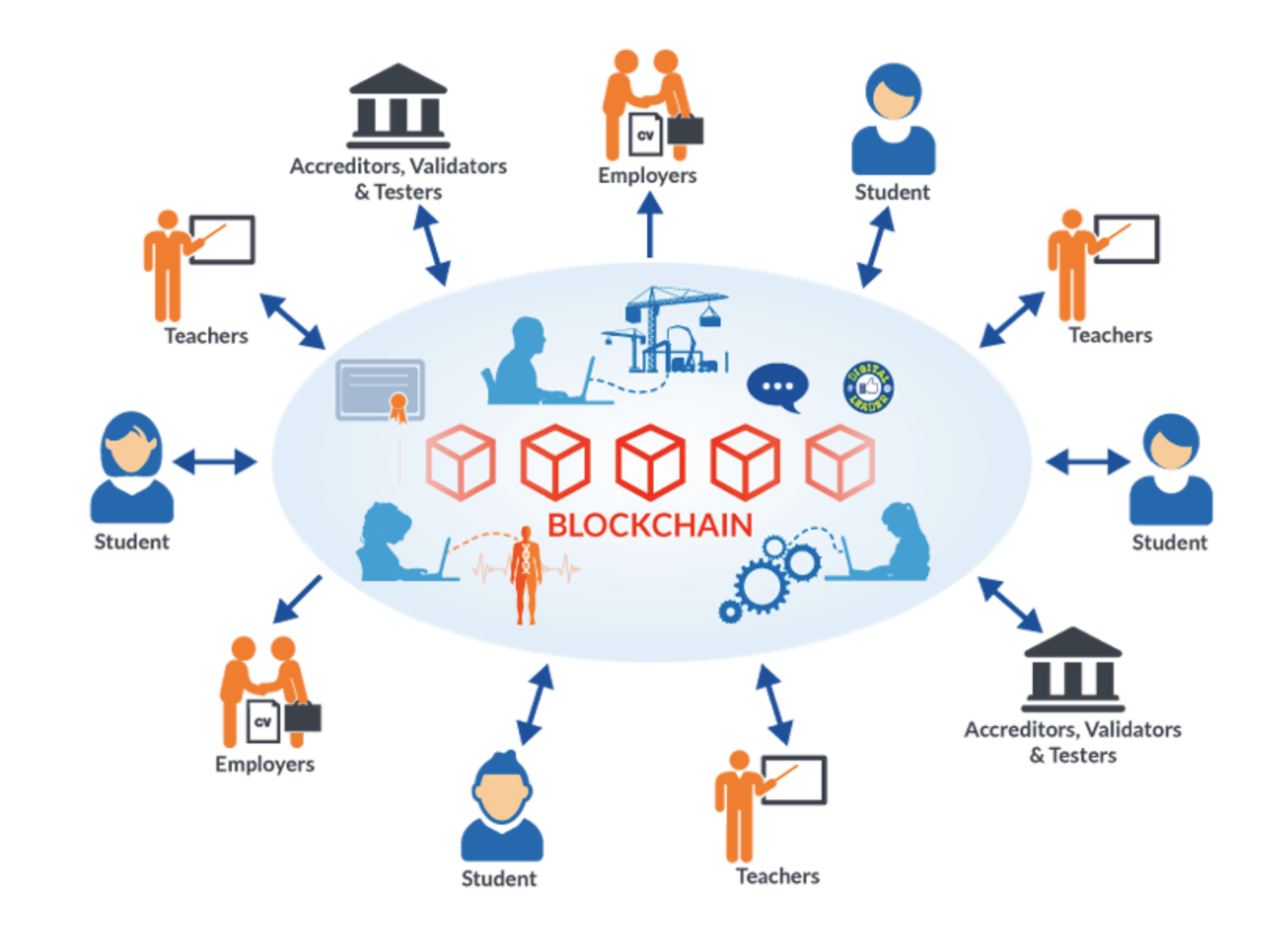
In a traditional real estate economy, the property management process is considered to be highly complex, especially since multiple stakeholders are a part of it.

Property management can either be done offline through manual paperwork or through independent software. A result of this is that information remains confined to a database – a problem that property technology startups aim to solve.

However, with the increasing role of blockchain for property transactions, the future of real estate can be changed.

Real estate mobile app development done on the premise of a blockchain-based property management system uses smart contracts that can ease the process surrounding signing the lease agreements to complying with filing maintenance requests and cash flow.

A secondary field where a real estate software development company can see Blockchain impacting the real estate apps sector is deed management.

Defect in deed paperwork can make it illegal to proceed with the deed management process until the issue is resolved. In case an issue emerges, property owners are liable to pay heavy legal fees ensuring the accuracy of property titles. The application of Blockchain in real estate can be applied here to make the paperwork secure and transparent.

Parting Words

The Top PropTech Trends: 6 Technologies Disrupting The Property And Real Estate Industry

Looking at the future of the real estate sector, technology inclusion would continue to grow and restructure how transactions are conducted, thanks to COVID-19. One key factor that pandemics won’t change however is the need for personal relationships. Property agents, investors, brokers, and lenders must continue to develop their influence sphere. When you partner with a real estate app development company you must keep the human part of the process into consideration.


Enterprises Piloting the New Normal with Next-Gen Applications

How to generate more money from your mobile application? - 15779 | MyTechLogy

Remote working, physical distancing, travel limitations, and the psychological effect of isolation have together changed stakeholders’ behaviors in every organization while creating unexpected challenges along the way. This pandemic has not just disrupted everything once denoted normal but has also been forcing enterprises to navigate the recovery period and develop a new normal for the post-crisis era. Even amidst the clear need for digital transformation, enterprises are grappling to remain competitive in a world filled with nimble startups. These enterprises were once dependent on their IT models as a key to a competitive edge. Now, however, the same IT cores have made it difficult for them to adopt a new normal centered around flexibility, speed, and efficiency.

With being nimble now accounted as the only way to survive and scale in the COVID-19 world, enterprises have turned their focus on the development of next-gen apps.

Table Of  Content

  1. The Need for Next-Gen Apps
  2. What Does Next-generation application development Mean for Enterprises? Speed, Efficiency, and Flexibility
  3. Key Transformation Areas for Enterprises
  4. The Best ADM Approaches for the Creation of New Normal Enterprise Applications
  5. Schedule a Discussion

The Need for Next-Gen Apps

Custom Mobile Application Design and Development Services | Dhiyam

Businesses need apps that will be able to adapt to changing demands and scale to meet customers’ and employees’ needs in real-time. An enterprise application development company by building next-gen apps based on business understanding and customers’ requirements gives enterprises a platform to transform digitally.

Next-generation mobile apps and other software help enterprises:

  • Lower the time to market when meeting the changes in customers’ needs.
  • Lower product complexity by utilizing a cross-platform, scalable ecosystem.
  • Make smarter business decisions through analytics-backed insights.

What Does Next-Generation Application Development Mean for Enterprises? Speed, Efficiency, and Flexibility 

Business Hand Writing Rising Reliability, Quality, Efficiency,.. Stock Photo, Picture And Royalty Free Image. Image 24952351.

The need of the business hour for enterprises, as we noted before, is to look for next-generation application management services. This new normal in enterprise software revolves around a trio – Efficiency, Speed, and Flexibility.

Speed – Pre-COVID, release cycles came with a months-long completion time. Now, with customers’ needs changing by the minute, enterprises don’t have the leverage of taking up months for deployment. There is no guarantee of a problem staying a problem by the end of those months. The new normal enterprise will have to bring in agile methodology in its application development and maintenance process to offer its stakeholders value in real-time.

Efficiency – The success of every nimble enterprise lies in automation, a well-planned business integration, and the adoption of agile methodologies. And all of this can be achieved through practices like the integration of AI in mobile apps, re-prioritization of business processes, and weeding out unnecessary feature sets.

Flexibility – Zero downtime has become a success mantra. But its adoption is a lot easier written or said than done. In order to become truly flexible, enterprises must modernize or replace their outdated applications. However, letting go of the legacy system is one of the biggest digital transformation issues.

What enterprises need is a next-generation application maintenance program that would make proper use of the modernization spend while enabling digital transformation.

Before we get down to the nitty-gritty of what that next-gen application would look like, let us look at the areas that enterprises would have to work on to compete within themselves and with the startups flooding in the business ecosystems.

Key Transformation Areas for Enterprises

The best thing about enterprises is that they understand how COVID-19 would change them – on some grounds, better than their startups’ counterparts.

The speed of automation will expedite

The automation of design | TechCrunch

The automation of key processes and routine tasks has remained at the center of business development for some time now. This need for task and process automation is not new. Back in 2017, McKinsey & Company forecasted that 30 percent of key tasks across industries will get automated by 2030. “Before the pandemic, automation was looked upon as a way to boost efficiency while cutting costs,” said H.I. Executive Consulting. “With social distancing directives likely to stay in place for a while, more and more businesses are accelerating their automation efforts in order to reduce close human contact to a minimum, free up employees to manage crisis response and focus on providing essential services.”

The movement towards remote digital service

The future of remote work: An analysis of 2,000 tasks, 800 jobs, and 9 countries | McKinsey

The new normal for business after covid will be organizations changing their support and service delivery plans to meet the digital reliance of their employees and customers.

Here are some examples of what a remote digital service looks like.

The digital-powered Russian bank Tinkoff created a cloud-based call center with several freelance employees. The bank focuses completely on virtual servicing. To date, they have expanded into a team of 14,000 call center operators of which 6,000 of them make an average of 500,000 customer calls every day from homes. The bank’s cost of managing and training operators gets offset by the savings made from rental offices and equipment.

In the telecommunication industry, companies have started launching digital-only offerings that redefine customer experiences and gather considerable attraction. The USP of these services lies in customers signing themselves and moreover with more than 80% of customer-care activities being conducted online. In this digital-first model, online referral act as the biggest source for customer acquisition – estimated to be 15% of the total sales.

The success examples are prevalent across  multiple industries. This has turned remote service into a trend that has a high-profit potential.

Supply Chain Disruption May Continue

Who Gets What When Supply Chains Are Disrupted?

Global lockdowns have resulted in a massive scale of supply chain disruption. Back in February, Fiat Chrysler Automobiles NV stopped production in their Serbia factory for they weren’t able to obtain automobile manufacturing parts from China.

The majority of the enterprises understand the manufacturing and delivery process of their Tier 1 suppliers while having little visibility on further the line. The business need is to make the supply chain resilient for the post-COVID period. And in order to do that, enterprises would have to:

  • develop strong backend infrastructure – possibly by combining blockchain and supply chain processes
  • remove the dependency from paper-based processes
  • share data with suppliers for gaining manufacturing stages visibility.

Partnerships will become collaborative and lean 

Building strategic business partnerships | by Nima Torabi | Medium

Enterprises can meet the changing partners and vendors’ preferences by shifting to a more collaborative and flexible set of partnerships. These partnerships can be multi-form. Example: An IT consultancy firm could work with remote vendors to decrease their office and travel cost. There can also be enterprises providing agreements with their vendors for long-term opportunities. For example, how Alibaba supports SME suppliers with an extended line of credit.

As a part of the new normal for the marketplace, we are seeing partnerships brewing on the basis of an understanding of customer needs, wherein both the partners can mix knowledge and create value. For example, recently, WhatsApp started enabling its customers to directly connect with brands and make purchases through a simplified mobile experience on WhatsApp.

Management systems of a new model

Management System Stock Illustrations – 38,926 Management System Stock Illustrations, Vectors & Clipart - Dreamstime

Met with the unsurity of the new reality, enterprises have started looking for ways of adopting virtual management systems in enterprise application development services.

For effectively responding to a fast-changing environment, businesses will consider making use of advanced analytics tools, automation, and digitalized processes to meet customer demand fluctuations in semi-real-time. We can also envision enterprise application development solutions being built on human-technology interactions which would help businesses collect insights for IT-driven productivity rise.

To meet with the changes that a post-COVID world would pose, businesses would have to take a modernized approach – one that would help them become cognitive. While this can be achieved through the creation of new-age technologies backed next generation mobile applications services, it would need enterprises to get back to their legacy systems.

Here are some of the application development and maintenance approaches that we have been offering to enterprises coming to us seeking digital transformation consultancy.

The Best ADM Approaches for the Creation of New Normal Enterprise Applications

Optimizing the current IT systems 

Best Image Optimization Techniques: Expert Roundup

Enterprises can optimize their present IT systems with modern approaches and tools to cut costs and heighten efficiency. We advise organizations to make use of AI and automation capabilities for ensuring quality and following DevOps steps to lower the development cycle.

By deploying new-generation capabilities and features around existing systems enterprises will be able to innovate and keep their competitive edge – even when they are not prepared for complete cloud transformation. They can attain easier access and modification of the legacy systems through the use of technologies like containers, API integrations, and microservices.

Gather data and convert it into an actionable product in a minimal time range

Product Discovery: ​A Practical Guide for Agile Teams (2021)

When we build enterprise applications, we focus on benefiting from cloud-native, digital-first technologies to deliver growth at speed. Deploying speed-focused innovation abilities are generally backed with an MVP, small feedback loop, test-driven development, and a fail-fast approach.

The intent of this approach is to help enterprises take key business decisions and turn them into products that their stakeholders need in as close as real-time.

Social Media Towards Its Next Evolution Set By Technology

What is social media? Here are 34 definitions... | Econsultancy

From a time when an old school telegraph was considered to be the hottest medium of establishing communication to now when Facebook has doubled down its effort on the development of a mind-reading device, social media has already crossed several stages of evolution. Stages that have established it as a sector that is here to stay and grow. One of the pivotal factors behind the unprecedented growth that the domain is witnessing both in terms of users and scope of constant growth is the technology used in social media.


These number projections are the direct result of the direct influence of technology on social media. The constant inclusion of communication and content creation, distribution aiding technologies like native mobile apps – getting business access to users’ camera and GPS – geotagging, AI for image recognition, etc. have helped shape the current stature of the social media domain on a global scale.

In this article, we will be briefly revisiting how far social media technology innovation has come since Six Degrees, the platform that ruled 1997 followed by a look into the new technologies for social media.

The Evolution of Social Media – A Timeline and Key Events 

The future of social media technology began in 1997 with SixDegrees.com, the first social media site. The platform enabled you to create a profile page, curate a list of connections, and send messages to your network. At its peak, the website was used by over one million users before being bought over for $125 million and facing an ultimate demise in 2001.

The failure of Six Degrees, like its success, was followed by a number of social media networks. Around the time and early 2000s a number of new social media platforms like Friendster, AmIHotorNot.com, MySpace emerged and witnessed their decline in the domain.

However, there were a few that, at the back of their strong business model ready for growth from day one. Here are some of the social media platforms that continue to come on top of the social media landscape in terms of user count –

In addition to these, there were some other key names in the social media technology evolution landscape – LinkedIn, foursquare. Grindr, Pinterest, Snapchat, amongst others.

An unvalidated fact behind the growth and sustainability of the selected social media platforms can be seen in the incorporation of the right technology in the domain. Let us delve into it deeper.

The Importance of Technology in Social Media

The role of technology in social media evolution, although starts with the advent of smartphones and laptops on a precise level, begins with mobile apps. In 2019 alone, it was estimated by a Lyfemarketing report that over 91% of all social media users use social channels through mobile devices.

There can be a number of reasons behind the rise in mobile application adoption for social media usage:

  • Convenience in terms of not having to open a laptop and opening the application within three clicks.
  • Integration with mobile in-built features like camera, location, microphone, etc.
  • Ease of capturing and sharing content

We believe that up until this point you must have gathered the need for social media application development. However, the list of the impact of technology on social media doesn’t just end with one component. There are a number of other technologies like APIs, geotagging, QR codes, etc which have contributed to making social media where it stands today.

Technology incorporation makes social media accessible, safe, and real-time in addition to making the sector operate seamlessly with users’ experience through the mode of automation, integration with other social media applications, and eCommerce.

With the benefits of technology and social media peeked into, let us move on to the list of technologies that are helping social media app developers take the sector to its next evolution set.

Technologies Driving the Future of Social Media

1.  RFID – Radio Frequency Identification Tags

RFID (radio frequency identification) • MASS Group

RFID, in layman terms, means a small computer chip that can store information about an individual or object. Every chip comes with a unique serial number that can be tied to the information present on the chip. Let us give you a practical application of this technology through this example – Suppose you are at a music concert and you scan your RFID device with an RFID device that has social features integrated into it. By simply bringing your RFID device to the other one, you will be able to Like a band on Instagram or Facebook or download a couple of their music tracks on your device.

The growing popularity of RFID in the event and eCommerce domain (through the mode of NFC) has led to a number of social networking app development companies integrating RFID into their mobile applications.

2.  Augmented Reality

What is augmented reality, anyway?

AR and mixed reality are some of the most popular social media application features. There are a number of use cases that social media houses experiment with when integrating AR with their applications but the one that has witnessed mass popularity is the use of face filters. Popularized by Snapchat, AR-driven filters are used by both individuals and businesses to deliver engaging content.

Another example of business-level usage of AR in social media can be seen in social media advertisements. Last year, Snapchat created an AR-based app for Snap Original where Bhad Bhabie interacted with the users as if they were interacting in the real world.

3.  Artificial Intelligence

Artificial intelligence and Machine learning made simple

Out of all the new-age technologies that you will read about impacting the social media sector, the one name which will be placed on the top is Artificial Intelligence.

AI is a prime component of every social platform active in the market today. This is the number one reason why the technology is now involved in the social media app development cost on a default note.

  • Facebook utilizes advanced machine learning for a number of tasks: recognizing faces in poss to targeting users for advertisements and even for strengthening their search functionality.
  • LinkedIn makes use of AI for offering job recommendations, suggesting people whom they’d like to connect, and sending them specific posts for their feed.
  • Snapchat uses the capability of computer vision for tracking physical features and overlaying filters that move with them in real-time.

These business examples are a validation of how AI is a crucial part of all the different genres of the social media domain.

4.  Blockchain

How Blockchain Is Influencing The Social Media ? | Mirror Review

Decentralized social platforms is one of the most up and coming genres of the social media sector.  There are a number of use cases of social media and blockchain convergence which businesses from both sides are experimenting with. Here are some of them –

  • The social media networks depend on ad-based business models that share a common shortcoming: the creators are unequally compensated for their content on the platform. A smart contract can be put into use here for ensuring that the creators get the amount that their content is worth without any delay or unannounced deduction.
  • There are businesses working towards combating internet censorship. Usually, based on a distributed ledger, the individuals will be able to read and curate their own content with a surety that no entity will be able to block access to content.

5.  IoT

IoT definition | Strate, School of Design

The last in our list of social platform and technology trends is the Internet of Things. The technology is used heavily for social media monitoring and marketing purposes by some of the top names in the industry like N&W, Disney, and Tencent, etc.

Organizations are constantly on the lookout for an IoT skilled social media app development company that would help them create solutions around real-time monitoring of data and insights coming in from social media to help them make better business decisions.

Here were the five technologies which are taking the social media sector towards a new evolution era – one that will be a lot more open and transparent in nature. Want to be a part of the revolution? Contact our team of social media experts.

Impact of Digital on Brand DNA

Digital on Brand DNA

“Brand is a CONNECT between consumers and companies”.  This is a very simple yet powerful definition.

This so called ‘connect’ has undergone a seismic change recently. This change can be attributed to continuous evolution of technology which has really simplified a consumer’s life. Brands are continuously finding it difficult to establish a connect with their consumers and more so in this digital age. Earlier, brands had fewer, what is popularly known as, “moment of truths”. Consumers didn’t have access to much information. Hence choices were also limited. Marketers hardly focused on their prospective consumers. Advertising was seen as a potent weapon as a brand building tool than customer satisfaction and other elements of brand building. Customers had very limited options to voice their feeling about brands.

Digital on Brand DNA

Digital has had a transformational effect on how brand business is done. According to Interbrand.com, Google was ranked 38th in 2005 out of top 100 brands whereas in 2009 it is ranked top 7th brand of the world. Considering the fact that Google stared its operations only in late 1998, it’s a huge achievement. Brands like Google, iPod, Facebook & YouTube have proved the notion wrong that brands take a long time to become the top brands.

Digitization has empowered the customers with unlimited tools to make them heard. Abundant access to information, thanks to Google, has left little room for brands to act smart with customers.

Brand Touchpoints model. Originally proposed by Alina Wheeler in... | Download Scientific Diagram

Brand touch points have increased in comparison to what they used to be. More interestingly, customers now have the power to make them heard at every such point through Facebook, Twitter, Instagram, Orkut to name a few. Brands are now aware that negative word of mouth spreads faster than positive word of mouth. Hence, brands are continuously employing “Online Reputation Management” tools to cater to disgruntled customers.

Digital has proved that brand building need not be an expensive activity. Brands are constantly exploring the power of ‘viral videos’ which are rather cheap to create and still give the brands great mileage. The recent “miss u maggi” campaign, by Nestle on YouTube has close to 1 million views so far and still counting.

Maggi - #WeMissYouToo – Campaigns of the World®

PR seems incomplete without ePR. Upsurge of blogs and review websites have made people trust their peer group more than the advertisements. Worse, users may give more credence to feedback posted by a stranger on a website more than what a brand is communicating.

Today, marketers are in a better position to understand online behavior of the users that visit their sites. Web analytics tools can be of great help in understanding what pages are most visited by users, what is the path traversed by users before making some purchase on your website, how many users are coming through paid media versus how many users are coming organically etc. Never have brands got so many insights to serve their customer better, all thanks to this Digital Age.

5 Effective Brand Building Strategies to Attract Customers

Brand building has become more comprehensive today wherein customer satisfaction, customer experience, customer delight get equal, if not more, weight age which probably only advertising once enjoyed. Digital empowerment has changed the rules of the game. It has opened up a bag full of opportunities for the brands. It has taken brands a step closer to their customers. And the good news is that you can be a top brand in few years if you are updated about the game. You are closer to your customers than ever before. But the point is: Are you listening, do you even care to have a INTELLIGENT DIGITAL INTERFACE?

*All the content and images are sole property of their respective owners, This is just a knowledge sharing platform.

Role of Technology In Changing the Future of Consumer Lending

Consumer Lending | Accenture

Dive into the many changes that now stare at the lending-centric consumer financial services landscape and how technologies are fueling the shift. Every once a decade, technology innovation and customer demand merge in a way that drastically changes the consumer-facing financial service sector.

For instance, when The Motley Fool, eTrade, and Intuit came into the market some decades ago, consumers took it upon themselves to personally manage their finances and invest their savings in places that would get them maximum returns.

In 2021, the financial service industry is again staring at disruption. A number of technological and economic factors have developed a perfect situation where people are deciding how they want to manage their pay, pay for services and goods, finance a car or home, or even how they want to borrow.

To answer these changes and shape the future of lending, a number of tech-driven consumer-facing financial services companies have entered the market to address this consumer behavior shift. The entrants have become the reason why lending has become one of the most profitable finance app ideas.

In this article, we will be diving into the many changes that now stare at the lending centric consumer financial services landscape and how technologies are fueling the shift.

What is Contributing to the Evolving Landscape of Digital Lending?

The Future of Digital Lending in India | Aranca

The changing space of digital lending transformation is bringing a remarkable shift in credit analysis and bank loans. The rise of technology progress and big data has led to a series of alternatives coming into the market questioning the credibility of credit score – a prime factor driving the lending industry.

When we dive into the changes that are taking place in one of the slowest transforming financial services, we can find four factors fueling the digitalization of the consumer financial services space –

  • Changing consumer behaviors – especially the COVID-19 driven behavior
  • Rapid technological changes
  • Changes in compliance and regulations
  • Innovations happening in the space of simplification of operating models.

The combination of these four factors has given birth to a time where consumer insights are blended with product innovations to make fintech consumer lending a lot more inclusive. In addition to serving only the high credit-worthy consumers, the future of the credit industry is now powered to involve consumer segments with low credit history (low-income households, students, freelancers, etc.).

The digital lending landscape has grown to an extent that it can now be categorized into three sectors –

The ultimate aim of the technology-induced digitalization innovations happening in the sector – across the three subsets – is to digitize the entire customer journey (from KYC to reporting) at speed and at scale at a level where the traditional lending system could never reach.

How is Digital Lending Changing With Technological Advancements?

1. A new way of vetting applicants have come on the surface

15 Interview Questions to Ask Candidates | Glassdoor for Employers

New credit mechanisms are building on the proposition that traditional ways of applicants’ approval on the basis of FICO credit score is an incomplete sign of applicants’ creditworthiness.

By using artificial intelligence, new models are being developed. These models factor in information surrounding thousands of data points like employment history, education details, and spending habits to verify if an applicant will be able to clear the debts on time. On the basis of these insights, a new credit score is coming to the surface as the future of consumer lending.

2.  AI-backed strategy and sales streamlining 

4 Ways AI/ML can Improve Sales Manager Activities in CRM | Kreato CRM

Digital lenders have started asking their partnered fintech app development companies to use machine learning for enhancing loans by making underwriting decisions. The algorithms can help validate if the applicants are telling the truth about their income level.

The process is best suited for people having an insufficient credit history, less income, or anyone who is charged higher interest because of the lack of financial data. Machine learning is also being used heavily for its ability to detect fraud through analysis of customer behavior backed by the time they spend answering applications’ questions, looking at the price options, etc.

3.  Blockchain eliminating the need for intermediaries 

How disruptive Blockchain is for the Digital Advertising Industry?

Through the mode of blockchain, digital lending companies can develop a high trust, low-cost platform. With the complete loan process existing online, people will be able to keep a record of documents and transactions on an anonymous digital ledger platform thus eliminating the need for third parties and intermediaries.

4.  Cloud computing solving digital lending sector uptime concerns

How is Technology Changing the Future of Consumer Lending?

The most common corners of the lending sector are – security, storage, and 24*7 upkeep time. Cloud computing solves all these issues in addition to offering a series of additional benefits like

  • Secure connections
  • Cost-effective and time-efficient management
  • Disaster recovery
  • Simplified online processes
  • Automation of processes

While these technologies are playing a key role in bettering the state of digital lending, what is important for the sector to keep evolving. A way the sector can keep getting efficient is by knowing the trends that are waiting for them in 2021 as the future of consumer credit.

Digital Lending Market Trends 2021-22

1. NLP will better customer experience

9 Powerful Ways to Use NLP to Improve Customer Service

Smart lending systems will be using NLP for recognizing and understanding customers’ questions and converting them into actionable data. There are multiple applications that the digital lending companies will be experimenting with in 2021 –

  • Lenders will be able to offer advice to basic queries through a chatbot
  • They will use the technology for analyzing customers’ feedback, getting insights that can help them improve the customer experience.
  • Analyze the data to better the credit scoring accuracy

2.  Regulatory sandboxing

Poland gets regulatory sandbox

While the consumer lending sector needs constant innovation in order to develop and grow, it also needs regulation for ensuring security, safety, and ethics. Sandboxing is how both factors can be respected in the modern lending system.

It is the mode f testing innovative services in a controlled setting for the regulators to conduct their assessments before a complete rollout. The Compliance Assistance Sandbox (CAS) Policy, announced in 2019 highlights the process.

“After the [Consumer and Financial Protection Bureau or CFPB] evaluates the product or service for compliance with relevant law, an approved applicant that complies in good faith with the terms of the approval will have a ‘safe harbor’ from liability for specified conduct during the testing period. Approvals under the CAS Policy will provide protection from liability under the Truth in Lending Act, the Electronic Fund Transfer Act, and the Equal Credit Opportunity Act.”

3.  Greater omnichannel capabilities 

Technology will be seamlessly connecting the lender with borrowers through a self-service holistic digital experience. The year will see borrowers picking up on the half application form which they started on their phone, on their laptops.

Omnichannel capabilities that make it easy for them to jump from one platform to another without any shift in experience is what would help the digital lenders rule the year while becoming one of the key mobile app development financial services.

4.  Non-banking institutions will continue entering the space

We have already seen Amazon offering loans to small businesses and Apple announcing its credit card. All of these innovations are the advanced stages of companies’ capabilities and how they help their customers reach their goals.

The year will see the consumer finance market getting introduced with a greater number of P2P consumer lending organizations. Backed by the abilities of new-gen technologies like Blockchain and AI, consumer financing companies will be giving banking institutions tough competition.

Now that we have looked into the many ways consumer lending businesses are getting prepared to rule the sector through their partnership with a skilled fintech application development company, let us close the article by looking into some ways you can become the next big digital lender.

How Can You Become a Digital Lender?

Digital Lending Startups Leading The Fintech Revolution In India

There are a number of brands that have placed themselves in the future of the consumer financial at the back of their digital inclination.

Shifting from a traditional lending mindset to a digital bank-oriented one is not an easy task. There will be resistance to change, an unacceptance towards risk, and other things. A digital bank transformation will require a strategic foundation supported across all organization levels. As a lender, you will have to focus on offering an exceptional digital experience to your consumers. The last thing you would want is getting axed by Google on the Play Store at the back of a bad experience and lack of regulations-compliance assurance. Here are some things that we recommend on the basis of our extensive skill set as a financial software development company

  • Provide transparent information on the approval guidelines
  • Develop new training material, gen-z inclined communication about new policies
  • Provide alternate channels to your consumers. Don’t force them to visit branches.

The secret sauce of your lending business success will be transparency and communication. The more open your business is, the more will be the chances of your consumers to choose alternative lending models. We can help you strategize your lending process digitalization.

Android App Bundles Should Be Chosen By Businesses- Why?

Android Developers Blog: Recent Android App Bundle improvements and timeline for new apps on Google Play

Did you know that the Android App Bundle has become the gold standard for publishing on Google Play? Dig into its benefits.

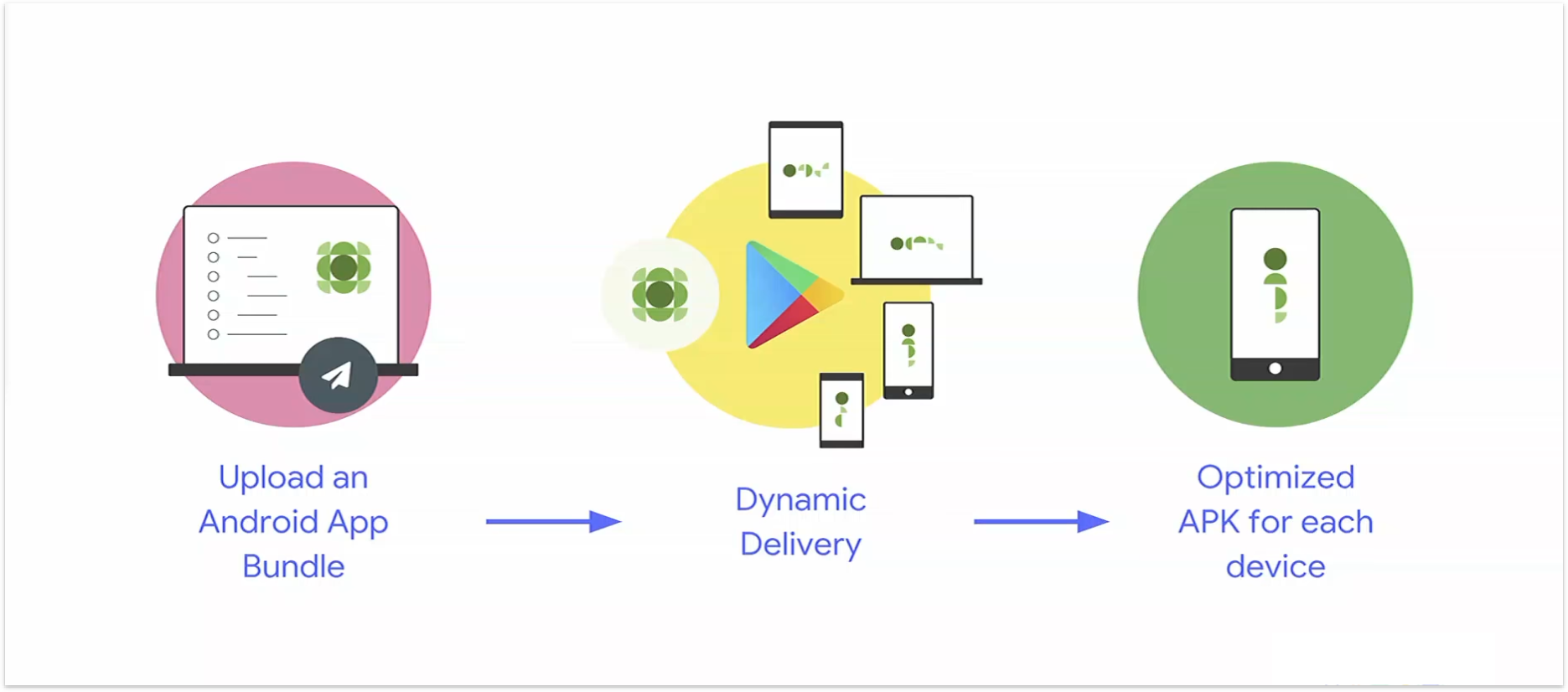
When I first heard about this new upload format known as the App Bundle, I was very excited! Many of the issues that we developers faced like building APKs to target different API versions, device types, and so on- are now passed on Google Play.

From this day on, developers will be able to use Dynamic Delivery for creating optimized APKs that satisfy the requirements of user’s devices and delivers them at the runtime for installation.

All this is being done through the Android app bundle app distribution format. Let us dive into what Android’s new, official publishing format is all about.

What is Android App Bundle?

Android App Bundle

Android launched a new official publishing format called android app bundles (.aab) and it offers a more efficient way to build and release your app. It also lets you easily deliver a great user experience in a small-sized app, this in turn also improves install success rate and reduces uninstallation rates.

Android App Bundles are Google recommended way for building, publishing, and distributing the application across different device configurations.

Did you know that the android app bundle has become the gold standard for publishing on Google Play? Over 600,000 apps and games currently use the app bundle in production, representing over 40% of all releases on Google Play including Netflix.

Let’s look into the benefits of app bundles now.

Benefits Of Using Google Android App Bundle

1.  Size Reduction

App size-reduction. Optimizing builds for lesser sizes | by Manoj Aher | Flawless iOS | Medium

App bundles help in reducing a significant amount of application size! On average, developers have witnessed a 20% size savings compared to APK. You can visit the new app size report in the google play console to see how much your app could save.

Did you know that, with the help of app bundle development, Adobe reduced the size of Adobe Acrobat Reader by 20%? Not only this, but some of these size savings by early adopters of app bundles show some jaw-dropping results. These results are what make Android app bundles a great way to build Android Go apps:

2.  Increased app installations and decreased uninstallations

Why Users Uninstall Apps: 28% of People Feel Spammed | CleverTap

Apps increasing size would not matter much if we had unlimited storage in our devices. But, as we know, it’s not the case. As the size of an app increases the number of installations decrease!

As a ripple effect of size savings with the help of xamarin android app bundle will increase the app installations. This also resulted in the increase of update rates, and very fewer uninstallations. 

 3.  Higher efficiency

How to Protect Efficiency in Your Business

App bundle development in android allows you to build one artifact that includes all of your app’s collected code, resources, and native libraries. So, you are no longer required to build, sign, upload, and manage version codes for multiple APKs. Hence, the efficiency is increased if you install an android app bundle on your device.

4.  Faster downloads

Faster Downloads through MediaFire's New Downloader - MediaFire Blog

Your app can be efficiently tailored to each device by Google Play which means the process of downloading and installing the app becomes faster.

5.  Integrated codes

Integrated Terminal in Visual Studio Code

With the help of the android studio app bundle, you can prepare for the 64-bit requirement without increasing the size of your app. As a result, Play will deliver the appropriate native code required for each device. 

6.  Increased engineering velocity

Heroes and Juniors: Increasing Engineering Team Velocity | by Marianne Bellotti | Medium

The entire process of creating an app is accelerated. From building dynamic and independent modules to designing, testing, and releasing it. The engineering velocity gets a major boost with the android app bundle unity.

For example, The Book My Show app declared that their app builds time (for a completely new build, without any caching) went down by 70% — this is because, with app bundles, it just dumps every resource into the bundle, rather than segregating them, like for APKs.

7.  Reduced manual effort

Reduced effort - Kainos WorkSmart

During android app development several manual efforts can be completely automated. Once the development is done, its link is uploaded and shared on a specific Slack channel automatically. No manual intervention is required.

8.  Dynamic delivery enabled

Dynamic Delivery in Android — Part 1 | by Siva Ganesh Kantamani | Programming Geeks | Medium

App bundles have introduced us to a new concept known as dynamic delivery. One can deliver conditional features at the time of installation on the basis of properties like device features (e.g., AR/VR), user’s country, or device’s version. Users are also given the facility to install features on an on-demand mode instead of the install time. They can even uninstall the features they no longer need.

This will help the users personalize their experience as per their requirements. This will also come in handy when you do not want to increase the size of your app in the long term. Further allowing us to make the initial size of our application smaller and then offering extra features only to the users who might actually make use of them.

How To Build and Deploy Android App Bundles?

Publish smaller apps with the Android App Bundle | Xamarin Blog

Unlike APKs, app bundles are a publishing format that entails all of your app’s codes. So, it cannot be deployed directly to a device. With the help of the android studio, creating a project as a signed app bundle is just a few clicks away!

To build app bundles, follow these steps:

Step-1: Start with downloading Android Studio 3.2 or higher. It is the simplest way to build app bundles.

Step-2: Add support for Play Feature Delivery by including a base module, organizing code and resources for configuration APKs, and, optionally, adding feature modules.

Step-3: Now, start building an Android App Bundle using Android Studio. You can even deploy the application onto a connected device from the app bundle through modification of your debug/run configuration and selection of the ‘deploy APK from app bundle’ option.

Step-4: Testing and publishing your app bundle will be the final step.

Test Your App Bundle

Once you create the android app bundle, you should test how Google Play will use it to generate APKs and how those APKs will behave when deployed to a device. You can use the following methods to test the same:

  • Test your app bundle locally by using the bundle tool. It will generate APKs from your app bundle and deploy them to a connected device.
  • Share your app with a URL. It is the speediest way of uploading your app bundle and sharing your app as a Google Play Store link with your testers.
  • Set up an open, closed, or internal test. This is another way of testing custom delivery options, like downloading app features on demand.

Final Words

The future has a lot in store for all of us and it is up to us to keep up with it! Without any doubt, I can tell you that the android app bundles are where the future lies. Being an android app development company, we can help you stay ahead in the game.

Guidelines for Writing a Great Corporate Email

Email Marketing

We are living in a world where communication is taken way more seriously than ever before. Communication has been taken to a different level, from letters to mobile communication to emails to sms to Whatsapp to Snapchat and the list can go on.

Today the most basic form of communication is either email or chats or messaging (be it sms or Whatsapp). Although personally I do not favour the modern forms of communication since it kills the whole corporate feeling to it, I have come to accept it, as it is a vital part of corporate communication.

In today’s world, we communicate more in the form of written rather than verbal text because of which the language used and the correct use of grammar surfaces as of the utmost importance, especially while writing to clients.  Clients might just take the literal sense of what we say and miss the whole point altogether!. So here are 8 things, one should be careful about while writing a corporate email!

1. The KISS Rule

Keep it simple tattoo | Drawings, Sketches, Doodle art

Keep it simple silly. No one likes to read long paragraphs or a long story in an email. It’s best to keep it short, simple and crisp. That is how a client would like it. But when I say simple it doesn’t only mean the simplicity of thoughts. More than the content it is the presentation that should be kept short and simple.

2. The Formal/ Informal Email

 Writing Formal and Informal Emails

Depending on whom we are writing to, the tone and the content of the email changes.  The kind of client he/she is left for you to decide. Remember, sometimes we should be very subtle about our opinions because not everyone can take honest suggestions in the right way. Here’s a short example of informal vs formal writing.

Informal: It is a bad idea.

Formal: I am not sure if this would be a good idea.

3. Spelling

These Hacks Remind Us That Spelling Still Matters - Dictionary.com

This is where most of us go wrong. We depend a lot on the auto correct option but it’s not always a good idea. At times you need to double-check certain spellings, especially the client’s name while writing!

4. Never Say No

Never Say No

A client would never like to listen to phrases/words like; no, we cannot do it, it’s impossible, etc. So how would you convey a “no” to a client? There are a lot of ways to do it, here is one example: –

Instead of saying “we cannot do it” you can always say “what we can do instead.”

4. Proofreading

Strategies to Proofread Effectively

This one I would say is the most important part of writing emails, ALWAYS proofread what you have written. I know we live in a crazy – busy world and it is very easy to just press that send button but get into a habit of double checking what you have written.

5. Watch Your Grammar And Your Capitals.

corporate Email

We have to be very careful about not making silly grammatical mistakes. Like for example; we should not forget who we are addressing and keep the gender correct throughout the email. A “her” cannot be addressed as a “him”, so we need to watch out. Take care of your singulars and plurals too.

6. Punctuation

What is Punctuation? Useful Punctuation Rules & Punctuation Marks in English • 7ESL

Punctuations are something that could be overlooked if it is an informal email, however while writing to a client it needs to be attended to. As we are trying to create a good image to our client (especially your potential customers whom you are writing to for the first time.

7. Write Accurate Subjects

7 Tips to Declutter Your E-mail Inbox – So Happi Together

For easy access for you as well as your clients go the extra mile and write accurate email subjects. Create versions of documents so it’s easy to pick out the latest version of a design or copy, it will be appreciated deeply.

A Centralised System for Sharing Logistics Data

How PR Can Help Logistics Companies

The transport and logistics industry has been experiencing tremendous growth with the evolution of services such as Alibaba and Amazon. However, there’s one major challenge to the smooth delivery of online orders: retailers and manufacturers use different data formats for issuing and tracking order shipments.

In the absence of universal agreements for identity and access management that work across the entire industry, companies have had to draw up individual written contracts for every shipment. Customers may get their items in a reasonable period of time, but when it comes to the retailer, shipper or consumer tracking the product, there’s no uniform view of the entire shipping route as the package is on route to its final destination.

iSHARE data-sharing scheme available now! | iSHARE

That’s why a group of forward-thinking public- and private-sector partners within the transport and logistics sector in the Netherlands have formed iSHARE, a consortium that seeks to develop a uniform standard for automatically exchanging data while shipping products following an online sale. All data and policies are stored in a central repository, enabling each partner to work with the same identification, authentication and authorization methods, thereby eliminating the need to manually type multiple contracts in order to share data and ship a product.

The Netherlands has been funding this project over the past few years, and consortium members hope that iSHARE can become a global standard. To give credibility to the notion that iSHARE will be embraced wordwide, large maritime port and airport cargo handlers – in tandem with a large U.S. retailer – have also contributed to investing in the project.

Recently, the consortium has been testing the last mile of delivery in the online food sector using crypto technology developed by iSHARE. For the last mile, solutions are being developed that can open a smart lock or box via Bluetooth or Wi-Fi with crypto tokens. Sometime soon, the delivery agent will only need an app on a smartphone or tablet to open the lock/box. A crypto token will work in tandem with policies, developed by solutions providers, that will determine whether the contents of the box need simply to be cooled or remain frozen.

Rabobank Monitors Transactions 24/7

Once this last mile technology emerges, then the great potential of online shopping can be realized. A Rabobank report found that total supermarket spend in the Netherlands in 2018 across 3,730 stores was 38.7 billion euros, of which 1.4 billion euros (3.6%) came via online shopping. The good news: Rabobank expects online food shopping to grow up to 30% by 2030.

What Happens When Food Isn't Stored Properly

Despite this promise, online food shippers still face unique challenges, namely that perishable food items need to be stored in temperature-controlled conditions and can’t just be left at a front door or on a person’s driveway. Residents must be home to receive the goods or pick them up at so-called pick-stations. An analysis by Dutch supermarket franchiser Ard van de Huijgevoort, owner of van de Huijgevoort Group, found that because deliveries can only be made when people are home, only nine deliveries are made per van, per day — well below the volume they know is possible.

But what if deliveries could be made at any time of day so that the shippers can drive the most cost-effective routes? In addition to the use of crypto tokens noted, there are systems under development that include iSHARE for data exchange in leveraging autonomous delivery and other modern food storage techniques. Ard van de Huijgevoort found that, under such a system, three to four times as many deliveries can be done in one day. Along with considerably better economics for the supermarket, this also reduces carbon emissions because the trucks drive fewer kilometers for the same deliveries.

To be sure, there are still many challenges in the transport and logistics industry, but uniform data sharing standards, such as those created by iSHARE, should accelerate improvements across the many stages of the delivery journey.

The need for Technology Plan for Renovating an Airport

Renovating Airport

Experts predict air travel will grow steadily over the next two decades. The Federal Aviation Administration (FAA) reports that the number of passengers boarding planes is expected to increase from 880.5 million in 2018 to 1.3 billion by 2039. Airports are responding with massive construction programs and new processing technologies to help them handle more gates and passengers and deliver enhanced security.

Airport managers understand that deploying new technologies can be a critical component of managing expected growth. Yet too often they find it simpler and more expedient to expand their current systems rather than start construction projects with the more modern solutions. I have personally seen how this short-sighted approach ultimately costs more and adds delays to projects, as newer systems are eventually retrofitted anyway. A more intelligent strategy would be to begin projects by thinking of technology and construction from a business perspective.

How technology helps travelers

5 Technology Trends In The Travel And Tourism Industry 2018 | E-SPIN Group

Numerous existing and conceptual technologies can make airports the efficient, high-tech facilities that today’s travelers expect. The most obvious ones include WiFi and emerging 5G technology. More sophisticated technologies include smart sensors that can determine the mood of the crowd, monitor how full trash cans are, and automate how planes park at the terminal — without human intervention.  In addition, modern communications technology can tie into retail service companies so travelers can order coffee or food that’s ready for them at the gate when they arrive at a destination.

It’s all possible, and can bring tremendous benefits to airports and travelers, but it needs to be properly planned for. Airports can expect the best business outcomes when technologists are part of the design and orchestration process. Here’s how incorporating their input from the beginning of a project can enhance five key business initiatives:

1. Situational awareness

How Situational Awareness Protects Social Workers | SACS Consulting & Investigative Services, Inc.

Both management and the public expect airport security to know what’s going on around the perimeter of the airport. By bringing IT into the conversation at the beginning of a project, cameras and sensors can be strategically placed around airport property to give the security team a 360° view of vehicle break-ins or other criminal incidents. In addition, video footage coupled with predictive analytics can help determine crime patterns that emerge over several months and years. Technologists’ input will ensure that there’s a good balance between ongoing support costs, the desired capability of the application and cybersecurity.

2. Improved risk management

Airport renovation

Similarly, involving IT early in the construction process can help airports deploy sensors and cameras in optimal locations. Salt Lake City International Airport, for example, installed seismic sensors to monitor potential earthquake activity in the region. More commonly, facial recognition sensors, installed properly, can read the mood of people passing through terminals and alert security to potentially suspicious activity. Technologists and legal staff can ensure that airports don’t inadvertently take on more risks when implementing new capabilities.

3. Reduced costs

How to reduce MPLS Cost | Mushroom Networks

It’s always more cost-effective to allow for the technology upfront, as opposed to doing a retrofit. After all, airport construction project managers don’t want to reopen ceilings or redo wiring once a building or parking lot is done. Sometimes a new construction project provides an opportunity to “forklift” out existing technology and replace it with far more capable and easier-to-maintain equipment, which lowers total cost of ownership over time. However, the actual technology equipment should be bought later in the construction cycle — just before the implementation — to ensure it doesn’t get out of date before it’s even turned on.

4. Improved public reputation

The Definitive Guide to Online Reputation Management

Today’s travelers expect access to lightning-fast WiFi, self-service check-in kiosks and other digitally enabled features. Any airport renovation project that fails to deliver modern technology will likely result in negative feedback scores for the airport and a public outcry on social media. There’s no reason for that, especially when most IT teams are more than willing to work with airport management to deploy modern technologies that will improve safety and deliver a better experience for travelers. Additionally, IT staff can help guide the use of new 3D technology to simulate future environments so that all stakeholders know that the airport staff understands their concerns and intends to feature the latest technology.

5. Enhanced customer satisfaction

The Top 100 Companies With The Best CSR Reputation In 2019

The best IT staff are customer-focused today, so building in the technology to help airports improve services is second nature. Airport managers can work with the airport IT staff and the carriers to install the right WiFi technology and 5G towers to facilitate all kinds of new services, such as deploying applications that can text travelers the location of the closest restroom when they get off the plane or let them know if the restroom is closed for construction. Also, airport managers should make sure IT and marketing staff can fully leverage social media to properly track and respond to concerns.

Making technology upgrades part of airport construction projects brings business value and isn’t a hard concept to grasp, but it’s essential if an airport hopes to maximize its investment. Give technologists a seat at the table – and airports can meet the traveling public’s technology expectations while in turn avoiding expensive retrofits.

The Rail Industry’s Transformation aided by Electric Trains

Electric Trains

Rail carriers are finding that the combination of electric trains coupled with computer-based transportation management systems can help them run more trains, handle increased ridership and reduce their annual power bill – sometimes to the tune of 6 percent annually.

According to Patrick Mazza, coauthor of the book Solutionary Rail (2016), electricity serves nearly 25 percent of railroad track miles and supplies more than one-third of the energy that powers trains around the world. While the United States has fallen way behind in this area, other regions, such as EU countries and India, are developing the electrification of their railways. After all, there’s a growing consensus in the rail industry that long-term, electric trains make sense in terms of reducing costs and addressing sustainability.

In his book, Mazza outlines the following benefits of moving from diesel-powered to electric trains:

12 Ways to Reduce Electricity Costs (2021 Update) | ElectricityPlans.com

  • Lower power costs. While prices of diesel fuel are low right now, many industry analysts estimate that long-term prices will increase. On the other hand, electricity prices are falling with the fast-growing use of renewable energy sources such as wind and solar. Even at current prices, an industry report by Amtrak estimates that it is 50 percent less expensive to power a train by electricity than by diesel.

Packaging Cost Reduction Solutions from Serenity Packaging

  • Lower engine costs. Electric locomotive engines cost about 20 percent less than diesel locomotive engines on the global market, and maintenance costs are up to 35 percent less than for diesel engines.

Could the public health benefits of reduced pollution be a 'chink of light' in COVID-19? | RCNi

  • Reduced pollution. Phasing out diesel-powered locomotives would reduce air pollution, including soot, volatile organic compounds, nitrogen oxides, and sulfur oxides, all of which negatively affect public health and the overall And switching from diesel to electricity would also help address the need to replace petroleum-based liquid transportation fuels with cleaner alternatives as we seek to lower greenhouse gas emissions.

On the technology front, rail carriers can now collect data and run analytics to determine how trains perform under different driving styles, in order to improve overall performance and energy efficiency. For example, carriers can analyze how four drivers manage 100 journeys in a week and determine why some drivers use more power than others even though they run the same routes.

Indian Railways opens bidding for Vande Bharat Express semi-high speed train sets project | Companies News | Zee News

If test data determines that some drivers stop and start more frequently or brake harder than others, the drivers could be taught to better use trains’ regenerative braking technology, which captures the energy expended by trains as they slow down. They can then re-use the power, improve energy efficiency and reduce a train’s carbon emissions. Chennai Metro Rail in India estimates that with regenerative braking, each train can generate nearly 1,900 kWh, or 30 percent of the energy consumed. Thus, by saving 30 percent of power needs, Chennai Metro Rail says their trains are cutting down carbon emissions as they reduce dependency on power supplied from fossil fuels. That’s a big savings, both for Chennai Metro and for the environment.

Although it will still take the rest of this decade to make a more complete transition to electric, many rail carriers around the world have been on this track for at least the past few years. I think it’s safe to say that people can expect electric trains to become much more mainstream around the world by 2025.  Couple that with increased use of digital technologies and analytics, and our industry stands to make great strides on transforming railroads into modern carbon-neutral companies.

error: Content is protected !!