What is IoT? The internet of things explained

What is the IoT? Everything you need to know about the Internet of Things right now | ZDNet

Suppose you are going for a meeting to a nearby town. While traveling, a message popped on your device screen informing that the volume of petrol is going low. You were confused about what’s happening, when another message sharing the details of a nearby petrol station popped up on your smartphone device.  Wondering how is that possible? Well, it’s nothing but a real-life example of IoT.

Confused about what is Internet of Things (IoT)? How does it work?

Let’s talk about it in detail in this article – starting with some exciting statistics.

  •  Statistics Proving the Uprising Market for Internet of Things (IoT)
  •  A Brief Introduction of Internet of Things (IoT)
  •  Working of IoT Technology
  •  4 Major Components of IoT Ecosystem
  •  Ways IoT is reshaping Business world

Statistics Proving the Uprising Market for Internet of Things (IoT)
What is IoT? The internet of things explained

  1. By 2019, the global IoT market will generate a revenue of $1.7T.
  2. By 2022, 100% of the population is predicted to have LPWAN coverage.
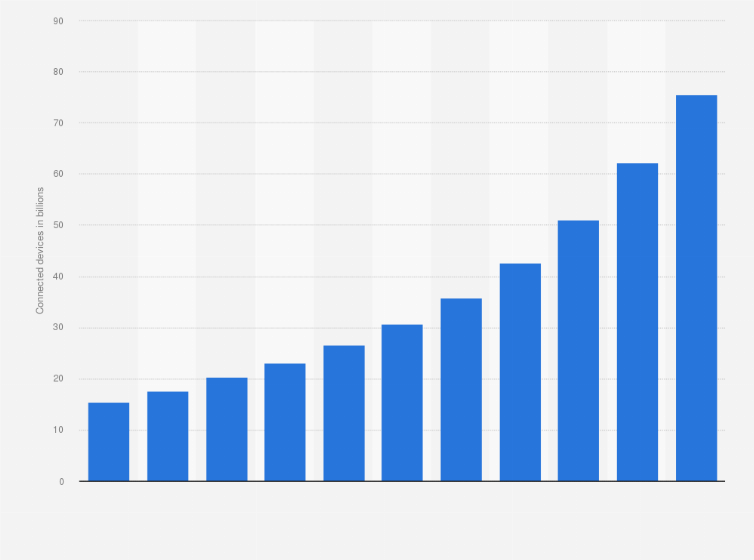
  3. By 2025, there will be more than 75.4B Internet of Things devices worldwide.
  4. In 2018, there were around 7B IoT devices. However, more than 10B devices are expected to join Internet of Things ecosystem.
  5. As of 2018, nearly half of all IoT (Internet of Things) devices were connected to WPAN (Wireless Personal Area Networks), including Zigbee, Bluetooth, and Z-wave.
  6. 54% of Enterprises invested in IoT app development because of its cost saving factor.

Now as we have taken a glimpse of IoT Trends 2020, let’s begin right from the basics.

A Brief Introduction of What is Internet of Things

IoT, also referred to as the Internet of Everything (IoE), is an ecosystem of interrelated computer devices, digital machines and objects that has the ability to transfer data to each other in real-time, with minimum human intervention.

These devices include coffee makers, washing machines, music system, TVs, wearables and other electronic devices that can communicate with each other using what is called Machine-to-Machine (M2M) communication.

While this is all about what is IoT technology, let’s turn towards its working mechanism.

Working of IoT Technology

When talking about how does IoT work, the process begins with devices that have built-in sensors. These devices are connected to IoT platforms which stores data from all the connected devices. The important data is then used to perform tasks that fulfil the needs of people.

When we say the data is stored in the IoT platforms, it doesn’t mean that all the data is useful. Devices carefully select only particular data that is relevant to execute an action. These pieces of information can detect patterns, recommendations and problems before they occur.

In this way, IoT application works with smart systems that automate tasks to address specific needs.

However, if you still have any doubts regarding how does it work, check out this video:-

With this attended to, let’s dive deeper into IoT market and see what are the prime components of Internet of Things technology.

4 Major Components of IoT Ecosystem

1. Sensors/ Devices

What is IoT? The internet of things explained

The foremost component to consider in Internet of Things technology is sensor/devices. A sensor picks up all the minute details from an environment. The environment can have many complexities. What makes IoT security so great is these sensors that pick up even the most sensitive changes. These sensors are built in the devices which collects all the data to be used later. For instance, our phone is a device with built-in sensors like GPS, camera, etc.

2. Connectivity

Converging cloud and connectivity

Once the data is collected it is transferred to the cloud infrastructure (also known as IoT platforms). But to transfer the data, the devices will need a medium. That’s when connections like Bluetooth, Wi-Fi, WAN, cellular networks, etc come into play. These mediums are all different and must be chosen wisely for best results.

The effectiveness IoT security highly depends on the speed and availability of these mediums.

3. Data Processing

What is IoT? The internet of things explained

After reaching the cloud infrastructure the data has to be analysed so that the right action can be taken. This process is however considered one of the most crucial obstacles in front of IoT app development. The analysis can be as simple as checking the temperature of the AC or a complex one such as a situation where an intruder comes in and the device has to identify it through cameras. The IoT application is made such that it can process all the data at a fast rate to take immediate actions.

4. User Interface
Mobile App Design Fundamentals: User Experience vs. User Interface | by Clearbridge Mobile | Medium

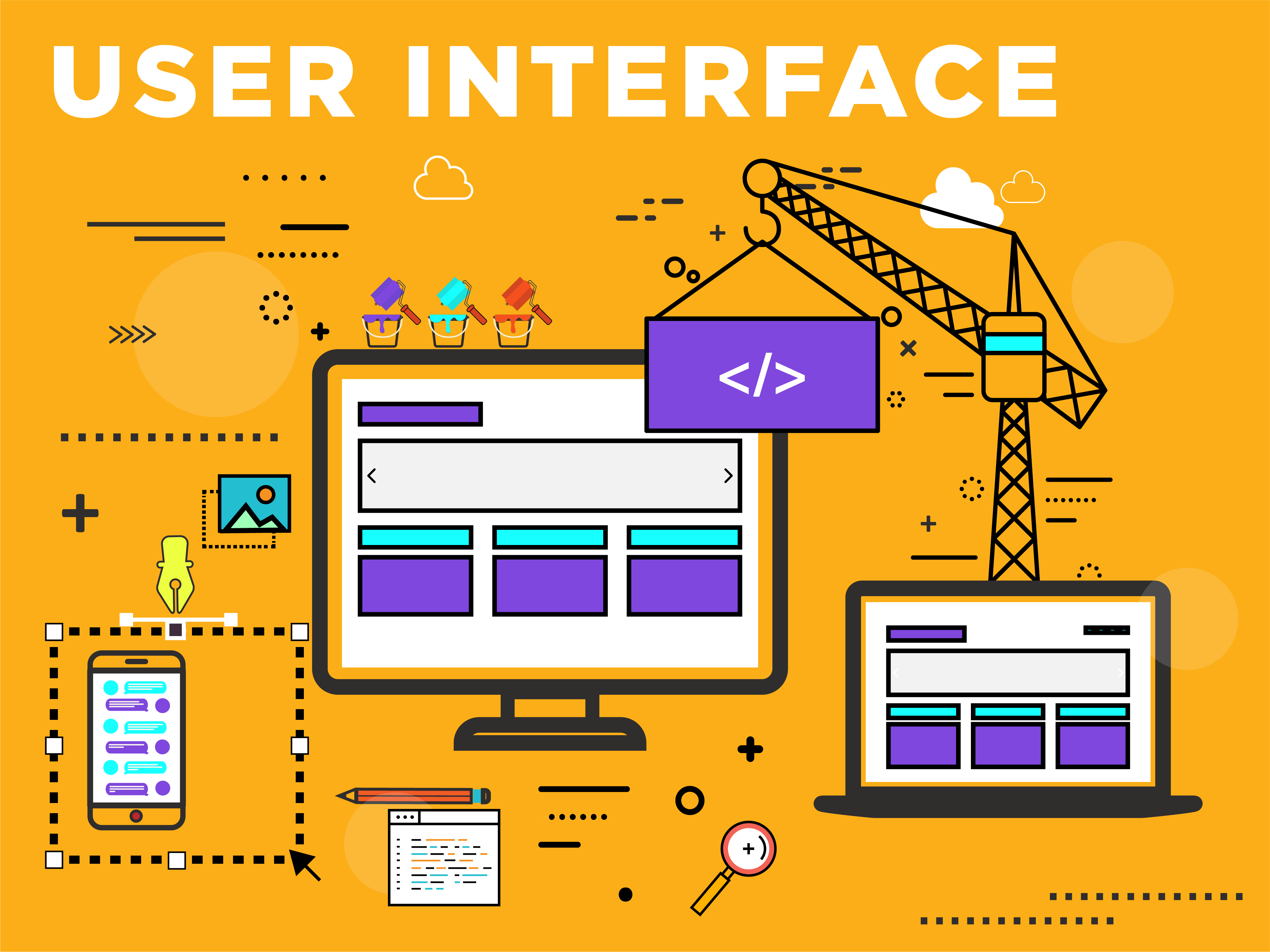
The last step is when the user is notified about the action with the help of a notification or an alert sound sent to the IoT mobile apps. This way the user will know that his command has been run through the systems.

However, this isn’t as easy as it seems. It all depends on what is IoT platform and how the technology has been developed. It becomes crucial for Internet of Things (IoT) app development companies to develop a system that can also be manually adjusted. In a situation where the temperature of the fridge is not cold enough to freeze ice cubes, users should be able to do that manually without the system backfiring.

Now as you have gained an insight of what this technology is, let’s take a look at what are the uses of Internet of Things in the present world – besides backing the concept of Smart Homes and cars.

What IoT Means to the Business World

1. Healthcare

Support Operation Goodwill & Cheer and Feed Framingham's Frontline Workers This Holiday Season - Framingham SOURCE

IoT in Healthcare has opened new doors of opportunity for medical specialists and patients. The technology enables doctors to get a real-time access to patient medical data, store them on cloud, and share with others. It also cut down the waiting time, helps to check for the availability of hardware and equipment, and simplifies the process to identify chronic diseases and take the right actions to mitigate the risk.

2. Education

What is IoT? The internet of things explained

Internet of Things technology is also revolutionizing the education sector. It is connecting people worldwide to ease the process of sharing knowledge, reduce the barrier in gaining access to any data, introduce security in education system, and more – a glimpse of which you can take from the video shared below:-

3. Retail

The 5 Biggest Retail Trends In 2021

Another domain that is enjoying a myriad of opportunities and facilities after getting an understanding of what is Internet of Things and how to incorporate it in their processes is Retail.

The industry, with the help of what we call as Internet of Things applications, is finding it easier to deliver personalized experience to their user base, automate checkout processes, perform maintenance effortlessly, and more.

4. Sharing Economy

Collaborative economy and its impact on social inclusion | IED

The combination of IoT and Blockchain, i.e, (Blockchain of Things) is reshaping the Sharing economy. The dual technologies are helping to build an online marketplace where data from all the companies and stores can be stored and shared securely and effectively using the concept of Smart Contracts. And eventually, used by others with the motive to cut down the efforts required from the user end.

5. Real Estate

IoT is Reshaping the Real Estate Market, What It Holds in Upcoming Years

IoT technology is also reshaping the real estate economy by speeding up decision making process, offering more energy-efficient options, making space smart, and more.

6. Travel

View from the Top | Travel Memories

Here, IoT is empowering travel agencies to deliver real-time information, automate most of the processes, and send electronic key cards on guests’ smartphone. And in this way, adding convenience, ease and security to their experience.

So, as we have covered so far in this article upon what is Internet of Things, the technology has a wider scope in almost every business vertical. But, if you still have any doubt or wish to design an IoT-based solution for your business, connect our IoT mobility experts today.

Dimensions of change in the digital workplace

Top four essential tools your digital workplace needs | Decode - A publication by Zoho Creator

Upgrade workplace technology: check. Modernize infrastructure: check. Adjust to new workforce: check. Overcome resistance to new ways of working: check. Adjusting to digital transformation’s impact on the workplace and workers is, well, a lot of work. A lot of change. And it’s essential to understand that workplace transformation will only deliver expected business benefits when organizations develop effective ways to cope with change along many dimensions. These include:

Workforce Transformation 2020: 12 Steps to Mastery | HR Technologist

Workforce. For the last few years, we have focused on the generational shift taking place as millennials become the bulk of the workforce. However, there is a second shift that will impact how we operate. Organizations are adopting more gig workers for specific tasks or projects, which puts pressure on IT to streamline gig workers’ experience and optimize processes to maximize gig workers’ productivity. Capitalizing on automation, intelligence, and integration to optimize business flows and processes will become fundamental to IT operations.

Do Humans Still Have a Place in Human Resource Management?

Human resources. This blended workforce, and the recognition that organizations are already adopting a task or gig-like approach internally, impacts the way we run our Human Resources processes. The line manager might continue as a custodian, but the management chain becomes flatter, tied to activities and projects. The old reporting model breaks by having so many stakeholders and managers. We need to automate and collate information for the relevant project and stakeholder, distill it succinctly, and publish it to those who are invested, as well as archive it as input to the performance review process.

Workflow Project Management Stock Illustrations – 5,998 Workflow Project Management Stock Illustrations, Vectors & Clipart - Dreamstime

Project management. That information will enable project managers and stakeholders to better manage the individual and the team, optimizing for performance and cost. As they see near-real-time information about productivity and performance (on their specific project), they can flex, coach, and change the team as needed. It is a much more hands-on world, although some of the tasks can be automated. Project resource managers can learn from just-in-time manufacturing techniques, bringing in the right folks at the time they are needed.

Step 1: Identify relevant information in sources – Becky Menendez

Relevant information. In this environment, relevant information — not more information — is the key. Luckily, the platforms citizen developers are experimenting with also provide some of the components needed. They can capture tasks done, documents touched and discussions held, giving us a raw feed of activity. Post-process this information, in the context of each stakeholder, can be used to produce concise, relevant reports grounded in system data, not flawed memories.

How to Help Your Team Find Their Higher Purpose

Embrace employee-driven innovation. Organizations must become better at matching the pace of change, using techniques like employee-driven innovation to quickly identify new workplace trends and opportunities. Formalizing informal support networks can help manage change more effectively and capture the benefits of disruption. And when companies understand how productivity and morale are boosted by ongoing workplace investments, the cost of change is less daunting and easier to justify.

Creating Connection and Collaboration Through Movement — Shifting Patterns Consulting

Connection and collaboration. Companies must continue to develop policies that give workers flexibility in the devices they chose to use. How people connect and collaborate is changing as well; companies will need to foster collaboration on, and set policies for, social media in the enterprise.

Automation In Application Support & Maintenance | Hexaware

Automation. Software agents, bots and intelligent machines will make tasks easier. Companies will need to consider how these new devices and applications can learn and apply user preferences, and how they can use real-time information in context to automate more tasks and decisions.

Enterprises can truly change the way employees work by providing a flexible, expansive workplace with the right technologies and policies. Those who come to grips with the new definition of the workplace and its enabling technologies will be the digital leaders of tomorrow.

Here’s how a digital core enables industry-wide digital transformation

The Digital Core: Powering efficiency and innovation for the Utilities industry

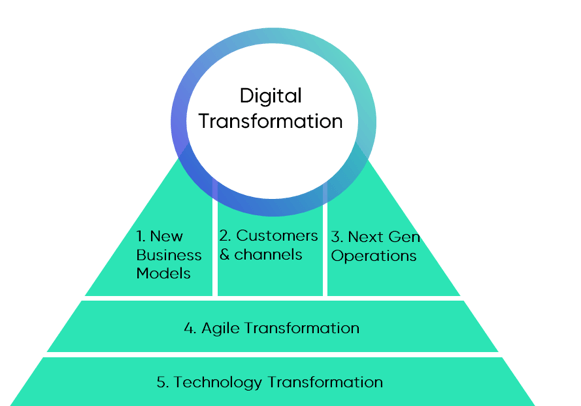
Companies in every industry are facing the challenge of evolving digital capabilities given their current operating models, resources, talent and culture. These elements are so intrinsic that any digital transformation not addressing them will ultimately fail because the legacy organization will inevitably exert a gravitational pull back to established practices, while agile competitors forge ahead. Some enterprises may be further along than others, but in most industries there are only a few companies that have made significant progress.

Becoming a digital enterprise is a complex and lengthy journey. It is much more than implementing predictive analytics or intuitive eCommerce experiences. Beyond product/service innovation, the journey demands attitude change in agility, experimentation, openness and transparency. However, for now let us focus on the digital core levers that CIOs and their teams can use to accelerate transformation –and how industries’ different use of digital enablers leads to different routes to digitilization.

Digital core enablers – technologies that realize digital transformation

What is the role of marketing in a digital transformation? | Riverflex

As I explained in the first blog of this series, a digital core represents a set of loosely coupled cloud-enabled and SaaS business applications integrated with analytics and big data, on top of an elastic, yet resilient, data platform. A digitalized enterprise core enables a scalable, enterprise-wide digital strategy with the intent to accelerate business innovation through insight-based customer, partner and employee engagement. This transparency and automation drives optimization of business process and asset utilization, as well as employee productivity, and allows forays into new business models beyond the industry.

The digital core components accelerate the benefits of digital transformation by:

  • Enabling creation of engaging and effective customer, employee and partner “experiences,” leading to adaptable, collaborative transactions
  • Optimizing end-to-end business processes, even extending them beyond the enterprise to improve business efficiency and effectiveness
  • Innovating current business models that open potential for net-new revenue from products and/or services in unexplored market segments or via cross-industry collaboration and/or digital business platforms.

Digital core demands a hybrid transactional and analytics data platform

Real-Time Connected Data Warehouse, Easy Operational Analytics

So, where should most enterprises start? While the hype about cloud-native, loosely coupled microservice applications is raging, there is a quiet revolution taking place enabling the sensible modernization of a business operational core. SAP, Oracle, Microsoft Dynamics, IBM, Workday, Salesforce and other vendors are increasingly offering “in-process,” hybrid transactional and analytical business applications based on optimized, ACID-compliant, columnar databases sharing one data platform. These merged platforms support data harmonization and application consolidation from a value stream perspective into one data store — with significant impact on TCO. In-process applications leveraging translytical data platforms or hybrid transaction/analytical processing (HTAP) accelerated by in-memory computing are disruptive. Companies can optimize business process execution by meshing many of the digital core enablers like real-time analytics (for example, planning, forecasting, outcome simulations and what-if analysis) in transactional execution, rather than performing them as separate activities after the fact.

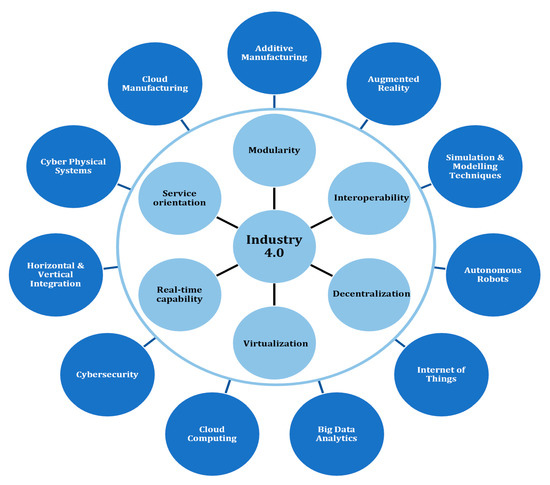
Beyond this potential transition route to a digital core by consolidating applications into transanalytical data platforms, big data (Apache Hadoop) repositories can complement the reach of core applications by infusing additional external or sensor-based data to transition from manual to sense-and-respond, event-driven processes. As shown in the graphic below, these digital enablers may even “blur” the boundaries between industries, therefore enabling cross-sector collaboration.

Digital enablers disrupt industries and break down boundaries

Designs | Free Full-Text | A Conceptual Framework to Support Digital Transformation in Manufacturing Using an Integrated Business Process Management Approach | HTML

Recent disruptive competitive moves by Amazon into transportation and financial services reinforced the importance of establishing a hybrid data platform that drives internal optimization and allows competitive moves into new services and products.

While different industrial sectors have a natural proximity to some of the digital enablers shown below, there is a rising consensus that the transparency and insight provided by richer data in analytical and big data repositories are the “fuel” of automation. Most of the technologies highlighted as disruptive in the graph below revolve around the utilities of artificial intelligence and machine learning.

Becoming digital – a maturity and context-based approach per industry

Streaming Big Data Analytics. The recent years have seen a… | by Shubham Patni | AlgoAnalytics | Medium

Recently, researchers from the McKinsey Global Institute (MGI) looked at the state of digitization in sectors across the United States and Europe and found significant gaps between many of them. Most digital companies see outsized growth in productivity and profit margins. But what are the key attributes of these digital leaders, and how can companies benchmark themselves against competitors? MGI’s digitization index encompasses (a) digitization of assets, including infrastructure, connected machines, data, and data platforms, (b) digitization of business operations, including processes, payment and business models, customer and supply chain interactions and (c) digitization of the workforce, including worker use of digital tools, digitally skilled workers and new digital jobs and roles.

The industry digitization dashboard below shows the digitization maturity scores. The IT technology sector comes out on top. Media, finance and professional services are right behind. Not surprisingly, these are some of the industries that currently invest in cognitive AI for operations and services, which in many ways demand a rapid modernization of their business operational cores.

No doubt the extent to which companies are digitizing their physical assets and supply chains and enabling their knowledge workers — that is, if they have smart buildings, connected vehicle fleets, big data or IoT systems and information at their employees’ fingertips – determines the performance they get out of equipment, systems, and business networks. However, different states of maturity with such enablers demand a varied approach by industry. For example:

  • A consumer-products company will benefit from focusing its data and automation efforts on establishing a synchronized supply network able to respond to events from their customers. The fourth recommendation above shows that digitization of the B2B channel through “intelligent shelves” will improve forecast accuracy and trade promotion efficiency and evolve from a make-to-stock model into a make-to-order product flow. That in return will demand a transition from forecasting to response planning and big data repositories that sense, categorize and act upon on-shelf shortages. Product and packaging fragmentation will further demand digitization of the heart of manufacturing.
  • Asset-intensive industries like utilities can leverage AI to drive improved matching of supply and demand, which needs to be done, literally, in real time. With the addition of smart metering sensors, utilities have been able to progress from forecasted to actual consumption billing, but more importantly, to increase accuracy of their short-term load forecasts in order to adjust supply to meet anticipated demand. This delivers substantial savings, reduces waste and emissions and adds further system resilience via predictive and preventive maintenance.
  • Service- and labor-intensive industries like retail need to improve their interactions with consumers by improving the omni-channel experience and empowering their employees towards higher productivity via mobile-enabled tools, while collecting and bargaining using the wealth of information on behavior and assortment. Efficient logistics, goods tagging and placement can be automated.

In summary, by understanding their digital maturity vis-à-vis their peers and even related industries, companies can streamline the deployment of a digital core, focusing on business model optimization or innovation while enhancing their business network experience. Easier deployment of digital enablers is one of the benefits of a modernized digital core. Advanced analytics, IoT, AI/ML, robotics, algorithmic operations and blockchain can transform how companies create and manage digital assets, accelerate supply-to-demand, facilitate digital experiences and empower digital workers towards higher productivity.

In my next blog post, I’ll write about how a digital business platform extends an enterprise’s digital core into the broader business network and allows for end-to-end value stream optimization of current operations.

Optimizing Agile delivery when the development team isn’t co-located

7 Concrete Ways to Improve Collaboration in Remote or Distributed Scrum Teams | by Paddy Corry | Serious Scrum | Medium

Co-locating Agile development teams with the customer or business unit is optimal for collaboration and customer intimacy. However, co-location is not always feasible. Development team members could be from multiple geographic locations, the customer could also be spread across multiple locations, and economic considerations might direct some of the development to regions with lower costs.

This requires an effective Distributed Agile/Remote Agile Delivery model.  Here are the four key considerations that need to be taken into account for a Distributed Agile Delivery model to ensure successful delivery:

Examples of Culture

1. Culture. If the teams are spread across multiple countries, cultural differences are bound to arise due to diverse work practices, values, processes, styles of leadership, decision-making, and problem-solving approaches. Not being able to work side-by-side can lead to misunderstandings from unrecognized cultural differences.

To mitigate, it is essential to build trust and establish relationships between the teams early on. Initiation events, where teams meet and work together, and establish common standards and consistent practices, present a great opportunity to establish trust and foster team building. Sending “Ambassadors” from each site to the others on a periodic basis is also an effective way to bridge the cultural gap.

Virtual Team Communication: Key Risks & Best Practices

2. Common hours and communications. Cultural and language differences make effective communications hard. Even with web- and video-conferencing, it is challenging to overcome the lack of visual cues and face-to-face interactions. This is further compounded by insufficient time zone overlap.

Teams need to work out an approach to shift some work hours to improve their time zone overlap.  Often teams agree on “core hours” during which members at all locations will be simultaneously available. Reliable communication tools, desktop sharing, phone, instant messaging, and virtual rooms can then play a big role in establishing strong communications. Agile coaches and Scrum masters need to step up as effective coordinators. Bi-directional travel by key customer stakeholders and vendor leaders also helps.

Why Your Company Needs More Collaboration

3. Collaboration. Distance makes collaboration and frequent communication challenging. Context of discussions is sometimes lost as well.  Using a “Proxy Product Owner” at each site can help bridge any gaps in business and domain knowledge. Building a work culture around compulsively using Enterprise Agile Planning Tools (EAPT) and collaboration tools facilitates collaboration among remote teams. The Ambassador program mentioned earlier — rotating some or all of the team between locations — and bringing the teams together on a periodic basis helps.

What is vRealize Automation? | Infrastructure Automation | VMware

4. Consistent Infrastructure and Configuration Management. Challenges with Distributed Agile multiply if you do not have standard shared infrastructure and continuous integration. You need to leverage virtualization and provide identical environments for teams at all sites. Other strategies include using a single configuration management system for all teams, deploying DevOps (at least Continuous Integration and Continuous Testing), and insisting on frequent builds.

Ensuring that these four areas are addressed at project onset sets the collaborative tone for your distributed agile delivery. Having a collaborative team mindset from kick-off through delivery is crucial to project success.

Techniques and Tactics concerning Hybrid IT

Cloud computing gains traction in UAE | Technology – Gulf News

As companies embrace hybrid IT, they must address both technology and the human side of change. There are several key actions to take:

  • Staff and train differently: As applications move from traditional platforms to the cloud, current IT staff needs to be trained and re-skilled. Companies should recruit developers adept in Agile methodologies. Siloes should be broken down, and the workforce should become more integrated, multifunctional, flexible and agile.

Training Your Staff to Use ITSM Tools: 5 Tips to Success - ITSM.tools

  • Overhaul change management: The existing governance processes, gates and approval procedures designed for traditional legacy IT environments are no longer appropriate in a cloud environment. Companies need to revamp their change management systems to allow changes to happen quickly and, using automated workflows, to reduce manual intervention.

Insurance firm banks on change management in digital overhaul | CIO

  • Integrate cloud operations: As organizations move workloads to the cloud, the IT operations function should adapt to manage both on-premises and cloud-based applications. This new model, called CloudOps, can provide continuous integrated operations in a multi-cloud environment to enable rapid response to events, incidents and requests. Adding DevOps to the mix then utilizes automation, integration and organizational change to enable more frequent enhancements that result in higher quality software.

Cloud Integration Services | HyperBeans

  • Automate support: To the extent possible, automate IT support functions. For example, the traditional trouble ticket system can be manually intensive and inefficient. Automation can improve service and free up IT personnel for higher-level activities. Longer term, companies will be able to deploy machine learning and AI to take log data from cloud-based systems and automatically take actions to resolve and even prevent incidents.

Automated Support Tasks: 7 Things to Let Bots Handle Right Now | Boomtown

  • Manage “shadow IT”: Business units are often acquiring the cloud services they need because IT moves too slowly. At some point, those services must be integrated back into the traditional IT environment for operational and security reasons through a services governance model that encompasses hybrid IT elements.

4 ways to shine a light on shadow IT -- GCN

In addition, it’s important for CIOs to have a handle on what the enterprise is spending on IT services. The only way to accomplish this is to adopt hybrid IT and demonstrate to business units that IT can support the pace and scale that the business requires.

Most popular questions companies have regarding AI and ML

The Rise of Digital Experience Platforms - DOINGSOON

Artificial Intelligence (AI) and Machine Learning (ML) are rapidly evolving to help companies with both digital transformation and innovation. There has been a lot of hype and discussion about these topics, and, in a very short time, we have moved the conversation from “AI is cool” to “AI can drive specific business outcomes.”

Experience has allowed companies to clarify the economics of AI and reduce time to value. In addition, the technology has continually improved, with advancements including:

  • extracting unstructured data for improved insights and processes
  • moving from simple chatbots to more sophisticated conversational assistants that are smart, use more natural language interaction (text and/or voice), and enable the initiation of transactions
  • integrating operational and knowledge management systems

As our clients start to understand more about AI/ML, there are 2 key questions typically asked:

Question 1: “How do AI and Machine Learning differ from traditional programmed systems?”

What is Machine Learning | Definition, Tools, how it Works & Uses

There are three different capabilities that AI/ML typically extends and enhances into existing applications. One aspect is understanding – enabling systems to understand language, other unstructured data, including pictures, just like humans do.  A second aspect is reasoning – enabling systems to grasp underlying concepts, form hypotheses, and infer and extract ideas, similar to humans. The third aspect is focused on learning – improving over time and avoiding repeated mistakes.  These capabilities, often referred to as U-R-L (understand, reason, learn), are easily integrated into existing applications as consumable APIs, can reduce time to value.

Question 2: “Where is the value from Artificial Intelligence/Machine Learning?”

6 Steps to Create Value from Machine Learning for Your Business | by Vishal Morde | Towards Data Science

As we look across client environments, most clients are very comfortable with structured data that is within their firewall – things like transaction systems, customer records, and even predictive models. Many analysts estimate that 80% of data created today is unstructured, which requires clients to expand their current perspectives in 2 dimensions:

  1. Structured to unstructured, such as documents, transcripts, social media, weather, images, IoT and sensor data, and news
  2. Within the firewall to outside the firewall, including public data, licensed private data, and new types/sources being created every day

From a value perspective, the enticing aspect of AI and machine learning is connecting these structured and unstructured data types within and outside these walls. This enables richer, more, and unexpected insights, new business processes, and improved workflows at dramatically reduced cost levels.

As AI and machine learning mature, three use cases patterns have emerged around customer care, human capital management and the rethinking/reimagining of processes thanks to insights gained from unstructured data and natural language capabilities.

We’ll expand on these use cases and how we are applying AI/ML for our clients in our next blog post.

How DevOps’ is reaping the benefits of microservices!

What is DevOps? - DevOps Explained

In the world of “one-up” IT, it seems like almost everyone is wanting to understand how to integrate microservices into their solution architecture. And rightly so. The benefits of using microservices are numerous and varied. Let’s examine some of these positives and consider if they can help you solve some of the problems that you are facing today.

Agile scalability

Future of CIO: Agile Scalability

In a traditional Web application, you can author scaling rules such that when a certain request count is reached, additional instances of the entire Web application can be automatically spun up on newly (and dynamically) allocated Web servers. However, you do not have any control over which specific area of that Web application needs to be scaled. Do you need to scale the entire Web app, or just a part of it?

For instance, there could be a queued backup of HTTP requests waiting to post values into a payment system. Perhaps there is a rather extensive validation algorithm that needs to be processed before the payment can be finalized. This small yet often-accessed part of the Web app could thus become a bottleneck. In traditional scaling of a Web app, to scale up new Web servers would be dynamically provisioned, the entire Web app will be loaded onto those servers, and the process will continue.

A more efficient architecture design would be to scale up just the payment service on its own. Not only would that be quicker (since you are not provisioning new versions of the complete Web app), but it uses less resources (since you are only scaling a piece of the solution).

To further save in resources and time, add in a cloud provider to leverage its container technology to host microservices and other cloud services to help with innovation, scalability, provide resource optimization.

Focused development

Motivation Pour Le Développement Personnel Photo stock - Image du personnel, inspiration: 139889716

The goal of “micro” service is to do one thing only but do it very well to meet the needs of the business. This typically means a small team, a finite and very focused development scope, and functionality to design and implement the microservice very well. Services should be “slim” and keenly targeted and no overlapping functionality with other supporting microservices. When this is accomplished, consumers of that service can thus focus on using that service and could care less about its implementation or how the microservice accomplishes its goals.

Keeping development focused at the microservice level gives teams the chance to experiment. It is very very easy for multiple versions of a microservice to co-exist for A/B testing. You can route certain percentages of requests to the different versions, assess /compare the results, and then make design decisions. This can be done multiple times per day if necessary. This ability to experiment is not possible with anything larger than a microservice.

When decomposing the monolith down to microservices, we are now free to implement each microservice in the most effective way. This may mean using a different version of Java or NodeJs than what the other microservices are using. Or you can go all the way in on polyglot development and allow teams to choose the specific technology (e.g. Java, .NET, Go, etc.) they want for their given service.

DevOps Integration

Looking for continuous integration and continuous delivery in QA? DevOps can help you

With all these independent teams developing non-overlapping and focused microservices, how to we integrate this all together into a viable solution?   The DevOps model can serve as a facilitator.  Both microservices and DevOps offer an agile model that is a key component of the microservices model.  Well-designed microservices follow this model to assist in development, speed, and agility – yielding smaller and more frequent releases. Continuous Integration (CI) is all about integrating frequent releases and thus is a perfect platform for a microservices release model.  This model encompasses shorter build, test, and deployment cycles that fuel the ability to quickly roll out new versions of a service.

Microservices bring additional productivity to DevOps by embracing a shared toolset, which can be used for both development and operations. That common toolset establishes shared terminology, as well as processes for requirements, dependencies, and problems. This encourages development and operations teams to work better with one another, allowing those entities to work jointly on a problem to successfully fix a build configuration or a build script.

DevOps and microservices work better when applied together. This is especially true when DevOps automation is added to the equation, ensuring you get the same process followed exactly each time through the CI/CD pipeline.  Automation also cuts down significantly on the time to process the new code/build/test/deploy cycle.

Standardized Communication

What is Business Communication? Why Do You Need It?

Microservices communicate using common mechanisms, such as RPC (such as REST or SOAP), or messaging. This promotes easy interaction with them. With RPC, a service makes a synchronous request to another service, then waits for that called service to respond back. While it is a simpler programming model due to the logic of the caller continuing immediately upon return from the RPC call, it can also have blocking/waiting issues while calls are waiting to complete.

If asynchronous communication is required to avoid blocking calls, then messaging can be used.  Here a message is “published” into a message broker. That broker takes the message and forwards it on towards “subscriber” receivers who have registered to be notified if this message is published.  The publisher (calling code) can then return immediately after publishing the message to the broker and does not have to wait for the message to process.

Evolutionary Architecture

Guiding Principles for an Evolutionary Architecture | Aidan Casey

One of the big architectural benefits of microservices is how well microservices support the ability to implement an “evolutionary” architecture. This allows you to continually innovate and incrementally change without incurring any significant cost, risk and change to those services that are running on it.

The advantages of microservices

These are the primary positives of microservices. Together they form a very efficient and streamlined agile model for development. However, microservices are not a technology to blindly make everything better. There is overhead in developing them, and it is a more complex model in certain ways than a monolithic architecture. Due to this complexity, we must use the Agile development method, and DevOps automation.

AI and ML Advancement leading to new Application Emergement

Artificial Intelligence - Part 2 - Deep Learning Vs. Machine Learning: Understanding the Difference | Lanner

With most innovative technologies, at some point in the solution evolution there’s a tipping point from “this is cool” to “there are real business outcomes to gain.” We are now seeing that shift with artificial intelligence (AI) and machine learning (ML), especially in three major use case patterns:

1. Customer care

Why customer care is of (utmost) importance to e-commerce - Blog PrestaShop

When it comes to customer care, many companies face a similar set of challenges:  Customer service representatives (CSRs) typically need to view multiple windows on multiple screens to find answers to a caller’s questions. This results in calls taking a long time to handle, frustrated customers, lower CSR productivity and overall poor customer satisfaction.

AI and ML can help change these outcomes. One insurance customer implemented AI and ML to transform its contact center, which responds to approximately 5 million voice calls per year. It also introduced an intelligent voice agent to respond directly to 50-70% of all customer inquiries.  The power of AI and ML extended and enhanced the customer experience and the productivity of CSRs, who are now able to deliver more accurate and consistent answers, at lower cost and greater speed.   As a result, we have also seen reduced attrition, as the CSRs are happier in their roles and require less training time to become self-sufficient. Overall, by using AI and ML, the contact center is able to provide a high level of customer service, enhanced customer satisfaction and more efficient engagement.

In another example, a customer service center handling 60M service requests per year is implementing AI “smart chat” to transform customer service, drive better quality, improve consistency and lower costs.

The transformation of an operation as complex as a customer call center is a multi-step journey:

  • Organizing and visualizing the data required to support typical workflows is a critical early step and can include authenticating/validating the caller, providing easy access to the data from different back end systems, initiating transactions and closing out the call.
  • A second step adds natural language processing (NLP) to allow the CSR to ask more complex questions. NLP uses a trained ML model to determine the most likely answers from a collection of large, unstructured documents.
  • A third step includes self-service for external callers, using voice and natural language to respond directly to client inquiries without requiring interaction with a CSR.

While the steps themselves remain the same, the sequencing may vary to align to the specific outcomes the organization desires.

2. Human capital management

Human Capital Management Technology May Be 'Demo Candy' - InformationWeek

By applying cognitive capabilities to human resources, companies are able to transform their human capital management (HCM) processes.

One valuable use case improves the employee experience by leveraging intelligent natural language conversation services to integrate data in operational HR data systems, such as Workday, and in knowledge management systems that explain policies, procedures and guidelines.  Benefits include improved employee engagement, higher productivity and lower costs.

Other potential HCM use cases that are ripe for AI and ML include recruiting, selection and on-boarding of candidates.  AI and ML models are already being used to help analyze and match job descriptions and candidate resumes, and to recommend potential jobs for existing employees.

3. Process rethinking/reimagination

Forced digital transformation: Rethink, reimagine, redefine, IT News, ET CIO

There are also multiple examples of leveraging AI and ML for rethinking and reimagining processes.

In one example, an insurance company reduced claim settlement time and costs by incorporating AI and ML to improve First Notice of Loss (FNOL) initiation and data collection, as well as claim classification/assignment processes.

Companies can improve the speed and accuracy of FNOL by enabling claimant self-service using natural language voice/chat to initiate a claim. They can integrate external data sources such as weather and employ a fraud scoring model to facilitate claim classification and corresponding assignment to the correct processing alternative.  Processing alternatives can include:

  • Straight-through processing without human involvement
  • Sending appropriate claims to the legal department for potential early intervention to reduce lawsuits
  • Rejecting claims because the deductible is higher than the claim
  • Assigning claims to a human analyst/adjustor

Predictive modeling to triage injured worker claims has been developed and applied to help determine “return to work” outcomes, along with typical treatment plans for various types of injuries (NOT replacing doctors) and estimated treatment costs.  This technique optimizes case manager resource assignment and helps injured workers get back to work, improving service quality and lowering costs.

Applying an ML model to extract information from unstructured documents and forms helps to provide insights from previously unanalyzed sources.  This capability works by accelerating processing of information buried in those large unstructured documents and drives new insights, lowers costs and improves processing efficiency.

In a fourth example, Anteelo is automating the underwriting process for home inspection to lower costs and improve scalability and overall quality.  This use case applies visual recognition to highlight details in home inspection photos and use those details to consult the underwriting guidelines and then augment the underwriting decision.

As you can see from these use cases, the ability to improve the customer experience and gain operational efficiencies through AI and ML are real and very achievable. What other use cases can you think of for your industry?  I’d love to hear your thoughts!

Techniques of making Cloud Application Migrations simpler

4 Steps to Successful Specialization in Your Financial Services Business - Financial Advisor Coaching by Susan DanzigMany system integrators and cloud hosting providers claim to have their own unique process for cloud migrations. The reality is everyone’s migration process is just about the same, but that doesn’t mean they’re all created equal. What really matters is in the details of how the work gets done. Application transformation and migration requires skilled people, an understanding of your business and applications, deep experience in performing migrations, automated processes and specialized tools. Each of these capabilities can directly impact costs, timelines and ultimately the success of the migrations. Here are four ways to help ensure a fast and uneventful move:

1: Create a solid readiness roadmap.

Building a Roadmap to Cloud: 5 Steps You Need to Follow | Stefanini

The cloud readiness stage is often referred to as the business case and/or involve a total cost of ownership assessment, rapid discovery, advisory services, and more. However, most of these approaches fall short of the up-front analysis really needed to decide which applications to move, refactor or replace. When you embark on a migration to cloud, job one is to ensure you are ready to go. Diving right into a migration without a roadmap is typically a recipe for failure. If you don’t know what the business case is to migrate, then stop right there. You should come out of the readiness phase with a high-level plan and an initial set of migration sprints and a detailed roadmap on how to address the subsequent sprints.

2: Design a detailed migration plan.

7 Steps to Include in your Data Migration Plan | Secure Cloud Backup Software | Nordic Backup

This phase, also referred to as deep discovery, will help keep migration activities on schedule. All too often, lack of proper analysis and design leads to surprises in the migration phase that can have a domino effect across multiple applications. This phase should include a detailed analysis of the scope of applications and workloads to be migrated, sprint by sprint. This agile process shortens migration time and ensures faster time to value in the cloud. All unknowns are uncovered, and changes are incorporated in the roadmap to ensure anticipated business objectives will be achieved. 

3: Set a strict cadence — and stick to it.

How to Create an Outreach Cadence in 6 Easy Steps - Odro

Often, most of the planning effort focuses on getting past that first migration sprint. This phase requires a great deal of planning and preparation across multiple stakeholders to keep the project on time and within budget. Scheduling all of the resources and tracking the tasks that lead up to D-day is no simple job. These activities must follow a standard cadence of planning steps to ensure effective and efficient migrations.

4: Automate as much of the migration as possible.

IT Automation vs Orchestration: What's The Difference? – BMC Software | Blogs

The way your organization performs the migration can also impact the project. In most cases, tools that automate the application transformation process, as well as the migration to cloud, can mean a huge savings in time and money. Unfortunately, there’s no off-the-shelf automation tool to ensure success. The migration phase requires people experienced in a range of tools and how to orchestrate the work.

One could argue that a fifth way to ease migration headaches is optimizing applications during the process. However, there are different schools of thought on whether to optimize applications and workloads before, during or after migration. I can’t say there is a definitive right or wrong answer, but most organizations prefer to optimize after migration. This allows for continuous tuning and optimization of the application moving forward.

It is important to note that steps in the migration process are not one-and-done activities. The best migration and transformation services are iterative and continuous.

You can’t determine readiness only once. The readiness plan needs to be reviewed on an ongoing basis. Don’t analyze and design migrations just once. Do it sprint by sprint, and plan each migration activity. Make sure you continuously collect and refresh data, refine and prioritize the backlog, and look for key lessons learned to ensure continuous improvement through the lifecycle of entire migration. Experience and planning can go a long way toward easing your next application migration.

How learning aids in the development of an agile workforce

How to Build an Agile Workforce in a Digital World | DMI

While forward-thinking companies are rapidly investing in their technology resources, they’re doing the same for their human resources.

That’s because these organizations know that the workforce of the future isn’t made up solely of robots. Instead, the workforce of the future is an “augmented” one, where humans and AI work together to drive greater efficiency, innovation, and business success.

Humans and AI? Better together

How L&D Connects Humans And AI - eLearning Industry

As AI capabilities take over repetitive, more routine functions, human workers will be needed more than ever to not only manage and supervise technology but engage in higher cognitive functions, such as creativity, innovation, persuasion, and decision making.

Mercer describes this new, blended workforce as one that is “human-led and technology-enabled.” This idea of augmentation means that humans still matter in the workforce, despite fears to the contrary. While experts predict that 52% of existing human tasks will be performed by robots by 2025, technology will create 133 million new jobs by 2022.

According to Mark Sears, founder and CEO of CloudFactory, as quoted in Robotics Business Review, “People will always play important roles in the workplace of the future. Even in highly automated environments, people must continue to develop, train, and iterate machine learning models to facilitate robotic automation. The feedback provided by the humans in the loop—even in highly automated environments—is critical to the success of automation.”

Building an effective augmented workforce starts with learning

The Ultimate Augmented Worker Guide: How Technology Can Power Your Workforce | Tulip

A high-functioning augmented workforce depends on effectively managing its two core elements: technology and people. But while the AI piece of augmentation depends on choosing the right technology, managing the human element isn’t as straightforward. The skills shortage means that organizations can’t simply hire their way to an agile, upskilled workforce. Instead, organizations must begin focusing on creating the workforce they need by engaging and retaining existing employees.

A successful augmented workforce requires highly trained, agile, continuously upskilled employees—employees who are both eager to learn and simultaneously given the opportunity to learn by their employers. HR has long known that learning is key to both employee engagement and retention.

In the age of digital transformation, learning has an additional, equally significant benefit: organizations that provide ongoing learning are anticipated to outperform those who don’t. Putting learning at the center of the organization enables the creation of a workforce that is always ready to work with and adapt to changing technology and the market, thus making the organization far more flexible and agile in an era of constant disruption.

The six keys to getting started

Building an augmented workforce begins with building a learning organization, one that enables employees to learn continuously, quickly upskill as needed, and drive their own careers paths.

For organizations accustomed to providing an employee stipend for a college course or offering one-day workshops, this new approach– learning at the center of the organization rather than at its periphery—can seem overwhelming. But while becoming a learning organization is crucial to remaining successful amid constant change, the transformation doesn’t have to happen overnight.

Organizations can begin with six manageable steps, efforts that help prioritize development and nurture learning for the long term:

1. Establish a learning culture. Start Thinking of learning as something that happens every day, within every job, for every employee, from hire to retire. Enable employees to try new skills and fail. In the workplace of the future, failure is an opportunity to move forward.

Create a Learning Culture | Scaled Agile2. Nurture curiosity by offering learning opportunities to everyone. Research shows that every generation (not just Millennials) wants to learn. Offer learning opportunities to those in entry-level and leadership roles–and every role in between.

Achieve Better Learning: Utilize Curiosity to Stimulate Brain Function

3. Enable learners to drive their own learning. Let employees follow their curiosity. Offer a wide range of accessible, ongoing, and free opportunities.

What is Active Learning? And Why it Matters | ViewSonic Library

4. Develop learning agility. Learning agility isn’t an innate skill. To drive efficient upskilling, vanguard organizations are teaching employees how to learn effectively.

Learning agility: What is it and how do you nurture it?

5. Create career paths that are not so much traditional as transformational. See beyond traditional hierarchies and realize that the careers of the future will be very different than those of today. By offering a wide variety of developmental experiences, organizations can inspire employees to define their own career paths (and simultaneously encourage them to stay).

The changing nature of careers in the 21st century | Deloitte Insights

6. Offer empowerment, not entanglement. Offering employees ongoing learning doesn’t guarantee they’ll stay. However, by offering learning portability, organizations create an environment of trust and employee empowerment. And as more organizations do the same, employees will be free to find the right work “home” and thus be more productive and engaged.

Could Quantum Entanglement Explain Telepathic Communication? | Gaia

The convergence of learning and work in the digital era.

Who wins in the digital era? Organizations that use both people and technology resources efficiently—the augmented workforce. While the use of AI for routine tasks is on the rise, the abilities unique to human beings—the cognitive, the creative, the empathetic—are still crucial to an organization’s long-term success. How then can organizations help the human workforce make this shift, from manual tasks to cognitive and creative roles? By making ongoing learning central to work and placing development opportunities at the core of every role. Practically, this means creating an employee-centric learning environment, such as a multi-platform, agile methodology where the learner’s experience is the focus.

error: Content is protected !!