How to Get Business Reviews and Why They’re Valuable

Why customer reviews are important & how to get them | Lumina Intelligence

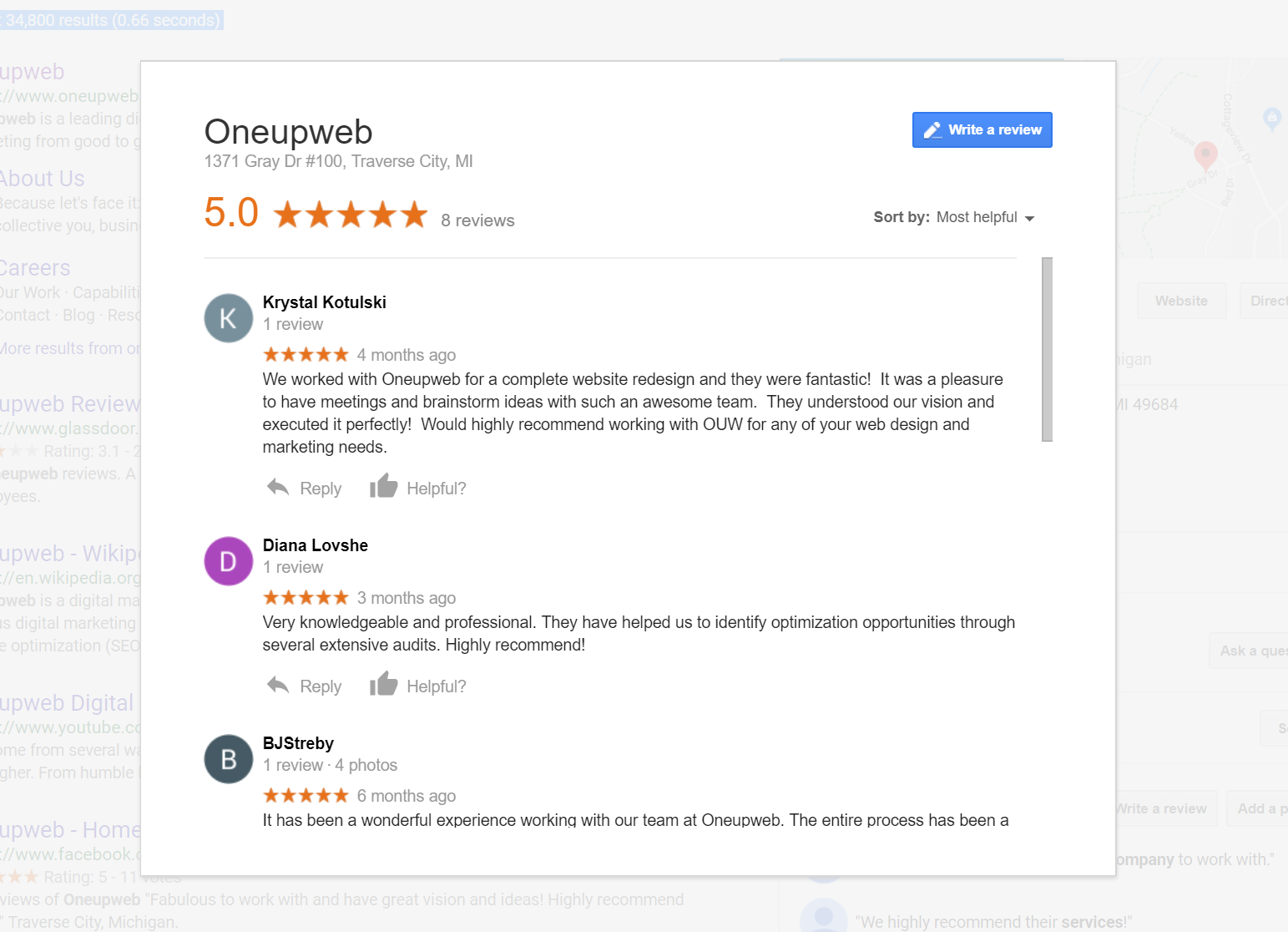
Online reviews play an important, dual role for businesses, attracting new customers and helping their websites to rank higher in search engine results. Here we’ll take a closer look at why you need Business reviews; explain the different ways you can get them and show you how to make the most use of them.

Why ratings and reviews are important

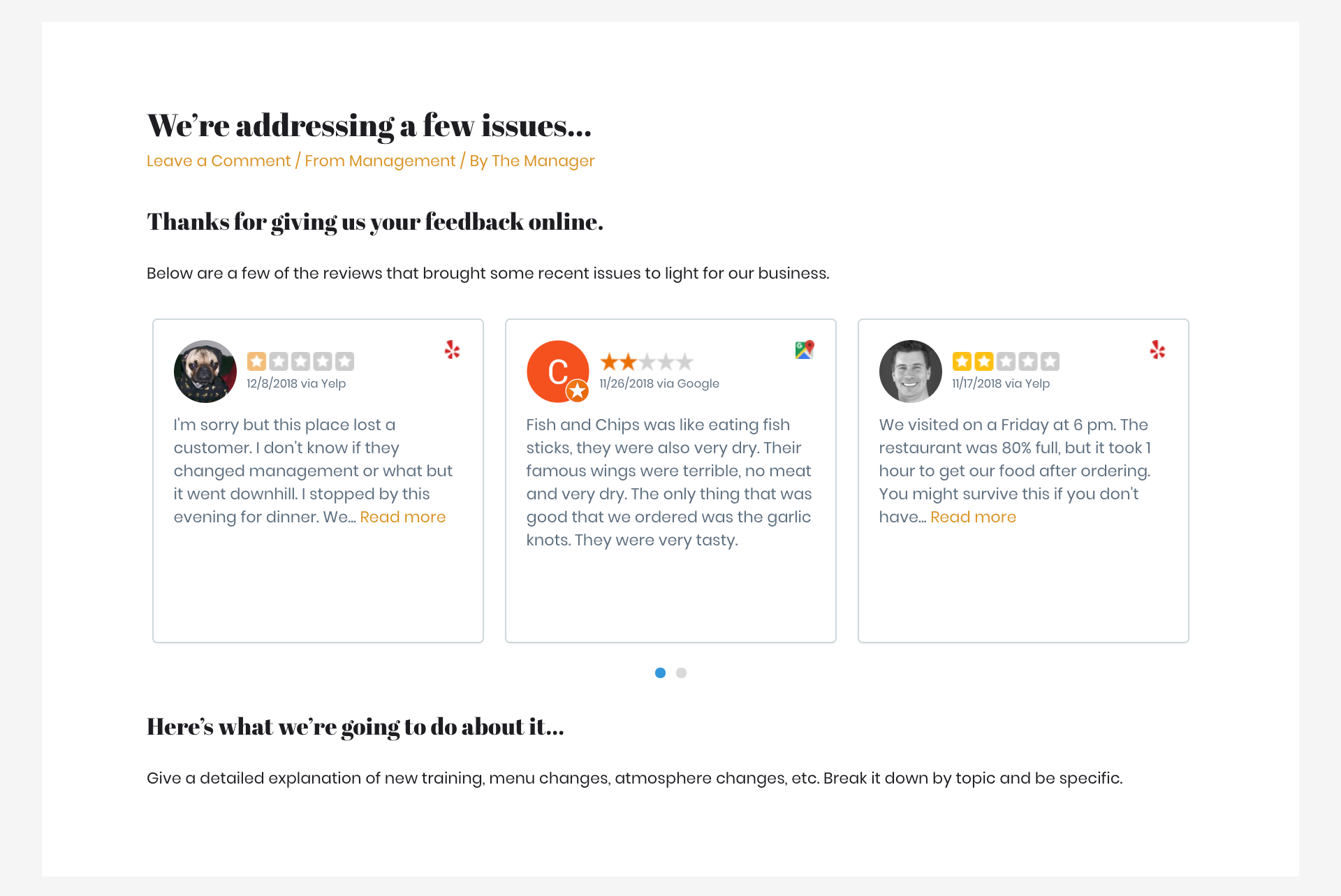
5 Reasons Why Customer Reviews Are Important for Your Business - Relevance

The reading of ratings and reviews has become an integral element of today’s shopping experience, especially for online purchases. According to Qualtrix, 92% of B2B buyers and 93% of consumers are influenced by reviews, a figure that rises to 97% for local businesses. Positive reviews help develop trust in businesses or the products they are selling and this leads to increased revenue. Of course, negative Business reviews have the opposite effect. 87% of customers won’t shop with businesses that have an overall rating below 3 stars and 94% have avoided companies because of negative reviews. Those without any reviews don’t fare much better. If customers are left with a choice of a well-reviewed company and one which has no reviews, the well-reviewed firm wins hands-down.

It’s not just customers who take notice of reviews. Google does too. It looks at reviews left on its own site and those from sites it trusts, like Yell, Facebook or Trustpilot, considering both the overall rating and, importantly, the positive or negative sentiment used in written reviews. These are used to help Google rank those businesses in search results, particularly in local searches.

Reviews that count

For reviews to have any benefit, they have to be ones that both customers and search engines can trust. First and foremost, they need to be genuine and believable. They are more trustable when on independent, third-party websites and when the reviewer is a verified purchaser. They are more believable when not every review is 5-star (4.9 is the sweet spot) and when the reviews are continual over a longer period rather than all coming at the same time (which happens if dubious companies buy reviews in bulk). Where there are a lot of 5-star reviews and a lot of 1-star reviews with very little in between, it can look like a company has paid for positive reviews to drown out the negative ones.

5 ways to get more online reviews

1. Ask for them in person

50 Common Interview Questions and Answers | The Muse

If you are a business that deals face to face with customers and they tell you they are happy with your products and services, there’s nothing wrong with asking them to leave you a review. If you have a particular place where you want them to leave it, like Trustpilot or your Google My Business page, then tell them.

2. Request reviews on your website

7 Ways to Display Business Reviews on Your Website -

Thousands of business do this, often using popups, and for various reasons. For example, some eCommerce stores do this right after the checkout page, looking not for a review of the product but of the customer experience so that future shoppers will know how easy and convenient it is to shop at the site.

3. Send invites by email

User invitation email best practices | Postmark

Many companies now send out automated, personalised emails inviting customers who have purchased products to leave a review. They’ll even provide a link to the site where they would like you to leave it. It’s simple to set up if you have a mailing list and can help generate a lot of reviews. Some businesses wait for customers to make a repeat purchase before sending out a request, knowing that, as a returning customer, the person is more likely to leave a positive review.

4. Get social media reviews

10 Types of Social Media and How Each Can Benefit Your Business

Social media has long been recognised as a way to extend your brand’s reach, however, by having reviews on your business page, you can also offer independent social proof to convince potential customers just how good you are. What’s more, Google takes notice of these reviews too. You can publicly ask for reviews by publishing a post, or you can be more direct and send personal messages to existing customers or followers.

5. Enable reviews on your website

Where and How to Display Google Reviews on Your Website

You can enable website reviews for your business or for individual products that you sell. You can set this up quite easily with a review plugin. All you need then is to ask customers to leave a review, which you can do on your homepage, products pages, checkout page or by email.

How to make the most of your reviews

How to Make the Most of Your Customers' Feedback

Reviews left on your own website can be displayed on your homepage or for products on products pages. You can also mention your overall ratings and reviews on third-party sites and link to them. Indeed, some third-party sites even enable you to display a live feed of your current ratings stats on your website which, too, will link directly to your review page on their site. You can also add customer and partner testimonials.

Of course, you don’t just need to show off your good reviews on your website, you can include them in emails and other forms of marketing too.

From an SEO perspective, experts recommend using structured data to mark up ratings and reviews left on your own website as this can help Google identify them clearly as reviews. Doing so can improve the chances of Google considering them when ranking your site and might even lead to ratings being displayed in search result snippets.

Conclusion

With nearly all online consumers now reading reviews and ratings to help them decide which businesses to use and products to buy, getting regular, positive reviews has become increasingly important. Hopefully, this post will help you get more of them and show you how to make the most of them.

Improve your customer experience and get better reviews with fast, reliable and secure web hosting. For more, visit our homepage.

Secret to bridging the analytics software gulf :”Iterative methodology + customized solution, leading to self-service BI”

Software Development Services: The Essential Guide | Savvycom

The world of software development and IT services have operated through well-defined requirements, scope and outcomes. 25 years of experience in software development have enabled IT services company to significantly learn and achieve higher maturity. There are enough patterns and standards that one can leverage in-order to avoid scope-creep and make on-time delivery and quality a reality. This world has a fair order.

It is quite contrary to the Analytics world we operate in. Analytics as an industry itself is a relatively new kid on the block. Analytical outcomes are usually insights generated from historical data viz. a viz. descriptive and inquisitive analysis. With the advent of machine learning, the focus is gradually shifting towards predictive and prescriptive analysis. What usually takes months or weeks in software development usually takes just days in the Analytics world. At best, this chaotic world posits the need for continuous experimentations.

The question enterprises need to ask is “how to leverage the best of both worlds to achieve the desired outcomes?”, “how do we bridge this analytics-software chasm?”

Software Development Services: The Essential Guide | Savvycom

The answers require a fundamental shift in perception and approach towards problem solving and solution building. The time to move from what is generally a PPTware (in the world of analytics) to dashboards and furthermore a robust machine learning platform for predictive and prescriptive analyses needs to be as short as possible. The market is already moving towards this said purpose in the following ways:

  1. Data Lakes – These are on-premise and built mostly with the amalgamation of open source technologies and existing COST software’s – homegrown approach that provides single unified platform for rapid experimentation on data along with capability to move quickly towards scaled solutions
  2. Data Cafes / Hubs – Cloud-based SAAS-based approach that allows everything from data consolidation, analysis to visualizations
  3. Custom niche solutions that serve specific purpose

Over a series of blogs, we will explore the above approaches in detail. These blogs will give you an understanding of how integrated and inter-operable systems rapidly allow you to take your experiments towards scaled solutions, in matter of days and in a collaborative manner.

The beauty and the beast are finally coming together!

WHAT’S NEW IN SOLUTIONS?

Demystifying Machine Learning for Global Development

Dell, HP, IBM have all tried to transform themselves from being box sellers to solution providers. Then, in the world of Uber, many traditional products are fast mutating into a service. At Walmart, it is no longer about grocery shopping. Their pick and go service tries to understand more about your journey as a customer, and grocery shopping is just one piece of the puzzle.

There’s a certain common thread that run across all three examples. And it’s about how to break through the complexity of your end customer’s life. Statistics, machine learning, artificial intelligence can’t maketh the life of store managers at over 2000 Kroger stores across the country any simpler. It sounds way too complex.

Before I get to the main point, let me belabor a bit and humor you on other paradigms floating around. Meta software, Software as a Service, cloud computing, Service as a Software… Err! Did I just go to randomgenerator dot com and get those names out? I swear I did not.

The cliché in the recent past has been about how industries are racing to unlock the value of big data and create big insights. And with this herd mentality comes all the jargons in an effort to differentiate. Ultimately, it is about solving problems.

In the marketplace abstraction of problem solving, there’s a supply side and a demand side.

demand side | TO THE BRINK

The demand side is an overflowing pot of problems. Driven by accelerating change, problems evolve really fast and newer ones keep popping up. Across Fortune 500 firms, there are very busy individuals and teams running businesses the world over, grappling with these problems. Ranging from store managers in a retail store, to trade promotion manager in a CPG firm, a district sales manager in a pharma firm, a decision engineer in a CPG firm and so on. For these individuals, time is a very precious commodity. Analytics is valuable to them only when it is actionable.

On the supply side, there are complex math (read algorithms), advanced technology and smart people to interpret the complexities. And, for the geek in you, this is a candy store situation. But, how do we make these complex math – machine learning, AI and everything else – actionable?

To help teams/individuals embrace the complexity and thrive in it, nature has evolved the concept of solutions. Solutions aim to translate the supply side intelligence into simple visual concepts. This approach takes intelligence to the edge, thereby scaling decision making.

So, how do solutions differ from products, from meta-software, service as a software and the gibberish?

Meta-software | Service as a Software| | Mu Sigma

Fundamentally, a solution is meant to exist as a standalone atomic unit – with a singular purpose of making the lives of decision makers easy and simple. It is not created to scale creation of analytics.
For example a solution created to detect anomalies in pharmacy billing will be designed to do just that. The design of this solution will not be affected by the efficiency motivation to apply it to a fraud detection problem as well. Because the design of a solution is driven by the needs of the individual dealing with the problem, it should not be driven by the motivation to scale the creation of analytics. Rather, it should be driven by the motivation to scale the consumption of analytics; to push all the power of machine learning and AI to the edge.

In Anteelo you have a partner who can execute the entire analytical value chain and deliver a solution at the end. No more running to the IT department with a deck/SAS/R/Python code, asking them to create a technology solution. Read more about our offerings here.

Making Change Management Work for You

Change Management Process: 8 Steps for effective Change Management

“The illiterate of the 21st century will not be those who cannot read and write, but those who cannot learn, unlearn, and relearn.”

– Alvin Toffler

“Times have changed.” We’ve heard this statement ever so often. Generations have used it to exclaim “things are so complicated (or simple) these days,” or expressing disdain – “oh, so they think they are a cool” generation. Whichever way you exclaim, change has been truly the “constant”.

This change is bolstered by a tech-enabled world where the speed at which machines are learning is accelerating – the speed of light.

Let me set this in context with an example from the book of Sales. Unlike in the past, today sales reps are not gauged by the amount of sweat trickling down their foreheads. While they continue to be evaluated in terms of business development and lead conversions, it is not all manual and laborious. Technology advancements have made the process of identifying, prioritizing, scheduling, conversing and converting agile and real-time.

But just knowing change, gathering data and appreciating technology will not suffice. The three will need to be blended seamlessly to yield transformation. Applied to deeper organizational context, “Change” needs to be interpreted – its pace needs to be matched, or even better, its effect needs to be contextualized for differentiation.

Change management in this sense is the systematization of the entire process; right from the acceptance of change to its adoption and taking advantage of it to thrive in volatile times.

But what would it take for complex enterprises, that swear by legacy systems, to turbo charge into the Change Management mode?

To answer this, I will humanize enterprise change management with the Prosci-developed ADKAR Model.

Three Ways Associations Can Build Brand Awareness Using Technology

Awareness (getting into the race) – Where can I set up the next retail store, what is the most optimal planogram, how do I determine the right marketing mix, what is my competition doing different, how do I improve customer experience, how do I ensure sales force effectiveness – the questions are ample. By the time you realize and start strategizing, a competitor has dislodged your market position and eaten a large portion of your pie. And while these business problems seem conventional, volatility in the marketplace cry foul. Compound this with high dependencies on dashboards, applications, and the likes for insights, and you’ve seen the side-effects – established enterprises biting the dust.

To survive, organizations will need to be knowledgeable about data that matter viz a viz the noise. They will need to interpret the data deluge in relevance and context; after all, not all data is diamond.

Mass Desire: The First Unbreakable Law of “Breakthrough” Copywriting | by Aaron Orendorff | Medium

Desire (creating a business case for adoption) – Desire is a basic human instinct. Our insatiable urge to want something more, even better, accentuates this instinct. When it comes to enterprises, this desire is no different; to stay ahead of the curve, to make more profits, to be leaders. But there is no lock-and-key fix to achieve this mark. Realizing corporate “desire” will require a cultural and mindset shift across the organization – top-down. And so, one of the most opportune times could be when there are changes at the leadership, followed by re-organization in the rungs below.

Gamification could be a great starting point to drive adoption in such cases. Allow the scope of experimentation to creep in; invest consciously in simmer projects; give a freehand to analysts to look for the missing piece of the puzzle outside their firewall; incentivize them accordingly. Challenge business leaders to up their appreciation for the insights generated, encourage them to get their hands down and dirty when it comes to knowing their source, ask the right questions and challenge status quo – not just rely on familiarity and past experiences.

Career Exchange - Career Advice: Knowledge, Skills and Abilities - What is the Difference and is it Important?

Knowledge and Ability (From adoption to implementation) – In business context, “desire” typically translate into business goals – revenue, process adoption, automation, newer market expansion, launch of a new product/solution, etc. Mere awareness of the changes taking place does not translate into achievements. It needs to be studied and change management needs to be initiated.

But how can you execute your day job and learn to change?

The trick here will be to make analytics seamless; almost second nature. Just as the message alert from the bank about any suspicious transaction made on your account, any deviation from the set course of business action needs to be alerted.

Such technology-assisted decisions are the need of today and the future. Tredence CHA solution is an example in this direction. It is intuitive, convenient and evolving, mirroring aspects of Robotics Process Automation (RPA).

Knowledge Retention And Reinforcement Clipart (#3049608) - PinClipart

Reinforcement (Stickiness will be key) – Your business problems are yours to know and yours to solve. Like my colleague mentioned in his blog, a one size fits all solution does not exist. Solving the business challenges of today requires going to the root cause of it, understanding the data sources available to you, and being knowledgeable about other data combinations (across the firewall or within) that matter. Match this stream of data with relevant tools and techniques that can give you the “desired” results.

Point to keep in mind during this drill is to ensure that you marry the old and new. Replacing a legacy system with something totally new could leave a bad taste in your mouth – with less adoption and greater resistance. Embedded analytics will be key – one that allows you to seamlessly time travel between the past, present and future.

To conclude, whether it is about time to implement change, improving customer service, reducing inefficiencies, or mitigating the negative effect of volatile markets, Change Management will be pivotal. It is a structured, on-going process to ensure you are not merely surviving, rather thriving in change.

Beyond owning: From conventional to unconventional analytics data

Shale Oil & Gas Production & Completion Data | unconventional resources production analytics

The scale of big data, data deluge, 4Vs of data, and all that’s in between… We’ve all heard so many words adjectivized to “Data”. And the many reports and literature have taken the vocabulary and interpretation of data to a whole new level. As a result, the marketplace is split into exaggerators, implementers, and disruptors. Which one are you?

Picture this! A telecom giant decides to invest in opening 200 physical stores in 2017. How do they go about solving this problem? How do they decide the most optimal location? Which neighbourhood will garner maximum footfall and conversion?

And then there is a leading CPG player trying to figure out where they should deploy their ice cream trikes. Now mind you, we are talking impulse purchase of perishable goods. How do they decide the number of trikes that must be deployed and where, what are the flavours that will work best in each region?

In the two examples, if the enterprises were to make decisions based on the analytics data available to them (read owned data), they would make the same mistakes day in and day out – of using past analytics data to make present decisions and future investments. The effect of it stares at you in the face; your view of true market potentials remains skewed, your understanding of customer sentiments is obsolete, and your ROI will seldom go beyond your baseline estimates. And then you are vulnerable to competition. Calculated risks become too calculated to game change.

Disruption in current times posits enterprises to undergo a paradigm shift; from owning data to seeking it. This transition requires a conscious set-up:

Power of unconstrained thinking

The Power of the Wandering Mind - WSJ

As adults, we are usually too constrained by what we know. We have our jitters when it comes to stepping out of our comfort zones – preventing us from venturing into the wild. The real learning though – in life, analytics or any other field for that matter – happens in the wild. To capitalize on this avenue, individuals and enterprises need to cultivate an almost child-like, inhibition-free culture of ‘unconstrained thinking’.

Each time we are confronted with unconventional business problems, pause and ask yourself: If I had unconstrained access to all the data in the world, how would my solution design change; What data (imagined or real) would I require to execute the new design?

Power of approximate reality

A Theory of Reality as More Than the Sum of Its Parts | Quanta Magazine

There is a lot we don’t know and will never know with 100% accuracy. However, this has never stopped the doers from disrupting the world. Unconstrained thinking needs to meet approximate reality to bear tangible outcomes.

Question to ask here would be – What are the nearest available approximations of all the data streams I dreamt off in my unconstrained ideation?

You will be amazed at the outcome. For example, the use of Yelp to identify the hyperlocal affluence of catchment population (resident as well as moving population), estimating the footfall in your competitor stores by analysing data captured from several thousand feet in the air.

This is the power of combining unconstrained thinking and approximate reality. The possibilities are limitless.

Filter to differentiate signal from noise – Data Triangulation

Triangulation of Data | Blended & Personalized Learning Practices At Work

Remember, you are no longer as smart as the data you own, rather the data you earn and seek. But at a time when analytics data is in abundance and streaming, the bigger decision to make while seeking data is identifying “data of relevance”. An ability to filter signals from noise will be critical here. In the absence of on-ground validation, Triangulation is the way to go.

The Data ‘purists’ among us would debate this approach of triangulation. But welcome to the world of data you don’t own. Here, some conventions will need to be broken and mindsets need to be shifted. We at Anteelo have found data triangulation to be one of the most reliable ways to validate the veracity of your unfamiliar and un-vouched data sources.

Ability to tame the wild data

Data in the wild | ACM Interactions

Unfortunately, old wine in a new bottle will not taste too good. When you explore data in the wild – beyond the enterprise firewalls – conventional wisdom and experience will not suffice. Your data scientist teams need to be endowed with unique capabilities and technological know-how to harness the power of data from unconventional sources. In the two examples mentioned above – of the telecom giant and CPG player – our data scientist team capitalized on the freely available hyperlocal data to conjure up a great solution for location optimization; from the data residing in Google maps, Yelp, and satellites.

Having worked with multiple clients, across industries, we have come to realize the power of this approach – of owned and seeking data; with no compromise on data integrity, security, and governance. After all, game changer and disruptors are seldom followers; rather they pave their own path and chose to find the needle in the haystack, as well!

Hadoop based Data Lakes: The Beast is Born

What happened to Hadoop. Hadoop was the next big thing in… | by Derrick Harris | ARCHITECHT

1997 was the year of consumable digital revolution – the year when cost of computation and storage decreased drastically resulting in conversion from paper-based to digital storage. The very next year the problem of Big Data emerged. As the digitalization of documents far surpassed the estimates, Hadoop was the step forward towards low cost storage. It slowly became synonymous and inter-changeable with the term big data. With explosion of ecommerce, social chatter and connected things, data has exploded into new realms. It’s not just the volume anymore.

What is Big Data? Let's answer this question! | by Ilija Mihajlovic | Towards Data Science

In part 1 of this blog, I had set the premise that the market is already moving from a PPTware to dashboard and robust machine learning platforms to make the most of the “new oil”.

Today, we are constantly inundated with terms like Data Lake and Data Reservoirs. What do these really mean? Why should we care about these buzz words? How does it improve our daily lives?

I have spoken with a number of people – over the years – and have come to realize that for most part they are enamoured with the term, not realizing the value or the complexity behind it. Even when they do realize, the variety of software components and the velocity with which they change are simply incomprehensible.

The big question here would be, how do we quantify Big Data? One aspect to pivot is that it is no longer about the volume of data you collect, rather the insight through analysis that is important. Data when used for the purpose beyond its original intent can generate latent value. Making the most of this latent value will require practitioners to envision the 4V’s in tandem – Volume, Variety Velocity, and Veracity.

Translating this into reality will require a system that is:

  • Low cost
  • Capable of handling the volume load
  • Not constrained by the variety (structured, unstructured or semi-structured formats)
  • Capable of handling the velocity (streaming) and
  • Endowed with tools to perform the required data discovery, through light or dark data (veracity)

Hadoop — now a household term — had its beginnings aimed towards web search. Rather than making it proprietary, the developers at Yahoo made a life-altering decision to release this as open-source; deriving their requisite inspiration from another open source project called Nutch, which had a component with the same name.

Over the last decade, Hadoop with Apache Software Foundation as its surrogate mother and with active collaboration between thousands of open-source contributors, has evolved into the beast that it is.

Hadoop is endowed with the following components –

  • HDFS (Highly Distributed File System) — which provides centralized storage spread over number of different physical systems and ensures enough redundancy of data for high availability.
  • MapReduce — The process of distributed computing on available data using Mappers and Reducers. Mappers work on data and reduce it to tuples and can include transformation while reducers take data from different mappers and combines them.
  • YARN / MESOS – The resource managers that control availability of hardware and software processes along with scheduling and job management with two distinct components – Namely ResourceManager and NodeManager.
  • Commons – Common set of libraries and utilities that support other Hadoop components.

While the above forms the foundation, what really drives data processing and analysis are frameworks such as Pig, Hive and Spark for data processing along with other widely used utilities for cluster, meta-data and security management. Now that you know what the beast is made of (at its core) – we will cover the dressings in the next parts of this series. Au Revoir!

PMO with a new slant: Achieving Excellence in a Challenging Business Environment

Data Science vs. Data Analytics vs. Machine Learning

Go to any of the myriad analytics services providers that proliferate the industry today, walk up to any manager, and ask him if any of the analytics projects he works on is similar to the other. Chances are extremely remote that you will receive a response in the affirmative.

Let’s go one step further. Ask the manager how easy it is to hire people with the right skills for different projects, ensure they learn on the job, while being efficient all through. Be prepared for a long rant on the complexities and vagaries of finding good talent and utilizing it to the fullest.

PMO enables application of what we sell, analytics, to our own processes for betterment and continuous improvement

Challenges at scale

Big Data Statistics: 40 Use Cases and Real-life Examples

You would have figured out by now that analytics services companies enable their clients to solve complex business problems. And since each business problem is unique, the approach taken to solve it becomes unique as well. This leaves us with a large set of unique, mutually exclusive analytics projects running at any given point in time; each requiring a separate set of resources, time and infrastructure.

Small analytics organizations can handle this complexity because of multiple factors – a very strong and smart core team, fewer projects to manage, and lower layers of hierarchy within the organization. But as the analytics services company grows, it becomes increasingly difficult to ensure each project is running efficiently and on the right track. The problem is exacerbated by two facts: the flexibility of a startup is not easily scalable; and resistance in putting process to bring some order in to the system is something employees – especially old timers – chafe at. This is where the prominence of PMO kicks in.

Setting up, and moving beyond the traditional PMO

What is an EPMO? The organizational key to project success | CIO

When a startup evolves into a mature, established analytics services company, it usually veils the fact that the company lacks strong processes to scale. In the absence of organization-wide standard processes for running projects, processes in silos start to take form, or in some cases the absence of it altogether.

But this leads to inconsistencies in how project delivery is executed. Similar projects are often estimated in different and sometimes erroneous ways; projects are staffed with people who don’t have the right skills, and knowledge often gets lost when team members attrite. Adding to the list of pains, projects don’t get invoiced in time, invoicing schedules are not consistent, and many projects are executed without formal contracts in place. Senior leadership also lacks a common view into the health of project delivery and the pulse of resources working on these projects, at the ground level.

A good PMO organization faces the same problems as a kite flyer – too many processes, and the kite will never take off; too few, and the kite flies off into the wind. But kite flying technique is important as well.

The focus of a traditional Project Management Organization (PMO) is more towards ensuring projects are completed on schedule, and processes are followed the right way. However, for true maturity in delivering analytics services, PMO needs to move beyond just process focus. It should allow improved project planning, monitoring and control

It should ensure the right issues are identified at the right time and addressed accordingly. It should ensure people across the organization speak the same language and terms, and provide the leadership team a single view into business performance. At the tactical level, a PMO group should help employees become more efficient and process-oriented. It should foster a culture of accountability, automation and quality control to ensure improved satisfaction for clients as well.

The right level of process

Implementing the right level of process in your business – tawk.to

Setting up a PMO group is only half the battle won. The PMO setup needs to regulate the proverbial oxygen flow so employees don’t feel constricted in a mire of process bureaucracy; or on the other hand continue in a false euphoria of individual project flexibility. Internal change management needs to be a smooth process. While adding processes layer by layer, care needs to be taken to ensure that employees do not feel “pained” by the PMO “demands”, in addition to their day to day deliverable.

At Anteelo, the PMO drives improved quality and timeliness of work outputs, while also serving as a means to achieve work-life balance for our employees. Through a well-planned alignment of employees to the projects, which best match their skills, we ensure each team is best equipped to deliver more than the promised results to our clients. In our next blog, we shall discuss in more detail how our PMO group drives improved efficiencies within Anteelo and makes our employees more efficient and happy.

Just ask Alexa, the corner-room gadget.

Interviewing Siri, Cortana, Google, Alexa | What do they think about their competitors? - YouTube

AGCS (Alexa, Cortana, Google, Siri), as I fondly call these services, certainly have taken over my life. I talk to them every day. I take their help in research. I tell them to remind me of important tasks. I even ask them turn on / off different appliances at home. And they never complain! Now who yells at me or more importantly who do I yell at?

The last few years have been a point of inflection in the area of personal assistants or PIP (Personal Informational Programs). They have gained a voice of their own – to say the least. Voice enabled assistants or voice assists are an evolution in human-machine interactions. When I say, “I speak with Alexa,” people are no longer surprised. They are just confused – am I referring to Alexa service or to a real person! Now that’s what I call the first step in machine takeover – the blurring!

Some serious business:

The Rise of Voice -- What the increase in voice assistants and AI means for business

At Anteelo, we have been experimenting with Alexa for a couple of months now. What started out as an exploratory process (Who and What is Alexa and How can I have a communication with her) has led to a more objective driven program. We like to call this Voice Enabled Insights (VEI).

Enhancing Voice Design with NLG | Automated Insights

By integrating Alexa with Tableau, we have managed to provide a short synthesis of how the business is performing. And the best part, the insights are refreshed every morning. Operational managers can now have free-wheeling conversation with this voice enabled feature, enhanced with tableau. What a way to consume your morning coffee insights! The icing on the cake is that our system also crawls the web to provide competitor information so you cover the complete landscape. And the, if you want to discuss, you can ask humble Alexa to schedule a meeting with your required stakeholders (let’s say territory manager) through O365 integrations.

Alexa Is Listening All The Time: Here's How To Stop It

So far, we have taken a small step towards a future that is closely integrated, connected and alive all the time – thanks to voice enablement. Looking into the future, imagine a situation where a patient’s family speaks to the panel and ask for the patient’s condition! They are received with prompt information on the room, current health parameters and in-operation status, if the patient is being recorded live. No more long waiting time and anxiety attacks at the help desk.

Internet of things in healthcare: applications, benefits, and challenges

How about doctors? They can optimize their time by getting critical patients conditions and issuing necessary instructions to nurses, in near real time. The same goes for any enterprise where there is a lot of personal interactions between service provider and consumer.

Now that we covered the most important aspect from personal standpoint – ‘Health’, let’s move to industrialization and the phenomenon of IoT. There have been rapid advancements in the areas of machine to machine communication and the so-called intelligent machines. Add a larynx (voice-enabled feature) to this combination and I can simply step up to a panel and enquire: what has been the output so far, are there any issues with the systems, and issue commands to reroute if there is a line fault. All of this without even lifting a finger, literally “speaking”!

Alexa for Business: What Every Executive Should Know in 2021 | DAP

In most cases, what we discussed is the benefit of the voice-enabled feature in a B2B or B2C scenarios. But this is not just it. The corner room assistant can help provide on-demand and interactive directory services, serve as a knowledge bank, and project manage. She can facilitate efficiency, timely decisions, and can also gamify training using skill and stories based mode for self-learning. Simply put, all we need to be is creative; the tools are already getting quite smart to say the least.

It is a given today that Alexa and other services are changing the world and how we interact with it. With time to act constantly getting shorter, these disruptive innovations will play a greater role in how connected we are. Voice enabled insights, while not new in concept (remember IVR’s), is beginning to gain popularity owing the rapid propagation of machine learning and artificial intelligence. They are simply becoming more human in their interactions. It would be wise to get on the race sooner. But here’s the deal, start out on the journey in incremental ways and then scale. Soon there will be a time where we will adjectivize and say, ‘Just Ask Alexa!’

Blockchain of Things – The Perfect Fusion of Blockchain and IoT

One Example of What's Wrong With “Blockchain” | PaymentsJournal

Who doesn’t know about Blockchain? Blockchain technology which was earlier seen as the driving force behind cryptocurrencies has now entered into every business vertical and process. The technology has transformed the complete economy and made it imperative for everyone to look ahead to a decentralized future. It has come up as a major disruptive emerging constituent of the contemporary internet-enabled era of technology.

But, what’s more interesting is that this technology has proven to hold the potential to be the catalyst for other technologies. Aka, help other technologies bring out the best of their possibilities.

Now while, we have looked into how it helps Artificial intelligence in our blog, titled: Blockchain and AI – What happens when the technologies merge, let’s talk about the alliance of blockchain and IoT, aka, Blockchain of Things here.

To start with, let’s take a quick recap of what the terms ‘Blockchain’ and ‘Internet of things’ mean.

In a hurry? Jump directly to –

A Brief Introduction to What is IoT and Blockchain

IoT challenges that blockchain resolves

Use cases of Blockchain in IoT

10 Blockchain of Things Projects Transforming the World

Challenges Associated with Merging Blockchain and Internet of Things

A Brief Introduction to What is IoT and Blockchain

Seven Ways Blockchain Will Strengthen IoT - IEEE Innovation at Work

When talking about the Internet of things (IoT), it is basically an ecosystem that connects digital devices and objects to each other for interacting and transferring information in real-time, and that too without any human intervention. The technology is gaining huge momentum in the market, a result of which is that it has been predicted that there will be around 75.44 Bn IoT-connected devices worldwide by 2025.

Likewise, Blockchain is termed as a shared digital ledger that records all transactions in public/private peer-to-peer networks, such that every member of the network can access the records but can’t change them anonymously.

Now as the definition of the two trending technologies is cleared to you, let’s look at what challenges the IoT ecosystem is facing and what are the benefits of merging Blockchain with IoT.

IoT Challenges that Blockchain Resolves

Despite the growing advancements in this ecosystem and businesses & investors showing an interest in learning about IoT trends, the market is still suffering from various issues. A few of which are as follows –

1.  Poor security

Poor Security on Display at Sony as Gigabytes of Data take Wing | Digital Guardian

IoT enables multiple devices to access, exchange, and share data within the ecosystem. However, in the absence of human supervision and any authentication standards, it becomes much easier for hackers to hack any of the devices and use them as an entry point in the network and steal private and confidential information. In other words, the following types of security concerns are possible to exist-

  • Software attacks – The connected device is infected via some kind of malware such as viruses.
  • Physical devices attack – This involves unauthorized device control.
  • Network attacks – Here, wireless vulnerability and denial of service attacks are considered for ruining the IoT ecosystem.
  • Encryption attacks – Activities related to password cracking are brought into practice in this scenario.

Blockchain, in this scenario, helps with keeping a real-time track of the history of all the connected devices and sensor data, checking for content duplicacy from harmful data sources, and providing consensus algorithms into the process to ensure identity verification and security advantages.

What’s more, blockchain acts as a decentralized database, making it difficult for anyone to gain access to sensitive information by hacking a particular centrally controlled system.

2.  No liquidity

Liquidity challenge | Value Research

Though IoT has come up with innovative ways to make communication possible between industrial and domestic appliances, devices, and machines, the technology is still naive in terms of empowering machines to order their own replacement supplies and parts. This is yet another area where the potential of cryptographic blockchain for IoT can be applied.

3.  Lack of trust

Trust Deficit in the Workplace - Strategic Finance

Another challenge prevailing in the IoT marketplace is lack of trustability.

Since every digital device can connect in the IoT network and gain access to information independently, there is a higher risk of collusion and distrust. The top IoT development companies fill this gap and add trust to the ecosystem with the involvement of blockchain in the IoT ecosystem. Aka, the technology having the characteristics of transparency, immutability, and decentralization.

4.  Lower scalability

Since IoT systems operate via centralized architecture, it is becoming increasingly tougher for one to connect billions of devices into the same network. An impact of which is rise in network issues and hacker attacks.

Blockchain technology, here, introduces smart contracts in the networks that enable devices to function anonymously and securely by creating agreements that executes only when a specific task is completed.

5.  Higher processing overhead cost

proforma-increased-costs - PlannersWeb

Currently, various third-parties are being asked to check and authenticate each micro-transaction to ensure security in the IoT network. This is not solely a time consuming process, but also an expensive affair.

Blockchain-based smart contracts mitigate these challenges by introducing the power of automation and eradicating the third-parties dependency.

Now while we have studied what Blockchain means to IoT, let’s take a look at some of the Blockchain of Things applications across industries.

Use Cases of Blockchain in IoT

1.   Supply chain and logistics

Is Logistics the Same as Supply Chain Management? The Key Differences | MSU Online

As you might have been already aware of, a global supply chain entails many stakeholders like brokers and raw material providers, and multitude of payments and invoices. This makes the process complicated, time consuming, and with less-to-no transparency. Besides, the risk of delivery delays is also common.

Here, the adoption of blockchain in the supply chain management process introduces transparency, ease of payments, and saves time & cost by removing intermediaries and decentralizing the ecosystem. The technology empowers the businesses to enjoy a secure data exchange and a tamper-proof repository for cargo documents and shipping events, eventually resulting in less delays and frauds.

Whereas, IoT enhances traceability throughout the shipment process by empowering machines to share details in real-time across the network.

This way, the combination of Blockchain and IoT (aka Blockchain of Things) helps companies cope up with the challenges related to supply chain and logistics.

2.  Smart Homes

What is a Smart Home | Monetization | Tridens Technology

Various smart home organizations are embracing Blockchain technology to make the data gathered and shared by smart devices immutable and prevent the risk of hacking.

They are also turning towards the idea of collaborating blockchain and IoT technology to provide users with an opportunity to share specific areas and devices with others safely and securely with giving them access to everything. For example, Comcast employs a permission-based ledger that enables smart home product users to grant access permissions remotely to others from their devices, such that these permissions can be revoked at any point of time. This could be particularly useful in situations like giving a virtual key of your house to a friend.

3.  Healthcare and Pharmacy 

Creative Abstract Healthcare, Medicine And Pharmacy Industry.. Stock Photo, Picture And Royalty Free Image. Image 56812016.

Another industry that is revolutionizing with the adoption of Blockchain and IoT is Healthcare and pharmacy. The two technologies are helping the industry mitigate their traditional challenges like lack of data security, longer waited time, data inconsistency, and higher attached cost.

While the former technology eases the clinical research and drug development, supply chain management, and patient medical verification impact by introducing the power of decentralized distributed  ledger and immutability of data, the latter ensures end-to-end connectivity and data sharing in real-time.

Likewise, Blockchain speeds up the processes by replacing third-party intermediaries with smart contracts. Whereas, IoT makes it possible for healthcare practitioners and pharmacists to get familiar with any uncertain medical signs and prepare for new chronic diseases quickly and efficiently.

4.  Automotive

Automotive industry in Slovakia: Can its long history continue with electromobility on the rise?

Automotive is also one of the business verticals experiencing the impact of blockchain on IoT. The industry depends on the two disrupting technologies to leverage a wide range of benefits such as –

  • The two technologies are easing the process of finding a vacant space for parking and is automating the payments via crypto wallet; making it termed as smart parking.
  • Using RFID tags, car manufacturers are finding it easier to ensure proof of provenance for the spare auto parts and track the exact location of any particular car in the IoT-connected world. Whilst, blockchain is helping with storing and sharing this information globally in the form of a public distributed ledger.
  • Blockchain of Things (BIoT) is also making it possible for customers to claim for insurance immediately and effortlessly using the power of smart contracts.

Learn more about the use of blockchain and IoT in the automotive industry via this video –

5.  Fintech

Fintech Companies in 2020. Who are the top companies?

Again, Fintech is also experiencing a significant change in its working environment with the advent of Blockchain and Internet of Things.

When talking about the role of Blockchain in Fintech, the technology is helping with reducing paperwork, making data immutable and publicly accessible, performing transactions in the form of cryptocurrencies, identifying money laundering issues, and much more.

At the same time, IoT is changing the fintech scenario by offering a myriad of benefits such as immediate support and personalization services, introducing smart banks and ATMs, enhancing spending visibility, and assessing risk related to insurance and loan. An example of this happening is Hyundai, who showcased its ad in IIFA, is developing a platform where Blockchain supports the payments that happen between the devices, making the web of devices immune to hacking and malware attacks.

6.  Sharing economy

European cities welcome the sharing economy and collectively claim for adaptation to local legislation - European Cities Marketing

Another industry that is gaining a huge momentum on integrating IoT with blockchain is the sharing economy.

The technologies are enabling companies to consider each property and device, be it house, car, washing machine, or bed as an IoT-connected device and share or sell on lease to others in the network without involving any third party intermediaries. Something that you will be able to understand better by looking into the working of Slock.it, a real-life use case of blockchain and IoT in the sharing economy.

With such potential, the Blockchain of Things (BIoT) market is growing exponentially. It was recorded to be valued USD 113.1 Mn in 2019 and is anticipated to be worth USD 3,021 Mn by 2024, growing with a CAGR of 92.92% during the forecast period.

Seeing this, if you are eager to harness the power of the convergence of blockchain and IoT in your business, it is likely that you wish to come across some existing projects so as to be fully sure about the investment.

Taking the same into consideration, let’s take a look at the existing projects working with the alliance of blockchain and internet of things.

10 Blockchain of Things Projects Transforming the World

  1. IOTA
  2. Waltonchain
  3. IoTeX
  4. Ambrosus
  5. IoT Chain
  6. Moeco
  7. Power Ledger
  8. Atanomi
  9. FOAM
  10. Chain of Things

Now as you know the types of BIoT projects ruling the marketplace and the type of competition you are going to face, it is obvious that you would be eager to connect with a reputed blockchain app development company and enter this space.

However, it is not easy as it seems. When talking about merging the two most disruptive technologies into the traditional business model, developers face various challenges that often delays the process or demands higher fundings.

So, with a motive to make you aware of those challenges and support your development team in the right way, let’s wrap up this article focusing on the same.

Challenges Associated with Merging Blockchain and Internet of Things

1.  Scalability

The foremost challenge being faced in Blockchain and IoT convergence is the ability to scale the requirements of services over a dynamic network of devices. The consensus mechanisms followed by the blockchain technology saves us a lot of time and offers services like information neutrality, authentication, and fault tolerance. However, it also leads to issues like unsustainability of processing a wider network of nodes for every transaction, limited bandwidth, cloud-based architecture, and traditional data storage structures.

2.  Varied Processing Time 

Noun Project on Twitter: "The loading symbol becomes a symbol of protest http://t.co/mTOFG6cOzl http://t.co/hif001DflB #SlowDownTheInternet http://t.co/NYCwl5VcRT"

In an IoT ecosystem, a wide range of devices with varied computing capabilities operate. These devices have different potential and thus, run the encryption algorithms at differing speeds. This makes it difficult to maintain a particular processing power consumption and time.

3.  Wider Storage Requirements 

Blockchain technology reduces the need for a central server to store transactions and device IDs. However, it demands storing data on the nodes, which increases the size of the ledger. This makes it difficult for smart devices to manage the data.

4.  Legal Issues 

Legal Issues Stock Illustrations – 593 Legal Issues Stock Illustrations, Vectors & Clipart - Dreamstime

Since the convergence of blockchain and IoT is still a new territory to explore, IoT manufacturers and service providers have to follow certain legal compliances. This is yet another challenge that scares off various businesses from introducing blockchain into their IoT-powered system.

5.  Interoperability

Another challenge faced during the blend of blockchain and IoT is interoperability. This is so because the integration of private and public blockchains, maintenance of common standards for compliance, and integration of multiple open source platforms is still not possible.

6.  Security

What Is IT Security? - Information Technology Security - Cisco

Blockchain-based architecture serves the world with a promise of data security. However, it is still challenging to meet other blockchain for IoT security parameters like privacy, authentic identity and prevention of data theft, unless a new design consideration is considered.

Here are 10 Tips to Hire Android App Developer {2020 Edition}

How Much Does It Cost To Hire an Android App Developer In India?

Due to recent technological advancements and innovation, mobile apps have become need for every business. And, Android is one of the emerging platforms that every business need for its promotion and branding. Android’s popularity has made the businesses reach customers easily, but at the same time, the fragmentation that the platform comes with has made Android app development one of the most challenging task for developer. And, for developing a market-centric Android app, we need to hire the top android app development company with proficient developers. So, let’s take a look at the tips for finding the right team of Android app developers for your business:

#1. Look For Proficient Team of Android App Developers

What Makes a Great Mobile App Development Team

When you are looking to hire a team made of experts in the Android developer profile, the important thing to consider is their experience. Developing a market-centric and business-centric app is really a tricky task, which needs to be done proficiently and that requires experience developers.

#2. Don’t Make Cost A Primary Focus

WHAT DOES IT COST TO START & OPERATE A PRIVATE LIMITED COMPANY IN INDIA? - Startups Solicitors LLP Law Firm-Best Law Firm Jaipur, Delhi, Mumbai, Gurgaon, Dehradun India

Many businesses in a race to hire a cost-effective android app development company, end up with a poor quality app, which in turn, is of no use for their business. So, instead of taking risks with such low budget developers, one should always hire a team of Android app developers that hold the potential to develop a feature-packed and quality-rich app at cost-effective prices.

#3. Check The Past Projects Of Developers

10 Projects That Every Developer Should Lay Their Hands-On - GeeksforGeeks

By going through the past projects of Android developers, you can understand their approach and quality of their delivery. The answer to ‘How to hire Android app development company’ lies in their past working portfolio. You should always go through the developer’s app’s functionality, designing capabilities, and the time taken to complete the project. It helps you to understand, whether the Android app developer fits the app’s requirements or not. Even we can also look for the app’s reviews, ratings and feedback for the developer’s app.

#4. Sound knowledge Of Open Source Platforms

Open Source Software: The Complete Wired Guide | WIRED

Android being an open source platform, gives the flexibility to developers to design an application that suits user’s needs, thus making it a necessity for the developers to have a sound knowledge about these open source platforms. So, one should look for Android app development companies that are familiar with the emerging open source libraries.

#5. Connect With The Previous Clients

5 ways to connect with past clients and grow your referral business.

Before hiring an Android app development company, you need to consider many aspects. And, one of them is connecting with previous clients. By connecting the previous clients, we should know how the developer has treated with its previous clients. And, how they work after getting the project, how responsive they are, how often do they communicate, how they solve the challenges, etc.

You can get the past client information from company’s Clutch or Extract profile

#6. Do They Have An Innovative Approach?

this really is an innovative approach, but I'm afraid we can't consider it. It's never been done before" by A. Bacall

You should see – What’s the approach of the Android developer or the Android app development company that you are looking to hire? – For hiring an adept Android development service provider, you should check if the developer understands the business needs, e capability to improvise the design and is capable of providing best-in-class user experience along with the innovative ideas.

#7. Go For A Reputed And Certified Company

Although, hiring a freelance Android developer can be low-budget, but it’s a risky way to get an android app developed. Choosing freelancers may result in a negative outcome. By wisely choosing a reputed and certified Android app development company, you can go for the safest and most cost-effective way to develop an app.


Also, when you invest in an Android app development company, the speed of app development process is also much faster since they work as a team of designers, testers, and coders.

#8. NDA And Privacy Agreements Are Mandatory

Non Disclosure Agreement (NDA) - Contents and Key Terms, Template

Always start working with an Android app development company or freelancer, once you sign an NDA or privacy agreements. By signing such a bond with the Android developers, you can ensure the safety of confidential business information. Additionally, we should also take care of the property rights of the Android app to avoid future discrepancies.

#9. Inquire About The Team Of Developers

Microsoft Teams Together Mode: Your Questions Answered

Look for the team of an Android developer, who claims to provide services for the android app development. For many times, it’s been observed that many companies and brands hire freelancers for the app development process without having any prior information to the client. To meet this challenge, while hiring app developers, one should connect with the development team members and inquire about their team.

#10. Discuss The Post Development Tasks And Supports

The Learning and Development Manager: Everything You Need to Know

Before hiring an Android app development company, we should discuss the post-development tasks including app submission, app testing, bug fixing, support & maintenance etc. before handing the project to the app development team. By selecting an adept Android developer, you can get a perfect app.

error: Content is protected !!