What is DevOps? – AWS

FAQs on DevOps

What is DevOps?

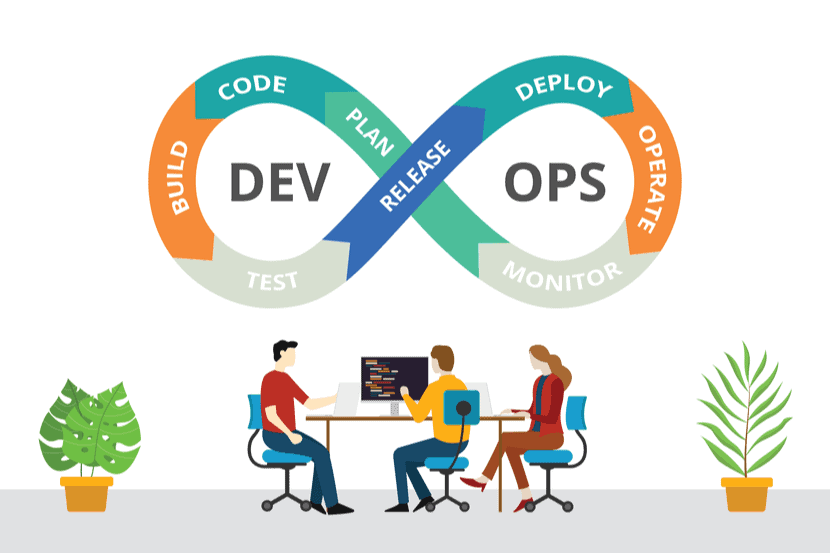
DevOps (Development & Operations), a design and operations system, is an approach that works closely with software developers and operations. DevOps was developed in 2009 with the aim of improving communication and integration development and operations in order to benefit fully from modern software development approaches.

Build in one Org, Release from another with Azure DevOps | by Dave Lloyd | ObjectSharp | Medium

The entire range of application management operations has become considerably more complex in this complex environment. At the same time, software applications must be designed, developed, deployed, architected, and monitored via an ongoing, never-ending lifecycle. DevOps is an agent of change in the current business environment, which supports such complex applications.

The clear answer to the frequently asked question, “What is DevOps” is DevOps is a collaborative, team-based approach to technology delivery that leverages experts with cross-functional development and organizational expertise to address issues relevant to applications.

Characteristics of a good DevOps

Corporations and companies have varying degrees of success in introducing and implementing a DevOps system for their IT departments, these are the common characteristics they show:

1. Short, iterative development cycles

What Is the Agile Iterative Approach and Where Is It Used? | nTask

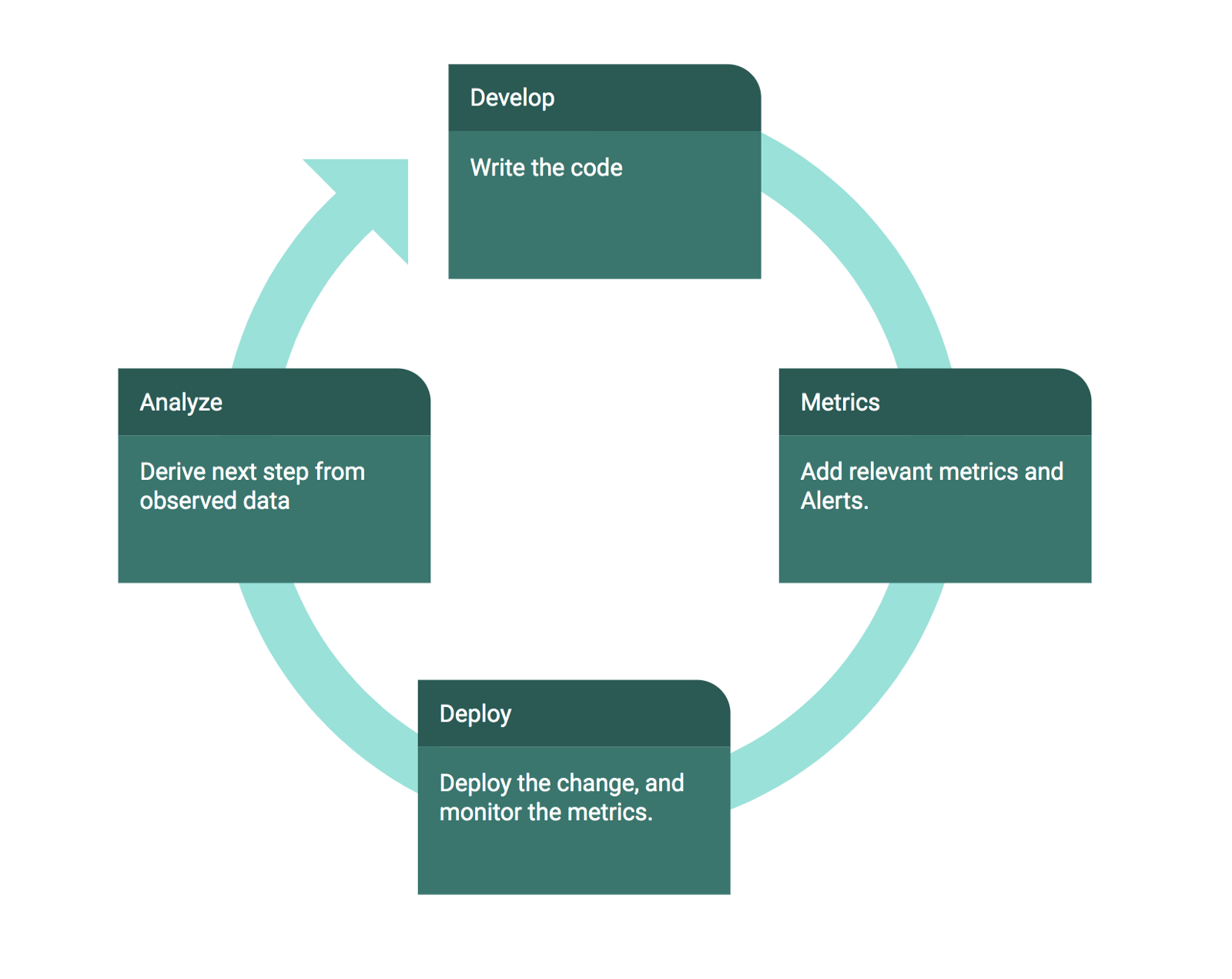
DevOps allows an organization to develop and launch new products and services more efficiently through a build-measure-learn process, beginning with minimally viable products (MVPs) running on the production infrastructure.

2. Driven by Metrics

An Intro to Metrics Driven Development: What Are Metrics and Why Should You Use Them?

Use lean startup methodologies, evaluating ideas, and designing of MVPs offers immediate feedback to product or service creators and backers, providing valuable data to decision-makers on the continued feasibility of the current process.

If a pivot is required to align the plan more closely with the organizational and strategic priorities, the indicators will support that decision.

3. Focused on People

FOCUSED | Karmel Soft

Even in library systems with a single member, the DevOps team of a library must always concentrate on the people being served. Professional resources and technology departments of the library need to guide research and decision-making based on the actual use of members of the library system and the interest of library leadership in looking for the edges of their populations.

DevOps working Lifecycle

DevOps principles are not only applied throughout the lifecycle, but they include growth, operations, and business stakeholders at all times. The DevOps framework explores the challenges of serving the dynamically changing and business-critical architectures of today’s technology.

In this model, the DevOps interactions at each stage are as follows:

1. Assess

How to assess what people learned? - TalentLMS

Business stakeholder feedback (for new services) and service-level agreement reviews, (for existing services) are used to define goals for new business offerings and to modify existing ones.

2. Design

Logo design process: how professionals do it -

At this stage design and development are given importance. The primary responsibility of design is to incorporate requirements into a software design. Business is responsible for educating production on specific requirements, as well as evaluating the project and signing it off.

3. Develop

Great Leaders Develop Their People: What Development Entails | Unbridling Your Brilliance

Development is ultimately responsible for building software that meets the needs of the business. Operations are introduced when necessary to support development teams in building and testing environments and/or to advise on network requirements and expected delivery times.

4. Test

Test Driven Development, like a boss | by Vedant Agarwala | Medium

While Development and QA teams perform unit and integration testing, Operations participates in integration and load testing to assess operational readiness.

5. Release

Release Notes · Small Improvements

This is the traditional handoff stage of DevOps, but the handoff in this scenario is a change in leadership roles versus a shift in responsibility. Development and Operations (or DevOps) teams lead this stage, while end-user acceptance processes are conducted by business stakeholders.

6. Manage

How To Effectively Manage Your Team's Workload • Asana

Infrastructure, systems and application management tools track manufacturing environments and applications during this phase. Service level management (SLM), quality and availability management, troubleshooting/root cause analysis and resource management solutions all track and assess the output of applications as part of ongoing assessments.

AWS DevOps

AWS DevOps with Amazon security & Amazon cloudwatch provides flexible and speedy DevOps services for companies.

Features

1. Monitoring

ICINGA2 – Monitoring MySql

Enables monitoring and logs to see how the quality of software and infrastructure affects the end-user experience of their service.

2. ChatOps (AWS Chatbot)

Introducing AWS Chatbot: ChatOps for AWS | AWS DevOps Blog

It is the latest feature which easier to review the notification and execute commands in Slack channels and Amazon Chime chat rooms. Chatbot supports:

  • Amazon CloudWatch
  • AWS Health
  • AWS Budgets
  • AWS Security Hub
  • Amazon GuardDuty
  • AWS CloudFormation
3. Microservices

Introduction to Microservices - Comunytek

Microservices turn the task of building an application into several microservices. Each system operates independently and communicates with other services via a well-defined interface using a lightweight mechanism.

4. Infrastructure as Code

What Is Infrastructure as Code? How Infrastructure as Code Works

The cloud-driven API model allows developers and system administrators to communicate programmatically and on a scale with infrastructure, rather than setting up and configuring resources manually.

5. Continuous delivery

FlexDeploy | Continous Delivery

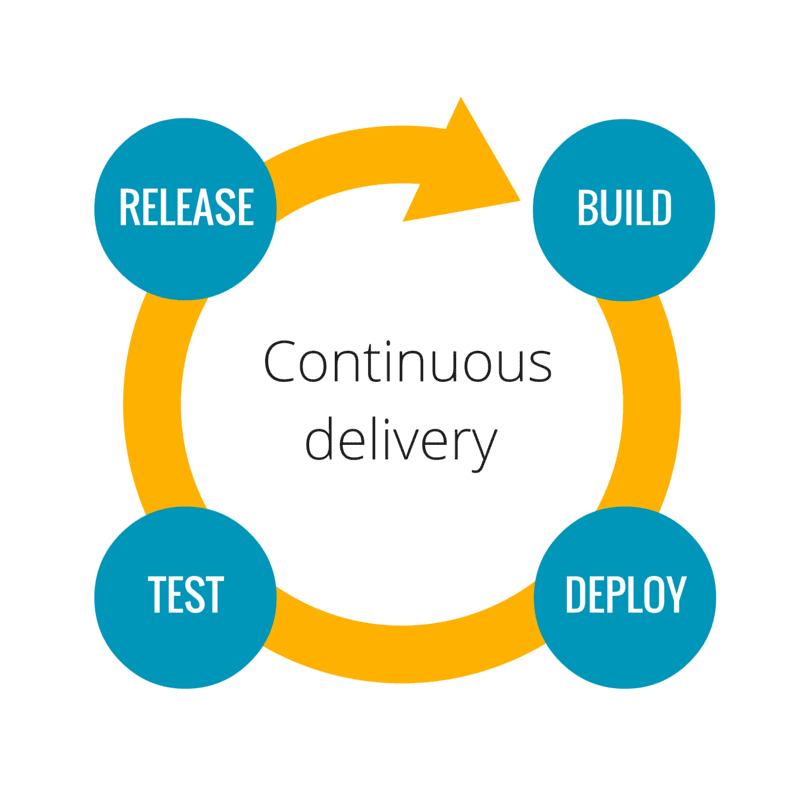
DevOps have become essential elements contributing to the rise of continuous delivery. Continuous delivery is a software development practice, the term describes an iterative and continuous process of software development, evaluation, and distribution to the desired endpoint. The destination may be a manufacturing setting, a staging environment or a set of software products.

Advantages of DevOps

What are the Advantages Of DevOps?|DevOps & Automation

  • Speed: The developers and operation team is able to get their results faster
  • Scale: Operate and manage infrastructure and growth processes at scale. Automation and reliability allow you to handle complex and evolving processes effectively and with reduced risk.
  • Reliability: Devops highly reliable because of the quality of application updates
  • Security: You can use automatic enforcement protocols, fine-grained processes, and configuration management tools to implement a DevOps framework without compromising security.
  • Collaboration: Collaboration of developer and operation using DevOps team increases efficiency and save time

In this journal, we have discussed the enhanced definition of and vividly taken a deep dive in what is DevOps. We can now understand that DevOps provides software development teams with the ability to control and accountability to deliver software efficiently and often especially for small to medium-sized enterprises in the production environment.

In this case, the capability comes from their ability to acquire new skills from operations-related tasks while operating under pressure at the same time. I also established that DevOps in companies is a long-term endeavor that, in addition to technological methods, requires a supportive culture and a mindset. Such cross-functional collaboration is most effective when supported by senior management and customers.

SQL Injection Attack and its Prevention

What is SQL Injection (SQLi) and SQL Injection Attack?

Web Security : SQL Injections and how to prevent it in Java application |  by Anna Jimenez | Medium

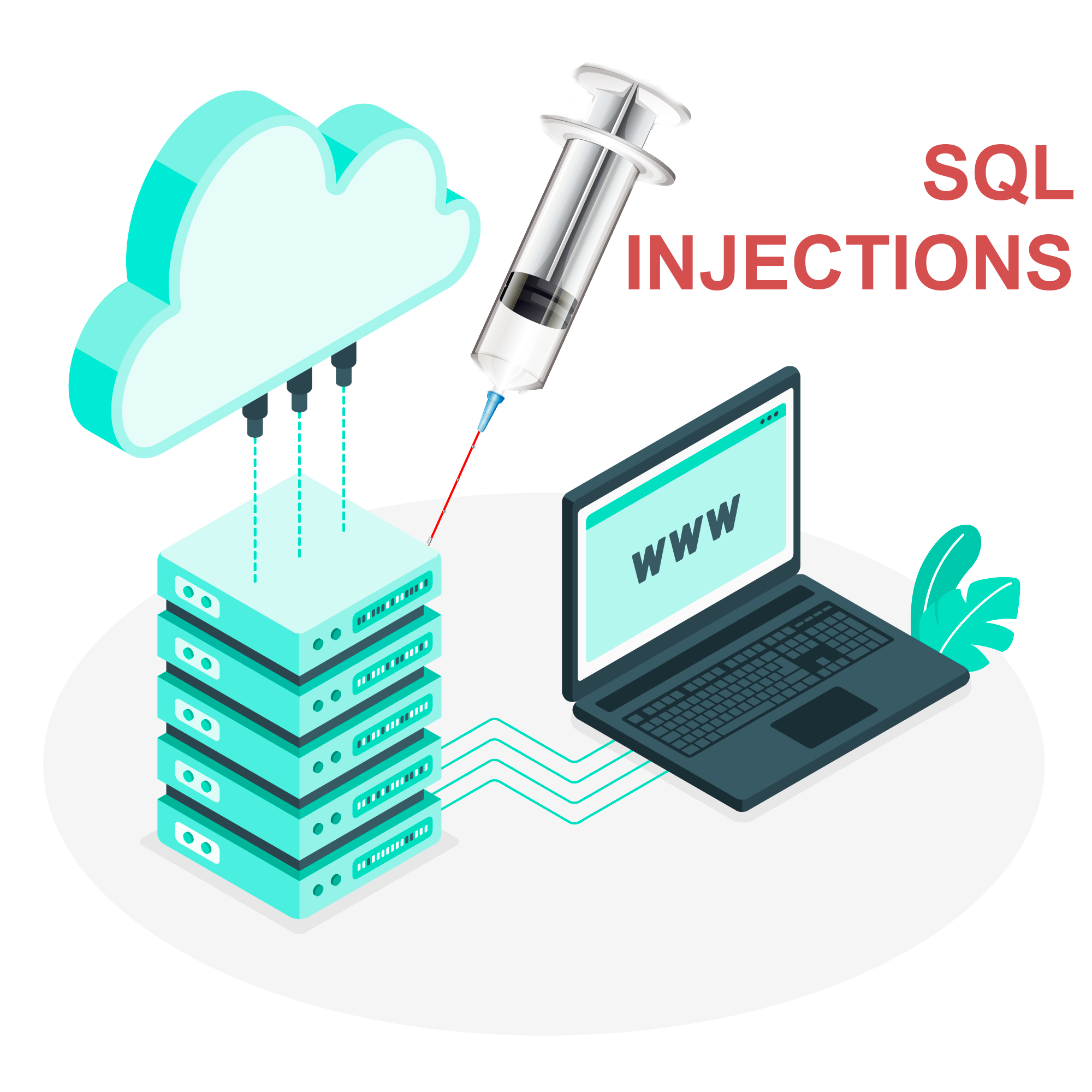
If you are quite familiar with the cyber world then you must have probably heard of “SQL” or “SQL Injections” terms floating around. In simple words, SQL is a database language that stands for Structured Query Language. It was designed for operating database systems like MySQL, Oracle, Microsoft SQL Server or SQLite. On the other hand, SQL injection is a cyber-attack that targets the database with the help of specific SQL statements that are crafted to trick the system into performing uncalled and undesired tasks. The SQL injection attack changes the code to modify the command.

A successful SQL injection attack is capable of:

  • Modifying, altering or deleting data from the database
  • Reading sensitive and confidential data from the database
  • Retrieving the content of a specific file present on the database management system (DBMS)
  • Enforcing administrative operations like shutting down the DBMS

Without proper mitigation controls and security measures, the SQL injection attack can leave an application at a huge risk of data compromise. It can impact the data’s confidentiality and integrity as well as the authentication and authorization with respect to the application. It can also empower an adversary to steal confidential information like user credentials, financial information, or trade secrets by misusing the vulnerability existing in an application or program.

Types of SQL Injection Attacks

What Is SQL Injection? Tips to Prevent SQL Attacks - DNSstuff

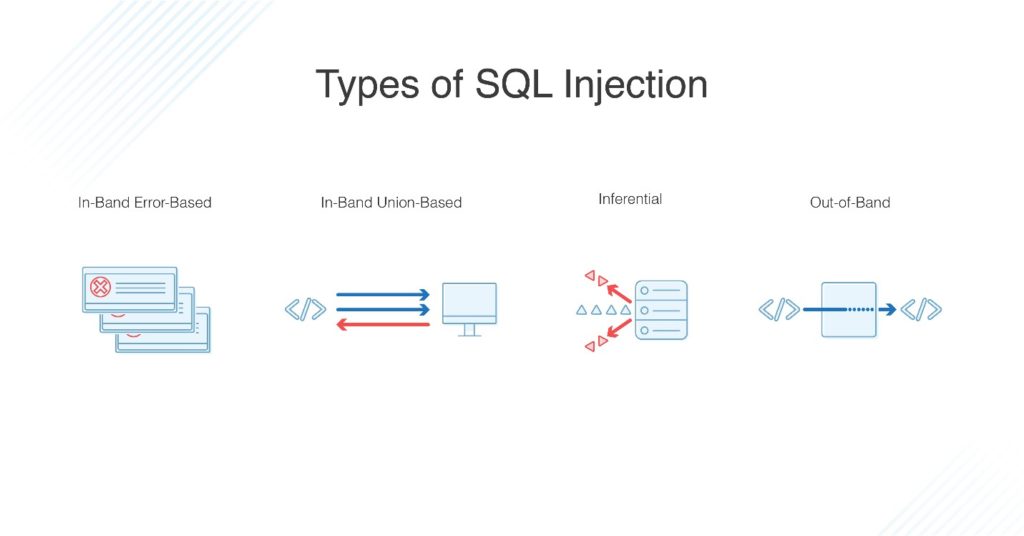
An SQL injection can be exploited in many ways and all of these ways require different levels of knowledge ranging from amateur to expert. Here are some common SQL injection types:

  • In-band SQL Injection

It is the most common type of SQL injection attack in which the attacker uses the same communication channel for launching attacks and gathering their results. In-band SQL Injection is infamous among SQL injection attacks for its simplicity and efficiency. It has two sub-variant methods:

    • Error-based SQL Injection: A technique in which the attacker determines the vulnerabilities of the system by deliberately causing the database to produce error messages. Later these error messages are used for returning full query results and revealing all the confidential information from the database. This technique can also be used for identifying vulnerabilities present in a website or web application and in obtaining additional information to redevelop malicious queries.
    • Union-based SQL Injection: In this technique, the attacker gets the benefit of extracting information from the database by expanding results that are returned by the original query. But the Union operator is only useful in case the original or new queries have the same number and data type of columns.
  • Inferential (Blind) SQL Injection

Blind SQL injections mainly rely on the server’s behavior and response patterns where the attacker closely observes the indirect clues. For this observation, the attacker sends the server data payloads. This type of technique is called Blind SQL injection because the attacker doesn’t get the data from the website database, thus making it impossible to see the information about the attack in-band. The Blind SQL injection is classified into two methods:

    • Boolean: Here the attacker sends an SQL query to the database that prompts the application to return a result. However, depending on the query, true or false, the result varies, and based on the result, the information modifies or stays the same, that is there in the HTTP response. With the help of it, the attacker finds out whether the result is true or false in the message generated.
    • Time-based: When an SQL query is sent to the database by the attacker, the database waits for some seconds to respond. By observing that period of time taken by the database to respond, the attacker gets to analyze whether the query is true or false. And based on that result, an HTTP response is generated either instantly or after some waiting period. Thus, without relying on the data from the database, the attacker can determine if the message used has returned true or false.
  • Out-of-band SQL Injection

The most uncommon approach to attack an SQL server, this technique relies on particular features of the SQL-enabled database.  It involves the submission of a DNS or HTTP query to the SQL server that has an SQL statement.  If successful, the Out-of-band attack can transmit the contents of the database, escalate user privileges, and perform the same actions that other types of SQL injection attacks perform.


The Recent SQL Injection Attack Examples

Many SQL injection attacks have taken place in the past decade and it can be concluded that SQL injections are one of the most evolving types of cyber attacks. Between the years 2017 and 2019, the SQL injection attacks accounted for 65.1 % of all the attacks on software applications. Here is the list of top SQL injection attack examples of all time that every user must be well aware of!

  1. In one incident of an SQL injection attack, personal details of 156,959 customers were stolen from a British telecommunications’ company’s servers, exploiting a vulnerability present in the legacy web portal. (source: Wikipedia)
  2. According to Help Net Security, 60+ government agencies and universities were successfully targeted using SQL injection attack by a hacker who was involved in penetration of the US Election Assistance Commission and subsequent database sale in November 2016.
  3. The officials at Johns Hopkins University on March 7, 2014, publicly announced that their Biomedical Engineering Servers became victims of an SQL injection attack. The hackers compromised the personal information of 878 students and University staff. They posted a press release and the leaked data on the internet. (source: Wikipedia)
  4. In May 2020, a New Yorker was charged for hacking into e-commerce websites with the motive to steal credit card information. It was reported that the hacker along with its gang used SQL injection techniques for hacking into vulnerable e-commerce websites to steal payment card data.

How To Prevent SQL Injection Attacks?

SQL Injection Prevention - How It Works & How to Prevent It | Parasoft

In order to secure your organization and mitigate SQL injection attacks, the developers, system administrators, and database administrators in the organization must follow these below-mentioned steps:

  1. Ensure to keep all web application software components up to date with the latest security patches and leaving no place for vulnerabilities.
  2. Avoid using shared database accounts between different applications or websites.
  3. Regularly monitor SQL statements from database-connected applications.
  4. Limit the attack surface by getting rid of any database functionality that is no longer needed in order to prevent it from being misused by hackers.
  5. Error messages are key for attackers to learn a great deal about your database architecture, so make sure to display only minimal information.
  6. Always keep the database credentials encrypted and separate safely.
  7. Most importantly, these inculcate the practice of periodic VAPT, i.e. vulnerability assessment and penetration testing. A regular VAPT provides a detailed picture of exploitable vulnerabilities existing within an application and all the risks that are associated with these vulnerabilities. It allows IT, security teams, to focus on the process of mitigating critical vulnerabilities.

Do you think that the SQL injection attack can be another big threat to the next-generation-based software applications in the near future?

Top 23 FinTech Trends to Watch Out in 2020 -2021

Top 6 FinTech Trends That Will Shape The Industry

For the past few years, many variations of fintech trends have emerged with the implementation of cutting-edge technologies and tools. Various fintech subdomains have come into the limelight, while many banks and startups have realized the effects of fintech on businesses and changed their traditional processes.

However, this is just the beginning of a revolution.

In the 8 months lying ahead of us, many fintech trends are expected to come into the limelight. Numerous standardization and regulations are anticipated to immerse the fintech industry with new enjoyment and excitement, and make the market worth $309.98 Bn by the end of 2022.

Wondering what are these top fintech trends for 2020?

How will these trends revolutionize the future of fintech?

Let’s catch up here quickly.

20+ Fintech trends you must act on in 2020

1. Focus on unserved and underserved

Wealth Management for the Underserved: What Role Does FinTech | MEDICI

According to a report by the World Bank, around 1.7 Bn people are not a part of any formal financial system. They do not have any bank account of their own, a few reasons behind which are:-

  • 60% of people do not have enough money,
  • 30% of people never felt the need of a bank, and
  • 26% of people find accounts as an expensive affair.

This is the foremost area where the fintech leaders are focusing this year. Rather than entering the established market, the fintech startups are trying to enter new phases and win financial backing from investors this year. They are seeking innovative ways to communicate with people from different walks of life, understand their financial challenges, and come up with better funding opportunities to ultimately drive customer loyalty and profits.

A clear evidence of which is Uber.

On discovering that around 60% of their drivers lay constraints on their banking accounts 6 times a month, and send 25% of their earnings to their native countries while suffering from high fees, the company launched its fintech division – Uber Money. This enables the targeted audience, i.e, drivers and other freelancers to get real-time income, save a big share of each trip, and get better functionalities of bank account, debit card, and mobile banking application.

2. Automation and RPA

Robotic Process Automation – Everything You Need to Know - Part 1 - ITChronicles

Robotic Process Automation (RPA) is also one of the trends that will revamp the fintech ecosystem in 2020.

These bots will not solely continue to automate human repetitive processes, but also lower down common errors and inefficiencies, which will ultimately enhance productivity and ROI.

3. Reduced use of physical money

Why cash payments aren't always the best tool to help poor people

Another trend that will indicate higher use of finance technological services is decline in the use of physical money.

In 2016, only 1% of the transactions made in Sweden were using cash – a prime reason of which is that many businesses denied accepting cash payments. Likewise, the United Kingdom recorded the highest volume of cashless payments, i.e, of €10.67 Bn in 2017. And now, in the year 2020, this value will accelerate with the usage of more convenient solutions like contactless payments via NFC.

4. Continual development of Open Banking

Open Banking is here to stay | BankingHub

One of the top banking and  fintech trends for 2020 and beyond has to be Open banking. It leverages APIs that allow third-party developers to develop apps and services around the financial institution, in order to help users enjoy the online banking service via multiple platforms.

According to a Deloitte study, around 22% of banks have already deployed their own API platforms, while 39% are working on it. And many more are anticipated to enter this sector.

5. Implementation of Voice-Search

How to Optimize for Voice Search: 6 SEO Strategies for Success

The fact that by 2020, almost 50% of all searches will be voice-based on the Internet, is enough to give you a hint of the future of fintech and the role it is playing in transforming the banking and finance sector. Voice-based search in banking software will assist customers in easily accessing banking services, provide ways of encryption while supporting communication with NLP-powered voice assistants.

More and more industries and banking institutions are adopting voice search- one of the latest technologies used in fintech, and why wouldn’t they when it can save up to $3 billion.

6. Decentralized Finance

A Beginner's Guide to What is Decentralized Finance (DeFi)

Decentralized Finance (DeFi) is also one of the emerging trends in the finance industry.

In 2020, companies will rely upon different set of technologies such as distributed ledger technology (record-keeping decentralization), Internet of Things (IoT), Big data, online P2P systems (risk-taking and decision-making decentralization), and Edge computing to offer monetary interactions in a more decentralized manner.

This fintech trend has already been transforming the payment and settlements. And, in the coming years, it will also change the way capital markets, lending, and trade finance operates while ensuring advantages like enhanced speed, lower cost, and higher transparency.

7. Upsurge in mobile apps usage

How to Make Sure Your Mobile App Project Stays on Track During COVID-19 - The Proven Method

Not as surprising as others, mobile apps are also gaining popularity in the fintech industry and have proved potent for becoming a trend. With the incessantly growing popularity of mobile apps, many fintech companies have started to tie up with the best banking & finance app development company in order to create impeccable digital solutions. There are all kinds of innovations waiting around the corner which we will see throughout this year.

8. Next-gen digital-only banks

YONO biggest start-up by legacy bank, valuation at $40 billion: SBI chairman

A rapid increase has been witnessed in partnerships among Fintech companies and banking institutions, promoting the emergence of new financial intermediaries. Now, Digital-only banks are gaining unprecedented popularity, something that was not anticipated in this decade at least.

With an additional time economy option, these Digital-only banks offer an even more diverse array of services to their customers. No wonder, Digital-only banking is going to be one of the top fintech trends for the year, because of its connection with disrupting technology like Blockchain and cryptocurrency.

9. Improvement in Conversational banking

The Ultimate Guide to Conversational Banking in 2021

According to a study by Accenture around CUI (conversational user interfaces), it has been found that –

  • 64% of people prefer interacting via messages or emails over calling,
  • 64% users are more likely to buy or hire a service if they have chatted with the brand earlier too.

Because of this, banks and fintech organizations will emphasize more on conversational banking. They will come up with AI-based chatbots and other software that interacts with users on different messaging platforms like Facebook messenger and WhatsApp.

10. Higher downloads of Digital wallets

2019: Year of Mobile Wallets in India

Digital Wallets are effectively on a way to eradicate fiat money from the wallets. In fact, in a report by Grand View Research, it was revealed that the digital wallet market size was valued to be USD 16.65 Bn in 2013 and is predicted to reach USD 7,581.91 Bn by 2024.

Alone in 2018, the number of digital-wallet users was 440 Mn and has surely increased in 2019 and will continue to do so in 2020. To support this statement, look at the graph below depicting the rise in wallet users.

11. Application of AI and ML-powered chatbots and automated customer services

How Chatbots are Transforming Customer Service with AI

A generally accepted statement – AI is our past, present, and future clearly shows how humongous this technology is going to be, changing the face of every industry, including Finance and banking.

As per AI technology trends, the market size of AI in the Fintech market is predicted to increase from $959.3 Mn in 2016 to $7305.6 Mn by 2022, at a CAGR of 40.4%.

The technology, this year, is going to provide better services to everyone in the form of –

  • Chatbots

These are increasingly becoming a choice of financial institutions for customer support services. You ask why? Well, these chatbots in fintech domain are available to the customer 24X7 without incurring additional monthly expenses. They leverage the advancements of ML algorithms and NLP (natural language processing) to serve customers in all possible ways.

Another thing is that chatbots are incredible for enhancing customer engagement. Some of the chatbots used by popular banks worldwide are Ceba (Commonwealth Bank Australia), Erica (Bank of America), and Eva (HDFC Bank).

  • Customer Intelligence

AI-based customer intelligence is something financial bodies are gaining more and more interest in. It is because customer intelligence helps these institutions to have a deeper understanding of users through their banking relationships and transactions by analyzing data gathered via technology. Some organizations have already started implementing it in their analysis process while many will follow suit in 2020, making it a notable Fintech trend for 2020.

  • Regulators using AI to predict potential issues

In the year 2020, we may encounter changes in the way regulators perform certain actions. Since AI is prominent as of now, they are bound to turn to AI’s algorithm, data gathering, and analytics tools to compare scenarios and predict probable issues and risks.

12. Introduction of Blockchain in banking and fintech solutions

Blockchain Use Cases For Banks In 2020 | by Velmie | DataDrivenInvestor

This year, the role of Blockchain in the fintech sector will reach to the next level. The technology will bring disruptive changes to the fintech industry, making the market valued $6,700.63 Mn by the year 2023.

Many terminologies like the ones described below will go mainstream this year:-

  • Smart contracts

Without a doubt, a boon for the finance industry, Smart contracts (a decentralized financial technology) are quickly gaining popularity. They are an evolution of pen and paper contracts – more effective, more secure, and of course, immutable.

Wonder how they work?

Let’s take an example-

In smart contracts, parties sign smart contact by using cryptographic keys (digital signature as you will). Now, instead of using pen and paper, the contracts are encoded in computer language. And these codes are virtually tamper-proof, hence immutable contracts.

  • Crypto-To-Cash Conversions

Cryptocurrencies are becoming more prominent every day and institutional investors are expected to show their interest in cryptocurrency adoption. And this all is a result of new initiatives that have emerged to increase their real-world implications. New advancements may surface in 2020 targeting crypto-to-cash difficulty and may give us what we are looking for.

In fact, many digital-only banks or the banks collaborating with Fintech are already actively considering the possibility of cryptocurrency implementation in order to perform money operations.

13. Incorporation of Big Data in fintech processes

How to Use Big Data in FinTech: Use Cases and Strategies | Mobindustry

The impact of big data technology on financial services is yet another thing that will be taken into consideration this year.

Big Data is one of the effective tools that fintech market players employ to circumvent the incumbents and revolutionize the industry. On a broader scale, the technology is helping fintech companies grow in numerous ways, including:-

  • Customer segmentation

With core focus on users’ convenience, fintech startups divide their target user base on the basis of different factors such as age, gender, location, online behavioral patterns, and economic health to determine their spending habit and build highly-customized and personalized offers and financial products.

  • Risk management

Predictive analytics is a robust tool that offers risk management and enables companies to avoid poor debt expense or make better decisions related to crediting. Fintech startups mine data to create risk profiles of consumers applying for financing to detect bad payers or poor investments.

  • Fraud detection

With the help of big data engines, fintech companies will be able to gain a better understanding of the consumers’ buying habits and online patterns which can further help with detecting and forbidding suspicious behavior more accurately and quickly.

14. Advent of Co-browsing

What is Co-browsing and How Co-browsing Works?

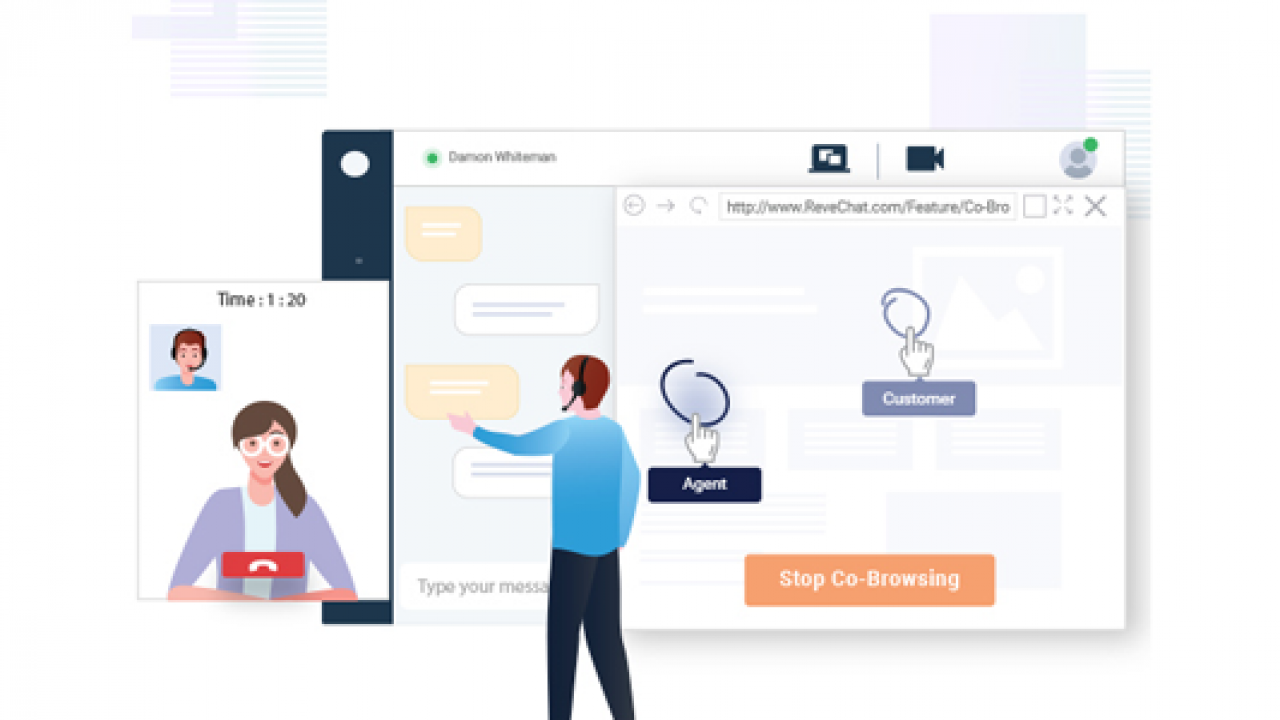
The screen-sharing is generally the function where one party gives access to another party for sharing the device’s screen. With the help of co-browsing, users will be able to prevent others from gaining complete access to the device. Instead, it lets users share a particular web page with another party for mutual access. Something that is a boon for the finance and banking sector, as it is very useful in banking software.

With co-browsing intuition, representatives can easily assist customers with issues pertaining to the completion of bank formalities and documentation, to name a few. This is what makes it one of the banking tech trends for 2020.

15. Disruption of Payroll process

Earnin: Get $100, Cash Out Money Before Payday – Apps on Google Play

Around 59% of consumers struggle from paycheck to paycheck in the USA alone. This situation has created serious money concerns for many individuals who rely on payday loans or predatory lenders asking upto 400% rates for a two-week credit; making one of the financial technology trends of 2020 and beyond.

With the help of fintech companies, other organizations are improving the traditional ways of payroll. Companies such as Gusto, which has been valued at $3.8 Bn, have introduced a flexible Pay feature that allows employees to pick a date to receive their payroll. Another example at hand is the Earnin app allowing users to get access to their earnings before their scheduled payday.

16. Growth of Asian market

Growth Icon, Growth Clipart, Growth Icons, Growth PNG and Vector with Transparent Background for Free Download

The Asian market is rapidly becoming the biggest adopter of Fintech. As new Fintech companies start to emerge, we can expect great advances in the Asian market.

On analyzing the events of 2019, it was noted that China has emerged to be the global leader in the Fintech industry. With the world’s biggest population, the country has 800 Mn internet users – a combined percentage of countries like Mexico, Japan, Russia, and the US.

17. Enhanced ‘A’ rated life insurance carriers

Another financial service technology for 2020 related to insurance is the ‘A’ rated life insurance carriers. Now, the institutions will employ technology in a way as to eliminate the medical exam while simplifying the writing and underwriting of a new life insurance policy.

Some of the fintech startups are implementing up to $1 million of term coverage without any medical exam and only refer to the data collected on customers regarding the prescription history based on their medical questionnaire for passing approval.

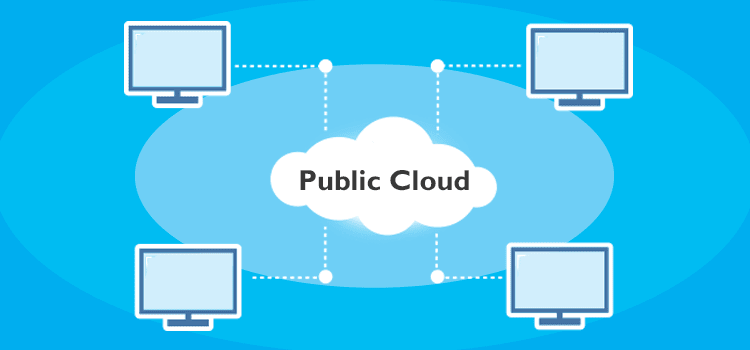
18. Public cloud to be the new infrastructure model

Why choosing Public Cloud will never go out of fashion… – ESDS BLOG

Even now, many financial institutions seek help from cloud-computing for an array of work and processes. They use cloud-based SaaS apps for things that may be deemed non-core like HR, CRM, and accounting. The core service infrastructures in areas including consumer payments, credit scoring, and statements are going to become utilities by 2020.

19. Cybersecurity as a pillar of fintech domain

Article: How to plan for your organization-wide cyber security skills — People Matters

Since everything is online now, there is a rapidly increasing threat of cybercrimes, something which all financial institutions, among others, want to avoid at any cost. In this case, there have been many advancements in this segment developing robust security systems to creating next-gen tools for data protection.

Cyber risk analytics has also merged to be an interesting implementation of AI in Fintech to detect probable threats. With what we have witnessed so far in 2019, it is without a doubt that improving cybersecurity is going to be one of the top Fintech trends in 2020.

20. Rise of Financial regulations and Regtech companies

RegTech s rise could be a watershed moment in the way financial services engage with customers-Amit Das - BW Businessworld

With consumers having concerns over data sharing with unknown third-party firms, the rise of RegTech firms and financial regulations will also be one of the fintech trends for 2020.

Currently, around 15% of the workforce of the entire financial sector is engaged in tasks around ‘compliances’. But, in the coming years, more regTech solutions will come into the limelight; offering finest services like compliance verifications, transaction monitoring, risk management, ‘Know-Your-Customer’ (KYC) or ‘Anti-Money Laundering’ (AML) practices, and more. And eventually, make the market size grow from $10.6 Bn in 2017 to $53 Bn by the end of 2020.

21. Partnership and collaborations will be on the rise

Partnerships and mergers among fintech companies are going to be one of the top fintech trends for 2020, according to Kathleen Craig, founder, and CEO of HT Mobile Apps (a fintech company). Startups and small organizations are coming to the realization that partnerships are more profitable.

More so, till now direct-to-customer fintech companies have been stuck on a particular piece of the market, but with these mergers, we can see a whole new spectrum of services they together may offer.

22. Sharing economy will become integral

What started with cars, taxis, hotel rooms, etc.will now expand its horizons to include financial services. The sharing economy is expected to become a huge Fintech trend for 2020.

Here, the sharing economy pertains to decentralized asset ownership and the use of IT to obtain suitable matches between providers and users of capital, instead of turning to a bank as an intermediary element.

23. Establishment of On-demand insurance economy

The Future of Insurance in an On-Demand World

The on-demand model has become one of the most in-trend concepts of this decade and will continue to do so in the coming one. In fact, on-demand mobile app economy statistics are legit proof of its popularity.

Just like you can get a taxi on-demand via apps like Careem and Uber, you can also avail insurance in a matter of minutes. Financial institutions have started to offer insurance facilities via mobile apps. Customers can easily apply insurance for real estate, car, and other belongings, simplifying and making the whole process more efficient.

While these are the trends that are forecasted to change the landscape of the fintech industry between 2020-2025, many more are expected to join the league. In such a scenario, it is advisable to visit this blog again in the future and get familiar with more disrupting fintech trends for 2020 and beyond.

Continue reading “Top 23 FinTech Trends to Watch Out in 2020 -2021”

How to Build An Appealing Mobile App Business Plan

The 8 Details to Include in a Convincing Business Plan | Prosper

Benjamin Franklin was an exceptional man with even exceptional wit and wisdom. Though the statement is subjective, it is apt in every situation involving planning.

A rather important part of the whole process of starting a company is devising an astute and accurate mobile app business plan.

A goal without a plan is just a wish. If you do not want your goals to become far-fetched wishes then you have to invest your time and efforts in creating a descriptive business plan for your app.

Now, I understand this is not something that you might be inherently proficient in since you are an entrepreneur and this is not necessarily your niche of expertise. So, if you are unsure of what you are supposed to incorporate in your mobile app business plan or even how to start one, refer to this detailed article to help yourself.

Nevertheless, before we start our discussion, I feel we first need to sit down and ponder on the “why” of creating a business plan for your mobile application.

Why make a mobile app business plan?

How to Write Business Plan for Mobile App Idea? - Mind Studios

Magnetizing investments

The most obvious reason why mobile app startups make a business plan for developing an app, as you might have surmised as well, is to bring in more and more investments. This is to attract investors and even start-up co-founders – the choice is yours to make, and sometimes you need to have the support of both.

An efficacious business plan will help your vision be represented in a crystal-clear way while displaying the scope of your mobile app concept and idea as well.

Reducing the risks

Un-planned actions pertain to risks, and risks in business are synonymous to cost-inefficiency and loss.

When you devise a business plan, you actually map out the whole journey of your business, something that can provide you great insights into the many unanticipated and probable risks.

Helps you keep everything in perspective

When making big decisions, it is common to forget and leave out certain important aspects that can make or break the foundation of your business at a much later stage. However, when you have a blueprint including a set of points acting as a reminder of those crucial aspects, it becomes easy for you to remember them. Business Plan is that blueprint.

Now, it’s time to move on to our main discussion answering questions such as “How to build Business Plan for a Mobile App Startup” or “How to Write Business Plan for Mobile App Idea?”

Steps to create a business plan for your mobile app

1.  Executive Summary

Executive Summary Template: What To Include

Essentially a short overview of your detailed mobile app business plan, this stage is something you must pay special attention to, since, this is going to be the first thing the potential investors will encounter.

Things that make this section ideal are – convey more while writing less, refrain from mentioning the working of the product, etc. Instead, focus more on market scenario, targeted users, and this-

  • Focus on problems addressed

‘Problems’ are something that always prevails. Meaning, there is always room for improvement and innovation. What you are supposed to do here is analyze the problems users are facing with the existing solutions and find out –

  1. the needs and demands of the users at the moment
  2. problems users are facing with the products similar to yours
  3. why these solutions fail to satisfy – what are they lacking that you can provide in a better and different way, and so on.
  • State your proposed solution

Try not to divert from the path of the problem while explaining its solution, i.e., do not go into the functioning and features of your app, rather stay focused on the problem and the ways in which your app addresses them.

  • Unique Value Proposition

This is where you can boast of the things that differentiate you from other organizations and businesses, something about your app that is unique in itself. Not just better but definitely different. For example, the USP for Domino’s Pizza is “You get fresh, hot pizza delivered to your door in 30 minutes or less or it’s free.”

  • End objective of your app

After everything’s said and done, it all comes down to this – The goals you  plan to achieve with your app.

You MUST state the vision of your app’s future, i.e., how many downloads you are initially expecting on your application, how much profit you are expecting, and much more. It is best to visualize your short-term plans and then improve your answer through metrics.

2.  Introduce your company

The next step while making a detailed and convincing business plan is to prepare your company’s information. Since the future is unpredictable, the things you have mentioned in the above section may not be as appealing to the investors as you may conjecture.

Firms like Y Combinator, TechStars, to name a few, are known to select startups for funding based on the team and the founders. So, you see how crucial this section just became for you. Moreover, it would add as a plus point if you could provide information about the MVP or a prototype you have developed.

The things you should cover here are –

  • Provide an overview

There are some questions that you need to address in this section to help investors understand your organization and develop trust in it.

  1. Type of entity – Are you an LLC or privately owned organization?
  2. Location – Where is it housed?
  3. Duration – When was the organization established?
  4. What is the team size of your company?
  5. Do you operate off-shore as well or not?
  6. What are the problems your company is currently going through?
  7. What is the ultimate goal of the company?
  8. What is your vision?
  • Take it from the top

Like a novel, you must tell the story of your organization while briefly touching on all the preliminary motivations, ideas, problems, etc. that you encountered at the time of its inception.

List everything about the history of your company that is worth knowing, since it could be a lot damaging if any crucial information is withheld from the investors and is revealed later. It can include the locations you have operated in, early hires, major pivots, product launches, and such.

  • Management team

Remember each and every person in your company is an important cog in your organization’s machinery. This is why you are required to mention the names of all the members of management with all the relevant information related to them, i.e., qualification, professional experience, expertise, KRAs while mentioning the organizational hierarchy.

  • Advisory panel

Almost every mobile app development company is backed by an advisory team. The panel consists of industry experts with years of experience under the belt. More often than not, they are the makers of some successful apps. Creating a list of such advisors can immensely improve your brand image and credibility, boosting the chances of getting funds.

3.  All about the Industry

All About the Real Estate Industry

Essentially, your end product is going to target a particular industry. Hence, it is obvious for you as an entrepreneur to know every grain of major information, from market history to current trends, related to your targeted industry.

  • Market size

The most basic thing that you must know and also showcase in this section of your business plan is the size of the market. This includes – total available market (market demand for the app), serviceable available market (number of users you can target say in 3 to 5 years), and serviceable obtainable market (the segment of your initial users in 6 to 12 months).

If you are wondering how to do so then, you can always refer to the credible data provided by some trusted third-party platforms, namely, Sensor Tower, App Annie, and Statista.

  • Keep updated with market projections

You need to understand the market’s past and present to gain insight into future predictions. The best thing to do here is to compare and analyze the market size of the past 5 years, mention the number of new entrants in the industry, the number of total fundings, and so on.

  • Competitors analysis

Competitive analysis is an indispensable element of any business on this planet. Regardless of the organization type, industry, size, etc. – all religiously perform this step.

Various models around this have been devised to gain the attention of angel investors. Out of the many, the one we recommend is the 2 x 2 matrix model, in which variables portray these four aspects: challengers, leaders, niche players, and visionaries. In order to highlight the execution and vision of the app as it progresses, these four elements are displayed via an x-y axis scale.

  • Self-assessment through SWOT

SWOT analysis, representing four components – Strengths, Weakness, Opportunities, and Threats is used for self-assessment by all organizations. It enables you to give a structured description of your company’s situation in an efficient way in your business plan for app development.

4.  Marketing strategy

Why You Need To Review Your Marketing Strategy After Quarter 1

Acting as a bridge between your app and the end-users, a solid mobile app marketing strategy wields the most power. Your role is to devise such a marketing strategy that acts as a ‘deal-sealer’ between your firm and the investors. This will show the investors that you have the medium to make your app reach the users’ smartphones from an app store.

These are some points that you can include in your marketing strategy-

  • Describe the user persona first

Creating user personas is very beneficial. This is something you would be able to identify while you are doing your research on the market. In case there is more than one user personas, you must mention them in your app development business plan. The more in-depth it is, the more promising your business plan seems to the angel investors.

The said information is to be included in the user personas – Age, Gender, Occupation, Location, Income group, and Marital status. Other information that is classified as psychographic data includes attitudes towards money (price-sensitivity or value shoppers), the context of app usage, personal/professional aims, hobbies, preferred sites and apps, tech-savviness, and so on.

  • Customer acquisition strategy

Once you have identified the user personas of your app, you can determine your customer acquisition strategy. One thing you have to be absolutely sure about is your CAC (customer acquisition cost). You will be able to estimate the right cost once you have established which channels and campaigns you will employ in your marketing strategy highlighting your app’s USP (unique selling proposition).

Here are some channels that you can try to achieve great results –

  • Incentivized user downloads
  • Search engine marketing
  • Organic installs
  • Social media (Facebook/Twitter/Instagram) ads
  • Partnerships
  • PR
  • App store optimization
  • Content marketing
  • Push and in-app notifications
  • Retargeting campaigns
  • Mobile site redirection
  • Mobile app wall ads
  • Email marketing
  • Event marketing
  • Product driven growth

Change in product driven growth is one of the most common elements of pivoting a startup. If your business model needs a large mainstream user base, then it is of utmost prominence for you to build a referral program in your mobile app to leverage network effects. A well-known and effective example is Uber. For instance, Uber offers a coupon on the users’ next ride as a reward for referring to others and the referred person also enjoys coupons on the first ride.

  • Make a landing page

A landing page can really help you in numerous ways. One of which is that it can help you expand your horizons in terms of target users. It keeps the readers informed and updated about innovations and further updates of your app. One thing to keep in mind whilst doing this is to make sure it contains the name of your app, its description, promotional videos, etc.

{Also read: How to Create Success Story with your Mobile App Landing Page}

  • Define your key metrics

There are several metrics on the basis of which you can measure your business growth and popularity of your mobile app. This is something that you must include in the web or mobile app business plan. You have to be careful while picking the right metrics suitable for your business model. An example – if your app is a social media application, then your ideal key metrics should be the daily active users instead of the number of downloads.

5.  Operational strategy

Complete Guide to Operational Strategy – Welp Magazine

Stating the strategy regarding your daily operation imparts an impression of awareness and readiness on your part to the investors, something which always works in the favor. This also includes your strategy for customer relations.

You must describe and map out how you are going to handle customer services and maintain quality assurance. It also includes how you are going to perform the app development process and manage it. Other things to cover in this section are-

  • Users Process

You can mention information such as how your users are going to behave from the start to the end, i.e., when they first hear of your app and start using it.

  • Personnel plan

This outlines all the data related to the employees. It concerns how and when you will hire the employees, how salaries will be expensed, how will you set the hierarchy in the organization and so much more.

6.  Financial plan

Financial Planning in 5 Easy Steps: How to Do It Right

It is the stage where you could literally say “Let’s talk numbers”. What the investors would want to see in this section are the answers to the questions – how will you make money? What will be the cost to run the business? And how much funds do you need?

  • Devise an app monetization strategy

Just like for marketing, you need to have an efficacious mobile app monetization strategy, something that we have also covered in detail in our article named “How to choose the right pricing strategy for your mobile app project”.

  • Startup costs

According to CB insights, 19% of the startups fail because they get out-competed.  In the graph below, you would find that 29% of the startups get shut down as they run out of cash.

You can avoid this fate by analyzing the costs you may need. Similarly, it is crucial for you to mention to the investors all the details related to the costs and expenses you would be needing and for what.

Since the devil is in the details, here is what you should include – one time costs, recurring costs (rent, inventory, etc.), fixed costs (rent, utilities, etc.) variable costs (i.e, the salary of employees) and a lot more.

  • Funding needed

It is here at this stage that you are going to ask for the fundings and reveal all the information related to it. Address these questions in this section –

  • How much money do you require?
  • What percentage of equity are you proposing to give in return?
  • Is this going to be a convertible note or a preferred stock?
  • For what duration this money will suffice before you need to propose for another funding round?

Regardless of what category your mobile application belongs to, the business plan for each one is essentially similar, for the most part. A business plan is static in contrast to a business model, which is dynamic. This is because it is a document created only once and is not rewritten after the purpose is fulfilled.

AppSheet, providing you with a no-code application development

Evolving the Google Identity - Library - Google Design

Appsheet, acquired by Google

Google recently announced that they have acquired AppSheet, a Seattle-based no-code mobile app development platform. They have not disclosed the terms of the acquisition yet. However, as per the revelations, AppSheet will continue to serve its existing customers.

Praveen Seshadri and Brian Sabino founded the AppSheet back in 2014. Keeping in mind to help business people and others build their own mobile applications without having any coding experience. It received its seed funding from the New Enterprise Associates in 2015 and was recognized as one of the creative tech startups by TiE in 2018. Following by getting fame of leading a leader for low-code app development for business developers by Forrester Research in 2019.

AppSheet - Wikipedia

First choice of various brands for making their presence

The platform became the first choice of many small and established brands, including Whirlpool, Pepsi, the Global Cancer Institute, Toyota, American Electric Power, and M&O Partners for making their space in the IT-powered business world. It is a result of the set of features it offers. It features the ability to capture, collaborate, and display data, and create an explanatory programming model.

Praveen Seshadri said, “As we and IT industry has grown, there is now a huge pent-up demand for enterprise automation,”. He further added, “There is the rise of low and no-code platforms. This will make citizen development come out as the planned way for modern organizations. It will help to invest, innovate, and compete.”

AppSheet has also been combining AI and NLP technology. This is to further quicken the mobile app development process. This also enables businesses to enter the mobile sphere at the earliest.

Till now, over 18,000 app creators have used AppSheet’s development suite to locate around 200,000 apps. And now, when Google acquires AppSheet, the numbers and results are much beyond everyone’s expectations.

AppSheet. Gesundheit! Oh, we see – it's Google pulling no-code development into a cloudy embrace • The Register

AppSheet services to Google Cloud

The tech giant, which recently acquired a retail inventory management startup Pointy as well, is expecting to reimagine the app development space by bringing AppSheet services to Google Cloud.

“The acquisition will complement Google’s strategy to reimagine the application development space by helping businesses set up with workflow automation, app support, and API Management,” said Amit Zavery, vice president of Google Cloud. He further added, “Customers will now be able to build richer apps that use not only Google Sheets and Forms, but other top Google technologies like Google Analytics, Maps, and Android”.

[Note: As we mentioned above about API management, consider this blog to know in detail about the process and available tools: 15 Open-Source API Management Platforms to Add in Your Tech Stack]

The tech giant expects to employ AppSheet’s ability to power up workplace applications (include CRM, personalized reporting, field inspections, etc.) while keeping Google Cloud’s services focusing entirely on the financial, media, and retail domains.

Google acquires AppSheet to bring no-code development to Google Cloud | TechCrunch

The Google team also revealed that low-development app development platforms like AppSheet are not going to replace sophisticated development environments. Rather, they will be put into practice to empower mobile app developers to collect extensive, rich data like geographic data and indoor location data from any device and use the insights gained to build user-centric applications. Plus, they will be able to update and maintain the data set in real-time, without compromising on the security front.

The AppSheet team will soon join Google Cloud. But, they will continue to serve their existing new and existing clients and support iOS apps and web-based mobility solutions.

How to Create a Successful Mobile App Startup?

Top 5 Successful Mobile App Startup ideas for Entrepreneurs | by Dot Com Infoway | Medium

Are you a startup geek?

Do you often look up to other successful startups and wonder how they made it?

Are you constantly pondering over an idea at the back of your mind, waiting for that defining moment to turn it into a reality?

So, if you have stumbled across your eureka moment, and are now faced with multiple challenges as to how to put into action what you have envisioned, you are on the right page.

We will break down the steps that can help you make the cut and are crucial to successfully run a startup in the mobile app industry.

Since the world is going digital, and the most amount of time we spend is hooked to a screen, any successful small business is involved in startup app development solutions.

We netizens are well aware that Playstore and App Store are flooded with innumerable mobile applications – Business, Lifestyle, Educational, On-demand apps, etc. But it is equally essential to realize early on that very few apps get trending.

Studies show that few startups are successful and most appreneurs tend to commit some common mistakes. So the first step in your startup journey should be to look before you leap.

1. Validate Your Idea: Ideate, Pause, Rethink

Why prototyping is essential for your product team? | by Huī Lín | UX Collective

We understand that it is attractive to let your creative juices flow but it is equally essential to reflect on other possibilities and not dive right in without testing the waters.

Make a list of all your potential ideas. It not only gives you an insight but provides due clarity regarding which idea to pursue.

In case you are confused whether the idea is worth giving a shot, get it validated from leading experts and see if it sparks their interest. An approach that the best mobile app consultants follow when checking the validity of your product is through a product discovery workshop. The 5 days workshop is known to have brought a number of successful startups in life.

Another tip is to never overlook other ideas. Understand that there is always a scope for improvement, and sometimes the whole process of ideation leads to new outcomes.

After finalizing on which idea to pursue, make sure that you have a comprehensive understanding of the pain point and the solution you are offering.

After all, your unique idea, besides making you one of the most successful startups, is also solving a problem. This leads us to the next step.

2. Detail-oriented Market research

A Comprehensive Guide to Market Research: 4 Proven Methods | Hotjar Blog

No matter how revolutionary your idea is and how likely it is going to transform the mobile application industry, if you do not conduct a thorough market research and are not able to establish a target audience, you are bound to fail.

Understanding the market and finding a product-market fit is a prerequisite to run a successful startup. The key is to ensure you are solving real user problems and even though what you may be doing is not overtly unique, you have to find a place for yourself in the market.

Study the competitive landscape and conduct a competitor audit. Download some apps that work on similar pain points, use them personally and determine the scope for improvement.

Research on apps that failed and explore the reasons for the same.

Why? Because it eliminates the chances of failure and learning from others’ mistakes is a usual practice in the startup ecosystem.

Conducting an in-depth market research can help you find your unique value proposition and ensure that you are way ahead of your competition.

Also, during the preliminary research,  one should conduct surveys to understand the user demographic and engagement. Knowing what the target audience likes helps in building a product that they truly want.

Remember, user engagement is the key and at every step of the way keep your niche audience in mind.
3. Choose an Ideal platform

Most of the Android and Windows Phones are in the low-end

Choosing an ideal platform for your app is the next step in your mobile app development journey.

In order to decide whether your app will cater to Android, iOS, or both, you should take into account a couple of factors. The key is to research which platform is ideal for mobile startups and understand what aligns with your business idea.

According to Statista, as per the third quarter of 2019, Android users were able to choose between 2.47 million apps while Apple’s App Store offered almost 1.8 million available apps for iOS. This makes Google Play, the app store with the biggest number of available applications.

To choose a viable platform you should study factors like market share and revenue for both Android and iOS. Arriving at a conclusion would not be possible if you do not have an in-depth understanding of the respective play stores. So, carefully assess the number of downloads and revenue models for both the app stores.

The choice between native and hybrid apps is another factor to consider. Both come with their set of pros and cons, and factors like technicality, functionality, cost and time play a defining role.

4. Focus on Designing an Impeccable UI/UX

Why Should You Consider UX Design Career in 2020?

One of the common elements in most successful startups is the impeccable design that the applications are made with. No matter which successful app you pick up – Instagram, Canva, Telegram – you will find intuitive design being a part of them.

The role of UI/UX design doesn’t just lie in the eye-catching appeal. The application should be usable and functional as well. Additionally, it should meet the standards set by Google Material Design and Apple’s Human Interface Guidelines.

The UI/UX design guide that we follow at Anteelo is one that not just meets the guidelines but also solves a number of additional areas like – getting visibility, app spend time, and user retention rates.

5. Product Development

7 ultimate templates for every stage of the product development process

The next step is to jumpstart the development process and for that, you would require an app development team.

There are effective ways to choose an app development company and see months of planning and strategizing come into action.

To ensure that your idea materializes into a successful product, you need to give a lot of thought to the people you will partner with.

In that context, you generally get two options:

  • Hire an in-house team of developers
  • Partner with a team of remote developers through the mode of outsourcing.

Reflect on the challenges you are currently facing.

Do you want an In-house team or do you plan to Outsource?

Take a decision based on what aligns with your business needs.

While the former ensures a faster level of communication and a deep understanding of your product idea, outsourcing provides you the opportunity to hire highly skilled designers and developers.

The next question you need to ask yourself is whether you will be able to monitor the development process yourself? Accordingly, choose an app development company.

Before hiring an app development company, make a list of potential partners, ask the right set of questions and go through their portfolios and case studies. Not only it documents their work, it gives you due clarity if the company is the right fit for you.

Get feasible options by analyzing the app development cost worldwide.

Hire the best developer but make sure you sign a Non- Disclosure Agreement.

Besides building a scalable app, your focus should lie in delivering a delightful experience to your end-users. Any user first perceives an app through the User experience. To retain your users in the long run, the

User experience should be immersive and the UI should be modern, innovative and intuitive.

Being ambitious is great but we suggest, you do not get lost in a maze of features. First, concentrate on building an MVP for your app, address the core pain points and then gradually shift to improved features after garnering feedback from your users. The emphasis should be on the ‘must-have’ features, the ‘nice to have’ features can always be added later.

Making a wireframe solves a lot of problems. It outlines the layout of an app and plays a fundamental role in structuring the product early on.

It also provides necessary insights on how the users will engage with your app and helps you identify the problem areas.

6. Look for Raising Investment

Trade is Important, but Capital More So - MarketExpress

After spending a considerable amount of time on building your app,  you need to consider the problem at hand- How to raise money for your mobile app startup?

Generating a large amount of funds implies greater resource availability and higher chances of success.

There are various ways to generate funds. Decide on ways for fundraising that align with your business model – Seed funding, Bootstrapping, Crowdfunding, ICO, etc.

Craft an Elevator Pitch and be on the lookout for potential Investors. Now is the time to be ambitious. Make sure you have a product that investors chase.

7. Create a Strategic Marketing Plan

Building Your Social Media Marketing Strategy for 2021 | Sprout Social

How do you make sure your app gets traction quickly and reaches far and wide?

Through strategic marketing.

Marketing is one of the key startup success factors that makes a regional brand a global one.

Through compelling marketing strategies, you can create the buzz around your app and ensure people go gaga over it.

Use Social media and PR to gain market visibility and facilitate rapid user acquisition. Use effective mobile app marketing strategies and leverage the power of App store optimization to make your app go viral.

8. Have a Monetization Plan in Place

App Monetization Strategies: 6 Bankable Ways to Turn a Profit | CleverTap

One of the ways of creating successful startup companies is to decide the best monetization strategy for your mobile app.

There are a number of options for the industry to choose from: Advertising, Sponsorship, In-app purchases, subscriptions, and pay-per-download are few options to choose from. Read into the pros and cons of each to understand which monetization model can be the best when seeking ways on how to run a startup. You should aim for ways that would guarantee

9. Update and Improve Your Application

How To Improve Your Mobile Application? - Ebizzing

If you think your digital journey ends by launching your app and diving into the market, you are wrong.

The mobile app development lifecycle does not end by launching the application. Regular updates improve app visibility and ensure you are providing value to the user at every iteration.

So, for lasting success, keep improving your app by taking user feedback into consideration. Maintenance, updates, new functionality, is an ongoing process. Ensure maximum user retention along with a steady revenue model in place. Another element that you need to consider well in advance before execution is pivoting your startup.

10. Have an App Retention Strategy 

8 Mobile App Retention Strategies For 2021 [With Examples]

The reasons behind app uninstallation are numerous – and so are the instances of app uninstallations. Keeping users interested in your application, in the presence of 50s of similar apps.

Here are the different ways you can retain your customers –

  • Plan your notifications timing properly
  • Be transparent about the permissions and how you’re going to use their data. Being transparent continues to be one of the secrets of successful tech startups
  • Although your partnered startup app development company must take care of it. But, update the application only when necessary.

So here are the different ways you can ensure that the business model of app development for startups works for you.

The Advantages of Using the Aerospike Database for Business

Aerospike - Next Generation, NoSQL Data Platform

In-memory and NoSQL is a database combination that is being used by a number of businesses, across industries by companies relying on a plethora of architecture patterns.

The combination has also grown to become a favorite of applications dealing in real-time events and unstructured pool of data, like in the case of Machine Learning based applications.

A database that has emerged as an ideal name in the combination category is Aerospike database.

The enterprise grade database solves a series of challenges: The inconsistency of traditional NoSQL, Relational systems not having enough performance, and Mainframe being too costly and difficult to reach the internet scale.

In order to know how these advantages would translate into business benefits, it’s first imperative to understand what In-memory NoSQL means.

What is an in-memory NoSQL database?

Let us divide the concept into two parts: In-memory and NoSQL database for a better understanding.

NoSQL Tutorial: Types of NoSQL Databases, What is & Example

What is NoSQL?

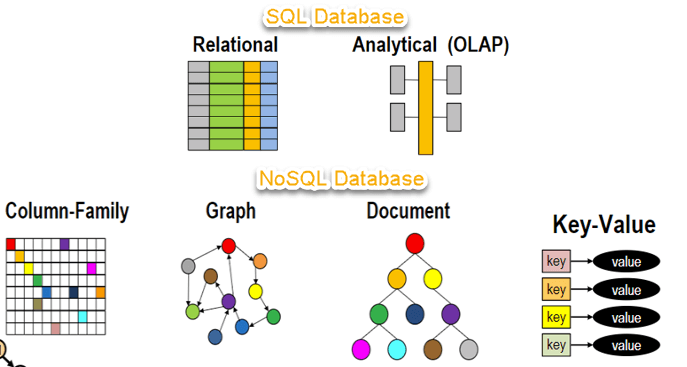
There are two database types: SQL and NoSQL. SQL databases are table based and work with a predefined schema. Meaning, developers have to feed in data in the form of a table (rows and columns) in the database. Additionally, a predefined schema (layout) has to be maintained.
The structure comes in extremely handy when the entities and the kind of data that they work with is static. Example: in case of Uber and Instagram, the information related to users and businesses are devised in a static format, thus relying on SQL.

While practical in a variety of conditions, they come with limitations, mainly around the need to follow set guidelines and layouts in terms of data input.

NoSQL was introduced to solve these issues.

They are anything but table based: key-value pairs, document based, or graph databases. They work around unstructured data. Meaning, nothing has to be predefined by the developers as queries for the database. Any form of data – image based, paragraphs, etc can be used.

It is devised for multiple operational needs –  real-time apps which interface with the customers or extend support to APIs in microservice pattern, and is heavily used in big data analytics. NoSQL enables high-performance, agile information processing at massive scale: a key feature for new class of operational databases. Apart from Aerospike, HBase and Caasandra are two of the best NoSQL databases.

What is in-memory?

There are two types of databases: One that relies on disks and SSDs for saving data and another that uses memory or RAM to save the data. In-memory databases are the latter. These databases are used in cases where the data has to be fetched in real-time (a feature that their counterpart doesn’t offer).

But since the data is stored on memory, there’s always a chance that the data might get lost when the server fails or faces a downtime. To handle such situations, the majority of in-memory databases persist data on disks by saving operations in a log or through screenshots.

Now that we have looked into what in-memory NoSQL databases stand for, let us get our attention to Aerospike.

Aerospike Database Explained

101 On Aerospike Data Base for Beginners | by Prabhu Rajendran | Everything at Once | Medium

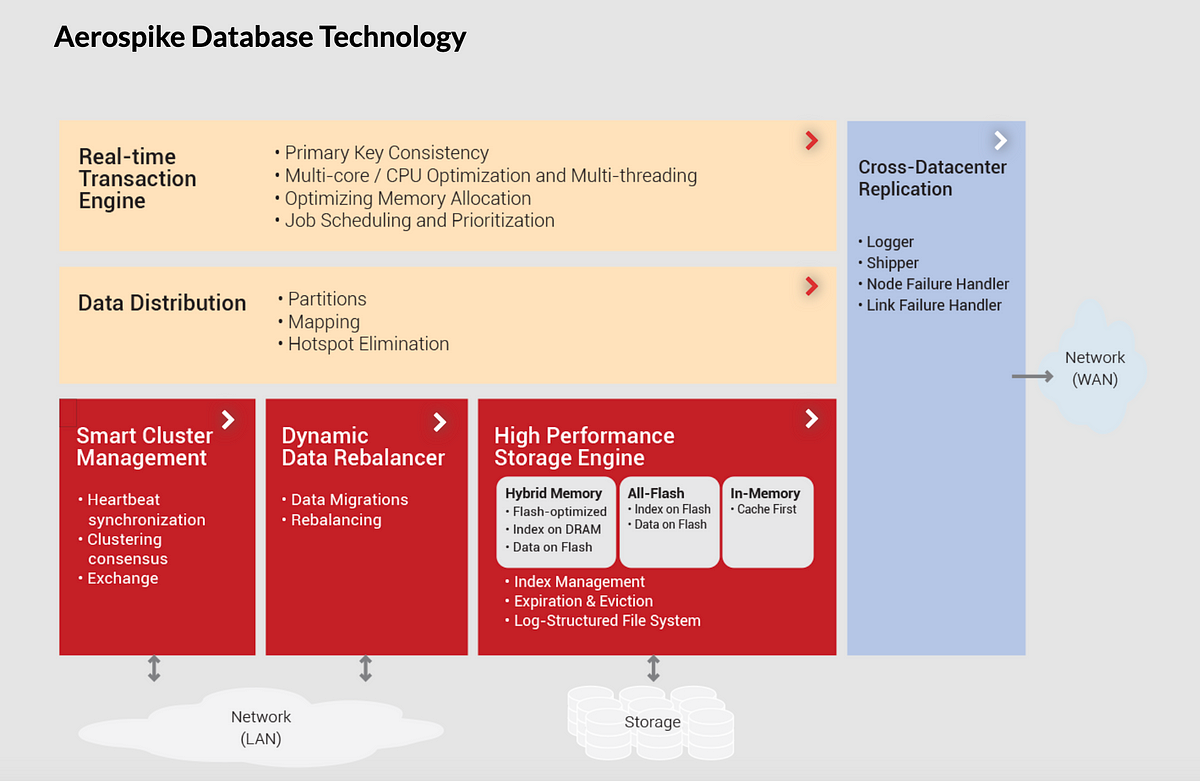
It is a scalable, distributed database. The Aerospike NoSQL database architecture is devised to fulfill three primary objectives:

  • Creation of a scalable, flexible platform for the development of web-scale applications.
  • Offer the reliability and robustness (as in ACID), which is expected from the traditional databases.
  • Offer operational efficiency with minimum manual need.

Aerospike Architecture

There are a number of elements and features which separates Aerospike database structure from other NoSQL databases. But, one key differentiator that makes it the first choice of world’s top companies is Aerospike’s hybrid memory architecture (HMA).

The index in case of HMA is saved in-memory while the data is stored in a persistent SSD and read from the disk. This, in turn, saves the space occupied in RAM, while keeping the data securely stored in the SSD.

The HMA in backend database in Aerospike architecture offers sub-millisecond latency and high performance with very less hardware spend. This results in lowering the total cost of ownership, enabling massive scaleup at low cost than pure RAM. This helps in the creation of rich and compelling UX which are key to determining success in the digital age.

Benefits of Aerospike Database for Business

Replaces Cache 

7,030 Replacement Illustrations & Clip Art

One of the key aerospike database advantage lies in high throughput and low latency makes it an ideal cache replacement platform. Cache is best suited when you work with static data. But, if the data is constantly changing, you will either have to deal with differences in database and cache or overwhelm database with writes.

Compared to Redis and Memcache, Aerospike data model comes with a built-in clustering which uses high performance SSDs. It also comes with the functionality of automatic cluster and transparent resharding, done through the mode of Aerospike Management Console (AMC).

User Profile Store

Aerospike Modeling: User Profile Store | by Ronen Botzer | Aerospike Developer Blog | Medium

When developing a marketing or advertisement app, you will have to store the users’ profiles. These profiles will come with information on recent user behaviours, partner cookies, segments loaded from analytics system, and a plethora of other data. The data in this category is usually between 1 to 10 KB. But, additionally, you will also require other frontend data such as – campaign budget, cookie matching, and status.

Optimized for Flash, user profile storage becomes one of the primal Aerospike use cases. It has helped form the user store for a number of popular advertising agencies such as Nielsen, AppNexus, Adform, and The Trade Desk. It is also much cheaper to operate Aerospike with large-terabyte scale compared to other databases.

Recommendation Engine

Building a Recommendation Engine: An Algorithm Tutorial | Toptal

For a recommendation engine to work right, you would need to use innovative mathematical formulas along with domain based knowledge for increasing the online engagement. If you are planning to develop one from scratch, you would require a fast data layer – one that supports various requests for every recommendation. It will also have to be flexible for you’d either need greater throughput or greater data as the system would evolve.

Aerospike in-memory database, with its following features makes up for an excellent database:

  • Large lists for recording behaviour efficiently
  • An optimized Flash support for handling datasets to petabytes from terabytes
  • Aggregations and queries for real-time reporting
  • Strong language support for Go and Python.

Fraud Detection 

Fraud Prevention Tools For Online Business

Detecting fraud is every business’s goal, especially when it is their users money or private information is at stake.

Ideally, an application gets 750 milliseconds to decide whether or not an event or transaction is fraudulent. Within this time span, a user profile and the transaction made has to be validated according to the rules set by data scientists. A single request more often than not leads to several database lookups. In such a situation, latency is the key.

When working on advanced algorithms that fraud detection requires, the tech stack is generally made of advanced libraries: ones that cannot easily push compute in databases which use SQL. Aerospike, with its low latency and NoSQL become an ideal database for such use cases.

Messaging and Chat 

The difference between chat and messaging

Messaging has become ubiquitous to mobile app usage. The definition of an ideal chat platform development is one that is available 24*7*365, have zero downtime, carry the functionality to share multiple data types, provide the option to save the chat history, all the while keeping it secure.

The fact that you can feed in different data types in Aerospike makes it fit for the job. But, it also comes with other benefits, such as:

  • Predictable performance against large transaction volumes
  • Industry-topping uptime and availability
  • Scalability with lower latency for handling increasing loads
  • Significantly low TCO
  • The Aerospike backup and restore function for cluster data

Internet of Things 

Internet of Things (IoT) - Brought to you by ITChronicles

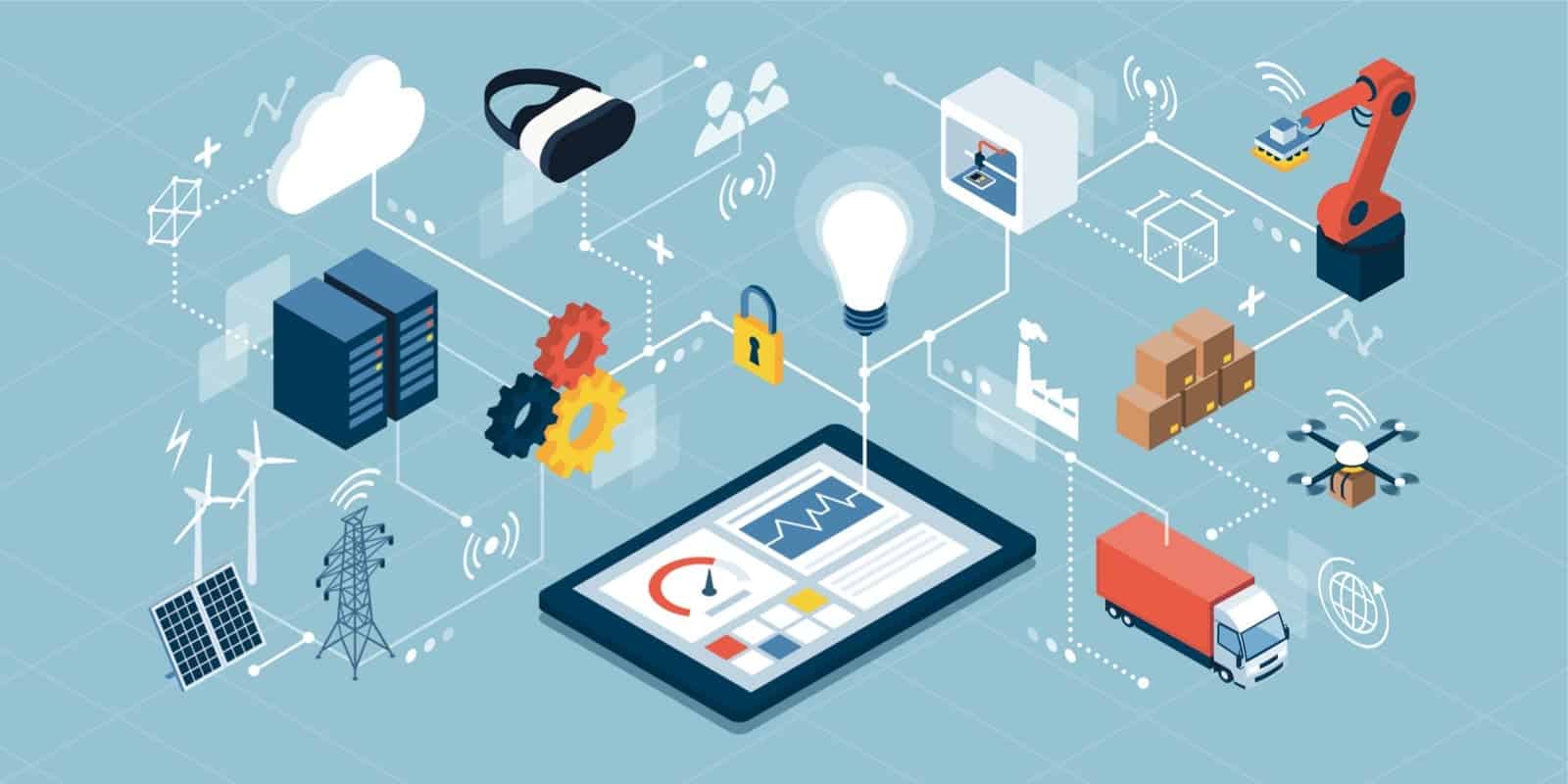
In the IoT environment, the IT system of an organization must collect and respond to over millions of inter-dependent processing events every single day coming in from thousands of devices, sensors, and apps.

The input types might include temperature, location, health, fingerprint, vibration, pH, flow, or even facial recognition. These inputs are even interconnected for providing enhanced monitoring, controlling, and feedback purposes.

The system latency, which collects this data should be extremely low (only a few milliseconds) for making the data available to the IoT app.

For the IoT trends 2020 to actually come true, it will be of prime importance that low latency is maintained and there is little to zero downtime, even if it is in the name of maintenance. Aerospike for big data analytics comes with the feature set to meet the low latency, high uptime and performance need of IoT.

Best Preventive medicine to eliminate Ransomware Attack

How to Mitigate the Risk of Ransomware Attacks: The Definitive Guide - Touchstone Security

A Brief on Ransomware Attack

Ransomware has become a huge potential to exploit and damage users’ crucial data. This malicious attack was the most significant malware threat of 2018 and it continues to be the most dangerous even in 2019. With its growing popularity, more people are being targeted to get the ransom.

In most cases, the ransom demanded from the victim comes with a deadline. If the victim fails to pay within the provided timeline, the data is lost forever. Ransomware attacks are very common these days.

Even paramount companies in North America and Europe have fallen victim to this . Cybercriminals spare no one and can attack any consumer or business, coming from all kinds of industries. Various government agencies advise people against paying the demanded ransom as this might stop the ongoing cycle of ransomware attacks.

Recent ransomware attacks define the malware's new age | CSO Online

As a matter of fact, a ransomware attack is designed to extort money from victims by blocking access to their data or systems. There are two most prevailing types of ransomware attacks through which the attacks are deployed; encryptors and screen lockers.

Under encryptors, the index of data on a system is encrypted into an absurd content and can only be restored with a decryption key. Whereas, screen lockers simply block the access to the system by locking screen, declaring that the system is encrypted. Apart from the two prevailing types, there are some infamous ransomware attacks as well.

Major Infamous Ransomware Attacks:

  • Wannacry Ransomware Attack

WannaCry ransomware attack - Wikipedia

This ransomware attack came out as a powerful Microsoft exploit. It was leveraged to create a global ransomware worm to infect over 250,000 computer systems. More than 200,000 systems were locked down in 150 countries. Hackers demanded a ransom which was paid through Bitcoin. Wannacry ransomware attacks infected National Health Service (NHS) and many other organizations across the globe.

  • CryptoLocker

CryptoLocker: Everything You Need to Know

It is a part of a ransomware family whose job is to extort money from users by encrypting the user’s hard drive as well as the attached network drives. It was first among the current generation of ransomware which required cryptocurrency for a ransom payment. CryptoLocker was spread through an email attachment that claimed to have come from FedEx and UPS tracking notifications.

  • NotPetya

What is NotPetya? | IT PRO

NotPetya is considered as one of the most destructive ransomware attacks. It was coded in such a way that even if the user pays up the ransom, the data would still be unrecoverable. Infamous as a close relative of Petya malware, it successfully infected a thousand number of computers across the globe in 2017.

How to Prevent Ransomware Attack?

  1. Ignore Unverified Links

4 Types of Mental 'Noise' You Should Ignore | SUCCESS

Never click on links that come in spam emails or on any unfamiliar websites. If an unexpected download starts when clicked on a malicious link then there are high chances of your computer getting infected.

  1. Never Share Personal Data

Do You Collect Personal Information? - Beacon Insurance

If you receive an email, call or text from an untrusted source asking for your personal information, make sure you don’t give out the details. Cybercriminals trick users into getting their personal information in advance of an attack. They use your information to target you via a phishing email.

  1. Backup your Data

If you ever experience a ransomware attack, you must already have a back-up of your data so that you don’t have to pay any kind of ransom to the attacker. Make sure of keeping a copy of every important data in an external hard drive that is not connected to your system.

  1. Never Pay Ransom

5 Ways to Back up Your Data and Keep It Safe

Never pay any amount to cybercriminals who carry out the ransomware attack. This is because there is no guarantee of return of data; after all your trust has already been manipulated with data hacking. Paying ransom only encourages cybercriminals to carry out more attacks.

  1. Security Awareness For Employees

Employees' Role in Cybersecurity | The Cyber Security Place

The best way to prevent a ransomware attack is by becoming proactive towards the latest cyber attack vectors. An organization must be aware of the harmful attack vectors which can lead them on the verge of losing their data and customer trust. It’s better to opt for preventive measures in advance so that there are fewer chances of falling victim to any kind of cyber attack.

Major Cyber attacks evidenced globally in Q1 2021

Cyber crime has been on the rise for years now and it is not showing any signs of slowing down. To make it worse, the arrival of the COVID-19 pandemic in 2020 just fueled the situation. Those who were expecting relief from the increasing terror of cyber crimes in 2021 are to be disappointed as the number of attacks is only increasing day after day.

We have barely crossed the first quarter of 2021 and already several major cyber attacks have made the headlines. Here is a list of some of the major cyber attacks that took place in Q1 2021:


#1 Channel Nine

Australian broadcaster Channel Nine was hit by a cyber attack on 28th March 2021, which rendered the channel unable to air its Sunday news bulletin and several other shows. With the unavailability of internet access at its Sydney headquarters, the attack also interrupted operations at the network’s publishing business as some of the publishing tools were also down. Although the channel first claimed that the inconvenience was just due to “technical difficulties”, it later confirmed the cyber attack.

#2 Harris Federation

In March 2021, the London-based Harris Federation suffered a ransomware attack and was forced to “temporarily” disable the devices and email systems of all the 50 secondary and primary academies it manages. This resulted in over 37,000 students being unable to access their coursework and correspondence.

#3 CNA Financial

One of the biggest cyber insurance firms in the US CNA Financial suffered a ransomware attack on 21st March 2021. The cyber attack disrupted the organization’s customer and employee services for three days as CNA was forced to shut down to prevent further compromise. The cyber attack utilized a new version of the Phoenix CryptoLocker malware, which is a form of ransomware.

#4 Florida Water System 

cyber criminal attempted to poison the water supply in Florida and managed by increasing the amount of sodium hydroxide to a potentially dangerous level. The cyber criminal was able to breach Oldsmar’s computer system and briefly increased the amount of sodium hydroxide from 100 parts per million to 11,100 parts per million.

#5 Microsoft Exchange Mass Cyber Attack

A mass cyber attack affected millions of Microsoft clients around the globe, wherein threat actors actively exploited four zero-day vulnerabilities in Microsoft’s Exchange Server. It is believed that nine government agencies, as well as over 60,000 private companies in the US alone, were affected by the attack.

#6 Airplane Manufacturer Bombardier

A popular Canadian plane manufacturer, Bombardier, suffered a data breach in February 2021. The breach resulted in the compromise of the confidential data of suppliers, customers and around 130 employees located in Costa Rica. The investigation revealed that an unauthorized party had gained access to the data by exploiting a vulnerability in a third-party file-transfer application. Also, the stolen data was leaked on the site operated by the Clop ransomware gang.

#7 Computer Maker Acer

The globally renowned computer giant Acer suffered a ransomware attack and was asked to pay a ransom of $50 million, which made the record of the largest known ransom to date. It is believed that a cyber criminal group called REvil is responsible for the attack. The threat actors also announced the breach on their site and leaked some images of the stolen data.

#8 University of the Highlands and Islands

A cyber attack targeted the University of the Highlands and Islands (UHI), forcing the university to close all its 13 colleges and research institutions to students for a day. Security professionals uncovered that the attack was launched using Cobalt Strike, a penetration testing toolkit commonly used by security researchers for legitimate purposes. This incident is just another in a series of cyber attacks targeting the education sector.

#9 Sierra Wireless

On 20th March 2021, the multinational IoT device manufacturer Sierra Wireless was hit by a ransomware attack against its internal IT systems and had to halt production at its manufacturing sites. Its customer-facing products weren’t affected and the company was able to resume production in less than a week.

#10 Accellion Supply Chain Attack

Security software provider Accellion fell victim to a breach targeting its file transfer system FTA. Many of its clients were affected by the breach. Some high-profile organizations that got caught in the crossfire include grocery giant Kroger, telecom industry leader Singtel, the University of Colorado, cyber security firm Qualys and the Australian Securities and Investments Commission (ASIC). A lot of confidential and sensitive data stolen from various companies by exploiting the vulnerabilities in Accellion’s FTA tool was leaked online.

How to Protect Your Organization Against Cyber Attacks?

Witnessing the extent of damage cyber attacks can cause should be reason enough to take the necessary preventive measures right away. So, here are some steps you can take to reinforce your organization’s cyber security framework and keep it shielded from cyber attacks.


  • Generate Cyber Security Awareness: Unaware employees can prove to be an organization’s biggest weakness when it comes to cyber security. Generating awareness among your employees about the prevalent and emerging cyber threats is one of the most effective ways of protecting your business against cyber attacks.


  • Implement a Phishing Incident Response Tool: Educating your employees will only take you so far if you don’t equip them with the means of dealing with cyber threats. A phishing incident response tool like TAB can empower your employees to detect and report suspicious emails right away, significantly reducing cyber risks.


  • Carry Out VAPT: Conduct periodic Vulnerability Assessment and Penetration Testing (VAPT) to detect any exploitable vulnerabilities in your organization’s IT infrastructure including applications, servers and networks. Make sure to fix the detected weaknesses on priority.


  • Keep the Systems Updated: Keep all your hardware and software up-to-date with the latest security updates and patches. Failing to do so can create weaknesses in your security infrastructure and lead to cyber attacks.


  • Implement MFA: Enable Multi-Factor Authentication (MFA) across all the applicable endpoints of your organization’s networks. This will not only add an extra layer of security but also protect you in case your employees’ user credentials are stolen.


So, don’t wait for your company’s name to be on the list of cyber attack victims and take the necessary precautions immediately.

Vulnerabilities in Critical Infrastructure and its mitigation

With geopolitical tension rising in certain parts of the world along with the ambitions of cyber attackers, coming up with a holistic strategy to protect the nation’s critical infrastructure has become a priority for the enterprises handling them. Imagine what would happen if the nuclear plants or the space agencies of a country were hit by a cyber attack. The disruption caused due to a successful cyber attack on a nation’s critical agencies can be far-reaching. It has the potential of causing a major loss of money, time, and even lives. This can be illustrated by a recent incident.

After the release of the largest-ever compilation of breached usernames and passwords, COMB, a cyber attacker wrongfully entered the Oldsmar (Florida) water plant’s computer systems to poison the city’s water supply by changing its pH to dangerously acidic levels. Even though the attack was thwarted before completion, this incident has opened our eyes to the dangerous reality of such an attack being successfully executed in the future.

Tomorrow, this attack can take place in the form of manipulation of boiler pressure in a thermal power plant or a ransomware attack on the country’s top-tier healthcare institutions. All of such attacks are not only potentially life-threatening but also pose a huge risk of material damage.

Key tips for cybersecurity protection at your critical site - Secure Insights

Other Cyber Incidents Around the World Involving Critical Infrastructure

In February 2020, Saudi authorities reported that their public petroleum and natural gas company Saudi Aramco has seen an increase in cyber attack attempts. This public enterprise suffered a huge cyber attack back in the year 2012 when Shamoon Virus hit the facility and damaged around 30,000 computers.

A few months back, New Zealand’s central bank suffered a huge data breach, where commercially and individually sensitive information was stolen by cyber attackers.

In another event, an electricity grid in the state of Maharashtra (India) was hit by a cyber attack that resulted in a power outage. This incident took place in the month of October 2020 and the authorities suspect Chinese involvement in it.

Discussing the Deterrent

In today’s world, there is cut-throat competition between countries for production and use of resources. Therefore, it is all the more important for enterprises handling and managing the critical infrastructure to adopt a multipronged approach while planning a defense against cyber attacks.

At the organizational level, some of the following measures can help in stopping cyber attacks from affecting the enterprise-

  1. Access Management – Access management is the first basic measure that organizations should take to protect their control systems. Identity Access Management (IAM) in databases and other important IT infrastructure is necessary to limit access and prevent the misuse or leak of information.
  2. Awareness as Defense – One very effective way of preventing cyber attacks on an enterprise is to train the employees in the basics of cyber security. Cyber aware employees form a major defense against attempted cyber attacks on the enterprise.

ThreatCop Lifetime Deal | Security Attack and Awareness Simulator

  1. Email Domain Security – To ensure the security of an organization, it is imperative to address the cyber threats originating from its email domain. Using email domain security tools like KDMARC can be very effective in stopping spoofing of the email domain to protect the enterprise against spear-phishing and BEC attacks.
  2. Data Backup –  Frequent data backup in offline locations in a segmented manner is the best approach to defend against ransomware attacks.
  3. Incident Response – Use of incident response tools can facilitate quick detection of and response to a cyber attack. A phishing incident response tool like Threat Alert Button (TAB) can be quite helpful in identifying and removing phishing emails from the employees’ inboxes.
  4. Strong Password Policy – Employees should be encouraged to use strong passwords. This applies to both their work emails and other credentials used for accessing information and operations of critical systems in the enterprise.


error: Content is protected !!