Data Centric Architecture

Data Centric architecture

The value proposition of global systems integrators (GSIs) has changed remarkably in the last 10 years. By 2010, it was the waning days of the so-called “your mess for less” (YMFL) business model. GSIs would essentially purchase and run a company’s IT shop and deliver value through right-shoring (moving labor to low cost places), leveraging supply chain economies of scale and, to a lesser degree, automation.

This model had been delivering value to the industry since the ‘90s but was nearing its asymptotic conclusion. To continue achieving the cost savings and value improvements that customers were demanding, GSIs had to add to their repertoire. They had to define, understand, engage and deliver in the digital transformation business. Today, I am focusing on the value GSIs offer by concentrating on their client’s data, rather than being fixated on the boxes or cloud where data resides.

In the YMFL business, the GSIs could zero in on the cheapest, performance compliant disk or cloud to house sets of applications, logs, analytics and backup data. The data sets were created and used by and for their corresponding purpose. Often, they were tenuously managed by sophisticated middleware and applications for other purposes, like decision support or analytics.

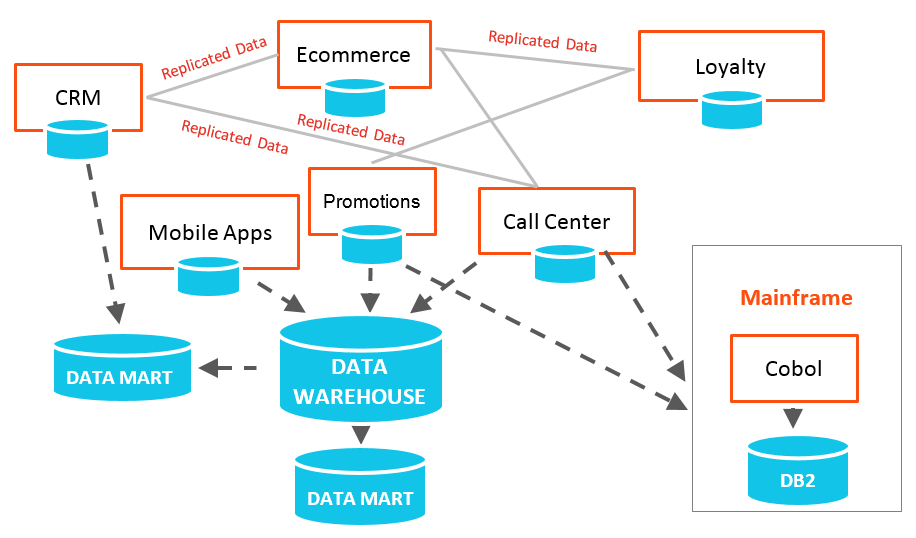
Getting a centralized view of the customer was difficult, if not impossible. First, it was due to the stove piping of the relevant data in an application-centric architecture. In tandem, data islands were created for analytics repositories.

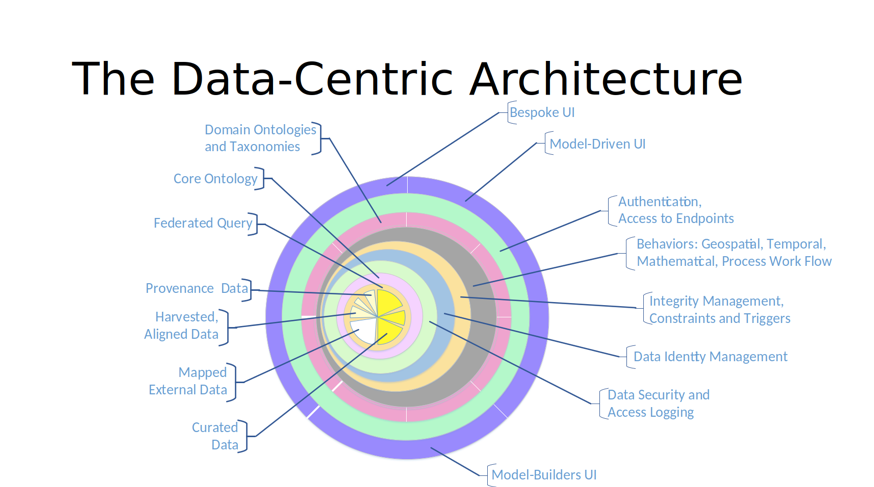
Now enters the “Data Centric Architecture.” Transformation to a data-centric view is a new opportunity for GSIs to remain relevant and add value to customer’s infrastructures. It is a layer deeper than moving to cloud or migrating to the latest, faster, smaller boxes.

A great way to help jump start this transformation is by rolling out Data as a Service offerings. Rather than taking the more traditional Storage as a Service or Backup as a Service approach, Data as a Service anticipates and provides the underlying architecture to support a data-centric strategy.

It is first and foremost a repository for collected and aggregated data that is independent of application sources. From this repository, you can draw correlations, statistics, visualizations and advanced analytical insights that are impossible when dealing with islands of data managed independently.

It is more than the repository of the algorithmically derived data lake. A Data as a Service approach provides cost effective accessibility, performance, security and resilience – aimed at addressing the largest source of both complexity and cost in the landscape.

Data as a Service helps achieve these goals by minimizing, simplifying and reducing the data and its movement within and outside of the enterprise and cloud environments. This is achieved around four primary use cases, which range from enterprise storage to backup and long-term retention:


Each of the cases illustrates the underlying capabilities necessary to cost effectively support the move to a data-centric architecture. Combined with a “never migrate or refresh again” evergreen approach, GSIs can focus on maximizing value in the stack of offerings. This approach is revolutionary.  In past, there was merely a focus on the refresh of aging boxes, or the specifications of a particular cloud service, or the infrastructure supporting a particular application. Today, GSIs can focus on the treasured asset in their customer’s IT — their data

How Do I Get My App Into The Google Play Store?

Google Play Store Gets New Interface: Did You Notice the Subtle Changes to Google Play UI?

No one can doubt the popularity and dominance of the Google Play Store in the domain of mobile applications and software.

The domain gets all the more solidified by the Play Store statistics that there are approximately 2.8 million apps on Play Store and that almost 3739 apps get released on it daily.

Numbers like these solidify how Play Store is an excellent option to upload your application on.

Now, if you are wondering “How to submit an app to Google Play Store” then end your quest here. We have covered end-to-end all about the process to upload an app to Google Play Store.

To put it out there, there are certain things that need to be done before the actual process of app submission begins. This is what we are going to attend to before answering the question of “How to get an app on the play store”, we will look at the pre-steps to publishing an application.

Without any further ado, let’s dive in.

Prerequisite of Submitting App To Play Store

Since this is your first time submitting your application to a gigantic platform, there are certain prerequisites that you must take care of in order to successfully upload an app to Google Play Store. So, without any further ado, let’s get started.

1. Test Your Application

Unit Tests & Data Coverage for Machine Learning Models - Data Analytics

It is needless to mention how crucial testing your application is. No matter how many incredible features you have packed into your app, if it does not perform upto the expectations of the user, it will be ditched like a hot potato. In which case, it is imperative for you to painstakingly test your app as many times as possible and be 100 percent certain that it is going to perform remarkably, before you look ahead to upload apps on Play store.

You can always use emulators for this purpose, however, using an  Android-powered device will make the testing process more effective. It will give the experience of using your app on a real device, as would users, and enable you to analyze any bugs or discrepancies.

2. Concise App Size

The App Design Process: A Guide to Designing Mobile Apps

In terms of applications, the size of the app matters a lot. Users do not feel inclined to download an app that takes too much space in their device storage. Moreover, Google only permits the app size to up to 50MB.

Although, if your app exceeds this limit, then you can use Android APK’s Expansion file, to successfully upload the app to Play Store. This will break your app into parts and each can be up to 2GB, giving an additional 4GB space to your app. This added data is saved in Google Cloud and is retrieved whenever the app is installed.

3. Get App Licensed

Web Development Mobile App Development Mobile Phone Web Design, PNG, 658x636px, Web Development, Advertising, Android, Application

Though this is an optional choice, it wouldn’t hurt you to get your app licensed before you upload your app to Google Play Store. Licensing your application will prove most beneficial for you if it is paid in nature. By adding the End User License Agreement, you will gain full control over your application which may help in the future, should any discrepancies arise.

  • Create your APK file with Bundle ID and Version Number
  • You need to prepare an APK file in which you can assign a version number to your application which will help you in the future when you need to upload a new update for your app. This number is mentioned in the code and would increase as the updates for the application are introduced.
  • Bundle ID, also called App ID, is used to make an application unique, making it a crucial part of the prerequisites for submitting your application. This is applicable for all the applications for Android 5.0 and above.

4. Sign App With Security Certificate 

Android Security: Certificate Transparency | by Matthew Dolan | Medium

Here, you need to create a private key using Release Keystore. This is a security certificate signed as an APK which you will need every time you publish an app to the Play Store. This is also known as JSK file including credentials such as Keystore password.

5. Prepare App Store Listing

How to publish your app on Google Play and the App Store? | GoodBarber

App listing is a powerful element that helps your application in gaining downloads. Not every one devotes their time on app listing but if you do this before android app submission, you will definitely see some mind-blowing results.

In the app listing, you provide some information to users about what type of application it is and what are its features. One of the best practices of app listing is using high-quality screenshots. Play Store requirements allow developers to use a maximum of 8 images and a minimum of 2.

Here are the best practices and what you should include in your app listing-

    • Title
    • Short Description
    • Full Description
    • Screenshots of your app (JPEG or 24-bit PNG)(Min-320px,Max-3840px)
    • Hi-resolution icon (512 x 512)((with alpha) 32-bit PNG)
    • Feature Graphic (1024 w x 500 h)(JPG or 24-bit PNG (no alpha))
    • Type of application
    • Category of your app
    • Rating of the content
    • Email of Developer or Company
    • Url for Privacy Policy

6. Go Through Guidelines

Crew App — LH CREATIVE

When it comes to App Store vs Play Store guidelines, it is safe to say that Google’s guidelines are more flexible, which works in favor of developers.

However, you have to be careful when you add an app to the Play Store and you would have to make sure you follow all the guidelines given by Google, lest your app will be kicked out of the platform. Now, this is something you would want to avoid at all costs, right?

Step-by-Step Process to Upload App To Google Play Store

Now that the obvious is out of the way, let’s move on to the steps regarding how to upload an app on Play Store. Make sure you follow each in the exact chronological order to avoid any mistakes in the process.

1. Google Play Developer Console

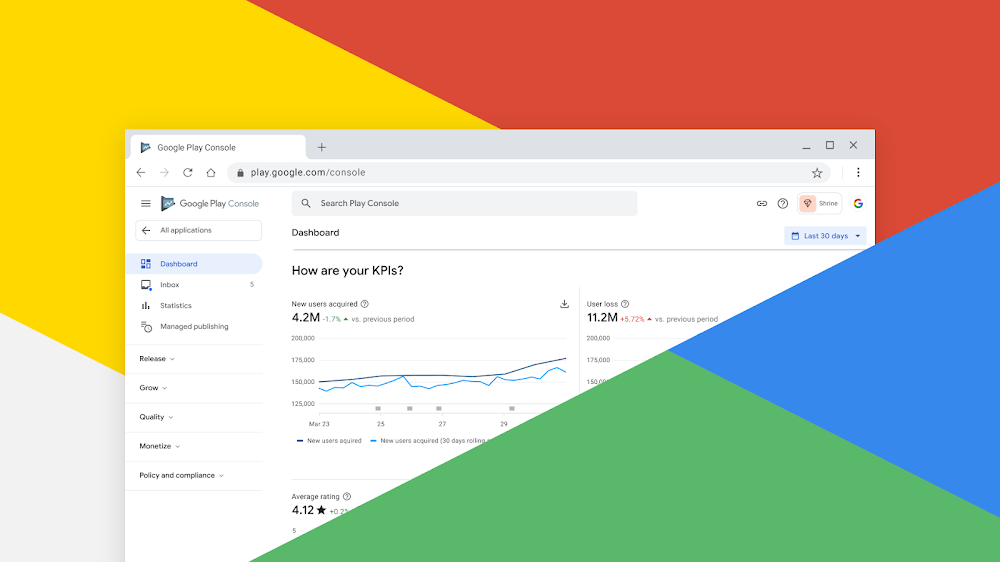
Google Play Console | Google Play Console

In order to upload a mobile app to Google Play Store, a developer dashboard is imperative. Developer console is kind of a backend controlling center, from where developers submit an app to Play Store. There is a one-time fee of $25 by which a developer can open an account, loaded with functions and control features. After paying this one-time fee, you can upload apps to Google Play Store for free.

You need to fill out all the credentials asked while creating the account, such as your name, country and more. Once you submit your account it will take upto 48 hours to get approved.

2. Link Developer Account with Google Wallet Merchant Account

Create a Google Merchant account – AppMachine Help Center

If the app getting uploaded to Play Store supports in-app purchases, then you will need a merchant account. To create one you can sign in to your Google Console account and click on ‘Reports’ followed by ‘Financial Reports’ option. After this, you may select ‘Set up a merchant account now’ option and simply fill out your details.

The merchant account will automatically get linked to your Google Console account and will allow you to manage and examine app sales.

3. Create Application

How To Submit An App To The Google Play Store | Clearbridge Mobile

This is yet another step towards how to publish an app to the play store.

Once you are logged into your developer or publisher account, here are a few steps you need to take:

  • In the menu, go to the ‘All applications’ tab
  • You will see an option ‘Create Application’ – select it
  • From the drop-down menu, choose the application’s default language
  • Enter your application’s title (it can be changed later)
  • Now, click on “Create”

4. App Store Listing

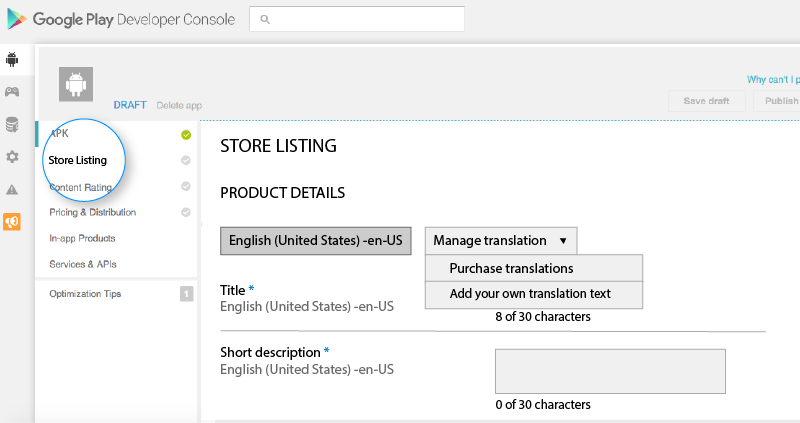
Store Listing Panel

It is at this point, your preparations will come handy.

In this step around how to upload an app to the play store, you are required to fill out all the information and details you have already prepared with caution before. The table below shows what information you need to fill in the app listing-

Make sure to use appropriate keywords in your app description to increase the chances of your app showing up in searches. Along with this, make sure to use all the data we have talked about in the prerequisite section for app listing.

5. Upload App Bundles or APK To Google Play

How to publish Android appBundle to Google Play Store | by Andres Sandoval | Medium

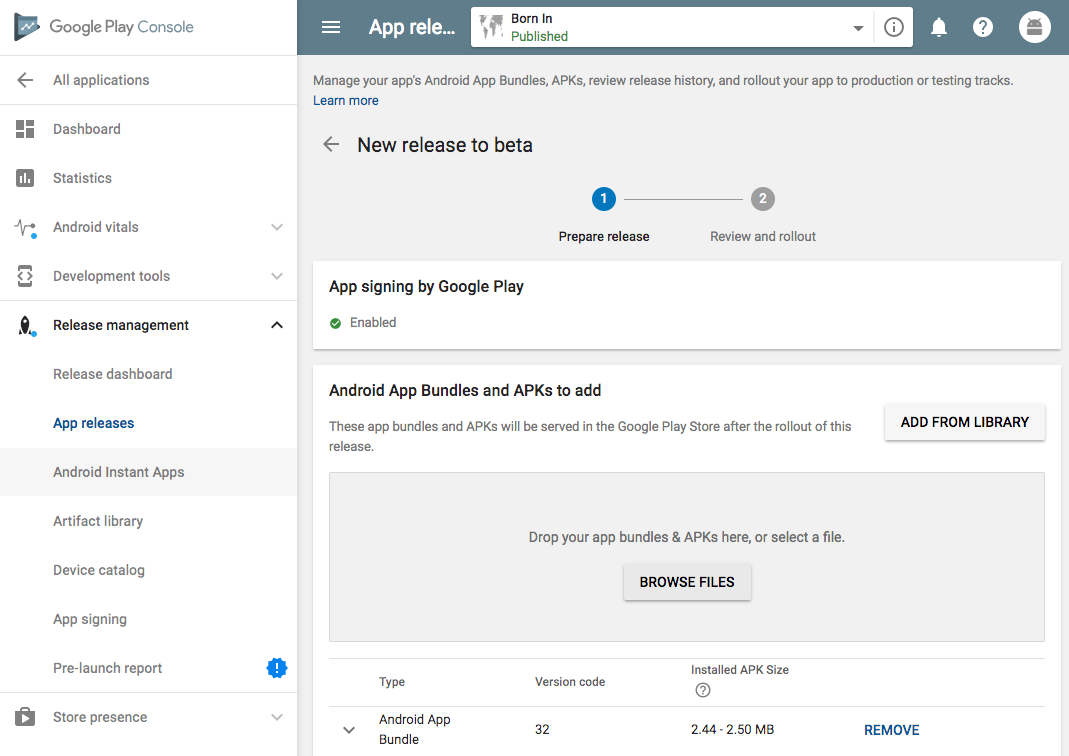
Now, you are required to use the files such as App bundle or APK and signed app release and upload them into your application. This is how you do it: Navigate to the ‘Release Management’ and then ‘App Release’ tab in the menu. After this, you will be asked to choose any one type of release from four options- internal test, close test, production release, and an open test.

Once, you have made a decision regarding which type of release you want, you may select ‘Create Release’.

At this point, you will be redirected to the New release to the production page. Here, you are again required to make another decision- to opt for Google Play app signing on the app or not. If you choose the latter, then simply click on the ‘OPT-OUT’ option.

Now, select ‘Browse files’ and then look into how to upload apk to google play store while naming and describing your release through on-screen instructions. You can also click on ‘Review’ to confirm the information. When everything is taken care of, press ‘Save’.

6. Time For Content Rating

How We Rate and Review | Common Sense Media

The next step regarding how to publish apps on the Play Store is to rate your app. This is crucial for it is listed as ‘Unrated’, it might get removed altogether from the store, so it is imperative to rate the application.

For Content Rating, you must again navigate to the menu on the left side of the screen and then select the same. By clicking on ‘Continue’ you can move forward and then type your email address in the respective field and then ‘Confirm’ it.

Now, you may fill the questionnaire for your app rating. Follow this by selecting the ‘Save Questionnaire’ and then choose the ‘Calculate Rating’ option to see your app rating on the Play Store. The last thing to finalize your app’s content rating is to click on ‘Apply’.

7. Fix App Pricing and Distribution

Complete Guide: How to submit app to App Store and Google Play

Now, you have to be clear about what countries your app is going to be available in. The point to note here is that Google doesn’t support publishing an app for all regions. The app will be published in selected countries instead of world-wide.

Moreover, assigning a price to your app is crucial. If you want your app to be free, make sure that this decision is permanent, as Google does not allow you to convert free apps into paid ones. Although, the price of the app can be altered.

To do all this, go to the Pricing and Distribution tab in the menu, and then make a choice whether your app is going to be Free or Paid. You may now select the countries you want your app to be released. Additionally, if your application is suited for children under the age of 13, you may select the option of ‘Yes’ for Primary Child-Detected. If otherwise is the case, simply select ‘No’. Similarly, select the options for allowing ads into your application.

8. Finally, Publish the Application

How To Upload An App To Google Play Store?

Once you are confirmed about everything being correct, take the last step of this guide on how to upload an app on Play Store, i.e, add the application to the platform. You need to go back to the ‘App Releases’ tab and then select ‘Manage Production’ followed by ‘Edit Release’. After this, click on ‘Review’ and then choose ‘Start rollout to production’ option. To bring this process to an end select the ‘Confirm’ option and Voila! You have successfully uploaded the app to the Google Play Store for free.

All there is left to do now is to just wait for your application to get approved. It generally took about two hours for your application to get reviewed. But with Google Play’s updated privacy policy, it will now take hours and even days for the same, encouraging mobile app development companies to create even more flawless applications that get selected instantly. So, hold your excitement in the place and just wait.

How To Get Your App Featured On Play Store?

How to get your app featured on the Google Play Store - Business of Apps

Your job to make sure the app gains popularity and thousands of downloads doesn’t end here. After successful execution of the steps regarding how to upload an app to Google Play Store, it is now time to get it featured on Play Store.

There are certain practices such as user interaction and visual design services, working on the latest technologies, localization, etc. that helps your app to get featured. Getting featured on Google Play can benefit your app to an extent that it increases the attention of users on your app by multi-folds.

What To Do After Play Store App Submission?

With the question of “How to publish an app on Play Store” answered, you might think “What is there to do next?”. Well, we have got you covered with this as well. Here are some practices you can do to ensure your application enjoys global exposure.

1. Promote App On Social Media

How to Promote an App on Social Media? | Promote Android App

Social Media is a great medium to skyrocket the popularity of your application. The fact that 42% of the world’s population uses social media is enough to justify the statement. There are some platforms such as Facebook, Instagram, Linkedin, Pinterest, and a lot more that are constantly in use. So, promoting your app on these platforms promises more traffic and eventually more downloads.

2. Initiate Press-Release

PRESS RELEASE! — Foundation to Fight H-ABC

Press-release is another way through which you can promote your brand. With this, your brand will come into limelight and many publications will cover your app release which will eventually allow your app to reach a wider user base and develop an authentic connection.

A press release that covers the words, attributes and insights of the mobile app developers and application itself has proved to be an incredible app marketing strategy. It is a great example to show users that what they expect is good.

3. Focus On App Maintenance And Update

Mobile App Maintenance and Support Plans Sydney | DigiGround

You cannot just publish your application of the app store and let it be. You need to efficiently maintain your application and introduce frequent updates, attending to the issues and bugs faced by users. Maintaining something is a constant task rather than a one-time thing. So, make sure you keep your app updated with the latest tech-stack and fix whatever needs fixing.

4. Practice ASO

ASO: App Store Optimization ? SEO Guide for Google Play & App Store

App Store Optimization is a celebrated practice among all the top Android app development companies. Famously known as ASO, it primarily focuses on the activities which target aspects that can generate more attention and visibility of your application of the app store. These practices are focused on increasing the conversion rate of impressions into downloads on the application.

Era of AI in Cybersecurity

Artificial Intelligence to revolutionize cybersecurity

Palo Alto Networks study highlights preference for AI management of cyber  security – Risk Xtra

Cyber attacks are increasing rapidly these days and the trend for zero-day attacks is also not so unknown. To cope up with these evolving cyber threats, it is the need of the hour to be prepared with more advanced counter mechanisms. This is where AI in cybersecurity comes into play.

These days there are tools and security devices that use AI to make the attack detection and prevention process easy and automated. AI in cybersecurity helps to bring out the concepts of behavioral analysis, automation, and many more that help to create a new space in the field.

Role of AI in cybersecurity

AI has opened new horizons and opportunities to detect and mitigate cyberattacks. Every day multiple cyberthreats are born and increase the attack surfaces of the firm. AI in cybersecurity helps to delve deeper into the key areas to find the threats and adjust itself in a suitable way to mitigate them.

AI can identify and prevent cyberattacks

AI has lots of reference modules and predetermined attack engines that helps the user to detect the inbound cyber attacks easily. Some attackers use predefined scenarios, methodologies, and techniques to attack websites and applications. By using AI-based detection techniques, it will be easy for the user to identify the attacks. Once the ongoing attacks are identified, you can add some of the pre-requisites in the AI engine that will help you to mitigate the same.

The automation of cyberattacks

The Real Challenges of Artificial Intelligence: Automating Cyber Attacks |  Wilson Center

AI in cyberspace is rapidly growing and is both boon and bane for the industries. Whereas on one hand, the application of AI in cybersecurity helps to automate the process for mitigation of cyber threats, it also helps malicious actors to create automated cyberattacks. These attacks are pre-programmed based on the analysis of threat vectors of the organization and attack the same in various ways.

The latest research shows that the threat landscape is increasing these days due to the presence of the open-source AI-enabled hacking tools and software. Within the report, the cybersecurity firm documented three active threats in the wild which have been detected within the past 12 months. Analysis of these attacks — and a little imagination — has led small attackers like script kiddies and newbies to create scenarios using AI which could be more dangerous and threatening.

Impact of AI in cybersecurity space

The presence of AI in the cybersecurity space has opened new horizons for attackers and defenders. The landscape of cyberspace is changing its demographics due to the presence of AI, which proves to be uncertain and unbiased. Sooner or later it is going to be the key differentiator between both the veils.

The AI has helped the cybersecurity researchers and continues to do the same in all the way possible.

The presence of the AI has impacted the cyberspace on the following grounds:

  • Identification of the threat
  • Mitigation of the threat
  • Vulnerability assessment of the organization
  • Constant monitoring of the organization’s threat posture
  • Helps in reporting and accounting of cyber threat of the firm


Approaches of Developing a Digital Strategy

B2B Digital Marketing Strategy, Tactics & Examples

Products built by aerospace and defense companies are highly engineered and sophisticated, which means they’re often complex. That’s not a bad thing. But they’re also complex in ways that are undesirable. Products and their constituent parts are tracked in dozens of systems –from design to manufacturing to maintenance — which can result in an average of 26 different reference numbers for each part.

The drive to digital transformation is helping A&D companies recognize that situations like this, which arise from a lack of governance and the absence of an enterprise-wide data strategy, have created substantial costs and risks that have to be addressed to realize the full benefits of digital transformation.

That’s especially true for companies that want to establish a “digital thread” for products and parts throughout their systems. The ability to follow any part throughout the A&D value chain (design, manufacture, service) by following a single digital ID will help A&D companies recognize tremendous cost savings. A digital thread also provides a glass pane for status, reduces rework and errors, improves security, and helps manage compliance and regulatory issues with greater efficiency.

That sounds great. But the key question for many companies remains: How do you get started with an endeavor like that? Many organizations fail to prioritize defining a data strategy on the grounds that it’s either a case of “boiling the ocean” or else an “infinity project” that will deliver little value.

A few key points can help your company move toward a data strategy that allows you to pursue the rest of your digital transformation agenda.


1. Make an affirmative decision to manage your data.

All companies make decisions about how they engage with, operate on and leverage their data — whether at an enterprise or project level. Even if a company has no formal data management policy, that in itself is a decision, albeit one that leads to the situation many companies find themselves in today. On the other hand, companies that form a holistic point of view in adopting an enterprise-grade data strategy are well positioned to optimize their technology investments and lower their costs.

2. Establish executive sponsorship and governance.

Sustaining a successful data strategy requires alignment with corporate objectives and enforced adherence. As corporate objectives evolve, so should the data strategy — keeping up not only with how the business is operating, but also with how supporting technologies and related innovations are maturing. This means including representatives from all the domains that are involved. It also means assigning someone with the authority to resolve conflicts between groups. This is a key element to helping federate data across silos and moving to a data hub approach, thus eliminating the need to maintain 26 different part numbers for a single item.

Sustaining a data strategy also means making a specific investment in personnel. Companies that embrace the constructs of a data strategy often define dedicated roles to own these strategies and policies. This ranges from augmenting executive and IT staff with roles such as chief data officer and chief data strategist, respectively, to expanding the responsibilities of traditional enterprise data architects.

digital strategies

3. Get started by instituting good data management practices in smaller programs.

Success demonstrate the value that data management can deliver at a small scale and what it could potentially deliver at the enterprise level.  Applying an Agile methodology, which continually demonstrates short bursts of success, will help gain momentum (like a snowball rolling down a hill) and organizational acceptance.


As with any business or technical process, a data strategy has its own lifecycle of continual evolution, maturity, change and scale. But the benefits it makes possible—for example, the ability to construct a digital thread for products and parts—will far outweigh the investment that’s required.

For a thorough view of the process that’s involved in setting digital strategy, read the whitepaper Defining a data strategy by my colleagues, Aleksey Gurevich and Srijani Dey. It offers a concise view of the components of a winning data strategy as well as the steps needed to implement, maintain and evolve it.

2020’s Major Data Breaches

Ever since organizations have shifted their business to remote operations due to the COVID-19 pandemic, there has been a dramatic rise in the number of data breaches. In the first half itself, cases of data breaches have been reported in 81 global companies from 81 countries!Besides, a security research firm recently revealed the impact on the data breach landscape due to COVID-19 where 80% of data breaches have occurred either because of stolen credentials or brute-force attacks!

Currently, cybercriminals are exploiting the situation of the pandemic to launch highly sophisticated cyberattacks on every industry possible. In the first six months of 2020, various Fortune 500 companies became the target of massive data breaches where hackers sold account credentials, sensitive data, confidential and financial information of these organizations’ cybercriminal forums.

Till now, nearly 16 billion records have been exposed this year. Moreover, according to researchers, 8.4  billion records have been exposed in the Q1 of 2020 alone! This number is a 273% increase in comparison with the first half of 2019 during which 4.1 billion records were exposed! (Source: Security Boulevard)

The 15 biggest data breaches of the 21st century | CSO Online

Let us take you through the biggest cyberattacks of 2020 till now.

Top 5 Data Breaches in 2020 So Far:

Twitter Hack 

Twitter Confirms it was Hacked in an Unprecedented Cryptocurrency Scam |  Threatpost

Twitter took the whole internet by storm when it was hit by one of the most brazen online attacks in history! The social media platform suffered a breach where the hackers verified Twitter accounts of high-profile US personalities like Barack Obama, Elon Musk, Joseph R. Biden Jr., Bill Gates, and many more.

Out of 130 targeted accounts, hackers were able to reset 45 user accounts’ passwords. Hackers posted fake tweets from these accounts, offering to send $2000 for $1000 sent to an unknown Bitcoin address. Reportedly, the Twitter breach well-coordinated scam made attackers swindle $121,000 in Bitcoin through nearly 300 transactions.

According to Twitter Support, “the attack on July 15, 2020, targeted a small number of employees through a phone spear-phishing attack. This attack relied on a significant and concerted attempt to mislead certain employees and exploit human vulnerabilities to gain access to our internal systems.


Marriott Data Breach

Second Marriott Data Breach Affects 5.2M Guests | Hotel Business

On March 31st, 2020, the hotel chain Marriott disclosed a security breach that impacted the data of more than 5.2 million hotel guests who used their company’s loyalty application.

Hackers obtained login credentials of two accounts of Marriott employees who had access to customer information regarding the loyalty scheme of the hotel chain. They used the information to siphon off the data approximately a month before the breach was discovered.

The data accessed in the breach involved personal details such as names, birthdates, and telephone numbers, travel information, and loyalty program information.

According to the Marriot, hackers might have obtained the credentials of their employees either by credential stuffing or phishing. Previously, the hotel giant announced a data breach in late 2018 in which up to 500 million guests were impacted!


MGM Data Dump

142 Million Guests: Hackers Attempt to Sell MGM Grand Data Dump for  Cryptocurrency – Bitcoin News

Last year in 2019, MGM Resorts suffered a massive data breach. The news of the breach incident started to circulate in February 2020 when hackers leaked the personal details of 10.6 million hotel guests for free download. But in the later findings, the number increased by 14 times (nearly 142 million) than the number recorded in February 2020.

The personal information published on the hacking forum included the name, home address, phone numbers, email address, and DOB of guests. The leaked files of guests included Justin Bieber, Twitter CEO Jack Dorsey, and many major government agency officials.

However, a spokesperson from MGM Resorts confirmed that impacted guests were notified about the data breach. In addition, it said, “We are confident that no financial, payment card or password data was involved in this matter.

Zoom Credentials Up for Sale!

Hundreds of thousands of stolen Zoom accounts for sale on hacker forums for  next to nothing | BetaNews

Due to the COVID-19 pandemic, various organizations across the globe adopted work from home policy. In view of the situation, the Zoom video conferencing app became the most used application for virtual meeting and got popular among cybercriminals too.

Within a short span of time, the application became vulnerable to various security threats and eventually became a victim of the data breach. In the first week of April 2020, the news of “500,000 stolen Zoom passwords available for sale in dark web crime forums” shook the application users.

It was reported that more than half a million Zoom account login credentials were up for sale and some of the accounts’ credentials were given away for free. In fact, some of the login credentials were sold for less than a US cent each!

Along with account login credentials, victims’ personal meeting URLs and HostKeys were available too. The leaked accounts’ details belonged to financial institutions, banks, colleges, and various organizations.


Magellan Health (Ransomware Attack and Data Breach)

Healthcare Giant Magellan Struck with Ransomware, Data Breach | Threatpost

One of the Fortune 500 companies, Magellan Health was struck by a ransomware attack and data breach in April 2020. The healthcare giant confirmed by stating that about 365,000 patients were affected by the sophisticated cyberattack.

According to the investigation, the attack was launched with a fully planned process where hackers first installed malware to steal employee login credentials. Then they leveraged a phishing scheme to gain access to systems of Magellan after sending out a phishing email and impersonating their client before deploying a ransomware attack.

The data thieves were able to steal login credentials of employees, personal information, employee ID numbers, sensitive patient details such as W-2 information, Social Security numbers, or Taxpayer ID numbers.

Is Your Organization Secured From Data Thieves?

The global shift to a remote working culture has leveraged cybercriminals to launch highly sophisticated cyberattacks. Moreover, ransomware, phishing, DDoS, BEC attacks, etc. are amongst the most common types of data breaches that we have witnessed this year, till now.

Clearly, the first half of 2020 was quite challenging for organizations in terms of cybersecurity along with the adoption of new normal changes. Besides, we are still unsure of what cybercriminals have in store for the next six months of 2020.

Although, by learning lessons from the recent data breaches, we can secure our organizations from emerging cyber threats. Here are some of the “must follow” security measures for your organization to stay secured in these unsecured times:

  1. Educate your employees with security awareness training to help them recognize and combat emerging cyber threats.
  2. Incorporate phishing incident response tool to instantly report suspicious-looking and unsolicited emails.
  3. Secure your email domains against email spoofing attacks by implementing email authentication protocols such as DMARC, SPF, and DKIM.
  4. Keep all your software and applications updated with the latest security patches from time to time.
  5. Use a VPN connection for a protected network to keep hackers and other threat actors at bay while working remotely.

Defending Email Phishing attacks in a Nutshell

Cybercriminals do not need rocket science to entice targeted users with email scams. Even old baits like lucky draws are enough to lure targeted users into clicking on malicious links or giving away their details. This is how phishing attacks work.For those who are new to this term, a phishing attack is the most infamous form of cyberattack. It is deployed using fear tactics or social engineering strategies. Cybercriminals usually target email accounts of victims to infiltrate their personal information for malicious purposes.

These cybercriminals disguise themselves as legitimate sources to dupe email recipients. They use enticing email subject lines or message content to trick recipients into responding by either clicking a malicious link or opening attachments. Or just simply provide their sensitive information to these cyber threat actors.

The most common types of phishing emails are Business Email Compromise (BEC) attacks, spear phishing, whaling, pharming, etc. To prevent falling victim to such phishing attacks, it is important to implement cybersecurity solutions.

How a successful phishing attack can hurt your organization - TechRepublic

Cybersecurity Practices to Mitigate Email Phishing Attacks

Employee Education

The first and the foremost step to stay secure against email phishing attacks is user awareness. Employees play a major role in the cybersecurity chain of an organization. Also, they are the most vulnerable link in cybersecurity and hold access to confidential information of your organization.

Therefore, turn your employees into the strongest link by educating and training them with security awareness training. Use the best in class security awareness training tools that offer phishing simulation to give your employees a real-life cyber attack experience. This would not only help them in recognizing email-based attacks but would also help in analyzing their vulnerability level.

The Dos and Don’ts

Beware of unsolicited or suspicious emails landing in your inbox. Often unexpected emails grab the attention of users by creating a sense of urgency to respond. It is better to pay attention to such emails and take precautionary measures while opening them.

For instance, if you receive an unexpected email from a known sender address, ask them personally via a different mode of communication regarding the received email. Do not click on links or attachments before verification.


Report Phishing Emails

Phishing emails mainly contain grammatical errors and spelling mistakes that can be hard to detect. They either come from odd sender addresses or manipulated legitimate email addresses. Even some phishing emails can claim to be from your bank or government organization, asking for your financial details.

It is essential to have a phishing incident response tool to learn whether the suspicious-looking email received is authentic or not. You can also get to know about the subtle manipulations done in the email by cyber threat actors by reporting on the tool.


Email Encryption 

Make sure to keep your email content secured by encrypting sensitive information. Cyber threat actors are upgrading their techniques to launch phishing attacks with evolution in technology.

There are various hacking strategies that can let these cyber threat actors sniff your email content for sensitive information or message alteration. To avoid any information leak, it is better to encrypt the confidential information in the email content.


Email Domain Security

What are DMARC, SPF and DKIM? How to master email security with these  protocols | CSO Online

Did you know that outbound emails can be manipulated by adding malicious attachments during the email delivery process? In fact, cybercriminals can spoof your email address to send malware-laden emails on your behalf to your clients or business associates.

Therefore, it is highly crucial to ensure that all your emails are being delivered securely and your email reputation is maintained. To do so, secure your email domains with vital email authentication protocols. Implementation of DMARC record, DKIM record, and SPF record in the DNS safeguards your email domain against email spoofing and BEC attacks.


Multi-factor Authentication

Enable multi-factor authentication to protect your account against unauthorized access. If someone else gets hold of your passwords, this authentication standard notifies you of unauthorized login or suspicious activities happening from a device other than yours.

It sends a security code to your email account, phone, or other authenticator apps whenever your email account is accessed from unknown devices.


Stay Up-to-date

Phishing attacks are deployed using social engineering tactics. Cybercrooks and cybercriminals trick users into revealing their confidential information through various manipulative ways.

These malicious practices involve scareware, baiting, pretexting and much more. Keep yourself updated with what cybercriminals are up to and about their new social engineering attacks.

With these preventive cybersecurity measures, you can stay secure from phishing attacks. Experience a cyber-resilient working environment in your organization by implementing and putting into practice these cybersecurity solutions.


Ultimate guide to prevent Email Spoofing

With technology making revolutionary advancements, the rate of cybercrime has subsequently increased in the last decade. With hackers coming up with new ways and means to trick company employees, to find a digital route into the company assets, basic knowledge on spoofing is not enough anymore.Base-level education on email spoofing includes impersonation of an organization or executive by cyber attackers to get employees to disclose their confidential information like corporate ID or password. This information thus provided enables hackers to gain easy access into the company’s databases and accounts, draining their finances, and leaking valuable data.

What is email spoofing?

As per a survey conducted by Forbes magazine on email spoofing statistics, cybercriminals send out around 1.3 Billion spoofing emails every single day. Cybersecurity analysts conducted detailed studies worldwide to disclose chilling statistics on email spoofing:

  1. 22% of all data breaches in 2019 were due to email spoofing.
  2. 88% of all organizations from 2019-2020 experienced phishing attacks due to spoofed email domains.
  3. 96% of all phishing attacks are carried out via email spoofing. 
  4. 56% of all hackers rely more on stolen corporate credentials from employees tricked via spoofed email domains, than malware attacks.

Hackers are moderating methods to trick users, which goes beyond just impersonating the company’s executive email domain. Sometimes, employees may even receive an email from their own email address as cybercriminals try imitating the victim itself.

This has increased the chances of falling prey to phishing attacks, dispersing confidential information, and hampering security at your workplace.

How does Email Spoofing Take Place? 

Email Spoofing: What is Email Spoofing and Phishing

Hackers and cyber attackers take a corporate email ID and create a forged email address using that ID, to give the impression that the email has been sent the exact same email domain. Cybercriminals generally make use of weak links and vulnerabilities such as poor email domain authentication protocols in the company to forge emails.

Statistics disclose that around 40% of all leading organizations lack proper email domain authentication.  Email domains generally operate via SMTP, which is the Simple Mail Transfer Protocol, a communication protocol that enables the transfer of mail via digital platforms.

However, SMTP is not programmed with an automated email authentication mechanism. Cybercriminals exploit this vulnerability in order to create spoofed emails by making minor changes in the IP addresses that are very difficult to track by inexperienced people.

Scanning the operating system for viruses and malware and changing the password for your email address is a temporary solution and not an effective preventive measure.

Therefore, it becomes imperative to implement certain programs and mechanisms to ensure a well-rounded protocol for email domain authentication and nullify the chances of falling prey to a phishing attack.

Solutions for Protection Against Email Spoofing

SPF ( Sender Policy Framework)

SPF or sender policy framework is a coherent system for email authentication. SPF functions by confirming and checking the sender addresses before the email is redirected into the receiver’s inbox.

This way the authenticity of the email is confirmed by checking whether the domain that the email is being delivered from has a valid IP address.

How does it work?

The IP address is matched with the DNS records of all the email domains that the organization uses for transferring mails to their respective employees.

The DNS record contains a detailed list of all the valid IP addresses for a specific email domain used by the company for the exchange of official information and communication. While the SPF record enlists all the functional email domains used by the same. If the sent email fails to match the data present in the SPF record, it is automatically classified as a forged or spoofed email.

DKIM (Domain Key Identified Mail)

Domain Key Identified Mail is a unique authentication mechanism used to check email authenticity and reduce the chances of receiving spoofed emails. DKIM functions by using a cryptographic or signature-based tool to implement efficient email domain authorization.

This, in turn, ensures that during the entire route taken by the email, from the sender to the receiver, the features of the particular email have remained unaltered. It helps the recipient confirm whether the email has been sent from the valid source or has it been impersonating the mentioned source to conduct a phishing attack. This guarantees that the data is authentic, and it comes from an authorized source.

How does it work?

DKIM has access to the DNS TXT records of the email domains of the company. When an email enters the system it is assigned a unique identification key by this mechanism, which is verified against the public key in the DNS TXT records, after which a DKIM signature is included in the email header.

The records are updated from time to time on the basis of new senders, and an unlimited amount of data can be stored. When this email enters the receiver’s server, instantly, the DKIM signature is drawn out from the email header.

The header of the mail now contains the domain name as well as a selector that incorporates the signature ( public key) of that particular email in the DNS TXT record. The public key will then be used to validate whether the data in the email has remained unaltered, and hence check for authentication.

DMARC (Domain Message Authentication Reporting and Conformance) 

What are the benefits of DMARC? | Check DMARC - DMARC360

One of the most advanced methods implemented for email authentication is DMARC, which allows the receiver to know whether the received email is verified against the SPF and DKIM records. DMARC is a 21st-century tool which enables employees at organizations to detect spoofed emails going from their domain, independently.

DMARC is a comprehensive email authentication protocol, which keeps email domains secured by a step by step procedure for running a thorough scan on every aspect of the sender ID before the email lands in the receiver’s inbox.

How does it work?

After the email leaves the sender’s server, the SPF is verified via detailed checks run on the DNS records to match the sender’s email domain against all valid sources that the company can legally send emails via.

Furthermore, the assigned DKIM signature is also verified against the DNS records. Finally, the fate of the email depends upon the DMARC policy which can be set to “none”, “quarantine” and “ reject”.

In case of a none policy, the spoofed email lands in the inbox of the employee, in case of a quarantine policy the same is lodged into the spam box. If the DMARC policy is set to “reject”, the spoofed email is redirected into the trash bin.

A spoofed email is much more dangerous and harder to detect than a phished email since the email address in the former looks identical to the original email address. It is not possible for an employee to understand whether the received email is authentic or forged.

Therefore to gain protection from email spoofing and tackle phishing attacks, a well-rounded email authentication tool should be a part of your organization’s workplace security policy, to prevent emails from forged addresses from entering into your employees’ inboxes.


Blockchain Technology: Significance

What Is Blockchain Technology? How Does It Work? | Built In

With the ever-evolving computer technologies, numerous things that once appeared to be outlandish turned into reality, for instance, online payments, internet shopping, and cryptographic forms of money. Secure online exchanges with no extra charges extraordinarily impact all the money related industry, and all this has been realised by virtue of Blockchain technology. Today, trendsetters in different fields understand the advantages of the innovation behind Blockchain. From the health industry to the stock market, numerous sectors are searching for approaches to coordinate Blockchain into their business.

Blockchain, with its decentralised and trustless nature, can prompt new chances and assist organisations through more prominent straightforwardness, upgraded security, and simpler detectability. In a Blockchain network, various modules/blocks contain information about business proceedings, exchanges, and agreements inside the framework in cryptographic structure. For instance, blocks may provide insights concerning a budgetary exchange, medicinal records, or in any event, even ballot results. All blocks are arranged in a chain and are interconnected, so as to make another block, the data of old blocks ought to be successively understood first.

In the event that you are working in the market, at that point, you should know the upsides of Blockchain innovation, i.e., its advantages. It will assist you with finding out about the up and coming changes if your business is as of now getting Blockchain or plan to actualise Blockchain later on. Let’s take a dive and explore the benefits of Blockchain:

1.“Trustless” System

How I Learned to Stop Worrying and Trust a Trustless System

In most conventional payment frameworks, exchanges are reliant on the two entities along with a mediator -, for example, a bank, Credit/Debit card provider, or payment gateway provider. Utilising Blockchain removes this compulsion on the grounds that the circulated system of nodes perform the exchanges through a procedure known as mining. Consequently, Blockchain is often alluded to as a ‘trustless’ framework. Thus, a Blockchain framework nullifies the danger of depending on a solitary association and decreases the general expenses and charges by removing mediators and outsiders.

2. Amplified Efficiency

Best Articles on Efficiency

Because of its decentralised nature, Blockchain evacuates the requirement for agents in numerous procedures for fields like payment gateways and properties. In contrast with customary budgetary services, Blockchain encourages quicker transactions by permitting P2P cross-border transactions with cryptocurrency. Real Estate Management procedures are made increasingly proficient with a merged arrangement of possession records, and keen agreements that would mechanize tenant-landlord agreements.

 3. Dispersed Storage

What Is Dispersed Storage? | StorageSwiss.com - The Home of Storage Switzerland

As Blockchain technology stacks the information in various platforms on a dispersed network of nodes, the framework and the information are exceptionally impervious to errors and malware. Every single system node can copy and store a replica of the database, and consequently, there is no single probability of data loss: failure of a single node does not influence the accessibility or security of the system. Conversely, numerous traditional databases depend on one or a few servers and are highly defenceless against tech-failures and cyber-attacks.

4. Efficient Traceability

Blockchain Brings Efficient Packaging Traceability to Supply Chains | packagingdigest.com

With the Blockchain record, each time trade of products is recorded on a Blockchain, a review trail is available to follow where the merchandise originated from. This not just assists in improve security and forestall misrepresentation in exchange-related organisations, yet it can likewise help confirm the genuineness of the exchanged resources. In markets such as drugs and pharmaceuticals, it tends to be utilized to follow the inventory network from maker to distributer, or in the handicrafts industry, to give an indisputable proof of possession.

 5. Highly Stable

Blockchain is useful for a lot more than just Bitcoin

Affirmed blocked are highly improbable to be turned around, implying that once information has been enrolled into the Blockchain, it is extremely hard to expel or transform it. This makes Blockchain an extraordinary innovation for storing money related records or whatever information where a review trail is required on the grounds that each change is recorded and tracked. For instance, a business could utilise Blockchain innovation to avert fraud from its workers. In this situation, the Blockchain could give a protected and stable record of every single money related exchange that happens inside the organisation. This would make it a lot harder for a for anyone to make fraud in the records

6. Immense Transparency

Download Repeating Geometrical Square Background Pattern - Vector Graphic Design From Random Rotated Squares With Opacity Effect for free | Background patterns, Free vector patterns, Geometric background

The most prominent advantage of Blockchain is that it makes the transaction records immensely transparent. As Blockchain can be classified as a distributed ledger, every individual included in the network has access of the same record contrasting to individual copies. That common variant must be refreshed through accord, which implies everybody must concur on it. To change a solitary exchange record would require the modification of every single subsequent record and the plot of the whole system. Therefore, information on a Blockchain is progressively exact, steady and straightforward than when it is pushed through paper-substantial procedures. It is likewise accessible to all members who have permission for the same

 7. Reduced Costs

4 ways to reduce it infrastructure cost - IP GENIUS SOLUTIONS

For most organizations, cost-cutting is a crucial need. With Blockchain, you don’t require the same number of third-parties or go-betweens to safeguard processes because it doesn’t make a difference whether you believe on your exchanging accomplice or not. Rather, you simply need to confide in the information on the Blockchain. You likewise won’t need to audit such a great amount of documentation to finish an exchange since everybody will have permissioned access to a solitary, changeless variant.

  8. Robust Security

Robust & Secure, deep-level security secures school networks

Blockchain is unquestionably more secure than other record-keeping frameworks in light of the fact that each new exchange is encoded and connected to the past exchange. Blockchain, as the name proposes, is shaped by a system of computers meeting up to affirm a ‘block’ which is then added to a record or ledger, which frames a ‘chain’. Blockchain is shaped by a muddled string of scientific numbers and is cannot be changed once framed. This changeless and morally sound nature of Blockchain makes it safe from distorted data and hacks. It’s decentralised nature likewise gives it a one of a kind nature of being ‘trustless’ – implying that gatherings needn’t bother with trust to execute securely.

 CONCLUSION

The rising profile of blockchain in academe

Blockchain innovation exhibits some remarkable focal points, and it is unquestionably digging in for the long haul. Blockchain is a progressive innovation with a tremendous effect on each industry out there. Our emphasis was uniquely on the primary divisions so you can relate and comprehend its points of interest. Permitting advanced data to be distributed, but not be duplicated, the Blockchain innovation made the establishment of a novel Internet. The system was initially created for digital money — Bitcoin — however, the specialised network is at present searching for other potential utilisation of this innovation. We, despite everything, have a long way to go for standard reception, yet numerous ventures are finding a good pace with the Blockchain frameworks. The following few years will probably observe organisations and governments exploring different avenues regarding new applications to discover where Blockchain innovation can be the most beneficial. We trust that at this point, you have comprehended the significance of the Blockchain.

Ultimate Startup Tech Stack

Guide for choosing the best web development languages by ValueCoders

Picking the right technology stack can be overwhelming for any founder of the company, especially for someone who does not have a tech background. One can have a hard time finding the right set of tools and frameworks used in software development that can ensure the best performance of the product. Every application has different needs, hence the initial choice is important to ensure that the final product will deliver the best user experience. This article will help anyone with a non-coding background understand how to choose the best tech stack for a startup.

What is the tech stack?

Hotel Tech Stack Integration: Why is it important? Hear it first-hand from Hotel Technology Experts - HotelAppz

A tech stack is a combination of tools and frameworks used in software development. Simply put, it’s a set of programming languages, frameworks, and tools used in developing web and mobile applications.

The two primary pieces of a technology stack are front-end and back-end software frameworks.;

The front-end runs on the user’s client, which in the case of the web application is a web browser, while the back-end runs on the server that delivers data or web pages to the client. While back-end interacts with the database and creates web pages, front-end provides interactive web pages using JavaScript.

The Front-end

Top Ten Front-end Design Tips | Toptal

Front-end development incorporates everything a user sees on-screen, a website or a mobile app. There are three vital frontend tech stack components available:

Google’s AngularJS and Facebook’s React.js are the most popular web front-end stacks used by developers.

AngularJS

Top 18 Most Common AngularJS Mistakes That Developers Make | Toptal

Google’s AngularJS is an open-source MVC framework majorly used for the development of single-page applications. It is a developing structure that gives better approaches to creating web applications by changing the static HTML to dynamic HTML. Striking attributes like dynamic binding, POJO model, MVC Architecture, and dependency injection wipe out the requirement for code that was initially crucial. AngularJS is growing exponentially with the recent advancements in its latest versions.

There are several reasons to use AngularJS, some of them being:

  1. Can effortlessly create Rich Internet Applications
  2. Open-source
  3. Cross-browser
  4. Enables developers to make front end apps utilizing JavaScript in a clean MVC approach.
  5. Unit-testable code
  6. Reusability of code
  7. Facilitates data-binding in HTML
  8. Dependency Injection (DI)

ReactJS

Getting Started with ReactJS - Knoldus React Blog

Facebook’s ReactJS is an efficient, flexible, and declarative JavaScript library for building user interfaces. It is a component-based, open-source front-end library responsible for only the view layer of an application. It uses a declarative paradigm and aims at being efficient and flexible. React designs simple views for each state in your application, and will update the right component when the data changes. Additionally, the declarative view makes the code more predictable and more comfortable to debug. ReactJS is a warehouse of features, and there’s no way you cannot like it. Its benefits include:

  1. Simple: ReactJS is simple to learn and build a web or mobile application. React uses a syntax called JSX, which allows developers to mix HTML with JavaScript but this is not a requirement. The developer can write in plain JavaScript also.
  2. Reusability: In React, extensive code reusability is supported. By building components, most of the code repetition can be eliminated.
  3. Mobile Apps:  React Native allows the developer to create cross-platform native apps. React native can be easily picked by React developer, and with the use of proper data management tools (like redux), a lot of React website code can be used in Apps.
  4. Testability: ReactJS applications are very easy to test.

The Back-end

Dynamic Front End and Back end

The backend, which is likewise called server-side, stays undetectable and not open to clients. It gives a spine to the application. The most widely recognized parts of the backend are programming languages, for example, Ruby and Python; libraries and systems, for example, Ruby on Rails and Django; and a JavaScript runtime env, for example, Node.js. Choosing the right backend technology can be a daunting task, yet it can be simplified by considering the following factors:

1. Size and complexity of the project

10 Best Tape Measures [ 2021 ] - BestOfMachinery

Simple applications on tight deadlines, particularly MVPs, require a distinct methodology in comparison to big projects with heaps of capacities. In any case, in the event that you figure you may need to upscale, later on, pick an adaptable stack that permits you to develop.

2. The kind of project

Many Companies Now Favour Continuous Feedback Over Annual Appraisals | Forbes India Blog

Data-intensive applications, booking frameworks, person to person communication applications, streaming applications, CMS, IoT, FinTech applications, and straightforward MVPs will probably require diverse stacks.

3. The expense

Low Cost - Cab Direct - Free Transparent PNG Clipart Images Download

Remember that a few technologies are open-source and free for business use, which is just one point on the endless rundown of the favourable pointers that open-source gives to both the developers and stakeholders. Others are authorized and paid. Likewise, developers’ rates vary according to the technology they specialize in. The stacks that are considered as a speciality can be expensive. Also, remember that the release doesn’t mark the end of work on the application – you have to look after, update, and conceivably upscale it.

The Top Back-End Technologies Available:

It remains a staggeringly hard task to express the contrasts between programming languages since all programming languages have their military of backers who will decline any analysis about their language of decision. Thereby it is vital not just to comprehend the contrasts between programming languages but to know what a wrong decision while choosing a backend technology has on a project. Below listed are the top-performing backend languages which will help you stay within the circle of success.

PHP

Senior/Junior Moodle Developer, PHP (2 positions) | SMR HR Group

PHP (Hypertext Preprocessor) is an open-source back-end scripting language used by developers to build web apps and sites. It is a cross-platform scripting language that can be utilized to create apps that seamlessly run on all the Operating Systems. It is one of the fastest programming languages and facilitates the creation of websites that load quickly. PHP also has a huge assortment of utilitarian modules and a couple of the modules accessible in PHP incorporate Graphics and PDF, among others. One of the greatest advantages of PHP is that it is very easy to learn and use because of its simple syntax. Anyone who is familiar with C language can easily grasp PHP without any difficulty.

Python

6 reasons why Python is the future programming language - ICTSlab

Curated by Guido van Rossum and rolled-out in 1991, Python is an interpreted, cutting-edge, general-purpose programming language. It reduces the need of coding to a very significant level and has high utility because of the presence of third-party modules. Not just that, but the high extensibility of python enables you to write a few pieces of code in other languages like C++ and C#. The ease of use and extensive libraries offer back-end developers more productivity as compared to other programming languages. Not just for building basic applications like desktop apps, Oss, Business Apps, and web frameworks, but Python is also the best fit for AI and ML-based web development.

Ruby

Interesting facts about Ruby Programming Language - GeeksforGeeks

Ruby is the programming language that is utilized accompanied by Rails. Ruby is to Rails as PHP is to Zend, or as Python is to Django. The sheer class and finesse of the language are what attract the back-end developers towards this language and make it a must-have in your tech stack. The most exceptional feature of Ruby is that it prioritizes conventions rather than configuration, which helps the back-end developers as they don’t have to waste their precious development time in configuring the files to start the development process. It comes pre-configured, which saves a lot of time and speeds up the development process.

Java

Microsoft returns to Java with Azure-focused OpenJDK release | InfoWorld

Java is an object-oriented, platform-independent, general-purpose programming language that is designed to have negligible implementation reliance. As a result of Java’s power, convenience, cross-stage capacities, and security highlights, it has become the most preferred language among developers. y. Java Virtual Machine has a remarkable identifier that distinguishes the bytecode and confirms it before running it. It has the component of the Stack designation framework. It follows LIFO (Last in First Out) which causes the information to be put away and recovered effectively. Java is one of the programming languages that support Multithreading which is the capacity for a program to play out multiple errands at the same time inside a program.

C# / Visual Basic

Overview for C# developers - Visual Studio | Microsoft Docs

C# is a platform-independent, Java Based programming language whose syntax is similar to C++. It is an object-oriented language and does not support multiple inheritances, just like Java. It takes great advantage of the design of the .Net. Microsoft has built a pair of flexible business back-end solutions called Asp.Net and Core that are written in C# or Visual Basic.

JavaScript

JavaScript Tutorial - An Ultimate Guide for Beginners

Node.js is a back-end solution written in JavaScript that has been trending for several years. Being written in JavaScript gives it an edge over others because with this developers can work in the same language for both the front-end and back-end of a project. Moreover, it has also been proven efficient at scaling up applications to handle large user bases.

Factors to consider while choosing the right tech stack

Availability of resources

Liquidity and Availability of Resources - Rehmann

The accessibility of human resources who can work on your project is one of the most characterizing variables that will impact your organization’s tech stack. Assure if your developers will be able to work efficiently with the tech stack that you have chosen. Assume you select a tech stack that isn’t based on a common programming language. In such a case the process of finding a developer who can work on the language can be a daunting task in itself.

Budget

Core budget impact models | Research & EDucation (RED)_Satellite Company (RED_CO)

Budget is undoubtedly a deciding factor for your tech stack. If you choose a technology which does not have abundant specialists in the market, you might have to pay them extra. Moreover, choosing a paid technology over open-source technology can also be a concern while working on your project. Therefore, draft your budget and plan your tech stack accordingly.

Phase

Phase Definition and Examples

The requirements of the tech stack for your business might change as your business scales up or a new issue arises. Therefore it is vital to comprehend what phase you are at and choose the stack accordingly. If you are a start-up, you would be looking at technology that is open-source and easy to utilize along with easy accessibility of human resources. On the other hand, if you are an established business, you might require enterprise-grade technology which can handle more complex issues.

Requirements

Testing the Requirements: A Guide to Requirements Analysis | TechWell

While framing a tech stack for your company, it is crucial to comprehend the needs of your project. You must understand what does your audience expect from you and what are their major requirements. If your project requires complex numerical analysis, you might want to go for Python, however, if you are more concerned with the aesthetics of your project and it does not have to do much, you must work with some other technology.

Robustness

Retro Athlete With Red Mustache. Vintage Sportsman. Ancient Body Stock Vector - Illustration of powerful, retro: 85430078

New technologies come every day and the old ones perish. Therefore it is very important to choose a technology for your tech stack that is time tested and has a big community that can help you in case you get stuck.

Safety

Workplace Safety Training Implementation Mistakes - eLearning Industry

Ensure that the application is created remembering the prescribed procedures of security. It is vital to run security tests on both customer and server to kill the regular security dangers. Toward the end, settle on a decision that works best for your business. You can pick the innovation to go with, in light of your business objectives, necessities and the assets you can bear.

What are the benefits of choosing the right stack?

Web Application: Choosing the Right Technology Stack Before You Start | by Talha Waseem | The Startup | Medium

The technology utilized in your task can highly affect how it functions and how it will act later on. For instance, some server frameworks are made for high-read activities, however, are less proficient with regards to high-write traffic. That is something essential to know whether you’re changing your application from local file storage to cloud file storage. Your tech stack can likewise impact the versatility of your item. Certain stacks will better serve various activities. Since such a large number of various mixes are feasible for your tech stack, it’s troublesome (if not difficult) to sum up. Be that as it may, getting acquainted with the qualities and shortcomings of your tech stack before you begin assembling your item will assist you with taking advantage of the qualities and moderate the shortcomings.

  • Once you have settled on the right tech stack, it will ease the whole documentation process and all the future bugs and errors will be easier to rectify for the same reason.
  •  Choosing the right tech stack and working on  it for a long time will establish your team’s    expertise on it which will amplify your brand image
  • Settling on the right tech stack has an added benefit that you can work with the same team for multiple projects.
  • Having the right tech stack minimises errors and increases efficiency.

What are the drawbacks of choosing the wrong stack?

The 6 things you must keep in mind when choosing the tech stack for your startup

If you end up settling for a wrong tech stack, it can be a huge mistake for your company as well as for your clients:

  •  Choosing a wrong tech stack may lead to incompatible and unnecessary dependencies.
  •  It can result in Dry-schema and Dry-validation misunderstandings
  •  Problems with ROM.rb and Sequel (Database) might occur.
  •  A wrong tech stack might hinder your testing process.
  •  You might face difficulty in hiring the right professionals if the technology chosen by you is not widely used. Your tech stack may become unsustainable or unscalable.

Hence, it is very important that you find a company that knows what they are doing, and Anteelo is one such company.;

The services we specialise in:

1. Frontend Development

Become a frontend development expert with this massive bundle | Creative Bloq

We provide services for “client-side programming,” i.e., frontend development. We believe in creating user-friendly experiences for all our clients. Our list of tools cover Angular, React, Vue, Jquery, SASS, Bootstrap, HTML 5 and CSS 3. Our team ensures that your customer’s experience is delightful and easy to use.

2. Backend Growth

Effective Backend Web Development Technologies In 2020

We prioritize web backend & development services and the services we deliver are comprehensive. The backend tools that we use to make your website proficient and interactive are Laravel, NodeJS, PHP, MySQL, PostgreSQL, MongoDB, AWS, Redis, Firebase and Elasticsearch. Our key quality is our attention to each detail that our clients provide.

The Various Services Anteelo Provides:

1. App Development Services

Mobile App Development Services, Android Application Development Services - Pranamya Digital Marketing Solutions, Navi Mumbai | ID: 20545393330

In this age of digitalization, every business needs to make an online dent. And for you to achieve that we ensure that our team of professional app developers build a mobile app that suits your business needs and demands. For a successful business app it is important that you develop your mobile application for all crucial platforms like iOS and Android and our team can help you with that

2. Web Development Services

Web Development services by Best website development company

We firmly believe that a great website has the potential to convert visitors into customers. A good website can do wonders for your business. Therefore, we help companies create websites and web applications that help them take their business online. We understand that each of our clients has a different business goal so we customize our services accordingly to meet all the expectations.;

3. DevOps Services

Reasons To Use DevOps Services - DevOps Benefits - i2k2 Blog

At Anteelo our team of AWS experts can manage anything from a new to existing cloud infrastructure for you. We will provide you with the right architecture, organized management and regular optimization and improvements on services. Moreover, with our use of high-quality tools and the latest technology, we promise to deliver the best overall experience to you and your users.

CONCLUSION

How to Write a Conclusion: Outline and Examples - EduBirdie.com

At the end of the day, it is up to you to make a choice that works best for your startup. You should choose the best technology stack after thoroughly analyzing your requirements, business goals, and resources. What suits someone might not always suit you and vice versa. The choice of a technology stack is very personal and varies from organization to organization. Having a clear view of your requirements would ease the entire process of choosing the right tech stack for your company. Discuss your goals and requirements with your team and choose a tech stack that compliments your company and its business procedures.

A brief Guide to Sass Development

SASS tutorial | learn SASS with these easy steps - IONOS

What is Sass Development?

Syntactically Awesome Style Sheets (Sass) is the world’s most potent and stable CSS extension language. It is a preprocessor scripting language influenced by YAML, CSS, and Haml. Sass is compatible with all CSS versions and extends its use through mechanisms like nesting, variables, mixins, selector inheritance.

Structuring your Sass Projects. Let's take a look at how we can… | by Timothy Robards | ITNEXT

Sass is a CSS pre-processor that aides in lessening reiteration with CSS and thereby spares time. It is viewed as progressively steady and ground-breaking when contrasted with CSS. It portrays the style of a record unmistakably and fundamentally. It helps in completing work in a quicker and better way. With every one of its highlights, it is, for the most part, preferred over CSS. It permits factors to be characterized which can start with a $ symbol. The variable task should be possible by utilising a colon. It likewise underpins intelligent settling which CSS doesn’t. SASS empowers the client to have settled code which can be embedded inside one another.

Designed by Hampton Catlin, SASS is a style sheet language it stands for Syntactically Awesome Style Sheets. It is a pre-processor scripting language that can be interpreted or accumulated into Cascading style sheets. It is a progressively steady and incredible variant of CSS which basically portrays the style of any record. SASS is a simple augmentation to CSS. It incorporates new highlights like factors, settled guidelines, mixins, inline imports, worked in capacities which help in the control of shading and different qualities. All these are totally great with CSS.

How does it work?

To get the code, you should utilize SASS pre-processor. It helps in making an interpretation of the SASS code to CSS. This procedure is known as transpiring (unfolding). It is like arranging and compiling yet, here, as opposed to changing over the human, relatable code to machine code, the interpretation is done starting with one comprehensible language then onto the next. The transpiring from SASS to CSS is simple. All factors which are characterized in SASS are supplanted by values in CSS. This makes it simple to make and keep up various CSS records for your application.

Advantages of Using a Preprocessor (Sass) in CSS Development | by Cem Eygi | The Startup | Medium

Both the sass CLI tool and the scout application work by viewing your SCSS style sheets for changes as you take a shot at them, at that point naturally aggregating them into standard CSS when you save them. The catalogue where your Sass records live is known as the “input folder”. Your handled CSS records are saved to the output folder. These organizers can be settled/nested inside each other; truth be told, an ordinary example is for the input folder (which for the most part is called “SCSS,” however you can name it whatever you like) to live within your site’s customary stylesheets folder.

Organizations that desire to go a step beyond traditional CSS based web development look up to Sass to build feature-rich, customizable, and scalable web apps. If you need to introduce a higher level of advancement in your web app development methodology, Sass is the way to go.

Are you looking for a little help? Anteelo is here!

Anteelo is the best Web Development Company in India, specializing in Sass development. Centred in Gurgaon, we have a rich client-base extending all across the globe, and we’re home to an incredibly talented team of Sass developers. Over the years, our experts have delivered a broad range of Sass web development services to various clients across different verticals and helped them realize their business goals.

Key benefits of joining hands with Anteelo

  • Professional and experienced Sass developers
  • Customer-centric Sass development
  • The strict upholding of industry-wide best practices
  • Commitment to timelines

Primary Sass Web Development Services we offer

Sass Web Development

4 Reasons to Use SASS in Your Frontend Project | by Sonny Recio | Bits and Pieces

Sass powered websites are highly scalable and secure. Going a step beyond normal Sass web development, Anteelo assists you in building out-of-the-box web apps that are goal-oriented. Our full spectrum of services includes understanding business objectives, client undertakings, as well as data configuration.

Sass Application Development

SaaS Application Development on the Rise as Remote Work Becomes the New Normal


We are a hub of ideas, and our talented teams are well-versed with Sass. They are adept in understanding client requirements and curating applications according to them. If you’ve been looking for end-to-end app development using the latest Sass technology, Anteelo is the technology partner of choice.

Sass Version Upgrade

Introducing Sass Modules | CSS-Tricks

If you wish to upgrade your existing Sass application to the latest version, we can offer hassle-free solutions. Migrations can be painful and challenging if you don’t have the right tech-team to support you. With us having your back, you can let go of all worries. We are well-versed with Sass version upgrades and migrations, and we can help you accomplish the task in a risk-free manner.

Sass Consulting

What Is a Consultant? How to Find a Consulting Job and Who's Hiring | FlexJobs

Excited about Sass but have no idea how to begin on the path? Contact us to get expert consultation. We have a keen ear to listen to client needs and understand diverse requirements. We can help you chart the right course of action for your next planned Sass project.

error: Content is protected !!