Here are 10 Tips to Hire Android App Developer {2020 Edition}

How Much Does It Cost To Hire an Android App Developer In India?

Due to recent technological advancements and innovation, mobile apps have become need for every business. And, Android is one of the emerging platforms that every business need for its promotion and branding. Android’s popularity has made the businesses reach customers easily, but at the same time, the fragmentation that the platform comes with has made Android app development one of the most challenging task for developer. And, for developing a market-centric Android app, we need to hire the top android app development company with proficient developers. So, let’s take a look at the tips for finding the right team of Android app developers for your business:

#1. Look For Proficient Team of Android App Developers

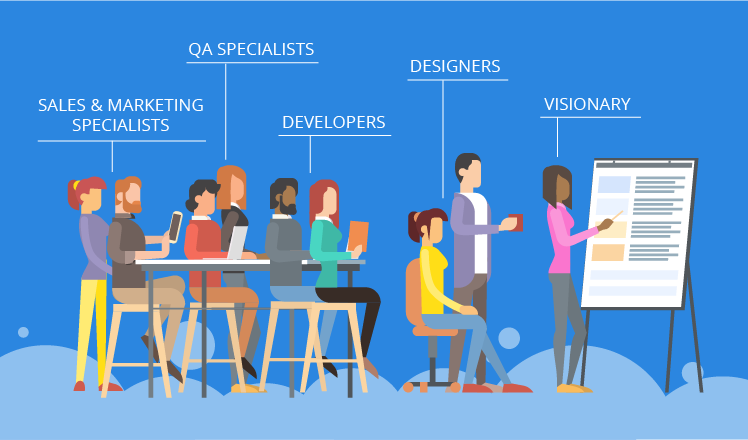
What Makes a Great Mobile App Development Team

When you are looking to hire a team made of experts in the Android developer profile, the important thing to consider is their experience. Developing a market-centric and business-centric app is really a tricky task, which needs to be done proficiently and that requires experience developers.

#2. Don’t Make Cost A Primary Focus

WHAT DOES IT COST TO START & OPERATE A PRIVATE LIMITED COMPANY IN INDIA? - Startups Solicitors LLP Law Firm-Best Law Firm Jaipur, Delhi, Mumbai, Gurgaon, Dehradun India

Many businesses in a race to hire a cost-effective android app development company, end up with a poor quality app, which in turn, is of no use for their business. So, instead of taking risks with such low budget developers, one should always hire a team of Android app developers that hold the potential to develop a feature-packed and quality-rich app at cost-effective prices.

#3. Check The Past Projects Of Developers

10 Projects That Every Developer Should Lay Their Hands-On - GeeksforGeeks

By going through the past projects of Android developers, you can understand their approach and quality of their delivery. The answer to ‘How to hire Android app development company’ lies in their past working portfolio. You should always go through the developer’s app’s functionality, designing capabilities, and the time taken to complete the project. It helps you to understand, whether the Android app developer fits the app’s requirements or not. Even we can also look for the app’s reviews, ratings and feedback for the developer’s app.

#4. Sound knowledge Of Open Source Platforms

Open Source Software: The Complete Wired Guide | WIRED

Android being an open source platform, gives the flexibility to developers to design an application that suits user’s needs, thus making it a necessity for the developers to have a sound knowledge about these open source platforms. So, one should look for Android app development companies that are familiar with the emerging open source libraries.

#5. Connect With The Previous Clients

5 ways to connect with past clients and grow your referral business.

Before hiring an Android app development company, you need to consider many aspects. And, one of them is connecting with previous clients. By connecting the previous clients, we should know how the developer has treated with its previous clients. And, how they work after getting the project, how responsive they are, how often do they communicate, how they solve the challenges, etc.

You can get the past client information from company’s Clutch or Extract profile

#6. Do They Have An Innovative Approach?

this really is an innovative approach, but I'm afraid we can't consider it. It's never been done before" by A. Bacall

You should see – What’s the approach of the Android developer or the Android app development company that you are looking to hire? – For hiring an adept Android development service provider, you should check if the developer understands the business needs, e capability to improvise the design and is capable of providing best-in-class user experience along with the innovative ideas.

#7. Go For A Reputed And Certified Company

Although, hiring a freelance Android developer can be low-budget, but it’s a risky way to get an android app developed. Choosing freelancers may result in a negative outcome. By wisely choosing a reputed and certified Android app development company, you can go for the safest and most cost-effective way to develop an app.

Also, when you invest in an Android app development company, the speed of app development process is also much faster since they work as a team of designers, testers, and coders.

#8. NDA And Privacy Agreements Are Mandatory

Non Disclosure Agreement (NDA) - Contents and Key Terms, Template

Always start working with an Android app development company or freelancer, once you sign an NDA or privacy agreements. By signing such a bond with the Android developers, you can ensure the safety of confidential business information. Additionally, we should also take care of the property rights of the Android app to avoid future discrepancies.

#9. Inquire About The Team Of Developers

Microsoft Teams Together Mode: Your Questions Answered

Look for the team of an Android developer, who claims to provide services for the android app development. For many times, it’s been observed that many companies and brands hire freelancers for the app development process without having any prior information to the client. To meet this challenge, while hiring app developers, one should connect with the development team members and inquire about their team.

#10. Discuss The Post Development Tasks And Supports

The Learning and Development Manager: Everything You Need to Know

Before hiring an Android app development company, we should discuss the post-development tasks including app submission, app testing, bug fixing, support & maintenance etc. before handing the project to the app development team. By selecting an adept Android developer, you can get a perfect app.

Learn Android Development: 10 amazing apps

How to learn Android app development | Internshala blog

Becoming a Developer is easy. Staying a developer, on the other hand, is an altogether different ball game. The industry that is on an ever-growing spiral, keeps offering something new every second to not just keep tabs on, but also learn an advanced level. Apart from memorizing and haunting every article and discussion on StackOverflow, there seems to be no other way to get an understanding of the exact development process. Or is there? Is there a magic formula, which we can also call shortcut to learn the functioning of some of the most intriguing Android apps? That too right under our noses?

Yes. There is. One of the least used secret weapon to understand how Android apps work.

Let’s find out what it is.

The secret weapon that is a treasure of information that you need to improve your Android development learning skills is – Open Source Android Apps.

And with this article, the treasure is now yours. We have created a list of open source apps, divided among popular categories that sees maximum users attention, for you to peruse through and apply to become a top-rated android app developer.

How To Use This List of Open-Source Android Apps To Get the Development Skills that Would Make You Better Android Developers.

I have divided the list of some of the most used open source Android apps in categories below along with the links to their Play Store Page and their GitHub.

First look at the apps in the Play Store/ F-Droid or the APK and get an idea of its look and feel, flow and then visit their GitHub Page for the code. Now, use the code to either develop a similar app or just to gain insight on how the transition happens within the app, code wise.

Let’s Begin.

A. Education

Education is one of the most viewed categories of Play Store and the one that has been catching the attention of Android Developers for quite some time now. While, there are a number of ways you can transform the industry with your app in the near future, here are two Education Apps that will help you start.

1) HW-Manager

HW-Manager for Android - APK Download

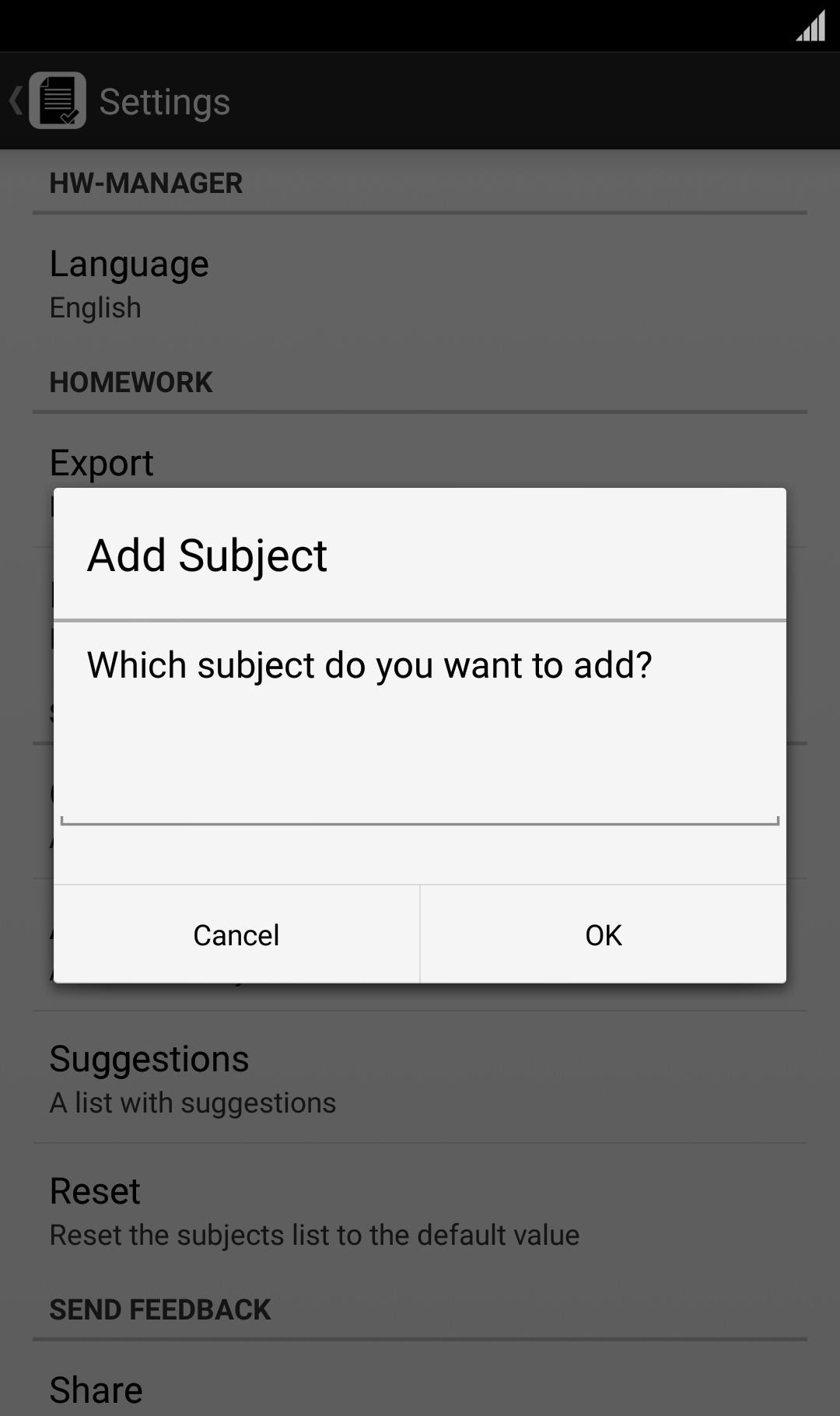
Available on Play store, HW-Manager focuses on managing homework. Every task that the students add in the app have title, due date, subject, and an additional information section to put in notes. While all the common subjects are already fed in the app, the students have the option to add the subject name manually in the app setting.

While there are a number of note making apps already present in the Android App Store, this HW-Manager is the one open source app that can teach you how to implement reminders and notifications in the app.

2) Slide

GitHub - trikita/slide: Minimal presentation tool for Android, perfect for using Takahashi method

Another most used open source android app in the Education domain is Slide. The app allows students to create minimalistic design slides for presentation. The app makes a presentation with just plain text.

The app, which is available on the Android store, allows you to export the slides into PDF to make it easy to access by devices can read PDFs.

Using this app, you can learn how to export parts of an app to other platforms. Also, it will give you an idea of the transformation of how the words appear.

B. Time and Calendar

While already present in the smartphone devices in default mode, Android users continue to install them to track a whole range of different things such as events, birthdays, meetings, health checkup, etc.

Same is the case with Time based apps, there are a number of apps that help keep track of the time users spent in meditating, running, and even sleeping.

If you are looking to develop your next Android app in this category, here are two open source Android apps to help you out.

1) Simple Calendar

Screenshot Image

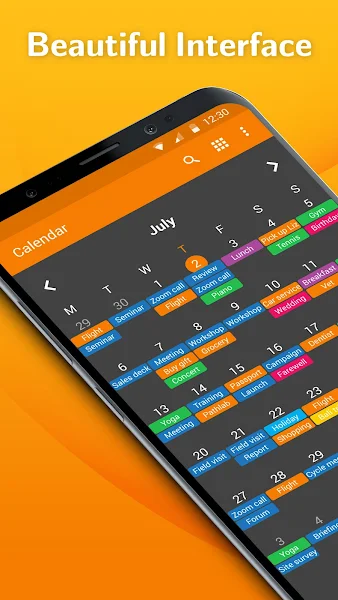
The app works exactly like its name suggests. It is a no-nonsense calendar app, which has been developed on Android’s official programming language, Kotlin.

While this app is not for learning the in-depth technicalities, but if you wish to brush up your Kotlin knowledge, Simple Calendar app is ideal for the purpose.

2) Standup Timer

Standup Timer | John P Wood

The Android App has become a part of a number of meetings in the current time. The open source app is used as a stopwatch to inform when the time is up, while giving all the participants an equal opportunity to make their point.

Using the app, you can learn how to blend a simple functionality with other features.

C. File Manager

With smartphones now becoming a sea of data and information, every user is on a constant lookout for a File Manager app that can manage their data in separate files, wherever needed.

Here are the two apps to help you join the club of hundreds of brands offering file management services to Android users.

1) AnExplorer

anexplorer · GitHub Topics · GitHub

The open source app works around management of data and files on Android Users’ smartphones and tablets.

You can learn a lot like loaders, custom views, file handling, and root management etc by studying source code of AnExplorer app.

2) Amaze File Manager

Amaze File Manager - Apps on Google Play

With a simple, easy on the eyes UI, Amaze File Manager is also one of the most used open source Android Apps presently in the store.

Using the app source code, you can get yourself an idea of how to implement features like root browsing and samba support.

D. Device Monitoring

With the number of apps now finding their place in the Android devices now growing, the need for apps that would keep a check on issues like device speed, battery usage, leaving heavy caches are continuously increasing.

If you too would like to develop an app that would help your users monitor the state of their devices, here are two apps that can help you out.

1) AnotherMonitor

GitHub - AntonioRedondo/AnotherMonitor: Monitors and records the CPU and memory usage of Android devices

The open source app helps its users in tracking the state of their devices in terms of usage. If you want to learn about how monitoring of Android processes happens, how to track memory and CPU usage and other things related to tracking and monitoring, then AnotherMonitor is the perfect Android app to begin with.

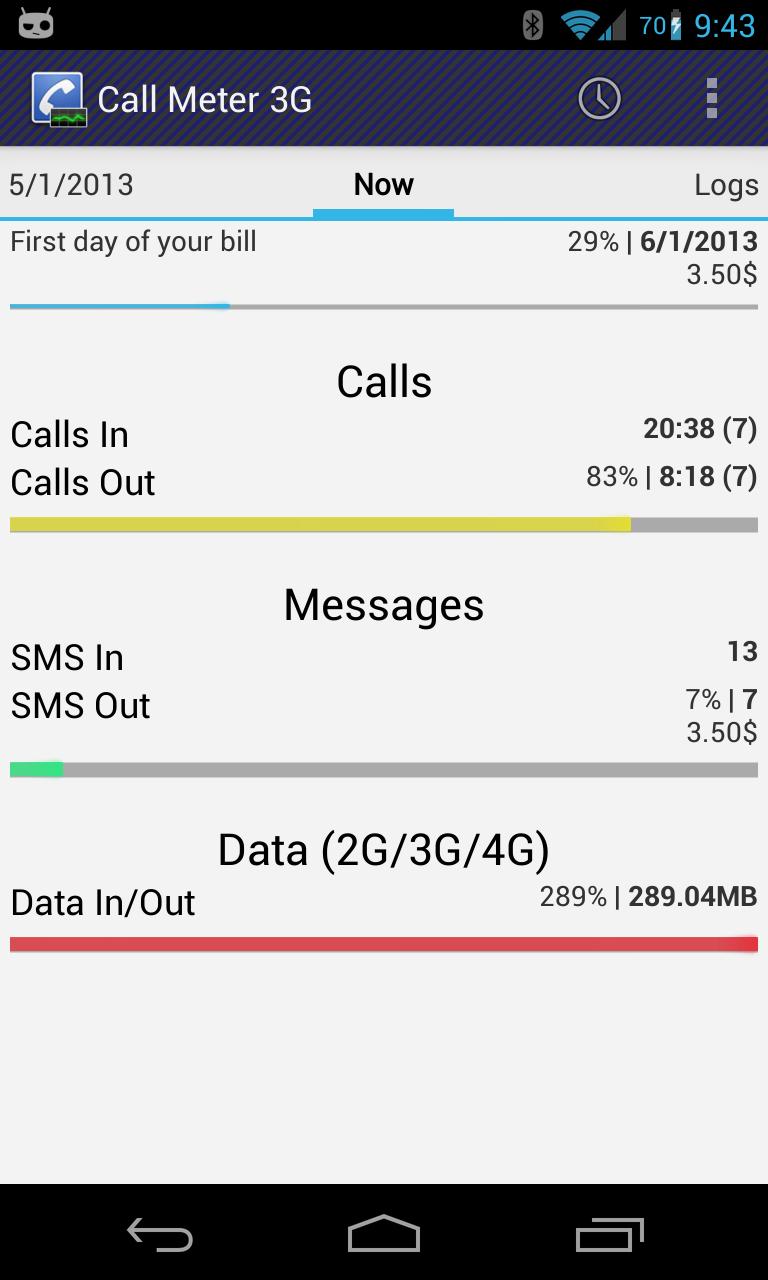
2) Call Meter 3G

Call Meter 3G for Android - APK Download

The Android App is used by hundreds for monitoring their calls, texts, and data usage.

Using this, you can learn how to implement safety features in the app, while learning to track your users’ devices correctly and in real time.

E. Social

One of the most popular categories of Android Play Store, Social has the biggest scope of experimentation and innovativeness. Bringing with itself, a series of difficulties as well.

The fact that users would like to share their stories and moments with the world in real time makes it important to have the back of features that would help with just that.

To get around the functioning of the deemed difficult app category, here are two open source apps to get you on board.

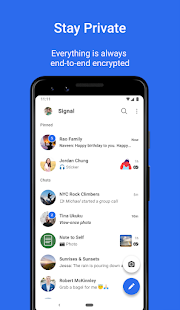
1) Signal

Screenshot Image

The app allows users to have encrypted conversations within the platform. It gives the users the freedom to use encryption in both instant messaging and voice calls that happen over the app.

Signal is your app if you need to learn how to enable the end-to-end encryption feature in an application.

2) ElloShare

package icon

Still new in the Android Market, ElloShare is a photo sharing app, which integrates with the users’ phone gallery that makes it easy to upload images straight from your phone into the Ello app.

If you are looking to learn about the functioning of image upload and sharing on a platform over the internet, in real time, this open source app can be your guide.

So here was the list of the open source apps that can teach you how to develop Android apps that rank on top of the Play Store, in no time.

Let us know how your life changes at the back of this article.

Native App Development is a Better Solution- Why

Hybrid App vs Web App vs Native App Development: How To Choose? - Clockwise Software

Since the advent of web apps, native apps have faced a lot of flak for being costly, sluggish, and platform-dependent. But the superior user experience, enhanced security, and amazing native capabilities of these apps can beat the lights out of any web app in the market. Backed by the goodwill of App Stores, native app development makes for an excellent investment.

This blog explains succinctly the advantages of native app development over web app development. Later, it elaborates how developers can create a wonderful concoction of native and web apps through React Native-based hybrid apps.

Let us Start with the Benefits of Investing in Native App Development

1. Native apps run faster

8 ways to make you run faster

Native apps are stored on the device so their processing speed is not dependent on internet connectivity or bandwidth. Moreover, these apps utilize a device’s native programming language and APIs to operate. So they run extra efficiently. In contrast, web apps are actually a bunch of web pages tied together with browser technologies. They just give the look and feel of apps but are HTML-powered user interfaces. For any action to be performed in a web app, calls are made to remote web pages. The speed at which processing occurs is dependent on internet connectivity in the vicinity.

2. They have the App Store advantage.

7 Convincing Reasons Why Should You Should Choose Native

App stores only feature native mobile apps. And app stores are undeniable one of the most important marketing channels for any app. When a person is in need of a new app, the App store will probably be the first play they’ll look for it. If your app is listed there, its chances of being discovered are greater. There are ways your app can be made more prominent in App Stores. Since native apps are backed by App Stores, they are perceived as the hallmark of quality by most users.

Another big thumbs up for native apps is that their monetization (commission, revenue, etc.) are taken care of by the App Stores from where they are downloaded. For web apps, payment systems have to be integrated within the app.

3. More secure apps

The Best Android Apps for Protecting Privacy and Keeping Information Secure

Native apps can leverage the in-built security features of a device’s operating system. Plus, performance enhancement updates of the OS are also available for native apps. The mobile device management feature allows users to take remote control of their app and protect its data from encroachment or compromise.

Web apps, on the other hand, are more prone to security threats since they work on non-standard programming codes made using HTML, CSS and JavaScript.

4. Scalability and enhancement are non-issues

MAVIC 2 PRO GIMBAL ISSUES ARE A NON ISSUE - YouTube

New features can be added to native apps easily and rapidly. The unlimited APIs available for native apps can render your app scalable and better. If need be, new APIs can be created for crafting features that aren’t provided by existing APIs. Conversely, web apps can work only within the limits of the web browser facilitating them. So they aren’t as flexible as native apps.

5. Good integration with mobile hardware

Hardware Integration - mojikllc

Mobile devices have super features such as camera, GPS, touch screens, integrated calling and microphone. Native apps can utilize these features with ease. Leveraging these capabilities within a web browser can be challenging and cumbersome.

6. Delights users with anticipated UI and UX

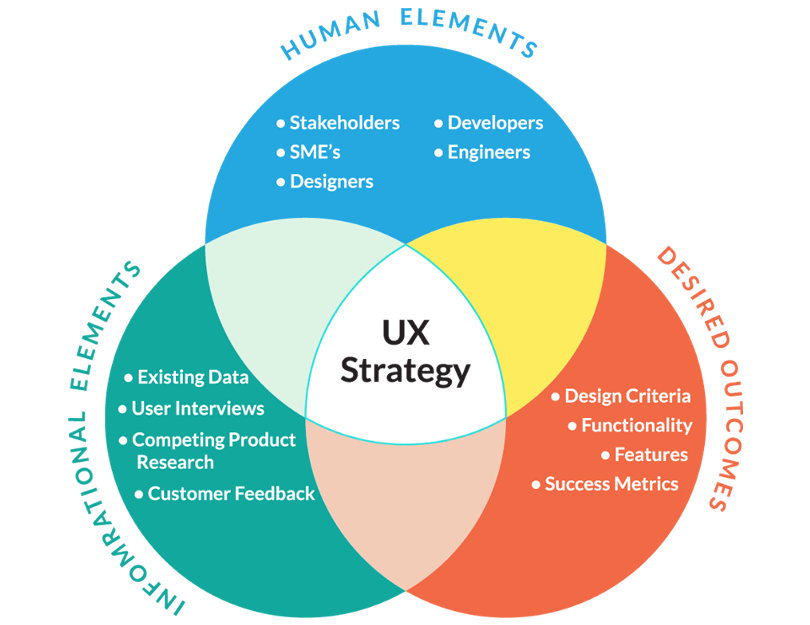
UX strategy: business management and UX design - Justinmind

Native apps delight users with the kind of UI and UX they have come to expect from their handheld devices. Web apps give the look of inherent apps but not their feel. They cannot function as seamlessly as native apps. Web apps also give a monotonous user interface across all devices that rarely matches the spectacular user experience provided by native apps.

7. These apps run offline too

7 Best Offline Messaging Apps for Android and iPhone [2020] | Beebom

One of the biggest advantage of native apps is that, unlike web apps, they don’t need internet to run. Since they are stored within a device, native apps can be worked on the move, in a desert, forest or anywhere else. Web apps are hosted on web browsers that can be accessed only when online. So, if using web apps, you will be hindered by wavering internet speed, connectivity issues and hefty internet usage charges.

React Native Application Development- Best of Native and Web Apps

Top 10 Benefits of Choosing React Native for Developing Your Mobile Applications

Native apps are secure, efficient and delightful. This is what makes native apps the preferred choice of most quality developers and vendors. This certainly doesn’t mean that the affordability and rapidity of web application development can be dismissed lightly. Most people find themselves at a veritable crossroad where they are compelled to compromise and settle for cheaper, quick-to-market web apps at the cost of native apps that offer better user experience.

But Facebook’s React Native has changed the rules of the game. React Native apps combine the performance factor of Native Apps with the ease of development of Web Apps. This JavaScript library helps build amazing user interfaces that render flawlessly on all devices and platforms consistently.

Benefits of React Native App Development

1. Reusable components

React Native has components corresponding to iOS and Android and these components can be used time and again to give native look and feel to your app, regardless of the device on which it resides. The speed and functionality of React Native apps is no less than of Native apps. Additionally, these apps can be built in agile frameworks that are speedy and efficient.

2. Reusability of app’s existing code

If you don’t wish to overhaul an app; instead you want to utilize its existing code- React Native Applications are the answer to your prayers. Your Cordova or Ionic code can be reused as a plugin in the React app. So, no coding!

3. Ease of adoption

Ease of Use is Critical for Project Management Tool Adoption - Eclipse PPM

React Native is easy to pick up for JavaScript programmers. It does away with the need for learning Swift or Java for Android. Essentially, front-end programmers can turn developers and coders by using React Native application development.

4. Platform independent

Android VS Apple VS Windows Phone - Photos | Facebook

Whether your device is Android or iOS-based, React Native apps run equally well on both platforms. Initially, React Native apps could be built only for iOS devices. But owing to the popularity and mass appeal of Android devices, React Native’s scope was expanded.

Facebook has made React Native open-source, meaning there is a distinct possibility of compatibility with Windows and TvOS operating systems, in the near future. If that happens, React Native will have all bases covered and beat rival framework undisputedly.

5. Efficiency personified

Native apps are slower to develop and deploy than web apps. But React Native apps bring agility and speed into the system. ReactJS’s simple programming strategies and better performance enhance the efficiency of these apps.

6. Plugin compatibility

Better Plugin Compatibility Control – WordPress plugin | WordPress.org

You don’t need a Web View for loading third-party plugins. They can be incorporated within a React app and they load fast and ensure a smooth ride, even for devices with older versions of operating systems.

So, as we have covered in this blog, Native mobile apps score over web apps in a multitude of ways. And with React Native-based hybrid apps, things are looking even brighter. But, if you want a detailed information about these technologies before choosing one, consider our mobile app development guide today.

Implement Multifactor Authentication in a Mobile App

Using Multi-factor Authentication (MFA) with Microsoft Authenticator | Mirazon

Multifactor Authentication is the need of every business that works around sensitive data and users’ personal information. The system adopts a layered approach for security, which makes it difficult for individuals to gain access to the data.

By providing an extra level of security besides the phone password, Multifactor Authentication System (MFA) has become the must-have feature of apps related to payments, enterprise apps related to viewing or retracting data from the cloud.

Let us take a deep dive into the concept of MFAs, highlighting the four ways you can implement Multifactor Authentication in your mobile app. We will also throw some light on the challenges, both technical and user-specific, that you should prepare to be encountered with.

But, before we go in further, let us look at what Multifactor Authentication System actually means.

What is Multifactor Authentication System (MFA)?

Deep-dive to Azure AD MFA: Creating a custom authenticator app

Multifactor authentication or MFA, as it is commonly called, works around providing an added layer of security that ensures that users are providing more than a single piece of evidence for their identification. It usually requires a blend of something which the user knows, like pins, passwords, something which the user has, like cards, phone, or something that they inherit like a Fingerprint scan or Retina scan.

Now, there are four ways through which you can implement MFAs in your Mobile Application. Let us look at each of them in terms of the process they take the users through.

Ways to Implement Multifactor Authentication in a Mobile App

1. Time-Based OTP

Time-based One-Time Password (TOTP) Makes Streams Secure | by Ant Media Server | Medium

OTP comprises the creation of a one-time password from a shared secret key and the present timestamp with the help of the exact type of cryptographic function. OTP involves the enrollment and login processes.

Here’s a detail on both the processes –

Enrollment Process:

  • Users log in to the app with their passwords and username
  • If the credentials are found valid, the next stage is to enable the two-factor authentication
  • The shared key is then requested, which can be either text-based or QR code
  • The key is stored by the app which implements OTP like Auth0 Guardian or Google Authenticator.
  • The two-factor authentication is then enabled.

Next comes the Login process:

  • User logs into the app
  • If their credentials are valid, they are directed to a form where they have to put in one-time code generated with Auth0 Guardian or Google Authenticator
  • The server then verifies that the code is valid and authenticates the user

2. SMS

Microsoft urges users to stop using call & SMS-based multi-factor authentication | ZDNet

The process of multifactor application through SMS also involves enrollment and the login stage.

Enrollment Process:

  • User logs in to an application with username and password.
  • They are asked to enter an active phone number
  • A distinctive one-time code is then generated on the app server and is sent to the user’s phone number.
  • They then enter the code in-app, thus enabling multifactor authentication

Login Process:

  • User logs in to the application with their user-id and password.
  • A distinctive one-time code is then generated on the app server and is sent to the user’s phone number.
  • The user enters the code in-app.
  • If found valid, the user gets authenticated and the session gets initiated.

3. E-Mail

Multi-Factor Authentication -

  • User logs in to an application with their user-id and password.
  • A distinctive one-time code is then generated on the app server and is sent to the user’s email id
  • They retrieve the code from their email and feeds it into their app.
  • If found valid, the user is then authenticated and the session gets initiated.

4. Push Notifications

OneLogin Protect: One Time Password (OTP) Generator App

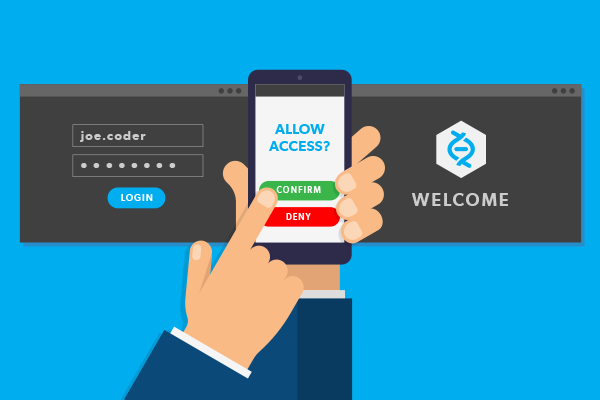
  • User logs in to an application with their user-id and password.
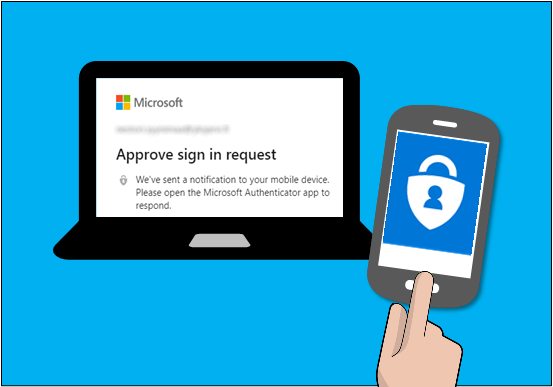
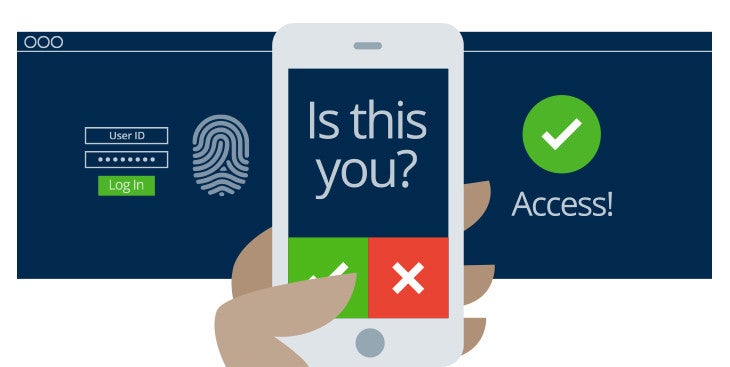
  • Usually, the push notifications mechanism works with applications like Auth0 Guardian. Once the details are entered, a push notification is then sent by the Guardian app to your app.
  • The notification is a login request.
  • On the backend, this includes data like the OS, application name, and browser used while making the request, the precise location, and the date when the request is being made.
  • The user then asserts the request they have received through push notification and gets logged in.

Now that you know the ways you can implement MFAs in your mobile app, let us look into the challenges that come associated.

Challenges Associated with Multifactor Authentication System

It is very difficult to implement the system in your mobile app without the support of a Mobile App Development Company that specializes in providing extensive quality assurance in terms of mobile app security. While this is from the business front, every added security layer comes with more work for the users. It can lead to frustration when users are made to repeat multiple steps every time they have to do a task.

But the challenges that the system comes with are very minimal in front of the benefits that they have to offer when it comes to giving the users a safe transaction environment, amidst the soaring data breach incidents.

Want to take your Mobile App Security to the next level? Contact our Team of Mobility Experts, today.

Predictions for 2018: Surefire Mobile App

6 Surefire Digital Marketing Trends of 2021 | Trank Technologies

For a sector that has been on a roller coaster ride of innovation and growth ever since the launch of both Android and iOS platforms, 2017 was its year of activity. Last year came with a lot of new technologies and trends that were designed to make the app industry user friendly and innovative. If 2017 was about introductions, 2018 is about application and growth.

As the industry steps into 2018, there are a number of stats and facts that have followed it from 2017, which has set a platform that is open for exploration and innovativeness. With the foundation set on most of the new technology entrants, there is a lot to look forward to this year when the industry will reach maturity level.

Let us look at the 2018 Mobile App Predictions, as set by the Top Mobile App Development Trends of 2017 –

1. Gross Consumer Spending in App Store will cross $110 Billion mark in 2018

Google Play narrows consumer spending gap versus iOS App Store in Q1 2018

With mobile apps extending their reach to a greater number of industries, app monetization is on a rise. It is expected that the global consumer spending will cross $110 Billion, after growing at a rate of 30% every year. The trend is a hint towards how app economy has now reached its maturity level, where it is offering real value for which users are ready to pay.

2. Phablet will dominate the device category list on which mobile apps will be used

You don't know what a "smartphone" really is, and the Surface Duo proves it

Just like 2016, Phablets won the most active device race again in 2017, with 55% users opting for the device for working on their mobile applications. Seeing the increase from 41% in 2016, it is safe to assume that the device type will also rule 2018.

Second to the device type that is a blend of tablets and medium configuration phones, standing at 35% middle level phones were the ones most used.

3. Mobile Journey: What Apps Users will Move Towards and From Where

Irrespective of what Operating System the users were functioning in, almost half (46%) of the sessions started with Communication apps as soon as the device was unlocked. Next, the users moved to launch web browsers, which counts for 16% of the session time. Utility apps like App Stores, Contacts, Gallery etc. stands at the third operation of a session, with 10% of the total session time.

While these are the three categories users will continue to move around when their device is unlocked, Entertainment apps like YouTube, SnapChat, and Netflix will also find itself in the journey at 5.5%, but not at the start point. Along with the entertainment apps, gaming apps will also find itself amounting to 3.7% of the total device session time.

4. Independent Publishers will get Greater Discovery Opportunity

In June 2017, both Google and Apple announced changes to Play Store and iOS Store aimed at better showcase of editorial content and app curation. This has made both Play Store and Apple Store powerful platforms for the less famous apps launched by independent publishers.

This will give the lesser known apps an opportunity to be visible and come at the same level as that of their renowned app counterparts.

5. Demand for Video Streaming Apps will Continue to Rise

Streaming Now Accounts For 25% Of U.S. TV Usage 08/13/2020

2017 was an extraordinary year for Video Streaming apps. The app category has been single-handedly responsible for 85% and 70% increase in annual spending in iOS and Google Play respectively. Our expectation is that in 2018, the number of streaming apps on users’ devices will rise from just one.

The biggest names of the video streaming industry – Netflix, Snap, and Disney, etc. have announced their plans to continue investing in the category. This trend guarantees that the category will continue to witness steady growth in both engagement and revenue, with more players coming in to take a piece of the profitable sector.

6. Instant Apps will Continue to Give App Stores Quality Check

By giving users the freedom to first try and then install the apps that they actually use, Google will be adding the “Try Now” option to more apps than the current limited list. Clicking on it, users will get a preview of the app with very basic features, without the need to install the app on their devices.

Introduced in 2017, Instant Apps were limited to just seven to eight apps in the store, but in 2018, it will be available to greater number of apps – a move that will bring an inordinate focus on quality.

With this move, Google has taken the ball out from app publishers’ court and has put it in users’ court.

For an app to have a chance at getting installed in user’s device, it will have to give an outstanding first point experience in the Preview Mode itself. This has already started bringing in a greater demand for android app development companies that could help app getting installed right after being ‘Tried’.

7. The Session Rate per App will Continue to be Low

Mobile Web App Development Best Practices: A Tutorial | Toptal

As compared to 2016, the app session growth activity declined in 2017 to just 6% which was 11% in 2016. Even with the declining session rate, users now spending more than 5 hours on their smartphones, daily. But with a changed behavior.

As users are now spending more than five hours on their devices daily, they are dividing their time between new and old app experiences, instead of devoting to any specific app type. This movement has brought in a volatility in the session rate in a number of app categories –

Mobile App Usage Statistics 2021 for Growth & Success

Shopping category saw a rise by 54% as the consumers shifted their spending in mobile shopping apps. The adaptation of mPayment also played a major role behind the number. Media, music, and entertainment sat at 43% annual growth. While these categories rose to the occasion, Lifestyle and Gaming were the two categories that saw the least takers in 2017.

In another report by Vertoanalytics, it showed that the overall time spent has reduced in the social and news category, while it has risen for the travel and sports category. The trend hints toward the shift in content preference from once social centric to now sport and travel focused.

8. PWAs Will Lower App Bounce Rates and Give Faster Page Load Time

Why Performance and PWAs should be on your Roadmap — XWP

While being in the industry for quite some time, the adaptation of PWAs has been quite slow. The reason behind which can be attributed to lack of knowledge in the industry. But 2017 saw a number of brands investing in Progressive Web Apps, with all of them returning with similar experiences that showed – faster page load time, greater conversion rate, lower bounce rate, and higher page session time.

With brands getting acknowledged with the vast benefits that PWAs has to offer, 2018 will see not just a greater acceptance of the technology but will also witness a shift from Native Apps to PWAs.

9. Blockchain will Place Itself in a Range of App Types

Blockchain: Success Lies in Identifying the Right Use Cases

One of the most talked about technologies of our time, Blockchain, will find itself getting applied in a number of apps across a range of industries. From Real Estate to Healthcare and Payment, the technology will penetrate itself across a number of industries in 2018.

While the number of blockchain apps made live on the App Stores in 2017 were so few that they could be finger counted, the number will see a rise in 2018 with more brands exploring the security and ease benefits that the technology has laid its foundation on.

ASP.NET vs PHP: Make a choice for Your App Needs?

PHP VS ASP.NET: CRB TECH

Both PHP and ASP.NET has broad bases. They are used by huge number of developers and this makes it difficult for the new developers to choose either one of them. In one hand, PHP is a general scripting language on which developers rely to a great extent and on the other hand, ASP.NET has a brand like Microsoft attached to its name.

ASP.NET vs PHP is an argument that doesn’t seem to have an end any time soon. Since both are quite popular languages in the programming world. You must have seen a ton of articles on differences between ASP.NET and PHP by now but in reality most of those articles are biased.

However, in this article we will talk about both the programming languages, breakdown the terms in for better understanding and discuss which is better ASP.NET or PHP.

PHP

PHP is a recursive acronym for Hypertext Preprocessor. It is an open source programming language that is used for web development and can be embedded into HTML. The best thing about PHP framework is that it is great for beginners since it allows simple and easy coding techniques. On the other hand PHP is great for professional programmers as well because of all the advanced features it offers. PHP framework is said to be adopted by many businesses in the near future and you can look at the upcoming best php frameworks here.

Pros and Cons of PHP framework

The Pros and Cons of Virtual Events - The Moery Company

Pros:

One of the biggest advantage that PHP has is the rapid development. The market demands faster app development process and PHP gives the benefit to any mobile app development company that does multiple productions in one day. The framework is not only fast but ensures the security of the application. But the PHP developers have to make sure to use the framework as it is meant to be used to ensure application’s security. PHP is easier to maintain and has a huge community of developers that provides help whenever needed.

Cons:

PHP is prefered by developers for all the advantages it provides but they can’t ignore the disadvantages that comes with it. Slower execution, lack of ability to solve specific problems and time taking to master are some of the cons of this framework.

ASP.NET

7 Best Courses to learn ASP .NET Core and MVC in depth | by javinpaul | Javarevisited | Medium

ASP.NET is an open-source server side web development tool developed by Microsoft. The framework provides web development tools to produce dynamic web pages, web applications and web solutions. ASP.NET frameworks are written in .NET language and support Visual Basic.NET, JavaScript.NET and languages like Python and Perl. The framework also compatible with the previous version ASP.NET MVC.

Pros and Cons of ASP.NET frameworks

Pros and Cons of Neuromarketing. Every Friday in our office we have a… | by Dmitry Gaiduk | Medium

Pros

The pros of using ASP.NET include the flexibility to add and remove features as and when needed, the ease of setting up,  an open-source and cross-platform framework and compatibility with  other .NET frameworks. Microsoft has claimed it to be a highly popular framework soon just like Ruby and Node.js.

Cons

However, ASP.NET does have a few cons that may make its popularity a slow process. The framework does have problems when it comes to ease of making changes, documentation gaps, lack of supporting tools and lack of basic features since its too raw. These issues can be solved by ASP.NET developers, of course, by using external tools and methods.

ASP.NET vs PHP: The comparison

There is no doubt that both ASP.NET and PHP frameworks are great frameworks to work with but one may have few advantages more than the other. For professional developers this debate has already been settled based on their experience with each of the frameworks. But any budding developer might want to take a look at this comparison to decide which platform to start with.

Both PHP and ASP.NET provide multiple advantages and at the same time has some disadvantages. To decide which one is better than the other, we shall compare each of these two carefully. In this section we will discuss ASP.NET vs PHP: Which is better?

Performance

Java 9 Performance Improvements — Getting Started With Java Spring - DZone Performance

When it comes to the performance of a framework there is a misconception that the language of the framework determines its performance. However, this is not completely true. The performance of any framework depends on the way the coding was done.

The performance of ASP.NET is comparatively better than that of PHP. This statement may not be believed by PHP developers for the fact that many great websites have been built using PHP.

While that may be true but it does not dismiss the fact that ASP.NET allows parallel programming which lets chunks of code to run all at the same time whereas PHP does not support threading at all.

Market Share

Should You Use Market Share as a Metric?

The biggest difference between ASP.NET and PHP is the usage and market share. The chart below clearly shows that PHP has more usage popularity than ASP.NET. The websites built with PHP has been ranked among the Top 10k sites, Top 100k sites and Top 1M sites. Whereas ASP.NET hasn’t been awarded any titles that can beat PHP’s.

Security

Security Policy

Another huge difference between ASP.NET and PHP is the security options they both provide. Both the platforms provide security features to the developers however ASP.NET has built-in security features such as SQL injection. In other words, ASP.NET automatically does the work for you whereas PHP only provides you with the tools.

So to settle which is better ASP.NET or PHP security-wise, ASP.NET would be the right choice. The PHP developers are provided with the tool and if they wish they can structure their apps securely. Sadly, many PHP developers don’t care about it and that results in vulnerable apps.

Websites

Since it has been said earlier in the article that websites that used PHP has been ranked top as compared to ASP.NET built websites here are two lists to compare ASP.NET vs PHP websites:

Websites built using PHP

  • Facebook
  • Wikipedia
  • WordPress.com
  • Flickr
  • Yahoo!
  • iStockPhoto
  • Tumblr
  • Mailchimp

Websites built using ASP.NET

  • StackOverflow
  • Microsoft
  • GoDaddy
  • DELL
  • Visual Studio
  • Wild Tangent
  • Diply.com
  • TacoBell.com

Among these, some websites are extremely popular in both the lists but the majority of famous websites are PHP developed.

Cost-wise which is better, ASP.NET or PHP?

Operational Cost Cutting By Being on Swiggy | Indifi

In this area, PHP is a clear winner for the reason that PHP is an open source development framework whereas ASP.NET charges some fee for hosting. The fee charged by Microsoft owned ASP.NET is not high but when compared to PHP’s free usage, it can make developers skeptical towards ASP.NET.

The cost does not however stop ASP.NET developers from building websites using the framework. Another great way is to outsource the ASP.NET mobile app development services.

Community Support: ASP.NET vs PHP

Correct Community Support. Tips and suggestions

It’s a given that PHP has a larger community than ASP.NET because it’s free. But that is not the only thing to say about a good community. ASP.NET community consists of highly dedicated developers who are supportive of their community even though the numbers is not as high as PHP. Of course the PHP community regularly comes up with the solutions to the challenges faced during PHP web apps development process.

However, advantage of ASP.NET over PHP is that the ASP.NET developers have a community that is rather dedicated towards programming that having a large support.

Advantages of ASP.NET over PHP

How to create a new project in ASP.net - Truebodh Technologies

All the comparisons in the previous section point towards choosing PHP over ASP.NET. But this may seem unfair to those who are looking for reasons to choose ASP.NET over PHP. So what is the use of ASP.NET?

  • ASP.NET provides the freedom to choose from multiple languages such as C#, Visual Basic.NET, C++, etc.
  • The SQL security feature that ASP.NET provides is automatically applied to the applications and has unlimited data storage.
  • With ASP.NET you get multiple .NET libraries which is not the case in PHP development.
  • ASP.NET allows threading of codes which allows multiple codes to run at the same time.
  • ASP.NET developers are paid much better than any PHP developer because of there are less ASP.NET developers in the market.

As this debate of ASP.NET vs PHP comes to an end its time to decide which one is better than the other. Both the development frameworks are exceptionally great in the work they do and developers freely choose between them as per the need of the development process.

In many cases PHP has proved to be a stronger framework but has also had some weaknesses that can affect the development process to a great extent. We have also seen a completely separate section for the advantages in ASP.NET development which consisted of strong points of benefits for the developers.

PHP has a huge community and is a free framework to work with. On the other hand ASP.NET is likely to have more scope in the future since it has a huge company name Microsoft behind it.

But if you still can’t decide between the two, contact our team at Anteelo and we will help you out. We engage in both ASP.NET web app development and PHP mobile app development services which will help us give you the best solution for your problems. Take a look at our mobile app development guide for more information.

MVP App Guide- Mobile App Development for Startups

Mobile App Development - Step by step guide for 2021 and beyond

Mobile applications are, undoubtedly, the buzz in the entire business world. Today, every business is getting on mobile. But, is it wise to develop a mobile application? Is it a profitable deal, especially when you are a startup struggling to establish itself in the market? The answer to this question is quite difficult to say. You can’t deny the importance of having your own mobile app, as well as can not invest an exorbitant amount of money in a single idea itself. And this situation becomes more complicated when there is a risk of app failure even after pouring all your money and efforts into mobile app development. Remember, there are endless mobile applications in the market- you can’t expect the users to get entice with your app idea & choose it over others. Then what to do? The simplest way to tackle this situation, as per our experts, is to go for MVP – a concept that is bringing down the cost of mobile app development to a great extent.

MVP (Minimal Viable Product) App

What Is a Minimum Viable Product in Mobile App Development? | Dogtown Media

An MVP (Minimal Viable Product) is the product (or we can say app) with the least, vital features that target a particular problem using the minimum resources. It enables the start-ups to engage the first users, understand the audience’s needs, and make their application better using the feedbacks gained.

In other words, it is the smallest, quickest yet functional version of your app idea that can be taken into consideration to understand the viability of your app idea.

Talk about Uber, Airbnb, or Foursquare- almost every top-grossing app that is ruling the market today has undergone this phase. In fact, we recommend all of our clients to have a thought on developing an MVP, particularly in case of a complex app idea. Wondering, why? Check out the following points.

Benefits of MVP for Startups

MVP application is the ultimate investment for start-ups, due to the following reasons:

1.Testing the Main Idea at the Earliest

Top 25+ API Testing Tools | Nordic APIs |

There’s no denying the fact that we all find our ideas good enough to set the market on fire. But, are they really so? Will the users really find them fantastic? The best way to analyze this is to launch an MVP app in the market. Develop an application with just the sufficient features that define your main purpose and launch it in the market. If it offers impressive outcomes, take it to the next step. In the flip side, gather user feedbacks, do market research, and improve your applications so as to launch it in the future. This way, an MVP application can help you to understand the market validity of your idea and can save a lot of money on developing a ‘less-effective’ app.

2.Reaching Investors

11 Foolproof Ways to Attract Investors

It is always better to visit investors with a functional model than a diagrammatical representation or an idea in your head. When you present an MVP to the investor with your future plan, the investor can more likely link to your idea and get interested in it. He need not visualize the main idea- he can see the demand for your app in the market, and hence, can easily agree to your request and contribute to further app development process.

3.Making an Impact on the Market

Coronavirus Impact: Making Sense Of The Global Market Crash

When talking about mobile application development, you hit the market at once. You have to make extra efforts to immediately attract users. However, in the case of MVP, you can keep on attracting a group of people throughout. With the introduction of every new feature, you can attract more users, as well as entice the existing users. This way, you continue to make an impact on the market.

4.Minimum Development Cost

We all know that the more features & functionalities you include in your app, the more you have to pay for it. If you build a complete mobile application, it might cost you enough to make a hole in your pocket. But, here in MVP, you can test your idea in less than half of the mobile app development cost. Moreover, you need not make a one-time investment; you can invest in different sessions related to the integration of different features into the app.

5.Prevents Losing Interest

It usually happens that the development process takes so much time that you completely feel detached to the idea. In such a scenario, an MVP app is a great investment. It gets developed in lesser time, reaches the market, and keeps you interested in updating it with what the users want.

6.Saves Efforts Time

18 ways LearnUpon saves you time - e-Learning Feeds

MVP development not just saves the cost, but also the effort and time. It allows you to determine if your efforts are getting a required response or not. Wherever you find that the efforts are not bringing fruitful results, you can put it on end. This way, it allows the startups to use their potential in the right way!

Wrapping Up!

MVP, as you might have learnt by now, is a crucial element to consider for both startups and established brands. It can help you develop a mobile app successfully. But in case, you are looking forward for understanding various other elements that should be considered for launching an app successfully, have a look at this mobile app development guide.

Determine Cost To Develop A Chat App Like WhatsApp

Best Chatting app Development Company for Android or iOS

It was the year 1990 when the concept of instant messaging first hit the mainstream of the world. Fast forwarding 20 years, the year was 2009 when the impossible happened. A former Yahoo employee and his partner started working on an application that would become a revolution in instant messaging. The name was – WhatsApp, named to sound like ‘What’s up?’ Here’s a story of how getting rejected for a job at Facebook led two friends to make an application that they would sell to Facebook for a fortune worth $19 billion. And an evaluation of how much will it cost to create a social media chat app like WhatsApp. WhatsApp is the brainchild of two friends – Brian Acton and Jan Koum. In August 2009, with the release of WhatsApp 2.0, the number of active users suddenly spiked to 250,000 and it was then that WhatsApp had its first taste of success. It had discovered the nuances of getting viral.

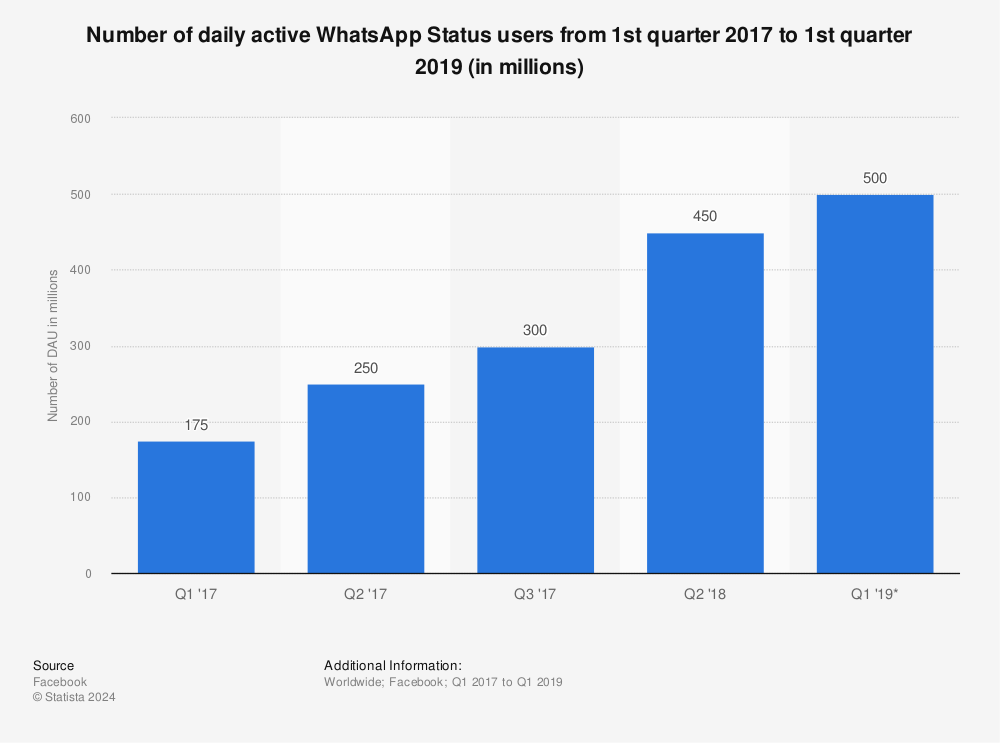
Starting from there, WhatsApp now carries the crown of being the most uninstalled application and has a total of over a billion users. In the present day, WhatsApp has reached a Million mark in terms of daily active users (DAU) and the numbers here speak for themselves. Not only that, these numbers are only expected to grow manifold, as per industry expert.

Timeline of WhatsApp:

WhatsApp Status daily active users 2019 | Statista

Through this timeline, we can see the tremendous growth that WhatsApp has shown over the years. When it entered the world market, there was no application on par with WhatsApp. Its Southeast Asian counterpart apps, such as WeChat, Viber, etc., were incredibly successful with their target audience, but the western world was untouched.

Traditional messaging was all that was there during those years, but with the innovation of Wi-Fi and other Internet services soaring high, there was a gap that could be filled in the world of instant messaging and WhatsApp was the first one to move forward in that direction.

One of the key reasons why WhatsApp was such a hit that it urged Facebook to acquire it as one of Facebook’s most expensive acquisitions was its sophisticated, all-covering, simple techstack that gave so much room for improvement while being at the top already.

It makes use of Ejabberd server for enabling features such as,

  • One-on-one Message
  • Store and forward (offline messages)
  • Contact List and Presence
  • Group chat – Multi User Chat (MUC)
  • Message Archive Management (MAM)
  • Personal event protocol (PEP) and typing indicator
  • Privacy settings, simple blocking extensions

Let us look at the rest of the stack for a better understanding of WhatsApp’s success.

  • Language- Erlang
  • OS- FreeBSD
  • Virtual Machine- BEAM
  • Servers- Ejabberd, YAWS(Multimedia storage)
  • Stack- LYME/LYCE
  • Database- Mnesia
  • Offline database- SQLite

Apart from the technical specification, WhatsApp success stories lie in the fact that after the launch of a basic model with real-time messaging, it went on adding features to the service which made WhatsApp become an indispensable part of 1.5 billion users worldwide which are still growing in number. Let us look at all of those features and the development costs associated with each one, as we go.

Basic WhatsApp Features and the Time It Takes to Develop Them

  • Registration

WhatsApp: registration process | Download Scientific Diagram

For registration on WhatsApp, once the user enters his/her credential, i.e., the name, country and phone number, the application sends a message of authorization. In the Android version of the app, WhatsApp reads and submits the verification code automatically. Once the registration is done, the app syncs all the phone book contacts automatically to display the ones available on the WhatsApp messaging platform.

Development Time :  50-55 hours.

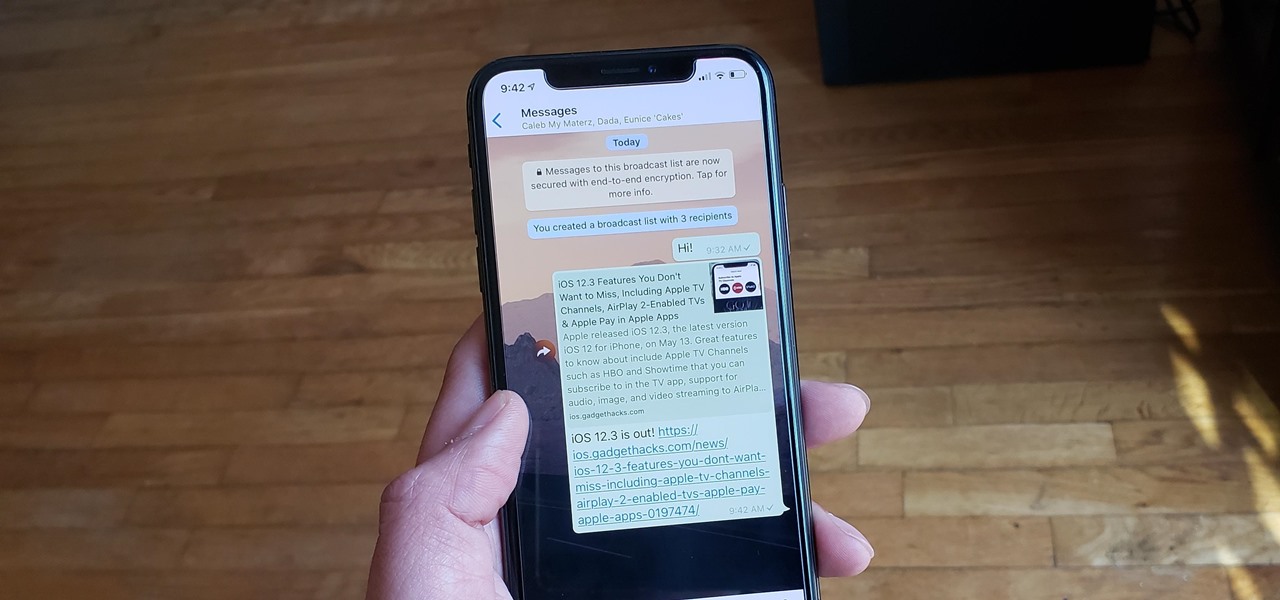
  • Real time messaging – One on one, group chat and Broadcast messages

Broadcast a Message to Multiple WhatsApp Contacts Individually at the Same Time « Smartphones :: Gadget Hacks

Since you’re willing to create your own WhatsApp-like app, it’s indisputable to incorporate a messaging feature, which can be one on one chat or a multi-user chat. WhatsApp developers use customised XMPP (eXtensible Messaging and Presence Protocol) which enables message delivery.

Also, WhatsApp chat enables Emojis, Stickers and GIF files.

Development Time : 210-220 hours (Both frontend and backend development)

  • Voice Calling

WhatsApp gets a new update for voice calls

WhatsApp’s free calling feature was added last year in January to attract more users to it. It uses Internet traffic to call rather than your data plan minutes or your money. WhatsApp uses the PJSIP library to implement Voice over IP (VoIP). This is an open source multimedia communication library written in C. The library uses high-level API by combining the SIP (signaling protocol) with a multimedia framework and NAT traversal functionality.

Development Time : 200-220 hours (Both frontend and backend development)

  • Video Calling

WhatsApp Video Calling Is a Good Effort That Needs Some Polish | NDTV Gadgets 360

Any mobile app developer can tell you how important a video calling feature is for any social media or social messaging application today. Those applications that did not have video calling features in their business plan are also looking at the possibility of adding them, like Instagram. And the video calling feature for WhatsApp is an important one for the field.

Development time : 180-220 hours (Both frontend and backend development, depending upon Android or iOS development)

  • Multimedia sharing

How to Make and Share a WhatsApp Status Video - Animoto

With WhatsApp, we can also share Voice notes, video files and photographs. To create a chat app like WhatsApp, you can add such features too, as they were part of the basic model of the application. The transmission procedure is performed by uploading a multimedia file to be delivered to the HTTP server (YAWS), then sends a link to the content together with its Base64 encoded thumbnail.

This is nothing a well established mobile app development company doesn’t know of.

Development Time : 40-50 Hours

  • Settings Column

WhatsApp privacy features: Enable these settings now to keep your chats safe

The settings part of WhatsApp consists of Privacy settings, account settings and profile settings. Where users can switch off or on the read receipts, change their profile picture or profile name, manage blocked contacts, delete their accounts, change status, change numbers, customise profile settings like chat notifications, etc.

Development time : 110-120 hours

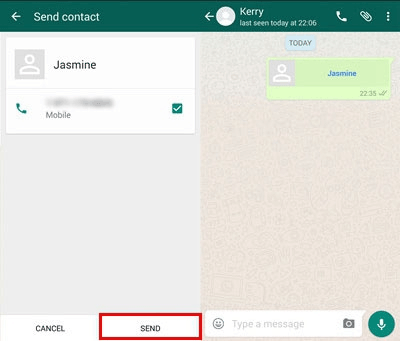
  • Contact Sharing

Share WhatsApp Contacts on Android and iPhone

This is a small feature where the users can send and receive contacts from their phone memories directly with each other. It adds on to the convenience of the app. The procedure for contact sharing is identical to the message delivery; the XMPP protocol is also engaged here. Hiring the best mobile app development company takes the load off your shoulder and give you an application worth your investment in the end.

Development time : 70-80 hours

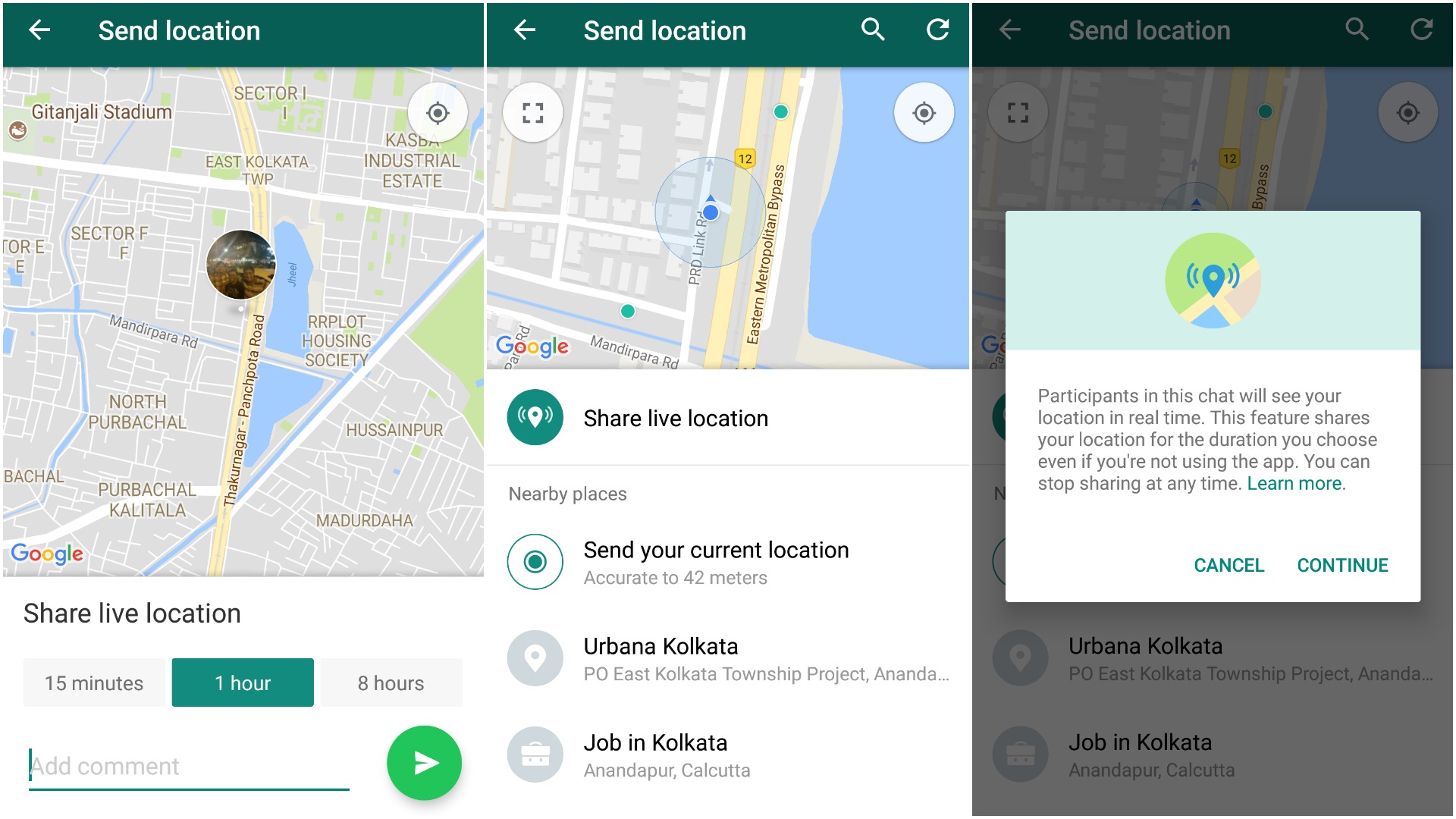
  • Location sharing

How to share live location in WhatsApp? | TechRadar

The geolocation feature can be integrated into the app to share your current location or the location of any place. Besides this, your live location can also be shared with another person for a designated amount of time. To display maps in your apps, Google Maps Android API is a way for Android developers; the Map Kit framework is offered to iOS developers by Apple.

You should hire a right mobile app development company who knows his way with all the necessities of mobile app development. A mobile app development company with an inhouse team of mobile app developer and UI/UX app designers is the best way to go.

Development Time : 25-30 Hours

  • Notifications

WhatsApp doesn't show usernames on notifications - Ask Different

On WhatsApp, the user is notified about a personal chat message or a group message through mobile app notifications. They can even enable the feature where they receive a chat-on-screen pop-up when the phone is locked. This feature can be incorporated through Google Cloud Messaging or Apple Push Notifications.

Development time : 15-20 hours

Summarizing:

This is an estimation for the stated features. This may vary for different mobile app development companies or Mobile app developers. Besides, there are a number of other, more advanced features that WhatsApp is going on adding to its application, such as, Whatsapp web, Camera filters, WhatsApp upi payment, end to end chat encryption etc. which have raised the bar high for other such applications. In fact, the team has also made it possible for mobile app developers to verify users on WhatsApp rather than on traditional SMS application.

It’s critical to put a dollar value to the entire development process of such an application in the first step. Although, WhatsApp’s MVP cost would be in the range of $40,000 to $50,000. However, this is a very rough estimate. And as the number of features alter, the mobile app development cost will alter accordingly.

Now that you have convened the complete understanding of not just the clone app for WhatsApp but the entire market potential and also the answer to how to create a chat app like WhatsApp, along with the near actual cost estimate of social media app development like WhatsApp , it is time.

It is time to use that information and contact our team of social media mobile app development experts and build a WhatsApp clone of your own or just to get a clearer estimate of the actual cost.

Mobile Apps Revolutionizing the Entertainment Sector

Media & entertainment sector now at Rs 1.26 lakh cr: FICCI-KPMG Report 2017 | Business Standard News

From news updates to live streaming, entertainment apps have got everything a person needs to sit back, relax and enjoy. All the things you need at the touch of your fingertip. Mobile applications are being used in every industry but the entertainment industry is taking advantage of this technology the most. The entertainment sector is all about engagement, content, and a massive audience.

It is very clear that the entertainment industry majorly depends on mobile applications and thus many mobile app development companies are focusing on entertainment app development.

Mobile app development agencies should keep few things in mind while entertainment app development: attractive designs, various sources of information, easy sharing options, and an option to interact.

Entertainment software development companies have taken this new path of entertainment app development where the market is highly profitable and has a bright future. A study shows that among the top 10 most used applications, entertainment apps take the first 5 positions.

In this article, we are going to look into the uprise of apps for entertainment in the mobile industry – the top apps and the reasoning behind their growth before looking into the features set that back their popularity.

  1. Trending apps in the media and entertainment industry
  2. How have mobile applications revolutionized the entertainment industry?
  3. Feature-set that makes entertainment apps engaging
  4. Future of mobile apps in the entertainment industry

Trending Apps in the Media and Entertainment Industry

Entertainment applications are a necessity today. We can always spot someone who is engrossed in such apps while commuting or having lunch at their desk. That is how media app development is done so that it can attract a massive audience. Some applications have turned into a trend now and we simply cannot do life without them. Let’s take a look at these rockstar trending apps in the entertainment industry:

1. NETFLIX

Netflix Has 45% Fewer Movies (and 400% More TV Shows) Than it Did in 2010 - TV[R]EV

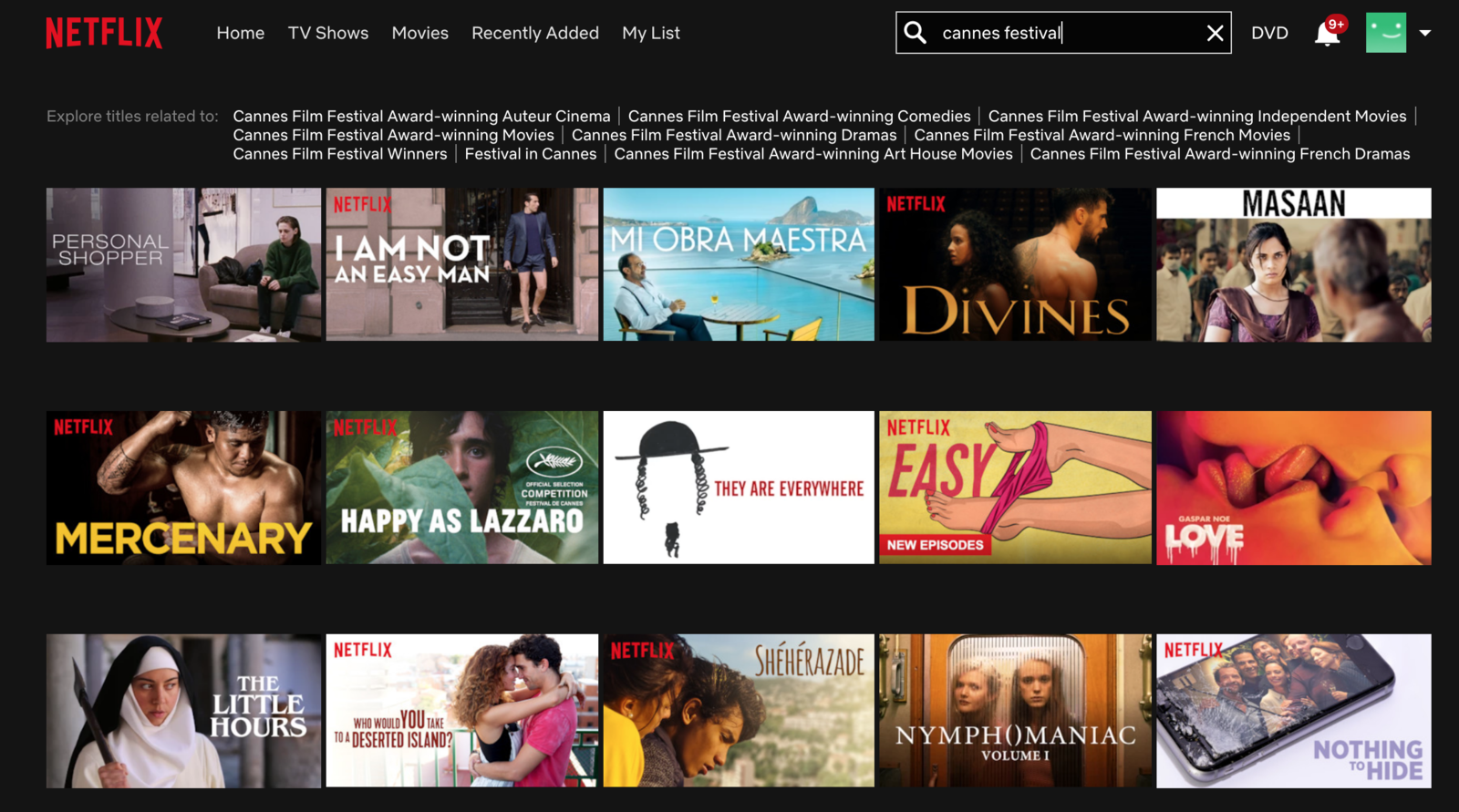
Netflix is an entertainment app that has an unlimited list of movies and sitcoms. The app can be used to connect to any TV and gives a high-definition experience to the viewers. This has completely changed the satellite TV game and has won the market. By revenue, Netflix is the world’s 10th largest company.

2. TED

TED - Apps on Google Play

TED has over 1400 videos that have inspired millions of people in the world. The videos on this app can be accessed from any mobile device. TED also has its own radio that runs on demand. The app has videos from various successful people who give their best life advice on this platform.

3. BOOKMYSHOW

BookMyShow Rejigs Leadership Team - BW Businessworld

Bookmyshow is an app that lets you book tickets for movies, concerts, stand-ups and theatres in India. It will also tell you about the upcoming shows according to the location that has been set. Almost every Indian uses this app to conveniently book tickets online to avoid the rush at ticket counters.

4. SPOTIFY

How Well Does Spotify Know You? - Digital Innovation and Transformation

Spotify is a music service app that allows you to legally listen to music and save many of them offline as well. With a user base of 24 million, this app is trending in the music section. You can browse through songs as per artists or genres. The recently updated app allows you to save up to 3000 tracks offline.

5. 9GAG

9GAG: Go Fun The World

9gag is a Hong Kong-based company. They run an application based on their web content that allows users to upload funny videos, GIFs, and images that are user-generated. The app has more than 10 million downloads on Google Play with a 4.6 rating. 9gag has seen a huge rise in its base audience since it launched its own mobile app in 2012.

How Have Mobile Applications Revolutionized the Entertainment Industry?

1. Tracking the trends

Tracking The Trends In Globalization | BizEd Magazine

The primary way mobile apps transforming entertainment is through making trends tracking easy. When social media wasn’t around, tracking the trends was quite difficult. But ever since social media got a grip on society, there is a new trend every day. Multiple social media applications have one complete section dedicated to the most trending topics on the application.

When it comes to the latest movies, games, music, and series, entertainment apps keep them on the top or trending section of the app so that users can learn what’s liked by the majority.

Entertainment is no more limited to time slots and closed doors. It is now available anywhere, anytime, and for anyone. Media software development companies are working progressively to improve the user experience by optimizing the applications.

2. Spreading and gathering information

Immunizing the public against misinformation

Applications like Facebook, Instagram, Twitter, etc. have become a great source of authentic and detailed information. From the latest news to life hacks, everything is available on these applications.

Entertainment app development is done keeping in mind that the users can exchange every form of media and information on the platform that is authentic and useful.

Youtube is another platform for sharing information through creative videos. There are multiple Youtube-based news channels, travel vlogs, and classes for the audience.

3. A Complete platform

Top four platforms for entertainment on the go- The New Indian Express

Entertainment applications are capable of forming a whole new platform for movies, music, gaming, live streaming, etc. This opportunity has given rise to many artists to showcase their talent and create a follower base.

Earlier making videos, music, or developing games was only done by professionals because they had access to platforms that launched these products but now application development is not as complicated as it used to be. Many platforms even pay the real talents for the influencing work they do.

4. Promotion Capabilities

A mobile app for the entertainment industry can prove to be an efficient method of promotion of an entertainment agency or of influencers looking to make it big in the sector. The fact that the majority of the people are always on their smartphones, the chances of high engagement with the app and in turn the brand is very high. Entertainment marketing is one of the easiest ones in the app industry to make popular – especially since the celebrities who are a part of the content on your application do half of the work of making your app popular among their fanbase.

Now that you have looked into the reasons that make mobile entertainment apps a right move for the media and entertainment industry and the popular entertainment apps, let us now look into the features set that are present in all the different types of entertainment industry incumbents.

Feature-set that Makes Entertainment Apps Engaging

1. Content flow

Entertainment applications have allowed the easy flow of content throughout the globe. Any creator can put their content on these applications and receive attention from audiences from all over the world.

One such example is Quora. An app that allows you to answer multiple questions as well as ask questions yourself. Another application is Wattpad which has given a platform to writers so that they can publish their books, journals, or short stories.

Other entertainment applications have allowed the free flow of content such as articles, blogs, videos, etc. Reading interesting content on the go is a facility that mobile applications provide and the users’ demand.

2. Gaming and music

The Crossover Between Music and Gaming – perunegro.org

Gaming is the most popular section in the entertainment industry. Not only have mobile applications made it possible for players to carry their games in their pockets but also have enabled real-time multiplayer options so that gamers can play together from all over the world.

This feature connects many players around the world via the internet and even has features like chatting and voice call. This is how mobile applications are reinventing the gaming experience. Even if your entertainment application is not a whole and sole gaming application, you can still use the feature to make your app experience more immersive and engaging. In fact, shareable micro games can be a great way to make your app popular in the market.

Music was only limited to cassettes, radios, and websites but not anymore. Applications like Spotify, Wynk, iTunes, etc. have given the opportunity to the audience to choose to listen to any music, anywhere and anytime. Some of these apps have free access to music as well.

3. Engagement features

Entertainment apps attract a huge audience because of their interesting features, type of content, and curiosity in each other’s life. The most-followed people on applications are celebrities since they have a huge fan base.

Mobile applications give fans a chance to interact with their idols and also keep a track of what’s going on in their life. This also helps businesses interact with their customers and attend to their needs and demands.

Engagement is the most important feature of entertainment mobile applications. Features like push notifications make it extremely easy for the users to remain updated on the new content launch on the application, in addition to any change in their subscription status.

4. In-app purchase capabilities

In-App Purchase - Apple Developer

In-app purchase features tend to be one of the most important feature sets of an entertainment application. Your users should be able to start, modify, or stop their subscriptions from within the app through the app of a secure payment gateway that has been designed to keep their financial information secure.

5. Social media integration 

One of the most common ways people find the next content to stream is through social media posts. This implies that in addition to having a solid social media campaign, you should also give your users the functionality to share the content that they like on their social media channels along with the provision of tagging your brand.

When integrating social media, it is extremely important to ensure that you make the experience as seamless for the users as possible  – meaning in your entertainment apps for mobile don’t ask them to log in multiple times simply to share the content online.

6. Content moderation facility

With history as our witness, even the most popular of the entertainment apps have come under scrutiny for posting content that hurts viewers sentiments. To safeguard your users’ interest, it would be beneficial to have a content moderation practice in place that would ensure that nothing pirated or hurtful gets live on your application without raising a red flag within your application.

7. Intuitive search functionality 

This Trick For Movie Lovers Will Change The Way You Use Your Netflix Account

What separates an average entertainment application from the one that ranks on top in the stores in the intelligent search functionality. Talk to your media and entertainment app development company in the USA about the integration of artificial intelligence addition in the application. This would help you give your users recommendations on what they should watch next – on the basis of what people who viewed the content they did watch next.

Future of Mobile Apps in the Entertainment Industry

Mobile phones are used for more than just calling. It has become a source of information, a necessity, and something without which human life doesn’t seem to be easy.

Applications are literally solving our daily problems from food to clothing to entertainment. Mobility is the future of technology and entertainment is going to be an unbeatable industry.

With all the information gathered so far, entertainment applications have a future that will bring them on the top, even beating the game applications. In near future, the mobile application economy will have more optimized apps and will rise to newer levels.

IoT, Augmented Reality, Virtual reality is all the features set to enter the entertainment apps development to enhance the user interface. One can only imagine for now what these latest technologies can bring to the audience and how fierce the competition is going to be for newcomers.

Android Go App Development: Its Difference From Regular Android

How are the Android Go Apps Different from Regular Apps

Every time a new version of Android comes out, it is mostly a very big deal. In every new version, there are a bunch of new features, a set of design changes, and most of the time, a stream of phones to go along to suit the new version. And when the launch is something as major as a slimmed-down version of Regular Android, the event is bound to make some noise. Google, in I/O 2017 announced the launch of an OS that would run on low-cost smartphones that predominantly dominate the developing nations and it took a year for OEMs to launch their Android Go Devices.

Among the other MWC announcements, one was the names of devices that would have Android Go.

Here are the popular Android Go devices – Ulefone Note 7, Samsung Galaxy M01 Core, Alcatel 1X, Nokia 1, LavaZ50, ASUS Zenfone Live L1, Tecno Spark 6 Air, Infinix Smart HD 2021, Tecno Spark Go 2020, and Huawei Y3 among others.

Android Go – The Idea Behind Android’s Slimmed Down Version

Let us start with the basic question first. What is Android Go?

Android Go alias Android (Go edition) is a slimmed down version of Android, which is designed to specifically run on the entry-level phones.

In simple terms, Android Go applications means to offer high-quality smartphone experience to entry-level devices. From the beginning till now, go apps for android have brought improved speed, reliability, and security to millions of entry-level devices through applications and features specially developed to address local necessities.

The business strategy that runs behind Android Go is to expand the business to the developing nations, which on one hand has the advantage of the high user base, but on the other hand, face restriction from low storage space, high app size, and low RAM size.

To solve these three primal issues that keep Google from making Android reach its market potential, the brand launched Android Go that –

  • Make the Android run on the phone with 1GB RAM or even less
  • Make the OS takes lesser space
  • Make the preinstalled apps take lesser data and space

In order to serve the developing nations to their best intentions, the tech giant has brought about three major changes in its ecosystem – Operating System. Play Store. Apps.

Let us look at all three of the structural changes that Google has brought with Android Go, one at a time.

Operating System

What is an Operating System?

The operating system of Android Go has been based on Oreo but has been optimized for running on smartphones with over 512 MB to 1 GB RAM. Size-wise, it takes half the space of Android Nougat, allowing devices with less storage space to hold a number of apps and media out of the box.

Devices that run Android Go are known to open the apps 15% faster than the other Android software. In addition to that, Android Go users get ‘data saver feature in default mode, which helps them consume lesser mobile data.

Apps

Like the new OS, Google has developed new apps as well to help make better use of the device’s memory. These apps require around 50% lesser space and tend to perform a lot better in the low end hardware.

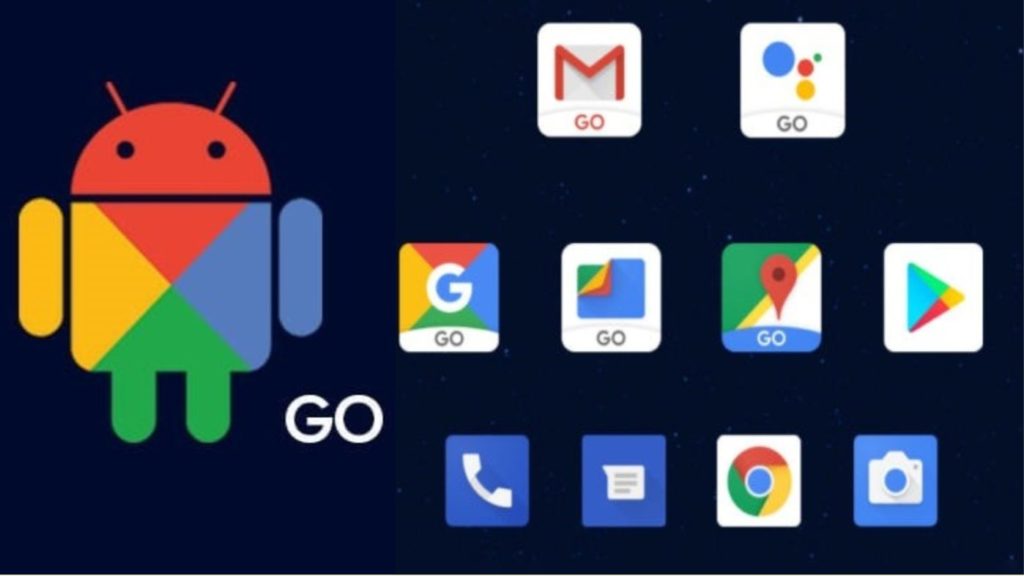
Android Go devices come with these pre-installed apps –

  • Google Assistant Go
  • Google Go
  • YouTube Go
  • Gmail Go
  • Google Maps Go
  • Gboard Go
  • Chrome
  • Google Play Store
  • Files Go

While these apps are a lot faster and smaller in size, they come with some features missing. Now although the Android Go apps are restricted in number, as of now, the number if expected to increase in the coming future.

Play Store  

Play Store's App install optimization feature reduces app installation time

To help keep the lightweight experience in sync throughout, Google has launched an all-now Play Store as well.

Android Go apps download space, i.e. Play Store provides the same content as your regular Play Store, just with a storefront that is suited for the low-storage devices. The store has a featured section that recommends to users the apps that are designed and developed specifically for their Android Go smartphones.

While most of these changes are in the background, let us look at the changes that are visibly present between Android Go vs Regular Android.

What’s new in Android Go app development?

Here’s a glance at something new in Android 11 (Go edition)

1. Available on all devices

Android (Go edition) is available on all new devices with up to 2GB of memory.

With 2GB expansion, apps for android go launch 20 percent faster, and with 270 MB of extra free memory, individuals can now run three to four applications in the background. Android Go development on 2GB devices likewise accompanies up to 900MB of extra free storage which is enough to take up to 300 more selfies and download a whole film.

2. Privacy enhancements

Go android application development for smartphones have similar approach for industry-level privacy protection as any Android device. Android 11 Go brings new security upgrades that make it simpler to control how and when information is shared on your device. With one-time authorization, you can allow an application access to sensors like your microphone, camera or location.

3. Switch between apps

Nowadays devices with wide screens are very common, thus Android Go gives you the advantage to make use of the wide screen through easy navigation. The gesture based navigation in go apps for android helps you to navigate to the home screen, backward and switch between apps with easy swipes.

Visible Differences in Android Go vs Regular Android

1. Recent Apps

How to create a list like "Recent apps list" in Android L - Stack Overflow

*Android Go on the Left and Regular Android on the Right

The thumbnail of recent apps in Android Go is a lot smaller than the one in your regular Google application. It expands to fill the device screen as the app loads, giving the impression that the apps are loading much faster.

2. Gmail

Google Reveals Gmail's Most Ambitious Ever Upgrades

With Gmail Android Go Application, Google has cut back on graphics to a great extent. While visually, there are not a number of evident changes, performance-wise, Gmail Go makes use of a web view that makes the performance choppy.

3. YouTube

How to Get More Views on YouTube: 12 Tactics that Actually Work

As compared to the regular YouTube, YouTube Go is a lot simpler and has much less functionality. While UI wise, again, there is not a stark difference, but there are evidential changes in terms of functionality in case of YouTube Go – The amount of data a video will consume is clearly specified, there are no likes/dislikes and comments option anymore.

4. Google

Google collects a frightening amount of data about you. You can find and delete it now - CNET

Google Android Go Application has a lot more to offer than your regular Google application. There are a number of customization options as well as the ‘Trending Search’ option, which was earlier missing in Google. The only thing missing in Google Go are the recommended cards.

As for the Assistant Go, while it is not completely different from Google Assistant, there are a few restrictions – there is no configuration option, the assistant doesn’t set default players, and it cannot control the hardware of the phone.

5. Google Maps

Announcement: Google Maps Platform Places Library - Localyse

The resemblance between Google Maps and Google Maps Android Go Application is uncanny, Maps Go is a case of perfect recreation when we talk about visuality.

Functionality wise, there are some obvious limitations, which might be a deal breaker for a number of users. The real-time turn-by-turn navigation is entirely missing in Google Maps Go, also reviews are missing in Google Maps Go.

With all these functionalities and structural changes, the aim that Google is looking to fulfill with go apps for android is to improve the overall user experience of the entry-level smartphone user base. While Google has done a lot in terms of optimizing their experience, it comes on all Android mobile app development companies to take the journey further while expanding business beyond geographies and not just as an android app development company usa or any other company.

With that respect, here is the answer to How to get Android Go in your Android App suite.

Steps to Optimize your Android App Development Process to fit in Android Go a.k. How to Develop an Android App

The process of converting your regular Google application into Android Go application would start with the answer to your app strategy.

When it comes to developing an app that is optimized for devices that are designed according to the Android Go standards, there are three options that you can choose from –

Have a Common App

Use  the same app for all – Android and Android Go devices offering identical experiences. The android app here should be multi-binary, but shouldn’t have any particular experience for the less RAM devices. You can use Android App Bundle for this to save upto 65% in size without refactoring the app code.

Have one App with Different APKs

Managing Multiple Apps within a Single Android (Studio) Project | by Chukwuemeka Nwagu | The Startup | Medium

Use same app for Go devices and other devices, with different set of experiences. For this, you will have to develop different APKs, with one targeting the new android.hardware.ram.low dimension and other APK focusing on other devices.

Have Two Apps

Develop a Lite app targeting on the Android Go devices and keep your other Android app as it is.

Once you have decided on the app development strategy you will be following, look at these key considerations –

Ensure App functions without Crashes and ANRs

Application not responding and high crash rates are the two factors that negatively impact user retention rate. Make use of tools like Crashlytics and Android vitals to check the crash free sessions and ANR rate of your Android app.

Focus on Android Oreo

Android Oreo comes with a number of resource optimization like the Background Execution Limit that ensure proper running of processes in the background. Read through the Google Play migration guide in case your app is not targeting API 26 or more.

Keep the App Installed Size Low
Shrinking APKs, growing installs. How your app's APK size impacts install… | by Sam Tolomei | Google Play Apps & Games | Medium

There is a clear association between APK size and install rates, thus the lower your APK size, the higher your installs.

Since the Android Go apps will be focusing on low MB, entry level smartphones, you will have to ensure that your app is under 40 MB. To achieve this, either optimize your present APK or create a different APK targeting the Go users.

Here are a few tips on how to lower the app size –

  • Use Android App Bundle
  • Replace the JPEG/PNG files with the WebP assets
  • Replace raw audio format with AAC or MP3
  • Make sure that the libraries are updated
  • Keep DEX code within reason

Keep Memory Footprint Low

When you test the APK, look at the PSS to analyze the amount of memory the app takes to start on the device.

Keep Cold Start Time Under 5 Seconds

As you run the test for the cold startup time after completing a full reboot of the test device, ensure that the app becomes interactive within 5 seconds of being launched on the users’ device. In today’s get to go attitude users tend to become frustrated after five seconds of waiting for an app or game to load. This is the reason why the uninstall rate is high.

It is recommended to run tests for cold startup time after performing a full reboot of the device.

Summing Up

So here is all that you need to know about what is Android Go, Android Go vs Regular Android, Go Android development, android development services and finally how to develop an app for Android Go. Now that you have all the necessary information, what are you waiting for? Contact a team of Android Go experts and expand your business.

error: Content is protected !!