7 Mistakes to Avoid When Starting an eCommerce Business

Why Ecommerce Businesses are Thriving - Hedge Think

If you are investing time, effort and money in setting up an online store, you want to make sure it is successful. Often the focus for startups is on the products being sold and creating a website with the right brand image. While these are obviously important considerations, there are other matters which if not handled correctly can cause your fledgeling business to fail. Here are seven mistakes that eCommerce business should avoid.

1. Ineffective product photography

Is Bad Product Photography Impacting Your Conversion & Return Rates?

For all its convenience, the big drawback of purchasing anything online is that consumers don’t get to see the product in real life. For most consumers, the biggest clue to what a product looks like is the photograph. The product image, therefore, is crucial to achieving a sale. Indeed, for 82% of Netflix viewers, it is the main factor in helping them choose a movie – so much so, that the company now serves different images to different audiences.

One of the mistakes new eCommerce business companies make is to overlook the importance of the product image. Photographs not only have to be of a high quality, but they also need to be resizable and show the product in a way that is compelling. For many products, a single image will not suffice. You may need to have a series of images showing the product from all angles and others which zoom in to show features and details. This is what customers want and those stores which provide this are going to get more of the sales.

2. Badly written product descriptions

How to write product descriptions that sell

If a product image catches the visitor’s eye, the next stage of their purchasing journey will be to read the product description. Although no-one is looking for a long-winded essay, generally, customers do want more than a couple of lines of text. The more information you can tell them about a product the more they are likely to find a feature or a benefit that makes them want to buy it.

Any text should be in plain English with technically accurate spelling, punctuation and grammar. Details given must be accurate and include things such as size, colour, weight, energy efficiency ratings and part numbers.

3. Dodgy customer reviews

16 Tips to Handle Negative Customer Reviews Online

After images and product descriptions, one of the other major factors that help consumers make purchasing decisions are customer reviews. Reviews are increasingly important as they let potential customers discover what others think about a product, warts and all.

However, as the BBC recently highlighted, there are some ecommerce business that will write 5-star reviews of the products they sell or pay individuals to write 5-star reviews for them. Consumers, though, are a sceptical lot: just as they are alerted by gushing product descriptions, they are equally as suspicious of a product with a perfect run of 5-star reviews. The moral is a simple one – don’t be tempted into writing 5-star reviews of the products you sell, not only is it likely to get you into hot water, it can have the opposite effect on sales to what you intended.

4. Aggressive returns policies

How To Write An Ecommerce Return Policy (Real Examples)

From a legal point of view, online customers in most countries have the legal right to return goods bought online. In the UK, for example, the Distance Selling Act means that anything purchased online from a business (not from private individuals) can be returned within 14 days of delivery. They then have 14 days to return the products and the refund must be given within 14 days of their return.

While these protections are statutory, many ecommerce business have other clauses in their policy designed to make it difficult to return the products – such as making the customers pay for return postage or requiring special repackaging conditions. While some of these conditions are understandable, the main consideration should be on how these affect purchasers. If your returns policy puts customers off buying from you, it will lose you sales. Offering free returns may improve overall sales and help retain customers, even if it is inconvenient and costly.

5. Hard to navigate site structure

10 Ways Website Structure Can Affect SEO

It can be a challenge just to get customers visiting your site. When they do, you want to make the most of the opportunity while they are there.  You can’t do this, however, if they can’t easily find what they are looking for.

A user-friendly website enables customers to find products without any hassle. The easier it is, the more chance they will buy from you. For this reason, make sure you have your products correctly categorised and that you use menus and search bars. The search feature, in particular, should enable visitors to refine their search by things like price, colour, size, brand, etc.

6. Complicated checkouts and unexpected surprises
Checkout Page Optimization: 22 Best Ways to Recover Lost Sales

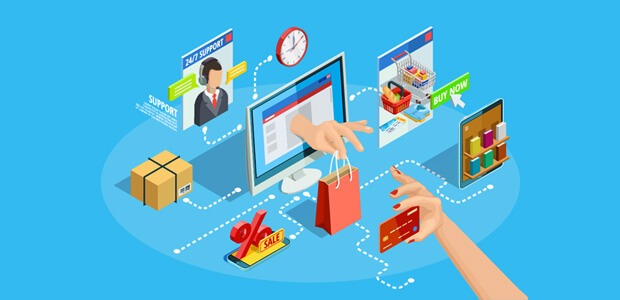
You will be surprised by the number of people who abandon a sale at the checkout. There are two main reasons for this. One of the big issues is that some eCommerce business companies hide their shipping costs until the very last part of the process. When customers suddenly see how much more things are going to cost, they bail out of the sale. It is always better to include shipping in your product pricing and state that you offer free shipping. If you can’t do this, be upfront and transparent about what the costs are before customers get to the checkout.

The other chief culprit is an over-complex checkout process. Forcing customers to register on your site, fill in detailed forms or having list after list of last-minute bargains thrown in front of them can leave some customers just to click on the X. If you have a sale in the bag, don’t lose it by making customers jump through unnecessary hoops. If you want this information, ask for it after the sale has been completed.

7. Poor website loading times

12 Reasons Your Website Is Slow (And How to Fix Them) - DreamHost

This is a problem we have mentioned numerous times before: a slow loading website sells fewer products. Even something as small as a one second delay has been shown to reduce conversion rates and website revenue by 7% and cut the number of page views by 11%. Quite simply, in the age of superfast broadband and 4G, consumers don’t wait around for a hanging website to load.

With increased competition meaning ever-smaller profit margins, improving your site speed by one second can be the difference between success and failure. To solve this problem, visit Google’s PageSpeed Insights Tool to discover how fast your site is loading and what you can do to improve your site’s speed. In addition, make sure your site is hosted with a service provider that uses high-performance servers that are optimised for website hosting, this can make a real difference.

Conclusion

As you can see, there are a lot of mistakes that new eCommerce sites can make which can have a negative impact on the performance of their business. Hopefully, the information provided here will help you avoid them and give your site the best chance of success.

Watch Out For These 5 Email Marketing Trends

Top 5 B2B Email Marketing Strategies For The Year 2018

Email is a tried and tested method of email marketing. Cost-effective to run and with the highest ROI of any form of marketing, it’s become an essential part of many companies’ marketing strategies, especially as it’s possible to grow huge subscriber lists over time. However, with more consumers now preferring other forms of communication, like texts, private messaging and app notifications, email is having to move with the times in order to keep recipients engaged. Here, we’ll look at some of the ways email marketing is expected to develop in the near future.

1. Personalisation on the rise

Social Shopping on the Rise as Personalisation Influences User Journey | PerformanceIN

In an effort to increase opening rates and conversions, many companies are now turning to personalisation in order to make marketing emails more relevant to their subscribers. The solution that makes this possible is the use of cloud-based AI and machine learning applications. Their ability to carry out big data analysis of customer behaviour provides insights that can be used to trigger automated, personalised emails, sent out at the optimal time, to improve the chances of conversion.

2. Intelligent campaign analytics

How 6 Top Brands Use Machine Learning Marketing to Create Smarter Campaigns | CleverTap

Email software used by webmasters has always included some metrical data on email campaigns, providing information about opening rates, clickthroughs and so forth. Today, however, technology has moved forward. With more campaign data being collected and AI and machine learning used to analyse it, companies are able to run far more successful campaigns. Even better, much of the work needing to be done is automated for them. Now, not only is it possible to track how effective a campaign is; you can also use the data to make automated optimisations throughout, enabling the campaign to be constantly tweaked in order to improve its effectiveness.

3. Email reviews

How to get people to review your product using email automation

Customer reviews are now essential to the success of a company, with over 70 per cent of all purchasers reading them before deciding to buy. What’s also true, is that the same proportion of customers are also likely to leave a review if you ask them to do so. Email offers a great way to do this as links to review sites can be built into the email copy. Indeed, feedback forms can also be embedded into the emails and the comments received here can be used as user-generated content to send out to other recipients. Not only will more companies do this; we’ll see them using AI to choose the customers who are most likely to write positive reviews.

4. Interactive email content

Interactive Email for Beginners: 6 Interactive Elements You Can Add to Your Emails Today - Litmus

While getting a user to open an email can be challenging enough, to be of any use, you really need them to read it and take action. With competition from other forms of marketing, emails will need to be far more engaging than the standard text, image and call to action content that most currently contain. Today, more companies are beginning to create emails that have dynamic content which can keep the user engaged and motivate them to click on the CTA, these include embedded videos, hamburger menus, product carousels, rollover images and even animated CTAs.

5. Alexa mail

Alexa Email Integration | Developing Email for Virtual Assistants

While efforts to improve the content of emails with dynamic visual content will work with many, an increasing number of people are beginning to abandon the visual email interface in preference for having them read out by smart speakers and voice assistants. This makes it more convenient for users who want to open messages while driving, walking around with their headphones on or wanting to multi-task while making dinner.

With the boom in the number of these voice-enabled devices being sold, an increasing number of emails are going to be opened in this way – though one can imagine that not all users who choose this method will use it all the time. This leaves marketers with a problem of how to communicate effectively with these users. If you send a traditional email, they won’t be able to see any images (only hear the alt-tag read out) and they’ll be unable to click through to any landing page. At the same time, neither you nor the user might know how the email will be accessed, until the moment it is. Overcoming these issues will be a major challenge to email marketers as the number of smart speakers grows.

Conclusion

While alternative modes of communication are challenging email as the preferred means of receiving marketing, the future promises to deliver some important developments that will make it even more appealing to both company and customer alike. Personalisation and interactive content will make emails more relevant and engaging and data-driven analytics will improve campaign performance. On the negative side, however, email needs to adapt to the smart speaker era.

7 Benefits of Virtualisation for Your Company

Top 5 Business Benefits of Server Virtualization

Virtualisation is one of the most exciting technologies being used by businesses today. It has revolutionised the IT world, bringing a range of benefits to both service providers and their customers. In this post, we’ll look at how virtualisation can help your company.

1 . A cool and eco-friendly IT solution

7 Eco-Friendly Solutions For Improving Indoor Air Quality

A server can generate a lot of heat and when it is not properly cooled it has the potential to overheat. This can lead to power outages, hardware failure and a resulting loss of data – all critical events that businesses strive to avoid. When you have banks of servers sitting in the same datacentre, the potential for disaster is even greater. One way to reduce the amount of heat generated is to reduce the number of physical servers being used and this can be done effectively by creating multiple virtual servers on each physical machine.

Not only is this a cooler solution; it’s also an eco-friendly one. Businesses are not only lowering the energy consumption needed to run so many physical machines; they are also reducing the energy required to power air-conditioning. As a result, virtualisation can help your drive to become carbon neutral while bringing about less expensive energy bills at the same time.

2. Less expensive to deploy and maintain

Mobile App Development Cost Breakdown: 10 Biggest Hidden Costs

The capital expenditure required to create an in-house datacentre can be very expensive when you add up the cost of the hardware. Servers are not cheap. With virtualisation, the number of physical servers needed is fewer, thus lowering the overall investment needed. Similarly, virtual servers require much less maintenance than their hardware counterparts and this lowers costs even more.

Those who opt to use virtual machines hosted by a service provider will also notice a significant difference in the price.

3. Blisteringly fast to deploy

The future of work: The blistering pace of digital transformation is only going to get faster | Fortune

Deploying a new virtual server is a swift and simple process that enables companies to get on with necessary tasks without disruption. This attribute is also excellent for preventing downtime. If a physical server crashed and there wasn’t a redundant backup available, getting back online could be a time-consuming process with a costly outcome. Using virtualisation, a new server could be online in the time it takes to boot up.

4. Faster up-to-date backups

6 Essential Best Practice for Data Backup | Liquid Web

Today’s virtual backup tools, like Veaam, enable not just the data stored on virtual machines but the entire virtual server to be backed up swiftly, securely and at automated schedules, ensuring that what you store is always up to date. As it is possible to migrate these virtual servers between physical machines, any necessary redeployment can be undertaken very quickly.

5. Disaster Recovery made simple and quick

Disaster Recovery Made Easy With LTFS

Being unable to recover quickly from a disaster situation can have a catastrophic impact on a company, potentially putting them out of business. Despite this, a 2019 survey discovered that 82% of businesses were not fully prepared for a DR incident, with only 27% confident they could ensure continuous availability and only half of them confident of restoring all their data. The majority believed it would take over 8 hours to fully restore services.
In a virtual environment, however, the DR process is both simplified and quicker. Regular backups ensure your virtual server and data are up to date and these can be migrated to another location to be restored within minutes of going offline.

6. Easier and safer DevOps and testing

Best Practices for Implementing QA Automation in DevOps

For those developing new applications or testing new environments, there’s always the risk that if something goes wrong you would have to restart the testing process from the beginning. The ability to create backup clones of virtual machines at any point during testing means that if the worst happens, you can restore the last working stage of your project almost instantly. As a result, testing is less arduous and can proceed at a quicker pace.

7. Avoid vendor lock-in

How you can avoid a vendor lock-in in the cloud

Reliance on the hardware configuration provided by your vendor can tie you to their services and prevent you from seeking better provision elsewhere. Virtual machines, however, work independently from physical servers so there is no reliance on any specific server type or platform. As a result, many of the complications that arise during migration to a new vendor are removed, meaning you can be free from vendor lock-in.

Conclusion

As you can see, virtualisation brings many benefits to businesses. It safer, greener, requires less energy and needs less capital expenditure and maintenance. Additionally, it offers swift backups, quick deployment, it simplifies and speeds up disaster recovery and makes testing easier. It even removes the potential for vendor lock-in.

8 Strategies to Boost Your Instagram Sales

9 Types of Instagram posts Proven to Increase Sales

When Facebook bought Instagram in 2012, it sent a clear signal that this was a platform with real potential. Since then, Instagram has gone from strength to strength and its increasing usage has made it a place where businesses can have a real marketing impact. In this post, we’ll look at the platform and show you eight tips to help boost your Instagram sales.

A growing platform

Instagram has grown massively in recent years, expanding its monthly user base to over one billion. That’s three times as many users as Twitter. This has made it a very appealing place for businesses to advertise their products and to run social media campaigns. Indeed, half of all businesses now use Instagram as a marketing tool and in 2017, they spent almost £2 billion on advertising. With this amount of investment, it is obvious that these businesses are seeing great returns.

Advantages of Instagram for online retailers

Instagram is a media that focuses on high-quality images and video, making it ideal for posting highly visual and creative product photographs and marketing that can link directly to your online store. In this sense, Instagram becomes an extension of that store – people stumble upon a product they like and can click through to buy it. Nothing could be easier.

And with such a large and growing audience, it can massively expand your company’s reach, enhancing user engagement while helping to improve your brand’s positioning. Add to this the option to link Instagram and Facebook accounts, so that posts which appear on Instagram also appear on Facebook, and the potential for spreading the word is even higher.

Tips on boosting Instagram sales

  1. Set up an Instagram business profile

Why you Need an Instagram for Business Account (and How to Do It Right Now!)

Instagram now lets you set up a business profile, so you won’t need to rely on using a personal account to do your marketing. One great feature of the pro-style, business profile is that you can import all your Facebook contacts. It also gives you analytics data to help you see how well your posts are doing.

  1. Take advantage of the selling tools

Solution Selling: The Comprehensive Guide | Pipedrive

There are many tools now available that help you to sell products on Instagram. Essentially, these use a variety of techniques to let users click on your photo and go buy what they see. These clickable shopfront tools include ‘available to buy’ icons, item prices or ‘shop now’ buttons. All a user has to do is click on an icon or button and they are taken directly to the store or to your Instagram bio URL.

  1. Post photos that attract attention

25 Social Media Posts That Are Sure to Grab Attention/Get the Likes

With millions of photographs added every day on a platform that aims to promote great photography, you need to post images which stand out. The better the visual experience you provide for users, the more your brand will get noticed. Experiment with different techniques of taking photographs and use filters and editing tools to create an identifiable brand style of your own.

  1. Promote your website in your pictures

9 Ways to Advertise Your Website for Free

A creative way to get people to visit your website is to show your URL in the photos you post. Some do this with added text or through watermarking, however, there are more ingenious ways to do this – have someone wear it on a t-shirt or have it graffitied on a wall in the background, for example. Subtlety like this is intriguing and will develop curiosity without users feeling over-marketed to.

  1. Make the most of your captions

300 Instagram Caption Ideas (2021)—Great Captions for Instagram

Aside from the image, you can also add a textual caption to your photo. With up to 2,200 characters available, including the use of emojis, captions are a valuable opportunity to develop your brand’s identity, engage your audience and slip in those important calls to action. You can also add numerous hashtags, too, helping your post turn up in relevant searches.

  1. Use hashtags wisely

Twitter for Lead Generation: 19 Clever Ways to Explode Your List

Just as on Twitter, hashtags are widely used on Instagram, enabling people to search for them. For this reason, all your marketing images need to have relevant keyword-style hashtags added to their captions. Doing this helps your products get seen by a wider audience and ensures that searchers have a better chance of finding them.

  1. Attract Instagram influencers

Best Ways To Attract Instagram Influencers - PopTribe

Influencers are a big deal on social media. If they like or share your marketing material, it can have a massive and instant effect on your sales. This is why many of the famous vloggers and bloggers now have lucrative sponsorship deals with major brands. However, if you can grab their attention they may like your products without you having to pay them huge sums of money. To do this, mention them in your captions and give some positive responses to the things they post in order to try to establish a relationship. While getting a positive response back is never guaranteed (these people have millions of followers) the potential results can be worth the work.

  1. Use Instagram ads

How brands are using Instagram ads | Econsultancy

Finally, you should consider paying for advertising on Instagram in the same way you would on Facebook. Instagram ads are more direct than a social media campaign and can have a quicker impact, helping businesses get established on the platform sooner.

One reason for advertising on Instagram is that, statistically, its users are sixty times more likely to engage with your ad than users on Facebook, leading to a much higher ROI.

Conclusion

As you can see, Instagram is a highly useful platform on which to market your products. Is it ideal for every business? No, you’ll need to research whether your target audience is part of the Instagram diaspora. If they are, however, following the tips given above should help you boost your online sales.

Ways how IoT can be an asset for businesses

All about the Internet of Things (IoT) | Tridens Technology

IoT devices enable businesses to generate large volumes of valuable data. This real-time information gives them a better insight into their performance, helping them to be more productive and efficient and have a better understanding of their customers while opening the door to innovation in workflow and new services. Here we’ll look at seven ways businesses can benefit from the IoT.

1. Asset tracking

Asset Tracking, Asset Management, एसेट ट्रैकिंग सिस्टम, संपत्ति ट्रैकिंग सिस्टम in Borivali West, Mumbai , Vaborion Ventures Private Limited | ID: 20781475462

The tagging of items using inexpensive Bluetooth or RFID tags and the use of internet-connected readers to track them means almost any asset can now be connected to the Internet of Things. This enables companies not only to know where all their assets are but also to check their usage, maintenance history and, in some industries, an asset’s health.

Preventing assets from getting misplaced can improve efficiency and cut down on unnecessary repurchases. In sectors like healthcare, where critical equipment can be located across a hospital, it can be life-saving. The ability to check usage and maintenance ensures compliance with regulation and helps companies understand when assets need upgrading. The monitoring of asset health is critical in many industries and can help prevent manufacturing processes coming to a complete standstill or, as in the case of inflight aircraft engine monitoring, prevent catastrophes.

2. Inventory Tracking

Inventory Tracking System | Inventory Tracker by Winn Solutions

Tagged inventory can also be connected to the internet using the same Bluetooth or RFID technology, giving companies real-time stock level data. This can reduce the cost of manual stock taking while providing more accurate, up to date information. This provides much better inventory management and, as it is connected over the internet, can be used across multiple sites. It is ideal for retailers and for the manufacturers, wholesalers and logistics companies that serve them.

Indeed, using Low Power Wide Area Networks (LPWANs) and satellite tracking, the location of tagged inventory can even be tracked during transit.

3. Better communication with customers

Proactive communication with customers: what benefits can it give to your business? | Provide Support

The vast amount of data being collected using the IoT provides companies with the opportunity to give valuable information to their customers. In retail, for example, it enables them to offer omnichannel personalised marketing. Personalised marketing has proved very successful for online companies who use data from their websites to provide tailored offers to individuals. However, for businesses with both online and bricks and mortar stores, the IoT enables data from all forms of interaction to be collected. Supermarkets, for example, can learn about a customer’s in-store habits from their loyalty cards and send them online offers tailored around this.

Other types of IoT device can also help companies send valuable communications. Smart meters, for example, can help energy companies show customers where money is being wasted or where they can save from a different energy package.

4. The development of new services

8 Steps to Assembling the Most Talented Startup Team | SmallBizClub

Not only does IoT data help companies send valuable data to their customers, it can also create opportunities to offer them new services. The ability to monitor asset health, as mentioned above, means businesses can also track the health of the products they sell and offer their customers add-on maintenance services.

We get our boilers serviced annually as a precaution but wouldn’t it be useful if the service company knew in advance that a part was about to fail and contacted us to replace it before it packed in? The same service could be applied to cars, televisions, computers, vacuum cleaners and many other items we use.

It is not just with breakdowns where additional services could be offered. Manufacturers of products which use consumable parts could monitor when those parts were due for replacement and offer a service to send them before they ran out. This would be ideal for replacing ink cartridges, lightbulbs and batteries, etc.

5. Improved security

How to improve your online security and privacy in 10 easy steps

Today’s IoT-enabled CCTV cameras bring many security advantages. Any business owner can now view multiple premises, internally and externally, from anywhere. And the advancement in CCTV technology means these systems use AI to identify suspicious activity, send out warning notifications and use facial and other visual recognition signals to track and record perpetrators.

6. Visual analytics

Visual analytics: quick insights into a world of data

The same IoT technology is also helping businesses to gain greater insight into customer and employee behaviour. Connected cameras using artificial intelligence can gather valuable data which enables retailers to better understand how their customers interact with their store layouts, promotional materials and product displays. With employees, it is possible to learn how individuals interact with machinery, use their time and undertake processes. This can help improve workflows and lead to greater efficiencies on the shop floor.

7. Efficiencies and improvements

How to Improve Process Efficiency | Lucidchart Blog

IoT data can help businesses make major efficiencies and develop improvements. It helps manufacturers speed up workflow and cut bottlenecks. It enables logistics companies to reduce energy costs, reroute vehicles when there are traffic jams or organise deliveries for the quickest routes. It even helps theme parks know which attractions are most popular and when: ensuring adequate numbers of staff are available and that unpopular attractions are replaced.

Conclusion

The data gathered from IoT devices is enabling companies to make important changes to the way they operate. It can improve asset and inventory management, enable better communication with customers and offer the potential for new services. It can also improve security, offer insights into customer and employer behaviour and help introduce efficiencies and improvements.

Google Local SERPS might be affecting your Business

Google SERP: Meaning, Features, Examples & Preview Tool

Google has changed the way it promotes local businesses in its search results and for many companies, this can have a serious effect on their ability to attract new customers. Here, we’ll look at what these changes are and how they are having an impact.

How things are changing

The World of Sales and How Things are Changing

Until recently, anyone undertaking a Google search for a type of business in their local area would have been provided with a list of ten nearby businesses. Clicking on the links in these results would take the searcher to the business’ website where they could discover the information they required. Those companies that appeared in these lists would have been the recipients of higher rankings, increased traffic, and the consequent conversions.

Recently, however, this list has been reduced, first to seven and now to just three – making it harder for many local businesses to be featured. While this decision might be some way down to making the results more mobile-friendly, there are other changes, beyond this, which show Google to have moved its stance on how it promotes local businesses. Here are three of the main ones.

1. Keeping users on the Google website

Website Tracking: Why and How Do Websites Track You? | Blog | CookiePro

One of the key changes we are seeing is that Google is trying to keep its searchers on its own website rather than sending them to that of the local business. There has been a significant increase in the number of search results, especially on mobile devices, that do not require the user to go beyond the information provided by Google’s interface. With mobile visibility being key to local businesses, as customers search on smartphones while out and about in local areas, this is a cause for concern.

Indeed, even when a search is done for a specific company, the display of the company’s Knowledge Panel means customers can access a wide range of information without the need to click through to the website. For instance, they can find out the basic company details, see images, take a virtual tour, read reviews, make a reservation, phone up, ask questions, see the opening hours and when the place is busy. And as all of this can be done on the Google results page, it means fewer searchers will head to your website. This doesn’t necessarily mean, however, that you will get fewer customers as the information provided by Google might be enough to win them over.

2. Ads appearing in the local search results

Google Local Search Ads: Everything You Need to Know

While it is worrying that the number of businesses being displayed has fallen from ten to three, a further issue is that other businesses are allowed to appear alongside them because they have paid for the listing. In a recent survey of over 10,000 local search results, a third of them also contained ads.

Indeed, with its Local Service Ads scheme, some now consider that Google’s stance is to develop itself as a local lead generation provider.

3. Ads appearing alongside your Knowledge Panel

Google's Knowledge Panel What is it and how to get one?

Another disturbing factor is that when a Google user searches for your specific company, the internet giant now intrudes this space with the paid for content of others. For example, you may see ads above and below it followed by an ‘Other Users Searched For’ list of businesses beneath that.

What do these changes tell us?

Science Says That Travel Changes You - Tell Us Something We Don't Know | Remote Year

Overall, the focus of Google’s local search results has changed. Today, instead of simply providing users with links to local business websites, it’s more concerned with providing information about these businesses which keeps the searcher on Google itself. Indeed, with millions of Google Local Guides contributing to its knowledge about local businesses by answering questions and giving reviews, it can sometimes provide more relevant information that searchers are actually looking for than the company website can. If, for example, a customer wants to know if a business has free parking and Google doesn’t know, it will ask the next Local Guide who visits in order to ensure it can provide the answer in future.

This begs the question of why Google wants to keep users on its own website and the answer to this looks fairly clear –  because it helps it generate more revenue through advertising and in turn, helps its advertisers grow their businesses.

Conclusion

While you may think that this change in focus by Google means that local business websites have become irrelevant, the truth is exactly the opposite. There is a powerful link between the organic performance of your website and your ability to appear in the featured local rankings. So, while there is little you can do about the changes Google is making to keep people on its own site and placing paid ads in local search results, the best way to appear in the three featured local spots is to have the best website that you can. If you are looking for hosting for your local business website, check out our homepage to see our wide range of hosting solutions.

error: Content is protected !!