Cloud Computing for Beginners: A Complete Guide

Introduction to Cloud Computing

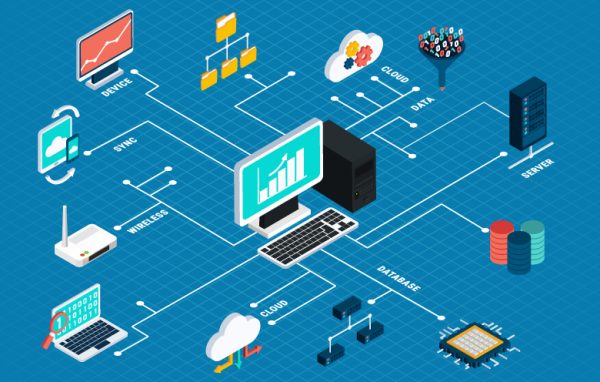
Core Infrastructure with Cloud Computing | by Sanjam Singh | Devops  Türkiye☁️ ? ? ☸️ | Medium

Before cloud computing came into the picture, many companies used traditional servers to carry out operations, processes and data storage. Eventually, it became challenging and costly to completely rely on other companies later, for computing, data processing and storage. But thanks to the big giants today, for creating advanced cloud computing services for making computing and storage more convenient and manageable.


Cloud computing is a leading edge technology that stands for the delivery of high-demand computing services including applications, storage, and power processing, entirely over the internet. It means that instead of using external computer hardware and software, cloud computing offers the entire computing and data storage and processing service over the internet only.


In simpler terms, cloud computing is the practice of using a network of remote servers that are hosted on the internet. The purpose is to store, manage and process data effortlessly rather than relying on a local server or personal computer system.


For decades computer industries used to work by storing data and running programs from the hard drive. But ever since businesses have adopted the cloud computing service, with the help of online connection, it has become flexible to manage resources anytime and anywhere.


Cloud computing gives users easy access to use online services that are available through any device with an internet connection. Users don’t require to be in a certain location to utilize this service as ‘The Cloud’ is almost everywhere these days. In fact, here are some examples of companies that provide their services online through cloud services:

Understanding How Cloud Computing Works
What is Cloud Computing? | How Does Cloud Computing Work?

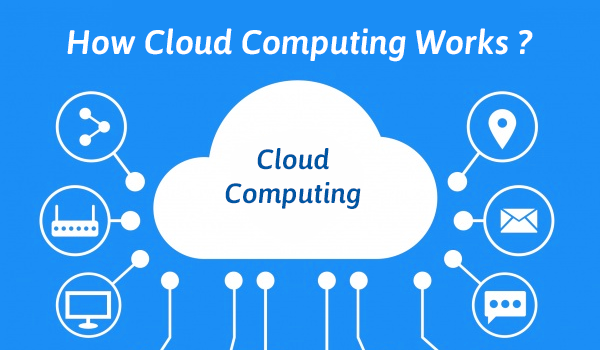
Here is a layman’s guide to how to understand cloud computing works. Basically, cloud has two main sections: the front-end and the back-end. These sections are connected to each other through the internet network. The front-end is the user or client-side of the computer whereas the back-end includes ‘The Cloud’ section of the computer system.


The front-end that consists of the client’s computer enables the user to access data stored in the cloud with the help of the internet browser or with a cloud software. Although, all cloud computing systems do not necessarily have to use the same user interface.


On the other hand, the back-end of the cloud technology system is responsible for storing data and information securely. It includes servers, computers, data storage systems, and central servers. The central server uses a certain set of rules called protocols to facilitate operations. To ensure seamless connectivity between computers or devices that are linked through cloud , it uses middle-ware software.

Apart from these two main section components, the cloud computing services fall under three broad models:

  • Infrastructure as a Service(IaaS):

In this most basic service model of cloud computing, where the user can rent network connectivity, IT infrastructure resources like data center, servers, storage networking hardware and cloud computing security compliance from a cloud service provider. The enterprise can use the IaaS and customize it accordingly so as to build a cost-effective software offering.

  • Platform as a Service(PaaS)

This cloud computing service offers an on-demand environment to develop, test, deliver and manage software applications. The PaaS is designed for developers to make it easier for them to promptly develop websites or mobile applications without having to worry about the setup or management of underlying infrastructure resources.


  • Software as a Service (SaaS)SaaS is the largest model in the cloud market that is growing rapidly today. This model uses the web browser to deliver applications to clients that are managed by the third party vendor. Whereas, its interface is accessed to the client side. Most of the SaaS applications do not require to be downloaded as these directly run from the web browser but some plugins are required to be installed.

The Virtualization in Cloud Computing

Just like its name, cloud computing is very vast as it holds various processes, operations, and management. Similarly, it involves a process of cloud computing virtualization. The cloud computing virtualization allows a user to utilize the same server to run multiple applications and operating systems, thus providing an efficient utilization of resources as well as reducing costs.


There are four main cloud computing virtualization types:


  • Application Virtualization:

The application virtualization helps users to have remote access to the application from a server. The server stores the personal information and other application characteristics but still holds the potential to run on a local workstation with the internet connection.


  • Network Virtualization:

It is the ability to run multiple virtual networks that individually have a separate control and data plan. Network virtualization provides the facility to create and provision virtual networks such as logical switches, routers, firewalls, VPN, and workload security, either within days or even within weeks.


  • Desktop Virtualization:

This desktop virtualization enables users to emulate a workstation load in place of a server. It allows users to access their desktop remotely regardless of any location by a different machine. It offers the benefit of user portability, mobility, effortless management of software like installation, updates, and patches.


  • Server Virtualization:

This is more of a technique to mask server resources. Server virtualization stimulates physical servers by altering their identities, numbers, processors and their operating systems.  This spares users from the burden of continuously managing complex server resources.

How does Cloud Computing Benefit an Organization?

Cloud computing is just not about trendy applications that people use for storing photos and videos online. It plays a major part in the business model nowadays and has taken the world by storm!  With the help of cloud servives, businesses are not only getting the benefit of storing and accessing data but also the benefit of operating businesses innovatively.

Following are the advantages that cloud computing benefits organizations with today:
Advantages of Cloud Computing - FITA

  • Cost Saving

It has been really expensive to run, manage, and deploy local systems for a long time and not to forget how much capital it has cost. With cloud computing, a user doesn’t require going through monthly expenditure of maintenance as everything is handled by the service provider itself.


  • Flexibility

Managing resources becomes quite easier with cloud computing as one has to simply pay for the resources that are being used each month. It offers the ease of process and operation as the Cloud storage providers offer flexible packages in which one can add or reduce the amount of storage that one pays to use.


  • Data Recovery

Cyberattacks can destroy a huge amount of data if everything is stored in physical servers and hard drives. As a result, it will not only lead to data loss but also to customer trust in the organization. With cloud computing, these issues are less likely to happen and even if it happens, there are massive storage locations where the data will always be safely present as a copy at another location.


  • Increased Security

With cloud hosting, your organization is always protected against hacking and internal data thefts. It offers a robust firewall technology that offers features like intrusion prevention systems and in streaming virus protection.

Benefits of Cloud Infrastructure Security

How is Cloud Infrastructure Security Important for an Organization?

Embracing new technologies lead to qualitative growth but simultaneously holds high chances of quantitative data breaches. While adopting cloud technology, it is important to see the security of cloud infrastructure as one of the crucial responsibilities. There are various organizations out there that are still unsure of the security of their data present in the cloud environment.

Importance of Cloud Computing for Large Scale IoT Solutions

In 2019, Collection #1, a massive data breach held responsible for compromising data set of over 770 million unique email addresses and 21 million unique passwords. The collection of data files was stored on a cloud storage service and MEGA. Similarly, information of over 108 million bets’ records was leaked by an online casino group. The leaked data included details of customers’ personal information along with deposits and withdrawals. 

Following in the same year, a famous food delivery service providing firm was breached, compromising the data of 4.9 million users which included consumers as well as delivery employees. According to SC Media, 2019 has been the year of the highest number of data breaches and this amount of growth rate has never been witnessed before. 

These infamous data breaches are proof that storage service providers like Cloud requires consistent security management. When we talk about the security of cloud infrastructure, many enterprises wrongly assume that their data is well guarded and is far away from the radar of cyber criminals. The truth is, these cyber criminals are experts at scraping up the exposed vulnerable data by using unethical ways to look for unsecured databases.

For starters, the term cloud computing infrastructure security refers to the entire infrastructure of cloud computing which involves a wide set of policies, applications, technologies. It also includes controls that are used to protect virtualized IP, services, applications and data.

Scaling enterprise IoT solutions using edge computing and the cloud | Deloitte Insights

With companies migrating their large amount of data and infrastructure to the cloud, the importance of cloud infrastructure security becomes paramount. Cloud security offers multiple levels of control to provide continuity and protection in a network infrastructure. It is a highly essential element in creating a resilient environment that works for companies all over the world.

Enjoy the benefits of infrastructure security in the cloud by partnering with leading technology-based private cloud computing security service providers in order to keep the security of the company smooth running.

Here are the five major benefits of cloud infrastructure security solutions:

  • Data Security

9 Data Security Best Practices For 2021

Nowadays, cloud computing servers are becoming gullible to data breaches. Cloud infrastructure security solutions help in ensuring that data like sensitive information and transaction is protected. This also helps in preventing the third party from tampering with the data being transmitted.

  • DDoS Protection 

DDoS Detection & Mitigation: Thunder TPS | A10 Networks

Distributed denial of service aka DDoS attacks are infamously rising and are deployed to flood the computer system with requests. As a result, the website slows down to load to a level where it starts crashing when the number of requests exceeds the limit of handling. To reduce the attempts of DDoS attacks, cloud computing security provides solutions that focus on the measures to stop bulk traffic that targets the company’s cloud servers.

  • Constant Support 

Teamwork puzzle clipart free clipart images 2 - Clipartix

When it comes to the best practices of cloud infrastructure security solutions, it offers consistent support and high availability to support the company’s assets. Users get to enjoy the benefit of 27/7 live monitoring all year-round. This live monitoring and constant support offer to secure data effortlessly.

  • Threat Detection

Threat Detection and Response: How to Stay Ahead of Advanced Threats.

Infrastructure security in the cloud offers advanced threat detection strategies such as endpoint scanning techniques for threats at the device level. The endpoint scanning enhances the security of devices that are accessing your network.

  • Supervision of Compliance

Compliance Supervision - FinTech Legal Center

In order to protect data, the entire infrastructure requires to be working under complaint regulations. Complaint secured cloud computing infrastructure helps in maintaining and managing the safety features of the cloud storage.

The above-mentioned points are clear enough to state how beneficial and vital is cloud infrastructure security for an organization. There are very many high-profile cases that have been witnessed in past years relating to data breaches.

To overcome the loopholes present in the infrastructure security in the cloud, it is extremely important to keep the security of cloud storage services as a high priority. Engage with the top-class cloud computing security tools to get better results and have the data secured.

Kick-starting Amazon SES

We have been using Amazon EC2 (Elastic Compute Cloud) as the deployment platform for a client. EC2 is part of the Amazon AWS cloud computing platform.We have problems sending bulk email notifications using Gmail for this particular application. Gmail has restrictions on bulk emailing, and as far as I know, Google does not support emails in bulk, as of now. Google prefers to use Google Groups for bulk emailing.

Anyway, since we were already on AWS and SES was made available this year, we decided to use it.

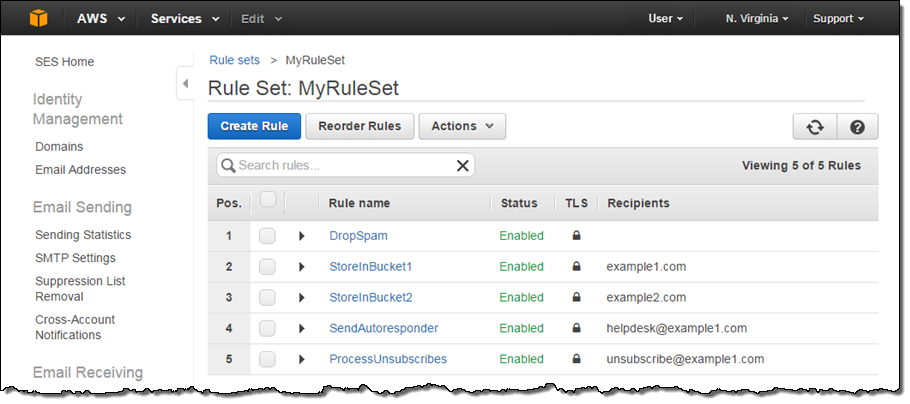
New – Receive and Process Incoming Email with Amazon SES | AWS News Blog

I’ve been reading through the ‘Getting Started’ and other Development Related Documents, available here .

The basichigh level with SES are:

Signing up for SES. An existing AWS subscriber already has SES enabled.
Registering the email ids from which we want to send emails. This is basically similar to an email verification process. I believe one can register / verify up to 100 email addresses.
Test sending emails. Amazon provides a set of Perl scripts for testing the API from the command line. And it provides SDKs for Java, .Net, Python, Ruby, etc.,.
Applying for production access. Before getting production access is a 2,000 emails per day limit during the testing phase.is
Pricing – It costs $ 0.10 per 1,000 emails, but the first 2,000 emails for an EC2 customer are free. Data or bandwidth cost is separate, which starts at $ 0.12 per 1 GB for the first 10 GBs, and then gradually decreases the GB of use. More details available here .

Sending Limits – 10,000 emails per day. I’m sending emails sent. There are not many bounces or complaints on the emails sent. More details here .

The sending limit can go up to 1,000,000 emails per day. In case of over 1000,000 emails per day, they can contact AWS support directly and present their case. AWS may increase the limits for dry customers.

Sending Rate – Starts at 1 email per second and goes up to 90 emails per second, again.

Usage Statistics – You can not buy statistics from the Amazon other than period. The statistics can be retrieved using the web-based SES dashboard.

AWS.Net SDK – We are using SES from a .Net based app, and integrating the SDK provided by Amazon was quite painless. Code samples are also available on the .a.netbased app, and integrating the SDK provided by Amazon was quite painless. Code samples are also available onthe .Net SDK website

An interesting undocumented feature of the AWS. Net. SDK is, for example, log4net. Log4net for logging on. And it can also be logged on with the new logger named ‘Amazon’. Although, some people have had a more pluggable logging, where one could have a plugged-in a different logging library.AWS.Net SDK is, for example, log4net for log in. Log4net for logging on. And it can also be logged on with the new logger named ‘Amazon’. Although, some people have had a more pluggable logging, where one could have a plugged-in a different logging library.

Trouble-shooting – Amazon SES has been around for the web. The AWS forums is also a good starting point. Most of the issues faced solved on the forums.

Email Authentication – Sender Policy Framework (SPF) and Sender Email authentication mechanisms can easily be used with SES. These mechanisms basically invoked the DNS TXT record which specifies ‘amazonses.com’ as a sending domain. Amazon recommends setting up these records as a minimum.

For those who need to implement DomainKeys Identified Mail (DKIM) authentication, it is not offered by the DKIM specification.

So, that was a brief introduction to Amazon SES. Hopefully, it will save some time for SES.

AWS has been transformed into the dotcom era, are now finally coming true.cloud based offerings, looks like the promises made on “Cloud computing” in the dotcom era, are now finally coming true.

Why Do Finance Companies Require the Cloud?

Future of Cloud Computing with a Flavor of Finance and HR | MarTech Demand

The need for robust security and to comply with stringent data privacy regulations have, until recently, prevented many finance companies opting for cloud computing. Today, however, there’s a growing shift towards the cloud as more organization adopt digital-first approaches in a bid to stay relevant in the rapidly advancing, technology-based market. Cloud technology provides finance companies with the infrastructure needed for digital transformation, helping them to improve customer experience, drive growth and stay competitive, all while enabling them to remain compliant with regulations. Here, we’ll examine why finance companies need cloud computing.

Cloud keeps financial data secure

Is Your Data Safe in the Cloud? What You Need to Know

It is no surprise that finance organisations are heavily regulated. The data they hold is highly sensitive and includes both the financial information of customers and details of trading operations. This makes it an extremely valuable target for cybercriminals which, if stolen, could have a major impact on personal and business customers and on the financial company itself. Organisations within the sector therefore need to put security at the centre of their IT operations and must develop a secure infrastructure that robustly defends them against attacks.

The issue for many finance companies is that achieving such security in-house is not easy to accomplish. State of the art security tools are expensive to implement and require specialist expertise. Cloud providers, however, already have both the tools and the expertise in place to keep their infrastructure and their customers’ systems and data secure. This also helps them maintain compliance with regulations like GDPR and PCI DSS. Migrating to the cloud, therefore, can provide levels of security far better than most companies can achieve on-site and in most cases, come included in the cost of the service.

Cloud vendors provide protection for finance companies in a number of important ways. For those with concerns over the multitenancy of the public cloud, for example, this can be overcome by adopting a hybrid cloud infrastructure where data is housed in a single-tenancy private cloud and applications on the public cloud.

Of course, whether public or private, the cloud system will be robustly protected by a powerful arsenal of leading-edge security tools. These include state of the art, next-gen firewalls, like the FortiGate firewalls used at eukhost, as well as intrusion detection and prevention tools, anti-malware, data encryption, SSL certificates, DDoS protection, VPNs, email verification and encryption tools, spam filtering and more.

The providers themselves have to comply with stringent security regulations and will have their own security policies and procedures in place. These will include ensuring that they have enough redundancy in their system to maintain services should one of their datacentres be taken offline, providing backup power and cooling systems, maintaining physical security of the premises, and guaranteeing availability with an SLA. This way, they can ensure a company’s financial data remains secure and available at all times.

With regard to GDPR, financial institutions need to be careful that vendors do not store their data in countries that do not provide the necessary guarantees for privacy. Any data stored in datacentres in the USA, for example, can be legally accessed by the US government security agencies if they think it pertinent to an investigation. As this contravenes GDPR, the data of UK and EU citizens should not be stored in such countries. This is why, at eukhost, all our datacentres are located within the UK.

Taking advantage of the cloud

Ancoris makes a play for Microsoft Office customers | Cloud Pro

Financial companies that have already migrated to the cloud have put themselves in pole position to benefit from the digital revolution taking place in the market. They are able to adopt and make use of advanced fintech solutions, develop and deploy new services at speed, and analyse big data using tools like AI and machine learning to discover new growth opportunities, predict market movements and find more cost-effective and efficient ways to operate.

With data centralised and synced, teams can collaborate on projects far more effectively, regardless of where in the world they work, employees can work remotely and customers can access their accounts, services and communications via the gamut of devices that they now make use of.

The speed at which the cloud operates also provides benefits. Servers and applications can be deployed instantly and workloads that would have taken weeks to carry out on traditional systems can be done far quicker. Indeed, the interconnectivity of the cloud provides a genuine opportunity for finance companies to benefit from the use of real-time data, enabling them to react swiftly to changes in the market.

Cutting costs

Cutting Costs with Your Time-Off Policy - Mitrefinch

The growing reliance on IT in the finance sector has burdened companies with the ongoing costs of using it. The cloud provides significant opportunities to reduce and better manage those costs. By moving to the cloud, companies no longer need to invest in expensive hardware or pay for the running of a datacentre. Instead of capital expenditure, they shift to operational expenditure and have greater control over what is spent, by whom and when.

Additionally, the scalability of the cloud enables finance companies to increase IT resources on-demand. Whether catering for peaks in website traffic or undertaking resource-heavy processing, their system can access all the storage, bandwidth, CPU and RAM it needs to maintain service. The advantage, financially, is that this is charged for on a pay-per-use basis. Once the demand has ceased, the company can scale down and reduce costs.

Preparing for the future

Preparing for the future of federal IT -- FCW

The pandemic has not only hastened the drive for digital transformation across all sectors; it has also seen customers flock to digital in unprecedented numbers. This ‘push-me-pull-you’ relationship is driving the finance sector along the digital railroad. Consumers are pushing for better online services and customer experiences and financial companies are pulling new customers in by providing them. Increasingly, those services need cloud infrastructure and cloud-based applications to make use of technologies like AI, machine learning, IoT and automation.

Conclusion

Cloud technology opens a world of opportunity for finance companies, enabling them to innovate quickly, improve customer experiences and work smarter and more efficiently. At the same time, it provides a compliant environment in which to store their sensitive data and keep it secure.

How the Cloud Benefits Charities and the Public Sector

Top 10 benefits of cloud computing - Information Age

Cloud technology brings significant advantages for all organisations, not just businesses. Today, it is being increasingly adopted by both charities and the public sector, including local authorities, healthcare providers, universities and government agencies. Here, we’ll look at the financial savings and operational benefits it can offer, as well as how it can provide a better service to your end-users.

Remote connectivity

Remote Connectivity, रिमोट एक्सेस सर्विस, रिमोट एक्सेस सेवा in New Delhi , ADG Infosystems | ID: 7029227473

Even before the pandemic forced people to work at home, charities and public sector organisations were leading the way with remote working. While many charities have people working around the country and, in some instances, around the globe, the public sector was dealing with austerity by shrinking office space to cut costs and having employees work remotely several days of the week.

One of the benefits of the public cloud is that it enables your employees to work from wherever they have an internet connection. Here, they can log in to your system and access your applications and documents securely. What’s more, data is stored centrally, not on individual machines, meaning that it is kept secure and that everyone has the latest version of files and information available to them. Indeed, modern, cloud-based remote working solutions allow colleagues to collaborate, share work and hold meetings online, no matter where on the planet they are based.

The benefits of remote connectivity are many. For example, you can reduce the size of your office space, allow employees greater flexibility over their working arrangements, recruit employees from further afield and ensure things like bad weather don’t prevent staff from working.

Financial savings

Invest your Money in a Proper Way to have a Good Financial Savings

Charities and the public sector both increasingly rely on IT services to carry out many of their day to day functions. Running IT on-site, however, can be a major financial burden, especially for organisations that need to reserve as much of their budgets as possible to deliver frontline services.

Cloud migration can help cut IT costs dramatically. The main reason for this is that, in the cloud, you will be hosting your applications and storing your data on hardware belonging to your IT vendor. This means you will no longer need to purchase, regularly upgrade and maintain those expensive servers. Nor will you need to pay for the ongoing costs of an in-house datacentre, such as premises rent, high energy bills, insurance or security. And of course, your in-house IT staff will no longer need to manage or maintain that hardware, giving them more time to work on projects that benefit the end-user.

Greater security

?▷ Tips for greater security

Keeping data secure is an essential requirement for charities and the public sector, with organisations often handling sensitive information about individuals. Whilst a reticence to move this to the cloud can be understood, it is worth pointing out that the cloud is likely to be more secure than most in-house systems.

Unlike many charities and public sector organisations, cloud vendors invest significantly in cybersecurity to ensure they comply with their stringent security regulations. They employ security experts and deploy highly advanced security tools to keep their infrastructure and data secure. Indeed, even the datacentre premises are protected by robust security measures.

Additionally, the cloud allows all data to be centrally stored, enables organisations to implement strict logical control and access privileges and lets data be swiftly backed up, encrypted and integrity tested. For those requiring additional security, there is also the option of migrating to a private cloud, where a single client has dedicated use of their cloud infrastructure.

Staying online

Staying safe online | Internet safety tips | Kids Helpline

Often hosting critical, public-facing services, charities and public sector organisations need their applications to remain available for their staff and end-users. For those with in-house datacentres, server failure can be a significant issue, in some circumstances putting lives at risk. Bringing a server back online can be a timely and expensive procedure that causes prolonged disruption to your services.

In the cloud, your applications are run on virtual machines which means they are not tied to any physical hardware. If there is a hardware issue in a cloud datacentre, the virtual machine is simply and instantly moved to different physical hardware and continues without any downtime or disruption. With exceptional levels of uptime, guaranteed by SLA, the cloud offers the high availability needed to stay online.

Scalability

What is Company Scalability – Really? - Mirus Capital Advisors

One of the most sought after benefits of the cloud is its scalability. This is the ability of the charity or public sector organisation to use additional computing resources (storage, CPU, RAM and bandwidth) on-demand, at the click of a mouse.

There are two chief benefits of this. Firstly, is that it enables your organisation to cope with peaks in demand or heavy workloads, ensuring you don’t run out of IT resources when you need them most. For example, your website won’t crash if you get a massive spike in traffic, something which could be dangerous if dealing with an emergency situation.

The other benefit is the financial one. In the cloud, you will only pay for any additional resources as and when you need them, on a pay as you go basis. When demand reduces, you can scale down once again and save money. Achieving such scalability in-house would be difficult and expensive to do – you would need to purchase additional servers and leave them redundant just so they could be used in times of heavy demand.

Conclusion

Charities and public sector organisations are making increased use of the cloud to benefit in all the ways mentioned above. Indeed, the UK Government’s keenness to encourage cloud adoption has led to the launch of its G-Cloud. This is a marketplace of approved cloud vendors with framework agreements already in place, from which public sector organisations can buy services without needing to run a full tender or competition procurement process. Anteelo is an approved G-Cloud supplier.

The Benefits of Cloud Computing for Real Estate Agents

Agent Image - Real Estate Agent Cartoon , Free Transparent Clipart - ClipartKey

The estate agency landscape has transformed over the last decade, with home buyers increasingly looking to the internet as their first port of call. This has led to the rise of disrupter startups that have stormed the market with nationwide online platforms and the promise of low-cost selling. To stay competitive and relevant, traditional estate agencies have had little option but to adopt new technologies themselves, a need accelerated by the impact of the pandemic. For those looking for the right solutions to their IT requirements, the answer lies in cloud technology. Here, we’ll explain why.

1. Better customer experience

15 Proven Techniques to Improve Customer Experience (CX)

For estate agencies concerned about competition from low-cost online agencies, it’s worth noting that, according to Gartner, 86% of consumers are willing to pay more for better customer experience (CX). The issue is that many online estate agencies have already begun to provide great online CX themselves. Migrating to the cloud, however, not just enables you to provide excellent CX yourself, but do so swiftly and cost-effectively.

Migrating to the cloud enables you to provide both buyers and sellers with all the information and help they need without having to visit your premises. There are a growing number of cloud-based tools and technologies to help estate agents offer great CX. These include financial calculation tools, virtual tours, online form completion and submission, customer service chatbots, omnichannel messaging and much more. These provide great CX in that they make the buying and selling of property quicker, more convenient, less stressful and highly engaging. Who wants to look at a photo of a house when they can put on a VR headset? Who wants to wait for a phone call when information can be accessed and answers provided instantly?

All these cloud-based technologies make customers more confident about your services, foster strong relationships and lead to better reviews and online reputations.

2. Using data to improve your business

How To Use Data To Improve Your Business | NewsGram

Data is now a critical component of decision making for businesses, providing insights that can help improve marketing, website design, productivity, cost-effectiveness and more. Analysing that data needs cloud technology. Cloud enables you to cost-effectively store and centrally manage your data and provides you with the AI and analysis tools that can find those insights needed to drive your business forward.

It can help you map customer journeys across all touchpoints, ensuring that communications are consistent and that whoever is dealing with a client is always up to date; it can pinpoint weaknesses in your website, such as poorly performing calls to action or quickly abandoned pages; and It can show you whether your communications are being opened and accessed and if not, predict which channels and times of day are most effective. It can even help predict shifts in the market, changes in consumer behaviour and the impact of changes in regulation, such as the return of full stamp duty, all of which can help you react quickly and make gains before your competitors.

3. Cost-effective

Behavioral 'Nudges' Offer a Cost-Effective Policy Tool – Association for Psychological Science – APS

As digital transformation takes place in the housing market, estate agents will face growing IT needs. Developing an in-house infrastructure can be highly expensive, requiring the hiring of IT talent and the purchase of servers. Not just in real estate but across all sectors, businesses large and small have migrated to the cloud in a bid to keep IT costs to a minimum.

In the cloud, you are using the infrastructure of your service provider and this means there is no need for capital investment in hardware. And while there is a monthly fee for your cloud services, this is charged for on a pay-as-you-go basis, so you only pay for the resources (storage, CPU, RAM, bandwidth) that you actually use. This is an exceptionally cost-efficient way to procure your IT.

What’s more, the cloud gives you the flexibility to scale up or scale down on-demand, so if your website gets very busy or you need to carry out a process-heavy data analytics workload, you can be assured that you’ll always have enough IT resources to carry it out without your system crashing. When your period of high demand is over, you can simply scale down again and save money. Doing this in-house would require you to purchase additional hardware which might sit idle except for at the busiest of times.

4. Managed services

A complete guide to adopt successful IT managed services within your organization

As an estate agent, you’ll want to focus on the needs of your business and not spend too much time dealing with IT. With an in-house system, every aspect of your IT will need to be dealt with by your own staff and this includes server management and maintenance tasks that detract IT staff from implementing better services.

In the cloud, server management comes with the service. Your provider will update and patch the operating system on your behalf and ensure that your server is working optimally and remains constantly online for your customers.

What’s more, a good service provider will also offer 24/7 technical support, which means if you have an issue with your cloud services or any of the applications you run on them, you have an expert available, there and then, to help you get it fixed.

5. Remote working

Transition to Remote Working During the Outbreak: 3+1 Strategies | Geekbot

With cloud-based tools at your disposal, the days of telling a customer ‘I’ll check that when I get to the office and get back to you,’ are over. In the cloud, your systems and files are available anywhere with an internet connection and on any device, including smartphones and tablets. This means when carrying out the remote aspect of your job, such as visiting a client’s home, you can access the tools you need and ensure that you have up-to-date information at your fingertips.

It also means you and your staff can work more flexibly and stay productive during disruptions like the lockdown and bad weather days.

6. Stronger security

Why the office of the future will demand stronger security measures | Zimbabwe Information & Communication Technologies (ZICT) Divisions

With the constant risk of hacking, malware, ransomware, DDoS attacks and other threats and a need to comply with regulations like GDPR, IT security is a major concern for all businesses. Putting robust security in place is both expensive and challenging, especially for companies with limited IT budgets.

Cloud vendors, however, employ security experts and utilise the most advanced tools to protect their datacentres and their customers’ systems. They deploy next-gen firewalls with intrusion and malware protection to keep cybercriminals away from your servers and data. They also provide essential security services, such as SSL certificates, email encryption, VPN, 2FA, data encryption and remote backups.

What’s more, when your data is stored in the cloud, you don’t need to keep copies on removable drives, laptops or other devices that can easily be lost or stolen. This helps prevent the risk of your customers’ personal data being breached.

Conclusion

The shift towards a digital market means estate agents need to digitally transform to remain competitive and relevant. To offer the services that customers want, benefit from the advantages of the latest technologies, stay secure and remain cost-effective, this means migrating to the cloud.

Cloud computing in construction industry: Benefits

What does cloud computing do? - CompuVisionThe cloud is already widely adopted within the construction industry; however, for companies that are still considering it and for those whose use is limited, here, we look at seven important benefits it provides.

1. Cost savings

These Cost Reduction Initiative Examples Could Help Prevent Layoffs Prevent Layoffs With These Cost Reduction Initiative Examples

Every penny matters in the construction industry, so the cloud’s ability to help companies work more efficiently and effectively is one of its chief attractions. Savings come in multiple forms. From an IT perspective, the move to the cloud and to a vendor’s infrastructure reduces the company’s need to run in-house datacentres that require expensive cap-ex investment in hardware and the ongoing datacentre costs. The scalability of the cloud, together with its pay-as-you-go charging model provides further opportunities for efficient usage.

Additional savings also come from using the cloud to monitor operations. Combining data analytics with artificial intelligence yields insights into business processes that invariably throw up more efficient ways to run businesses and thus reduce costs without affecting quality.

2. Access information from anywhere at anytime

Access your work device anytime, anywhere

In the cloud, all your data is stored centrally and is available online, regardless of where your teams are or what time. This makes it incredibly easy for employees to collaborate and access the most up-to-date, synchronised files.

This is highly beneficial for construction companies as the very nature of their projects means they are working on sites away from the office. It also makes it much easier for employees working on large sites or projects with multiple sites to get hold of the information they need.

3. More competitive bidding

Tips for Being Competitive on Construction Job Bids

While cost savings help improve the bottom line, they also help construction companies to be more competitive when bidding for new projects. By using cloud-based business intelligence, they will have a more detailed prediction of the project’s costs, a better understanding of component availability and can give a more accurate indication of other influential factors, such as the environmental impact of their work or how energy efficient the completed project will be. All these can help make the bid more attractive to potential customers.

4. Manage growth better

5 Ways to Manage Rapid Business Growth - SevenTech

Opportunities are everywhere in the construction industry, but the nature of the sector means companies need to be clear about those which are right for their business. Today, when researching new market segments or territories, organisations are increasingly making use of cloud-based analytics to evaluate a wide range of internal and external indicators that give them a clearer picture of the challenges and advantages of these potential expansions.

5. Building Information Modelling (BIM)

BIM - Building Information Modelling in the construction industry

Today, the construction industry is making far greater use of Building Information Modelling – a process that results in the development of a centrally stored project model that can be accessed, shared and updated by all parties. Based in the cloud, the BIM enables the company to collaborate with all stakeholders, including planners, designers, suppliers, those from other disciplines and other construction companies taking part in the project. By clarifying the exact project for everyone, this removes uncertainty and thus helps overcome budget, timescale and supply challenges while reducing the potential for conflict between the different parties.

6. Improve employee safety

Workplace Safety: Importance, Benefits and Ways to Create a Safe Workplace

Construction sites and the materials and machines used can be inherently hazardous and this makes employee safety one of the chief concerns of any company. Increasingly, organisations are looking at how cloud-based solutions can help minimise risk even further. Using the cloud enables companies to simplify and centralise the reporting of incidents over the internet, share data with collaborators and suppliers and then analyse that data to provide safety insights and develop new safety procedures and equipment more speedily for use on sites.

When predictive tools are used, this can then help companies better understand the safety risks of each new project, enabling them to put improved measures into place during the planning stage rather than as a reaction to an incident that happens once construction work has begun. It also helps factor safety into the price and timescale of the project.

7. More effective communications

14 Best Practices for More Effective Communication | Inc.com

The number of people involved in a construction project can be vast and includes not just the company but the customer, architects and planners, suppliers, sub-contractors and other construction companies. Keeping everyone in the loop and up to speed is vital to keep the project on schedule and budget, and to ensure that issues are dealt with swiftly and effectively.

Cloud-based communication systems make this far easier and quicker to do and ensure that communications can be accessed and traced more effectively. What’s more, rather than having to send copies of files in email attachments that can quickly go out of date, attaching links to files stored centrally in the cloud means information accessed will always be synchronised and up to date.

Conclusion

Construction companies have a lot to gain from using the cloud and there are many ways in which it can benefit. The biggest advantage, however, for those who have yet to adopt, is that doing so will put you on par with the majority that have already begun to make the leap as part of their digital transformation.

Cloud Computing Technology : Advantages for Schools

Why is a cloud-based school management system considered the best?

Cloud adoption is not just something for big business. Today, schools across the globe are adopting it for the numerous benefits it brings, including for staff, students and parents. Here, we’ll look at the ways cloud technology is transforming education and bringing schools into the 21st Century.

1. Cut costs

How to Cut Costs & Plan for a Future Beyond COVID-19

With staff costs swallowing around 80% of school budgets and changes to school funding having an impact, business managers are hard pushed to make ends meet. Over recent years, school savings that have taken decades to accrue have dwindled. At the same time, schools are increasingly having to modernise their IT infrastructure in order to keep pace with technological developments and keep their curricula up to date. This often requires the purchase of expensive servers, as well as paying for the additional IT expertise to manage them and the ongoing energy costs to keep them running and cool.

Moving to the cloud technology eliminates the need to buy on-site servers completely, replacing them with a vendor-hosted infrastructure that is paid for with a more manageable monthly cost. And with no hardware to manage and maintain at school the burden on IT staff is reduced, freeing them up to work on more important, school-related tasks. In addition, with no 24/7 air-conditioning and power to pay for, further cost reductions can be made.

The hardware savings and reduction in other costs is even bigger for multi-academy trusts, as they will only need a single cloud package to cover all of their schools. This trust-wide system can then be controlled by a single team at the trust’s HQ, rather than needing staff in each school.

2. Everywhere accessibility

Powering passenger information everywhere, for everyone - Papercast

One of the biggest practical advantages of moving to the cloud technology is that it enables data and information to be accessed anywhere with an internet connection. This means teachers and pupils can access files, documents and other learning resources anywhere – something that has been absolutely critical during the pandemic. They can also collaborate and communicate far easier using a wide range of devices, communication channels and specially developed education platforms.

With highly secure logical access control in place, schools can restrict access to information so that only those given permission can have access. This can be done on an individual basis so that each person is given the right access to the information they need. With logical access in place and school data and files stored centrally online, the possibilities for extending learning beyond the classroom and enabling staff to collaborate are endless.

3. Better parents’ evenings

If there's one good thing to emerge from lockdown, it's the virtual parents' evening

The cloud opens the door to a new way to hold parents’ evenings. Over the last year, we have seen many schools using the cloud to replace face to face parents’ evenings with video calls – something that both parents and staff have found favourable. Parents are happy because they can book appointments to suit online and don’t need to travel to the school, struggle for a parking space or wait endlessly in a queue while appointments drag on over the allocated times. Online, they last exactly as long as the school sets them, usually five minutes.

Online parents’ evenings are also good for the school. They reduce the burden on staff as no one has to timetable the appointments and send hundreds of print outs, the school doesn’t need a super-clean and furniture rearrangement, and there’s no need to provide refreshments or pay someone to serve them. Teachers, meanwhile, can hold their appointments from home instead of having to stay late and wait for hours before the event actually begins. Online, they’ll also have access to the data they need for the meetings and can even share it on screen. Additionally, the school doesn’t need to be heated or lit and the caretaker doesn’t need to be paid overtime. There are also benefits to the wider community as local roads won’t be blocked by traffic, residents won’t find their parking spots filled and there’ll be less pollution.

4. Real-time data – on tap

Using Real-Time Data to Tap New Talent Pools

The use of data has become vital for schools in helping them drive everything from whole-school initiatives to improving the progress of individual students. Increasingly, school leaders, classroom teachers, pupils and parents need to access that data and want it up to date. This is incredibly difficult to achieve when that data is not held centrally. If individual teachers or departments store their most recent data on local machines or even portable drives, what’s available to everyone might be out of date and won’t give the current picture.

The cloud can transform the way data is stored, managed and accessed. Held centrally, everyone can access the data they are permitted to access and be assured that it’s the most up-to-date version available. What’s more, data held centrally doesn’t get lost when people accidentally delete it from a machine or lose their portable drive. It also means data can be backed up online quickly and securely, instead of IT staff having to make daily backups to other drives or disks in school.

5. Cut the costs of print and paper (financially and environmentally)

How to Reduce Your Printing Costs in 7 Simple Steps - Xcel Office

Schools spend a fortune on paper and printing, much of which, today, is unnecessary. Instead of handing out numerous worksheets for students to complete classwork and homework with pen and pencils, they can be completed and marked online. This also ensures there’s a permanent copy of them which doesn’t go missing and reduces the amount of old schoolwork taking up valuable storage space in stockrooms across the building.

The same goes for the copious amount of literature that schools send home: letters to parents, newsletters, consent forms, pupil guides, uniform regulations and so forth. All of these can be made available online and parents can be sent text messages or emails with a link to download them. What’s more, making them available online means parents can go back and relook at them at a later date which is hard to do if paper and email versions have been put in the trash.

Of course, the financial benefits are boosted by the environmental ones. The CO2 generated by manufacturing and transporting paper and printing out messages are vastly reduced. That’s not to say that sending electronic communications is carbon-free, it isn’t, but the environmental impact is significantly less.

6. Personalised environments  

Personalised Learning: next-generation engagement for the new generation of learners | Times Higher Education (THE)

Personalisation is one of the major benefits of cloud technology and has been seized upon by businesses to improve the customer experience. Just think of how your Amazon homepage is personalised for you when you log in. This is something that the cloud also enables you to achieve as a school.

Its main benefit is for students. Here children can have personalised learning environments created for them, helping schools address accessibility issues for individual students and providing all pupils with schoolwork that is customised for their individual needs. It’s a highly effective way to provide all students with individual learning plans that can be easily managed and implemented. This, indeed, is a far more beneficial project for your IT team to work on than managing an on-site server.

It’s not just pupils that benefit either. Teachers can have personalised areas of their school portal making it easier to access the data, files and information they need, helping them do their jobs more effectively, instead of having to sift through a portal designed for everyone’s use. The same applies to parents. Overall, it improves everyone’s experience of accessing the school online.

Conclusion

Schools can no longer ignore the digital transformation that is taking the world by storm. Digital products and services are benefitting users in all aspects of life and staff, students and parents expect to be able to make use of these technologies in the school environment. From a school’s perspective, adopting cloud technology is essential to make use of these digital services and benefit from the advantages they bring.

Emerging trends in Cloud Computing

Cloud Computing Growth Shows Promise in Education Sector

Barriers to enterprise adoption of cloud computing including security concerns and regulatory compliance continue to crumble. As new cloud computing capabilities mature, such as support for containers and serverless computing, multi-cloud environments are becoming the platform of choice for innovation and digital transformation.

Cloud computing, a fundamental component of the digital trends affecting businesses today, will continue to grow in 2019, driven by these key trends:

Edge computing is on the rise

What is Edge Computing

The proliferation of IoT devices and the need for organizations to deliver near real-time services based on advanced data analytics is pushing the action out to the network edge. The explosion of data at multiple edge locations has profound implications for data management, hybrid cloud models and digital technologies such as machine learning and AI. Sending data collected at the edge back to a single public cloud or to an enterprise data center for processing is ineffective because companies need to be able to make fast decisions as close to the data sources as possible in order to minimize analytics latency.

Multi-cloud management becomes an imperative

Why Cloud is an essential foundation of successful digital transformation?

In an edge computing world, companies must embrace a multi-cloud strategy in which compute power and analytics capabilities exist in multiple locations but are managed seamlessly across the enterprise landscape so there is no interruption in producing the business results the company needs. Functions such as security, governance and auditing need to run across all platforms, but there are other operations that are better managed within individual clouds, so companies need to sort that out and draw clear lines.

Data management gains new importance

Data management made simple

As data becomes increasingly distributed due to the requirements of edge computing, data management across multiple clouds becomes critical. Companies need to understand where the data is located, who has access to it, and how it needs to be processed throughout the data lifecycle.

Regulatory compliance impacts infrastructure

New CISO first steps | Cloud Raxak

The full ramifications of the European Union’s General Data Protection Regulations (GDPR) will be felt in 2019 and are expected to have a significant impact on how companies handle and secure data that falls under regulatory scrutiny. This affects edge and cloud data and requires companies to re-think their data management and data control systems. However, the barriers to running highly regulated applications in the cloud are evaporating and many companies are finding they can meet even these tighter compliance and security standards in a multi-cloud environment. 

Data centers continue declines

Data Center as a Service” (DCaaS): The Future of Colocation

As more and more workloads move to the cloud — even crown-jewel, mission-critical applications such ERP software — the pressure builds to close enterprise data centers altogether.  There will always be some workloads that have to run in an on-premises environment. But companies can move those workloads to a co-location facility that features high-speed, low-latency connections to the cloud to maximize data integration, so companies can still shutter their data center without impacting the business. 

Modern operating platform adoption grows

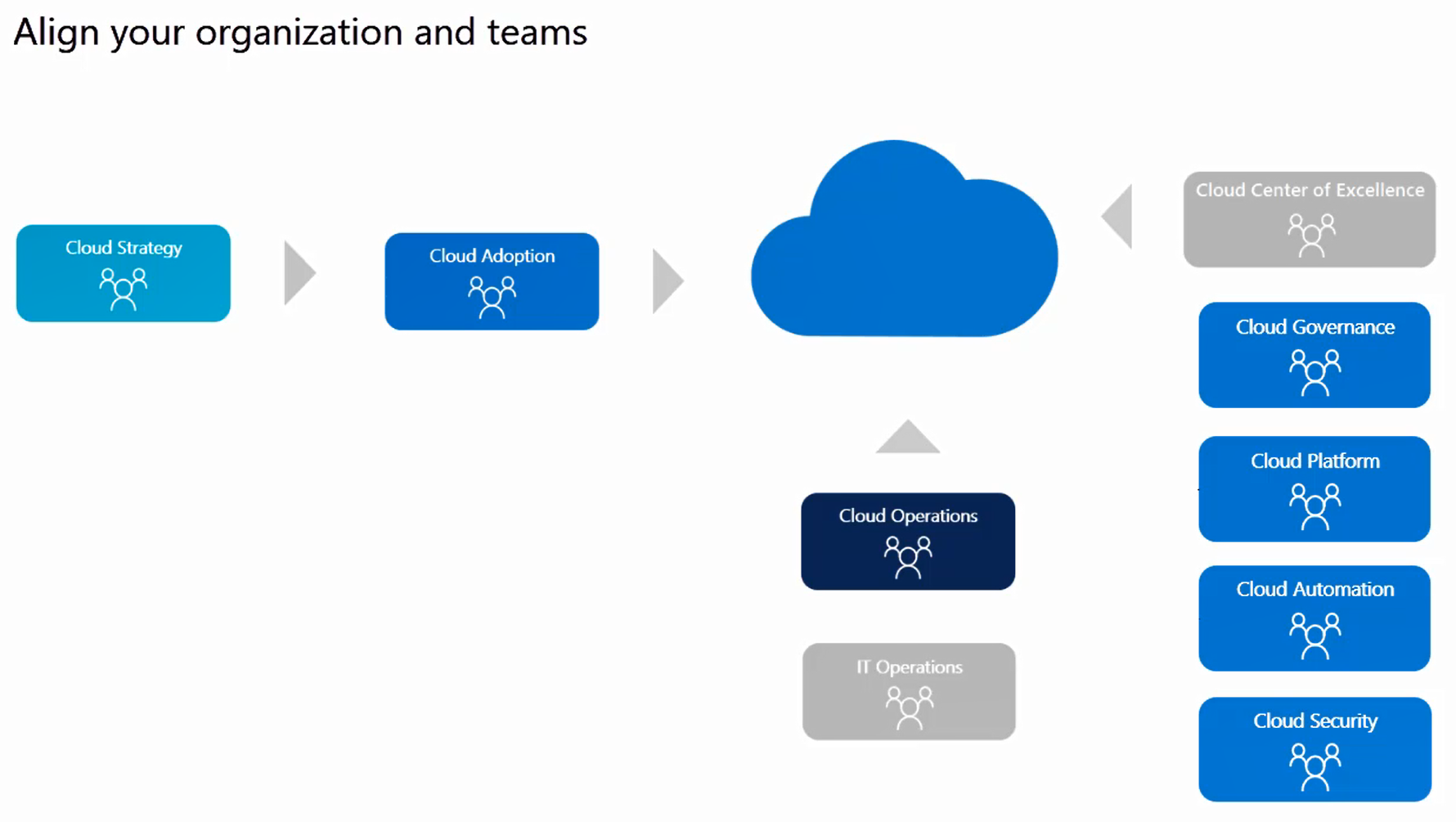
Mature team structures - Cloud Adoption Framework | Microsoft Docs

Organizations that simply lifted and shifted existing applications to the cloud are now taking advantage of maturing approaches like serverless computing and containerization to re-factor their applications for a cloud-native environment. While there is still some apprehension as organizations try to figure out the best way to benefit from these new approaches, companies will see a real payoff in application optimization on these new platforms in 2019. 

DevOps and security merge

What's the foundation of DevOps success? 500 professionals gave us their take - Work Life by Atlassian

Increasingly, security best practices will be codified into the application development tooling pipeline. In a DevSecOps scenario, security is baked into the agile development process via automated systems. On the operations side, companies will benefit from the improved monitoring and increased visibility provided by cloud service companies. In fact, it is difficult to argue today that a small or mid-size company has better security than cloud providers who have made security a top priority. And third-party cloud-based providers will use machine learning to offer security services like threat detection-as-a-service.

High-performance computing moves to the cloud

Nissan Moves to Oracle Cloud Infrastructure for High-Performance Computing

There have always been some specialized, high-performance applications that organizations were reluctant to run in the cloud. But cloud providers have built high-performance, GPU-based systems that are now allowing organizations to migrate niche, high-performance applications, thus making it easier to shutter their data centers.


Cloud computing was once associated with shadow IT or with apps that could be opportunistically migrated, but in 2019 we will see multi-cloud environments emerging as strategic platforms for driving innovation.

8 Reasons Why Cloud Hosting Helps Businesses Compete

5 Best Cloud Hosting Companies In 2021 - Productivity Land

Organisations are flocking to cloud computing in greater numbers than ever before and many are expanding their use of it. This comes as no surprise, given the many advantages that cloud migration brings. In this post, we’ll look at how the cloud hosting enables its users to outperform their competitors.

1. Cloud users save money

4 Ways Cloud Computing Can Save Money | TechnologyAdvice

One of the primary reasons that organisations migrate to the cloud is to cut costs. By using the hardware and services of your cloud provider you’ll no longer need to spend enormous sums on purchasing your own hardware. And that’s just the start of your savings. As you won’t need a data centre any longer, you can eliminate the expenses of running one. The money spent on maintenance, management, space, security, air-conditioning, power, insurance, etc. can all be put to better purposes.

2. Instant scalability

How Cloud Can Bring Instant Scalability to Your Business | TECHNIA

Being competitive means being able to adapt at speed to market demands. One of the drawbacks for businesses running their own data centre is that scaling up can be a slow and expensive process. If you are getting increased traffic to your website and you need additional resources to cope, scaling up can involve purchasing a new server, setting it up and getting it online. This can take quite some time to do. When you use the cloud hosting, your service provider’s vast data centres mean that you can have all the resources you need instantly.

Another issue faced by organisations scaling up in-house is that the additional resources they acquire aren’t fully utilised. For example, your company may get high traffic for certain periods but for the rest of the time, the new server sits idle. This doesn’t make it the wisest investment. Cloud services, however, are charged on a pay as you go basis. You only pay for what you use, so during quieter times, the costs are minimised.

3. Speedy application deployment

Speedy Framework

It’s not just scaling up that can be done quickly in the cloud hosting , the deployment of the critical applications needed to give you the edge in a competitive market can also be done instantaneously. This can be particularly advantageous for smaller enterprises as it gives them the same speed of deployment as larger competitors who have superior in-house capacities.

Cloud-based apps require far less time for successful execution, most of them being available immediately on signup, giving you instant access to game-changing technologies such as AI and machine learning.

4. 100% uptime

100% Server uptime – why aren't you achieving it?

Today’s organisations rely on critical applications to run their operations. The disruption caused by downtime is a major issue, as events such as server failures can cause operations to grind to a halt. Fixing the problem can be difficult and time-consuming and the resulting losses and reputational damage can be substantial.

In a cloud environment, server failure cannot cause downtime. As clients are hosting on virtual machines, when a physical server error occurs, the virtual machine is simply moved to another part of the server cluster. This hyper-converged infrastructure protects organisations against everything from hard disk issues to entire server failures, guaranteeing 100% uptime for critical applications.

5. Latest technologies, exceptional performance

Must-Know Event Technology Trends for 2020 | Social Tables

Another problem with in-house data centres is that the technology organisations purchase or lease soon become less competitive than the newer, high-performance products that are regularly released onto the market. Continually updating is both expensive and disruptive and this often puts companies at a disadvantage.

For cloud service providers, investment in these new technologies is a necessity in order for them to remain competitive and meet the growing expectations of their clients. The advantage for cloud users is that they will see their applications running on the latest, high-performance servers without the need to invest in the technology themselves. These are servers where performance is consistently optimised, using powerful processors, blisteringly fast SSD drives and load balancing to maximise speed and capacity utilisation.

6. Increased security

Increased security automation supports reliability, efficiency and compliance for grid operators | POWERGRID International

Every organisation has concerns about security, so it’s good to know that cloud providers are obliged to comply with stringent security regulations to safeguard customer data. Your provider will protect you against hacking, malware and internal data theft. Using state of the art firewalls that feature intrusion prevention and in-flow virus protection, threats will be detected and isolated long before they reach your server. Other security features include data encryption, remote backups and VPN.

7. Organisational transformation from working online

Careers - A&F Business Consultants

As a cloud user, your employees can access your system from anywhere with an internet connection and this has helped many organisations to reap the benefits of remote working. It enables companies to employ highly skilled members, no matter where they live, and bring about more flexible working hours. It also means they can save on the amount of office space needed as staff can collaborate in real-time using online conferencing and through the sharing of synchronised files.

Furthermore, as employees can access the company’s system using connected devices such as smartphones and laptops, many companies have dispensed with these costs by introducing a ‘bring your own device (BYOD)’ policy that uses authentication to maintain security.

8. Do more with technology

Do We Really Need It? On The Excess Of Technology

Perhaps the biggest benefit of the cloud is that it is a technology that enables you to do more with other technologies. With Big Data analysis, machine learning and AI all rapidly deployable, just imagine what potential cloud brings: personalised marketing and communications, improved customer services, discovering new development opportunities and much more. Cloud is also the ideal place for companies wanting to take advantage of the Internet of Things, augmented reality and the other ground-breaking innovations that are helping to reshape the way the world works.

Conclusion 

Cloud hosting enables even the smallest of companies to take advantage of the technologies that are transforming today’s marketplace and working environments. In doing so, it makes them far more competitive, while enabling them to spend less and do more. At the same time, these organisations can also benefit from the cloud’s high-performance and reliability, its scalability and flexibility and its highly secure environment.

error: Content is protected !!