Want to reap the full benefits of cloud computing? Reconsider your journey.

Rethink your cloud migration to get more benefits | Linktech Australia

There’s no denying that companies have realized many benefits from using public clouds – hyperscalability, faster deployment and, perhaps most importantly, flexible operating costs. Cloud has helped organizations gain access to modern applications and new technologies without many upfront costs, and it has transformed software development processes.

But when it comes to public cloud migration, many organizations are acting with greater discretion than it might at first appear. Enterprise IT spending on public cloud services is forecast to grow 18.4 percent in 2021 to total $304.9 billion, according to Gartner. This is an impressive number, but it’s just under 10 percent of the entire worldwide IT spending projected at $3.8 trillion over the same period. While cloud growth is striking, it pays to heed the context.

The data center still reigns

DATA CENTER Services - Bluebird Network

In 2021, spending on data center systems will become the second-largest area of growth in IT spending, just under enterprise software spending. And while much growth is attributed to hyperscalers, significant increase also comes from renewed enterprise data center expansion plans. Based on Anteelo Technology’s internal survey of its global enterprise customers, nearly all of them plan to operate in a hybrid cloud environment with nearly two-thirds of their technology footprint remaining on-premises over the next five years or longer. Uptime Institute’s 2020 Data Center Industry Survey also shows that a majority of workloads are operating in enterprise data centers.

Adopting cloud is a new way of life

How Cloud Computing Is Changing Management

Deciding what should move to the public cloud takes careful planning followed by solid engineering work. We are seeing that some enterprises, in rushing to the public cloud, don’t have an exit strategy for their current environments and data centers. We have all come across companies that started deploying multiple environments in the cloud but did not plan for changes in the way they develop, deploy and maintain applications and infrastructure. As a result, their on-premises costs stayed the same, while their monthly cloud bill kept rising.

Not everything should move to the public cloud. For example, many enterprises have been running key mission-critical business applications that require high transaction processing, high resiliency and high throughput without significant variation in demand due to seasonality. In these cases, protecting and supporting existing IT infrastructure investments and an on-premises data center or a mainframe modernization is more practical as moving such environments to the public cloud is complex and costly.

To achieve the full benefits, including cost benefits, let’s not forget the operational changes that using the public cloud requires — new testing paradigms, different development models, site reliability, security engineering and regulatory compliance — all of which require flexible teams and alternative ways of working and collaborating.

The key point: Enterprises are not moving everything to the public cloud because many critical applications are better suited for private data centers, while potentially availing themselves of private cloud capabilities.

How can Anteelo help?

6 ways cloud improves speed and performance - Work Life by Atlassian

With ample evidence that hybrid cloud is the best answer for large enterprise customers to successfully adopt a cloud strategy, employing Anteelo as your managed service provider, with our deep engineering, and infrastructure and application management experience, is a good bet. We hold a leading position in providing pure mainframe services globally and have the skills on hand to help customers with complex, enterprise-scale transformations.

Our purpose-built technology solutions, throughout the Enterprise Technology Stack, can reduce IT operating costs up to 30 percent. In running and maintaining mission-critical IT systems for our customers, we manage hundreds of data centers, hundreds of thousands of servers and have migrated nearly 200,000 workloads to the hybrid cloud, including businesses that use mainframe systems for their core, critical solutions. A hybrid cloud solution is the ideal, fit-for-purpose answer to meet many unique business demands.

The path to modernizing mission-critical applications - Cloud computing news

Customers want to migrate or modernize applications for many reasons. Croda International is a good example, with its phased approach for cloud migration. Whether moving to the public cloud, implementing a hybrid approach or enhancing non-cloud systems, Anteelo’s proven, integrated approach enables customers to achieve their goals in the quickest, most cost-effective way.

The lesson here: Be careful about drinking the public cloud-only Kool-Aid. With many cloud migrations falling short of their full, intended benefits, you need to assess the risks and rewards. More importantly, a qualified, experienced engineering team will not only help design the right plan, but will ensure that complications are quickly resolved — making for a smoother journey.

And most importantly, every enterprise should look at public cloud as part of its overall technology footprint, knowing that not everything is right for the cloud. Modernizing the technology in your environment should not be overlooked, since it may bring more timely results and better business outcomes, including improving your security posture.

Why Are These Big Name Brands Moving To The Cloud Technology?

Going to the Cloud: Stories from the Frontlines – Channel Futures

The economic turmoil caused by the pandemic has kickstarted the rapid adoption of cloud technology. Across the globe, companies in their housands are expanding the number of services they operate in the cloud in a bid to speed up digital transformation and put themselves in a better position to withstand the volatility of today’s marketplace. In this post, we’ll look at some major brands to discover why they have decided to migrate to the cloud over the last few months.

Coca-Cola

Coca-Cola - Wikipedia

Arguably the most recognisable brand in the world, Coca-Cola may have been making the same product for 128 years but its operations are strictly 21st century. Its manufacturing processes have long been massively automated and now, it has adopted a cloud-first policy with regard to IT.

As part of its digital transformation, the company has migrated to a hybrid cloud technology setup in a bid to reduce operational costs and increase IT resilience. This will enable it to deploy data analytics and artificial intelligence to provide it with insights that it can use to improve its services and operations.

Coca-Cola will use the migration to streamline its existing IT infrastructure and develop a company-wide platform for standardised business processes, technology and data. In order to integrate the public and private elements of its hybrid cloud, together with existing technology it plans to keep, it will deploy a single-dashboard, multi-cloud management system.

Finastra

Finastra - Wikipedia

UK-based fintech company, Finastra, is migrating to the cloud to accelerate not only its own digital transformation but those of its 8,000 global customers. The objective is to revolutionise the use of technology in the financial services sector by developing a platform that financial companies can use to speed up innovation and improve collaboration.

To achieve this, Finastra will migrate its entire customer base to the new cloud platform. From here, they will be able to create digital-first workplaces and provide their own clients with financial services and solutions, such as electronic notary services and electronic signatory, which are better suited to today’s digital world.

Major bank migrations: Deutsche Bank and HSBC

HSBC's reported job cuts signal that banks are struggling to find their postcrisis footing - MarketWatch

Two of the world’s major banks, Deutsche Bank and HSBC, have both announced plans for migrations over the last few weeks. A key element of its digital transformation, Deutsche Bank sees the cloud as being crucial for increasing revenue and minimising costs. It aims to make use of data science, artificial intelligence and machine learning to improve risk analysis and cash flow forecasting, as well as to develop digital communications that are easier for customers to interact with and which enhance the customer experience.

The German bank is also using the move to improve security, seeing it as a way to help it comply with data protection and privacy regulations and to ensure the integrity of customer data.

HSBC Holdings, the parent company of HSBC Bank, is adopting the cloud to benefit from its storage, compute, data analytics, AI, machine learning, database and container services, as well as for the cloud’s advanced security.

Its major goal is to provide more personalised and customer-centric banking services for its customers, for which it will develop customer-facing applications. It also intends to use the move to update its Global Wealth & Personal Banking division, develop new digital products and improve compliance.

Car manufacturer migrations: Daimler and Nissan

New Daimler boss could end Renault-Nissan partnership | Autocar

Two leading car manufacturers, Mercedes-Benz parent company, Daimler AG, and Nissan have also announced plans to adopt cloud technology. Daimler will migrate its after-sales portal to the public cloud to help it innovate and accelerate the development of new products and services for its global customer base, as well as to provide it with scalability. Like many other companies, it also sees cloud as being a secure platform and will use it to encrypt and store data to protect it from ransomware and hacking.

Nissan, meanwhile, is using the cloud primarily to help cut costs during the post-pandemic downturn. With poor sales throughout 2020, it views digital transformation as essential to remain agile and resilient.

The move will allow the car maker to store its vast quantities of data far less expensively than in-house and provide it with cost-effective, scalable processing resources. These it will use to undertake application-based, computational fluid dynamics and structural simulations which are needed to design its cars and test them for aerodynamics and structural issues. The cloud will also enable it to carry out performance and engineering simulations, helping it improve its vehicles’ fuel efficiency, reliability and safety.

UK public sector cloud initiative

IMImobile announces it has been included in the UK government G-Cloud initiative

The UK government has implemented a cloud-first policy in a bid to make the UK the world’s most digitally transformed nation. As part of the project, government departments, local authorities, the NHS, police and educational institutions will be encouraged to initiate cloud-based projects and take advantage of the speed, scalability and security of the public cloud.

To help bring this about, the government has established a digital marketplace on its website where public sector organisations can find approved service providers. Known as the G-Cloud (Government Cloud), these providers, which include eukhost, offer the advanced, secure and compliant cloud services, together with the technical expertise needed to make public sector digital transformation a reality.

Conclusion

As these use cases exemplify, cloud adoption and digital transformation are key to helping organisations cope with the impact of the current economic crisis and put them in a stronger position to innovate and prosper in the future. However, it is not just major brands that are making the move, businesses across the globe are moving quickly to take advantage of what cloud has to offer.

Cloud Necessary for Digital Transformation? – Here’s Why!

Why Cloud is an essential foundation of successful digital transformation?

Across the globe, organisations are acknowledging the need for digital transformation as new technologies, like data analytics, AI, ML and the IoT make traditional processes redundant and force unprogressive companies out of business. At the same time, shifting customer needs and behaviours demand companies undertake digital transformation in order to evolve. Without the adoption of cloud technology, however, much of this would not be possible. Here, we’ll explain why.

Organisations which have migrated to the cloud and undergone digital transformation experience both significant growth and improved efficiency. It has enabled them to develop new business models that keep them relevant and thriving in today’s dynamic and volatile marketplace. Thanks to cloud technology, they can innovate at pace, make informed, data-driven decisions and speed up the launch of products and services. What’s more, this is achieved more cost-effectively and efficiently.

1. Cost-effective IT solution

Cost Effective - WindSmart Systems

The cloud provides organisations with the opportunity to develop a much more cost-effective business model where the need to invest heavily in IT infrastructure is no longer required. By hosting their services and carrying out workloads on the infrastructure of their service provider, not only do they replace significant capital expenditure with less expensive service packages; they also forego many of the associated costs of operating a datacentre, including machine maintenance and server management.

2. Agility

The need for speed! | Geotab

The speed at which servers and software can be deployed in the cloud and the rapidity with which applications can be developed, tested and launched helps drive business growth. Additionally, this agility enables organisations to concentrate on more business-focused issues, such as security and compliance, product development or monitoring and analysis, instead of using up precious time and effort provisioning and maintaining IT resources. Together, these cloud attributes give companies a competitive advantage in the marketplace.

3. Scalability

Scalability Testing

Another key advantage that cloud brings to digital transformation is instant scalability. It provides businesses with a cost-effective, pay-per-use way of scaling up, on-demand, to ensure it always has the resources it needs to cope with spikes or to carry out large workloads. This means the expensive practice of purchasing additional servers to cater for busy periods but which are left redundant for much of the time is no longer necessary.

4. High availability

What is High Availability (HA) and Do I Need It? – Servers Australia

Today’s customers demand uninterrupted, 24/7 access to products and services and putting this in place is a key aim of many companies’ digital transformation. Similarly, some businesses rely on critical apps for processes, such as manufacturing, that also need to be operational at all times. What the cloud brings here is guaranteed high availability of 100% uptime. As cloud servers are virtual, instances can be moved between hardware and this means that downtime due to server failure becomes a thing of the past for cloud users. Indeed, even if an entire datacentre goes offline because of a natural disaster, service can be maintained by moving the instances to a datacentre in another geographical location.

5. Security and compliance

Meeting IT Security and Compliance Requirements with GoAnywhere MFT

Security and compliance are a high priority for all companies and are often a major challenge to those with in-house systems that lack both the budget and expertise to put effective measures into place.

The cloud can play a significant role in improving both security and compliance. Service providers employ highly skilled security experts and deploy advanced tools to protect their customer’s systems and data and to comply with their own stringent regulations. This ensures cloud users operate in highly secure environments, protected by next-gen firewalls with intrusion prevention systems and in-flow virus protection that detect and isolate threats before they reach a client’s server.

6. Built-in technology upgrades

6 Ways to Upgrade Your Business Technology | Startup Grind

Keeping up with the Joneses as far as technology is concerned is always a challenge for organisations, not simply for the cost of regularly purchasing newer hardware, but also the effort of migrating applications and data during the process.

By adopting cloud technology, companies no longer have this issue. Service providers regularly update their hardware in order to remain competitive themselves and this ensures that their customers benefit from always having the latest technology, such as Xeon processors and SSD hard drives, at their disposal. What’s more, virtualisation means any migration to new hardware takes place unnoticed.

7. Collaboration and remote working

25 Top Collaboration Tools for Remote Team Management - Blog - Shift

Digital transformation involves the replacing of outdated working practices and legacy systems with those that support innovation and agility. The cloud is the ideal environment for this, providing both the ability for remote working and improved collaboration. Many cloud-based platforms have been developed with collaboration in mind, offering video conferencing, file sharing, syncing and project management tools for teams to use in and out of the office. Files are instantly updated and are available anywhere with a connection; privileges and authentication can be determined for every employee, and projects, people and progress can be monitored and tracked.

Conclusion

Digital transformation is fast becoming a necessity for organisations, providing the means to help them be more agile, innovative, cost-effective and competitive while being better able to meet the needs of their customers. Cloud technology is instrumental in bringing this about as it offers the ideal environment in which to deploy the technologies and undertake the workloads on which digital transformation depends.

How to Turn Challenges into Opportunities with Operations Planning and Integrated Sales (OP&IS)

Five Ways Sales And Operations Planning Enables Success And Drives Business Integration

Supply chain and operations planning (S&OP) is a critical supply chain planning process through which various teams agree on a fundamental governing plan for the next weeks and months, which then forms the basis of all the detailed planning and execution.

It is a cross-functional responsibility in which various departments, such as sales, marketing, logistics, manufacturing, finance, and operations, contribute to the critical decision-making process. Often, there are conflicts between the preferences and priorities of different business units.

So, how to meet the different expectations of supply and demand?

Through a clearly defined S&OP process, you can improve overall service levels while adjusting your company’s goals and plans. But what’s stopping you from sketching out your S&OP process? Is there no comprehensive and systematic involvement between your departments?

Integrated Sales and Operations Planning: How to Convert Challenges into Opportunities with IS&OP?

S&OP Sales Operations Planning During and Post Pandemic Like Covid

When marketing a new product, you can make assumptions about revenue or profit. One of its prerequisites is to provide the right products to the right customers at the right time, which can be achieved through correct predictions.

But what if it is incorrect?

Costs will soar, sales and profits will decrease. It’s that simple.

Over-forecasting will lead to excess inventory and lower profits. Under-forecasting will lead to lost sales and customer dissatisfaction.

How to holistically integrate all the supply chain activities (supply planning, demand planning & forecasting, operations, logistics) while addressing suppliers, markets, and investors’ complex ecosystem?

Road to Success – Integrated Sales and Operations Planning (IS&OP)

“IS&OP is a platform to drive consensus between demand & supply and create & monitor the execution plans.”

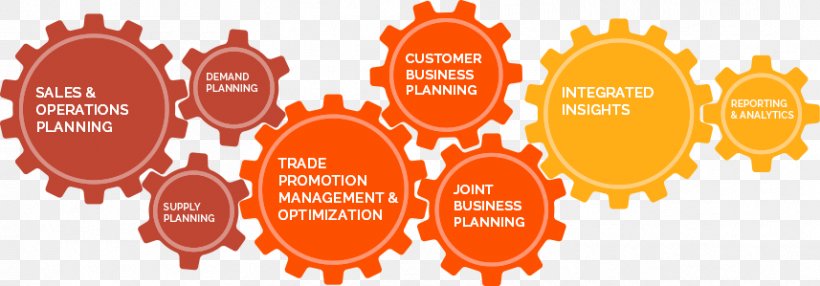
Integrated Business Planning Sales And Operations Planning Trade Promotion Management, PNG, 857x299px, Integrated Business Planning, Brand,

Uncertainty in demand, supply, or both leads to insufficient service levels, increased inventory & logistics costs, and dissatisfaction among stakeholders and customers. But, measurable management of this uncertainty through correct planning decisions can bring significant benefits.

Post-COVID, the market is volatile, and companies worldwide suffer disruptions in maintaining the demand-supply equilibrium. The macro-environment challenges and evolving trends (raw material scarcity, customer behavior changes, etc.) have increased the need for supply chain’s agility. In the next five years, the supply chain analytics market will grow by 17%. Therefore, as a demand planner, it is time to set up a broader framework and adopt advanced solutions to solve the current two key challenges in the supply chain, i.e., reduce costs and improve service levels.

If you place your bets correctly by implementing a reliable S&OP solution, you can:

  1. Speed up the operations & logistics process
  2. Address the issues related to downstream inventory & production planning, sales loss, stock-outs, inaccurate resourcing, low service levels, higher logistics cost, and more.

The key to a productive sales and operations planning process is understanding all decisions’ impact in real-time.

With advanced supply chain analytics solutions, you can reach a consensus between various demand plans and demand & supply factors. Integrated Sales and Operations Planning (IS&OP) does precisely that. Check out this IS&OP video where Shashikiran discusses how IS&OP balances supply, demand, finance, and procurement while ensuring that the plan is always consistent.

After years of observing the S&OP process in enclosed quarters, we have created an Integrated Sales and Operations Planning solution to bridge the gaps that many supply-chain leaders face.

This solution works in three different modules.

1.) Demand Consensus

Demand planning in VUCA world – is consensus based approach correct?

“Demand consensus is a multi-stage process to arrive at one planning number that every stakeholder agrees on.”

Often demand planners spend half of their time (or more) accessing data, communicating with other teams, and tallying each other’s planning base. With value created through S&OP, you can integrate future baseline demand with sales & marketing activities and achieve the desired top-line & bottom-line objectives, to make up for the lost time.

Forecast that relied on hunch or legacy systems can have a profound negative impact on demand realization and supply chain costs. Therefore, it makes sense to start the demand planning journey by establishing base forecasting capabilities to build confidence in the quality of data-based forecasts and demand & supply plans (based on that forecast). There are two ways to do this. One, you can hire a statistician to make a good baseline forecast. The other is to replace the individual with a solution that comes with an embedded demand consensus module.

Let’s see the difference between the two.

1.) Manual consensus (based on statistician’s created baseline forecasts)

  1. Statistician will prepare a mathematical model that approximately mirrors the trend by testing various baselines and drilling down to one that closely represents the reality
  2. Next, you must tune the model for incorporating seasonality – the time of the month effect/ day of the week effect, etc.
  3. Then, use the available historical data to test the model and improve it until it provides a reliable result
  4. Add data and use the model to predict future trends
  5. Finally, share it with the concerned stakeholders (sales, marketing, logistics, finance, and operations).

However, there is one caveat in this model.

When all the function units gather to discuss forecasts, share plans, report and consider changes, and agree on the final demand plan, a lack of collaboration can be damaging. Besides, organizations with multiple SKUs, distribution centres, etc. may require dozens of such baseline.

Only a smart collaboration process can address these concerns in a scalable way, which has been explained in the second method.

2.) Automated demand consensus module (built in the IS&OP solution)

Here is how the demand consensus module facilitates the business units to arrive at a consensus and collaboration:

  1. Using the module, you can combine data from numerous supply chain activities and arrive at a forecast that every stakeholder can accept. The module will provide you access to various top-down (demographics & target) and bottom-up (operating expense minus depreciation, capital expenditure) forecasts, considering the merchandising, sales & marketing, and operations teams’ concerns. You can then analyze the deviations between the various forecasts and then smooth & integrate them. And in case you need a baseline for new products, you can use comparable data from other products.
  2. You can introduce pricing interventions and promotions strategies to arrive at a demand plan. The key is to make all stakeholders involved in the S&OP process reach a consensus on demand.

2.) Demand-Supply Consensus

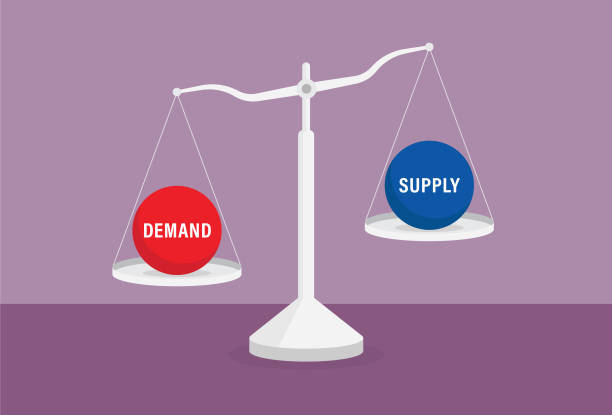
352 Supply And Demand Illustrations & Clip Art - iStock

“One of the supply chain’s main pain points –misalignment between the demand-side dynamics and supply-side dynamics.”

This module can divide the demand plan proposed in the first module into various supply-side requirements. The requirements can come from multiple resources, e.g., personnel and operators, materials & inventory, warehouses & other operating infrastructure, or transportation assets such as trucks. Study what kind of supply is needed to meet the demand. Then analyze gaps and arrive at an alignment.

The alignment takes one of the following three steps.

  1. Smoothening the demand to meet the supply
  2. Augmenting/pruning the supply (if different from the demand)
  3. Or, in a few cases, pruning the demand to meet the constraints

The idea is to drive consensus. Once it happens, you can freeze the plan and proceed towards its execution.

3.) Execution Monitoring

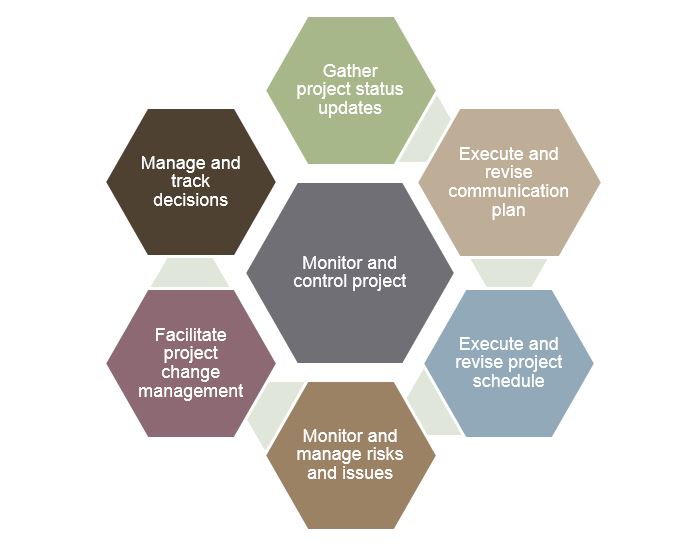
Executing, Monitoring, and Controlling - AITS

“Reliance on the supply side leads to prosperity on the demand side.”

You can make precise predictions based on the first module (demand consensus) and create a scalable infrastructure using the second module (demand-supply consensus). With the execution monitoring module, you can add and execute functions using automated processes.

Creating a single source of truth

If you or your stakeholders are currently not able to take advantage of supply and demand decisions, or cannot rely on the baseline, run this module to incorporate advanced analytics to catch on the supply and demand scenarios. The module will help build trust and improve collaboration between stakeholders. This way, you will be able to align your organization in one direction.

If executed correctly, demand will reflect sales potential and lead to optimal inventory levels and logistics support.

There are two equally critical functions in this module.

  • You can monitor and compare the deviation between real-time demand and planned demand. If the difference is significant, you can shape the demand back to the plan or take pre-emptive measures on its execution to control the costs.
  • You can also determine whether the execution has deviated from the plan because of the nonfulfillment of standard operating procedures or some unforeseen factors.

The idea here is to generate early alerts to bring execution back to the plan. Through the three modules elaborated above, you can address your supply chain and operation domain’s long-standing pain points.

The IS&OP solution that Anteelo offers can help you boost your customers’ experience, deliver the highest quality products, build advanced forecasting capabilities, and mitigate the concerns of all your business units by fine-tuning each link in the supply chain.

Rethinking the banking value chain is a call to action.

Publicsectorbankappointments: Reshuffle at Public Sector Banks; 14 GM and CGM Becomes Executive Directors, BFSI News, ET BFSI

Financial services is shifting to platforms for business functions and processes, and that’s a good thing. Moving from applications to Software as a Service (SaaS) and then to Platform as a Service (PaaS) can create new value chains. It can also dramatically reduce the number of error-prone manual processes and foster industry collaboration for superior efficiencies.

Leverage open APIs and core banking systems

Adopting Open Banking APIs Improves Customer Experience | Nordic APIs |

But financial services organizations can move even further — and to stay competitive, they’ll need to. Open APIs can help them combine bank data with third-party data and services to create innovative capabilities, essentially “hiring” third parties to provide these services. Banks can also provide best-of-breed capabilities as services to others.

As part of this shift, core financial systems and capabilities can become “consumable” via API-driven interfaces, creating specific outcomes. These core systems, such as payments and mobile wallets, essentially become services that both a bank and its third-party providers can consume.

Conversely, services from third-party providers can be integrated into banks’ own platforms. This may sound daring, but some tech giants — Facebook and Amazon among them — already do this, building new capabilities with APIs that can integrate and interact with capabilities provided by third-party providers. Banks can do it, too.

Partner with providers

Become a CookiePro Managed Service Provider (MSP) Partner

Providers can also become partners. Some banks have invested in FinTechs, adopting an attitude of “If you can’t beat them, join them.” This should facilitate the development of important new services, including “know your customer” (KYC) and new accounts. A single bank can essentially stitch together a passel of services, then present them to customers under a single bank brand.

KYC: 3 steps to effective Know Your Customer compliance

This reassessment of the value chain can free banking and capital markets organizations from the need to provide all services end-to-end. Instead, they can add open APIs that allow trusted third parties to provide various microservices.

The right platform can help banks grow through mergers and acquisitions, making it far easier to integrate disparate systems. This same feature can make it easier for banks to integrate the systems of partners too.

At the end of the digital transformation journey, financial services providers will enjoy a new position in their reconstituted ecosystem. They’ll fully understand their position in that value chain, their competitive advantage and areas of specialization, and their need to partner with third parties.

6 Tips for Online Stores to Survive Christmas 2020

2020 Small Business Holiday Survival Guide | Workest

Christmas 2020 is going to be unlike anything anyone has ever experienced and as an online retailer, you are going to need to start your preparations now. The forecasts are mixed. The potential for further lockdown restrictions and increasing unemployment may impact both consumer spending and purchasing habits. More optimistically, for eCommerce, there is going to be a significant shift in Christmas shopping from bricks and mortar to online stores. In this post, we’ll explain six things you can do to help your online store survive Christmas 2020.

1. Get the right stock for Christmas

Christmas Shopping? Here's 3 Stocks to Put Under the Tree | The Motley Fool

Stock may be a complicated issue for eCommerce stores this Christmas. Rises in unemployment and the fear of becoming unemployed will certainly affect consumer spending and this may impact the quantities of stock you need to order. Additionally, social restrictions put in place to prevent the risk of the virus spreading are also likely to influence what people spend their money on. Who’s going to want Christmas party outfits if there are no parties? Who’s going to buy a pack of 12 crackers when, this year, there’ll only be four people sat around the table? The pandemic is going to change what consumers buy and businesses need information on those trends to ensure stock is purchased wisely.

Another concern is the supply chain. Even if you have identified the stock you need for the Christmas season, you will need to ensure that you can procure it and that shipping times can be met. Volatility in the supply chain is likely given increasing demand and the potential for disruption due to the virus. Early purchasing might be a necessity.

2. Spread the cost of Christmas

How to Spread the Cost of Christmas Shopping Throughout the Year

Another reason to acquire Christmas stock earlier than usual is that, with consumer finances stretched, people might start shopping earlier to spread the cost. Rather than a Christmas rush, 2020 might be more of a slow burn.

One way to maximise sales and help customers out would be to offer payment by instalments. The easiest way to do this is to open a PayPal business account through which you can offer flexible financing options that make purchasing easier for your customer. Alternatively, you could set up a savings scheme where customers pay into your business each month in order to spend what’s in credit nearer the time.

3. Get your shipping sorted

Parcel Sorting Stock Illustrations – 338 Parcel Sorting Stock Illustrations, Vectors & Clipart - Dreamstime

eCommerce sales have already grown significantly during the pandemic and Christmas is likely to see a further surge as shoppers stay away from bricks and mortar stores. This could affect the capacity of the carriers you use to deliver the products on time.

The challenge for online stores is to ensure that you get the product to the customer when and where they want it. While consumers have been relatively understanding about longer delivery times during the pandemic, six months down the line, they now expect retailers and carriers will be able to deliver as advertised and are likely to be much less happy when products arrive late – especially when shopping for Christmas.

4. Cut costs

Need To Cut Costs? Deliver A Better Customer Experience | Watermark Consulting

The global downturn means there will be less money for people to spend this Christmas. While social distancing measures means bricks and mortar stores are likely to face the brunt of the decline, it may still affect eCommerce: people may buy more things online but spend less overall.

To keep the business viable, eCommerce companies may have to look at ways to cut costs, especially if lack of demand causes a discounting war and drives margins down. Those in the best position to achieve this are the companies which make use of the cloud. While the cloud itself is a substantially more cost-effective solution to an in-house datacentre, its ability to deploy data gives companies the insights needed to cut costs effectively over their entire operations. At the same time, the cloud enables businesses to make valuable use of automation, such as with sales assisting chatbots that reduce human involvement.

5. Widen the market

Market Share - Overview, Impact, How To Increase

Maximising sales is going to be critical this winter and this means making sure your stock is highly visible. This starts with strengthening your digital presence: promoting Christmas stock earlier on your website, advertising online and increasing your seasonal-themed social media activity. For retailers with online and physical stores, benefits can be made from offering omnichannel shopping, click and collect and moving products from stores under local lockdown restrictions to those which are not.

Additionally, there is always the potential to sell your items on third-party websites, like Amazon or eBay, which have a wider reach and high levels of consumer trust when it comes to availability, delivery and consumer purchasing protection.

6. Don’t let your website go down

What to Do When Your Website Goes Down | TrustWorkz

The likely surge in demand for online shopping means that companies must ensure that their hosting package is capable of handling increased traffic. Too many visitors at the same time can impact the performance of your website if you don’t have enough server resources, i.e. storage, RAM, CPU and bandwidth, to handle them. Unexpected surges can cause your site to perform slowly or even crash. If this happens, visitors will abandon the site, reducing the number of sales, and your reputation for online reliability will be damaged.

Conclusion

Christmas 2020 presents eCommerce businesses with opportunities and threats. The challenge is to put your online store in the best position to avoid the threats and maximise the opportunities. Hopefully, this post has shown you the different things you will need to consider and the importance of starting preparations early.

The way airlines handle “bumpy” situations can make or break the passenger experience.

How I Cope With My Fear of Flying: 3 Tips to Help You Too!

Today’s airline passengers reap the benefits from reservation technology and highly productive and easy-to-use mobile apps that in many cases engage with multiple websites seamlessly and transparently. All this is made possible because airlines have done a very good job over the past five years modernizing their customer interfaces.

While passengers certainly appreciate these great new tech tools, the quality of the latest app or cool biometric feature at the airport doesn’t matter much if a loyal client gets delayed overnight and misses an important meeting the next morning, or if a grandmother can’t make her grandson’s wedding on time.

Too often airlines forget there are real people traveling on these flights, and whether it’s for corporate or personal travel, it’s the flight experience as a whole that matters to an airline customer. Things can and will go wrong during a journey.  But good airlines become great by how they deal with the “bumps” that occur as they strive to get passengers to their destinations with the least possible disruption.

This was less complicated in the past when airlines controlled all aspects of the passenger journey. But changes in the industry brought more vendors and more complex – often unconnected – IT systems. In this environment, ensuring a seamless end-to-end customer experience has become a more challenging endeavor. That said, there are three steps that airlines can take to improve the passenger experience:

Seamless Passenger Experience: Aviation | NEC

  1. Build a rock-stable foundation. This means getting the basics right: clean aircraft, courteous flight attendants and efficient baggage handling. Nobody wants to hear that her suitcase was lost or to deal with an impatient flight attendant. The foundational elements are roughly 80 percent of the airline’s equation, so it’s important they work hard to get them right – and create systems, such as easy-to-use text notifications, to make the accommodation process run smoothly.
  2. When something does go wrong, personalize the recovery and communicate! A single mechanical failure or server outage can result in a cascading effect that can ground flights and strand passengers for days, as the airline struggles to get back on track. But when airlines deal with the operational aspects of the recovery, they must also remember that real people are impacted by the disruption – people who need information and an assurance that the airlines will meet their individual needs while their flight is grounded. Airlines need to communicate, but after the bad news has been delivered, they can also offer tangible compensation, such as refunds, expanded benefits in their loyalty or frequent flier programs, or complimentary hotel accommodations until flights resume. Another option: Give passengers greater personal control over their own recovery plan. Lufthansa, for example, has been developing self-service apps that let passengers respond personally to service disruptions in response to alerts from the airline.
  3. Deliver strategic add-on applications. Only when airlines get the basics right and develop a strategy for dealing with problems as they arise can they create an environment where the new technology applications start to matter. Passengers are already accustomed to logging on to airlines’ websites to compare prices, receiving their boarding passes on their mobile phones and using kiosks to print out boarding passes when they arrive at the airport. With biometrics and facial recognition, there’s much more to come. Airlines are just scratching the surface on how technology can improve the customer experience.

With many more options than they had in the past, customers will give their business to the airlines that put them first when things go wrong. Speaking from personal experience, I still won’t fly with a particular airline after their poor handling of a mechanical failure that kept me away from home on the night my dog passed away. I’d like to think that this experience is both isolated and preventable.

So, through a focus on the basics and a clear technology strategy, airlines can minimize the damage any one incident may cause to ensure a positive end-to-end customer experience and retain customer loyalty. Customers and business partners like me are depending on it.

Ways for airlines to benefit from combining digital and live agents.

Fuel Efficiency Key to Airline Success | Business Aviation News: Aviation International News

Many of us have had an experience similar to this: You call an airline to make a reservation and get a digital agent on the phone. The call starts off fine, but when you ask if your friend can sit next to you on the flight, the digital agent stalls and sends you to a live agent. You then wait several minutes before you reach a live agent and, when you finally do, she has no call history and you have to start from scratch, explaining who you are and making the reservation a second time.

Eventually, your request gets resolved and you manage to book your flight. But the entire process takes more time than you would have preferred, and you’re left irritated and feeling like you’ll switch airlines the next time.

Situations like these occur because many airlines have separate systems for the digital agent and the live agent, often from different providers whose contracts restrict the integration of both systems. When the two systems don’t communicate with one another, the digital agent hands the call off to a live agent, and the information doesn’t transfer. Airlines are now working to integrate both systems, and there are at least five benefits to doing so:

1. Saves the customer time. Customers don’t have to start from scratch and can complete their reservation request in much less time.

Technology That Saves Time, the Most Important Resource of All | Creative Virtual

2. More efficient use of the agent’s time. When the customer saves time, so does the agent, which gives her more time to upsell the customer on other services or deals the airline has to offer. The live agent can transition to becoming more of a salesperson and problem solver than a mere order taker.

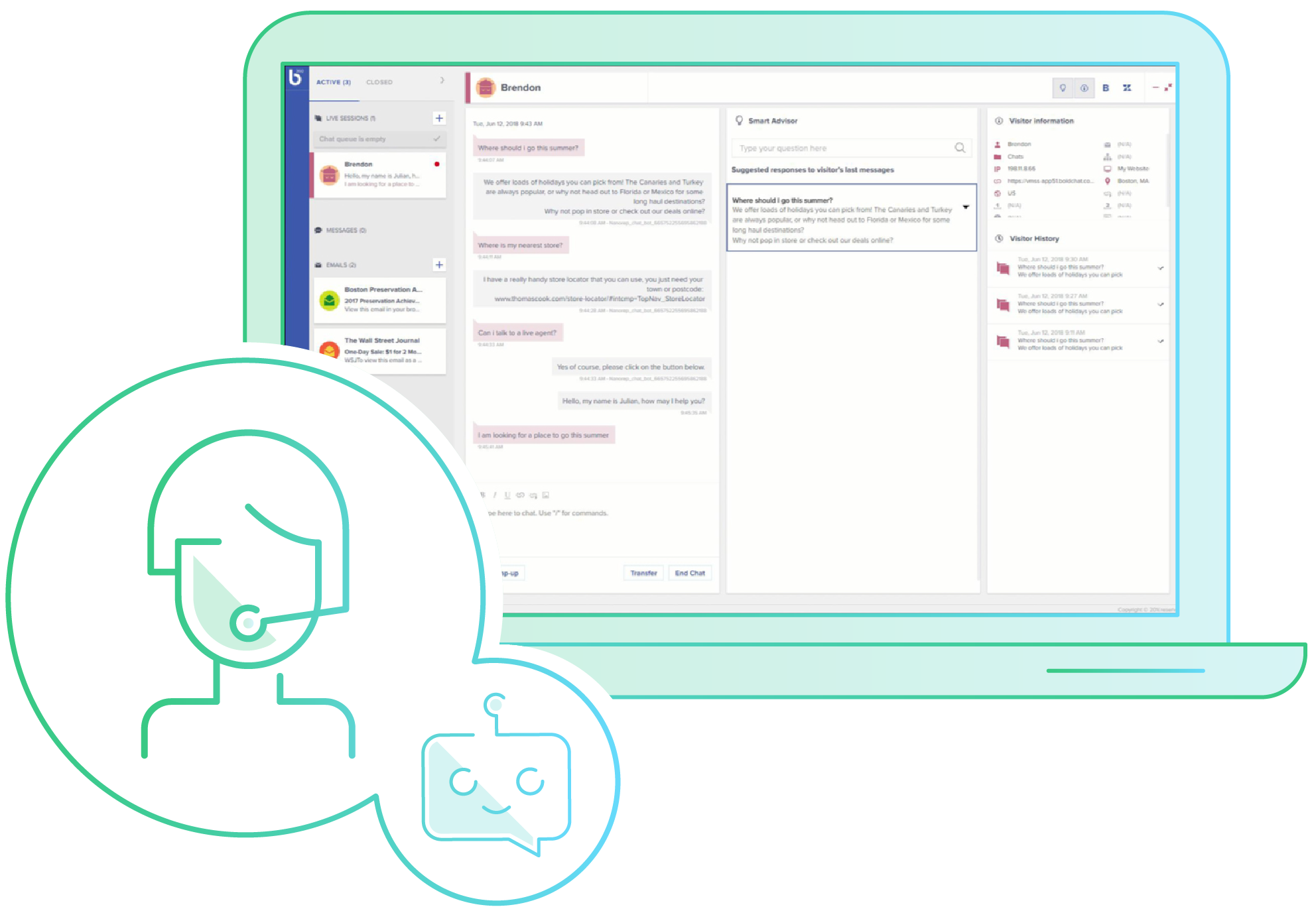
Agent Productivity | Bold360

3. More efficient back-end processing. In the past, any time a change was made the airline would have to input the change into two separate systems. Now, the change gets entered only once and both systems get the update.

How to Improve Process Efficiency | Lucidchart Blog

4. Improved brand loyalty. The customer will remember his issue was resolved quickly and the live agent had a complete call history and knew and understood the customer’s preferences.

8 Ways to Build Brand Loyalty + Examples

5. Personalized service. Artificial intelligence and machine learning will enable the system to learn more about the customer over time. For example, it might know immediately the customer’s seat preferences based on her flight time – towards the front of the plane on a connecting flight, at the back on the red-eye, or in the aisle during a daytime flight –so that when the customer books a future flight with the digital agent, the correct seat will be assigned automatically.

Personalized Customer Service: How to Deliver and Drive Loyalty

As the system matures, fewer calls would need to be routed to a live agent, so that only the most exceptional requests, or those involving sensitive information (such as a declined credit card), would need to be transferred.

A centralized platform is the most effective tool for integrating digital agents and live agents. It can connect disparate applications, services, and processes under a uniform customer experience, helping airlines to ensure data compliance, easily transform data, and more efficiently route information.

That said, integrating live and digital agents is a challenge, with legacy systems and processes often hindering progress. But the overall goals of an integrated system –improved customer service, brand loyalty and the ability of live agents to upsell services that customers really want – are well worth the effort.

When airlines succeed in doing this, they can win customers for life.

6 stages to adopting a cloud-based digital operating model

An argument against cloud-based applications | TechCrunch

Moving to the cloud was supposed to be simple, right? So why are many IT managers — even those experienced in IT change — finding cloud adoption far more difficult than they expected?

One big reason is that moving to the cloud represents a new and different kind of change. The cloud involves not only IT, but also makes possible business models that were unimaginable or impractical even a few short years ago.

Complicating matters further, many organizations have realized that some enterprise applications may never move to the cloud. Instead, those applications will do best remaining on premises. Even among those that are good candidates for the cloud, there are interesting decisions to be made about what level of transformation is appropriate to potentially drive greater business value out of that application in the cloud, as well as decisions about how to integrate cloud and traditional workloads. In short, it’s complicated.

To help, here are six best practices for moving to hybrid IT

  • Make the cloud a business decision. Digital transformation at its heart provides a new strategy not just for IT, but also for the business. It empowers business leaders to transform processes, improve the customer experience, and more — all with new business models. Getting the technology right is of course vital. But it must be done in alignment with and in the context of serving the entire business. Businesses and IT must align around a product management approach.

4 Reasons Why The Cloud Is A Smart Business Decision

  • Take DevOps to the next level. Moving to a hybrid cloud environment means looking differently across the entire operating model. Smart organizations will use DevOps to explore and use the marketplace of cloud services and change their IT operating model to do so. However, this isn’t an environment where you’re just using a new technology to simply provide the same services with the same controls. In fact, the opportunities to do “new things in new ways” are tremendous but the threat landscape is different, and the compliance opportunities are different, too.

15 Metrics for DevOps Success – Stackify

  • Before moving workloads, collect hard data. Some applications perform best in a public cloud, some in a private cloud, and some by remaining on-premises. How to make this determination? Look for true business value at the outcome level. There are tools available that can analyze performance-utilization data to map workloads to their best possible configuration in the public cloud. Other useful tools can assess performance data for specific workloads.

5 Steps for Moving Big Data Workloads to the Cloud - Big Data Analytics News

  • Get value from your data. Established enterprises have a big advantage over startups: They possess years’ worth of valuable data. However, enabling and extending the value of that data may not be easy, especially if it resides on legacy systems. Once again, a hybrid approach to data management can help, as some legacy systems can be moved to the cloud, while others will need to remain on-prem (though still integrated with cloud environments). Organizations will need to tackle the infrastructure, the applications and the data together. If this is done in a modular “Fix Today and Enable Tomorrow” type approach it can deliver the additional value to the enterprise in small, bite-sized chunks.

How to Measure the Value of Data - 7 Ways to Inform Your Data Strategy | Towards Data Science

  • Create a cloud model that scales. When moving to the hybrid cloud, it can help to think like a restaurant owner. First, have “chefs” come up with recipes (architectural patterns). Then have “cooks” who can repeat those patterns many times at scale to move the workload. Also, start with quick, sure “hits.” That way, you’ll gain confidence and experience, while also amassing a persuasive collection of early successes. Note: These tasks may be outside the scope of most organizations (skills, know-how and scale) and may therefore require the help of a partner model.

What is cloud computing? Everything you need to know now | InfoWorld

  • Regularly update your roadmap. Because every organization is unique, its roadmap to hybrid IT will need to be unique, too. But that roadmap must be able to change and adapt as the organization makes progress and learns new lessons, especially as the marketplace of cloud services is changing so rapidly. Today’s perfect plan won’t be perfect tomorrow when new services have enabled or automated a lot of what you were planning to do.

Should You Share Your Product Roadmap Publicly?

Don’t go it alone

Throughout the process, remember that the days of one-technology solutions are long gone. These are now replaced by a myriad of technology solutions to consider. So you need a partner to help you navigate both the technology and business landscapes, one that isn’t locked into any particular technology stack.

Much of the change will be cultural, as your organization adopts new ways of working, innovating and developing. A good partner can provide you with the baseline for building a hybrid-IT plan that’s effective, innovative and secure. They can also scale, helping you launch, adopt and run the transformation.

How to Improve Cloud Cost Management in 7 Easy Steps

Save on cloud spending: Five essential AWS cost management strategies that work - Site24x7 Blog

The economic turmoil following in the wake of the global pandemic means most companies will be looking to cut costs. While migration to the cloud has long been seen as a way for businesses to reduce capital expenditure and overheads, with careful management, it is also possible to minimise cloud expenditure too. Here, we’ll look at seven ways that cloud cost management can save you money.

1. Opt for pay as you go cloud

Pay-As-You-Go Added To VAD Cloud Marketplaces | Oracle PartnerNetwork Blog

Cloud services are available in two pricing models: fixed and scalable. Companies which have a fixed price package will have bought a stated amount of storage, compute and networking resources and committed to a minimum period over which they will pay for them. Like purchasing a dedicated server, this often leaves companies paying for resources that are seldom or never used and means money not being spent cost-effectively.

Scalable models charge for resources on a pay as you go basis, enabling companies to scale up instantly when there are spikes and scale back again when the need is no longer there. This way, companies only pay for the resources they use.


2. Assign a gatekeeper

If individuals or departments within a company have the ability to increase the cloud resources they want to utilise, there is the potential for costs to rise unexpectedly.

Creating the post of a cloud manager, someone who acts as a gatekeeper and who ensures that additional provisioning is only allowed if it follows procedure and meets company criteria, can significantly keep costs under control.

This becomes more complicated if departments can purchase cloud services independent from the IT department. To enable this to work cost-effectively, the cloud manager should have oversight of the ordering and approval process as well as monitoring individual departments’ cloud spend.

3. Monitor, analyse and automate

Process Monitor | Process Automation | Interfacing

Even companies which utilise pay as you go cloud services can save money through monitoring, analysis and automation. Using a combination of application performance and user-experience monitoring, you can know if the application is performing effectively in the cloud environment and if this is providing end-users with a quality experience.

Together, these two forms of monitoring will clearly indicate resource usage, including during peaks, and give a better idea of the cost-effectiveness of running the applications. With insights from cost optimisation tools, companies can quickly find areas to cut spending.

What’s more, with continuous monitoring taking place, the process of both maintaining performance and saving money can be automated. Automation tools can use the data gathered during monitoring to scale up or down when required. This way, the company can always have the resources it needs and keep a tight rein on expenses.

4. Improve storage management

Do You Really Need Storage Management Software? -- Virtualization Review

While companies can easily scale up and down their processing resources, the amount of data collected generally just keeps on growing, leading to ever-larger storage costs. A close inspection of that data often reveals that much of it is duplicated, frequently the result of departments and even individuals keeping siloed versions of files and datasets for their own purposes.

Changing the way the company uses and stores its data can enable these unnecessary duplications to be deleted and thus make a significant dent in storage costs.

5. Remove overprovisioning

When companies migrate applications from dedicated servers to the cloud, they often provision the same resources as were available on the dedicated server, even if these were seldom utilised. Through monitoring, it becomes much easier to understand what resources the application actually needs and then identify and remove incidents of overprovisioning. Not only can this cut costs; the monitoring can also help improve memory and CPU performance.

6. Software efficiency

Maximise efficiency with service management software | Service Geeni

Where software makes more demands on the server, the amount of resources increases and so can the cost of your cloud service. This can be altered by making your software work more efficiently. On websites, for example, minimising scripts, compression, deleting unnecessary plugins – all the things that can speed up loading times, can also reduce network traffic and decrease costs.

7. Check your software licences

Why You Need to Have Your Software Licenses in Check - IT Support Guys

Software licences can be expensive and, in many cases, your cloud vendor can provide them much cheaper than purchasing your own. That said, if you already have a licence for using an application in your datacentre, there are some software developers which will let you continue to use this in the cloud. While this is not always the case, it is worth checking so that you don’t end up paying twice.

Conclusion

While the cloud has proven itself to be a cost-effective IT solution, there are ways to make sure it can be run even more efficiently. Hopefully, the seven points raised here can help your company to cut cloud costs during the current period of economic uncertainty.

error: Content is protected !!