How CI/CD saves up to 20% of mobile app development time?

How CI/CD saves up to 20% of mobile app development time?

Continuous Integration and Continuous Delivery has grown to become a software development practice which brings down not just the effort but also the app development cost that goes behind.

Through the CI/CD for mobile apps process, businesses can avail a plethora of benefits, straight from the one time setup: Automated builds, improved communication, automated shipping, and zero server maintenance.

In a sans CI/CD world, some mobile app development companies release their apps manually, by handing them off from one team to the next.

There is almost always a delay at every stage which leads to irritated teams and unhappy clients. And the app ultimately gets live via a tedious and error-full process which delays the entire revenue generation possibilities.

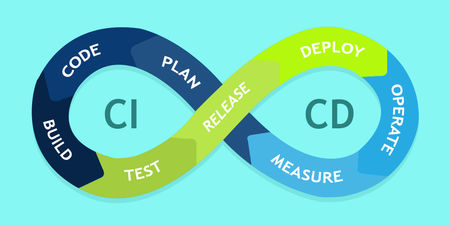
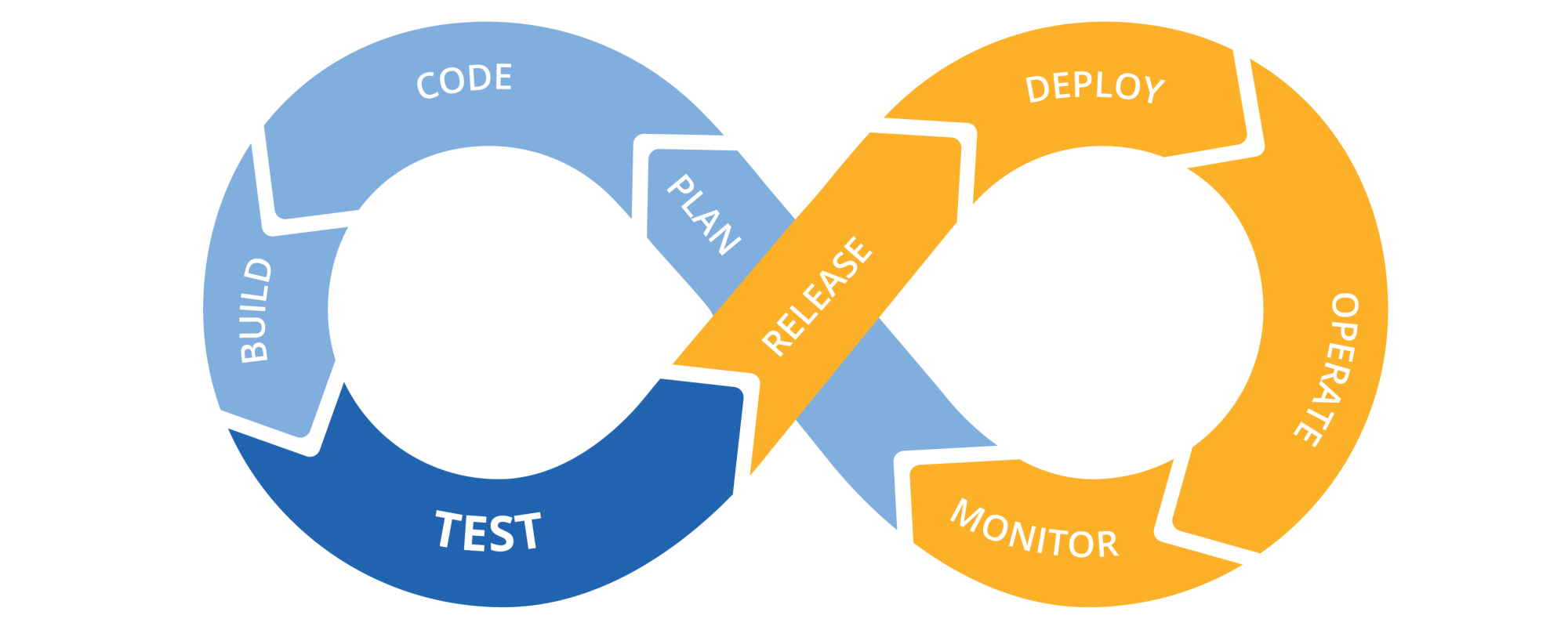
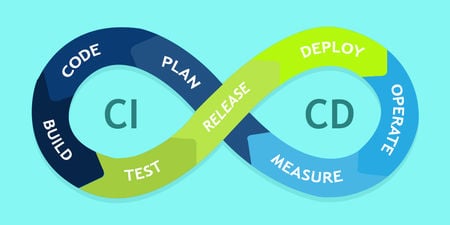
Now if you look at the continuous delivery pipeline illustration below, you will get a different picture.

It depicts how the developers write their code and commit them to a source code repository once/multiple times a day. Following which, testing, staging, and production happens inside the CI pipeline and is deployed to the customers directly.

What is CI and CD?

Let us first answer what is mobile continuous integration before moving on to filling in the details on what is continuous delivery and what is continuous deployment.

Now before we go on with defining what the approach stands for, let us put something out in the open.

Even though there are a whole lot of different mobile app development process sets operating in the market today, the answer to what is Continuous Integration and Continuous Delivery in devops and what is CI and CD in agile would be exactly the same.

With that clear, let’s head out with the explanation.

Continuous Integration 

How CI/CD saves up to 20% of mobile app development time?

Custom Integration or CI is the custom mobile app development practice where regular integration of code changes happen in a shared code repository. Usually, the practice happens at least once and maximum of multiple times in a day. This encourages committing of small changes often compared to committing of large changes less frequently.

Every commit then triggers a build in which tests are run which helps in identifying if something is broken.

Continuous Delivery 

How CI/CD saves up to 20% of mobile app development time?

It is all about the capability to regularly deliver the integrated code to production. The end result of this stage is that you have green builds that are ready to be released in one click.

Continuous Deployment 

How CI/CD saves up to 20% of mobile app development time?

This process goes one step ahead for it enables automatic deployment of every main branch change which passes the CI pipeline. However, it is better to avoid doing this, for you would need to perform testing which are not limited to automated.

Stages of CI/CD for Mobile Apps Development

How CI/CD saves up to 20% of mobile app development time?

The process of integrating CI/CD for mobile apps can be divided into seven sections or stages.

Code: Code is the backbone of any application. The process of writing them which starts with the development phase goes on to the maintenance phase. In the continuous integration and delivery approach, developers write code for CI components, which in turn, prepares it for automation in the next stages.

Build: This is the part where the app is built. Multiple developers work on the process happens every day. What is different in case of CI/CD for mobile apps is that once the developers have finished their work, they add them in the CI application.

The output of the stage is a URL.

Test: Once the code components are entered in the CI platform, the next step is to see how the app performs with inclusion of new updates. The CI software here gives developers reports on how the app is performing, in addition to some useful analytics.

Even though it is automated, it helps to involve someone from the mobile app quality assurance team in the stage to ensure that the changes are acceptable.

Package: Once the performance and quality tests are made, it is time to deploy the application. The stage is applicable both for the new apps and the existing apps whose new version is going to be released.

Release: The next stage of the incorporation of CI/CD for mobile apps is applying the new URL for the app on devices for release.

Configuration: The next stage is configuration of the infrastructure. You would need to format the entire coding and management tools, which would enable people to regularly access the CI platform.

Monitor: Once the app is running, you would still need to continue monitoring its performance. The developers, at this stage, ensure that any additional code written for improving the app has gone through the CI stages first. Doing this, lowers the chance of any bugs or problems emerging mid way.

Getting started with Continuous Integration and Delivery

It is not difficult to get up and running with Continuous Integration. Here are the steps that mobile app development companies generally follow to start using CI/CD for mobile apps smoothly.

How to Implement Continuous Delivery for Mobile App

  • Implementation of a version control of choice – SVN, Git, or Bitbucket
  • Writing test for critical elements in the code base
  • A suitable CI/CD service which would enable running the tests on every push to repository.

Let’s look deeper into what the implementation of continuous integration can offer to the everyday software development process. The realization of these advantages and the answer to how continuous integration and delivery helps translates into reduction of risks attached with building and paving the road to get the features out to the customers.

Business Benefits of Continuous Integration & Continuous Delivery

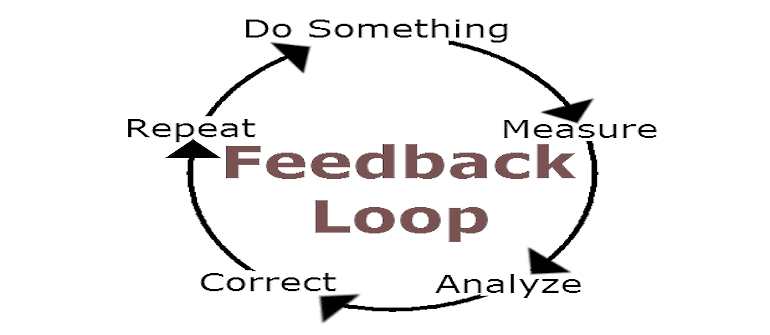
1. Faster feedback loop 

DevOps and faster feedback: fewer problems, better features (part 2) - DevOps.com

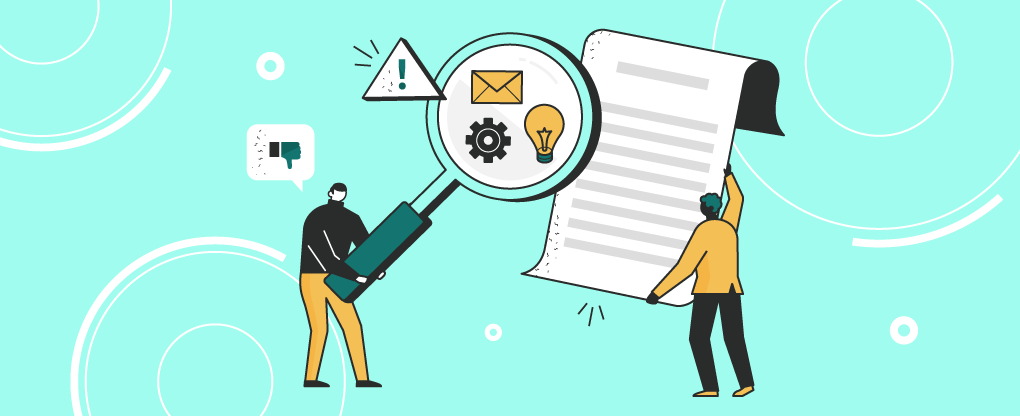
In application development process, not knowing can really hurt. One of the primal things that slows down the software development process is the lack of feedback on the impact of changes and the quality of work. It is easy to get disillusioned that you are moving too fast if you are commiting codes frequently and moving to other tasks without running any tests. While the reality is that it’ll get extremely difficult to figure out what changed in the code and by whom, when there is an issue.

CI/CD for mobile apps solves these issues by giving you prompt answers on the question if something broke in a commit.

2. Increased visibility & transparency

How CI/CD saves up to 20% of mobile app development time?

When the CI/CD pipeline has been set up, the whole team would know what is going on with the builds in addition to getting the latest test results. This means, they would be able to plan their work in context and would get a clear idea of which changes tend to break the builds more often.

3. Avoidance of integration mess

How CI/CD saves up to 20% of mobile app development time?

If you look at software as legos where each of the pieces are created by developers individually, the whole software development picture becomes one where different legos meet to become one giant piece. What eases this process is the lack of friction.

Even if a lego piece is fine, you will still have to make sure that it fits well with the entire system – Continuous integration does exactly that by connecting the pieces of software together everyday.

4. Identification & solving  of issues early on 

How CI/CD saves up to 20% of mobile app development time?

An obvious phase of software development is bugs. Now, the more bugs pile on, the harder it then gets to identify and solve them. With different kinds of automated tests running in the continuous integration pipeline, you’d get to know what is to be fixed the moment a test fails.

5. Improve testability & quality

Design For Testability (DFT) Course - VLSI

The easier it would be to test something, the more convenient it would become to test the quality. The simple rule is that the more your code is written in a way that it can’t accommodate writing tests, the more difficult it would be to make it bug free. The testability efforts ultimately depends on how easily the new builds are made available and the kind of tools you work with, plus the control you have on the test environments.

Top Mobile Continuous Integration CI/CD Tools 

Jenkins 

Jenkins

Founded in 2006, it is the top open-source continuous integration server. Developers have developed over 300 plugins for adapting Jenkins into different build, test, and automation based workloads.

CircleCI 

Continuous Integration and Delivery - CircleCI

The tool enables developers to release codes by automating the build, test and deployment process. It allows them to identify and fix bugs much before it reaches the customers.

Travis CI 

Core Concepts for Beginners - Travis CI

It is another top mobile continuous integration tool operating in the market today. It is a distributed, hosted services used in the development and testing of projects which are hosted on GitHub. It also offers custom deployment of proprietary version on the client’s hardware.

Bitrise 

Plans and Pricing

It is a continuous integration & delivery Platform as a Service which focuses on mobile app development. The developers, through the tool, are easily able to automate the test and deploy phase of their apps within a few clicks.

Visual Studio App Center 

Visual Studio App Center - YouTube

The Microsoft backed tool brings different services, usually brought into use by developers in an individual, integrated product. It enables mobile app developers to build, test, and deliver, monitor their apps, while allowing them to create an installable app package with every push made to the repository.

While these are just five, there are a plethora of different continuous integration and delivery service providers available in the market. Here are a few things to consider when researching the choices:

How to select the best CI/CD tool for your app development needs?

Best CI/CD-DevOps Tools for Mobile Apps (Mobile Continuous Integration and Continuous Delivery)

1. Proprietary vs Open Source

On the basis of context, there can be instances where open source tools might be off the table for some clients. But at the same time, investing in proprietary tool can be a little costly side.

If going with open source tools fits in the context and budget, there are a number of options present in the market.

2. In the Cloud or Self-hosted

If you are willing to host the CI/CD service yourself and have the time and resources for setting it up, configuring, and maintaining it, you should go with Self-hosted services. But, if you are looking for crossing off build infrastructure maintenance off the work list, go with a Software as a Service solution.

3. Ease of setting up 

A frictionless adoption of CI/CD is the secret to getting everybody on board. So, going with a tool that takes a lot of time in setting up can backfire your intention of choosing the approach.

PHP vs Python: Features & Comparison in 2021

Python vs PHP in 2021 - Comparison, Features & Applications

Has it ever happened to you that you try to achieve something but the end result was totally unanticipated?

Sometimes good things are an accident – Electricity, Discovery of America, Gravity, and PHP.

Wait, what?

Actually, PHP was never intentionally designed. Rasmus Lerdorf, a Danish software engineer attempted to design an easy common gateway interface by using the C language that would help him track views on his CV. Little did he know what he had created for such a menial task is going to change the face of web applications.

As for Python, the language has its own fan following spread worldwide.

What is there to see is how these two fare when put under juxtaposition. Yes! We are talking about the popular battle of PHP vs Python.

So, why don’t we begin the first round by discussing what they are, individually?

What is Python?

PHP vs Python: Features & Comparison in 2021

Well, of course, it’s not a snake (pun intended).

For real, Python is one of the few best web programming languages for web development that is winning the hearts of many around the world. It is a non-complex object-oriented, high-level, interpreted language, possessing amazing built-in data structures connected with dynamic typing and binding. It is features such as these that make developers choose this language for efficient and effective app development.

What is more, it is a scripting language that is proficient in binding and combining numerous components together. To add another jewel to its crown, it favors cross-platform development, making it ideal for web and mobile app development.

In fact, Python had recently won second place as the most popular language on Github, beating Java to dust and is one of the most loved languages.

Features of Python programming language

Fast in nature

PHP vs Python: Features & Comparison in 2021

There is no compiling in Python, for the programs are added to the interpreter which runs them directly. This is something that happens for the rest of the programming languages. It is very easy and quick to get access to the feedback on your Python code like recognizing errors, etc. Due to reasons like this, Python has the ability to execute and finish the programs speedily in comparison to other languages.

Supports test-driven development

PHP vs Python: Features & Comparison in 2021

With Python app development, coding and testing go hand-in-hand, something that is a tried and tested way to the efficacious development process. Developers are able to develop prototypes of the applications as Python allows them to refactor the code.

Amazing standard library

PHP vs Python: Features & Comparison in 2021

Another probable feature of Python programming language that enabled it to beat Java on Github, is its collection of impeccable libraries. Python’s robust standard library supports the programmers in choosing modules as per the requirements demand. Here every module allows developers to add other multiple functionalities even when the process is about to complete and that too without any additional coding.

Support for Big Data

Support for Highly Scalable Big Data Systems

If you have been looking forward to working on the Big Data technology but aren’t sure what should be in your tool set, then trust me, Python will be all you need to start with. This programming language is being used extensively in Big Data development; simply because it is faster and has a lot of libraries in store, that are in harmony with Big Data.

Highly compatible

A Brief History of Python

Python is the first choice of developers who want to do away with the recompilation process. It is because along with supporting numerous OS like iOS, Android, Windows, etc., it allows developers to use Python interpreters to run the same code on all platforms and even modify it without performing recompilation. And on top of it, it allows programmers to check the code almost instantly when the changes are made.

Advantages of Python 

  • Object-oriented and cross-platform programming language
  • Portable in nature due to WORA functionality
  • Highly readable, making it easy for beginners
  • It is open-source, a feature which makes it easily accessible
  • It is a constantly evolving language

Disadvantages of Python 

  • Slightly in-effective in mobile computing and browsers
  • Design restrictions: Duck-typing may cause run-time errors
  • Delayed testing of web applications
  • A little too simple for certain tasks

What is PHP?

PHP - Wikipedia

Speaking of the name itself, it has a little kick to it. The acronym does not fully describes its full form which is Hypertext Preprocessor. It is also an open-source scripting language (means a script-based program) that is server-side in nature facilitating development for every web app development company.

Additionally, it is possible to embed PHP in HTML to create dynamic web pages for web applications, database apps, and E-Commerce apps. In fact, developers consider it to be a pretty friendly language as it can connect with databases like Oracle, MySQL, etc.

Features of PHP

Highly flexible and scalable

AFS Retail Execution - a flexible and scalable solution to help you win at the shelf - AFS

To be successful, a language should be flexible and scalable enough to give a wiggle room to programmers to have fun, something which PHP clearly offers. It can be easily integrated with other programming languages, namely, Java and others. The components built with this language are reusable.

There are many extensions available to enable different functionalities, that help in defining many kinds of project requirements.

Fast loading speed

X-men - Quicksilver HD wallpaper download

Speed plays a crucial role in making any programming language a favorite of developers. PHP is considered to be a high-speed rendering language as it easily establishes a connection with the database to fetch the requested data in less time as compared to many languages out there in the market.

Supports Cross-platform development

Best 10 Cross-Platform App Frameworks to Consider in 2020

PHP is no way behind Python in catering multiple platforms, i.e, it is also a cross-platform language that helps developers in creating web applications for operating systems such as UNIX, LINUX, Windows, and more. What is more, it also supports Apache and MySQL database.

Loosely typed language

PHP is denoted as a loosely typed language as it supports variable usage without even declaring its data type. It will be taken at the time of the execution based on the kind of data it has on its value.

Error Reporting

40 Best PHP Libraries For Web Applications in 2020

One of the amazing features of PHP is that it has a function that generates a warning notice when something is wrong, allowing the developers to address the issues in real-time.

Advantages of PHP

  • Has an enormous ecosystem
  • Object-oriented and open-source language with an active community
  • Interoperability- has numerous pluggable frameworks
  • Supports first-class debugging

Disadvantages of PHP

  • Threaded and slower execution
  • No Internet of Things community support
  • Limited visibility and control
  • Externally dependent

PHP vs Python: Battle begins

Now, let’s see how Python Compares to PHP and vice versa.

1. Performance and speed

How to test your Internet speed, and which package is right for you – Stephouse Networks

Speed is often synonymous with great performance in web applications. And in the case of PHP vs Python performance for web applications, it is no different.  It is crucial for web apps to perform error-free while processing millions of requests at a time. PHP is considered to be much more effective at speed. Though PHP 5.x was fast, PHP 7.x broke its own records, leaving average Python programs to dust. It completes the tasks almost 3 times faster.

2. Syntax and code readability

Python vs Java: Who Is Winning the Battle of Codes? | by R Sharma | codeburst

Syntax plays a prominent part as a point of difference between PHP and Python. To be brief, the syntax of PHP kind of resembles that of the C language. The programmers have to be careful and need to use curly brackets, operators, and additional characters. What is more, developers can also ignore the white spaces while the compilation is on-going, bringing the additional usability that will assist in structuring the code into logical components.

As of Python, the syntax is made on the separation of codes with spaces and tabs, expediting the process of coding to a great extent. Moreover, Python’s syntax is readable which makes it easy for beginners to learn it effectively.

3. Price

It is a good thing that both languages are open-source which means nothing but that they are free to use. In fact, developers have advocated that these even though free in nature, maybe better than some of the paid frameworks.

4. Library Support

What gives Python an edge in the battle of PHP vs Python 2020 is that it has exceptionally extensive and well-developed library support for all types of applications developed using Python. Some of the most preferred libraries that developers use in Machine learning development along with others are TensorFlow, Theano, Scikit, etc.

Though PHP is lagging behind, it also has packages repository “Packagist” that is pretty popular among the developers.

5. Web frameworks

Web application framework: What it is, how it works, and why you need it

Both PHP and Python have loads of responsive and incredible web frameworks to start with. For Python-based web frameworks, some that stand out the most are Django, Bottle, CherryPy, Pyramid, and more.

As for PHP-based web frameworks, we have Laravel, Codeigniter, Zend, Symphony, and so on. As both Python and PHP programming languages provide a pretty good variety of choices to the developers, beginners are still a little bit more inclined towards Python’s Django framework because it is mighty fast.

6. Debugging

To give you the verdict on this point of comparison of PHP and Python before even diving deep into it, we have to say that it is a draw.

You ask why? Well, if Python has “Python Debugger” (PDB), a well-documented and facile debugger, then PHP has its “XDebug” package; both offering the most basic debug features – stacks, path mapping, breakpoints, and more.

7. Front-end feasibility

Web programmers also look forward to developing the layout or the front-end of their websites and portals using numerous effective tools along with languages like Bootstrap, CS, Angular, etc. Python here provides numerous opportunities for the developers to adopt the same techniques and later combine it with Python code by employing frameworks.

This way, designers can easily design websites, whereas the backend developers find it easy to use via a much subtle and understandable language like Python. So, definitely, Python here wins over the PHP.

8. Usability

Small Business Website Usability

It is prominent to consider the architecture of the languages before we conjecture anything in favor of either language.

The fact that both Python and PHP are object-oriented translate into that they compress code modules containing some functions and data in objects. So, any developer who is even a little bit familiar with object-oriented programming can use either of the languages.

9. Maturity

Website Usability Testing: How To Get Started Today | Hotjar Blog

On the grounds of maturity, Python is inevitably the winner since it was first introduced in 1989 by Guido van Rossum and released in 1991. Its latest update 3.8.0 was released recently on 14 October 2019. It is the most mature and secure among the technologies which make the fundamental building blocks of the intricate mosaic that is the IT industry.

As for PHP, it was created in 1994 by Rasmus Lerdorf. Though not as mature as Python, it still has created a still in the market with its features. The very first manifestation of PHP was a simplistic set of Common Gateway Interface (CGI) binaries that were written in the C language. The latest version of PHP is 7.2.7.

10. Package Management

Speaking of Python, its package managers are effective in organizing the code and keeping the backups along with the version numbers. It helps the developers track their progress while helping businesses perform regular updates on the activities.

As of PHP, though is package management, however, it doesn’t match up to the PIP, a tool to manage and install Python packages. It allows developers to install, upgrade, and even uninstall while using a wide range of sources for external as well as internal libraries.

11. Market Popularity

Market share importance for businesses

If you want to judge or compare two things, market popularity tops the list of points of comparison, because it indicates why developers and programmers love something.

Looking at this graph above we can surmise that Python is the most searched on the web in the US as compared to PHP.

It has been observed that 7,212,664 websites have been developed using PHP, and as for Python, the number amounts to be 146,702. What is more, PHP is leading in countries like the US, Japan, Germany, and other 150+ countries. In a survey by w3techs.com, as you can see in the graph, it is evident that as of May 29, 2019, PHP was the most popular language based on traffic.

12. Versatility

Python in comparison to PHP is evidently versatile in nature as it is an ideal choice for developing websites integrated with Machine Learning and AI. It comes with an abundance of libraries that support these technologies and facilitate their integration into the web apps.

13. Well-thought-out design

24 of the Best Mobile App Design Tools | BuildFire

While comparing PHP vs Python for backend, we found that Python, as compared to PHP, is fairly easy to grasp. Python has a well-thought-out-design (refers to the method used to insert code) than PHP. This means that developers find it easy to program for backend with Python than they do with PHP. It is simply because Python is a flexible yet robust programming language, something that PHP lacks.

14. Documentation

Importance of Project Documentation in Project Management [Updated]

Well, it is a draw. Both languages have an abundance of documentation spread across the internet. Any beginner can easily find resources and documents related to any aspect of these languages and can get answers to even the most complicated queries- All thanks to their communities.

15. Environment Management

Speaking of environment managers, Python is extremely lucky in this regard. There are some terrific breed applications to manage the environment. One such example is Virtualenv – a system that is used to install and use numerous versions of Python simultaneously and switch them as often as needed with ease.

Though PHP also has an analog for Virtualenv known as VirtPHP.  However, it is advised to use containers.

16. Learning Curve

Starting with PHP, being a straightforward language, it has a fairly low learning curve. It is ideal to learn PHP for short-term projects, but if you want to learn something that gives long-term benefits then Python is your match.

Though on its own PHP is easy to learn, however in comparison to Python, PHP has a steep learning curve for Python is the most readable and easily comprehensible language. It is because the language uses a much simpler syntax.

17. Community Support

Community Support – The SpiritTech

Both languages enjoy the support of active communities. It is a crucial aspect for a beginner to consider before committing oneself to a particular language, simply because the learning process is full of doubts and queries and having strong support resolves half the issues.

However, we have to admit that community support of PHP is outstanding, given how actively they have been deprecating the language’s outdated aspects.

18. Salary and Job opportunities

Salaries | Indeed.com

While considering the payscale of both languages, we found that Python developers, on average, make somewhere around $120,024 every year in the United States. Whereas, PHP developers make an average of $86,017 per year.

In fact, you can see in the image above that Python developers, globally make nearly $63k, whereas PHP did not even make it to the list accumulated by Stack Flow.

Final Thoughts

To end this discussion, we would state the most obvious – both languages are differently capable in all aspects. One may surpass the other in one aspect and may lose in others. They both have their own set of features and functions to perform.

They are a paradox in themselves; there are many similarities between PHP and Python,  and at the same time are dissimilar as well in many aspects.

Nevertheless, Python has emerged to be the winner in most of the comparison points such as documentation, job opportunities, salary, etc. So, it is up to an individual which one they choose based on their requirements.

Go vs Rust: Which One To Choose in 2021 ?

Rust vs Go — Bitfield Consulting

If you had to make a list of top programming languages that appeared in the industry in the past decade, the two names that would emerge would be Go and Rust.

And, if you had to sit down and think of the programming languages which were best aligned with the motive to develop secure, microservice favoring frameworks and apps, you would again find yourself staring at the two languages.

Even after being similar in some prominent ways like maturity, being open source, and being designed for microservice oriented, modern, parallel computing environments, there is a lot of confusion around Go vs Rust and which of the two languages are good for the developer community to enter into.

The intent of this article today is to look into the difference between Go and Rust in much detail. The differences that go beyond Rust use cases and Golang use cases.

Let us answer Which is better: Rust or Go?

But before that, let us refresh the basics of both the programming languages.

Rust Programming Language

PhD Thesis: Understanding and Evolving the Rust Programming Language – Full-Stack Feed

Rust language came into existence back in 2010. Deemed as one of the ML languages’ extensions, the aim that the language was expected to fulfill was better security, performance, improved parallelism, and greater modularity.

The feature set that Rust comes with has brought it to a stage where there are very few developers who haven’t heard of it or as showing an unwillingness to work in it.

Advantage of Rust language:

  • Amazing run speed
  • Enables fine grain features such as rich patterns, syntax extensions, and novel embeddings.
  • Interoperable with C, and FFI, amongst others.
  • Zero-cost abstraction
  • Predictable runtime behaviour
  • Saves crashing, debugging time.

Disadvantage of Rust language:

  • Learning Rust is steeper than Go
  • Between Go vs Rust, it is slow to compile
  • It is slower than the C and C++ language in the analogous conditions.

Go Programming Language

Go Programming Language: An Introduction

Go coding language was introduced back in 2007 by Google. It was looked at as a language that had emerged to solve the issues that organizations face when developing software infrastructure. The Go language specification was devised to introduce garbage collection, dependency management, built-in concurrency, robustness across multiple boundaries between the components, etc.

The result of the well thought of features of Go has gotten it a market position which is enough to bring it several points ahead in the Go vs Rust debate.

Advantage of Go Language:

  • The best feature of Go language is the incredible speed at which it compiles to machine code.
  • The simplicity of code
  • Concise, pragmatic, and efficient
  • Flexible and highly concurrency favoring
  • Strong interoperability with C language.

Disadvantage of Go Language:

  • Keeps simplicity over performance
  • Lacks the generics to an extent
  • Not enough immutability
  • Not a system language.

Now that we have looked into the basics of both the languages, let us get on to the part where we look into how they stack up against each other.

Rust vs Go: Performance 

Blog: Performance management simply isn't simple — People Matters

The one factor that weighs up Rust in the Rust vs Go debate is performance. The programs have been designed to run at similar or near similar speed of C++ and C.

Go, on the other hand, trade runtime speed for convenience, by making tasks automatic. But in terms of Rust vs Go Performance comparison, development speed of Go falls several steps behind the high performance that Rust offers.

Go vs Rust: Memory Management 

CLI memory management

Rust make use of compile time ownership strategy for memory management through zero cost abstractions. If a Rust program is not memory safe, it won’t be able to cross the compilation stage.

Like Rust, Go is also memory safe. But in the case of Go, it is handled automatically during the runtime. Meaning, developers won’t have to think of releasing or allocating memory when writing code.

Go vs Rust: Development Speed

5 Ways to Speed Up Your Software Development Process - WhiteSource

At times, the development speed becomes more important than the program speed. A working example of this can be seen in the case of Python, which is not one of the fastest languages to run but fastest to write a software in.

Go comes with the same appeal. The simplicity and directness that it offers makes it faster than a number of languages in the market.

Rust, on the other hand, comes with more language features and thus takes longer to master. Its compile speed is also longer than Go’s. So, if the intent is of faster full cycle app development services, you would be better off with Go than Rust.

Rust vs Go: Concurrency

Modern day apps are distributed and networked. The languages that haven’t planned for these realities are far off behind the curve. The developers have to be able to run the tasks independently and share state between the tasks minus the risk of data corruption.

Now while concurrency was built into Golang’s syntax from beginning, Rust recently gained the native syntax in the form of async/.await. But even though the concurrency of Rust lacks the developer experience that went behind Go, it makes up for it through Rust’s memory safety.

Conclusion

We could keep digging into both the languages, dissecting both sides of Go vs Rust comparison, but the ultimate answer to the Rust and Go comparison would be the fact that it depends. There are instances where Rust is better than Go and vice versa.

Ultimately, this is what we recommend as an app development company, who works on both –

Choose Rust when:

What is the Rust programming language? - AkuaroWorld

  1. If performance is a necessity
  2. If you want it to interoperate with C language.
  3. When your developers need control on every detail of how the threads behave with the rest of the system, how the errors must be handled, it would be better to look into Rust use cases.

Choose Go when:

The Benefits of Using the Go Programming Language (AKA Golang)

  1. If readability is a must have requirement
  2. If you wish to write codes faster
  3. If the focus is on uniformity and simplicity.

AppSheet, providing you with a no-code application development

Evolving the Google Identity - Library - Google Design

Appsheet, acquired by Google

Google recently announced that they have acquired AppSheet, a Seattle-based no-code mobile app development platform. They have not disclosed the terms of the acquisition yet. However, as per the revelations, AppSheet will continue to serve its existing customers.

Praveen Seshadri and Brian Sabino founded the AppSheet back in 2014. Keeping in mind to help business people and others build their own mobile applications without having any coding experience. It received its seed funding from the New Enterprise Associates in 2015 and was recognized as one of the creative tech startups by TiE in 2018. Following by getting fame of leading a leader for low-code app development for business developers by Forrester Research in 2019.

AppSheet - Wikipedia

First choice of various brands for making their presence

The platform became the first choice of many small and established brands, including Whirlpool, Pepsi, the Global Cancer Institute, Toyota, American Electric Power, and M&O Partners for making their space in the IT-powered business world. It is a result of the set of features it offers. It features the ability to capture, collaborate, and display data, and create an explanatory programming model.

Praveen Seshadri said, “As we and IT industry has grown, there is now a huge pent-up demand for enterprise automation,”. He further added, “There is the rise of low and no-code platforms. This will make citizen development come out as the planned way for modern organizations. It will help to invest, innovate, and compete.”

AppSheet has also been combining AI and NLP technology. This is to further quicken the mobile app development process. This also enables businesses to enter the mobile sphere at the earliest.

Till now, over 18,000 app creators have used AppSheet’s development suite to locate around 200,000 apps. And now, when Google acquires AppSheet, the numbers and results are much beyond everyone’s expectations.

AppSheet. Gesundheit! Oh, we see – it's Google pulling no-code development into a cloudy embrace • The Register

AppSheet services to Google Cloud

The tech giant, which recently acquired a retail inventory management startup Pointy as well, is expecting to reimagine the app development space by bringing AppSheet services to Google Cloud.

“The acquisition will complement Google’s strategy to reimagine the application development space by helping businesses set up with workflow automation, app support, and API Management,” said Amit Zavery, vice president of Google Cloud. He further added, “Customers will now be able to build richer apps that use not only Google Sheets and Forms, but other top Google technologies like Google Analytics, Maps, and Android”.

[Note: As we mentioned above about API management, consider this blog to know in detail about the process and available tools: 15 Open-Source API Management Platforms to Add in Your Tech Stack]

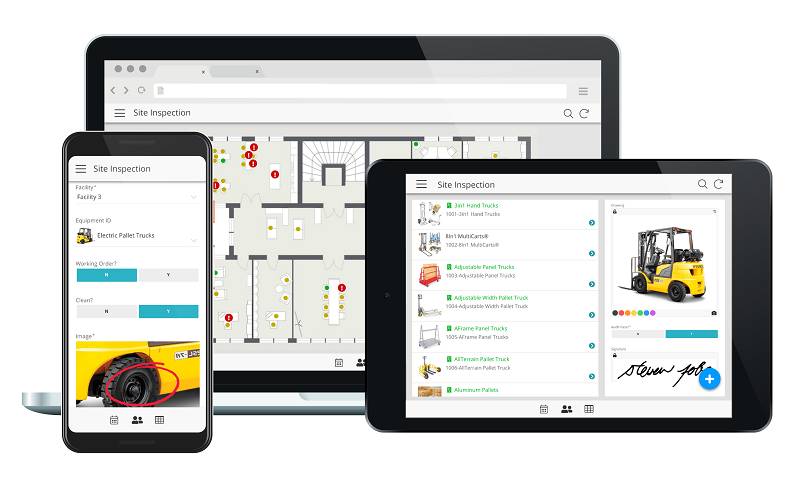
The tech giant expects to employ AppSheet’s ability to power up workplace applications (include CRM, personalized reporting, field inspections, etc.) while keeping Google Cloud’s services focusing entirely on the financial, media, and retail domains.

Google acquires AppSheet to bring no-code development to Google Cloud | TechCrunch

The Google team also revealed that low-development app development platforms like AppSheet are not going to replace sophisticated development environments. Rather, they will be put into practice to empower mobile app developers to collect extensive, rich data like geographic data and indoor location data from any device and use the insights gained to build user-centric applications. Plus, they will be able to update and maintain the data set in real-time, without compromising on the security front.

The AppSheet team will soon join Google Cloud. But, they will continue to serve their existing new and existing clients and support iOS apps and web-based mobility solutions.

Speed Up Android App Development-10 Quick Tips

Android Apps Development Services | Technource US

In a market fraught with stiff competition, a quick time-to-market app can make all the difference. An app that takes forever to build and deploy can crash and burn even before it goes off the shelf. Developing a mobile app is an expensive process. Creating a mobile application is a costly process, as bringing ideas into reality requires time and effort, and expenses. For instance, after the development you’ll have to pay for hosting or for marketing campaigns to spread the word. One approach to keep costs back from spiraling crazy is to decrease the application development time. In the realm of mobile apps, time is money, so the more you spend working on your app, the more it will cost. Although Android app development for business is a good choice, however, it is especially notorious for its sluggish speed. CEOs of businesses are constantly struggling to meet deadlines and take their app to the market before competitors pinch the app idea. In this tussle between speed and quality, often quality is sidelined and what results is a product that doesn’t meet your or your audience’s needs and expectations. We will be discussing in detail how to develop apps faster in the below article.

Since android application development speed is such a relevant issue, we have compiled a set of handy android tips and tricks 2021 that can help you create android apps speedily, without compromising on quality.

Android Development Tips

1. Use the latest tools

Auditors must use latest tech tools for quality audits: CEPR

All android developers are faced with the same dilemma: too much to do and too little time to do it! Designing, prototyping, coding, testing, debugging, and the list of tasks goes on. While some of these vital steps have no short-cuts, there are valuable tools to help with others.

Here’s our countdown of developer must-have android development tools that can speed up android app development service process:

A. Genymotion

How to Run Android Apps on Windows 10 with Genymotion

A sleek emulator that can simulate built-in sensors that a device model has. This emulator supports all existing versions of Android, cutting the need for re-configuring for different devices.

B. Hierarchy Viewer

A great tool to view your app’s tree and analyze its flaws for debugging and testing purposes. This tool, available in Android SDK, helps speed up app development by letting you merge and remove redundant elements in your app.

C. LeakCanary

GitHub - square/leakcanary: A memory leak detection library for Android.

Detecting memory leaks is a specialized function of this tool. These bugs are very hard to debug and the tool will ensure no leakage escapes your notice. Debugging becomes rapid and mobile.

D. Vysor

Vysor - Android control on PC: Amazon.in: Appstore for Android

This tool helps android app maker in sharing screens between their workstations and Android devices, using just a Chrome plug-in. The tool is an answer to most developers’ prayers who find it complicated to root devices via USB. With this tool, you can share app features live with the client and receive instant feedback which is always great for the development process.

E. Butterknife

Butter Knife

An awesome tool to improve the coding rate and readability of your boilerplate codes. This tool is a great time saver for all businesses looking to cut down app development time.

2. Low-fidelity wireframes are speedier

Low Fidelity Wireframes vs High Fidelity Wireframes - MentorMate

Wire framing is an essential step in the app development process. Using low-fidelity wireframes is better option than high-fidelity ones. These wireframes are less detailed and more fluid but they give a clear enough picture to developers and UI designers.

Going headfirst into coding is not advisable and most experienced Android app developers in New York, Florida, Texas, and other areas know this. The most crucial first step is to get designers, developers, coders and project managers on the same page. Low-fidelity wireframes do just that. They are quick to develop and are a good blueprint for the entire development team.

3. Go lean

A commonly-accepted best practice in the quick android app development process is to launch a Minimum Viable Product (MVP) with just the basic features and no frills, instead of waiting to develop and launch a full-fledged app. The MVP will help you collect user data about what’s working and what’s not. Use the build-measure-learn feedback loop to get invaluable lessons about customer feedback. This approach diminishes the risk element of your app and makes for an app that is more likely to appeal and succeed.

Another facet is using short iterations or “sprints” to break up the entire app model into smaller, doable cycles. Each sprint is complete in itself-it has the entire gamut of development steps and results in an improvised version of the previous sprint product. Speed up android and go agile in your development process. Reduce redundancy of effort and resources. This not only helps reduce development time but also saves production costs. And of course, the ultimate benefits of android app development is a risk-free product that starts churning ROI from the moment it’s launched.

4. Hire experienced developers

Hire Laravel Developer at Low Hourly Rate | Highly Skilled Developers in USA

Once you are settled with the development platform and the tools, now comes an ideal opportunity to hire the best android developers to accelerate android application development projects. While hiring android developers, one thing that should be considered is their experience and flexibility. Why? Because if android application developers are experienced, this means that they will have proper knowledge or information on every issue that may come during the app development process.

Also, if the android app maker is interested to learn and adjust to new technologies and platforms, then that will enhance and accelerate your app development process. Adaptability plays an important part in deciding the interest level of your development group. Thus, you should employ android developers that are prepared to learn and update their abilities according to the project.

5. Delegate off-core activities

The Art of Delegating: What and How to Delegate to Your Directs

One of the android tips is to always take a wise choice to offload additional activities such as enhancing app engagement, measuring app analytics and converting free subscribers to premium ones. These activities eat up a lot of time and are better off with pre-designed applets, available at mobile engagement platforms. These applets can be incorporated in your ready app with just a few lines of code. Applets enable activities such as sharing tools, offer notification, new features tools and feedback tools.

6. Use hybrid app development

Top 10 Hybrid Mobile App Development Frameworks - Clever Solution

Cross-platform apps allow you to code for one app and get multiple apps that can run on all covered platforms. Hybrid app development is speedier than native app development, though it has its own set of drawbacks. But for quick market penetration, cross-platform apps may be the best choice. Later, one can go in for native apps that are more inherent, fluid, robust, and focuses on android app performance optimization.

7. Opt for automated testing

When to opt for automation testing | Test Automation Resources

Automated testing is a sure shot measure to get secure, fully-tested apps in a fraction of time than the ones deploying manual testing. Automated testing tests an app against a full suite of testing tools simultaneously, instead of one-by-one as in manual testing. This improves test coverage, reduces testing time, and guarantees a bug-free product that is market ready.

8. Outsource specialized development steps

Outsourcing Serious Games Development Tips - eLearning Industry

In-house app development is not everybody’s cup of tea. The app market is fast evolving and new apps are entering the market every day. To remain competitive, timely, and relevant, one can outsource app development to a skilled, efficient Android app development company. Even if you possess the capabilities to code or design an Android app, use domain experts for putting the whole product together and maintaining it. Not only will you get better returns on development costs, but you will also offload the hassle of running tasks that will be better handled by experienced professionals.

A common misconception shared by businesses is their misplaced fear about the cost of outsourcing. Android software development company mostly have flexible engagement models that can match product development costs to your budget. Fixed cost; time and material; and build, operate and transfer models can be evaluated to arrive at a business solution that works in your favor.

9. Cross-platform development tools

React Native vs. Xamarin vs. Flutter vs. Ionic vs. NativeScript

Cross-platform is the most convenient way to decrease app development time. The cross-platform tools allow users to focus on numerous mobile platforms with a similar codebase, eliminating the time that one would normally spend deciphering, reworking, and re-compiling the same code to work across various platforms.

Developing separate native applications for every platform is costly, while a hybrid app utilizes a single sharable code, which assists you to save your pockets. Cross-platform applications have a native look and feel, which is great for user experience.

There are plenty of cross-platform development tools, but some of the most used tools include:

Xamarin

Ionic

Flutter SDK

React Native

Adobe Phonegap

10. Create build variants

How to create and configure Android Build Variants - Cuelogic Technologies Pvt. Ltd.

Loading your app with unnecessary configurations can slow down your app’s incremental builds. Retain only those configurations in your app that are required in its development and release versions. Plus, don’t waste time and effort in compiling additional resources that hold little value. Such resources include screen density resources and additional language localizations.

Wrapping Up

Manage your app development time strategically to get ahead of competition and meet tight deadlines. A minute lost in android application development services can translate to huge monetary losses. A good mobile app development company will micro-manage tasks of developments in such a way that your app hits the markets at top speed!

Also taking the above mentioned points into consideration will on how to create an app for android.

Fill up the form through this link and hire android app developers in USA that will help you validate and convert your app idea into an efficient product and create android apps.

How to Integrate AI and Machine Learning into Your Existing App

AI and ML Technologies: What They Mean For Federal Agencies

When we talk about the present, we don’t realize that we are actually talking about yesterday’s future. And one such futuristic technology to talk about is how to implement ML and how to add AI to your app. Your next seven minutes will be spent on learning what is the role of Machine learning and Artificial intelligence in the mobile app development industry and what you can do to take advantage of it.

The time of generic services and simpler technologies is long gone and today we’re living in a highly machine-driven world. Machines which are capable of learning our behaviors and making our daily lives easier than we ever imagined possible, all the way, making it necessary for us to understand the process of  integrating Machine Learning and Artificial Intelligence into apps.

Technological realm today is fast-paced enough to quickly switch between Brands and Apps and technologies if one happens to not justify their needs in the first five minutes of using it. This is also a reflection upon the competition this fast pace has led to. Mobile app development companies simply cannot afford to be left behind in the race of forever evolving technologies.

Today, if we see, there is Artificial Intelligence and Machine Learning incorporated in almost every mobile application we choose to use. Which makes it all the more important to know How to integrate machine learning and artificial intelligence in mobile apps.

For instance, our food delivery app will show us the restaurants which deliver the kind of food we like to order, our on-demand taxi applications show us the real-time location of our rides, time management applications tell us what is the most suitable time to complete a task and how to prioritize our work.

In fact, Artificial Intelligence and Machine Learning that were once considered top complicated technology to work on or even comprehend is something that has become an everyday part of our lives without even use realizing of its presence. A proof of which is the following functionalities offered by the top brand apps.

Set Beliebte Social Media Logos Icons Instagram Facebook Twitter Youtube WhatsApp Pinterest Linkedin Element Vektor Vektor Redaktionelles Foto - Illustration von oper, sozial: 158759746

The wide inclusion of the two related technologies has made the need for worrying over simple, even complicated things cease to exist because our mobile applications and our smartphone devices are doing that for us.

The below provided stats will show us that ML and AI powered mobile apps are a leading category among funded startups and businesses.

  • Allied Market Research has predicted that the market for ML will reach $5,537 million in 2023 further demonstrating its growing prevalence.
  • According to the 2019 CIO Survey by Gartner, the number of companies implementing AI technologies in some form has grown by 270% in the past years.
  • According to Microsoft, 44% of organisations fear they’ll lose out to startups if they’re too slow to implement AI.
  • Research by Fortune Business Insights predicts that $117.19 billion is the expected value of the global machine learning market by 2027 at a CAGR of 39.2% during the forecast period.
  • The Wall Street Journal, states that the advancements in AI and machine learning have the potential to increase global GDP by 14% from, now until 2030.

The idea behind any kind of business is to make profits and that can only be done when they gain new users and retain their old users. The difficult task can be made easy through AI as it comes as one of the benefits or advantages of integrating machine learning and artificial intelligence in apps.

Ways To Implement AI and ML

There are three primal ways through which the power of  Machine Learning and Artificial Intelligence can be incorporated in mobile apps to make the application more efficient, sound, and intelligent. The ways which are also the answer to how to add AI and ML to your app.

Reasoning

The fallacy of logical reasoning. When I was young, I used to take pride… | by The Irrational Investor | Medium

AI and ML are two proficient technologies that imbibe the power of reasoning for solving problems. Applications like Uber or Google Maps that are used by individuals to travel to different areas, many times change the course or route based on the traffic conditions. This is where AI works – by harnessing its thinking capacities. This facility is what makes AI beat a human at chess and how Uber makes use of automated reasoning for optimizing routes to get the users to reach their destination faster.

Hence, real-time quick decisions are presently being controlled by AI to provide the best customer service.

Recommendation

As you are familiar with OTT platforms like Netflix, Amazon, and others; the streaming features of these platforms acquire a large number of customers with high rates of user trust and retention. Both Netflix and Amazon have implemented AI and ML into their applications that examine the customer’s decision based on age, gender, location, and their preferences. The technology based on the customer’s choices then suggests the most popular alternatives in their watch playlist or that individuals with similar tastes have watched.

Giving the users insight into what they would require next has turned out to be the secret of success of some of the top brands in the world – Amazon, Flipkart, Netflix, amongst others have been using the Artificial Intelligence backed power for a very long time now. This is an amazingly popular technology for streaming services and is currently being executed into numerous other applications.

Behavioral

How Behavioral Science Could Improve Federal Programs - Government Executive

Learning how the user behaves in the app can help Artificial Intelligence set a new border in the world of security. Every time someone tries to take your data and try to impersonate any online transaction without your knowledge, the AI system can track the uncommon behavior and stop the transaction there and then.

These three primal bases that answer what are the best ways to incorporate machine learning and AI in application development can be used in multiple capacities to enable your app to offer a lot better customer experience.

And now that we have looked at how to integrate AI in android apps along with integration of ML, let us answer the why?

Why should you integrate machine learning and AI into your mobile app?

Why to Integrate Machine Learning and AI Into Your Mobile App?

Personalization

Leveraging Data and Ecommerce Personalization Types | Acro Media

Any AI  algorithm attached to your simpleton mobile application can analyze various sources of information from social media activities to credit ratings and provide recommendations to every user device. Machine learning application development can be used to learn:

  • Who are your customers?
  • What do they like?
  • What can they afford?
  • What words they’re using to talk about different products?

Based on all of this information, you can classify your customer behaviors and use that classification for target marketing. To put simply, ML will allow you to provide your customers and potential customers with more relevant and enticing content and put up an impression that your mobile app technologies with AI are customized especially for them.

To look at a few AI ML examples of big brands who are setting standards on how to implement Machine Learning in apps?

  • Taco Bell as a TacBot that takes orders, answers questions and recommends menu items based on your preferences.
  • Uber uses ML to provide an estimated time of arrival and cost to its users.
  • ImprompDo is a Time management app that employs ML to find a suitable time for you to complete your tasks and to prioritize your to-do list
  • Migraine Buddy is a great healthcare app which adopts ML to forecast the possibility of a headache and recommends ways to prevent it.
  • Optimize fitness is a sports app which incorporates an available sensor and genetic data to customize a highly individual workout program.

Advanced search

What Are Advanced Search Options?

Through the AI and Machine learning based app development process, you will get an app that lets you optimize search options in your mobile applications. AI and Machine Learning makes the search results more intuitive and contextual for its users. The algorithms learn from the different queries put by customers and prioritize the results based on those queries.

In fact, not only search algorithms, modern mobile applications allow you to gather all the user data including search histories and typical actions. This data can be used along with the behavioral data and search requests to rank your products and services and show the best applicable outcomes.

Upgrades, such as voice search or gestural search can be incorporated for a better performing application.

Predicting user behavior

User Behavior: How to Track it on Your Website + Analysis | Hotjar Blog

The biggest advantage of AI based machine learning app development for marketers is that they get an understanding of users’ preferences and behavior patterns by inspection of different kinds of data concerning the age, gender, location, search histories, app usage frequency, etc. This data is the key to improving the effectiveness of your application and marketing efforts.

Amazon’s suggestion mechanism and Netflix’s recommendation works on the same principle that ML aids in creating customized recommendations for each individual.

And not only Amazon and Netflix but mobile apps such as Youbox, JJ food service, and Qloo entertainment adopt ML to predict the user preferences and build the user profile according to that.

More relevant ads

What are Relevant Ads & How to Create Better Ads for Campaigns (Examples)

Many industry experts have exerted on this point that the only way to move forward in this never-ending consumer market can be achieved by personalizing every experience for every customer.

According to a report by The Relevancy group, 38% of executives are already using machine learning for mobile apps as a part of their Data Management Platform (DMP) for advertising.

With the help of integrating machine learning in mobile apps, you can avoid debilitating your customers by approaching them with products and services that they have no interest in. Rather you can concentrate all your energy towards generating ads that cater to each user’s unique fancies and whims.

Machine Learning app development companies today can easily consolidate data intelligently that will in return save time and money went into inappropriate advertising and improve the brand reputation of any company.

For instance, Coca-Cola is known for customizing its ads as per the demographic. It does so by having information about what situations prompt customers to talk about the brand and has, hence, defined the best way to serve advertisements.

Improved security level

Increasing Security Level. Cyber Security Concept. Wireframe Hand Is Pulling Up To The Maximum Position Progress Bar With The Stock Illustration - Illustration of piracy, concept: 207988653

Besides making a very effective marketing tool, Artificial Intelligence and machine learning for mobile apps can also streamline and secure app authentication. Features such as Image recognition or Audio recognition makes it possible for users to set up their biometric data as a security authentication step in their mobile devices. ML also aids you in establishing access rights for your customers as well.

Apps such as ZoOm Login and BioID have invested in ML and AI application development to allow users to use their fingerprints and Face IDs to set up security locks to various websites and apps. In fact, BioID even offers a periocular eye recognition for partially visible faces.

Now that we have looked at the different areas in which application of AI and ML can be incorporated in the mobile app, it is now time to look at the platforms which will make it possible, which we in our capacity has experienced AI app development company have been relying on, before we head on to the strategy that a business should devise to ensure a smooth implementation.

User engagement

8 Surefire Ways to Increase User Engagement in 2020

The AI development services and solutions engage organizations to offer balanced customer support and a span of features. Few apps provide small incentives to the customers so that they utilize the application consistently. Also just for entertainment purposes, chatty AI assistants are there to help the users and hold a discussion at any hour.

Data mining

10 Data Mining Techniques Every Data Scientist Should Know | Built In

Data mining, also known as data discovery, includes analyzing the vast set of data to gather helpful information and collect it in different areas, including data warehouses and others. ML offers data algorithms that will generally improve automatically through experience based on information. It follows the way of learning new algorithms that make it quite simple to find associations inside the data sets and gather the data effortlessly.

Fraud detection

Reducing false positives in credit card fraud detection | MIT News | Massachusetts Institute of Technology

The cases of fraud are a worry for every industry, particularly banking and finance. To solve this problem, ML utilizes data analysis to limit loan defaults, fraud checks, credit card fraud, and more.

It also assists you with determining an individual’s capability to take care of a loan and the danger related with giving the loan. E-commerce apps frequently exploit ML to discover promotional discounts and offers.

Object and facial recognition

A General Approach for Using 2D Object Detection for Facial ID | KUNGFU.AI

Facial recognition is the most loved and latest feature for the mobile apps. Facial recognition can help improve the security of your application while additionally making it faster to login. It also helps in securing the data from unknown sources.

With the improved security, facial recognition can be utilized by medical professionals to evaluate the health of patients by examining a patient’s face.

Best Platforms to Develop a Mobile App with Machine Learning?

1. Azure

Microsoft Azure | Avantiico

Azure is a Microsoft cloud solution. Azure has a very large support community, and high-quality multilingual documents, and a high number of accessible tutorials. The programming languages of this platform are R and Python. Because of an advanced analytical mechanism, the AI app developers can create mobile applications with accurate forecasting capabilities.

2. IBM Watson 

Bobs Blog : IBM's Watson: Observe, Interpret, Evaluate, and DecideBobs Blog

The main characteristic of using IBM Watson, is that it allows the developers to process user requests comprehensively regardless of the format. Any kind of data. Including voice notes, images or printed formats is analyzed quickly with the help of multiple approaches. This search method is not provided by any other platform than IBM Watson. Other platforms involve complex logical chains of ANN for search properties. The multitasking in IBM Watson places an upper hand in the majority of the cases since it determines the factor of minimum risk.

3. Tensorflow

GitHub - tensorflow/docs: TensorFlow documentation

Google’s open-source library, Tensor, allows AI application development companies to create multiple solutions depending upon deep machine learning which is deemed necessary to solve nonlinear problems. Tensorflow applications work by using the communication experience with users in their environment and gradually finding correct answers as per the requests by users. Although, this open library is not the best choice for beginners.

4. Api.ai 

Google Snaps-up API.ai Startup To Boost Natural Language Capabilities

It is a platform that is created by the Google development team which is known to use contextual dependencies. This platform can be very successfully used to create AI based virtual assistants for Android and iOS. The two fundamental concepts that Api.ai depends on are – Entities and Roles. Entities are the central objects and Roles are accompanying objects that determine the central object’s activity. Furthermore, the creators of Api.ai have created a highly powerful database that strengthened their algorithms.

5. Wit.ai

GitHub - akshitbhalla/wit-ai-with-Hasura: wit.ai API integration with a custom Hasura service

Api.ai and Wit.ai have largely similar platforms. Another prominent characteristic of Wit.ai is that it converts speech files into printed texts. Wit.ai also enables a “history” feature which can analyze context-sensitive data and therefore, can generate highly accurate answers to user requests and this is especially the case of chatbots for commercial websites. This is a good platform for the creation of Windows, iOS or Android mobile applications with machine learning.

6. Amazon AI 

AI or Die: Why companies must Invest in AI | AWS Startups Blog

The famous AI based platform is used to identify human speech, visual objects with the help of deep machine learning processes. The solution is completely adapted for the purpose of cloud deployment and thus allowing you to develop low complexity AI-powered mobile apps.

7. Clarifai 

Clarifai - Insight Platforms

The solution based on AI analyzes information with the help of complicated and capacitive algorithms. The apps made using the platform (which can be integrated in-app using REST API) – can adapt to individual user experience – which makes it the most preferred choice for the developers who wish to invest in Artificial intelligence for app development to enter the world of intelligent assistants.

With this, you now know that the ways your mobile app can become an AI app and the tools that will help with Machine learning and AI app development. The next and the last and the most important part that we are going to discuss now is how to get started.

How to Start Implementation of AI into Apps?

Implementation of Artificial or Machine Learning in an application calls in for a monumental shift in the operation of an application that works sans intelligence.

This shift that is asked for by AI is what demands to look at pointers that are very different from what is needed when investing in the usual mobile app development process.

 Here are the things that you will have to keep into consideration when managing an AI project:

Identify the issue to solve through AI

9 Real-World Problems that can be Solved by Machine Learning

What works in case of applying AI in a mobile app, as we saw in the first illustration of the article is applying the technology in one process instead of multiple. When the technology is applied in a single feature of the application, it is much easier to not just manage but also to exploit to the best extent. So, identify which is that part of your application that would benefit from intelligence – is it recommendation? Would the technology help in giving a better ETA? – And then collect data specifically from that field.

Know your data

Complete Data Solutions – Know Your Data

Before you look forward to AI app development, it is important to first get an understanding of where the data would come from. At the stage of data fetching and refinement, it would help to identify the platforms where the information would come from in the first place. Next, you will have to look at the refinement of the data – ensuring that the data you are planning to feed in your AI module is clean, non-duplicated, and truly informative.

Understand that APIs are not enough

The Ultimate Guide to Accessing & Using APIs

The next big thing, when it comes to implementing AI in a mobile app is understanding that the more extensively you use it, the more unsound Application Programming Interfaces (APIs) would prove to be. While the APIs that we mentioned above are enough to convert your app into an AI app, they are not enough to support a heavy, full-fledged AI solution. The point is, the more you want a model to be intelligent, the more you will have to work towards data modeling – something that APIs solely cannot solve.

Set metrics that would help gauge AI’s effectiveness

Customer service chatbot in eCom, Telecom, Healthcare

There is hardly a point of having an AI or Machine Learning feature implemented in your mobile app until you also have the mechanism to measure its effectiveness – something which can only be drawn after getting an understanding of what exactly do you want it to solve. So, before you head out to implement AI or even ML in your mobile app, understand what you would like it to achieve.

Employ data scientists

What Does a Data Scientist Do? | Role & Responsibilities

The last most important point to consider is employing data scientists on either your payroll or invest in a mobile app development agency that has data scientists in their team. Data scientists will help you with all your data refining and management needs, basically, everything that is needed on a must-have level to stand and excel your Artificial Intelligence game.

This is the stage where you are now ready to implement the intelligence in your mobile application. Since we talked about data a lot in the last segment and because data is an inherent part of Artificial Intelligence, let us look at the solution of problems that can arise out of data as the parting note.

Feasibility and practical changes to make

Techno Economic Feasibility Studies in Majiwada, Thane, Varshasookt Consultants | ID: 20602432512

Now that you have known the which, why and how about the implementation of AI and Machine Learning apps, you might have an idea regarding a plan in mind like what steps should be taken as a top priority and how your application would work/appear, once the changes are made. Along these lines, it is an ideal opportunity to perform a couple of checks prior to moving ahead, for example, –

  • Perform a quick possibility test to know if your future execution will profit your business, improve user experience and increase engagement. A fruitful upgrade is the one which could make the existing users and customers happy and attract more individual towards your product. If an update is not expanding your efficiency, then there is no reason for putting in effort and money for it.
  • Analyze if your current group can deliver what is required. If there is less or no internal team capacity then you need to hire new employees or outsource the work to a reliable and expert artificial intelligence development company.

Data integration and security

Trends 2019: Systems integration and data security take centre stage – GPA

While implementing Machine Learning projects for mobile applications, your app will require a better information configuration model. Old data, which is composed in a different way, may influence the effectiveness of your ML deployment.

When it is decided what abilities and features will be added in the application, it is important to focus on data sets. Efficient and well organized data along with careful integration will help in providing your app with high-quality performance in the long run.

Security is another basic issue, which can’t be overlooked. To keep your application strong and secure, you need to think of the correct arrangement to integrate security implications, clinging to standards and the needs of your product.

Use strong supporting technological aids

You need to pick the right technology and digital solutions to back your application. Your data storing space, security tools, backup software, optimizing services, and so on should be strong and secure, to keep your app consistent. Without this, the drastic decrease in performance may occur.

Solutions to the Most Common Challenges in AI Technology?

How AI Solutions Are Solving 5 Long-Standing Business Challenges

Like any other technology, there is always a series of challenges attached to AI as well. The basic working principle behind machine learning is the availability of enough resource data as a training sample. And as a benchmark of learning, the size of training sample data should be large enough so as to ensure a fundamental perfection in the AI algorithm.

In order to avoid the risks of misinterpretation of visual cues or any other digital information by the machine or mobile application, the following are the various methods which can be used:

1. Hard sample mining 

When a subject consists of several objects similar to the main object, the machine is ought to confuse between those objects if the sample size provided for analysis as the example if not big enough. Differentiating between different objects with the help of multiple examples is how the machine learns to analyze which object is the central object.

2. Data augmentation 

When there is an image in question in which the machine or mobile application is required to identify a central image, there should be modifications made to the entire image keeping the subject unchanged, thereby enabling the app to register the main object in a variety of environments.

3. Data addition imitation 

In this method, some of the data is nullified keeping only the information about the central object. This is done so that the machine memory only contains the data regarding the main subject image and not about the surrounding objects.

Concluding Thoughts

Now that you know the reasons and how to implement mobile apps, it is time to apply the top-notch performance and quality for AI and ML together to bring out the best in the application. AI and ML together are the future of advancement of mobile app development.

If you are still confused and want to clear your doubts, you can contact us. If you are looking to develop an app that is advancing with the time and technology and want to update your existing app with all the latest technology features, then you should partner with ML and AI development company that is well-adapted with the changing market needs. You can also opt for professional development providers in your area like AI development services USA or other regions. But make sure you choose the best to get quality results.

 

Your Guide to Writing a Fantastic Mobile App RFP

How to write an effective mobile app RFP • Future Mind

Request For Proposal is a significant part of the starting of any mobile app development journey. The proposal written by businesses who wish to get an app built states all the important information, requirements and necessary details of the contract.Businesses write mobile app proposals when they are looking for long term, custom made solutions that will help them achieve their goals. Going through an RFP process means that the business is looking at the app development process for its long term benefits. Anteelo has seen many requests for proposal over the years and knows well how a perfect one is written. We respond to RFPs on a regular basis and also help our clients with the RFP process so that they are able to define their projects better.

To make the knowledge of drafting the best RFP a common language, it was only about time that we shared a template for everyone who wishes to start the process of their mobile app development journey on a sound note. And so, we have prepared an RFP template for entrepreneurs for you to pass your requirement to the app development agencies with utmost clarity.

But before we move on to the mobile app RFP 2019 best practices, let’s first go through some terminologies associated with the procedure.

What are RFP, RFQ, and RFI?

Procurement procedures and key differences

An RFP or request for proposal represents a company in front of its potential collaborators. Basically, RFP for mobile application development is a document that outlines all the necessary requirements for a specific project. This is a mobile app business plan doc that identifies the most qualified developer for the project.

There are certain terms that sound close to RFP and are often misunderstood. Terminologies like:

RFI – stands for Request for Information. RFI is used to gather information from various sources but there are no intentions of making any proposal. This is solely used to gather necessary information which may be used in the RFP process later on.

RFQ – stands for Request for Quote. This is used to get the pricing information, delivery and supply policies from the seller. Businesses send an RFQ to developers asking about the final pricing and other details of the deal.

These three are the terms that are often used during the proposal of a document for any project.

Now that we have attended to the Whats of RFP and what are the concept’s similar terminologies, it is only normal for one to wonder, why is the business plan for mobile app concept so important? The answer is in the next segment.

Before we move on to the mobile app RFP template, we need to see why is it so important to write a good RFP for your app development. For one, the proposal helps in conveying all the necessary requirements a business has. And two, finding the right app developer that meets those requirements and qualifies to carry out the project.

RFP process takes a lot of effort and time so only two reasons cannot be enough for its necessity. Following points will give you some more solid reasons why good RFP should be written for your mobile app.

Important requirements

Importance Of Requirement - DZone Agile

An RFP helps your business in stating the requirements in an organized and detailed manner. The RFP template should be designed such that it holds space for all the information to be noted down. When these documents reach the app developers, they know exactly what the business wants. A better approach is made by the developer and the business when both know what the exact project is about.

Comparison

What You Need To Know About Writing A Great Comparison Page

When an app development company responds to the RFP of any business then these responses can be used for comparison. The comparison then gives an idea of the right app developer. The pricing, skills, time of completion and other additional information are used for comparison. Choosing the right fit is important as mobile app development process is one that costs both money and time.

Return on Investments

From Return on Investment (ROI) to Return on Experience (ROX): Tips on Picking Your CX Strategy | CommBox

When comparing different responses, businesses are also able to analyze the return on investment from various app developers. It also helps in comparing the advantages that a business will be getting from different developers. It’s always better to have options so that the fittest one can be chosen.

These were some compelling reasons to write a solid RFP for your mobile app development. Let’s now move on to the most awaited segment that answers the question ‘How to write mobile app RFP?’.

How to Write Mobile App RFP?

Following is the sample of mobile app RFP template for writing a proper Request For Proposal:

1. Purpose and strategy of the project

How to Develop a Project Strategy for Organizational Success | Lucidchart Blog

This is the section filled by the issuers or the business. Each business has a different purpose and therefore the templates may differ. The business should state the necessary information related to the purpose of building the project here. It should also contain details that would convince why an app development company or a single developer should respond to the RFP. Often the purpose and app strategy are not known to businesses so it’s important to learn those. Following pointers must be included in this section of the RFP:

  • Business problems: The problems that the mobile app will be able to solve for the business should be mentioned here. The reason why this problem arose and what brought in the idea of having a digital solution should be explained.
  • Leading body: The next thing that should be mentioned is the leaders of the project. The developers must know who is involved and in what level in the project. The decision makers, stakeholders, funders and project leaders are mentioned here.
  • The scope of the project: The scope of the project answers whether the project is part of a larger project, does it mean a new line of business or an extension of an existing one, etc.
  • End users: The information regarding the end users of the app must be disclosed to the app developers. Information like Personas, journey maps, and user research and methodologies should be mentioned here.
  • Features of the app: The features are the most important part of an app. Businesses should mention what features they want in the app in the beginning as well as in the future updates.
  • Competition: The ones building your app should know who is a threat to your business. Both the weakness and strengths of the competitors should be mentioned here. A proper competitive overview will help developers understand the business and find solutions that give you an edge over the competitors.
  • App design: The issuers should provide references for app designing to app developers. The importance of UI/UX in app development is just too huge to ignore, therefore detailed description must be included in this section. The latest designs are most recommended in today’s market.
  • Platforms and OS: The platform of development and supporting OS should be decided in the initial stages. This is one of the most important decisions in the app development process. The decision between native vs mobile web apps, Android vs iOS apps, etc are some important ones.
  • Integration: The app’s architecture and integration is another thing that must be mentioned in the document. The questions of API development and architecture should be answered for the developers.
  • Prototypes: If the app has any prototypes that have been built earlier then it must be mentioned. The prototypes should also be provided to the developers.
  • Marketing the app: The developers must know what will be driving engagement for the app and how it will be used to market the app. The promotion, distribution, and marketing of the app depend on how the app will be built. Also, many businesses start the marketing of the app way before the app is developed.
  • Launch date: The completion of the project on time is very important. Developers need to know the estimated date of launch to see if they can deliver it on time or not. There should also be time for any improvements in the app so the completion of app and launch date should have some gap in between.
  • Goals and outcomes: What any business is expecting from the app developers must be known to them. The goals, outcomes, and expectations after the app are launched should be mentioned in this section. Goals and outcomes will be measured in certain ways and those should also be mentioned here.

2. App developers background and capabilities

How Long Does it Take to Develop an App - Clockwise Software

This section is designed by the business and has to be duly filled by the responding party. It consists of questions that analyze the capabilities of the agency. The main goal of the issuing business is to find out which companies match the requirements for app development. The questions are designed such that they help to issue businesses gather all information for comparison between different development agencies.

  • History: The background of the company and a short summary of the company will be mentioned here. This way the businesses will be more familiar with their work if chosen for the project.
  • Differentiators: The agency should mention some key points that differentiate them from other agencies. This should be answered very carefully as it may be one of the deciding factors for the project.
  • Portfolio: The summary of the top app projects and the problems faced during the project should be mentioned here. Also, mention the ways how the problem was dealt with.
  • Awards and Recognitions: Mention the awards and/or recognition that the agency has received or anything similar.
  • Designers: Details of the designing team members are mentioned here. The number of designers, their special skills and their mastered skills, types of designers (freelancers, full-time, overseas, etc.), the process of communication with the designers (direct or indirect, weekly or daily basis), a summary of how the team designs ADA compliant experiences, resume of the head of Designing team and resume of two more members of the team.
  • Developers: The agency should mention how many developers does the agency has, their skills and specialization, type of developers (freelancer, full-time, overseas), the way of communication with the developers and how often will the interaction take place, resume of the head of the development team and resume of two more members, the development process followed and measure taken to ensure proper development.
  • App Security Protocol: The security of the app is crucial, therefore, answer the security measures that will take place. Mention how will the app be protected from malicious codes, use open source libraries, security of third-party libraries and client materials.
  • Quality Assurance Process: Details about the QA team members and their qualification, type of QA members (freelance, full time), interference with QA team and communication facilities with them, resume of the head of QA team and two other members, a summary of the QA process they follow, etc. should be mentioned here.
  • Project Managers and Management Process: Information about the number of project managers, type of managers (full time or freelancing), any overseas work or in office team, etc. The agency must also answer the communication process with the project managers, capabilities of the PM team, resume of the head of PM team, a short resume of two PM members, communication with the two PM members and the automation strategies.
  • Reference Projects: The agency needs to provide at least three similar reference project for which interviews shall be conducted.

This was all about the practices to write RFP for mobile app development. Contact our app developers’ team at Anteelo for further details.

How Do You Make a Visually Impaired Accessibility App?

10 Ways to Make Your Website Accessible - DreamHost

Till a few years back there were around 285 million visually impaired people in the world a number that is now growing and is expected to reach 115 million by 2050.

On one hand, while the number of visually impaired is on a rise in this colorful world, on the other, technology has made a series of advancements to impart all the possible visual abilities to the impaired so that there is no difference in the digital experience that someone with a perfect vision and those who challenge on the front encounters.

However, if you look at the time that has gone by, while it is impossible to argue that revolutionary work has been done to make the visually impaired independent (such as voice-based user interfaces), the grim side of it all remains – out of all the mobile app user demographics, visually impaired are the ones that are rarely planned for (if at all brought out of the backseat).

But when you too, like those technologists who work at making the digital experience similar for both the user set, look at designing accessibility apps for visually impaired holistically, what you are likely to find a promising scenario. A situation suggesting that designing apps for the visually impaired is not just a humanitarian move but also your ticket to reaching that n – 285 million user base.

For those of you who are still sitting on the edge on whether or not to invest in accessibility apps development or if you are still unsure on the clarity if at all your user base is made up of any share of the visually impaired population, let us concur here that there are in fact ways to make your app accessible without having to ignore the 70% of world’s population.

In this article, we are going to look at the different ways you can inculcate accessibility in your app design to impart a memorable user experience to the millions of people suffering from visual impairments in the world.

But before we head there, let us step into the shoes of the visually impaired and see what they see.

Colour Blindness

PUBG Mobile] Exclusive Information About the Patch Note of 0.17.0 of PUBG Mobile and Season 12

The concept of color blindness does not automatically mean a situation where visual impairment sufferers see things in black and white. In most cases, users simply confuse one color with another for they cannot see any difference.

Color blindness: how to design an accessible user interface | by Ivan Tuchkov | UX Collective

Apart from color blindness, a disease that every 1 in 12 men and 1 in 200 women have in the world, there are a number of visual impairment challenges that you will have to attend to when you work on accessibility app development.

Let us now show you what different visually impaired people see by making you visually impaired for the next 2 minutes through the help of NoCoffee Vision Simulator Chrome Extension.

Color Contrast And Why You Should Rethink It — Smashing Magazine

Now that you have stepped into the shoes of the visually impaired and have seen what they see when they visit a website on desktop, imagine how annoying would be their experience when the screen size reduces several inches and the device changes from a widescreen laptop to a palm-fitting smartphone.

And while you are imagining the irritability also note how low your app’s usability is proving to be with every passing visually impaired interaction.

With you now having stepped in and out of the same shoes as the million of your visually challenged users and witnessing their frustrations and your lackings first hand, it is time to look at the solution – How to Make Your Mobile App Accessible for Visually Impaired?

How to Design Mobile App Experiences for the Visually Impaired?

1. Use ENLARGED TEXT in Abundance

How to zoom in and out to magnify page in Google Chrome – Linux Hint

Sometimes, what your users need is a large size text. Now instead of relying on the zoom function which is notoriously famous for increasing the unnecessary time in the app session and spoiling the user experience, what our team of UI UX app designers, who excel in design for visually impaired suggests is giving a manual option to the users to adjust the font size of the text on the mobile application.

2. Use Alt Text for Images in Surplus

Alt Text for Images — Examples & 2021 Best Practices - Moz

A number of structural elements like images can be a difficult area for people with very low vision. Now what happens is that the visually impaired people generally use in-built screen readers present in mobile devices.

In the case of images, these screen readers read out the entered Alt text, hearing which users imagine what the image is portraying.

In that context, it becomes of prime importance that you use a very descriptive text explaining what is happing in the image instead of 4/5 words when you design for visually impaired.

3. Be Wary of Contrasts

75 Eye Catching And Cool Color Combinations For 2021

Deciding on a color combination can be one of the most difficult choices that you would have to take when designing accessibility apps, especially for the color blind user segments. Now, instead of limiting yourself to a Black and White combination, there are a number of other pairings you can use to show the difference in background and the front element or any two elements.

When deciding on the contrast, you should ensure that the contrast ratio is at least 4:5:1 between the text and background.

Also, there are some clear combinations that you should avoid at all costs to ensure that your app is not a nightmare session for your color blind users.

  • Green & Red
  • Light Green & Yellow
  • Blue & Purple
  • Green & Brown
  • Green & Blue
  • Green & Black
  • Green & Grey
  • Blue & Grey

4. Make Textures Your Friend

5 Quick (and Surprising) Techniques for Textured Art - Cloth Paper Scissors

While the majority of your visually impaired users would have a problem with identifying the different color shades in the mobile application, using textures in place of colors to differentiate one element from another will help solve your purpose while helping your users have a memorable experience within your application.

In fact, it is not just your visually impaired users who would appreciate the usage of textures but also all the other users as usage of different textures can be very appealing, design wise.

5. Refrain From Using Just Colours to Give Out Information

Color: Don't use color alone to convey meaning

Haven’t we all experienced the time when we fill in a form and accidentally put in the wrong information which makes the box turn red? While the whole situation has been in-built in our digital journey, imagine someone who has difficulty understanding colors facing the situation. Imagine how they would struggle not knowing what they are doing wrong simply because they can’t see a red margin box on the screen.

The solution to this dilemma is pretty simple and even aesthetically alluring – using icons, vibrations, and text to show every right and wrong action taken by the user within the application.

6. Make Minimalism Your Mobile Accessibility Apps Design Principle

Learn from the best: Mobile Design Principles | by Christian Jensen | UX Collective

Whether you are making Android accessibility app or one for iPhone, if there is one element that can make your mobile app a visually impaired user’s magnet it is Minimalism. The secret that revolves around giving the most minimum to the users design-wise, has a two-fold benefit – A. The visually impaired users have a memorable experience and B. Your visually strong users will also love working around the white space in the application.

7. Make Dark Mode Your Companion

Google Contacts app adds dark mode

This one element would come in most handy when you have a lot of texts in your mobile app. The low vision users will find it much easier to read the content in the Dark Mode as opposed to the Light mode on your app.

A thing to note here is that if you are making an Android accessibility app, you will have to implement the dark mode design, but if you are developing accessibility app for iOS, you will ensure that your team of developers is working on an app that is compatible with the Smart Invert Colours feature.

What is Accessibility Testing?

Introduction to Accessibility Testing: What Is It and Why Is It important - IntexSoft

The process of testing whether or not your efforts to make your app design right for low-vision users was successful is what defines accessibility testing for visually impaired users.

As you are making accessibility refinements in your mobile app, you can make use of the accessibility scanner app available on the Play Store. But what our experience tells us is that accessibility testing for visually impaired users is more often than not incomplete until you take your application to real users. While the accessibility testing tools for mobile development can come in handy, you can never be too sure.

Also, instead of waiting for your whole accessibility app development process to end, conduct testing at every stage to prevent yourself from going too down in the wrong way.

Navigation, Multiple browser design, and perceivable content are just a few things that you will have to prepare your application for to ensure that ALL the users who visit your app, irrespective of whether they have a 20/20 vision or are colorblind, have a great experience.

Now that you have seen it all, there is just one thing left to do – shed the misassumption that these accessibility refinements in your mobile app will only attend to the low-vision users and understand that they will benefit all – as ALL your users will be able to have an easy on the eye experience in the application.

Well, there you go. You are now ready to launch your accessibility app in the market and reach all the users who were unconsciously left behind.

How Much Does a TikTok-like Mobile App Cost?

Full Guide on How to Make an App Like TikTok

If there is one thing common between Uber, Facebook, and Snapchat it is the fact that they are losing on their active user count and engagement rate.

And the brand that they are losing out to is one that has become inescapable and a major revolution of the entertainment world – TikTok.

The multi-faceted immersive mobile app that is present on both Android and iOS has not just ruled out its dominance in the world of the millions and billions of users around the globe but also thousands of businesses that are marking their presence in the platform to enjoy the many perks that the app has to offer.

Well.

The intent of this article is to help you join the short-video creation and distribution revolution that has been initiated by TikTok by helping you understand what it takes to develop a TikTok mobile app. We will look into the technical and monetary side of the app and in the end, the cost of video creation app development which is entirely TikTok focused.

Before we go on with the article and look at factors like the top players in the industry, the funding rounds that have been held in the segment, the technical aspect of the app and the costing element the application, let us first give time to looking at how TikTok managed to become the top-grossing application of the world.

The international version of Chinese hit platform, Douyin, TikTok took very less time to enter and rule the mobile entertainment industry. The app which allows users to lip-sync dialogues and re-enact their favorite scenes from different movies and music videos has become a go-to entertainment hub for almost every teen and pre-teen in the world.

The app which has Artificial Intelligence powering its every single move has defeated a number of hot-shot businesses of the world with its engagement and revenue numbers.

Here are some statistics that prove how big the TikTok market is and how the app is ruling the world while setting new standards in the Entertainment app sector and how you can too whether you make TikTok app for iOS or build TikTok for Android

A guide to the app TikTok for anyone who isn't a teen.The latest TikTok statistics show a picture that TikTok has placed itself at the top of the market acquisition pyramid. Does it mean that a monopoly picture has been drawn in this specific entertainment sector?

Well, the answer is no.

TikTok, in spite of being the most installed and immersive of all the apps in the category, is not the only one that the users are following, there are a number of other similar apps in the domain that have been keeping the category up and running.

Also, the demand that the segment is seeing is something that has acted as a catalyst for other businesses, like yours, to enter the in-demand market segment. So, all in all, the list of TikTok competitors is not limited to just these names.

Fundings in the Segment

Top five alternatives to TikTok video app | Deccan Herald

It is not just the market demand and emerging competitors count that has seen a rise ever since the TikTok app, earlier Musical.ly started witnessing a high demand from the world. There has been a sharp rise in the number of investors as well, who have shown their interest in putting their money into apps working around video creation and sharing.

Here are the three major funding rounds that hit the category between 2017 and now.

  1. Bytedance – The parent company of TikTok received funding of around $3 Billion from the SoftBank group in October 2018. The use that they cited for this fund round is international expansion. The company plans on taking the Chinese platform across the globe.
  2. Clip – The multi-lingual app which allows users to develop and edit videos alongside an active chat functionality, raised $6 Million in Series A funding round led by Matrix Partners, where the platform’s present investors Shunwei Capital, and India Quotient were also there.

While these are just two high-level funding rounds that the app category has witnessed, there have been a number of other funding sessions in the segment as well.

One thing and probably the sole thing that has been driving the attention of both investors and end-users towards the interactive video creation and sharing platform is the set of features that it comes with.

Let us look into it next.

While on a high-level the main feature of TikTok like the application is the ability to make videos and share them on the platform for other users to view and react to it. The app gives users the facility to lip-sync either some movie dialogue or some song or even the voice of other users.

But when you deep-dive into it from a business front which is looking to enter the same entertainment space as TikTok app and others in the domain, there are a number of other features that you have to attend to in order to make the whole experience immersive and entertaining for the users.

For the context of this article, since you are just starting up in the industry, what we would recommend is making an MVP first that would contain all the must-have features that have to be present in your app as it hits the store and become the answer to How to Create an App like TikTok. The features that you read here are what would go into answering ‘How much does it cost to make an app like TikTok’

Let us look at what they are –

The Must-Have TikTok Features

When you invest in TikTok app development, you don’t just invest in one application but two – User Side of the App and Admin Panel.

Let us look at the features which should be present in both the versions, individually that come together to answer how TikTok works.

User Application Features

Login

Triller: What It Is and How to Use It

The first and supposedly the most attractive screens of an app – Login screen is the one that you will have to pay the most attention to. At this stage, you should aim for having a small form to make users enter the app also they should be given the facility to log in through their social media account to save those extra, unnecessary steps.

Video Section

What is Triller? Here's a primer on what you need to know

Since the whole concept of TikTok like app runs around Videos, this has to be the one section that gets the maximum attention from both development and users front. Here, you will have to give users the option to not just create and share their videos but also save them in the draft to be published on a later time. The users are also given the facility to share their videos on social media.

Notifications

How to Use Triller-Music Video Maker App: Social Video Platform | dohack

The app should send over real-time notifications to the users with respect to followers’ addition, the likes, and shares activity that they make on your videos, and when people they follow make a new update on their profile.

Settings

What Is Triller? Here's the Triller Guide You've Been Waiting For

Under the Settings section, users will be able to manage their profile, change their password, manage blocked users, work around the app settings, and contact the parent company in case of any dispute.

Admin Panel Features

Admin panel features – Product – Facelet

Admin side of the TikTok application will give the admins the facility of doing the following tasks – user management, content management, notification management, manage the flagged videos, and handle reports.

Now that we have seen one technical aspect – App Features let us attend to the other technical element that would help define the whole development process and ultimately the TikTok app cost – Technology Stack.

The Technology Stack we Base Our TikTok Application Development On

TikTok is one of the most innovative apps out there in the entertainment sector of mobile app development domain. The technology stack, in a scenario like this, has to be prepared to back this level of innovation and scalability.

Let us look at the Technology Stack that you can use to back your TikTok like application.

Now that we have looked at both – the Marketing and Technical side of TikTok like app, it is time to look at the business cum revenue side of the app.

My Data Science Tech Stack 2020 - DEV Community

  1. Frontend- Native
  2. Backend- Python
  3. Database-Postgre SQL
  4. Cloud- AWS, Google Cloud Storage, Azure
  5. Media Server Configuration- HTTPS, RTMP & HTTP
  6. Video/Audio Transcoding- FFMPEG, Amazon Elastic Transcoder

It has always been a very commonly searched question on the internet, which a number of users around the globe seek an answer to – ‘How do Brands like TikTok or Dubsmash earn money?’

So, next let’s look into the ways TikTok makes money and has managed to become one of the highest revenues generating brands of not just the entertainment industry but of the whole world, before we head on to revealing the cost to develop TikTok app.

How Does TikTok Like Apps Make Money?

While there are a number of ways video creation apps like TikTok can form their monetization model like Subscription and Influencer Promotion, etc. The models that TikTok uses to generate their Million worth revenue streams include –

A. In-App purchase

In-App Purchases: a mobile app developer′s key to ′consumer lock-in′ | Science| In-depth reporting on science and technology | DW | 13.03.2015

TikTok gives the users the option to buy stickers and emoticons to react to live videos that get streamed on the platform.

The in-app purchases themselves have got the brand around 275 percent in users spending and approximately 3.75x year-over-year revenue, bringing the revenue count to over $3.5 million globally.

B. Advertisement

Selection through Advertisement – Aarika

In-app Advertisement also proves to be a great monetization method for the TikTok app and others in the same category.

In order to place their advertisement on the platform which is visited by millions and millions of users on a daily basis, brands tend to shell out a huge amount of money.

If you too are fretting over your app’s Monetization model, what we would recommend is either going for either of the ones that TikTok follows or start a subscription-based model, wherein you lock a few features in the app in return of some amount or you can charge the influencers for getting a placement in the platform.

With this, we have seen all – the state of TikTok like apps, the demand they are able to garner from the world, the other major players in the industry, the set of features and technology stack that makes TikTok like apps what they are, and lastly the monetization model that they carry.

It is now time to get on to the most crucial part of it – How much would TikTok like App Cost?

Well, here’s the answer to it.

What is the Cost of TikTok Like App Development?

The TikTok app cost lies in the valuation of a number of factors – features, allocation of resources, and the technologies to use.

Assuming that you are going with the exact set of features that we mentioned above, the TikTok app cost when you look at the MVP of the TikTok like the app will come somewhere around $80,000 to $100,000.

While this is the absolute base amount, it will increase as you add more features in the application like Artificial Intelligence, High-End Animations or Blockchain for handling the in-app purchase segment of your application.

With this, you have seen all that is required to get started with the entertainment revolution and what is left now is getting started, which has just one step in between – Getting in touch with our social networking app development experts who will hand-hold through the process.

Our Experience with TikTok Like App Development

Our team recently worked on to create a musical video app like musically that was based on the idea of TikTok, which took around 6 months to finish the whole ideation to the development process and is set to hit the app markets very soon.

While there were some challenges associated with the creation of app like TikTok in line with AI integration that we faced initially, the learning and application curve was fairly low and we were able to overcome them in very little time.

Keeping the technical complexities aside, there were some business model issues that our clients were facing in terms of finding the right demographics, the promotion plan to follow to take the limelight away from TikTok, and the revenue model selection – Solutions to which lied with our Business Analysis Team, who would love to pass them on to you.

Understanding the Internet of Things’ influence on Healthcare

IoT in Healthcare: Benefits, Use-Cases and Challenges

Internet of Things in healthcare has more benefits than one can imagine.

The application of IoT in healthcare can improve the way things work in the medical world. From improved machine control to virtual medical assistance, IoT use cases in healthcare is the future. It can save the lives of patients with a fast diagnosis of diseases as well as finding an apt cure for it.

The application of the technology has become so far-fetched that there is hardly a question on What is IoT or how it works.

Like every new piece of technology, it has both advantages and disadvantages associated with it. IoT in healthcare has its own challenges and limitations which can impede the usage of the technology. But going by the joint advancement efforts of skilled IoT app development company and healthcare application development company, it can be ensured that we are reaching a time when the solution will remain safe.

Where Does IoT Fit in Healthcare?

IoT in Healthcare: Benefits, Challenges and Applications | ValueCoders

A lot of times it happens that patients don’t get medical attention on time which can harm their health severely. The delay is caused due to many reasons- unavailable rooms in the hospital, traffic on the road, unavailability of extra doctors, delay in the identification of diseases, etc.

Most of the time, people have no idea that they are suffering from an illness. To identify any signs, a visit to the doctor is required. If heart rate checkups, blood pressure level, sugar level, etc. are regularly monitored then patients can be alarmed about any upcoming threats to their health.

Also, sometimes going to the doctor for something as simple as a stomach ache and paying a heavy fee is just not worth it. These could be easily solved if there was a way to connect doctors and patients virtually.

Internet of Medical Things (IoMT) is a network of connected devices that collect data in real-time. IoMT is one of the key applications of IoT in healthcare and has the potential to solve medical issues. According to the IoT trends 2021, the IoT in healthcare market size was $22.5 billion in 2016 and is expected to reach $72.02 billion in the year 2021. It will provide personalized care and individual data-driven medical solutions.

Not only will IoMT be able to prevent any upcoming diseases but also will be able to cure the ones that have already been caused. The technology has been made as wearables so that patients can be monitored easily without visiting the doctor.

The Internet of Medical Things has divided segments for each medical issue being faced by the healthcare industry. The on-body segment focuses on customer health wearables and other medical-grade wearables. Some products used in this segment are Fitbit, Samsung medical, etc.

The in-home segment aims at an individual’s personal health tracker solutions. This segment includes personal emergency response systems (PERS), telehealth virtual visits, and remote patient monitoring (RPM).

The community segment consists of five components: Kiosks that dispense products and provide services, mobility services to patients’ vehicles, emergency response intelligence, point-of-care devices that act like medical camps, and logistics that keep a record of all the medical equipment and goods.

Another segment is the in-clinic segment. This segment includes IoMT devices that can be used inside a clinic to provide services. The medical solutions of the in-clinic segment also provide point-of-care devices.

The last segment of IoMT is the in-hospital segment which includes various solutions for several areas of management. Asset management monitors, personnel management, patient flow management, inventory management, and environment and energy monitoring are some of the devices in this segment.

If we look at the role of IoT in healthcare sector at a stakeholder level, we can see the technology making an industry-wide impact.

For patients 

Internet of things in healthcare: applications, benefits, and challenges

Wearable devices like glucometer, heart rate cuffs, fitness bands, etc. give patients access to personalized attention. The constant tracking ability that these devices offer can have a major impact on people who live alone as it can send alerts to their family members.

For physicians 

IoT News - How to Apply IoT in Healthcare: Best Approaches and Use Cases - IoT Business News

Through the mode of wearable and home monitoring devices embedded with IoT technology, physicians are able to track patients’ health a lot more effectively. The data gathered from the IoT devices can help doctors identify the best treatment and monitoring process for patients.

For hospitals 

Hospital Room of the Future: IoT in Everyday Healthcare

In hospitals, IoT devices embedded with sensors can be used for tracking the real-time location of medical enablers and equipment such as defibrillators, wheelchairs, oxygen pumps, nebulizers, and other similar monitoring devices. In addition to equipment, it also enables the analysis of the deployment of the medical staff at multiple locations.

These devices can also help with asset management such as environmental monitoring and pharmacy inventory control, for example, refrigerator temperature and humidity control.

Through its multi-stakeholder involvement, IoT solves a number of pain points that are prevalent in a healthcare ecosystem.

  • Inefficient patient care
  • Medical process mistakes
  • Supply chain management
  • Medical research
  • Rural healthcare management

What are The Benefits of IoT in Healthcare?

IoT in healthcare is helping the way hospitals attend to the patients. While the rapid population growth is not helping to control the increased illness, old age, and other health issues, the introduction of IoT in healthcare may do it. IoT can also reduce the cost of medical treatment to a great low. The following are a few of the most noteworthy advantages of the Internet of Things:

Simultaneous reporting and monitoring

Internet of things in healthcare: applications, benefits, and challenges

IoT in the healthcare industry has enabled doctors to monitor the real-time conditions of a patient which can prevent any emergency situations like heart failure, diabetes, asthma attack, cardiac arrest, etc. The impact of IoT in healthcare has made it easy for doctors to attend to multiple patients in a matter of minutes.

The medical reports of patients including blood sugar levels, ECG reports, X-rays, etc. are stored in the cloud and can be accessed with a mobile device whenever needed.

End-to-end connectivity and affordability

Practo | Video Consultation with Doctors, Book Doctor Appointments, Order Medicine, Diagnostic Tests

The Internet of things in healthcare applications can allow a better connection and use of the latest technology to enhance connectivity and data sharing. With technologies like Bluetooth, Wi-Fi, and other features, tracking and identifying illness becomes easy and less time-consuming.

This also reduces the overall time and cost of treatment. With technology, the cost of treatment will reduce by a huge sum, allowing patients to be treated easily.

Data analysis and data assortment

10 Top Data Analysis Tools for 2021

The use of IoT in healthcare involves storing massive data about the patient’s medical history. The IoT device also has to send data to other devices without any issues occurring in the process. Manually analyzing such huge data is impossible but devices can do it.

IoT devices can gather, analyze, track, send and receive data with the help of a cloud base. The cloud base is required as the size of data is huge and cannot be saved on the server. What can help make this adoption further and make it more efficient in terms of data storage and transfer is the Blockchain of Things.

Real-time tracking and alerts

Internet of things in healthcare: applications, benefits, and challenges

Imagine how many lives can be saved with emergency alerts sent by patients. The Internet of Medical Things has made this possible. With the help of a device, a patient’s medical information is recorded in real-time and can be sent to the doctor. In the case of any threat, the doctor will be informed immediately and can provide assistance accordingly.

Check-up on the go

Remote Patient Montioring in Kenya | Online Medical Consultation Platform | Afyabora Blog

With the help of IoT healthcare devices, patients can easily contact doctors on their mobile devices and get immediate assistance. With the latest IoT devices, doctors can identify any ailments on the go all the while saving travel costs and time. IoT in healthcare will also be able to dispense medicines from machines as per their prescription. This will be done by connecting the patient’s device with the medicine dispensing machine.

Internet of Things (IoT) Use Cases in Healthcare

The Internet of things healthcare is being used for some great work in the healthcare industry. From monitoring the patients to virtually assisting them, applications of the Internet of Things are immensely vast and diverse. Here are some of the use cases of IoT technology in healthcare:

Remote patient monitoring

IoT in action as NHS England trials remote patient monitoring

It is one of the most common use cases of the technology in healthcare that an IoT mobile app development company works around. The applications are built to collect health vitals like blood pressure, heart rate, temperature, etc from the patients that are not physically present in the healthcare facility. The algorithms can then help analyze the vitals and recommend treatment or simply create an alert.

Reducing wait time

IoT Healthcare: Disrupting the Medical Industry with Innovations

Often a patient’s condition gets worse while waiting for things to be arranged or rooms to clear out in a hospital. With IoT in the healthcare industry, the waiting time can be reduced by more than 50%. When it comes to occupancy, IoT can track all the rooms and find the empty ones for the incoming patients who need immediate assistance.

Keep track of hardware maintenance

Every hospital has devices, machines, and equipment that are used to sustain human lives. Availability of these tools is necessary in order to save as many lives as possible. With IoT technology, hospitals can not only track the types of equipment but also be informed when a piece of equipment is about to fail. This helps the hospital in getting new devices before it’s too late.

Tracking employees and patients

Smart patient tracking with RFID and IoT

A hospital has huge buildings and it becomes impossible to track where each and every employee or doctor is at a particular moment. It is the same for all the patients as well. With IoT technology, tracking the patients and the staff is easy.

This technology is also being used to track the assets of the hospital for security reasons. It is a highly efficient technology to track objects or people without any additional cost or efforts.

Drug management

Medication Management | Psychiatry Cloud

Medicines are now being monitored by IoT devices to ensure the proper dosage and tracking of the effects of the medicine. It can also remind patients to take their medicine on time and in the right amount. If there is an overdose or underdose of medicine then the patient will be alerted.

Identification of chronic diseases

Geisinger AI to Target Patients at High Risk for Chronic Diseases

The Internet of things healthcare technology identifies any chronic illness a patient is suffering from. How that works is: a patient enters his symptoms and the device matches it with the already existing information to identify the disease.

Wearable devices like Fitbit are great trackers of heart rate, sugar levels, and blood pressure levels. Healthcare app development solutions for wearables and mobile apps have made people more health-conscious and aware of their medical conditions.

A few examples of the Internet of Things applications in healthcare

Healthcare IoT devices are specimens of technical brilliance. These come in handy with loads of benefits of IoT like minimizing the waiting time for emergency rooms, patient, staff, and inventory tracking, discipline in drug management, and checking that critical hardware is available at all times.

Hearables

Meet the 3D scanning company that wants to make hearables a better fit

The hearing aid has been around for ages thanks to the genius of Miller Reese Hutchison. With time, these devices underwent massive changes and are the ones currently powered by IoT have transformed the manner of interaction for people with hearing loss. These hearables are synced with smartphones via Bluetooth. Sounds can be filtered, equalized, and tailored to create real-world sound.

Moodables

More on Moodables - CCS Insight

Stress can often cause declining mental health and there are times when patients with mental disorders or neurovascular problems need to uplift their moods. They are wearables mounted on the head that pass low-intensity currents to the brain. These electrical impulses help to alleviate the pain and lighten up the mind.

Smart pills

Internet of things in healthcare: applications, benefits, and challenges

Smart pills are edible IoT pills that are used to monitor our body functioning and alert if any anomaly arises. They have micro-sensors that are ingestible and dissolve in the stomach. The body too is attached to a device that accumulates the data transmitted via the sensors. One can easily access the data through their smartphones. This is one of the IoT advantages which proves how powerful the technology is.

Healthcare charting

What is a Medical Chart, and Why It's Important? - Continuum

Patient charting by doctors requires a lot of time and effort. It’s a fascinating thing to know how IoT is implemented and through voice commands, doctors can summon a patient’s vital clinical information like medical history, demographics, diagnoses, medications, treatment plans, progress notes, immunization plans and schemes, allergies, tests (X-Ray, cardiology, radiology, urine, blood, etc.) and the results. Augmedix is one such device that does that.
Computer vision technology

A major development of IoT in healthcare projects is the drones which have proven to replicate visual perceptions ergo influencing decision making. These drones are powered by AI and have been known visually impaired people to alert about obstacles and avoid them.

Challenges Faced in Internet of Things (IoT) Based Healthcare System

Even though IoT is being helpful in the healthcare industry, it has its limitations and challenges. Let us look at the adoption challenges of IoT in healthcare:

Privacy and security

Keeping privacy and security simple, for you

Though the IoT benefits in healthcare are many yet we cannot ignore the challenges it is facing. The biggest threat to healthcare in IoT is data privacy and security. The massive data that is being transferred and stored on a regular basis can be hacked and used against the patient and the doctor.

Hackers can create fake IDs to buy drugs and medicines only to misuse them further. A solution to this pestering issue, however, lies in following the compliance set up by the government for healthcare application development USA.

Multiple devices and protocol integration

IOT in Healthcare | Explore Features, Benefits, Challenges & Applications

Everyone owns a different device and this difference in devices is causing problems with the performance of the technology. The internet of medical things has yet to find a solution regarding the compatibility of different devices with the Internet of Things network. The connectivity of different devices slows down the entire process of data transfer, analysis, and retrieval.

Overloading and inaccuracy

10 Ways to Overcome Information Overload

Storing patient data means storing an impossible amount of data. Even with the internet of healthy things, the huge amount of data is becoming difficult to manage by the doctors. If this continues then the decision-making will be affected putting many lives in danger all at once. The more devices being connected to the network, the more will be the inflow of data.

Cost of the technology

How much does artificial intelligence (AI) cost in 2020? - Azati

It must be a surprise to see Internet of Things cost in the challenges section. But the truth is IoT can reduce the treatment cost for a common man but hasn’t been able to do it yet. The Internet of things and healthcare have yet to make things cost-effective and it will take time. It has created the medical tourism situation where people travel to developing countries to get the treatment at a much cheaper cost. The cost of IoT app development is also higher than the usual cost of mobile app development.

The Future Scope of Internet of Things in Healthcare

How IoT will affect the world of healthcare? – Geospatial World

IoT has a lot of potentials and it’s not only in healthcare. Many IoT healthcare companies are working on new ways to use this technology to help our medical world. According to the IoT healthcare market trends, the industry is expected to grow to $8.9 trillion in the year 2020.

Even though IoT has challenges and limitations, it will not stop the technology from growing. The need for IoT in healthcare is huge and it can help the industry immensely. It can reach every patient from all over the world and connect doctors with patients. There is no denying that IoT has already made a huge impact and is only set to grow further.

It is a matter of time when the medical industry will be run mostly by IoT technology and will be treating patients in less time and low cost of treatment. Google and Apple are companies trying to make IoT and healthcare success and soon we shall see iOS and Android devices interacting with our medicines.

We at Anteelo have  IoT app developers in New York and India that are ready to help you with your app idea. We have a proven track record for making IoT real-time applications. Contact us today!

error: Content is protected !!