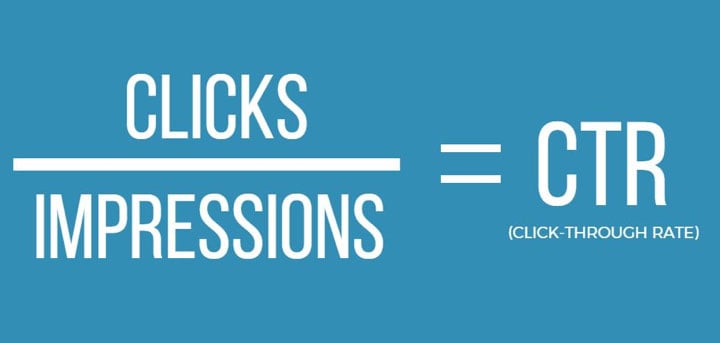
8 Facts About CTR That Will Make You Reconsider Your SEO

Click-Through Rate (CTR)

Visitors are the lifeblood of a website. Its why site owners spend a fortune on PPC ads and invest heavily in social media campaigns. The holy grail for websites, however, is organic traffic, that which comes free from search engines. Getting that organic traffic depends on two key things: first, ranking high enough to be seen and, secondly, getting the user to click through to your site. To highlight the importance of ranking and clickthrough rates, here are eight eye-opening facts you might want to consider.

1. Top spot gets over 30% of clicks

Top Google Result Gets 36.4% of Clicks [Study] - Search Engine Watch

When it comes to Google, the world’s most popular search engine, the site which ranks number one in the results gets, on average, a whopping 31.7 percent of all the clickthroughs. That means, if there are 1,000 daily searches for that term, that website will get 317 visitors. Things aren’t too bad for places two and three, either, with the top three results, between them, getting a combined average of 75 percent of all the clickthroughs.

The bad news for all the other sites is that once the lions’ share has been taken away, they are left with only 25 percent of clickthroughs between them – and the share diminishes the further down the results they go.

2. Disparity of clicks on first page

CTR

While getting on the first page might seem like an achievement, the number 10 position is far less lucrative in terms of clickthroughs than the page hitting the top spot. Indeed, it will only receive 10 percent of the traffic that the number one site gets. In this case, 1,000 daily searches will only bring in 31 visitors: a trawl that may need backing up with PPC advertising.

3. Rising one place brings big benefits – most of the time

An All-In-One Guide To Boost Employee Job Satisfaction

The higher your page ranks in search engine results, the more visitors you’ll get. On average, each step up will increase clickthroughs by around a third, however, this isn’t evenly distributed. While jumping from 6th to 5th will boost your CTR by 53 percent, going from 9th to 8th will only bring you a 5 percent increase.

The duff position on Google’s top page is number 9. Moving from 10th to 9th position will actually see your clickthroughs drop by almost 4 percent.

4. A question is the answer to higher rankings

CTR

With searchers often asking questions in their queries, websites that provide the answer are always going to perform better in search results. In addition, pages that include the question in their title get a bigger slice of the visitors – on average, 14 percent more than those which don’t have the question. This may influence how you decide to title your pages.

5. Middling title lengths do better

Hefty history of Cold War middling - Winnipeg Free Press

Google doesn’t stipulate a maximum number of characters in webpage titles and what gets displayed is dependent on the device on which it is viewed. In general, most SEO websites tell you to keep it to a maximum of 60 characters if you want the bulk of your titles displayed in full. The result is that many website owners try to fill up the 60 characters by adding keywords if they have additional room.

Research shows, however, that short to medium length titles perform best for clickthroughs, with those between 15 and 40 characters getting almost 9 percent more visitors than those with longer or shorter titles. It may be worth re-examining your titles and making the overly long ones a little more succinct.

6. URL keywords boost traffic  
CTR

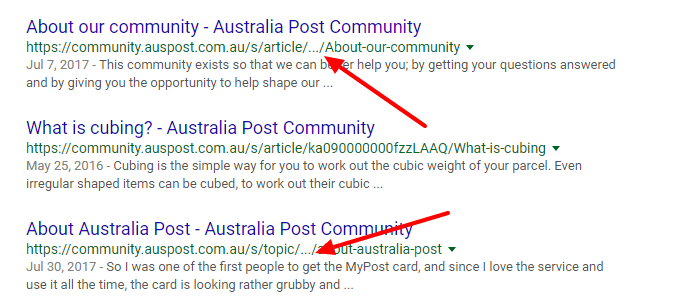
With all the important information in the title and the snippet, it’s likely that the user will only cast a glancing eye over the URL. That said, URLs that contain keywords included in the search query perform 45 percent better than those which don’t when it comes to clickthroughs rates (CTR). This is probably because having a keyword in the URL helps the page rank better.

7. Title wording affects clicks

10 keywords to get more clicks on your titles

The language you use in your titles can have an impact on your CTR. If you want to improve clickthroughs, try adding emotive language. Those with both positive and negative feelings gained a 7 percent increase in traffic. However, those that seek to draw users’ attention through the use of power terms (e.g. 8 Ways to Instantly improve SEO or Amazing new website tool) achieved 14 percent fewer clickthroughs.

8. Meta descriptions give click boost
How to Write High-Converting Meta Descriptions to Boost Rankings

The two advantages of writing a meta description are that search engines use the keywords you place within it to help determine if your page should rank and that, if it does rank, the snippet often displays the information from the meta description.

Careful writing of the meta description so that it appeals to your readers and includes keywords can help it rank better and lead to a 5.8 percent improvement in CTR.

Conclusion

The more organic traffic your website receives from search engines, the less reliant you will need to be on expensive PPC advertising. While ranking highly is important for page visibility, increasing your traffic is entirely dependent on getting users to click on your links. Hopefully, the facts mentioned here will help you improve your CTR.
The Benefits of Google’s Grow My Store Tool for eCommerce Websites

How to Increase Ecommerce Sales: 10 Tactics From 53 Experts

As the world’s leading search engine, Google is in a good position to understand what makes online stores successful. Indeed, its influence gives it the power to set the criteria by which eCommerce websites are judged. Its latest tool, Grow My Store, is designed to provide online shop owners with valuable information and site analysis that can help them improve. Here, we’ll take a closer look at what the tool has to offer.

What does Grow My Store do?

Improve Your Retail Website Customer Experience | Grow My Store

Google’s primary objective is to offer its users the best search results. While it constantly works to improve its search algorithm, it also tries to improve the quality of the websites that feature in its search results. Those that follow its guidance generally end up ranking higher. This is why it has so much power and influence. One of the key attributes that Google wants online stores to improve is customer experience. The Grow My Store tool was designed with this in mind and is particularly aimed at small and medium-sized retail sites.

In a nutshell, the Grow My Store tool will scan your online store and provide you with a customer experience report which will point out what you are doing well and areas where you should look to make improvements. The benefits, apart from helping your site to be more Google-friendly, are that improved customer experience can increase your revenue by as much as 15% and also help you cut costs.

What kind of websites can use Grow My Store?

25 Retail News Websites You Can't Afford to Miss

The tool is designed to analyse the websites of all retailers, whether you only sell via a bricks and mortar store, only sell online or sell both online and in store. The feedback you get is tailored to the particular business model that you have. However, while the tool is helpful for retailers who don’t sell directly from their websites, it’s not designed to help businesses that aren’t in the retail sector.

Getting started with Grow My Store

Enhance your ecommerce site with Grow My Store - Think with Google

Like most of Google’s website analysis tools, using Grow My Store is easy. Simply visit the Grow My Store page and paste in your website’s URL and click the ‘Get Started’ Button. You will then be asked to choose your business model (i.e. online only, physical store only or both) so that results can be tailored to your needs.

After this, you are asked to choose the sector which best suits your site. The options are limited to apparel, beauty and personal care, computers and consumer electronics, food and groceries, home and garden and other. If you choose ‘other’, you are able to type in something more specific. Once this information is inputted, the tool will begin analysing your website. To get the full report, you’ll need to sign up or sign in.

What kind of feedback will I receive?

How to Get Customer Feedback (20 Tried & Tested Methods)

Google will analyse your site on 22 areas of customer experience best practice. These include basic things like having a returns policy, clear pricing and adequate product information, as well as website features such as easy site navigation, live chat support and a customer-friendly checkout process.

The tool will analyse site speed, including loading times, how long it takes for customers to be able to interact with the site and the time it takes for the site to respond to interactions – all of which can affect bounce rates and shopping cart abandonment. It will examine mobile friendliness, which is increasingly important as more people shop with smartphones and use them to search for local stores. From a security perspective, it will look to see whether you have an SSL certificate installed that encrypts data sent between the user’s browser and your server, keeping payment details secure.

Other areas the tool will report back on include whether you have product ratings enabled; if you display basic store information (e.g. opening times and location and direction details for physical stores); how well your site offers personalisation; how easy you make it for customers to order, return and collect products; and the quality of your fulfilment and customer service.

When completed, the tool will give your store an overall rating and compare it to the average of similar stores. It will also offer advice and guidance on areas in which it thinks you can improve.

Conclusion

It’s always helpful to get feedback on the quality of your online store. The information provided by Google’s Grow My Store Tool can offer insights that you might not have previously considered or highlight issues that you were unaware of. What’s more, it can show you how well your site performs in relation to your competitors. Hopefully, it can help you improve your customer experience and reap the benefits of doing so.

How to rank higher in Search Engine Optimization in 2019

7 SEO Trends That Will Matter Most in 2021

With the onward development of search engine algorithms, website owners everywhere will need to make changes in how they conduct their SEO. Today, with advanced technologies like artificial intelligence and machine learning at their disposal, search engines can better understand the intentions of a user and provide results which accurately meet their needs. In addition, the changes in how we use the internet, mobile searches, for example, are also affecting the way we optimise our sites. With these developments in mind, here we’ll look at how this will impact SEO in 2019.

Changing content to match algorithm updates

Google Algorithm Updates & Changes - Absolute Digital

RankBrain is Google’s machine learning, AI-based algorithm. Although it has been around since 2015, its use of machine learning means that it is continually discovering how to produce better results. One of its key abilities is to ‘understand’ the content of a website. Rather than rely purely on things like keywords to discover whether a site was relevant to a search query, it is able to consider the entire content to give it a more in-depth understanding of the subject matter being discussed.

It does this by analysing the pages for subject-related terms and other content that help it identify the topic and purpose more precisely than ever before. For example, it can understand whether someone is searching for a web hosting product, information about web hosting or a technical web hosting knowledge base and can differentiate between these different types of content to ensure the right pages show up in the user’s result.

What does this mean for SEO? It means that rather than focus simply on putting keywords in the right places, you’ll also need to ensure your content includes information which contains all the other related terms that the algorithm will look for.

Optimizing for ‘Mobile First Indexing’

How to optimize your eCommerce store for the mobile-first index

Since the numbers of mobile searches overtook desktop searches, Google has moved its focus even further towards mobile devices. Last year, it introduced Mobile First Indexing, essentially using the mobile rather than the desktop version of your site as the one it uses to rank pages in results.

As a consequence, the focus of your SEO should now be on your mobile site. While the content may be the same on both, things to consider will include navigation, ease of use and, very importantly, loading times.

The latter will mean more webmasters using caching, CDNs, minification and image optimisation to speed up their sites, as well as a shift away from shared hosting to the much faster VPS. It will also see an increase in the number of sites using accelerated mobile pages (AMPs).

Structuring content for the way search results are displayed 

Anatomy of a Google search listing

As you may have noticed, when you type a question into Google, it is now able to produce an answer directly in the search results in the form of a knowledge graph. The knowledge graph is a detailed excerpt from a web page that is presented in a box right at the top of the search results.

Another change that Google has introduced is putting a list of related questions underneath the knowledge graph before showing the list of other ranking websites. Clicking on each of these questions produces a featured extract from other websites that answer those questions.

The rest of the top results also have features snippets which, in some way, give an answer to the question too. To get these most prized ranking positions, it means reconsidering how you present the information on your websites – such as in the form of questions and answers, lists and structured tables.

Providing search engines with structured data

The Beginner's Guide to Structured Data for SEO - Moz

Search engine have been calling for increased use of structured data markup for quite a few years and this year will see an increase in websites doing just that. The reason is simple, the more structured data you add to your HTML, the better a search engine can understand the content and structure of your site. Doing this enables the search engine to see your page’s relevance to a search query far easier and thus helps you rank for the right queries.

The other benefit of markup is that it can be used to highlight content that appears in the actual search results and which can help increase clickthrough rates – such as user ratings and meta descriptions.

Adapting to new search behaviours

COVID-19: Effect on Human Behavior | Accenture

As smartphone keyboards are an effort to use accurately and typing queries on smart speakers like Amazon Echo is impossible, more and more people are using voice search. Indeed, our fondness for it on these devices has increased the numbers of people using voice on PCs with Google Assistant and Cortana.

These types of searches have a consequence for SEO as we use different forms of language. When we speak, we use natural language, e.g., ‘find me a builder in Leeds,’ whereas with a keyboard, we’d just type ‘builder Leeds’.

This has obvious implications for websites that have heavily focused on keywords in the past. Natural speech is more likely to use longtail keywords and content which features them is likely to rank better in voice search results.

Conclusion

SEO is a dynamic process that constantly requires website owners to react to developments in search engine algorithms and to changes in the way people search the internet. Hopefully, the trends we have discussed here will help you make the right changes to your SEO strategy in the coming year, improving your rankings and increasing your organic traffic.

error: Content is protected !!