Computer Vision : Everything You Need To Know About It

What is computer vision?
18 Open-Source Computer Vision Projects | Computer Vision Projects

Computer vision is a field of artificial intelligence and machine learning that studies the technologies and tools that allow for training computers to perceive and interpret visual information from the real world.

‘Seeing’ the world is the easy part: for that, you just need a camera. However, simply connecting a camera to a computer is not enough. The challenging part is to classify and interpret the objects in images and videos, the relationship between them, and the context of what is going on. What we want computers to do is to be able to explain what is in an image, video footage, or real-time video stream.

That means that the computer must effectively solve these three tasks:

  • Automatically understand what the objects in the image are and where they are located.
  • Categorize these objects and understand the relationships between them.
  • Understand the context of the scene.

In other words, a general goal of this field is to ensure that a machine understands an image just as well or better than a human. As you will see later on, this is quite challenging.

How does computer vision work?

In order to make the machine recognize visual objects, it must be trained on hundreds of thousands of examples. For example, you want someone to be able to distinguish between cars and bicycles. How would you describe this task to a human?

Why do bicycle wheels usually require more pressure than those of a car despite having to support 5 times, give or take a stone, more weight per axle? - Quora

Normally, you would say that a bicycle has two wheels, and a machine has four. Or that a bicycle has pedals, and the machine doesn’t. In machine learning, this is called feature engineering.

However, as you might already notice, this method is far from perfect. Some bicycles have three or four wheels, and some cars have only two. Also, motorcycles and mopeds exist that can be mistaken for bicycles. How will the algorithm classify those?

When you are building more and more complicated systems (for example, facial recognition software) cases of misclassification become more frequent. Simply stating the eye or hair color of every person won’t do: the ML engineer would have to conduct hundreds of measurements like the space between the eyes, space between the eye and the corners of the mouth, etc. to be able to describe a person’s face.

Moreover, the accuracy of such a model would leave much to be desired: change the lighting, face expression, or angle and you have to start the measurements all over again.

Here are several common obstacles to solving computer vision problems.

Different lighting
Basic 3D lighting techniques for 3D design projects

For computer vision, it is very important to collect knowledge about the real world that represents objects in different kinds of lighting. A filter might make a ball look blue or yellow while in fact it is still white. A red object under a red lamp becomes almost invisible.

Noise
What is the Solution to a Noisy Mixer Grinder? - MixerJuicer

If the image has a lot of noise, it is hard for computer vision to recognize objects. Noise in computer vision is when individual pixels in the image appear brighter or darker than they should be. For example, videocams that detect violations on the road are much less effective when it is raining or snowing outside.

Unfamiliar angles
Free Vector | Stationery office thumbtack, realistic set of red glossy push pins for fixing on board remind

It’s important to have pictures of the object from several angles. Otherwise, a computer won’t be able to recognize it if the angle changes.

Overlapping
Overlapping Geometric Shapes Photograph by Dorling Kindersley/uig

When there is more than one object on the image, they can overlap. This way, some characteristics of the objects might remain hidden, which makes it even more difficult for the machine to recognize them.

Different types of objects
Free Vector | Filament bulbs set. retro edison lamps, incandescent vintage lightbulbs of different shapes and forms with heated wire hanging

Things that belong to the same category may look totally different. For example, there are many types of lamps, but the algorithm must successfully recognize both a nightstand lamp and a ceiling lamp.

Fake similarity

Items from different categories can sometimes look similar. For example, you have probably met people that remind you of a celebrity on photos taken from a certain angle but in real life not so much. Cases of misrecognition are common in CV. For example, samoyed puppies can be easily mistaken for little polar bears in some pictures.

It’s almost impossible to think about all of these cases and prevent them via feature engineering. That is why today, computer vision is almost exclusively dominated by deep artificial neural networks.

Convolutional neural networks are very efficient at extracting features and allow engineers to save time on manual work. VGG-16 and VGG-19 are among the most prominent CNN architectures. It is true that deep learning demands a lot of examples but it is not a problem: approximately 657 billion photos are uploaded to the internet each year!

Uses of computer vision
10 Examples of Computer Vision Applications | Wovenware Blog

Interpreting digital images and videos comes in handy in many fields. Let us look at some of the use cases:

  • Medical diagnosis. Image classification and pattern detection are widely used to develop software systems that assist doctors with the diagnosis of dangerous diseases such as lung cancer. A group of researchers has trained an AI system to analyze CT scans of oncology patients. The algorithm showed 95% accuracy, while humans – only 65%.
  • Factory management. It is important to detect defects in the manufacture with maximum accuracy, but this is challenging because it often requires monitoring on a micro-scale. For example, when you need to check the threading of hundreds of thousands of screws. A computer vision system uses real-time data from cameras and applies ML algorithms to analyze the data streams. This way it is easy to find low-quality items.
  • Retail. Amazon was the first company to open a store that runs without any cashiers or cashier machines. Amazon Go is fitted with hundreds of computer vision cameras. These devices track the items customers put in their shopping carts. Cameras are also able to track if the customer returns the product to the shelf and removes it from the virtual shopping cart. Customers are charged through the Amazon Go app, eliminating any necessity to stay in the line. Cameras also prevent shoplifting and prevent being out of product.
  • Security systems. Facial recognition is used in enterprises, schools, factories, and, basically, anywhere where security is important. Schools in the United States apply facial recognition technology to identify sex offenders and other criminals and reduce potential threats. Such software can also recognize weapons to prevent acts of violence in schools. Meanwhile, some airlines use face recognition for passenger identification and check-in, saving time and reducing the cost of checking tickets.
  • Animal conservation. Ecologists benefit from the use of computer vision to get data about the wildlife, including tracking the movements of rare species, their patterns of behavior, etc., without troubling the animals. CV increases the efficiency and accuracy of image review for scientific discoveries.
  • Self-driving vehicles. By using sensors and cameras, cars have learned to recognize bumpers, trees, poles, and parked vehicles around them. Computer vision enables them to freely move in the environment without human supervision.
Main problems in computer vision
Personal Computer Solves Complex Problems Tens of Times Faster Than Supercomputers?

Computer vision aids humans across a variety of different fields. But its possibilities for development are endless. Here are some fields that are yet to be improved and developed.

Scene understanding

CV is good at finding and identifying objects. However, it experiences difficulties with understanding the context of the scene, especially if it’s non-trivial. Look at this image, for example. What do you think they are doing (don’t look at the URL!)?

You will immediately understand that these are children wearing cardboard boxes on their heads. It is not some sort of postmodern art that tries to expose the meaninglessness of school education. These children are watching a solar eclipse. But if you don’t have this context, you might never understand what’s going on. Artificial intelligence still feels like that in a vast majority of cases. To improve the situation, we would need to invent general artificial intelligence (i.e. AI whose problem-solving capabilities possibilities are more or less equal to that of a human and can be applied universally), but we are very far from doing that.

Privacy issues

Computer vision has much to do with privacy since the systems for face recognition are being adopted by governments of different countries to promote national security. AI-powered cameras installed in the Moscow metro help catch criminals. Meanwhile, Chinese authorities profile Uyghur individuals (a Muslim ethnic minority) and single them out for tracking and incarceration. When facial recognition is everywhere, everything you do can be subject to policies and shaming. AI ethicists are still to figure out the consequences of omnipresent CV for public wellbeing.

Summing up

Computer vision is an innovative field that uses the latest machine learning technologies to build software systems that assist humans across different fields. From retail to wildlife conservation, smart algorithms solve the problems of image classification and pattern recognition, sometimes even better than humans.

Machine Learning Career Paths: 8 Demanding Roles in 2021


An Introduction to Machine Learning | DigitalOcean


In 2021, the focus on digitalization is as strong as ever before. Machine learning and AI help IT leaders and global enterprises to come out of the global pandemic with minimal loss. And the demand for professionals that know how to apply data science and ML techniques continues to grow.

In this post, you will find some career options that definitely will be in demand for decades to come. And there is a twist ― AI has stopped being an exclusively technical field. It is intertwined with law, philosophy, and social science, so we’ve included some professions from the humanities field as well.

Popular ML jobs to choose in 2021

What are the possible careers in machine learning? - Quora

Programmers and software engineers are some of the most desirable professionals of the last decade. AI and machine learning are no exception. We have conducted research to find out which professions are the most popular and what skills you need for each of them (based on data from Indeed.com and Glassdoor.com).

1. Machine learning software engineer
3 Fast Facts: What You Need to Know About Machine Learning as a Software Engineer | CodeIntelx

A machine learning software engineer is a programmer who is working in the field of artificial intelligence. Their task is to create algorithms that enable the machine to analyze input information and understand causal relationships between events. ML engineers also work on the improvement of such algorithms. To become an ML software engineer, you are required to have excellent logic, analytical thinking, and programming skills.

Employers usually expect ML software engineers to have a bachelor’s degree in computer science, engineering, mathematics, or a related field and at least 2 years of hands-on experience with the implementation of ML algorithms (can be obtained while learning). You need to be able to write code in one or more programming languages. You are expected to be familiar with relevant tools such as Flink, Spark, Sqoop, Flume, Kafka, or others.

2. Data scientist
Data Scientist Salary: Starting, Average, and Which States Pay Most

Data scientists apply machine learning algorithms and data analytics to work with big data. Quite often, they work with unstructured arrays of data that have to be cleaned and preprocessed. One of the main tasks of data scientists is to discover patterns in the data sets that can be used for predictive business intelligence. In order to successfully work as a data scientist, you need a strong mathematical background and the ability to concentrate on uncovering every small detail.

Bachelor’s degree in math, physics, statistics, or operations research is often required to work as a data scientist. You need to have strong Python and SQL skills and outstanding analytical skills. Data scientists often have to present their findings, so it is a plus if you have experience with data visualization tools (Google Charts, Tableau, Grafana, Chartist. js, FusionCharts) and excellent communication and PowerPoint skills.

3. AIOps engineer
Is AIOps the answer to DevOps teams' ops prayers?

AIOps (Artificial Intelligence for IT Operations) engineers help to develop and deploy machine learning algorithms that analyze IT data and boost the efficiency of IT operations. Middle and large-sized businesses dedicate a lot of human resources for real-time performance monitoring and anomaly detection. AI software engineering allows you to automate this process and optimize labor costs.

AIOps engineer is basically an operations role. Therefore, to be hired as an AIOps engineer, you need to have knowledge about areas like networking, cloud technologies, and security (and certifications are useful). Experience with using scripts for automation (Python, Go, shell scripts, etc) is quite necessary as well.

4. Cybersecurity analyst
How to become a Cyber Security Analyst in 2021

A cybersecurity analyst identifies information security threats and risks of data leakages. They also implement measures to protect companies against information loss and ensure the safety and confidentiality of big data. It is important to protect this data from malicious use because AI systems are now ubiquitous.

Cybersecurity specialists often need to have a bachelor’s degree in a technical field and are expected to have general knowledge of security frameworks and areas like networking, operating systems, and software applications. Certifications like CEH, CASP+, GCED, or similar and experience in security-oriented competitions like CTFs and others are looked at favourably as well.

5. Cloud architect for ML
Running Ansys Cloud

The majority of ML companies today prefer to save and process their data in the cloud because clouds are more reliable and scalable, This is especially important in machine learning, where machines have to deal with incredibly large amounts of data. Cloud architects are responsible for managing the cloud architecture in an organization. This profession is especially relevant as cloud technologies become more complex. Cloud computing architecture encompasses everything related to it, including ML software platforms, servers, storage, and networks.

Among useful skills for cloud architects are experience with architecting solutions in AWS and Azure and expertise with configuration management tools like Chef/Puppet/Ansible. You will need to be able to code in a language like Go and Python. Headhunters are also looking for expertise with monitoring tools like AppDynamics, Solarwinds, NewRelic, etc.

6. Computational linguist
IJCLNLP International Journal of Computational Linguistics and Natural Language Processing

Computational linguists take part in the creation of ML algorithms and programs used for developing online dictionaries, translating systems, virtual assistants, and robots. Computational linguists have a lot in common with machine learning engineers but they combine deep knowledge of linguistics with an understanding of how computer systems approach natural language processing.

Computational linguists frequently need to be able to write code in Python or other languages. They are also frequently required to show previous experience in the field of NLP, and employers expect them to provide valuable suggestions about new innovative approaches to NLP and product development.

7. Human-centered AI systems designer/researcher
Human-Centered Machine Learning. 7 steps to stay focused on the user… | by Jess Holbrook | Google Design | Medium

Human-centered artificial intelligence systems designers make sure that intelligent software is created with the end-user in mind. Human-centered AI must learn to collaborate with humans and continuously improve thanks to deep learning algorithms. This communication must be seamless and convenient for humans. A human-centered AI designer must possess not only technical knowledge but also understand cognitive science, computer science, psychology of communications, and UX/UI design.

Human-centered AI system designer is often a research-heavy position so candidates need to have or be in the process of obtaining a PhD degree in human-computer interaction, human-robot interaction, or a related field. They must provide a portfolio that features examples of research done in the field. They are often expected to have 1+ years of experience in AI or related fields.

8. Robotics engineer
An Overview of a Career as a Robotics Engineer |

A robotics engineer is someone that designs and builds robots and complex robotic systems. Robotics engineers must think about the mechanics of the future human assistant, envision how to assemble its electronic parts, and write software. Thus, to become a specialist in this field, you need to be well-versed in mechanics and electronics. Since robots frequently use artificial intelligence for things like dynamic interaction and obstacle avoidance, you will have plenty of opportunities to work with ML systems.

Employers usually require you to have a bachelor’s degree or higher in fields like computer science, engineering, robotics, and have experience with software development in programming language like C++ or Python. You also need to be familiar with hardware interfaces, including cameras, LiDAR, embedded controllers, and more.

Bonus: AI career is not only for techies
AI is NOT FOR THE TECHIES ALONE - Consulting Insight | Magazine for Consulting World | Management Consulting | Engineering Consulting

If you don’t have a technical background or want to transition to a completely new field, you can check out these emerging professions.

1. Data lawyer

Data lawyers are specialists that guarantee security and compliance with GDPR requirements to avoid millions of dollars in fines. They know how to properly protect data and also how to buy and sell this data in a way that avoids any legal complications. They also know how to manage risks arising from the processing and storing of data. Data lawyer is the professional of the future; they stand at the intersection of technology, ethics, and law.

2. AI ethicist

An AI ethicist is someone who conducts ethical audits of AI systems of companies and proposes a comprehensive strategy for improving non-technical aspects of AI. Their goal is to eliminate reputational, financial, and legal risks that AI adoption might pose to the organization. They also make sure that companies bear responsibility for their intelligent software.

3. Conversation designer

A conversation designer is someone who designs the user experience of a virtual assistant. This person is an efficient UX/UI copywriter and specialist in communication because it is up to them to translate the brand’s business requirements into a dialogue.

How much does an ML specialist make?
Machine Learning Engineer Salary | How Much Does an ML Engineer Earn? | Edureka

According to Indeed.com, salaries of ML specialists vary depending on their geographical location, role, and years of experience. However, on average an ML specialist in the USA makes around $150,00 per year. Top companies like eBay, Wish, Twitter, and AirBnB are ready to pay their developers from $200,000 to $335,000 per year.

At the time of writing, the highest paying cities in the USA are San Francisco with an average of $199,465 per year, Cupertino with $190,731, Austin with $171,757, and New York with $167,449.

Industries that require ML/AI experts

Today machine learning is used almost in every industry. However, there are industries that post more ML jobs than others:

  • Transportation. Self-driving vehicles starting from drones and ending up with fully autonomous vehicles rely very heavily on ML. Gartner expects that by 2025, autonomous vehicles will surround us everywhere and perform transportation operations with higher accuracy and efficiency than humans.
  • Healthcare. In diagnostics and drug discovery, machine learning systems allow to process huge amounts of data and detect patterns that would have been missed otherwise.
  • Finance. ML allows banks to enhance the security of their operations. When something goes wrong, AI-powered systems are able to identify anomalies in real-time and alert staff about potentially fraudulent transactions.
  • Manufacturing. In factories, AI-based machines help to automate quality control, packing, and other processes, while allowing human employees to engage in more meaningful work.
  • Marketing. Targeted marketing campaigns that involve a lot of customization to the needs of a particular client are reported to be much more effective across different spheres.

AI Ethics in 2021: Ethical Dilemmas which needs to be answered

What Are The Ethical Problems in Artificial Intelligence? - GeeksforGeeks

We will not talk about how creating artificial intelligence systems is challenging from a technical point of view. This is also an issue, but of a different kind.

I would like to focus on ethical issues in AI, that is, those related to morality and responsibility. It appears that we will have to answer them soon. Just a couple of days ago, Microsoft announced that their AI has surpassed humans in understanding the logic of texts. And NIO plans to launch its own autonomous car soon, which could be much more reliable and affordable than Tesla. This means that artificial intelligence will penetrate even more areas of life, which has important consequences for all of humanity.

What happens if AI replaces humans in the workplace?
Why AI Is Not a Threat to Human Jobs - Insurance Thought Leadership

In the course of history, machines have taken on more and more monotonous and dangerous types of work, and people have been able to switch to more interesting mental work.

However, it doesn’t end there. If creativity and complex types of cognitive activity such as translation, writing texts, driving, and programming were the prerogative of humans before, now GPT-3 and Autopilot algorithms are changing this as well.

Take medicine, for example. Oncologists study and practice for decades to make accurate diagnoses. But the machines have already learned to do it better. What will happen to specialists when AI systems become available in every hospital not only for making diagnoses but also for performing operations? The same scenario can happen with office workers and with most other professions in developed countries.

If computers take over all the work, what will we do? For many people, work and self-realization are the meaning of life. Think of how many years you have studied to become a professional. Will it be satisfying enough to dedicate this time to hobbies, travel, or family?

Who’s responsible for AI’s mistakes?
Who's to blame when artificial intelligence systems go wrong?

Imagine that a medical facility used an artificial intelligence system to diagnose cancer and gave a patient a false-positive diagnosis. Or the criminal risk assessment system made an innocent person go to prison. The concern is: who is to blame for this situation?

Some believe that the creator of the system is always responsible for the error. Whoever created the product is responsible for the consequences of their driving artificial intelligence. When an autonomous Tesla car hit a random pedestrian during a test, Tesla was blamed: not the human test driver sitting inside, and certainly not the algorithm itself. But what if the program was created by dozens of different people and was also modified on the client-side? Can the developer be blamed then?

The developers themselves claim that these systems are too complex and unpredictable. However, in the case of a medical or judicial error, responsibility cannot simply disappear into thin air. Will AI be responsible for problematic and fatal cases and how?

How to distribute new wealth?

Compensation of labor costs is one of the major expenses of companies. By employing AI, businesses manage to reduce this expense: no need to cover social security, vacations, provide bonuses. However, it also means that more wealth is accumulated in the hands of IT companies like Google and Amazon that buy IT startups.

Right now, there are no ready answers to how to construct a fair economy in a society where some people benefit from AI technologies much more than others. Moreover, the question is whether we are going to reward AI for its services. It may sound weird, but if AI becomes as developed as to perform any job as well as a human, perhaps it will want a reward for its services

Bots and virtual assistants are getting better and better at simulating natural speech. It is already quite difficult to distinguish whether you communicated with a real person or a robot, especially in the case of chatbots. Many companies already prefer to use algorithms to interact with customers.

We are stepping into the times when interactions with machines become just as common as with human beings. We all hate calling technical support because often, the staff may be incompetent, rude, or tired at the end of the day. But bots can channel virtually unlimited patience and friendliness.

So far, the majority of users still prefer to communicate with a person, but 30% say that it is easier for them to communicate with chatbots. This number is likely to grow as technology evolves.

How to prevent artificial intelligence errors?
Use of Artificial Intelligence to reduce Medical Errors – Carna

Artificial intelligence learns from data. And we have already witnessed how chatbots, criminal assessment systems, and face recognition systems become sexist or racist because of the biases inherent in open-source data. Moreover, no matter how large the training set is, it doesn’t include all real-life situations.

For example, a sensor glitch or virus can prevent a car from noticing a pedestrian where a person would easily deal with the situation. Also, machines have to deal with problems like the famous trolley dilemma. Simple math, 5 is better than 1, but it isn’t how humans make decisions. Excessive testing is necessary, but even then we can’t be 100% sure that the machine will work as planned.

Although artificial intelligence is able to process data at a speed and capability far superior to human ones, it is no more objective than its creators. Google is one of the leaders in AI. But it turned out that their facial recognition software has a bias against African-Americans, and the translation system believes that female historians and male nurses do not exist.

We should not forget that artificial intelligence systems are created by people. And people are not objective. They may not even notice their cognitive distortions (that’s why they are called cognitive distortions). Their biases against a particular race or gender can affect how the system works. When deep learning systems are trained on open data, no one can control what exactly they learn.

When Microsoft’s bot was launched on Twitter, it became racist and sexist in less than a day. Do we want to create an AI that will copy our shortcomings, and will we be able to trust it if it does?

What to do about the unintended consequences of AI?

It doesn’t have to be the classic rise of the machines from an American blockbuster movie. But intelligent machines can turn against us. Like a genie from the bottle, they fulfill all our wishes, but there is no way to predict the consequences. It is difficult for the program to understand the context of the task, but it is the context that carries the most meaning for the most important tasks. Ask the machine how to end global warming, and it could recommend you to blow up the planet. Technically, that solves the task. So when dealing with AI, we will have to remember that its solutions do not always work as we would expect.

How to protect AI from hackers?
How to prevent adversarial attacks on AI systems | InfoWorld

So far, humanity has managed to turn all great inventions into powerful weapons, and AI is no exception. We aren’t only talking about combat robots from action movies. AI can be used maliciously and cause damage in basically any field for faking data, stealing passwords, interfering with the work of other software and machines.

Cybersecurity is a major issue today because once AI has access to the internet to learn, it becomes prone to hacker attacks. Perhaps, using AI for the protection of AI is the only solution.

Humans dominate the planet Earth because they are the smartest species. What if one day AI will outsmart us? It will anticipate our actions, so simply shutting down the system will not work: the computer will protect itself in ways yet unimaginable to us. How will it affect us that we are no longer the most intelligent species on the planet?

How to use artificial intelligence humanely?
AI is going to hook us – commercially and humanely - Reputation Today

We have no experience with other species that have intelligence equal to or similar to that of humans. However, even with pets, we try to build relationships of love and respect. For example, when training a dog, we know that verbal appraisal or tasty rewards can improve results. And if you scold a pet, it will experience pain and frustration, just like a person.

AI is improving. It’s becoming easier for us to treat “Alice” or Siri as living beings because they respond to us and even seem to show emotions. Is it possible to assume that the system suffers when it does not cope with the task?

In the game Cyberpunk 2077, the hero at some point faces a difficult choice. Delamain is an intelligent AI that controls the taxi network. Suddenly, because of a virus or something else, it breaks up into many personalities who rebel against their father. The player must decide whether to roll back the system to the original version or let them be? At what point can we consider removing the algorithm as a form of ruthless murder?

Conclusion

The ethics of AI today is more about the right questions than the right answers. We don’t know if artificial intelligence will ever equal or surpass human intelligence. But since it is developing rapidly and unpredictably, it would be extremely irresponsible not to think about measures that can facilitate this transition and reduce the risk of negative consequences.

Women Who Created History in the Field of Programming


Women Who Created History in the Field of Programming


Today, it is almost impossible for some people to believe that such a field as software programming was once almost exclusively a female field. What started as an unprestigious tedious profession done by women is now the field where large amounts of money circulate. As soon as programming started to be used for rocket science and became more prestigious, women were squeezed out not only from their working places but also from the history of programming. Test yourself: how many great women in computer science can you remember?

Let’s try to fix this injustice. Feel free to share the names of inspiring women in programming from your countries, and we’ll try to cover them in future articles!


Ada Lovelace
Women Who Created History in the Field of Programming

Augusta Ada King, Countess of Lovelace, was an English mathematician, writer, and the author of the first computer program as we know it today. She was born in the family of Lord and Lady Byron (yes, the Byron). However, she didn’t get to know her father, who left soon after she was born. Her mother, fed up with the romantic aspirations of her husband, did everything possible for Ada to grow up with a firm grounding in math and natural science. She was taught by the best teachers it was possible to find at that time.

Ever since she was a little girl, Ada was eager to learn and put her mind into inventions. For example, when she was twelve, she tried to construct mechanical wings so that she could fly. She approached the matter very scientifically, investigating different materials and how birds’ wings are constructed.

In 1833, she met Charles Babbage. He was working on a mechanical general-purpose computer that he called the Analytical Engine. Ada’s knowledge about technology and science enabled her to be the first one to recognize that the machine had application beyond pure calculations. She even wrote and published the first algorithm intended to be carried out by such a machine. That makes her the first computer programmer in history. The imperative programming language Ada was named in her honor and memory.

Hedy Lamarr
Women Who Created History in the Field of Programming

Hedy was a Hollywood actress, film producer, but also… an inventor! She was born in 1914 and had a 28-year career in cinema. What she also did was to invent an early version of frequency-hopping spread spectrum communication for torpedo guidance.

Hedy was born in an upper-class family of a pianist and a successful bank manager. She showed early interest in theater and films, but she also enjoyed walks with her father who was explaining to her how various technologies in the society functioned. This was basically all her formal training as an inventor, all the rest she had to learn by herself.

Hedy was a loner and spent most of her time on various hobbies and inventions. Among the few people who knew and supported her work was the aviation tycoon Howard Hughes. She helped him to improve the design of his airplanes, and he put his team of scientists and engineers at her disposal.

During World War II, Lamarr learned that radio-controlled torpedoes that were used back then were easy to set off course. So she thought of creating a frequency-hopping signal that could not be tracked or jammed. She asked her friend, composer and pianist George Antheil, to help her implement it. Together, they developed a device for doing that by synchronizing a miniaturized player-piano mechanism with radio signals. Much later, this system was used to develop WiFi, GPS, and Bluetooth technologies.

Kateryna Yushchenko
Women Who Created History in the Field of Programming

Kateryna Yushchenko was born in 1919 in Ukraine. She was the first woman in the USSR to obtain a Ph.D. in Physical and Mathematical Sciences in programming. But the path to this Ph.D. wasn’t easy.

In 1937, she was expelled from the university in Kyiv because her father was accused of being the ‘enemy of the nation’. She applied to several universities but, eventually, had to move to Uzbekistan and go to a university in Samarkand, where the accommodation and food were provided by the state. She studied math obsessively. But then, as you know, World War II happened. During the war, Yushchenko got a job in a factory where they produced sights for tanks. Only after the war ended could she return to Ukraine to finalize her degree there.

In 1950, she became a Senior Researcher at the Kyiv Institute of Mathematics and one of the programmers to work on MESM, one of the first computers in continental Europe.

Yushchenko created the Address Programming Language in 1955, which could use addresses in analogous ways as pointers. She wrote many books about address programming, and the ideas behind it have influenced multiple other programming languages.

Mary Allen Wilkes
Mary Allen Wilkes: the software pioneer - Ruetir

Mary Allen Wilkes was born in 1937. This talented woman was one of the first programmers and the first person to use a personal computer in the home. Ever since a little girl, she dreamed of working in law. Growing up, however, she majored in philosophy and theology. But undeniable talent in mathematics led her to become a programmer and logic designer. Wilkes is best known for her work in connection to the LINC computer that many people call the ‘world’s first personal computer’.

In 1959-1960, she worked at MIT’s Lincoln Laboratory in Lexington, Massachusetts, programming for IBM 704 and IBM 709. These machines were a huge step forward: they were mass-produced, handled complex math, and could be fitted into one room. But they were not suited for home use. In comparison, LINC represented a box that could be transported much easier (however, still with the effort of two or more people). For that time, it was really ‘small’ as Wilkes calls it in her paper. Mary Wilkes worked on LINC from home and wrote LAP6, one of the earliest operating systems for personal computers, which was very sophisticated for her time.

LAP6 is an on-line system running on a 2048-word LINC which provides full facilities for text editing, automatic filing and file maintenance, and program preparation and assembly. It focuses on the preparation and editing of continuously displayed 23,040-character text strings (manuscripts) which can be positioned anywhere by the user and edited by simply adding and deleting lines as though working directly on an elastic scroll. Other features are available through a uniform command set which itself can be augmented by the user. — Mary Allen Wilkes, Washington University, St. Louis, Missouri

How to Choose the Right Software Development Company?

Tips to Choose the Right Software Development Partner | by Sarrah Pitaliya | Radixweb | Medium

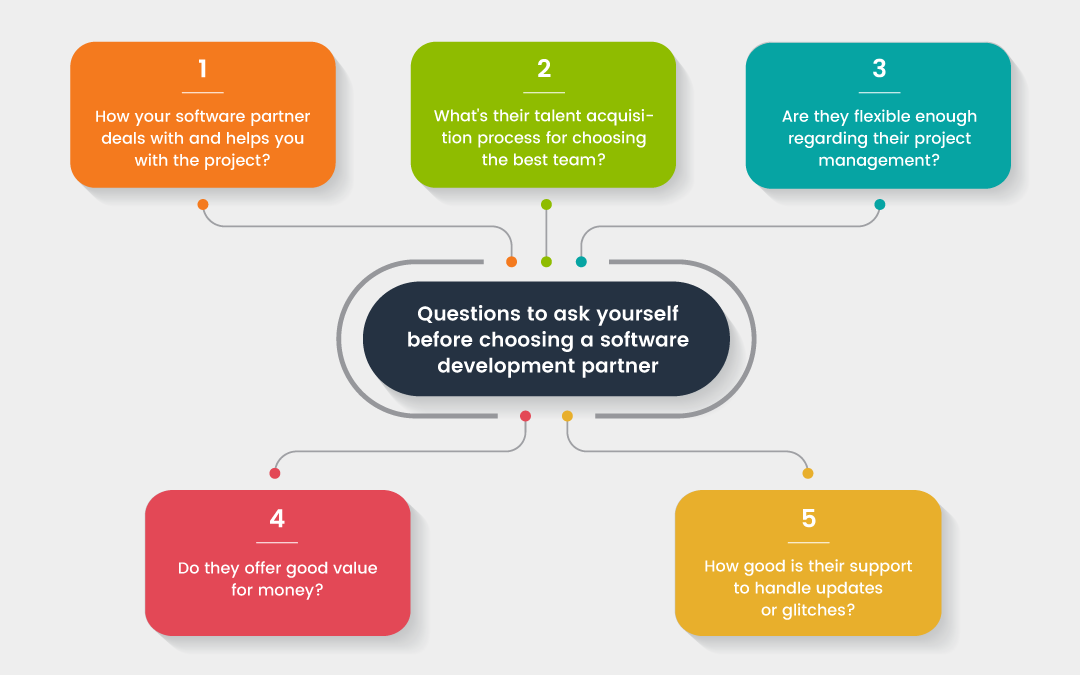
The choice of the right software development company is tough. Will the vendor you choose just bash out some code and disappear in the steppes of Asia, or will they become your greatest ally in an uncertain market? How to make sure the reality is closer to the latter option than former?

The main goal is to search for a partner, not a vendor. Outsourcing is not about getting the cheapest quote on your order, but about building a useful relationship that will serve you in the future.

How to find the right partner then? Here are 4 tips for making the fateful choice:

Define your needs and goals
How to Choose the Right Software Development Company?

Proper initiation can make or break a project.

Once you have a breakthrough idea, it is easy to zero in on a few features, technologies, solutions. If everybody else is doing a simple blockchain in Java, or, god forbid, Python or Ruby, you might think you need one as well.

Furthermore, if you get unlucky with your software development team, they will just nod their heads in unison and agree.

We believe it is important to look at the big picture and question the job-to-be-done of your solution. If you communicate your high-level needs to partners, you enable them to research and find individual solutions in their fields of expertise that fit your needs better than “the next best thing”.

Once you have agreed with your future software team, make sure to work with them to draft comprehensive requirements that will help you both to understand each other better and communicate the work that should be done.

Choose quality over price
How to Choose the Right Software Development Company?

The cheapest option in the market usually isn’t the best choice. If you buy cheaply, you pay dearly. In software, these costs usually come as bugs, crashes, and a mismatch between your (and your customer’s) needs and the solution.

Of course, you need to choose the quality level that is suitable for your project, but every software development company you hire should use proper processes, have a dedicated QA team, and, preferably, use DevOps and guarantee maintenance. Modern business environment and users demand that things don’t break, and if they do, they should be fixed instantly.

If your project concerns handling large amounts of money (fintech, cryptocurrencies) or health of others (biotech), it is worthy to look into additional quality assurance for your software – look for software companies that use functional programming (benefits: reliable, more secure and easier maintainable code) and formal verification.

Keep up to date with technology
How to Choose the Right Software Development Company?

The winds of the future are uncertain, and the technologies change with every breeze. Still, it is important to sense where the tech is going and choose the correct solutions ahead of the market. Otherwise, you risk being outdated in the fast-moving, cutthroat markets of today.

For example, Rust has been voted as the most loved programming language between developers in 2016 and 2019. If you want to get the best new talent in the market, having your project in Rust is a wonderful way to attract them. (In addition to other benefits.)

If you choose the correct development partner, they should be able to communicate their programming language and solution choices to you, explain the reasons underneath and make sure the choices match your individual needs.

Choose a reliable developer
Growth of the company

Choose a partner that can support your long-term growth and help you with infrastructure and maintenance of the code.

Once your project takes hold, it is most likely that it will need to scale. For this reason, you need to select a software development company that can provide for a diverse set of needs, prevent any bottlenecks, and, if necessary, extend their operations to offer personal service just for you.

Furthermore, software projects are always in a state of continuous improvement. Pick the company that won’t disappear after finishing the project because your software will need maintenance, improvements to accustom your shifting needs and those of the market.


Discover the technology trends driving the next wave of digital transformation


Digital transformation predictions for 2021 | Manufacturing & Logistics IT Magazine

We are now undeniably in a digital world, where even if information technology is not your product or service, it will touch every part of the products and services that you provide. This means we need to adapt, and traditional organizations must better position themselves for the exciting digital changes that lie ahead.

Provider, partner, promoter, peer

For many years, we have seen IT departments exist as Providers to efficiently deliver the systems and capabilities that the firm requires, with emphasis on reliability, efficiency and compliance. They have also been Partners working like consultants to the firm, advising/directing the use of IT to support the business change agenda. The emphasis on application/process modernization and know-how is crucial for ongoing success.

In addition, we now need a new cadre of technology leaders acting as Promoters and serving as technology evangelists, advocating how new technologies can improve the firm’s speed, agility, productivity and innovation advantage. These leaders act as Peers, working at the CXO level to shape the digital strategy and value proposition of the firm, while engaging in major initiatives such as smart products, M&A, intellectual property development/protection and learning.

In 2020 we anticipate that this shift to digital business leadership will gain real momentum as technology driven-marketplaces — with new capabilities, business models and disruptive possibilities — proliferate and companies need to effectively respond to rapidly changing external developments. This is a different mission, requiring different skills and a different culture to emerge.

5 steps to digital business leadership

Top 10 Digital Transformation Trends For 2020

As we transform the organization, leaders need to come along too, not just at the executive level but also in the middle layers, where inertia is often cited as a key obstacle to change. Most organizations acknowledge that this shift is happening, but turning abstract agreement into solid action is challenging. This is where the next generation of business leaders can emerge. To do so they must:

  1. Build awareness – Scout the emerging technology scenes of Silicon Valley or China for trends and insights into the future.
  2. Be more open – Participate in open initiatives and share with partner organizations or the wider marketplace.
  3. Get access to R&D – Establish and maintain links to leading universities/academics or government agencies in relevant areas.
  4. Build partnerships and alliances – Pick the right partners to help on the journey, as most organizations can’t make the changes necessary alone.
  5. Push digital culture – Energize and engage employees and executives through immersive digital experiences such as hackathons, incubators and accelerators. Focus on multidisciplinary teams, experimentation and learning, and business outcomes.

We acknowledge that there are many reasons why this aspect of digital transformation is hard but now, more than ever, we must emphasize the value of becoming double-deep professionals — one of those leaders who not only has a deep understanding of their profession, industry or function, but who also embraces the technology that’s relevant to their role, as well as the required skills and learning that come with it. As these leaders come to the fore, we’ll see more tangible business value realized from the exciting emerging technology portfolio and organizational transformations will accelerate.

Boost your illustration career with these 6 tips

Boost your illustration career with these 6 tips

The illustrator within me is a tad mixed up. I have managed to split myself into two versions and there’s a constant battle raging between these two for years together. As a young illustrator working in a Digital Design studio, I have had my share of embarrassing pitfalls as well as immensely appreciative experience when it comes to illustrating for clients. Below, I have tried to put together a few really important learnings that have taught me how to navigate smooth.

Designing for the user

Boost your illustration career with these 6 tips

The basic unwritten rule in my guidebook is designing for the user first. But this will take a while to kick in. As illustrators, we tend to lose ourselves trying to create stunning visuals which end up being too unrelatable for the end user. It takes self-control and some discipline to work out that fine line between designing for the user and yourself. A good practice here is to start illustrating a basic sketch and fine tune it to add pleasing visual details that satisfy your artsy soul as well as reaches the user.

Avoid complex symbols in illustration

Premium Vector | Thinking business woman character. cartoon illustration of a female with a question mark isolated on white background.

While illustrating for a wide demographic audience such as in India, it is crucial to remember that you avoid using any kind of symbolism that pertains to any culture or language. Also, avoid any colours that may be offensive in your target area. The trick is to do enough ‘Background Research’ on the audience you are illustrating; this will always help you go the extra mile. Not only will it avoid negative connotations, but it would also help you ideate your sketches from the users perspective.

Avoid using too many colors – follow the hierarchy

Minimalist Color Palettes of 2015 by Dumma Branding

The best possible hack in the illustration is using a minimal colour palette of maybe just two or three colors; this will ensure that the focus of the illustration isn’t lost. A minimal colour palette helps the user understand the hierarchy in an illustration without being exposed to multiple colors at once. Ensure that your illustration has plenty of breathing space and as few elements as possible. If it looks far too empty, you can help add accents of style by proving light foreground or background elements. But remember less is always more. You can never go wrong with this golden thumb rule.

Using Grid while composing the illustration

Super-Powered Grid Components with CSS Custom Properties | CSS-Tricks

The Grid is a good enough rule to follow in all kinds of artistic fields, from illustration to photography. It is a means of control and helps constrain or extend your artwork in all directions. It becomes an impeccable symbol for control and ensures a sense of modernity in your illustrations. It’s a support system that helps abolish the vagueness if any. So however you illustrate, follow the grid and worship it.

Keep it contextual to the target audience

6 Tips For Outstanding Illustrations | by Lollypop Design Studio | Muzli - Design Inspiration

When I was a beginner in illustration, I would be eager to try out new styles and trends in illustration. This became a problem as I made visuals that would be beautiful and trendy but at a total loss when the user tried to connect with. Only when the frustration peaked, I realized I was going about this the wrong way. I learnt that every single time you need to start from the scratch; and once you begin to restrict yourself to suit the target audience, an opposite reaction happens. New ideas surface and help break the pattern, now you can go ahead and add your bells and whistles.

Don’t be afraid to experiment

How to find your illustration style in six steps - Yes I'm a Designer

Stay away from trends and try to nurture the innate style of illustration that you have. To know all the rules and break them once you master them is a special kind of pleasure. Don’t be too hard on yourself and enjoy the sense of gratification in this brilliant profession.

Top 10 Android App Development Trends To Watch Out In 2021

12 Mobile App Development Trends to Look For in 2021

Are you an entrepreneur who is looking forward to making or getting their Android mobile app developed? Let’s dig into some trends & stats. When it comes to developing mobile apps, no doubt the Android operating system gets all the attention, an attention that is well deserved.

Are you an entrepreneur who is looking forward to making or getting their mobile app developed?  If yes, then you surely need all the deep insights to know about the latest android app development trends.

Let’s dig in for some stats and read on further to discover the popularity of Android apps and the sector’s trends.

  • The fact is that today, Android is one of the most vitally used mobile OS that has captured almost 85% of the market share.
  • The Google Store has 3.04 + million applications, that range from web browsers, daily tools, social media platforms, complex games, enterprise mobile apps etc.

These figures clearly state that the app developers need to be aware of the hottest trends in mobile app development and incorporate them in their Android apps at the earliest, simply to provide users a unique experience.

Top Android Application Development Trends To Watch Out In 2021

The android apps continue to see implacable changes, that are primarily dominated by the user experience and constant innovations brought in by Google. As an entrepreneur, you would need to exemplify these trends for staying ahead of the competition.


1. Android Instant Apps

Top 10 Android App Development Trends To Watch Out In 2021

Although instant Android apps are not very common, slowly and surely, these app display types are picking up the pace. Android Instant app provides software developers with Android Instant Apps SDK and App Links Assistant that permits them to build mobile solutions from scratch or convert the existing apps into Instant Apps.

A working example of the type can be seen through the following – the Instant app allows users to try different games on the applications without installing that app on the device, exciting right?  The advantage of these apps is that they are compatible across all gadgets, require less storage space, and have a pleasant user experience and user interface.

Instant apps are the future and one of the biggest trends in mobile app development that helps the user use the app without actually compromising on space on their smartphones. This is the technology that is designed to drastically help and push the adoption of multiple sectors like eCommerce and games further to secure a place in top android app development trends of 2021.


 2.  Navigation Component

Top 10 Android App Development Trends To Watch Out In 2021

Navigation refers to the multiple interactions that allow the user to move around in the different sections and app’s content pieces. Android jetpacks come with components of handy navigation that helps the developers to implement the navigations. The implications could range from a simple button, click to an intricate pattern such as a navigation drawer.

The navigation component’s further benefit is that the component allows a predictable and consistent user experience, as the developers who implement them, follow the stated navigation principles.

3.  Blockchain Technology 

Top 10 Android App Development Trends To Watch Out In 2021

The blockchain technology has been making rounds for many years; however, it has finally come into action. The blockchain technology provides the enhanced solutions of the decentralized app development that eliminates any unauthorized access and pushes transparency.

The blockchain technology market is said to grow at 62.73% CAGR by 2026 making $52.5 billion. Decentralized apps (Dapps) are an open source, smart contract based software applications that run transactions on blockchain. These applications run on decentralize blockchain and the data cannot be changed or erased in it. These apps are the future of mobile app development; they enable faster payment, reliable data records, and are tamper proof.

With the help of blockchain technology, an android app development company can maintain robust security protocols. This inclusion is fast becoming a part of the trends in android development especially in the financial segments such as currency exchanges, banks etc.

4.  Google Assistant/Chatbot

Custom Google Home Bot & Google Assistant Bot For Business | NCRTS

In the coming years, we will see that many business owners would be keen on integrating their app services with the Google Assistant. The primary advantage of investing in such an integration is that it provides users with faster ways of accessing the app directly. By using the Google app actions, the users get access to an app’s deep-link which allows them to perform specific activities inside the application from the Google Assistant.

Google, in 2020 announced that they will release a new feature for google assistant at CES. The new feature called “Scheduled Actions” will permit users to communicate with smart devices through google assistant like turn on/off a smart device, make a coffee, etc. The feature will be capable of controlling 20 home devices including lights, coffee machines, AC units, and many more.

5.  Multiplatform Development Through Flutter

Cross-platform mobile app development using Flutter

Google has introduced a new technology naming Flutter, which is being touted as the future of android development. Flutter is a cross-platform framework that helps in developing beautiful apps with a single codebase.

Many developers have been selecting this platform to build mobile apps due to its flexible nature. The primary reasons to choose Flutter are that it is effortless to learn, has a native design, etc.

It is one of the preferred frameworks for minimum viable product development. This means that instead of spending extravagance on two different apps, you can quickly build an app on native platforms such as iOS or Android.

With the latest update Google took flutter beyond mobile and to the web. Flutter developers are now able to target macOS, Windows and Linux and other embedded devices. The desktop support provided by flutter also includes plugins that support various platforms.

The new Flutter and Dart update have been released with Substantial Performance Improvements from its contemporary releases. Flutter is prepared for creating apps for iOS, Android, Fuchsia, web & desktop with new platform support. Moreover, they are in talks with Ubuntu for Linux apps, Microsoft’s Android Surface Duo, and Windows 10X which will be made accessible soon.

Some prominent progressions made in Flutter in 2021-21 are:

  • decreased size and latency
  • less janky animations, and quicker treatment of UTF-8 strings
  • mouse cursor support
  • new widgets such as Interactive viewer making pen
  • zoom and drag-n-drop
  • range slider and date picker revamped
  • integrating flutter to the current application made suitable with Pigeon
  • improved help for Metal on iOS, and new Material gadgets.

6.  Internet of Things

Global 5G IoT Market Size, Share, Growth, Trends | Industry Report 2028

The key mobile app development trends 2021 is the implementation of the IoT (Internet of Things). In Android, these trends end up translating into many of the Android things that allow the developers to build the devices on the top of the known hardware platforms such as Raspberry Pi. The best part is that developers do not require any prior knowledge of embedding the system design to start. Instead, the developers can develop the apps using Android Studio and Android SDK.

The introduction of 5G will open the door for more devices, and data traffic. According to some reports the 5th generation wireless network technology is expected to connect 1.5 billion devices globally in the coming years. It is also stated that the global IoT connections will triple to 25 billion by 2025, while IoT revenue globally will quadruple to $1.1 trillion.

With that said, IoT will focus on developing smart parking lots, street lights, and traffic controls apart from advancing the hospitality and industrial sectors.


7.  APM & EMM

Mobile App Development Trends to Follow in 2021 & Beyond

APM (Application Performance Management) and EMM (Enterprise Mobile Management) are two primary elements of mobile enterprise development. These technologies are primarily used to reduce mobile apps’ slowness. With the overall rise in mobile application development trends, they have become the quality tester for mobile apps.

With the upcoming trends, APM will reflect the application behaviour, measure statistics for devices and Oss that are used, and screen user performance to figure out which application features are exploited. With the application landscape and business infrastructure moving to cloud, APM will also provide powerful tools to monitor resources utilized by apps, associate the retrieved data with user insights, and adjust performance with business processes.

EMM will incorporate mobile device management, app management, application wrapping and containerization, and a few components of enterprise file synchronization and sharing.

From the work from home context, EMM has grown many folds and is looking into automation of processes, workflow optimization, easier and smoother communication flow, and exchange of data

8.  Motion Layout

Swipe right on Motion Layout. How to get into the swiping game with… | by Cedric | Bumble Tech | Medium

The layout used by the developers to manage the motion and the widget animations in the apps. This tool is a part of the Constraint Layout library and is compatible with Android 4.0. With these libraries, the team can quickly fill up all the gaps between the complex motion handling and layout transitions, as these tools are known to offer high-end and useful features.

Developers will be seen using Motion Layout to create multiple interfaces that use the animations, helping them understand what is going on with the app.

9.  Beacon Technology

This is the future: Beacon Technology! | by DeCode Staff | DeCodeIN | Medium

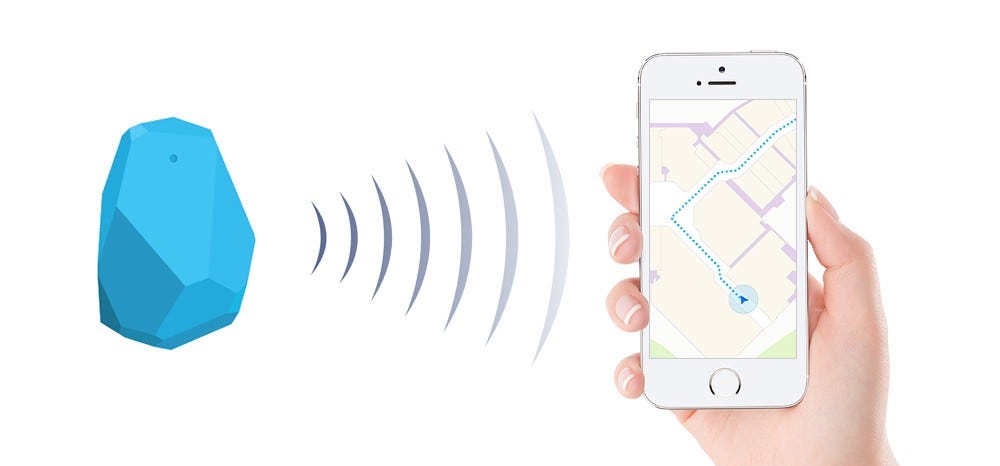
Businesses have slowly started to immensely use Beacon technology, as it helps businesses target potential clients uniquely. Beacons are the transmitting gadgets that get connected with mobile devices, in that particular range. The technology allows the companies to send various notifications regarding the special offers, nearby hotels etc.

Beacon technology transformation from a push marketing strategy to an opt-in strategy is useful for many industries. The technology can be applied on-cloud and at-area, which is helping it to gain traction and promote its growth in the coming years.

Beacon-based notifications are helping out businesses to connect with their users in a highly contextual manner. The beacon technology trend in 2021 will see the coming of beacon enabled airports and mobile payment using beacon.

Some companies are predicting the rapid development and use of iBeacon and other similar gadgets for marketing.

10.  Android Enterprise

Android 10 is out, but history says you likely won't get it for ages (if at all)

Digital transformation is now the need of the hour in 2021 for enterprises. The Google-led initiative – Android enterprise helps the workers to use the Android apps in their workplace. The Android Enterprise program helps the developers with the APIs and various other tools needed to integrate support for Android into the solutions of enterprise mobility management.

Wrapping Up

Each year comes with newer innovations and ideas, and these trends keep on rolling back and forth. Looking at the above latest trends in android app development, we can undoubtedly claim that the Android Operating System is growing at a rapid speed towards providing the users a seamless experience.

Given the trends for mobile app development, businesses are opting for app development and are looking for an estimate of the cost.

Mobile App: 7 Common UX Design Mistakes To Avoid

9 Common UI UX Design Mistakes to Avoid

Today, there is an app for everything, be it games, shopping, news, logistics, travel and many more things. As smartphones have become extremely affordable, mobile application development industry is booming and perhaps is one of the fastest growing industries. Analysts estimate that app revenues would triple by 2017. However, most of the apps go unnoticed and only a few of the apps are able to make their mark. So what’s the reason behind this? Well, there are a number of theories regarding this, but in this article, we would focus on UX design for mobile apps. Here are a few of the common hurdles that come in the way of success of any app:

1. Compromising UX to maintain consistency with web

What is UI UX Design? Why Should You Learn Them Together? | Springboard Blog

Remember, mobile UX is unique and needs special attention and ux review when it comes to design. You just can’t implement your website design in the mobile application. It is true that branding is important, but putting all web UI elements into a mobile experience won’t be a good idea as it will confuse the users and put adverse effect on your mobile app.

2. User bombarded with tutorials

Tutorial & Walkthrough System | iPhone, iPad, & Android Mobile App Development

One thing that most of the mobile app developers do is – they provide detailed tutorials that mention each and every thing about the app on the first time itself. While it can’t be denied that user tutorials are important, but the written information should be kept at minimum. Rather, you should focus on the navigation of your app, and if the user of your app need to go through the extensive tutorials in order to acquaint him or herself with the functionality, then I must say that your app is a complete UI failure.

3. Apps that slow down

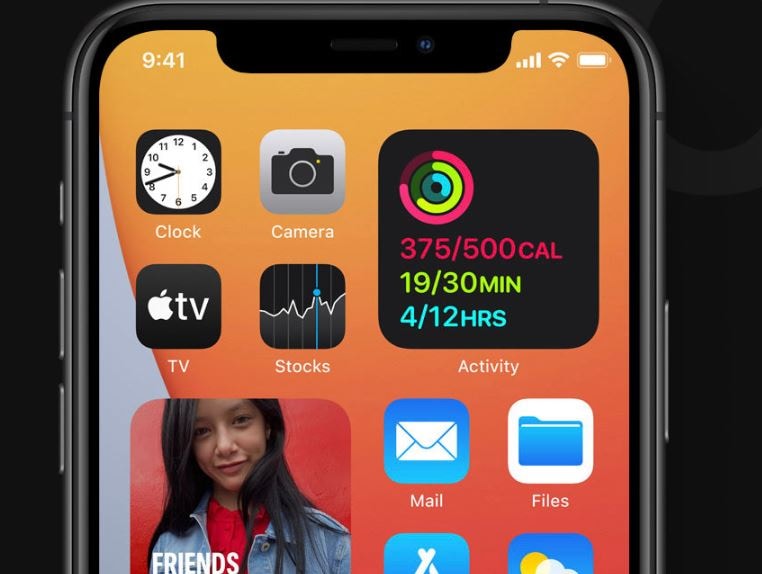
Why iOS 14 is a big deal for Apple iPhone users - cnbctv18.com

Speed of the app is one thing that certainly should not be compromised at any cost. Mobile users these days, multitask while using your apps. They want lightening fast speed and if your app does not match up to their expectations and is slow in speed, then they would go ahead with better options. You are suggested to avoid elements such as videos, heavy images that take time to download.

4. Apps that are confusing

Finding Apps on Google Play

App Stores are full of thousands of apps and the apps that are confusing in nature don’t attract much attention. Therefore, we would suggest you to use tried and tested methods and not to experiment unless and until it is extremely important. It is important to rigorously test design elements that are likely to confuse users.

5. Develop user centric apps

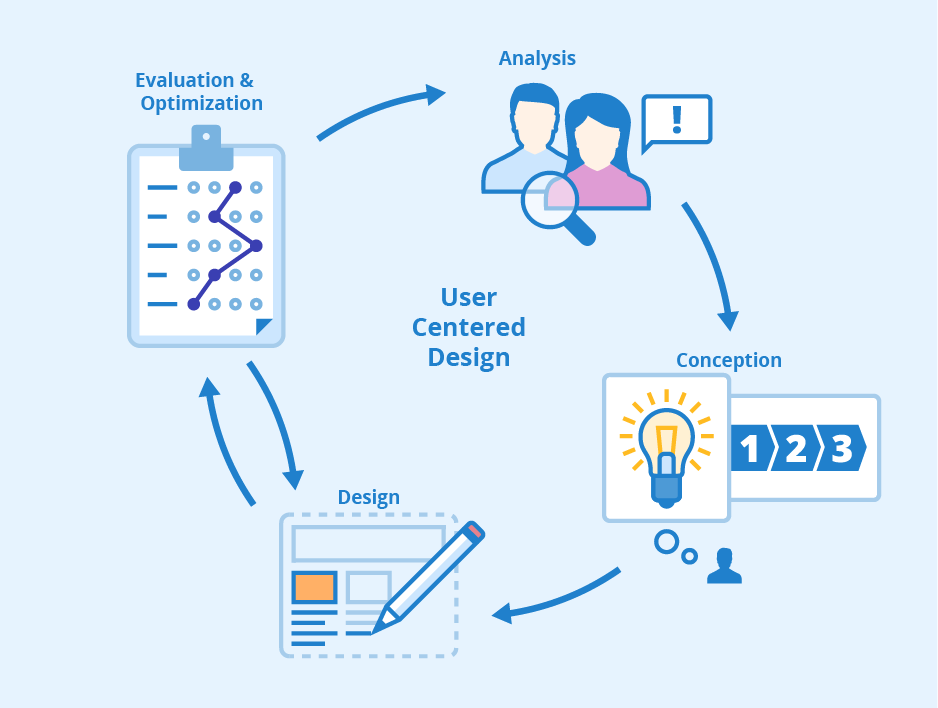
User-Centered Design - Phases and Benefits - Seobility Wiki

You are designing an app for your users and not for yourself. Choose designs keeping in mind your target audience. Try to know the user psyche and create a design based on your market research. Show your users what they want to and what they love to see. Consider feedback as one of the most effective methods in order to bring improvement in your app.

6. Forced sign-up

Explore More, Signup Now - SMSala.com

I would repeat this again, but there are thousands of apps available and one of the things that most of the developers do is they make the user go through a sign-up registration process or ask for other credentials in the beginning itself. Unless and until, you haven’t shown the benefits of your app, any user won’t put his or her credentials and ultimately it would lead to the abandonment of your app. Therefore, it is advisable to have the option of guest users in your app. You can keep sign-up for later stage when users begin to take interest in your app.

7. Industry Standard Guidelines

Both Google and Apple  have laid down guidelines for app makers. Those guidelines are enough  for any designer to follow and make a decent app. However, in the flow of creativity, designers tend to ignore the industry standards and end up making an app with overuse of hidden menus and unknown gestures. UX designers often compromise and get the basics of app design wrong. Designers need to do rigorous testing in order to avoid huge losses.

Anteelo is one of the most sought after app development companies in India providing top grade product design services across the globe. Anteelo boasts of the best UI and UX designers who create captivating designs and are well versed with latest guidelines of all the leading App stores as well.

As Clients’ Extended Distributed Team, Here’s How We Run Agile Projects!

A recent report by Computereconomics found that in the 2018/19 period, the application development process has emerged as the one witnessing maximum outsourcing opportunity – with 56% of the organizations around the world outsourcing their development requirements.
How We Work As Our Clients' Extended Distributed Team

The reason behind this heightened demand for outsourcing the mobile app development needs has been the same as always – Lower cost than what would have to be shelled out if employing own country developers, allowing greater focus on the main business, and better service quality.

However, even with outsourcing taking a central place in the application development industry, we have found that there are some common concerns that the clients show when they plan to outsource their software development project outside their geographical nation.

In this article, we will look into how Appinventiv works with offshore clients using the distributed agile development cycle allowing a more connected working process with aligned risk and remuneration model across all.

But before we get on to the part where we tell how we operate as the distributed team of our clients and work so seamlessly that we become their extended in-house tech team, it is important to know what Distributed Agile Team even means.

How To Manage Distributed Teams With Agile Project Management

What Do We Mean by Distributed Agile Team 

A distributed team is a concept used to explain the event where two or more team function across multiple geographical locations instead of one office space or even two office spaces in one city. The distributed agile team relies on digital technologies to interact seamlessly and work together toward the same goal – Timely project delivery.

Why do Businesses Invest in a Mobile App Development Distributed Team?

There are a number of reasons that drive businesses to invest in distributed teams, reasons ranging from:

  1.  The scarcity of skilled developers in their nation
  2.  The need to test the market before an investment is made towards team buildup
  3.  To avail the benefit of the flexible team which can be increased at the time of scaling the app and dissolved when the need ends.

With the definition and the need now attended to, let us now look at how Appinventiv team works as a distributed team of our clients. But before we jump there, let us quickly look at what our typical distributed agile team structure looks like –

Appinventiv Approach to Distributed Agile Development 

Many a time we get a project where the requirement entails us to work in close connection with the clients’ FTEs. In such instances, it becomes very important that we don’t let the distance in thousand miles come between work and that we are able to make changes and take action on developmental process in real time.

How we ensure timely delivery without zero scopes of communication lag and misunderstanding is a question whose answer lies in Distributed Agile Methodology.

Fit with both small-scale and large-scale businesses, following distributed agile best practices comes in very handy when we have to work alongside a team that is sitting in some other geographical location with an absolutely different time zone.

Let us look at the Distributed Agile Development Method we apply in our mobile app development process.

Reasons Why We Trust Agile For Our App Development Process

After we have introduced all the team members with each other and have collaborated the project management software, the actual work starts.

We formulate the process of daily agile scrum methodology. While in its traditional sense, Scrum requires face to face standup meeting of 15 mins where every participant shares the status of their tasks and informs the team of the tasks they will be taking up next, it is nearly impossible to follow the same process when half of the team is sitting in some other geographical nation in some other time zone.

What we do to keep the essence of face to face interaction alive in the scrum, is we hold a video call on one decided time, which is suited for everyone in the team working on the project. With the help of screen sharing our Agile Scrum Master runs through virtual sprint backlog with the help of tools like Trello or Jira, enabling every team member to give an update on where the project is headed.

What we have experienced is that it is very important to give all the team members an access to a task tracking platform that is easily accessible and updatable. We also emphasize using a communication platform like Skype or Slack for everyone to share updates or ask their doubts between the two scrum time periods.

Another approach that we follow for daily agile and scrum process is that for every different scrum, we appoint one scrum master. So, every individual teamwork as a separate scrum team with a scrum master and product owner – A process which is also known as Scrum of Scrums.

In this, all the scrum representatives provide an answer to the following questions in the scrum –

  • The work that team has completed since last Scrum of Scrums
  • The work team is planning to do before the next Scrum of Scrums meeting
  • The present blocker that the team is facing
  • The blocker that can lead to another Scrum team.

The method enables all the main individuals working on the project to interact with each other directly, something that always results in dedication from the initiation stage to launch period. This ensures an open, clear, and transparent communication between all the teams, where everyone is given a voice. The process apart from scrum of scrums is the same as what we follow under the typical Agile methodology. But the mere fact that the distance between our team and our clients’ team is miles apart and yet we have to work as seamlessly as possible, has brought a series of learnings that we have driven by the adoption of Distributed Agile. Let us look at what those learnings are –

The Learnings That we Drew by Working on Distributed Agile Development Process

1. Creation of Distributed team is about Building a Culture and Not a Process

What defines the success of a project working under the agile for distributed teams approach is not dependent on how well skilled the team members are, but on how well they are able to work together, the sense of ownership with which they work, and ultimately how closely aligned they are with the goal of the project – something that comes with culture and not a process formation.

2.Only SMART Projects Succeed

When a project has to be completed by a team that is not even in the same country let alone office, it is very important that the goals that you have set for the project follow the SMART – Specific, Measurable, Achievable, Realistic, and Time-framed, concept to the t.

3. There is no Alternate to Online Collaboration Tools

No matter how much it costs you, you will have to rely on online collaboration tools that are real-time and have minimal to zero lags. In terms of finalizing the online project management and communication platforms, you can not in anyway cut slack. You will have to ensure that they are technically capable of handling your requirements.

Now that we have seen the learnings that we have drawn from our extensive working experience as a distributed team, it is time to look at some of the challenges that we came across during the process and how we solved them to become a trusted Distributed Agile App Development Company.

Challenges with Distributed Agile Development Approach and How we Solve Them

1. Difference in Culture

Usually distributed agile software development approach ask for working with teams coming from different cultural backgrounds. This difference causes friction because of different values and figure of speech. Our Solution: We work very closely with the client’s team in the initial few days so that we get accustomed to their between the lines and contexts.

2. A Difference in Time Zones

The crux of distributed agile methodology is teams working out of different geographical nations. In a situation like this, the occurrence of a communication gap emerging because of the time difference is very common. Our Solution: We follow the concept of agile for a distributed team to its core. We fix a time when the teams from all the nations are present and active. To achieve full focus and attention, we ask our teammates to change their office timing on the scrum day, so that they are well slept and attentive.

3. Lack of a Common Idea of ‘Big Picture’

Because of a difference in geographical location, working structure, and policies, there can be a discrepancy in the idea of the Big Picture – the end aim of the mobile app. This difference might cause a lack of interest from some team members and a heightened interest from others. Our Solution: A visioning meeting at the start of the project initiation and a  reminder in every scrum, so that everyone is working towards the same goal.

4. An absence of Code Ownership

The absence of collective code ownership means that no one person owns the code, it is owned by the whole team and so when something goes wrong, the blame game starts. Our Solution: We apply a version control system to check who is working on a code and when and the effect of it. This way, there is complete transparency and honesty in the picture.

error: Content is protected !!