Apple Arcade: A Way To Revolutionize The Mobile Gaming Industry

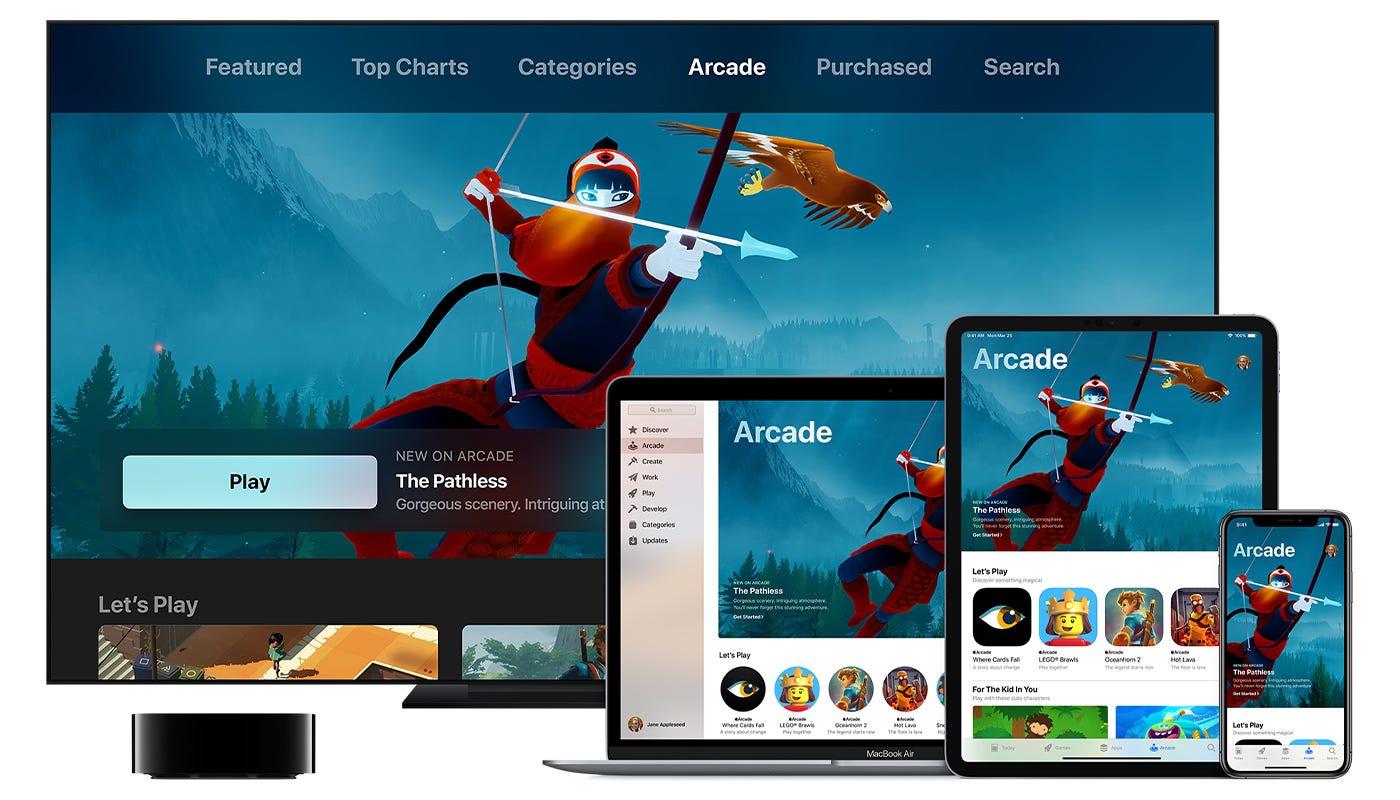
Apple unveils Apple Arcade subscription service for iOS, Mac, Apple TV games | Ars Technica

Apple finally released its most-awaited iOS 13 yesterday only.

From the myriad of features, it is loaded with, we couldn’t help but notice one of the significant contributions it made to the app world – Apple Arcade.

Apple Arcade is a full-fledged gaming hub that is entirely going to change the way how apps are developed and how users buy them. Based on a subscription-based business model, Apple Arcade is an avenue for indie game developers to create impeccable games worth discovering and playing.

The subscription priced at $5 per month will provide the users with access to 100+ new games which are no cast-offs, whereas more games might be available at the launch. The games offered in the subscription plan are high-quality fare from renowned and established studios like Annapurna Interactive and Ustwo Games of Monument Valley fame. The games belong to genres ranging from strategy and fantasy to absurdist golf.

The wild thing about Apple Arcade is that at such low priced subscription, you get facilities like playing unlimited games, syncing of your games between Apple devices like iPhone, iPad, and Apple TV, and download the games to play offline. In fact, the one subscription plan can be shared among five family members. If this isn’t the full value of your money, we don’t know what is.

Besides everything, the one that has made Apple Arcade revolutionary, without a doubt, is the elimination of elements like ads and in-app purchases – the very backbone and major contributors to the gaming app economy. Though the notion of one subscription to play all games may sound preposterous to other organizations, it can be seen as a positive nudge to direct the gaming industry towards something more salutary rather than just cash draws.

Pay once and Play Many Games

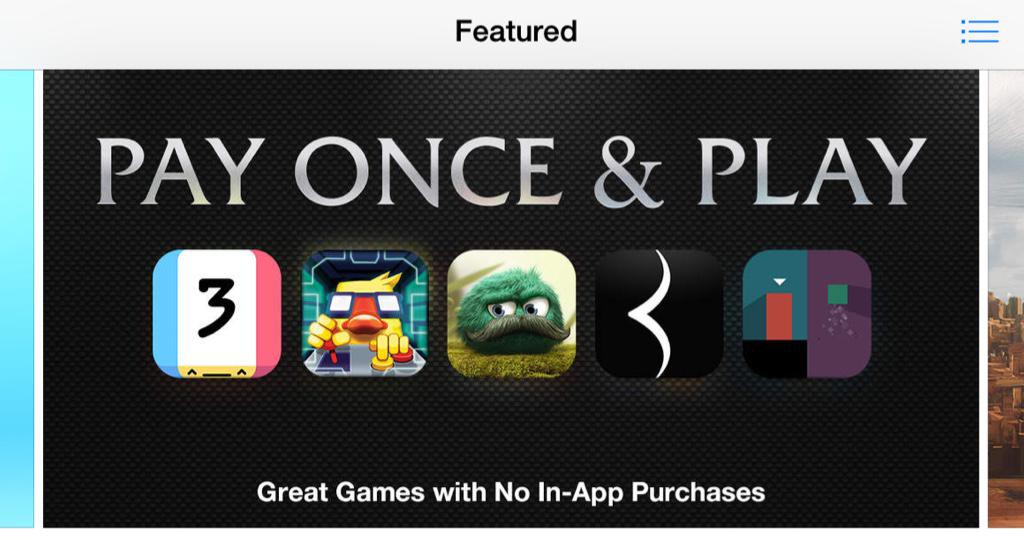
App Store responds to freemium haters, features 'Pay Once & Play' games with no in-app purchases - 9to5Mac

If you look at the top-performing apps in the App Store, you will find that 50 grossing games have in-app purchases: out of 50 most downloaded free games, forty-one have them.  In fact, among the games, you pay for upfront, the top 50 still try to accumulate more money as you play the games.

The in-app purchases are a major source of revenue for the app economy, and has been for decades. The free-to-downloads games also entice users to spend money on the app be it in the forms of Pokéballs in Pokémon Go or other digital widgets. This buying of rewards and digital widgets have come under scrutiny as critics have started to consider this trade as gambling.

Apple Arcade & The Mobile Gaming Revolution | by Fawzi Itani | The Pause Button | Medium

Apple had been a major part of all this as it has been taking 30% cut from all in-app purchases. However, Apple has also been active in promoting apps that do not offer in-app purchases. This is evident from the fact that in 2015, Apple dedicated a whole section of the App Store to the games that were “Pay Once and Play”. Apart from this one generous act, these games had to face a lot of competition as their freemium contenders seemed more promising to the users, though they later started to ask for in-app purchases.

Ryan Cash, the  founder of Snowman, the indie studio behind the popular Alto’s Adventure series said that “There was this wave of indie games in the last five to 10 years that had a bit of a surge, but it seemed like in the last two or three years that market was starting to fall apart a little bit,” and “It just became harder and harder for those indie developers to make money doing experimental things. There are many developers I heard say they’ll never make a mobile game again, or if I do it’s going to be free to play.”

This exodus is now low in numbers. As per SensorTower, in August 2014, 37% of the App Store games were paid. This amount dropped to 13% last month. The amount of paid games released on the App Store this August was as low as 5.5%. In fact, last month, the revenue generated by the paid apps was only 1.4% of the total App Store game revenue. This shift might be considered as a reaction to the changed Apple guidelines on in-app purchases.

However, the biggest publishers won’t give up on in-app purchases instantly.  Sensor Tower cofounder Alex Malafeev said- “Free-to-play will continue to be the dominant model by which the majority of mobile game revenue is generated,” and “It has proven to be the ideal method of monetizing the type of ‘drop-in, drop-out’ experiences the majority of casual players want from their mobile devices.”

Nevertheless, Apple Arcade will definitely help indie developers in developing original and ambitious games that will get the deserved recognition. Moreover, it rewards games that are originally developed keeping the iOS platform in focus, rather than knock-offs and extended versions of games originally created for other platforms, increasing the UX.

Arcade Fire

An Apple Arcade launch game named “Where Cards Fall”, had been in the making for a decade. Sam Rosenthal, the creator, first thought of it as a student project at the University of Southern California. He initially thought of the puzzle game as an iPad-only encounter, which can still be sensed even from the trailer.

What Apple Arcade means for mobile game developers | AppLovin

Rosenthal created Snowman almost four years ago, expanding his vision to the iPhone and Apple TV.

Cash remarked- “The last few years, we’ve been thinking about this dilemma where we want everyone to experience it, but it’s certainly not a free-to-play game. It would be absolutely destroyed with ads,” and “We knew it was going to be a premium game. And the problem there is that Where Cards Fall is the kind of game that would probably be $20. Or if we made the game 99 cents, for example, it cheapens the value of it, and we’re still not going to reach the kind of people you would reach with a free-to-play game.”

Apple Arcade for both Cash and Rosenthal is a boon, for they can now launch their game “ Where Cards Fall” on it, as it poses as a sustainable business model for the game. In fact, on Apple Arcade the game has a higher possibility of being found by a broader audience.

Cash further says “Apple Arcade may get them in with a golfing game or another action game or a racing game, and then stumble upon Where Cards Fall and try it, whereas they wouldn’t necessarily have spent that money upfront on their own,” and that “It’s a new way for people to discover gaming.”

How Apple Arcade changed mobile gaming in 2019 - CNET

Nonetheless, Apple Arcade comes with its own pitfalls. It is a curated experience which means that developers may feel left out. Because the subscription is so affordable, it makes users question the quality of games or at least stops them from spending any extra money in the app.

After considering everything, what can be surmised is this – Apple Arcade will encourage developers to create fun and more engaging games in their own right along with exploring structures that are different from the free-to-play category.

Well, there is no saying that every developer will do so, for they may be paid out in part based on the time spent on their games. This means that they will try to keep the users on their apps for as long as they can. This is the strategy that Apple follows in its News Subscription. The only difference is that the users will not have to pay any extra buck outside their subscription, no matter how long they play the games for.

Besides, not only indie but big hitters like Ubisoft, Konami, Square Enix have also contributed and played their part in the Apple Arcade launch lineup. As far as we can see, Apple Arcade is going to be a positive influence on the gaming industry and who knows, might inspire other major providers to follow its example.

A Quick Guide to Successful Mobile App Launch

A Quick Guide to Successful Mobile App Launch

 The mobile market has gone so competitive that there are endless apps offering the same functionality. In such a scenario, waiting for users to come to your application on their own, rather than putting efforts into an app launch strategy is a sin.To ensure that you do not commit this mistake and get no outcome from your investment in terms of cost to make an app, we will be discussing the right way to launch your application here.

1000 downloads, $100 millions of revenue – All such metrics pop in our mind, whenever we think of taking our months of hard work to the final stage, i.e, mobile app launch. We expect some miracle to happen that makes our app go viral, and get into the list of TikTok, Uber, and Pokemon Go.But alas, not everyone lives this moment.

[In case you haven’t decided when to take this big step, check the blog: What is the right time to launch your mobile app? ]

But, before we look into the right way of launching an app, it is necessary to be familiar with the fact that mobile app launch strategy does not come into play when you release your app. Instead, it comes into being right from the day you take the first step to make an app.

So, to get higher success numbers and earn more money from your app, here are the list of steps to take – categorized under Pre-launch and Post-launch strategy.

A Quick Guide to Successful Mobile App Launch

What Pre launch marketing ideas you should consider?

Any application who has not prepared a market for its launch can’t drive higher revenue. So, it’s imperative to invest in pre launch mobile app marketing.  Something that can be possible effectively by following the pointers given below:

1. A thorough mobile app market research

When you launch an app without knowing who your target audience is, it is likely that you end up making an application that no one likes and face other potential threats. So, one thing you need to do before starting with different stages of building an app is market research.

By doing so your app will be prepared for whatever situations arise post-launch.

2. Market your app now

Marketing of the app is done way before the actual launch app. Some app owners start the app promotion even before the mobile app development is finished. Early marketing creates a positive image for the app and also creates awareness about the app.

So, how to market an app successfully? To muster support for your mobile app reach out to friends, communities, influencers, or create product videos and share online. You can also create a blog or a website which will act as the landing page for your app.

[To know other such methods, refer to our comprehensive guide to promote a mobile app.]

3. Create a buzz with social media

Social media can blow up things faster than a bomb. So many apps have gone viral and all the credit goes to social media. Reddit, Facebook and Instagram are great platforms for promotion before you actually launch mobile apps.

4. A press kit

A press kit is basically a resource for journalists and publishing houses to convince them to review your app. The kit includes all the information about the app such as screenshots, images and other details. You can also include videos by uploading it on YouTube.

5. Reach out to beta testers

Beta testers are registered testers for apps on the App Store or Play Store. They can be the best source for honest feedback for your app. Make sure you take the advice from the testers and use it to improve your app further.

Now you may ask how to come across these beta testers to execute a perfect mobile app launch. For that, you can find many websites that provide beta testers. Make a choice as per your requirements.

6. Focus on a better App store listing

Your app store page is also your landing page which means it’s the first place your customers visit.

Including images, videos and screenshots of your app will showcase the app quite well. Getting featured in the Play Store or the App Store is a big hit for any app. The aim is to get more downloads from all these factors. The key focusing points are:

  • The name of the app
  • App description
  • App visuals (images, videos, etc.)
  • Targeted keywords

So this is all about how to prepare your app before you submit an app to the app store.

Now you might be thinking, “What to do once the app is launched?” and the answer follows in the next section which has all the steps of post-mobile app launch.A Quick Guide to Successful Mobile App Launch

How to Plan Post-launch App strategy?

1. Ask for referrals such as word of mouth

The best practices of launching an app involves word of mouth promotion. It is said that word of mouth is the most effective form of promotion and brings in genuine users. Reaching out to your friends, communities, colleagues and family members to spread a good word about the app would create awareness among a large group.

2. Link your app

Vigorously linking your app everywhere is another strategy that you can follow. When you launch an app, link the app on your email, comment sections, other blogs or social media. This way the link will become visible all over the internet and would bring in some curious users who might even stay forever.

3. Go for the paid ads

Once you’ve gone as per the app launch timeline, the next thing to go for is to consider paid ads on Facebook, Instagram or any other online platform. These ads, when reflecting on the news feed of every person present on that platform, increases the chances of getting clicks on the application and drive higher revenue, alongside app awareness.

4. Approach to Apple’s editorial team

If you have partnered with qualified iOS mobile app developers to enter the Apple market, pitching the Apple’s editorial team and that of App review sites will also be helpful. When listed in the Top lists, your application will get more attention from the users looking for such apps, which will ultimately result in better outcomes.

5. Map user journey

Another thing to look for after mobile app launch is to keep an eye on user journey. When you, with the help of some metrics, identify what users are liking the most on your platform, what is irritating them, why and who are abandoning your app, etc., you can easily plan your perfect mobile app retention strategy and drive higher profits.

6. Maintain real-time communication

Communicating with end users is not something that ends up while you reach the final stage of the mobile app release process. It must be continued even after the launch of the application. This is because when you maintain a real-time communication with your customers, they feel heard and share their pain points as well as leisure pointers, which makes it easier for you to plan the next app update.

Now, while these were some of the strategies to consider before and after mobile app launch, let’s wrap up this article by looking into some of the mistakes you should avoid committing.

Pitfalls to avoid when you launch a mobile app

A poor working app can be the cause of the failure of a company. Once the app is launched in the market, there is hardly any chance to undo mistakes immediately. You will have to wait until the first app update is launched but by then the app would have lost too many users.

You can totally prevent this scary situation by avoiding these common mistakes made during app launch.

1. Generalizing

Many businesspeople consider the whole world as their market. They hope that this practice will enable them to get the attention of a wider audience and reap higher benefits. However, the reverse happens.

When your application is installed by the wrong target audience, they feel confused and irritated while using it and leave a negative feedback. This prevents various right users from tapping on the ‘download’ button as well as prompt developers to introduce various unnecessary functionalities.

So, rather than generalizing the market, one should run a survey, accumulate market data, and target potential customers to drive better results.

2. Poor onboarding

Another common mistake made by app enthusiasts while app launch planning is overlooking the essence of an effective onboarding.

A mobile app onboarding is not simply a way of introducing the app to the users, but it is the method to create an unforgettable first impression of the app. Meaning, if you create one without following the right app onboarding practices, you might fail to touch the hearts of the target audience and encourage them to go further.

3. Launch full-fledged app

Last but not the least, launching a complete application at once is yet another mistake that can lower down the benefits of mobile presence.

When you design and launch a full-fledged app at once, it demands higher time, effort, and cost. Also, the risk of failing entertaining the right audience due to change in their needs and market trends is also high.

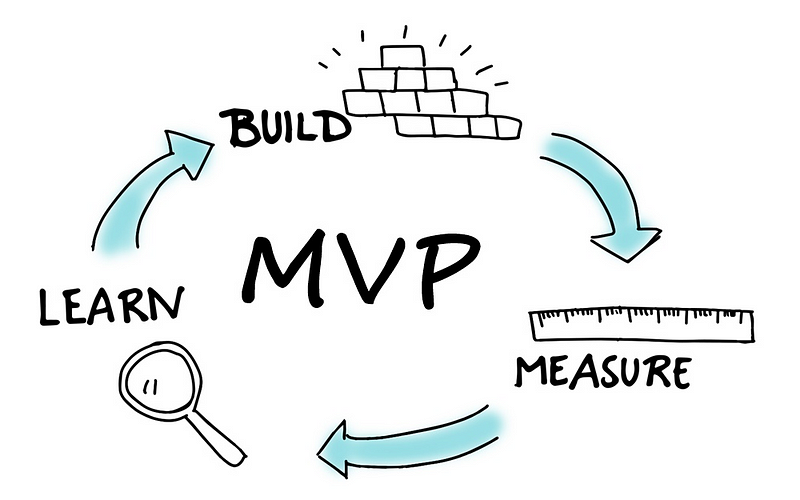
But, when you develop an MVP(Minimal Viable Product) instead, it not only saves the time and money associated with the development plan. But, also helps in validating your app idea, gather adequate user data, and make the best of the mobile app launch. So, look ahead to it.

A 2020 list of the best local databases for developing React Native apps.

10 Benefits of Native Mobile App Development

React Native has established itself as a prime choice of startups and establishments looking for a mode to enter the app domain in a cost and time-efficient manner. And with this establishment, the focus has once again shifted on the incorporation of the platform in the app development process, especially when entrepreneurs are looking to build cross-platform applications.Increasing with this full-grown demand for React Native app development is the pressure on React Native developers to develop high-performing offline first apps that can be scaled whenever required.

This, in turn, has led them to look back at the technology stack and choice of platform to build React Native applications off of. Especially the backbone of the application – React Native database.

In this article, we are going to look into names that are fit for React Native app development today and are worthy of being in the list of top React Native databases for 2020.

Let us start in a full disclosure mode, though.

Let’s highlight the factors we looked into when curating the list of the top react native databases for 2020 and for some more years to come.

Table Of Content:

  1. Factors to Consider When Choosing React Native Databases for Your Project
  2. The Best React Native Databases for App Development
  3. Realm
  4. Firebase
  5. SQLite
  6. PouchDB
  7. Async Storage
  8. Watermelon DB
  9. Vasern
  10. BerkeleyDB

Approaches to Develop Mobile Application | Native App

Factors to Consider When Choosing React Native Databases for Your Project

Complexity of the Data 

A key-value storage is default option for a number of server-side and client-side scripting languages. Mainly, both – values and keys – have to be serialized in strings, either by a React Native developer or through the library itself. Now although necessary, serialization can bring serious halts and issues in how your application performs, especially when it operates in a limited resources environment of smartphones.

So, ideally a react native development company chooses a database which helps you store more complex data compared to the key-value pairs like full documents and objects and comes with complex data types.

Number of Line of Codes  

If you take more than 20 lines of code to write a simple CRUD operations, any advanced database should be your last choice. Because, not only an advanced DB would make coding complicated but it would even affect the database performance heavily and the overall React Native app development cost. Additionally, processing of so many code lines would slow down the application greatly.

So do not make use of a database that comes with advanced functionality if it carries the chances to lower your app’s user experience and delay the release speed.

Synching of the Offline Data

If you are developing a low complexity application which does not offer multiple-user collaboration, you can use a simple database that would work well with a simplified synchronization functionality. These app types can sync with server whenever an internet connection is established.

With collaboration being the primal feature of an application, syncing functionality demands the database to be complex. Applications like Trello, which cannot show different versions of a document or project, however, requires a react native app development company to achieve perfect synching even when the network conditions are patchy.

Handling Data Conflicts and Concurrency

The more collaboration related features you add inside your application, the more would be the possibility of data conflicts.

You should look for databases, which share the conflict-handling policies on website or the repository pages. Dig into the database documents to get aware of how they handle syncing and conflicts or look into the trade-offs that are made and the effect it would make on the application.

Memory Management

Inefficient database memory handling practices can lead to app crashes.

Compaction is one of the proactive processes of memory management in which the documents or data that are not going to be of use are deleted from the memory.

The process is like the ‘garbage collection’ part of programming, which ensures there is free memory available at any given point in time.

On the basis of these five factors we have identified the local React Native database options which would be best suited for your react native application development process.

The Best React Native Databases for App Development

Realm


The Realm database has been brought into existence for development of real-time and offline applications which run on both wearable and mobile devices. The database has proved to be equally beneficial when you create React Native mobile apps for iOS and Android. It is not built on ORM or on top of SQLite, so it comes with own database engine and does not rely on the key value stores.

This is one of the reasons why React native developers use Realm as one of the chosen local react native database options to handle large data or for the development of high performance applications.

While there are other databases for simple apps, the combination of Realm and React native is best suited for large sized apps.

Benefits of Realm and React Native:

  • Realm Sync – the sync services operate in the background and records, saves all the user interactions and the service requests locally.
  • Offline friendliness through Redux Offline – for those looking for a solution to implement offline-first architecture through Realm for React native apps, Redux offline can be a great option.
  • Security – It uses multiple encryption standard for every different mobile platform.

Pricing:

The Realm is a local database in react native app that is completely open-source and free. The pro version, though comes with a cost. But if you purchase the platform for creating react native apps it would cost $1750 per month.

Firebase


Firebase supports the real-time NoSQL database for the development of react native applications. It is chosen mainly for its offline data change and data synchronization practices. The reason why Firebase for Startups is such an in thing is because it is completely capable of handling the requirements of the M and C of the MVC needed for react native based applications.

Native App vs. Web App or Hybrid: What App to Choose in 2021? | GBKSOFT

Benefits of Firebase for React Native App Development 

  • Real-time syncing of data – with Firebase for React Native, the data is synced in real time for all clients, at the same time. This becomes very important for when an app goes offline unannounced because of the unavailability of internet connection.
  • Low setup efforts – Firebase offers a cross-platform API which calls for minimal setup when it is being used inside an application. Additionally, you won’t need an application server for accessing the data as it can directly be accessed through a mobile phone.
  • Offline persistence – the combination of Firebase and React Native gives the developers an ability to develop real-time apps with offline persistence capabilities. This consists of marking users’ presence online or offline and storing timestamp whenever users get disconnected.

Pricing:

Firebase is free to upto 1GB data storage. However, it does offer a $25 for 2.5 GB data storage minimal price in addition to a pay as you use package.

SQLite


It was designed to offer local storage to mobile applications. The prominence of the word Lite in the database name implies that it is a lightweight library and that it requires minimal setup. It can also be directly integrated within the mobile application for directly accessing the database.

Benefits of SQLite for React Native based Application Development 

  • ACID compliance – it is an ACID compliant database which implements SQL standards with some omissions. The architecture of the library is file-based and there are some tools that can handle all the data types with simplicity and ease.
  • Offline persistence – In order to enable the offline persistence via SQLite, developers can use a react-native-SQLite-storage plugin for managing data within application.

Pricing: 

SQLite, being in the public domain is free to use and open source. However, if you want to obtain license for copyright infringement, you would have to pay one time fees of $6000.

PouchDB

PouchDB is an open source Javascript database that stores data in JSON format and enables developers to take advantage of using React Native in the easiest manner: by developing, reading, updating, querying, and deleting queries with a single JavaScript API. The database is compatible with MySQL, CouchDB, PostgreSQL, and MongoDB.

Benefits of PouchDB for React Native App Development

  • Because the PouchDB stays inside a browser, the need to perform queries over network is not there. This, as a whole, leads to faster queries’ execution.
  • Developers can sync data with any supported server and thus can run the applications both offline and online.

Async Storage 

Async storage is a local storage system that gives developers the capability to store data locally and persist data between the app reboots. The database comes in-built with React native so it can be used without any additional deployment.

Benefit of Async Storage for React Native Apps:

  • It comes in handy when you have to save the data which the app need to use even after the user has closed the app or the device.

Watermelon DB


Built on SQLite, it is a high-performance reactive database for React Native which comes with the potential of scaling hundreds to thousands of records without losing its speed. The database has been well optimized for building complex applications in React Native with a focus on real-world performance.

Benefits of Watermelon DB for React Native App Development:

In addition to scaling over 100 – 10000 records, Watermelon DB also supports developers to take full advantage of using react native through:

  • Offline first system
  • Static typing with Flow
  • Building apps on SQLite foundation

Vasern 


It is one of the most lightweight, fast, and open-source databases for app development using react native. The Vasern API is used not just for local data storage but also for cloud storage and syncing across the app’s clients. Vasern’s design and structures are inspired by various open source databases.

The Benefits of this Inspiration from Multiple Open Source Database Include:

  • It is open source
  • Developer friendly end-to-end database syncing
  • Focus on consistency and performance
  • Fast operation

BerkeleyDB 


Berkeley DB is an open source, high performance backend for React Native which allows developers to handle data in multiple ways. It offers an API for multiple languages which includes iOS and Android.

It can handle data in multiple ways: a relational way like how SQLite does or through the Key/Value pair data as byte arrays and supports multiple data items for a single key.

While these are the top React native databases of the current and the speculated time there are a number of other backend tools that developers and react native app development companies use to create their application.

How Can Mobile Apps Help Your Company’s Digital Transformation?

Master Digital Transformation - Learning Path

Irrespective of which industry you look at, you will find entrepreneurs hustling to kickstart their digital transformation efforts which have been lying in the backdrop since several business years. While a considerably easy move when you have to alter your digital offering according to the customers’ needs, things become a little difficult when you start planning digital transformation for your business. A difficulty that mobile applications can solve.

There are two prime elements which businesses need to focus on when planning to digitally transform their workflow and workforce: adaptability and portability. And by bringing their processes and communications on mobile apps, they are able to hit both the targets in one go.

Here are some statistics looking into why enterprises need to count mobile application in, in their digital transformation strategy –

Although the above graph should be a reason enough to take mobile apps seriously, there are some other numbers as well.

  • 57% of the digital media use comes in through apps.
  • On an average, any smartphone user has over 80 apps out of which they use 40 apps every month.
  • 21% of millennials visit a mobile application 50+ times everyday.

While the statistics establish the rising growth of mobile apps, what we intend to cover in the article is the pivotal role mobile applications play in digital business transformation. To understand it from the entirety, we will first have to look into what is digital transformation and what it entails.

What is digital transformation?

5 Digital Advertising Platforms You Need To Start Using Now - Mediaboom

Digital transformation means using digital technologies for changing how a business operates, fundamentally. It offers businesses a chance to reimagine how they engage with the customers, how they create new processes, and ultimately how they deliver value.

The true capabilities of introducing digital transformation in business lies in making a company more agile, lean, and competitive. The end of the long term commitment results in several benefits.

Benefits of digital transformation for a business

  • Greater efficiency – leveraging new technologies for automating processes leads to greater efficiency, which in turn, lowers the workforce requirements and cost-saving processes.
  • Better decision making – through digitalized information, businesses can tap in the insights present in data. This, in turn, helps management make informed decisions on the basis of quality intelligence.
  • Greater reach – digitalization opens you to omni-channel presence which enables your customers to access your services or products from across the globe.
  • Intuitive customer experience – digital transformation gives you the access to use data for understanding your customers better enabling you to know their needs and delivering them a personalized experience.

Merging mobile app capabilities with digital transformation outcomes 

The role of mobile applications can be introduced in all the areas which are also often the key areas of digital transformation challenges that an enterprise faces.

  1. Technology integration
  2. Better customer experience
  3. Improved operations
  4. Changed organizational structure

When you partner with a digital transformation consulting firm that holds an expertise in enterprise app development, they work around all these above-mentioned areas in addition to shaping their digital transformation roadmap around technology, process, and people.

In addition to a seamless integration with the digital transformation strategy of an enterprise,  there are a number of reasons behind the growing need to adopt digital transformation across sectors. Ones that encompasses and expands beyond the reasons to invest in enterprise mobility solutions.

The multitude of reasons, cumulatively, makes mobility a prime solution offering of the US digital transformation market.

How are mobile apps playing a role in advancing businesses’ internal digital transformation efforts?

1.  By utilizing AI in mobile apps

How To Utilize Artificial Intelligence In Mobile App Development

The benefits of using AI for bettering customer experience is uncontested. Through digital transformation, businesses have started using AI for developing intuitive mobile apps using technologies like natural language processing, natural language generation,  speech recognition technology, chatbots, and biometrics.

AI doesn’t just help with automation of processes and with predictive, preventative analysis but also with serving customers in a way they want to be served.

2.  An onset of IoT mobile apps

Future trends in IoT user interface design (Updated 2020)

The time when IoT was used for displaying products and sharing information is sliding by. The use cases of mobile apps in the IoT domain is constantly expanding.

Enterprises are using IoT mobile apps to operate smart equipment in their offices and making the supply chains efficient, transparent. While still a new entrant in the enterprise sector, IoT mobile apps are finding ways to strengthen their position in the business world.

3.  Making informed decisions via real-time analytics

Data Driven Decision Making – 10 Tips For Business Success

In the current business world, access to real-time analytics can give you a strong competitive advantage. Mobile applications are a great way for businesses to collect users’ data and engage with them through marketing transformation messages designed around the analytics based on their app journey.

You can use real-time analytics to know how your teams are performing, analyze their productivity, and get a first-hand view into the problems they are facing in performing a task and how it’s impacting the overall business value.

4.  Greater portability

Ultrasound market gets supercharged by AI, cloud, and greater portability: report

Portability in an enterprise ecosystem enables employees to work as per their convenience. While it shows less impact in the short term, in the long run, it plays a huge role in how productive a team is.

By giving employees the space to work as per the time and location of their choice, you give them the space to boost their creativity fuel and in turn productivity. One of the results of using software that enabled our employees to work according to their terms and conveniences for us was greater business expansion ideas and an increase in overall productivity of the workforce.

Tips to consider when making mobile apps a part of the digital transformation strategy

Part 2]: Digital Transformation in Manufacturing: Defining the Digital Transformation Strategy and The Challenges Ahead | by PlumLogix (Salesforce Partner) | PlumLogix | Medium

If at this stage, you are convinced that mobile applications are a key part of digital transformation efforts, here are some tips that can help your strategies for increasing the ROI on your enterprise app –

Adopt mobile-first approach – the key factor that separates enterprise apps that are winning is how they don’t treat apps as the extension of their websites. Their software development process is strictly mobile-only. This in turn shapes their entire design, development, and testing processes.

Identifying the scope of mobility – the next tip that digital transformation consulting firms would give you is analyzing the operations and workflows for understanding which teams, departments, or functions would benefit from mobility the most. You should not start reinventing a process which works okay, you should look for areas which can be streamlined, automated, or valued through mobility.

Outsourcing digital transformation efforts – when we were preparing An Entrepreneur’s Guide on Outsourcing Digital Transformation article, we looked into several benefits of outsourcing digitalization to a digital transformation strategy consulting agency. But the prime benefit revolved around saving businesses’ efforts and time which goes into solving challenges like – absence of digital skillset, limitations of the agile transformation process, or the inability to let go of the legacy systems.

How much does it cost to create an app for event ticket booking?

Event Ticket Booking Mobile App Development Cost & Features

  • Revenue in the Event Tickets segment amounts to US$73,424m in 2019.
  • Revenue is expected to show an annual growth rate (CAGR 2019-2023) of 9.4%, resulting in a market volume of US$105,359m by 2023.
  • The market’s largest segment is Music Events with a market volume of US$34,410m in 2019.
  • In global comparison, most revenue is generated in the United States (US$30,579m in 2019).

These are the two factualities that the events planning and specifically event ticket booking market is based on.

People love going out and having fun. Not everyone can afford a weekend trip out of station.

The factualities that are single-handedly holding the uprising demand for online event ticket booking market on applications and websites.

Let’s talk about the industry in detail in this piece, specifically from the front of technicalities and the event management and ticket booking app development cost.

The statistics that we saw at the beginning of the article, powered by statista are only a peek into the high demand of the flourishing market.

In a way, the demand that the online event management applications are witnessing in the market are drawn by a few companies that have emerged as the leader of the domain.

These brands have not just helped maintain the constant demand that the sector is witnessing. They also have set a growth tangent that a number of entrepreneurs are willing to be a part of.

Now that we have peeked into the event industry on a digital capacity and the top players who have entered the space, the next thing to attend to is a lot more technical.

We are now going to look into the ground level of how ticket booking app development services work.

Starting with the must-have features list first.

The Must-Have Features of Event Management and Ticket Booking App

The feature set that entrepreneurs work around to develop event planning and ticket booking apps like Eventbrite or Ticketmaster while different on the most intricate level contains elements which are not common but also must-haves.

The starting point of all the features is that when you develop an event planning application, you don’t develop one but two versions of the application –

1. For the users

2. For the App Admin.

Let us look at both of them individually.

1. Filter

Behind the screens: How BookMyShow.com keeps it ticking - The Economic Times

The functionality surrounds giving the users’ filter events or movie according to their varied preferences like location, timing, ratings, etc.

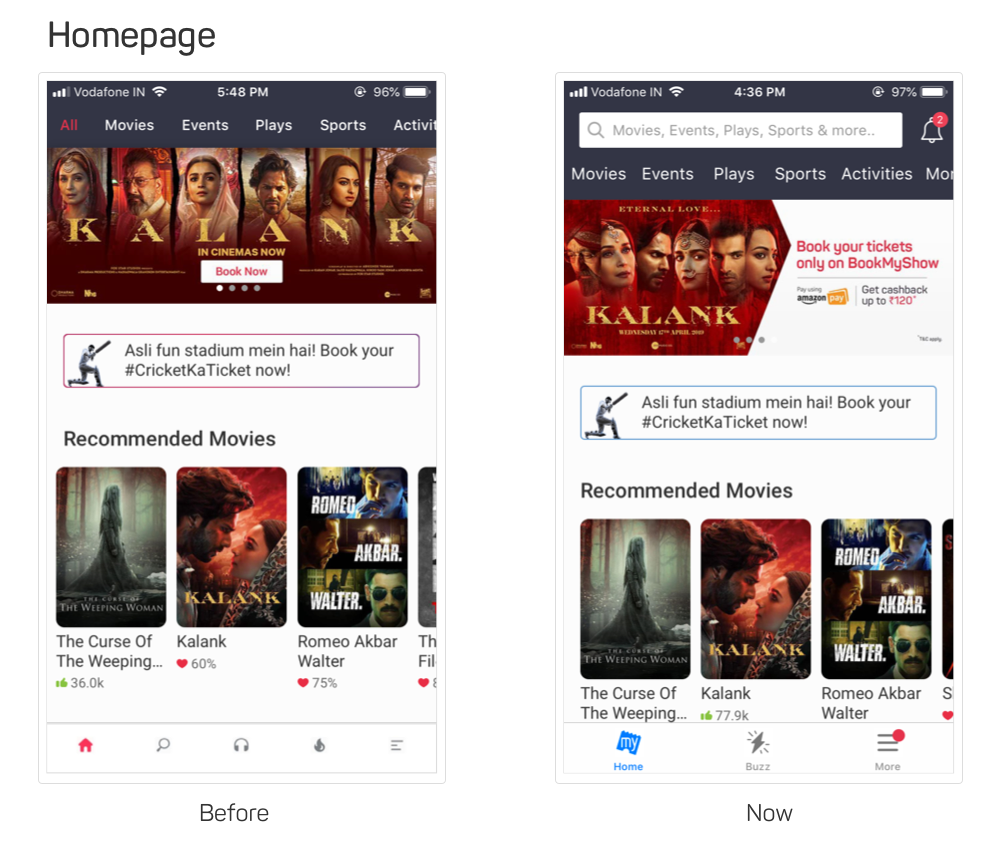
2. Event Listing

Design nuances of BookMyshow homepage and listing pages | by Kedar Nimkar | We Are BookMyShow

The screen would contain the list of all the events and movies happening or showing in a particular city or state.

3. Details of Event

Promote Your Events Online | How to List & Market Events - BookMyShow

For all the individual events there would be screens containing the details – the details of the event, the price of the ticket, terms and conditions, etc.

4. Rating

This is the section of the event page where users can give a rating to the event after having attended it. This is also where they can see what people are talking about the event.

5. eTicket and mTicket

What is an e-ticket, really?: AirTreks

Every event planning and ticket booking app gives users the functionality to enter their mobile number and email addresses where the ticket gets sent automatically after they have purchased it.

6. Download Ticket

In addition to the automatic generation of tickets in the face of SMS and emails, users are also given the ease to download the ticket for a much quicker find.

7. GPS

Using the feature users are easily able to locate the venue and also see the distance between their current location and the venue.

8. Booking History

Booking History « Event Organiser Docs

Using this feature user will be able to view the history of their bookings from inside their application.

9. Settings

The option that is mainly present in the menu option enables the users to view and modify their profile details, check the option of whether they want to be sent a notification or not and also select their preferred ticket type.

10. Booking Screen

BookMyShow Booking Confirmation Screen Re-design - singh.am

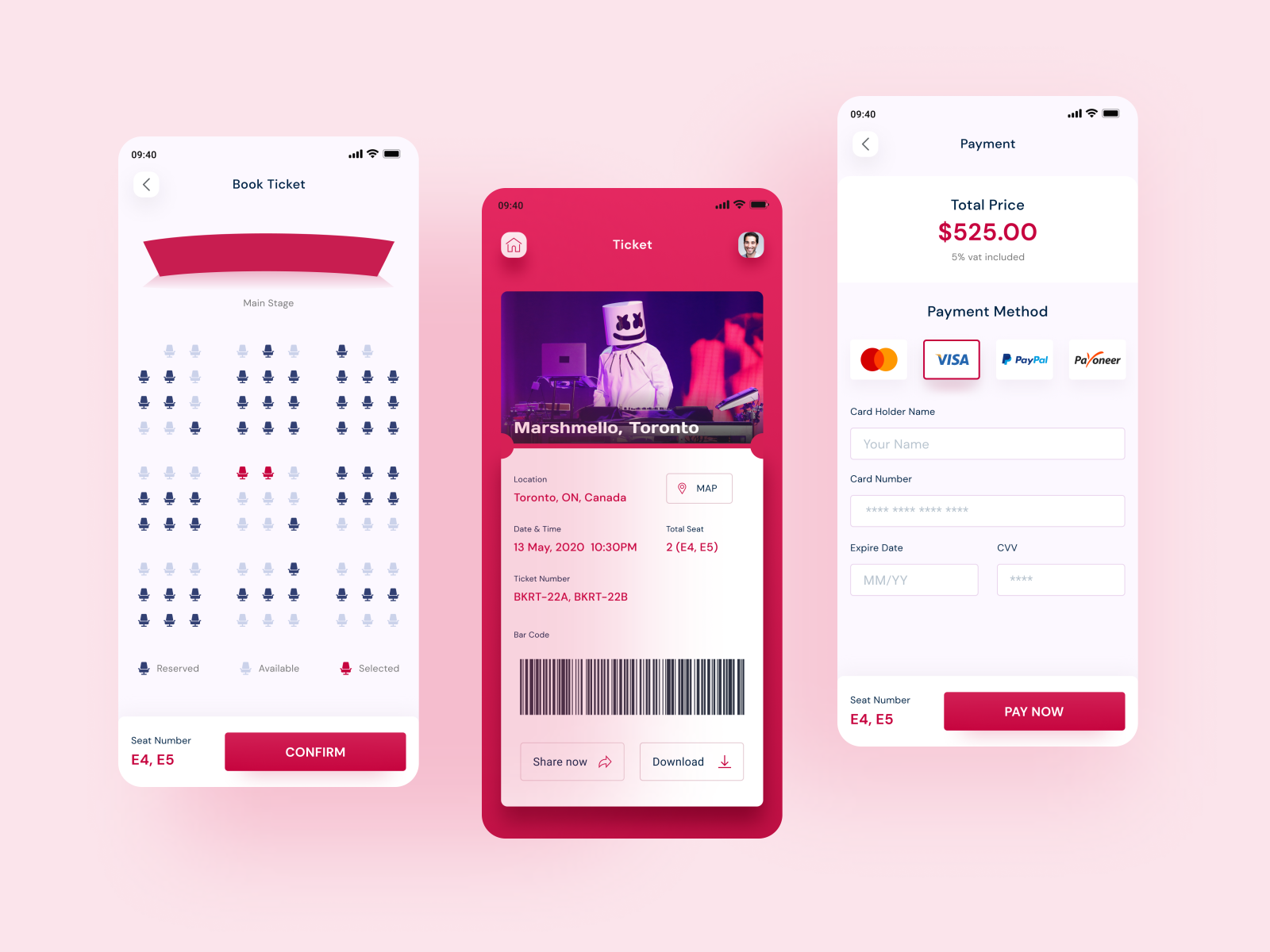
The ticket booking app solution should also factor in a booking screen that would help them select a seat of their choice.

1. Dashboard

The dashboard feature gives the admin the ease to get a comprehensive look of how the application is performing – the download rate, engagement count, events genre that are getting maximum hits, etc.

2. User Management

This part of the admin side of the app deals with managing the users base. It shows the business what issues users are sharing with the support team and the individual ways they are interacting with the application.

3. Shows Management

One of the most important elements that answer how much does it cost to build event management and ticket booking app is the management of shows. Through the feature, admins are able to add in events and modify their details.

4. Venue Management

The one thing your partnered mobile event app experts should specialize in creating a provision for the admins to keep the venue details updated in real-time.

5. Booking Manager

The next crucial part of ticket booking app development on the admin side is booking management. This is the feature that helps keep admin updated with the number of bookings happening on the application and the timing of them.

6. Content Management

This part of the admin app deals with the management of all the content that is live in the application – details of the event, ensuring terms and conditions are updated, etc.

7. Push Notification

This is the section wherein admins enter the notification content and schedule the timing of when it will go out.

Now that we have looked into the must-have feature set that goes into answering how much does it cost to build an event management and ticket booking app, it is time to look into the next functional element.

Toolset to Follow to Answer How to Build an Event App like Eventbrite or Similar Apps

8 Factors That Makes Eventbrite a Successful App

The tool set or tech stack that we follow to offer Eventbrite like app development services include a range of robust backend tools and intuitive frontend stack. In addition to those, we add APIs that are designed to offer your users a seamless experience throughout.

All of these tool sets that we use add up to answer how do you build an event planning app.

Well now that you have looked at all the must-have features and the ways to create an app for your events using the right tech stack, it is time to get down to what we majorly came here for. To answer how much does it cost to build event management and ticket booking app.

Well, let us get down to answering how much event app builders in USA and India charge for Eventbrite like app development services.

So here’s the section that answers development cost of apps like Eventbrite and similar event planning and ticket booking apps.

How Much Does it Cost to Build an Event Management and Ticket Booking App?

Event management mobile app by Kavi Aarun on Dribbble

The most honest answer to cost to make a mobile app like Eventbrite, which looks into both management and ticket booking is dependent on a number of factors. Just like your usual mobile app development cost estimate.

But with that said, if you are looking for an event management app that works around the exact list of features that we enlisted above, the cost range can be estimated.

Even if it’s an approximate level.

Now without beating around the bush, let’s give you a clear answer.

The event management and ticket booking app development cost range will fall somewhere in the range of USD 50K and USD 80K Considering you are creating the application in the lines of the technology and feature set that we shared.

This cost range is one that includes everything from design to development and maintenance of your mobile app.

Now that we have looked at the event planning software features and prices, it is time to delve into the ways you can earn back the invested amount.

How to Make Money On Your Event Ticket Booking App?

After spending a whopping range as the one we estimated above, it becomes a little obvious for entrepreneurs to look for ways to make the money back and then grow it.

But how do you go about it?

What are the different ways to make money off of your event booking application app?

Well, there are multiple methods that you can apply to earn back the invested money and that too at a much greater valuation. Methods that are followed by a number of event management industry’s entrepreneurs are following.

A. Commission on Ticket:

Free PNG Train Ticket Clip Art Download - PinClipart

You can add an additional commission charge on the price of the ticket that your users pay – an amount that the partnered event organizers or cinema halls’ managers would have to pay.

This is one of the most stable ways to make a profit on your event booking application for organizers and hall managers are always willing to invest in ways to fill in the seats.

B. Advertisement:

How to Write a Small Advertisement

You can introduce an advertising model inside the app which would allow you to earn money in return for showing videos or event ads to the customers. You can even introduce an additional mode of in-app advertising payment based on the clicks that the app gets.

C. Event Management Charges:

Match Experience at the PEPSI IPL VIP Box | Mission Sharing Knowledge

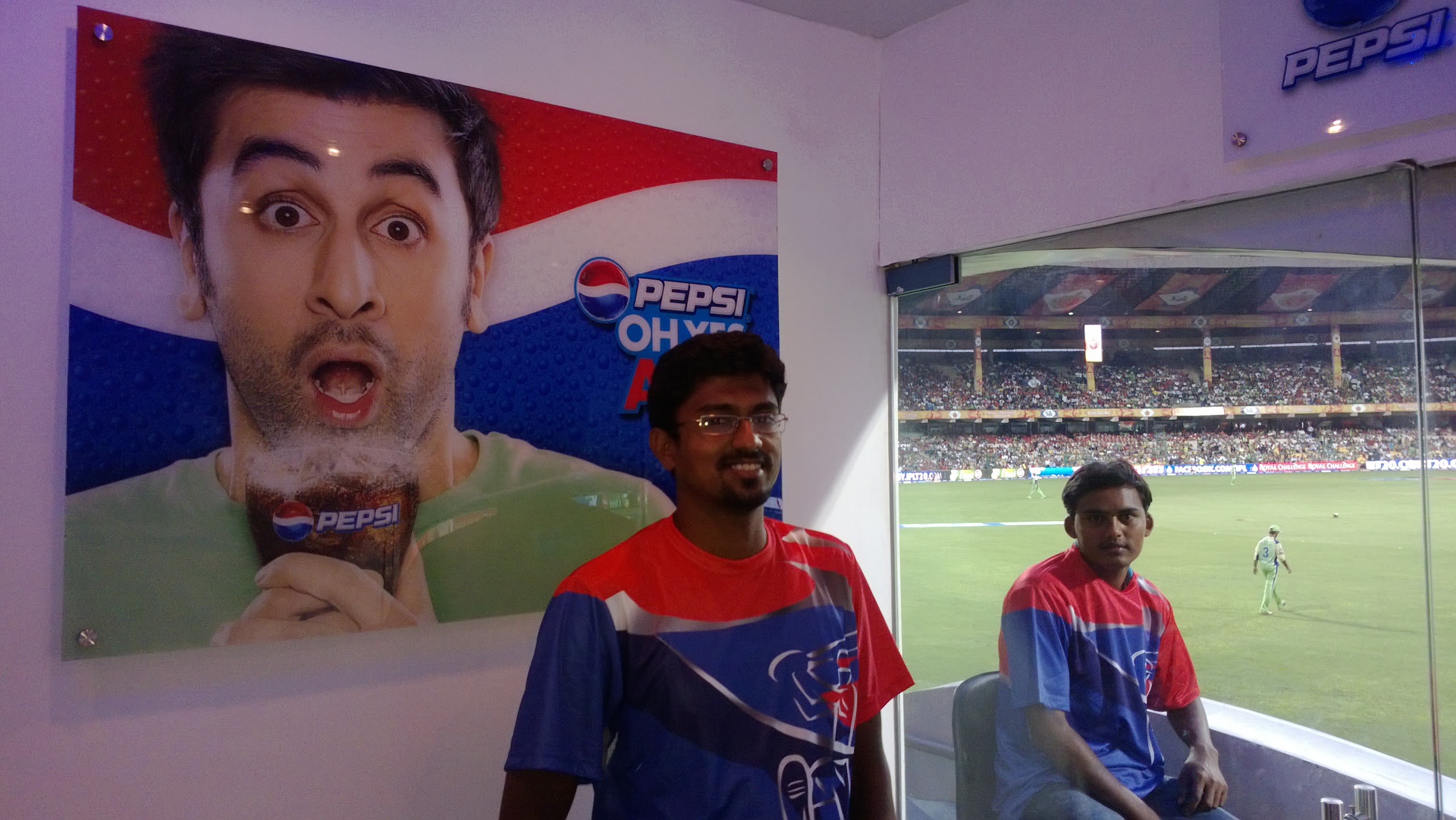
Although not very common but many businesses offer event management services to their partnered organizers in return of an amount. The idea behind this is that they will deploy their in-house team to manage the event for their partners. Also, they give the option to promote the event for their clients as well

D. Merchandise Distribution:

Amazon.com: Paladone Marvel Comics Playing Cards and Tin - Officially Licensed Disney Merchandise: Home & Kitchen

While this would require expansion on your front, but it can prove to be a great option when you have partnered with organizers who have established themselves immensely in the market.

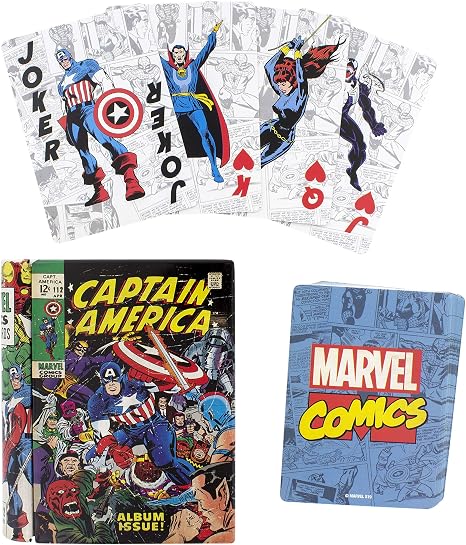
The way it works is that the official merchandise is put in to be promoted and sold inside your application. The money that the businesses make is on the basis of the commission that they make on every sale.

So here were the four commonly used ways you can earn money at the back of all the efforts and money that your partnered event management app development company and you have put in.

And it doesn’t end here.

There are a number of other direct and indirect channels for you to make money off your application. Get in touch with our team of app builders for events & conferences to know what they are.

Well, with this you are now officially ready to enter the market of event booking software with the knowledge of how much does it cost to build an event app and the ways you can earn back the invested amount.

In 2019-2020, here are 10 ways to develop an Uber-like app.

App Like Uber- A Complete guide with Features and Cost Estimates

What separates Uber from the many other ride-sharing entities in the world is not the feature set.

Because the feature set that Uber entails is one that almost every other Uber clone app contains – Reason they are called Uber Clone.

No, what separates Uber from other similarly operative businesses is Experience.

An experience that the rider and driver share from the moment they take out their phone to book an Uber.

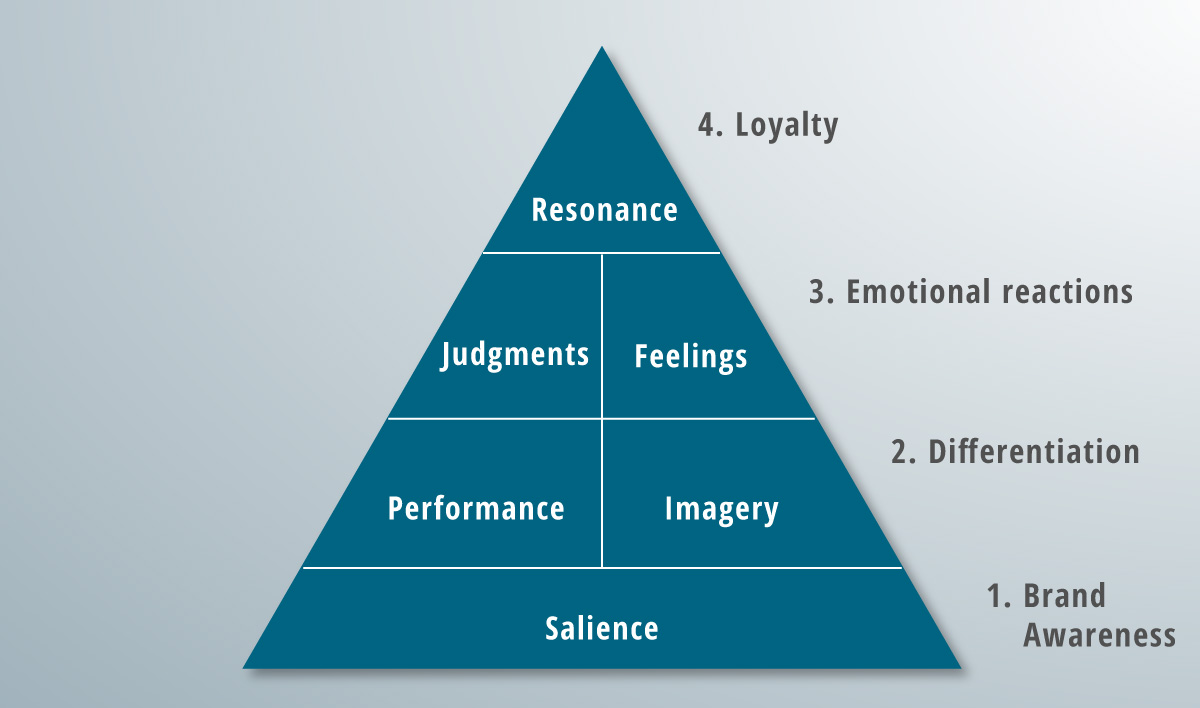
The result of this Uber app design trick that has come to be associated with the essence of how the brand operates is Brand Resonance. Something that you can experience today itself.

What you will have to do is get consciously active when it’s time to head home from work. That’s it.

See how people around you take their phone out to book a ride and no matter which platform they are on, the majority of them will say they are booking an Uber.

Isn’t this level of brand resonance something that every business aims for? Especially when they operate in a highly crowded mobile app domain?

What if I told you that the secret of how to redesign an app to get its brand resonance lies in the Uber app itself.

Well, it does.

And we will spend the next 8 Minutes in exploring exactly what Uber does in name of user experience that you too can follow to achieve every greatness that the ride-sharing mogul has. A complete disclaimer: Uber is not the only brand which gives serious design goals, Hulu app redesign also has been giving designing goals to businesses.

However, for the sake of this article, we will be concentrating on Uber app design principles.

The elements that we are going to delve into now are ones that can be integrated into your app, no matter what background your application belongs to.

Understanding the UX Principles That Work For Uber (and Can Work For Your Business too)

1. Focus on Localization

251,480 World Map Illustrations & Clip Art

One of the main answers of how to redesign an app like Uber’s lies in Localization.

The UX designer team at Uber gives a special focus to ensure that no matter what geographical background location their drivers come from, the experience that they get is all same.

This way, the whole onboarding becomes a breeze and the app learnability curve gets down to an absolute low.

By learning how to do app localization, you too will be able to offer a uniform experience to your users, no matter where they are located. An additional thing to understand here that there is a difference in localization and globalization.

The simple formula is that you should provide for localization if your business caters to multiple ethnicities in the same country and globalization if your business extends to multiple nations.

Here are some things you should take care of:

  • See that the app content can be changed to a different language
  • Give the users the ability to message in their regional language
  • Hire a team of customer support who are bi-lingual.

2. Shed the Belief that Customers are King

What is the meaning of the phrase 'Customer Is King, King Never Bargains'? - Quora

You will find millions of articles aimed at methods to drive mobile app engagement among your paying customers. All of them focusing on how important it is for businesses to keep their ultimate customers pleased.

But it is rare to find pieces on how to keep the other stakeholders – the service providers – happy.

Uber is one of those few companies that pay equal attention to the customers who make the final payment AND the drivers who give them a comfortable ride. Uber drivers, in general, are pretty happy with the way they are treated by the agency.

Everything from remuneration to leave policy is devised keeping drivers in mind.

For you to be a brand as appreciated as Uber it is important to give equal attention and benefits to all the stakeholders and not just the customers.

It is the only thing that would help you get a clear answer to how to increase mobile app engagement.

There are multiple ways to go about it

  • Give your service provider the freedom to reject the service
  • Make it easy for your backend stakeholders to connect with your team
  • Make a separate profile for them and show them the ratings that they have received

3. Give Attention to the Journey

Zoshua Colah - Making Uber Journeys Safer

If you spent any elongated time in the Uber app, you would know that there is a lot to explore even during the ride.

You can watch the driver’s story video or order something from Uber Eats which is rightly advertised inside the application.

With elements like these, Uber proves that it is not just the interaction points that are important but during part as well.

No matter what your app idea is, until and unless it is something that requires users to be inside the application the whole time like in case of Netflix App, you will have to find ways to improve your app’s user experience after ux review to build that connection.

Some ways to work on your app engagement with the help of your mobile app UX design company can be –

  • Add gamification in the application
  • Give your users media to interact with – music, videos, etc.

4. Loved Businesses Make Empowered Customers

10 Customer Service Phrases Based on Real Conversations (not Magic)

Gone is the time of Baby Boomers.

The present-day belongs to Millennials. And millennials don’t appreciate hand-holding.

Millennials want to feel empowered. And Uber understands this.

In fact, this understanding is what answers ‘How Uber Uses Psychological Tricks to engage more users’.

Uber gives multiple queries to the end users to choose from when they face an issue. And these queries do not involve them contacting the support till a much later time – something that holds the secret of how to make your app go viral.

You can follow the route by:

  • Having a detailed FAQ screen
  • Giving answers to all things that are in customers’ hands to solve
  • Placing your support email in a place that is easy to approach but not the first option

5. Promote Related Services Non-Intrusively

Intrusive Marketing vs Non-Intrusive Marketing - Know Online Advertising

How to design app like Uber? Be non-intrusive

Uber does an amazing job with showing dishes that you can offer through UberEats on the main screens of the application.

While you cannot order from UberEats from inside the ride-sharing application, it does a great job of sending you to the play store to install their other app.

The placement which they have set for their other service is so articulate that you will only click on it when you need to but its presence won’t bother you still.

Now, it is not necessary that you should also have another service to follow this Uber app design pattern. You can even follow this principle even when you follow the Advertisement based monetization model.

And also if you offer a subscription to the users to get access to other features of your application.

A few ways to achieve an Uber level of non-intrusiveness *pun intended* are:

  • Set an icon to show elements that are accessible through the premium account, without sending a pop-up to users mid-app interaction
  • Have a reward section inside your hamburger menu list and mention that the way to get the reward is through viewing videos
  • If yours is a gaming application, add the option of ‘view ads to’ or ‘install the app to’ feature after at least one successful round.

6. Uber UX design guidelines for on-demand apps: Treat Paying and Non-Paying Users Alike

UX design guidelines for on-demand apps

A bit in continuation with our Customer is not King point, is the factoring of how you should treat your free and paid customers alike. A key to how to redesign an app like Uber’s

While there is no concept of free customers in case of Uber, the ride-sharing mogul does not discriminate between riders booking a Sedan or those taking the Pool ride.

The only difference that is between the rides is in terms of car type and money. And that’s just about it.

It is a given that the premium customers would get extra features, it might be something as simple as no-ads while viewing videos or something major as unlimited content access.

But what is uncool is keeping a big difference in terms of feature set and giving your free/less-paying customers MVP like features.

In the end, the feeling of true accomplishment should be the same between both classes of your users.

Here are a few ways you can achieve this –

  • Make the premium set of features an upgrade of your present features and not a completely new set
  • Be honest about what users would get if they choose to go Premium and let them decide
  • Don’t ask them to join the premium class until they have used up all the free benefits

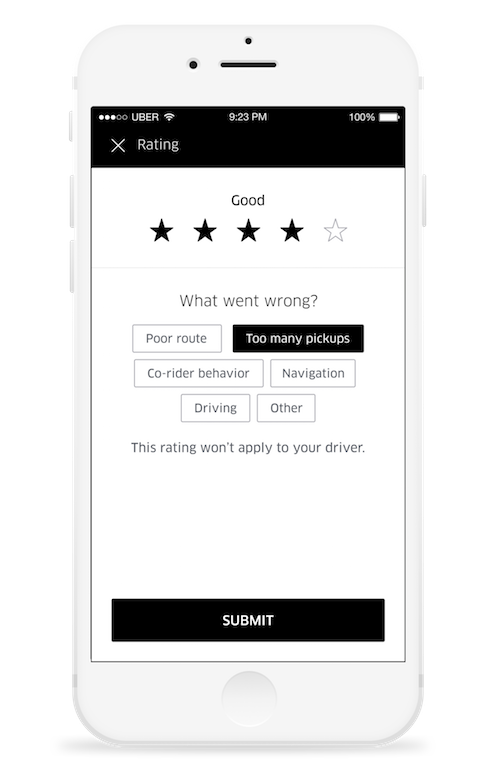
7. Constant Feedback – an Integral Part of the Uber UX Strategy

The importance of User Feedback. While booking a ride with Uber very… | by Vasudha Mamtani | UX Collective

The whole of the Uber driver app redesign was based on feedback.

The brand’s team of UX designers didn’t take a single step without getting a consensus of all the drivers in their community. An act that defines the meaning of community.

When you constantly ask for feedback and not for ratings, the attitude of your users change. Which then has a direct impact on your user retention rate.

Because, at the end of the day, users want to feel that they are a part of your business. A valued part.

Uber makes them feel this way by asking for constant feedback. You can make them feel this way by designing apps that drive user engagement and retention –

  • Asking your app’s improvement area on the email they have shared
  • Adding ‘Send Feedback’ option in the menu list
  • Give them the option to leave feedback when they rate your app low

8. Be Only a Few Clicks Away

Uber - User Experience Design Portfolio of Simon Pan

Being approachable is Uber’s forte.

The company has made it easy for the stakeholders to approach the customer care both on email and telephone.

Users only follow a few steps to reach out to the customer support team – it’s that easy.

As an app entrepreneur, you too should make it extremely easy for your users to get in touch with you.

All the customer touch points should be visibly present everywhere inside the application – inside the menu list, in the support section, in the settings page and so on. Basically, everywhere your customers might get stuck.

9. Impose Accountability on All Your Stakeholders

What makes Uber special is the fact that the brand breaks the social stigma.

There is a social stigma that drivers are seen as inferior beings and they should be treated as such. But Uber changes the mindset.

Uber enables the drivers to reject a ride if the user rating is low. Thus giving a reason for the riders to behave well with the drivers.

This level of accountability is what you should aim to introduce in your app. Give ways to your customers to connect with the service personnel with respect and integrity.

A few ways with which you can achieve this are –

  • By sharing stories about the service people – telling customers their aspirations
  • Prompting customers to tip them or say good things about them
  • By making it known in the Disclaimer section that the attitude your customers will keep will have an impact on their ratings.

10. Give Security its Fair Share of Focus

Uber - User Experience Design Portfolio of Simon Pan

Although it was a journey full of scandals for Uber to understand the importance of security, but the brand has come to know of its importance.

And it is not just in the backend. Security has found its place in a number of places inside the application. Uber even gives the option to the users to share their rides with people whom they know – thus seeping security deeper in their life.

A few ways you can give the same secure feeling to the users include –

  • A badge of security on the app home screen
  • Multiple authentication options

So here were the ten Uber UX design principles that you should copy in your app, today.

Need help from Product design and development company? Fill the form below and our team of UI/UX experts will get in touch with you.

React Native App Development Considerations That Aren’t Often Mentioned

React Native for Mobile Application Development: Why Use It? | by Manny Shapir | The Startup | Medium

  1. How is React Different from React Native framework?
  2. How is React Native Compared to Other Cross-Platform App Development Frameworks?
  3. Benefits and Limitations of React Native App Development
  4. Companies using React Native App Development
  5. Scope of Scalability When Choosing React Native for Mobile App development
  6. Type of Apps Best Suited for React Native Application Development

When Mark Zuckerberg said that his team has found a way to bring the simplistic features of web development to mobile, the mobility world got a framework that went on to change the business outcome of several app entrepreneurs.

Known as React Framework, the now popular cross-platform app development medium went on to witness a constant interest from the world of developers and entrepreneurs.

This ever-growing interest in the framework driven by the myriad of benefits that it offers is what has a number of entrepreneurs towards it.

But even amidst all the limelight that React native is getting and the now clear answer in yes to the question of is react native future of mobile app development, the primary universal question of whether it is better than native app development is keeping entrepreneurs on the fence.

A question which has led to the need for knowing the factors that have to be considered when investing in react native app.

This article is aimed at helping you find the answers to what to consider when choosing react native for mobile app development and how does react native work?

Let us start with the very basics first.

How is React Different from React Native Framework?

One of the main confusions that surround the React Native domain especially among the entrepreneurs who are just starting up with the department is understanding what separates React Native from React – the similarity in the first word holds an open scope for a lot of confusion.

React Native is basically the custom renderer of React, like what React DOM is on The Web. It makes use of native components in place of the web components that React uses as the building blocks.

In order to start working on React Native, you will first have to get the know-how of the React concepts – JSX, state, components, and props. Basically, if you know about React, you will still have to learn things around React Native such as the many native components. React Native also gives access to the features these platforms offer, apart from transforming React code to work on iOS and Android.

With the common misconception that surrounds React native now answered, let us look into the point that is more business decision oriented – where react native stands in front of other cross-platform tools or frameworks.

How is React Native Compared to Other Cross-Platform App Development Frameworks?

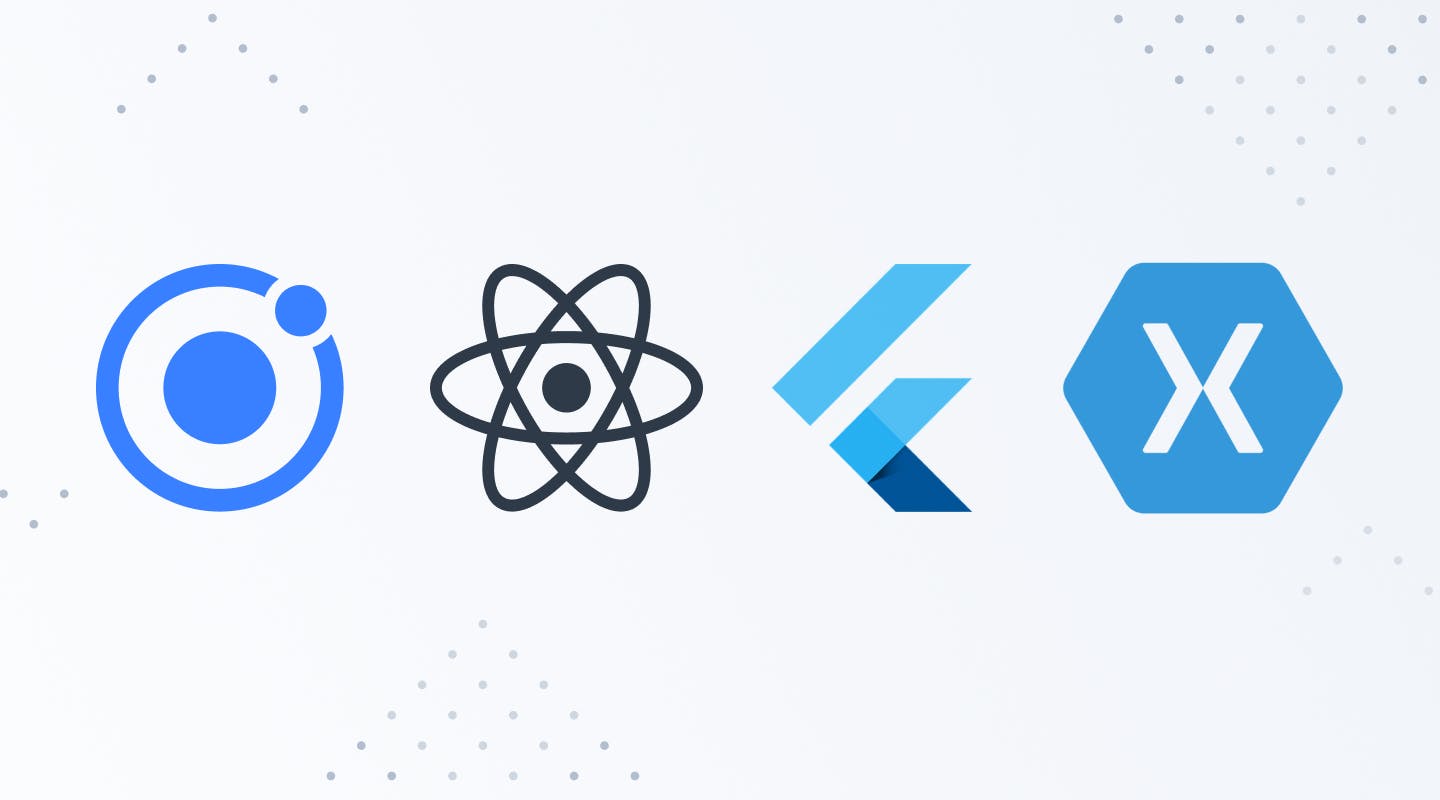
When we look at the alternatives to React Native as a cross-platform app development framework the names that come up include – Flutter, Ionic, and Xamarin.

Let us look at how the advantage of React Native stacks up against all the three.

Ionic Article: Comparing Cross-Platform Frameworks

A. React Native vs Flutter

Even after being fairly new in the domain, Flutter has emerged as the ideal competitor to React Native. In only sometime of its launch, the latter has popularized the debate around React Native vs Flutter at the back of its capabilities.

But even at a time when the competition is pretty stiff between both the cross-platform frameworks, there are a number of factors in which React Native is proving to stand ahead of Flutter. Factors like –

User Interface

Framework Maturity

Use of JavaScript

Mass Adoption

Set-up and Configuration

Tooling

Lifecycle Management, etc.

B. React Native vs Ionic

While the industry is divided into both sides considering the individual benefits that they both offer and their individual capabilities, React Native again stands ahead of Ionic in the discussion of React Native vs Ionic.

Here are some factors where React Native holds a much stronger foothold compared to Ionic –

High Performance

Better Community Support

C. React Native vs Xamarin

The debate between React Native vs Xamarin is what has taken a slight side-track ever since the launch of a more capable framework – Flutter. However, the demand for Xamarin among cross-platform app developers is nowhere less.

Here are the different factors where React Native stands ahead of Xamarin –

Market Share

Better Development Environment

Better Testing Abilities

Proper Documentation

Comparatively Lower Cost of Development

Now that we have looked at where React Native stands as compared to the other popular cross-platform tools, it is time to look into the next important thing to consider when choosing React Native development – The Pros and Cons of the popular cross-platform Framework.

Benefits and Limitations of React Native App Development

Even after being one of the most popular modes of cross-platform app development, there are a number of limitations that a leading react native application development company works around but also a number benefits that the react native app developers boast of.

An understanding of what the react native development pros and cons are will bring you to a much better stage when it comes to knowing things before starting with the React Native development process.

Let us attend to them both now, one after another.

Benefits of React Native App Development

A. Single Codebase

Single Code Base App Development Platform | Streebo inc

The best part about react native development of app is the fact that it works around a single codebase. The development team does not have to write codes for two (or multiple) platforms individually, instead, they have to code once and the app will get live on multiple platforms – Android, iOS, Windows, etc.

B. Lowered Development Time

Free Development Cliparts, Download Free Development Cliparts png images, Free ClipArts on Clipart Library

React Native makes it possible for the mobile app development agency to employ only a few people in the project, thus being the number one answer to if is react native good for mobile app development. Instead of keeping two platform-specific teams, they only employ one team in the project. Also, because all the efforts, straight from designing to development and maintenance gets cut in half, the overall mobile app development timeline also gets reduced.

C. Easy Transition for Web Developers

10 Page Transition Effects Trends for Web Developer in 2018 | by UIUX Lab | Medium

Because a good portion of React app development is done using JavaScript, it becomes a lot easier for web developers to switch to the world of mobile app development, for the learnability curve is pretty low.

D. Open Source

tvOS - Wikipedia

Being open source, React Native gives developers the benefit of code inspection. Also, because of the open-source nature libraries become a lot more compatible with platforms like Windows suite or TvOS.

E. Hot Reload Option

Another time-saving functionality of React Native is the Hot Reload ability. The capability makes it easy for the developers to see what their changes reflect as in the device in real-time. They no more have to push builds to see the effect.

F. Better User Experience

Customer Experience and User Experience | by Ish∆n | Prototypr

The main feature of a native app is to offer quality user experience by having efficiency and compatibility to operate on a mobile phone. Applications developed with React Native have faster loading time and smooth feel, which makes react native one of the most liked choice. The apps built with React Native also offer perfect performance as well as aesthetic appeal providing better user experience.

G. Cost Effective

Behavioral 'Nudges' Offer a Cost-Effective Policy Tool – Association for Psychological Science – APS

Currently, the price related to developing an application can be lowered by 25-30% when selecting React Native. The financial savings is made from having simply one development group rather than two. This implies simple management of process and project as well as more control over uniformity of the manufacturing.

It additionally suggests that there is no difference in the work speed. Meaning that the progress in React Native is constant for both iOS and Android platforms.

Drawbacks of React App development

A. Lack of Connect with Native Elements

Free Sound Recording Cliparts, Download Free Sound Recording Cliparts png images, Free ClipArts on Clipart Library

The biggest lagging on the React Native’s part is lack of connection with the device’s native elements like Voice Recorder or Camera etc.

The alternate to native framework that solves this problem – Flutter to some extent, but nothing beats the abilities of Native app development.

B. Lack of Third-Party Library Connection

There is a massive lack of third-party libraries connection that React Native faces. In order to make use of the libraries, the development team has to make use of native modules, which only increases the development efforts further.

The alternate solution to this problem – Xamarin

C. Restricted Support for Native APIs

Understanding APIs

Although React Native is expanding its support scope to multiple Native APIs, the number is still restricted and so is the freedom that developers have in terms of using all the APIs.

The alternate solution to this problem – Native app development.

If there is one thing clear from the benefits and limitations that we just read, it is that when it comes to the cross-platform app development process, react Native has almost all the functionalities to get you started with the process. And whatever’s lacking is something that falls majorly in the ballpark of native app development, making React Native vs Native apps development the right comparison point.

Well now that we have looked at the different benefits and limitations that are linked with React Native, it is time to get an idea of its social standing.

Let us get down to looking at where the adoption state of React Native lies.

Now while we already know that the framework is used by millions of businesses across the globe, we are going to look at the top names which are backing the popular cross-platform app development framework.

Companies using React Native Apps

Even though there is a sharp rise in the adoption of React Native’s top competitor Flutter in the mobile industry, the companies that are already using or are starting with the React native app development process are not less in number.

Here are some of the top apps made using React Native –

Brands Relying on React Native and the factors to consider react native are:

1. Facebook

Response to Six4Three Documents - About Facebook

When Facebook laid the foundation of React Native, it was guided by the need to bring the ease of web development on the front of single team requirement and quick iterations to mobile.

The Result – There was a significant improvement in performance, making the app twice as fast as earlier.

2. Walmart

Walmart becomes largest U.S. vaccine provider to join push for digital vaccination credentials. - The New York Times

The business has already given us a peek into how innovative its processes are – something that can be gauged by the fact that it first added Node.js in the stack and after a few years also introduced React Native in the toolset.

The Result – React native inclusion helped Walmart in not just increasing their overall app performance, but also helped in offering near-native interface along with the facility of smooth animations.

3. Bloomberg

Bloomberg L.P. | About, Careers, Products, Contacts

The app which is aimed at offering interactive, streamlined experience with heavily personalized content is built upon React native as well with the intent to take advantage of the framework’s automated code refreshes and instant reloads. Intents which stood true of what was expected.

4. Instagram
What Is Instagram and How It Works: a Beginner's Guide

The social media platform integrated React Native in its existing native application inside the WebView functionality.

The Result – The developer velocity improved to a great extent. And now over 90% code was getting shared between iOS and Android apps, so the delivery number also improved.

5. Townske

Townske - Apps on Google Play

The app aims at being the travel guide of its users by giving them a list of places that the locals frequent. They chose React Native for its sole focus on Mobile UI.

The Result – The app’s UI is very responsive and fluid because of the asynchronous JS interaction with a native environment, meaning it loads a lot faster than your usual hybrid app and works around a smoother feel.

Now that we have looked at the reasoning and the impact of choosing React Native that a number of top businesses across the globe have faced, it is time to get down to one of the two direct business impacting pointers of React Native – which also happens to be two of the most beneficial features of react native.

React Native’s Business Benefit Number 1: Small Team Size

One of the biggest benefits that attract entrepreneurs to React Native is the fact that the development type calls for very small team size – something that directly answers if is react native good for mobile app development.

A usual team composition of your average react native app looks like –

1 Project Manager

1 Tech Lead

1 React Native Developer

1 Business Analyst

1-2 UI/UX Designers

1 QA Specialist

This number when you choose Native app development increases to exact double or even triple if the project size is big.

React Native’s Business Benefit Number 2: Low App Development Cost

The next big benefit of React native app development that works for businesses is the fact that it brings down the answer to how much does it cost to develop a react native app to a great extent.

In fact, this happening is what makes React development one of the most trusted ways to bring the mobile app development cost down.

While these two benefits are what keep the interest for app development high among entrepreneurs, the prevalent doubt around the scope of scalability that the framework offers, tends to keep them a little on the fence as well.

Making scalability an important thing to be considered before making an investment in react native mobile app development.

Scope of Scalability When Choosing React Native for Mobile App development

Gone is the time when scalability used to be a matter for backend teams to handle. It has today become all the more important in frontend as well.

The idea that an application should be scalable enough to handle more real-time users and devices is what businesses are aiming for nowadays.

But does React Native holds up to this expectation? Is Scalability one of those must think about factors to consider for React Native app development?

The answer is a Yes, but.

Short answer – The fact that React Native for mobile app development is what is powering an application like Facebook, makes the framework very scalable in nature.

Long answer – It takes certain experience and developmental efforts to know how to structure a React Native app for scale – something that only the leading react native mobile app development services can offer.

With that answered, we have come to the last thing that has to be taken into account when doing app development.

Type of Apps Best Suited for React App Development

Which Type Of Apps Are Best Suited For React Native? | 360 Degree Technosoft

While the day is still awaited when we would say that any and all types of applications can be made using React Native for mobile app development, the truth of the hour remains in the fact that the type of apps that can be made using the framework is a number that can be categorized in four points.

Let us look at those four points as the last section of our article today.

Here are the four app types that usually defines when to choose react native for building a mobile app –

Working prototypes

The importance of mobile app prototyping in getting the app idea validated is not unknown to the app industry. And what can be better for developing a prototyping model if not a cross-platform framework that allows speedy development at low developmental cost?

Apps with simple UI

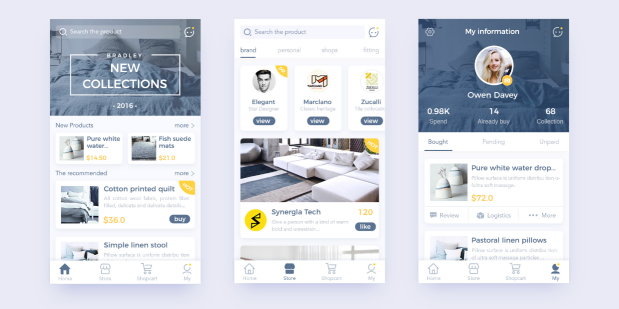
10 Best APP UI Design for Your Inspiration in 2017 | by Mockplus | Mockplus | Medium

For mobile apps which have very few views and interactions, React Native can prove to be a very viable option. The present of capabilities like quick iterations and hot reloading makes it ideal for brands seeking high app performance.

Apps requiring basic functionalities

5 Mobile App Features Your Customers Want

For apps that fall into the category of medium to low complexity having functionalities that can be hand-counted, React Native can prove to be a great option.

Non-Native app

Although a no-brainer but apps that do not rely on the native abilities of a device can prove to be a perfect outcome of the native app development process. So, if your app idea is of an application that works perfectly fine as independent software, RN can be a great choice.

The Future of React App Development

Till now we have known the types, benefits, limitations, scope, and how does react native work.

Fabric a project by Facebook is set to transform the React Native future. Fabric makes React Native community and its tools suitable with other different platforms than the typical Android and iOS. It will certainly help in making a lower overload on the application design and architecture and your apps will run quicker than the old cross-platform applications in react.

New Thread Model

A thread is a network where the system connects with the users. To every client demand, a UI needs to go with three different threads. Rather than enabling each UI update to deal with three separate threads, Fabric will empower developers to call synchronously right into JavaScript on any thread provided. Decreasing the stress on the primary thread without compromising responsiveness.

Async Capabilities

Subsequently, making it simpler to manage asynchronous information and data, and also permit numerous rendering priorities.

Simplified/Native Bridge

WebView — The Bridge that Connects React Native to the Web | by SaidHayani@ | Bits and Pieces

We know that cross-platform applications struggle because of the gap between the shared code and native conditions. To improve the debugging of bugs, native bridges are required. Developers are planning to develop a fresh simplified bridge, which will certainly boost the direct calls between JavaScript and native.

With this, we have looked at everything that you will have to consider when looking into investing in react app development. The only thing left is finding the right react native mobile app development company.

Well, you don’t have to look further, we are only just a single click away. Fill in the form below and get in touch with us and hire our React native app developers.

How much does it cost to develop a photo editing app?

5 best free photo editing apps for Android users | Technology News,The Indian Express

If there is one thing that the mass acceptance of image sharing social media platforms as Snapchat and Instagram have done, besides being the absolute profitable marketing medium, is bring a positive, surging demand for pic editing apps.

With more and more people willing to share their every second with the world, the need to look better – either naturally or through the help of technology is on a sky-high level.

So much so that the photo editing software market is expected to grow over $1030 Million by 2023. An estimated market size which is mainly driven by regions like:

North America – Canada, Mexico

Europe – UK, Italy, Russia, France, and Germany

Asia-Pacific – Japan, Korea, India, Japan, and Southeast Asia

South America – Colombia, Argentina, and Brazil

Africa and the Middle East – UAE, Suadi Arabia, Egypt, South Africa, and Nigeria

There are two main reasons driving this sudden high demand for photo editing software in the market:

  1. Increase in integration of photo editing features on social media platforms
  2. A rise in the number of mobile-based photo editing software

Now irrespective of what reasons are driving the growing market demand for photo editing software, the outcome of it all remains the same – the rise in the number of entrepreneurs willing to enter the flourishing industry. And an even greater increase in people seeking the answer to How much does it cost to build a photo-editing app like Retrica or similar applications.

The current state of the market is as such that the top players’ list is continuously shuffling for many new brands are entering the market with the hope to take a piece of the market pie.

But if you look at today’s date, the picture of top market players that you will see will look like –

Top 5 Photo Editing Apps – Sequoit Media

If the current market scenario is giving you cold feet from the front of market interest, well, it shouldn’t. The interest for new innovation in the domain is still intact, not just from the investors but also from tech giants who are planning to enter the space.

Here is the supporting evidence –

A. Polarr, the AI-powered photo editing application raised $11.5 Million in VC funding to grow its mobile and web presence.

B. Meero’s image editing tool raised $45 Million in funding last year

C. Apple, in January, announced its plan to release its own photo editing app called Fuzion

See how big yet open to more participation the photo editing app market is?

Now that we have attended to how flourishing the pic editing app market is, it is time to move on to the next stage – One which is a lot more technical and directly mobile photo editor app building cost impacting.

The stage we are going to look into next is ‘Features’. It plays a key role in deciding what the mobile app development cost estimate would be.

A. Registration

How To Create PicsArt Account in Android - YouTube

The one thing similar between possibly every app active on the stores is user registration.

And keeping up with the tradition, you will also have to add in the feature of user registration in your pic editing app for making it easy to enter the application and ensure that their data is saved inside the app for they are not getting in as guests.

To make it easy on your users, add in the option of social media or Gmail login – this will expedite the whole process to a great extent.

B. Social Media Syncs

Lightning-Quick Sharing, With the New PicsArt Photo Editor

The relation of your photo editing app with social media will go much beyond easing logins. You will also have to enable your users to share the edited photo on their choice of social media.

Also, while not necessary, you can even give them the option to invite in their friends and see your portfolio.

C. Photo Edits

How to edit photos with Lightroom for mobile | Adobe Photoshop Lightroom tutorials

The essence of your photo-editing apps would by default be the photo editing functionalities that you are offering them. In fact, this point here is what majorly determines what your cost to develop a photo editing app would be.

For the ease of understanding and cost differentiation, we have divided the feature list, which also clearly answers how to create a photo editing app, into two parts – Basic and Advanced.

Here they both are:

The set of basic photo editing functionalities –The list of advanced photo editing features –

D. Photo Capture and Upload from Gallery

How to transfer photos from a camera or card reader to Photoshop Lightroom Classic

The next in our list of must-have photo editing app features is the option to take the photo. There are two ways to go around it – A. Capture the photo from the camera (your phone’s camera is connected with the application using SDK) B. Upload the Image through the phone’s gallery.

E. Search

Adobe Spark brings easy-animation apps to the web - The Verge

If your idea is to create an app like Adobe Spark, which allows you to make image changes by giving you multiple templates to choose from and edit into, you should give your users a search functionality to select their preferred category.

Also, you can give them the search functionality to look for any specific functionality of your application, in case the list is extensive.

F. Shop

There should be a section within your application which has the list of every feature, functionality, and effects that you are planning to sell to the users. Ideally, it should be divided into sections of different things that you are offering to your users – simply for a clear and simplified UI.

G. In-App Payment

PicsArt Gold Brings Ad-Free Edits With Thousands of Graphics | Digital Trends

In addition to the shop feature, you should also integrate payment functionality in the app, giving your users the ease of purchasing the effect of their choice. To make it easy on your users, you should offer a variety of payment options like cards, online banking, or through platforms like PayPal and Stripe.

So here were some of the must-have features that should be present in your photo-editing application to make it more efficient and valued. And now that you know what those are, it is time to talk about the factor that we wrote this article to answer – How much do photo-editing apps cost?

What is the Cost to Develop a Photo-Editing App?

RAW Photo Editing Basics Explained

The cost of photo-editing application development is mainly divided into two parts – A cost that is arrived at on the basis of the list of basic photo editing features, as we saw in the section above a while back and Cost range B, which is arrived at on the basis of the estimation of advanced level features’ set.

Here’s the difference between them both.

The cost of a basic level photo-editing feature app will be between – USD 30K to USD 40K.

While the cost of the Advanced feature set application will be in the range of USD 60K to USD 70K.

Now, the estimated photo editing app development budget range that we have mentioned here is on the basis of the features that have been mentioned in the article. It is not a concrete range and so it might vary from your one requirement to another. Also, you should accept that the answer to what is the cost of photo editing app development in India would be very different from the cost that an agency in the USA would charge.

With this, we have now looked at everything that you need to get started and reach the stage where you connect with the team of custom photo-editing app developers who excel in the creation of the photo-editing app category.

The next and remaining thing left is to know how to get back the invested money that you put under the segment of photo-editing app development and grow it further. Let us get you an answer to that in the next section.

How to Earn Money on Your Photo-Editing App?

When it comes to earning money on a photo-editing application or setting its monetization model, businesses usually work around two modes –

A. In-App Advertisements

14 App Install Ads That Are Winning The User Acquisition Game | CleverTap

Under this mode, the app earns by showing advertisement of other business to their users. The more a user interacts with the advertisement the greater are your chances to earn more money.

B. Paid Editing Features

How to Use the PicsArt App on an iPhone or Andorid | PicxTrix

The next most common mode of earning revenue on your photo editing mobile application is to offer features that the users would pay to use – it can be an effect or a filter or even holiday-themed frames.

Now that you know what is the cost to develop a photo-editing app are practically ready to get started with your own business, there is just one last remaining thing for you to attend to – Getting in touch with one of the leading photo-editing app development companies in India and the USA that would help take your business ahead.

How to Successfully Validate an App Idea

How to Validate Your Mobile App Idea?

Getting an app idea is easy.

How many times have you found yourself looking at something – an event, an issue, or simply a situation and thinking how easy it would have been if there was an app for that?

This occurrence which is also known as ‘There should be an app for that’ is something that has almost single-handedly been responsible for the creation of many millions of apps that are operating in the stores today.

But how to put a filter on your closet full of ideas? How do you validate your ideas’ feasibility? How do you answer ‘Is my app idea any good’?

This is where your search ends – the search to know the right app ideation process.

Let us start the piece on what to do with an app idea by getting you acquainted with the six app idea validation process – something that sets the basis of any and every mobile app development process.

The Six Stages of Mobile App Idea Validation

Validating an app idea to ensure that it fits with your future goal is something that cannot simply be attended in some pointers. There are three different parts and rather phases attached to it.

Here are the six steps to verify your app idea –

Phase 1: Finding an app idea

How to Make a Business Model Canvas for Mobile App Idea - Clockwise Software

The first answer of how to validate an app idea revolves around finding an app idea. Until and unless you have a few app ideas on you, checking up on its viability will be out of the question. But how do you get an idea? Where should you head out for inspiration?

While it is true that some of the best performing applications today were inspired by real-life challenges, it will be a little boastful to assume that the same would happen to you and you will too get a real-life problem’s solution, although it’d be awesome if you do!

But in case you don’t, here are the ways you can gather some inspiration for your mobility business:

1. Monitor the app stores thoroughly

App Store / Google Play Logo [ Download - Logo - icon ] png svg

Start by making a list of your most preferred app categories where you would like to make an entry eventually. Once you have a list ready, review the top applications in there. See what features they have, what is missing, is there some feature that you can offer in your application, which could make yours different from others, etc.

2. Go beyond app stores to app review and listing websites

App Stores List (2020) - Business of Apps

After you have studied the top ranking apps in the stores thoroughly, move on to looking into the app rating and review websites – ones which contain the details of the new launches in your preferred category. In fact, you should also make use of sites like AngelList or ProductHunt which contain the details of the new businesses that are now entering the domain you are interested in – be it mobile or non-mobile. And see if you can take these businesses on mobile.

3. Attend meetups

The next activity that you can do to get ideas when you are at a stage of a blank slate is attending meetups and conferences where entrepreneurs meet to discuss their idea and find potential people who might be interested in backing their idea.

These meetups are more often than not a well of information and ideas waiting to be brought to the mobility space.

4. Check who is getting funded

The last of the tried and tested way that helps in getting inspiration is seeing who is getting funded – knowing the industries and business models that are now getting attention will give you a clear notion on app idea testing and where the future lies. A piece of information that you will be able to use to place yourself in it.

Phase 2: Researching the viability

How to research your business idea – Entrepreneur Handbook

Once you have a basic idea of what app category and type you would be interested in to enter the mobility domain with, the next stage comes – checking the idea validation framework whether it is even viable in itself. This is one of the most crucial steps.

Everything from your business’s future to the justification of how much your app costs depends on the amount of research you put into checking your application’s validity in the market.

This phase is what our article is based on. So, we will be looking at it in much detail sometime later.

Phase 3: Analyze the market fit

How Superhuman Built an Engine to Find Product/Market Fit | First Round Review

After you have known about the app concept validation, the last step before you enter the mobile app development process cycle would be to analyze what the market would demand from your application.

This stage would mainly deal with two things – your app’s feature set and its business model. Make a note of your competitors’ features and see which all you can combine and put in your one application.

Now that we have looked at all the three stages, let us get to the main section of the article, as promised in Stage 2 – How to Validate an App Idea.

Well, here are the Effective Strategies to Validate Innovative App Ideas.

Phase 4: Creating MVP

When you know about your rivals by analyzing the existing applications, acquiring the genuine need of your target audience by studying the market, and hearing the problem areas of the users; you are totally clear in your mind about the application that you will create and features that you will add.

After getting to know the basics and the requirements, you need to consider making a minimum viable product. Make a completely functional MVP and send it out for testing with just the main features to see how it functions in the real world.

Phase 5: Creating digital prototype

How to Make a Mobile App Prototype? Secrets of Building App Prototypes - Clockwise Software

When you are finished with all the phases, then you have a reasonable idea of what you are going to create and thus now it’s time for the formation of a digital prototype. Models characterize the flow of design and how it will function before the development of the application. When your prototype is prepared you can do iterations to test the effectiveness of your mobile app and roll out the necessary changes in the design stage to avoid iterating the complete application development cycle and saving time too.

Phase 6: Final design creation

Ten Steps of the Product Design Process - Digital Product Design Agency – Qubstudio

After all the phases are finished and all things arranged, you simply require to draft the last application design and voila! Your application is in the market providing you profits. The design needs approval by the customers who will utilize it, however a design sprint can help you in such cases if getting customer approval is hard for you. Start by testing the design by three or four users, getting feedback from them and executing on the feedback. After this you can dispatch a beta version by permitting only a few customers to join and sign up, and get the insights about their experience to make the end result and launch your application.

Ways To Validate An App Idea

Validating your application idea is a process which takes up multiple steps and time, efforts to become fruitful. Let us look at some of the top ways that can be applied to answer how to validate app idea, whether there is any idea validation tool or is it manual process?

1. Talk to the targeted users

How to Find and Target Your Social Media Audience (Free Template)

Reaching out to your targeted app users can be your first step to introduce your app to the world. But how do you know whom to contact?

Well, the first thing that you will have to do is create user personas. The benefits of user personas creation ripple down to a number of other app development stages as well. You will have to define your user group in a way that you have a clear understanding of how your app would be used by the people – the features that would be preferred, the layout that will be applied, etc.

Once you have identified the user type who would interact with your app once it’s launched, the next step would be to get your app idea to reach them – the stage that plays a crucial role in finding an answer on how to know if your mobile app idea will be successful.

There are multiple ways to do that.

You can create a survey around your app’s features and send it across to your pool of prospective users to measure their interest rate in your idea. The ways you can reach your users are – A. Through Social Media Ads B. Through Community based Websites like Reddit, Quora, etc. C. Through Connecting with them via Blog comments that they have commented on.

The idea of this stage is to help find answers to the following questions:

  • How significant is the problem that you are out to solve?
  • How often does your user group face the issue?
  • How satisfied are they with the present solution to their problem?
  • Is the solution that your app is offering something they would be willing to pay for today or in the future?

2. Study the stores

Google Play Store vs the Apple App Store: by the numbers

With millions and millions of applications being present in both App Store and Play Store, it can be quite a task in itself to find out your competitors – those operating on the same business model as yours and those who are working on your prime most feature.

Doing a competitive analysis of your mobile app is not easy. There are a number of applications that you will have to peruse and a great number of features you will have to make a list of.

To make it easy on you, here’s a short point by point process to help you understand the track that you will have to follow when doing competitor research and also to answer how to find out if your app idea exists.

Step 1: Start with putting your preferred category name in the search box of the store and see the apps coming in until two scrolls.

Step 2: Enter the keywords that you think your users will put in to find your app in the stores and put them in the search box, individually as well. Make a list again of the apps coming up till two scrolls.

Step 3: Make a comprehensive list of their feature set – see which are common and which are not.

Step 4: Study their reviews and ratings to see how users are interacting with their application, what they are liking and what not, etc.

3. Do keywords research

How to Do Keyword Research for SEO: A Step-by-Step Guide

This step is your way out to understand what people are talking about your category. The mode to gauge if there is an interest in your application – a stage that will help give you a clarification of I have an app idea where do I start?

To start with, you will first have to list out 15-20 words or phrases which you think people will search for to arrive at your application and offerings. Once you have the list ready, put it in tools like Google AdWords or Moz keyword explorer to see the traction the words are getting. The search volume there will tell you whether or not people are looking for an idea like your application.

The information that you will find here would be a clear sign of how attractive your app idea is in the market presently. Also, the list of keywords that you are able to create at this stage will come in handy in a number of other steps later as well, like in case of ASO or when promoting your app outside of the stores. In fact, the step will also get you closer to find app developers specializing in your preferred domain.

4. Create a landing page

Landing Page: what is it and how to create one? [+ 7 tools to create]

It is time to utilize the network you must have created during the survey and social media process.

Make a landing page (otherwise known as a single page website like document) to pass on to people you had reached out to earlier and people whose attention you will acquire next. The idea of it will be to see if at all people are interacting with your mobile app idea.

Tracking of which can be easily done by linking your microsite or landing page to MixPanel or Google Analytics. Also, remember to shorten the link using Bitly or URLBuilder to see how many times the link was clicked.

Other than this, when we talk about the basic things that should be present in your landing page, it looks something like this –

  • Description of your application
  • Screenshots or mockups
  • eMail subscription form

The tools that you would be requiring for creating a ready to be shared landing page includes:

For Creating Pages – Unbounce, LanderApp, Launchrock, Lead Pages, QuickMVP

For Designing Screenshots and Icons – LaunchKit.io

5. Upload rough version of the app on review websites

18 Best (and Worst) Web-Based Video Editors for 2021

There are a number of websites where you can submit in your app idea – like ProductHunt or AngelList, etc. So, put in your idea there and see how other entrepreneurs and general new business enthusiasts are reacting to it.

You don’t necessarily need a prototype to use this approach. These sites even let you open pages where you can put in your app’s description and probable list of features that you have envisioned for them. So, make use of these websites to showcase and promote your app idea to the world.

6. Understand the size of your target market

Understanding Your Target Market

To know your target size you need to first make a list of keywords that are related with your application idea. Then add these keywords to the Google keyword planner tool or any other keyword planner tool. The tool will provide the normal monthly searches that these keywords are getting locally and worldwide. The higher the quantity of searches, the more will be the demand for the services related with your application idea.

Now that we have looked at the ways you can validate your mobile app in the market, it is time to look into the different approaches you should follow to get your app idea across to the potential pool of users – something that would require the help of a mobile app development agency.

Approaches to Check the Viability of Your App Idea

SIMON Mobile app: validation of user's operations. | Download Scientific Diagram

When it comes to transforming your app idea into approaches or ways that can be shared for the world to explore and dissect in detail, there are three methods that come up – MVP, POC, and Prototype.

Let us look at all the three approaches in a little detail now.

Proof of concept (POC)

Five tips for a successful Proof of Concept - Bizztracker

It is a small version of the project which is used mostly for in-house distribution of the app idea as compared to showcasing it to the other stakeholders. Usability is not something that is given much attention at this stage.

The intent of this approach is to see how the idea is looking inside a mobile app, at a very raw level. It helps mobile app developers understand what flow should be kept and how long will it take. In fact, POC is the stage which plays a very important role in determining how long does it take to develop a mobile app.

Mobile app prototype

5 Tips For Effective Rapid Mobile App Prototyping | by Proto.io | Prototypr

While the intent of POC is to show that a feature can be added in the app, Prototype shows how it can be done. A prototype is basically an interactive model of the end product which communicates the navigation and design of your application, which can be made using a number of tools.

It helps your stakeholders visualize how your app would function while showcasing the user flow and giving everyone the idea of the layout and design. Mainly, it is designed by mobile application builders for determining the feasibility of the app but does not represent a final product. The fact that it highlights the issues at the semi-early stage of the mobile app development process makes it easy to fit in the solution from early on as well.

Minimum viable product (MVP)

What is Minimum Viable (Data) Product? - KDnuggets

MVPs are your best shot answer to know how to develop an app idea. It is a minimal form of your mobile application which is shared in the market to test. MVP helps in understanding how exactly are your users interacting with the app. While prototyping helps in solving issues which arise at the start of the development process, the intended outcome of MVPs is for identifying the pain point of the users and some time to get funding from investors.

They are used to verify the following things:

  • Viability of the product
  • Assumptions which the team had made about the product
  • Market demand
  • Usability

Ultimately, MVPs are used to provide immediate value while keeping the mobile app development cost to a minimum – all the while giving you the possibility of iterating your app development process stage by stage.

Build your brand recognition

How to Build Brand Awareness? Top Tactics to Boost Awareness

After creating and evaluating your MVP effectively, you ought to build up your brand image. Having all-new information every day, a current approved application idea could be invalid tomorrow – we don’t have to remind that, those who are not remembered are not seen – thus you should act quickly and develop your brand recognition.

Above all, your brand image and related things should convey the essence you wish to bring to your application. Arranging about better visual design and identity could guarantee your approval publicly, beside assisting individuals grasp the worth and functionalities of your application idea without any problem.

So here was everything that you needed to get started with the stages of app idea validation – things that would be needed to get your idea off the ground and in the market. In the end, it all depends on how unique yet needed your offered solution is and how many people you are able to reach out to validate your mobile app idea.

The next step? More research.

Now that you have a valid app idea, the next idea is to find the right mobile app development outsourcing partner.


How to Use Marketing Psychology to Create Brand Resonance for Your App

20 Super Effective Testimonial Video Examples | Wyzowl

So, you are having a mobile application that delivers life-changing solutions with supreme quality, ease, efficiency, and cost-effectiveness. Customers love to use your application.

But, suddenly a new application with better options and lesser cost enters the market and is continually trying to gain the attention of your target audience. How will you react in this situation? How will you ensure that your targeted audience remain hooked to your brands despite alternatives available in the market?

The simplest yet proven way to do so is to look into how to create a buyer resonance using marketing psychology – something about which we will discuss in detail in this article.

What is Brand Resonance?

A unique brand resonance model guide for 2020 | Canto

So, let’s begin with the simplest definition of Brand Resonance.

Brand Resonance refers to the type of relationship you have built with your customer and the resonance strategy you followed. If you have a strong and positive relationship with your brand, your customers will stick to your brand – no matter what happens. Whereas, on the flip side, they will not take a second thought before switching to an alternative.

And the most relevant example to understand this concept in the mobile industry is iPhones.

iPhones have built such a bond with the targeted audience that even when the third-party agencies are providing almost the same features into their smartphones at nearly half the price, they continue to buy and use an iPhone.

While this might have provided you with a hint of what the concept actually is, let’s look into Keller’s Brand Equity Model to get a clear and comprehensive brand resonance idea, prior to looking into how to build brand resonance using marketing psychology and create a successful mobile app brand.

What Brand Loyalty Means for Your Business?

8 Ways to Build Brand Loyalty + Examples

Brand loyalty is all about your customers and your brand. It is an emotional tie between the consumer and a brand that prompts a customer to proceed and grow their purchase for items from your brand. Companies utilize brand loyalty to drive extra purchases both with current items and across brand expansions.

Brand loyalty can likewise drive their consumers to be brand ambassadors through word of mouth by sharing their experience and feeling for the brand to their colleagues, peers, friends, and family.

Having a loyal consumer base helps businesses to push past its competitors and give the upper hand it needs to prevail in the marketplace.

Organizations with solid brand loyalty sees its customers repeatedly purchasing its services or products, irrespective of changes in cost or convenience. Continuous buyers of one organization’s products are more averse to being influenced by the advertising messages of its competitors, thus, expanding the odds that those consumers will keep on conducting business with that organization.

A Descriptive Introduction to Keller’s Brand Equity Model

Keller’s Equity Model, also called Customer-Based Brand Equity (CBBE) model, revolves around getting a comprehensive understanding of how your target user base look and feel about your app product.

This implies, looking into the type of thoughts, beliefs, feelings, and perceptions that the customers have about your mobile application. It further means building the type of experiences that makes them feel great about using your application, and in the long run, keep them hooked to your brand.

This brand resonance model is basically in the form of a pyramid where each level represents a question that customers ask consciously or subconsciously about your brand. The model works with a ‘bottom-to-top’ approach and can be a great weapon into determining what strategies to apply and giving a WOW experience to your audience.

But, for reaping the best advantage of it, you need to be well-versed with all the elements of the equity model of the brand and should have the knowledge of how to apply them to enhance your brand marketing strategy and deliver an exceptional experience to your app users.So, considering the same, let’s look at these elements of this customer based brand equity pyramid in detail and understand what can be different ways to turn the situation into your favor.

1. Brand Identity – Who You Are?

Beautiful brand identity examples to inspire you - 99designs

Brand Identity, the first step of the CBBE model, defines how customers look at your app and what criteria they follow to differentiate you from others. It represents what image your brand holds in the eye of the target audience and is helpful to gain success in the market, when the mobile app is:-

  • New to market
  • Targeting customers who are unaware of its existence
  • Striving to build trust and loyalty
  • Looking forward to enhancing its work culture
  • Planning to drive higher sales
  • Making efforts to get the limelight in the marketplace.

While various brands have worked on building a better brand identity, the best example to consider in the mobile arena is Apple. The brand has built an image in the eye of the customer much beyond a tech giant – a proof of which is this video:-

Now as you know what all it entails, let’s jump into the right brand awareness strategy to consider to create brand identity.

When talking about working on building brand identity, you need to dig out the following details about your audience:-

  • Who are your customers?
  • Which market segment do they belong to?
  • What are their needs and expectations?
  • How they decide between your brand and that of your competitors?
  • What decision-making process do they follow?
  • How well your brand stand out at the factors they consider while taking a decision?

In a nutshell, you need to invest in creating Buyer personas questions and get a comprehensive detail about your user base. This will help you to determine whether your audience recognizes your brand the way you want them to, and to get a hint of what is your USP according to them.

2. Brand Meaning – What You Are?

Defining Brand: Why Is It So Hard To Find A Perfect Definition?

While the last level of the equity model signifies what your customers think about you, this element will be focused upon what you want to convey about your brand.

This implies you will put your best efforts into making the right changes in your product/solution and the corresponding marketing strategies to bring clarity between you and your targeted user base and build a significant impact in the market.

When talking about Brand meaning, you will be working closely on two factors, Performance and Imagery.

Performance

This subcategory represents how effectively your app is performing in the market from customer front. It mentions how well your solution meets their needs and enhances their experience, which is calculated based on five factors – primary features; reliability and durability; style and design; efficiency and effectiveness; and cost.

When talking about the working of this factor, the best example to take inspiration from is Amazon. Considering the growing competition in the sector, Amazon app revamped its customer strategies and added various new features including Cash on Delivery, Free shipping to even other cities, Delivery on the same day, Search by Image, and is even working on introducing drones to make the shopping experience effective for the customers in every aspect.

Imagery

The Imagery subsection will help you to look into what is your brand image in the minds of customers from social and psychological perspective. That implies determining if they are using your application only for getting their needs fulfilled or have some sentiments associated with it.

For example, Facebook app has created an imagery of building new relations among the customers. So, whenever it comes to finding new friends, they turn towards Facebook. Likewise, when they have to connect with someone at a professional level, they look ahead to LinkedIn even when there are various other applications available in the market.

3. Brand Response – What about You?

Brand Positioning In A Pandemic: The Best Brand Response To COVID-19

The next tier of the brand resonance pyramid, just prior to Brand Resonance, is Brand Response. This element covers everything about how the customers respond to your brand, which is primarily divided into two categories:-

Judgement

Whenever a customer across an application, they invest their time to dig out some details about your market reputation and the type of experience they will be delivered. They make a judgement based on different factors, such as Quality, Consideration, Credibility, and Superiority and take the decision.

So, to ensure that customers do not judge your brand in the wrong way, here are the mobile app reputation management questions you need to work upon:-

  • How to enhance the actual and perceived app quality?
  • What are the ways to improve your brand’s relevancy with the customer’s needs?
  • How is your app different from those of your competitors? How can you make it rise on the top?

Feelings

Control Your Feelings in 5 Stages - Scientific American

Customers often respond to your brand on the basis of what they feel. If they, let’s suppose, feel negative about your application, they would never consider your application even if they are having a dire need of the corresponding services. Whereas, if they feel elated, they will look forward to employing the app more often and do ‘word of mouth’ marketing. So, it is again necessary to watch out for which of the following feelings they experience when they think or interact with your brand:-

  • Warmth
  • Fun
  • Excitement
  • Security
  • Social Approval
  • Self-Respect

4. Brand Relationships – What about You and Me?

Build Your Brand as a Relationship

Brand Relationships (Also termed as Brand Resonance) is the topmost stage of the Keller’s brand equity pyramid and is often considered as the most difficult level to achieve. This is because this level shows how deep a bond you have built with your customer at a psychological level.

This level is further categorized into four subparts, called as components of Brand Resonance:-

Behavior Loyalty

Customer Loyalty: Is It a Behavior or an Emotion?

This focuses on how regular customers return to your app and the finest example is Instagram.

Attitudinal Attachment

Here, we focus on how lovable your app is to your customers and how eagerly they look forward to hearing news from you. The best examples are Google and Apple.

Sense of Community

This looks into how connected your target audience feels to your app, your employees, and other customers of the same brand.

Active Engagement

Active Engagement – Middleburg Eccentric

This entails how actively engaged your customers are, when it comes to anything related to your app. For example, do they participate in polls you lead, or join the groups/clubs you refer to, or look forward to the events organized by your brand?

With this attended to, you are familiar with what comes under the term of Brand Resonance and the different levels of equity model of brand and what are the elements of Brand resonance. So, without further ado, let’s look into how to create Brand Resonance using Marketing psychology.

Ways to Build an App’s Brand Resonance Using Marketing Psychology

When it comes to developing an app brand resonance model using marketing psychology, various principles and techniques are taken into consideration to introduce the benefits of psychologically-driven insights about target audience to effectively communicate with them, deliver an impressive experience and reap higher benefits.

The 5 most popular marketing psychology principles that are preferably considered and the associated best practices to create strong brand equity are:-

1. Reciprocity principle

Why The Reciprocity Principle Is The Key To Your Success | Lurn

This principle is based on the idea that to drive higher sales, you firstly need to deliver something to customers. You need to provide them with the services and products that fit their desires and needs, and induce an emotion of returning the favor. Only then you will be able to acquire new users and build strong relationships with your customers.

So, look forward to providing them with some value first. For example, apps like Zomato offers heavy discounts on the first order.

2. Information-gap Theory

mind the information gap - YouTube

This theory declares that if the audience is unfamiliar with anything related to their favorite brand, they will put efforts into gaining adequate information at the earliest.

So, considering the same, put your best efforts into different marketing strategies, including:-

  • Content Marketing – Share blogs and notes with your users to provide them with tips, advice, and other information.
  • Social Media Marketing – Post images, videos, podcasts, and other visual content onto different platforms to leverage the benefits of social media for your brand resonance.

And one of the brands proving the outcomes of following this principle religiously is Mint. The financial tracking tool, Mint, was quite unpopular in the crowded market of the personal finance sector when it embarked on its journey. But, today with the help of its investment in delivering high-content pieces around the advice and mistakes that people should know about while investing their funds, the application gained viral attention in the market.

3. The scarcity theory

The Theory of Scarcity and How It Can Change Your Life

This theory is based on the fact that humans do not appreciate what is easily accessible. They always get lured by something that is rare or hard to achieve. So, to induce the same feelings from your application, plan for:-

  • Sales:- Announce a sale where your users can get access to all of your services and products at the same time – something which is more often seen in the case of mobile fairs.
  • Discounts and Offers:- Deliver some discounts and offers to your customers to regain them back on your application.
  • Exclusive Access:- Show them that you appreciate their presence by delivering some offers.

4. Social proof theory

Everybody Does It' — Why You Should Turn to Social Proof Theory When Designing Websites | by Anna Kulawik | The Rectangles | Medium

This theory relates to the human nature of going with references, which means the target user base pays more attention to an app project when there are various other users appreciating it and referring to others.

Taking the same into consideration, work on your social brand image and look into the following marketing strategies:-

  • Invite an Expert:- When a top personality or a social media influencer talks about your brand, it brings a major influence on people who follow them.
  • Give Users a Voice:- The next strategy that comes under the category of how to create a brand resonance using marketing psychology is to give users a voice. That implies investing your efforts into activities like asking for user feedback, inviting them for a poll, quiz, events, and other such activities.
  • Certification:- This involves providing them with an official accreditation to give them peace of mind.

5. Loss aversion marketing

How To Make A Fitting Room For A Clothing Store? Just Imitate ZARA And UNIQLO.

This principle of building brand resonance using marketing psychology reveals that users are afraid of losses. They are ready to get involved with an application (or brand) if it does not make any harm to them – even when they gain no profit from it.

Some of the loss aversion marketing strategies to consider while building brand resonance are:-

  • Trial Offers:- Give them an opportunity to explore different features of your applications without building an account or placing an order. This feature will be highly helpful for brands looking into how can their apps lower cart abandonment rate.
  • Limited Resources:- Make some of your services/products unavailable for some time and notify users when they are again in stock. This will encourage users to grab the opportunity, before they miss it out.
  • Gift on Purchase:- Offers some exclusive offers or gifts in return for taking your services. For example, Google Pay app avails a coupon on making a payment above 150 Indian rupees.

6. Paradox of choice

The paradox of choice for UX designers - Justinmind

The paradox of choice is a psychological phenomenon that portrays the mind-boggling, confusing feeling of people that they get when they are given a large number of alternatives. Decisions are certainly incredible, however an excessive number of choices will cause decision paralysis within the targeted purchasers.

Marketers can use the oddity of decision by restricting consumers’ options. This norm can be applied to practically any digital resource such as messages, emails, landing pages, live talks, and so on. You just have to make a clear consumer way with less friction points and less options to accomplish the result or behaviour you want. For instance, eliminate navigation on a landing page to keep consumers focused on conversion, and on site pages, offer just one source of CTA for each page.

Parting Thoughts

So, these were some of the resonance marketing psychology strategies that will help you to build an effective brand resonance and gain better outcomes. But, the impact might vary from app to app depending on their targeted location, business category, customer behavior, etc.

So, look forward to performing a deep research of your audience and including these strategies into your plan of how to create a brand resonance using marketing psychology effectively. If you need any help from a mobile app development company like us, then feel free to contact us.

We at Anteelo understands what customers’ mean to a business, that is why we serve our clients across the globe with our app development company in USA, Europe, and Asia to help our customers and clients achieve their aims and goals.

error: Content is protected !!