How to Turn Challenges into Opportunities with Operations Planning and Integrated Sales (OP&IS)

Five Ways Sales And Operations Planning Enables Success And Drives Business Integration

Supply chain and operations planning (S&OP) is a critical supply chain planning process through which various teams agree on a fundamental governing plan for the next weeks and months, which then forms the basis of all the detailed planning and execution.

It is a cross-functional responsibility in which various departments, such as sales, marketing, logistics, manufacturing, finance, and operations, contribute to the critical decision-making process. Often, there are conflicts between the preferences and priorities of different business units.

So, how to meet the different expectations of supply and demand?

Through a clearly defined S&OP process, you can improve overall service levels while adjusting your company’s goals and plans. But what’s stopping you from sketching out your S&OP process? Is there no comprehensive and systematic involvement between your departments?

Integrated Sales and Operations Planning: How to Convert Challenges into Opportunities with IS&OP?

S&OP Sales Operations Planning During and Post Pandemic Like Covid

When marketing a new product, you can make assumptions about revenue or profit. One of its prerequisites is to provide the right products to the right customers at the right time, which can be achieved through correct predictions.

But what if it is incorrect?

Costs will soar, sales and profits will decrease. It’s that simple.

Over-forecasting will lead to excess inventory and lower profits. Under-forecasting will lead to lost sales and customer dissatisfaction.

How to holistically integrate all the supply chain activities (supply planning, demand planning & forecasting, operations, logistics) while addressing suppliers, markets, and investors’ complex ecosystem?

Road to Success – Integrated Sales and Operations Planning (IS&OP)

“IS&OP is a platform to drive consensus between demand & supply and create & monitor the execution plans.”
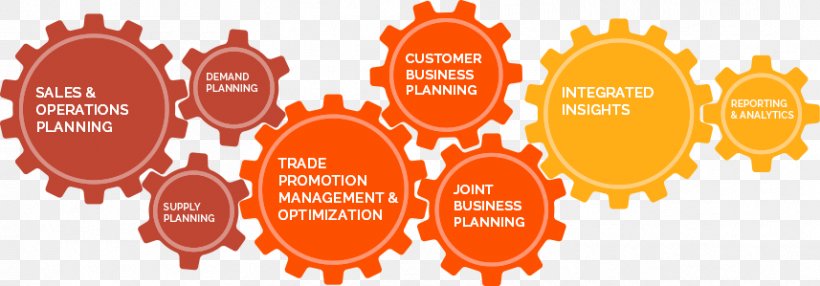
Integrated Business Planning Sales And Operations Planning Trade Promotion Management, PNG, 857x299px, Integrated Business Planning, Brand,

Uncertainty in demand, supply, or both leads to insufficient service levels, increased inventory & logistics costs, and dissatisfaction among stakeholders and customers. But, measurable management of this uncertainty through correct planning decisions can bring significant benefits.

Post-COVID, the market is volatile, and companies worldwide suffer disruptions in maintaining the demand-supply equilibrium. The macro-environment challenges and evolving trends (raw material scarcity, customer behavior changes, etc.) have increased the need for supply chain’s agility. In the next five years, the supply chain analytics market will grow by 17%. Therefore, as a demand planner, it is time to set up a broader framework and adopt advanced solutions to solve the current two key challenges in the supply chain, i.e., reduce costs and improve service levels.

If you place your bets correctly by implementing a reliable S&OP solution, you can:

  1. Speed up the operations & logistics process
  2. Address the issues related to downstream inventory & production planning, sales loss, stock-outs, inaccurate resourcing, low service levels, higher logistics cost, and more.

The key to a productive sales and operations planning process is understanding all decisions’ impact in real-time.

With advanced supply chain analytics solutions, you can reach a consensus between various demand plans and demand & supply factors. Integrated Sales and Operations Planning (IS&OP) does precisely that. Check out this IS&OP video where Shashikiran discusses how IS&OP balances supply, demand, finance, and procurement while ensuring that the plan is always consistent.

After years of observing the S&OP process in enclosed quarters, we have created an Integrated Sales and Operations Planning solution to bridge the gaps that many supply-chain leaders face.

This solution works in three different modules.

1.) Demand Consensus

Demand planning in VUCA world – is consensus based approach correct?

“Demand consensus is a multi-stage process to arrive at one planning number that every stakeholder agrees on.”

Often demand planners spend half of their time (or more) accessing data, communicating with other teams, and tallying each other’s planning base. With value created through S&OP, you can integrate future baseline demand with sales & marketing activities and achieve the desired top-line & bottom-line objectives, to make up for the lost time.

Forecast that relied on hunch or legacy systems can have a profound negative impact on demand realization and supply chain costs. Therefore, it makes sense to start the demand planning journey by establishing base forecasting capabilities to build confidence in the quality of data-based forecasts and demand & supply plans (based on that forecast). There are two ways to do this. One, you can hire a statistician to make a good baseline forecast. The other is to replace the individual with a solution that comes with an embedded demand consensus module.

Let’s see the difference between the two.

1.) Manual consensus (based on statistician’s created baseline forecasts)

  1. Statistician will prepare a mathematical model that approximately mirrors the trend by testing various baselines and drilling down to one that closely represents the reality
  2. Next, you must tune the model for incorporating seasonality – the time of the month effect/ day of the week effect, etc.
  3. Then, use the available historical data to test the model and improve it until it provides a reliable result
  4. Add data and use the model to predict future trends
  5. Finally, share it with the concerned stakeholders (sales, marketing, logistics, finance, and operations).

However, there is one caveat in this model.

When all the function units gather to discuss forecasts, share plans, report and consider changes, and agree on the final demand plan, a lack of collaboration can be damaging. Besides, organizations with multiple SKUs, distribution centres, etc. may require dozens of such baseline.

Only a smart collaboration process can address these concerns in a scalable way, which has been explained in the second method.

2.) Automated demand consensus module (built in the IS&OP solution)

Here is how the demand consensus module facilitates the business units to arrive at a consensus and collaboration:

  1. Using the module, you can combine data from numerous supply chain activities and arrive at a forecast that every stakeholder can accept. The module will provide you access to various top-down (demographics & target) and bottom-up (operating expense minus depreciation, capital expenditure) forecasts, considering the merchandising, sales & marketing, and operations teams’ concerns. You can then analyze the deviations between the various forecasts and then smooth & integrate them. And in case you need a baseline for new products, you can use comparable data from other products.
  2. You can introduce pricing interventions and promotions strategies to arrive at a demand plan. The key is to make all stakeholders involved in the S&OP process reach a consensus on demand.

2.) Demand-Supply Consensus

352 Supply And Demand Illustrations & Clip Art - iStock

“One of the supply chain’s main pain points –misalignment between the demand-side dynamics and supply-side dynamics.”

This module can divide the demand plan proposed in the first module into various supply-side requirements. The requirements can come from multiple resources, e.g., personnel and operators, materials & inventory, warehouses & other operating infrastructure, or transportation assets such as trucks. Study what kind of supply is needed to meet the demand. Then analyze gaps and arrive at an alignment.

The alignment takes one of the following three steps.

  1. Smoothening the demand to meet the supply
  2. Augmenting/pruning the supply (if different from the demand)
  3. Or, in a few cases, pruning the demand to meet the constraints

The idea is to drive consensus. Once it happens, you can freeze the plan and proceed towards its execution.

3.) Execution Monitoring
Executing, Monitoring, and Controlling - AITS

“Reliance on the supply side leads to prosperity on the demand side.”

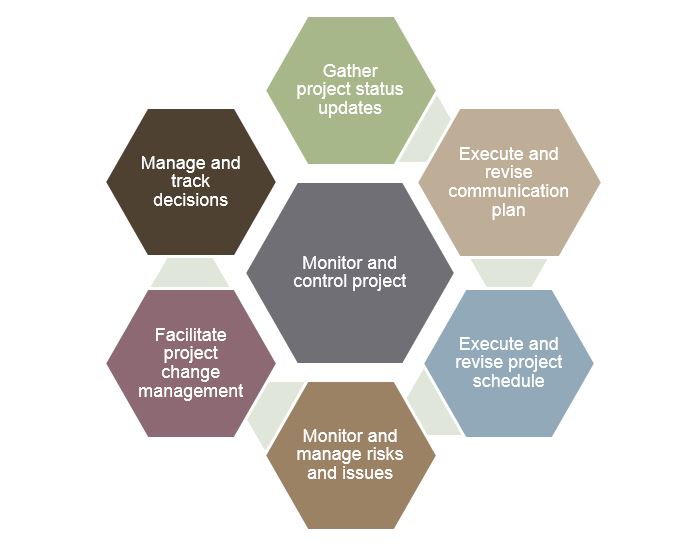
You can make precise predictions based on the first module (demand consensus) and create a scalable infrastructure using the second module (demand-supply consensus). With the execution monitoring module, you can add and execute functions using automated processes.

Creating a single source of truth

If you or your stakeholders are currently not able to take advantage of supply and demand decisions, or cannot rely on the baseline, run this module to incorporate advanced analytics to catch on the supply and demand scenarios. The module will help build trust and improve collaboration between stakeholders. This way, you will be able to align your organization in one direction.

If executed correctly, demand will reflect sales potential and lead to optimal inventory levels and logistics support.

There are two equally critical functions in this module.

  • You can monitor and compare the deviation between real-time demand and planned demand. If the difference is significant, you can shape the demand back to the plan or take pre-emptive measures on its execution to control the costs.
  • You can also determine whether the execution has deviated from the plan because of the nonfulfillment of standard operating procedures or some unforeseen factors.

The idea here is to generate early alerts to bring execution back to the plan. Through the three modules elaborated above, you can address your supply chain and operation domain’s long-standing pain points.

The IS&OP solution that Anteelo offers can help you boost your customers’ experience, deliver the highest quality products, build advanced forecasting capabilities, and mitigate the concerns of all your business units by fine-tuning each link in the supply chain.

Order Cancellation Prediction: How a Machine Learning Solution Saved Thousands of Driver Hours

Artificial Intelligence and Machine Learning Solution - YouTube

‘Efficiency’ roots from processes, solutions, and people. It is one of the main driving forces leading to significant changes in the way companies work in the first decade of the 21st century. The following decennary further accelerated this dynamic. Now, post-COVID, it is vital for us to become efficient, productive, and environmentally friendly.

One of our clients manufactures and sells precast concrete solutions that improve their customers’ building efficiency, reduce costs, increase productivity on construction sites, and reduce carbon footprints. They provide higher quality, consistency, and reliability while maintaining excellent mechanical properties to meet customers’ most stringent requirements. The customers rely on their quality service and punctual delivery to receive products. This is possible because their supply chain model is simple. They prepare the order by date, call the driver the day before, and load the concrete the next morning. The driver delivers the exact specific product to the specified address.

However, a large percentage of customers cancel orders. One of the main reasons for the cancellation is the weather.

The client turned to Anteelo to provide an analytical solution for flagging such orders so that their employees do not have to prepare for such deliveries.

I’ll abridge the journey so far that it led to the creation of a promising solution.

How it all started?

One of the business units of the client suffered huge operational losses due to the cancellation of orders. Although the causes were(are) beyond their control, they always had(have) to compensate truck driver and concrete workers. To improve the demand and supply planning process’s efficiency, they had to encounter order cancellation risks. Though they might have increased their resource capacity by adding more people or working in shifts, this option may not have paved well in the long run. Apart from this, the risks may not have mitigated as anticipated, which might have further reduced the RoI.

Although they put forward various innovative ideas, the results did not reflect the expectations, resulting in the loss of thousands of drivers’ hours. Before deciding to use an analytical solution, they discovered that their existing system has two main shortcomings.

  • Extensive reliance on conventional methods for dispatch
  • Absence of a data-driven approach

Thus, they wanted to leverage a powerful ML-enabled solution to empower ‘order dispatching’ to effectively get ahead of order cancellation and minimize high labor costs.

Roadmap that led to the solution’s development

POC vs Prototype vs MVP: Which Strategy to Prefer?

The analytics team from Anteelo pitched the idea of developing a pilot solution and executing it in the decided test market and then creating a full-blown working solution.

We used retrospective data in the sterile concept (the idea was to solve as many challenges as possible for POC (Proof of Concept)). Later, when the field team gave positive feedback, we planned to deploy a cloud-based working model with a real-time front-end. Next, measure its benefits in terms of hours saved in the next 12 to 24 months.

Proof of Concept (POC)

From idea to the Proof (of Concept) - Cybercom

To reap the maximum benefits and minimize risks on the analytical initiative, we opted to start with the proof of concept (POC) and execute a lightweight version of the ML tool. We developed a predictive model to flag orders at risk of cancellation and simulated operational savings based on the weather and previous years’ data. We found that:

  1. 50% of orders were canceled each year
  2. A staggering percentage of orders were canceled after a specific time the day before the scheduled delivery – ‘Last-minute cancellations.’
  3. Because of these last-minute cancellations, hundreds of thousands of driving hours were lost

Creating the Most Viable Product (MVP)

Minimum Viable Product "MVP": What is it and how does it help your strategy?

Before we could go any further or zero down to the solution deployment, we had to understand the cancellation’s levers. And once the POC was ready, we decided to evaluate the results based on the baselines and expectations and compare them with the original goals. Next, we decided to proceed with the pilot test and modify the solution based on its result. Therefore, we selected a location and deployed some field representatives to provide real-time feedback and relied on our research for this purpose. The results (savings potential) were as follows:

  1. Fewer large orders canceled
  2. More orders canceled on Monday
  3. When the temperature dropped to certain degrees, the number of cancellations increased
  4. More than half of the last-minute cancellations were from the same customers
  5. If a certain proportion of the orders were canceled at least one day in advance, the remaining orders were canceled at the last minute
  6. On days with rain, the number of cancellations increased

Overall, order quantity, project, and customer behavior were the essential variables.

The MVP stage provided a staggering number, representing the associated monetary loss (in millions) due to the last-minute cancellations. The reasons behind such a grim figure were the lack of a data-oriented approach and prioritization method.

The deployed MVP helped reduce the idle hours. It helped flag the cancellations that we usually would have missed with our heuristic model. It also provided the market-wise potential, which we ultimately decided to roll out.

Significant findings (and refinements) in the ML model based on pilot test

Labor planning is a holistic process

An effective labor plan must deliberate factors other than the quantity (orders), such as the distribution of orders throughout the day, the value of the relationship with customers, and so on.

Therefore, the model output was modified to predict the quantity based on the hourly forecast.

Order quantity may vary with resource plan

‘Order quantity’ shows a considerable variation between the forward order book and the tickets, making it impossible to use it as a predictor variable.

Resources are reasonably fixed during the day

This contradicts one of the POC’s assumptions that resources will be concentrated in the market on a given day. This has led to corresponding changes in forecast reports, accuracy calculations, etc.

Building and Deploying a Full-blown ML-model at Scale

How to Develop an End-to-End Machine Learning Project and Deploy it to Heroku with

At this stage, we had the cancelation metrics, levers that worked, and exact variables to use in the solution. Now, the team has enough data to build an end-to-end solution comprising intuitive UI screens & functions, automated data flows, and model runs. And finally, measure the impact in monetary equivalent.

Benefits’ (Impact) Measurement

To turn the wheel and get it on track, we have to extract the model’s maximum value and evaluate it over time. We decided on two evaluation time metrics for measuring the impact.

  1. Year-on-Year
  2. Month-on-Month

The following is a summary table of improvements to key operational KPIs. Based on TPD change, the estimated savings are calculated based on the annual business volume.

TPD Location-specific US
Metric value (YoY) 30% (up) >$350k >$3M
Metric value (MoM) 12% (up) >$150k >$3M

*data is speculative and based on the pilot run.

Predictive Model’s Key Features

  1. Visual Insights
  2. Weekly Model Refresh
  3. Modular Architecture for seamless maintenance

Results

  1. Reduced Deadheading
  2. Streamlined dispatch planning
  3. Higher Labor Utilization
  4. Greater Revenue Capture

Why should you consider Anteelo’s ML/AI solutions?

We have successfully tested the pilot solution, and the model has shown annual savings of more than $3 million. Now, we will build and deploy the full version of the model.

Anteelo is one of the top analytics and data engineering companies in the US and APAC regions. If you need to make multi-faceted changes in your business operations, let us understand your top-of-mind concerns and help you with our unique analytics services. Reach out to us at https://anteelo.com/contact/.

Don’t let your data backup services go bankrupt like a wheel of fortune.

Why does bankruptcy seem to come in long strings on Wheel of Fortune? - Quora

Data backup is one of those daily tasks that resembles Wheel of Fortune. If a backup fails occasionally or you forget to swap media once in a while, the odds are good that the spinner on your wheel of fortune won’t cost you anything. Until the day it settles on “bankrupt,” and all those occasional backup glitches will come back to haunt you.Piecing together transactional data is a major hassle. But the value of lost data goes way beyond that now. Analytics are making fast inroads into every part of the value chain. As they do, the value of a company’s non-transactional data grows. All that info you’ve been using to serve customers more effectively, operate more efficiently and develop innovative new products—gone. Losing that kind of data is like burning stacks of cash. When it’s gone, you can’t get it back. That can seriously complicate your day. Trying to decide how much backup capacity you need isn’t completely straightforward either. It’s a wasted effort if you keep too little and miss something important, so many companies tend to err on the side of caution. And they err more than they realize. When we ask clients about their backup capacity, many estimate they’re using 80% or more of their capacity. When we survey their actual consumption, utilization rates average around 54% of their storage footprint. The other half sits idle.

There’s a better way to do this. Instead of guessing at what you need, spending more than you should, and having to maintain a vigil to insure it’s working, take a look at the compelling BackUp as a Service (BUaaS) offerings that are becoming more prevalent. When you harness the power of virtual infrastructure, you subtract many of the issues that make backup a hassle and you get a more reliable service that you don’t need to think about. Here are four benefits of BUaaS that deserve consideration:

* BUaaS always offers the right capacity. Companies routinely overestimate their backup capacity needs because budget approval happens only periodically. Procurement can take six months or more so, when you budget for backup capacity, you make sure you have more than enough. With BUaaS, you don’t need to sweat that. Capacity can be added or subtracted as needed, so you never have too much or too little.

Backup as a Service - Architecting IT

* It’s always up to date. The problem with dedicated backup infrastructure isn’t just the money you have parked in a rack. Buying backup means you’ve bought into a level of performance and features for the duration of time you own the hardware. If your needs change, you’re effectively held hostage to a decision you made earlier. Because BUaaS is highly virtualized, it experiences ongoing improvement as both the infrastructure is refreshed and as new versions of the backup service code are released.

Always-up-to-date software for Logistic Service Providers |

* It’s more flexible. Backup as a Service allows you to dial up compressions and deduplication if you need to expand storage, or adjust for more speed if you need higher performance. You don’t need to change hardware, just settings. And, if your needs change, adjustments are just a mouse click away.

30 Companies Switching to Long-Term Remote Work | FlexJobs

* You get more expertise as part of the bundle. While the advantages might not be readily apparent, the additional staffing and add-on services included in BUaaS offerings make the service more reliable and less expensive. The growing intelligence of BUaaS solutions helps separate minor issues from those that can truly affect the quality of your backups. Automation enables the provider to offer services with fewer people that are scalable, predictable and less expensive than maintaining the same capacity in a fixed physical environment.

15 Key Skills You Can Gain from Work Experience

Rethinking the banking value chain is a call to action.

Publicsectorbankappointments: Reshuffle at Public Sector Banks; 14 GM and CGM Becomes Executive Directors, BFSI News, ET BFSI

Financial services is shifting to platforms for business functions and processes, and that’s a good thing. Moving from applications to Software as a Service (SaaS) and then to Platform as a Service (PaaS) can create new value chains. It can also dramatically reduce the number of error-prone manual processes and foster industry collaboration for superior efficiencies.

Leverage open APIs and core banking systems

Adopting Open Banking APIs Improves Customer Experience | Nordic APIs |

But financial services organizations can move even further — and to stay competitive, they’ll need to. Open APIs can help them combine bank data with third-party data and services to create innovative capabilities, essentially “hiring” third parties to provide these services. Banks can also provide best-of-breed capabilities as services to others.

As part of this shift, core financial systems and capabilities can become “consumable” via API-driven interfaces, creating specific outcomes. These core systems, such as payments and mobile wallets, essentially become services that both a bank and its third-party providers can consume.

Conversely, services from third-party providers can be integrated into banks’ own platforms. This may sound daring, but some tech giants — Facebook and Amazon among them — already do this, building new capabilities with APIs that can integrate and interact with capabilities provided by third-party providers. Banks can do it, too.

Partner with providers

Become a CookiePro Managed Service Provider (MSP) Partner

Providers can also become partners. Some banks have invested in FinTechs, adopting an attitude of “If you can’t beat them, join them.” This should facilitate the development of important new services, including “know your customer” (KYC) and new accounts. A single bank can essentially stitch together a passel of services, then present them to customers under a single bank brand.

KYC: 3 steps to effective Know Your Customer compliance

This reassessment of the value chain can free banking and capital markets organizations from the need to provide all services end-to-end. Instead, they can add open APIs that allow trusted third parties to provide various microservices.

The right platform can help banks grow through mergers and acquisitions, making it far easier to integrate disparate systems. This same feature can make it easier for banks to integrate the systems of partners too.

At the end of the digital transformation journey, financial services providers will enjoy a new position in their reconstituted ecosystem. They’ll fully understand their position in that value chain, their competitive advantage and areas of specialization, and their need to partner with third parties.

5 Key Features to Look For in Developer Hosting Solutions

8 Best Web Hosting Services for Developers [2021 UPDATE]

When it comes to finding a hosting solution, developers have specific needs. Whether they are developing websites or applications, they’ll need a hosting solution that provides them with all the resources, features and control required to undertake their development projects and the storage space to keep all the projects they have worked on. Here, we’ll look at five important features that developers should look for in their hosting.

1. Putting resources in place

Why now is a great time to optimise your customer service – Part 3: Putting the right resources in place | Enghouse Interactive Eptica – Multi-channel communications – Self-Service, Voice, Email, Chat, Social Networks

Although each project will differ in its size, scope and complexity, developers will need hosting with the capacity to let them carry out their work unimpeded. This means finding a solution that provides all the server resources you need, including CPU, RAM, storage and bandwidth. You’ll also be looking for exceptional performance from your hosting as it can speed up development time for you and your client, as well as improving how well the application or website performs when you show it to your client during development. Reliability is also key, so look for a hosting that provides a minimum of 99.9% uptime.

Ideally, therefore, a developer needs to shy away from shared hosting and adopt a more powerful solution, such as VPS, dedicated server or for those developing cloud-based applications, cloud hosting. To ensure optimal performance, look for hosting that includes the latest Intel Xeon processors and SSD storage which can significantly boost speed.

You should also bear in mind that you may need to scale up resources beyond what your current package provides. Should there be a need to do so, you’ll want this to be as quick, simple and undisruptive as possible. While the cloud offers unrivalled and instant scalability at the click of a button, if you choose VPS or dedicated server hosting, you need to make sure that your provider allows you to upgrade easily.

2. Putting you in control

Making Life Easier By Putting You in Control - Take control with GMT

As a developer, the hosting solution you choose must give you the flexibility to work on any type of project. This starts with having control over the choice of the operating system. Not only do you need a choice between Linux or Windows; you’ll also want to choose from the range of these systems to find the one which best suits the application you are developing.

Furthermore, you’ll also need hosting that supports and provides easy integration for the programming languages or frameworks that you need to work with. Solutions that provide 1-click installations for the key software and frameworks you intend to use don’t just save you the time and effort of a manual install, they increase the pace of the development too.

3. Getting to the root of things

Getting to the Root of Things

Having root access is also vital for developers as it gives them complete control over their server. This gives you the freedom to configure the server in the most appropriate way for your projects and enables you to install and configure applications, run multiple websites and carry out various other important tasks.

4. Security built-in

Advanced security built in as standard - myairops

Cybercrime continues to be a major headache for the IT community and developers need to ensure that the applications and websites they are developing are secure. The last thing you need is to have your client’s intellectual property and data stolen from your development server or to hand them over an application that has been stealthily infected with malware. Neither do you want the project having to go back to square one because of infection, corruption or ransomware or stalling because of a DDoS attack.

For this reason, choose a host that provides robust protection, including custom firewall rules, intrusion prevention, anti-DDoS, anti-malware, VPM and application security, to ensure your server is always protected.

For peace of mind and quick, easy restoration, a backup solution is essential for any developer.

5. Expert technical support

Premium Vector | Technical support, customer service staff work

24/7 expert technical support is critical to developers whose projects may have them working with a range of different setups. Having an expert on tap to help you with any issues, regardless of the time of day, can provide indispensable assistance when you need it most. Make sure any hosting solution you choose has this included.

Conclusion  As a developer, you’ll want to provide your clients with a first-class service and to do this, you’ll need first-class service from your hosting provider. You’ll require a high-performance solution that provides you with all the resources to carry out your projects; you’ll want the freedom to deploy the operating system of your choice and have full control over your server; you need the ability to use the programming languages, frameworks and software that the job demands as well as an

MLOps: Is This the Only Way to Eat an Elephant?

MLOps - Machine Learning Operations

Managing ML production requires a combination of data scientists (algorithm procrastinators) and operations (data architects, product owners? Yes, why not?).

Operationalizing ML solutions in on-prem or cloud environments is a challenge for the entire industry. Enterprise customers usually have a long and random software update cycle, usually once or twice a year. Therefore, it is impractical to couple the deployment of the ML model with irregular update cycles. Besides, data scientists have to deal with:

  • Data governance
  • Model serving & deployment
  • System performance drifts
  • Picking model features
  • ML model training pipeline
  • Setting the performance threshold
  • Explainability

And data architects have enough databases and systems to develop, install, configure, analyze, test, maintain… the verb would keep on accumulating, depending on the ratio of the company’s size to the number of data architects.

This is where MLOps come in to rescue the team, solution, and the enterprise!

What is MLOps?

AIMLOps practices and its benefits | by Taras Tymoshchuck | DataDrivenInvestor

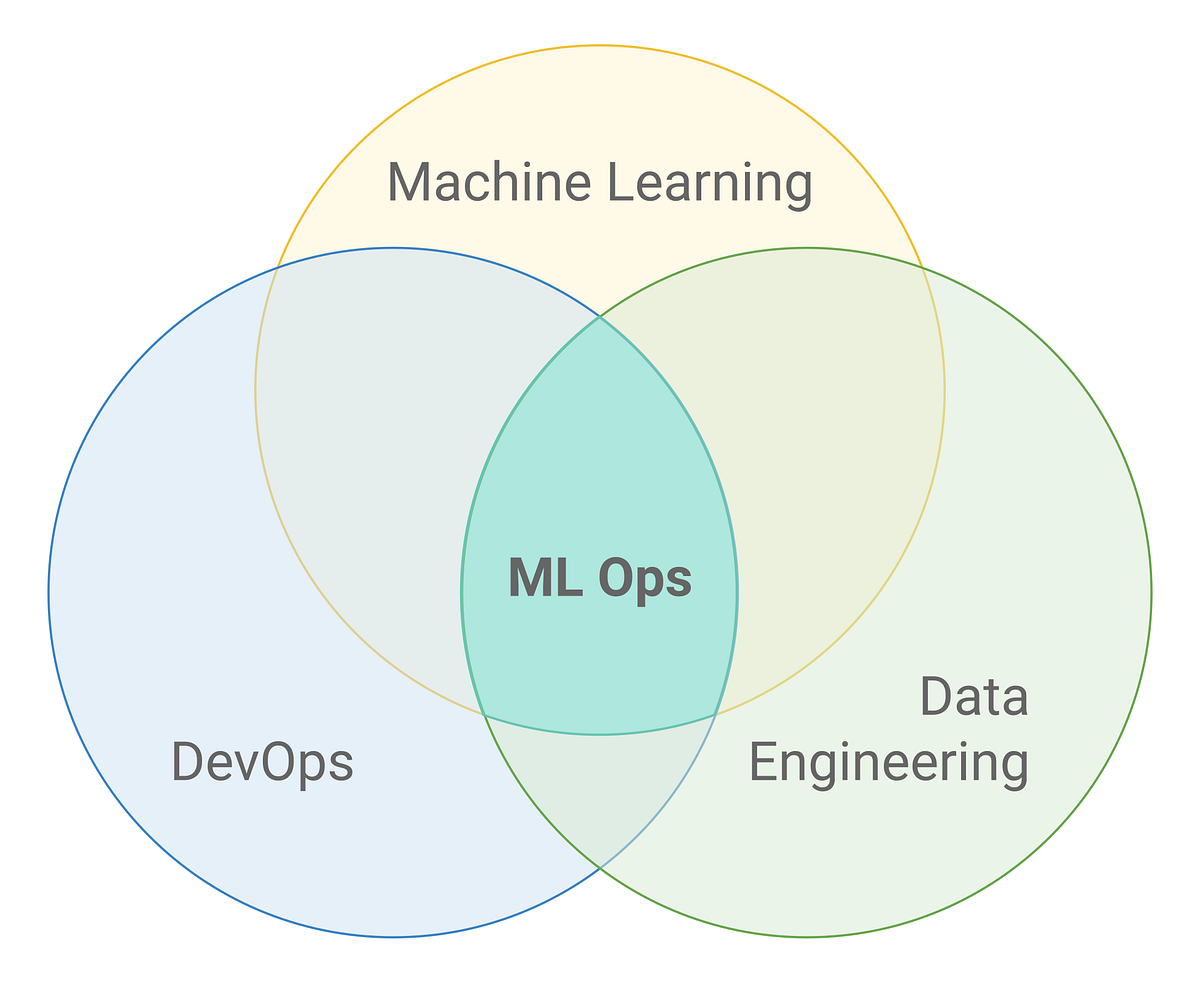
MLOps is a new coinage, and the ML community keeps on adding/ perfecting its definition (as the ML life cycle continues to evolve, its understanding is also evolving). In layman terminology, it is a set of practices/disciplines to standardize & streamline ML models in production.

It all started when a data scientist shared his plight with a DevOps engineer. Even the engineer was unhappy with the incumbent (inclusion of) data and models in the development life cycle. In cahoots, they decided to amalgamate the practices and philosophies of DevOps and ML. Lo and behold! MLOps came into existence. This may not be entirely true, but you have to give credits to the growing community of ML & DevOps personnel.
Five years ago, in 2015, a research paper highlighted the shortcomings of traditional ML systems (third reference on this Wikipedia page). Even then, the ML implementation grew exponentially. After three years of the research’s publication, MLOps became mainstream – 11 years after DevOps! Yes, it took this long to combine the two. The reason is simple – AI became mainstream only a few years back, 2016, 2018, or 2019 (the year is debatable).

MLOps Lifecycle

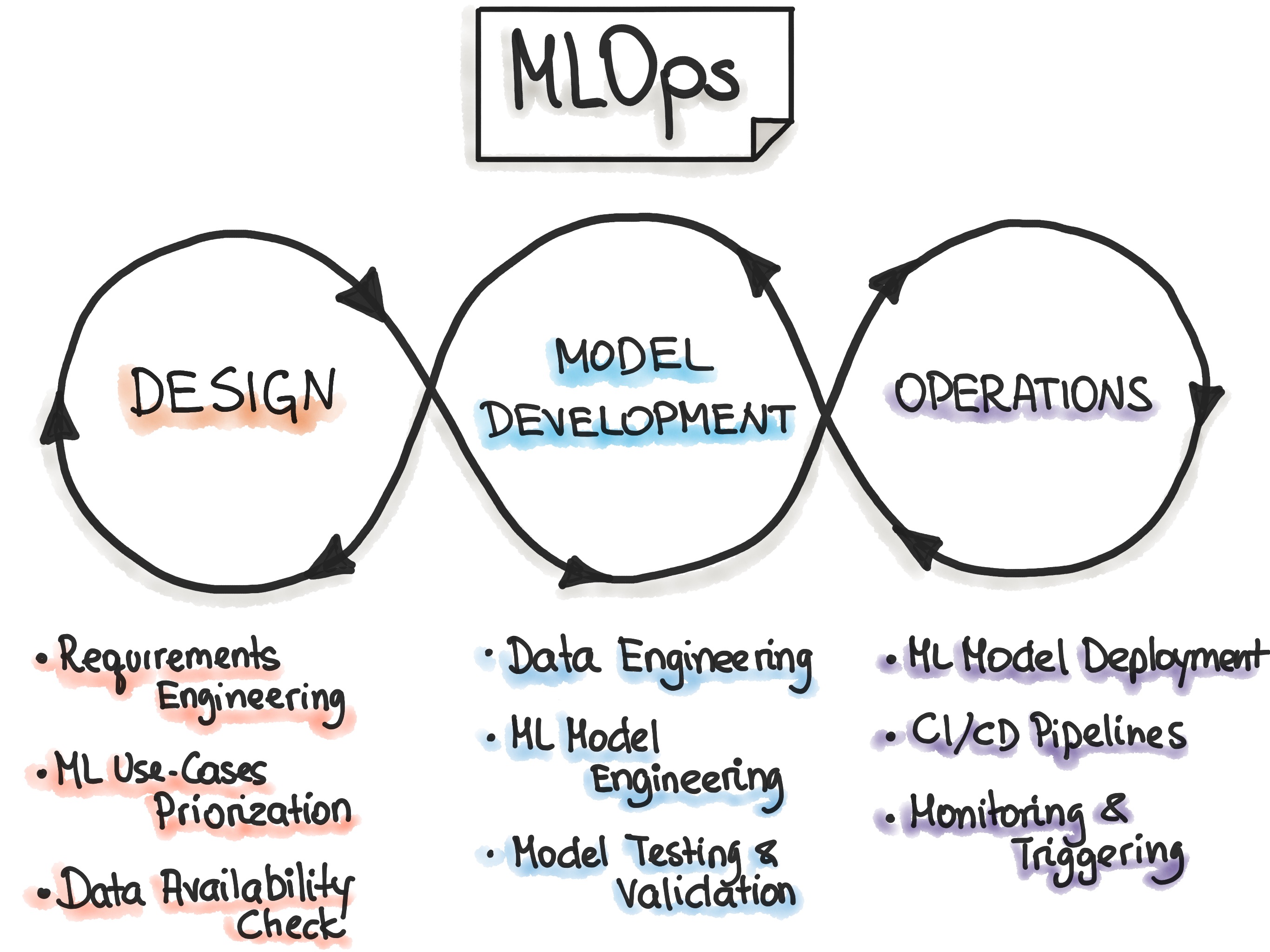
MLOps brings the DevOps principles to your ML workflow. It allows continuous integration into data science workflows, automates code creation and testing, helps create repeatable training pipelines, and then provides continuous deployment workflow to automate the package, model validation, and deployment to the target server. It then monitors the pipeline, infrastructure, model performance, and new data and creates a data feedback flow to restart the pipeline.

MLOps Explained

These practice involving data engineers, data scientists, and ML engineers enables the retraining of models.

All seems hunky-dory at this stage; however, in my numerous encounters with the enterprise customers, and after going through several use cases, I have seen MLOps, although evolutionary & state-of-the-art, failing several times in delivering the expected result or RoI. The foremost reason, often discovered, because of –

  • The singular, unmotivated performance monitoring approach
  • Unavailability of KPIs to set/measure the performance
  • And lack of threshold to raising model degradation alerts

In contrast, these are the technical hindsight that is often vindictive because of the lack of MLOps standardization; However, a few business factors, such as lack of discipline, understanding, resources, can slog or disrupt your entire ML operations.

The Supply Chain AI Hype and the Importance of a Digitized Supply Chain Control Tower

The View From Digital Supply Chain Control Towers

The hype around Artificial Intelligence is far from fizzling out anytime soon. Digitalization and big data have completely penetrated the supply chain industry and are ubiquitous in nature. This article discusses one of the more interesting trends in the current supply chain analytics space – The Control Tower.

The concept of Air Control Towers and the Evolution of Digital Control Towers in Supply Chain

Engineering an Air Traffic Control Tower - Arup

One may wonder if supply chain control towers have any correlation with air traffic controllers? To be honest, yes, there is!

An air traffic control tower (ATC), is a service provided by on-ground staff (controllers), who direct aircraft on the ground and through controlled airspace; they can provide advisory services to aircraft in non-controlled airspace. The primary purpose of ATC worldwide is to prevent collisions, organize and expedite the flow of air traffic, and provide information and other support for pilots (wiki). In short, the tower helps Improve flow, reduce emergency like situations through tactical interventions and provide inputs for right decision making. In fact, the ATC’s can now be enabled for an ‘auto-pilot’ mode wherein complex decisions are taken without human interventions. Only in cases where there is an absence of reliable data to make a trade-off, is where the humans intervene.

The digital control towers aim at keeping a bird’s eye view on the events occurring within the supply chain ecosystem (controlled and uncontrolled space), with the modus operandi being very similar to a generic air traffic controller. With the help of this consolidated view generated by the digital control towers in supply chain one can gain powerful insights about the current happenings within the organization. These insights help in improving flow across the organization, reducing urgencies and providing insights and tactical support to supply chain managers to make effective decisions. In fact, in the longer run, very similar to the ATC’s of today, the Supply chain control towers should have the capability to make complex decisions when there is adequate reliable data.

Significance of Digital Control Towers in Supply Chain

Why Enterprises Are Using a Digital Supply Chain Control Tower for Optimized Orchestration - Turvo

Corporations today want to leverage the useful applications of the supply chain control tower. Organizations have copious amounts of data across their supply chain and related functions. Over the past few years, they have managed to build business intelligence and analytics solutions to drive decision-making but at a node level. Extracting valuable insights using the right sets of data, lying across various nodes in an organization while also utilizing market intelligence, to deliver real-time visibility and provide meaningful insights that can drive decisions that are optimal cross organization, is the need of the hour. E.g., with the expected slow-down in sales on specific SKUs, a client may wonder if their manufacturing plant need to continue producing to plan OR does it make sense to course correct and lose capacity?

While an ATC is designed to minimize errors by incorporating huge factors of safety and commonly understood rules of engagement between various players (airlines, pilots, other ATCs), supply chain digital control towers have the luxury to experiment under statistical variability. E.g., Try different stock norms and check the impact on service levels, see whether a reduced Order-to-delivery promise induces better productivity and hence improved customer service levels and so on. This ability of a supply chain to experiment, try and fail or succeed quickly, at nominal cost can help build a virtuous loop of innovation with in a supply chain and drive a cultural change.

Most organization today recognize the impact a control tower can have on their organization. For a global organization, it is probably one of those platforms that will steer the supply chains of the future. Many organizations have tried implementing a control tower, but there have been very few examples of success. More often than not, organization fall short of implementing a “gold-standard” control tower capable of – real time visibility, predictive alerting, identifying bottle-necks to supply chains and providing insights that can drive decision; instead they end up implementing a large set of dashboards, that showcase different KPIs important to the various nodes in a supply chain.

This possibly is because of challenges that are faced when implementing an initiative as large as a control tower.

How does a Digital Supply Chain Tower work?

The SCCT should help an organization in making 3 key decisions – a) Ensure smooth flow-paths across the supply chain, b) Identify or predict bottlenecks / constraints to flow, and c) Derive efficiency/utilization improvement opportunities in the current network.

Hence, some of the key functionalities that are required would be:

  • End to end data connectivity: Ability to go beyond creating reports and tools that are not unidimensional but are able to work with data from different nodes in a supply chain is important.

End-to-end data, analytics key to application performance | Network World

  • Visibility: SCCT should provide visibility of key supply chain KPIs (simple and complex KPIs). They should showcase the right metrics, while also be able to project the impact of a decision on the metric real-time.

5 Steps to Achieving E2E Visibility – Redwood Logistics : Redwood Logistics

  • Analytics: Supply chain control towers are equipped with and boast of analytical tools and applications. With the help of these tools, supply chain managers can easily run what-ifs, and take calculated decisions. They can, easily harness the power of predictive analysis to detect ‘tripping points’, identify triggering alerts, as well as conduct root cause analysis of the data to arrive at solutions and address challenges.

6 Essential Google Analytics Dashboards for Content Marketing - eCity Interactive

  • Execution: The real benefit of the SCCT lies in the way the control tower communicates with the executive and the operational teams across the supply chain and allied functions. Hence this an important aspect of SCCT adoption within an organization

Project Execution Planning (PEP) for Qualification | NCBioNetwork.org

Key Challenges to Implementing a Supply Chain Control Tower

The supply chain control tower, unlike a typical analytics project, entails involvement from multiple functions and geographies across the supply chain (like the involvement of multiple VPs/SVPs in large enterprises).

Implementing SCCT would mean working with a team having – a) Different priorities, b) Very different data maturity and data quality, and c) Different products and software (some archaic and some new-age).

Some of the key challenges that appear during the construction and execution of SCCTs include –

  • When the SCCT implementation is picked up as a priority exercise by a single function within a supply chain without getting the other key function buy-in early into the transformation, there is a high chance the implementation will hit multiple road blocks.
  • Many a times, people tend to implement the most complex piece OR the piece of SCCT that seems most interesting. This may lead to no tangible results for an extended period, thus leading to lack of enthusiasm from fringe teams.
  • Data maturity: Different functions may have different levels of data maturity (availability, quality etc.). Inability to assess and map this aspect will tend to escalate timelines and cost.
  • Sometimes the implementing partner makes the mistake of selling the SCCT, not as a strategic tool that can transform business functions but rather as another software that will improve business efficiencies. This will lead to wasted effort that implementation will get driven in completely wrong direction.
  • There are number of proven analytics tools and products that exist with the client. Integrating these existing tools/products in the SCCT roadmap, may cause issues during implementation but will help adoption.

A typical issue of not successfully overcoming these challenges is that companies go down the path of SCCT implementation (visibility, predictive analytics, decision tools etc.) but end up implementing an end-to-end KPI dashboard. Though the dashboard may still bring in benefits, it causes disillusionment amongst the client project team in terms of SCCT capabilities.

Some of the ways to mitigate these challenges and move towards a successful implementation include –

  • Treat SCCT implementation as a strategic initiative and not as an IT implementation. Hence, it is critical to have someone high in the business team (CSO level) bless the initiative.
  • When prioritizing sprints, give equal weights to simple but quick wins – this motivates the client’s project team.
  • Always assess the current tools and products in client environment, i.e., prioritize integration over innovation.
  • Continuous engagement with all functions (even if there is nothing happening in a specific function) is important and should be made into a practice.

The Dedicated Server : Role in Digital Transformation

10 Factors to Consider When Choosing a Dedicated Server

When businesses think of digital transformation, cloud migration is often the first thing that comes to mind. Indeed, the cloud is a necessary requirement: it’s cost-effective, easily scalable and puts the latest technologies, like data analytics, automation, AI, ML and IoT at your fingertips. However, if you intend to deploy the best technology for the task at hand, the dedicated server still has an important role to play. Here, we’ll look at why dedicated servers are a key element in digital transformation.

Security

Secure Element — securing contactless payments in smartphones | Kaspersky official blog

Data is the driving force behind digital transformation. Companies are collecting it in greater quantities than ever before to analyse it and discover the insights that lead to improvements in operations, marketing, finance, procurement and many other areas of the business.

However, while the cloud is the best place in which to carry out analytics, for some organisations, it is not necessarily the best place to store the data, especially personal and sensitive data. That’s not to say that the cloud is less secure than a dedicated server, both can be configured to the same exacting security standards. At eukhost, for example, we can offer the same protection for both, using next-gen FortiGate firewalls whose advanced security features include intrusion detection, anti-malware, DDoS protection, VPN and DMZ.

The difference lies in the needs of the individual company. If your business stores personal or sensitive information and has to comply with regulations such as GDPR, you may require a data storage solution that, unlike the public cloud, is not multi-tenancy. The role of the dedicated server here is that its single-tenancy storage offers greater compliance with stringent regulations. Additionally, some hosts, like eukhost, can develop and implement a security policy that meets both your internal and regulatory requirements, providing services that include intrusion detection and prevention, application firewall configuration, DDoS protection, email security and more.

In a world where cybercriminals are using ever more sophisticated tools, such as Ransomware as a Service, and where the number of cyberattacks involving data theft is continually on the rise, a dedicated server could be a wisely chosen component of your digital transformation infrastructure.

Performance

Lessons Learned in Performance Testing

The other chief reason for deploying a dedicated server is that digital transformation often requires organisations to run resource-heavy applications which they will need to perform flawlessly. While the cloud does offer very high performance, our cloud VM’s underlying hardware, for example, features Xeon E5-2600s with 8 to 12 cores, for organisations which need it, a dedicated server can offer even greater performance.

The main reason for this is that you can define your own specification and build a bespoke dedicated server that perfectly matches your CPU, RAM and storage requirements. You have a choice of core or frequency optimised CPUs or both; single, dual or quad processors; and SSD storage and PCIe based drives. You can choose the processor speed and the number of cores and disks, giving you complete control of your environment.

For organisations needing to run resource-heavy applications, a dedicated server offers the best performance. Your applications will run faster, with those which rely on database access, like CMS, carrying out non-cached queries and data writes much quicker. With SSDs installed, a dedicated server can perform thousands of simultaneous reads and writes without the application having to wait around for the storage, as it would with HDDs. In addition, backups and restoration will be performed quicker and your server will respond more rapidly.

Other benefits of dedicated servers

5 Advantages of Choosing a Dedicated Hosting Provider - Opus Interactive

Dedicated servers come as part of a hosting package and these provide organisations with other important benefits. This includes cost-effective server management with round the clock monitoring and maintenance of your system; geographical redundancy, off-site backup and replication services; and, importantly, 24 x 7 x 365 expert technical support, so that if you have an issue, it can be dealt with straight away.

Not a solution for every workload

How To Effectively Manage Your Team's Workload • Asana

Of course, a digitally transformed company needs to use the best technology for each workload and a dedicated server is not the number one choice for everything. While its single tenancy provides enhanced security and bespoke hardware offers superior performance, the virtualisation technology employed in the cloud makes it better for running mission-critical applications that need high availability rates of 100% uptime. Similarly, the cloud is also the better environment for workloads which need quick and easily scalable resources to cope with unexpected spikes in demand. Indeed, its pay as you go charging structure also makes this highly cost-effective.

Conclusion

For companies seeking the right technology for their digital transformation, dedicated servers have an important role to play. They offer the best solution for running resource-heavy applications and provide a secure, single tenancy storage environment for personal and sensitive data. The latest hosting packages ensure that companies have access to the best hardware and the most advanced security tools while being able to take advantage of server management solutions, backup and replication services, and around the clock support.

Critical MLOps Roadblocks that Will Delay Your AI Journey in the Enterprise

Goldman Sachs IT Spending Survey: Top Vendor Winners And Losers

How do you retract the steps that led to the model’s creation, say, your data scientists are away for some reason?

How will you reproduce predictions to validate its outcome, say, someone shoots the question?

It is not just about resourcing data scientists, software developers, or data engineers to work in isolation to achieve the operationalization and automation of the ML lifecycle. It is about how the three can work in tandem as a unit. For this, the data’s quality or availability must remain identical across the process & environment to ensure the model performs on par with the set metrics. Again, the core problem boils down to operation and automation, which we diligently tried/try to address via MLOps.

MLOps Principles

To solve the problem’s crux, you first need to answer a few questions:

  • How do the three personas, i.e., data engineers, data scientists, and ML engineers, use different tools and techniques?
  • How do you collaborate on the ML workflow within and between teams?

As you cannot share models like other software packages, you need to share the ML pipeline that can reproduce and tune the model based on new data specific to the new environment/scenario. A ubiquitous work culture or norm in large enterprises is to have independent data science teams, and most of whom are engaged, day in and day out, on similar workflows.

  • Now, how do you collaborate and share the results?
  • When it comes to enterprise readiness, how do you plan data/ ML model governance while dealing with data & ML?
  • When you deal with specialized hardware, cost management comes into play as you have to compute with large amounts of GPU, memory, jobs that take a long time to run. Some of these jobs can take days or even weeks to run to get a good model. So how do you establish the trust?

Having insights, even dismal, will help you identify the real-time use cases and factor in an Enterprise AI plan.

What Next? Martian Version for Earthling Solution?

ML Works Will Just Do!

Machine Learning: How does it work; and more importantly, Why does it work? | by Venkatesh K | Towards Data Science

Most MLOps toolkit often focus on the technical aspect of the MLOps, while ignoring its real-life impact. Other factors that can weigh in its contribution are having a 360-degree view and control on the micro/macro aspects of the data science process.

At Anteelo, we have tried reordering the ML alphabets with our proprietary suite of toolkits, in which we take immense pride. We call it ML Works. The solution, which is cloud-agnostic and scalable, automates the model’s build, deploy, and monitoring processes, thereby reducing the need for larger teams.

6 Tips for Online Stores to Survive Christmas 2020

2020 Small Business Holiday Survival Guide | Workest

Christmas 2020 is going to be unlike anything anyone has ever experienced and as an online retailer, you are going to need to start your preparations now. The forecasts are mixed. The potential for further lockdown restrictions and increasing unemployment may impact both consumer spending and purchasing habits. More optimistically, for eCommerce, there is going to be a significant shift in Christmas shopping from bricks and mortar to online stores. In this post, we’ll explain six things you can do to help your online store survive Christmas 2020.

1. Get the right stock for Christmas

Christmas Shopping? Here's 3 Stocks to Put Under the Tree | The Motley Fool

Stock may be a complicated issue for eCommerce stores this Christmas. Rises in unemployment and the fear of becoming unemployed will certainly affect consumer spending and this may impact the quantities of stock you need to order. Additionally, social restrictions put in place to prevent the risk of the virus spreading are also likely to influence what people spend their money on. Who’s going to want Christmas party outfits if there are no parties? Who’s going to buy a pack of 12 crackers when, this year, there’ll only be four people sat around the table? The pandemic is going to change what consumers buy and businesses need information on those trends to ensure stock is purchased wisely.

Another concern is the supply chain. Even if you have identified the stock you need for the Christmas season, you will need to ensure that you can procure it and that shipping times can be met. Volatility in the supply chain is likely given increasing demand and the potential for disruption due to the virus. Early purchasing might be a necessity.

2. Spread the cost of Christmas

How to Spread the Cost of Christmas Shopping Throughout the Year

Another reason to acquire Christmas stock earlier than usual is that, with consumer finances stretched, people might start shopping earlier to spread the cost. Rather than a Christmas rush, 2020 might be more of a slow burn.

One way to maximise sales and help customers out would be to offer payment by instalments. The easiest way to do this is to open a PayPal business account through which you can offer flexible financing options that make purchasing easier for your customer. Alternatively, you could set up a savings scheme where customers pay into your business each month in order to spend what’s in credit nearer the time.

3. Get your shipping sorted

Parcel Sorting Stock Illustrations – 338 Parcel Sorting Stock Illustrations, Vectors & Clipart - Dreamstime

eCommerce sales have already grown significantly during the pandemic and Christmas is likely to see a further surge as shoppers stay away from bricks and mortar stores. This could affect the capacity of the carriers you use to deliver the products on time.

The challenge for online stores is to ensure that you get the product to the customer when and where they want it. While consumers have been relatively understanding about longer delivery times during the pandemic, six months down the line, they now expect retailers and carriers will be able to deliver as advertised and are likely to be much less happy when products arrive late – especially when shopping for Christmas.

4. Cut costs

Need To Cut Costs? Deliver A Better Customer Experience | Watermark Consulting

The global downturn means there will be less money for people to spend this Christmas. While social distancing measures means bricks and mortar stores are likely to face the brunt of the decline, it may still affect eCommerce: people may buy more things online but spend less overall.

To keep the business viable, eCommerce companies may have to look at ways to cut costs, especially if lack of demand causes a discounting war and drives margins down. Those in the best position to achieve this are the companies which make use of the cloud. While the cloud itself is a substantially more cost-effective solution to an in-house datacentre, its ability to deploy data gives companies the insights needed to cut costs effectively over their entire operations. At the same time, the cloud enables businesses to make valuable use of automation, such as with sales assisting chatbots that reduce human involvement.

5. Widen the market

Market Share - Overview, Impact, How To Increase

Maximising sales is going to be critical this winter and this means making sure your stock is highly visible. This starts with strengthening your digital presence: promoting Christmas stock earlier on your website, advertising online and increasing your seasonal-themed social media activity. For retailers with online and physical stores, benefits can be made from offering omnichannel shopping, click and collect and moving products from stores under local lockdown restrictions to those which are not.

Additionally, there is always the potential to sell your items on third-party websites, like Amazon or eBay, which have a wider reach and high levels of consumer trust when it comes to availability, delivery and consumer purchasing protection.

6. Don’t let your website go down

What to Do When Your Website Goes Down | TrustWorkz

The likely surge in demand for online shopping means that companies must ensure that their hosting package is capable of handling increased traffic. Too many visitors at the same time can impact the performance of your website if you don’t have enough server resources, i.e. storage, RAM, CPU and bandwidth, to handle them. Unexpected surges can cause your site to perform slowly or even crash. If this happens, visitors will abandon the site, reducing the number of sales, and your reputation for online reliability will be damaged.

Conclusion

Christmas 2020 presents eCommerce businesses with opportunities and threats. The challenge is to put your online store in the best position to avoid the threats and maximise the opportunities. Hopefully, this post has shown you the different things you will need to consider and the importance of starting preparations early.

error: Content is protected !!