AI in Transportation

AI in Transportation – Current and Future Business-Use Applications | Emerj

Why AI?

You may have heard the terms analytics, advanced analytics, machine learning and AI. Let’s clarify:

  • Analytics is the ability to record and playback information. You can record the travels of each vehicle and report the mileage of the fleet.
  • Analytics becomes advanced analytics when you write algorithms to search for hidden patterns. You can cluster vehicles by similar mileage patterns.
  • Machine learning is when the algorithm gets better with experience. The algorithm learns, from examples, to predict the mileage of each vehicle.
  • AI is when a machine performs a task that human beings find interesting, useful and difficult to do. Your system is artificially intelligent if, for example, machine-learning algorithms predict vehicle mileage and adjust routes to accomplish the same goals but reduce the total mileage of the fleet.

If you’re in travel and transportation, here’s how to make sense of the terms analytics, advanced analytics, machine learning and AI.

AI is often built from machine-learning algorithms, which owe their effectiveness to training data. The more high-quality data available for training, the smarter the machine will be. The amount of data available for training intelligent machines has exploded. By 2020 every human being on the planet will create about 1.7 megabytes of new information every second. According to IDC, information in enterprise data centers will grow 14-fold between 2012 and 2020.

And we are far from putting all this data to good use. Research by the McKinsey Global Institute suggests that, as of 2016, those with location-based data typically capture only 50 to 60 percent of its value.  Here’s what it looks like when you use AI to put travel and transportation data to better use.

Lack of Action in Congress on Autonomous Technology Could Hinder States, Lawmaker Warns | Transport Topics

Here’s what it looks like when you apply industrialized AI in travel and transportation.

Take care of the fleet

Get as much use of the fleet as possible. With long-haul trucking, air, sea and rail-based shipping, and localized delivery services, AI can help companies squeeze inefficiencies out of these logistics-heavy industries throughout the entire supply chain. AI can help monitor and predict fleet and infrastructure failures. AI can learn to predict vehicle failures and detect fraudulent use of fleet assets. With predictive maintenance, we anticipate failure and spend time only on assets that need service. With fraud detection, we ensure that vehicles are used only for intended purposes.

AI combined with fleet telematics can decrease fleet maintenance costs by up to 20 percent. The right AI solution could also decrease fuel costs (due to better fraud detection) by 5 to 10 percent. You spend less on maintenance and fraud, and extend the life and productivity of the fleet.

Take care of disruption

There will be bad days. The key is to recover quickly. AI provides the insights you need to predict and manage service disruption. AI can monitor streams of enterprise data and learn to forecast passenger demand, operations performance and route performance. The McKinsey Global Institute found that using AI to predict service disruption has the potential to increase fleet productivity (by reducing congestion) by up to 20 percent. If you can predict problems, you can handle them early and minimize disruption.

Take care of business

Good operations planning makes for effective fleets. AI can augment operations decisions by narrowing choices to only those options that will optimize pricing, load planning, schedule planning, crew planning and route planning. AI combined with fleet telematics has the potential to decrease overtime expenses by 30 percent and decrease total fleet mileage by 10 percent. You cut fleet costs by eliminating wasteful practices from consideration.

Take care of the passenger

The passenger experience includes cargo — cargo may not have a passenger experience directly but the people shipping the cargo do. Disruptions happen, but the best passenger experiences come from companies that respond quickly. AI can learn to automate both logistics and disruption recovery. It can provide real-time supply and demand matching, pricing and routing. According to the McKinsey Global Institute, AI’s improvement of the supply chain can increase operating margins by 5 to 35 percent. AI’s dynamic pricing can potentially increase profit margins by 17 percent. Whether it’s rebooking tickets or making sure products reach customers, AI can help you deliver a richer, more satisfying travel experience.

Applied AI is a differentiator

If we see AI as just technology, it makes sense to adopt it according to standard systems engineering practices: Build an enterprise data infrastructure; ingest, clean, and integrate all available data; implement basic analytics; build advanced analytics and AI solutions. This approach takes a while to get to ROI.

But AI can mean competitive advantage. When AI is seen as a differentiator, the attitude toward AI changes: Run if you can, walk if you must, crawl if you have to. Find an area of the business that you can make as smart as possible as quickly as possible. Identify the data stories (like predictive maintenance or real-time routing) that you think might make a real difference. Test your ideas using utilities and small experiments. Learn and adjust as you go.

It helps immensely to have a strong Analytics IQ — a sense for how to put smart machine technology to good public use. We’vefit built a short assessment designed to show where you are and practical steps for improving. If you’re interested in applying AI in travel and transportation and are looking for a place to start, take the Analytics IQ assessment.

The MLOps principles for AI Development

Automation & AI – Network Software & Technologies

Many companies are eager to use artificial intelligence (AI) in production, but struggle to achieve real value from the technology.

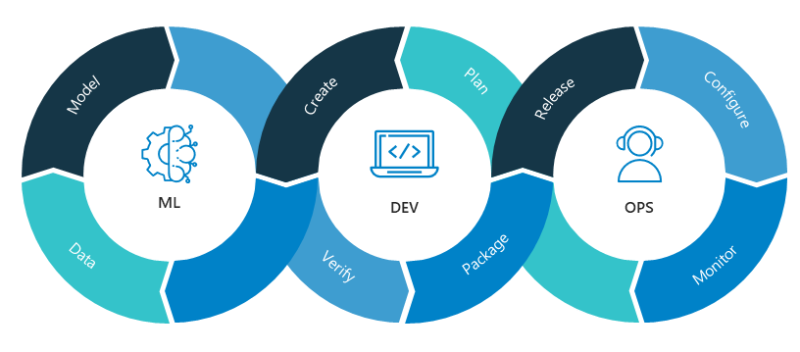
What’s the key to success? Creating new services that learn from data and can scale across the enterprise involves three domains: software development, machine learning (ML) and, of course, data. These three domains must be balanced and integrated together into a seamless development process.

Most companies have focused on building machine learning muscle – hiring data scientists to create and apply algorithms capable of extracting insights from data. This makes sense, but it’s a rather limited approach. Think of it this way: They’ve built up the spectacular biceps but haven’t paid as much attention to the underlying connective tissues that support the muscle.

Why the disconnect?

Focusing mostly on ML algorithms won’t drive strong AI solutions. It might be good for getting one-off insights, but it isn’t enough to create a foundation for AI apps that consistently generate ongoing insights leading to new ideas for products and services.

AI services have to be integrated into a production environment without risking deterioration in performance. Unfortunately, performance can decline without proper data management, as ML models will degrade quickly unless they’re repeatedly trained with new data (either time-based or event-triggered).

Professionalizing the AI development process

The best approach to getting real and continuous value from AI applications is to professionalize AI development. This approach conforms to machine learning operations (MLOps), a method that integrates the three domains behind AI apps in such a way that solutions can be quickly, easily and intelligently moved from prototype to production.

What is MLOps? | NVIDIA Blog

AI professionalization elevates the role of data scientists and strengthens their development methods. Like all scientists, these professionals bring with them a keen appreciation for experimentation. But often, their dependence on static data for creating machine learning algorithms –which they developed on local laptops using preferred tools and libraries – impedes production AI solutions from continuously producing value. Data communication and library dependency problems will take their toll.

Data scientists can continue to use the tools and methods they prefer, their output accommodated by loosely coupled DevOps and DataOps interfaces. Their ML algorithm development work becomes the centerpiece of a highly professional factory system, so to speak.

Smooth pilot-to-production workflow

Pilot AI solutions become stable production apps in short order. We use DevOps technology and techniques such as continuous integration and continuous delivery (CICD) and have standard templates for automatically deploying model pipelines into production. By using model pipelines, training and evaluation can happen automatically if needed – when new data arrives, for instance – without human involvement.

Our versioning and tracking ensure that everything can be reused, reproduced and compared if necessary. Our advanced monitoring provides end-to-end transparency into production AI use cases (including data and model pipelines, data quality and model quality and model usage).

Using our innovative MLOps approach, we were able to bring the pilot-to-production timeline for one U.S. company’s AI app down from six months to less than one week. For a UK company, the window for delivering a stable AI production app shrank from five weeks to one day.

The transparency of AI solutions, and confidence in their agility and stability, is critical. After all, the value lies in the ability to use AI to discover new business models and market opportunities, deliver industry-disrupting products and creatively respond to customer needs.

Significance of Data ethics in healthcare

Is medicine ready for artificial intelligence? | ETH Zurich

Over the past few years, Facebook has been in several media storms concerning the way user data is processed. The problem is not that Facebook has stored and aggregated huge amounts of data. The problem is how the company has used and, especially, shared the data in its ecosystem — sometimes without formal consent or by long and difficult-to-understand user agreements.

Having secure access to large amounts of data is crucial if we are to leverage the opportunities of new technologies like artificial intelligence and machine learning. This is particularly true in healthcare, where the ability to leverage real-world data from multiple sources — claims, electronic health records and other patient-specific information — can revolutionize decision-making processes across the healthcare ecosystem.

Healthcare organizations are eager to tap into patient healthcare data to get actionable insights that can help track compliance, determine outcomes with greater certainty and personalize patient care. Life sciences companies can use anonymized patient data to improve drug development — real-world evidence is advancing opportunities to improve outcomes and expand on research into new therapies. But with this ability comes an even greater need to ensure that patients’ data is safeguarded.

Trust — a crucial commodity

The data economy of the future is based on one crucial premise: trust. I, as a citizen or consumer, need to trust that you will handle my data safely and protect my privacy. I need to trust that you will not gather more data than I have authorized. And finally, I have to trust that you will use the data only for the agreed-upon purposes. If you consciously or even inadvertently break our mutual understanding, you will lose my loyalty and perhaps even the most valuable commodity — access to all my personal data.

Unfortunately, the Facebook case is not unique. Breaches of the European Union’s General Data Protection Regulation (GDPR) leading to huge fines are reported almost daily. What’s more, the continual breaches and noncompliance are affecting the credibility of and trust in software vendors. It’s not surprising that citizens don’t trust companies and public institutions to handle their personal data properly.

The challenge is to embrace new technology while at the same time acting as a digitally responsible society. Evangelizing new technology and preaching only the positive elements are not the way forward. As a society we must make sure that privacy, security, and ethical and moral elements go hand in hand with technology adoption. This social maturity curve might now follow Moore’s law about the extremely rapid growth of computing power, which means that — regardless of whether society has adapted — digital advancement will prevail.  But we can’t simply have conversations that preach the value of new technology without addressing how it will impact us as a community or as citizens.

Trust is a crucial commodity, and ensuring that trust means demonstrating an ethical approach to the collection, storage and handling of data. If users don’t trust that their data will be processed in keeping with current privacy legislation, the opportunities to leverage large amounts of data to advance important goals — such as real-world data to improve healthcare outcomes or to advance research in drug development — will not be realized. Consumers will quickly turn their backs on vendors and solutions they do not trust — and for good reason!

Rigorous approach to privacy

Health Data Privacy: Updating HIPAA to match today's technology challenges - Science in the NewsEthics and trust have become new prerequisites for technology providers trying to create a competitive advantage in the digital industry, and only the most ethical companies will succeed. Governments, vendors and others in the data industry must take a rigorous approach to security and privacy to ensure that trust. And healthcare and other organizations looking to work with software vendors and service providers must consider their choices carefully. Key considerations when acquiring digital solutions include:


  • How should I evaluate future vendors when it comes to security and data ethics?
  • How can I use existing data in new contexts, and what will a roadmap toward new data-based solutions look like? How will my legacy applications fit into this new strategy?
  • How will data ethics and security be reflected in my digital products, and how should access to data be managed?
  • How can I ensure I am engaging with a vendor that understands not only its products but can also handle managed security services or other cyber security and privacy requirements before any breach occurs?

Using technology to create an advantage is no longer about collecting and storing data; it’s about how to handle the data and understand the impact that data solutions will have on our society. In healthcare — where consumers expect their data to be used to help them in their journey to good health and wellness — that’s especially true. Healthcare organizations need to demonstrate that they have consumers’ safety, security and well-being at the heart of everything they do.

IT – The remote worker’s toolkit

IT the remote worker's toolkit

Enterprise clients have looked to automate IT support for several years. With millions of employees across the globe now working from home, support needs have increased dramatically, with many unprepared enterprises suffering from long service desk wait times and unhappy employees. Many companies may have already been on a gradual pace to exploit digital solutions and enhance service desk operations, but automating IT support is now a greater priority. Companies can’t afford downtime or the lost productivity caused by inefficient support systems, especially when remote workers need more support now than ever before. Digital technologies offer companies innovative and cost-effective ways to manage increased support loads in the immediate term, and free up valuable time and resources over the long-term. The latter benefit is critical, as enterprises increasingly look to their support systems to resolve more sophisticated and complex issues. Instead of derailing them, new automated support systems can empower workers by freeing them up to focus more on high-value work.

Businesses can start their journey toward digital support by using chatbots to manage common support tasks such as resetting passwords, answering ‘how to’ questions, and processing new laptop requests. Once basic support functions are under digital management, companies can then transition to layering in technologies like machine learning, artificial intelligence and analytics among others.

An IT support automation ecosystem built on these capabilities can enable even greater positive outcomes – like intelligently (and invisibly) discovering and resolving issues before they have an opportunity to disrupt employees. In one recent example, DXC deployed digital support agents to help manage a spike of questions coming in from remote workers. The digital agents seamlessly handled a 20% spike in volume, eliminated wait times, and drove positive employee experiences.

Innovative IT support

Innovative IT supports

IT support automation helps companies become more proactive in serving their employees better with more innovative support experiences. Here are three examples:

Remote access

In a remote workforce, employees will undoubtedly face issues with new tools they need to use or with connections to the corporate network. An automated system that notifies employees via email or text about detected problems and personalized instructions on how to fix is a new way to care for the remote worker. If an employee still has trouble, an on-demand virtual chat or voice assistant can easily walk them through the fix or, better yet, execute it for them.

Proactive response

The ability to proactively monitor and resolve the employee’s endpoint — to ensure security compliance, set up effective collaboration, and maintain high performance levels for key applications and networking – has emerged as a significant driver of success when managing the remote workplace.

 For example, with more reliance on home internet as the path into private work networks, there’s greater opportunity for bad actors to attack. A proactive support system can continuously monitor for threat events and automatically ensure all employee endpoints are security compliant.

Leveraging proactive analytics capabilities, IT support can set up monitoring parameters to match their enterprise needs, identify when events are triggered, and take action to resolve. This digital support system could then execute automated fixes or send friendly messages to the employee with instructions on how to fix an issue. These things can go a long way toward eliminating support disruptions and leave the employee with a sense of being cared for – the best kind of support.

More value beyond IT

Companies are also having employees leverage automated assistance outside of IT support functions. These capabilities could be leveraged in HR, for example, to help employees correctly and promptly fill out time sheets or remind them to select a beneficiary for corporate benefits after a major life event like getting married or having a baby.

Remote support can also help organizations automate business tasks. This could include checking on sales performance, getting recent market research reports sent to any device or booking meetings through a voice-controlled device at home.

More engaged employees With the power to provide amazing experiences, automated IT support can drive new levels of employee productivity and engagement, which are outcomes any enterprise should embrace.

Hey! Get Ready for a Virtual Desktop World

The new age of the remote employee is upon us. Close to half the workforce in the U.S. never worked from home before the worldwide healthcare crisis, Statista reports. Today, 44% work from home five days a week. Companies had to scramble to adapt their services and systems so that business could continue. Now, they are making significant long-term changes for a workplace that will never be the same. Under today’s circumstances virtual desktops will become more widespread – in some cases, even becoming the rule rather than the exception – as companies rethink their overall strategy for employee experience.

Finding new ways to manage in a virtual desktop world -- FCW

Cloud migration also has a role in driving the growth of the desktop virtualization market, which was valued at $6.7 billion in 2020 and is expected to nearly double by 2026, according to Mordor Intelligence.

There are many other factors in favor of moving to virtual desktops. One is that companies  are broadening use of virtual desktops across their workforce to give employees more flexibility. Another is that they are making themselves attractive to a wider pool of remote talent with hard-to-find expertise who don’t want to move to take a job. Desktop virtualization is also a vital asset for providing business continuity.

Virtual desktops save costs, which has become a higher priority for many companies that need to offset the revenue declines they have experienced.

With a virtual desktop model, there’s less complexity for IT operations, especially when businesses partner with service providers to implement and operate fully managed end-to-end virtual desktop infrastructure and applications.

Addressing security concerns

Microsoft Previews MSIX App Attach for Windows Virtual Desktop -- Redmondmag.com

IT security and policy compliance has always challenged desktop virtualization deployments and is probably one of the biggest reasons some companies have been hesitant to adopt it widely. With the ability to take advantage of the native Azure security features in Windows Virtual Desktop (WVD), including multi-factor authentication, company leaders can be more confident about tightening security and compliance.

Assuring the right cyber-security foundation was in place for desktop virtualization was a major goal for one of our customers in the U.K. public sector, so that it could maintain compliance with its IT security standards and policies. We were able to address that issue for its 2,000-plus users with our Virtual Desktop and Application Services solution based on Azure-native WVD, which leverages our comprehensive virtual desktop infrastructure (VDI) and managed desktop virtualization and application service offerings including managed security services.

Our customer’s timeline and constraints called for us to move fast, and we deployed a turnkey solution that included design and implementation – as well as ongoing support – in just 6 weeks. Now the project is expanding to increase the number of business applications and the organization has the flexibility to quickly and easily expand the solution for more users.

Recently we became one of the first Microsoft partners to receive the WVD Microsoft Advanced Specialization certification, which recognizes our expertise in deploying, optimizing, and securing VDI on Azure with WVD. This attests to our understanding and experience in helping businesses create the right VDI design and model – public cloud or hybrid deployments – for WVD. We’re proud of this recognition and validation of DXC as a trusted provider to deliver a comprehensive solution for WVD environments.

Data Centric Architecture

Data Centric architecture

The value proposition of global systems integrators (GSIs) has changed remarkably in the last 10 years. By 2010, it was the waning days of the so-called “your mess for less” (YMFL) business model. GSIs would essentially purchase and run a company’s IT shop and deliver value through right-shoring (moving labor to low cost places), leveraging supply chain economies of scale and, to a lesser degree, automation.

This model had been delivering value to the industry since the ‘90s but was nearing its asymptotic conclusion. To continue achieving the cost savings and value improvements that customers were demanding, GSIs had to add to their repertoire. They had to define, understand, engage and deliver in the digital transformation business. Today, I am focusing on the value GSIs offer by concentrating on their client’s data, rather than being fixated on the boxes or cloud where data resides.

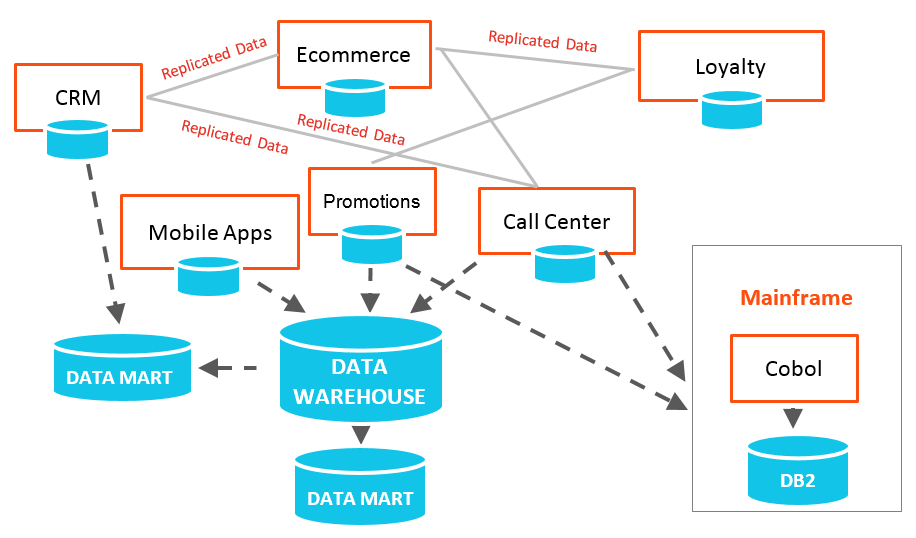
In the YMFL business, the GSIs could zero in on the cheapest, performance compliant disk or cloud to house sets of applications, logs, analytics and backup data. The data sets were created and used by and for their corresponding purpose. Often, they were tenuously managed by sophisticated middleware and applications for other purposes, like decision support or analytics.

Getting a centralized view of the customer was difficult, if not impossible. First, it was due to the stove piping of the relevant data in an application-centric architecture. In tandem, data islands were created for analytics repositories.

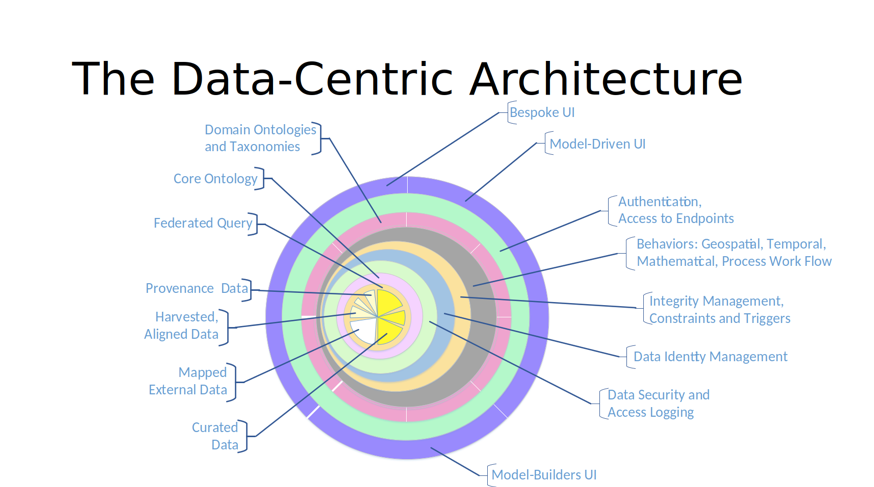
Now enters the “Data Centric Architecture.” Transformation to a data-centric view is a new opportunity for GSIs to remain relevant and add value to customer’s infrastructures. It is a layer deeper than moving to cloud or migrating to the latest, faster, smaller boxes.

A great way to help jump start this transformation is by rolling out Data as a Service offerings. Rather than taking the more traditional Storage as a Service or Backup as a Service approach, Data as a Service anticipates and provides the underlying architecture to support a data-centric strategy.

It is first and foremost a repository for collected and aggregated data that is independent of application sources. From this repository, you can draw correlations, statistics, visualizations and advanced analytical insights that are impossible when dealing with islands of data managed independently.

It is more than the repository of the algorithmically derived data lake. A Data as a Service approach provides cost effective accessibility, performance, security and resilience – aimed at addressing the largest source of both complexity and cost in the landscape.

Data as a Service helps achieve these goals by minimizing, simplifying and reducing the data and its movement within and outside of the enterprise and cloud environments. This is achieved around four primary use cases, which range from enterprise storage to backup and long-term retention:


Each of the cases illustrates the underlying capabilities necessary to cost effectively support the move to a data-centric architecture. Combined with a “never migrate or refresh again” evergreen approach, GSIs can focus on maximizing value in the stack of offerings. This approach is revolutionary.  In past, there was merely a focus on the refresh of aging boxes, or the specifications of a particular cloud service, or the infrastructure supporting a particular application. Today, GSIs can focus on the treasured asset in their customer’s IT — their data

Approaches of Developing a Digital Strategy

B2B Digital Marketing Strategy, Tactics & Examples

Products built by aerospace and defense companies are highly engineered and sophisticated, which means they’re often complex. That’s not a bad thing. But they’re also complex in ways that are undesirable. Products and their constituent parts are tracked in dozens of systems –from design to manufacturing to maintenance — which can result in an average of 26 different reference numbers for each part.

The drive to digital transformation is helping A&D companies recognize that situations like this, which arise from a lack of governance and the absence of an enterprise-wide data strategy, have created substantial costs and risks that have to be addressed to realize the full benefits of digital transformation.

That’s especially true for companies that want to establish a “digital thread” for products and parts throughout their systems. The ability to follow any part throughout the A&D value chain (design, manufacture, service) by following a single digital ID will help A&D companies recognize tremendous cost savings. A digital thread also provides a glass pane for status, reduces rework and errors, improves security, and helps manage compliance and regulatory issues with greater efficiency.

That sounds great. But the key question for many companies remains: How do you get started with an endeavor like that? Many organizations fail to prioritize defining a data strategy on the grounds that it’s either a case of “boiling the ocean” or else an “infinity project” that will deliver little value.

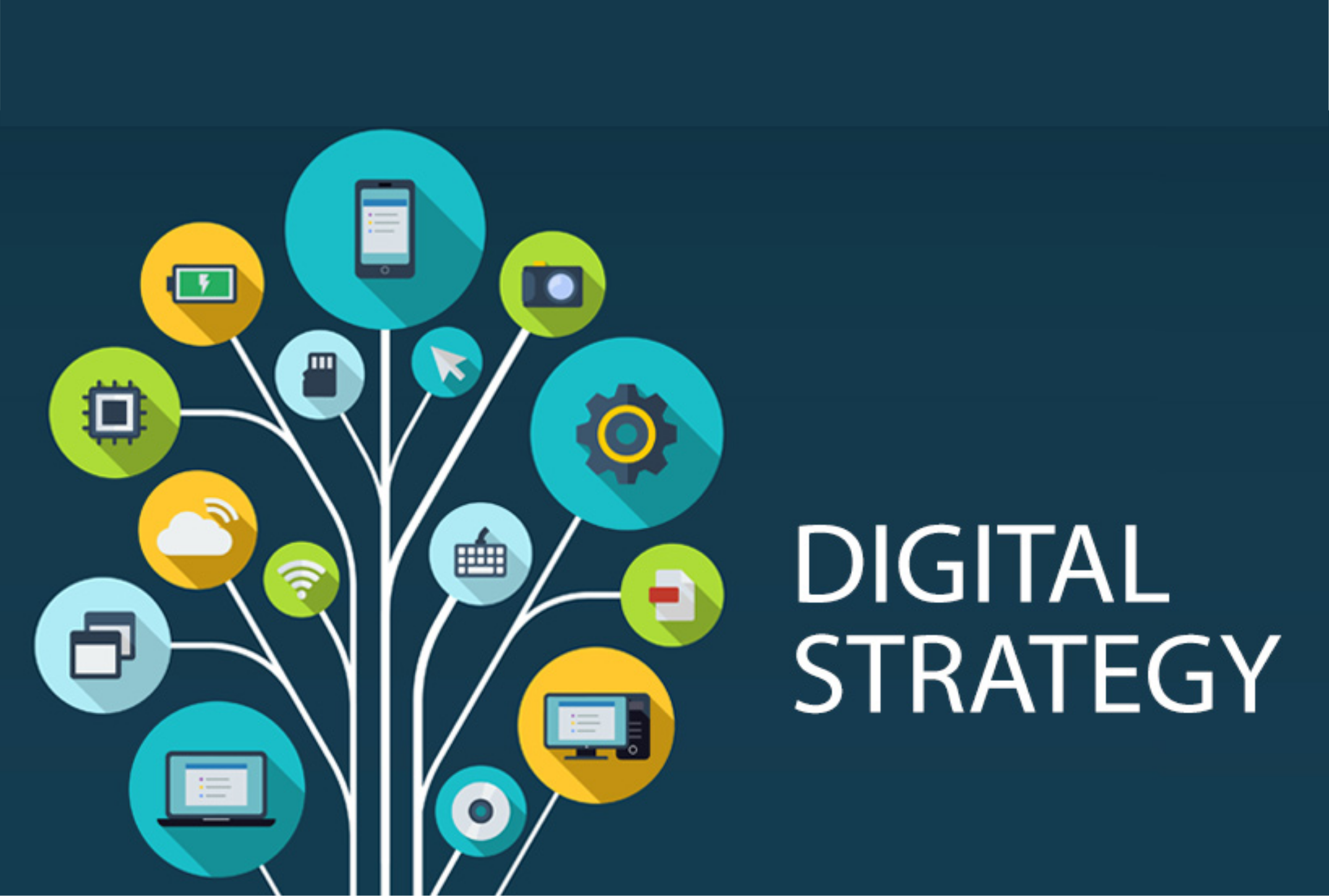
A few key points can help your company move toward a data strategy that allows you to pursue the rest of your digital transformation agenda.


1. Make an affirmative decision to manage your data.

All companies make decisions about how they engage with, operate on and leverage their data — whether at an enterprise or project level. Even if a company has no formal data management policy, that in itself is a decision, albeit one that leads to the situation many companies find themselves in today. On the other hand, companies that form a holistic point of view in adopting an enterprise-grade data strategy are well positioned to optimize their technology investments and lower their costs.

2. Establish executive sponsorship and governance.

Sustaining a successful data strategy requires alignment with corporate objectives and enforced adherence. As corporate objectives evolve, so should the data strategy — keeping up not only with how the business is operating, but also with how supporting technologies and related innovations are maturing. This means including representatives from all the domains that are involved. It also means assigning someone with the authority to resolve conflicts between groups. This is a key element to helping federate data across silos and moving to a data hub approach, thus eliminating the need to maintain 26 different part numbers for a single item.

Sustaining a data strategy also means making a specific investment in personnel. Companies that embrace the constructs of a data strategy often define dedicated roles to own these strategies and policies. This ranges from augmenting executive and IT staff with roles such as chief data officer and chief data strategist, respectively, to expanding the responsibilities of traditional enterprise data architects.

digital strategies

3. Get started by instituting good data management practices in smaller programs.

Success demonstrate the value that data management can deliver at a small scale and what it could potentially deliver at the enterprise level.  Applying an Agile methodology, which continually demonstrates short bursts of success, will help gain momentum (like a snowball rolling down a hill) and organizational acceptance.


As with any business or technical process, a data strategy has its own lifecycle of continual evolution, maturity, change and scale. But the benefits it makes possible—for example, the ability to construct a digital thread for products and parts—will far outweigh the investment that’s required.

For a thorough view of the process that’s involved in setting digital strategy, read the whitepaper Defining a data strategy by my colleagues, Aleksey Gurevich and Srijani Dey. It offers a concise view of the components of a winning data strategy as well as the steps needed to implement, maintain and evolve it.

Why is it important to do usability testing

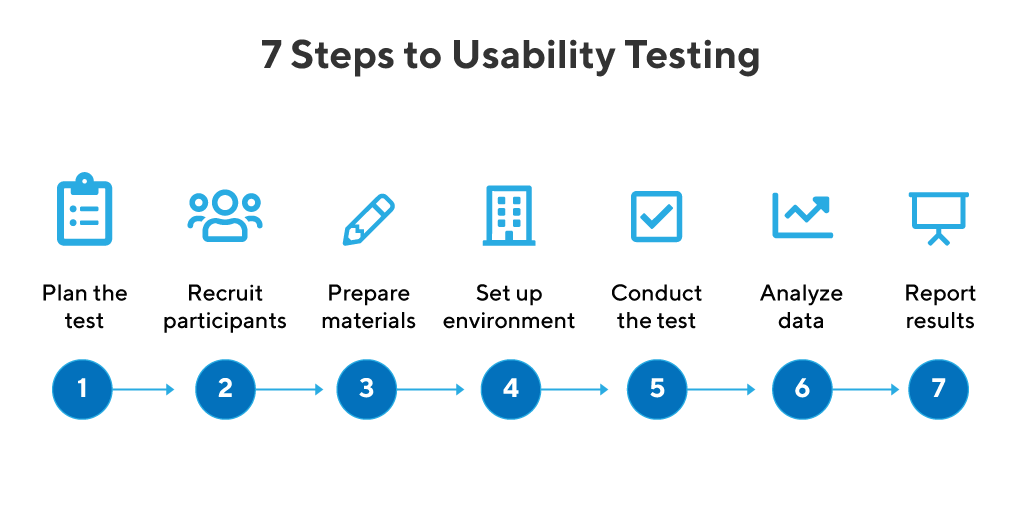
Usability testing is like black-box testing of an application to ascertain if the product built is convenient to use and easy to learn.

These are methods of testing and observing the behavior of the users to find out what works and what doesn’t work. Users are given specific tasks to complete and when they are at work, observers watch their body language, facial expressions, emotions and encourage them to “think aloud” i.e. speak up whatever comes to their mind while using the product. By doing this exercise we can get qualitative and quantitative data and figure out usability issues with a product.

So, why usability testing is important?

Why Usability Testing is important for your Web or Mobile App? - Zignuts Technolab

Doing usability testing the right way, at right time with the right set of people reduces the risk of building the wrong product; thereby saving time, money, and other precious resources. In other words, if done at an early stage when the product is at the paper prototyping stage, it finds the problems when they are easy and cheap to fix. And when done on a product that has attained maturity it helps to understand the user’s success rate and time spent to complete a task. There are hundreds and thousands of cases when usability testing proved to be a good exercise in terms of ROI.

For example, a slight tweak in design suggested by usability testing for Mac’s UI, the company got 90% fewer support calls.

Need more clarity about why usability testing is a good idea? Here you go-
#1. To check if the product meets user’s expectations
#2. Matches business decisions to real-world use
#3. Removes flaws in the product
#4. Allows you to see how successful users are with their tasks
#5. Useful for getting user reactions and feedback about the product

What are the types of data that we can get as a result of our analysis?

What is Usability Testing? | Definition and Overview

Two types of data results received are — quantitative and qualitative. Usability testing is largely a qualitative research technique and is not driven by statistics like surveys where lots of people participate. Usability testing is done using a small set of people, usually five to seven.

Qualitative methods are very useful to test the stress response of the users like their body language, movement of hands, expressions on the face, and squinting eyes especially doing a test on a mobile device.

The metrics we get after usability testing can be quantitative as well. For example, time spent on doing a task, success and failure rates, and also the efforts, like how many clicks a user needs in order to complete a task.

Is there a need to record all the metrics obtained from usability testing?

Why is it important to do usability testing | by Quovantis | UX Planet

Yes, keeping a record of the metrics is very important. Why? Because usability testing is not just for designers to understand how to make better designs but it is also an important tool to influence the rest of the stakeholders like clients, their sales/support team, project managers, developers, other designers, etc.

Every stakeholder involved may have a different point of view for a design decision. Being subjective by nature, design decision often leads to long debates among stakeholders. Most often design decisions are influenced by a person who holds the highest position among fellow stakeholders or has superior oratory skills.

In short, metrics help us in iterating and validating design concepts. It gives objectivity to design debates and it helps in taking fact-based design decisions.

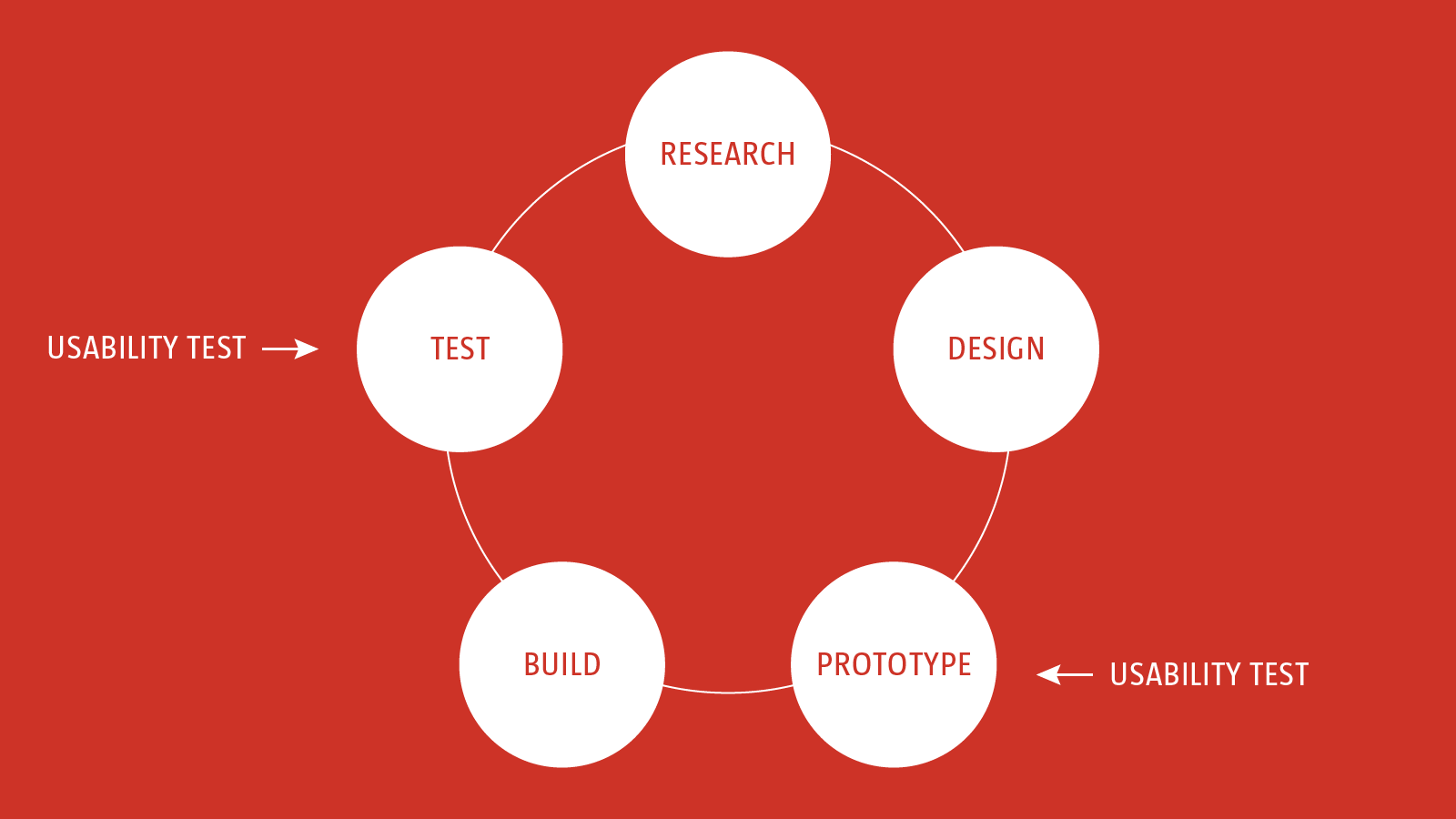
At what phase of the design process usability testing is recommended?

A Comprehensive Guide To User Testing — Smashing Magazine

When it comes to usability testing there are two terms often referred to by big names of the UX industry (like Jacob Nielsen) and these terms are Summative Test and Formative Test.

These tests are done at different stages of the design process. They are as explained below:
Formative tests are low-fidelity tests (to gain quick insights)-
#1. During the very initial development phase using paper prototypes
#2. It can be done anywhere and a formal lab is not required
#3. It can be done just between a moderator and a participant

The results from a formative test may include-
#a. Users’ comments in the form of “Thinking Aloud” narrative i.e. their emotions, confusion sources and their reasons for actions.

Summative tests are high fidelity tests (to capture metrics)-
#1. These are carried out at the end of the development stage
#2. At this stage usability of a product is validated
#3. This gives an answer to the question “How usable the product is?”
#4. This gives a comparison against competitor products
#5. Conducted in usability labs or remotely using many tools available where users can do the test using their computers or mobile phones

The results from summative tests may include-
#a. User’s success rate to achieve a goal
#b. The time spent on completing a task

How many users are required to conduct the testing?

“Elaborate usability tests are a waste of resources. The best results come from testing no more than 5 users and running as many small tests you can afford”
Jacob Nielsen

“It is widely assumed that 5 participants suffice for usability testing. In this study, 60 users were tested and random sets of 5 or more were sampled from the whole, to demonstrate the risks of using only 5 participants and the benefits of using more. Some of the randomly selected sets of 5 participants found 99% of the problems; other sets found only 55%. With 10 users, the lowest percentage of problems revealed by any one set was increased to 80%, and with 20 users, to 95%.”
Laura Faulkner

Who among them is right?

It depends on what type of test we are doing and where we are doing it. For example, if we are doing low-fidelity formative testing we can do away with a small sample size. But if we are doing summative testing we need a bigger sample size. In the type of testing where we are comparing our site to a competitor’s website by using an online tool that is cheap and fast, we can use a large sample size. But we should keep in mind that these online tools like UserTesting or Loop11, don’t capture metrics. It’s us who has to be aware of how all the participants did it.

So how to prepare a test plan?

Test Plan Tutorial: A Guide To Write A Software Test Plan Document From Scratch

That is certainly a good question. You have an inquisitive mind, I must say. But don’t you think that will be too much to digest in one bite?
Still, if you are really into it, give these things a thought-
-Decide what areas to concentrate on
-Determine potential usability issues
-Determine what tasks you want to test

A brief Guide to Sass Development

SASS tutorial | learn SASS with these easy steps - IONOS

What is Sass Development?

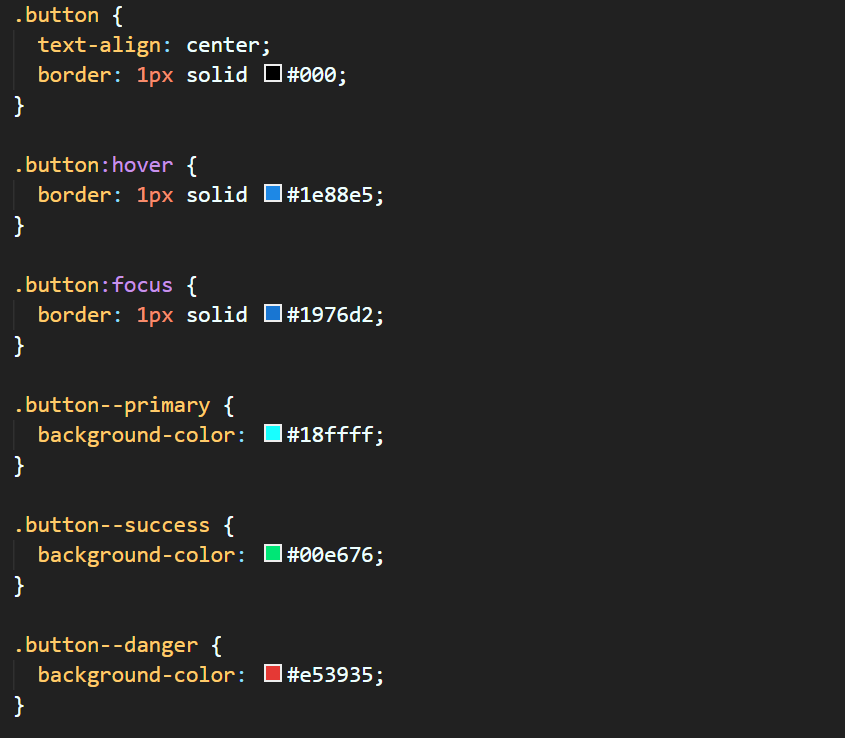
Syntactically Awesome Style Sheets (Sass) is the world’s most potent and stable CSS extension language. It is a preprocessor scripting language influenced by YAML, CSS, and Haml. Sass is compatible with all CSS versions and extends its use through mechanisms like nesting, variables, mixins, selector inheritance.

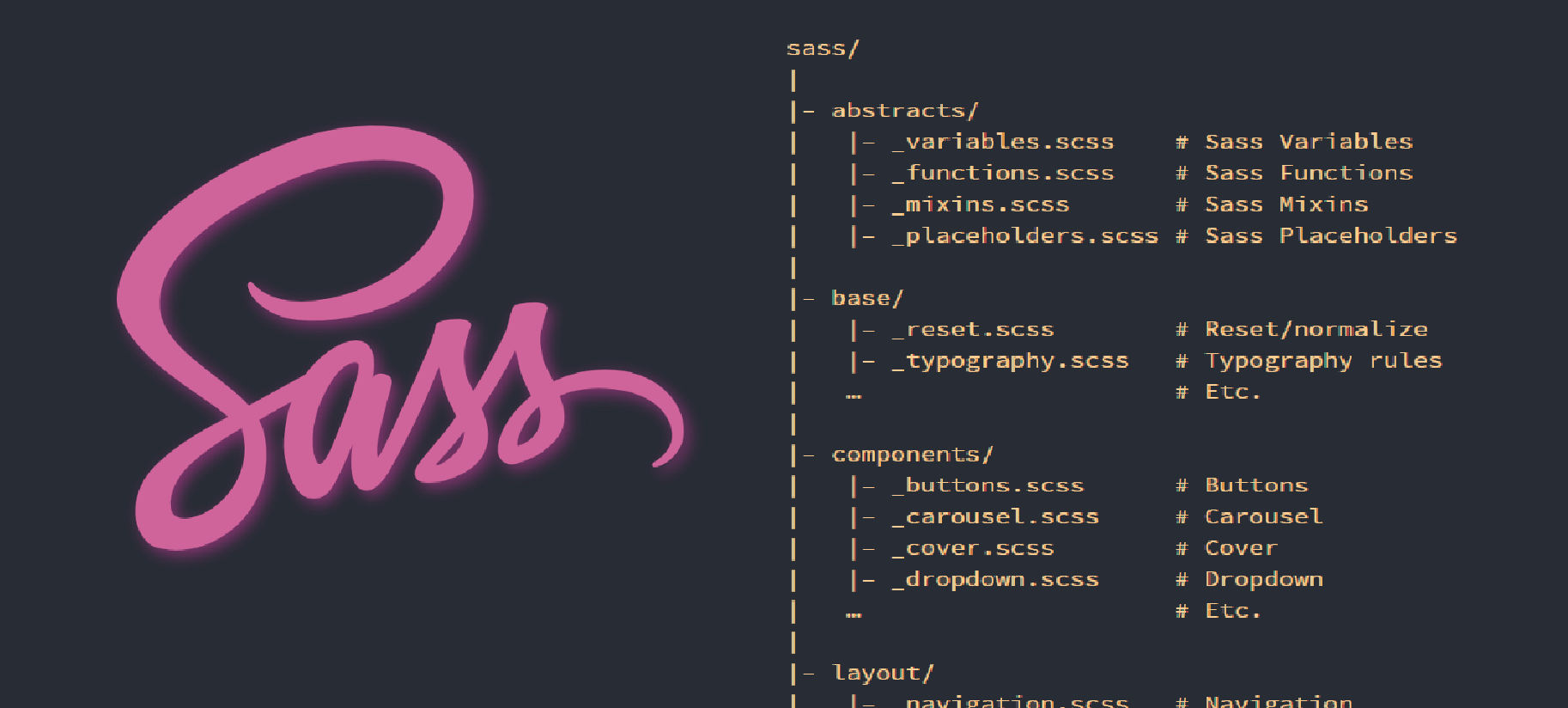
Structuring your Sass Projects. Let's take a look at how we can… | by Timothy Robards | ITNEXT

Sass is a CSS pre-processor that aides in lessening reiteration with CSS and thereby spares time. It is viewed as progressively steady and ground-breaking when contrasted with CSS. It portrays the style of a record unmistakably and fundamentally. It helps in completing work in a quicker and better way. With every one of its highlights, it is, for the most part, preferred over CSS. It permits factors to be characterized which can start with a $ symbol. The variable task should be possible by utilising a colon. It likewise underpins intelligent settling which CSS doesn’t. SASS empowers the client to have settled code which can be embedded inside one another.

Designed by Hampton Catlin, SASS is a style sheet language it stands for Syntactically Awesome Style Sheets. It is a pre-processor scripting language that can be interpreted or accumulated into Cascading style sheets. It is a progressively steady and incredible variant of CSS which basically portrays the style of any record. SASS is a simple augmentation to CSS. It incorporates new highlights like factors, settled guidelines, mixins, inline imports, worked in capacities which help in the control of shading and different qualities. All these are totally great with CSS.

How does it work?

To get the code, you should utilize SASS pre-processor. It helps in making an interpretation of the SASS code to CSS. This procedure is known as transpiring (unfolding). It is like arranging and compiling yet, here, as opposed to changing over the human, relatable code to machine code, the interpretation is done starting with one comprehensible language then onto the next. The transpiring from SASS to CSS is simple. All factors which are characterized in SASS are supplanted by values in CSS. This makes it simple to make and keep up various CSS records for your application.

Advantages of Using a Preprocessor (Sass) in CSS Development | by Cem Eygi | The Startup | Medium

Both the sass CLI tool and the scout application work by viewing your SCSS style sheets for changes as you take a shot at them, at that point naturally aggregating them into standard CSS when you save them. The catalogue where your Sass records live is known as the “input folder”. Your handled CSS records are saved to the output folder. These organizers can be settled/nested inside each other; truth be told, an ordinary example is for the input folder (which for the most part is called “SCSS,” however you can name it whatever you like) to live within your site’s customary stylesheets folder.

Organizations that desire to go a step beyond traditional CSS based web development look up to Sass to build feature-rich, customizable, and scalable web apps. If you need to introduce a higher level of advancement in your web app development methodology, Sass is the way to go.

Are you looking for a little help? Anteelo is here!

Anteelo is the best Web Development Company in India, specializing in Sass development. Centred in Gurgaon, we have a rich client-base extending all across the globe, and we’re home to an incredibly talented team of Sass developers. Over the years, our experts have delivered a broad range of Sass web development services to various clients across different verticals and helped them realize their business goals.

Key benefits of joining hands with Anteelo

  • Professional and experienced Sass developers
  • Customer-centric Sass development
  • The strict upholding of industry-wide best practices
  • Commitment to timelines

Primary Sass Web Development Services we offer

Sass Web Development

4 Reasons to Use SASS in Your Frontend Project | by Sonny Recio | Bits and Pieces

Sass powered websites are highly scalable and secure. Going a step beyond normal Sass web development, Anteelo assists you in building out-of-the-box web apps that are goal-oriented. Our full spectrum of services includes understanding business objectives, client undertakings, as well as data configuration.

Sass Application Development

SaaS Application Development on the Rise as Remote Work Becomes the New Normal


We are a hub of ideas, and our talented teams are well-versed with Sass. They are adept in understanding client requirements and curating applications according to them. If you’ve been looking for end-to-end app development using the latest Sass technology, Anteelo is the technology partner of choice.

Sass Version Upgrade

Introducing Sass Modules | CSS-Tricks

If you wish to upgrade your existing Sass application to the latest version, we can offer hassle-free solutions. Migrations can be painful and challenging if you don’t have the right tech-team to support you. With us having your back, you can let go of all worries. We are well-versed with Sass version upgrades and migrations, and we can help you accomplish the task in a risk-free manner.

Sass Consulting

What Is a Consultant? How to Find a Consulting Job and Who's Hiring | FlexJobs

Excited about Sass but have no idea how to begin on the path? Contact us to get expert consultation. We have a keen ear to listen to client needs and understand diverse requirements. We can help you chart the right course of action for your next planned Sass project.

Seeking a CTO for your startup? Here’s How!

How (And When) to Hire a CTO for Your Startup | Net Solutions

You have a great idea for a new (or improved) software product. You’re ready to work hard for it and build your own company. You know a lot of startups fail, and you also know the people that make up your startup can either cause your startup to fail or to flourish. Talent, persistence, great communication skills – these are traits you look for in business partners. This is true for a potential CTO as well. But how do you go about actually finding a CTO? This post attempts to give some pointers.

Why is it Hard to Find a CTO?

Who is a CTO and how important is it to find a CTO for your startup? - FasterCapital

Joining a new startup is risky. This isn’t different for a CTO too. What’s more, great CTO talent is scarce but startups are not. A potential CTO should be willing to take some risks, but you’re going to have to show him/her a potential reward too – This could be either a great compensation package or the impact your startup is going to have or a mix of the above.

Also, making the CTO feel like an important decision-maker and stakeholder in the company is also going to be crucial. A generous ESOP’s share may be important in hiring and retaining the right talent.

How to Find a CTO For your Startup

1. Be clear about your requirements

Tech Specification: Ten Reasons to Write - Visartech Blog

You must have a clear picture of your requirements. For example, you must have a list of technologies that are a must-have for your project. That could act as a filter to select the most appropriate candidates. Once you have filtered the candidates based on their technical skills, you can further get to know them and filter them accordingly. In a perfect world, you need to discover somebody who will consider this to be as a bar up on the stepping stool in their profession, for example, a senior programming engineer or specialized group captain who is ravenous to take on the CTO job. You may need somebody who’s strolled your way previously. Discover somebody who approaches things from a “try to get” point of view, not somebody who thinks they have every one of the appropriate responses.

2. Go to places where you’re likely to find good technical talent

How to Attract Top Tech Talent If You Are Not Google or Facebook (Especially During the COVID-19 Pandemic)

It is always a good idea to go to cohorts where there are like-minded people as you and these places could be an answer to your question “How to Find a CTO?”. Hackathons, conferences, meetups, summits are all great opportunities to discover a potential CTO who would be a great asset for your company. Search for somebody who can get various innovations (maybe including back end, front end, and mobile). Keep away from individuals who state they’ll just program code in one language.

3. Look for developers at just below the CTO level at startups similar to yours

How to Find a Developer for Your Startup | by Mattan Griffel | Medium

Jobs like VP or Engineering Lead where there’s as of now a CTO at that startup implies that they presumably have the experience required to be a CTO yet probably won’t get the open door where they at currently are. You can scan for individuals like this through LinkedIn. Ensure they have at any rate had experience shipping a product in the event that you need to give them the duty of building yours

4. Utilise the power of the internet

The Power of Internet: It's Like a Magic! - Page Design Pro

The internet is a potent tool in today’s world. Make sure you make the best use of it and benefit from its huge pool of talented professionals. There is an endless list of platforms which are dedicated to finding technical professionals such as a CTO. Some of them are listed below:

  • СoFoundersLab
  • Founders Nation
  • Angel.co
  • Indie Hackers
  • Co-founder’s subreddit on Reddit.com
  • Co-founding threads on Discordapp and Slack channels.

5. Pitch for the position

12 Elevator Pitch Examples to Inspire Your Own

Beginning with the expected set of responsibilities and enduring through the offer, remember that the best CTOs will have many offers. You must sell the job to them all through the meeting procedure. You would realize that your startup is the most energizing, imaginative, astonishing organisation to work for but remember that the candidates presumably don’t have the foggiest idea about that yet. You have to sell your startup. Don’t simply list the characteristics you need in a CTO; list what they will gain from working with you: energizing challenges, the chance to be a piece of x, y, and z. Will the CTO get value? Will they have autonomy? Whatever novel characteristics your startup has, sell them well. Make certain to clarify the situation with impartial language to draw in a decent and differing candidate pool.

6. Ensure that you have a technical advisor before a CTO

Technical Advisors: Every Web/Mobile Startup Must Have One

How do you differentiate a technical advisor from a CTO? A technical advisor keeps their regular job but works for you 2–4 hours out of every month and fills in as somebody who’s not in the weeds with you, every day. They may do week by week or month to month code surveys and go about as a substitute for your CTO. On the off chance that you discover a technical advisor first, this individual can be immense aid in finding the CTO. Finding a technical advisor will probably be simpler than finding a CTO, on the grounds that you aren’t requesting that somebody quit their job to come work for you. Or maybe, you are requesting that they keep their current job and take on an advisory role that takes a couple of hours a week. Sometimes, you can pull off having a technical advisor and not having to hire a CTO.

What Qualities Should Your CTO Have?

Technical Expertise

Technical Expertise | E.DSO

This is obvious, but still important to note. In software, often a huge amount of tooling and software libraries available for many routine tasks that software developers face. Knowing what exists and the pros and cons of each tool and library can save your company a huge amount of time and money. It also saves your company from reinventing the wheel or using a less efficient tool.

Great Network

The Effortless Way The Pros Build A Great Network

While everybody should have a great network, this is especially true for your CTO. As your company grows, you will need new employees. A CTO with a great network of skilled developers will have an advantage.

Experience

5 Crucial Questions to Ask When Creating a Customer Experience

Experience is needed to have the previous point: expertise. Furthermore, it’s important your CTO knows what generally makes or breaks a great product. This knowledge can come from experience (ideally from other startups) and/or learning from other companies.

Communication Skills – Tech and Non-Tech

Are Non-Technical Skills Even A Thing? All You Need To Know

Your CTO is the one translating business goals to technical goals for your software developers. This means your CTO must not only have technical expertise but also be excellent at communication. You need to figure out how your CTO fits with the rest of your team (and especially with you). It’s important that your people share values with each other and understand each other since your company is made up of these people. What’s more, your CTO must be able to communicate with non-technical people too, especially those inside your company.

Deadline Management

11 Tips on How to Manage Time and Improve Deadline Management Skills | Hygger.io

You’re running a startup. Your team is going to be busy, and probably extremely busy. There will be deadlines, and a great CTO should be able to know how much his team can deliver in how much time. Not only that, he should be able to inspire his team to successfully meet these deadlines.

Team Management

12 Effective & Genuine Techniques to Motivate Accountants

Your CTO should be great at technology, but also at managing a team. He should inspire his team to keep focusing and working towards the same goals. It’s his responsibility to facilitate an environment where employees reach their maximum potential and to make sure the team is more than the sum of all employees.

Where to Find a CTO?

Free Directions Cliparts, Download Free Directions Cliparts png images, Free ClipArts on Clipart Library

It helps if you have a great network of people where you can tap-in and ask for referrals. If that is not the case, start building one! Go on LinkedIn, connect with new people and start great conversations with them. If you click with someone, ask them if they are interested or know anybody who might be.

There are also websites designed specifically for finding a business partner. CoFounderslab.com is one of them. They have a community of entrepreneurs for you to build relationships with. This seems incredibly valuable even apart from finding your CTO. Other similar websites include indiehackers.com, founderdating.com and founders-nation.com. There are (many) more options tough, which are easy to find.

What Alternatives Are There to Having a CTO?

5 Best Microsoft Visio Alternatives for Diagramming

If you consider your own technical expertise to be high enough, you could consider taking on the role as CTO next to being CEO. Whether this is a good idea also depends on the type of product you’re building: an extremely high-tech product might need a CTO, but a less high-tech SaaS product might not.

You could also consider outsourcing the work of a CTO. However, this does have certain disadvantages, with the most important one being dedication. When outsourcing your CTO tasks, the person doing the work isn’t part of your company and is (probably) much less passionate about your product than an actual CTO would be. However, this person could be much more knowledgeable in the technical area than you are and could potentially join your startup faster than finding someone who’s willing to come in full-time. It really depends on the details.

Hopefully, this article has given you some useful pointers in your search for a CTO. There is a lot more material out there to read, but this can serve well to get you started.

error: Content is protected !!