
Blockchain for KYC – A Solution to Eradicating Inefficiencies

The importance of KYC technology for financial institutions amidst COVID-19 | by Horizon Fintex | Medium

KYC processes are the backbones of a financial institution’s anti-money laundering efforts. Find out how businesses are revolutionising the long, tiresome process.

Know Your Customer or KYC processes are the backbones of a financial institution’s anti-money laundering efforts. According to current estimates, the amount of KYC spending rose to up to $1.2 Billion in 2020 on a global level.

With a whopping amount as this being spent on making KYC processes better, it is easy to assume that the process would be unhackable and issues-free. But inspite of the importance of the process, KYC continues to operate inefficiently. Clenched by labor-intensive and time-consuming tasks, the high scope of effort duplication, and the risk of error, it is estimated that 80% of KYC efforts go on gathering information and processing while only 20% of efforts are assessing and monitoring focused.

While the current KYC process is failing to serve its purpose on the financial institution front, the tiresome, long, and repetitive process is creating an annoying experience for customers.

A hopeful respite to the situation comes from the fact that several financial institutions and service providers are trying to solve the issues by the way of incorporating new-gen technologies like cognitive technologies and AI.

In this article, we are going to delve into a technology that we believe carries the key to eliminating efficiencies and duplication in KYC processes – Blockchain.

In order to truly understand the changes that Blockchain can bring to the counterproductive KYC process, it is important to understand the problem areas of the present system. The problems will help us understand how blockchain technology for KYC is becoming a necessity.

The Lags in Centralized KYC Systems 

Centralized KYC System: Yet a dream in India! -

Every bank or financial service provider comes with its individual set of specifications with no standardization. This often results in users performing the KYC process with every bank and provider they use. Moreover, a tight siloed system like this limits FIs from tracking consumers’ expenses on other platforms – leading to every institution having their specific set of incomplete data.

This centralization of data in silos combines to cause an inefficient KYC process. One that creates issues like:

  1. Misidentification of fraudulent data
  2. The inability of tracking customers
  3. Customers entering fake data
  4. Delayed processing time

The result of these challenges is spending numbers that we mentioned earlier and a constant rise in money laundering instances.

As a way of changing the situation, the KYC process is gradually being shifted to Blockchain. Let’s deep dive into the process of using Blockchain for KYC verification and the benefits that the movement offers to the fintech sector.

The Blockchain KYC Process 

The process of using Blockchain for KYC happens through multiple stages in a Distributed Ledger Technology.

Let us give you a high-level understanding of the steps of how can Blockchain help KYC.

Step 1: The user builds a profile on the KYC DLT system

Blockchain: The Solution to Inefficient KYC Process

Financial Institution (FI) deploys a Blockchain-based KYC platform which the user completes as a one-time setup using their identity documents. Once uploaded, the data become accessible to the FI1 for verification purpose.

There are multiple options when it comes to storing the users’ data:

  • A centralized, encrypted server
  • On F1s private server
  • DLT platform.

Step 2: User performs transactions with FI1

How to select Performance Metrics for Classification Models | by Ruchi Toshniwal | Analytics Vidhya | Medium

When the user performs a transaction with FI1, they give them the right to access the users’ profile. The FI1 then verifies the KYC data and saves a copy of the data on their server. Next, they upload a ‘Hash function’ on the DLT platform.

Finally, FI1 transfers KYC digital copies to the user’s profile embedded with a Hash Function which matches the Hash Function uploaded on the DLT platform.

Now, if the KYC data is altered, the Hash Function of the KYC data won’t match the one posted on the DLT platform alerting the other financial institutions on the blockchain of such change.

Step 3: User performs a transaction with FI2

When FI2 asks the user to perform KYC, the user grants access to their user profile to FI2. FI1 then reviews the KYC data (and its Hash Function) with the Hash function uploaded by FI1. If the two matches, FI2 would know that the KYC is the same as the one received by FI1.

In case the Hash Functions don’t match, FI2 would have to manually validate KYC documents.

But what happens when the user obtains a new passport or driver’s license and their original document in DLT user profile changes?

In such cases, financial institutes leverage smart contracts for automatically updating their systems when the user provides new documents. Here too, the user submits the new document to F1 who then broadcasts the change across the blockchain (through the new Hash Function) which then becomes accessible to other FI participants.

The benefit of a Blockchain solution for KYC can be seen in:

  • Data Quality: all data alterations are tracked and monitored in real-time
  • Lowered turnaround time: through KYC Blockchain software solutions, FIs get direct access to the data which saves data gathering & processing time
  • Reduced manual labor: KYC on Blockchain eliminates paperwork from the process.

The benefits of KYC Blockchain implementation cannot be limited to these points. There are a number of sector benefits that the process of KYC using Blockchain offers.

Benefits of Blockchain in KYC/AML Process

The use cases of the decentralized technology in KYC technology is not just a Blockchain in Fintech offering. There are a number of sectors that are partnering with a Blockchain development company to explore the application.

Distributed data collection

Data Collection: An Intricate Process ~ Technical Writing

The introduction of blockchain in KYC brings data on a decentralized network which can be accessed by parties after permission has been given to them. Moreover, the system offers efficient data security since the data can only be accessed after permission has been given by the users, thus eliminating instances of unauthorized access.

Better operational efficiency

Operational Efficiency | Integrify Workflow Automation

The abilities like an unhackable digital process and sharing user information on a permissioned network can massively lower the effort and time needed in the early stages of KYC. This, in turn, expedites the customer onboarding time and lowers the regulatory and compliance expenses.

Validation of information accuracy

The importance of data validation - deltadna.com

KYC Blockchain systems enable transparency and immutability that, in turn, allows financial institutions to validate the trustworthiness of data present in the DLT platform. The decentralized KYC process acts as a streamlined way for gaining secure and swift access to up-to-date user data. This lowers the labor-intensive efforts that an institution puts behind gathering information.

Real-time updated user data
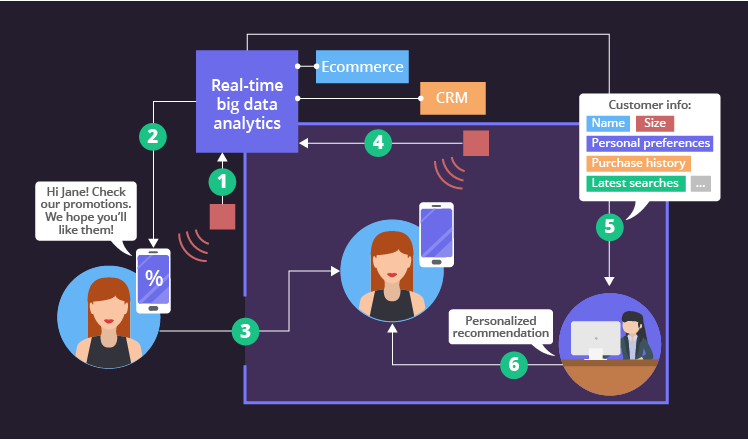
Real-Time Big Data Analytics: A Comprehensive Guide

Every time a KYC transaction is performed at a financial institution, the information is shared within a distributed ledger. This Blockchain technology KYC systems enable other participating institutions to access real-time updated information with a guarantee that every time there’s a new addition in the documents or there are any modifications, they’ll be notified.

Is Blockchain Development Solutions the Answer to KYC Issues?

Know Your Customer (KYC) (Know Your Customer) | Authenteq

Gathering information and processing it takes up a great amount of cost, time, and effort in the KYC process leaving very few resources available for monitoring and assessing user behavior for anomalies. By offering speedy access to up-to-date data, blockchain KYC solutions can lower the time needed for the laborious tasks, which, in turn, can be employed to find solutions to more complex KYC challenges.

However, blockchain cannot solve all the issues faced by KYC. After the data is acquired, financial institutions still have to validate the information. For this, AI and cognitive processing-like technologies have to be employed for greater efficiencies.

In its present state, blockchain when used in combination with other technologies can showcase high potential to help institutions lower the cost and time linked with the KYC process.

If you want to explore this side of Blockchain development services or are seeking to validate your decentralized KYC-based idea, get in touch with us – one of the leading blockchain development companies in USA.


Without Downtime, Here Are Five Ways To Deal With Digital Transformation

Digital Transformation: 5 Tips for Success – BMC Software | Blogs

Advanced technologies are significantly impacting and transforming the way people communicate and collaborate. How are businesses tackling this evolving corporate landscape?

From an option to a necessity – the trek of the digital transformation journey has always been full of obstacles and problems. When advanced technologies started having a significant impact and transforming the way people communicate, interact, and collaborate with a business, the majority of CEOs realized that it’s a matter of survival in the ever-evolving corporate landscape.

A survey conducted by Tech Pro Research Center in 2018 revealed several interesting facts. Out of all the respondents, 70% admitted that their business heads are either working on a digital transformation or already have one in place. Moreover, the survey also revealed that the budgets for IT transformation have been increased in the past couple of years by senior-level executives.

With the acceptance of C-LEVEL executives, every businessman knows that digital solutions are crucial for the success of an enterprise. However, the percentage of businesses that invested in a digital transformation strategy is surprisingly less. What’s the major contribution to such a low adoption rate? What’s hindering you from adopting digital transformation solutions?

The last ten years of information technology have been about changing the way people work. The next ten years will be about transforming your business!

A lot of CEOs are afraid that they’ll have to stop their business process while they undergo digital transformation. However, with proper planning and monitoring, you can easily conduct digital transformation in your company while keeping your business running.

Here’s a list of stats that’ll help you decide by yourself:

  •     A report by Adobe & E-consultancy stated that companies with a digital-first approach are 64% more likely to achieve their business goals than their competitors.
  •       According to a case study conducted by Deloitte, 45% of companies tell people that digital transformation has a positive impact on their business and reported higher net revenue growth.
  •       A published article by PwC stated that 52% of the companies plan to cut their defer investment amid the rise of COVID-19, while only 9% are likely to do the same with digital transformation’s budget.

As the statistics suggest, businesses that have adopted digital transformation strategy not only have an edge over their competitors but also allow them to get a higher revenue growth. In this article, you’ll know about five assured ways to tackle digital transformation without downtime. However, before we start, let’s get back to the basics and understand the correct meaning of digital transformation.

The Main Issues of Downtime

3 ways to reduce IT issues from impacting downtime, security risks, and costs - TechRepublic

For most digital transformation services company owners, downtime is the single biggest reason behind the loss of production time. According to research by Vanson Bourne Research Study, 82% of companies have experienced unplanned downtime at least once over the past three years. Aberdeen’s Research further includes the cost of a company that can go as much as $250,000 an hour. Not just the production, but companies are also facing issues related to productivity, IT, and customer service due to the downtime.

The study by Vanson Bourne also revealed high levels of asset estate ignorance across organizations, wherein 70% of companies lack full awareness due to equipment maintenance, upgradation, or replacement.

The same study also reveals another issue that occurs due to unplanned downtime is that the unplanned downtime results in loss of customer trust and productivity. This loss resulted in a 37% loss in production time and 29% inability to support equipment for production.

When unplanned downtime occurs, no value is generated but the cost of digital transformation grows constantly specifically around overhead operations , which in parallel impacts a company’s bottom line.

The unplanned downtime is the real issue that is pervasive and finding a solution for this downtime gap is a primary step in an organization’s digital maturity and an essential role for a transformative journey.

Road Towards Zero Downtime

Vanson Bourne (@vansonbourne) | Twitter

As organizations create and invest in their digital transformation business strategy, we are soon entering a time where  zero tolerance and zero unplanned downtime will turn into a norm. The key to this is an understanding of and interest in field service management and asset performance management.

As indicated by Vanson Bourne, eight out of ten organizations have effectively perceived that digital tools can improve the visibility of assets and eliminate unplanned downtime. Around half of the organizations confirmed their intent to invest in field service and asset management in the following three years, while 72% claim that zero unplanned downtime is presently the focus of priority.

One of the significant barriers to digital modernization is the challenge to replace systems while maintaining business continuity. To build a strong customer base, and empower employees with modern technical skills, there is a strong need to increase the uptime and follow digital transformation maintenance to bring digital and IT transformation strategy in the business. Let’s look at the ways businesses are overcoming digital transformation challenges and adopting digital business transformation strategy.

5 Ways To Conduct Digital Transformation Without Missing Business

Digital transformation is a sure-shot way for large and successful organizations to stay ahead of their digital-only competitors. That’s why these projects are usually large in ambition and scope, but there are always some chances of risk. With that said, let us take a look at some of the handiest tips that allow you to undergo digital transformation without any downtime

1. Phase-wise Approach

digital transformation

Instead of following the traditional “rip and replace” methodology, you need to approach transformation in a more efficient way to prevent the risk of downtimes. Consider taking a phased approach to reduce the risk in your transformation. You can release a minimum viable product (MVP) into production early to get realistic structural and operational criticism. This phased approach lets you focus on each stage to make changes and develop a customer centric product.

To tackle the digital downtime, the first phase should always be to create and deploy a front-end proxy. The proxy will provide the data. Only after getting the data, you should move to now comes the time for the second phase which includes the replacement of the old stack.

2. Identify Problems Earlier

How to identify problems earlier and reduce downtime with high end thermography – Testo UK Blog

As downtime can be caused by a native problem, for example, a software glitch in a workstation, remote server, a major event, or any other reason. Thus, for a major transformation phase, you need to build an early warning system to validate and test things in each phase, so that not much time is wasted in detecting the issue and then resolving it.

Identifying problems earlier also helps in having a solution right there, so when the problem occurs then it is easier to correct it without affecting any productivity. With a little bit of testing, iterating, and assessing, you can easily manage traffic to the new system and identify any potential problems earlier.

3. Plan For Accuracy and Reliability

While undergoing a digital transformation, you must visualize, collect, and alert on in-depth operational metrics. It’s better to have a dynamic plan to ensure functional accuracy and operational reliability to minimize the chances of errors and move towards the next step. The plan can involve the right management. Then comes the skill development to streamline standard operations, decrease downtime, allow quick decision-making, enable employees to attain the skill effectively, and improve brand reliability.

The accuracy provides a convenient digital strategy framework to identify important components within the system and reliability helps in decision-making which is meant to upgrade the system availability or reduce the mean duration of system downtime.

4. Establish A Multi-Layered Fallback Mechanism

Multi-Layered Fallback Mechanism helps to reduce the use of the old system while decreasing the impact and elegantly degrading in case of problems. The mechanism helps in a way that the issues arising in one service do not harm overall operations.

During the transformation, you need to make sure that your team gets familiar with the use of new systems to prevent the product or service quality from degrading. That’s why it’s always a good idea to plan for multiple layers of fallback to keep your back covered.

5. Keep Everyone Involved in the Plan

Non-profit Q&A Forum: Strategic Engagement

One of the major issues is the skill gap in what needs to be transformed and what is there in the workforce. Thus, to make everyone in your organization understand the process, recognize the process, and agree that it will be worth the efforts, it is important to involve everyone in the plan. Involving the team in a plan helps to track the progress that is being made towards the goal. It helps build trust within the team and provide employees a chance to come up with approaches that they think will work in a way. Also this helps in getting out-of-box ideas from different members, preparing business transformation strategies, and there are chances of not wasting much time in finding a solution or explanation.

The After-Transformation Effect

Although DT is filled with numerous revolutionary technologies, the top ones are the internet of things, cloud computing, artificial intelligence, and big data. However, it’s more than just the use of technology – transforming corporate culture and business processes are also an integral part of the digital transformation process.

While it’s easier to manage the disruption created by technology to your business, you also need to make sure that your people can cope up with the changes – and it’s more than just technical skills. It’s more about embracing the change and being resilient and resourceful enough to make decisions faster and better.

If you have any business transformation challenges in your organization, you can partner with a digital transformation agency like Anteelo to take care of the migration and adoption needs. We are a well known brand that builds digital products and processes to help teams get acquainted with changes through the shortest learnability curve. We have served digital transformation companies across the globe including digital transformation companies in USA and parts of the globe.


An Ultimate Guide to Mobile App Monetization Model and Strategies

8 Mobile App Monetization Strategies to Create Revenue Out of Free App | by Daffodil Software | App Affairs | Medium

The craze to make money through mobile apps is inextricable. While some developers try different permutations & combinations, others have hit the jackpot overnight.

The craze to make money through mobile apps is inextricable. Whereas some developers try different permutations without any results to show for, others have hit the jackpot overnight. Having analyzed a bevy of such case studies over roundtables, and after-office coffee-talks, we have our list of the mobile app monetization trends of 2021. Building an app isn’t an easy task, but this technological era provides you with the opportunity to create a million dollar app if proper process and guidelines are followed.

As a luminary mobile app development company, Anteelo has partners in every sector from healthcare to Edtech and other industries to obtain an engaging customer base and great ROI. We’ve seen first hand the most effective monetization tools for mobile apps, and with such validated expertise, look forward to empowering the entrepreneurs of new and old.

Why bother monetizing your app?

How to monetize your app - Developing your strategy | Adjust

Before we dive into the reasoning behind monetizing an application, let us clarify one of the biggest confusions – can free apps make money? Yes, they can. Here’s how.

Apps have increased their user-reach multifold over the years. The below given chart appears to climb north in the foreseeable timeline as the internet and smartphones digitize our daily lives. By 2023, it is purported that apps would generate in excess of $935 billion in revenues, the primary drivers of which would be downloads and in-app advertisements.

When it comes to millennials, 21% of the cohort opens an app as much as 50 times a day. With an estimated 72.1 million millennials in the US alone, you do the math!

Having cultivated a regular footfall of app traffic and not knowing how to monetize it, would be like having a treasure chest without a key.

Identifying the Best Mobile App Monetization Strategy 

As the modern saying goes, money doesn’t grow on trees but is certainly minted in apps. Let us explore 8 impactful strategies and the reasons promulgating their adoption rate. However, as you digest these points, do note the factors that make up for a profitability-friendly application.

Data Monetization 

How you can make your organization ready for data monetization

Data makes digital businesses tick. The public readily gives apps all the permissions to collect “relevant” data in return for premium experiences. Algorithmists decipher the variety and volume of the data they need on each user so as to peel the peripheral layers of behavioral psychology and augment tactics that urge the buying patterns. This can be observed from the fact that Facebook has 52,000 data points on each user.

Such intriguing insights were accessed by Cambridge Analytica by paying Facebook for unbridled data-access. Although the process of data-collection was questionable then, a legitimate market for data access has blossomed since making access to data, one of the hottest app monetization models.

When to use it  – to make a killing, your data must be BIG, literally. Big data is something that has volume, velocity and variety. The higher the number of data identifiers you collect, the more vendors you can sell it to.

Premium 

Slidesgo Premium: premium templates for PPT and Google Slides

You pay for the app before trying it out. This model is receding fast as people are reluctant to spend unless they trust the brand. Most often, mobile gamers partake in such apps that exercise a pay first, play later protocol. It is proven as a matter of fact that free apps are much easier to distribute than paid ones. So unless you are a billion-dollar organization with fever-pitch fanfare to try out your products, refrain from using it.

When to use it – if you have to use it, make sure the marketing budgets are tuned to perfection as the notion of paid apps takes hard-selling. Premium works best for brands that account for majority market share and can fend-off competition with a loyal base.

Freemium 

How To Create A Great Freemium Pricing Strategy

There was a time when in order to monetize mobile apps, 98% of the applications in the market stuck to this model. While that time was in 2014,thus in 2021 freemium apps still account for 94% of the market share emerging as one of the dominant go-to android app monetization strategies. The idea is to open up a basic in-app functionality to users so that they get a hang of it and automatically opt-in for premium features by paying a fee. Those wondering how to make revenue on apps, would be flattered to know that user acquisition costs are lower for freemium apps.

Freemium also provides the scope for incorporating secondary revenue mechanisms such as in-app advertising. In fact, mobile app developers use freemium as a hurdle for users to overcome and discarding-app ads.

When to use it – we recommend using freemium when you have potentially better app features that people will pay for. The model works best when app sessions can be stretched for longer durations. Spotify would be one example.

Subscription 

10 tips for running a profitable subscription-based business | CIO

This is a one-word answer best suited to the question how to generate revenue from mobile apps? Usually, mobile app development services design a 3-tier subscription policy targeting users with the spending potential of basic, intermediate or advanced levels. Subscription plans can be classified over separate durations depending on their pricing. A subscription model gives first-time users the leeway to experiment and see for themselves the value proposition by paying a nominal fee.

Whether you discuss android app monetization strategies or the ones applicable to iOS platforms as well, this model has been used to monetize mobile apps far and wide. Documented evidence suggests businesses opting for the subscription services have grown consistently over the last few years. The only thing you need to know is how to choose the right app pricing strategy.

When to use it – This model is best-suited to content-heavy apps that tie users into a fallback loop and long-term app use. Examples include Medium, and Netflix.

Sponsorships

How to Save Your Sponsorships in the Face of Cancelled and Postponed Events | Northstar Meetings Group

Partnerships can take many forms. Our experience as a mobile application development company spells a common theme wherein one app invites a second one to leverage the user base, reward them for using the app, and mutually benefit from higher user engagement. For instance, Domino’s could offer extra discounts for ordering food from Uber Eats the kind it doesn’t on other apps. Conventional wisdom advises that there has to be a shared user base for the sponsorship model to prosper.

When to Use it – It is mostly used by brands operating in the same domain.

Advertising 

Advertising Makes Us Unhappy

Come to think of it, this is just a byproduct of the data an app collects. The same is used by ad networks, to drive relevant ad-traffic to the app as you open the gates to advertisements. In case you were wondering how to monetize android apps under a mobile app monetization strategy, you can find multiple options to charge advertisers on CTC (click through rate), CPC (cost per click), and lead conversions. There are a plethora of app monetization platforms that the advertisers leverage to funnel decent amounts of revenue. Such mobile app monetization platforms include the following:

  • AdMob
  • InMobi
  • Millennial Media
  • StartApp
  • Linkury
  • AdColony
  • AudiencePlay
  • Audience Network
  • Media.net
  • Smaato
  • Fyber
  • Unity Ads
  • MoPub
  • Chartboost
  • Epom Apps
  • SmartyAds
  • Leadbolt
  • IronSource

In addition to them, you can run the following kind of ads on mobile apps:

Rewarded Ads  

They reward ad viewers for going through the complete duration of the ad with say an extra discount coupon.

Banner Ads 

They appear horizontally either at the top or at the bottom of the screen. The thing with banners is that they can irk people by intervening with the content by sometimes overlapping it.

Interstitial Ads 

These are full-screen layovers and produce the best click through rates. Unless the designer screws up, there is little you can do to not get things right with interstitial ads.

Native Ads 

They appear as part of the overall content on the screen. It is hard for viewers to distinguish whether it is even an ad or not (hence the name) a fact that increases the likelihood of a click through.

When to use it – Advertisements should be used when you have an abundance of user data such as demographics, search/purchase history etc.

In-App Purchases

Finally, in-app purchases are a tested and highly quantifiable revenue metric that app development services can play around with, while still keeping the app free to download. Users do not pay upfront but rather for add-ons that enhance and enlarge their in-app engagement. Few studies posits global revenues from in-app purchases at $71 billion for the year gone by. Popular types of in-app purchases implemented by gaming apps include the following:

  • Game currency
  • Extra health
  • Milestone points
  • Health Boost

When to use it – this monetization model was successfully experimented with by the gaming industry following which content driven apps have also taken to it.

Which is the Perfect-Fit Monetization Model for Your App?

App Monetization Strategies: 6 Bankable Ways to Turn a Profit | CleverTap

The answer is embroiled in further queries that pertain to intricacies of your business goals. For starters, consider finding a black and white answer to the following questions:

  • What is your apps’ USP?
  • What is your app’s product market fit?
  • Would you sacrifice short-term revenues for long-haul users?

The next-big monetization model could be held in your outlook and your approach towards consumerism.

Mobile application development services like ours at Anteelo have a record and reputation for conjuring innovation out of thin air. Well, that’s just an expression, but you get the point. Checkout our most hip-and-happening successes that earned us the laurels of being the best App Development Company of the Year.

Must-Avoid Post-Launch App Mistakes

Everything You Need to Know to Correctly Launch Your App - BuildFire

Mitigating the risks of mobile app launch mistakes during the pre-launch opportunities provides the opportunity for an effective and user friendly app.

The dynamics of the mobile app industry revolve around unpredictability due to the changing trend wave and market requirements. It is hard to single-handedly pinpoint a universal reason leading to app demises as each failure offers new learning. Yet, one aspect that analysts of the old and new order mutually agree upon as a cornerstone for app success is post-launch marketing.

Having fought our way through grim times to emerge as a global mobile app developer cohort, Anteelo knows the importance of investing in post-launch mobile app marketing. We’ll dispel some of that wisdom today as we discuss the recurring theme of post-launch mistakes and how to avoid them.

Mobile App Launch Blunders To Avoid 

The following stages often prove a damp ground to tread on when it comes to post-launch mobile app marketing.

Problem Statement #1 – Planning or the lack of it

Must-Avoid Post-Launch App Mistakes

Market leaders visualize and anticipate business scenarios and layout measures to resort to in case things go downhill. Yet there are those who consider publishing their app on the app stores, the end of a project. A cross-industrial study estimated that up to 70 – 80% of new product introductions fail. There is no room for complacency.

Solution –  Create a roadmap with probable business cases and perform thought experiments to mitigate 11th-hour developments. Delegate individual responsibilities to mitigate last-moment confusion.

Problem Statement #2 – An unknown neglect towards marketing

9 Retail Marketing Strategies to Help You Get New Customers — and Keep Existing Ones - Vend Retail Blog

Often DevOps leaders and IT practitioners have a partisan view towards developing the perfect product. Whereas that is a debatable stance on its own, they collectively disregard the need to pump cash and raise fanfare after a successful app launch. Being a 600-strong mobile application development company, our in-house experts know better.

Solution –  Divide marketing budgets into pre and post-mobile app launch marketing actionable. The former should cover preliminary collaterals such as secondary research, defining budgets and marketing goals to partnering with influencers. Similarly, the post mobile app launch strategy should cover your social media plans, referral & retargeting campaigns as well as up ticking user engagement.

Problem Statement #3 – Setting overly ambitious goals

Why more ambitious goals are more likely to help

Only fools set a deadline first and begin operations later. Overestimating the delivery of the final product could be self-inflicting in terms of everlasting reputational damage. There is an art to building hype and while at it you must take into consideration a buffer for delays so that the post launch mobile app strategy could be adjusted accordingly.

Solution – Maintain a balance between disclosing the final product launch date and sustaining user-end hype. Tease the audience with doctored leaks if you can and take early feedback. Smartphone manufacturers are a case in point. You never know their launch date until the actual event is within 2 months of the schedule.

Problem Statement #4 – Lack of user data

JavaScript trackers stealing user data through Facebook Login

Instead of leading mobile app development solutions from the front, you’d be sucked into a black hole of failures if you do not know your audience inside out. How can you fabricate the product without knowing audience demographics, their behavioral patterns, engagement enablers, and spending habits? If not, take a page out of the following self-help advice.

Solution – If such in-depth data isn’t available readily, then partner with data vendors or social media platforms to acquire the same. Such structured data would help you extrapolate insights that eventually lead to lasting success of the app.

Problem Statement #5 – App store optimization (What’s that?)

App Store Optimization — Part I: What and Why ASO ? | by SHISHIR | PROGRAMMING LITE | Medium

App Store Optimization is the practice of refining the app as per guidelines laid out by app publishing platforms. ASO helps an app directly feature in user searches and increases the likelihood of downloads. With an excess of 2 million apps each on the Google Play Store and Apple Store respectively, ASO is unavoidable and the ones who avoid it live to regret their decisions more often than not.

Solution – Focus on optimizing the details such as the app name, title, keywords used in the description, preheaders, and monitoring customer feedback to maintain a healthy rating. This would lead to frequent features in query searches and as a result, more downloads.

Problem Statement #6 – Confusing product messaging

Must-Avoid Post-Launch App Mistakes

If your brand label does not help consumers identify you with your line of business then you have a problem up your sleeves. As a mobile app development company, we’ve come so far that we appreciate the significance of concise messaging. Mincing your words could cost millions in turnover, literally.

Solution – We strongly recommend conducting surveys and periodic questionnaires to determine user expectations. Not only will this help you choose the right style guide for design but also the content-triggers that encourage a purchase order.

Problem Statement #7 – Absence of feedback capture mechanisms

Why Giving Feedback Matters to Your Employees | Lucidchart Blog

A rather depressing statistic suggests that about 80-90% of the applications in the app store are shunned after a single-use. Functionality could share a large portion of the blame, but so does the fact that the app developers refuse to listen to their customers and capture feedback.

Solution – App store comments are full of heartfelt feelings (and expletives in case the app sucks) coming straight from the users. As you scale the product the need to engender applicable, expected, and on-demand functionalities grow. Developers should readily capture feedback be it through ratings, comments, or other supported media.

Problem Statement #8 – Relying on outdated software

Outdated IT systems and how to manage them

Technologies keep upgrading and therefore warrant an updated architecture for smartphone applications. Android and iOS release yearly updates for smartphones, but it gets complicated when a particular smartphone manufacturer alters the stock version of the OS to offer something afresh. All these intricacies make the process of keeping apps updated in terms of software specifications.

Solution – A custom mobile app development company like ours recommends sharing newer versions of the app periodically than sporadically. The frequency should allow users to acquaint themselves with a particular set of features and only then look forward to changing.

Problem Statement #9 – Not leveraging discovery platforms

The proportion of zombie apps has grown with the industry size. This informal category is a place you don’t want to be because these are the apps whose total traffic is tantamount to nothing or something embarrassingly insignificant. Provided you’ve done ASO well, and the app is strong technically, one reason why you could be still lagging is not channeling traffic through app Discovery Platforms.

Solution – Such platforms help drive meaningful traffic to your app through targeted marketing to their user base. Platforms such as PreApps and AppGratis would be a couple of examples. The investment is feasible as the chances of lead generation and conversion skyrocket by a multifold.

Problem Statement #10 – Not factoring in MVP

Snapchat – the fastest way to share a moment!

Minimum Viable Products give app entrepreneurs an outlet to test their thesis on product acceptance. Following the success of apps like Uber, Airbnb, & Snapchat, MVPs became a cross-industrial rage for even offline products. Yet, there is a cohort that often glosses over this pre-market testing and validation phase. Mobile app development services like ours, know for a fact that collecting such pre-launch feedback could be paramount to future success.

Solution – Whether developing an app in-house or partnering with mobile app development services in the USA, it is recommended you establish and maintain a close-knit network of beta users to try out the product and provide feedback as and when needed. This should be disparate from internal employees for the feedback to be considered non-partisan.

Problem Statement #11 – Ill-priced monetization models

8 Mobile App Monetization Models and Strategies | RubyGarage Blog

Making money from your app is an art not everybody excels at. If you have a minute, do check out this guide on how to monetize your app. Adopting a model that makes no sense in a desperate bid to out-compete your peers could be fatal. On the flip side, no gospel reprimands you for testing out newer approaches and payment schemes.

Solution – For the time being, you can choose from a bevy of pricing models such as freemium, premium, data sourcing, advertisements, and sponsorships. But who is to say if you turn out to be the ingenuine wizard who comes up with a never-before-seen subscription model that takes the industry by storm.

Recommended Mobile App Launch Checklists

Alright, so we’ve been through the common ideological traps that app developers tend to fall into and take misfire aim towards glory. But what is the course-correction roadmap that one should have in mind when it comes to creating a mobile app launch checklist? Well, there are different guidelines to be followed for Android and iOS. Inculcating the following steps into your app launch plan would ease the transition from pre-market to post-launch.

Android app launch checklist

Must-Avoid Post-Launch App Mistakes

Keep in mind the following steps while publishing apps on the Android Play Store:

  • Take note of developer program policies
  • Create your developer account
  • Prioritize localization
  • Release and promote your app on multiple platforms at once
  • Carry out quality analysis for cross-compatibility across devices
  • Stay within the technological distance of recent API releases
  • Engineer your Android App Bundle
  • Strategize around Play Store Listings
  • Promote your app with pre-registration
  • Upload and test the Android App Bundle on Open/closed test tracks
  • Analyze pre-launch test reports
  • Define your app’s pricing and geographies of distribution
  • Pick applicable distribution options
  • Establish in-app products and subscriptions
  • Set your app’s content rating for relevant age groups
  • Run the leftover checks and publish the app
  • Begin promotions
  • Never leave incoming feedback such as play store ratings/comments unattended
  • Stabilize the app with further uptime quality checks
  • Your android app has been launched. Good job!

iOS app launch checklist

We’ve briefly summarized the iOS launch checklist for mobile apps so you could publish your app on the iOS app store:

  • Create app distribution certificate and profile
  • Then create your app store connect account
  • Archive your application
  • Upload the app with Xcode
  • Configure app-metadata with the App Store Connect record you just created
  • Submit the application so it can be reviewed by content moderators
  • After some time, check for the status of your app
  • If everything is fine, your app will be approved and published successfully

Final Thoughts 

In the better part of the last decade, Anteelo has forthrightly staked its claim as a full circle mobile app development company. Some of our most impressive work has emerged from partnerships representing iconic brands such as Domino’s Pizza. But with all humility, we say this, the best is yet to come. You can count on us for pretty much anything mobile apps and not just post-app launch correctional measures.

Secrets to becoming a Successful Entrepreneur

7 Ways to Become a Successful Entrepreneur

Unicorns don’t exist.Ironically, technology giants which are successful in Silicon Valley are perpetually termed as Unicorns.

Fascinating fact is the similarity in the charisma shared by both of them. Just as this ‘magical’ creature is everyone’s favorite, people love these companies, their services and swear by the ‘style’ of the man behind its success.

So what makes these Entrepreneurs successful and ever so magnetic?

The truth may hurt you for a while but the harsh reality says that there is no empirical formula to make a successful entrepreneur. Why, you ask? It’s because-

  • Your persona defines you.
  • The positivity that you bring in the atmosphere defines you.
  • Your habits define you.

You are a successful entrepreneur not when your company is the biggest cash cow turning over billions every year but it’s when your employees look at you and say “Wow, I want to be like him/her.”

Every successful entrepreneur was a common man before he saw a need and fulfilled that gap in order to create a better world.

Most entrepreneurs are able to sell their idea and make money. But good entrepreneurs do more than just making money. They bring about a difference to the lives of their customers, society and employees.

Not strictly official but if you wish to be a successful entrepreneur then here are some of the common characteristics or ‘secrets’ of all famous entrepreneurs:

1. Their mantra- Customer satisfaction holds the key

For successful entrepreneurs, success is not when their stocks ride really high on the Sensex. It’s when they receive appreciation from their customers, they feel accomplished. They see money as a byproduct of customer happiness. Every feedback is crucial for customer satisfaction, so as a habit they listen to their customer’s grievances and work upon them diligently.

2. They believe in ‘People first’ culture.

All successful entrepreneurs give the credit of their success to their ‘people’. They religiously believe and follow that without a happy employee they cannot build a sustainable empire. A people-first culture gives power to every single employee (no matter how low in the hierarchy) to share his/her thoughts and views. Not only they are encouraged to generate new ideas but their voices and opinions are also valued.

They value their employee’s feedback which enhances the horizon of thoughts and brings a diversified pool of talent into the pyramid.

3. They shift gears whenever necessary

Ideas fail. So do companies.

But no successful entrepreneur ever gave up after the first bitter failure. They were persistent in their efforts. ‘If not this, then that’. They were open to new changes.

And this does not mean that they were like a rolling tumbleweed whimsical to the flow of the wind. Rather, they were open to changes and accepted that their ideas need improvements. Even if it meant changing from plan A to plan B, they did it gracefully.

4. They are not afraid of challenges or failures

For a successful entrepreneur who took a stride against the winds, every opportunity is a challenge. The thrill to do better than the best never ceases to exist. They believe that success will not come to them decorated on a silver platter. So they wake up and pop a ‘positivity’ pill every morning. No failure ever deterred them to give up on their dreams.

Optimism runs in their blood.

5. They know what they want to achieve and how to achieve it

Setting a goal without an action plan is like jumping out of the plane without a parachute. So they plan. And plan rigorously. The entrepreneurs do not see problems, they seek solutions. They cluster their ideas and prioritize them. And not only they prioritize it, they work with strict deadlines. They know the art of multitasking and they juggle between urgent and important work.

6. They stay fit and follow healthy habits

A balanced diet with daily physical exercise followed by a good night sleep is something every successful businessman never misses. They start their day early and might not return to bed early but they make sure they get enough sleep to keep them hale and healthy.

Staying fit not only ensures ‘peace of mind’ but also serves as a breeding ground for innovative thoughts and solutions.

7. They have strong networking insights

Successful entrepreneurs know that they need right people, sound advice and mutually fruitful relationships to grow. Be it an investor, a prospective customer or hiring an employee.

They spend time in networking with resourceful community- for personal growth or to market their organization. They do not see them as just-connections  but as a knowledge bank- for talent, timely advice and great ideas.

What Characterizes the Success of Social Media Apps?

How to Secure Your iPad Social Networking Apps - Social Media Impact - Social Media Impact

Beside the connections with friends, colleagues, family, and strangers, social media gradually helps brands to connect with the users and audience.

Current estimates peg the total number of social media users worldwide at 4.20 billion in 2021. While the uninitiated connect the rise of social networks with the mass production of smartphones and the overarching reach of free internet, that is far from the truth. The actual evidence points to a rather slew of social media app features plugged-in to play around with the chemistry of the human brain.

Having analyzed the best social media apps in the current times, let’s know more about the social media apps like WeMe that are creating the buzz and benefiting the wider community of social media application development.

Below, you will discover a 2D view of the social media universe that is largely responsible for the average user spending 145 minutes per day on such platforms. Let’s get to it!

What is Common Between Successful Social Media Apps?

The following traits have been observed to connect the subjective dots between the leading social media platforms of the day.

Built-in social hypnosis

Hypnosis for weight loss: does it work?

Any social media app for mobile aims to get popular and prolong its use with the help of viewers. The features of a successful social media app therefore, must integrate specifications that can keep users hooked so much so that they lose track of time. Irrespective of the platform-type, it is safe to say that a social media app should have an unending supply line of content that intrigues users and raptures their subconscious minds.

A successful social media app places huge bets on first being free to use, and second offering next-level personalization (more on this in a bit).

The goal is to be authentic and naturalistic. Just as user engagement goes up, so do the ad revenues which primarily are the blood vessels of the most used social media apps.

Personalized content

Socialmediaapps

The secret recipe to create social media apps with a lasting impression is to offer personalized content. Thanks to a hyper-involvement of AI, ML, and big data silos that a social media app developers like us at Anteelo, have the capabilities to harness user information for tinkering and tailoring content offerings. Never downplay the role personalization plays in user engagement. 74% of the customers feel annoyed if the website content is not personalized.

Facebook can curate data with uncanny accuracy because it has over 5000 data points on each member.

Millennials and Gen-Z together form the Demand Generation. They want content on-demand. A successful social media app can fulfill this hunger for gratifying content only if it has built-in mechanisms for data collection, the elixir for pinpoint personalization.

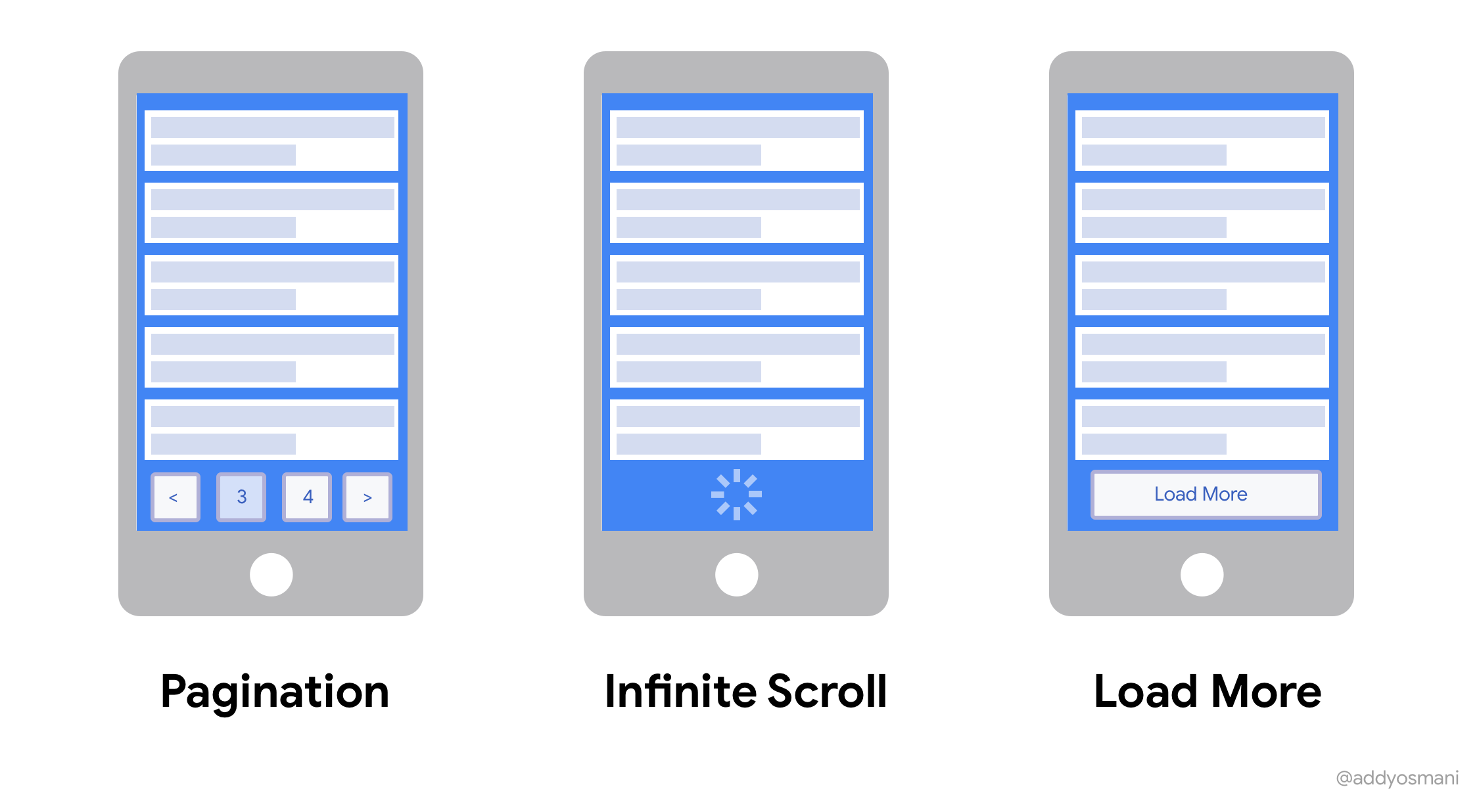
Infinite scroll

AddyOsmani.com - Infinite Scroll without Layout Shifts

The infinite scroll proved a path-breaking discovery in terms of innovation and social media app ideas. It is the social network equivalent of the auto-stream feature on video platforms like YouTube and Netflix. For anyone wondering how to create a successful social media app, this is where you start. Scientific studies have uncovered the workings of the exposure effect.

Long story short, the more often your brain views a certain (neutral) thing, the more it is disposed to like it.

While social media app users may not be aware of it but that is the methodology their brain is subjected to. As a social media app development company, we know too well how things come a full circle.

Offer likable content – develop user interest – customize content feed – keep at it.

Social reward mechanism

Dopamine, Smartphones & You: A battle for your time - Science in the News

One of the advantages of social media is that it lets people share their achievements, state of mind, and ongoing experiences. But there is another side to their personal story. Users rejoice when their friends join in on the act and engage with posts by likes, emojis and comments, and re-shares. The most used social media app, Facebook, has leveraged the power of ‘likes’ to its fullest on its subsidiary concern Instagram, with the competition following suit.

For social media app users likes and dislikes are the strongest indicators of the shareability of a post. Research posits accumulating likes on a post releases dopamine that delivers a satisfying kick.

This is nothing but a reward mechanism, something of an open secret to building a successful social media app.

Leveraging social urges

I urge everyone to maximize on leveraging social media because in this day and age, I don't think there is anything more powerful than that” — Naina Hussain, Illustrator and Co-Founder at

Social media app design ideas are guided by human psychology, at least in the current scheme of things! They integrate and to an extent, tap into our levers of social pressures to make us prolong the app use. Consider WhatsApp for instance. In what has been one of the most well-received social media app ideas of the last decade, its success prompted developers to zero-in on granular aspects of sociology.

By convention, humans feel obliged to respond if they know their message has been read. Therefore, when WhatsApp introduced the blue color read receipts, it integrated a feature that made people respond instantly. As a social media app development company in USA, we know how important such tactics are to the success of the venture.

Types of Social Media Platforms 

Alright, so it is clear what distinguishes successful social media ventures from those that flounder. Yet a few questions remain such as:

  • What types of social networking platforms are there?
  • What is the cost to build a social media app?
  • And, what programmable features should social networking app development companies pug-into such platforms?

Instant messengers and video curation platforms aren’t the only networking alternatives in the market, though they have come to dominate it.

We can classify social networks by their TG in the following brackets: 

1.  Network building apps

Modern Network Solutions | Future Of Networking | VMware

This encompasses Facebook, Twitter, and the LinkedIns of the world. Their USP is connecting people on either a personal or professional front.

2. Media sharing apps

Video Sharing Applications - Social Media Tools 2019 (1)

Networking isn’t all about opinion exchanges. Smartphones metamorphose our feelings into shareable content be it videos, images, or articles. This category focuses on such media sharing and has names like YouTube, Imgur, and Pinterest. 

3. Discussion boards

Discussion Board Best Practices | Learning Technologies at College of DuPage

You have multiple alternatives to voice questions, answers, and opinion pieces on networks like Quora, Reddit, StackOverflow, and lest we forget, Yahoo! Where it all began. 

4. Business review forums 

23 Absolute Best Small Business Forums the Internet Has to Offer

Feel you’ve been duped by a brand? Shout out your story to the world and offer a tell-all to others in the community. Websites offering such services include Yelp, Business.com, and the Expressit App.

5. Company review platforms

The Top 5 Sites for Employer Reviews & Ratings [2020 Update] | Ongig Blog

Since we are reviewing our purchase decisions, how about employers! This category has opened Pandora’s box in letting out insider information to the public. Examples include Glassdoor, Indeed, and the Muse.

6. Blogging networks

Мужчин блоггер: скачать картинки, стоковые фото Мужчин блоггер в хорошем качестве | Depositphotos

Content will always be the king. Networks like Medium, and Steemit reward writers for their work amplifying the unbending power of the letter.

7. Relationship networks

Relationship Networking: 9 must-read tips to build relationships on events

Their goal is to match profiles based on the registered biodata. From dating to hitchhiking, and rent-sharing, this bracket includes sites like Tinder, Badoo, and Airbnb.

Features Of Social Media Apps

Social Media Wisdom for Businesses & Start-ups | Features | Social Media Management | MN2S

If you are budgeting funds for the cost of social media app development, then it is better to first go to the drawing board and finalize the app’s features. This is not an overnight procedure but a well-defined loop that involves project management, custom development, business analysis, and quality assurance. Yet, speaking strictly of features some are universal in apps of such nature.

In our experience, the following specifications make the cut for all social networking apps of the day:

File-sharing

The platform must support multi-media file sharing

Multi-lingual support

If you plan to go global, then supporting target-region languages is highly recommended.

Privacy settings

Members should be able to customize their profiles and make public only the necessary facets of personal info.

Notifications

Send reminders to people of picking up where they dropped off.

Content personalization

This is more of a capability than a feature, the extent of which is directed by Artificial Intelligence and Machine Learning.

Comments, likes, shares

In trying to create social media apps, ensure that they allow cross-platform content sharing.

Audio content

This is the new audio based social media app feature. In audio only feature, the users are able to enter the chatroom only if they are invited. Example: Clubhouse

Infinite scrolling

One of the greatest advantages of social media is that people get to discover new content. Take advantage of this yearning and offer a limitless supply of scrollable dope.

Business changing powerful entities: AI and IoT

AI and IoT Blended - What It Is and Why It Matters?

Before autonomous drones and machine learning came into foray, James Cameron enthralled the world with his dream project The Terminator in 1984 where he introduced ‘Skynet’, a futuristic artificial superintelligence network that wants to replace humans with machines. Much has been debated about the film franchise ever since as scientists passed it off as a fan service action series, yet the seed of technological brilliance was sown. Whether Artificial Intelligence will take over the world or not, it certainly has given businesses a means of revolution and to readers/debaters like us, food for thought.

Another important piece of disruptive technology that is equally changing lives is IoT which expands to the Internet of Things. Like AI, the IoT has come of age. Its utilities include not just making smart homes but also wearable devices, smart vehicles and smart cities. The role of Artificial Intelligence and IoT in business is currently at its epitome.

AI and  IoT are redefining the way businesses used to perform. On one hand, AI with its powerful subset of machine learning, has paved the way for smarter task execution with real-time analysis and greater interaction between humans and machines; IoT, on the other, has upped the scale of communication between devices and humans via effective intelligent technology. The confluence of the Internet of Things and Artificial Intelligence makes each other’s applications more varied and powerful.

The merger: How AI and IoT joined forces

How is pairing IoT with AI technology helping organizations?

IoT accumulates large amounts of data through device connectivity via the internet and AI, especially through its powerful mechanism, Machine Learning helps in assimilating and evaluating this data. Machine learning in IoT devices helps to identify patterns and detect any faults in data collection through extremely advanced sensors. Intrinsic things such as stimulation to air, temperature, humidity, pollution, sound, vibrations, lights, etc. are derived with this technology over a period of time. Unlike traditional technology, IoT and machine learning make operational forecasts 20x faster with heightened accuracy. This is the reason why businesses that use AI technology sees a growth in their revenue numbers – a validation of which can be seen in the graph below

Revenues generated by businesses using AI from 2018 to 2025 (estimated)

AI’s role in IoT’s revolution has helped in a massive revenue boost which also means in the sale of more connected devices.

Below is a graph that shows how many IoT-powered devices were there in 2025 and the estimated curve predicts a huge nerve till 2025.

The demand for IoT is certainly going uphill. IoT, along with AI, are currently on demand by every business, whether it’s a Fortune 500 or a startup. Since there is no limit to either’s abilities, companies wish to use them to their full potential and unbridle their potentiality to the world. The following image draws a comparison among different technologies and shows which ones are the most trending.

As IoT keeps collecting data, AI takes the onus of converting it into meaningful and creative actions. Data exchange happens through sensors and in the process, a few of the following things happen:

  • Data insights are more accurately obtained, monitored and evaluated
  • The entire process becomes faster and more efficient
  • Surveillance against cyber-attacks is more defined and stronger

Advantages of AI and IoT in business

Together AI and IoT are unstoppable forces of technology. There are a lot of advantages which the two provide. The following elaborates the same:

Data collection, sharing and formulating user perceptions

Why NIH is beefing up its data sharing rules after 16 years | Science | AAAS

Data collection is extremely vital for a business’ growth and development. A business with an IoT strategy knows how technology can transform data compulsion by offering greater access to consumer information. AI makes it easier to handle that information. IoT devices have this unique mechanism to track, record and observe patterns in a user and his/her interaction with the device(s). Businesses use the acquired data to devise better means to enhance consumer experiences.

Elimination of downtime

5 ways to reduce downtime while at work – Take It Personel-ly

Oil and gas manufacturing organizations use heavy machinery which can suffer unseen/unplanned breakdowns. This causes downtime that can incur huge losses. Having an AI-enabled IoT platform makes it possible for predictive maintenance. It helps in anticipating machinery failures and breakdowns in advance by utilizing the analytics so that you can plan a course of action beforehand and not let your operations get affected.  A study by Deloitte led to the following conclusions-

  • 20-50% reduction in time taken for maintenance planning
  • 5-10% cutback in maintenance costs
  • 10-20% increment in equipment availability and uptime

Strengthening security measures

Your Single Source for Cybersecurity Resources | SoftwareONE

With the current rise in data breaches and theft of confidential information, security and safety are the most concerning factors for a business. IoT powered by AI provides militant support to your private information and doesn’t allow third parties to intrude. Machine-to-machine communication is being facilitated by various organizations to detect incoming threats and give out automated responses to hackers. A common example could be in the banking sector where illicit activities in ATMs are picked up by IoT sensors and conveyed immediately to law enforcement bodies.

Automated operational efficiency

4 Tips for Better IT Operational Efficiency | Ayehu

IoT deployment streamlines your business and helps in making accurate predictions, all of which are extremely crucial for improving the efficiency of the business. Placing your money on the Internet of Things investment is very necessary in today’s time as the technology also helps in giving you insights into redundant activities and the ones which are consuming a lot of time. A good example will be Google’s reduction in expenditure in  cooling their data centres which they could do with AI and IoT. Like Google, you too can find out which of your operational activities need some fine-tuning so that efficiency is not neglected.

Helps in processing business analysis

5 Business Process Analysis Techniques to Know | ProcessMaker

There needs to be a fine balance between demand and supply. AI helps in improving inventory management and letting go of the pressure on the stock as it will help you to know in advance when you need to restock. This provides an important aid to retailers as they at times hoard too many products to find out later on that all of them cannot be sold. This proves how accurate it is than manual methods. There are IoT applications which help them in gathering the data and analytics for the maintenance of stock.

Better at Risk Management

The Intelligent Banker needs better Risk Management - Vamsi Talks Tech

Earlier we mentioned how AI and IoT help in maintaining cybersecurity. When it comes to risk management, which includes handling financial loss, personnel safety and cyber threats, the pair effortlessly deal with situations and give out prompt responses so that such situations do not arise. For example, Fujitsu, a Japanese IT equipment and service provider makes certain worker safety is maintained through data collected from wearable devices with the help of AI.

Scope for new and improved products and services

Product Illustration for people who don't know anything about product illustration | by Meg Robichaud | Shopify UX

The Natural Language Processing (NLP) technology which aims to improve communication via speech, text or gestures has augmented the transmission of information between humans and devices. AI-powered drones and robots give a whole new meaning to monitoring and inspection which never existed previously. It helps to fetch data that a human may never be able to do physically. This proves how strong the IoT and AI future is. For commercial vehicles, it helps in fleet management by monitoring every measurable information. Rolls Royce is a great example of AI-powered IoT use cases. Plans to use AI technology to implement IoT-enabled aeroplane engine maintenance needs. This will help in creating perceptual patterns and help explore in-depth insights.

Examples where AI and IoT are showing brilliance

Now that you’re aware of how AI and IoT solutions help in leveraging business opportunities, let us mention a few examples from real-life instances to prove how the role of artificial intelligence and IoT is helping to create new business models and provide better user experiences. Many of these examples also make up for the most cutting-edge and futuristic trends to watch out for.

Wearables

Best fitness tracker 2021: top picks for all budgets

By now you must have heard how wearables play a key role in the current IoT scenario. Fitness trackers, smartwatches, wearable panic buttons, remote monitoring systems, GPS trackers and music systems are some of the most popular examples of wearables which take up a large part in the IoT ecosystem. You need to simply download IoT applications in your smart devices to get the most precise information.

Robotics

Failed Startups: Rethink Robotics

The manufacturing industry was in dire need of adopting AI-focused IoT solutions. This helps in facial recognition, deep learning, big data analytics and especially robotics. Robots and robotics have always been the frontrunners of technology for decades and now, with the passage of time, they have become smarter, more reliable and more efficient. Through implanted sensors meticulous communication is facilitated. Using the fusion of AI and IoT, robots can learn and adapt to newer environments with precision. This makes the manufacturing process linear and saves time and money.

Smart Homes

Amazon Echo vs. Google Home: Which Voice-Controlled Speaker Is Right for You?

The smart home ecosystem is growing and is currently valued at $91 million. It’s one of the most pleasing activities of technology where you do not have to get and go to a particular appliance and operate it. The AI-powered IoT technology enables the controlling of your light, fans, television, thermostat, ACs, etc. through your phone. Not just inside but even if you’re travelling outside, say to an outstation and you need to check whether an appliance has been wrongly set on, you can do it with a simple command. Or if you’re returning home after a tiresome day at work and need a bath, you can set the temperature of the water say 10 minutes before you reach home.

Self-driven vehicles

Elon Musk: Tesla raises cost of 'self-driving' cars - BBC News

The thought of autonomous cars and vehicles seems exciting and thrilling at the same time. With powerful sensors, installed cameras and robust hardware and software integration, a car gathers monumental information roads, traffic, additional routes, navigation, weather conditions, consumer behaviour and whatnot. Self-driven cars are the perfect examples that will highlight the role of artificial intelligence in future technology. One major concerning factor is safety. Many will face apprehensions over their initial journeys in driverless cars, but that’s what the whole game is about. It has mindblowing learning abilities and high-powered AI mechanisms that will give priority to the passenger’s life at all costs.

Amazon Go

Amazon Go - Wikipedia

This is truly a masterstroke in AI technology use. To support its retail outlets, Amazon uses IoT to make the shopping experience more convenient for the user. With no cashier or even cash counters, the sensors present will optimise the entire process. For example, sensors are used to determine your activities. Like a supermarket or retail outlet, items are arranged and when you pick up any product, it automatically adds it to your cart and the moment you keep it back, it’s removed from your cart. It connects to your payment mode(s) so when you leave the store with the items, the total amount is debited from your account or online wallet. Just like self-driven cars, they used computer vision, deep learning algorithms and sensor fusion, procreating the ‘Just Walk Out’ technology.

Healthcare

Leading Healthcare Management Software | Serviceware SE

This is currently the need of the hour. With the Coronavirus pandemic, everyone has become extra cautious with their health and technologies like AI and IoT are leveraging the entire healthcare system. The IoT applications and deployments powered by AI help in collecting data to provide preventive measures for a person/patient, early detection and providing drug administration. It draws data from internet-powered medical devices, medical records, fitness trackers, healthcare mobile apps, etc. Many healthcare companies around the globe are making IoT investments so that people stay safe under such hazardous conditions.

Smart Cities

Technology Research for Smart Cities, Buildings, Infrastructure | ARC Advisory Group

This is the biggest example to show the prowess of the AI and IoT pair. If it is able to maintain civic decorum, then it speaks volumes about technology’s success. Things like smart traffic management, smart parking, smart waste management, smart policing, smart governance and many other factors are the components which constitute a smart city. The Internet of Things for smart cities  changes the way cities operate and delivers amenities to the public which includes transportation, healthcare, lighting, etc. Smart cities are arguably a futuristic concept and have a lot of ground to cover. The above video explains how three cities have successfully implemented it.

There are many IoT application development company who have done a tremendous job of integrating the technology into various business types and creating something unconventional out of the banal scheme of things. AI is truly reinventing IoT along with other modern-day techs, and businesses that are vigorously using this technological emergence only have good things to say. No second thoughts need to be spared to explain — The future of IoT is AI and will remain so.

Working with SQL Server Azure: Read and Know

As a new version of SQL Server is under preview these days i.e. 2016 Preview and soon will be out for use. It might be possible that you would be wondering why SQL Server @Azure and how it’s different than traditional on-premises Server.

Those who have already gone through the process of purchase, downloading, and installation can understand the pain caused by it.

So here it is with

–          No license purchasing

–          No worry about new release

–          No long hours of installation

–          No need of latest compatible operating system

–          No worry about disaster recovery

–          No worry about availability and scalability

And the list goes on…..

Visit Azure portal get an account, create your server in the blink of eyes and start digging into it.

Let’s create a SQL Database @Azure…

  1. Login to Azure portal [if don’t have a subscription please get one, don’t worry its free for one month which is good enough to enjoy the benefits of cloud and make an informed decision]
  2. Create a Database and a Server for it
  • New > Data Services > SQL Database > Quick Create
  • Provide a name for Database
  • Choose a Server [if it’s your first DB then select “New SQL database server” else choose one from the drop down list]
  • So if you choose to create a new database server you will get some more cool options to choose from such as
    • Provide the Region [yeah these are the location which Microsoft has got its data centers]
    • Login Name for server
    • Password for Login
    • Click on “Create SQL Database”

Hey look it’s there under “SQL Databases” option on the left menu

  Get your connection string

  • Select Database from Database List
  • Click on “Dashboard”
  • Click on “Show Connection String”

4.       Start consuming it from you application using any of technology you love

Blockchain Projects Ruling the Decentralized Economy- Guide

The rising profile of blockchain in academe

Blockchain has come a long way since it was described by Stuat Haber and W Scott Stornetta back in 1991. The technology has become one of the biggest innovations of the century and has given rise to various new possibilities in different sectors and industries. Say it fintech, retail, healthcare, enterprises, real estate, or supply chain.

A clear evidence of which is that today, almost every entrepreneur, digital marketer, and even blockchain development firm is showing an interest in learning the basics of blockchain technology and looking ahead to entering the space. And eventually, getting a slice of the market which is anticipated to be valued USD 39.7 Bn by the year 2025.

They have also begun looking into the latest blockchain trends and the best business models top players are working with.

However, most of them are missing one main point.

With the growing popularity of the technology, different ways to embrace it for business transformation are coming into the limelight and so, the kinds of blockchain projects; making everyone intrigued to know which of these types is destined to aid them in leading the digital environments in 2020. Something that you will come to know by the time you reach the end of this article.

So, shall we begin?

[Just in case you want to take a recap of the role of blockchain on the industries, check our blog on ‘the impact of blockchain on the economy’.]

Explained: The 5 Categories of Blockchain Projects 

1.  ‘Fear of Missing Out’ Blockchain Solutions

4 Most Exciting Blockchain Projects to Watch in 2020 – skalex.io

The first kind of blockchain solutions that are getting developed these days is FOMO (Fear of Missing Out).

As depicted from the name, this type of projects are brought into life just to ensure that companies do not remain behind in the market. They have not held any meeting and discussed its role into their traditional business model and the possible outcomes they would derive from it in a particular time span. Or even looked into whether investing in blockchain app development is beneficial for them.

Rather, they have just taken this step just to show that they are innovative and work with the latest technology trends impacting the business world.

These kinds of projects, as you might have guessed so far, do not create much value for the business and remain a marketing act for the company. It just increases the chances of your target audience giving a second look to your business products/services or competitors fear of missing out and take the same step.

What’s more, the poorly planned blockchain projects might overburden the existing business ecosystem and demand additional costs. This can make leaders conclude that they ‘tried and failed’ blockchain or doubt on its future. Whereas, the only problem is that they kept on focusing and investing on the wrong use case of the technology.

2.  Opportunistic Solutions

The 5 Kinds of Blockchain Projects (and Which to Watch Out For)

The second category in which blockchain projects fall is Opportunistic solutions.

These types of blockchain solutions are devised to solve any known problem, especially related to record-keeping. They add value to the business, even when not being operational for a longer period of time.

The only problem associated with this project type is that one might lose control over data and contracts later.

When looking into the real-life examples of Opportunistic blockchain projects, the blockchain solution developed by the Depository Trust and Clearing Corporation (DTCC) to regulate records from credit-default swaps is the right one to consider.

3.  Trojan Horse Projects

Transforming Food Supply chain with Blockchain and IoT - DreamzIoT

Trojan horse projects also landed into the list of type of blockchain business ideas gaining momentum this year.

These projects, just like trojan horses, are attractive, backed by respected brands and address the usual and wide-reaching problem in a particular industry. But, they demand users to share their sensitive information and transfer some control in such a way that results in market consolidation for the prime blockchain owner. So, it is required to invite different groups of people/ecosystems to participate in its processing.

A potential example of a trojan horse blockchain project is a food-tracking blockchain system. This system run by blockchain, unlike the traditional centralized ones, take comparatively less time and effort to determine the point at which the food items were adulterated/replaced, the people responsible for the same, and prevent it further. It enables users to access the records in real-time and prevent dozens of people from falling sick or suffer in other ways. But only when the participants are ready to share their personal information on the network.

These kinds of projects are quite effective. However, there’s a risk involved with considering these projects. They become reliant on the owner’s technology and locked in to the contract terms. But, with the passing time, they gain more control over the market because of having heaps of user data.

Also, the business currencies involved in the ecosystem where Trojan horse blockchain projects exist usually trade at a much higher risk level for the participating users.

4.  Evolutionary Blockchain Projects

UEFA Champions League | UEFA.com

Another type that business leaders focus upon is the evolutionary blockchain project.

As the name suggests, these projects evolve with time. They are designed to improve over time so as to employ tokens with decentralized governance.

One example of such kind of blockchain software/applications comes from UEFA – the central committee for European football. UEFA works with two Swiss technology companies, TIXnGO and SecuTix, to create an evolutionary blockchain platform that drives a more equitable and safer market for the sales of football tickets.

The blockchain-powered platform encourages ticket buyers to download the SecuTix and TIXnGO applications. Here, the tickets are tokenized so as to keep a real-time record of the ticket purchase and connect it to the ownership details.

In case someone wishes to give away their ticket to a friend or colleague, they can do it through the application, which then stores the record of the transfer in the blockchain ecosystem. And if they wish to send it to anyone in the open market, the SecuTix platform can help them by defining that markup resellers are empowered to charge. This, as a whole, ensures that no unreasonable pricing is being asked or illegal brokers come into play.

Besides, the secondary market for tokenized tickets could mature into a decentralized sales network with time, such that it brings all the second ticket sellers at the same place.

When compared to trojan horse blockchain projects, the business currencies in this type can trade at a comparatively low risk level for the participants.

5.  Blockchain-Native Solutions

Enjin | Blockchain Product Ecosystem

Last but not least, blockchain native solutions are also among the type of projects business leaders consider in 2020.

Designed by startups or extended teams of existing organizations, these projects are meant to bring forth a new market of opportunities or disrupt an existing ecosystem. They might begin with different perspectives and facilities, but are supposed to move in the direction of tokenization or decentralized governance with time.

When talking about blockchain-native project types, the two industries that come to the limelight are Education and Sports.

In the Education sector, these projects emerged as a non-profit digital education society where students and teachers from different parts of the world could come together and relish the perks of higher education without worrying about learning exchanges or payments. The best example of which is Woolf University, the one founded by a group of scholars from Cambridge and Oxford and known as the ‘decentralized Airbnb for degree courses’.

Likewise in the gaming sector, these projects enable users to create their own tokens to support their favorite games and players. A perfect example of which is Enjinn.

The Blockchain native solutions introduces new business approaches into the market but comes with major currency risks. Because of this, they are preferred only by those who wish to manage their own data and experiment with the concept of decentralization independently.

Now while the definition and approaches of the different kinds of blockchain projects might have helped you with understanding which one is the right pick for your business, you can reach our blockchain consultants to know further. Our team has years of experience in helping startups as well as established brands from different industries to determine the right way of integrating blockchain into their traditional system and reap higher benefits. And that too, without worrying about the hidden business and tech-based challenges.

Failure of On-Demand Platforms- Reason & Solution

Forecasting the future of your on demand service platform and importance of having a plan to scale it - Odtap

The glaring success of the on demand era has given birth to a school of thought among the tech community. They have started believing that following the uber business model and entering the on demand industry will be the only move that is keeping them from reaching complete success.

While it has worked for a number of businesses like GrubHub or Airbnb, the number of businesses that have failed are also extremely huge. In fact, if you sit down to make an excel sheet comparing the on demand services fail vs success ratio, you will find that the number of businesses that struggled to survive were more than those which didn’t.

But does this mean that you should give up hope on your on demand platforms’ business success and give up? Of course not. What it implies is that when you plan to succeed in the crowded on demand market, you should also factor in the reasons behind the application’s failure.

The intent of this article is to help with just that.

Table Of Content 

  1. Understanding Uber’s Success in the on demand sector
  2. The List of on demand Brands That Failed Miserably
  3. Reasons Behind on demand Business Failure
  4. How Can on demand Businesses Save Themselves From Shutting Down Prematurely?
  5. Conclusion

Understanding Uber’s Success in the on demand Sector

Uber Loses License to Operate in London - WSJ

When you dissect the on demand economy, you will find that it is mainly built on three building blocks: delivery immediacy, consumption passivity, and a fixed cost. Uber did not just ticked all the three boxes of the on demand business model, but also aced some other factors that helped it build a seamless ride booking user experience.

Here are the two factors which added to the brand’s success, making it one of the most successful on-demand companies:

  • The company operates in populated urban cities where there’s enough liquidity for making the marketplace work.
  • The customer base were already very familiar with trusting a stranger to take them places. Thus, creating a trust in the market was never a problem.

The Uber model doesn’t care about the transaction’s intimacy aspect nor about the disintermediation challenges. Imagine once you on demand home service app users find a person they like for cleaning their house or planning their kids, how would you stop them from contacting those service providers directly, without going through your application? This disintermediation when continued can lead to greater burn, churn, and in some cases extinction of the business.

Since the Uber model didn’t include the need to care about intimacy, they could survive and grow on a much greater speed. But not every Uber-like story has a happy ending. There are a number of once top in the game on-demand platforms that have fallen owing to the on-demand challenges.

The List of on demand Brands That Failed Miserably 

1.  Happy Home Company 

The Happy Home Company | LinkedIn

Happy Home Company was a twist in the otherwise traditional home service market. The idea behind the brand was to offer users home maintenance plans which included recurring things that had to be kept in top working conditions. Inspite of bagging $7 million from investors, Happy Home’s founder wrote a shutdown letter which stated, “Ultimately we weren’t able to make the transition from a scrappy startup to self-sustaining company.”

2.  Pronto

Team Communication Software | Pronto works better

The business was set out for helping people get healthy meals faster. The UK based service had the work with the intent of connecting the users with chefs while enabling food delivery in under 20 minutes. It had every element to make it one of the most flourishing on demand delivery apps. Even though the idea sounded good to investors and adopters, the company couldn’t keep up with the promotion budgets of Uber and Deliveroo – one of the very commonly occurring on demand challenges.

3.  Workers On Call 

Why call centre workers love to use your name – and why it's really annoying

AI has changed the face of work, this is something that has been established over time. The Workers On Call services used AI systems for streamlining matching of employers with freelancers who needed jobs. The application that boasted of freelancers getting matched and started to work in under 30 minutes, although backed by a powerful vision, was a little ahead of its time. The brand even after raising $30K funding, signed off with a tersely message saying, “Bye Bye. Sorry Workers On Call is closed.”

4.  Homejoy 

Homejoy shuts down amid lawsuits over worker misclassification – The Mercury News

One of the textbook examples of failed the businesses is Homejoy. Started with $20,000 seed funding in 2000, the business became a big name in 2013 when it raised $38 Millions – making it one of the most successful on demand startups. But soon the customers started failing to convert past their first booking. In fact, only 15-20% people re-booked in a month. The numbers were simply not enough for the brand to survive. Add to this the legal battles against classification of workers a s independent contractors led to the business’s death in 2015.

[Further Read: Why Did HomeJoy Failed]

The truth of the hour that still remains is that even after these on demand platforms failure instances, the fact how the internet has trained consumers to get services in real-time is not stopping budding entrepreneurs from entering the on demand economy. But how can businesses ensure that they are not destined to become yet another name in the list?

While one way to get some satisfaction would be to partner with an on demand software development company that has worked with the inception of popular on demand businesses, it would also help to know the on demand services failure reasons that can lead to their failure.

Reasons Behind on demand Business Failure

1.  High Competition

Is competition in the workplace good or bad?

The upsurge of hyperlocal service demand has led to a rise in demand of on demand services attending to the complete needs of their customers. One way entrepreneurs are competing in the market is by lowering their service costs. This, in addition to the high operational costs of transportation, infrastructure, and labour has been keeping on demand startups from flourishing.

2.  Reluctance among Venture Capitalists 

Building Radar: Silicon Valley investor funds Bavarian technology start-up - Invest in Bavaria

With on demand failure stories shooting off the roof, investors have started becoming wary of where to put in their money. As it is, getting funded on your application has been a difficult process and when you add in the unsureties that the sector now comes with, the probability of raising money lowers even further.

VCs are now becoming all the more cynical about the startup’s longevity. Businesses that are promising a strong long-term vision with a cash flow picture backing it have become the only answer to the types of apps investors will be backing in 2020.

3.  Product Incompetence 

Article: Overcoming the Unconscious Incompetence Hurdle at Work — People Matters

If there is one event that follows every successful startup, it would be the fact that competitors are soon to follow. The value that your business once offered starts getting challenged and bettered by the competitors. This, in turn, is leading to the product becoming incompetent in the market, irrespective of the efforts that went behind on demand app development services.

Brands that are failing to keep up with the changes with timely pivots are soon finding themselves crawling out of the on demand space.

4.  Inefficient Resource Set 

Human Resource Insights #2: 4 Signs of Inefficient HR Departments | Credait

The lack of an experienced set of people can most often than not result in the failure of on demand companies. The same applies for the on demand industry. Irrespective of which on demand domain you pick, you will find that the ones that survived were known for their skilled workforce. A lacking on this front can lead to on demand business losing their worth in the industry and thus get closer to their demise.

5.  Not Being Able to Solve Real Problems 

6 Ways to Enhance Your Problem Solving Skills Effectively

A number of on demand companies that fail deal with band-aid type of problems in place of emergency room type problems that make the solution extremely non attractive to the end users. Example: For example, imagine an on demand car wash service. Just how frequently would users demand the service? But the expenses a business will have to make to keep it afloat would be huge. In short, the business neither ends up being cost-efficient nor effective.

6.  Under or Over Valuing Demand and Supply 

Demand And Supply Balance On The Scale. Business Concept Royalty Free Cliparts, Vectors, And Stock Illustration. Image 87121470.

The last in our list of reasons that tend to lead directly to business failure is under or over valuation of demand and supply that your on demand business would garner. Businesses, more often than not undervalue the demand that they would attract and thus plan low on supply. Likewise, they at times think too much of demand and end up with an underutilized supply of resources.

Now that we have enlisted the most common reasons behind an the app business failure, let us dive into the way outs – how can on demand businesses prevent this fate.

How Can On demand Businesses Save Themselves From Shutting Down Prematurely?

Market Expansion

A Complete Guide to Market Expansion Strategy – Welp Magazine

One of the biggest issues with today’s top-on-demand businesses is that they don’t expand from their existing markets. The entrepreneurs who are very new to the industry end up being limited to a pool of loyal customers and don’t think of expansion opportunities. The problem with this is that the moment a new competitor with deep pockets enters the market, the probability of them getting out of business increases.

Here’s a look into the expansion roadmap that we generally share with our clients when we assist them with on demand app development.

Make Your Customer Needs Your Bible 

Build Your Business on Faith: 55 Bible Verses About Business

In the fight between what you can offer and what your users need, your offerings should always prevail. Although it can be a sweet attraction to invest in tomorrow’s big need, it can be extremely unwise to let go of your customers’ present day needs.

The truth is that you will get a multitude of opportunities and time to pivot your startup. But what you won’t get is the current time and your users present day needs. Getting insights into this information is what a sound on demand mobile app development company can help you with.

Think of Being Monetarily Prepared First 

The matter of the modern day fact is that it is very difficult to get funding on an application. No matter how well propositioned your application is or how green your cash flow statement looks, there is zero guarantee of you getting funded.

The solution on this front can only be to look into alternate financing options and not remain limited to VCs.

Conclusion

The growing cases of on demand industry failures have led to the sector getting the image of being a house of card. The only way for entrepreneurs to enter and succeed in the domain would be to do extensive user research. One way we suggest to achieve this effortlessly can be through the mode of product design and development sprint – one of the key practices that on demand app developers follow.

error: Content is protected !!