JVM Language for 2020- Choose Kotlin vs Scala

Kotlin vs Scala: What Measures Slither Them In Popularity Over Java?

One man’s misery is the fortune of another”. This saying has become true for the JVM world. With the fall of Java – the programming language that entered the market in 1995 and changed the complete story, various other languages are gaining huge momentum. Developers have not only started using those JVM programming languages, but have also proposed them as the right Java’s alternative for app development.

Three of such programming languages that are enjoying limelight in the market are Kotlin, Clojure, and Scala.

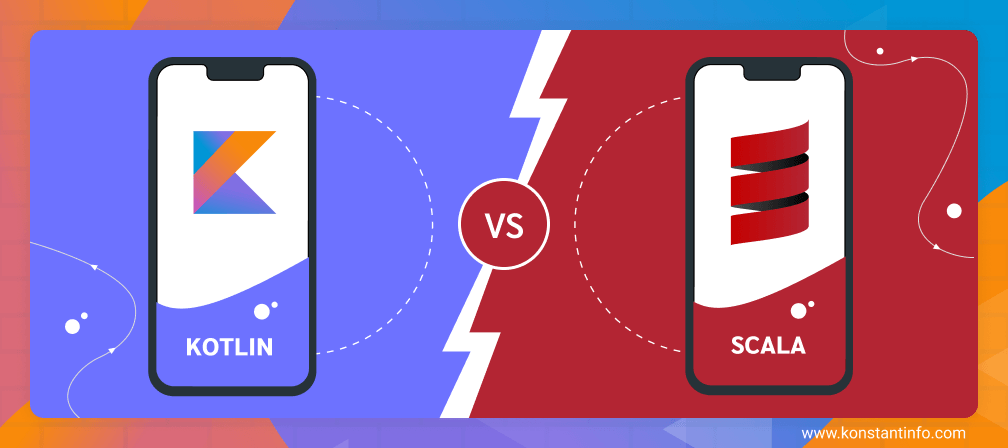
While we will talk about Clojure some other day, let’s focus on the ‘Kotlin vs Scala’ battle today.

Here, in this article, I’m going to paint a picture of ‘What’s what’ scenario to help you make a smart and profitable decision of switching from Java to other JVM language on yourself.

TABLE OF CONTENT

  1. What is Kotlin Programming Language?
  2. A Concise Introduction to Scala
  3. Kotlin versus Scala: A Detailed Comparison of Java Alternatives
  4. Kotlin vs. Scala: Which is Right JVM for 2020?

So, Let’s dive into the Kotlin world first.

What is Kotlin Programming Language?
8-Minute Crash Course on Kotlin Programming Language. | by Tanu N Prabhu | Kt. Academy

Kotlin is an open-source, cross-platform, statically-typed programming language developed by JetBrains in 2011. It was recognized as an official Android programming language by Google back in 2019 and has reached the latest version, Kotlin 1.4.

[As we have mentioned about cross-platform nature of Kotlin above, you can learn about it in detail here –  Kotlin Vs Flutter: Who Will Rule the Cross-platform App Market? ]

The language offers developers with ample benefits as an answer to Is Kotlin better than Java. A few of which are as follows:-

Benefits of Kotlin Programming Language

1.  More Reliable

5 Strategies to Achieve More Reliable Service - Simplesat

Unlike other conventional languages like Swift, Kotlin has undergone various Alpha and Beta stages before entering into the market. Because of this, the latest version of Kotlin is highly mature, compatible and reliable to operate with.

2.  Kotlin’s Higher Development Speed

The Benefits of CRM for Business Banking - Salesforce.com

Kotlin encourages developers to perform any functionality by writing a less number of code lines. This not only enhances productivity but also speed up the app development process.

3.  Fail-fast System

Speed Wins: Fail Fast, Fail Cheap ! – Business Audit Compliance

Another advantage of going with Kotlin language is that it avails a built-in fail-fast system which reduces the risk of errors in coding.

4.  Easy to Maintain

Easy To Maintain - Designation Icon - Free Transparent PNG Clipart Images Download

The language offers extensive support for various IDEs including Android Studio. This makes it possible for developers to build solutions on different platforms and maintain them timely.

Because of such advantages, Kotlin programming language has received support from various recognised brands. A list of which is as follows:

Limitations of Kotlin Language

1.   Less Kotlin Developer Experts Available

The Retail Revolution: 5 Ways to Adapt, Survive, and Thrive – MarketBridge

Despite the sky-high popularity of Kotlin, there are only a few programmers with expertise in Kotlin development in the market. This is the prime limitation of considering Kotlin for JVM based application development.

Now, before you find yourself inclined towards Kotlin language, let’s jump to Scala.

An Overview of Scala Programming Language

Scala (programming language) - Wikipedia

Designed by Martin Odersky back in 2004, Scala is an open-source language that facilitates a perfect blend of object-oriented and functional coding in a statically typed programming environment. The language was devised to address the cons of Java programming language in terms of general-purpose and thus, can be an ideal Java alternative.

Scala, whose latest version is 2.13.1, is highly appreciated by various reputed brands, including:-

And the prime reason behind this is the following set of benefits it avail.

Pros of Going with Scala

1.   Statically Typed

Dynamically typed vs statically typed languages | by Haydn Morris | Medium

Scala comes with a highly expressive typing system that demands application of statistical abstraction in a particularly consistent and secure manner. Primarily, the type system supports:

  • General Classes
  • Upper and Lower typing limit
  • Clearly written self-references
  • Polymorphic methods
  • As a member of internal class and abstract type items
  • Variable Annotations

2.  Concise Coding

Creatively Concise Coding | by Brian Foutty | Swift Teacher | Medium

One of the prime reasons why Scala is gaining a huge momentum these days is because it is highly concise. The language, when compared to other programming languages like Java, requires less number of code lines to perform the same activity.

3.  Highly Scalable

Quickly building an highly scalable and customizable real-time chatting platform on AWS | by Rahul Golwalkar | Medium

Another advantage of Scala-based development is that it is highly scalable. Developers can merge different paradigms and introduce a vast range of features into the development environment while working with this JVM language.

4.  Typesafed Language

What is Type-safe? - Stack Overflow

Scala emerges as a good resource in terms of type safety. Besides, it enables you to create your own data types on the top of primitive ones and write a DSL for your project.

5.  Enhanced Quality

Enhanced quality of product without costly design flaws – Ananyaimpex

Since a minimum number of code lines are written in Scala environment, it becomes easier for developers to deliver a bug-free experience, a.k.a, get better results from the Quality assurance process.

6.  Multi-Platform Presence

How Multi-platform publishing can manage your social media presence for you? -

Though Scala primarily targets JVM platforms, it can be a good option for creating software that runs on multiple platforms.

Cons of Preferring Scala

cons – Thinkexam Blog

1.   Difficult to Understand

Since Scala codes are an amalgamation of functional and object-oriented concepts, the information sometimes gets a bit hard to comprehend.

2.  Slow Compilation Speed

Another disadvantage of Scala is that it takes a longer time to compile complex codes. This results into slow compilation speed when compared to what is observed in the case of Java or Kotlin.

3.  Issues with Binary Compilation

It is not binary compatible with a few versions. For example, a code that is compiled with Scala 2.1 might not compile with Scala 2.11. This is yet another limitation of picking Scala language.

With this, you have gained all-inclusive information about the two JVM titans. Which implies you might be curious to hop over to the difference between Kotlin and Scala to see which one wins the JVM war.

But, wait.

Before we move on to the section where we compare Kotlin and Scala, let’s have a quick look at how Kotlin’s an improvement over Scala, and vice-versa.

Kotlin versus Scala: A No-Nonsense Comparison of Java Alternatives

1.   Market Popularity

Coronavirus Crises to Drive the Global Empty Capsule Market Outlook 2020- Global Trends, Size, Investment Share, Regional Trends, Analysis by Top Companies and Industry Forecast to 2023 | Medgadget

Kotlin, with support of Google, has achieved success in making its presence dominant  in the market much faster than expected. As per Google trends, there’s a surge in searches related to Kotlin when compared to Scala. This gives a clear indication that Kotlin is more in trend than Scala.

But, if you focus entirely on the job posting platform, you will come across the fact that Kotlin is behind Scala with significant numbers.

Likewise, if you check for the developers’ salary for distinguishing Kotlin vs Scala, you will realize that the values are much uniform.

This, as a whole, concludes that both the languages are far popular and liked by the developer community in one way or the other.

2.  Ease of Learning

Computer Vision Syndrome: What Is It, and How Long Does It Last? | NVISION Eye Centers

Scala is a powerful language with highly-advantages features and flexible syntax. So, it is quite difficult for newbies to get their hands on this JVM programming language.

But, it is not in the case of Kotlin.

As reported by Java developers in various organizations, one can easily understand basic Kotlin syntax in just a few hours and start coding within 1-3 days. Also, Google introduced free Kotlin courses for Android developers, which again streamlines their journey in the Kotlin market.

So, the winner of Kotlin and Scala war is the former, if the entire focus is on ‘learning curve’.

3.  Functional Programming of Kotlin and Scala

An Adequate Introduction to Functional Programming - DEV Community

It’s true that both languages are known for their functional programming paradigm. But, when it comes to looking into Scala vs Kotlin comparison in terms of functional programming, the former wins.

Scala is more swayed by functional programming languages like Haskell than Kotlin. It encourages the use of functional coding along with some additional features like pattern matching and currying. Besides, the attempt of possible functional programming is more considerable in the Scala environment.

4.  Pattern Matching

12 of The Best Wooden Toys for 1 Year Olds | Toys for 1 year old, Educational toys for toddlers, Wooden toys

As already unveiled above, Scala offers better opportunities for pattern matching than Kotlin. Its match statement enables developers to match any type of data, including its own. Also, it shows full support for higher-end and macros types.

A result of which is that Scala is termed as “Java’s switch on steroids” and is considered as a good fit for Big Data processing tasks.

5.  App Performance

3 Mobile App Performance Issues You Can't Ignore | Application Performance Monitoring Blog | AppDynamics

Though app performance depends highly on the nature of the app, let’s consider an Android application for comparison of JVM languages.

Scala is a good option for employing highly scalable Android app development services. Whereas, a Kotlin-based application will be easy to code and debug. As a consequence, app performance will be higher in the case of Kotlin when compared to the other JVM language.

6.  Inline

In the case of Scala, you are required to request the compiler to inline a method by annotating it with @inline.  For example:-

@inline final def f1(x: Int) = x

Here, the compiler has the choice to see if the function is actually inlined or not.

But, in the case of Kotlin, the compiler will automatically consider functions with ‘inline’ keyword as inline. It is the developers’ responsibility to be careful with manual inlining to prevent the risk of inlining duplicates. Something that makes developers favour Scala over Kotlin for using inlines.

7.  Null Safety Management Efficiency

One of the prime reasons why developers are showing an interest in other JVM languages is that they offer a better facility to handle hate-bound NPEs (Null Pointer Exceptions). So, it is again the main factor to consider while deciding the right Java alternative.

When comparing Kotlin with Scala, the latter’s approach is quite incompetent. One has to introduce null values with the option in Scala programming, which further adds to code complexity.

So, clearly, the winner of the battle here is Kotlin.

8.  Operator Overloading

How to work with operator overloading in C# | InfoWorld

Though Java does not support Operator overloading, both Kotlin and Scala come loaded with this functionality. So, it is again important to consider this factor to know whether to choose Scala or Kotlin for JVM-based development needs.

Kotlin focuses on making a balance between power and readability. It empowers developers to overload the basic operators, but refrain them from defining new ones. This makes it easier for one to understand Kotlin operators (even to novice developers), but reduces the flexibility.

Scala, in contrast to Kotlin, goes with quite a lenient approach to operator overloading. This makes it easier for developers to write more human-readable codes, and thus, makes it a good fit while creating internal domain-specific languages. But, at the same time, it can result in confusion if used incorrectly.

9.  Java Interoperability

Munich Clojure Workshop - 04 - Java Interop - Speaker Deck

Though both Kotlin and Scala are interoperable with Java, Kotlin leads the show if you wish to maintain full compatibility with existing Java-based projects and technologies.

Kotlin is designed to be 100% interoperable with Java. So, you can easily call Kotlin code from Java and vice-versa effortlessly. Likewise, you can employ existing Java-based frameworks like Java Server Faces (JSF),  and ‘Vert.x’ framework while considering Kotlin for server-side development.

Whereas, when it comes to Scala, accessing Java classes in the development environment is easy. But, it is not possible to call Scala classes in the Java environment, especially when working with advanced features of Scala as they might lack Java equivalent.

10.  Libraries and Frameworks

When talking about libraries and frameworks, both JVM languages are doing wonders in the market.

On one hand, Scala – taking advantage of its long span in the market – facilitates developers with a wide range of libraries and frameworks to work effortlessly with APIs and applications. This includes Cats, Slick, Shapeless, Akka, and Play Framework.

While, on the other side, Kotlin has also come up with a lot of offerings in terms of community libraries & frameworks. A few of which are Ktor, Exposed, and Arrow.

11.  Documentation

Javascript Code Documentation - My Approach to Documenting Project

When talking about Scala, its API documentation is simple, straightforward, and well-structured. It offers search functionality and an option to restrict the number of displayed elements with a filter. However, sometimes you might find it  tough to search for pages on a particular topic.

Whereas, using the Kotlin API documentation is a bit tiresome. There’s no search function or filter option. However, it comes with a reference which explains all the concepts in a detailed manner (with examples). This helps Kotlin remain in the competition to Scala in terms of documentation.

12.  Use Cases

Though both Scala and Kotlin prove to be good alternatives to Java in the JVM world, they come with different unique use cases.

Kotlin, besides Android app development, can be used for web development and server-side development. Whereas, Scala is a good fit for projects requiring a blend of OOPs and functional programming concepts, for Big Data-based solutions, or for operating with complex Machine learning patterns.

13.  Community Support

Free Community Support Sessions | Modern Health | Modern Health

Being in the market for the past 15 years, Scala has a bigger community than that of Kotlin. This makes it easier for app developers to find tutorials, solutions, and other resources related to Scala over Kotlin.

In fact, if you check in Q&A site Stack Overflow, you’ll find nearly 3.8K questions related to Kotlin and 68.5K tagged with Scala.

So, when focusing on community support, Scala beats Kotlin in the JVM war.

IoT in Manufacturing: Enhancing Operational Efficiency

4 proven approaches to increase operational efficiency - San Francisco Business Times

Smart factories are now a reality. IoT is building a new manufacturing landscape by connecting automated production technologies and smart manufacturing processes.

With every passing year, advanced methods and equipment enter the manufacturing space to take production capabilities to the next level. This year-on-year maturing of technological advancement is what has brought us from the first industrial revolution to the 4th industrial revolution.

The current revolution that industries are operating in, comes with its own unique set of methodologies and technologies. It is redefining operational efficiency.

While the previous revolutions worked around the specific areas of the industrial sector, the fourth industrial revolution comes powered by the ability of connectivity. In this article, we are going to look into the many aspects of how is IoT transforming manufacturing and the many challenges the sector will have to overcome to become a part of the future of IoT in manufacturing.

Welcoming the Fourth Industrial Revolution 

In order to understand the true Internet of Things applications in manufacturing industry, it is necessary to look back at the industrial revolutions. Ever since the 1700s, there have been 4 revolutionary shifts in the manufacturing sector.

The first – water power was introduced for increasing efficiency of steam engine based machinery like cotton gins, loom, and conveyor, etc.

The second – emerging in the 1870s, the second industrial revolution brought us electricity. The invention of the power stations and bulbs powered factories’ automation and gave birth to the concept of mass production.

The third – emerging somewhere around the 1960s, the third revolution introduced digital technology and computers, replacing analog technologies. The phase opened the world to globalization and increased trade.

The fourth – this is the era of cognitive manufacturing. In the ongoing phase, big data, IoT sensors, robotics, and predictive analytics will merge to form a brand new definition of IoT in industrial manufacturing operations.

The fourth industrial revolution presents a glorious age for manufacturing and industrial space. Businesses are beginning to understand the massive impact of IoT in the production process, they have started initiating talks with every sound IoT development company to figure out the way to harness the IoT use cases in manufacturing. As a result of their interest, the technology is reciprocating with a number of use cases of IoT solutions in manufacturing.

How is IoT in Manufacturing Changing the Sector’s Landscape?

With IoT implementations in manufacturing becoming a new norm, there are a number of benefits manufacturers are looking to derive from the combination. Let us list down some of the most promising benefits of IoT for manufacturers.

1. Inventory management

Managing inventory intelligently – the need of the hour | Apparel Resources

Through the linking of equipment like smart totes, smart shelves, forklifts, etc with wireless communication and RFID, sensors, manufacturers would be able to maintain a real-time view of an inventory. On the production level, sensors linked to bins and machines will be able to provide real-time data on inventory consumption and notify the need for re-ordering or automatic refill.

2. Predictive maintenance of assets

The Advantages of Predictive Maintenance | Yokogawa Industry Blog Oil & Gas

Another impact of IoT in manufacturing industry can be seen through the role of technology in asset maintenance. With the help of sensors and RFID, IoT can monitor tools, smart machines, and vehicles, etc for equipment health and then schedule their maintenance on the basis of usage.

There are a number of IoT-based alerts driven systems that provide insight into mechanical problems that could warrant replacement or repair. It doesn’t just improve asset utilization but also helps avoid expensive downtime maintenance expenses.

3. Field Service

What Is Field Service Management? - Salesforce.com

IoT enables manufacturers to better their capabilities as a service provider. Through sensors and connected devices, businesses can perform proactive servicing of appliances, equipment, and devices while planning field service in a more cost-effective manner. IoT solutions in manufacturing also offer visibility in the supply chain for monitoring locations, the state of products in transit, and the delivery schedules.

4. Workforce management

What Is Workforce Management (WFM)?

Information from assets, machines, and mobile devices can help businesses measure the employees’ productivity. Managers will no longer have to walk the factory floor and see how their workers are performing, they will be able to get a dashboard view of productivity measures created automatically and updated in real-time.

An example of the workforce management specific manufacturing IoT use cases can be seen in the COREIoT Workforce Management solution. It’s a turnkey project which comes with a 4G IoT gateway, wireless sensors, and a web portal that includes data analytics. The platform offers an advanced tracking facility with dwell time detection offering complete workforce visibility.

5. Quality assurance

Benefits of Outsourcing Your Quality Assurance | Tiempo Dev

An active role of IoT in manufacturing can be seen in the ways quality initiatives get added to the operational processes. The technology can help highlight variation in product flow and in the pre-decided guidelines set for measuring product specifications.

The result lies in improved efficiency on an overall level since products are developed according to specifications, defective production is stopped in real-time, and repairs are conducted to prevent system and equipment downtime.

6. Cognitive operations and processes

IoT

The idea of cognitive operations lies in the ability to take present data and analyze it for driving decisions around better operations, safety, and quality. A system linking technology like IoT can help analyze both structured and unstructured data like video or photos, bringing greater certainty to business operations and decision-making. Here are the different ways that help –

  • Better productivity of production line
  • Speedy repair and service call which lowers warranty costs
  • Improved quality.

7. Optimization and smarter resources

RESOURCE OPTIMIZATION – Panorama Consulting & Engineering Inc. USA

The last point in our list of benefits of IoT in manufacturing revolves around optimizing resources – energy, people, knowledge, and equipment. It is essential to follow the best optimization practices for keeping the cost low and bettering the overall productivity and engagement levels. With the combination of cognitive insights and IoT, it becomes possible to use data like usage, geolocation, environmental conditions, etc. for:

  • Better worker safety and effective workforce management
  • Improved worker productivity and expertise
  • Reduction of energy consumption by equipment and buildings.

Even amidst the growing use of IoT in manufacturing, there are some challenges that manufacturers face when it comes to the adoption of IoT solutions in their processes.

Let us look into some of those challenges that every IoT application development company has to overcome.

The Barriers to IoT Adoption in Manufacturing Sector

Interoperability of data

Data Interoperability: Applying Playground Principles to EdTech

One of the biggest barriers that IoT app developers face is in terms of data interoperability. In the traditional manufacturing setup, the environment data are siloed according to functional or department areas. This makes it difficult for production, scheduling, engineering, and quality to be linked or be compatible for analysis. Noting the situation which nullifies the essence of IoT, it becomes very important for IoT application development services to take care of the migration of legacy systems.

Lack of IoT Skillsets

IoT being harmed by lack of security skills | ITProPortal

IoT is still at a developing stage, meaning employing someone with the expertise in leveraging IoT and performing its successful deployment remains a challenge. What makes the matters worse is that when we look into IoT adoption in the manufacturing space, it is not just the technology’s skillset which is required but also experience in analytics, big data, embedded software development, and electronics, and IT security, etc.

Instances of data breach 

The most significant data breaches in the UK | Computerworld

With IoT devices and software becoming common across a range of different industries and manufacturing there are growing concerns around their security proofing. Noting how IoT in manufacturing case studies works around business-crucial data and equipment, it is essential that every IoT app development company follows a security-first approach and abides by all the app security best practices to ensure a breach-proof service.

Initiate Your IoT in Manufacturing Journey With Us

Entering the sector which still has one leg dug deep in the traditional methodologies can be a challenge. As a tech-forward entrepreneur, you would need help from IoT developers who have worked with manufacturing industry stakeholders. We are here to help you.

We can help you identify the use cases that apply to your reformative idea, the process you will have to follow to counter migration issues, and how to find the best product-market fit. If you are a manufacturer struggling with similar issues or something new, reach out to us.

Mac OS- Using Protractor

If you are a QA Engineer then somewhere down the road you will come across Protractor/selenium and face limitations that come with automation. I faced a similar limitation when I had to copy a 7-page google document and paste it in my application to verify whether the formatting of the document is affected or not. So the problem here arises when we are working with mac OS.

Anteelo design - Mac OS- Using Protractor

macOS + Selenium/Protractor doesn’t allow native functions to be called, which in simple words means that you cannot perform either command +acommand + C, or command +v in mac.

OSX does not support native key events, so the Driver simulates all key presses. This means that the keypress is contained within the “content” window, so the browser probably never sees the COMMAND as it would from a native event.

So I had to find a workaround in order to conquer the wild elephants and I would be talking about the same in this blog

  • Cut: Shift+Delete
  • Copy: Ctrl+Insert
  • Paste: Shift+Insert
  • Select: SHIFT + Arrow_down

Select-All

`browser.actions().sendKeys(protractor.Key.chord(protractor.Key.SHIFT, protractor.Key.ARROW_DOWN)).perform();

Paste

`browser.actions().sendKeys(protractor.Key.chord(protractor.Key.SHIFT, protractor.Key.INSERT)).perform();}

Copy

`browser.actions().sendKeys(protractor.Key.chord(protractor.Key.CONTROL, protractor.Key.INSERT)).perform();


React Native: 5 Roads of iOS vs Android

In this digital age, one can’t survive without technology. Mobile apps have become an obsession for people, a proven fact that in 2017, users around the world downloaded almost 197 billion Android apps and over 25 billion iOS apps. The app development business has reached its peak in the past few years and has been growing higher since.

But with the craze for mobile apps rising high, there’s one massive problem that has arisen for app development companies. Finding enough talented developers who can develop the same thing for Android and iOS is a bit of a challenge.

So is there a more natural solution?

Of course, there is! If you want to develop an app from scratch, for both iOS and Android platforms, React Native is the best option.

React Native is a framework that can be used to develop cross-platform apps. It is a JavaScript-based framework created by Facebook to develop apps supported by both Android and iOS platforms. While it offers benefits such as reduced development time and reusable code and app components, there are some differences between the usages of React Native for both platforms.

In this article, we are going to highlight five significant differences between React Native app development methods across Android and iOS. But before that, let’s have a look at the features of React Native that have made it so popular.

Why is React Native gaining impetus? 

React vs Vue in 2021: Head to Head Comparison [Updated]

React Native is a widely used platform that allows you to alter the user interface of an app for both iOS and Android development. Following are some primary reasons that React Native is such a hit among app developers:

  • Open-source Framework – This framework is open-source. Its structure is all set to become completely compatible with both Windows and macOS. It also supports reusing already written code instead of rewriting it from scratch.
  • Quick Development – Application development is not an easy task. Writing code from scratch and learning to code in Swift and Java is tough and time-consuming. React Native resolves this issue in a way that instead of having expertise in these two, you are only required to know JavaScript; this makes app development very easy and quick. That said, basic knowledge of Swift and Java is also necessary.
  • Focus on the User Interface – React Native allows you to develop smooth and easy-to-navigate User Interface in both operating systems at the same time. UI is one of the main reasons behind its popularity. Before this, developers were required to prioritize one type of operating system. React Native resolved this issue and made development more comfortable and balanced for both platforms.

Coming to the focal point now –The differences when used for Android and iOS no platform is perfect when it comes to technology. There are some boundaries and restrictions for every one of them. The same is the case with React Native. App development for Android and iOS vastly differs, and it is because of the following factors:

While you develop a cross-platform app using React Native, you need to access a few specific iOS simulator tools for app testing. But these tools are not considered reliable as Apple does not officially recognize them. In the case of Windows, Android studio is a reliable source to test the Android version of apps. So it is effortless to conduct official testing for the android version, and there is no authorized testing module available for iOS. That does not mean that iOS apps are not tested; we can say that the results are not authentic.

A suggested solution to overcome this problem is to test the iOS app within Android Studio since it is compatible with macOS. It is better to use Apple MacBook as the testing device to test both, Android and iOS versions of the React Native apps.

  • Linking Libraries

If you need to link third-party libraries in your app, you cannot merely use the React Native link called “library name” to link libraries. You are required to link those third-party libraries manually. This manual linking is considered to be a hurdle because it is time-consuming, and it requires developers to have distinct knowledge about Android and iOS development.

We can avoid manual linking if complete documentation of the required libraries are available, which is rare. The manual linking requires the developer to have a grip on Java and Swift or Objective C language.

  • Platform-Specific Styles Elements

While working on a cross-platform app, it is essential to consider the style differences. The styles added using React Native look different in iOS and Android because both operating systems might not support that styling. For example, if you add shadow style in your app, it won’t be visible in the Android version, as Android does not support this styling.

So, developers require keeping the style differences in mind and use the styles which are supported by both operating systems.

  • Native Elements

The display differences of different native app elements might not be considered at the initial stage, but once development proceeds, developers start regarding such differences as hurdles. React Native has several elements to be used, but the results differ according to the platform they are implemented on. For example, the picker component would display a different outcome on an iOS simulator and a different one on the Android emulator.

  • Platform-Specific Design Elements

React Native provides a cross-development platform because of shared code, and developers expect to build both versions of applications with minimal efforts. But unfortunately, no platform is perfect. iOS apps usually are quite minimalist in design, while Android is more drawn towards the material design principle. While developing through shared code, you need to make sure that the app is suitable according to its natural look and feel for both platforms. Right now, multitask panels in iOS have small tabs in contrast, while the interchangeable tabs of Android’s multitasking panel are almost of screen size. So, developers need to keep track of these differences while developing on a shared platform.
Similarly, the icons of iOS apps are round-cornered squares, while Android has a range of useful options that include icons with transparent background and shadows. iOS has simplicity and lower cognitive load on icons. There is also a difference in navigation patterns for both operating systems. Android’s native navigation-bar has back and refresh buttons, while in iOS, the back button on the top is screen-specific and also works with a right swipe gesture.

All these differences are necessary to consider for developers while working on application development through React Native. These issues are essential to tackle but don’t come in the way of making it a popular and reliable platform. Many big brands have utilized React Native to develop popular applications for both operating systems.

To Sum It Up

From in-app features to design elements to testing tools, the development of iOS and Android mobile app development using React Native differs on various levels. Developers need to take care of these differences to avoid bugs during implementation. Many big brands like Instagram, Uber Eats, Airbnb, and Gyroscope use React Native’s shared platform technique, which goes a long way to indicate that the framework is reliable and generates up to the mark results.

What is Single-Page Application?

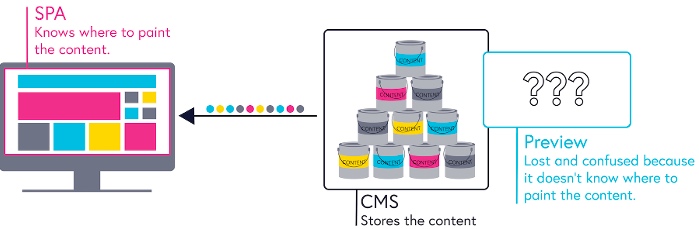
A single-page application (SPA) is a website designing approach where the content of every new page is aided not from loading new HTML pages but is produced dynamically through JavaScript’s capability to manipulate the DOM elements on the preexisting page itself. A single-page application approach enables the user to continue interacting and consuming with the page while new elements are being fetched or updated, and can lead to much faster interactions and content reloading. Besides, the HTML5 History API enables us to change the page’s URL without reloading the page, letting us create separate URLs for different views. Once inside of the SPA, the application can dynamically get the content from the server through AJAX requests or WebSockets. This enables the browser to keep the current page open while requesting the server in the background to get additional content or new “pages” altogether. If you’ve ever initiated a search query and had halfway results appear below the input form as you were typing, then you have observed dynamic queries taking place in the background that updated those DOM elements. As a matter of fact, the server queries can fetch any sort of data, time and again, taking the form of JSON strings, payloads, or even HTML elements that are already prepared for rendering.

What is Single page Application

Advantages of a Single-Page Application:

  • SPA is quick, as most resources (CSS + HTML + Scripts) are only loaded once during the entire lifespan of the application. Only data is transferred back and forth. In the case of single-page applications, only the necessary part of content gets updated rather than updating the whole page. This increases the speed of the website considerably. Throughout the entire lifespan of the application, most of the resources like CSS or scripts or HTML are loaded just once. It is only data that gets moved here and there. Now, this can be considered as a great benefit if the web page takes higher than 200 milliseconds to load as this signifies that it can affect the business and its sales significantly.
  • SPAs can be effortlessly debugged with Chrome, as you can monitor network operations, investigate page elements and data associated with it. Compared to Multi-page Applications, here, the debugging is easier as single-page applications come with their very own Chrome developer tools. By using SPAs, you get to monitor the network operations, investigate the page elements, and check the data which is associated with the pages
  • The development is streamlined and simplified. There is absolutely no need to write code to provide pages on the server. It is much easier, to begin with as you can usually kick off development from a file, without using any server at all.
  • Users get to relish a simple linear experience through single-page applications. Just like the web apps, these applications, too, come with a transparent starting, middle layer, and end. Many of the web apps like Trello, Slack, and Spotify offer an outstanding interactive experience to the user by utilizing parallax scrolling, amazing transitions, and effects to depict the customer journey completely. With SPAs, you need not click on endless links, and here scrolling is convenient and uninterrupted. The single-page applications come with a scroll, which makes them the best choice for mobile users who are accustomed to working with scrolling on their apps.
  • A SPA can cache and efficiently use local data. A SPA stockpiles all the data that it gets after it sends a request to a server. It can also work offline by using this data. The server can get synchronized with local data when a secure connection is available in case the user currently has poor connectivity.

When is it better to use the SPA?

How a Single Page Application Can Help Boost Your Business?

When should you think about using a single-page application? First, if you’d like a fruitful interaction between the customer and your application, an SPA is almost a requisite. Applications like Google Maps make broad use of this approach to provide live view changes as you scroll from a place to another or click on place markers to view pictures of a particular place. Secondly, if you want to provide live updates on the page, you’ll most certainly need to make use of this approach; data streaming,  notifications, and real-time charts require the utilization of such an approach. The server-side rendering method discussed above can mend the situation for load-times, as well as provide some essential readability for users without JavaScript enabled. We recommend at least having base functionality for your content visible for users that don’t have JavaScript enabled so that they’ll have the chance to decide to allow javascript based on what they’ve seen from the initial page load.

Why Choose Anteelo?

Anteelo Design Private Limited - CSS Winner

  • We’ll migrate your conventional multi-page site to a single page site
  • We’ll make your single-page app SEO-friendly, to avoid issues and ensure your website will be successfully crawled and indexed by search engines
  • To ensure your app’s security, we’ll select a web host that offers dependable security measures
  • Our developers are experts in developing single-page applications of both types and will gladly help you choose the kind of single-page app that suits your business best
  • Our dedicated QA team will ensure that your app works flawlessly on all modern devices

Just a few years ago, Single Page Applications were a game-changing technology. Now, they are becoming increasingly popular. To understand their massive impact on web development, it is enough to have a look at the examples which represent best practices of a single page application.

  • Gmail — when you click on a button or a link, the page doesn’t change. JS code rewrites the information and brings forward the message or folder you requested.
  • Google Docs — All changes are real-time. The chances of progress loss are zero thanks to a consistent auto-saving feature.
  • Twitter — You can do necessary activities (tweet, retweet, follow, upload a picture, etc.) without having to leave the page.

A growing number of businesses, including companies in the Retail and eCommerce, Entertainment, Media, eLearning, and Travel industries, depend on their online presence. As a JavaScript software development company, Anteelo provides application development services to support your online marketing, CRM and loyalty programs with up-to-date technology solutions that deliver tangible business value by encouraging users to follow the smart marketing journey you design for them.

Big Data and Cyber security: Together, Stronger

More sophisticated, streamlined and ambitious cyber attacks (with the capability of inflicting destruction to a large extent) have compelled the security experts to look for ways to up their game as well. The propagation of cloud computing which has affected the efficiency of the firewalls (set up for protecting the systems) a bit, has resulted in the security teams of various organizations in opting for strategies that would analyze the behavior of the user and the network.

Enters Big Data

Why the interest in Big Data?

Big data is nothing but extremely large data sets that comprise of structured data like SQL database stores, semi-structured data like the kind present in sensors as well as unstructured data like document files; data that can be mined for information. The approach is already being used in multiple projects throughout the world like during elections (particularly in Obama’s 2012 re-election campaign and Indian General Election 2014). Since the security experts indulged in ensuring cyber security are shifting their focus to the analysis part of the data, services like risk management and managing the actionable intelligence provided by Big Data can be utilized here.

According to CSO, the collaboration between cybersecurity and big data would be best put to use with highly trusted and accurate data along with some functionality to automatically respond to the threats present in the data (being analyzed). Using Big data for ensuring Cyber security will allow organizations to identify hackers attack vectors up to an advanced level and in discovering miscellaneous anomalies.


Smishing Attack: A Growing Cyber Threat

Smishing and vishing: How these cyber attacks work and how to prevent them | CSO Online

What is Smishing Attack?

If you believed that phishing could be the only possible threat to cyber-security, then you need to hit the rock bottom! Cyber-attacks are expanding like spider webs over the internet to create havoc in the security system of various sectors across the globe. Just as a phishing attack, a smishing attack is a type of cyber-attack which is infamously trending and carries advanced techniques to obtain victim’s data.

Smishing is a blended word, made with the combination of SMS and phishing. Just as cyber-criminals use emails to phish people into opening malware-laden attachments, smishing attacks are carried out using text messages.

What Is A Smishing Attack? (And How To Prevent It) | PurpleSec

SMS phishing or smishing is an unethical practice of sending fraudulent cellular texts to users to trick them into downloading the attached file or redirected link. These attached links take users to malware-laden websites on their mobile phones.

Smishing text messages contain absurd phone numbers or links to lure customers for immediate response. Smishing attack on your cellular device can be deployed in any form of attention-seeking text.

These nefarious text messages could claim to be your bank asking for your financial information. It could also ask in a tricky way for your ATM number or account details to get access to your bank balance.

Recent Smishing Attack Example: 

Just like phishing, smishing attack is deployed using cellular text messages with the motive to lure customers into giving away information. Smishing text messages often contain URLs or phone numbers.

The phone numbers usually have an automated voice system as a response. When it comes to SMS phishing, attackers use smart ways to trick victims into believing the text message they receive.

What is 'Smishing'?

For instance, if a smishing message comes from a number “5000” instead of any actual phone number, it means it is sent through email on the cell phone. This is done to indicate a legitimate message to trick people.

In an article by Cyware, a smishing campaign, “Lucky Draw Campaign” was targeted on Indian Nokia owners. In February 2019, Nokia owners received a text message claiming they have won a lucky draw.

The message was impersonated to have come from ‘Nokia.com online shopping Pvt Ltd.co’, claiming that the recipient has won Tata Safari or Rs.12, 60,000. However, it urged recipients to pay to 6,500 Indian rupees to claim their prize.

How to Prevent Smishing Attacks?

4 Clever Smishing Attacks to Watch for in 2021 | TechnologyAdvice

  • Never click on any links in text messages which come from unknown resources.
  • Restrain from responding to personal text messages that ask for your personal details.
  • If a text message looks like an alert or shows any urgency, verify the legitimacy of the source first before responding.
  • Look out for messages that are no sent via phone number. Scammers often mask their identity so that their location or identity could not be traced.
  • Messages that might be sent at odd hours or apart from business hours are usually smishing attacks.
  • Never give away your bank details or financial information easily to any text message asking for your credentials or verification.
  • Cyber Security researchers highly recommend organizations as well as individuals to use good security awareness tools as a preventive measure.

HTTPS is no longer secure: says FBI

FBI warns users to be wary of phishing sites abusing HTTPS – Naked Security

The investigation bureau FBI has issued an alert warning to internet users that “HTTPS” and a padlock icon in the address bar might not be enough to prove if a website is authentic or not. It has been observed that cyber-criminals are increasingly abusing the trust in TLS-secured websites for improving the success rate of phishing attacks.

“They [phishing attackers] are more frequently incorporating website certificates – third-party verification that a site is secure – when they send potential victims’ emails that imitate trustworthy companies or email contacts.”

In 2016, a report by the Ponemon institute revealed that nearly half of all the cyber-attacks used SSL encryption to evade detection within the period of last 12 months. Two-thirds of the organizations admitted that their organization was not prepared to detect malicious SSL traffic.

For many years, there has been a push toward adopting the HTTPS protocol on the web since it ensures a secured communication between the website and user’s browser.

Most of the browsers mark websites that use HTTPS with a padlock icon which indicates that the browser traffic is encrypted, and attackers cannot access the data in the transit. These websites also display warnings in case the user accesses a non-secured website.

Google Pushes Business Websites to Use HTTPS (SSL) - Prometheus PPC

With the advancement in the security measures, attackers have also started adopting HTTPS protocol to deploy sophisticated phishing attacks since the use of this secured protocol allows attackers to psychologically trick the victim into believing that the malicious emails or links that they received in their inboxes are coming from authentic sources.

They are designed with the motive to acquire sensitive login details or other information by redirecting victims to malicious websites that looks secure due to the padlock icon.  However, only connection to these websites is secure and the HTTPS protocol is unable to authenticate the content on the website.

What is the reason behind the increasing use of HTTPS?

Graph - Increasing Graph Clip Art - Png Download - Full Size Clipart (#931804) - PinClipart

To deploy a successful cyber-attack, cyber criminals leverage the latest technology. With the number of websites that use SSL encryption, cyber attackers have started encrypting the phishing websites, making it harder for IT administrators to identify the difference between bad and good traffic. Attackers are increasingly using SSL to encrypt the communication between the compromised endpoint and command-and-control systems to hide payloads, instructions as well as other information that is being sent.

As an increasing number of attacks are using HTTPS to avoid the scrutiny by the traditional methods of cyber security, organizations should take steps to ensure that they are protected against bad traffic.

What is the solution?

Where are the people with solutions? - Reputation Today

Lack of awareness among employees is one of the major reasons for the success of such attacks. In recent years, attackers have shifted their focus from individuals to employees. Statistically, 90% of the cyber-attacks are a result of employee negligence. During the year 2018, there has been a 76% increase in the number of phishing attacks. 54% of the companies had experienced cyber-attacks that compromised with their IT infrastructure and data. According to a survey conducted by McAfee on 19,000 people, 97% of the people were unable to identify such cyber attacks.

This is where the cyber security awareness and training tool comes in handy. The tool helps in creating awareness among employees to combat real-life cyber-attacks. With the power of reporting tool TAB, employees become capable to protect the entire organization against probable cyber-attacks.

Every day the number of reported cyber-crimes are increasing. It is, therefore, important for organizations to invest in cyber security awareness and training programs which should be continuous and must be followed with the regular assessment of the employees’ knowledge on cyber-attacks.

New victim in the town: Manipulated TeamViewer Attacks

TeamViewer: The Remote Desktop Software

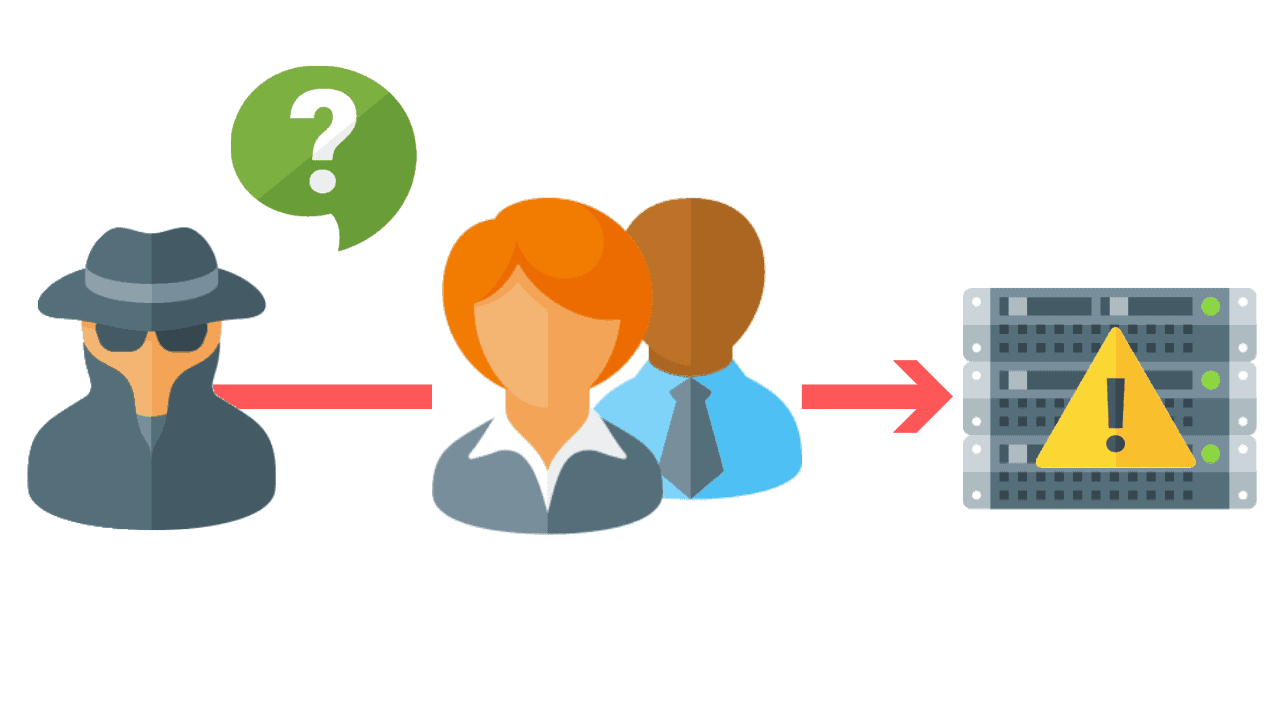
Government agencies were in a state of shock when they realized that their systems have been compromised with the malicious TeamViewer software. The attacker who was responsible for this attack is a Russian speaking man. TeamViewer is one of the most popular tools for the remote access of desktop, desktop sharing, file transfer between systems, web conferencing etc. The motive behind the attack is probably financially driven. The software was manipulated by adding malicious TeamViewer DLL to the original software. This mala fide software can steal sensitive data and money from even government and financial networks.

A malicious email posing to be sent from the U.S. Department of State was delivered in the inbox of the government employees and had ‘Military Financing Program’ as its subject line. The email had a malicious XLSM attachment with embedded macro.

Employees were duped by the malicious email since the emails coming from the U.S. department of state are generally marked as top secret. Once the victim opened and enabled macro in the decoy document, two files were extracted from the hex encoded cells in the XLSM document. The first one was the genuine AutoHotkeyU32.exe program. The other one was the corrupted AutoHotkeyU32.ahk which is an AHK script used to communicate with C&C server and to download the additional script and execute it.


How did the attacker successfully deploy the attack?

Hollywood and Hacking: Into the 21st Century - Real life hackers, computer punks and Hugh Jackman dancing

There are three different kind of malicious AHK scripts including ‘hscreen.ahk’, ‘info.ahk’ and ‘htv.ahk’. These three scripts affect user’s system in different ways.

hscreen.ahk: This script takes the screenshot of the victim’s personal computer and upload it on the C&C server.

hinfo.ahk:  Victim’s username and computer information is sent to the C&C server.

htv.ahk: A malicious version of TeamViewer is downloaded, executed on victim’s system and login credentials are sent to the C&C server.

The attacker hid the genuine TeamViewer interface while the TeamViewer software with malicious ‘htv.ahk’ was being run. DLL in order to take over the control of the software. This allowed the attacker to replace the genuine TeamViewer with the manipulated version.

The attack targeted Public financial sector and government officials belonging to Kenya, Italy, Liberia, Bermuda, Guyana, Lebanon and Nepal.

Earlier in the month of January, a security researcher who goes by the name of FewAtoms found a URL containing a malicious self-extracting archive which is a spyware disguised as TeamViewer.

The researchers have found a link of an avatar connected to a Russian underground forum user known as EvaPiks.

What could have been done?

Famous Hackers and How They Got Caught | Alpine Security

  • Ensure that the AHK script is compiled with ahk2exe, which is the part of AHK distribution.
  • In order to prevent de-compilation, provide a good password.
  • Always check the extension of any attachments present within the email.
  • Organizations should implement a multi-layer defense and put mitigation protocols in place to detect intrusions and act against them.
  • Enhance settings for macro malware attached emails.
  • Ensuring the application of these methods so that the program runs normally. It will also ensure that attacker would have difficulties in modifying the program.
  • However, the most effective strategy is to empower employees against social engineering attacks and provide periodic knowledge imparting sessions.

Biggest cases of data breach in the first quarter 2019

Cybercrime cases rose between 2014 and 2017: Ravi Shankar Prasad | Business Standard News

2019 has been a good year; not for many; but definitely for cyber-criminals. While we might still be coping-up with the news of a data breach incident that would have occurred two days ago; we hear another case of an organization’s infrastructure being breached. Let’s hit the ground zero.

1. Google Chrome cast Hack

How to Fix the ERR_CONNECTION_REFUSED Error in Chrome (9 Tips)

It was almost a normal day of the winters of January, when thousands of people who had been using Google’s Chromecast streaming dongles, Google Home smart speakers as well smart TVs with built-in Chromecast technology; got their systems hacked. Hackers left a display pop-up to inform users that their systems are exposed to public internet. However, the odd thing about this hack was that attackers forced people to subscribe to the YouTube sensation ‘Pewdiepie’.

2. Germany’s Biggest Cyber attack

Twitter down, suffers worldwide outage - BNO News

Around the same time, Germany was hit by the biggest cyber-attack in its history. Hackers hacked into the twitter accounts of more than hundred German politicians and accessed their highly sensitive personal information including email addresses, phone numbers, private chats, photographs of victims’ ID, bills as well as the credit card information. Attackers leaked the data on a twitter account called ‘@_0rbit’. German federal police dived into an investigation and soon, a 20-year old local student was arrested.

3. Ethereum Classic lost $ 1.1 million to hackers

Ethereum Price Forecast: ETH prints bullish pattern, preparing for colossal upswing past $4,000

While German police was celebrating its victory, popular cryptocurrency exchange Coinbase Ethereum Classic, experienced one of the worst days in its history. People who were using its services were forced to pay twice the coins for any of its services. This resulted in the loss of around $ 1.1 million Ethereum Classic digital currency. This resulted in the immediate fall in the prices of the digital currency. Hours later, Ethereum Classic accepted that there were almost ‘51% successful attacks’ with multiple block reorganization. Attackers are still under the cover and Ethereum Classic is still investigating.

4. Australian Parliament Cyber-attack

10 Different Types of Cyber Attacks & How To Recognize Them | InfoSec Insights

In the beginning of February, Australian parliament faced one of the biggest cyber attacks with its server being hacked by what the Australian parliament referred to as ‘the work of a sophisticated state actor’.

5. Leaked Database of Chinese citizen found online

fyi... the linkedin password database is now on pastebin : sysadmin

In January 2019, cybersecurity experts discovered a huge unsecured database worth 854.8 GB; lying openly on the internet. The database  was stored on an instance of MongoDB and consisted records of approximately 202 million Chinese citizens who were apparently job candidates. Soon the database was taken off, however, MongoDB has displayed the list of dozen of IP addresses that have accessed this database.

6. Wiping out VFEmail.net 

VFEmail Review 2021 | How secure is VFEmail? - ProPrivacy.com

U.S. based email service ‘VFEmail.net’ informed its users that all their data as well as backup worth two decades of data was lost. It was discovered that the attacker’s IP address was 94[.]155[.]49[.]9 and the username was “aktv,”, apparently registered in Bulgaria.

7. Attackers were selling the information on dark web

Information products: how to create and sell info products online

In one of the shocking instances, it was revealed that attackers were selling information of approximately 747 million accounts on the dark web. These accounts were stolen from 24 very popular websites. Most of these websites had no idea that they were compromised with, however, a few have confirmed that they suffered from data breach.

8. Indane gas breach

India's state owned gas company Indane exposes millions of confidential Aadhaar numbers

LPG gas company, Indane, became the victim of yet another case of data breach, where Aadhar number of approximately 6.7 million customers were leaked.

9. Aadhar details leaked 

Aadhaar: 'Leak' in world's biggest database worries Indians - BBC News

MongoDB is once again the talk of the town. A database known as GNCTD worth 4.1 GB in size, has been found on MongoDB instance. The database consisted of approximately 458,388 individuals’ Aadhar and Voter ID numbers along with references as well as email addresses with “transerve.com” domain for users who were registered with “super admin” and “senior supervisor” designations.

10. 1 million ASUS systems affected by massive supply chain attack

WordPress Supply Chain Attacks: An Emerging Threat

Taiwan based world’s fifth largest PC maker, ASUS, revealed that approximately 1 million systems were affected by massive supply chain attack known as ShadowHammer.

11. Bithumb suffers the loss of $19 million

Top 5 Cryptocurrency Exchange Bithumb Suffers Major Data Breach | Digital Trends

On March 30th, the news of a humungous $19 million theft from the South Korean, Bithumb cryptocurrency exchange, fell into the ears of people. Hackers had compromised Bithumb’s hot EOS as well as XRP wallets and transferred approximately 3 million EOS (~ $13 million) and 20 million XRP (~ $6 million) to the newly-created accounts.

12. Georgia Institute of Technology suffers data breach

Georgia Institute of Technology: William Smith talks about his job as director of Georgia Tech's Office of Emergency Management and Communications – India Education | Latest Education News India | Global Educational

Georgia Institute of Technology was hit badly by cyber-criminals when a data breach led to the theft of the personal information of around 1.3 million current as well as formal faculty members, student as well as the applicants. According to the university, outside entities gained access to the web application of the university’s database.

What is the reason behind the success of these attacks?

The first quarter of the year has seen a number of data breaches that have targeted big organizations. Attackers are learning, adapting as well molding their modus operandi with the changing time. On the other hand, organization are still being old school.

Procrastination:

Procrastination Isn't a Time Management Problem, It's an Emotional Problem

2019 took a start with Google Chromecast devices being hacked. This happened because a group of attackers exploited a bug that was lying down for five years like a ticking time bomb. Evidently, Google was aware of this vulnerability but kept on ignoring the bug.

Being Ignorant to the details:

The pleasures of being ignorant

In most of the cases, organizations are unaware of the fact that they are undergoing a cyber-attack. ASUS is one such victim since the attack was ongoing during the second half of 2018 and the company had no clue.

Lack of proper cyber-security measures:

How the COVID-19 Pandemic is Impacting Cyber Security Worldwide - IEEE Innovation at Work

Many a times, the data travelling in the forms of packets is not well encrypted and thus data can be easily stolen away by attackers. Indane Gas was victimized because of a vulnerability that was present in its mobile application.

What should organizations do in order to safeguard themselves?

29,165 Safeguard Stock Vector Illustration and Royalty Free Safeguard Clipart

Organizations can employ preventive cyber-security measures in order to safeguard data security and ensure that the network as well as the infrastructure of the organization is free from vulnerabilities and loopholes. Cyber-security companies ensure the same with a number of managed security services such as vulnerability assessment and penetration testing, web application testing, network penetration testing, server security testing etc. Anteelo is one of the fastest growing cyber security start-ups in the country. With its team of expert pen testers, the company has provided managed services to a number of businesses to industries like Healthcare, banking, insurance etc. These services have enabled organizations to conduct businesses without worrying about various issues related to the cyber security of the organization.

error: Content is protected !!