7 Exceptionally Effective Online Business Management Tools

11 Powerful Cloud Management Tools | Network Computing

Though there is a lot of work involved in creating and managing an online business, there are plenty of useful tools around to help you do things quicker, smarter and more easily. Today, there are applications and services, many of them free to use, which can help you do everything from building professional standard websites and eCommerce stores, to ensuring you’re well prepared for the worst kind of emergencies. Here, we’ll look at seven of the most useful.

1. WordPress

WordPress: what is it, how can you use it, and the main secrets

WordPress is the perfect tool for creating fully functioning, professional websites. This completely free CMS platform has been used to create 35% of the world’s websites and has been developed over many years to make it easy for anyone with basic computer skills to use.

What’s more, with thousands of free themes and tens of thousands of free plugins, WordPress users can create websites that are uniquely designed and which have unparalleled functionality compared to other website creation software. With it, you can build any kind of website and have it perform any kind of function. The sheer scope of its plugins gives any website enormous potential.

If that’s not enough, its massive popularity means that beginners have a vast range of online support to help them with any issues, with many websites and web hosts offering specialist support in all areas of its use.

2. WooCommerce

WooCommerce - Wikipedia

If your main purpose is to sell products or services online, then you will need to create an eCommerce store. The ultimate tools for doing this is WooCommerce, which is actually a WordPress plugin rather than a standalone program. Essentially, once you have created your WordPress website, all you need to do is install and activate the free WooCommerce plugin and your site is transformed into an eCommerce store. All you have to do then is set up the store and add the products (physical or digital) or services (including bookings and reservations) that you want to offer.

WooCommerce is a user-friendly plugin that helps you manage sales, inventory, payment and delivery. It is so popular; it is one of the few WordPress plugins to have its own set of plugins. These provide additional functionality to enhance the customer experience and to make it easier for you to manage your store.

3. PersonalSign

Download and Install PersonalSign Certificate :: Download and Install PersonalSign Certificate :: GlobalSign Support

Many people fall victim to online scams like phishing because they are unable to tell the difference between a genuine email and one which scammers have tried to make look authentic. PersonalSign is an email signing certificate that puts a stop to this by letting recipients of your emails quickly verify that it is trustworthy. Additionally, the contents of your email and any attachments you send are encrypted, preventing them being stolen or tampered with during transit or at rest.

PersonalSign isn’t just of benefit to your customers, either. Many businesses fall victim to phishing because employees receive fake emails purporting to come from executives in their own company – often asking for money to be transferred to the scammers’ account or asking for sensitive data. Email signing certificates put an end to this, too.

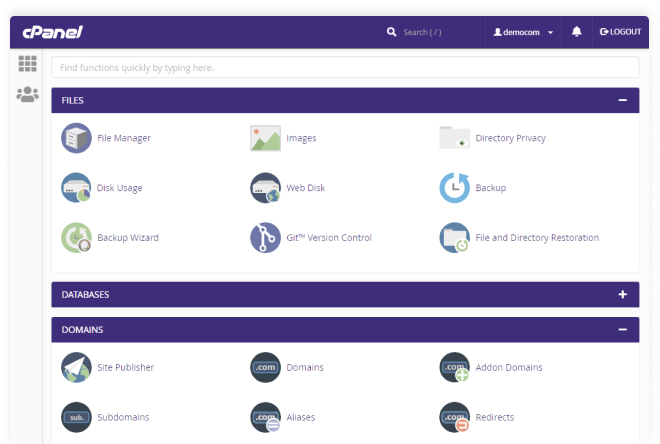
4. cPanel hosting

cPanel Hosting | Host With cPanel & Experience the Full Control

When setting up your online business, one of the first decisions you will need to take is on the type of hosting package tools you wish to use. While there are many different types of hosting to choose from (e.g. shared, VPS, dedicated server or cloud) one of the things you will need to consider is the type of control panel which your hosting will come with.

The control panel is the interface you will use to manage your hosting and your websites. The most common form of hosting uses Linux-based servers and the most popular control panel for Linux is cPanel. cPanel web hosting tools makes it easy to manage your web hosting and email; its user-friendly interface offers simple file management, 1-click application installs and a comprehensive suite of useful tools that enable you to carry out a wide range of management activities. Setting up new domains, automating updates, adding new email addresses, etc., is a breeze with cPanel.

5. Google Analytics

GA4] Search box in Google Analytics 4 properties - Analytics Help

Data has become the backbone of today’s decision-making processes and this is equally true of running a website. Google Analytics (GA) is a free tool, provided by Google, that gives you in-depth data on visitors to your website. Going way beyond telling you how many visitors your website gets, when they visit and where from; GA can be used to track where visitors have found you, which pages they visit, how long they spend on each page and what pages they exit from.

Perhaps most importantly, you can use GA to improve your marketing. You can set up goals to track visitor progress through your sales funnel, including analysing how effectively your ads and other online marketing techniques generate conversions.

What’s more, GA is incredibly easy to set up and integrate with your website. WordPress users can do the integration simply by using a plugin.

6. Yoast SEO

SEO for everyone • Yoast

The success of your online venture depends upon the number of visitors you get to your website. Unless you want to rely heavily on paid advertisements, the main way to get visitors is through ranking well in search engine results. Search engine optimisation, however, is a complicated and ongoing process covering everything from site speed and mobile-friendliness to website structure, keyword placement and domain authority.

When it comes to on-site SEO, there is no better tool than the free Yoast SEO plugin for WordPress. This plugin automatically looks after much of the optimisation you will need to do while providing wizard-like guidance to ensure any content you are creating meets the most up-to-date SEO requirements.

7. Automated remote backups

Why You Need Automated Website Backup - HostPapa Blog

The final tool you should consider is automated remote backups. A necessity rather than an option, a remote backup is the only fall back you will have if you lose your website data. Should your site be hacked, your server fail, your data be corrupted or even if you accidentally press the delete button, there’s the potential that you could lose the entire content of your website and the website files themselves. Failure to restore your website swiftly can have catastrophic consequences and even put you out of business completely. A remote backup can help you get your site back online quickly.

An automated backup service does more than just back up. It enables you to take backups as frequently as your business needs, it saves the files remotely from your own server, provides enough space for multiple backups and even checks that the backups are not themselves corrupted. You can also encrypt your backups to ensure that you comply with data protection regulations.

Conclusion

There are a huge number of tools you can use to create and manage your websites and it can be challenging to search through them all looking for the best ones. The tools and services we have shown here are those which we think provide great value and are exceptionally useful.

The 5 ways cloud computing will change in 2020

What is Cloud Security? Cloud Computing Security Defined | Forcepoint

Cloud computing is set to continue its remarkable development this year with technologies like 5G, Kubernetes, AI and machine learning increasing the scope and scale of the operational uses it can be put to. In this post, we’ll look at these technologies and see how they will change the face of cloud computing and how businesses use it.

1. IoT boosted by 5G

How 5G is becoming an Important Technology Ingredient for IoT

The long wait for 5G is finally over and, with its introduction, we’re set to see it play a critical role in the connectivity of IoT devices, extending that connectivity way beyond the limitations of wi-fi and enabling the development of edge computing.

The exponential growth in the number of IoT devices is coupled with an equally gargantuan collection of data. As the value of that data for delivering rich insights prevents enterprises from deleting it, companies are left to find a way to store and process it all. They need massive data storage capacity and vast compute capabilities. At the same time, some of the new technologies being developed for IoT use, self-driving vehicles being a prime example, require network latency to be almost eradicated.

5G can help with all these issues. It can connect devices where wi-fi and cabled connections are not available and at exceptional speed, it enables storage and compute services to be installed at the edge of 5G networks, shrinking latency to less than a millisecond while reducing the type and volume of data being stored in datacentres.

2. More stringent security standards for public cloud

An open, secure cloud with security standards you value - OVHcloud

Security is a critical concern for all enterprises and one new area to consider is the issue around 5G as it becomes part of the cloud network. The UK’s decision to use Huawei technology for its 5G network has already become a political hot potato. This, together with other concerns, is likely to lead to more stringent security standards, particularly over endpoint security, for cloud providers.

It is expected that tighter regulations will be introduced for the architecture of hybrid clouds requiring full data separation between on-site and public cloud environments. Brexit will also play a part, as the UK goes its own way in implementing standards regarding data protection.

3. More users adopting hybrid cloud

Multi-Cloud, Hybrid Cloud, and Cloud Spend - Statistics on Cloud Computing - ParkMyCloud

While many companies have considered hybrid cloud computing , its technological challenges have led to most of them adopting a purely public cloud model. And while there are workloads which are better suited to a hybrid solution, the lack of flexibility to deploy both on-site and cloud infrastructures is a hurdle which many enterprises are not equipped to overcome.

In 2020 and beyond, we’ll start to see new tools that can overcome these management and migration challenges. These tools will split migration into two separate processes where companies can first become familiar with their new programming and management models on-site before finally moving their infrastructure to the cloud. This is particularly helpful for those organisations that want to move to the cloud but don’t want to abandon the investments they have made in their datacentres and hardware.

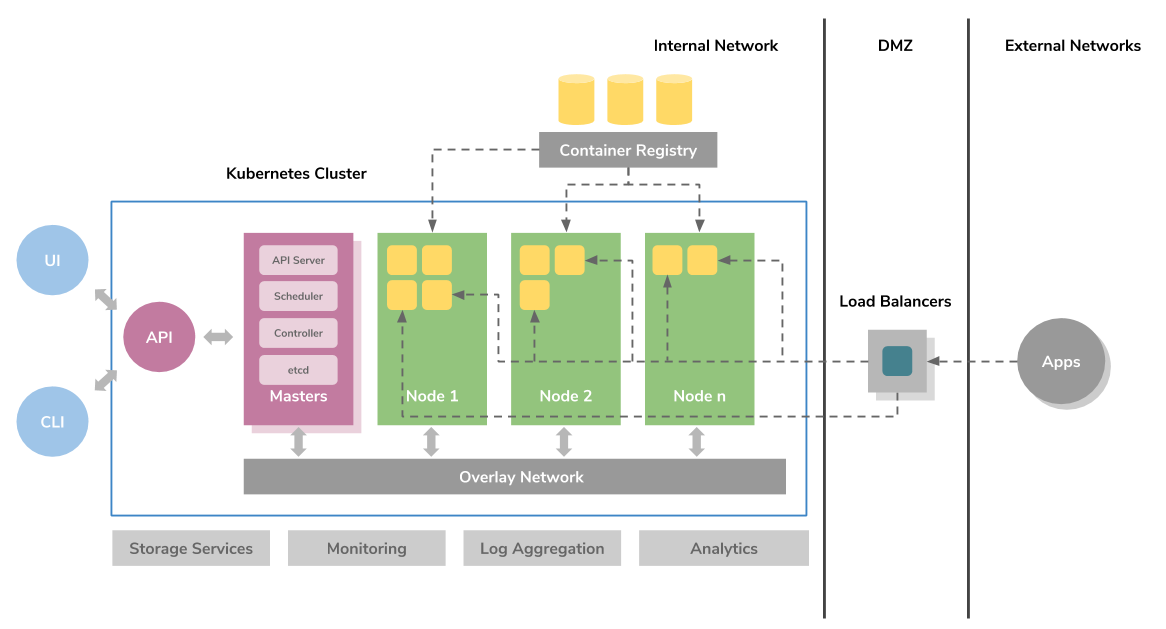
4. Kubernetes to become the standard container

A Beginner's Guide to Kubernetes. Kubernetes has now become the de facto… | by Imesh Gunaratne | ContainerMind | Medium

Containers have become widely used by companies that need to run multi-cloud workloads. By providing a platform-agnostic solution for the packaging and management of applications, they have simplified the process of cloud adoption and migration.

Of all the container solutions available, Kubernetes has become the most widely adopted. The primary reason for this is that, aside from housing an application, it also specifies the app’s required infrastructure, including load balancing, networking and scaling. What’s more, the standardised way in which it does this means those specifications can be more easily transferred across providers. When it comes to deploying infrastructure for container-based workloads, Kubernetes is today’s go-to solution. Additionally, its popularity means there are also a growing number of tools being developed to support its use.

5. AI and machine learning used in networking

Cisco: How AI and machine learning are going to change your network | InsiderPro

AI and machine learning are now being deployed to carry out a wide range of operations and this means companies are reorganising their IT services to enable them to make deployment easier. One area where AI is beginning to bring developments is in networking, helping with such things as reducing energy consumption and in automating maintenance tasks. Expect to see even more examples of its uses coming into the spotlight in the next few years.

Conclusion

It is an exciting time for the cloud with technologies like 5G, containers, AI and machine learning enabling its users to undertake more operations and enhance their capabilities. However, with expanding uses comes an even greater need for security and higher standards in how data is used. Hopefully, the information given here will have shown you what developments are in store and how your company can benefit from them.

What Exactly Is Digital Transformation, and What Are Its Advantages?

Digital Transformation: Three Areas of Focus to Enhance Business Value

Digital transformation puts companies in a far more advantages, giving them all the benefits that the latest technologies bestow. However, while the adoption of new technologies is a key element of the process, deeper changes are needed before an organisation can truly reap the rewards. In this post, we’ll take a closer look at what digital transformation is and what it can offer.

What is digital transformation?

What AI and machine learning are and how they relate to IoT | Basefarm

Digital transformation puts companies in a far more advantages . On one level, digital transformation is the process of adopting technologies like cloud, artificial intelligence, machine learning and the IoT in order to make business processes more effective and efficient. What makes these technologies particularly beneficial is their ability to gather and process data. This enables companies to be more informed about their processes, strategies and activities while giving them data-driven insights to help with decision-making.

The adoption of these technologies, digital transformation puts companies in a far more advantages however, is not merely something that happens in the data centre or in IT, it brings change to the entire organisation, forcing the company to rethink its goals and strategies, reorganise its structures and roles, and to make changes to processes that affect all its workforce. Indeed, for many companies, some of these changes are often necessary before the process of digital transformation can commence. Key here is the corporate attitude to digital transformation. For it to be successful, the business needs to embrace new technologies and this often requires a shift in company culture.

The driving force behind successful digital transformation is the digital leader. This is someone who clearly knows the technologies needed to transform the company and who understands the changes their deployment will bring. These leaders don’t just have belief in the project, they are also able to communicate that belief in order to bring on the cultural shift that’s required – and that’s not just in the board room; it’s across the whole business.

What are the advantages of digital transformation?

Once the company is ready to embrace new technologies and the changes they will bring, there are numerous benefits that can result. Here are some of the main ones.

Making the most of data

Making the Most of Data Should Be a Priority for Business, Not Just for IT

Digitalisation helps break down departmental silos so that data can be unified and more easily analysed. As a result, end to end customer journey mapping is attainable, while other forms of unstructured data can be combined to gain previously unobtainable insights.

Cost savings

IT outsourcing customers cling to cost-savings mindset | CIO

While technologies like cloud, with its pay as you go pricing, can significantly reduce IT costs, this is just the tip of the cost-saving iceberg. New technology can help companies optimise a wide range of business processes, providing valuable data to show where efficiencies can be made

Consolidation

Consolidation of Meetings and Travel Functions on the Rise | MeetingsNet

Modern digital technologies can transform how a business goes about its operations, helping to streamline its workflows and, in the process, cut employee workloads and reduce overheads.

Creating customer-centric businesses

5 Key Considerations When Creating a Customer-Centric Culture - Acquire

One of the main benefits of digital transformation is that the data it provides about customers enables businesses to improve the customer experience. From websites that offer personalised products to communications sent at the right time and via the right channel and with the right message, digital transformation enables businesses to deliver experiences that the customer wants.

More attractive products and services

Product Description: 9 Examples of Product Descriptions that Sell

Understanding what the customer wants not only improves the customer experience, it also enables businesses to provide the products and services that the customer is looking for. It helps manufacturers with product design and retailers with inventory selection while enabling other companies to offer services which are more likely to appeal to their customers. As a result, companies become increasingly more effective in the marketplace.

Precise market segmentation

The Complete Guide to STP Marketing with Examples | Yieldify

The technology available to digitally transformed businesses enables them to have far more information about their customers, helping them to discover new market segments that, in the past, they would never have been aware of.

Omnichannel customer experiences

Designing Omnichannel Customer Experiences | by Momentum | Medium

Digital technology enables business-wide systems to be put into place so that your customers can interact and buy from you when, where and how they choose, whether that’s online or at your bricks and mortar store.

A more agile and innovative business

5 Examples of Agile Organisations | Clear Review

The modern technology that digital transformation provides is faster, more powerful and more capable than legacy IT systems. It makes it easier for teams to collaborate and enables businesses to react quickly to market changes. It also speeds up the development and launch of new products, services and strategies.

Conclusion

Digital transformation is not merely the process of deploying new technologies, it’s the adoption of a digital culture that embraces this technology and carefully manages the significant changes that it will bring to the company as a whole. As technology is in constant development, digital transformation, too, is an ongoing process. However, once the culture is in place and the technology is deployed, there are significant benefits to be had.

Cloud Computing in a Distributed Environment: The Future of Enterprise IT

Why new apps boost the need for new infrastructure - Ericsson

While enterprises, today, still heavily rely on datacentre and single cloud infrastructures, technological developments in artificial intelligence (AI) machine learning (ML) and the Internet of Things (IoT) are requiring applications and their data to be dispersed across multiple locations, including edge sites, multi-cloud and multi-datacentres. While this accounts for a small fraction of current usage, Gartner predicts that within five years, this will be the standard IT infrastructure for three-quarters of organisations.

The cloudification of edge computing

The Cloudification of Everything - cnbctv18.com

Edge computing is becoming increasingly important to enterprises that use IoT, ML and AI. Many of their technologies rely on the ability to process data locally so that real-time decision making can take place. The sheer volume of data these technologies use means sending everything to the cloud for processing would require unacceptable levels of latency.

That said, enterprises do want edge IT to operate in a similar fashion to the cloud. They want to be able to centrally manage operations rather than having local outposts undertake siloed management. For this, edge computing needs cloudification, the development of micro-clouds that enable organisations to deploy and connect an application and its infrastructure across a range of edge environments.

The cloudification of edge IT brings numerous benefits to enterprises. It brings edge sites global connectivity that is both secure and high-performance; it provides distributed edge sites with integrated storage, networking and compute resources; and it enables the business-wide management of distributed data and applications across its diverse infrastructure.

At the moment, edge cloudification is still in its infancy. However, new capabilities are constantly being developed and it is only a matter of time before cloud providers offer edge computing with a wide range of functionalities.

A different kind of multi-cloud

Cloud-native application deployment across hybrid multicloud infrastructure: 451 analyst interview

The way enterprises use different cloud services is about to change. At present, the term multi-cloud means that organisations have several cloud providers and, usually, each of these is used to run separate applications. It is a way of not keeping all your eggs in one basket and to defend against vendor lock-in.

In the future, this set-up will change to one which is significantly more modular and where different app components will be run in different cloud environments. This enables enterprises to carry out workloads where the unique qualities of each cloud environment and the expertise of the cloud provider are best matched to the needs of the task being run.

As a result, enterprises which adopt this methodology will be better placed to run and support more effective microservices. If today’s siloed approach is akin to a family buying all its food from a single supermarket and being limited to what was on the shelves there, the new way of approaching multi-cloud would let you buy your wines from a wine merchant, your meat from the farm shop and your pizzas from favourite Italian restaurant. If, for example, you ran an application that used both a database and machine learning, each of these two components could be run in the cloud environment that offered the best infrastructure and support.

At the same time, this multi-cloud approach also offers an added layer of availability protection. Should one of the cloud environments go offline, the application will still be available in the other so you can bring the affected component back online. For companies that need to keep the personal data of EU citizens stored on servers within the EU, this approach also helps with compliance, enabling data to be stored where it needs to be while other components can be run more effectively around the globe.

Distributed cloud and the future

The Future of Distributed Cloud – Telecoms.com

At present, the move towards edge cloudification and the changing use of multi-cloud environments are separate advancements. However, they are both indicators of a growing trend towards the development of a distributed cloud. This new way of working is becoming increasingly necessary as it will enable enterprises to manage not only a wide variety of discrete components, e.g. edge applications, legacy datacentre apps and apps spread over multiple cloud providers; but crucially, the infrastructure required to support them. In doing so, it will operate as a unified distributed cloud where organisations can manage and operate their entire IT services. Indeed, it will enable applications to be deployed with common policies and provide global visibility across all locations and infrastructures.

Conclusion

The distributed cloud, essentially, is an approach that lets enterprises use the best tool for each job. It enables real-time processing to happen at the edge where decision making needs to be made quickly and enables app components to be run in the cloud environment where the infrastructure and support best fit. Crucially, however, it takes all these disparate elements and enables them to be centrally managed. If you are looking for bespoke, managed IT solutions, take a look at our Enterprise Hosting page.

The Digital Port: Transforming an ancient economic hub without disrupting workers’ lives

Port of the future: how technology is transforming shipping

Today’s ports are struggling to manage the massive volume of containers arriving on giant vessels.  Industry leaders are looking for new ideas to cope, but it’s hard to find answers that satisfy everyone.

The roots of the problem are multifold. Most obvious is the logjam that’s created when a modern ship laden with tens of thousands of containers arrives in port. Finding a spot to stack the large cargo is a problem. But the bigger issue is a matter of velocity. One-by-one, thousands of trucks enter and exit congested urban locations to drop off empty containers or pick up new loads. While freight rail is beginning to move an increased share of containers, the majority still arrive and leave the land-side of the port one or two at a time.

In an effort to reduce wait times and move containers faster, some container terminal operators are turning to waterfront robots to increase capacity and velocity while reducing cost. This type of automation has great potential, but we need to apply the same design thinking to the systems around the automation to realize the full potential of digital transformation.

A better way

So how do ports fully realize the goals of automation while optimizing the work environment and productivity of today’s port workers? First, we should consider all the parties involved:

  1. Truckers who assume the costs for delays in picking up loads and dropping off empty containers.
  2. Dock workers’ labor unions who want their members to participate in the benefits of automation and upskill the value of their members.
  3. Terminal managers who want to maintain a lean staff for profitability but also need to increase capacity and velocity of operations.
  4. Manufacturers and receivers who want lower demurrage and detention fees that result when there are delays in picking up freight and returning containers ready to ship.
  5. Consumers who want faster deliveries.

Fortunately, there is a way to satisfy all parties and it begins with a modern Port Community System (PCS). A PCS can digitally tie together the Coast Guard, maritime shipping agents, port authority, freight forwarders, Customs, dangerous goods clearance, port and terminal gates, and many of the other entities in the port community.

As each party electronically completes its part of operations—declarations, permits requests, inspections, goods authorizations and more—the PCS immediately moves   the filing, declaration, request, or approval to the queue of the next party, notifying them of updates specific to their work queue. Items they need to complete or adjust are noted, and wherever possible turned into drop-down lists.  Ideally the workers can be notified and fill out forms from any device —at their desk, on a tablet at the docks, or on their phone in the truck.

Greasing the skids

Greasing the Skids | He's Taken Leave

The terminals, which are separate business entities, are tied together in the PCS under the supervision of the port authority. Any insufficiencies in the permits, requests, or declarations are immediately identified, and the sender is automatically notified for quick updates and resubmission. Eliminating the communication hurdles — paper documents, point-to-point (rather than end-to-end) filings, loading and unloading orders – can save significant time and cost for all parties. Furthermore, a PCS provides time-definite delivery commitments to shippers and sellers while reducing ship and container time in port.

For exports, freight forwarders who consolidate loads into containers will know when empty containers will arrive, reducing the number they need to keep on hand. For imports, freight forwarders and consolidators will know when to expect the containers they need to break down and repack for shipping to final destination. Maritime agents can get their ships out of port faster as they will be able to communicate the location of containers ready and approved for loading to terminal operators. Once a PCS is implemented, other steps can be taken to increase the efficiency of trucks moving in and out of the port.

At Anteelo, we’ve given this a lot of thought as we increasingly focus on the ports business and our own PCS solution, Port Logistics Accelerator. We’ve come to recognize that connecting people and automating the processes those people use every day will have the largest impact on costs and hence, profitability.

Anteelo’s Intermodal Appointment System (IAS), when integrated with the PCS, can notify truckers when their loads are ready, setting a specific appointment for pick-up and delivery agreed to by their trucking company (or themselves, if freelance). Further, our Intelligent Truck Parking (ITP) system can interface with the IAS, monitoring parking lots and assigning parking spots and timeslots. These systems make pick-ups predictable, smoothing the flow of traffic around and inside the port and terminals. They also save time and fuel while reducing pollution and congestion.

Enabling operational flexibility

3 Ways Nuclear is More Flexible Than You Might Think | Department of Energy

A PCS can also help integrate the shunting operations required for full integration of freight rail into intermodal seaport logistics.  This gives port operators flexibility to use the best value transportation method for each shipment while maximizing the traffic flow into and out of seaports.

There’s no doubt that robots have their place and that, over time, ports will manage a greater share of shipments using automation. It’s also true, however, that digital solutions like port community, appointment, and intelligent parking systems can help everyone achieve the aims they seek.

In 2020, the Top 10 Cross-Platform App Frameworks to Consider

Everything You Need to Know about Cross-Platform App Frameworks in 2020
Cross-platform app development has its own merits which plays a major role in its current popularity. With the expansion of its reach, several cross-platforms app development tools and frameworks started to float in the market; slowly, and then all at once along with every other mobile app development company trying their hands at this interesting and one-of-a-kind technology.The result – We now have a sea of such tools and frameworks which you, as a developer, may find overwhelming. To help you out in your quest of finding the most ideal and exemplary cross-platform framework, here is a list of top 10 cross-platform app frameworks 2020 that are a sure thing.There are certain benchmarks that need to be cleared to declare something as “best” of that domain or category. In the same manner, while determining the best cross-platform frameworks, there were several prominent aspects that were considered, in order to truly see how every choice under inspection performed.However, before jumping on to the list, let’s get the basics out of the way.

What is a Cross-Platform Framework?

Considerations for Cross-Platform Mobile Development with Xamarin

To be concise, cross-platform is a type of software that has the ability to run on multiple computing platforms i.e., Android, iOS, Windows, Blackberry, etc. The apps built on this framework do not require separate coding for each platform, rather coding once will create the foundation for the app to run as efficiently on all platforms. It is one of the most popular methods in the app development domain today, which almost all the top mobile app development companies swear upon.

Note: To gather an in-depth view, read this guide on cross-platform app development.

1. Ionic

Cross-Platform Mobile App Development: Ionic Framework

Ionic is one of the most remarkable and popular cross-platform app frameworks, based on AngularJS. It allows developers to use a combination of many languages i.e., HTML5, JavaScript, and CSS and Cordova wrapper to access native platform controllers.

Ionic enables developers to create an impeccably creative user interface along with adding user-friendly features into the app. Apps developed with this framework are highly interactive and native-like, making Ionic a perfect candidate for PWA development as well.

Features

1. It is an open-source front-end framework meaning it allows alterations in the code structure, suitable to each developer and saves a lot of time. This gives hard competition to its contender Ionic, in the battle of Ionic vs React Native.

2. Ionic is based on a SAAS UI framework designed specifically for mobile operating systems. It provides numerous UI components for  developing robust applications.

3. Another one of its most-appreciated features is that it is based on AngularJS, making it easy to offer extensions to HTML’s syntax, core functionalities to imbibe useful yet attractive features and components into the app.

4. This framework uses Cordova plugins which allow access to devices’ in-built features including Camera, GPS, and Audio Recorder, posing as one of the major benefits of cross-platform tools.

5. The fact that Ionic gives a native-like feel to the apps is what makes it a favorite of developers. It helps develop cross-platform apps and allows them to perform perfectly on various platforms.

2. React Native

How to use WebViews and Deep Linking in React Native apps

When talking about cross platform app frameworks, it is hard not to include React Native. It is a framework built on JavaScript and is used to write real code and give the native-like feel to mobile applications that work both on Android and iOS. Due to its remarkable features, it is not only a preferred choice of developers but businesses also trust React Native as the right platform for their apps.

React Native integrates the benefits of JavaScript and React.JS along with providing the advantage to developers to write modules in Objective-C, Swift, or Java languages. Moreover, by using the native modules and libraries in the React Native cross-platform apps, developers can also perform heavy operations such as image editing, video processing or some other operations which are not part of the framework APIs.

Features

1. It is a good thing that React Native is an open-source cross-platform app framework, the same as Ionic. Because of this, it has a large community to support it and improve it by fixing bugs, improvising and introducing features.

2. One of the advantages of cross-platform development is that it requires one-time coding (WORA) for developing apps for platforms as diverse as Android and iOS. This solves one of the biggest challenges of  other frameworks – requiring developers to code separately twice for the same app on different platforms.

3. One-time coding instantly reduces the development time of the app along with keeping the React Native app development cost to its lowest.

4. Impressively, React Native is highly compatible with third-party plugins, such as Google Maps.

5. React Native focuses on UI to a great extent rendering a highly responsive interface. What it means is that the React Native environment eliminates the time taken in loading and delivers a smooth interface to the applications.

3. Flutter

Flutter - Beautiful native apps in record time

Google introduced an impressive cross-platform app framework named Flutter back in 2017. It is a software development kit designed to assist in the expeditious Android and iOS app development. It is also a fundamental and primary method for developing Google Fuschia apps.

Flutter offers apps that easily and effectively run on multiple platforms with uniformity and dynamicity.

Here are some of the remarkable features that make Flutter an ideal cross-platform framework among developers.

Features

1. Flutter promotes portable GPU, which renders UI power, allowing it to work on the latest interfaces.

2. Flutter does not require updating the UI contents manually, as it possesses a reactive framework. Flutter app Developers are only required to update the variables and the UI changes will be visible after that.

3. Flutter cross-platform app framework poses as a perfect choice for developing Minimum Viable Product (MVP) as it initiates an expeditious development process and is also cost-efficient.

4. Xamarin

Xamarin - Wikipedia

Xamarin cross-platform app development framework is significantly different from the frameworks we have discussed so far. It is a streamlined framework used for developing apps for Android, Windows, and iOS with the help of C# and .Net, instead of JS libraries and HTML. It allows the developers to use 90% of the code for building an app for three distinct platforms.

Xamarin delivers applications with aesthetics like a native app with the help of its amazing APIs, something which makes the decision making a lot harder between Xamarin vs React Native. Here are Xamarin’s features explaining why it is one of the best choices of cross-platform frameworks for Mobile Development.

Features

1. Apps developed on the Xamarin framework are built using C# – a modern language having leverage over Objective-C and Java.

2. The developers get native-level app functionality with Xamarin. It reduces hardware compatibility problems to a great extent with the help of plugins and specific APIs, that work with common devices functionality.It also promotes linking with native libraries, allowing customization and native-level functionality. The feature alone, makes it one of the top Android app development framework.

3. Xamarin supports a direct inclusion of Objective-C, Java and C++ libraries. This allows developers to reuse many third-party codebases encrypted in Java, Objective-C or C++, making it one of the considerably preferred cross-platform frameworks.

4. Xamarin reduces the time and cost of mobile app development for it supports the WORA ( Write Once, Run Anywhere) and has a humongous collection of class libraries.

5. Xamarin offers robust compile-time checking. Because of this facility, developers witness fewer run-time errors and get well-functioning apps.

6. Xamarin has an astounding native user interface and controls assisting and allowing developers in designing a native-like app.

5. NativeScript

Building with NativeScript | Hacker Noon

NativeScript passes as an amazing free cross-platform framework based on JavaScript. It wouldn’t be wrong to say that NativeScript is a preferable choice of developers looking for WORA functionality.

NativeScript also offers all native APIs, rendering an ability to the developers to reuse existing plugins straight from NPM into the projects.

Features

1. NativeScript renders beautiful, accessible, and platform-native UI, and that too without the WebViews. Developers are only required to define once and let the NativeScript adapt to run everywhere. They can even customize the UI to specific devices and screens.

2. As opposed to React Native, NativeScript provides developers with a complete web resource that comes loaded with plugins for all kinds of solutions. This inevitably eliminates the need for third-party solutions.

3. NativeScript gives the freedom to easily access native Android and iOS APIs, meaning developers don’t need any additional knowledge of native development languages.

4. It uses Angular and TypeScript for programming purposes.

6. Node.js

Node.js - Wikipedia

Node.js is an incredible framework for developing cross-platform apps. Essentially, Node.Js is a JavaScript runtime framework built on the Chrome V8 JavaScript engine. It is an open-source environment that supports the development of server-side and scalable networking apps. Node.js cross-platform apps are inherently highly efficient and responsive.

The framework is capable of handling several concurrent connections together. It also comes loaded with a rich library of numerous JavaScript modules that help in simplifying the development of web applications.

Features

1. All of the Node.js APIs are asynchronous, signifying that they are non-blocking in nature, meaning servers based on Node.JS do not essentially wait for data from APIs. It immediately moves on to another API after calling it. A notification mechanism for Node.js allows the server to get a response from the previous API call.

2. Node.js library is impressively speedy in its code execution process, for it is built on the Chrome’s V8 engine.

3. Node.js cross-platform apps do not buffer, instead, the applications output the data in chunks.

4. To deliver smooth and perfectly functioning applications, Node.js uses a single-threaded model with event looping functionality. This event mechanism enables the server to reply in a non-blocking way, making them scalable.

7. Appcelerator Titanium

Appcelerator's Titanium - an overview - mfg

Appcelerator is one of the many cross-platform app development tools designed to assist in smoother and easier mobile app development. It is a great way to create cross-platform apps with just a single code base. Its primary focus is on streamlining the app development process with the help of native components present in JavaScript code.

Features

1. Appcelerator offers various tools for rapid application development. This indicates that a prototype can be created with much less time and effort to evaluate user interaction with UI.

2. It has ArrowDB-  a schema-less data store that allows developers to deploy data models with no additional efforts for setup.

3. It enables the integration of existing continuous delivery systems such as SCM solutions and more.

4. Appcelerator possesses pre-built connectors available for MS Azure, MS SQL, Salesforce, Box- the list is tediously long.

8. PhoneGap

Adobe Launches Hosted PhoneGap Build Service For Creating Cross-Platform Mobile Apps | TechCrunch

Phone Gap (Cordova) is one of the impeccable cross-platform frameworks for mobile development that makes use of CSS, JavaScript, and HTML5. It also offers a cloud solution to developers providing them the choice to share the app in the development process for feedback from other developers.

It develops impressive apps by leveraging existing web technologies. Another great advantage of PhoneGap is that it entirely supports in-built device features such as GPS, Camera, Phonebook, Storage, and so on.

Features

1. PhoneGap is considered an impeccable cross-platform framework as it enables developers to create cross-platform apps using existing web technologies such as HTML 5, CSS3 and JavaScript.

2. Being a cross-platform framework, PhoneGap supports the use of a single code base to create apps for different platforms namely iOS, Android, Windows Phone, BlackBerry, etc.

3. It follows an architecture that is plugin-able in nature, meaning it is possible that the access to native device APIs can be extended in a modular way.

9. Sencha Touch

Antea Adopts Sencha EXT JS Framework | Antea

Introduced nearly a decade ago, Sencha Touch helps in developing web-based cross-platform apps and is typically used to create efficient applications that use the hardware acceleration techniques. By using Sencha Touch, developers are able to create well-tested, securely integrated UI components and libraries.

In fact, it is possible to develop large business apps and maintain them effectively and easily. Some of the remarkable features of it are:

Features

1. It is famous for providing built-in native-looking themes for all of the major platforms like Android, iOS, BlackBerry, Windows Phone, etc.

2. It comes with an effective agnostic backend data package for working with data sources.

3. One of the most celebrated features of Sencha Touch is that it supports Cordova integration for the native API access along with the packaging.

4. It offers code compatibility between new and old ones.

5. It comes loaded with customizable and 50+ built-in UI widgets. It also has a collection of rich UI like lists, carousels, forms, menus, and toolbars, etc., created specifically for mobile platforms.

10. Corona SDK

Why is Corona SDK is the best framework for cross-platform game development?

Corona SDK enables programmers to develop 2D mobile applications for all the major platforms, including Kindle and Windows.

It proffers to give 10X faster mobile and game app development. The framework le delivers remarkable results at the back of its backend framework’s reliability on Lua which is a lightweight and multi-paradigm programming language. The language focuses on the main elements of the development which are the speed, portability, extensibility, scalability, and last but not least, the ease of use.

What is more, it is a free-of-cost framework working both on Mac OS X and Windows while supporting real-time testing.

Features:

1. It has over 1000 APIs that give developers the ability to sprite animations, audio, and music, Box2D physics, object tweening, texture management, native elements, data- the list can go on for pages.

2. It responds to the code changes almost instantly while giving a real-time preview of the app’s performance as it would on a real device.

3. It supports almost 200 plugins including in-app advertising, analytics, media, and hardware features.

After considering all of the best options that a competent cross-platform app development company is looking for in this domain, there is nothing left but to wait and see how these frameworks compete with each other to stay in the competitive market, and how well they bode against the new frameworks entering the market as we speak.

Blockchain Consensus Method: What You Need to Know

What the Future of Blockchain Means for Entrepreneurs

Blockchain consensus is a decentralized distributed network that offers higher transparency, security, and immutability.

We all know that.

But, have you ever wondered how it is able to achieve all this?

Who governs this network and verifies every transaction, provided there is no centralized authority?

Well it’s Blockchain consensus algorithms – The core part of Blockchain development world that we will be talking about in this comprehensive guide.

TABLE OF CONTENTS:

  1. Definition of Blockchain Consensus Algorithm
  2. Objectives of a Consensus Mechanism
  3. Properties of a Good Blockchain Consensus Mechanism
  4. Consequences of Relying Upon a Bad Consensus Protocol
  5. Blockchain Consensus Algorithms that are Popular in the Market
    1. Proof of Work (PoW)
    2. Proof of Stake (PoS) and Its Variations
    3. Byzantine Fault Tolerance (BFT) and Its Derivatives
    4. Direct Acyclic Graph (DAG)
    5. Proof of Capacity (PoC)
    6. Proof of Burn (PoB)
    7. Proof of Identity (PoI)
    8. Proof of Activity (PoA)
    9. Proof of Elapsed Time (PoET)
    10. Proof of Importance (PoI)

What is Blockchain Consensus Algorithm?

Real Estate and Blockchain - Golden Realty

The simplest answer to what is Blockchain consensus algorithm is that it is a procedure via which all the peers of a Blockchain network reaches to a common acceptance or consensus about the real-time state of the distributed ledger.

A consensus mechanism enables the blockchain network to attain reliability and build a level of trust between different nodes, while ensuring security in the environment. This is the reason why it is one of the vital parts of every Blockchain app development guide and every dApp project in the distributed ledger environment.

These algorithms operate on the ground of different objectives, a few of which we will be covering in the next section of this article.

Objectives of Blockchain Consensus Mechanism

1. Unified Agreement

Vendor Due Diligence Checklist (With Downloadable PDF) | KirkpatrickPrice

One of the prime objectives of consensus mechanisms is attaining unified agreement.

Unlike centralized systems where having a trust on the authority is necessary, users can operate even without building trustin on each other in a decentralized manner. The protocols embedded in the Distributed blockchain network ensures that the data involved in the process is true and accurate, and the status of the public ledger is up-to-date.

2. Align Economic Incentive

Why Enterprise Blockchains Fail: No Economic Incentives - CoinDesk

When it comes to building a trustless system that regulates on its own, aligning the interests of participants in the network is a must.

A blockchain consensus protocol, in this situation, offers rewards for good behavior and punish the bad actors. This way, it ensures regulating economic incentive too.

3. Fair & Equitable

Adequate, Equal, Equitable, or Fair? - Generations Magazine Money

Consensus mechanisms enable anyone to participate in the network and using the same basics. This way, it justifies the open-source and decentralization property of the blockchain system.

4. Prevent Double Spending

Double-Spend Attacks on Bitcoin and More | Gemini

Consensus mechanisms works on the basis of certain algorithms that ensures that only those transactions are included in the public transparent ledger which are verified and valid. This solves the traditional problem of double-spending, i.e, the problem of spending a digital currency twice.

5. Fault Tolerant

Redundancy and fault tolerance (article) | Khan Academy

Another characteristic of Consensus method is that it ensures that the blockchain is fault-tolerant, consistent, and reliable. That means, the governed system would work indefinite times even in the case of failures and threats.

Currently, there are a plethora of Blockchain consensus algorithms in the ecosystem and many more are heading to enter the marketplace. This makes it imperative for every Blockchain development company and enthusiastic Entrepreneur to be familiar with the factors that defines a good consensus protocol, and the possible effect of going with a poor one.

So, let’s begin with determining what makes a Blockchain consensus a good one.

Properties of a Good Blockchain Consensus Mechanism

Review of the Six Types of Blockchain Consensus Mechanism

1. Safety

In a good consensus mechanism, all the nodes are capable of generating results that are valid according to the rules of protocol.

2. Inclusive

A good consensus mechanism ensures that every particular node of the network participates in the process of voting.

3. Participatory

A consensus mechanism where all the nodes actively participate and contribute to updating database on Blockchain is called a Good consensus model.

4. Egalitarian

Another trait of a good mechanism is that it gives equal value and weightage to every vote received from the node.

With this attended to, let’s find out what happens when you do not consider these factors and introduce a poor consensus model to your development process.

Consequences of Choosing a Bad Consensus Protocol

1. Blockchain Forks

The differences between a hard fork, a soft fork, and a chain split, and what they mean for the future of bitcoin | by John Light | Medium

Choosing a poor blockchain consensus method increases the vulnerability of the chain. One such vulnerability that is faced by the blockchain enthusiasts and developers is Blockchain Forks.

Blockchain forks, in a layman language, is a situation or circumstances under which a single chain diverges into two or more. A detailed explanation about Blockchain fork and its types is available in the video embedded below.

When a Blockchain fork occurs, the application begins operating in an unpredictable manner, creating two or more diverged nodes ahead.

2. Poor Performance

Poor Performance May Be Management's Fault – TLNT

When a bad consensus mechanism is considered, either the node gets malfunctioned or suffer from network partition. This delays the process of exchanging messages between nodes and increases the latency of the application, which ultimately lowers down the performance level.

3. Consensus Failure

Byzantine Fault Tolderance – Consensus Protocols in Distributed Networks

Another effect of incorporating a bad consensus mechanism to your business model is consensus failure. In this situation, a fraction of nodes fails to participate in any process and thus, in the absence of their votes, the consensus fails to deliver accurate and desired outcomes.

With the basics of Blockchain consensus methods now covered, let’s dive deeper into the topic and look at the popular types of consensus mechanism.

Blockchain Consensus Algorithms that are Popular in the Market

1. Proof of Work (PoW)


Developed by Satoshi Nakamoto, Proof of Work is the oldest consensus mechanism used in the Blockchain domain. It is also known as mining where the participating nodes are called miners.

In this mechanism, the miners have to solve complex mathematical puzzles using comprehensive computation power. They use different forms of mining methods, such as GPU mining, CPU mining, ASIC mining, and FPGA mining. And the one that solves the problem at the earliest gets a block as a reward.

However, the process is not that easy. A puzzle can be solved only via trial and error method. Additionally, the level of complexity of the puzzle increases with the speed at which blocks are mined. So, it becomes mandatory for one to create a new block within a certain time frame to cope up with the difficulty level.

The Proof of Work mechanism is used by multiple cryptocurrencies like Bitcoin, Litecoin, ZCash, Primecoin, Monero, and Vertcoin to name a few.

In terms of its implementations, the Proof of Work (PoW) has not only influenced the financial industry, but also healthcare, governance, management and more. It has, in fact, offered the opportunity of multichannel payments and multi-signature transaction over an address for enhancing security.

2. Proof of Stake (PoS)

Implementing Proof of Stake Part — 1 | by Kashish Khullar | Coinmonks | Medium

Proof of Stake is the most basic and environmentally-friendly alternative of PoW consensus protocol.

In this blockchain method, the block producers are not miners, but they act like validators. They get the opportunity to create a block over everyone which saves energy and reduces the time. However, for them to become a validator, they are supposed to invest some amount of money or stake.

Also, unlike that in the case of PoW, miners are provided with a privilege to take their transaction fees in this algorithm for there is no reward system in this consensus model.

This, as a whole, encouraged brands like Ethereum to upgrade their model from PoW to PoS in their Ethereum 2.0 update. Also, it helped various Blockchain ecosystem like Dash, Peercoin, Decred, Reddcoin, and PivX to function properly.

Now, while PoS solved various issues earlier associated with PoW, there were many challenges still undusted in the market. To mitigate those challenges and deliver an enhanced blockchain environment, several variations of PoS came into existence.

The two popular variations of Proof of Stake (PoS) are DPoS and LPoS.

  • Delegated Proof of Stake (DPoS)

In the case of Delegated Proof of Stake (DPoS), the participants stake their coin and vote for a certain number of delegates such that the more they invest, the more weightage they receive. For example: if user A spends 10 coins for a delegate and user B invests 5 coins, A’s vote gets more weightage than that of B.

The delegates also get rewarded in the form of transaction fees or certain amount of coins.

Because of this stake-weighted voting mechanism, DPoS is one of the fastest blockchain consensus models and highly preferred as a digital democracy. Some of the real-life  use cases of this blockchain consensus mechanism are Steem, EOS, and BitShares.

  • Leased Proof of Stake (LPoS)

LPoS is an enhanced version of PoS consensus mechanism that operates on the Waves platform.

Unlike the regular Proof-of-Stake method where each node with some amount of cryptocurrency is entitled to add the next blockchain, users can lease their balance to full nodes in this consensus algorithm. And the one that leases the bigger amount to the full node have a higher probability of generating the next block. Also, the leaser is then rewarded with a percentage of transaction fee that has been collected by the complete node.

This PoS variant is an efficient and safe option for the development of public cryptocurrencies.

3. Byzantine Fault Tolerance (BFT)

Byzantine Fault Tolerance Explained | Binance Academy

Byzantine Fault Tolerance, as the name suggests, is used to deal with Byzantine fault (also called Byzantine Generals Problem) – a situation where the system’s actors have to agree on an effective strategy so as to circumvent catastrophic failure of the system, but some of them are dubious.

Learn more about the Byzantine Generals Problem through this video:-

The two variations of BFT consensus model that are prime in the Blockchain arena are PBFT and DBFT.

  • Practical Byzantine Fault Tolerance (PBFT)

PBFT is a lightweight algorithm that solves the Byzantine General’s problems by letting users confirm the messages that have been delivered to them by performing a computation to evaluate the decision about the message’s validity.

The party then announces its decision to other nodes who ultimately process a decision over it. This way, the final decision relies upon the decisions retrieved from the other nodes.

Stellar, Ripple, and Hyperledger Fabric are some of use cases of this blockchain consensus mechanism.

  • Delegated Byzantine Fault Tolerance (DBFT)

Introduced by NEO, the Delegated Byzantine Fault Tolerance mechanism is similar to DPoS consensus model. Here also, the NEO token holders get the opportunity to vote for the delegates.

However, this is independent of the amount of currency they invest. Anyone who fulfills the basic requirements, i.e, a verified identity, right equipment, and 1,000 GAS, can become a delegate. One among those delegates is then chosen as speaker randomly.

The speaker creates a new block from the transaction that is waiting to be validated. Also, he sends a proposal to the voted delegates who have the responsibility to supervise all the transactions and record them on the network. These delegates have the freedom to share and analyze the proposals to check the accuracy of data and honesty of the speaker. If, then, 2/3rd of the delegates validates it, the block is added to the blockchain.

This type of Blockchain consensus protocol is also called ‘Ethereum of China’ and can be a helpful resource in building a ‘smart economy’ by digitising assets and offering smart contracts on the blockchain.

4. Direct Acyclic Graph (DAG)

Directed Acyclic Graph (DAG) Overview & Use Cases | Hazelcast

Another basic yet prime blockchain consensus model that every mobile app development services company working with Blockchain must be familiar with is DAG.

In this type of Blockchain consensus protocol, every node itself prepares to become the ‘miners’. Now, when miners are eradicated and transactions are validated by users itself, the associated fee reduces to zero. It becomes easier to validate transactions between any two closest nodes, which makes the whole process lightweight, faster, and secure.

The two best examples of DAG algorithm are IOTA and Hedera Hashgraph.

Though these are the prime consensus models in the development environment, many different blockchain consensus mechanisms have slowly and gradually starting gaining momentum, such as:-

5. Proof of Capacity (PoC)

What is Proof of Capacity? An Eco-Friendly Mining Solution - CoinCentral

In the Proof of Capacity (PoC) mechanism, solutions for every complex mathematical puzzle is accumulated in digital storages like Hard disks. Users can use these hard disks to produce blocks, in a way that those who are fastest in evaluating the solutions get better chances for creating blocks.

The process it follows is called Plotting. The two cryptocurrencies that relies on PoC blockchain consensus protocol are Burstcoin and SpaceMint.

6. Proof of Burn (PoB)

What is Proof of Burn?

Considered an alternate solution to PoW and PoS in terms of energy consumption, Proof of Burn (PoB) consensus model works on the principle of letting miners ‘burn’ or ‘ruin’ the virtual cryptocurrency tokens, which further provides them with a privilege to write blocks in proportion to the coins. The more coins they burn, the more are the chances of picking the new block for every coin they get.

But, in order to burn coins, they are required to send it to the address where it couldn’t be spent for verifying the block.

This is widely employed in the case of distributed consensus. And the finest example of this consensus mechanism is the Slim coin.

7. Proof of Identity (PoI)

OspreyFX KYC Verification - Acceptable Proof of Identity : OspreyFX

The concept of PoI (Proof of Identity) is just like that of the authorized identity. It is a piece of cryptographic confirmation for a users’ private key that is being attached to each particular transaction. Each identified user can create and manage a block of data that can be presented to others in the network.

This blockchain consensus model ensures authenticity and integrity of the created data. And thus, is a good choice for introducing in smart cities.

8. Proof of Activity (PoA)

What Is Proof-of-Activity (PoA)?

PoA is basically a hybrid approach designed through the convergence of PoW and PoS blockchain consensus models.

In the case of PoA mechanism, miners race to solve a cryptographic puzzle at the earliest using special hardware and electric energy, just like in PoW. However, the blocks they come across holds only the information about the identity of block winner and reward transaction. This is where the mechanism switches to PoS.

The validators (shareholders appointed to validate transactions) test and ensure the correctness of the block.  If the block was checked many times, the validators activate to a complete block. This confirms that open transactions are processes and are finally integrated into the found block containers.

Besides, the block reward is divided so that validators gain shares of it.

The two real-world implementation of this mechanism are Espers and Decred coins.

9. Proof of Elapsed Time (PoET)

Proof of Elapsed Time (PoET) (Cryptocurrency) Definition

PoET was introduced by Intel with an intent to take over cryptographic puzzles involved in PoW mechanism by considering the fact that the CPU architecture and the quantity of mining hardware knows when and at what frequency does a miner win the block.

It is based on the idea of fairly distributing and expanding the odds for a bigger fraction of participants. And so, every participating node is asked to wait for a particular time to participate in the next mining process. The member with the shortest hold-up time is asked to offer a block.

At the same time, every node also come up with their own waiting time, after which they go into sleep mode.

So, as soon as a node gets active and a block is available, that node is considered as the ‘lucky winner’. This node can then spread the information throughout the network, while maintaining the property of decentralization and receiving the reward.

10. Proof of Importance (PoI)

Proof-of-importance (PoI) - Wiki | Golden

Introduced by NEM, PoI is a variation of PoS protocol that considers the role of shareholders and validators for its operation. However, this is not only influenced by the size and chance of their shares; various other factors like reputation, overall balance, and no. of transactions made through any particular address also plays a role in it.

The networks based on POI consensus model are expensive to attack on and rewards users for contributing to the network’s security.

The information shared so far would have helped you in differentiating the varied Blockchain consensus protocols.

However, to simplify it for you, here’s a blockchain consensus algorithms comparison table.


Organizational Online Security: Brand Protection

5 Most Common Online Security Threats According to Segurazo | by Segurazo | Segurazo | Medium

A Brief on ‘What is Brand Protection?’

Just like Rome was not built in a day, successful business takes days of hard work and challenges to reach a paramount height. Many enterprises that fall under Fortune companies today, took years to build their business and create an eminent brand image in the market. However, the reputation of any organization relies upon its brand and its presence on various platforms. One of the biggest platforms that majorly impacts an organization’s reputation is the ‘online platform’. A brand is a valuable asset of an organization, especially over the digital landscape. Therefore, organizations must ensure brand protection online in the same fashion as they protect their other valuable assets. Failure to do so may not only reduce the value of your brand in the market but also can completely damage the reputation of your business.

A brand is more than just a front face of an organization. It is an intangible perception in the mindsets of consumers that concerns the quality and attributes of a product or service of the business. Moreover, developing any brand requires significant time and investment, but it would take only a matter of some time for cyber threat actors to destroy a brand’s image completely online. Hence, due to the widespread usage of the internet in the business world today, it has become essential highly to protect your brand. Brand protection is basically the act of preventing the brand against counterfeiting and copyright infringement activities.  It is the process of securing a company’s intellectual property (IP) and their associated brand from copyright pirates or imitators from violating trademark rights, legitimate website content, designs, patents, etc. In short, brand protection prevents the brand from being abused in the digital landscape.

Why Does Your Brand Reputation Matter Online?

Today people are bombarded with various online advertisements of ubiquitous brand names. Even though renowned brands are easily recognizable, there are several other websites or applications present online that counterfeit brand names for malicious use. There are many reasons for the importance of brand protection. For instance, imagine your potential customer searching online for a service or product of your business. But rather than coming across the legitimate website of your company, your customer happens to fall for a fake website that has impersonated the content of your website and looks highly convincing. What would be your take on this? Without your knowing, your customer would fall for it and there would be a high possibility that after finding out the illegitimacy of the fake websites, a major bad impact on your brand reputation would arise. While it is just a scenario of one customer, imagine the number of other customers who might unknowingly fall victim to such websites that are impersonating your business online!

Follow the image below to understand the problem more clearly:

From the above image, it can be clearly seen that phishers can easily trick users with fake websites using convincing content and make it look like the original one. Although this practice of brand infringing comes in various forms such as copyright piracy, social media impersonation, trademark squatting, etc., the phishing of website and application tops among them all. The malicious motive of phishers to create an impersonated website or application is to get most of the traffic redirected from official to fake platform. By doing this, they get to trick customers into submitting their personal information and later these cybercrooks misuse the provided information. In fact, recently in the two weeks of the survey, it was discovered that 94% of COVID-19 related cyberattacks were phishing attacks and it included fake websites with domain names as “Corona” or “COVID”. Also, it was reported that 51,000 Coronavirus-themed domains were registered at the beginning of 2020, between January and March!

Moreover, in February 2020,  the banking sector was used as a bait in the phishing attack campaign. The cyber attackers targeted mobile banking users by sending phishing links that redirect users to fake websites impersonating well-known banks in North America. Nearly 4,000 users fell victim to the phishing attack where the cyber threat actors were able to capture their sensitive information and login credentials. In a threat research report, it was discovered that in every 20 seconds a new phishing website goes live! This means that 3 new websites per minute are specifically designed to target users to steal their personal information. These statistics are the call for organizations to understand how vulnerable their brands are online. Today, organizations without online brand protection hold higher chances of having phished pages of their legitimate website online.

Brand impersonation

No matter what kind of industry your business comes under, be it manufacturing, healthcare, food, or BFSI, phishers won’t spare you if they find your brand vulnerable online. They would not only create a fake website but would also get the power of risking your business’ brand reputation in phishing scams, including other malicious activities. This is why brand protection is the most critical aspect of every industry today.

What is Online Security

What Types of Brand Protection Strategies Should Organizations Follow?

An organization must implement proper and adequate brand protection strategies to keep a watch on the online activities taking place against their brand. Amidst the complexity of evolving online threats, stringent monitoring, and security measures are highly recommended for every firm. Knowing how cyber threat actors can infringe your brand and forge your company’s website, it is necessary to enforce your rights to maintain the integrity of your brand. Here are the best brand protection strategies that every CISO and CIO must implement in the organization:

  • Stringent Brand Monitoring:

Regular and stringent brand monitoring ensures that your brand is not being negatively publicized on the internet by phishing web pages or applications. It is the best way to identify fraudulent practices taking place against your brand and maintaining the brand’s reputation in the digital landscape. With proactive brand monitoring, it becomes easier to detect website forgery and manage the domain.

  • Instant Take-down Tool:

Implementing brand protection software not only detects counterfeiting of websites and applications effectively but also ensures to instantly take-down phishing domains present online in the name of your brand. Only regular tracking won’t stop cybercriminals from impersonating your website but implementing an instant take-down tool will help in removing all phishing domains within a matter of seconds from the web browser.

Cyber Security Expert Roles| ECU Online

  • Dark Web Monitoring:

Hackers can go beyond the regular surface web to exploit an organization’s brand reputation while creating phishing websites or applications. You may never know how your brand is being misused in the other hidden world of the web called the dark web. The dark web is an infamous part of the web where the confidentiality and legitimacy of brands is exploited. By implementing and using dark monitoring techniques, organizations can detect the copyright infringement activities taking place on the dark web.

Implementing these above-mentioned following types of brand protection strategies, organizations can secure their brand online and mitigate the chances of website forgery.

How Does the Price of Cryptocurrency Change in the Market?

Cryptocurrency - Guide and Explanation - Corporate Finance Institute

If we had to make a list of some of the top volatile elements of the world, the one name that would top even Mercury is Cryptocurrencies.

Ever since their launch in 2009, cryptocurrencies have found themselves being counted as one of the most fluctuating and volatile topics of the world seeking to get to the bottom of what is cryptocurrency.

There is hardly any investment enthusiast who has not tried to crack the code of why cryptocurrencies fluctuate and how to take that understanding and convert it into insights that would make the investment successful.

While the industry has managed to make itself one that is extremely difficult to gauge in terms of cryptocurrency price movement, let us try to decipher how the price of cryptocurrency changes in the market by understanding how and why the cryptocurrencies move.

But let us first start by drawing parallels between Cryptocurrencies and Fiat Money.

Cryptocurrency vs Fiat Currency: How the Two Compare Against Each Other

Fiat vs. Crypto & Digital Currencies | Gemini

The biggest comparative factor that stands between the cryptocurrency vs fiat currency debate is their backing. The fiat currencies are backed by the central governments and its value are derived from the fact that central government states it has value and then the parties transacting in the value are putting their trust in them. In the case of fiat currency, central banks control the entire supply of money and thus inflation.

Cryptocurrencies, on the other side, was brought into existence to not let central government have the autonomy to regulate the funds of an individual. And because they have a fixed supply, the devaluation through inflation is next to nonexistent.

Apart from this, both cryptocurrency and fiat currency come with similar characteristics: they both can be used as the medium to exchange services and products and they can store value.

Why Does Cryptocurrency Prices Fluctuate So Much?

The difference between a cryptocurrency and fiat money — Bitpanda Academy

A single statement answer to the question of what drives cryptocurrency price movement would be – because it is still a nascent stage.

Being a market that is yet to find its set of logical use cases, cryptocurrencies are still at a very nascent stage. And the result of this newness is the high volatility in the industry, which is majorly driven by the heightened experiments that investors make to get a sense of how the prices fluctuate.

Factors That Affect The Changing Cryptocurrency Values

The factors affecting price of cryptocurrency could range from the scope of cryptocurrency application in the present day to the future uses of cryptocurrency coin and a series of other linked elements falling in the development of the cryptocurrency space. Here are some of those reasons that bring about a cryptocurrency price movement in the market

1. Utility of the Coins

Most Utility Coins May Have Limited Utility, But Their Place In Crypto History Is Secure

Any sound Blockchain development company would tell you that a cryptocurrency should have a strong use case in order to incentivize people to hold the coins.

Let us look at Ethereum as an example to explain it further. For executing the commands and developing applications on the Ethereum blockchain, one would need to have ETH to convert into gas and represent the ‘fuel’ of Ethereum.

Thus, the more the people who execute transactions and develop applications, the more would be the demand for ETH and greater would be the prices. In short, the bigger role of cryptocurrencies, the greater would be the cryptocurrency market cap.

2. Scarcity

The scarcity problem: Why cryptocurrencies are so divisive | by Aw Kai Shin | Coinmonks | Medium

Scarcity denotes the finite mechanism of cryptocurrencies.

In economics, a stable supply of any item increases its value in the long term for it is assumed that the demand would also increase. This, in turn, creates a scarcity for there are only a few coins in circulation. Some brands even use a burning mechanism, which means destroying a part of the coin supply. This in turn, increases the coin value for there is lesser coin supply.

3. Assumed Value

Assumed Stock Illustrations – 182 Assumed Stock Illustrations, Vectors & Clipart - Dreamstime

A cryptocurrency can only be as valuable as the market deem fit and the market values it on the basis of factors which are at the center of the project development. Here are some factors that determine the value of projects –

  • One that constantly achieve the milestones mentioned in its whitepaper
  • Partnership and collaboration with credible companies
  • Launch of MVP or beta version
  • The growth of the cryptocurrency market

4. Deflation of Fiat Currency

fiat money | History & Examples | Britannica

When the price of fiat currency declines, the price of cryptocurrency would automatically go up with respect to that currency. This happens because you would be able to get more currencies with your cryptocurrencies.

5. Mass Adoption

4 Challenges Bitcoin Must Overcome Before Mass Adoption Can Take Place | by Sylvain Saurel | The Startup | Medium

Driven by the sentiment that the more a product is demand, the greater would be its cost, the cryptocurrency price movement goes up with greater adoption that it sees in the market. This one formula has been the core reason behind the rise in prices of Bitcoin. So the more use cases a coin will see (like in case of Bitcoin) the greater would be its overall cost.

6. Whales

Cryptocurrency Investing Tips and Guide

As the term denotes, Whales are those Bitcoin wallets that have around $1 billion in them. They make it very difficult to put any price target on the cryptocurrency. Per Wimmer, the founder of Wimmer Financial LLP, explains: “The crypto market is dominated mainly by ten big whales or privates. They are massive in the market and take up a lot space and volume so if you take the top 10 or even 50 you will have a lot of the volume covered already. It is too easy to manipulate the market so far”.

One way these ‘whales’ fuel price manipulations is through the rinse and repeat trading technique. Under this approach, a whale carrying huge crypto holdings begins selling them at lower than the market rate, which in turn causes a panic situation where small-time traders start selling off their holdings. The whale, meanwhile, waits through the panic state till the cryptocurrency value reaches rock bottom. And just when the price is low, they swoop in and buy more cryptocurrencies.

Besides these factors, if there is one thing that is and would continue to affect the cryptocurrency price fluctuations greatly is the regulations’ set. Presently, the speed at which governments are passing out regulations are limited to a huge extent, thus keeping cryptocurrencies reaching their mass adoption potential. But the more regulations, the greater would be the adoption and thus the rise in cryptocurrency prices.

Beyond Initial Coin Offerings (ICOs), An Overview of Blockchain Funding Models

Understand Blockchain Business Models: Complete Guide - Blockgeeks

2017 was the year when Blockchain first entered the investment world.

The prevalent situation of confusion about the genuinity of Blockchain projects is what enticed the technology enthusiasts to take the matter in their control and create their own funding model to initiate some traction in the adoption of decentralization.

This need to get a new class of investors on board is what conceptualized Initial Coin Offering (ICOs). A model that went on to become a major hit in 2017 with the funding rounds now hitting new heights.

By the end of 2017 and starting of 2018, ICOs had now reached a point where the industry was now passing comparative lines and questioning if ICOs are replacing Venture Capital funding rounds.

In 2018, however, we saw a slight setback in the ICO adoption in the market, in terms of the picture that was now coming on the forefront – a picture of scams in funding bitcoin development. The market though kept rising to the occasion, even when the accusation of scams were surrounding it, with only a slight downfall. Something that now made people question if ICOs are still worth investing.

Came 2019 and we saw new types of Blockchain funding models entering the industry – promising to help Blockchain entrepreneurs and investors get into the decentralization world with more confidence. These models soon became the most renowned non-traditional funding models operating in the market today. In this article, we are going to introduce you with the world of Blockchain funding types that are now slowly moving away and beyond from Initial Coin Offerings. For in no way, there is a shortage in demand for Blockchain fundings, if at all, the decentralization range getting funded is only increasing. Giving the question – will investment in cryptocurrency and blockchain startups continue to rise or stagnate? An answer in Yes.

But since the whole Blockchain powered funding process was conceptualized with ICOs, we will not make it sit out of the list of Type of Blockchain Funding Models. Just like we have not excluded it from our Blockchain guide for entrepreneurs.

So, here we go.

The Top Blockchain Funding Models

A. Initial Coin Offerings (ICOs)

What Is The Initial Coin Offering (ICO) And Is It Worth Investing?

The concept is first to initiate funding powered by Blockchain ecosystem. Working mainly at the back of Whitepapers, the model invites investors to put in their money in the decentralized project in return of cryptocoins, which is expected to see a rise in the time to come – thus increasing with it the investors’ money and eliminating the need to explain how does ICOs work.

B. Initial Exchange Offerings (IEOs)

IEO vs ICOs: Here's Why Initial Exchange Offerings Are Booming

Being one of the most closely similar to ICO Blockchain funding types, the core of IEOs lies in the basic concept of Initial Coin Offering – with the only difference being in the fact that unlike ICOs, where the whole funding round and an event happens on the company’s website, it happens on the crypto-currency exchange.

The crypto-exchanges are meant to develop a platform in which the developer pool is minting and selling their token to the individual contributors in return of either fiat or any other cryptocurrency.

The primal answer of how IEO differs from ICO is that the investors need not send their cryptocurrency to some smart contract. Instead, they will have to open an account on a platform on which the IEO will take place.

The next step would be to fund in their crypto-exchange wallet and then make use of those coins for purchasing the company’s digital money.

The benefit of this is that the whole IEO model becomes tradable almost instantly, while in the case of ICOs, the investors are made to wait for months to sell their coins. In addition to it, the exchange is also interested in marketing their tokens for they receive a percentage of tokens which are sold in the offering.

What it Means for Your Business?

While only minutely different from ICOs (at least seemingly) the benefits that IEOs have to offer are very huge in comparison.

  • You will not have to ask your blockchain development agency to set up your KYC process as the process is already done by the exchange
  • It gets you the ready-made user base of the crypto-exchange
  • Getting listed on exchange needs a whole other set of expertise – a step which is easily avoided
  • The fact that your project is listed on an exchange automatically gives it a trustable reputation.

C. DAICOs

An idea coined by Vitalik Buterin at the beginning of 2018, DAICO is ICO made more trusted and accountable.

The Blockchain funding model starts off as ICO with investors sending their funds to the development team and receiving tokens that are proportionate to the funding. The difference comes when in the way that the funds are all locked away from the development team and they cannot access it – unlike in the case of ICO – thus answering how DAICO is better than traditional ICO.

In the second phase or the phase where the difference in DAICO vs ICO emerges is in the fact that following the DAO model, the token holders vote in favor of or against the project proposal. Meaning, the development team will only be able to implement the proposals which got enough positive votes – an event that happens on the smart contract.

The contract, in case of DAICO, has a variable called ‘Tap’. The tap is set to zero at the initial stage, meaning the development team won’t be able to access funds a.k.a Tap mode. This mode gets activated as soon as your ‘Contribution’ mode ends – the part where funds were given by the investors.

Now, the development team has to submit in resolutions which contain the project development phase while the investors have to unanimously decide whether or not to vote for the rise in Tap value. If they raise the value, funds will be given to the developers, otherwise, it won’t be – a part known as Withdraw mode.

In the case where the investors and the development team are unhappy with how it is all happening, investors can vote for self-destructing the contract, in which case refunds will be made to the investors.

The benefit that DAICO offers over ICO is a complete scam proof ecosystem. Unlike ICO scams where businesses take in all the money and leave the project, DAICO enables the investors to have full control over when to take their money out. And even in case of a scam, their whole investment never gets wasted for they get the refund while the tokens held by the developers are completely destroyed.

What it Means for Your Business?

While on a superficial level DAICOs appear as more of an investor-benefitting funding model, there are some pretty strong for cases from the business front as well –

  • Since the fund distribution now becomes dependent on the development phases, the motivation level is very high – helping in keeping high-quality quotient intact.
  • The high accountability that the model promises is something that helps face the scammy image of ICOs at its core, thus not just strengthening your business’s image but of the whole of the Blockchain industry.

D. Equity Token Offering (ETOs)

ICO Development services - Top ICO Development Company

The funding model that is the sub-section of Security Token Blockchain Offering is a fresh take on the ICOs. Unlike in the case of Initial Coin Offerings where the investors only get coins in return of their investment, Equity Token Offerings get them a pro-rata ownership in the company including the dividend and voting rights. The equity-crowdfunding model enables off-chain companies to issue share on the on-chain platforms in the ETO vs ICO debate. Here are some benefits that Security Token Offerings (STOs) as a whole offers to the Blockchain ecosystem –

What it Means for Your Business?

When you choose to go with the ETO model, you invite off-chain companies like private equity and startups to onboard without relying on caseless utility tokens. Something that opens your blockchain project for the world to invest in. There are some other implications of choosing ETO for your business as well, like:

  • The transaction cost in the traditional process of investment is reduced
  • The Reverse Dutch Auction enables gauging of investor demand before the actual ETO, which results in optimizing the price point for issuers.

Here were the four types of Blockchain funding models that are presently operative and emerging in the world to help set up several decentralized projects off the ground.

Now, the question remains how do you decide which funding model is right for your business? Our team of Blockchain experts and Bitcoin Blockchain developers has the answers. Fill in the contact form below to get the answers.

error: Content is protected !!