A Quick Overview of Chatbot Development : Benefits and Drawbacks

The Self-Feeding Chatbot. A short introduction to facebook's… | by Vikas Bhandary | Chatbots Life

According to ComScore’s 2017 US Mobile App Report, users spend 90% of their mobile app time in their top 5 apps. Surprised? Well, more alarming is that nearly 50% of their time is spent on a single app, leaving 18% lesser time for the second and other three apps. This means that until and unless your app is the first or second most used application, there’s no way to get valuable users’ attention. But, is it so easy to become the first choice of the users? With Google, Facebook and Apple leading the market in terms of user engagement, this seems to be nearly impossible. What to do then? How to rise above these tech giants? Well, the answer to these questions is Chatbot.

Chatbot- The New Face of App Market

“The tech industry continues to undergo critical changes. The Websites replaced the desktop Operating system, mobile apps trumped over the websites and now, the Chatbots are all set to surpass mobile applications.”

Chatbots are becoming a hype in the tech industry! Also called Bots and Messaging bots, Chatbots are considered among the best ways to reach the customers and keep them hooked. As per our experts, chatbots with the help of messaging applications are providing newer opportunities to brands for user attraction and engagement. It is offering a promising future to the businesses, and in fact, is supposed to surpass mobile apps by the year 2020. So, what’s your plan now? Ready to invest in the technology used by popular companies like Hyatt, Spring and HealthTap? To make it easier to decide, here we are sharing the merits and demerits of Chatbot Development.

Benefits of Chatbot Development

  • Reach a Wider Customer Base

Be part of bigger, better Global Network. Reach out to wider customer base with your own sub-domain at ZambiaSmart… | Fixed matches, Soccer predictions, Soccer tips

As the messaging applications are gaining huge momentum over social networks and other applications, a Chatbot built into a chat platform like Facebook Messenger can help you to reach a wider customer base across the globe.

  • Increased User engagement

8 Surefire Ways to Increase User Engagement in 2020

Chatbots are usually text-driven, with images and unified gadgets. It enables the users to get all the information under the same roof, without going through the whole content. In short, the bots screen out the content users which to know and deliver to them in no time. With the help of Artificial Intelligence, Natural Language Processing and Machine Learning, the chatbots learns from the user’s behavior, previous interactions and offer customized services/products. Also, it keeps the vital details like name, address, credit details, etc. into its storage which implies the user need not to provide these information again and again. Apart from these, the Chatbots keep consulting the users like humans about their previous experience, which helps the customers get emotionally linked to the bot.

“According to Gartner’s report, 85% of user communications will be managed without human involvement by 2020.”

  • Round the Clock’ Customer Service

10 of the Most Innovative Chatbots on the Web | WordStream

Another reason why businesses are looking ahead to shaping the future with bots is its potential for ‘round the clock’ customer service. This empowers the customers to communicate regarding any product/service even in the midnight and get a response immediately.

  • Faster & Customizable Facility

Little Known Ways to Create Your Own Graphics Using PowerPoint | The Rapid E-Learning Blog

The websites take a few seconds or minutes to load, while the mobile apps consume your storage space. However, the chatbots loads instantaneously and do not ask for separate phone’s memory storage. Thus, they win the race as users prefer mobility solutions with faster loading time and lesser memory consumption.

Besides this, the bot provides a wider array of services- ranging from diagnosing your health to buying a gift to booking a flight ticket at the same platform. This is one of the prime reasons users love bots over the mobile apps.

  • No More Stress of App Downloads

WhatsAppocalypse: Turkish app BiP 'refuge' for those seeking WhatsApp alternatives | Daily Sabah

One of the challenges faced by the companies is getting their app downloaded. According to a report, though the number of app downloads is going to exceed 197 billion by this year, the rate of app downloads in the developed countries like the USA is declining to zero. In such a scenario, a Chatbot can be the ultimate solution for you! A Chatbot is integrated within the messaging apps, and need not be downloaded for usage. That means, your targeted audience can take the perks of your chatbot without compromising with their phone’s storage.

  • Lower Development Cost

How to Reduce App Development Cost

With Chatbot development, you can be available on all the mobile platforms and devices; you no more need to rely on platform-centric development resources. You need not spend weeks and months on developing an app or wait for approval from the app store. Also, building a chatbot is much faster and cheaper. According to our developers, a top-class Facebook bot can be built at about half the cost of a mobile application. Isn’t that amazing?

Limitations

  • Immature

There’s no exaggeration to the fact that the Chatbot is the fastest flourishing technology in the field of app development. But still, it is not mature enough to give tough competition to humans and mobile applications. According to the top mobile app development companies, the bots gain knowledge by the interactions and might need a human assistant to handle the situation when something goes wrong.

The very best example of this is Microsoft’s chatbot Tay which turned from human-loving bot to a racist freak within 24 hours.

  • Can Replace Promotional, Retail & Content-focused mobile apps only

65 Simple Ways To Promote Your Mobile App

Although there are millions of applications on the App Store, about 75% of revenue is driven by games. Various mobile app development agencies have integrated the gamification into the bots to attract the younger audience, but there’s still tough competition in the market. The applications like Prisma, Pokemon Go and MSQRD are still ranking on the top, proving that mobile apps are still in business.

Conclusion

Now, as you are familiar with the advantages and disadvantages of Chatbot development, take the right decision for your business. For any further query or get a bot for your business, contact us!

AI Technology in Mobile Banking Apps: Redesigning the User Experience

Essentials of Efficient UI/UX Design in Mobile App Development - Mobile Patterns

From Siri in the phone to Netflix recommendations on Smart TV, the Artificial Intelligence technology is revolutionizing our lives. It has become the hottest technology of the present time. Every small to medium businesses- from food chains to personal fitness centers are employing this technology to reap higher benefits. And finance industry is not at all lagging behind. Finance companies are also hiring the top mobile app developers to invest in this technology and enjoy its perks. Before we begin to delve the benefits of Artificial Intelligence in Finance and Banking sector, let’s have a quick recap of what is it all about.

Artificial Intelligence (AI) is a fusion of three state-of-the-art technology, namely Machine Learning, Natural Language Processing (NLP), and Cognitive Computing. The main idea behind this technology is to mimic the human intelligence and provide better communication between the humans & machines.

Artificial Intelligence Technology & Banking Mobile Apps

In the war of gaining a competitive edge in the marketplace, it is quite tough to rely completely on humans. The humans have a limit to the speed with which they do any task. They can’t act with the speed of light to deliver an impressive experience to multiple users at the same time. However, human intelligence machine can do this. And this is the prime reason they are gaining such a huge traction in the market.

Following are some of the benefits finance and banking industry is enjoying with the help of AI:

Customer Support

Customer Support: Why it's Important & How to Improve Your Efforts

The banking sector is adopting the AI technology to enhance its support system and offer better value to users. The AI-based customer service Chatbots are imitating the human interactions and providing them desirable information/result in no time. This feature is helping users with relevant information and in tasks like recovering passwords. This way, it is cutting down the workload of financial specialists, empowering them to focus on more crucial tasks.

“Artificial Intelligence allows us to offer an experience that doesn’t require our customers to go through several pages on our website; they can easily get the information through simple conversations. This is a great time-saving convenience for busy users who are already using Messenger.”

– Steve Ellis, Head of Wells Fargo’s Innovation Group

Fraud Detection Technology

Fraud Prevention Tools For Online Business

Fraud detection is one of the key areas excelled by Finance world with the implementation of Artificial Intelligence. The AI equipped apps easily identify the fraudulent activities and alert the customers. It also helps payment providers and retailers in examining and securing financial activities in connection with their firms.

Financial Planning

Types of Investment in India – Max Life Insurance

The Artificial Intelligence plays a significant role in assisting the users to choose the right plan for them. Using the data from the past activities of the users and offers from banks such as credit card plans, investment policies, funds, etc., the AI-enabled mobile applications are offering the most optimal recommendations to the users.

This feature is the core factor behind the revenue growth in the major banks and so, is highly in demand by many other entrepreneurs. If you are also in the finance business, reach to the top mobile application development companies today!

Automated Transaction

The Benefits of Transaction Automation | Direct Supply

The users love automation and the opportunity of running timeline crucial tasks. Because of the same, the AI-based applications are ruling the industry. At Anteelo, our adept mobile app developers have built various projects based on automated functionalities.

Personalized Remainder

How to Get a Remainder in Your Calculator

Various finance companies are implementing the AI based personalized reminders into their mobile apps. Just like an alarm clock, these reminders remain active for a certain period of time to enable users to perform a particular task on time. This feature is helping the users in renewing their policies and other such financial transactions before the time passes.

Wrapping Up!

Artificial Intelligence is heavily influencing the market, especially the finance industry. The industry’s leading giants have already begun to enjoy its benefits, setting a new stage of the competition. If you are a finance or banking corporation, it’s high time to hire the best mobile app developers and get your own AI-integrated app. Otherwise, you might find difficult to remain on the apex of the market.

Various fascinating facts regarding some Internet tools

Various fascinating facts regarding some Internet tools
INTRODUCTION

Can we imagine a day without Facebook or Google? Can any employee think of a day without Google-Drive or Dropbox?

It’s a technical world out there and we use all these tools to connect and know about everything under the sun. We use Facebook to  learn about our friends, Google is our gateway to the internet and Dropbox is used for sharing and uploading files.

But no one tries to know about Facebook or Skype or Google and how they originated. So here’s a few interesting facts about some regularly used online tools.

1. GOOGLE

Various fascinating facts regarding some Internet tools

Google began in January 1996 as a research project by Larry Page and Sergey Brin when they were both PhD students at Stanford University in Stanford, California.

It was originally nicknamed “BackRub”. Eventually, they changed the name to Google, originating from a misspelling of the word “googol”, the number one followed by one hundred zeros.

After the company’s IPO in 2004, founders Sergey Brin and Larry Page and CEO Eric Schmidt requested that their base salary be cut to $1. Before 2004, Schmidt made $250,000 per year, and Page and Brin each received an annual salary of $150,000.

One interesting little tidbit about Google is that all new employees are called “Nooglers,” and are given a propeller beanie cap to wear on their first Friday.

2. DROPBOX

Various fascinating facts regarding some Internet tools

Did you know that the founder of Dropbox, Drew Houston, conceived the idea after repeatedly forgetting his USB flash drive while he was a student at MIT.

He founded Dropbox, Inc. in June 2007 and was officially launched at 2008’s TechCrunch50, an annual technology conference.

Dropbox has been named as the world’s fifth most valuable web startup after Facebook, Twitter, Zynga, and Groupon.

But Dropbox’s fast growth hasn’t always been smooth. It burst into China, only to find itself blocked by the Chinese government.

 3. SKYPE

Skype Technologies - Wikipedia

Skype’s original proposed name was Sky Peer-to Peer. It was founded in 2003 by Janus Friis from Denmark and Niklenstrom from Sweden.

Skype comes bundled with a mind-boggling number of exotic and unlikely locales and languages. Here are just a few of them….Arabic, Bulgarian, Catalan,
Chinese (Traditional and simplified), Croatian, Czech, Danish, Dutch, Estonian, Finnish, French, German, Greek, Hebrew, Hungarian, Indonesian, Italian, Japanese, Korean, Latvian, Lithuanian, Nepali, Norwegian, Polish, Portuguese (Brazilian and European), Romanian, Russian, Serbian, Slovak, Slovenian, Spanish, Swedish, Thai, Turkish, Ukrainian and Vietnamese.

Did you know that a Skype user can have local numbers in any country, with calls to the number charged at the same rate as calls to fixed lines in the country. The countries on this growing list are referred to collectively as the Skype.

4. FACEBOOK

How To Delete Facebook Data Forever | Time

Facemash is the original name of Facebook. Did you know that at first it was used to rank girls of Harvard University and the ranking was done only by the Harvard students?
It was founded on February 4, 2004 by Mark Zuckerberg with his college roommates and fellow Harvard University students Eduardo Saverin, Andrew McCollum, Dustin Moskovitz and Chris Hughes.

Did you that Al Pacino’s face was on the original Facebook homepage.
The “Social Network ” Movie based on the Facebook has won Four Golden Globes.
The founder Mark Zuckerberg is red-green colorblind, which means blue is the colour he can see best. No prizes for guessing why his favourite colour is the dominant palette for the Facebook site.

Moreover it is reportedly impossible to block Mark Zuckerberg on Facebook.

 CONCLUSION

We are the children of a technological age and we have found streamlined ways of doing our everyday work by using hundreds of online tools. we use all these tools to connect. Today I have provided some tidbits of information about a few of them. So that when you use them next, you will be be better informed not just about the usage of the tool but also about the tool itself.

Top Silicon Valley Agency’s UI/UX Design Deliverables

Clay: UI/UX Design Agency, Web Design & Branding

INTRODUCTION

Types of UX Deliverables : How To Bring In Best User Experience - Cuelogic Technologies Pvt. Ltd.

“If you work in Silicon Valley, you come from the future”

Firstly, what are UI UX design deliverables, and Why are they critical to your success?

It is a document that usually communicates ideas, various research outputs, and sets a direction for other designers and developers. Now, for design professionals, these deliverables are a tangible manifestation of the evolving design direction & communicate how that direction can be achieved. Each deliverable is structured in a way that helps provide solutions for the next phase. But not everyone understands this term often when discussing or presenting ideas during various phases of a design process. Thus, UI UX design deliverables are very much useful to break down complicated ideas or functionalities and thus making them easier to understand for everyone in the room.

What are the types of design deliverables?

In the initial stages of design, the focus should not be on high-quality UI, rather effectively communicating the initial ideas for the design solution. At every stage of the design process, the type of deliverables varies to an extent. With a view of adopting the best way for information transfer, there are three types of deliverables.

  1. Creation deliverables – Used to provide low-fidelity ideas during the early stages of the design process.
  2. Communication deliverables – Adopted to communicate everything that we learn from each design session to keep the team aligned.
  3. Validation deliverables – UX deliverables that were used for research & findings to validate any reason.

Lollypop Design Agency in Silicon Valley is often asked by potential clients and design evangelists about various design deliverables that we and other design giants offer to meet business goals, keeping in mind the user needs and expectations.

No matter what industry we work for, from small startups to established companies, the deliverables for any project following the design process are more or less the same and vary according to the available resources, requirements, timelines, and budget.

Here are some of the major design deliverables that various Silicon Valley design agencies practice for their different projects as a part of their design methodologies.

1. Discovery & Research

  • Stakeholder interviews takeaways
  • User research document

2. UX Design stage

  • UX Audit
  • Information Architecture
  • User flows
  • Wireframes

3. UX Design stage

  • Visual designs
  • Animations
  • Design systems
  • Visual design specifications

Let us now understand these items one by one and their significance in the whole process.

Stakeholder Interviews takeaways

It is always a priority to understand brand perspectives, varying user behavior to compliment the importance of competitive brand stake in the marketplace & identify differentials. Also, stakeholder interviews play a pivotal role to help guide the flow of the entire project considering the business goals, technical constraints, usability problems, and what customers expect out of a final product or service.

User research document

User Research Stock Illustrations – 13,458 User Research Stock Illustrations, Vectors & Clipart - Dreamstime

User research is the most important part of the design process that encourages us to precisely discover how our target customers feel while collaborating with the product that is designed to meet their objectives. User research is done to gain the sharpest possible insights into the needs and pain points of the users while stakeholder interviews give us insights into the business goal of a product.

UX Audit

UX Audit: How to improve your product by doing a review

UX audit uses methods to expand an existing situation and offer heuristics-based recommendations for improvements or user-centric enhancements. Ultimately, a user experience audit helps us understand how to boost conversions by making it easier for users to achieve their goals on your site or software along with pointing out critical, mid-level, and major issues and how to prioritize issue resolution in any product. UX audit is a method to make sure the brand communicates consistently across all customer experience touchpoints.

Many of our Clients find this to be an invaluable investment with strong ROI in future development as this audit process helps to vet and validate the product roadmap, ensuring a highly successful product launch without costly redesign or redevelopment.

Information Architecture

A Guide to Information Architecture | by Miklos Philips | Prototypr

Information architecture and wireframes are all about organizing the content and flow of a website or an application so that users can complete their tasks and achieve their goals quickly. The focus is on creating usable content structures out of complex sets of information.

User flows

Frictionless UX: How To Create Smooth User Flows

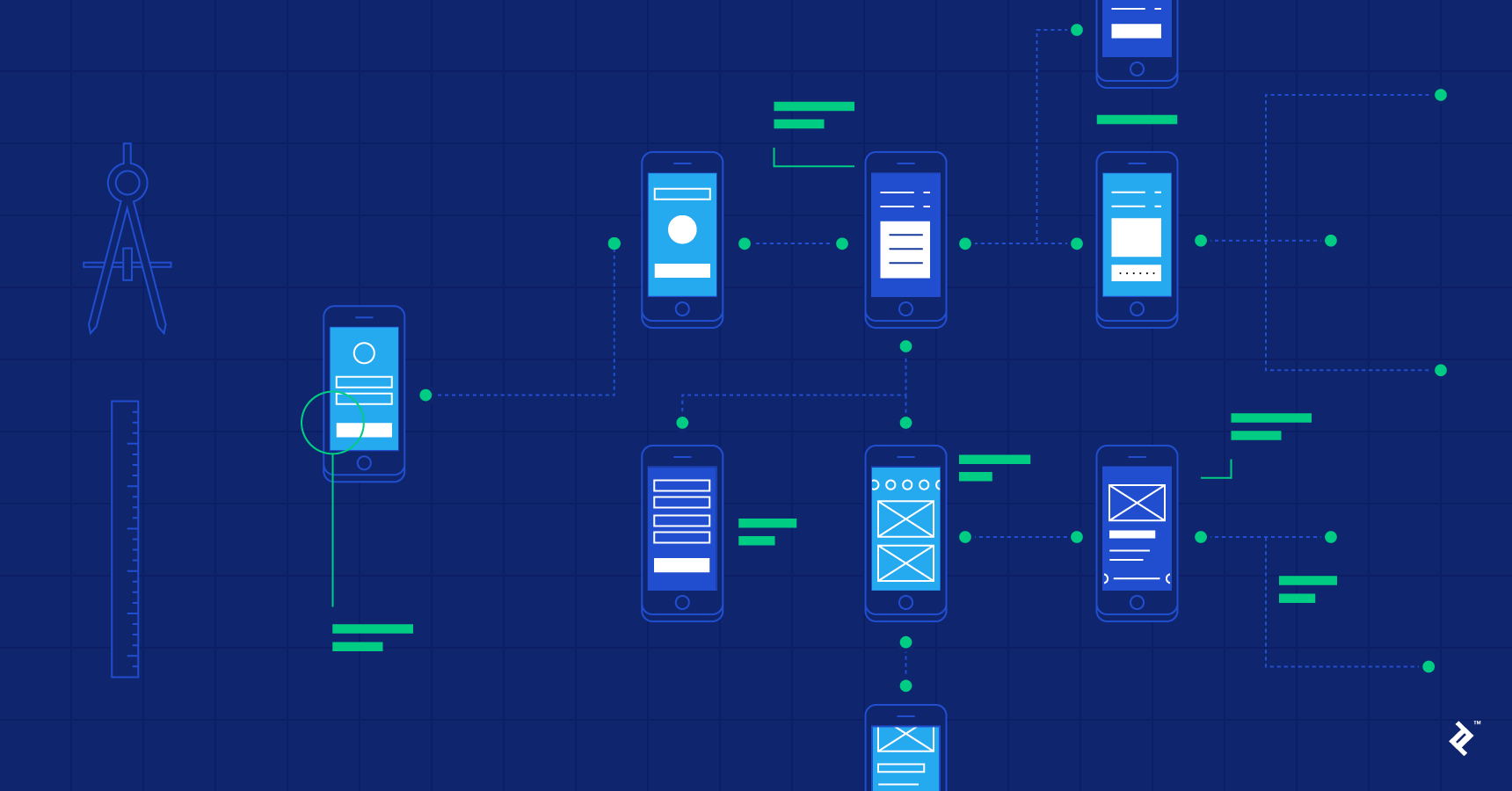
User flow can be considered as a series of user actions or simply the various states that the user needs to go through to achieve any expected goal. The main goal of any user flow is to provide designers & developers a detailed description of all the possible flows, including edge cases, errors, and various states. User flows also help businesses have a high-level view of the product and make sure their features, technical jargon, and workflows don’t confuse the user.

Wireframes

What Exactly Is Wireframing? A Guide To Wireframes

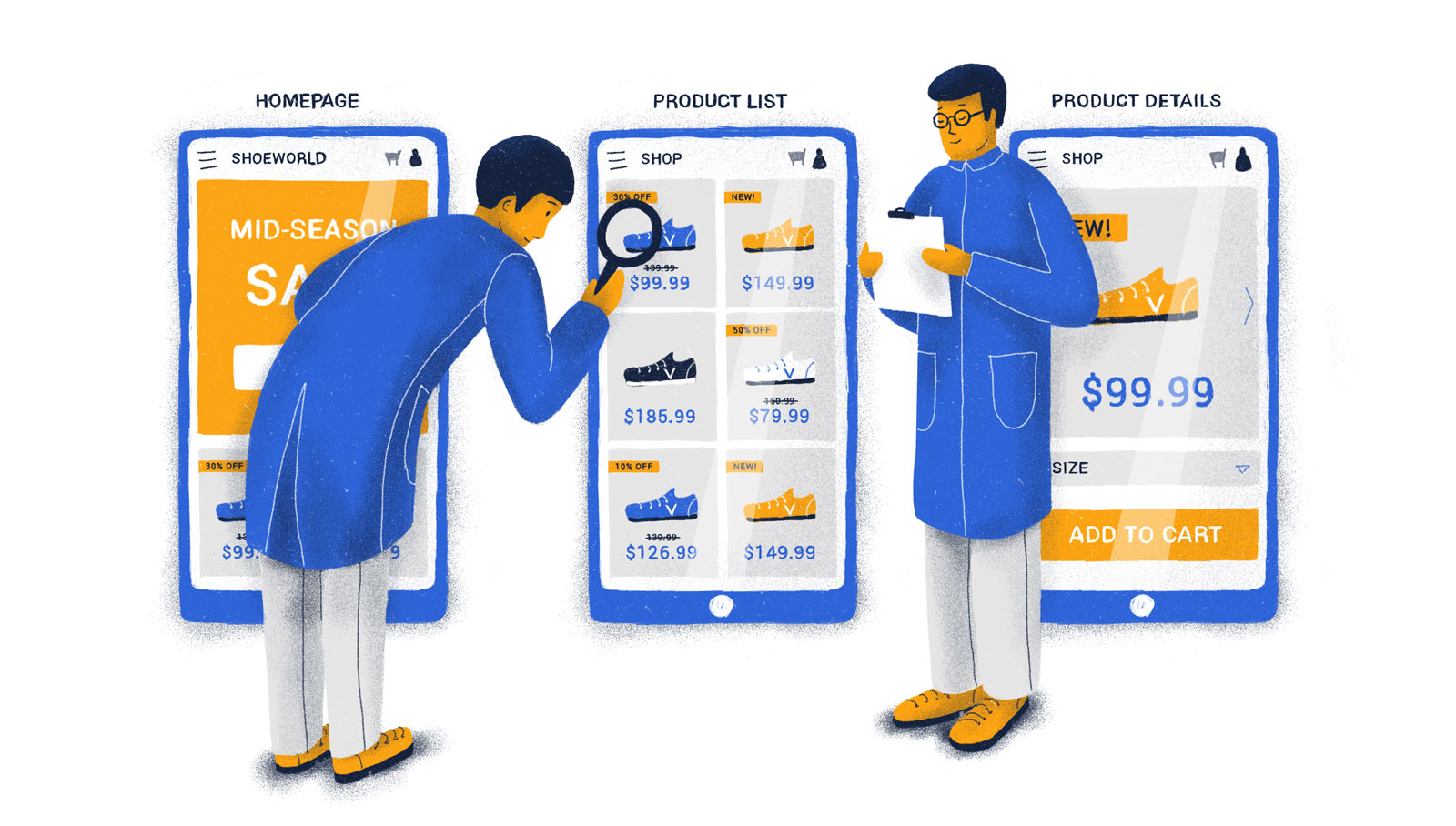
Wireframes generally give the first impression on how a website or app might look by incorporating the Information Architecture and arranging elements to best accomplish a particular purpose. Since it is the first phase of the version there is a scope of changing plans and ideas. These high-fidelity designs can be used for usability testing, and serve as an excellent reference for developers to get a good idea of the final product. Wireframes help connect the site’s information architecture to its visual design by showing paths between pages. It also helps prioritize content through the determination of how much space to allocate to a given item and where that item is located.

Visual designs

Interaction and Visual Design | UI UX Design Agency Singapore

The visual design may be considered as the “final coat of paint” on the product but it’s not just that: visual design can greatly affect the UX of a product, and therefore must be approached very carefully. Hopefully, a lot of interaction design and usability heuristics were worked out during prior steps of the UX design process so that the designers can focus on the visuals. It’s one last opportunity to take the product to the next level. Visual design is the last step before handoff to developers and the phase where a style guide and final specs are crafted. It’s not just about “making things pretty,” but also an opportunity to strategically define & implement the brand’s identity into color schemes, usable layouts, creating contrast, and visual hierarchy.

Animations

????????? ????? ?????? (Pretty Hard Tbh) | She-Ra! Amino

Animations are used purposefully to enhance the overall user experience and guide users along the way. They are used for various purposes like feedback, continuity, directing attention, etc. These animations in the form of GIFs, videos, or Lottie files are used by developers to implement into the final product. When animation is used subtly, it can help users build mental models about how the system works and how they can interact with it. UI animations are subtle, unobtrusive, and brief micro-interactions, they can improve the user experience and can communicate feedback and state changes, prevent disorientation, and strengthen signifiers.

Also, animations offer a level of sophistication to an experience and help diversify the product experience in the marketplace.

Design system

Documentation—the Key to a Successful Design System | Adobe XD Ideas

A design system can be considered as a set of design-specification documents that are intended to be one single source of truth that groups all the digital elements for any brand/product. Style guides, rules for typography, colors, responsive behavior, photos, and visual designs as a comprehensive design system are usually the ultimate handoff to the clients and the developers. Some style guides and specifications are put together manually, and others are generated automatically. This design system can be thought of more like “bibles of style” on the shelf that everyone on the team can refer to.

Design Systems will also influence and compliment brand identity within digital marketing efforts by extension which is a value add to clients & marketing/product teams!

Visual design specification

Diagram of Graphic Design Specification》 on Behance

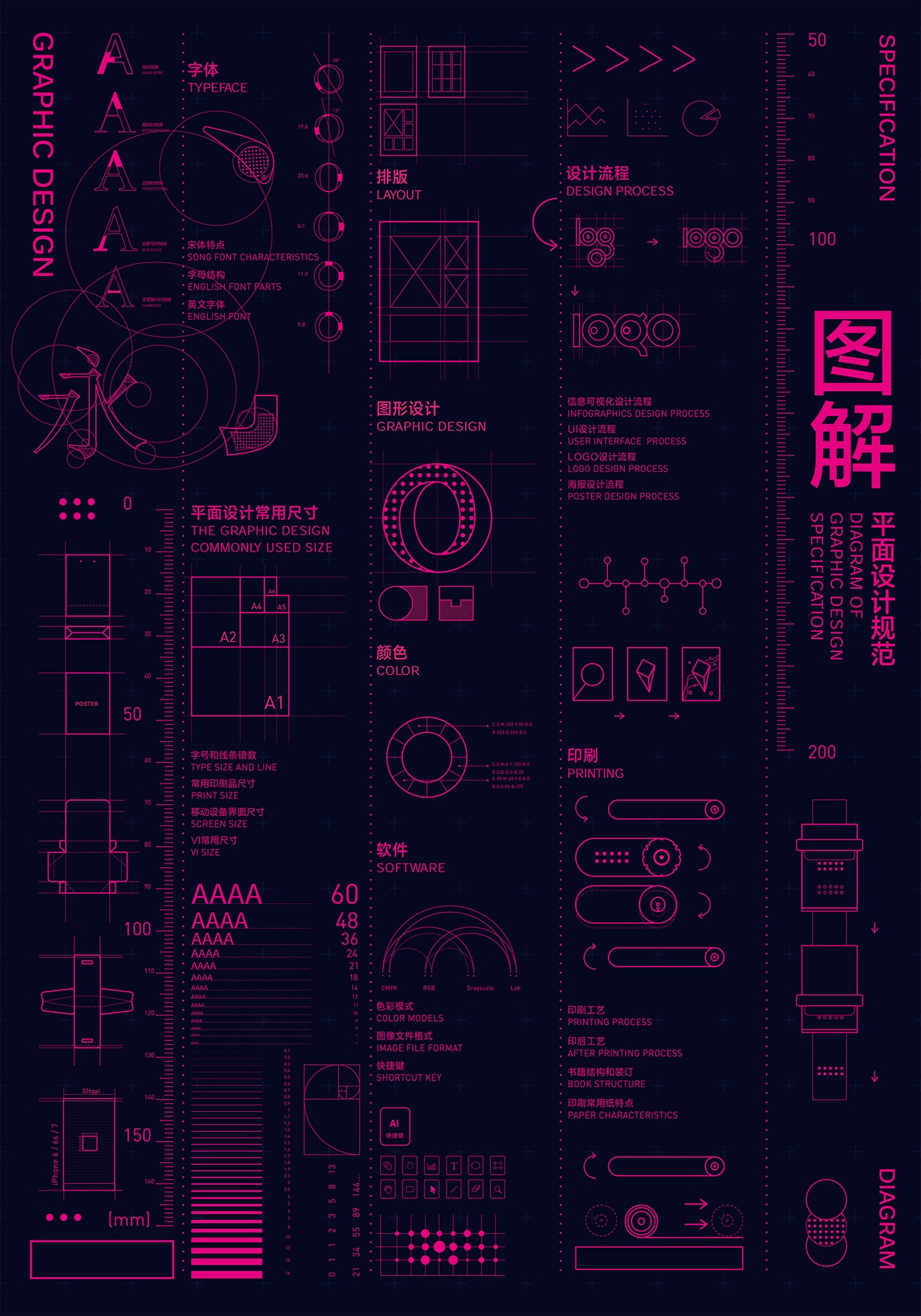
The final step in the design workflow is to create specifications for development teams. Margins, padding, assets, element measurements, color codes are various small details that need to be considered while building any product. These minor details if missed can impact the overall user experience of the product.

How hard will it be to add some new deliverables soon?

Design deliverables as mentioned, communicate how a direction can be achieved to lay that final product. Changes in these deliverables are expected over time according to the shifting user behavior and variance in business needs. Now, adding new deliverables is pretty easy but ensuring its consistency, accuracy,  and quality is the most difficult part. Most importantly above and overall, is validating and carefully considering whether that deliverable is truly adding value to the entire project or the workflow to be specific.

Conclusion

UI UX design deliverables again vary according to the needs of the client and project priorities.

The deliverables and the way they are handed off, the methods per se are more than enough as a whole. Some parts of the documentation can be done parallel to the process or some are done before or after the process. Now the tools used for these deliverables can vary to an extent, but that’s a topic for another article.

Thank you for reading this blog & stay tuned for more articles on thought leadership.

The Mobile App Industry’s Reaction to the Facebook Data Privacy Affair

Facebook Data Breach: How to Tell If Your Account Was Exposed | Fortune

Facebook Data Breach affected over 87 Million Users in March this year and the days that followed are affecting the millions of mobile app development companies globally.

This is the story of what happened and how it continues to affect the mobile app development industry even days after the fire has settled.

Backstory of What Went Down with Facebook and 87 Million Users in March 2018

Another huge data breach, another stony silence from Facebook | Carole Cadwalladr | The Guardian

In the weekend of 17th March 2018, the news and uproar arose against Facebook when the news came out that the social media giant had been wrongly sending out personal user data to Cambridge Analytica, the political consultancy that worked on Trump 2016 election campaign.  The case was not that of a hack, it was of not informing the users in black and white of what data is being shared to the third party apps that request access into not just users’ but also their friends’ Facebook profile.

The next few days were utilized by Facebook in large scale reputation management – accepting what happened heads on and making auditing of all third party apps, to see how they are using the user data, their action plan.

With the news of data breach having settled now, the restriction on mobile app developers who are accessing users’ Facebook profile remains.

The Direct Impact of Facebook Data Breach on Mobile App Development Companies, Globally

Following the day the data breach news broke out, Facebook has put all the third party apps that are associated with the social media platform under audit scrutiny. The brand is now going through all the apps analyzing what information they are taking and how they are using more minutely than before. This, in turn, resulted in Facebook banning over 200+ mobile apps.

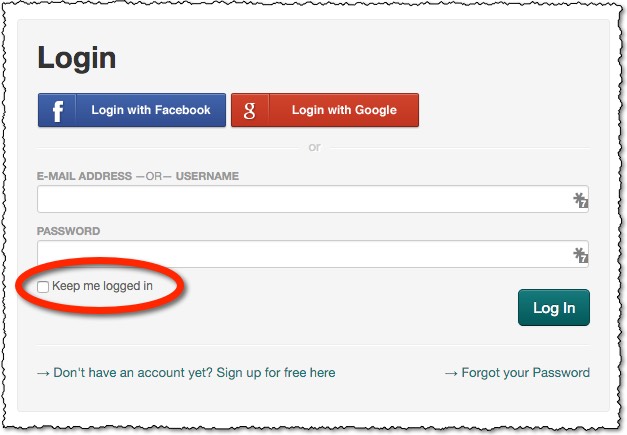
Under its new data privacy statement, Facebook has put its foot down on the decision that it would be taking away the developer access from apps that are not being used by a user in over 3 months. Facebook also said that it is changing the login process in the next version as a system that would limit the access data to only the users’ name, profile picture, and email address. If the app needs any more access it will have to seek Facebook’s permission.

Also, Facebook has announced the new set of European Privacy controls, which highlights that users will now be asked to give permission if they wish to see an advertisement from the third party apps, giving the control of personalization to the end users.

Following this, doing targeting advertisement through Facebook has become a little difficult for the app developers. The app development companies that also handle the marketing efforts might have to start looking at other social media platform for app marketing opportunities.

What should be the next plan of action of the mobile app development companies

Incidents like these, like what happened when Uber got hacked or when PayPal was hacked, end up giving a direct negative blow to the app development industry, with Facebook incident, it’s no different.

The biggest impact that mobile apps that give login access through Facebook have faced is a decline in the login rate emerging because of the lost user trust into how their data will be used.

As mobile app development companies, it has become our responsibility to ensure that we have a framework in place where the exact detail of how the information is being used is specified to the users. We will have to make conscious efforts to only take in that information that the app actually need to function.

As for asking for viewing friends’ profile for marketing goes, apps should look at other ways to extend their user base at the back of one user. They should make use of another marketing medium like discounts on sharing the app or sharing the recent purchase on Facebook to take the word out.

Going a little in-depth in the technical side, here are the things that a mobile application will not be able to do with Facebook bringing major changes, rather restrictions in the access that its API is giving –

1. Related to Login

Manula software updates related to "login"

  • Users will no more be able to publish anything on Facebook through the business’s mobile application.
  • Apps asking for following information will have to go through a strict security check before the permission is given – Users’ Friends, events, likes, group, photo, post, video, and tagged places.
  • Apps will no more be able to get following information through users’ Facebook login – religion, politics, relationship, friend list, education, work, about me, and activity preferences like music, book, movie, etc.

2. Related to Facebook Events

13 Ways to Use Facebook Events for Your Brand | Sprout Social

  • Apps will no more get following information – attending, declined, comment, feed, interested, no reply, photos, posts, videos, and comments.
  • Companies can no longer post operation on maybe, interested, attending, or declined edges.

3. Related to Friends

This study will make you think about how many Facebook friends you have | From the Grapevine

  • Facebook has removed the following social contexts – Friends who like, Friends tagged at, music friends heard, videos friends watched.
  • Mutual Friends API is not available anymore
  • Apps’ right to invite friends will be returned with an empty data set.

4. Related to Tags

  • Apps will no longer be able to get access to photo, video, or post of the non-app users who have been tagged by the app users on Facebook.
  • Apps will no longer be able to view users’ tagged places
  • Apps will no longer get to see the detail of friends users tag on posts or photos/videos.

5. Related to User Information

privacy

  • Apps will no longer be able to get any user information related to – About, Education, Friend List, Interest, Political Inclination, Religion, Relationship, Website, and Work.

Now that you, as a business that is on mobile using the Facebook API, know what all restriction you will be facing following the Facebook new data privacy new guidelines, let us look at the solution that you have.

The only solution that you have left with amidst all the restriction and scrutiny is changing your business model.

You will have to find other ways to get users’ information beside relying on Facebook for it. Plus, your app layout should be clear enough for the time when Facebook scrutinizes it for the rightful intent behind collection of user information.

In short, if you want to continue using Facebook as a mode of getting user data you will have to be your intention known and even then, it is time to expand your advertisement mode and not rely on just platform.

API Development: A Complete Guide

What is API: Definition, Types, Specifications, & Documentation?

Assuming that you’ve heard the word ‘API’ for like zillion times while communicating with mobile app developers, today I’m going to cover everything about APIs in this article. So, put your seat belts and get ready to get into the world of APIs – the superheroes behind the functioning of the mobile apps.

Let’s begin with what are APIs?

1. API

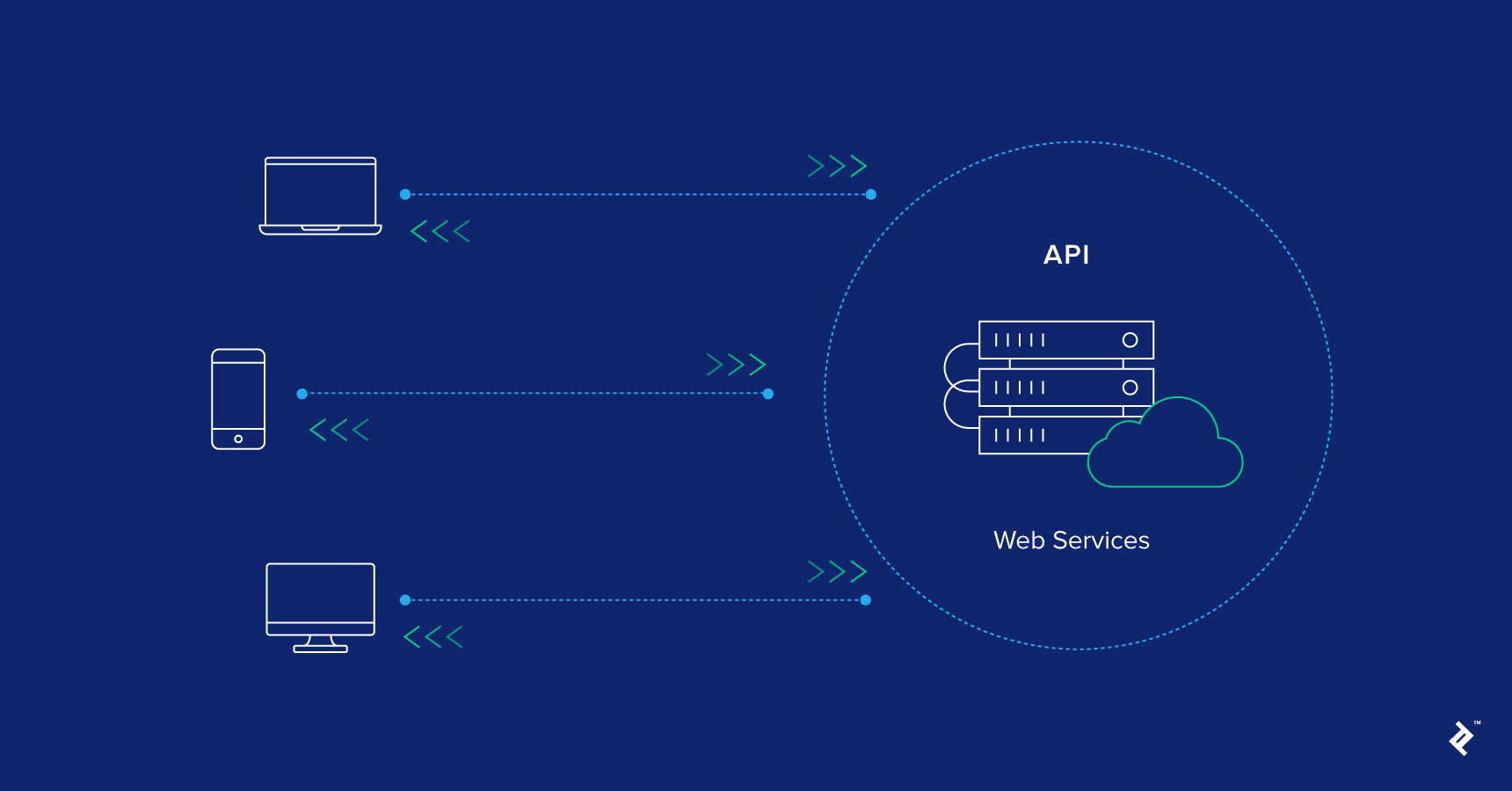
API(Application Programming Interface) is a set of instructions, standards or requirements that enables a software or app employ features/services of another app, platform or device for better services. In short, it’s something that let apps communicate with each other.

For example, when we hit on the ‘Connect Facebook’ button on Candy Crush, it does not ask us to enter our Facebook account details. Rather, it accesses the data from the Facebook server and let us enjoy playing – all thanks to API.

An API is the base of all the apps that deal with data or enable communication between two products or services. It empowers a mobile application or platform to share its data with other apps/platforms and ease the user experience without involving the developers. On the top of it, APIs eliminate the need to build a similar program or platform from scratch; you can use the existing one of some other app/platform. Because of these factors, both app developers and business leaders focus on API development.

If you are also interested in API development or wish to gain a sound knowledge of the same, keep reading ?

Before we delve further, let’s just have a look at the basic terminologies that will make it easier to understand the concept.

2. Terminology

What is Terminology Management in Translation? - Asian Absolute Ltd, UK

a) API Key: When an API request through a header or parameter to recognize the requester, the authorized code passed into the request is said to be an API Key.

b) Endpoint: When an API interacts with another system, one end of the communication channel is termed as Endpoint.

c) JSON: JavaScript Object Notion or JSON is said to be a data format used for APIs request parameters and response body.

d) GET: The RESTful API’s HTTP method of obtaining resources is called GET.

e) POST: It is the RESTful API’s HTTP method for building resources.

f) OAuth: It is basically an Open standard authorization framework that renders access from the user’s side without directly sharing the credentials.

g) REST: REST (Representational State Transfer) is a kind of programming architectural implementation meant to enhance the efficiency of communication between the two devices/systems. It is light-weighted and based on the idea of making a particular data available only when requested by sharing references to the data instead of the entire copy of the data itself. The systems enforced on this architecture are said to be ‘RESTful’ systems, and the most overwhelming example of RESTful systems is the World Wide Web.

h) SOAP: SOAP or Simple Object Access Protocol is a messaging protocol for sharing structured information in the execution of web services in computer networks. It works with XML information set and application layer protocols (like HTTP and SMTP) for message format and message negotiation & transmission, respectively.

i) Latency: Latency is defined as the total time taken by an API in the process from the request to the response.

j) Rate-Limiting: The term API Rate-limiting refers to the process of defining the rate at which an end user can access the APIs. In other words, it means restricting the number of requests a user can hit to an API per time.

k) API Throttling: The process of regulating the usage of APIs by users during a particular time period is called Throttling. This can be used for API limiting. For example, you set the limit of 1000 API requests per day. When the user hit the 1001 request, the server will send 429 messages as HTTP status to the end user along with the message, “Too many Requests”.

For more terminology and acronym, refer this site.

Now, as you know what are APIs, are armed with the terminologies and are familiar with the anatomy of the growing API market, let’s dig deeper into the technical part – beginning with how do APIs work?

3. Working of API

What is an API? How does it work? | by Amanda Kothalawala | Medium

Suppose you opened some XYZ app/website to book a flight. You filled the form – you entered the departure and return date, city, flight, and other relevant details – and submitted. With a fraction of seconds, a list of flights appears on the screen along with the price, timings, seat availability, and other details. How this actually happens?

To provide such stringent data, the platform sent a request to the airline’s website to access their database and get relevant data via API. The website responded with the data which API delivered to the platform and the platform displayed it on the screen.

Here, the flight booking app/platform and airline’s website act as endpoints while API as the intermediate streamlining the data sharing process. When talking about communicating the endpoints, the API works in two ways, namely: REST and SOAP (see definition above).

Though both the methods bring effective results, mobile app development companies prefer REST over SOAP since SOAP APIs are heavy and platform-dependent.

To understand the API lifecycle and working process in detail, contact our experts today!

Now coming to the main part – How to develop an API? What tools and technologies to choose? What practices to adopt for an effective API development?

4. Tools for Developing an API (like a PRO..)

While there are a plethora of tools and technologies equipped into the process of creating an API, the popular tools and products for developing APIs for developers are:

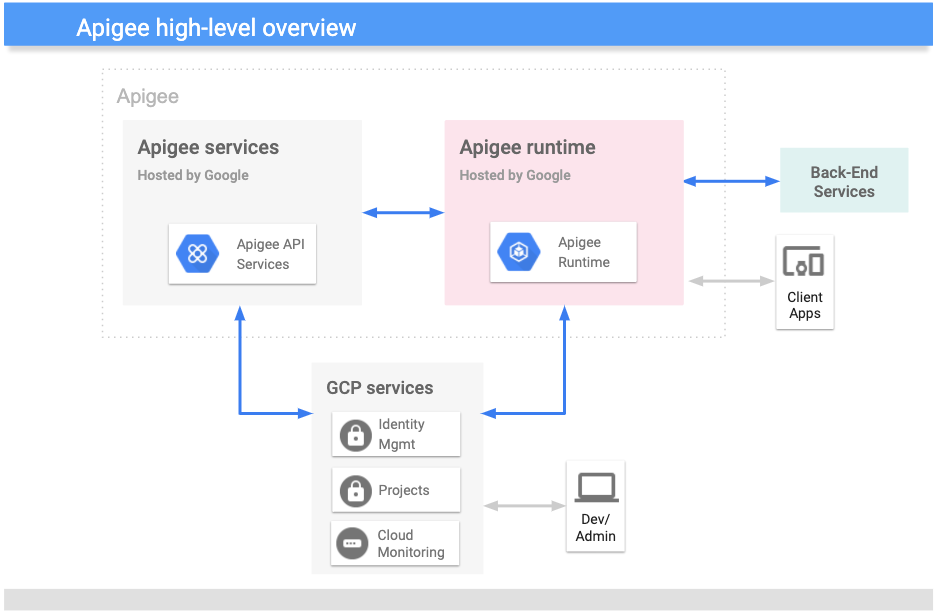
a) Apigee: It is a Google’s API management provider that assists the developers and entrepreneurs to triumph at digital transformation by reestablishing towards an API approach.

What is Apigee? | Apigee X | Google Cloud

b) APIMatic and API Transformer: They offer sophisticated automatic generation tools to build top-quality SDKs and code snippets from API specific formats and transform them into other specification formations, such as RAML, API Blueprint, etc.

Transformer | APIMatic

c) API Science: This tool is primarily used for evaluating the performance of both internal APIs and external APIs.

API Monitoring and API Testing : API Science

d) API Serverless Architecture: These products assist mobile app developers in designing, building, publishing and hosting APIs with the help of a cloud-based server infrastructure.

e) API-Platform: This is one of the open-source PHP framework that is apt for web API development.

API Platform: REST and GraphQL framework on top of Symfony and React

f) Auth0: It is an identity management solution used to authenticate and authorize APIs.

Secure your React Apps with Auth0 — Part I | by Aiska Basnet | wesionaryTEAM | Medium

g) ClearBlade: It is an API management provider for embracing the IoT technology into your process.

ClearBlade - Crunchbase Company Profile & Funding

h) GitHub: This open-source git repository hosting service let the developers manage code files, pull requests, version control, and commenting that are distributed across the group. It also let them save their code in private repositories.

About · GitHub

i) Postman: It is basically an API toolchain that empowers the developers to run, test, document, and evaluate the performance of their API.

Postman Surpasses 10 Million Users as API Usage Booms | Business Wire

Although the world is full of APIs and APIs, there is still a major gap in utilizing the perks of API. While some APIs make integration to the app a breeze, other turns it into a nightmare. To help you out in ensuring that you build a former one, here are some of the factors related to APIs for developers to consider:

5. Must-Have Features of an Efficient API

Web API Design: 5 Best Practices to Know | Toptal

a) Modification timestamps/Search by criteria: An API should let the users search data based on different criteria, like a date. This is because it’s the changes (update, edit and delete) that we consider just after the first initial data synchronization.

b) Paging: Many times, it happens that we do not want to see the complete data changed, but just a glimpse of it. In such a scenario, the API should be capable of determining how much data to display in one go and at what frequency. It should also inform the end user about the no. of pages of data remaining.

c) Sorting: To ensure that the end user receives all the pages of data one-by-one, the API should empower the users to sort data as per the time of modification or some other condition.

d) JSON Support/ REST: Though not compulsory, it is good to consider your API to be RESTful (or providing JSON support(REST)) for an effective API development. The REST APIs are stateless, light-weighted and let you retry the upload mobile app process if it fails. This is quite tough in case of SOAP. Besides, JSON’s syntax resembles that of most of the programming languages, which make it easy for a mobile app developer to parse it into any other language.

e) Authorization via OAuth: It is again necessary that your API authorizes via OAuth since it is faster than other methods – you just need to click on a button and it’s done.

In short, the processing time should be minimum, response time good and security level high. It is of paramount importance to put efforts into the best practices for securing your application, after all, it deals with a heap of data.

6. Best Practices for Building the Right API

a) Use Throttling: App Throttling is a great practice to consider for redirecting overflow of traffic, backup APIs and safeguarding it from DoS (Denial of Service) attacks.

Throttling Schmottling – Use Speedify to Beat Those Speed Bumps

b) Consider your API gateway as Enforcer: While setting up throttling rules, application of API keys or OAuth, the API gateway must be considered as the enforcement point. It should be taken as a cop that lets only right users get access to the data. It should empower you to encrypt the message or edit confidential information, and thereby, analyze and manage how your API is being used.

c) Allow overriding HTTP method: Since some proxies only support GET and POST methods, you need to let your RESTful API override the HTTP method. For doing so, employ the custom HTTP Header X-HTTP-Method-Override.

How to implement a DelegatingHandler for X-HTTP-Method-Override in Web API | InfoWorld

d) Evaluate the APIs and infrastructure: In the current time, real-time analysis is possible to get, but what if API server is suspected to have memory leaks, draining CPU or other such issues? To consider such situations, you can’t keep a developer at duty. However, you can perform this easily via using numerous tools available in the market, like AWS cloudwatch.

e) Documentation: Last but not the least, it is profitable to create an extensive documentation for an API that let other mobile app developers easily understand the whole process and utilize the information for offering better user experience. In other words, a good API documentation in the process of effective API development will lessen the project implementation time, project cost and boost the API efficiency.

Javascript Code Documentation - My Approach to Documenting Project

Now as you have gained an in-depth knowledge of what are APIs and what factors to consider while developing one, are you interested in API development? If so, reach to our experts.

FREQUENTLY ASKED QUESTIONS ABOUT API DEVELOPMENT

1. What is REST API and SOAP API?

REST (Representational State Transfer) API is a software architectural style that describes a complete set of constraints to be employed for building Web services.  Whereas, SOAP (Simple Object Access Protocol) is a protocol much complex by adding more standards than REST, such as security

2. How do I make a good RESTful API?

Making a good RESTful API is easier when you follow these practices:-

  1. Use Throttling
  2. Considering your API Gateway as Enforcer
  3. Allowing overriding HTTP method
  4. Making a proper documentation
  5. Determine the APIs and infrastructure

3. What is API and types of API?

API (Application Programming Interface) is a collection of instructions, and requirements that let a software or mobile application utilize the features/services of other applications, platform or devices for exceptional services.

There are basically different types of API:-

  • Web service APIs
  • WebSocket APIs
  • Library-based APIs
  • Object remoting APIs
  • Class-based APIs
  • Hardware APIs, etc.

4. What is JSON API?

JSON (JavaScript Object Notation) is an encoding scheme created to eradicate the need for an ad-hoc code for each app to interact with servers in a particular manner.

Learn to coding with the help of the best App Developers in the world

Learn to code with the help of the best App Developers in the world
Coding has placed itself as one of the most secure jobs in the current world. The demand is set on a high priority mode for a number of years to come.

This is the reason why more and more people who are even mildly interested in technology are preparing to become coders.

However, even among this stable demand in the job market and the passion to follow the path, a number of people are still thinking twice before getting into it, solely because of the misconception that it would need a degree and years of practice to become a coder and join some glorious app development company.

If you too are the one restricting yourself from realizing your code dream because of this misconception, we have listed down ways that you can learn how to code. A list that has been curated by our team of skilled coders.

Before we get into the ways you can learn how to code, let us look into some of the reasons that are motivating people to learn how to code.

1. What is prompting our generation to take up Coding courses

a. It will be around in the future

Learn to code with the help of the best App Developers in the world

When one takes up a course, the idea is to not go with the one whose demand is short lived but go with one that is least replaceable. And, when we talk about the job trends, the one that is going to be around for the foreseeable future and beyond, it is Coding. The tech industry is only going to grow (with many more programming languages coming up) and the only way to grow with it is by joining the club and becoming technical.

b. Demand is much more than supply

Learn to code with the help of the best App Developers in the world

The demand for coders is much higher than the number of coders in the industry – a scenario that doesn’t seem to be changing anytime soon.

Having much more demand than the supply comes with its own set of perks. You get to earn much higher than your years of experience and the chance of finding a job irrespective of the geographical boundaries is also much higher.

c. A lot of career options at the back of a strong foundation

A great career strategy relies on strong foundations By IIBM Institute

If you work on your code foundations today, you will have in front of you a series of career options. Even if you are preparing yourself to be a flappy bird developer, with time you will be able to branch out in coding involved with a number of disruptive technologies like AR/VR, Blockchain, or even AI.

Now that we have seen the reasons that are motivating people across the globe to become coders, let us now look into the ways you can learn how to code, even without a programming language experience or a computer science degree. These are the ways that have been suggested by our team of developers who themselves have developed over 500 apps belonging to a range of different disruptive technologies like Chatbots, AI, and Blockchain, amongst others.

Let’s begin.

2. Ways You Can Learn How to Code Without a Computer Science Degree

Okay, a slight detour again.

Before we get into this journey of learning how to code let me help you finalize a programming language first, the one you should start with.

The basic programming language that I would suggest to start with is JavaScript. The language comes in very handy when you are developing an app – one that can be of any type, no matter how complex. The industry demand for JavaScript developers is extremely high. No matter what job portal you are looking into, you will find a listing for JS developers there.

Also, the JavaScript developer community is an ever growing one. New tools are always coming up in the JavaScript industry, giving you, a beginner, a chance to join the league of developers who come with years of experience in the domain and are yet to explore the new batch of tools.

Once you are adept with JavaScript, expand your learning to a more platform specific language. The present and the near future belongs to Kotlin for Android app developers and Swift and iphone app developers. So, choose a platform that you are even remotely passionate about and invest in its specific language.

Now that you must have gathered an idea of what programming language you would like to delve in further, let us now look into what we gathered here for – to learn how to code when you do not even know its basics.

3. Online Courses to Learn Coding From

The Ultimate Guide to Coding for Beginners - Skillcrush

  1. Code.org – Their courses are majorly designed for the K-12 students, but anyone who is looking to start fresh in the coding industry can enroll in these courses.
  2. Codecademy – It is a free resource for learning every major web programming language out there in the industry.
  3. Khan Academy – They have a range of topics to meet the learning needs of coders irrespective of their learning level
  4. Learn Swift – If iOS App Development is what you wish to do, the site is your Meccah. It has pages and pages of data that would help you learn Swift.

4. YouTube Channels That Will Help you Code

11 Best YouTube Channels for Coding and Programming | IE

  1. Learn.code Academy – Topics it Cover – Responsive Design, Sublime Text, Node.js, Backbone.js, Angular.js, Deployment Strategies, etc.
  2. Thenewboston – Topics it Covers – C programming language, Android development, Python, MySQL, etc.
  3. ProgrammingKnowledge – Topics it Covers – Java, C, Python,  Android programming, JavaFX, Bootstrap, etc
  4. Derek Banas – Topics it Covers – Java, PHP, Ruby, HTML, C++,  Python, Android, Assembly language, etc.

5. Blogs you should Follow to Become Better Coders

Top Programming Blogs and Websites Every Programmer Must Follow — agile actors

  1. SitePoint –The blog continuously keeps getting updated with new topics ranging from everything – HTML, CSS, Swift, React.JS, amongst a lot of others.
  2. David Walsh – Managed by Mozilla’s senior developer, David Walsh, the website has a lot of information specific to developers, presented in how-tos, demos, and tutorials.
  3. A List Apart – Have tons of articles for coders irrespective of their expertise level.
  4. SoftwareHow – The blog is a go to the website for anything related to software tools. It comes with a huge collection of guides, tips, and software reviews.

The list would help you immensely at becoming better coders over time. The one thing that you should do though before you drop the idea of learning how to code is at least try one other method of learning, irrespective of what your current mode of learning is.

Incredible Chatbot Design Strategies to Turn Your Bot into an Interaction Ninja

Why the World Needs Chatbots. When Facebook announced the Messenger… | by Akshay Kulkarni | Chatbots Magazine

48% of global consumers accepted that they would rather connect with a company over chat than any other source of contact. 35% of the users would like to see more companies incorporating chatbots. As for the business side of the story, chatbots save around £6 billion per year and a simple chat option in the mobile app brings up the revenue by over 30%.

These are only a snippet of thousands of statistics that are all around the internet and lying on a million office reports hinting towards how chatbot app development has turned out to be the best business decision.

Done right, chatbots can single-handedly make your company approachable and open to business even when you sleep. Done wrong, it leaves users unsatisfied and complaining about how your brand is slow in the logic department.

What helps in making a chatbot effective, besides of course passing all your chatbot success worries to a chatbot app development company, is having a right strategy in place.

1. Have a Purpose

Chatbot Error: 404 (Witty responses not found) - OnePlus Community

Knowing what purpose your chatbot would solve is the first step in designing a working, revenue-generating chatbot design strategy in 2018.

The last thing that you would want is to join the chatbot world just because every business is on it. While it is true that it benefits a range of different industries, it is also true that not all businesses need it, especially the ones that are working only around a particular geographical location i.e. in the same time zone.

But if yours is a business that would benefit immensely with Chatbots, think of the process that you would like to give your bot the autonomy of. The scale of the process that you are looking forward to leaving in the hands of chatbot will help decide which bot type you have to invest in (more on this later).

2. Conversation Flow

6 Steps for Creating a Smooth Chatbot Conversation Flow

The flow in which your chatbot would converse is one of the most important things for your chatbot design guide to cover.

The ideal situation when it comes to deciding how the conversation should flow is that the bot should start with a general salutation followed by asking questions and then pitching the product when the user put in the respective action words like ‘Tell me More’ or ‘Give more information’.

The biggest mistake that businesses make is pitching in the product as soon as the user becomes active on the website or page when they should go with a more human-like conversation flow.

3. Bot Personality

The Chat Bot Personality. Choosing the perfect personality for… | by Pulse Chat | Chatbots Life

The only way to make your bot more human-like is to give it a personality. Now when I say personality, I am not implying you to create an avatar and anime man. No, when I say personality, I mean giving it a tone, a difference in the US and UK English, slang, and age-appropriate responses.

Now, in the normal scenario, a business doesn’t have a specific exact type of customer base, so would you keep making bots aiming for each of them to meet specific criteria? The answer is obviously No. What you can do is ask your users’ background and change the initial conversation level of the bot.

4. Give Context From the Beginning

How to give your chatbot context and improve CX without coding

Make the purpose of your chatbot clear from the first two messages itself. Aim for a scenario where your user knows exactly what the bot would be helping them with and have no misinterpreted expectations and then a bad customer service instance.

The first two dialogue to and fro should be enough for your user to know what is to be expected from the chatbot. If you miss this step, the chances are that your bot dashboard will get filled with repeated questions and frustrations of not getting answers.

5. Share before Publicizing

So you have developed an amazing bot that converses with masses effortlessly, specializes in giving the users the exact information that they need, which even varies from context to context. What’s next?

And the answer does not make it live on your website or integrate into your mobile app right away. The answer is to first share it with your in-house teams to see if it’s actually able to answer different questions and different contexts.

By sharing it with the team and taking their feedback, you will be able to track exactly how people are reacting to it and what changes would make the conversation more meaningful.

6. Choose your Words Wisely

10 Chatbot designs for inspiration – Customer Service Blog from HappyFox

The most important element of strategic chatbot development according to chatbot design trend 2018 is choosing the words right. Your copywriting technique should be on point to not just entice the users to start the conversation but keep them hooked enough to convert into your site’s loyal customer or subscriber.

Know that your chatbot copy has the power to make your chatbot a conversion magnet and it should be treated just like that – as a mix of emotions and conversion statements.

So, here were the pointers that would help you draft a killer, high revenue generating chatbot design strategy in 2018. The one that would result in a chatbot that people love to converse with and pay to.

Now that you know what an ideal chatbot should operate like, it is time to look into the three types of chatbots that you should invest in developing once you have your chatbot design guide planned.

The Three Types of Chatbots

1. Menu Based Chatbots

Types of Chatbots: An Overview for Business People

These are one of the most common types of chatbot available in the market today. Using this chatbot, brands give multiple options to the users to select from. These are used mainly when the users are looking for a direct answer.

One of the biggest challenges that businesses face when it comes to menu based chatbots is that the process that users will have to follow to come to the point when they get the desired answer is quite long. They have to click through several buttons and options to come on one point.

2. Keyword Recognition Based Chatbots

3 chatbot types: Which is best for your business? | Chatimize

These bots utilize the blend of AI and keywords to determine the appropriate response. They lack in performance when they are asked a lot of similar questions with similar sounding keywords, even when the context is different.

A new set of bots are now present in the market that is hybrid. They automatically switch to the menu based type when they are unable to answer users’ queries through AI.

3. Contextual Chatbots

Conversational AI: Design & Build a Contextual AI Assistant | by Mady Mantha | Towards Data Science

The most advanced of the chatbot family, these bots remember the interaction and its outcome and keeps growing on it to give better result to the users over time. They work strictly on Machine Learning and Artificial Intelligence to help users come to a decision.

As they are based on ML and AI technologies, they come with a self-learning ability, which helps in not just customer relationship management but also a positive sales conversion rate.

The ultimate decision of which chatbot type to invest in depends entirely on your business need. If yours is a simple Q&A type app where you aim at giving a quick in and out experience to your users, answering their questions to the point, menu-based chatbot app development is what you should go for. But, in case you have an assistant like mobile app idea, then you will lose your pockets a little and invest in Contextual chatbot development.

Reasons for Your Soaring Mobile Application Uninstall Rate

Mobile application unistall

Businesses and Entrepreneurs such as you, sometimes spend as high as a million figure to get their application developed and deployed in the stores. The one hope they tie all their effort and money to is generating more than what they earned as revenue from their app.

But, in come reports that over 94% users uninstall mobile apps just after 30-40 days of app install and it hit the businesses hard – Realizing that their app has fallen in the well of those 94% apps.

There are three categories in which you can divide the reasons why users are uninstalling your mobile app –

  1. The Fault in Your Mobile App Development Process
  2. The lack of Ability in Keeping Users Unannoyed
  3. Poor Ideation

We will be looking at all the three categories in detail in this article. After all, a clear indication of the problem will only help you with determining how to prevent your mobile app uninstall.

Let’s start with the first one. The Fault in Your Mobile App Development Process

Although, it sounds very obvious but the signs that the app is not developed right are not laid in plain sight. There are a number of issues that businesses ignore to double check when their app is in the development stage, which then goes on to adversely affect the user retention score.

Let us look into them individually so that you know the pointers that you have to pay attention to before you launch that app of yours.

  1. Not Paying Enough Attention to Security

Mobile app

The number one reason that keeps users at bay when it comes to apps that ask for their number, email id or bank detail is the doubt of data breach. Now even if you have kept all the crucial security considerations in mind and practice while developing the app, make it a point that you showcase the badge of security protocol to your users in application homepage, so that they know that their information is secure.

Also, as an added security feature, ensure that the cloud service that you have signed up to save the user data is hack proof. Sit with your mobile app development company and discuss the ways you can make your app tamper proof.

  1. Taking up Way too Much Space on Users’ Device

mobile application uninstall

It is a given but highly ignored fact that your app is not the only application on a user’s device. At any given point of time, users have at least 2 similar app category applications in their smartphone or tablet.

In a scenario such as this, if your app is taking a considerable MB of space on users’ device, you are digging your grave, pretty fast. There are a number of ways to ensure that the app size is small for optimizing the images and videos or manually fixing the app size from the backend. Run your app through those practices before you launch it in the market.

  1. The ‘Application Has Stopped Working’ Message Pops Up A LOT

Mobile Application uninstall

Nothing annoys an impatient user more than an application that keeps on crashing or asking to run again.

It has been noted that users bear with app hanging or stopping abruptly only till two instances and not more. So, once you start receiving messages or reviews saying that the app hangs a lot, leave everything aside and get it resolved asap.

Look at your code structure and pay extra attention in the app testing to ensure that your app doesn’t hang, or even it does, because of hundreds of queries being generated at the same time, make sure it is an isolated event.

Apart from these three, as long as you have done your testing right and have ensured that the app works like it is supposed to along with making sure that its load time is on point, straight from the application development process, you will be good.

Let us now move on to the next stage, The lack of Ability in Keeping Users Unannoyed, which has less to do with your mobile application development process and more with your incapability to keeping users unannoyed.

  1. Constant Pop-Up Notifications

mobile app unstall

Sending out notifications saying this and that to your users every hour is one turn off an event. We get it that you want your users to remain hooked to your app, but sending out notifications every hour is more a recipe for pushing them away than of keeping them engaged.

Your notification should be planned. It should come as an effect of user’s movement. Hit their device when they have abandoned your cart or when it’s time for their next lesson. Above everything else, know when to let go. If even after 7 days of zero interaction with the notification, your users are MIA, it is time to let go and stop sending them pop-ups.

  1. Constantly Seeking Rating of the application

If your app is of the kind that constantly asks users to drop a rating in the store, you are headed down the uninstall road. There are hundreds of instances when users are asked to rate an application even when they have left the review days back.

Like notifications, app rating prompt should also be well timed. Ask them to drop in a review when they have achieved something within the app and not when they are either still learning their ways in the app or when they have logged into the app after the longest time.

When you master these two arts and as an added measure, get acquainted with the power of personalization, you will be able to stay in users’ devices for a longer period of time. It’s time to move on to the last element, which you can also call the first nail in your app’s coffin – App Ideation.

Poor Market Research

application

Chances are that you went into the app game too soon. The time that you should have spent into ensuring that your app idea is different from those in the stores, was spent into wireframing or something else entirely.

Maybe you did not even give enough time into judging whether your app is even solving a real problem or not. Whatever it is that you did in name of less to no market research, is only going to fall hard on you now.

So, here were all the reasons falling into three categories which you can avoid only if you are more cautious during the whole app development process. Now, there can be a number of reasons why users uninstall your app, sometimes as weird as – app was too addictive. The truth is, you cannot always control this. But what you can control is being careful in the whole development and testing process.


A Step-by-Step Guide to Optimizing Your Play Store Listing

Google Play Store Now Lets You See Which Apps are Gaining Ranks or Getting Downvoted

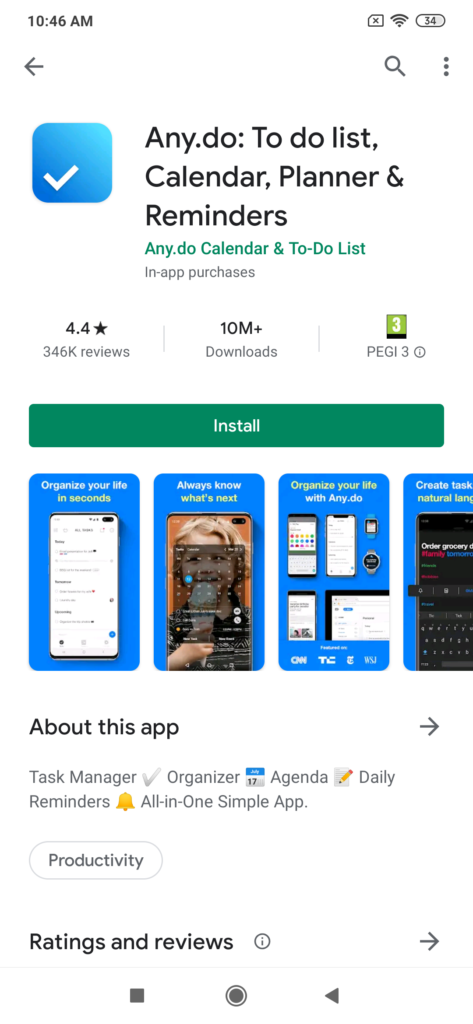
Originally incepted as a means to get Play Store to fetch the app listing to place the app higher in the list of category apps, Play Store Optimization has today become a necessary means for businesses to get their apps to rank higher among the list of thousands of similar apps in a category.

Just like your regular Search Engine Optimization mechanisms, Play Store Optimizations also show their effect only when worked from both on store and off store front.

Here is what both the factors entail-

  • On store factors – These include having the right set of keywords in the app description or its title to enable Play Store search algorithms to fetch them when showing results for a particular category. These features also play a huge role in getting an Android app featured on the store.
  • Off store factors – These include having enough backlinks coming in from different sources. The sources can be anything – articles, videos, or mentions. Another element that we will be adding here is users’ ratings and reviews. Although, they get uploaded on the store, but the app publishers have no control on them.

For a better understanding of both the factors, read on store factors as the one that the publisher has control on and the off store one as a set of an element that publishers have no control over.

Now that you know the two factors that would directly impact the rank that you are visible on in Play Store search result, let us now get in depth of it – Of getting your app optimized for the Google Play Store to reap the benefits of the time and effort you have spent into getting it developed.

1. Market Research

A Comprehensive Guide to Market Research: 4 Proven Methods | Hotjar Blog

The first step towards optimizing your app to rule the Play Store chart starts with a thorough market research.

  1. Since the end goal of all your ASO efforts is to get maximum downloads, and app store optimization is 80% about keywords and phrases, you will have to get into your users’ heads to know what they are looking for.
  2. You will have to know who your users are, what are they looking for in an app that they would then move to their home screen and what words are they using to find that application both on search engine and within the app stores.
  3. To understand what is going on in your users’ head, you will have to frequent the place they frequent to show/vocalize their needs.
  4. Once you have their insight, the next entity you will need to analyze in depth is your competitors.
  5. Competitor analysis is as important as knowing your customers’ needs. You will have to gain an understanding of what they are offering to your customers, on what mode, in what context, etc. You will have to pay attention to the power words that they are using in their app description, that are making the users install their app.
  6. Go through their review section and see what experience users are having on their app, visit their Youtube channel or go through their blog sections to know what image they are creating in the market and what their users are liking in their offering as compared to thousand other similar apps.

An insight into both – your customers and your competitors – will show you exactly what your customers are looking for and the words they are using and getting converted with.

2. Keyword Optimization

7 Tips That Will Help You Optimize Your Keyword List for SEO

With a very clear understanding of what your customers are looking for and the standards that your competitors have set, the next stage is to convert those insights into keywords and phrases that your users will search for your app with.

Before we move on the steps to optimize your app description and other app elements on the Google Play Store, let us first look into the process of finding the keywords that you should be putting in your app details page.

There are two ways of finding out keywords to use in your app’s Play Store page –

  1. Use what your competitors are using OR
  2. Go manual and find keywords that the world is using when looking for a product or service in your category.

For the first method, make use of websites like “App Annie” and “Sensor Tower“. Both the websites give you a detailed list of keywords that your competitors are ranking on, which you can copy/borrow/ steal for your own app.

If you are planning to take the manual route, these are the steps that you need to follow –

Step 1: Open your Google Keyword Planner Tool and select ‘Search for new keywords and ad group ideas’ and enter your app domain in the Search bar and click on ‘Get Ideas’. In the list that comes up, do not stress too much about the average monthly searches that are coming up on your query, focus your attention on the ‘Ad Group Ideas’ section. This section will have a list of keywords that users are also looking for or the similar keywords.

Step 2: Use reverse dictionaries available on the internet to get a list of words associated with your keyword.

Step 3: Once you have got the list of keywords ready with you, the next step is to refine the list.

There are three categories on the basis of which you should judge if your keyword is viable enough to get you good ranking on the Play Store or not –

  • Relevancy with your app idea
  • Difficulty range under 20
  • Mid Level Traffic and Search Volume.

These steps would give you a list of keywords that will help you in getting your app’s ranking up in the store along with its visibility and download probability.

Now that you have the refined list of keywords, let us now move on to their usage in your app’s Play Store page.

3. Title

12 Awesome Tips for Writing YouTube Titles That Get Views - mktoolboxsuite.com

Title is the number one element that needs to be optimized for Play Store. It has a direct impact on both search result and conversion rate. Google has extended the app title character limit to 50 characters since July 2017. To make the most of this space, put in a strong keyword next to the brand name as your app title.

An optimized title can look like any one of these four types –

  • Brand name: Keyword(s)
  • Brand name – Keyword(s)
  • Keyword(s): Brand name
  • Keyword(s) – Brand name

4. URL

What Is URL: Uniform Resource Locator Meaning & SEO Friendly Structure

The URL package is another element that can bring in a direct boost in the Play Store ranking number. You can include your keyword in the URL as well to increase its chance at visibility. Remember that you will have to check the Play Store package URL before you publish your app. Once set, it cannot be modified later.

A successful example to prove the point that having keywords in app url impacts its ranking and download probability to a huge extent, is Nintendo’s Super Mario Run game. They have added a very competitive keyword in their URL – Zara, which has made them rank a lot higher than other running games on Play Store.

5. Developer Name

Developer name, application type and developer type information of the... | Download Scientific Diagram

One of the least thought about app page elements which you can incorporate with your keyword is ‘Developer Name’ section. Also, Google saves the Developer History and apps that come with a positive developer history ranks much higher than those who don’t. But coming back to incorporating keywords for making Play Store fetch your app because of your developer name, if you make your primary keyword your developer name, you will be able to rank higher a lot sooner.

6. Short Description

Short & Long Description: Keywords in Google Play Descriptions

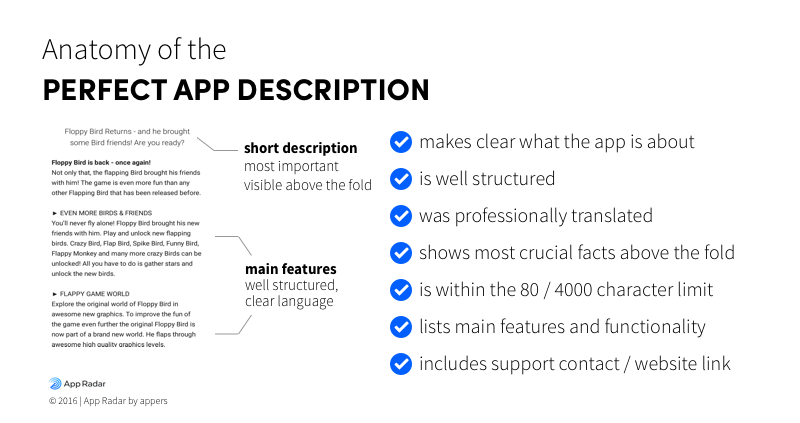
The 80 characters short description section on your app page can easily take your app name up the Play Store ranking list. You should plan the short description in a way that it has the keywords in under 20 characters and explain exactly what your app does differently from the thousands of other similar apps.

The sign of a well crafted short description lies in how seamlessly it blends keywords with the app’s USPs, while giving the users something that would grab their attention in microseconds. To gain users’ attention, a number of brands have started using emoticons in their app’s short description section.

7. Long Description

Writing Great App Title & Description for Google Play Store

Play Store App Description section is your place to shine. Unlike Apple, Google offers ample space to its developers to showcase their app, fill in keywords, and convince their users why the app is better than the thousands of similar ones in the market.

In the 4,000 character space that Play Store gives you, make sure that you have entered the keywords and their synonyms in the first line and in the last 5 lines of the description, as that is what will make it searchable.

When drafting your app description, make sure it is well formatted and structured. It should have all the necessary information that would persuade your users to install the app. Feel free to mention your accomplishments, use emojis, have details of the updates you rolled out, and social media profile names for the users to follow through.

8. Icon

System icons - Material Design

In the time when the mobile app users have no time to waste, icons are the first thing that they see before deciding whether to even click on the app detail or not. A clearly distinctive icon is what triggers maximum click throughs. For a business to make a lasting impact on its users, the icon needs to be picture perfect and an exact representation of what the app is about.

The biggest mistake that you can make is uploading a pixelated image because you were unsure of the icon size. Although, your partner mobile app development company will handle this for you, but for the sake of expanding your knowledge, here is the image detail –

  • 32 Bit png
  • 512X512 Dimensions
  • 1024 Kb File Size

There are some things that you need to be wary of when it comes to designing your app icon, such as –

  • No copying of design and layout,
  • Avoid having text on the icon photo,
  • Use the latest design trend present – it can be gradient or line icon or something absolutely fresh in the market.
  • Lastly, until you become all famous and popular, avoid using icons that are not self explanatory of what the app is about.

9. Feature Graphic

Google Play Feature Graphic Examples | Incipia

The next visual cue that your users will follow after your app icon is the feature graphic. A well designed feature graphic is not just a stepping stone to taking users to the next stage, but also a major driver of conversion rate.

Google has set two requirements for the app feature image –

  1. 24 bit png or jpeg
  2. 1024X500 Dimensions

Here’s how you can optimize the feature graphic of your android app

  • Do not place any necessary information by the bottom or near the borders of the image
  • Use Large Font Size
  • Keep changing it according to different schemes or campaigns
  • Localize the text in your featured image, if any (more into this later in the article)

Continuously keep A/B testing your featured image and its content to see what works with your users and what doesn’t.

10. Video

App Store and Google Play Screenshot Guidelines | Blog ✓ | AppFollow

Paste YouTube URL in the “Promo video” section of your Google Play Store listing to add video to your app page. Videos have become one of the most powerful marketing tools of today’s time when the users are getting less and less patient. One of the coolest things about adding a video in your app page is that the views that you get on your play store listing gets added to your YouTube views count, automatically.

Before you upload a video on your app page, know of these two requirements –

  1. Use an individual YouTube URL instead of the URL of a Playlist or Channel
  2. Make sure that the video is not age restricted and that everyone can view the video.

Lastly, just like you did with your feature image, localize your app video as well to reach a greater user base.

11. Screenshot

Google Play Store ASO Screenshot Examples | Incipia

Screenshots are your only way to create an impression about your app in front of the users. They provide a direct look into how your app looks and moves. In fact, majority of the onlookers get converted into app installers on the basis of the screens they are shown.

Your screenshots should be the best representation of your app’s features. You can even add texts or highlights on the screens to explain a complicated image. Don’t restrict to uploading just two screenshots, use all the slots that Google has given you. It also helps when your screenshots move from one to other in form of a story, so give it a shot.

Google has laid down a number of guidelines that are to be followed when it comes to uploading screenshots on the page, here they are –

  • 320X384 Dimensions
  • 24 bit png or jpeg

With this, we have now covered all the on-store factors that can up your ranking in the Play Store, and now it is time to move on to the off-store factors, which are not in control of the app publishers.

12. Rating & Review

Google Play In-App Review API: integration and experience | by David Vávra | ProAndroidDev

The first element that has an impact on play store ranking is the rating and review section of your app description page. While you don’t have a direct impact on whether users would like your app or not, you can most definitely make it easy for them to like your app by giving them an app that they would love, by default.

By being active in the review section, you can create an impression that the issues are heard and by constantly adding updates that touches upon those issues will also make you your users’ favorite. But, above all, the only resort to getting higher stars and great reviews is by offering your users an app that they need, that comes bug free, and ultimately is something that offers some value in their life.

An important thing to consider here is that you should at all times be responsive. Don’t let your users think they are unheard or ignored.

13. App Update

Google Play Store 'My apps' revamp adds Updates tab, makes sorting easier | Technology News,The Indian Express

Another non keyword related element that has an impact on bringing up the app ranking is App Updates. To be in trend and to keep offering your users something new ever so often, you will have to keep updating your android application. It can be as minor as a bug eradication or can be as major as a UI/UX change.

Although, there is no written time when an app should be updated, but you should aim for updating your app at least once in every 30 to 40 days. And, once you do, your users should be informed of the same. They should know that the app was updated and the details of the new update.

While you can send an email to every user individually, highlighting what the update was about, but the ideal practice is add the details in your app description section under What’s New or Update (version name).

14. App Localization

There are a number of statistics doing round all over the internet, hinting towards how app localization hold the immense potential of bringing in a sharp rise in the app revenue charts. Majority of the Play Store users, as opposed to the common beliefs, belong to non english speaking nations, a section that is majorly ignored when an app is designed, developed, and promoted.

Lately more and more brands are coming up with localization tactics to expand their users base and growth, revenue chart. What it means to localize is not just translating the language from dialect A to dialect B, it means changing everything from videos to visuals according to the audience that is meant to cater.

Suppose yours is a language teaching app, now instead of explaining everything your app is about in English in your screenshot or video or even your feature image, have them designed and developed in a variety of different languages, so that the native speakers get attracted towards the app as well.

15. A/B Testing

What is A/B Testing? A Practical Guide With Examples

There is no single point formula to ranking high on the Play Store listings specially when you are competing with million of other mobile apps. You will have to constantly keep making tweaks here and there to see what is working and what is users not responding to.

What we would suggest is that keep changing your screenshots, app descriptions. Keep shuffling your keyword list and changing your app’s details accordingly. It is only when you will constantly change your app’s look and read, your users would get to see something new on the page, creating a curiosity to install the app again, if uninstalled earlier.

A/B Testing should be a continuous process, you should always remain in touch with your app developers so that you are always in trend when the app users compare you with the thousands of apps in the similar category.

16. App Indexing

Mobile App Indexing and Content for SEO

The idea is that the maximum traffic you send to your app listing page, the more higher you go up in ranking charts. Now, the process of sending traffic off to your mobile app listing is not an easy one to follow. You will have to promote it in enough places and among a range of different people.

Apart from promotion, you will also have to invest time in getting your app listing page indexed. Two quick ways to make your app indexing ready are –

  • Focusing on Nouns as keywords
  • Having related words phrases as well, in addition to the specific seed keywords.

So here was the complete guide of getting your app higher on the ranking charts.

The two takeaways and parting notes that I want you to take along with you as you step in this cut-throat competition are –

A. Choose your Keywords Wisely, go with ones that have medium level traffic and competition and

B. Keep A/B Testing your ASO practices.

error: Content is protected !!