COVID-19’s Impact on Online Business

New COVID-19 Resources Available - International Society of Nephrology

The radical transformation in how people across the world are living during the Coronavirus pandemic is having a significant impact on internet businesses. While some are seeing sales plummet, others are struggling to cope with growing demand. In this post, we’ll look at how the online marketplace is changing in the current circumstances.

1. Growing demand for streaming services

Best Streaming Services 2021: The Full List Available

Millions of people are turning to movies and box-set series to keep them entertained while they are cooped up indoors. As a result, streaming services are seeing growth not just in the amount of time people are watching but in the numbers of new customers flocking to use their services. In Europe, Netflix has had to reduce its picture quality by 25% to ensure bandwidth capacity.

Increased demand means that in North America, Netflix is now forecast to more than double expected growth in new subscriptions, from 1.6% to 3.8% over the year – and that’s in a region where it is already well established. Internationally, growth is expected to rise by over 30%.

It’s not just Netflix that is benefitting. So too are other streaming services, like Amazon Prime Video, Hulu and Now TV. Recently launched services like Disney and the BBC-ITV venture, Britbox, which may have struggled to compete, might find opportunities that wouldn’t have arisen in normal circumstances.

2. Online gaming taking off

No Dice, All Bets Are Off | Outlook India Magazine

Although a narrower market, younger people forced to stay at home are driving up demand for gaming. This isn’t just increasing subscriptions for online gaming services but also helping retailers of downloadable PC games. PC gaming platform, Steam, for example, has seen its highest number of users in 16 years with traffic spikes of over 20 million at times.

3. Big impact on PPC ad spending

9 PPC Mistakes That Impact Success

The travel industry has been one of the most affected sectors by the virus and this has resulted in a slump in advertising from travel-related businesses, with some market experts suggesting it could lead to 15 – 20% reduction in travel advertising revenue for Google and Facebook. This figure is likely to be compounded by all the other businesses that rely on tourism also cutting their ad spend.

It is not just travel-related businesses who are reducing advertising. With many companies forced to close due to the effects of social distancing, they too will be cutting back or suspending advertising altogether. In 2018, McDonalds spent over a billion dollars in advertising just in the US. It has now closed all its UK stores and is shutting thousands of others globally as the pandemic spreads. It obviously won’t be damaging its cashflow by spending huge amounts on ads over this period. With industries such as entertainment, high street retail, restaurants, etc., also affected, Google and Facebook could see ad revenue fall by up to 45% over the next few quarters.

However, it is not all bad news. With fewer advertisers competing for ads, the cost per click in many sectors is likely to reduce, meaning those companies that can still derive value from advertising will see their budgets go further. In addition, consumers are clicking on more ads associated with employment, education, hobbies, leisure, arts and entertainment.

4. Holiday bookings won’t dry up

COVID travel: Where to book your trip once pandemic deals dry up

While travel is out of the question for most people at the moment, more than half of those who take frequent holidays are likely to book trips further into the future. Business travellers are even more likely to make long term bookings. While this is not the immediate relief those in the travel industry and all the depended industries need, the taking of deposits can help with current cashflow problems. Most of these bookings will take place over the internet.

As the pandemic begins to recede, it is predicted that most holidaymakers will, initially, seek domestic holidays where there is likely to be less disruption impact by failing tour operators and airlines and where the impact of the virus is more certain than abroad.

5. Global increase in online shopping

Online shopping is catching on among women in India

As fewer people go out, their shopping habits are moving online. Even retailers seeing a boom in sales, like supermarkets, are having more customers using their delivery service simply to avoid the risk of going to the store.

This rise is happening globally. An Ipso-Mori study found that 18% of UK consumers were shopping more online. In countries which have been more badly affected, the numbers of people increasing their internet shopping is even more substantial: 31% in Italy and 51% in China. However, the biggest increases are in countries like India 55% and Vietnam 57%. This rise has meant some companies are struggling to cope with demand. Amazon, for example, is so busy it is recruiting 100,000 additional staff, raising wages and making its employees work overtime to meet demand.

One area of particular growth is in the use of grocery apps, which are seeing unprecedented numbers of downloads in the US. Instacart downloads during March are already more than triple that of February while Walmart’s app has seen a 160% rise.

Conclusion

Coronavirus is having a significant impact on consumer behaviour and this is affecting internet businesses in different ways. For many, there are challenging times ahead as consumers drop plans to travel and stop online bookings for local businesses. However, there has been a sharp increase in online shopping with some retailers having to expand their workforces to cope.

How is MLOps Becoming a CPG Requisite?

What is MLOps? | NVIDIA Blog


Before singing praises on the wonders that MLOps can do, let me shine some lights on a few new learnings, thanks to the post-pandemic crisis, that the companies across the globe have learned, especially the CPG.

  • Digital channels, or at least, digitization is a requisite. It is like Yoda said – do or don’t, there is no try! CPG companies who have toiled for years to see their brand sprout across the market witnessed a sharp decline in sales in a matter of months! Logistics became a big problem, yes, but their poorly implemented strategies were the actual Gordon Knot.
  • Today, consumers have a plethora of options. CPG firms cannot rely on their standard go-to-market strategies. How to connect with end-consumers? Now, there is an addendum to the question – how to connect with end-consumers and win them?
  • Companies across the world, irrespective of the size and market presence, have started moving from offline to online, in one or another way – Who does not think and act ‘online’ is up for a loss.
  • Health and wellness have become essential factors for the customers.
  • Millennials shop online; nothing drives them more except the cost to value. They want convenience, a sense of belonging, and too at lower prices.

Well, these are just the picture’s skeleton, the actual painting factors in multiple new developments, such as:

  • The emergence of small and medium-sized companies, focusing on target customers.
  • Manufacturers and distributors share data to streamline the logistics.
  • A surge in the usage of automated systems.
  • Shift towards local consumption.
  • E-Logistics companies collaborating with the retail stores.

The list is long.

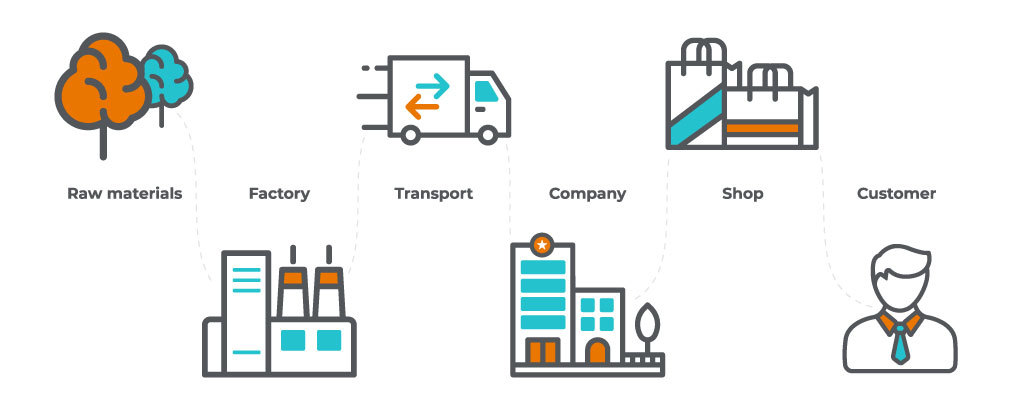
A quick glimpse of how a product reaches the end consumer.

The 6 Phases of a Product Life Cycle: Untapped Opportunities to Enhance Consumer Experience - Servify Blog

If you start eagle eyeing each step, you will find tremendous opportunities hidden in them.
Here are a few.

Opportunity 1 – Introduce a forecasting functionality based on new data.
Opportunity 2 – Bring in an integrated system that synchronizes the data across the process.
Opportunity 3 – Factor in self-learning feature that would comprise the market changes, customers’ buying behavior, etc.

You can cash on the above opportunities by implementing automation systems with various machine learning (ML) algorithms. You can introduce ML algorithms, such as:

  • Route optimization to make the best of the sales reps’ time.
  • Product optimization to solve the product mix problems.
  • NLP to analyze the consumers’ behavior.
  • Trade promotion optimization to plan and execute your trade spends.

Again, this list is endless.

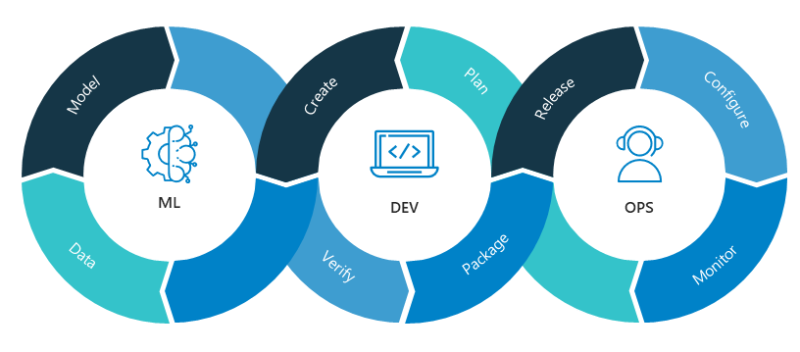
So, you have the solution – build ML models and deploy them.
What are the critical roadblocks in adopting Machine Learning?

Problem 1 – Continuous delivery of value

How to secure your CI/CD pipeline

Your team who works on the use case and writes the ML codes do not deploy them. Or at least, they do not have expertise on the delivery. So, relying your success entirely on the data science team can frustrate them and derail your ML journey.

Problem 2 – Composite and complex ML builds

Machine learning for composite materials | MRS Communications | Cambridge Core

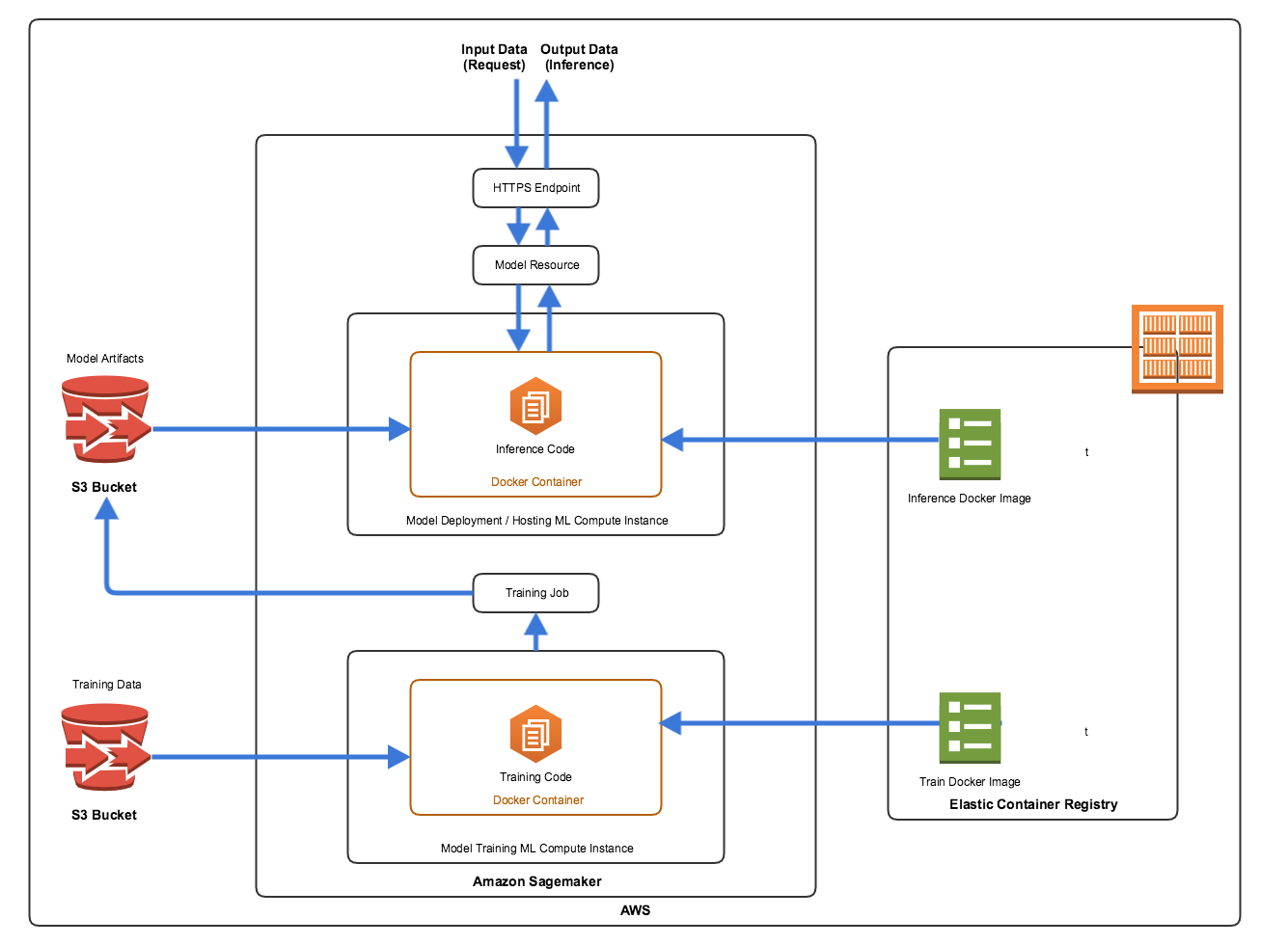
Unlike traditional development builds, ML models make predictions by (indirectly) capturing data patterns without following the explicit rules. The ML build runs a pipeline that extracts patterns from the data to create model artifacts, making it far too complex and experimental.

Problem 3 – Productionizing ML models

ML Models — Prototype to Production | by Shreya Ghelani | Towards Data Science

Gartner figures 80% of the data science projects fail or never make it to production. To run the project successfully in a real-time environment, you need to find the problem situation and solve the problem when it occurs. You need to continuously monitor the process to find the difference between correct and incorrect predictions (bias) and know in advance how your training data will represent real-time data.

Areas to Focus: Identify Where Things Might Go Wrong for You

Beyond ML deployment difficulties and risks in the CPG, there are several other key areas where things can go wrong, so instead:

  • Find out the exact use case; if you try solving the wrong problems, things will go wrong.
  • Do not build models that do not map well to your business processes.
  • Check if you have any flawed assumptions about the data.
  • Convert the results of your experimentation into a production-ready model.

There are opportunities, there are problems, and there are ML models. However, the only requirement that delays the models’ deployments or often triggers performance issues is simply the lack of means to deploy it successfully. Anteelo can reduce your effort in solving the ML deployment challenges through its state-of-the-art ML Works platform that provides you the means to run thousands of ML models at scale and at once.

4 Global Supply Chain Challenges and How Control Towers Can Help

4 Challenges Facing Innovation - Killer Innovations with Phil McKinney

The global market in 2021 is faster, more digital, and more competitive than ever. Customers carry the baton, and demand signals keep flowing into the enterprise from more and more different channels.

The modern supply chain dynamics require innovative capabilities and strategies to deal with uncertainties, improve resilience and implement holistic solutions to balance costs, services, deliveries, and customer expectations.

Four Challenges Facing the Modern Supply Chain Industry

What is Modern Supply Chain Management? - Unicsoft

Supply chain leaders need to manage a highly complex supply chain for the global business environment and deal with disruptions to keep the bottom line and top line intact. However, for decades, poor supply chain visibility has suffocated the industry.

Here are the four challenges gripping the modern supply chain.

1. Data and Application Silos

Are Data Silos Creating a Big Data Problem for Your Company?

Vertical organizations often fly blind.

Yes, that is true. Most companies are vertically integrated and use systems such as ERP, TMS, WMS, MRP to manage their functional departments. The functions primarily rely on plans developed within such systems to drive execution, monitoring & control. As a result, critical information such as customer demand, logistics, function-specific supply challenges & backlogs is siloed and invisible to other departments.

While function-specific analysis is time-consuming, cross-functional insights are even more challenging and require sifting through large volumes of data. Thus, business unit heads lose sight of the strategic ambitions of the overall supply chain

According to a survey by Supply Chain Dive, only 6% of companies believe that they have achieved complete supply chain visibility.

The lack of supply chain visibility is overwhelming and keeps on staggering.

2. Lack of Know-Hows, Tools, Technologies to Generate Insights

4 things you should know for a career in data analytics

With the advent of digital data, volume, accessibility, and insights generation through analytics are critical to creating a sustainable supply chain.

However, because analytics is not widely adopted, the data is poorly used.

The data engineering and analytics capabilities in most supply chains are insufficient. As a result, supply chain leaders often cannot effectively use relevant data at the required speed. They also lack diagnostic and advanced analytics tools/technologies and often fail to understand the nature of use cases or problems in the supply chain.

3. Lack of Predictive and Prescriptive Capabilities

Descriptive, Predictive, Prescriptive Analytics | UNSW Online

Digitalization is not enough.

As per the Chartered Institute of Procurement & Supply Risk Index’s report, the average annual economic loss caused by major natural disasters around the world is approximately US$211 billion.

Supply chain leaders also need to leverage new capabilities to predict market moods, deviation, and unanticipated geopolitical landscape.

However, most existing advanced analytics applications cater to solving point problems. There is an acute shortage of capabilities to use prescriptive or simulative simulations or what-if analysis to investigate broader issues in the supply chain and make recommendations. In addition, there are only a few good AI/ML-driven analytics solutions out there that prevent executives from using machine learning and limit the automation of the supply chain.

4. Lack of Off-the-shelf Solutions

Off-the-Shelf Software is Limiting Your Company's Productivity

Every use case or nature of the problem varies from customer to customer. So off-the-shelf products cannot meet customization and personalization requirements. Regarding the KPIs that businesses want to measure, use cases vary from company to company, making it impossible for off-the-shelf applications to handle. Such rigid solutions put the burden on supply chain leaders to get data in the desired format.

Indulgent customizations, choice complexities often lead to value destruction.

Need for an End-to-end Supply Chain Visibility Capabilities through Digital Control Tower

“Gartner reports, 79% of supply chain leaders believe that the internet/platform-based approach is the most critical new business model.”

The above four challenges require building a digital control tower with data engineering functions and pipelines on top of a solid data layer. Establishing a simplified data architecture with an automated framework can integrate master data and transactional data sources in a streamlined manner, ensuring the availability of necessary data across multiple silos to obtain accurate real-time visualization of the overall supply chain health.

AI/ML-driven analytics and rapid scenario planning can provide speed, consistency, and flexibility to achieve controllable and manageable supply chain functions, thereby helping executives gain a competitive advantage.

Two Critical Elements for an Ideal Supply Chain Control Tower

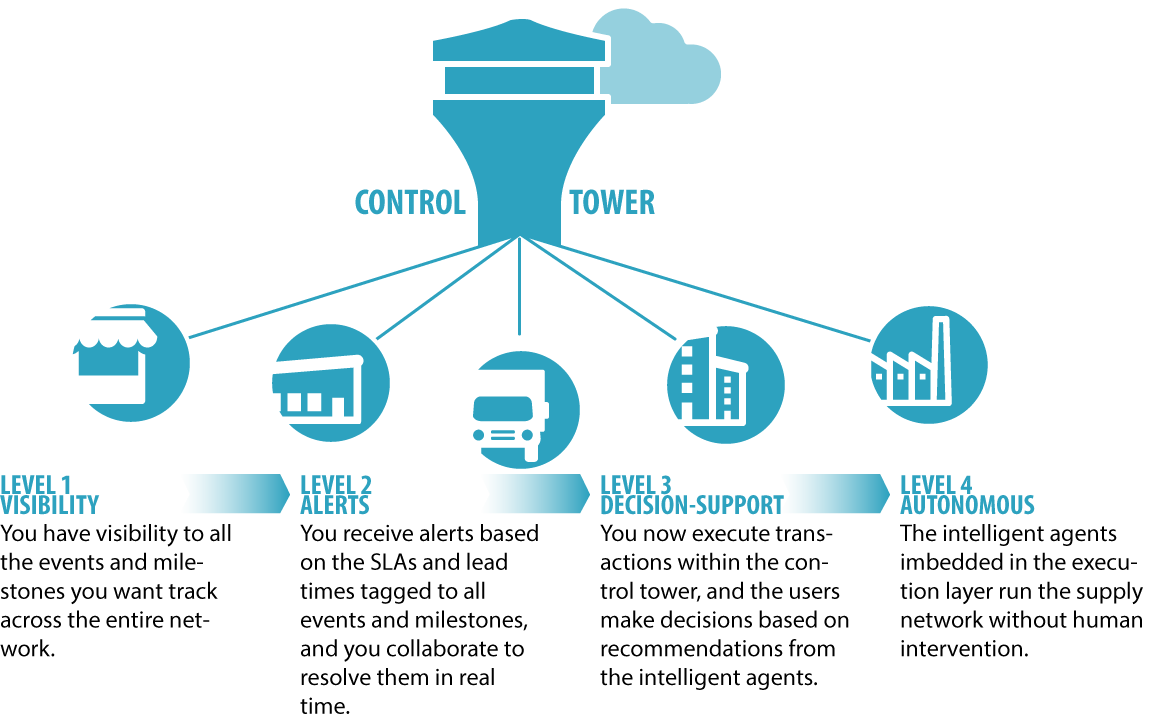
An ideal Supply Chain Control Tower (SCCT) is a cross-departmental, system-integrated “information hub” that provides end-to-end visibility.

There are two key elements to build/implement an ideal SCCT.

1. Real-time Visualization Catering to Different Personas.

BI | Think with Data – :: Cerebra ::

Executive Insights: An ideal supply chain control tower will provide a bird’s eye view of the overall supply chain health. It will enable the leaders to collect and distribute information, identify risks, and respond strategically.

Execution Insights: SCCT’s state-of-the-art setup caters to the nuanced aspects of the supply chain health for multiple execution persona – analysts or managers at the DC level or fulfillment center to view the various KPIs. It provides them with information to monitor, measure, and manage different aspects of the supply chain, including transportation, inventory movement, and operational activities.

2. Use Case Approach for Autonomous Supply Chain

Global Supply Chain Control Tower Market 2020 Analysis and Market Expert Research Report – Blue Yonder Group, Inc., Viewlocity Technologies Pty Ltd., E2open, LLC, – KSU | The Sentinel Newspaper

The ideal supply chain control tower can guide leaders/managers to explore potential use cases. It will allow them to find the most critical challenges that profoundly impact the overall performance of the supply chain and use advanced analytics, such as machine learning, advanced forecasting, or advanced scenario planning. In this way, they can combine use cases with visualization and diagnostic capabilities and automate the supply chain as they mature.

Conclusion: Control Towers are Stepping Stones Towards Autonomous Supply Chain

The supply chain control tower provides complete visibility from high-level monitoring layers to execution details, so the executives can optimize, manage, plan and execute supply chain processes and operations faster and more accurately. The addition of anomaly detection, automated root cause analysis, and response capabilities will further simplify the transition towards a cognitive supply chain control tower.

Data Warehouse Benefits and Drawbacks

What Is the Benefit of Modern Data Warehousing?

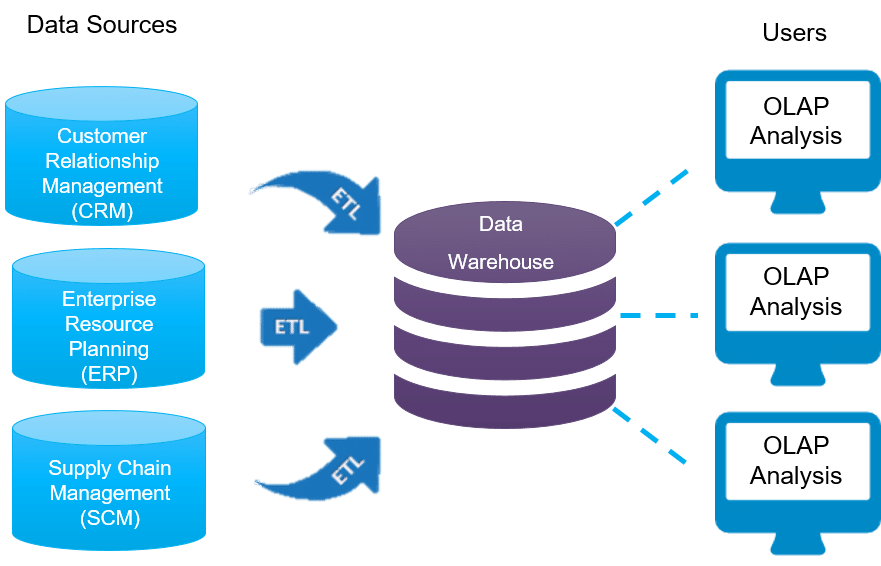
As businesses gather and store ever greater quantities of data, managing it becomes increasingly challenging. To get the maximum value from it, it needs to be easily accessed and compiled so that it can be analysed. However, when it is stored in separate silos across numerous departments, this is hard to achieve. The solution that many companies are opting for in order to overcome these issues is data warehousing. In this post, we’ll look at the pros and cons of setting up a data warehouse.

What is a data warehouse?

Data Warehouse Overview - Data Warehouse Tutorial | Intellipaat.com

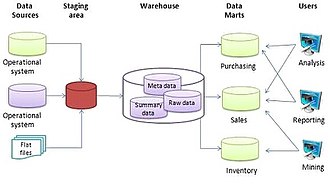
A data warehouse is a centralised storage space used by companies to securely house all their data. As such, it becomes a core resource from which the company can easily find and analyse the datasets it needs to generate timely reports and gain the meaningful insights needed to make important business decisions.

The pros of data warehousing

Pros and Cons of Snowflake Data Warehouse - Saras Analytics

The growing popularity of data warehousing is down to the benefits it provides business. Key, here, is that a unified data storage solution enhances decision making, enabling businesses to perform better in the marketplace and thus improve their bottom line. As a data warehouse also means data can be analysed faster, another advantage is that it puts the company in a better position to react to opportunities and threats that come their way.

With the entire array of the company’s data available to them, data managers can make more accurate market forecasts and do so quicker, helping them implement data-driven strategies swiftly and before their competitors. The accuracy of market forecasts is improved due to the warehouse’s ability to store huge amounts of historical data that can highlight patterns in market trends and shifting consumer behaviours over time.

Data warehousing can also help companies reduce expenditure by enabling them to make more cost-effective decisions, whether that’s in procurement, operations, logistics, communications or marketing. It can also massively improve the customer experience, with end to end customer journey mapping helping the company personalise product recommendations, issue timely and relevant communications, deliver better quality customer service and much more.

The cons of data warehousing

Data warehouse - Wikipedia

While the centralised storage of data brings many benefits, it does have some drawbacks that companies need to consider. For example, with such vast amounts of data in one place, finding and compiling the datasets needed for analyses can take time. However, not as long as would be needed if they were all kept in different silos.

Another potential issue is that when data is stored centrally, all the company’s data queries have to go through the warehouse. If the company’s system lacks the resources to deal with so many queries, this can slow down the speed at which data is processed. However, using a scalable cloud solution for data warehousing, where additional resources, charged on a pay per use basis, can be added as and when needed, eradicates this issue.

For many companies, the biggest obstacle for setting up a data warehouse is the cost. When undertaken in-house, there is often significant capital expenditure required for the purchase of hardware and software, together with the overheads of running the infrastructure. Additionally, there are ongoing staffing costs for experienced IT professionals. Again, the solution comes in the form of managed cloud services, like Infrastructure as a Service (IaaS), where the hardware and operating systems are provided without the need for capital expenditure and where software licencing can be significantly less expensive. What’s more, the service provider manages the infrastructure on your behalf, reducing staffing requirements. Even where specialised IT knowledge is required in-house, such as with integrating different systems, the 24/7 technical support from your provider will be there to offer expertise when needed.

Conclusion

Any company undergoing the process of digital transformation needs to consider the benefits of data warehousing. The centralised storage of all the company’s data is essential for companies that wish to integrate their existing business processes with today’s advanced digital technologies. Doing this means you can fully benefit from big data analytics, artificial intelligence and machine learning, and all the crucial insights they offer to drive the company forward.

Setting up a data warehouse in-house, however, presents several major challenges. There is significant capital expenditure required at the outset, together with on-going overheads. In addition, integrating a diverse set of company systems so that data can be centralised is not without its technical challenges. By opting for a cloud solution, however, cap-ex is removed, costs are lowered and many of the technical challenges are managed on your behalf.

Detection of Data Drift in Time Series Forecasting

Multiple Time Series Forecast & Demand Pattern Classification using R — Part 2 | by Gouthaman Tharmathasan | Towards Data Science

What is Data Drift?

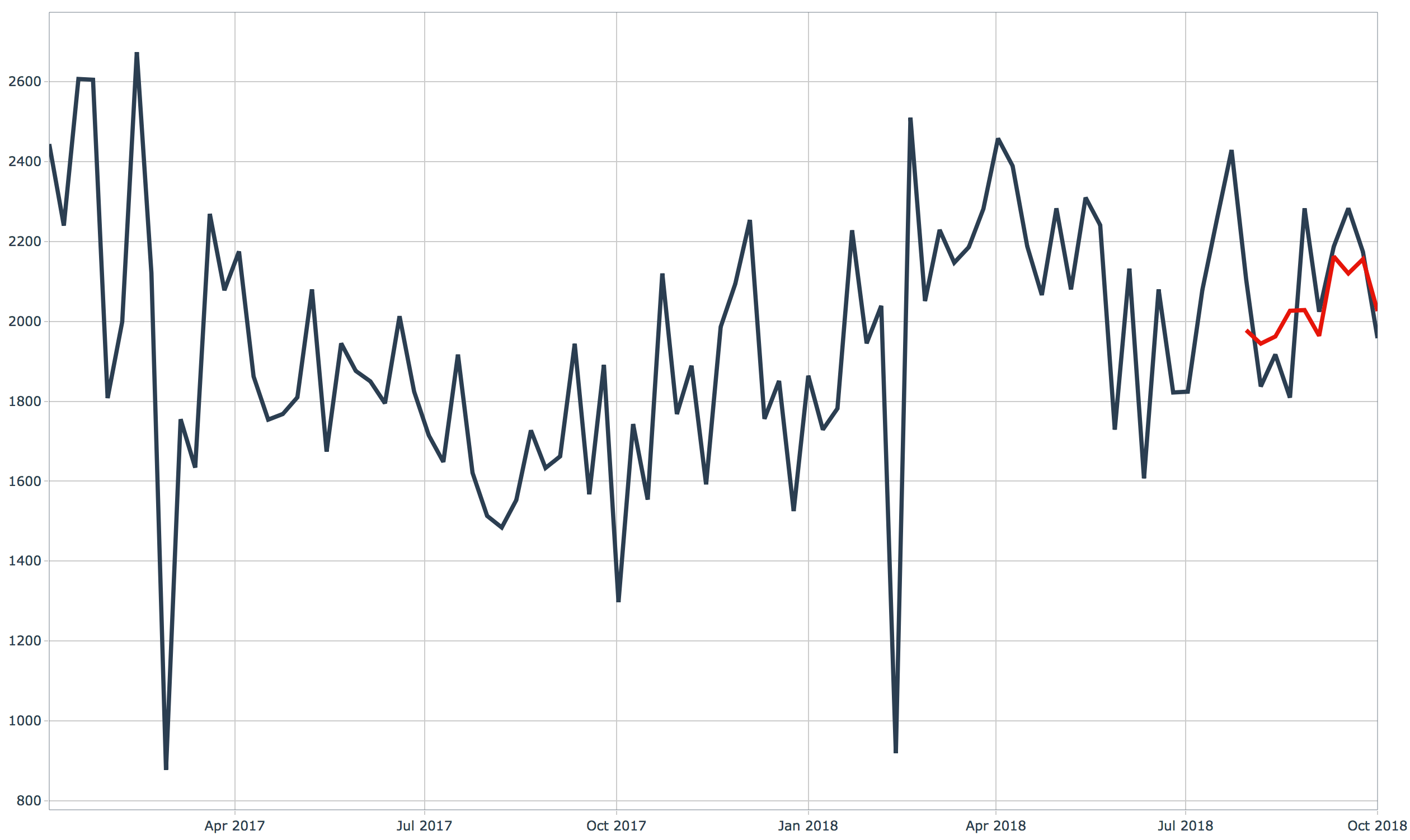
Changes in the data distribution are monitored with Data Drift, one of the most common indicators when monitoring MLOps models. It is a metric that measures the change in distribution between two data sets. Before diving deeper into it, let us examine how ML Works defines drift for a time series use case and how the different drift components provide valuable insights and recommendations.

In Illustration 1 below, we can see that distributions of the light blue and dark blue samples (training and test data sets, respectively) are different for the same bin definitions of a feature in the model. This difference in the distribution is what drift quantifies as a percentage of shift.

Illustration 1: Distributions of the training (light blue bars) and the test data (dark blue bars).

Data Drift in Time Series Models

Let’s consider a Promotion Effectiveness Model as an example with four variables:

  • Total Promotion Spends
  • Promotion Duration
  • Product’s Base Price
  • Product’s Promoted Price

These variables drive product sales every month, and data drift is measured at the three major aspects of a time series model, i.e.,

  • Feature Drift
  • Target Drift
  • Lag Drift

Feature Drift 

In Feature Drift, each variable in the training data is compared with the new stream of data that the model uses to make the prediction. The importance of each feature’s variables and Feature Drift (ex: Promotion Duration) can give an idea of the data problems you need to address as a part of model degradation.

Note: Feature-level insights are applicable to all types of machine learning model.

Target Drift 

Target Drift plays an important role in further understanding data issues. It measures how predictions in the new data stream have a different distribution than the trained model’s target variable. Therefore, Target drift indicates how extreme the model predictions can be/are compared to the trained data.

Note: If Target Drift exists despite Feature-level Drift, one can assert that model is under-fitted, and the relationship between the Features(X) and Target(Y) is not robust to making predictions, or that the model is over-fitted to outliers, etc. (The reasons are not exhaustive to the assumptions made above).

Therefore, it is recommended to investigate the model training process and increase the quantity/quality of data entering the model (improve correlation, feature transformations, better stratification, etc.)

Lag Drift

In time series models, auto-correlation is likely to affect the final prediction of the model. Hence, to identify a data pattern change in the lag components, Lag Drift (A direct comparison of the training and test data frame of the model’s lag components) was introduced.

Note: If there is no Feature Drift or Target Drift, but there is Lag Drift, retraining the model with a better data sample is recommended for accurate sales prediction.

Some of the metrics elucidated above can help you set up the capability to monitor the health and degradation of production models and determine the data handling/modeling changes required to implement and sustain ML solutions and automation.

MLOps Principles

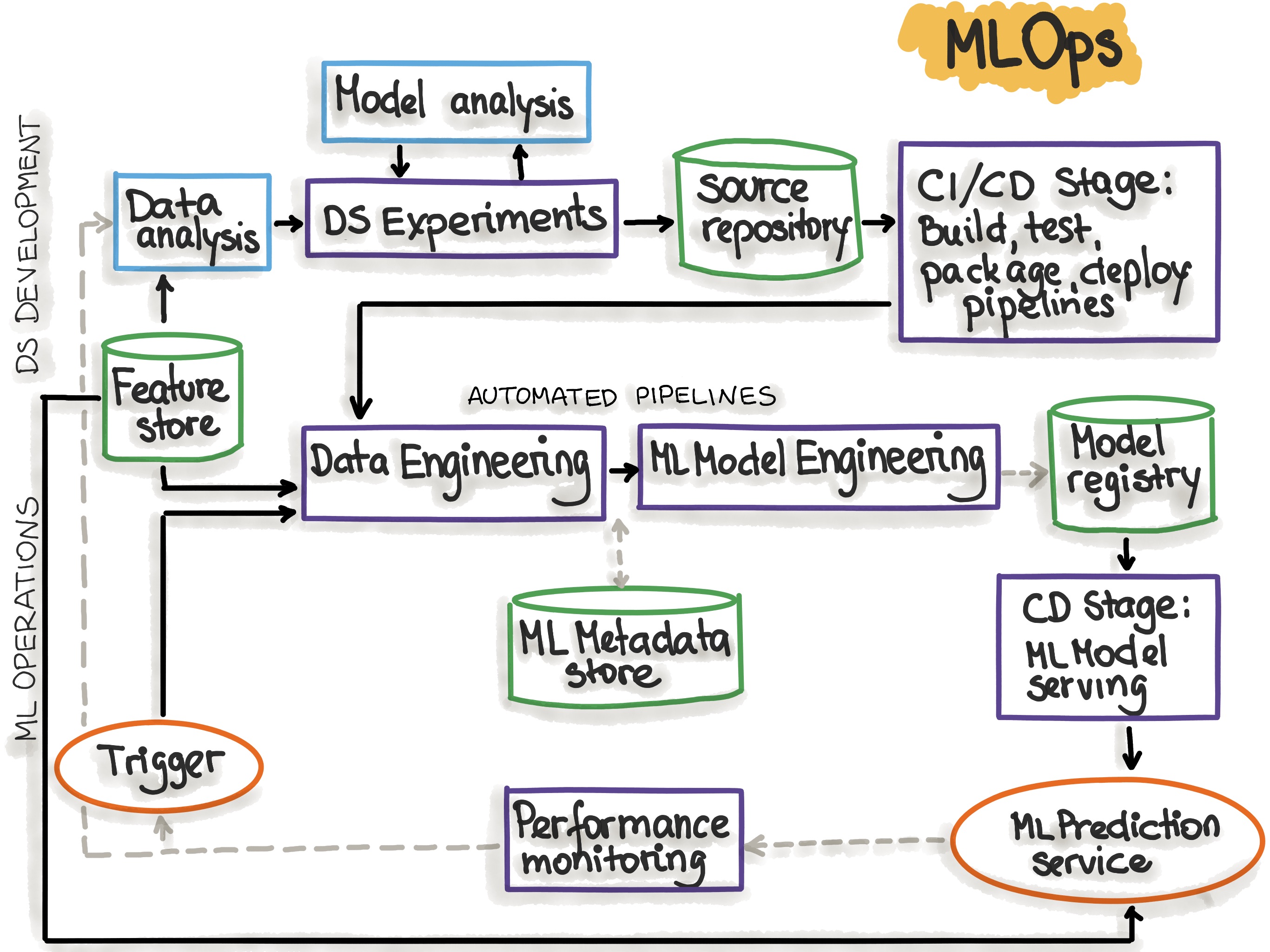
Illustration 2: Functional Flow of the First Step of Automating the ML Solution.

Based on our many years of consulting experience, we have built an enterprise-grade MLOps product called ML Works to address the problems mentioned above and enable ML solutions to take the first step in the MLOps journey.

With the rise of more and more MLOps platforms, the business world is moving towards an inevitable transformation. Today, big players like Google, Microsoft, and Amazon have begun to monetize this space.

As Anteelo’s next-gen industrialized MLOps, ML Works can reduce your Data Scientists’ efforts and lead your organization towards faster and frugal innovations.

8 Digital Transformation Trends to Watch

Digital transformation | Telecommunications Infrastructure Company

As businesses try to adjust to the new normal, many will be looking to technology to help them move forward. Digital transformation trends can give enterprises a competitive advantage but investing wisely means keeping abreast of innovations and up-to-date with trends and developments. To help, here are some of the main digital transformation trends keeping boardrooms excited.

Analytics

How to Utilize Google Analytics to Improve Your Restaurant's Website

Analytics has transformed the decision-making process, providing data and insights that help businesses identify problems, opportunities and solutions. The vast quantities of data available for analysis, including real-time data, means companies which don’t make use of it are at a serious disadvantage. It has applications in all areas of business: procurement, operations, logistics, marketing, communications, security, finance and HR; and with sophisticated analytics tools easily deployable in the cloud, it’s becoming much more widely used.

AI and machine Learning

An Introductory Guide To AI & Machine Learning - Analytics India Magazine

AI and machine learning trends are the ideal partners for data analytics and enable businesses to do much more with their data. They speed up analysis, automate large scale processing in the scalable cloud and remove the bottleneck caused by human analysts. They also learn and adapt from previous analyses while providing results in user-friendly, easily digested, graphical interfaces that non-IT staff can make sense of.

5G

While the consumer generally sees 5G as a way to improve smartphone c

What Is 5G Technology And How Must Businesses Prepare For It?onnections and speed up downloads, the deployment of 5G infrastructure will have a much wider impact that many businesses can benefit from. It will, for example, hasten the development of IoT infrastructures, such as smart cities, intelligent transport networks, smart vehicles and smart industry. At the same time, we’ll see a wider range of connected devices, making it easier for businesses to take advantage of the IoT and the valuable data it generates.


Wi-Fi 6

What's the Status of Wi-Fi 6?

The next generation of wi-fi, known as both Wi-Fi 6 and AX Wi-Fi, provides up to three times faster processing and wireless connection speeds. Even better, it enables networks to handle far more connected devices, which is helpful considering the proliferation in wi-fi enabled gadgets being used in the workplace and the increasing amounts of data they send and receive.

Blockchain

What the Future of Blockchain Means for Entrepreneurs

Although it’s often associated with cryptocurrencies, blockchain has many valuable uses in businesses, such as tracking the origin and movement of goods in the supply chain and providing financial audit trails. It has applications in healthcare, real-estate, media, energy and local government and can be used for a wide range of purposes.

The reason for its increased use lies in the number of service providers, including Amazon, Microsoft and IBM, who are developing subscription-based ‘blockchain-as-a-service’ platforms and thus making it easier for businesses to put it to good use.

Robotics and automation

How Similar are Automation and Robotics? - The Official 360logica Blog

There is a historical pattern of businesses shifting towards automation in response to a recession. Following the 2008 crash, for example, 25% of supermarket checkout assistants in the UK were replaced by automated self-service checkouts. The crisis following the 2020 pandemic is likely to see the pattern repeated, however, with more advanced robotic processes and AI interfaces available, more skilled workers could see the brunt of redundancies. Where roles aren’t completely replaced, workloads may be reduced, enabling existing staff to be upskilled.

Connected transport

Connected Vehicles | Metropolitan Transportation Commission

Although this is only happening on a small scale at the moment, automated and remote-controlled transport is already taking place. Drones are being used to ship medicines to remote Scottish islands, restaurants and supermarkets have been using automated robots, developed by a Cambridge company, to make local deliveries during the lockdown and the UK coastguard has just announced plans to use drones to assist with coastal searches.

Expect to see these technologies becoming more widely available and, thanks to 5G, being put to uses in more places. Many businesses can take advantage of these technologies, helping them deliver products and services quicker and without the need for a third-party delivery company.

Customer experience

6 Customer Experience Trends That Will Drive Growth for Your B2B SaaS Company, Tips, Guide | CommBox

According to a survey by Adobe, senior executives see customer experience as a bigger priority than investment in new products and services as it offers significantly more opportunities for growth. The key areas where development will take place are in omnichannel shopping, personalisation and frictionless payment, with technologies like data analytics and AI providing the insights needed to deploy these in the way that customers will appreciate.

By enhancing the customer experience, brands can develop both loyalty and trust. As a result, customers will engage more, share their needs and give feedback, enabling companies to develop their products and services in response.

Conclusion

Digital transformation not only affects all sectors; it also has an impact on all aspects of a company’s operations. Those that adopt and utilise the technologies mentioned here can reap the enormous benefits they offer. Being able to make use of these technologies, however, requires companies to make use of the cloud, as it is here where they are most easily and affordably accessible.

How the Iot is Shaping modern Business in the 21st Century

Five ways the Internet of Things is transforming businesses today | Internet of Business


The world is getting smarter. Every day, devices and modern technologies that were once standalone are getting connected to the internet. From robots to running shoes, these smart devices contain sensors that allow them to be monitored and controlled remotely and to gather large quantities of data. Collectively known as the Internet of Things (IoT) these devices are transforming modern business. Here, we’ll take a look at how.

What is IoT?

How IoT is Transforming Business and the Best Ways of Keeping it Secure

The IoT is a system that comprises the smart devices deployed by companies, together with the infrastructure and applications needed to connect, monitor and control them and to gather and analyse the data they generate.

In most cases, IoT systems are automated so that processes can be done with little or no human intervention. This often requires the use of cloud-based technologies, such as real-time analytics, artificial intelligence and machine learning. By adopting such modern technologies, highly complex operational processes can work smoothly while employee involvement can be radically reduced.

Today, IoT systems are used everywhere. Domestically, they are used by consumers to manage their homes: controlling lighting, heating, security cameras, etc., via their phones and smart speakers. Businesses and other organisations use them for a much wider range of purposes: logistics management, server monitoring, remote automation, personalisation, energy management, remote workforce monitoring and much more.

Here are some of the main ways the IoT is having an impact.

Inventory management

IoT-driven Inventory Management: A Quick Guide

Inventory management is traditionally a time-consuming, labour-intensive process. The complexities of managing inventory mean data is rarely accurate or up-to-date and this often causes difficulties with procurement and order fulfilment.

Today, goods are labelled with RFID or Bluetooth tags and these are scanned automatically by IoT-connected scanners on entry to and exit from the warehouse and during transit. The scanners don’t just calculate stock levels, they also record the item’s location (making it easier to deploy warehouse robots, like Amazon) and the dates and times of movement.

Companies which use this modern technology always have accurate, real-time data about stock levels and can quickly find products in the warehouse. What’s more, the system can report issues with stock shortages, shelf-life, temperature control, travel delays and even flag potential theft from staff. On top of this, the company can be notified which stock items are in short supply and those which aren’t being sold, helping them make better decisions about procurement, product choice and pricing while ensuring that accurate fulfilment details are available.

Customer experience

Develop a Fruitful Customer Experience Plan – WebBasta – INSIGHTs

The customer experience is a critical element of the modern marketing strategy, with companies going all out to satisfy the ever-increasing expectations of the consumer. Those that succeed benefit from enhanced brand loyalty and significantly increased customer lifetime value.

IoT plays a key role in enhancing the customer experience as devices are used to gather customer information from every available touchpoint. Data from mobile apps, social media interactions, home devices, customer communications, website browsing and sales histories are unified to glean insights that provide personalised customer experiences which meet the needs of the user.

Productivity

27 Ways to Increase Employee Productivity in the Workplace

Sensors built into devices gather data that help companies drive up productivity in all areas. From production line processes to shipping delivery routes, operations and tasks can be completed quicker, more effectively and more cost-efficiently. Employee workloads are also reduced and the potential for automation is increased, enabling companies to reduce staffing levels or increase production.

Remote work and operations

Sudden Remote Work: The Ultimate Checklist to Maintain Operations on this COVID-19 Crisis - The Missing Report

IoT enables organisations to undertake remote working at levels previously inconceivable. An example which perhaps illustrates this best is the da Vinci robotic system, used by surgeons to carry out remote operations on patients. The surgeon views the patient in real-time while the connected robot holds the instruments and mimics their hand movements. Another advanced example is the real-time monitoring of aircraft engines during flight which enables specialised technicians to remotely deal with any issues that may arise.

On a less advanced level, IoT technology helps owners run their businesses or operations from anywhere in the world. During the lockdown, numerous companies have relied upon remotely connected devices to help employees work from home. Businesses that work on the go, such as plumbers, electricians, broadband installers, delivery drivers, etc., have been using IoT devices for a long time, helping them maintain schedules, track productivity, order and collect equipment and parts, obtain customer signatures and so forth.

Data-driven insights

How data-driven insights can transform your business

IoT technology enables far more data to be gathered. That data can be analysed using advanced analytics programs, together with AI and machine learning, to provide previously unobtainable insights into the business. These can be used to improve efficiency, productivity, marketing and communications strategies; to predict market movements and forecast supply and demand; and to monitor machine health and improve security. When data is gathered from devices used by customers, the insights can be used to develop better products, offer better services and better meet the customer’s needs and expectations.

Conclusion

With so many connected devices for businesses to deploy, and with the infrastructure needed to make use of the IoT readily available in the cloud, IoT adoption is becoming increasingly popular amongst the business community. Its potential to bring improvements across so many areas of business operations is making it a technology hard for business owners to ignore, regardless of the industry they work in.

Hosting Perplexity? Explained: the Different Types of Web Hosting

How to choose Best Web Hosting Service for your Blog/Website – STA

Baffled by all the different types of web hosting? Unsure what they all are or which is the right one for you? You’re not alone. To help, this post will look at each different type of hosting and explain what they are.

What is web hosting?

Before we discuss the different types of hosting, it is helpful to understand what hosting is and why you need it. Essentially, your website is a set of files that you are sharing over the internet with other people. As a website, you want these files to be accessible all the time and easily found by anyone looking for the information you publish. To make this happen, your website content and the software that makes your website work have to be installed on a special kind of computer called a webserver. A webserver is connected to the internet 24/7 and enables your web pages to be downloaded to someone’s browser for viewing or interacting with. The webserver, therefore, is where your website is hosted and the company that provides the webserver is your web host or service provider.

The other important thing to mention is the operating system. Generally, all hosting is either run on Windows or Linux operating systems. While Windows is the most popular operating system for home computers, most website software is designed to run on Linux. When purchasing hosting, you will need to choose the operating system that your software needs.

Here’s an overview of different hosting types.

Shared hosting

What is Shared Hosting? Uses, Advantages, Examples and Plans of Shared Hosts

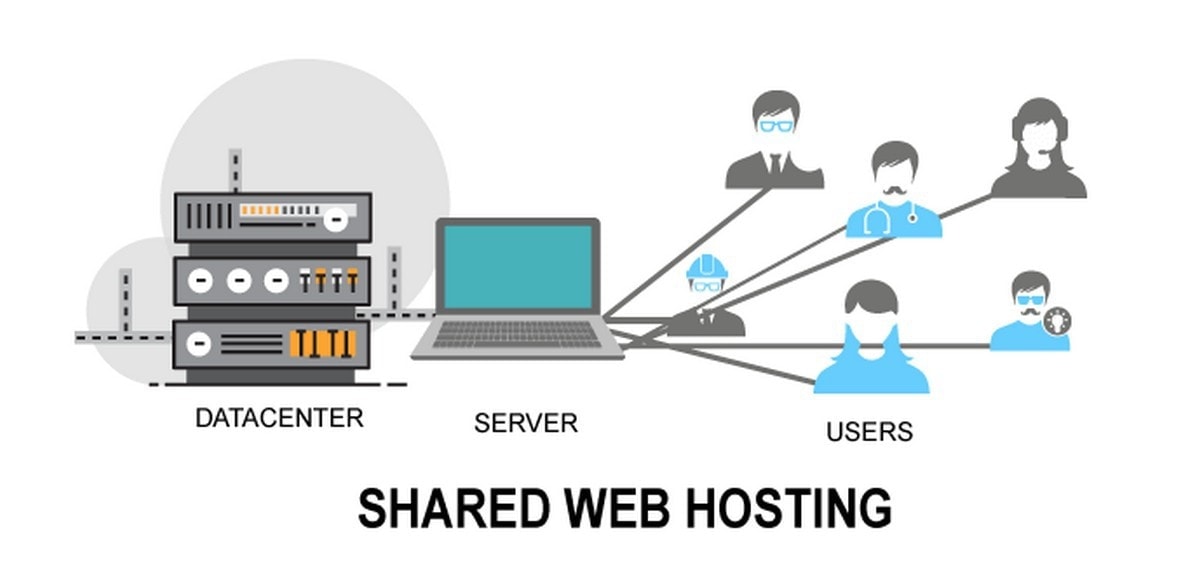
Shared hosting is the cheapest and most popular form of web hosting and is suitable for small business or personal websites. What makes it inexpensive is that the web host takes one large server and divides up the storage space for many different users. In effect, you will be leasing a small slice of a large hard drive.

While this slice can be big enough for all your website’s files and data, the downside of shared hosting is that you also have to share all the other web server resources, such as RAM and CPU. If lots of other users have busy websites, there may be times when your website is affected and loads slowly or performs poorly on people’s devices. It is similar to having too many programs running on your computer and finding that they lag or freeze.

Specialised shared hosting

The Best Shared Web Hosting Services for 2021 | PCMag

Today, lots of web hosts offer specialist forms of shared hosting. In many instances, this is done by configuring the web server so particular types of website software can perform optimally. You may, for example, see WordPress, Joomla, Magento or Drupal hosting and these packages will also include other features to improve the hosting or make things easier for users of those types of software.

Additionally, some hosts offer shared hosting with particular types of control panel, such as the cPanel hosting here at Anteelo. cPanel is a leading control panel whose user-friendly interface and comprehensive range of tools make it a breeze to manage your website. You may also find shared hosting packages that are specially designed for business users or bloggers.

VPS

VPS Hosting | Windows, Linux, & cPanel | Atlantic.Net

A virtual private server (VPS) is the next step up from shared hosting. It uses clever virtualisation technology to create several small, virtual servers on a single physical server. The difference between shared hosting and VPS is that your VPS is completely independent of all the other VPS on the physical server, so you don’t have to share resources or endure the issues this can cause. You even get your own operating system.

The other chief difference is that a VPS package is much bigger than a shared hosting package. In essence, it is like a mini dedicated server, giving you substantially more storage, CPU and RAM. This makes it ideal to run large websites, multiple websites or other types of application for your business. The surprising thing about VPS is that they are cheap, costing from as little as £15.59 a month (at time of publication).

Dedicated server

What Is a Dedicated Server? Learn the Basics

With shared hosting, a user gets a small share of a large webserver. The term ‘dedicated server’ simply means that you get that entire server dedicated for your own use. This provides you with enormous amounts of disk space together with substantial processing power and RAM. This is ideal for bigger businesses that need to run large websites, store lots of data and run critical business applications which need to be online all of the time. Compared to VPS, these can be much more expensive solutions.

Cloud hosting

5 Best Cloud Hosting Companies In 2021 - Productivity Land

The cloud is a vast network of interconnected servers hosted in huge data centres. Using virtualisation, websites can be moved instantaneously from one physical machine to another, even across geographical locations. This means if there is a problem with the physical hardware, a cloud-hosted website or application will never go offline.

Cloud’s virtual technology also means that companies that need extra computing resources at a moment’s notice, can instantly have it at their disposal – and in enormous quantities. What’s more, the cloud is paid for on a pay as you go basis, so you only pay for the resources you need as and when you need them. You can scale up or down at any time.

Accessible over the internet, cloud hosting brings with it many of the benefits of connectivity – flexible working, working from home, collaboration, etc. It’s scalability also makes it ideal for carrying out big data analytics or making use of technologies such as AI, machine learning or the Internet of Things.

There are three different types of cloud hosting: public, private and hybrid. Public cloud is where the hardware, software and other infrastructure are shared with all the other cloud tenants and managed by the web host, whereas in a private cloud those resources are used exclusively by you. Hybrid cloud is where a company makes use of both private and public solutions, often with dedicated servers included in the mix.

Managed hosting

Managed Hosting Services: How Can Customers Benefit? - ITSM.tools

Managed hosting is not a different type of hosting solution but a feature of many of the above. It is a service provided by the web host to manage your server for you. This will typically include looking after the physical hardware, ensuring the server is working optimally and updating the operating system on your behalf. For certain types of hosting, this form of server management is included in your package.

Enterprise hosting

7 Best Managed Hosting Service Providers 2020 - Cloud7

Some companies have extraordinarily complex IT needs which require bespoke hosting and support solutions. Service providers, like Anteelo, have the infrastructure and expertise to offer these tailored solutions, often referred to as enterprise hosting.

Conclusion

As you can see, there is a wide range of hosting solutions available, ranging from the basic shared hosting needed to run a small website to the complex solutions needed by large companies to run a range of critical applications. Hopefully, this post will have given you a clear idea of what these types of hosting are and which is most relevant to you.

Samsung Integrates Blockchain into Their Business Model

Samsung smartphones: Samsung expands blockchain support on Galaxy smartphones, Telecom News, ET Telecom

Blockchain is no longer a hyped technology. It made its own significant identity, beyond the technology behind cryptocurrency, and entered the business world significantly. The domain has made a room for itself in almost every niche industry and business, proving it to be nearly impossible to overlook the charisma of this technology. Seeing this, various startups and established brands entered the exciting space of Blockchain – with Samsung emerging as the torchbearer.

Samsung, the tech giant based in South Korea, took various steps towards establishing its presence in the Blockchain market. A few of the announcements and efforts they put in this direction are:-

1. Investing in Blockchain-Specialized Startups and Tools

Investor outlook 2021: Challenges, growing trends, and expectations from the Indian startup ecosystem

Last year, Samsung invested around USD 8.1M in a Blockchain-based company Blocco and $4M in ‘KZen Networks’. While, this February, they partnered with HYPR – a Blockchain biometric encryption firm in the USA – and made an investment of around $1M.

2. Developing its Own Ethereum-Based Blockchain

Understanding the Cryptocurrency Market - Blockchain Technology Explained | Toptal

The tech giant also took a step towards developing its own ‘Blockchain mainnet based on Ethereum platform’, which was announced to be either a private blockchain or a hybrid one. Also, they announced working on their own crypto token, called ‘Samsung Coin’ which would be used for crypto exchange or as a payment solution in the Samsung Pay app.

3. Adding Storage for Private Cryptocurrency Keys

Currency.com Vs BitMex Exchange Comparison | UseTheBitcoin

Earlier this February, Samsung added storage for private cryptocurrency keys in their Galaxy S10 model devices. They introduced a wallet that enables users to store Bitcoin, Ethereum, and other such cryptocurrencies on their devices as well as make contactless payments using cryptocurrency.

4. Declaring Blockchain a Part of their Digital Transformation Network

Blockchain – The next of everything – SOURCING AND SUPPLY CHAIN

In the month of May, the president and CEO of Samsung SDS disclosed that Blockchain will be one of the top technologies they will focus upon under their ‘Digital Transformation Network’.

5. Announcing Launch of New Products for Blockchain Integration

Blockchain Transmission Protocol (BTP) Working Group Update: ICON Joins Forces with the Polkadot Ecosystem | by ICON Foundation | Hello ICON World | Apr, 2021 | Medium

Also, they announced last month that they will be launching three new products to simplify the process of Blockchain integration with other platforms for entities that are trying to embrace the technology.

6. Releasing a Software Development Kit (SDK)

Software Development Kit Example

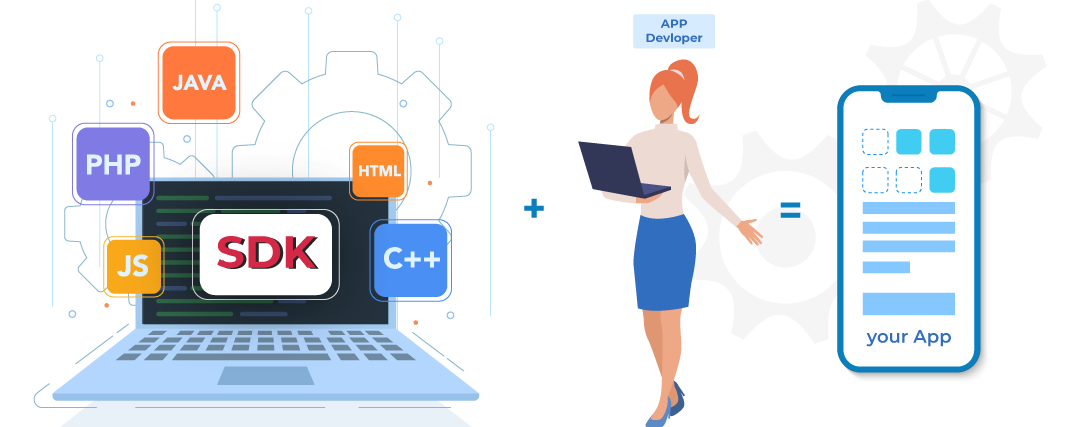
Samsung also unfolded new opportunities for Blockchain experts. They released a new software development kit (SDK) having a myriad of tools and functions for developing Blockchain and dApps.

This SDK provides developers with an opportunity to handle their Blockchain accounts easily and effortlessly and make transactions seamless by abstracted transfer APIs for every cryptocurrency. It also offers a payment gateway to software developers for cryptocurrency remittance with its UI.

Above all, it gives an opportunity to link not solely to but also to any cold wallet including Ledger and Trezor devices. It renders access to a ‘Blockchain specialized browser’ for decentralized web applications that offers a set of features related to easing the process of crypto payments and tools to predict fees using live crypto exchange rates. And in addition to this, it provides Blockchain and Ethereum developers with a chance to retrieve transaction history from Samsung’s ‘blockchain proxy node’.

These efforts, as a whole, are making it easier to cut down the cost of App development, except when you already have your own wallet logic.

7. Connecting dApps to its Blockchain Wallet

WalletConnect

Another significant step that the Samsung team took towards building their presence in the Blockchain arena is the integration of decentralized applications to its Galaxy S10 wallet. The tech giant introduced 4 dApps to its wallet back in March, added 6 more apps into the list the day before yesterday, and today, they announced the addition of one more application into the list.

With this, the list of decentralized mobile applications that entered into the environment of Samsung’s Blockchain wallet are:-

  • Cosmee – a dApp for sharing beauty content.
  • CoinDuck – a merchant payment service.
  • Enjin – a Crypto-based gaming platform.
  • CryptoKitties – a platform for Crypto-collectibles.
  • The Hunters – a Crypto-based gaming platform.
  • MyCryptoHeroes – a Blockchain-powered gaming decentralized application.
  • Berry Pick – a social media dApp that rewards active users.
  • Misetoktok – a dApp to monitor air quality and pollution level in real-time.
  • Syrup Table – a network for reviewing and rating restaurants.
  • X-Wallet – a decentralized wallet application that supports Ether, Binance Coin, and Bitcoin.
  • Lympo – a Blockchain-based health and fitness startup that rewards LYM tokens, which can now be transferred to Samsung Blockchain Wallet and converted in real fiat money.

Besides, they also hinted that Pibble, Forecasting, and many more apps might be a part of this list – giving an indication that Samsung is planning to turn its Blockchain wallet into an App Store – just like Google Play Store and Apple App Store.

8.Collaborating for Blockchain-based Self-Sovereign Identification System

Majority of Consumers Globally Think Connected Devices Are “Creepy” – Gadget Voize

Samsung went into a consortium with popular tech giants and banks –Telcos, KT, LGUplus, KOSCOM, KEB Hana Bank, and Woori Bank – to create a blockchain network for deploying mobile authentication service.

With this service, the companies will cut down the intermediaries in the process and add the functionalities of transparency and security. They will empower users to safeguard their own data, including that related to the institutions and companies they have been a part of. Or better say, the will aid users to have a control on their data.

Currently, they are aiming to employ this blockchain-based self-sovereign authentication system to simplify job and hiring process by making it easier for users to verify and upload their documents and apply for a job.

However, they are planning to extend this service to various other domains and processes, such as hospital and insurance services and membership services in holiday resorts.

These efforts and investments have not just brought Samsung into the limelight of innovativeness, but have also established it as an example for other conglomerates to follow.

Emerging trends expected to impact eCommerce Businesses

The Future Of E-Commerce

While the rise of internet shopping has led to the slow decline of the high street, last year also saw a reduction in online sales. With trading conditions likely to remain challenging during 2019, eCommerce businesses will need to be at the top of their game if they are to make headway. Doing this means keeping abreast of the latest developments in eCommerce businesses and taking advantage of those which are likely to bring the greatest benefits. In this post, we’ll look at the new trends set to have an impact this year.

Improving the customer experience

15 Proven Techniques to Improve Customer Experience (CX)

Social media and review sites give consumers enormous power to influence each other in their buying decisions and one of the things they are increasingly making judgements about is the experience they have when shopping with a business. This experience covers every aspect of their interactions with you, from their first encounter (e.g., seeing an advert) to after sales and beyond.

What are they looking for? In short, quite a lot. They want brands whose values they can identify with; websites that load quickly, are easy to navigate and work on any device; and purchasing processes that are simple, secure and fast.

In addition, customers prefer ecommerce sites that provide personalised recommendations and offers based on their previous interactions and this means businesses will need to collect more data and do more analyses in order to make recommendations that actually appeal.

Following the purchase, they want a speedy delivery and an easy, no-quibble returns process. Ideally, they want standard delivery to be free and to have all this backed up by easy to contact, friendly, customer service.

Developing trust

Developing Trust on Your Team

The consumers’ concept of trust has developed over recent years and businesses need to take these changes on board. Yes, this still means they need to trust you with their banking details when making purchases – so things like SSL certificates remain essential. However, with so many data breaches taking place, they want guarantees that any personal data you hold on them is going to remain secure and not end up being sold on the dark net. Following on from the Cambridge Analytica scandal, trust also means not having their data sold or used by third parties – particularly for use by political analysts or by insurance companies.

Trust is also increasingly linked to a company’s values and this means having moral integrity. The recent case of the clothing brand that sold fake fur coats which turned out to be made from real fur, is a prime example of something that can damage trust. The high-profile cases of people dying from allergic reactions because food retailers didn’t adequately label their foods is another example. Indeed, the online demonisation of those companies perceived to be at odds with today’s shifting values means, in order to gain the trust of the general public, all businesses need to do the right thing, whether it concerns LGBT rights, race and gender equality or supporting the more vulnerable members of society.

Using AI

Companies are using AI to hit business goals, even though they can't explain how it works - TechRepublic

Live chat is a key tool for enhancing the customer experience, however, it can be an expensive service to offer. Having staff available 24 hours a day to deal with customer queries isn’t cheap and the more successful your business gets, the more agents you will need.

Thankfully, there is now an alternative and cheaper solution that is expected to take eCommerce businesses by storm over the next couple of years and that is the AI chatbot. AI chatbots are essentially computer programs that can understand a customer’s questions and provide human-like responses about your products and services. Unlike humans, they can deal with unlimited customer enquiries at once and operate at all hours of the day.

The other advantage of a chatbot is that it can be used to generate sales. It can do this by sending automated prompts to get users chatting about a product they are interested in, it can offer them discounts or even make personalised recommendations based on their session data.

The progressive web app

What are Progressive Web Apps and How Do They Work?

With 60% of internet surfing taking place on mobile phones, the key focus over the last few years has been to develop responsive websites. However, the majority of our mobile surfing time is spent on apps, not websites. Rather than developing their own apps, many businesses are using a new format to tempt app-loving mobile surfers – the progressive web app.

The progressive web app is a website that uses APIs to let it function and appear just like an app. It works on all types of devices but, unlike a website, doesn’t need to be downloaded on a phone as it is cached and stored on the home screen. It also gets rid of the issues that businesses with separate apps and websites have, such as when a customer puts an item in a basket on the app but finds its not there on the website.

The use of progressive web apps will enable businesses to provide a multipurpose web portal that better suits our preferences of surfing on mobiles and computers but which works seamlessly between the two.

Conclusion

Hopefully, this post will have given you an insight into the emerging trends set to develop eCommerce over the next year. With the trading challenges facing online business, adopting some of these trends can be a way to keep your company ahead of the competition and help you meet your targets for the coming year.

error: Content is protected !!